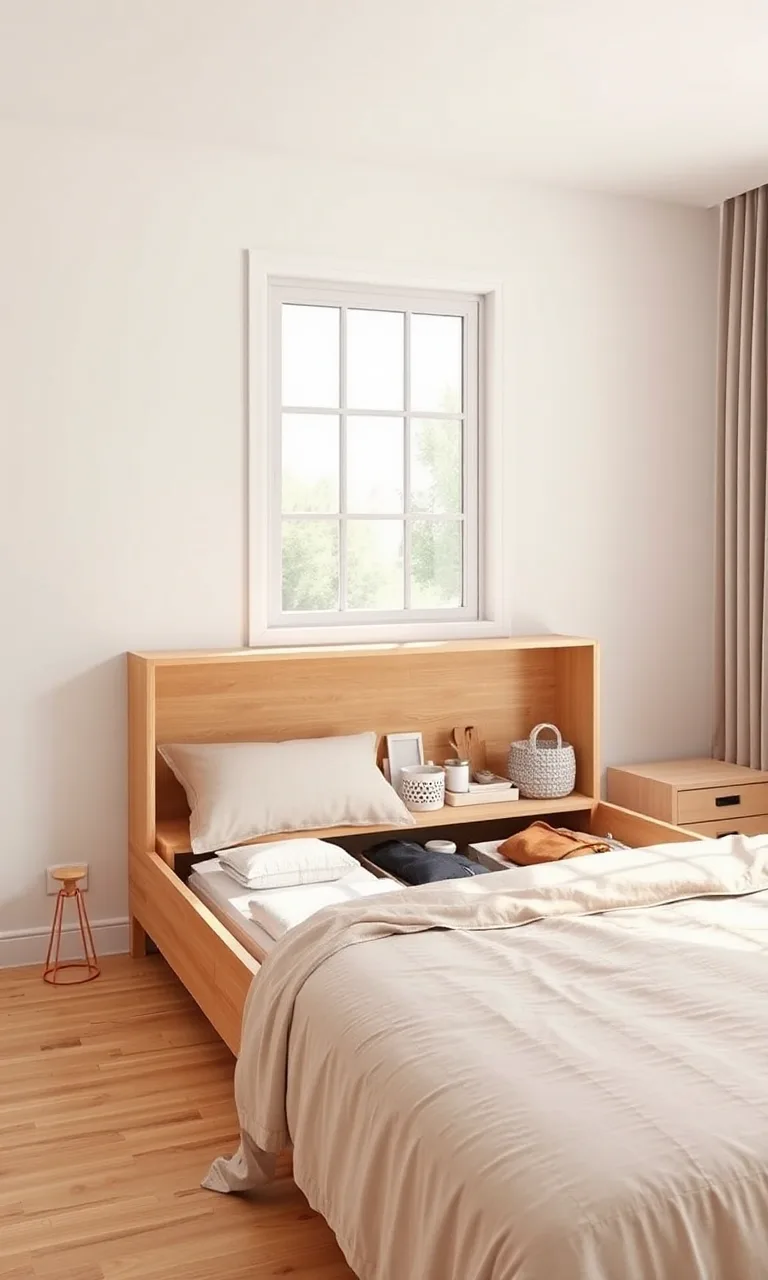
26 Vertical Storage Ideas for 2026
A small home can feel surprisingly spacious when you make better use of the areas above your furniture, inside cabinets, and along empty walls. Instead of squeezing another bulky storage unit into an already crowded room, you can organize your belongings vertically.
From narrow kitchen organizers to tall bedroom shelving, vertical storage ideas help create dedicated places for everyday essentials without sacrificing valuable floor space.
The best solutions are practical, accessible, and suited to your daily routine. Here are 26 creative ways to make unused height work harder in your home.
How do i maximize vertical storage in a small room?
Making the most of vertical space begins with identifying areas that aren't being used effectively. Look above furniture, behind doors, inside wardrobes, and along narrow walls where additional shelves or organizers could fit.
Choose storage that matches the size and weight of your belongings. Wall-mounted shelves are useful for lightweight essentials, while tall cabinets and reinforced shelving units can accommodate larger collections.
Arrange frequently used belongings at comfortable reaching heights. Reserve upper shelves for seasonal decorations, spare bedding, and other things you don't need regularly.
Always secure tall furniture against tipping and check the weight limits of wall-mounted organizers. With thoughtful placement, you can increase storage capacity while keeping the room comfortable and easy to navigate.
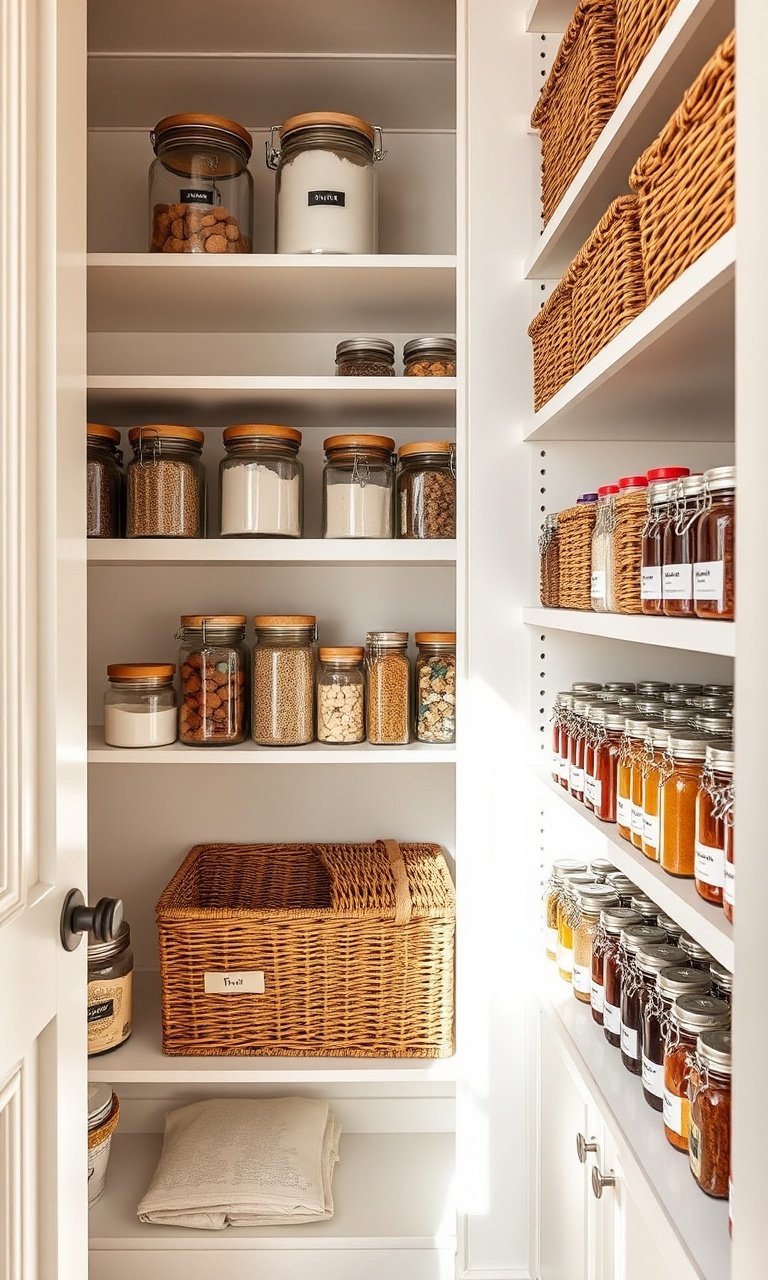
1. Full-Height Pantry
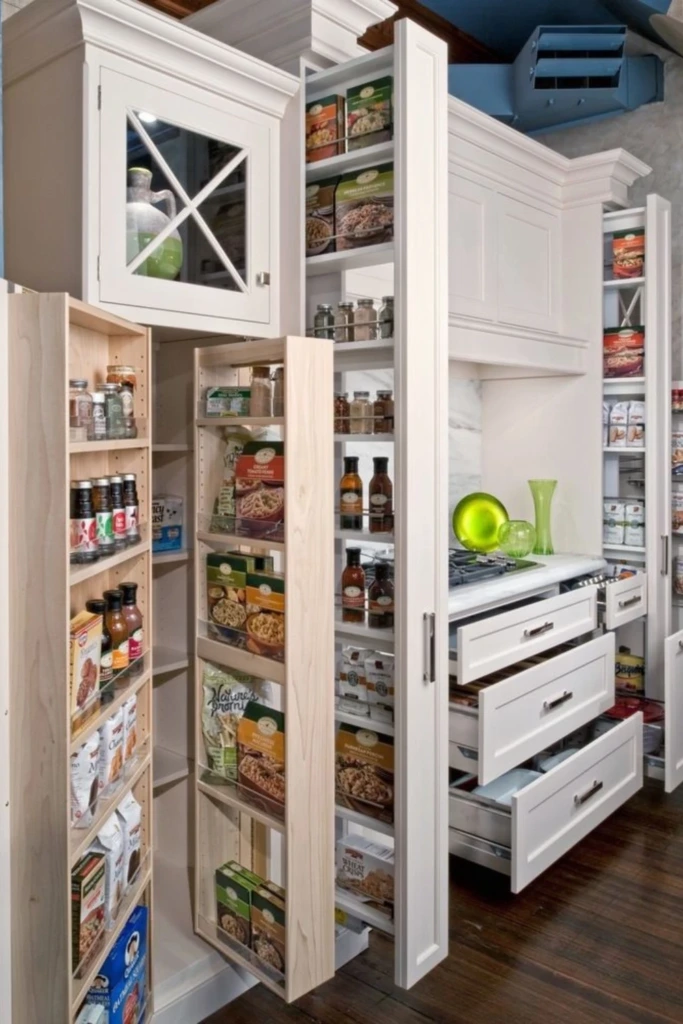
A pantry that extends toward the ceiling makes excellent use of kitchen height, particularly when cabinet space is limited.
Consider installing adjustable shelves that accommodate everything from small seasoning containers to tall cereal boxes. Pull-out baskets can make supplies stored toward the back easier to retrieve.
Keep heavier groceries on lower levels and organize lighter, less frequently used items above. Small rechargeable cabinet lights can improve visibility inside deeper sections.
A consistent arrangement makes grocery inventory easier to manage and helps prevent forgotten food from accumulating.
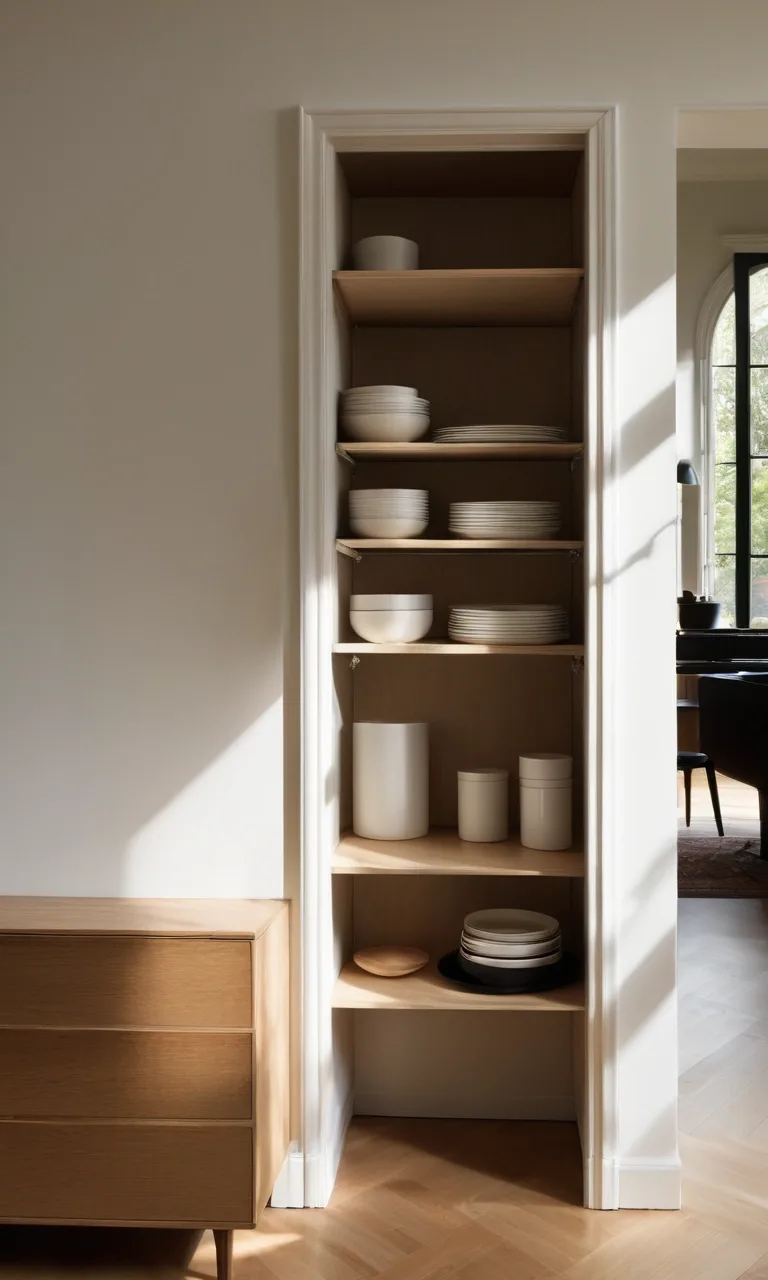
2. Open Vertical Wall
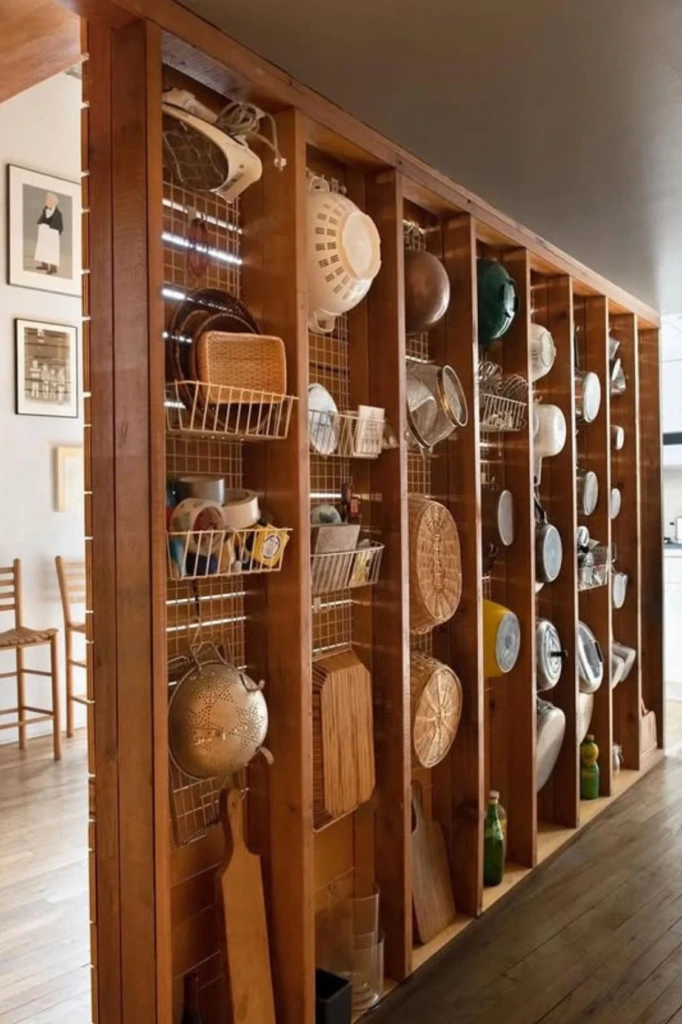
An unused wall can become a practical organization feature without requiring large cabinets.
Install a series of narrow shelves or open storage compartments to accommodate cookbooks, dishes, baskets, and decorative accessories. This arrangement is especially useful in kitchens, dining areas, and compact living rooms.
Combine a few attractive display pieces with containers that conceal smaller belongings. Leave some space between objects so the wall doesn't appear overcrowded.
Choose shelf materials and finishes that complement nearby furniture for a cohesive appearance.
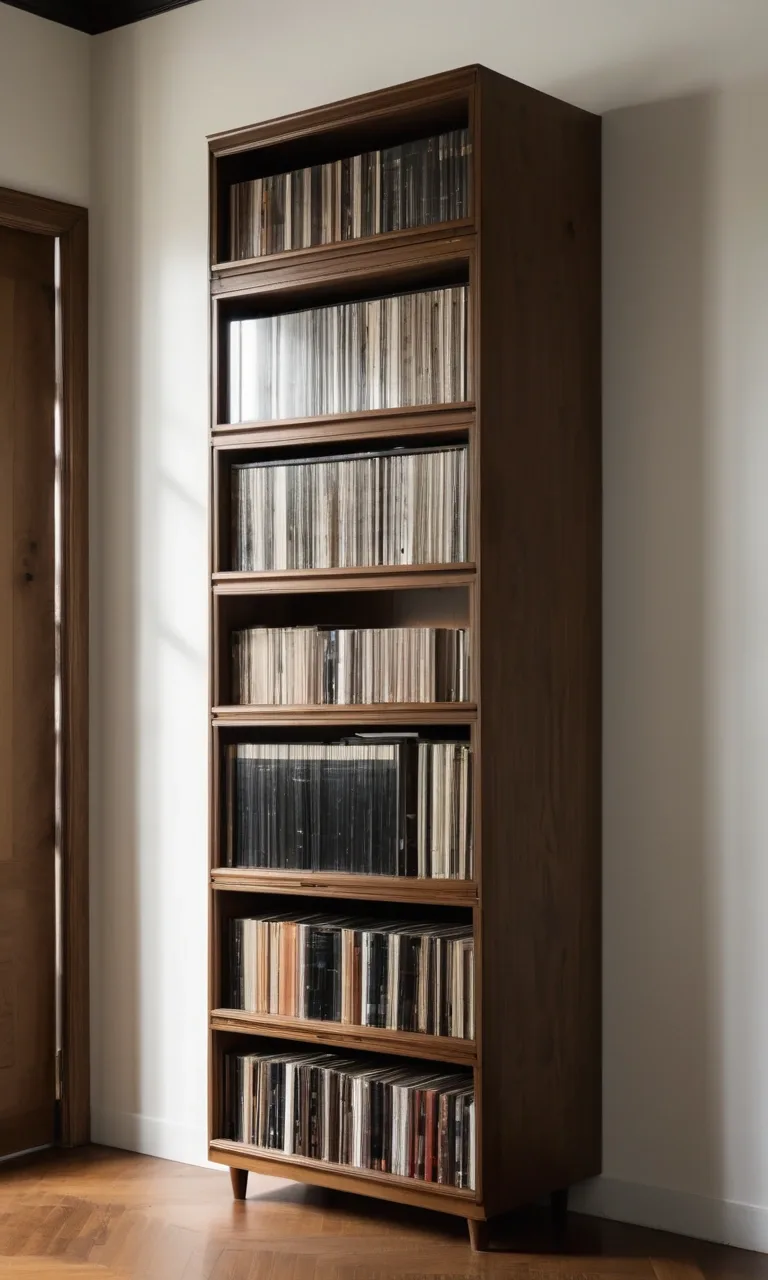
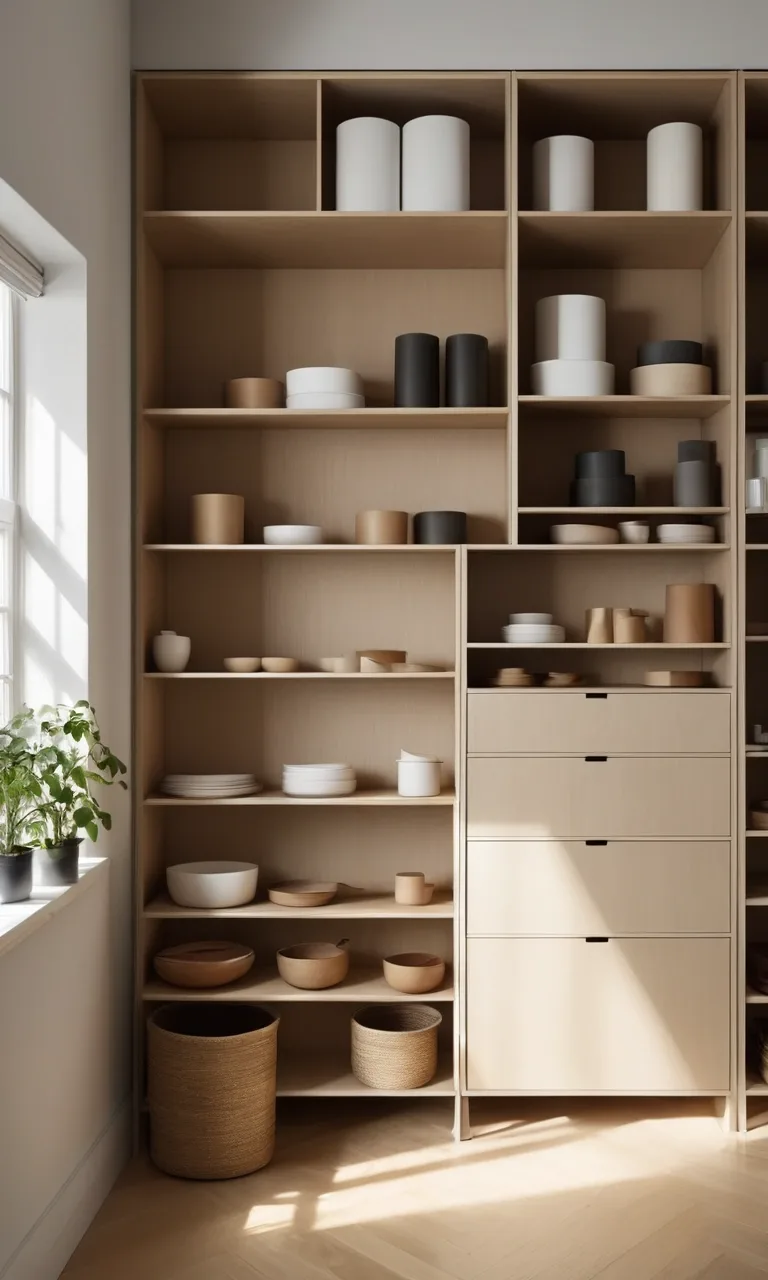
3. Tall Open Shelving
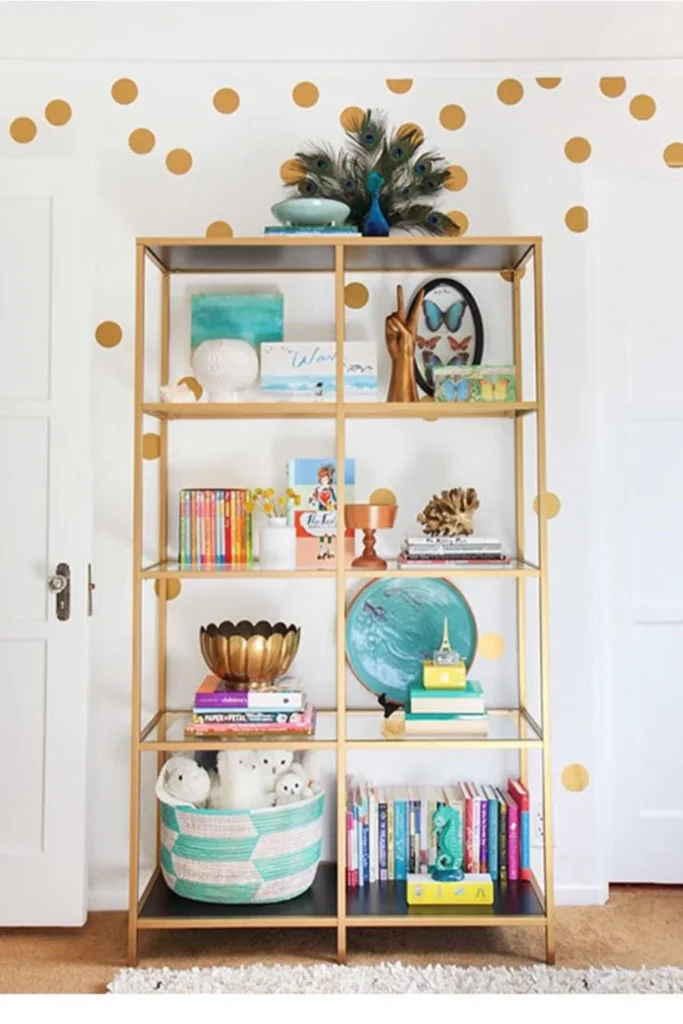
Tall shelving units offer generous storage while maintaining a relatively small footprint.
They work well in bedrooms, family rooms, and apartments where belongings need to serve both practical and decorative purposes.
Arrange books, woven baskets, storage boxes, and personal collections across different levels. Adjustable shelves are particularly helpful because they accommodate changing storage requirements.
Avoid placing all your belongings on the upper levels. Distribute weight appropriately, secure the unit to the wall, and position heavier objects near the bottom.
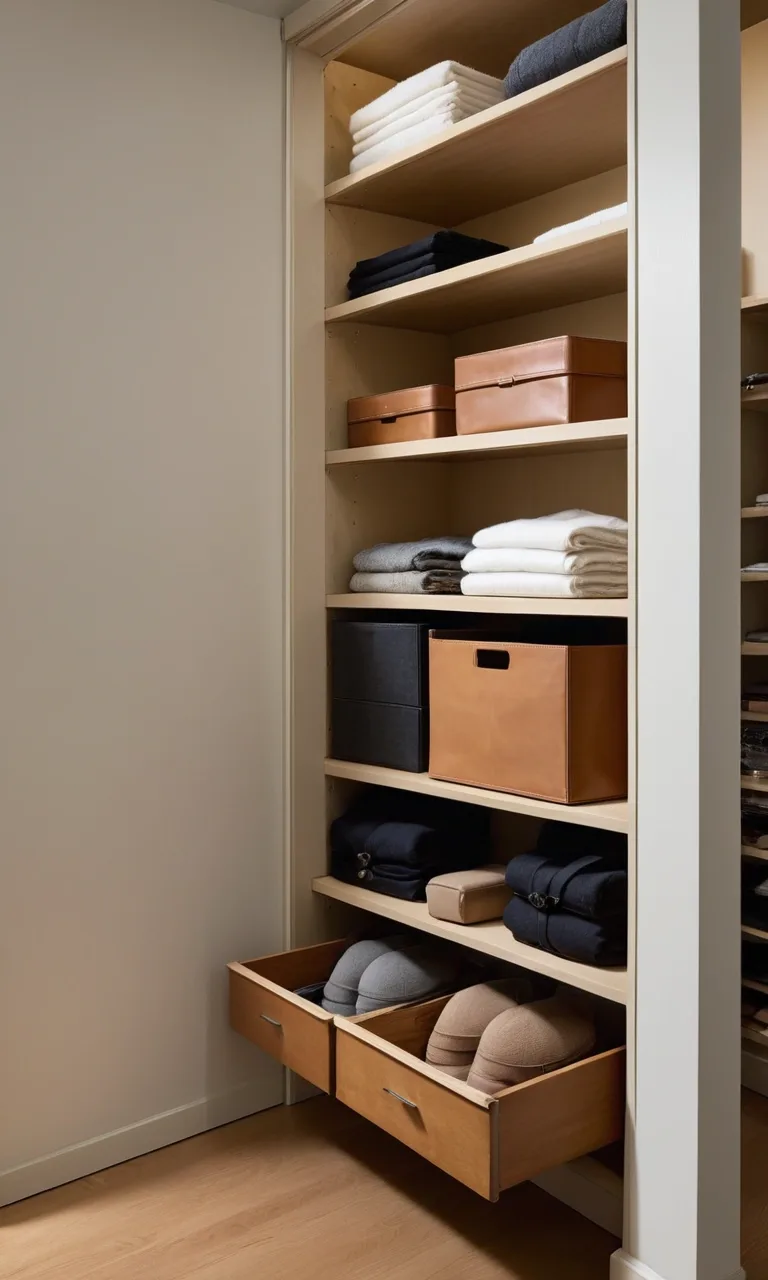
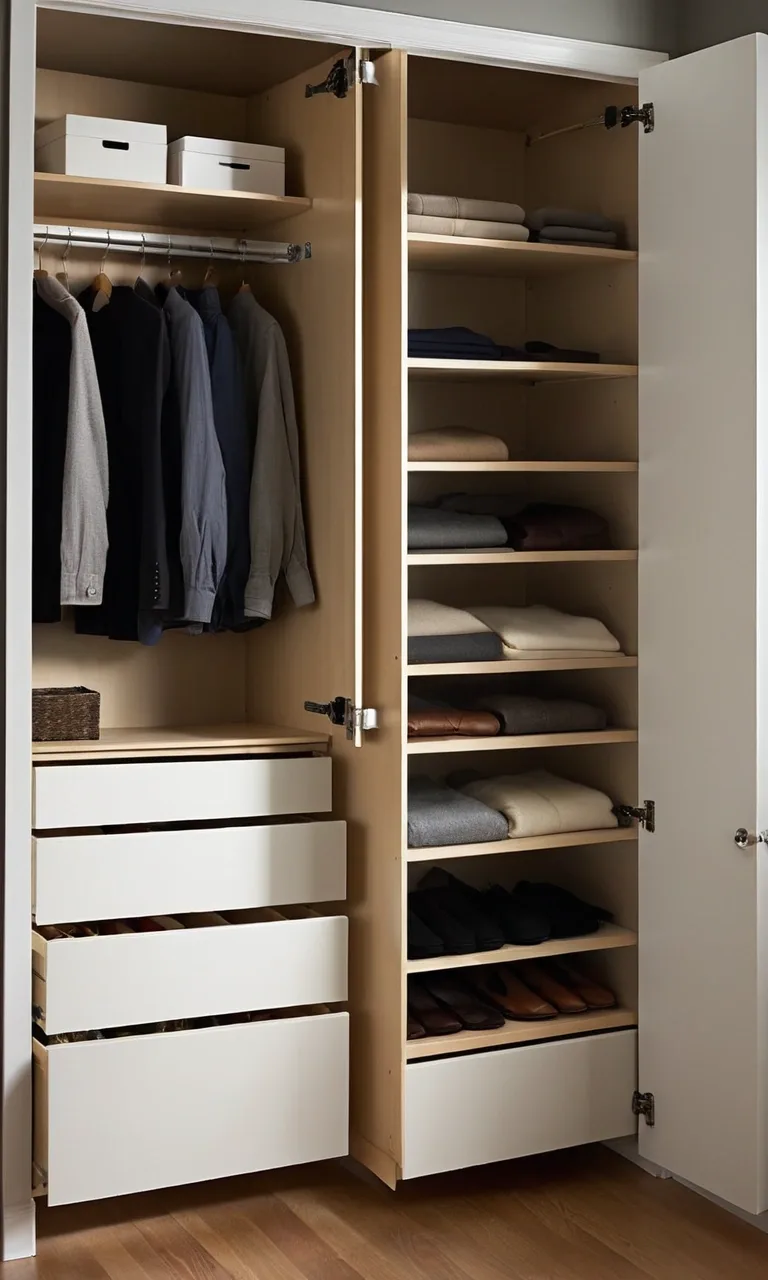
4. Closet Shelf Stacks
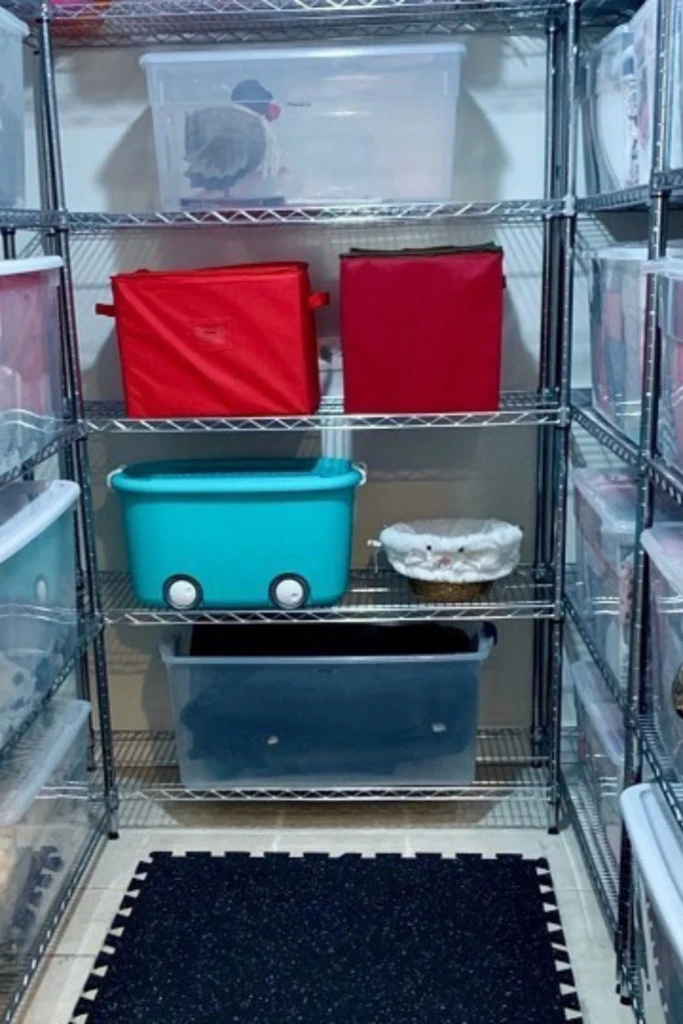
A closet can hold considerably more when its upper and lower sections are organized intentionally.
Install adjustable shelving along an available wall to create separate compartments for folded clothing, shoes, handbags, and seasonal accessories.
Use labeled containers to group similar belongings and prevent small items from getting mixed together. Transparent boxes are convenient when you want to identify their contents without opening them.
Measure the closet carefully before purchasing shelves, making sure doors and hanging garments still have enough clearance.
5. Upright Dish Storage
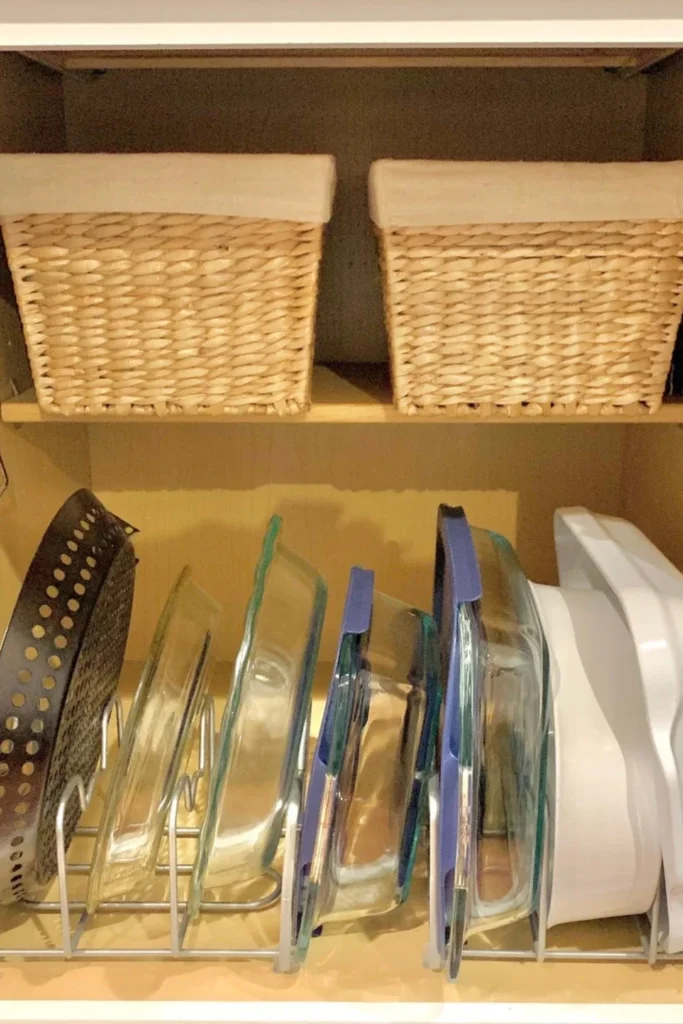
Stacking every plate, tray, and cutting board horizontally can make kitchen cabinets difficult to navigate.
Vertical organizers provide individual slots that keep these items separated and accessible.
Install adjustable dividers inside a deep drawer or lower cabinet to hold cutting boards, baking sheets, serving trays, and pot lids.
Choose a sturdy organizer that prevents items from sliding or tipping when you open the cabinet. Position frequently used cookware near the front for easier access.
This arrangement also reduces the need to lift heavy stacks just to retrieve one item.
6. Slim Laundry Wall
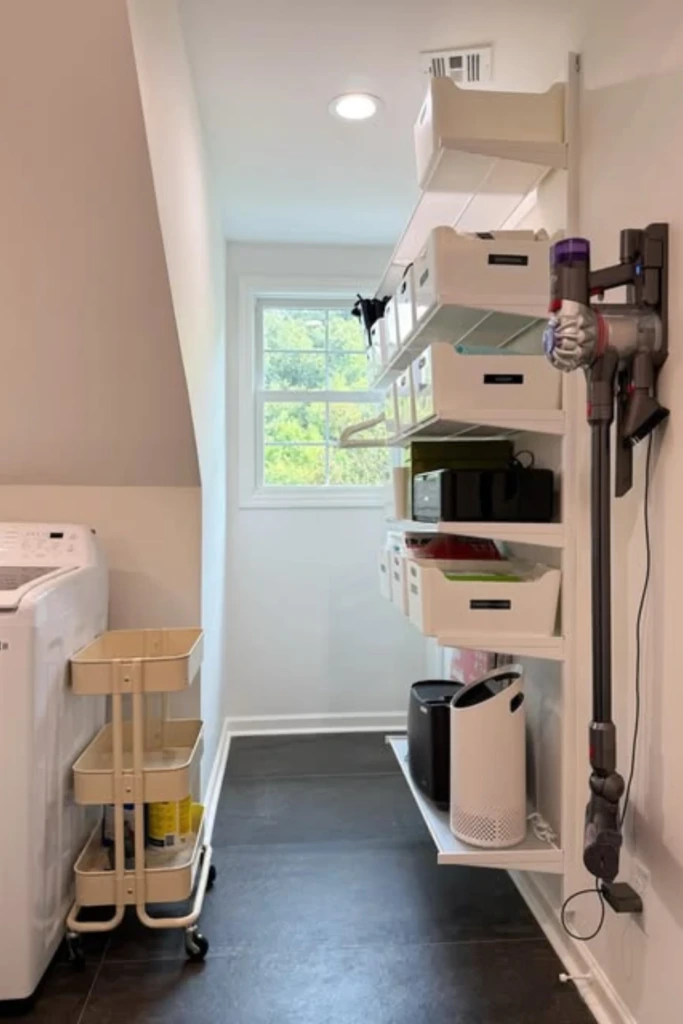
Laundry rooms often contain narrow walls that could provide additional storage without interfering with appliances.
Wall-mounted shelves, hanging baskets, and utility rails can accommodate detergents, stain removers, clothespins, and cleaning accessories.
Place commonly used supplies at a convenient height and reserve upper shelves for extra towels or unopened products.
Choose moisture-resistant materials, and avoid installing storage where it could obstruct appliance ventilation, plumbing connections, or electrical access.
A few carefully positioned shelves can make even a compact laundry area more functional.
7. Hanging Closet Cubes
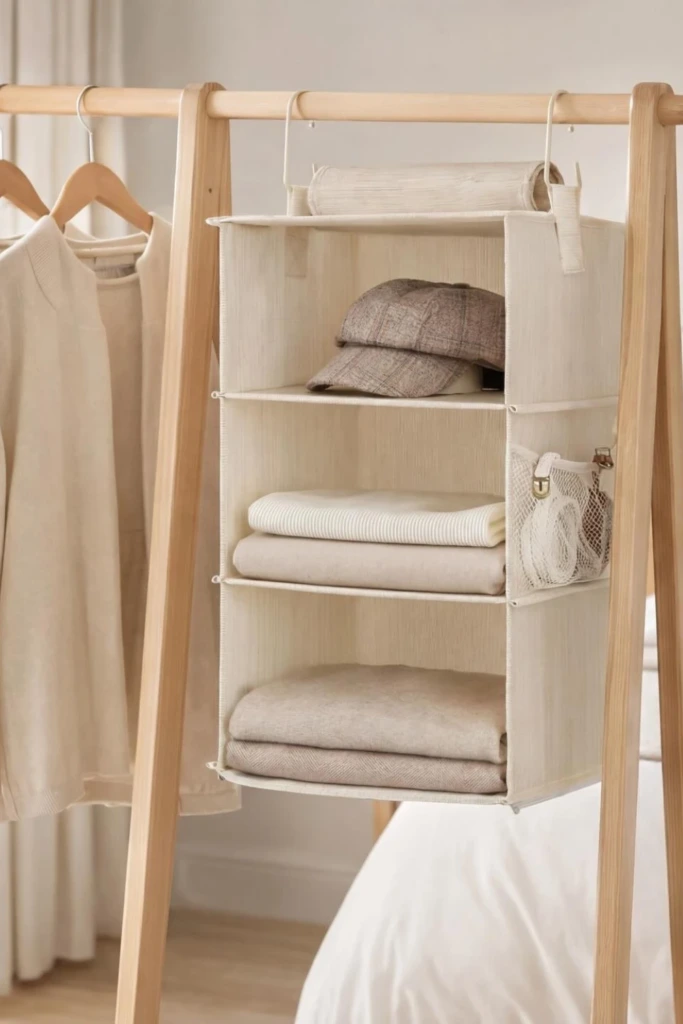
Fabric hanging organizers provide additional compartments without requiring permanent changes to your wardrobe.
Attach one to a sturdy closet rod to store folded T-shirts, scarves, lightweight sweaters, hats, or children's clothing.
Each compartment keeps belongings separate, making it easier to maintain an organized wardrobe throughout the week.
Choose an organizer that fits the available hanging height without touching the floor. Avoid overloading it with heavy items that could strain the fabric or closet rod.
This is a convenient solution for rental homes and shared bedrooms.
8. Stackable Laundry Drawers
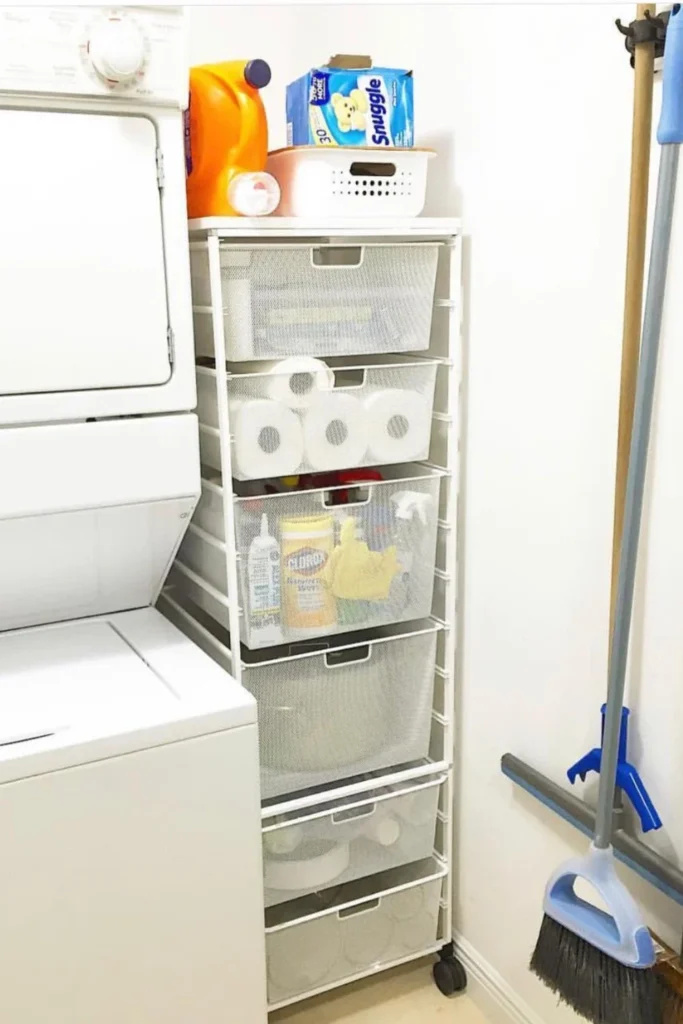
Narrow spaces beside washing machines or laundry cabinets can accommodate slim drawer organizers.
Stackable drawers provide separate storage for dryer balls, washing accessories, cleaning cloths, and small household supplies.
Look for units with smooth-opening drawers and a stable construction. Wheeled versions can be convenient when you need to move the organizer for cleaning.
Measure the available space, including any required appliance clearance, before selecting a unit.
Keep liquid products upright and store potentially hazardous cleaning chemicals securely away from children and pets.
9. Door Spice Racks
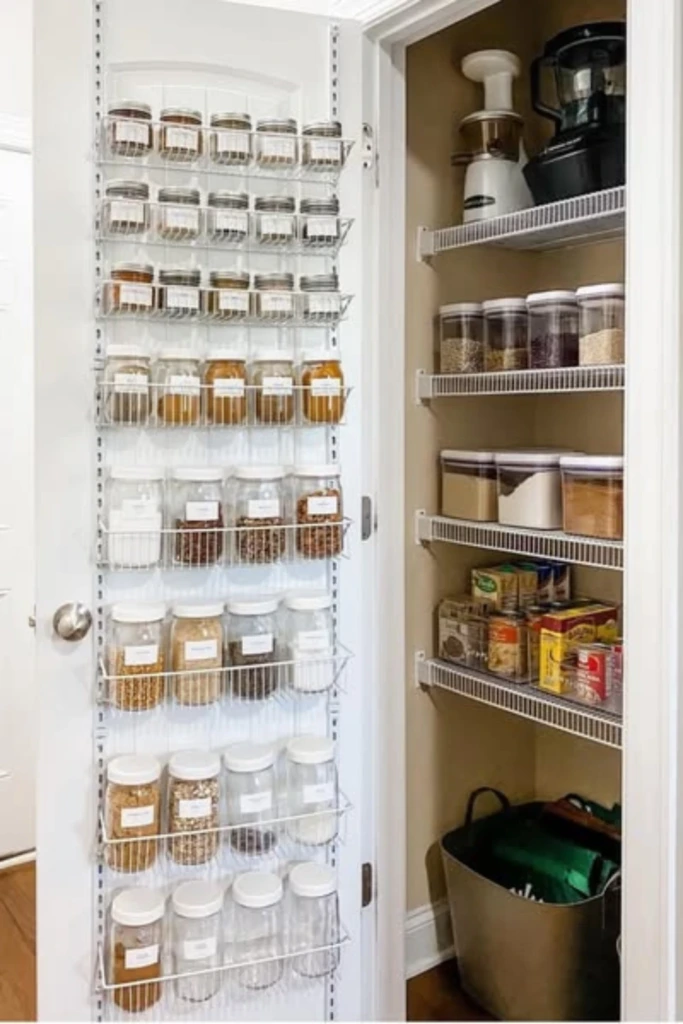
The inside of a pantry door offers an excellent location for lightweight spice storage.
Install shallow racks that hold small jars in organized rows, allowing you to see your seasonings without searching through crowded cabinets.
Arrange frequently used spices at eye level and group the remaining containers by cuisine, purpose, or alphabetical order.
Before installing the racks, check that they won't collide with interior shelves when the door closes.
Use appropriate mounting hardware and avoid exceeding the door manufacturer's recommended load capacity.
10. Vertical Towel Ladder
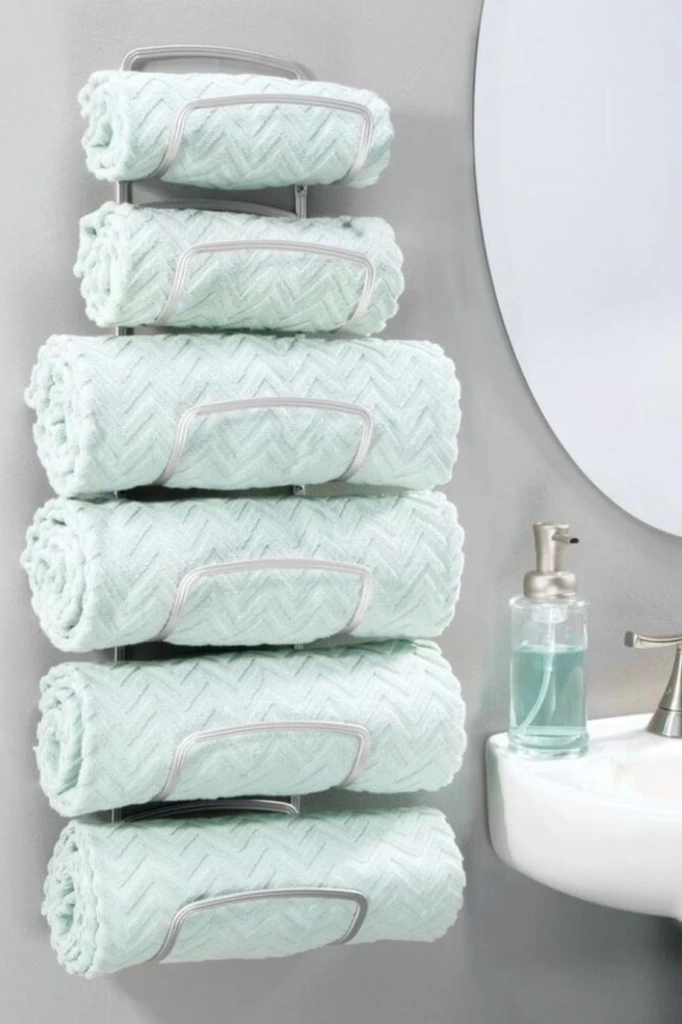
A towel ladder introduces practical storage while adding a decorative touch to the bathroom.
Its narrow design makes it suitable for spaces beside a vanity, bathtub, or unused wall.
Hang towels individually across the rungs to give them room to dry. A wooden ladder can complement a natural bathroom design, while a metal version suits contemporary interiors.
Choose a moisture-resistant finish and ensure the ladder is stable or securely attached to the wall.
Avoid overcrowding the rungs, since damp towels need airflow to dry properly.
11. Floating Spice Shelves

Floating shelves can turn a narrow kitchen wall into an accessible seasoning station.
Install several shallow shelves near your food preparation area to organize frequently used herbs, spices, and small cooking essentials.
Use containers with readable labels so you can quickly identify ingredients while preparing meals.
Position shelves away from direct stove heat, steam, and strong sunlight, which can affect spice quality over time.
Wooden shelves create a warm appearance, while slim metal shelves provide a simple, modern alternative.
12. Bathroom Wall Shelves
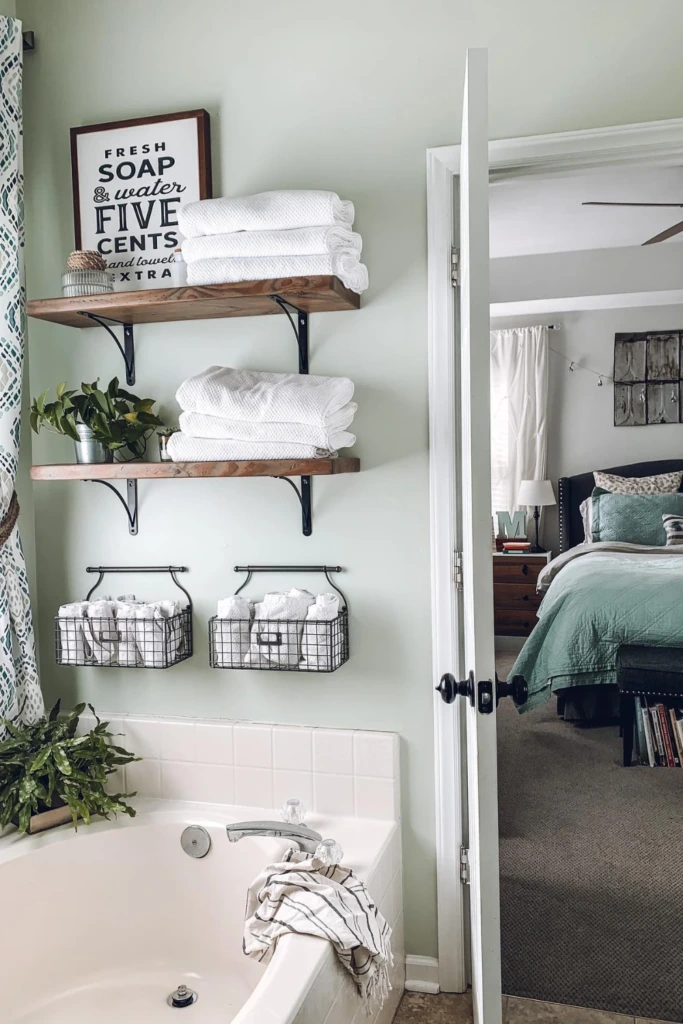
Wall shelves are especially useful in bathrooms where vanity cabinets provide limited storage.
Consider adding shelves above a towel rack, beside a mirror, or along an otherwise unused wall.
Use them for folded washcloths, extra toiletries, and small baskets containing personal care products.
Choose finishes designed to tolerate humidity, and install shelves with appropriate anchors for the wall material.
Keep electrical appliances and moisture-sensitive belongings away from wet areas. A few neatly arranged containers can make open bathroom storage look intentional rather than crowded.
13. Ladder Cabinet Access
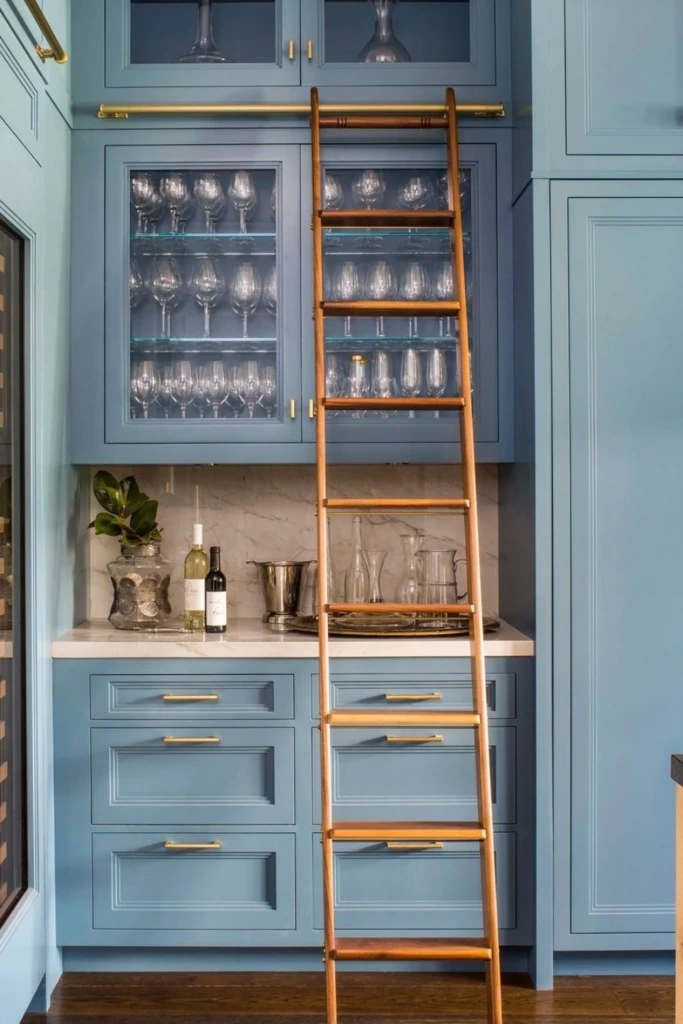
Tall kitchen cabinets provide valuable storage, but reaching their upper sections requires planning.
A properly installed rolling library ladder can be an attractive option for kitchens with extensive built-in cabinetry and high ceilings.
The ladder should use hardware specifically designed for its intended track and load requirements, with professional installation where necessary.
For ordinary homes, a stable household step stool may be a more practical alternative.
Keep everyday dishes within normal reach and reserve high cabinets for lightweight belongings used only occasionally.
14. Vertical Desk Shelving
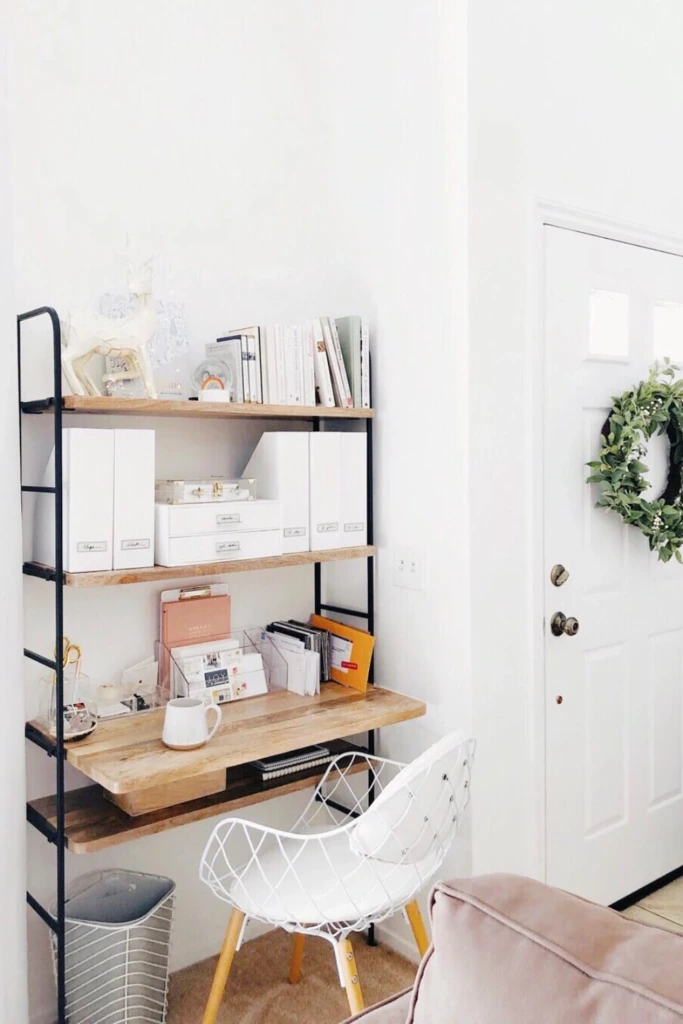
A small workspace becomes easier to manage when office supplies are organized above the desk rather than spread across its surface.
Install floating shelves, a compact shelving tower, or a desk hutch to accommodate notebooks, reference materials, stationery, and storage boxes.
Place frequently used supplies on lower shelves and reserve upper sections for archived documents or decorative items.
Include a small desk lamp to illuminate your work without creating shadows beneath overhead shelves.
Keep shelves positioned so they don't restrict your monitor placement or comfortable working posture.
15. Modular Wall System
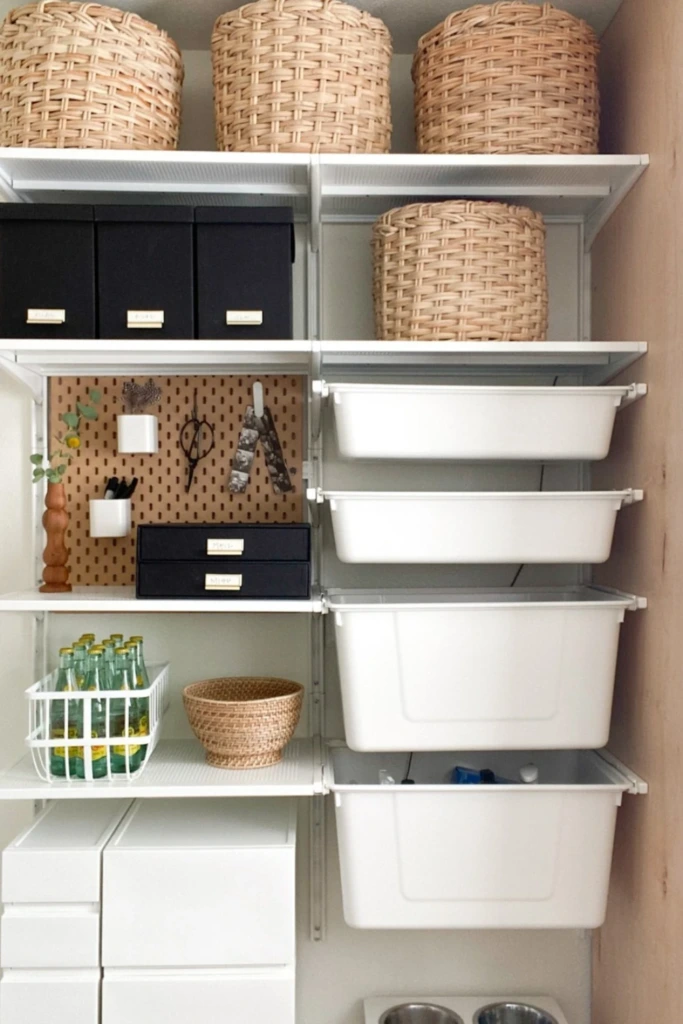
Modular storage systems offer flexibility for rooms where organizational needs change regularly.
Wall-mounted rails can support adjustable shelves, baskets, hooks, and other accessories, allowing you to customize the arrangement.
These systems work particularly well in utility rooms, home offices, closets, and hobby areas.
Create separate sections for different activities and reposition components as your collection grows or changes.
Check that the tracks, brackets, and wall fixings are compatible and rated for the expected loads.
A modular arrangement makes it possible to update your storage without replacing the entire system.
16. Pantry Shelf Zones
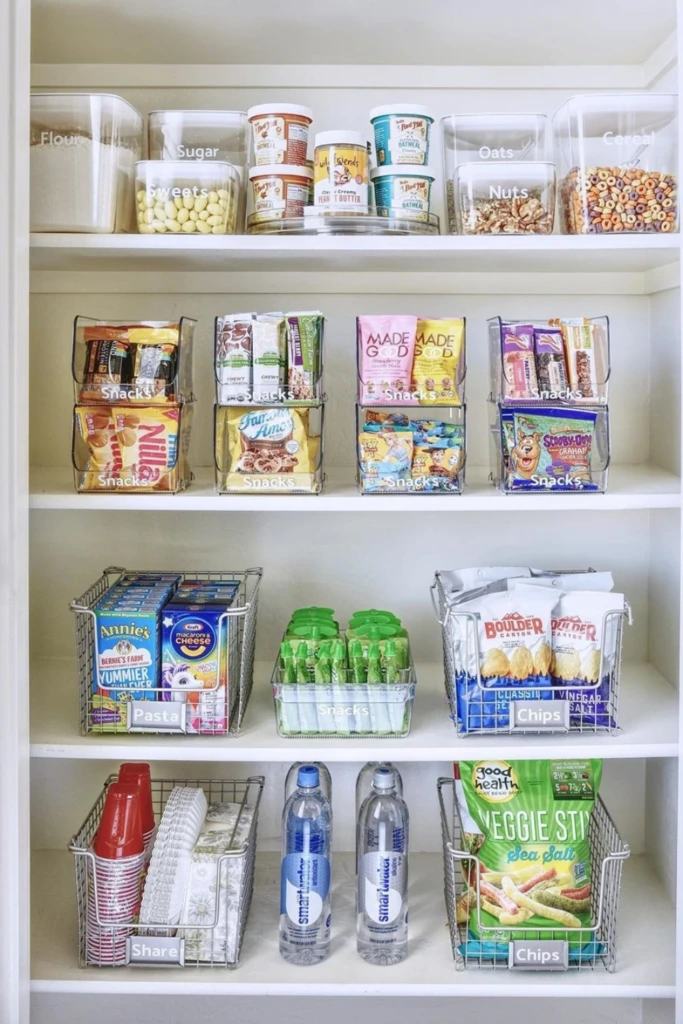
Organizing a pantry by height and purpose can make food storage easier to maintain.
Divide the shelves into practical categories, such as breakfast supplies, canned goods, snacks, baking ingredients, and spare groceries.
Place heavier products on lower shelves and keep regularly used food at a comfortable reaching level.
Use shallow baskets or shelf organizers to prevent smaller packages from disappearing behind larger containers.
Check expiration dates periodically and move older products toward the front so they're more likely to be used first.
17. Pull-Out Pantry Tower
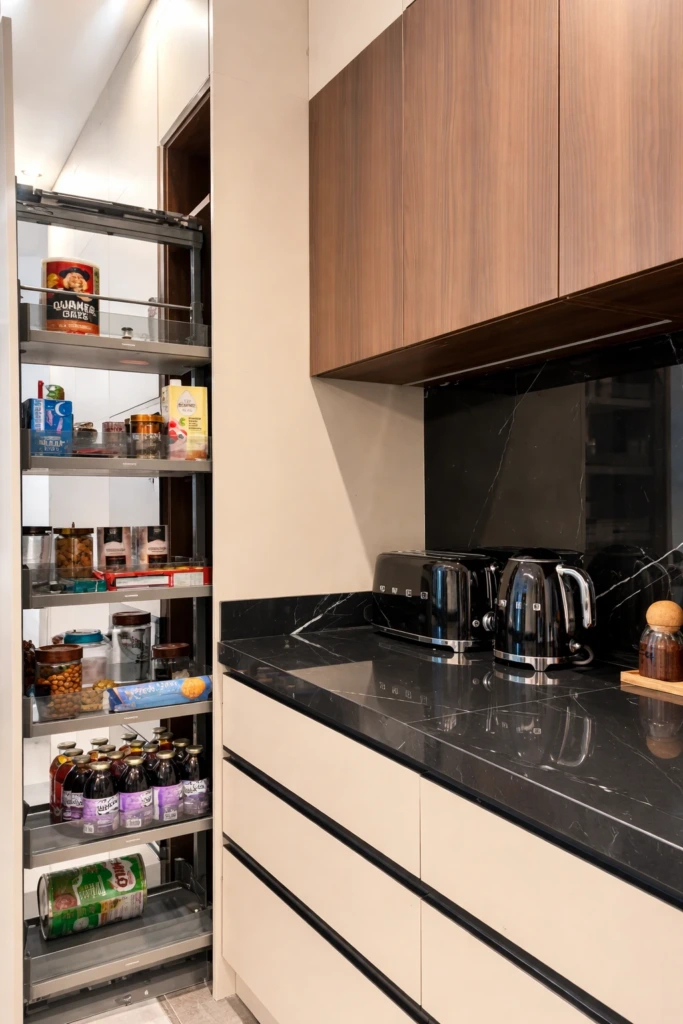
A slim pull-out pantry can transform an otherwise awkward kitchen gap into accessible storage.
These tall, narrow units are particularly useful beside cabinetry when a standard cupboard won't fit.
Multiple shelves can accommodate jars, bottles, dry ingredients, and packaged foods while allowing the contents to slide into view.
Select a unit with appropriate weight capacity and reliable sliding hardware. Tall pull-out systems should be installed according to the manufacturer's instructions to prevent instability.
Measure the opening carefully, including clearance for handles and adjacent cabinet doors.
18. Vertical Cleaning Drawers
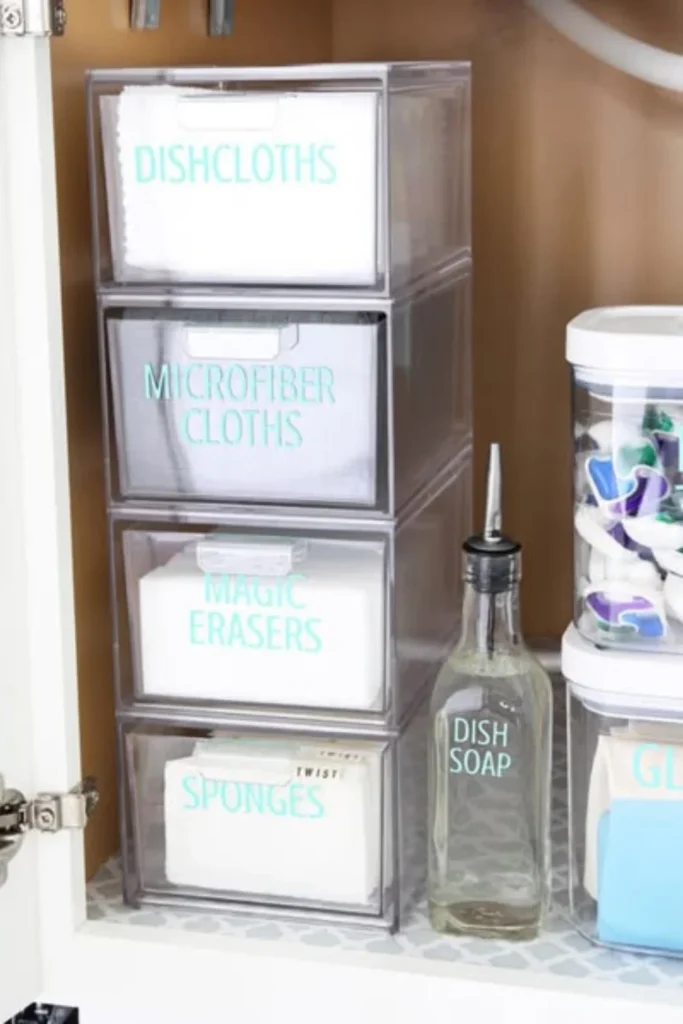
Cleaning supplies can become difficult to locate when they're scattered across the bottom of a cabinet.
Small stacking drawers provide dedicated compartments for sponges, brushes, microfiber cloths, and other cleaning accessories.
Transparent drawers make it easy to identify contents, while labels help everyone return supplies to the correct location.
If you're organizing an under-sink cabinet, account for plumbing pipes and potential leaks.
Keep hazardous products in their original containers and follow label instructions for secure storage. Avoid placing dangerous chemicals in easily accessible drawers.
19. Vertical Cabinet Dividers
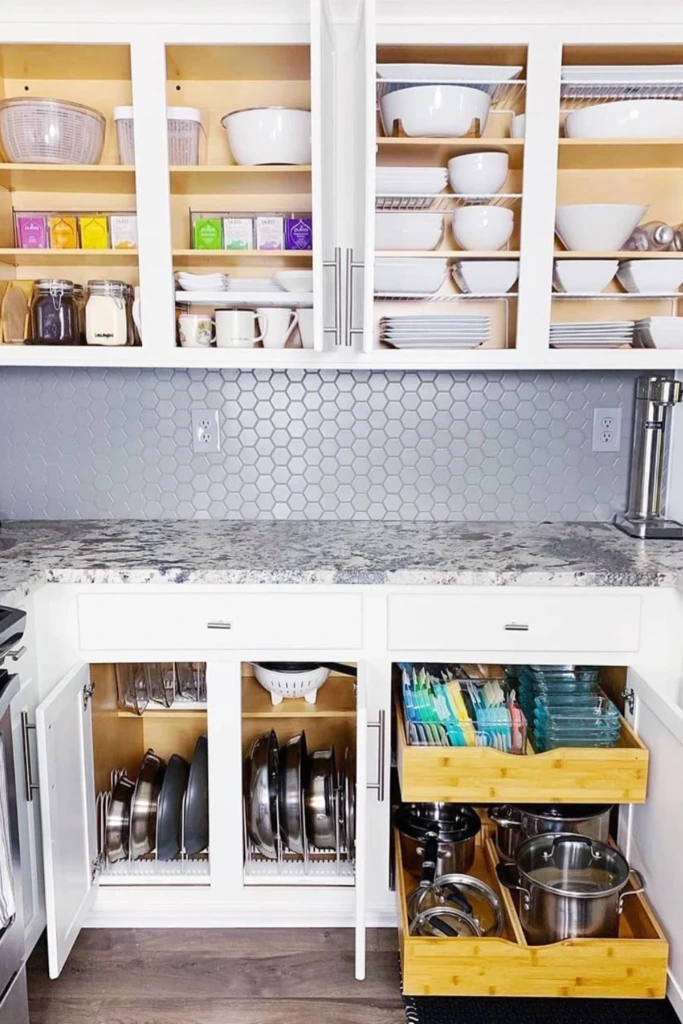
Kitchen cabinets become easier to use when flat cookware has its own upright compartment.
Install vertical dividers to separate baking trays, cutting boards, cooling racks, and pan lids.
Adjustable organizers are especially useful because you can customize the spacing for different sizes of cookware.
Choose a location where each item can be removed without scraping neighboring pieces or hitting the cabinet frame.
For heavier cookware, consider sturdy pull-out organizers specifically designed to support the weight.
20. Cabinet Shelf Risers
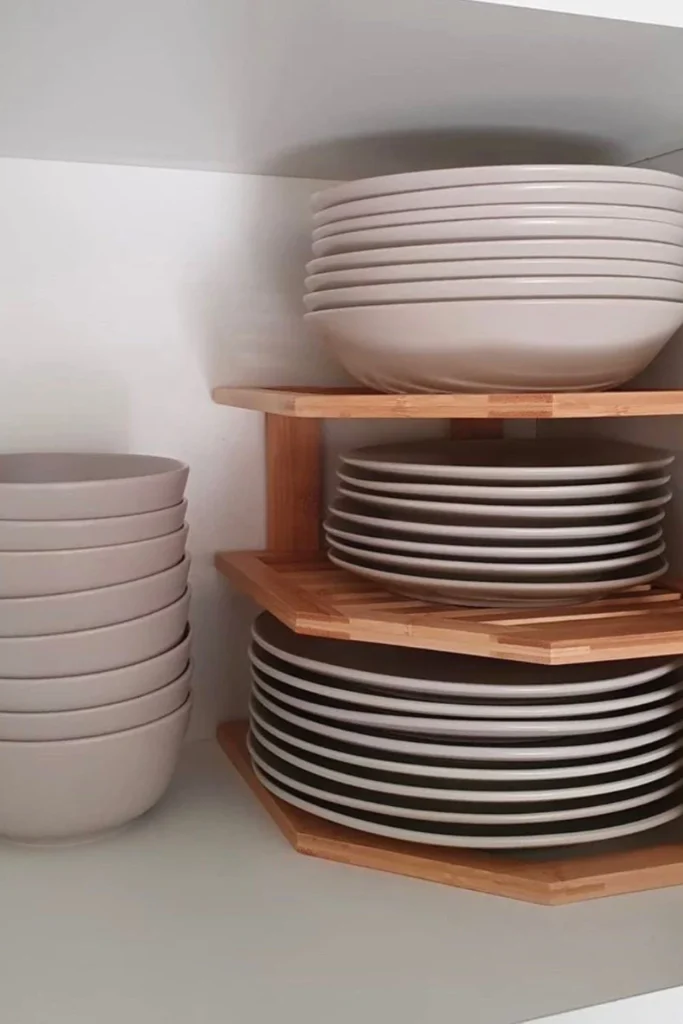
Many kitchen cupboards have unused height between stacked dishes and the shelf above.
Shelf risers create an additional surface, allowing you to organize cups, bowls, small plates, or food containers across separate levels.
Choose a riser with a stable base and dimensions that fit comfortably inside the cabinet.
Avoid placing heavy or fragile objects on lightweight risers, and follow the manufacturer's weight recommendations.
These organizers are especially helpful when you want to improve existing cabinets without drilling holes or installing permanent shelving.
21. Double Closet Rods
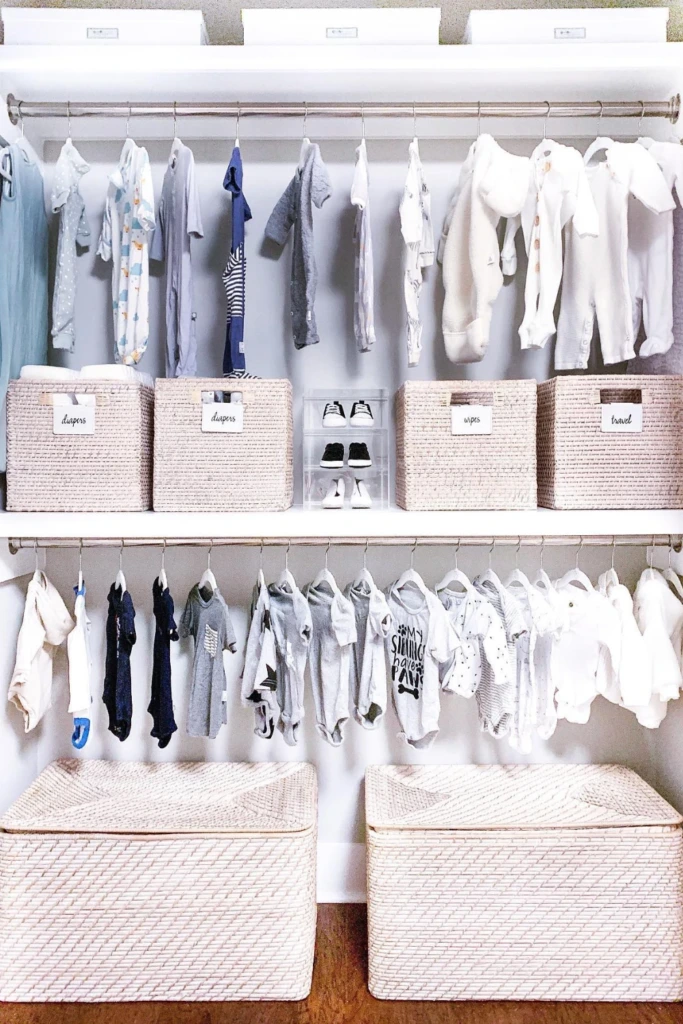
Adding a second hanging rod can increase usable wardrobe capacity when most of your clothing is relatively short.
Arrange shirts, blouses, folded trousers, and children's garments across two levels instead of leaving unused space beneath a single rod.
Measure the length of your clothing before installing the lower rail to ensure garments won't overlap excessively.
Reserve a separate full-height section for dresses, long coats, and other longer items.
Use secure brackets and check the combined load capacity of the closet structure.
22. Vanity Shelf Stacking
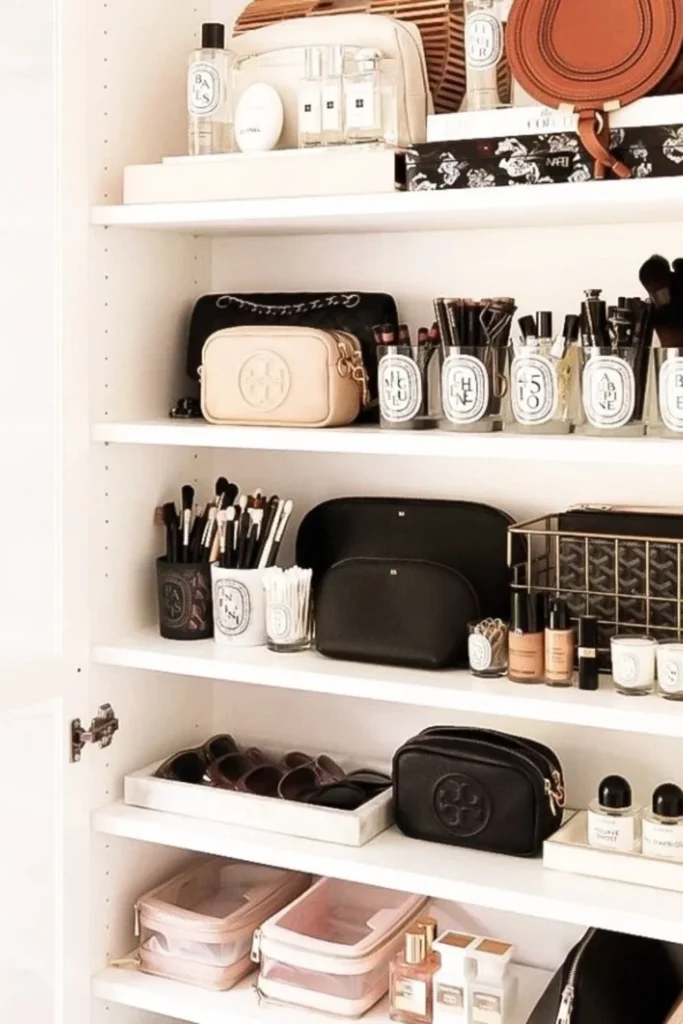
Vanity cabinets can quickly become crowded with skincare bottles, makeup, hair accessories, and grooming essentials.
Small stackable shelves and tiered organizers help separate products into manageable groups.
Keep everyday items within easy reach, while placing occasional-use products in upper compartments or labeled containers.
Choose washable, moisture-resistant organizers that can be cleaned easily if a product spills.
Avoid placing tall or fragile bottles on unstable shelves, and regularly remove empty or expired products to preserve useful storage space.
23. Above-Toilet Shelves
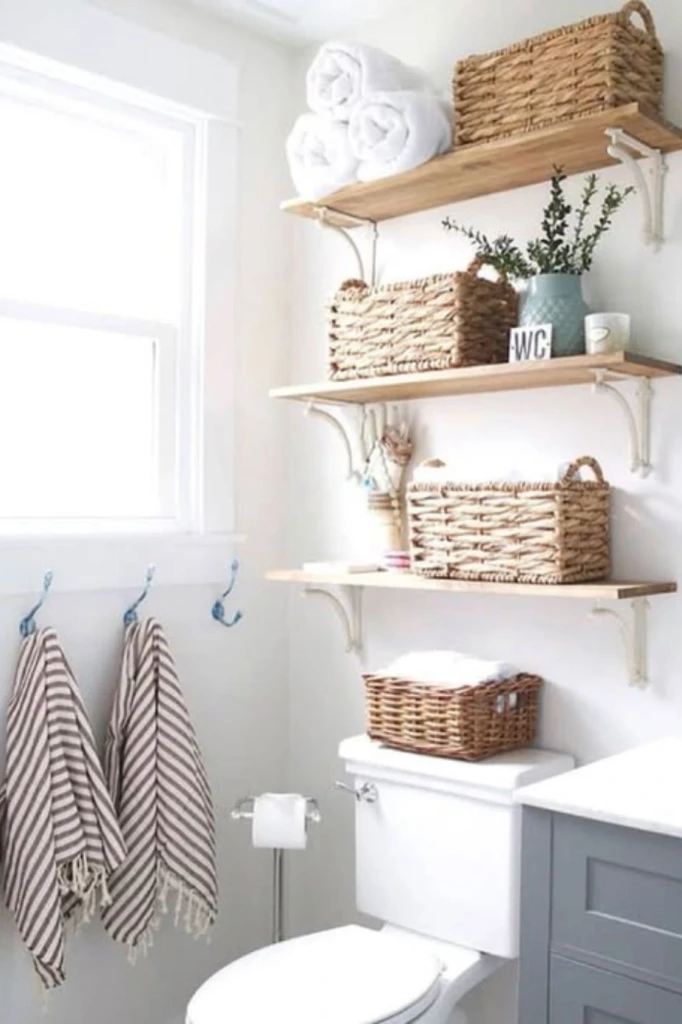
The wall above a toilet often provides enough room for additional bathroom storage.
Install shallow floating shelves or a purpose-built over-toilet cabinet to hold spare toilet paper, folded towels, and lightweight baskets.
Measure the available clearance so the shelves don't interfere with comfortable use of the toilet or access to its tank.
Secure wall-mounted units properly and avoid storing breakable or heavy objects directly overhead.
Closed baskets are useful for concealing small toiletries while maintaining a tidy appearance.
24. Craft Supply Columns
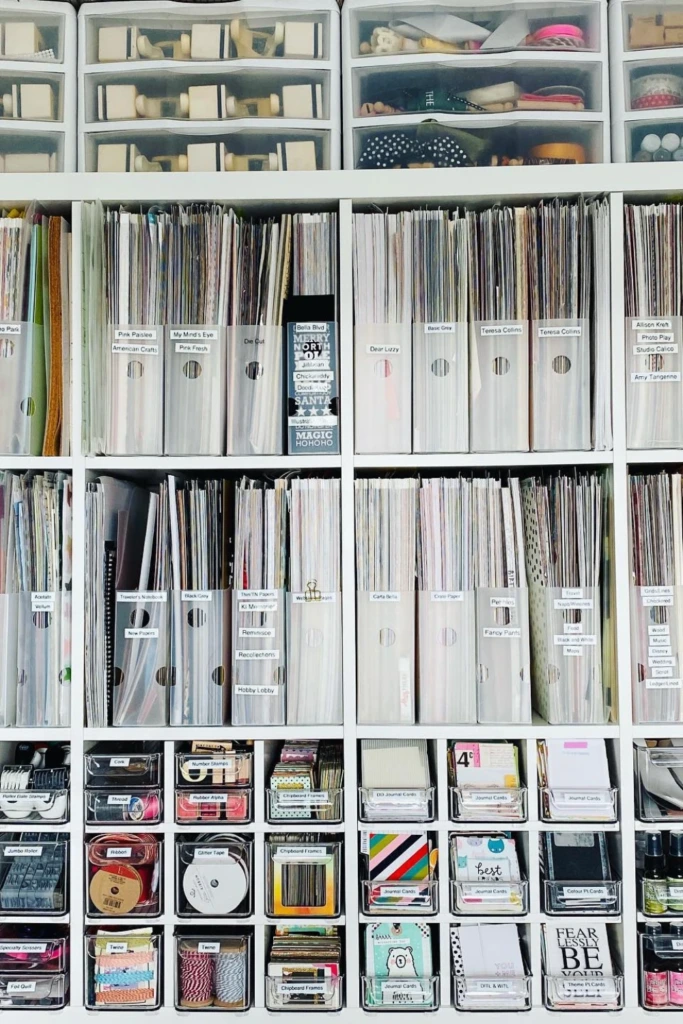
Craft rooms and creative workspaces benefit from storage that keeps materials separated and easy to identify.
Tall cubby units can accommodate yarn, paper, fabric, paint supplies, and small project boxes.
Use narrow compartments for paper and folders, and labeled bins for beads, ribbons, buttons, and other loose materials.
Keep frequently used tools at a convenient height and reserve upper compartments for lightweight supplies.
Secure tall shelving and store sharp tools, adhesives, and hazardous materials according to their safety requirements.
25. Door Shelf Stack
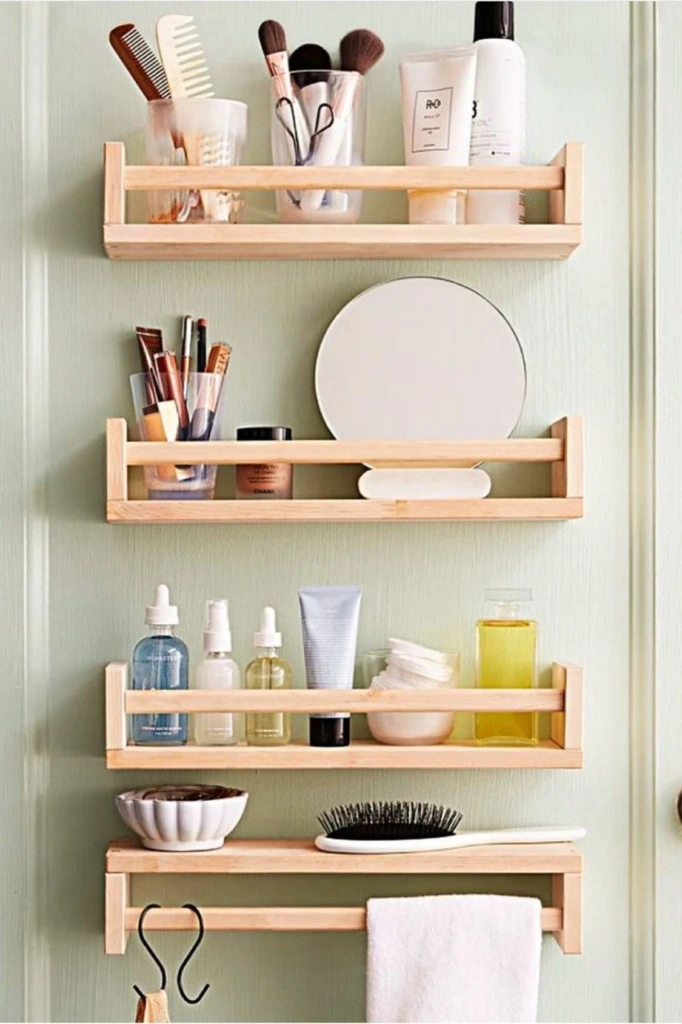
A door-mounted shelving system provides extra storage in rooms with limited wall space.
Shallow organizers can hold toiletries, hair accessories, cleaning cloths, and lightweight household essentials.
Over-the-door racks are convenient for renters because many require no permanent installation.
Choose an organizer that fits the door's thickness and allows it to open and close freely.
Check that the added weight won't strain hinges, and use protective padding where appropriate to prevent scratches or rattling.
26. Vertical Paper Files
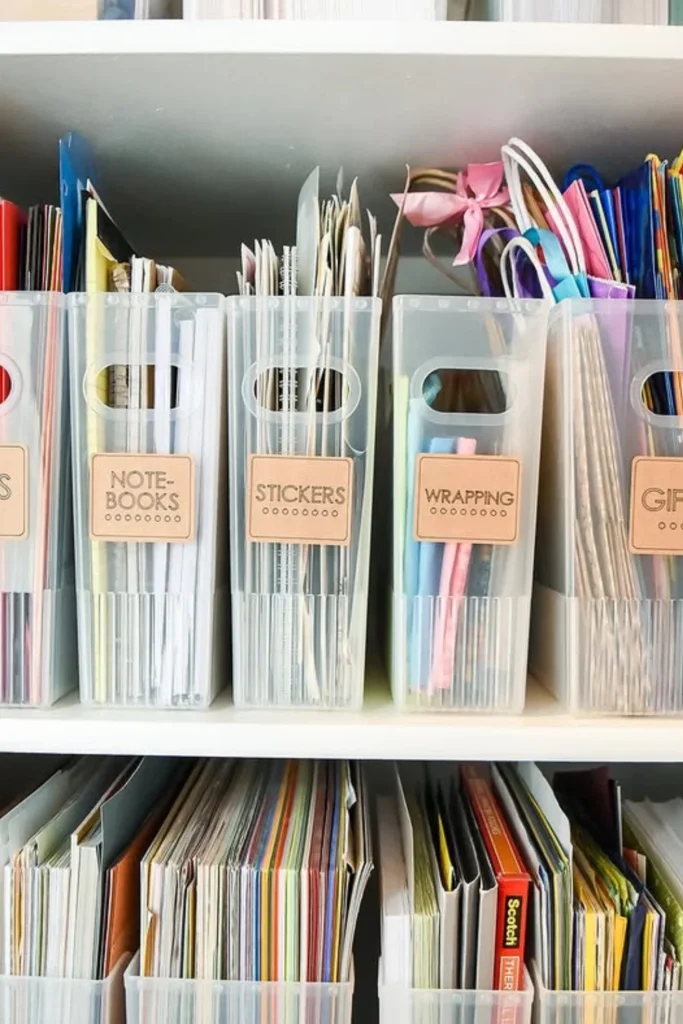
Paperwork is easier to sort when documents are arranged upright in clearly identified categories.
Magazine holders, file boxes, and vertical desktop organizers can accommodate bills, notebooks, instruction manuals, and important records.
Separate documents by purpose, such as household expenses, schoolwork, warranties, or ongoing projects.
Use labeled folders to make individual papers easier to retrieve and prevent loose sheets from becoming disorganized.
Keep confidential documents in a secure location, and store important originals in suitable protective containers.
Can renters add vertical storage safely?
Yes. Renters can improve storage without making major changes to their homes.
Freestanding shelving, over-the-door organizers, and lightweight hanging storage are practical options when drilling isn't permitted.
Tension-mounted systems can also work when installed on suitable surfaces and used within their rated capacity.
Adhesive hooks should only support appropriate lightweight items, following the manufacturer's surface and weight instructions.
Tall freestanding furniture still presents a tipping risk, so use approved anti-tip restraints and discuss suitable mounting options with your landlord when necessary.
How do I stop vertical storage from looking messy?
The easiest way to maintain attractive vertical storage is to give each section a specific purpose.
Group similar belongings together and use containers to keep smaller objects from spreading across shelves.
Choose a limited selection of coordinating baskets, boxes, and organizers for a more consistent appearance.
Avoid filling every available shelf completely. Leaving some open space makes the arrangement easier to use and less visually overwhelming.
Keep frequently used belongings accessible, return items to their designated places, and periodically remove things you no longer need.
Ultimately, effective vertical storage isn't about fitting as many possessions as possible into a room. It's about creating an organized home where everything has a sensible place and daily routines feel easier.