23 Laundry Room Storage Ideas for 2026
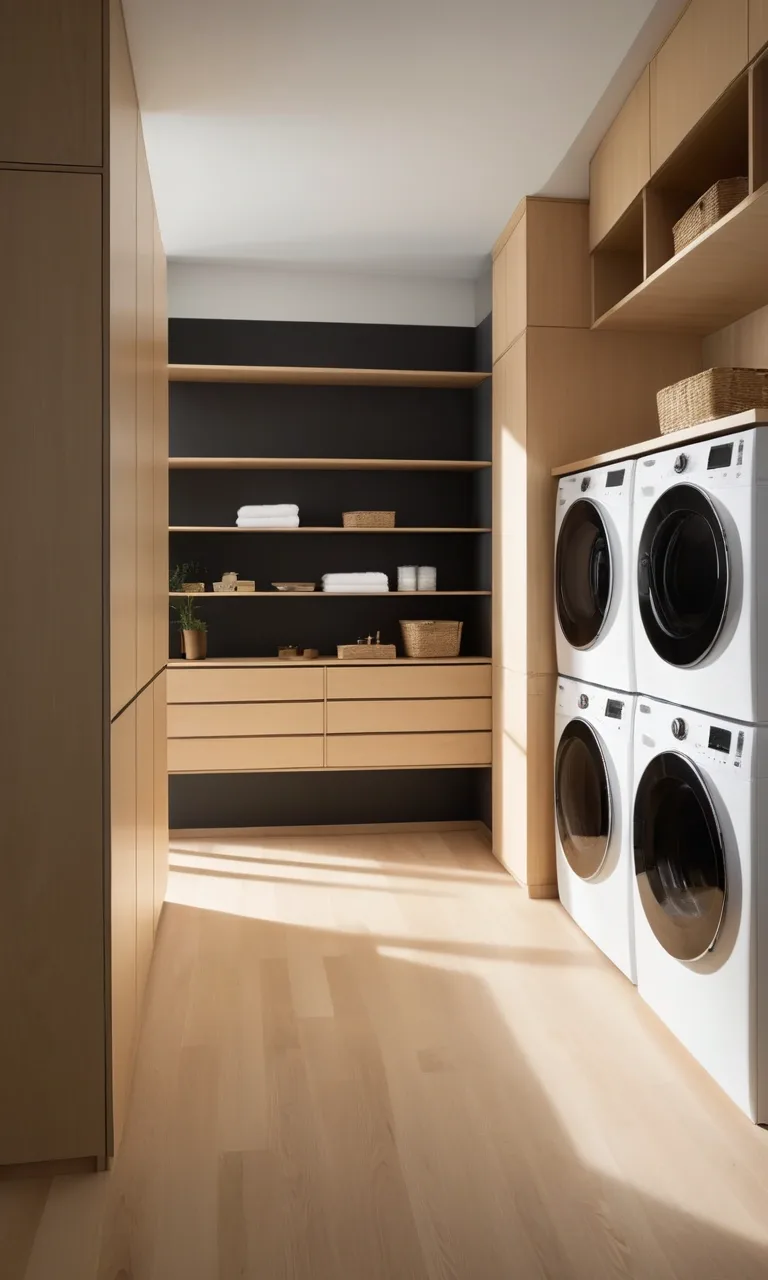
A laundry room can become one of the busiest and most disorganized spaces in the house. Between detergent bottles, dirty clothes, cleaning tools, and overflowing baskets, even a spacious room can feel difficult to manage.
The good news is that you don't need a complete renovation to make things better. Thoughtful storage can transform unused walls, narrow corners, and awkward spaces into practical areas that support your daily routine.
Whether you have a dedicated laundry room or a small washing area tucked into a hallway, the right organization system can make a noticeable difference.
Here are 23 laundry room storage ideas to help you create a functional, attractive, and easier-to-maintain space.
What Are the Best Shelving Ideas for Laundry Room Organization?
The most effective laundry room shelving combines accessibility, durability, and efficient use of available space. Wall-mounted shelves are particularly useful because they provide storage without reducing the floor area needed for laundry baskets and movement.
Adjustable shelving offers flexibility for different bottle heights, while enclosed cabinets are useful for concealing supplies and keeping household chemicals secured.
Before installing anything, measure the available wall space, check the shelf's weight capacity, and leave the clearances recommended by your appliance manufacturer.
A well-planned arrangement should keep frequently used items within comfortable reach and reserve higher shelves for lightweight supplies used less often.
1. Hanging Rack
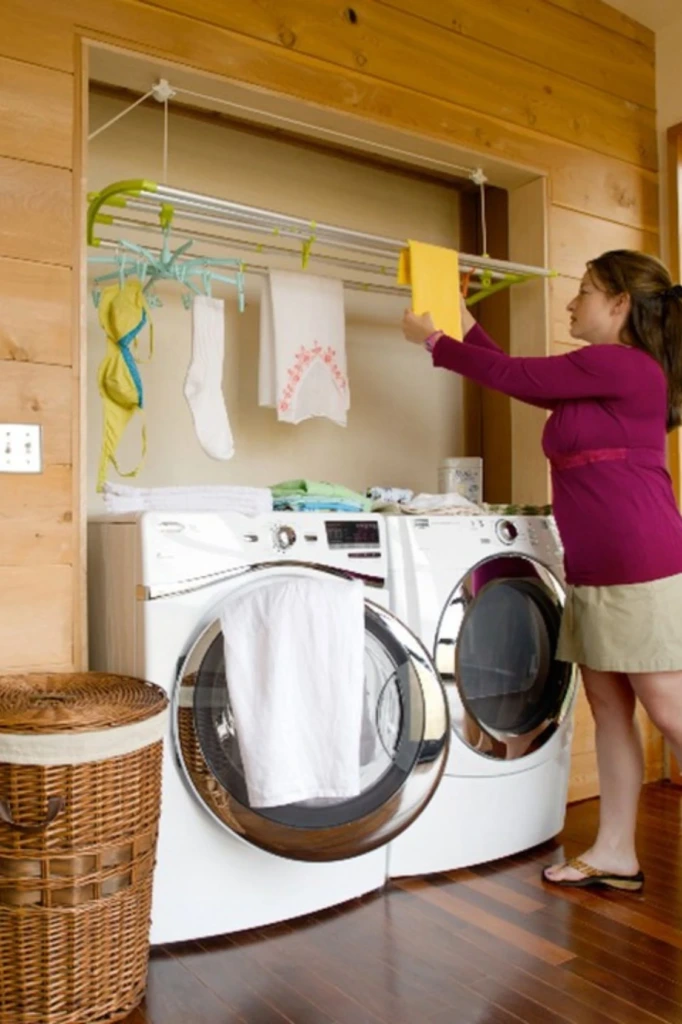
A hanging rack is a practical addition for clothes that shouldn't go into the dryer. It provides a dedicated area for delicate fabrics, freshly washed shirts, and garments that need to air-dry.
Wall-mounted folding racks work particularly well in compact spaces because they can be tucked away between uses.
Install the rack where clothes have enough room to hang freely without touching appliances or blocking walkways. Choose moisture-resistant materials and secure the mounting hardware to suitable wall supports.
For extra convenience, position a small basket nearby to collect hangers and clothing clips.
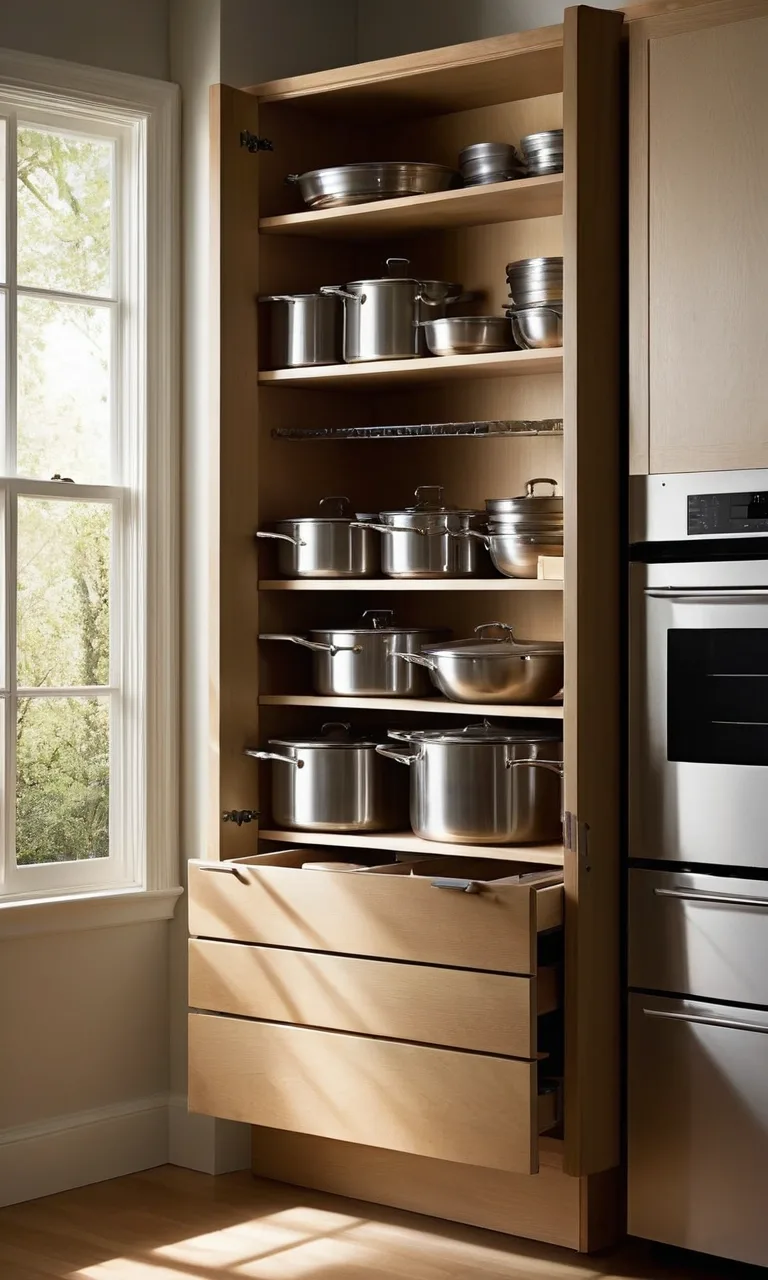
2. Tall Cabinet
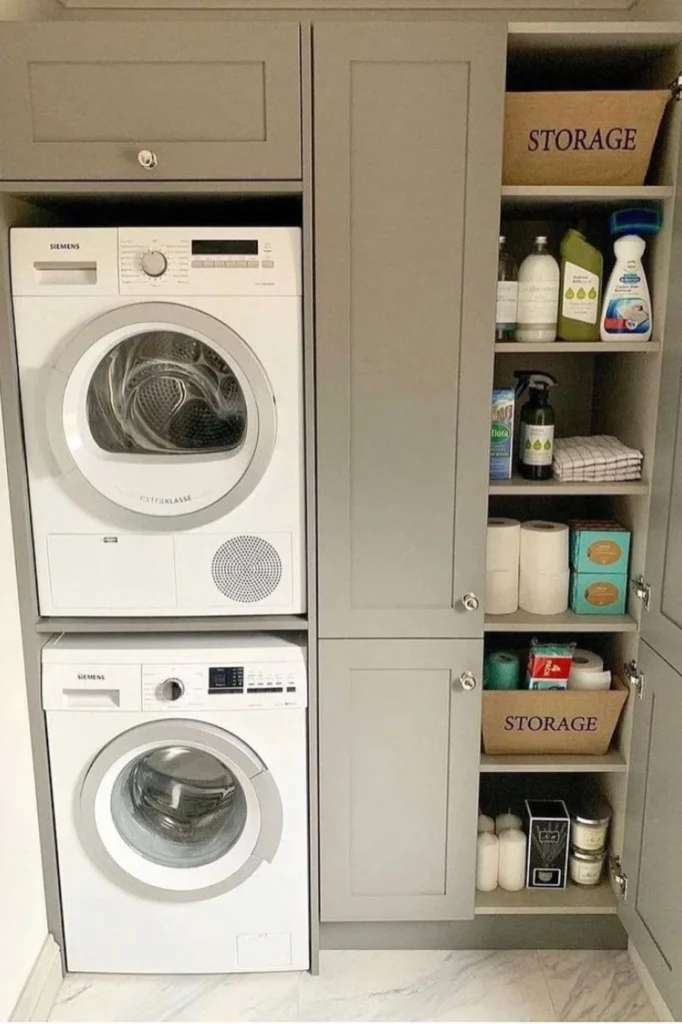
A tall cabinet offers generous storage while occupying relatively little floor space. It's an excellent option for keeping spare detergents, cleaning products, towels, and other household essentials organized.
Adjustable interior shelves make it easier to accommodate containers of different sizes. You can also use small bins to separate laundry accessories from general cleaning supplies.
Keep heavy bottles on lower shelves and lighter items toward the top. If the cabinet is freestanding, anchor it securely to prevent tipping.
A narrow cabinet with doors is especially useful when you want the laundry area to look tidy without displaying every product.
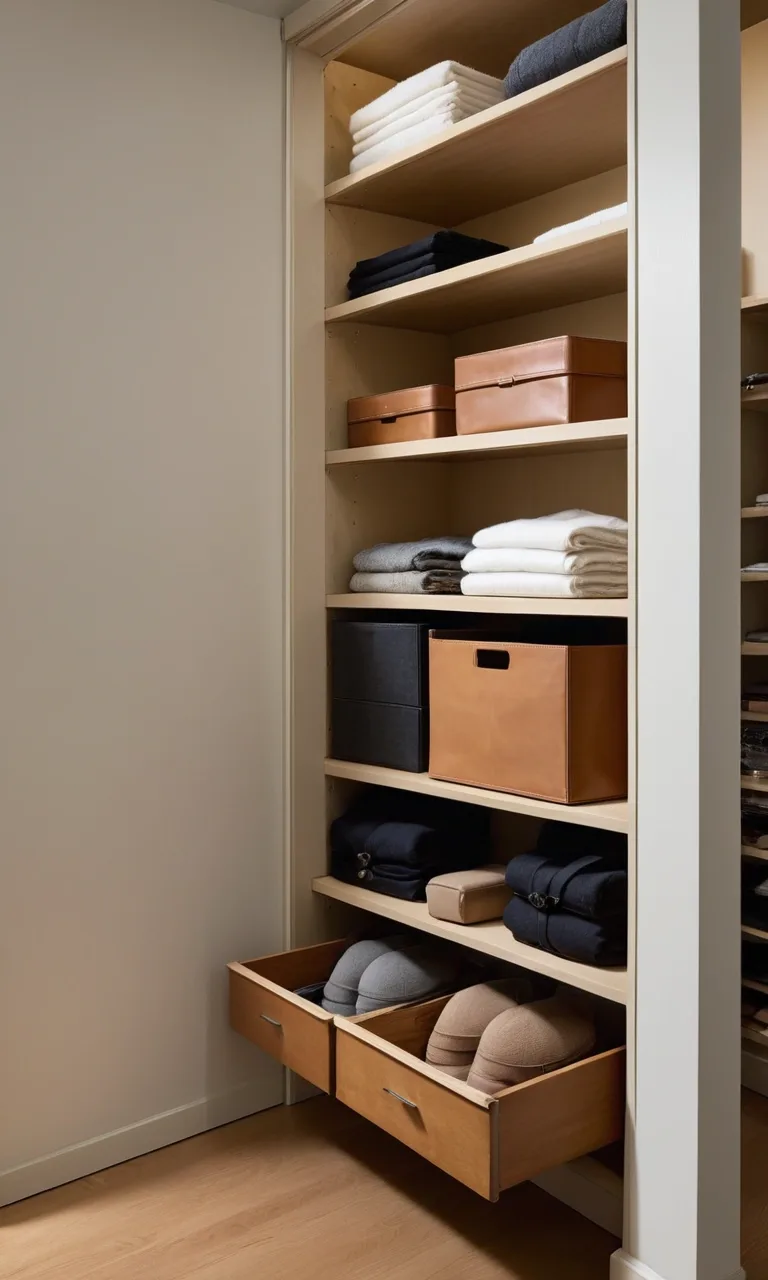
3. Built Storage
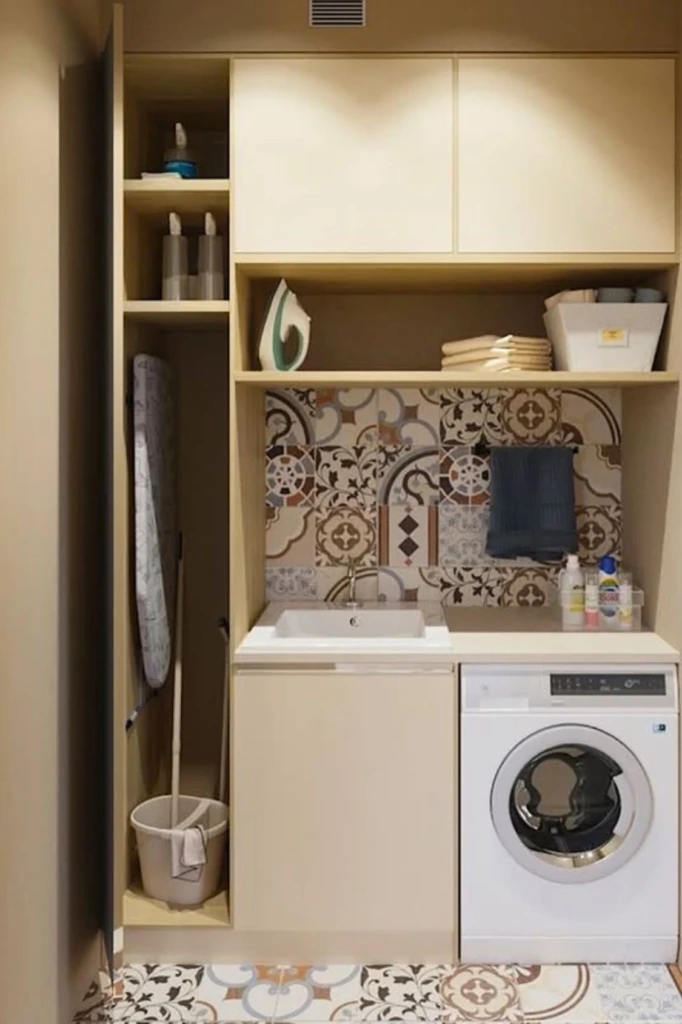
Custom built-in storage can make difficult corners and irregular wall spaces much more useful.
A combination of drawers, cupboards, and open compartments allows you to organize supplies according to how often they're needed.
For example, a shallow drawer can hold stain-removal brushes and garment-care accessories, while a deeper cabinet can accommodate larger containers and cleaning equipment.
Built-in units can also frame the washing machine and dryer, creating a more coordinated appearance.
When planning cabinetry around appliances, account for ventilation, water connections, maintenance access, and the manufacturer's installation requirements.
4. Open Shelves
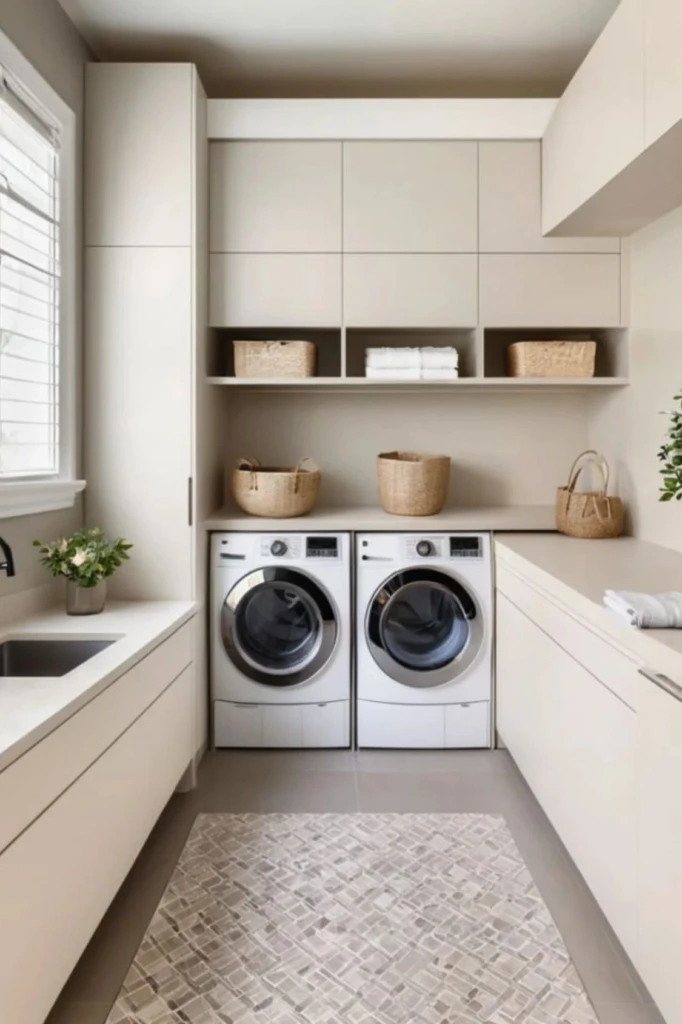
Open shelves offer convenient access to everyday laundry essentials without the visual weight of large cabinets.
They work especially well above countertops or alongside washing machines, where supplies can remain close to the work area.
Use a few matching containers to organize smaller objects and reserve some shelf space for folded towels or frequently used baskets.
Avoid filling every available inch. Leaving a little room between items makes the shelves easier to clean and helps the space feel less crowded.
For a durable setup, choose shelving materials that tolerate humidity and occasional splashes.
5. Wall Shelf
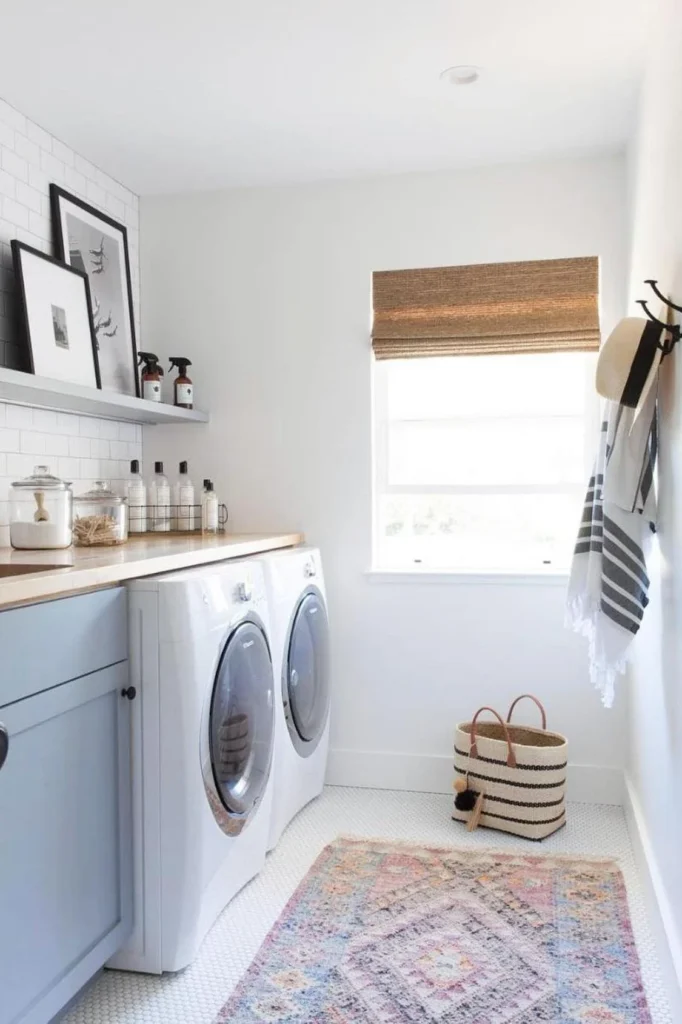
A single wall shelf can provide useful storage when there isn't enough room for a full shelving system.
Install one above a laundry counter or along an otherwise empty wall to hold small baskets, folded cloths, and frequently used accessories.
The shelf depth should suit the room. A shallow design is often more practical in narrow spaces because it reduces the chance of bumping into the shelf while working.
Use suitable wall anchors and brackets, particularly if the shelf will hold heavy containers.
This simple improvement is ideal for renters who have permission to install fixtures or homeowners looking for an affordable organization upgrade.
6. Shelf Rod
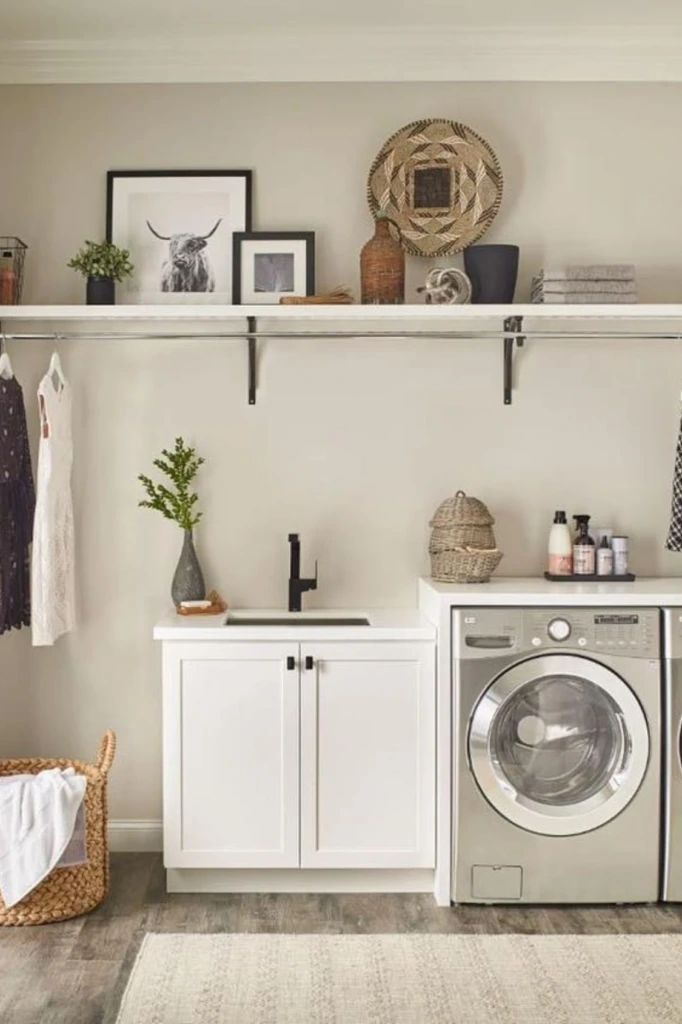
Combining a shelf with a hanging rod creates two useful storage areas within the same section of wall.
The upper surface can accommodate baskets and laundry accessories, while the rod underneath provides space for hanging freshly ironed clothing or garments waiting to dry.
This arrangement is particularly convenient near a folding counter because clothes can be transferred directly onto hangers.
Select a rod designed for the expected clothing weight and install it with adequately supported brackets.
Leave sufficient clearance underneath so longer garments don't rest on the washing machine or countertop.
7. Slat Wall
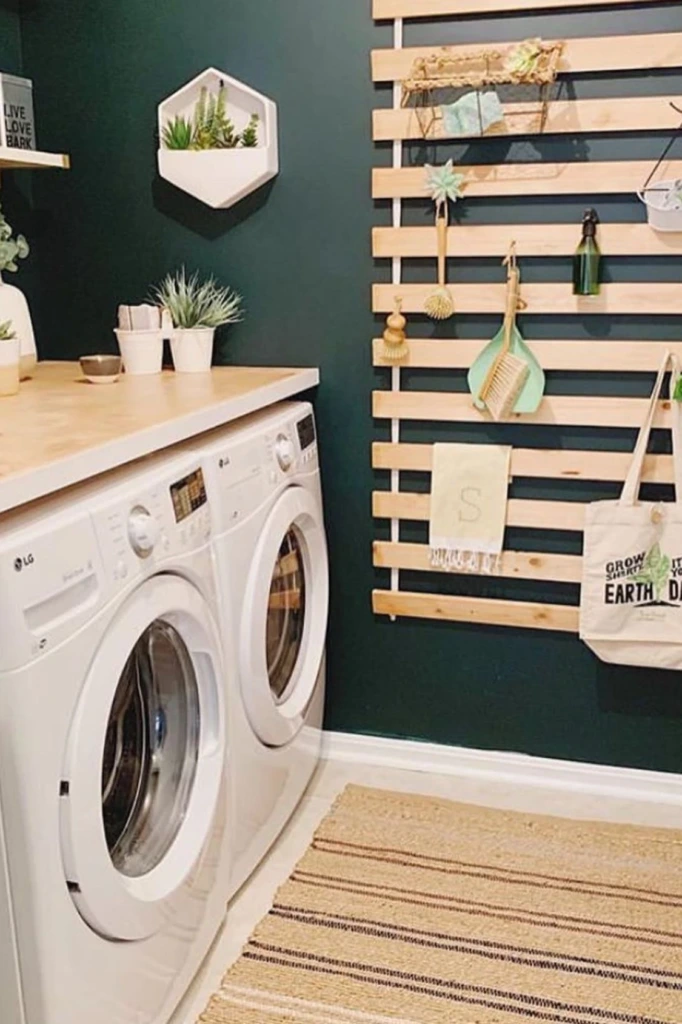
A slat wall provides adaptable storage for laundry tools and small household accessories.
Instead of committing to fixed shelves, you can arrange compatible hooks, baskets, and holders to suit your needs.
Use hanging containers for brushes, lint rollers, and reusable cleaning cloths. Larger hooks can support lightweight bags or other frequently used accessories.
The biggest advantage is flexibility. As your storage needs change, accessories can be repositioned without installing an entirely new system.
Choose moisture-resistant panels and accessories, especially if the laundry room experiences high humidity.
8. Slim Shelves
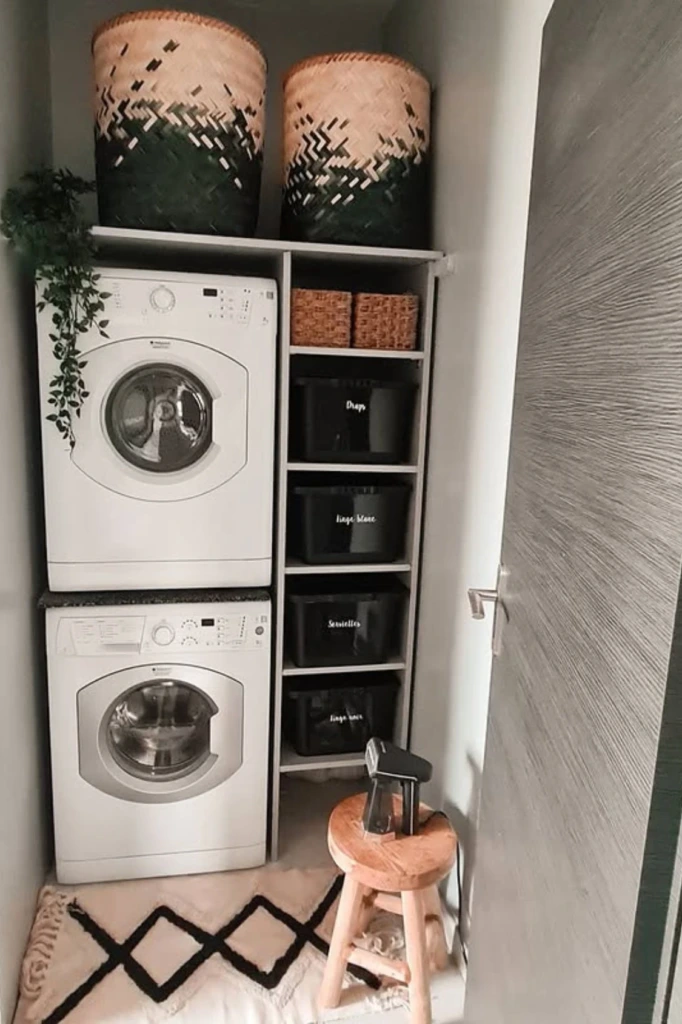
Slim shelving units can turn a narrow gap into useful storage without requiring major changes to the room.
A vertical organizer beside the washing machine may accommodate small detergent containers, cleaning cloths, and laundry accessories.
Measure the opening carefully before purchasing a unit. Remember to allow space for appliance movement, ventilation, hoses, and electrical connections.
Pull-out designs can make items at the back easier to reach, while fixed narrow shelves work well for smaller containers.
Keep heavier supplies near the bottom and avoid overloading a lightweight organizer.
9. Upper Cubbies
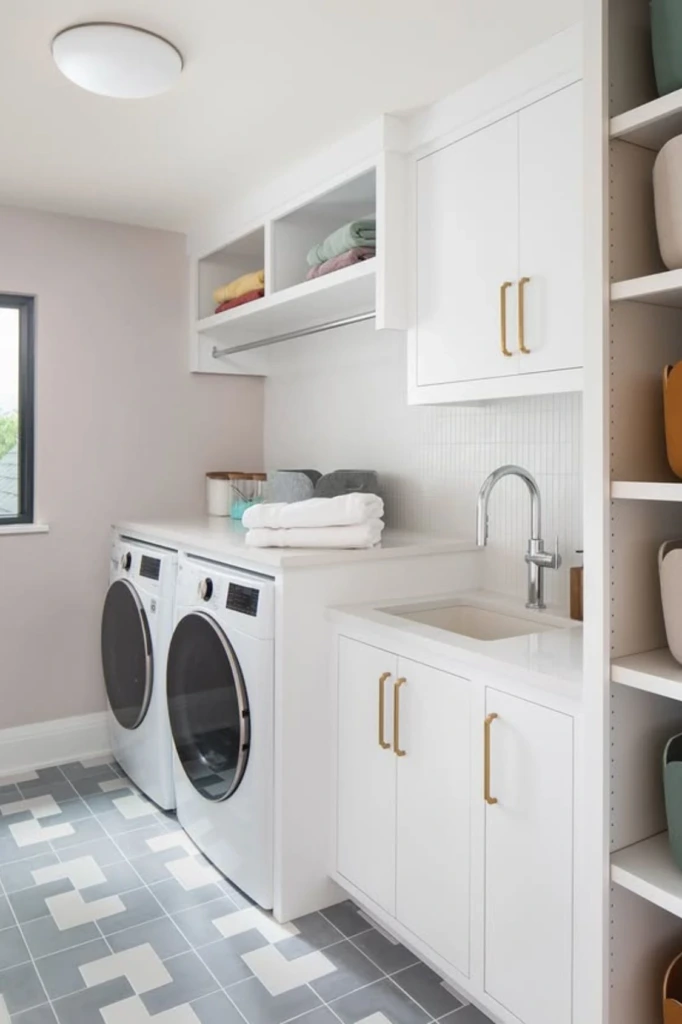
Upper cubbies provide individual storage compartments that make it easier to separate household supplies.
They can hold spare towels, laundry bags, folded linens, or baskets containing occasional-use items.
Unlike one long shelf, separate cubbies encourage you to give each category a designated location.
For a cleaner appearance, use containers with similar dimensions and avoid stacking items beyond the front edge.
Because these compartments are usually installed above eye level, reserve them for lightweight belongings that can be retrieved safely.
10. Mudroom Combo
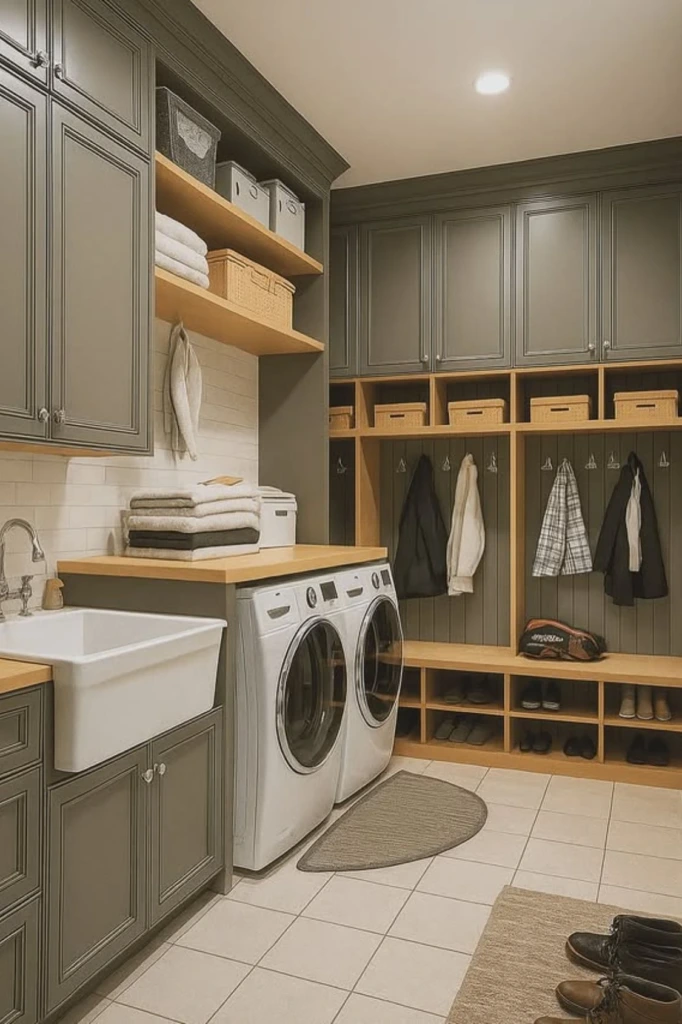
A combined laundry room and mudroom can handle clothing care and everyday household storage in one organized space.
Install hooks for jackets and bags, cubbies for footwear, and shelves for laundry supplies.
A bench with storage underneath can provide a convenient place to remove shoes while keeping the floor clear.
Separate outdoor items from clean laundry to prevent dirt and moisture from spreading onto freshly washed clothing.
This arrangement is particularly practical for families who regularly bring sports equipment, school bags, and outdoor clothing into the house.
11. Closed Cabinets
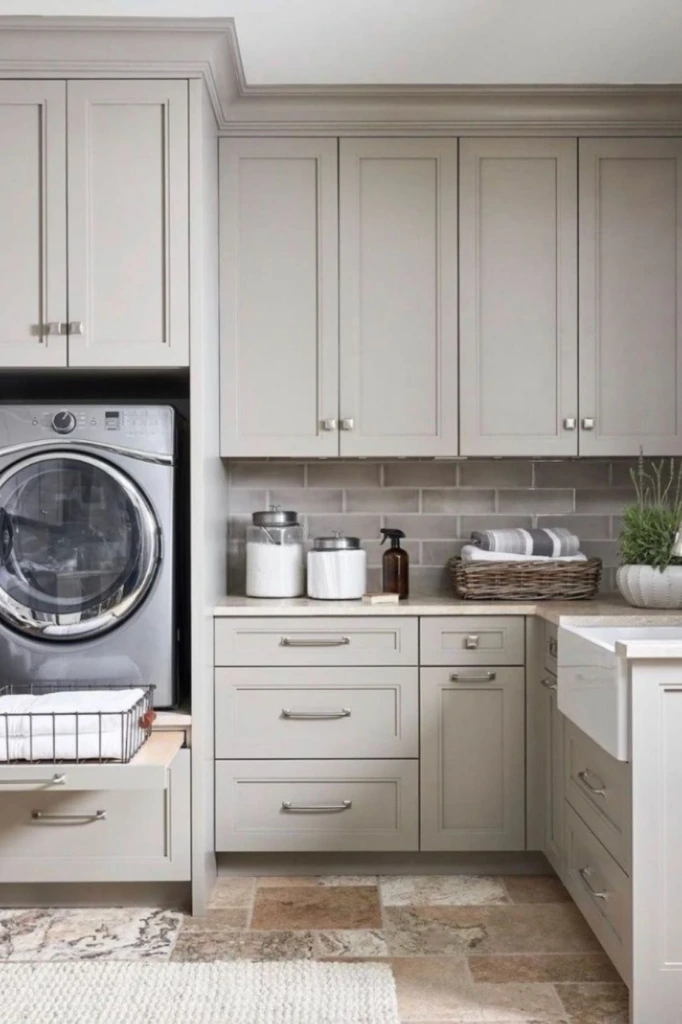
Closed cabinets are a good choice for anyone who prefers a streamlined laundry room with minimal visible clutter.
They provide concealed storage for detergent containers, stain removers, extra cleaning products, and miscellaneous supplies.
Use adjustable shelves and small organizers inside the cabinets to prevent items from becoming difficult to find.
Store household chemicals in their original labeled containers, and use secured cabinets where children or pets could otherwise access them.
Cabinet finishes that resist moisture and are easy to wipe clean are particularly suitable for laundry environments.
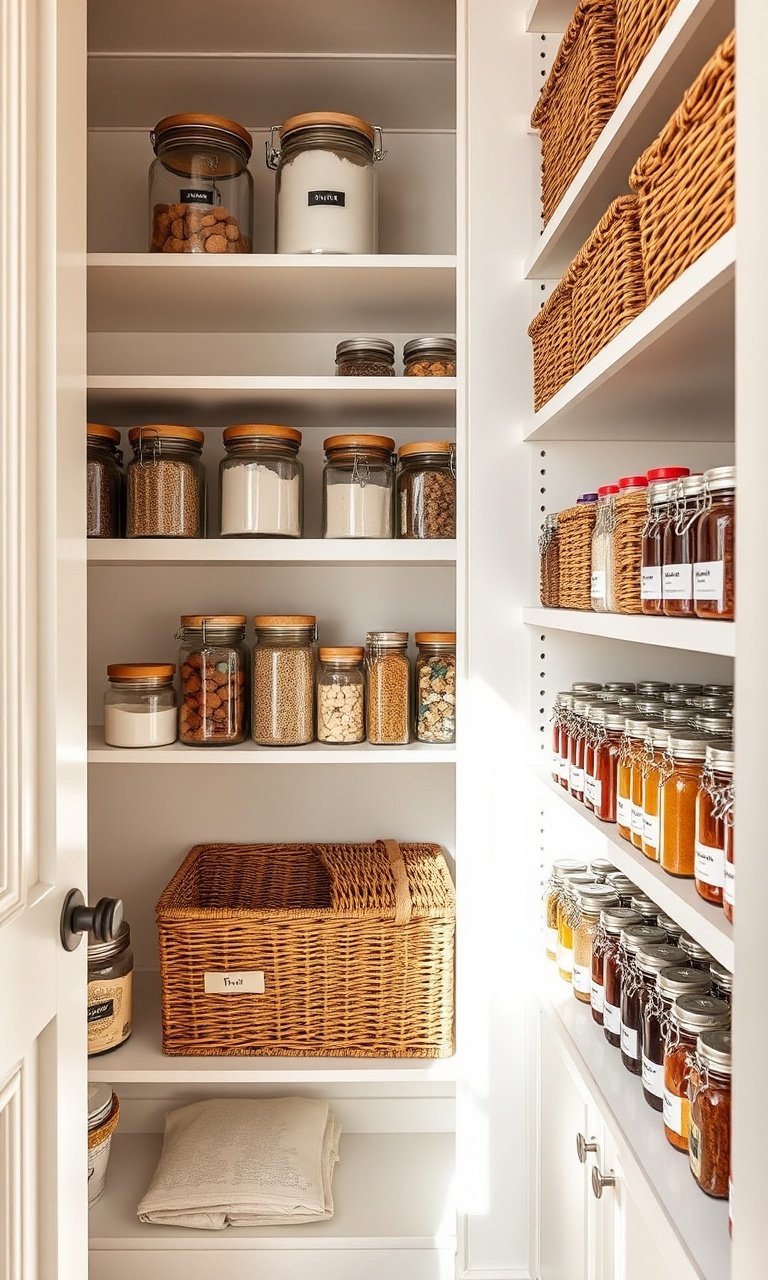
12. Open Pantry
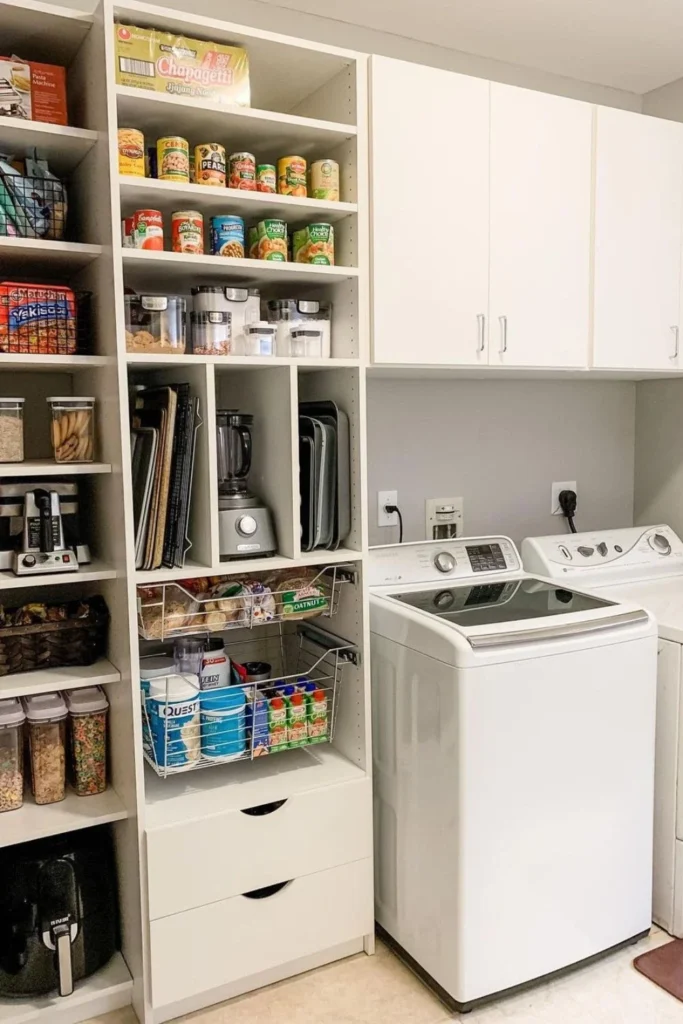
An open pantry-style storage unit can provide an organized home for laundry products and additional household supplies.
Its multiple shelves make it easy to group belongings by purpose, such as fabric care, cleaning tools, spare towels, and replacement supplies.
Pull-out baskets are helpful for smaller objects that might otherwise disappear behind larger containers.
Place frequently used products around waist or chest height and keep heavier items lower down.
This approach works well in utility rooms that also serve as general household storage areas.
13. Center Rod
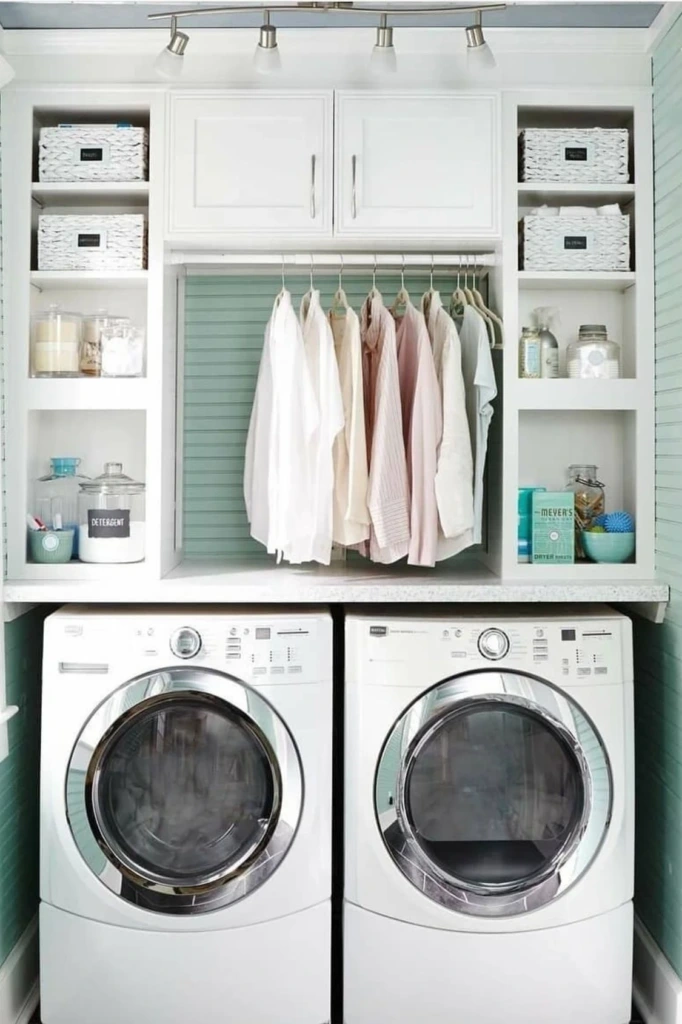
A center hanging rod positioned between two shelving sections creates a dedicated space for garments that need special attention.
It can hold shirts straight from the dryer, delicate clothing left to air-dry, or outfits that have just been ironed.
Shelves on either side can store hangers, folding accessories, and small laundry baskets.
This arrangement keeps clothing care activities together instead of spreading them across the room.
Make sure the rod has enough clearance for garments to hang naturally, and avoid positioning it where dripping clothes could reach electrical outlets.
14. Wire Shelves
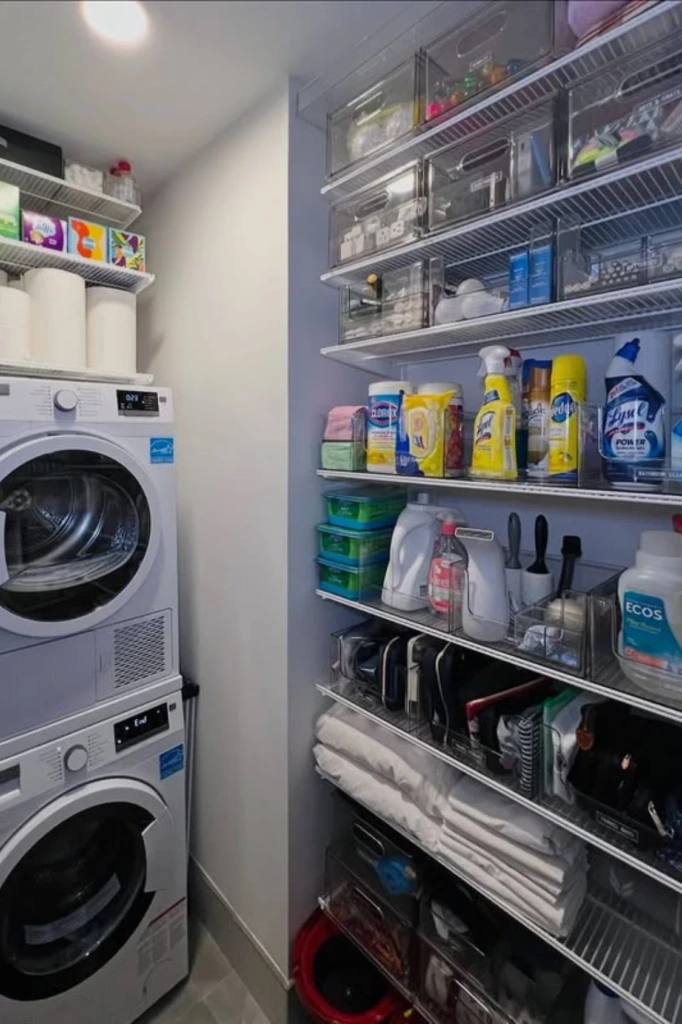
Wire shelving is a lightweight-looking storage solution that suits narrow laundry closets and utility spaces.
Its open construction makes it easy to see stored items and allows air to circulate around them.
Adjustable wire systems are especially useful because shelf positions can be changed to accommodate taller containers.
Small objects may tip between the wires, so add suitable shelf liners or flat-bottomed baskets where necessary.
Choose corrosion-resistant finishes for damp environments and check the manufacturer's weight limits before storing bulky detergent containers.
15. Side Shelves
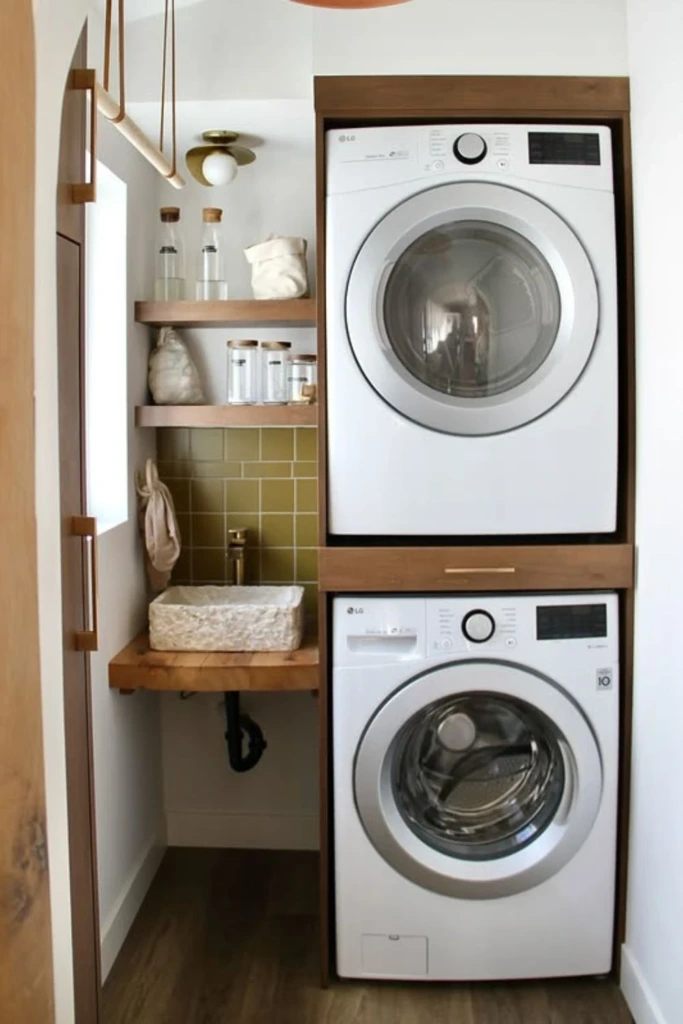
Side shelves make use of the vertical space next to washing machines, dryers, or laundry counters.
They can provide convenient storage for frequently used products without occupying the main folding surface.
A short series of shelves at different heights can accommodate folded cloths, small baskets, and laundry accessories.
Keep the lowest shelf high enough to avoid interfering with appliance doors or controls.
This idea works particularly well when one side of the laundry area has a narrow but accessible section of wall.
16. Basket Storage
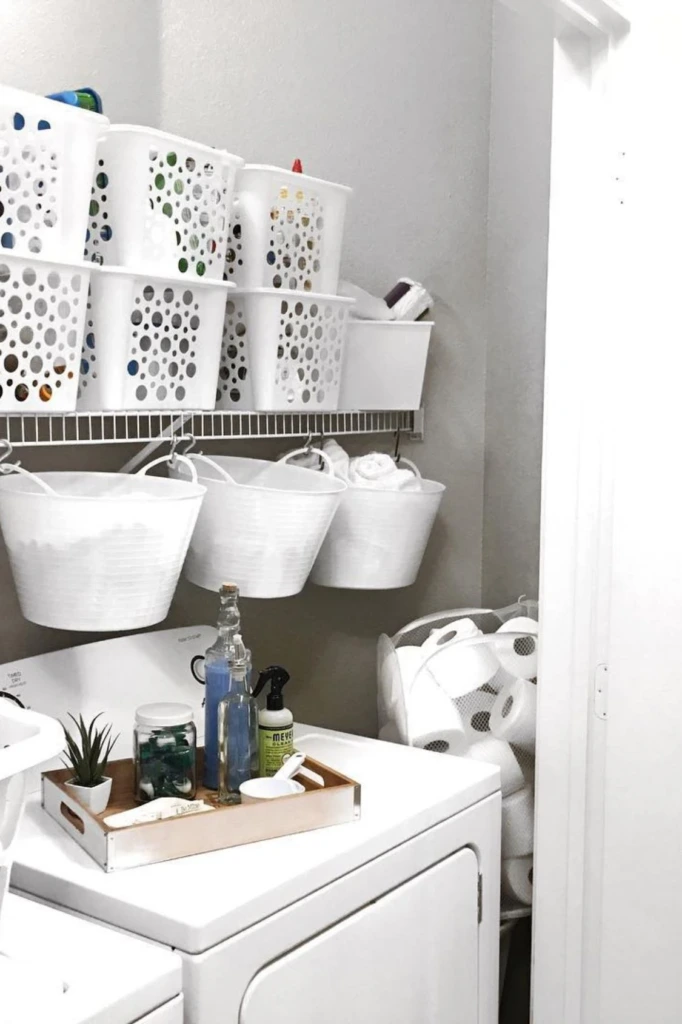
A dedicated basket storage system helps manage laundry at different stages of the washing process.
Separate baskets can be used for dirty clothes, items waiting to be washed, and clean garments ready to put away.
For larger households, assigning baskets to individual family members can simplify sorting and distribution.
Choose baskets that are easy to carry and fit comfortably on their designated shelves.
Ventilated baskets are useful for worn clothing, but damp garments should be dried promptly rather than left sitting in a hamper.
17. Basket Shelves
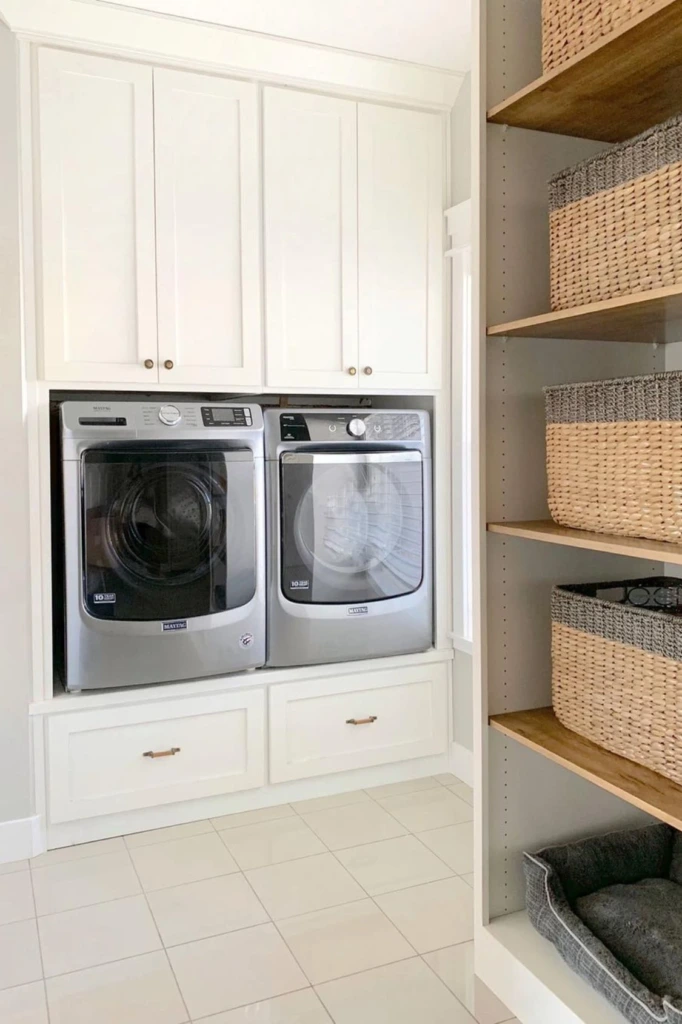
Basket shelves combine the convenience of open shelving with the organized appearance of enclosed containers.
Woven, plastic, or fabric baskets can hold smaller items that would otherwise create clutter across the room.
Select baskets based on their intended contents. Washable plastic containers are practical for cleaning accessories, while fabric baskets may suit dry towels and linens.
Try to keep basket sizes consistent within each shelving section so everything fits neatly.
Leave enough clearance above each basket to remove it without disturbing the items around it.
18. Labeled Baskets
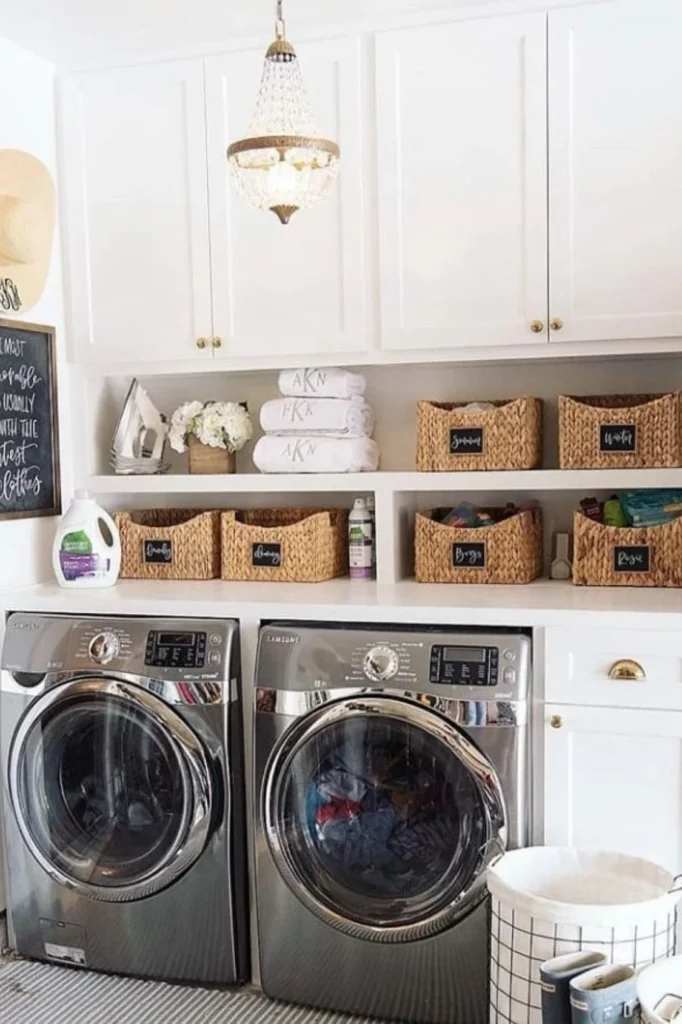
Labeled baskets make shared laundry spaces easier for everyone in the household to navigate.
Instead of searching through several containers, family members can quickly identify where particular items belong.
Labels such as "Cleaning Cloths," "Delicates," "Spare Towels," and "Laundry Accessories" create straightforward categories.
Water-resistant labels are useful in humid rooms, and removable labels allow you to change categories as needed.
For households with young children, simple pictures alongside words can make the system easier to understand.
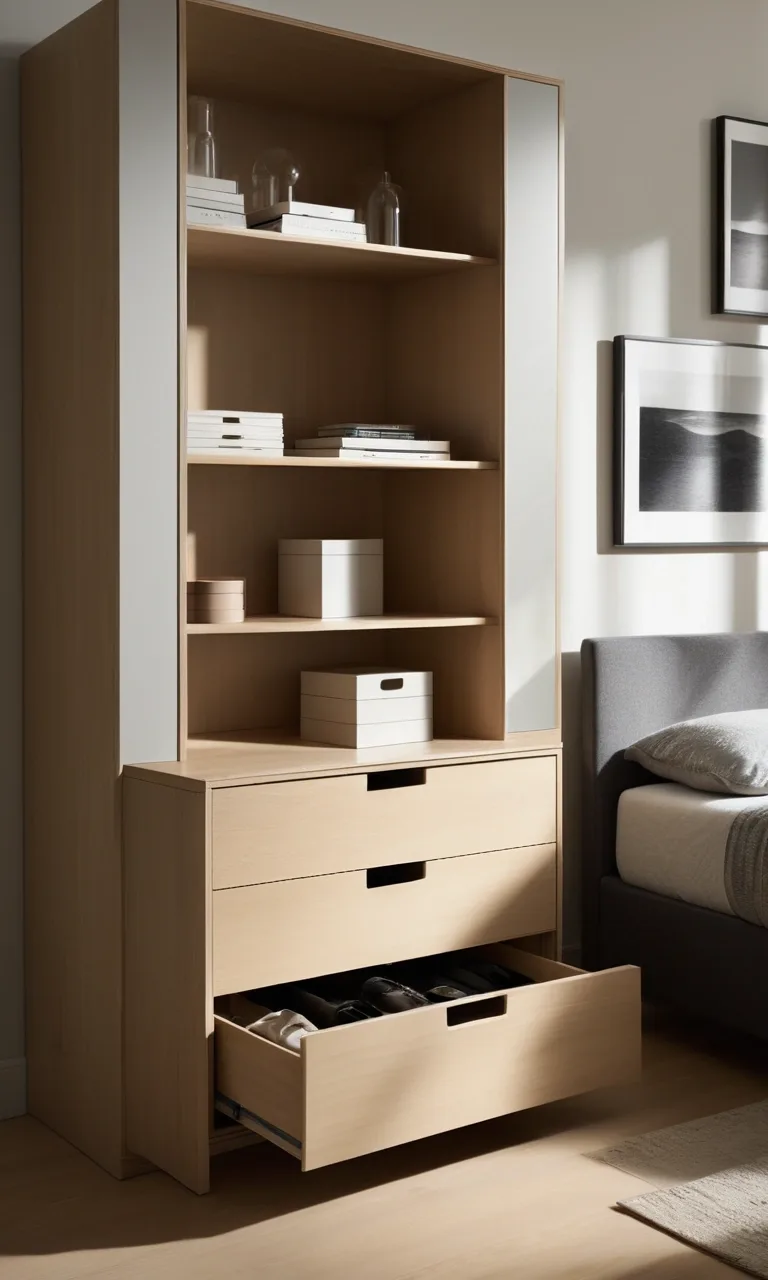
19. Mixed Storage
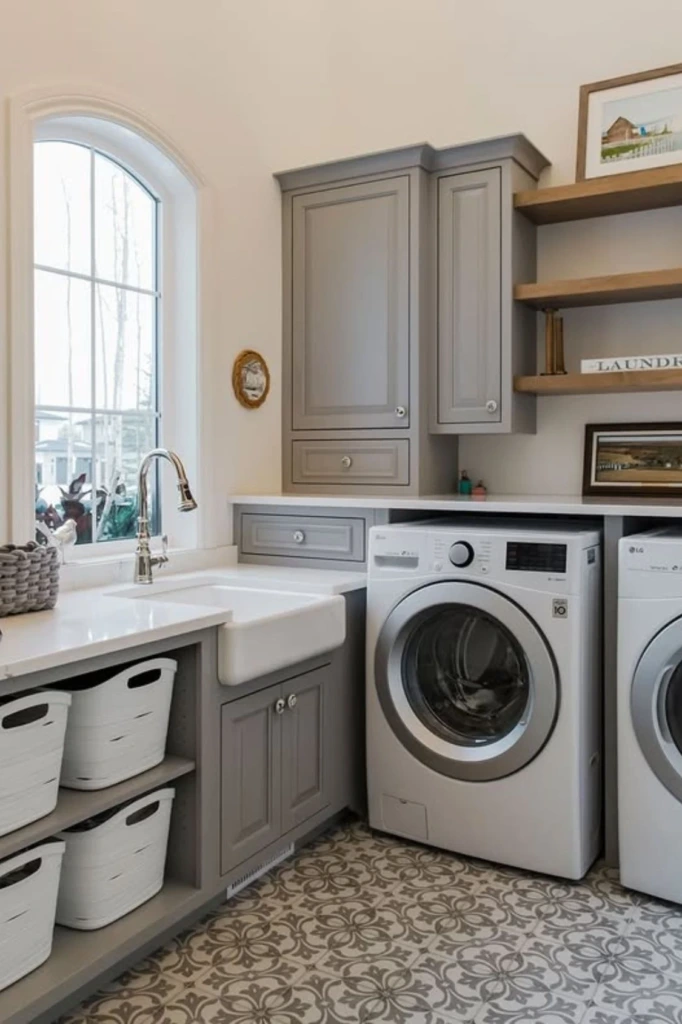
Mixed storage combines different organizational features to suit the varied tasks performed in a laundry room.
Open shelves provide quick access to frequently used supplies, while cabinets conceal less attractive or potentially hazardous products.
Drawers can organize small accessories, and lower cubbies can accommodate laundry baskets.
This approach avoids forcing every item into the same type of storage.
When planning the layout, think about the order of your laundry routine: sorting, washing, drying, folding, and putting clothes away. Position storage near the activities it supports.
20. Full Wall
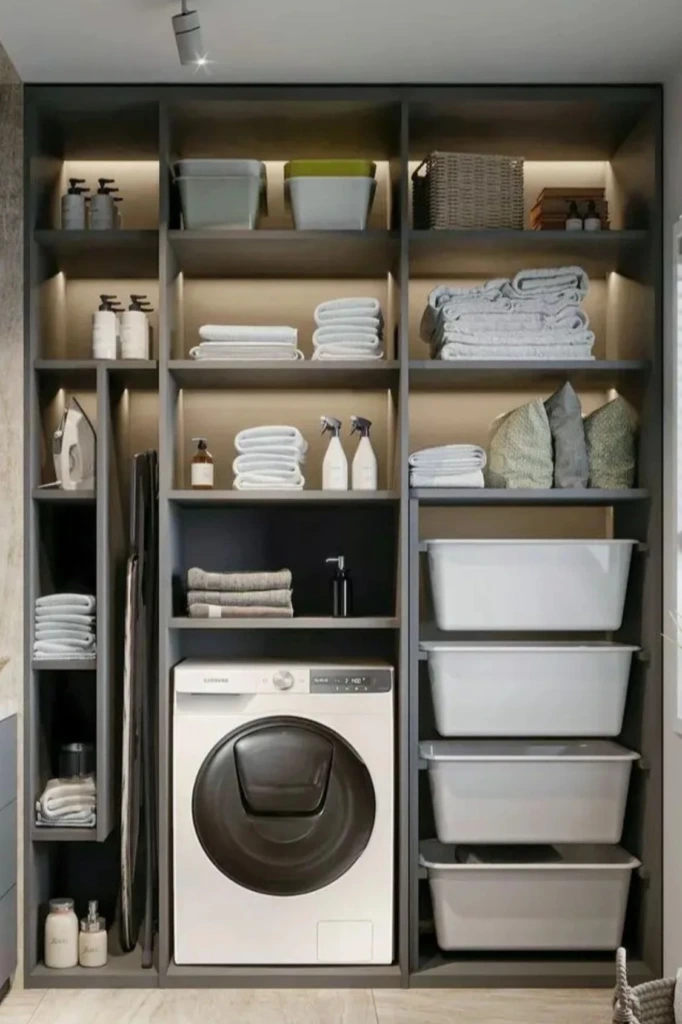
A full-wall storage system can transform an underused wall into a practical organization area.
Floor-to-ceiling cabinetry or shelving provides room for laundry supplies, household linens, baskets, and cleaning equipment.
Use the lower sections for heavy or frequently accessed items and reserve the upper sections for lightweight seasonal supplies.
A mixture of shelf depths can be helpful, allowing larger containers to fit without making every compartment unnecessarily deep.
Built-in lighting may improve visibility in enclosed areas, especially where shelves extend far back.
Careful planning is important to ensure the storage doesn't block appliance access or make the room feel restrictive.
21. Cubby Storage
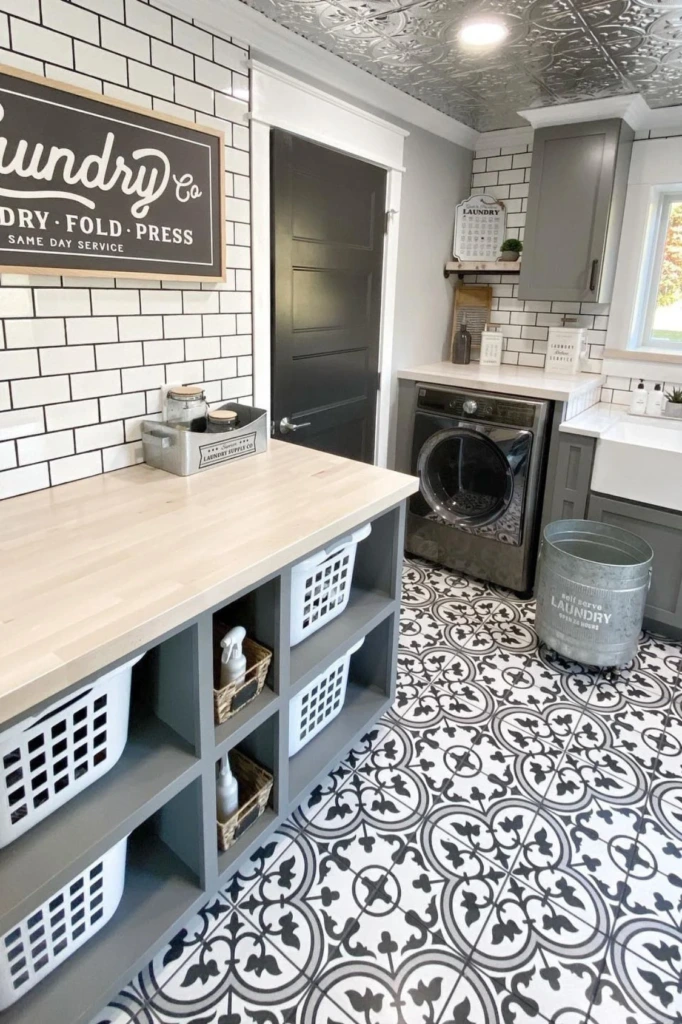
Cubby storage creates individual compartments for laundry baskets, helping prevent them from accumulating on the floor.
Each opening can accommodate a removable bin assigned to a specific clothing category or household member.
When installed below a counter, cubbies can also support a convenient folding station above.
Measure your baskets before building or purchasing the unit, allowing enough space to slide them in and out easily.
This system is especially helpful for busy households where several loads of laundry need to be managed throughout the week.
22. Glass Cabinets
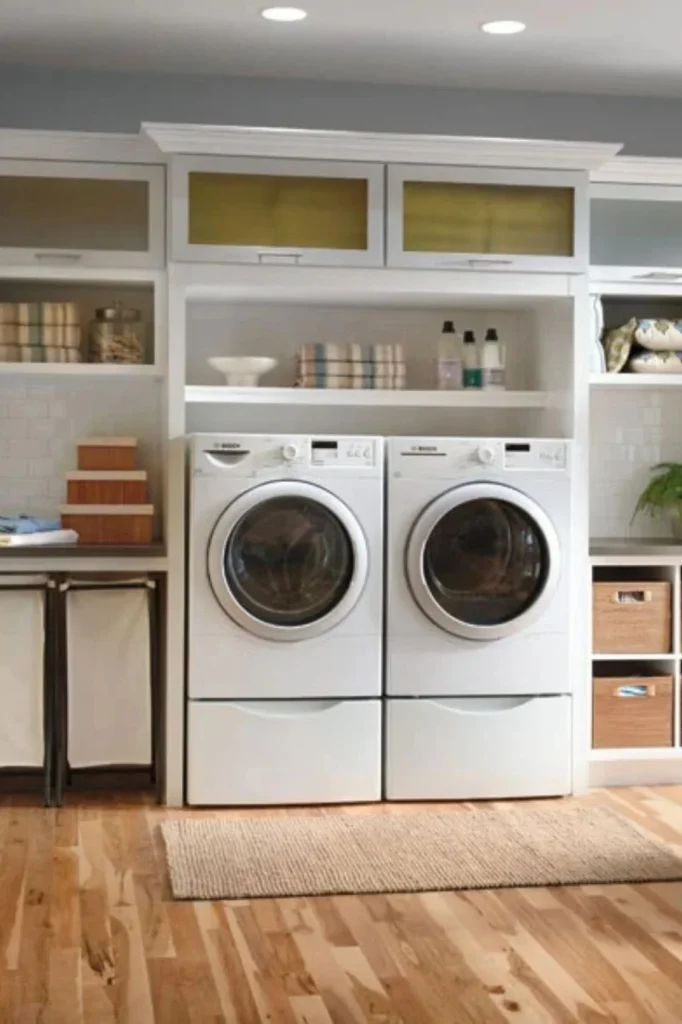
Glass-front cabinets offer a decorative alternative to traditional closed storage.
They allow you to identify stored items without opening every door, making them useful for folded towels, linens, and neatly arranged containers.
Frosted or textured glass can soften the appearance of stored belongings while still giving the cabinets a lighter look.
For a coordinated finish, choose baskets and containers that complement the cabinet color and surrounding surfaces.
Keep heavy items on sturdy lower shelves and use appropriate safety glazing where required.
23. Vertical Units
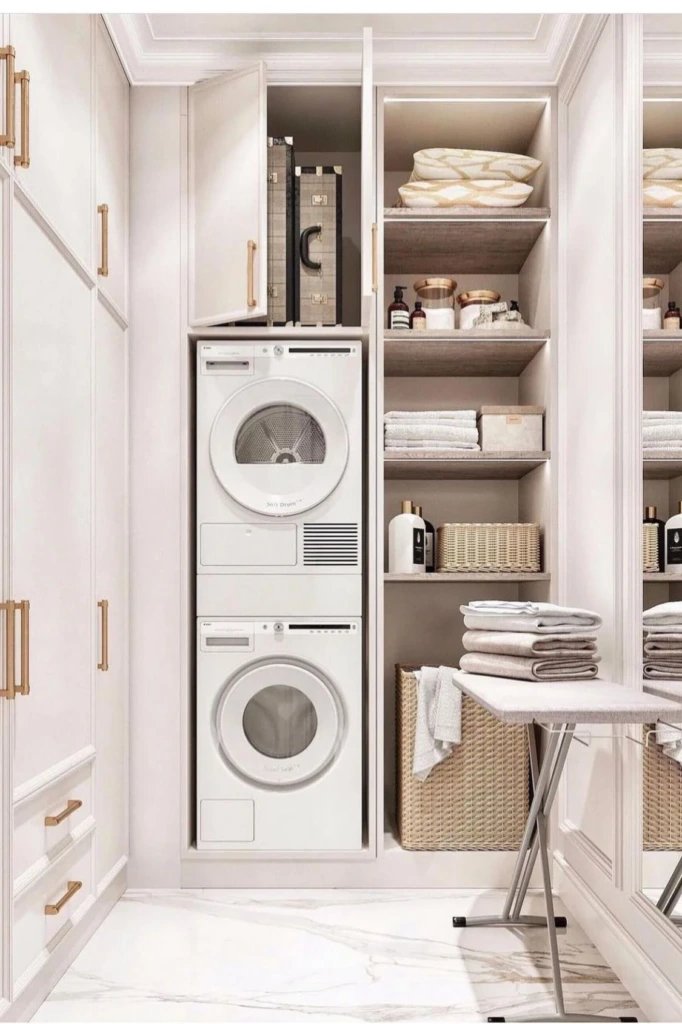
Vertical storage units are ideal for laundry rooms with limited width but available wall height.
Tall shelving towers can accommodate multiple categories of supplies within a compact footprint.
Adjustable compartments make it easier to organize everything from small laundry accessories to larger storage baskets.
A combination of open and enclosed sections provides both accessibility and visual order.
Anchor tall freestanding units securely and keep their heaviest contents near the base.
Before installing a unit beside stacked appliances, confirm that it won't interfere with ventilation, connections, or servicing.
What type of shelving works best in a small laundry room?
Wall-mounted floating shelves, adjustable wire shelving, and narrow vertical organizers are among the most practical choices for small laundry rooms.
They make use of available height while preserving valuable floor space.
For the best results, choose shelves that fit the room's dimensions, can safely support the intended weight, and don't obstruct appliance doors or ventilation.
A combination of one accessible shelf for everyday products and a taller unit for additional supplies is often enough to organize a compact laundry area.
How do you keep laundry room shelves from looking cluttered?
Start by removing products and accessories that are empty, unnecessary, or stored in the wrong place.
Group the remaining items by purpose and assign each category a dedicated basket, drawer, or shelf.
Keep frequently used products accessible and place occasional-use supplies in cabinets or upper compartments.
Matching baskets can create a consistent appearance, but practical organization matters more than making every container identical.
Finally, review the shelves regularly so unused items don't gradually take over the available space. A manageable storage system should make laundry easier, not create another chore.