31 Homeschool Organization Ideas for 2026
A well-organized homeschool space can make everyday learning easier, calmer, and more enjoyable for the whole family. Whether you're teaching one child at the kitchen table or managing several grade levels in a dedicated classroom, the right storage solutions can help you spend less time searching for supplies and more time focusing on lessons.
These 24 homeschool organization ideas offer practical ways to manage books, learning materials, art supplies, paperwork, and daily routines. From affordable baskets to multifunctional furniture, you'll find solutions that work for different spaces, budgets, and homeschooling styles.
1. Start With the Things That Cause the Most Friction
Before purchasing organizers or rearranging furniture, identify what makes your homeschool day unnecessarily difficult. Perhaps pencils disappear constantly, unfinished worksheets pile up, or children struggle to find their next assignment.
Pay attention to these recurring problems for a few days. Then create storage solutions that address them directly.
For example, if your children frequently interrupt lessons to request supplies, establish a central station containing everyday essentials. If completed assignments become mixed with unfinished work, introduce separate folders for each category.
The goal isn't to create a picture-perfect classroom. It's to establish an environment where learning materials are easy to find, use, and return.
2. Homeschool Organization Ideas
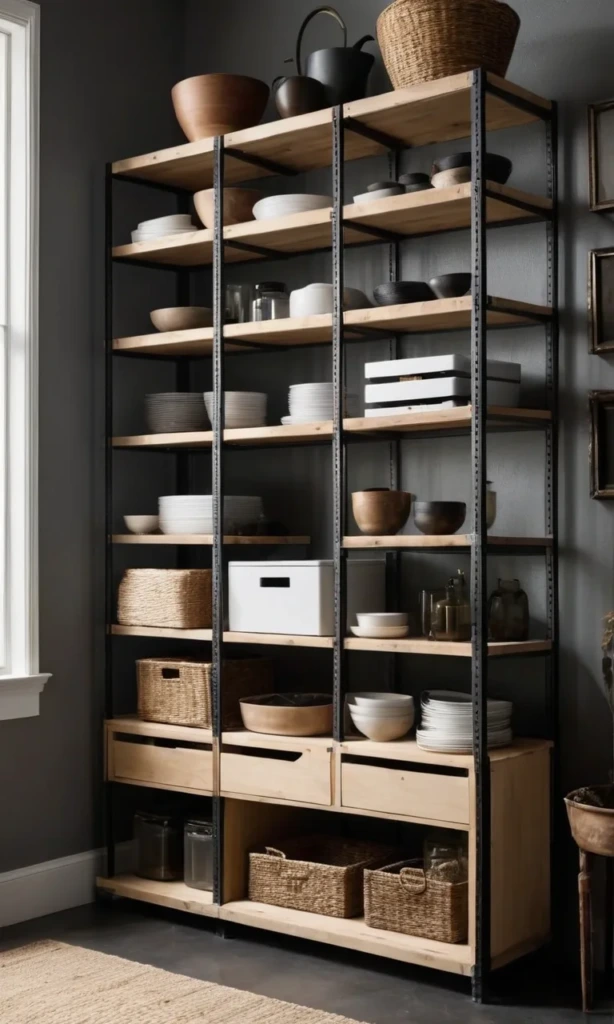
The most effective homeschool organization systems combine accessibility, flexibility, and simple maintenance. You don't necessarily need expensive furniture or a large room to make meaningful improvements.
Consider how your family moves through the day, which materials get used most often, and how much independence your children can manage.
The following ideas can be adapted to everything from small apartments to spacious homeschool rooms.
3. Learning Tools Bins
Dedicated learning bins keep frequently used educational tools together instead of scattered across shelves and drawers.
Choose lightweight containers for items such as counting blocks, flashcards, magnetic letters, math manipulatives, and educational games. Assign each category its own bin and add a picture or written label to the front.
For younger children, transparent containers make identifying materials easier. Older students may prefer labeled baskets that create a cleaner appearance.
Store the bins on low shelves so children can retrieve materials independently. Keep heavier items near the bottom, and avoid overfilling containers.
This system works especially well for hands-on learning activities that involve several small pieces.
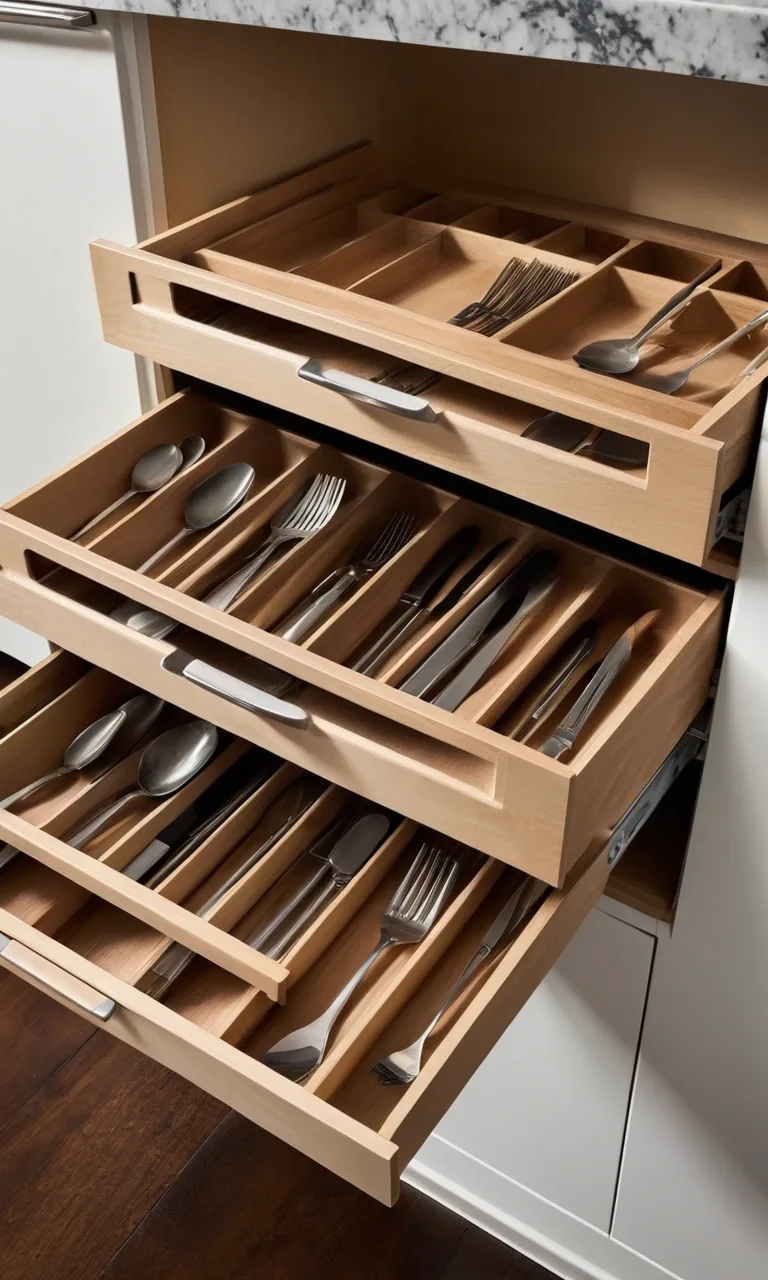
4. Subject-Sorted Drawers
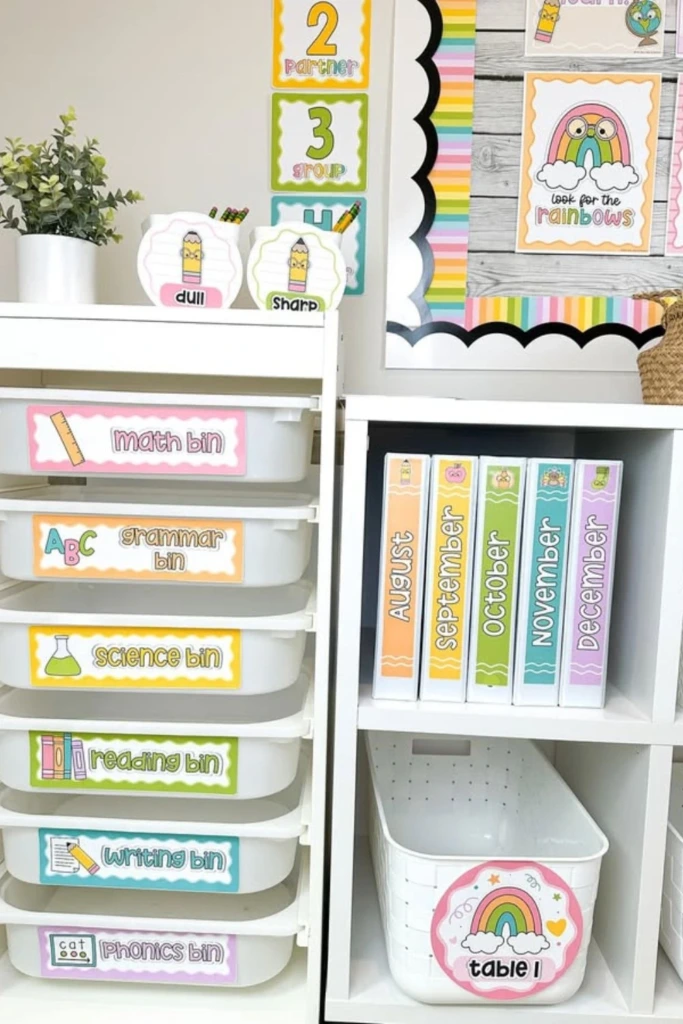
A drawer system organized by subject can simplify lesson preparation and reduce clutter.
Assign individual drawers to mathematics, language arts, science, history, and other regularly taught subjects. Inside each drawer, store workbooks, printed assignments, reference cards, and small supplies.
If you're homeschooling multiple children, consider using different drawer colors or adding each child's name alongside the subject label.
Shallow drawers are particularly useful for worksheets and notebooks because they prevent materials from becoming buried beneath larger objects.
Review the contents weekly and remove completed assignments or outdated resources to maintain available space.
5. Chalkboard Learning Boards
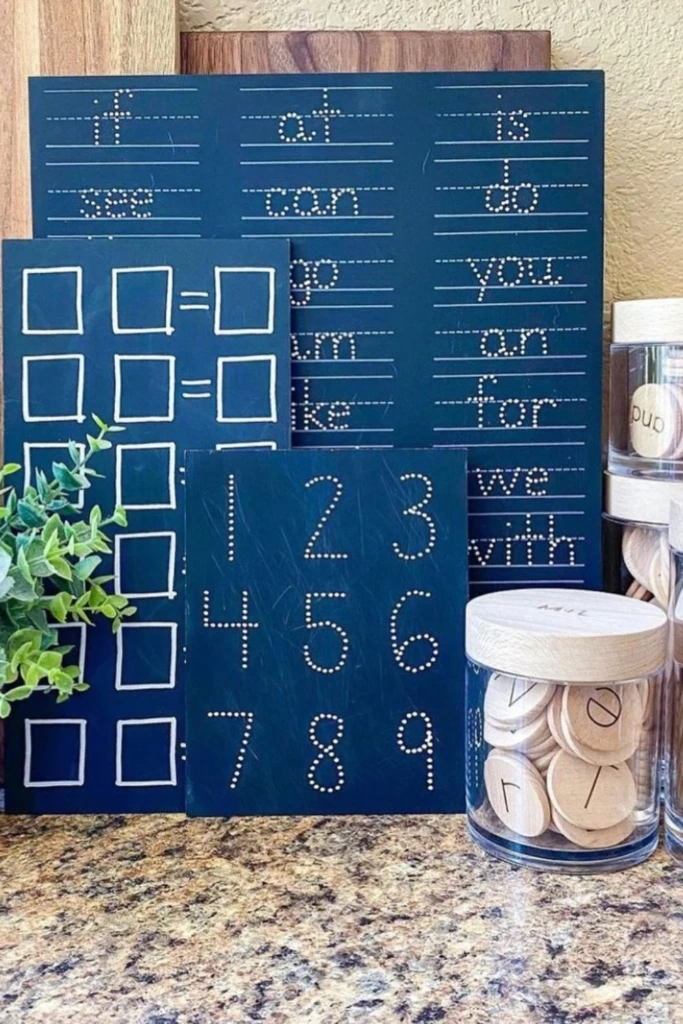
Chalkboards provide a flexible teaching surface without requiring permanent wall displays.
Use a wall-mounted board for spelling practice, mathematics problems, daily reminders, or vocabulary words. Smaller tabletop chalkboards are convenient for individual activities and quick demonstrations.
Divide a larger board into sections for the date, lesson goals, and important announcements.
A magnetic chalkboard can offer additional functionality by holding alphabet magnets, number cards, or lightweight visual aids.
Keep chalk and erasers in a nearby container. If chalk dust is a concern, choose a low-dust option or use a dry-erase board instead.
6. Weekly File System
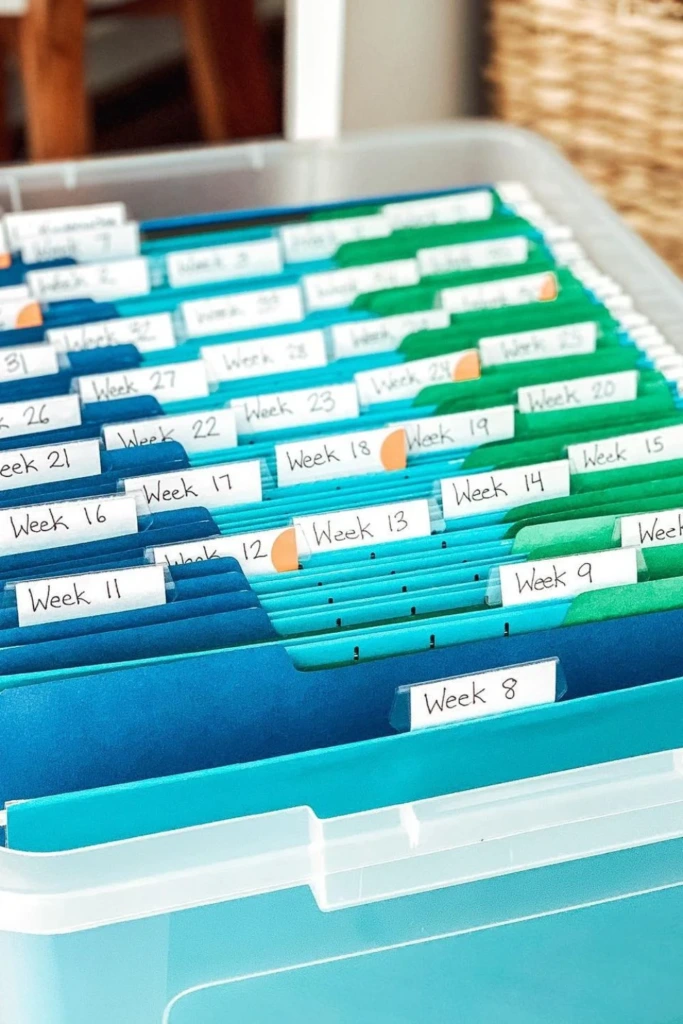
A weekly filing system helps organize assignments before the school week begins.
Set up five folders labeled Monday through Friday. Place printed worksheets, reading activities, lesson instructions, and other paper materials into the appropriate folders.
You can use a desktop file organizer, hanging folders, or a portable accordion file.
For families teaching several children, assign each student a separate set of folders or use colored tabs to distinguish their work.
At the end of each day, move completed assignments into a designated review folder and prepare the next day's materials.
This approach reduces morning preparation and makes it easier to see what still needs attention.
7. Rolling Art Cart
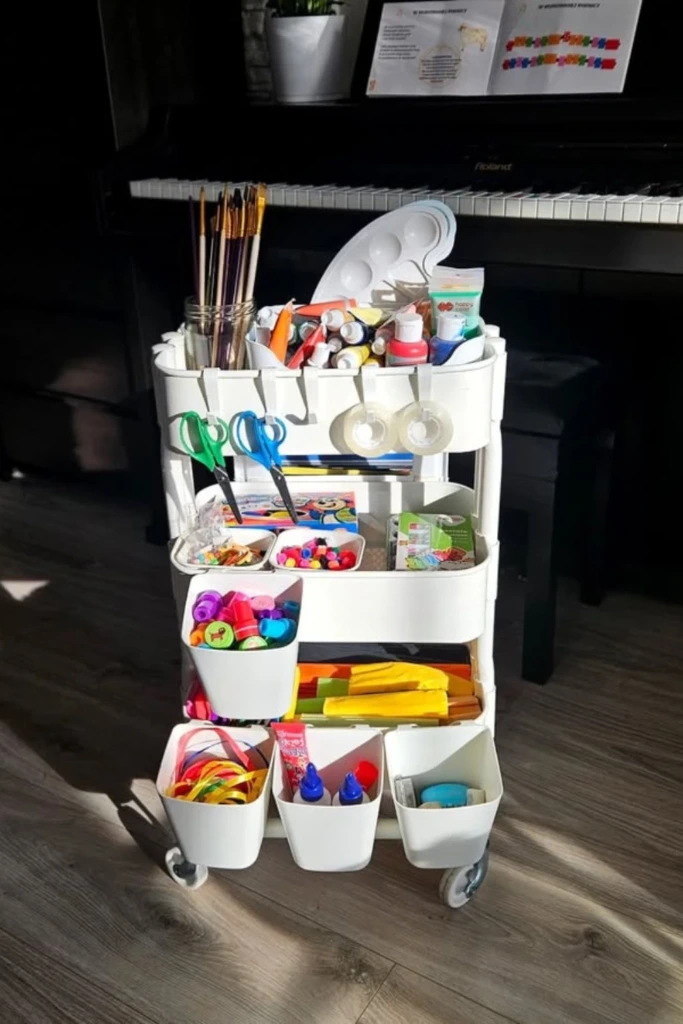
A rolling art cart creates a mobile supply station for creative projects.
Choose a sturdy cart with multiple tiers and divide its contents by purpose. The top tier can hold pencils, markers, glue sticks, and scissors. Reserve the middle section for paints and brushes, while the bottom tier accommodates paper, sketchbooks, and larger materials.
Small cups or containers prevent supplies from sliding around.
The cart can move between a kitchen table, homeschool desk, and craft area, making it particularly helpful when your learning space serves multiple purposes.
Store sharp tools and materials requiring supervision separately when younger children are present.
8. Dual Workstation Setup
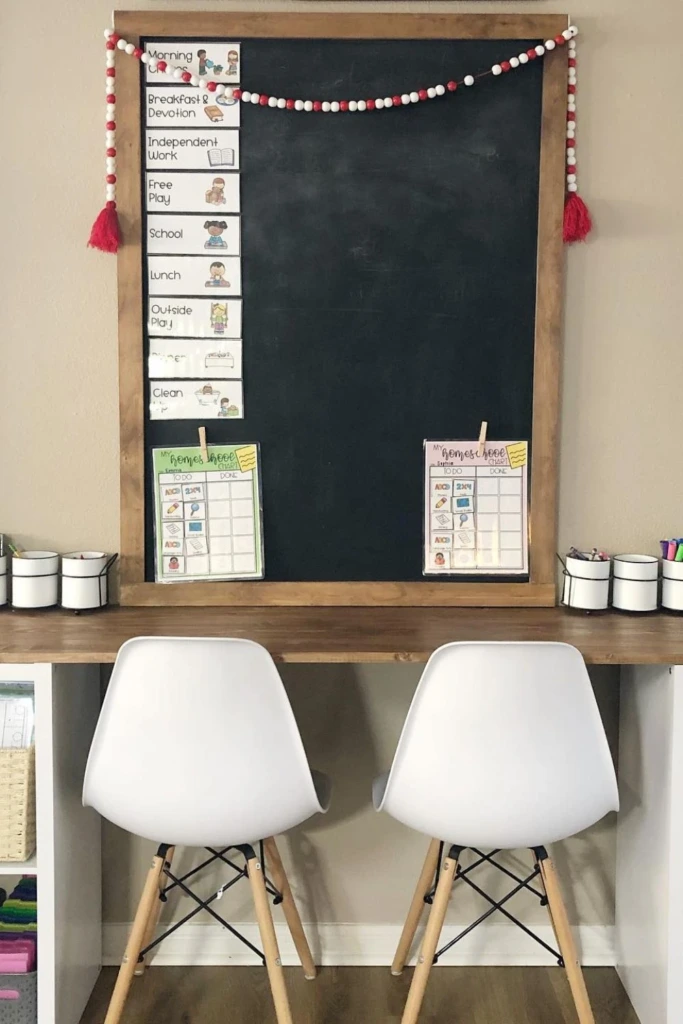
A dual workstation provides separate learning surfaces for two children while keeping them close enough for shared instruction.
Position two desks side by side or use one long table divided into individual work areas. Give each child a personal container for pencils, notebooks, and frequently used materials.
A small shelf or divider between workstations can help minimize distractions.
If children are working at different grade levels, consider placing independent activities at one workstation while you provide direct instruction at the other.
Adequate lighting, comfortable seating, and enough elbow room are more important than matching furniture.
9. Compact Audio Stations
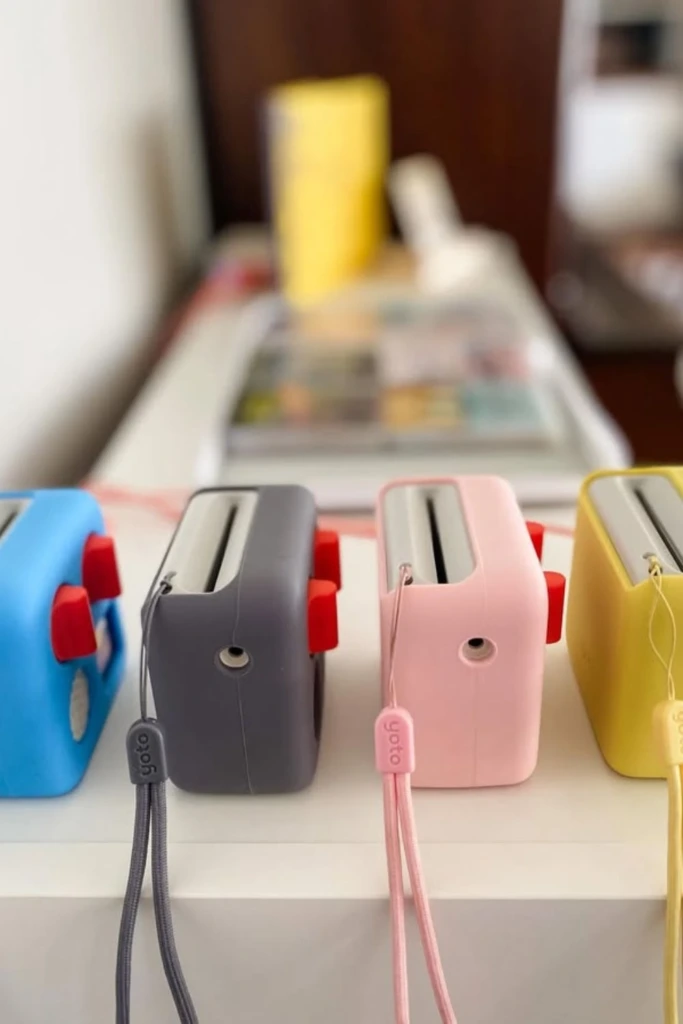
Audio learning can support reading practice, language lessons, music appreciation, and independent study.
Create a compact station with headphones, an audio player or tablet, and a small collection of appropriate listening resources.
Use headphone hooks and cable clips to prevent tangled cords. A divided container can hold charging accessories and other equipment.
Place the station in a quieter part of the room where children can listen without interrupting other lessons.
For younger learners, organize audio activities with simple picture labels or numbered playlists.
Set appropriate volume limits and establish clear expectations for device use.
10. Clear Supply Pouches
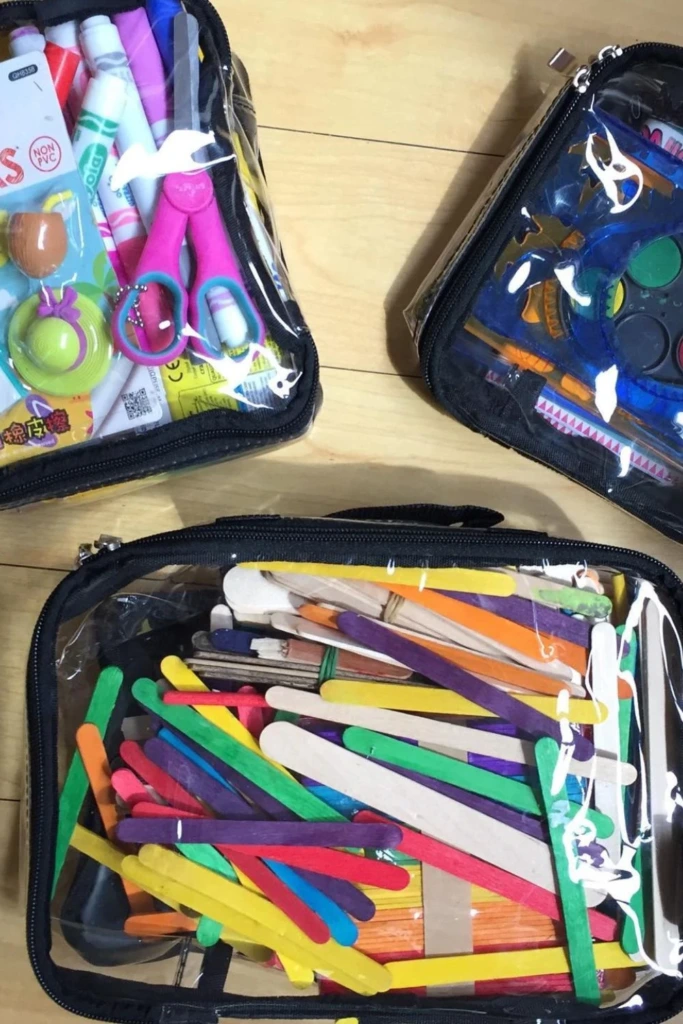
Transparent zippered pouches are an affordable way to organize smaller homeschool materials.
Use separate pouches for flashcards, math counters, letter tiles, colored pencils, and educational game pieces.
Because the contents remain visible, children can identify what they need without opening every pouch.
Store the pouches upright inside a basket or file organizer. Adding a label along the top makes them even easier to locate.
These organizers are especially useful for families who travel, attend homeschool groups, or regularly move lessons between rooms.
Choose durable, reusable pouches that can withstand frequent handling.
11. Drawer Desk Setup
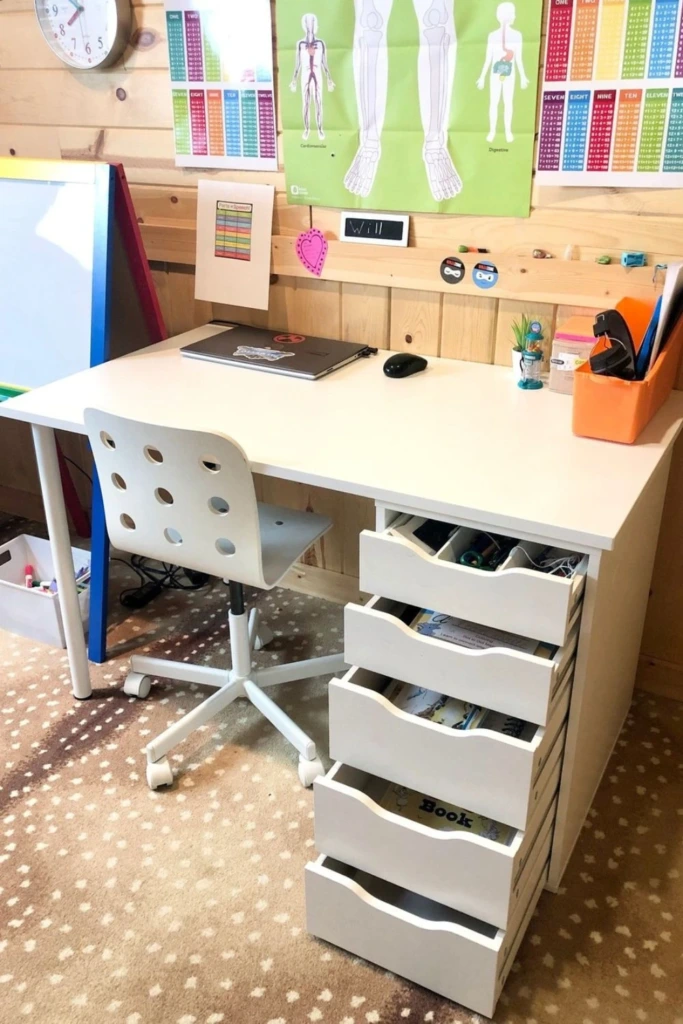
A desk with built-in drawers can provide a dedicated workspace without requiring additional storage furniture.
Use the top drawer for everyday essentials such as pencils, erasers, rulers, and sticky notes. Reserve lower drawers for notebooks, folders, and materials needed less frequently.
Drawer dividers help separate small items and prevent everything from collecting in one corner.
Avoid filling every drawer completely. Leaving some extra space makes supplies easier to access and gives you room for new learning materials.
If the desk is shared, assign separate drawers or clearly marked sections to each child.
12. Cubby Storage Wall
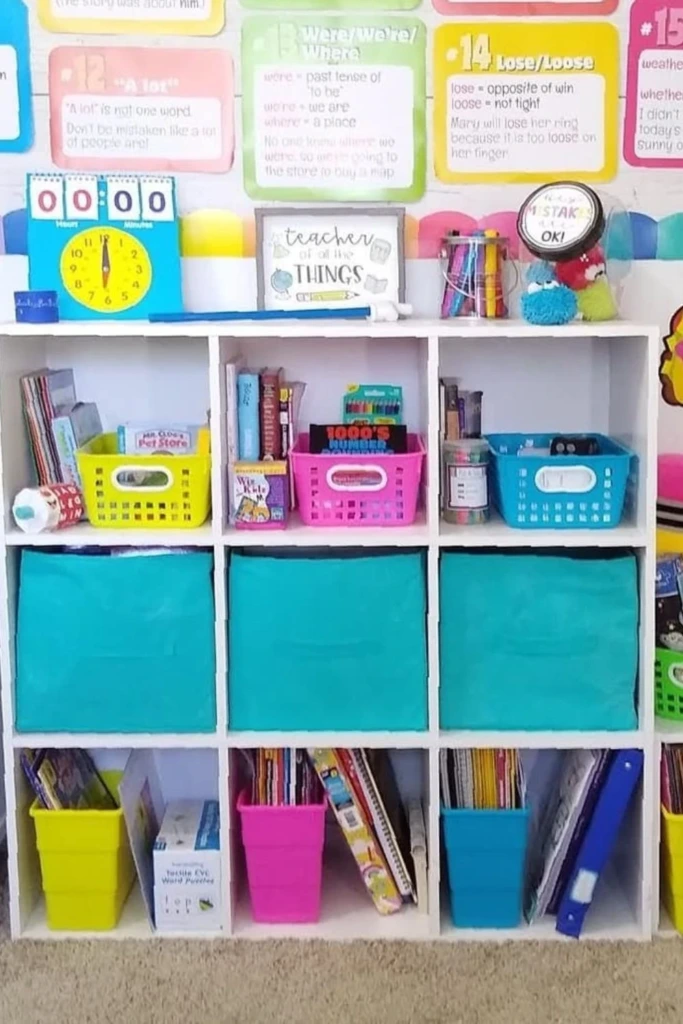
A cubby storage wall can hold books, learning games, supplies, and activity baskets in one organized location.
Cube shelving is particularly versatile because each compartment can serve a different purpose.
Dedicate some cubbies to textbooks and reference materials, others to puzzles or science supplies, and a few to individual student baskets.
Use matching containers if you prefer a coordinated appearance, but prioritize practical dimensions and easy access.
Keep frequently used materials at children's eye level and reserve higher compartments for teacher resources or seasonal supplies.
Secure tall shelving units to the wall using appropriate anti-tip hardware.
13. Vertical Magazine Files
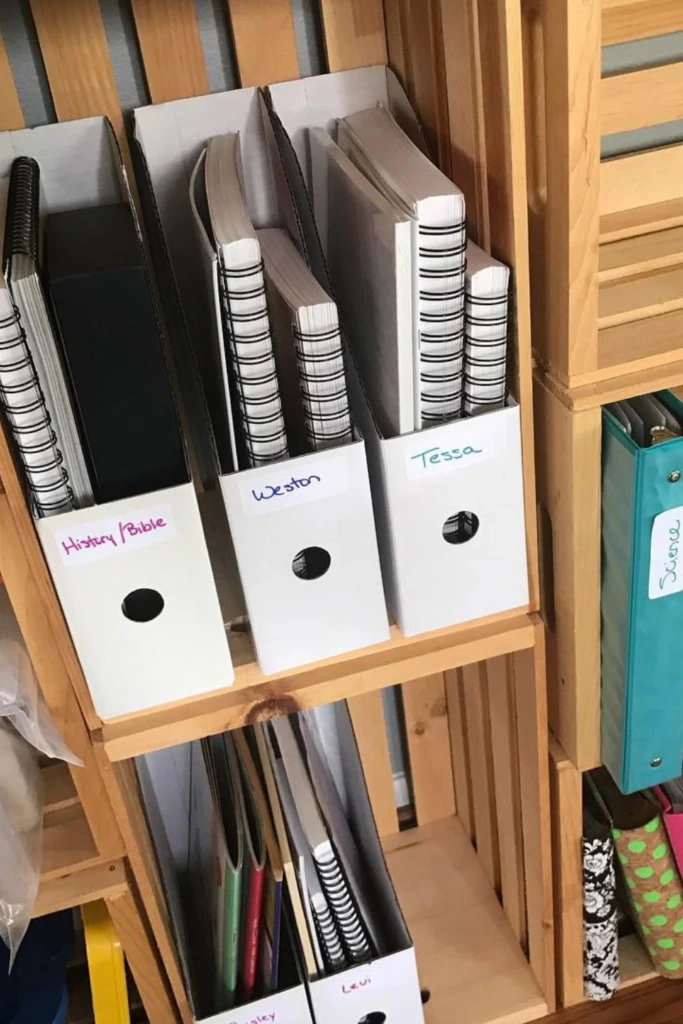
Magazine holders are useful for organizing thin workbooks, folders, loose-leaf packets, and educational magazines.
Instead of stacking everything horizontally, place materials upright so their labels remain visible.
Assign each holder to a subject, child, or category such as current lessons, reference materials, and upcoming activities.
Cardboard magazine files offer an inexpensive starting point, while plastic or wooden versions may withstand heavier use.
Arrange the holders on a bookshelf or inside a cabinet near your primary teaching area.
This simple method prevents important papers from disappearing beneath piles of books.
14. Thematic Organizer Tray
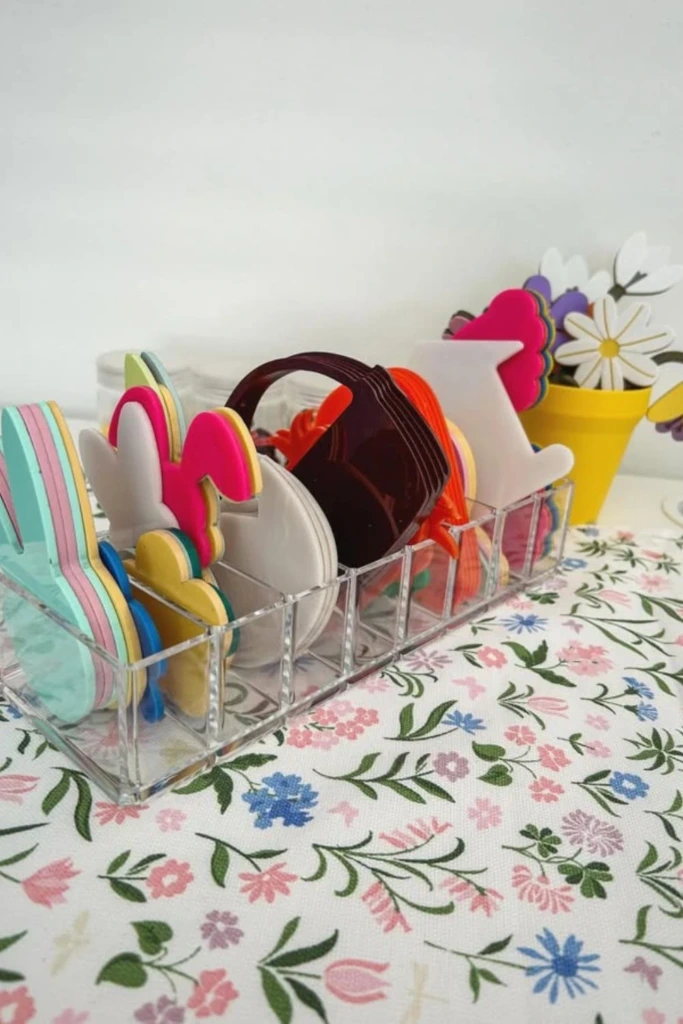
A thematic organizer tray keeps everything needed for a particular learning activity in one place.
For a nature study lesson, the tray might contain a magnifying glass, observation notebook, colored pencils, and identification cards.
A mathematics tray could hold counting objects, number cards, and measuring tools.
Choose a shallow tray with raised edges so materials remain contained when moved.
Prepare one or two trays before the school day begins and rotate their contents as lessons change.
This method works particularly well for preschool activities, unit studies, and hands-on learning.
15. Bookshelf Corner
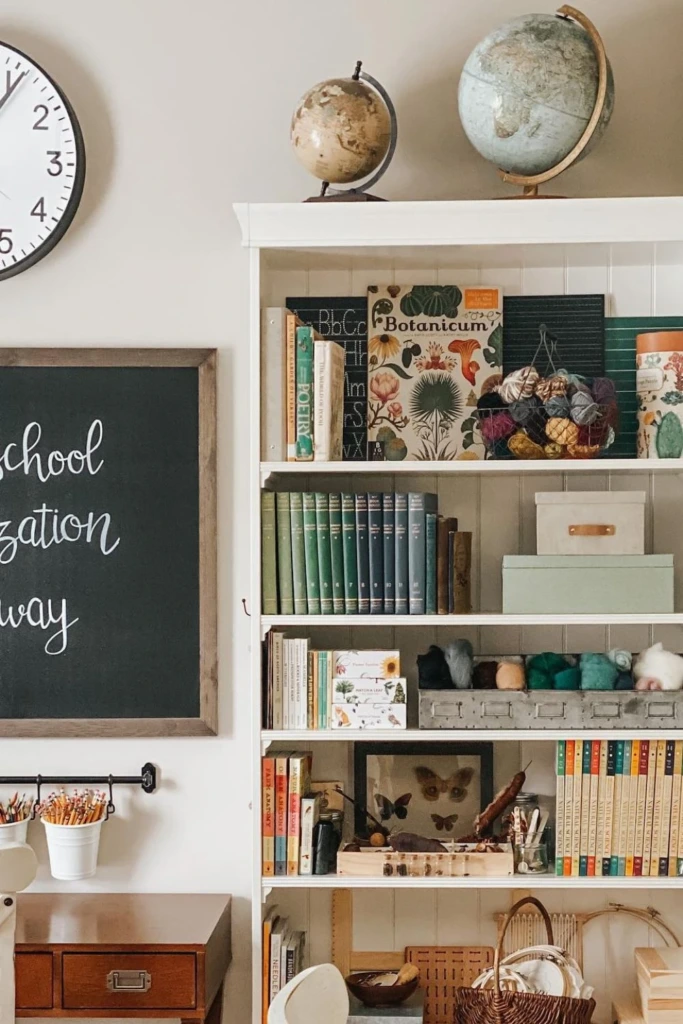
A dedicated bookshelf corner creates a welcoming place for reading and independent exploration.
Position a sturdy bookshelf near comfortable seating and good lighting. Organize books by reading level, subject, or category, depending on what makes sense for your children.
Place current read-aloud selections and frequently requested titles on the most accessible shelves.
A small rug, floor cushion, or cozy chair can help distinguish the reading corner from other learning areas.
Avoid overcrowding shelves. Displaying a manageable selection makes choosing books easier and leaves space for new discoveries.
Rotate featured books periodically to renew interest in the collection.
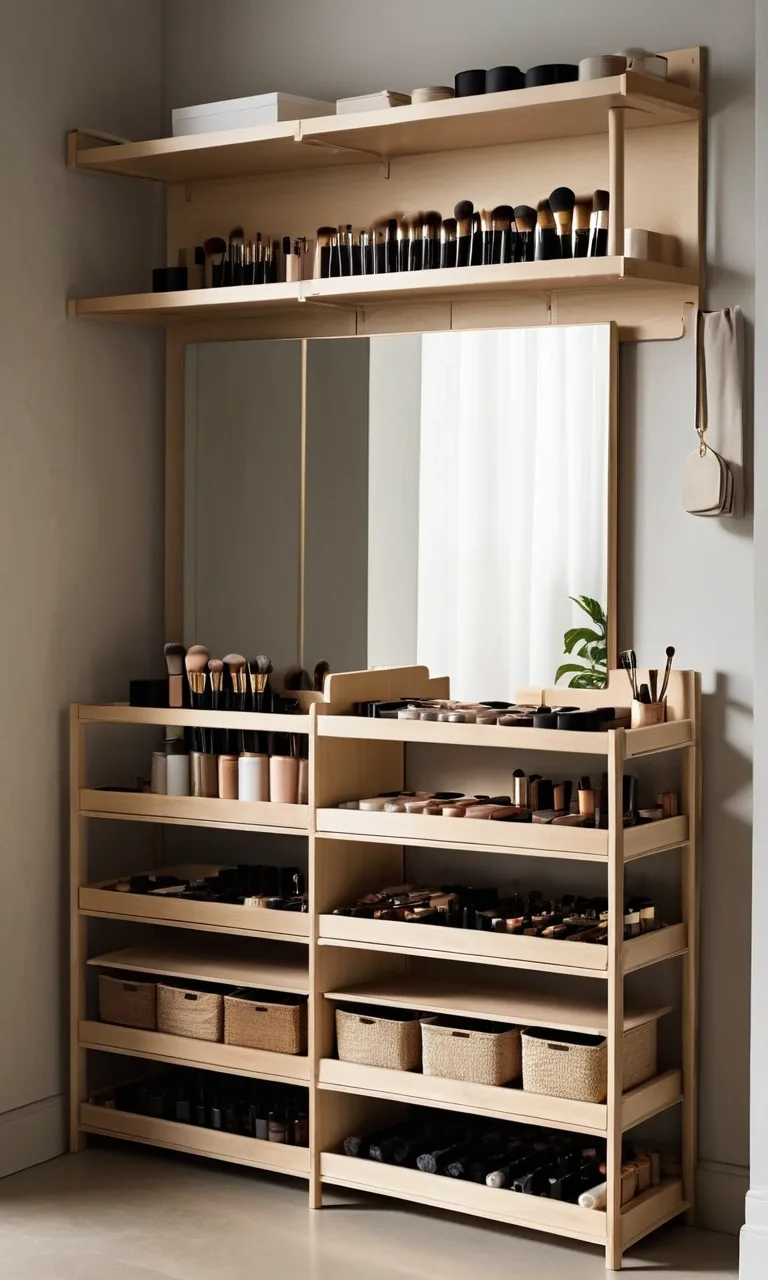
16. Wooden Learning Shelf
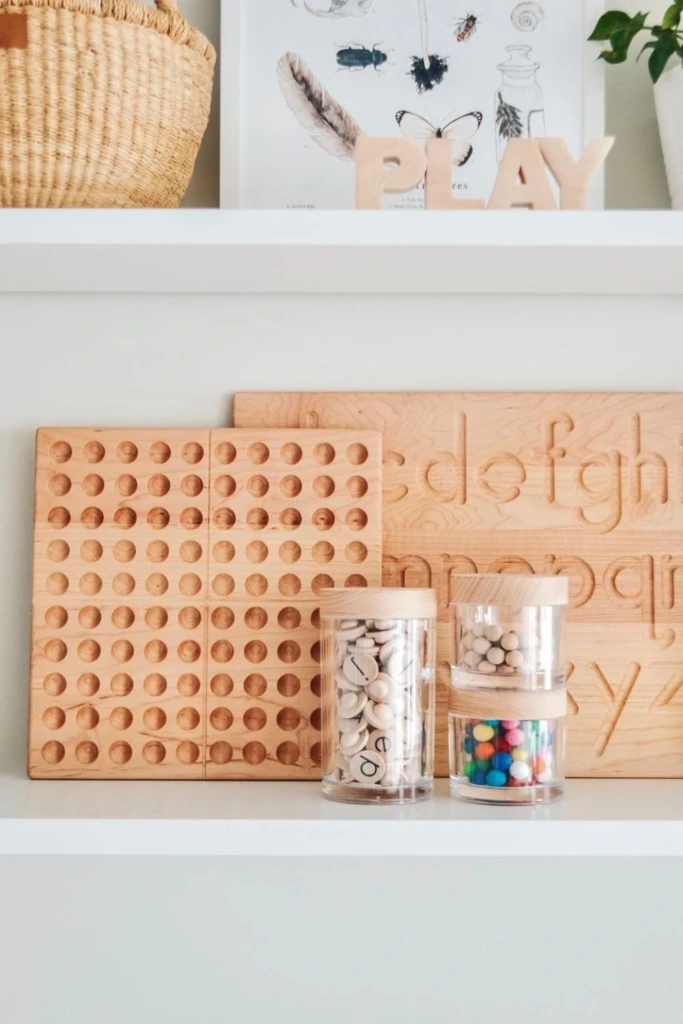
A low wooden shelf can provide an attractive and practical home for hands-on educational materials.
Open shelving allows children to see available activities without opening drawers or searching through containers.
Arrange materials on individual trays or in small baskets, giving each activity a clearly defined place.
Keep the display relatively simple. Too many choices can make it harder for younger learners to select an activity and return it afterward.
Place heavier objects on lower shelves and ensure the furniture is stable and appropriately secured.
This setup is especially useful for Montessori-inspired activities, early mathematics, sensory exploration, and independent learning.
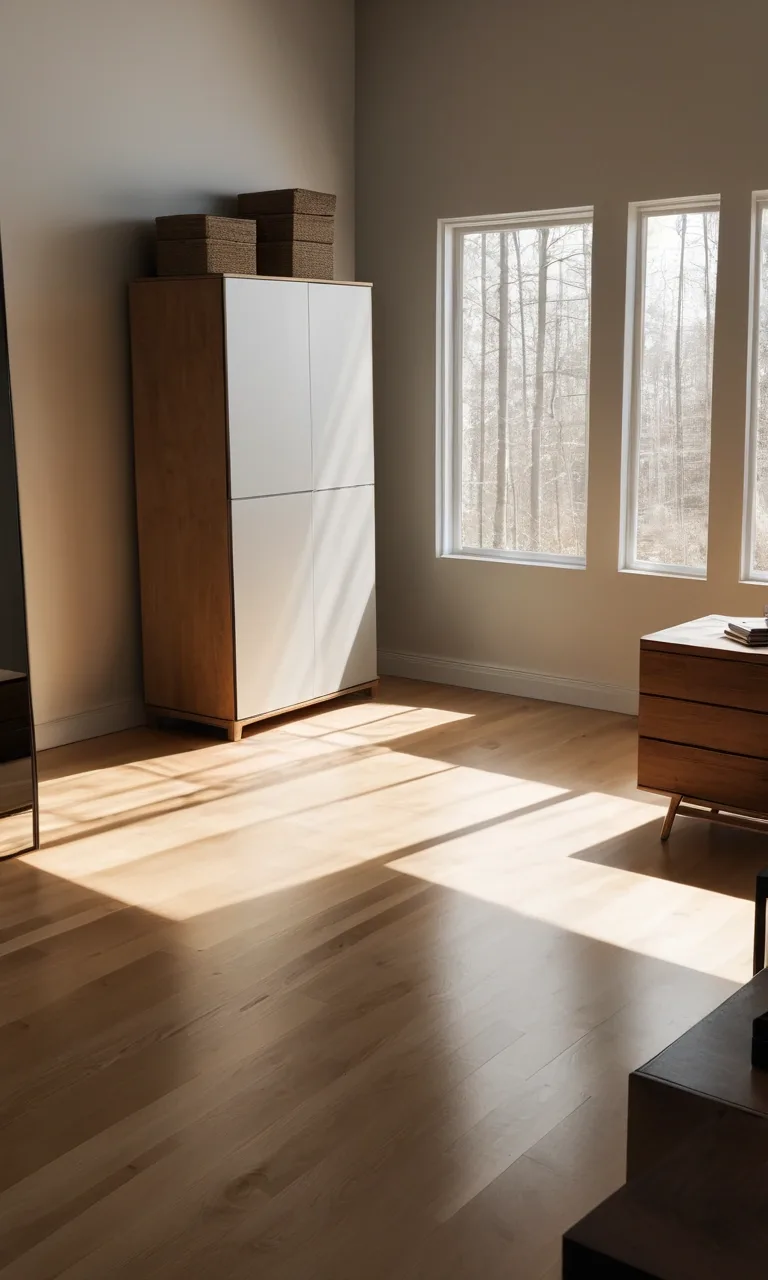
17. Cabinet Material Storage
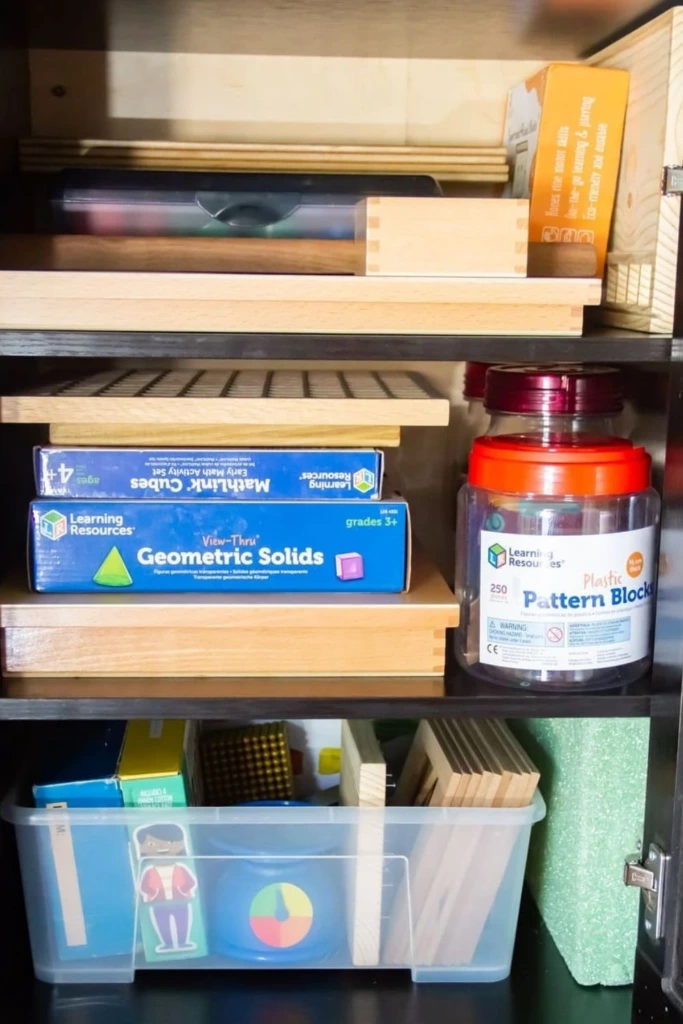
Closed cabinets are ideal for storing materials that don't need to remain visible throughout the day.
Use cabinets for extra notebooks, craft supplies, science equipment, curriculum books, and resources for future lessons.
Divide shelves with bins or organizers so materials remain accessible instead of forming deep, disorganized stacks.
Label each container according to its contents, and group similar resources together.
Store messy or potentially hazardous materials in secured locations appropriate to the children's ages.
Cabinets are particularly helpful when your homeschool area shares space with a living room or dining area because they conceal supplies when lessons are finished.
18. Open Tabletop Caddies
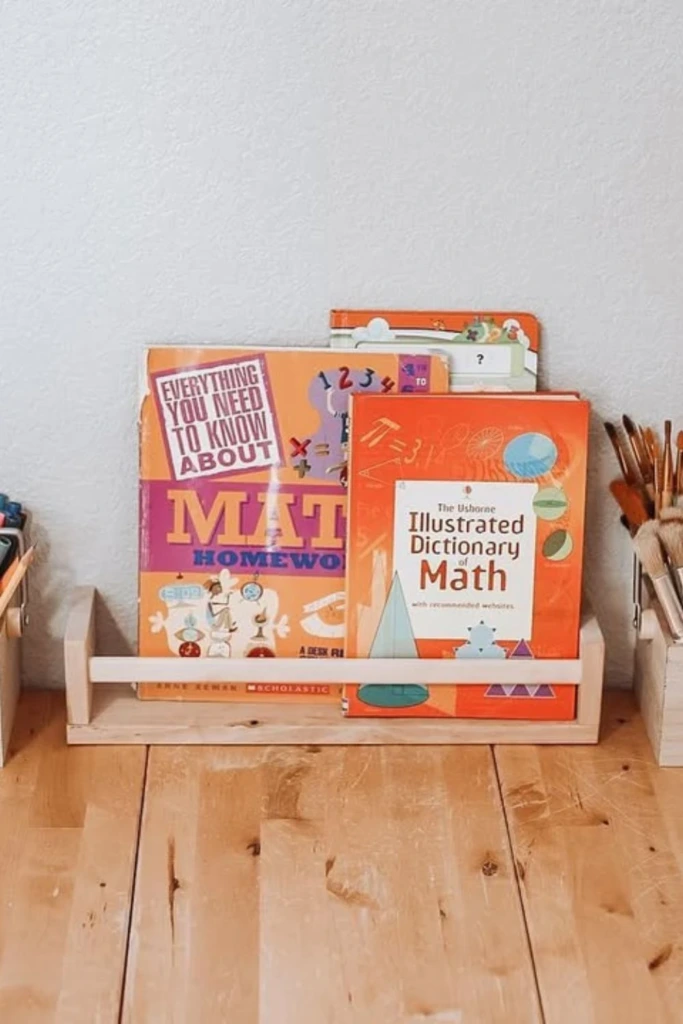
Tabletop caddies keep essential supplies within easy reach during lessons.
Choose a container with multiple compartments for pencils, pens, scissors, glue sticks, rulers, and erasers.
A rotating caddy can be convenient for shared tables because children can access supplies from different sides.
Alternatively, give each student a smaller personal caddy to reduce interruptions and arguments over materials.
Avoid including every craft supply you own. Limit the caddy to items used almost daily.
A quick check at the end of each week helps identify missing supplies before they disrupt lessons.
19. Clear Bin System
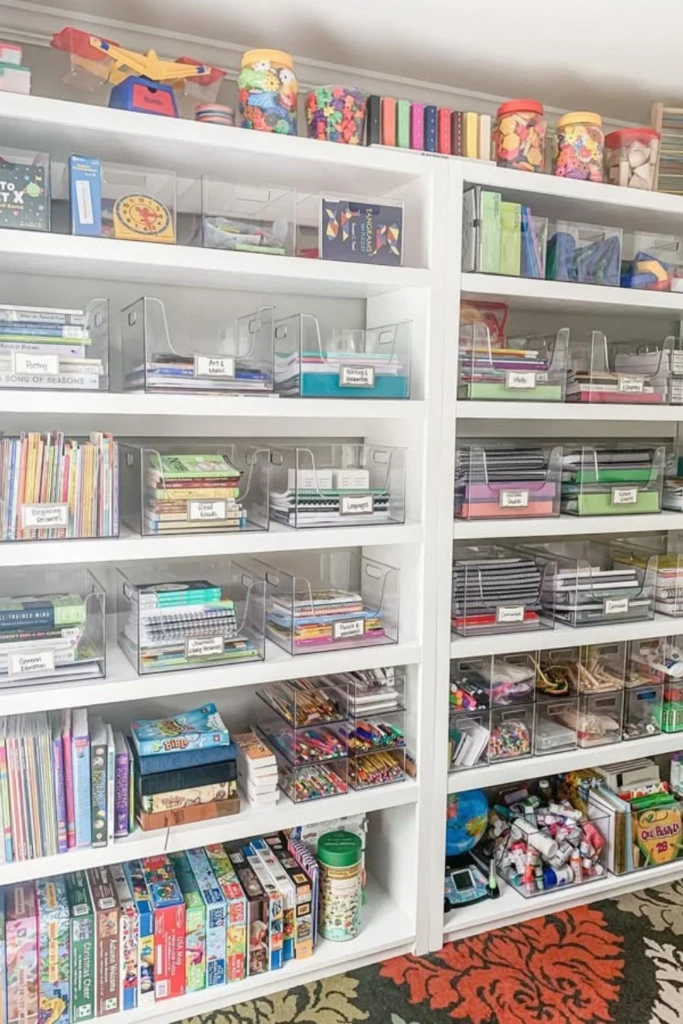
Clear storage bins make it easier to manage homeschool materials that aren't needed every day.
Group items into categories such as science experiments, seasonal crafts, educational games, and extra stationery.
Select stackable containers with secure lids for shelves or closets. Use consistent labels so the contents remain identifiable even when bins are stacked.
Keep heavier bins on lower shelves and avoid stacking them beyond a safe height.
You can also create a separate bin for each unit study, containing books, printed resources, and related activities.
This approach makes it easier to switch topics without searching through several storage locations.
20. Basket Book Holders
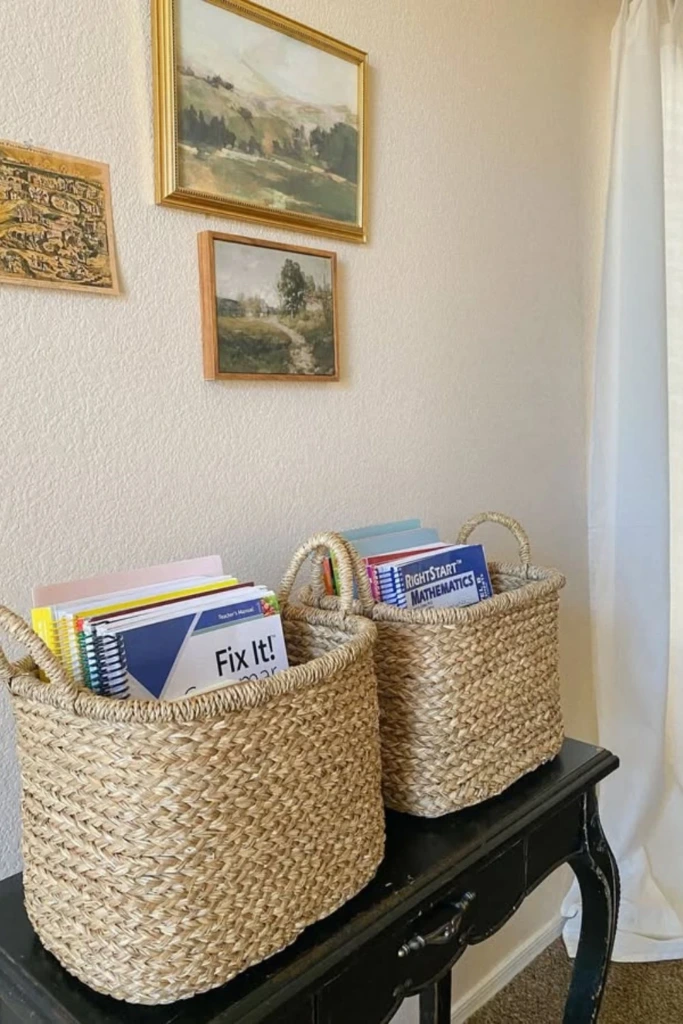
Baskets provide a flexible alternative to traditional bookshelves.
Use sturdy baskets to hold picture books, current reading selections, library books, and topic-specific collections.
Place them beside reading chairs, under benches, or on low shelving units.
A dedicated library basket is especially useful because borrowed books remain separate from your personal collection.
For younger children, choose shallow baskets that allow book covers to remain partially visible.
Avoid packing baskets too tightly, as children may struggle to remove books without damaging them.
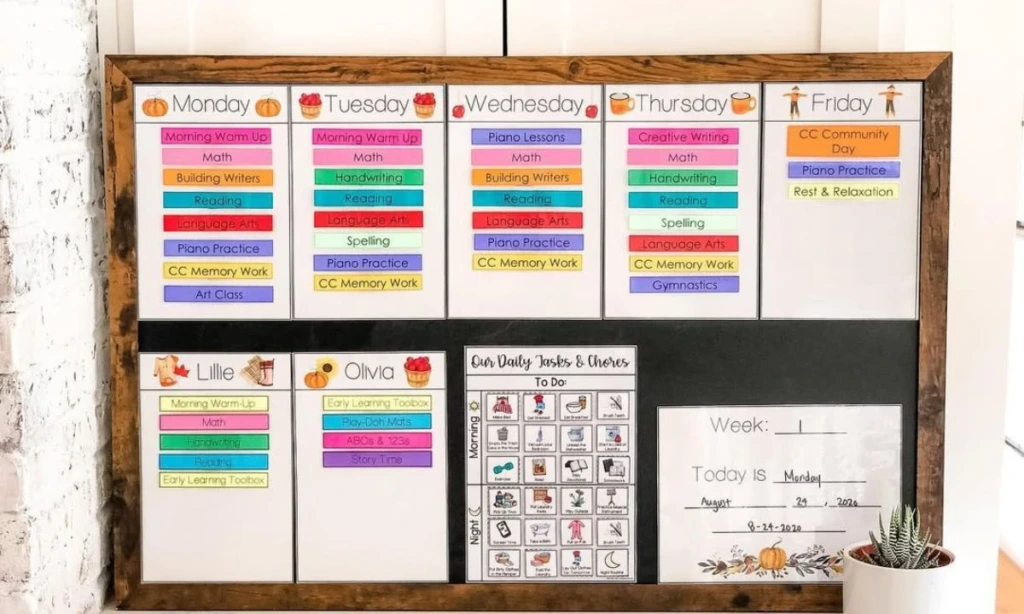
21. Visual Daily Schedule
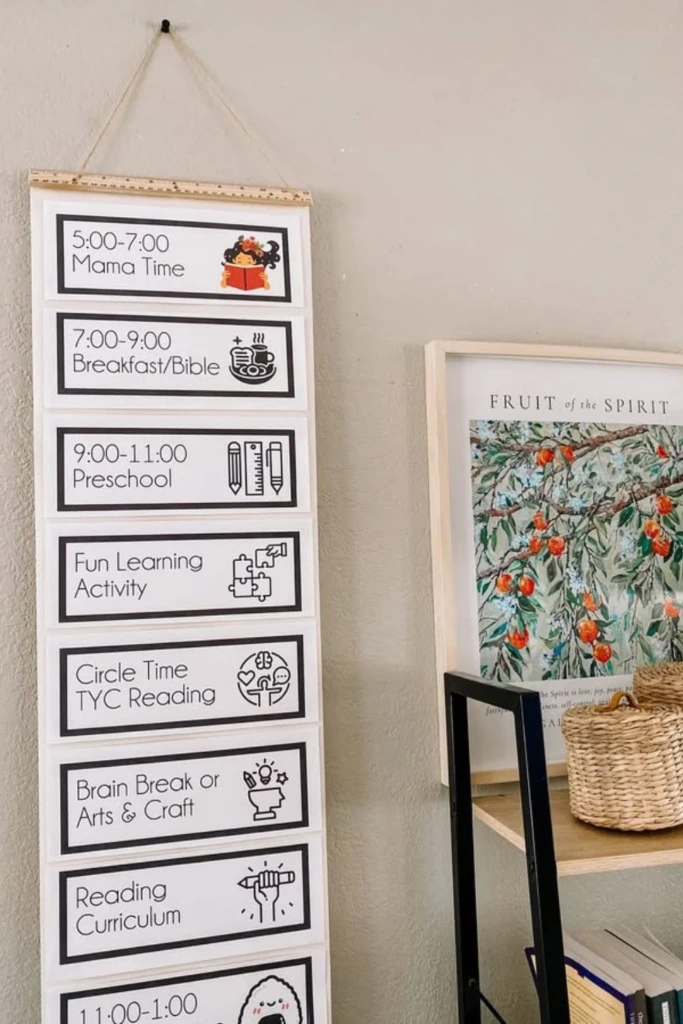
A visual daily schedule helps children understand what to expect and follow routines more independently.
Create a simple chart showing the sequence of activities, such as morning reading, mathematics, snack time, outdoor play, science, and creative work.
Younger learners may benefit from pictures or symbols, while older children can use written checklists.
Consider using removable cards, magnets, or reusable markers so the schedule can change when necessary.
Place the chart somewhere children can easily see it.
A predictable sequence can make transitions smoother, but the schedule should remain flexible enough to accommodate unexpected needs and learning opportunities.
22. Twin Desk Setup
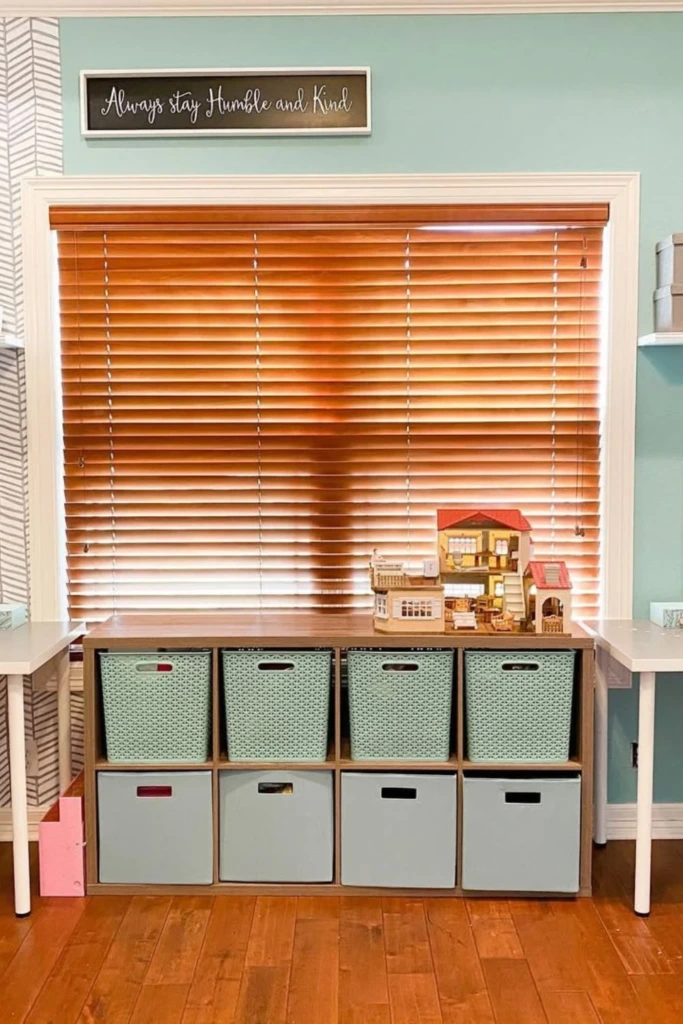
Matching desks can create a balanced learning environment for siblings who prefer individual workspaces.
Position the desks along one wall, facing separate directions, or opposite each other depending on the room layout.
Provide each child with a desk lamp, supply organizer, and designated storage area.
Consider using different-colored accessories or name labels to make ownership clear.
Allow enough space between chairs for comfortable movement.
If distractions become an issue, reposition the desks so children aren't constantly facing one another.
Individual workstations can encourage responsibility while still allowing shared instruction when needed.
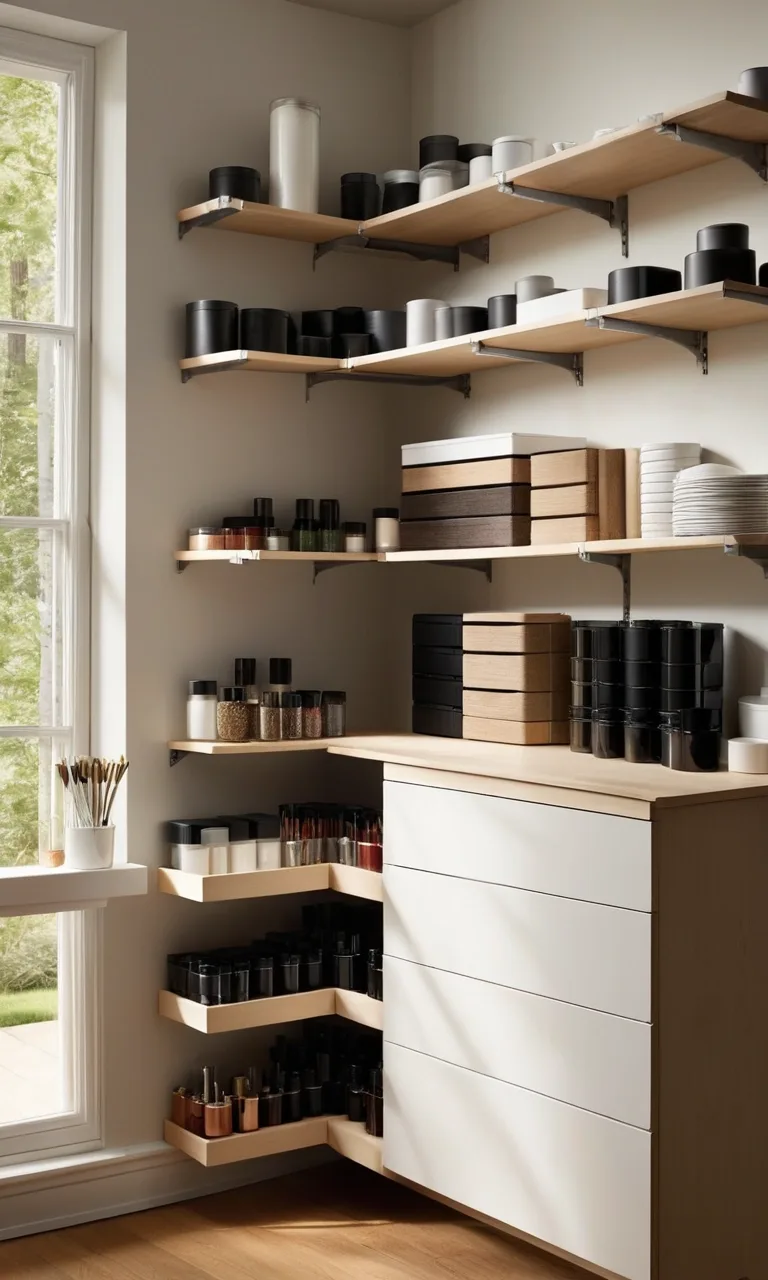
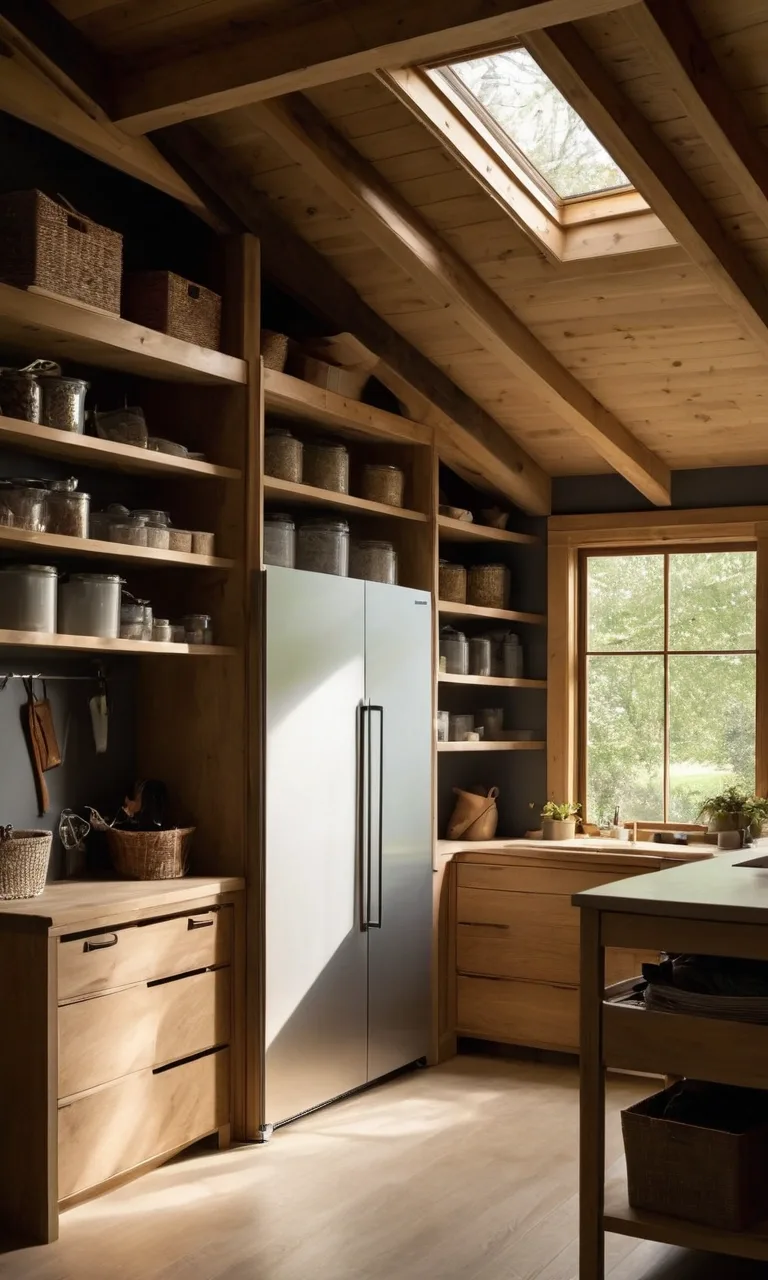
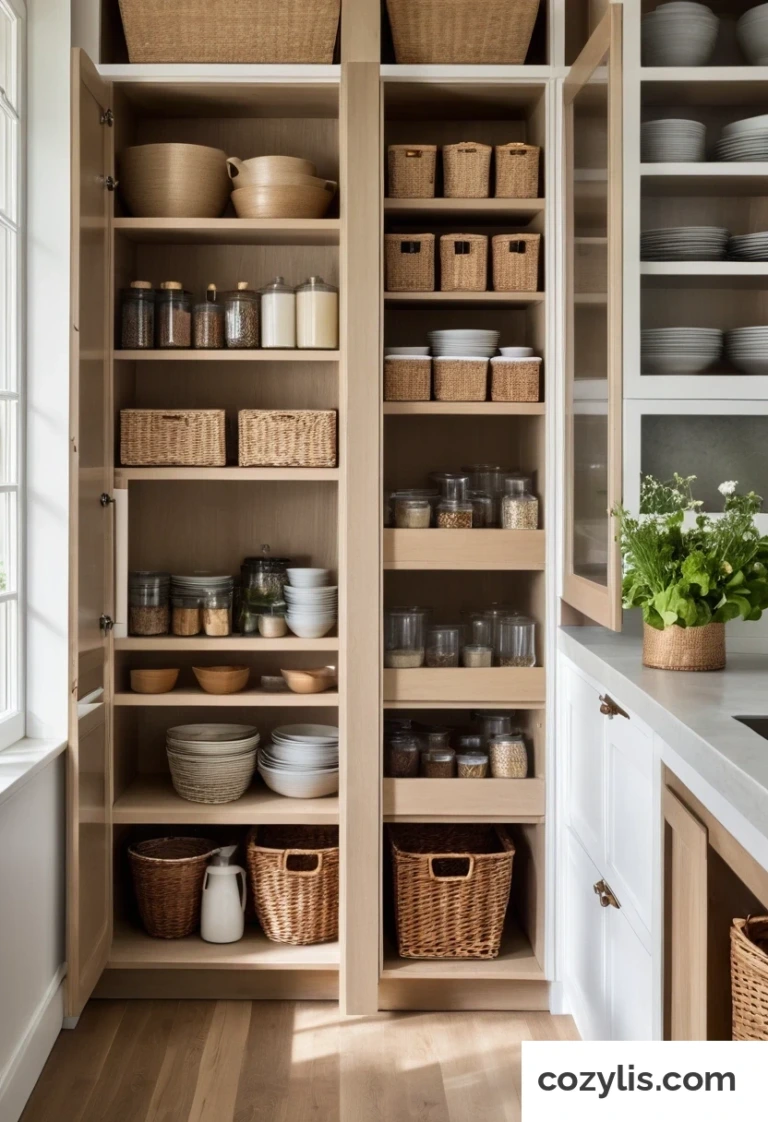
23. Mixed Shelf Wall
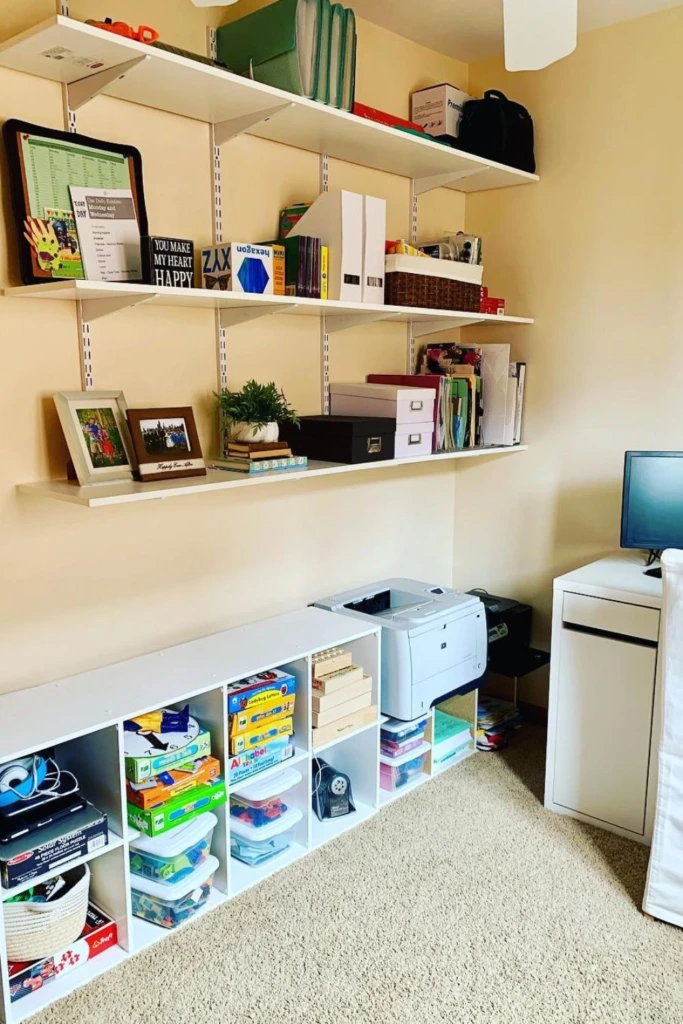
A mixed shelf wall combines open shelves, enclosed cabinets, baskets, and display areas.
This arrangement accommodates different types of homeschool materials without forcing everything into identical containers.
Use open shelves for current books and frequently accessed resources. Place less attractive supplies inside cabinets or baskets.
Reserve a small section for children's artwork, completed projects, or educational displays.
Combining storage types can make the room feel more like a comfortable family space than a traditional classroom.
Keep the layout practical by placing everyday materials within easy reach and heavier items near the bottom.
24. In-Home Library
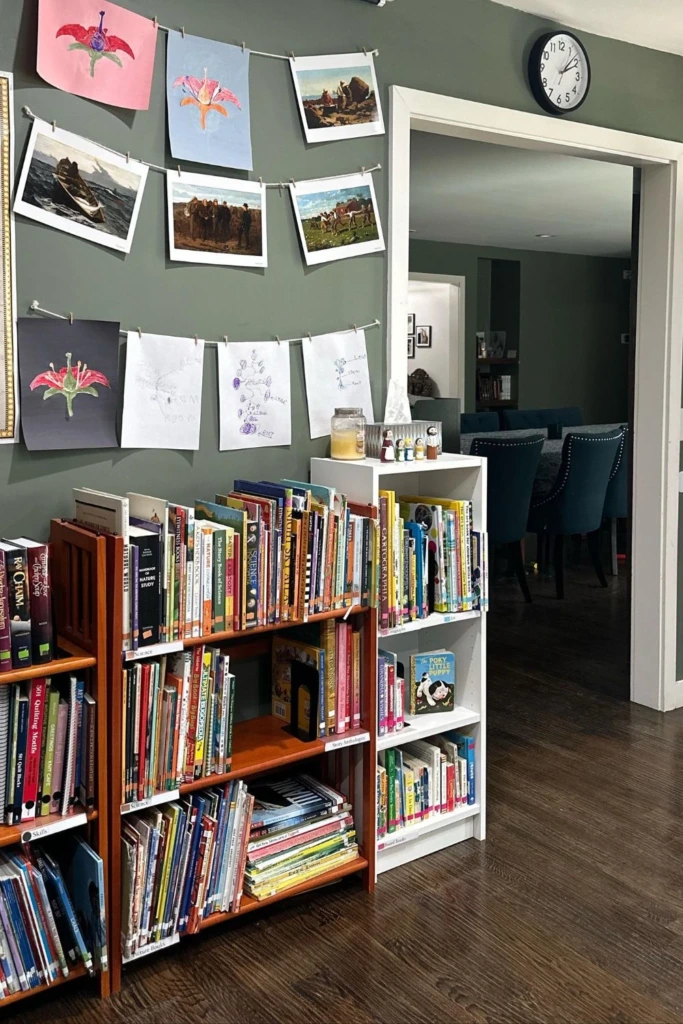
An in-home library provides a central location for your family's educational and recreational reading materials.
You don't need an entire room. A few well-organized bookshelves can create an effective library area.
Group books into useful categories such as fiction, biographies, science, history, reference, and early readers.
Consider adding shelf labels or colored stickers to help children return books to the correct sections.
Maintain a separate area for books currently being read and another for borrowed library materials.
Review the collection occasionally to remove damaged books, donate unwanted titles, and make space for resources that better match your children's interests.
25. Rolling Resource Cart
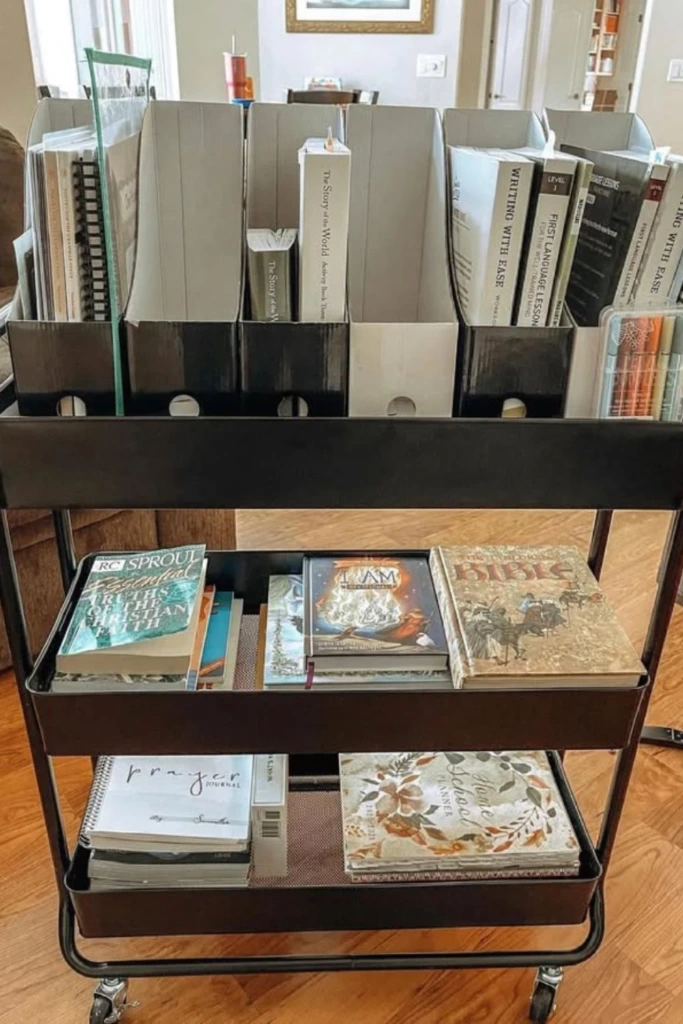
A rolling resource cart can function as a portable teaching station.
Unlike an art cart, this organizer focuses on curriculum materials, lesson plans, textbooks, and teaching tools.
Use the upper tier for the current day's resources, the middle tier for upcoming assignments, and the lower tier for reference books or additional materials.
Add small hanging containers for pens, bookmarks, and sticky notes.
The cart can follow you between the dining table, living room, and other learning spaces.
Choose a model with locking wheels, particularly if it will be used around younger children.
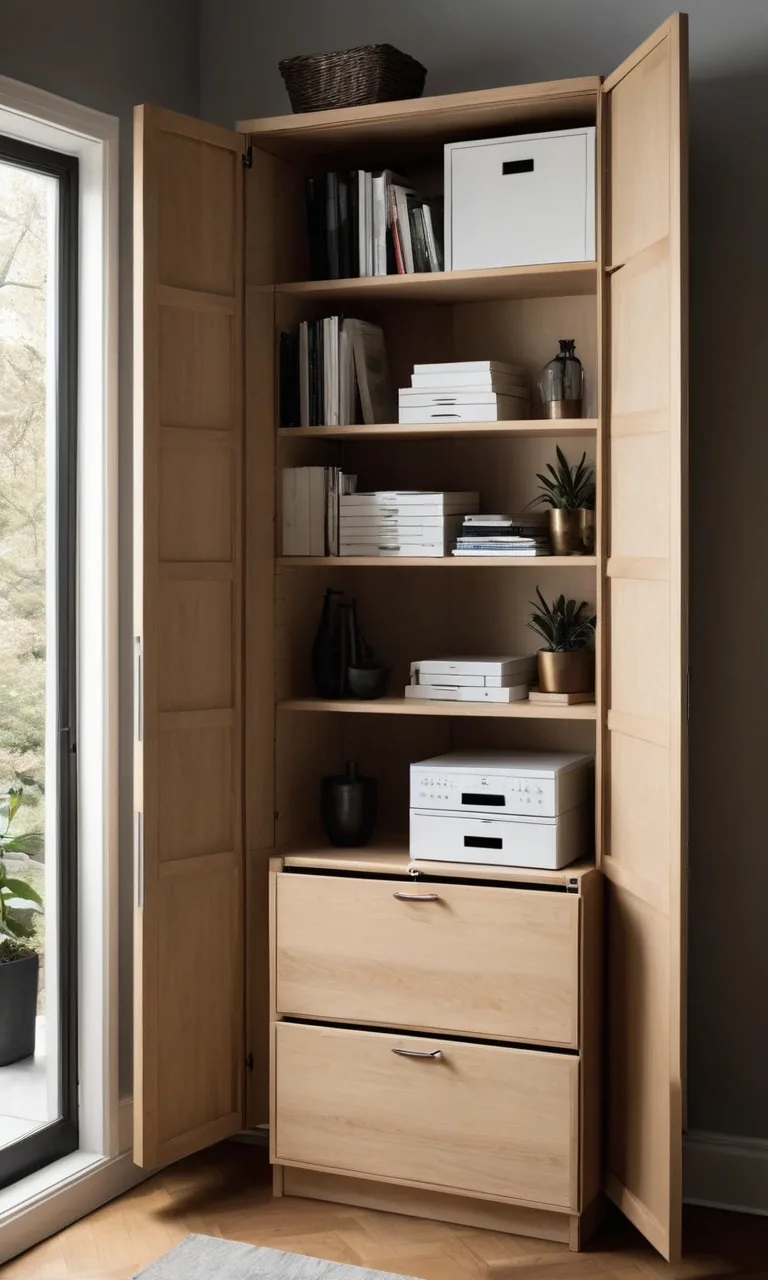
26. Multi-Function Sideboard
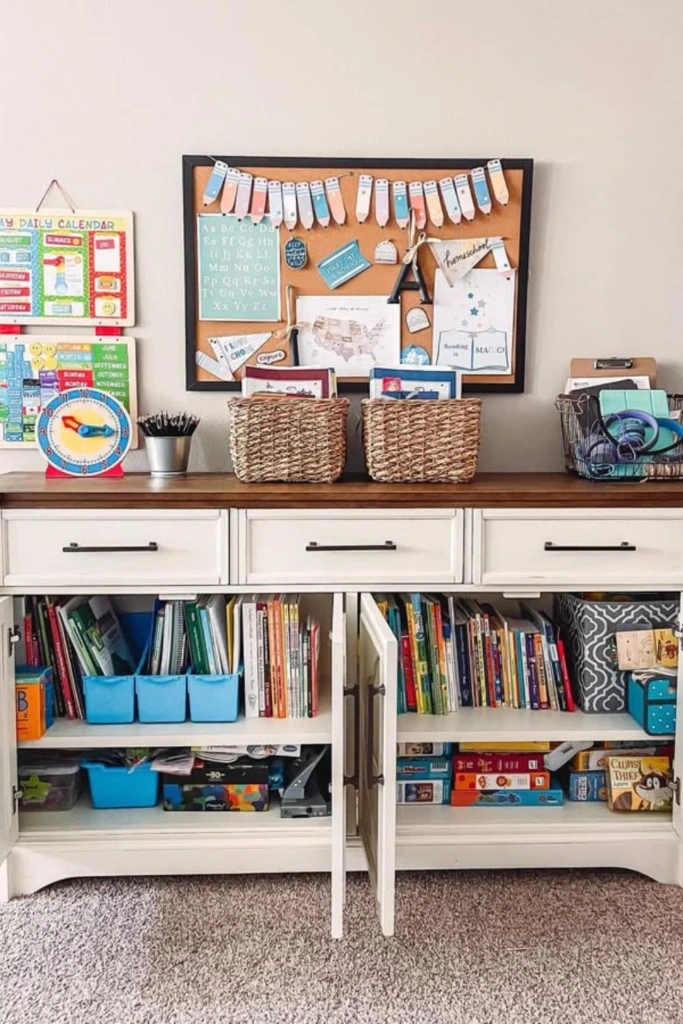
A sideboard can provide substantial homeschool storage while blending naturally with existing home furniture.
Place one against a dining room or living room wall and use its interior shelves for curriculum books, notebooks, art supplies, and educational games.
Drawer compartments are useful for stationery and smaller accessories.
The top surface can hold a lamp, a small book display, or a basket containing the day's assignments.
When lessons are complete, supplies can be returned to the cabinet and the room can resume its usual function.
This option is particularly practical for families who want organized learning materials without creating a permanent classroom appearance.
What Should Stay Within Easy Reach?
Not every homeschool resource deserves a place on your main desk or teaching table.
Prioritize items used throughout the day, including pencils, erasers, notebooks, current workbooks, reading materials, and basic teaching tools.
For younger children, keep frequently used manipulatives, activity trays, and picture books on low shelves.
Materials needed only occasionally, such as seasonal decorations, specialized science equipment, or future curriculum books, can remain in cabinets or labeled bins.
A useful guideline is to organize supplies according to how often they're used.
Daily essentials should be immediately accessible, weekly materials can occupy nearby shelves, and occasional resources can be stored farther away.
This reduces visual clutter without making important items difficult to find.
27. How to Organize Homeschool Papers
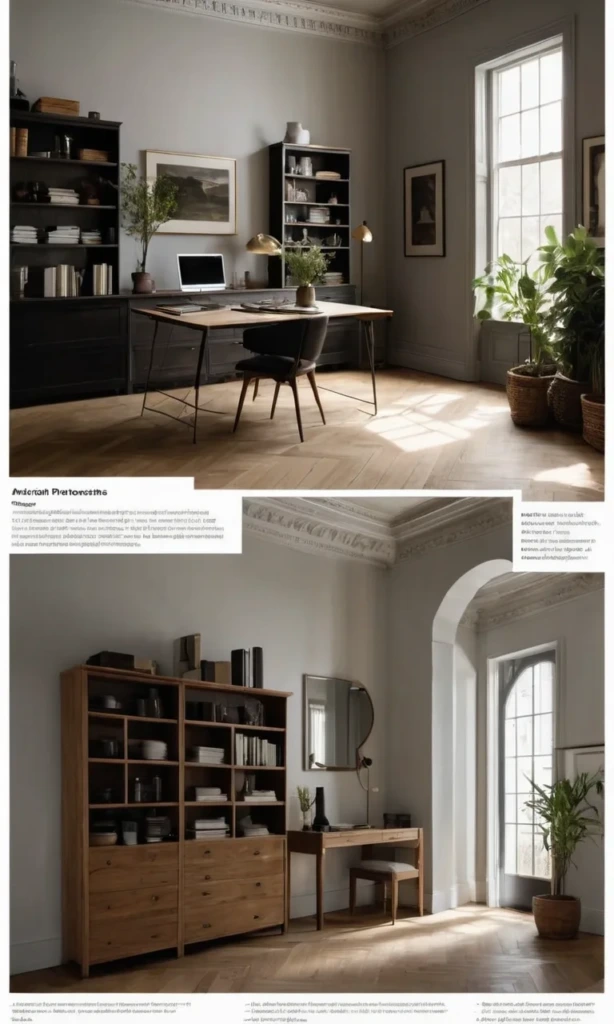
Homeschool paperwork can accumulate quickly when you're managing lesson plans, worksheets, assessments, artwork, and completed assignments.
Start by separating papers into clear categories.
A simple system might include folders for upcoming lessons, work in progress, completed assignments, and records that need to be retained.
Give each child a dedicated folder or binder to prevent their work from becoming mixed together.
For completed projects and assignments, decide what genuinely needs to be kept. Not every practice worksheet requires permanent storage.
Use labeled binders, accordion folders, or archive boxes for important records.
Digital scanning can reduce physical storage needs, although you should check applicable homeschool recordkeeping requirements before discarding original documents.
Set aside time once a week to review papers and clear unnecessary items from your working area.
28. How to Organize Homeschool Without a Dedicated Room
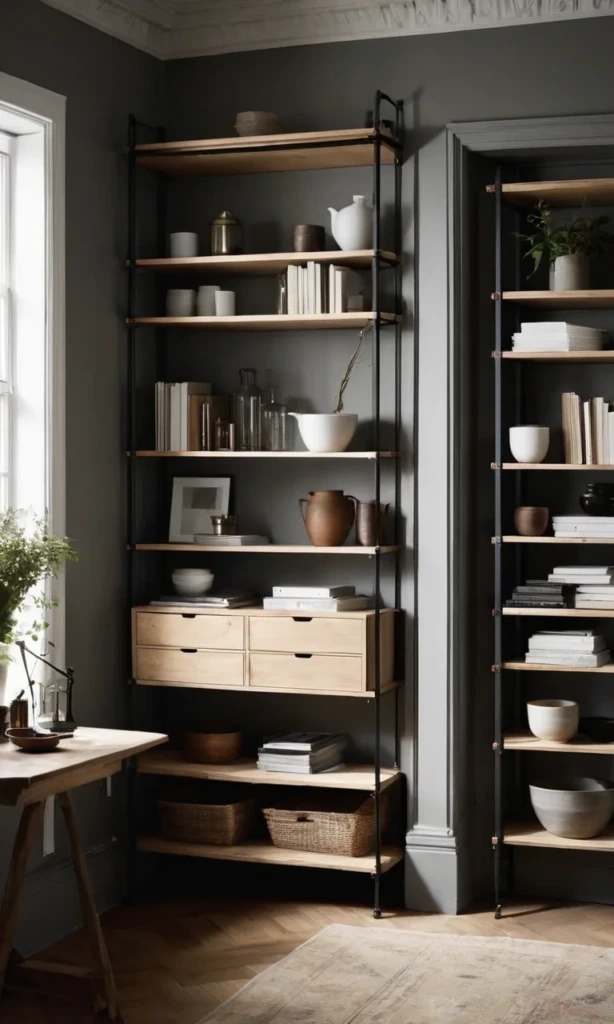
A separate homeschool classroom is convenient, but it isn't essential for creating an effective learning environment.
Many families successfully homeschool at kitchen tables, dining tables, living room desks, and shared family spaces.
The key is making supplies portable and easy to put away.
Use rolling carts, portable caddies, and baskets to keep daily materials together. Store larger resources inside cabinets, closets, or multifunctional furniture.
Consider assigning each child a personal basket containing current books, notebooks, and essential supplies.
Wall-mounted organizers can provide extra storage without taking up valuable floor space, provided they're installed securely.
Establish a simple routine for setting up and clearing the learning area.
When everything has a designated storage location, transitioning between homeschool activities and everyday family life becomes much easier.
How Much Homeschool Storage Do You Really Need?
The amount of storage you need depends on your curriculum, number of children, available space, and preferred teaching methods.
A family using mostly digital resources may require only a small shelf and a few supply containers.
A hands-on learning approach involving science experiments, art projects, educational games, and manipulatives may need more extensive storage.
Before buying additional furniture, evaluate what you already own.
Remove broken supplies, outdated materials, duplicate resources, and books your family no longer uses.
Then organize the remaining items into categories and estimate how much space each group requires.
Choose storage solutions that accommodate your current needs while allowing a little room for growth.
Avoid purchasing large organizers simply because they're popular. Unused storage furniture can create as much clutter as the materials it's meant to contain.
29. Make the System Easy for Your Children to Use
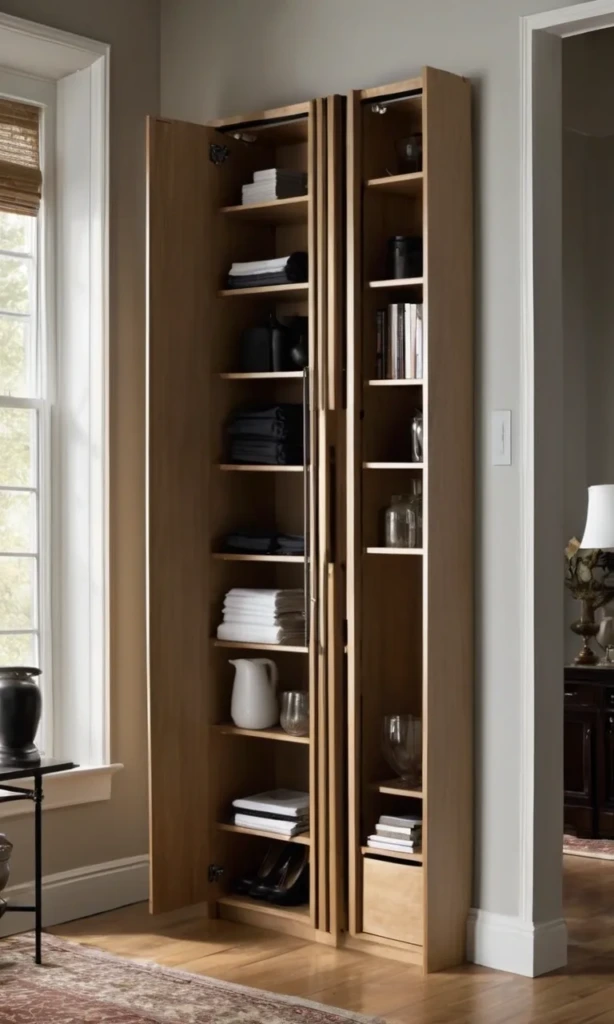
An organization system is most effective when children can maintain it without constant adult assistance.
Keep storage locations predictable and use labels that match your children's reading abilities.
Picture labels work well for preschoolers, while older students can manage more detailed categories.
Avoid complicated systems that require several steps to retrieve or return a single item.
For example, a basket labeled "Math Tools" is often more practical than multiple small containers that must be opened and rearranged during every lesson.
Show children where supplies belong and practice putting materials away together.
As they become familiar with the routine, gradually give them more responsibility for maintaining their learning areas.
The aim is to develop independence, not enforce perfect organization.
30. Try a Short End-of-Day Reset
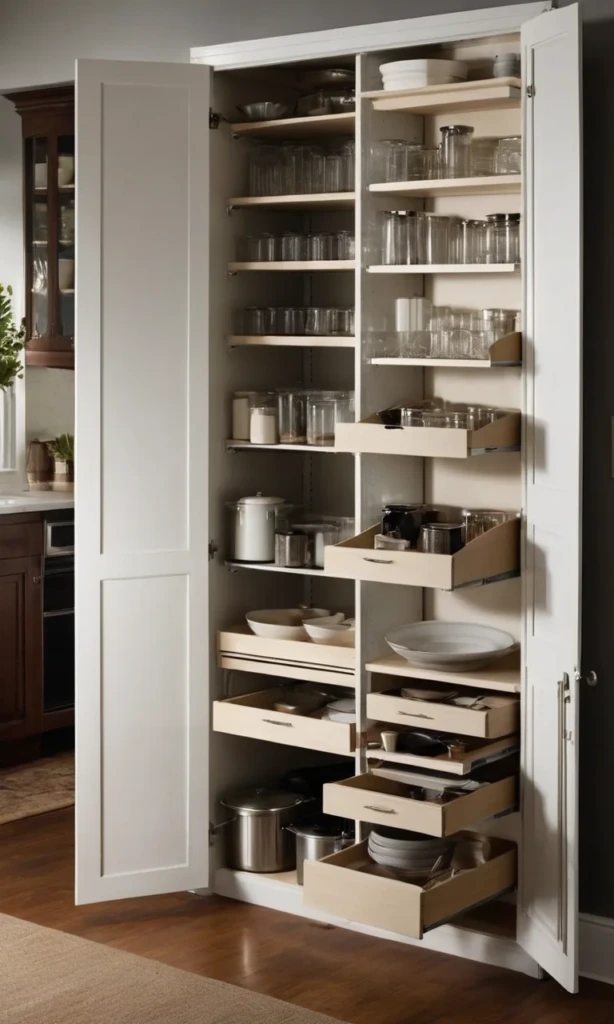
A brief daily reset can prevent small messes from turning into overwhelming cleanup projects.
Set aside approximately five to ten minutes after lessons to return books, collect pencils, sort papers, and clear work surfaces.
Encourage each child to take responsibility for a few age-appropriate tasks.
Younger children might return books to baskets or place crayons in containers. Older students can organize assignments, prepare notebooks, and check the next day's schedule.
Use this time to identify missing supplies or materials that need replenishing.
Preparing the learning space before the next morning can make starting lessons feel easier and more predictable.
Consistency matters more than completing an elaborate cleaning routine.
31. Your Homeschool Space Can Still Feel Like Home
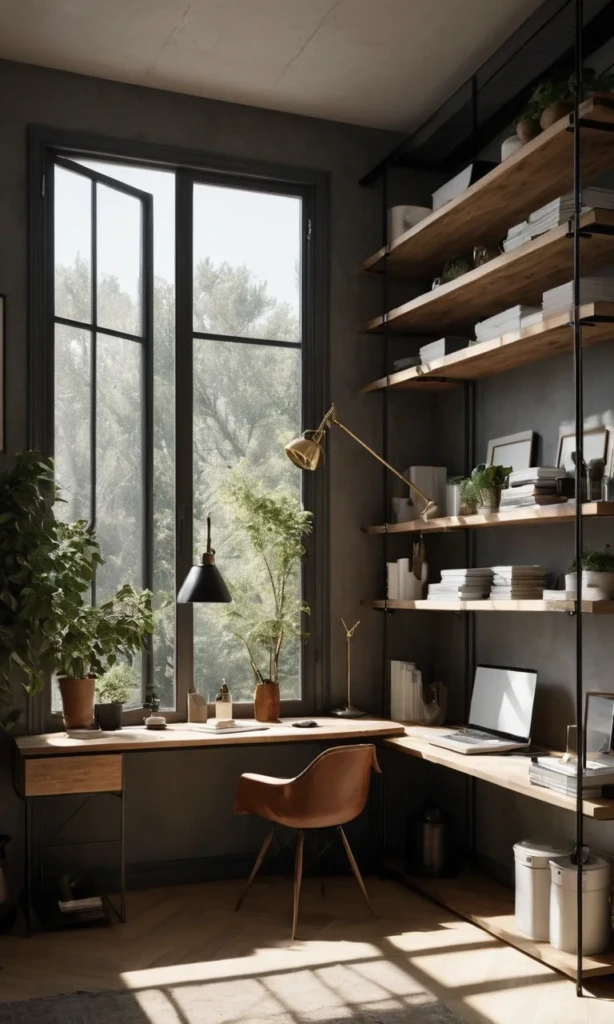
Homeschool organization doesn't require transforming your house into a traditional classroom.
You can create a productive learning environment while preserving the warmth, comfort, and personality of your home.
Choose furniture that complements your existing decor, use attractive baskets where practical, and leave room for family photographs, plants, and children's artwork.
Avoid covering every wall with educational posters or filling every available shelf with supplies.
A calm, comfortable environment can support focused learning just as effectively as a room filled with classroom decorations.
Remember that homeschooling often happens beyond a desk. Reading on the sofa, conducting experiments in the kitchen, and exploring nature outdoors are all valuable learning experiences.
Your organization system should support that flexibility rather than restrict it.
Final Thoughts
Creating an organized homeschool space in 2026 doesn't have to involve expensive furniture, complicated routines, or a dedicated classroom. Small improvements, such as labeled supply bins, weekly folders, accessible bookshelves, and portable carts, can make a noticeable difference in everyday learning.
Start with the areas causing the most frustration, choose practical storage solutions, and involve your children in maintaining them. The best homeschool organization ideas are the ones that fit naturally into your family's routines, making learning easier while keeping your home comfortable and welcoming.