28 Under Bed Storage Ideas for 2026
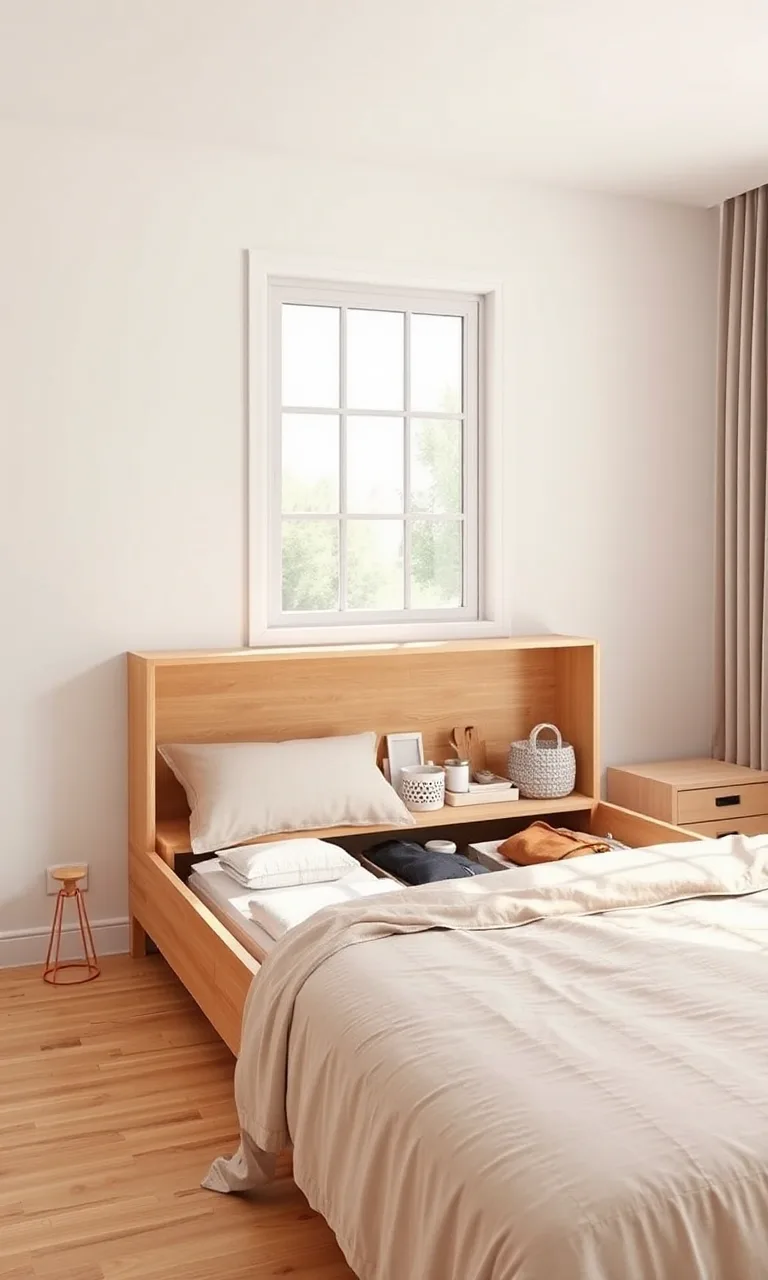
A bedroom can feel crowded even when everything looks reasonably tidy. Clothes fill the wardrobe, spare bedding occupies valuable shelves, and shoes somehow end up scattered across the floor. Fortunately, there is often an overlooked storage area right beneath the bed.
With the right organizers, drawers, and containers, you can turn this unused space into a practical storage solution without buying another bulky cabinet. Whether you have a small apartment, a shared bedroom, or a children's room, under-bed storage can make everyday organization much easier.
From affordable storage bins to clever built-in compartments, these 28 under bed storage ideas will help you create a cleaner, more functional bedroom while keeping your belongings within reach.
What Are the Best Under Bed Storage Solutions for Small Bedrooms?
The best under-bed storage solution depends on how much clearance your bed has, what you need to store, and how frequently you use those belongings.
For everyday items, pull-out drawers and wheeled organizers offer convenient access. Transparent containers work well for shoes, toys, and folded clothing because their contents remain visible. Soft fabric bags are particularly useful for spare bedding and seasonal garments.
If you're planning to replace your bed, consider a platform frame with integrated drawers or a lift-up storage base. These designs provide additional capacity without requiring separate storage furniture.
Before choosing anything, measure the distance between the floor and the lowest part of your bed frame. Also check how much room is available beside the bed for opening drawers or pulling containers out.
1. Lift Storage
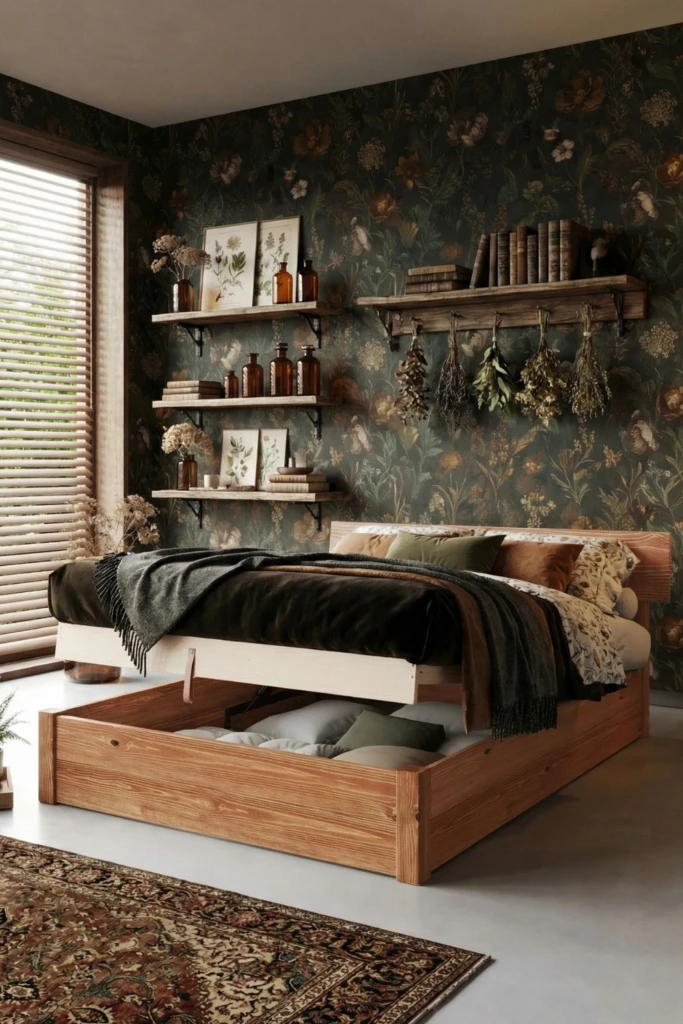
A lift-up storage bed is an excellent option when you want to maximize hidden storage without sacrificing bedroom floor space.
These beds feature a mattress platform that rises to reveal a large compartment underneath. Many designs use gas-assisted mechanisms to make lifting easier and hold the platform open while you access your belongings.
The spacious interior is particularly useful for storing comforters, spare pillows, winter bedding, and other bulky items that rarely fit comfortably inside ordinary drawers.
You can make the compartment more organized by using smaller fabric containers to separate different categories.
Choose a frame with a reliable lifting mechanism, follow its weight limits, and ensure the platform is securely supported before reaching inside.
2. Toy Drawer
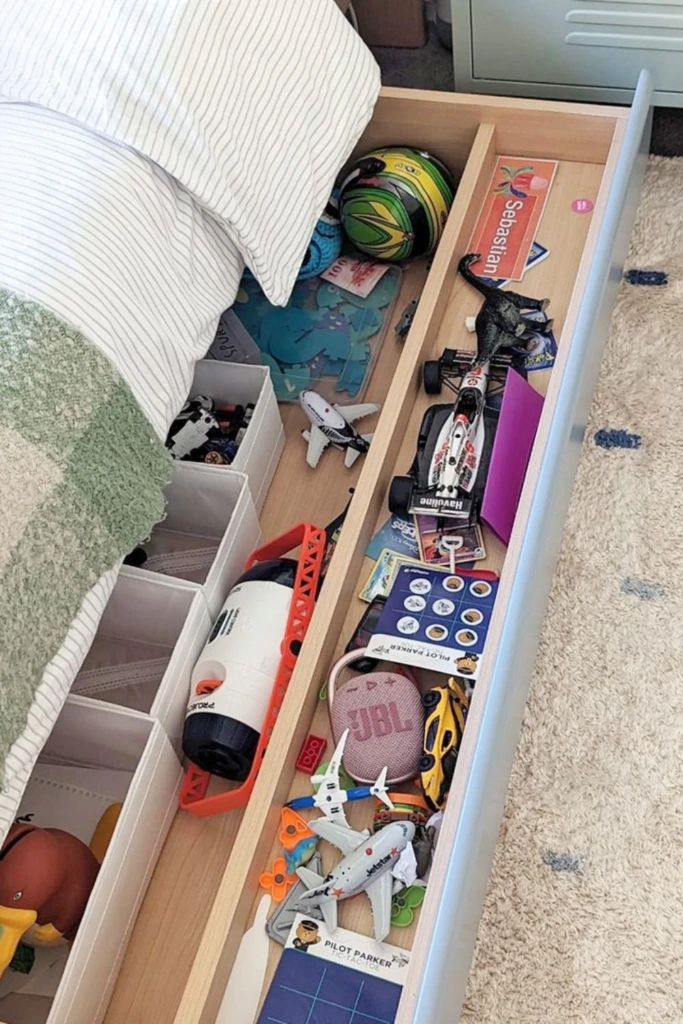
A dedicated toy drawer beneath a child's bed can make daily cleanup considerably easier.
Instead of keeping building blocks, toy vehicles, and puzzles in several containers around the room, a wide drawer provides one accessible location for frequently used toys.
A shallow wooden drawer fitted with smooth runners or suitable wheels works particularly well. Adding adjustable dividers helps separate small pieces and prevents different toy collections from becoming mixed together.
For younger children, choose lightweight drawers with handles that are easy to grip and features that reduce the risk of trapped fingers.
This arrangement also encourages children to develop simple tidying habits because putting toys away becomes part of their regular play routine.
3. Toy Bins
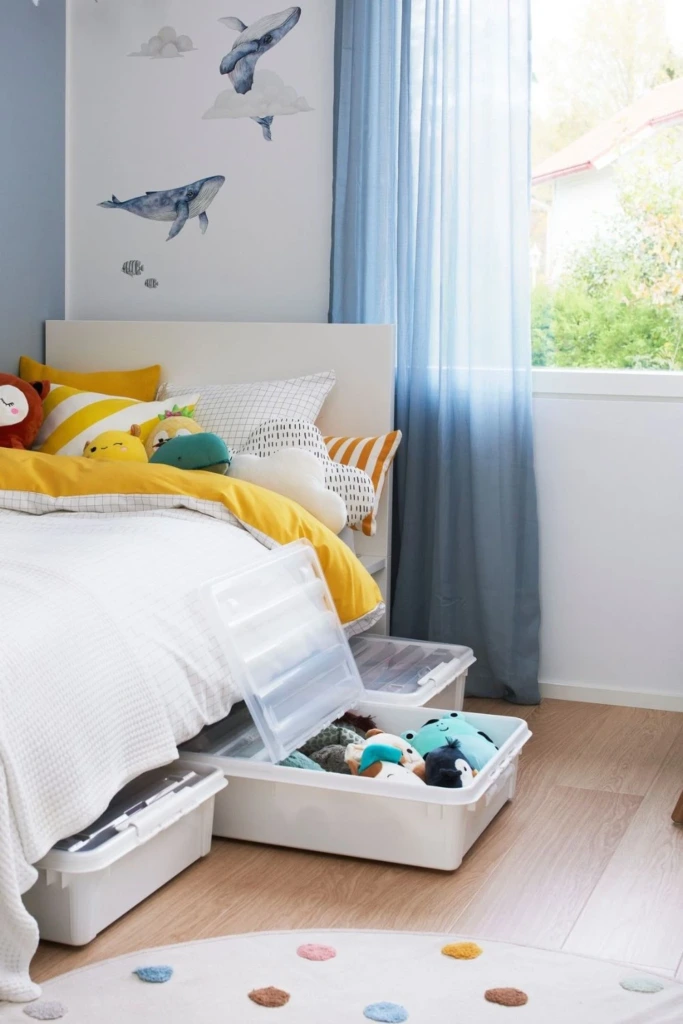
Under-bed toy bins offer an inexpensive way to organize children's belongings without making permanent changes to the furniture.
Low plastic containers can hold stuffed animals, action figures, craft materials, and smaller games while keeping the bedroom floor clear.
Choose bins with rounded edges and easy-to-open lids. Transparent sides allow children to recognize their toys without searching through several boxes.
You can also assign a separate container to each toy category. For example, keep construction toys in one bin and soft toys in another.
Place frequently used containers near the outer edge of the bed so children can reach them without crawling underneath.
4. Rolling Cases
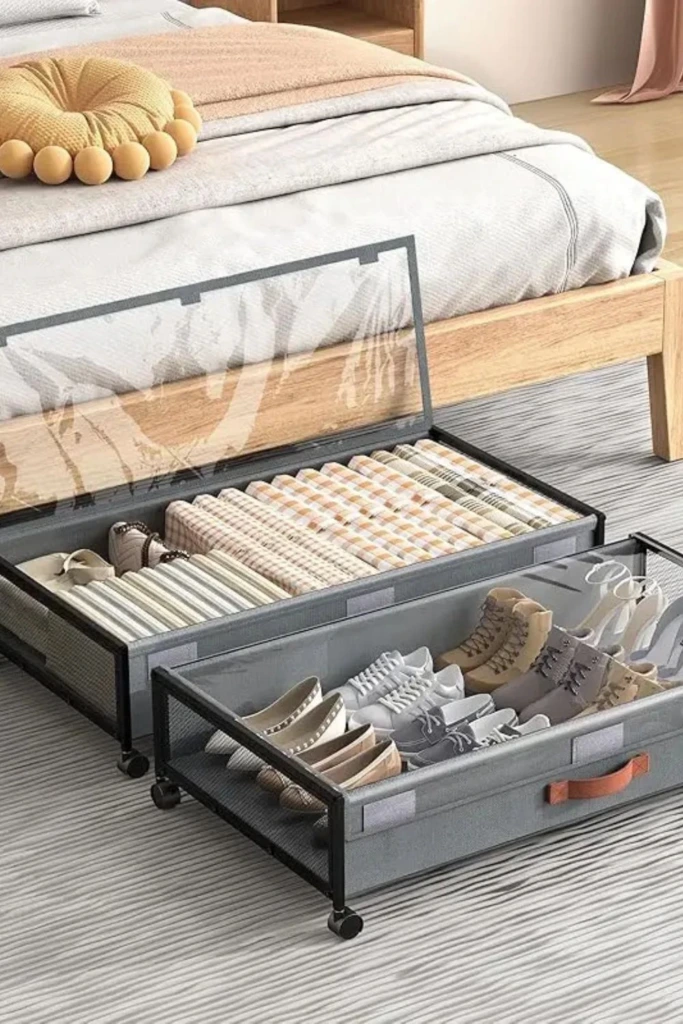
Rolling storage cases are ideal for bedrooms where wardrobes cannot accommodate every season's clothing.
These slim organizers usually feature small wheels, handles, and zippered or fitted covers. Their low-profile design allows them to slide beneath many standard bed frames.
Use them for folded jeans, extra pillowcases, seasonal accessories, or shoes that aren't part of your daily rotation.
Fabric cases are lightweight and flexible, while structured models offer better protection against items being compressed.
Before purchasing, check the total height of the case, including its wheels. Also consider your flooring, since some small casters move poorly on thick carpeting.
5. Drawer Storage
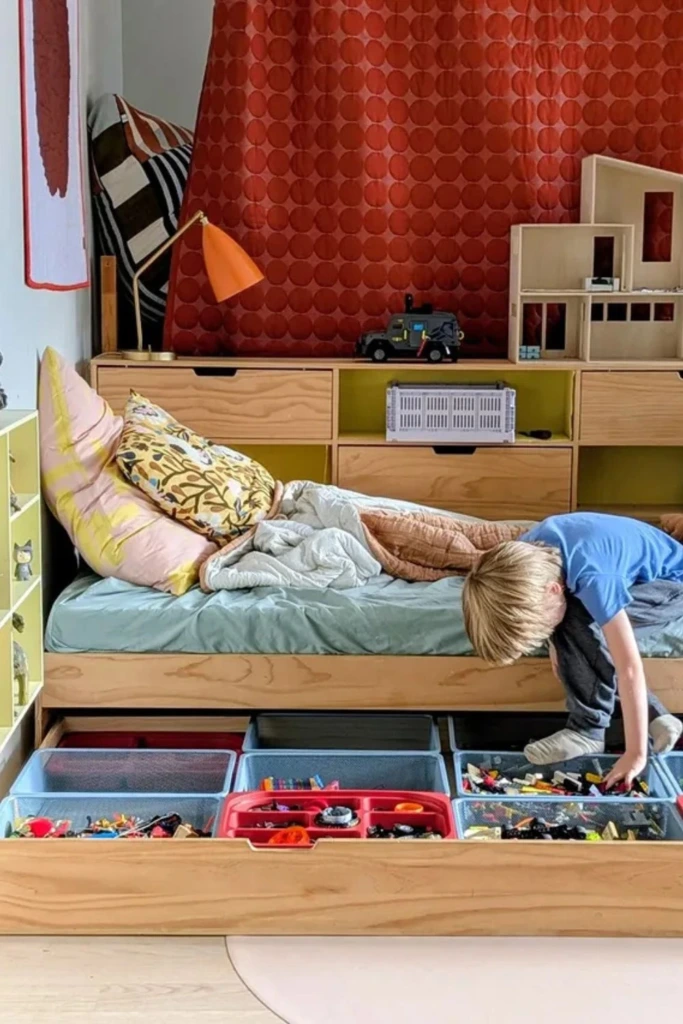
Built-in drawer storage can transform an ordinary bed into a multifunctional piece of furniture.
Large drawers provide convenient compartments for clothes, toys, school supplies, and other bedroom essentials.
Unlike loose storage boxes, integrated drawers remain aligned with the frame and usually create a more streamlined appearance.
To maintain order, place smaller organizers inside each drawer. These can hold socks, stationery, craft supplies, or other objects that tend to get mixed together.
Remember to leave sufficient clearance beside the bed. A drawer that cannot open fully because of a bedside table or nearby wall will be less useful.
6. Costume Bags
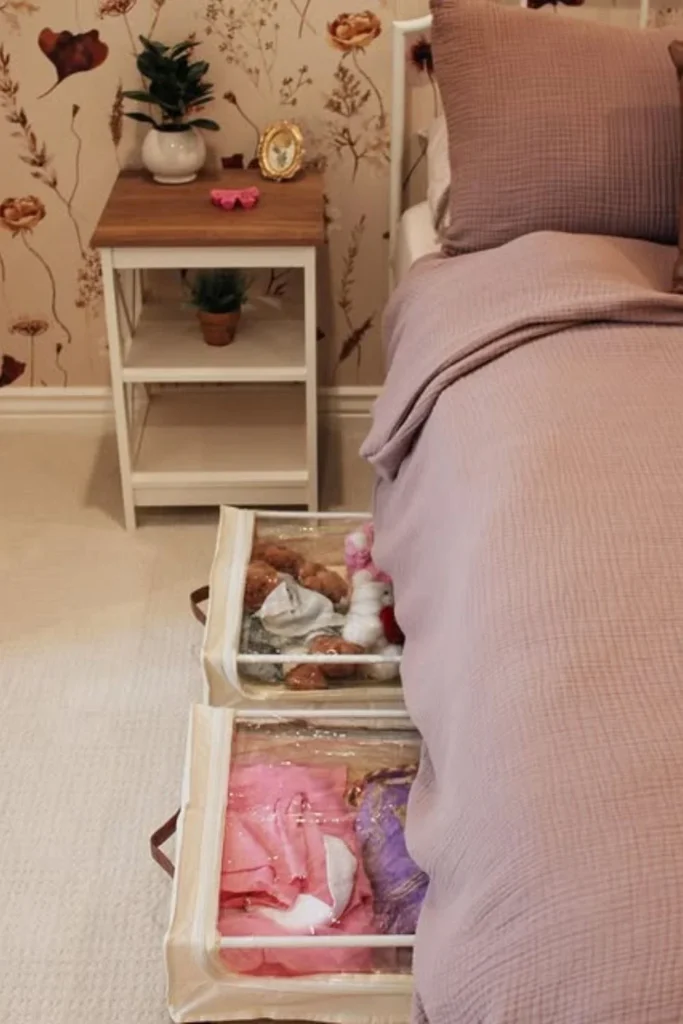
Children's dress-up clothes can occupy a surprising amount of wardrobe space, especially when costumes include accessories and multiple pieces.
Flat zippered storage bags provide a practical home for outfits that are only used occasionally.
Fold each costume carefully and keep its matching accessories together. For delicate fabrics, place a layer of clean tissue paper between folds to help reduce creasing.
Choose bags made from breathable materials when storing garments for extended periods, particularly in humid bedrooms.
A clear viewing panel or attached label makes it easy to identify costumes for school activities, themed parties, or imaginative play.
7. Platform Drawers
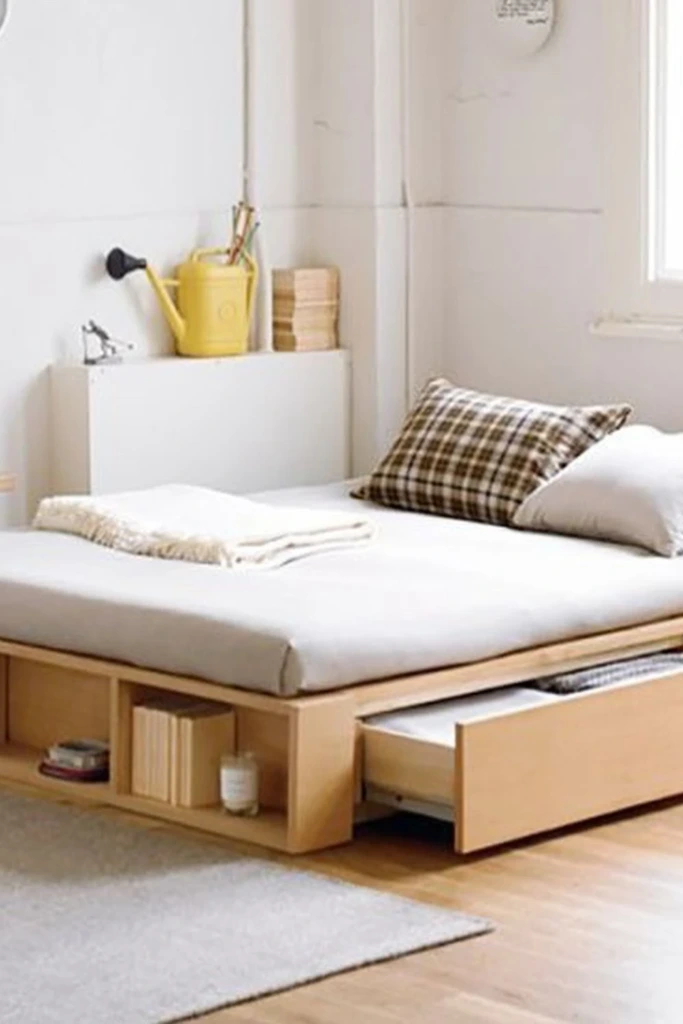
A platform bed with drawers is a smart choice for anyone who wants furniture that serves more than one purpose.
Instead of leaving the base unused, the frame incorporates storage compartments that can replace part of a dresser or linen cabinet.
Side drawers are convenient for folded clothes, spare sheets, and lightweight bedroom accessories. Some platform designs also include open compartments for books or decorative baskets.
When selecting a bed, consider the placement of each drawer in relation to your bedroom layout.
Models with drawers on only one side may be better suited to beds positioned against a wall, while larger rooms can accommodate storage on both sides.
8. Linen Storage
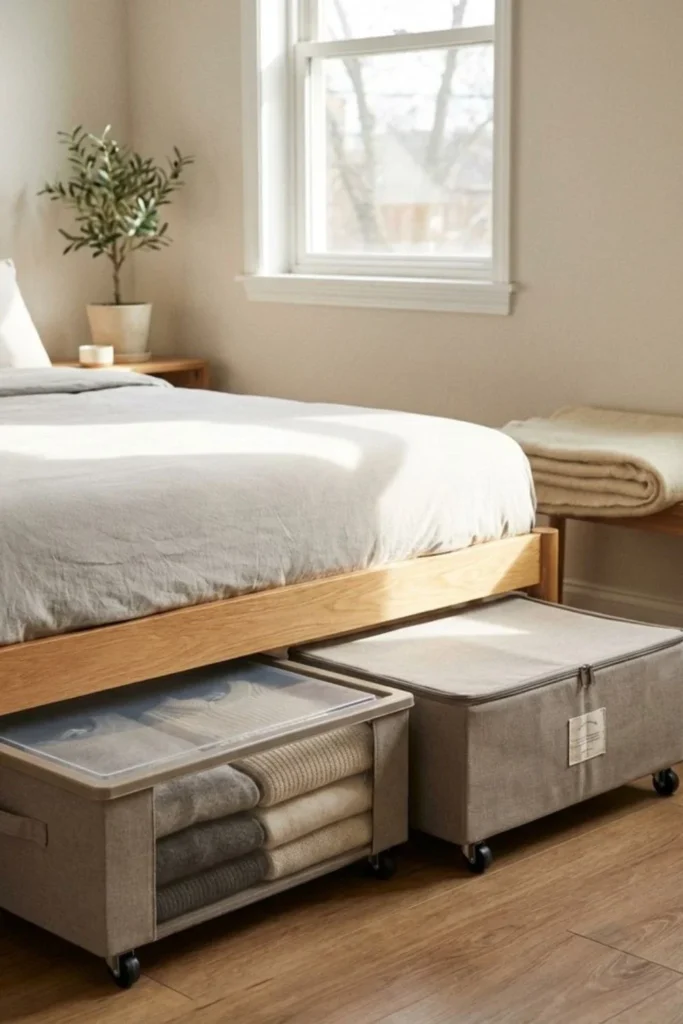
Extra bed sheets, pillowcases, and duvet covers are useful to have, but they can quickly overwhelm a small linen cupboard.
Under-bed containers provide a separate storage area that keeps clean bedding organized without using valuable wardrobe shelves.
Fold complete sheet sets together, or tuck matching pieces inside one pillowcase so they stay grouped.
Covered containers help limit dust accumulation, while washable fabric organizers offer a lightweight alternative to rigid boxes.
Always ensure bedding is completely dry before storing it. Even slightly damp fabrics can develop unpleasant odors or mildew when enclosed for long periods.
9. Shoe Drawer
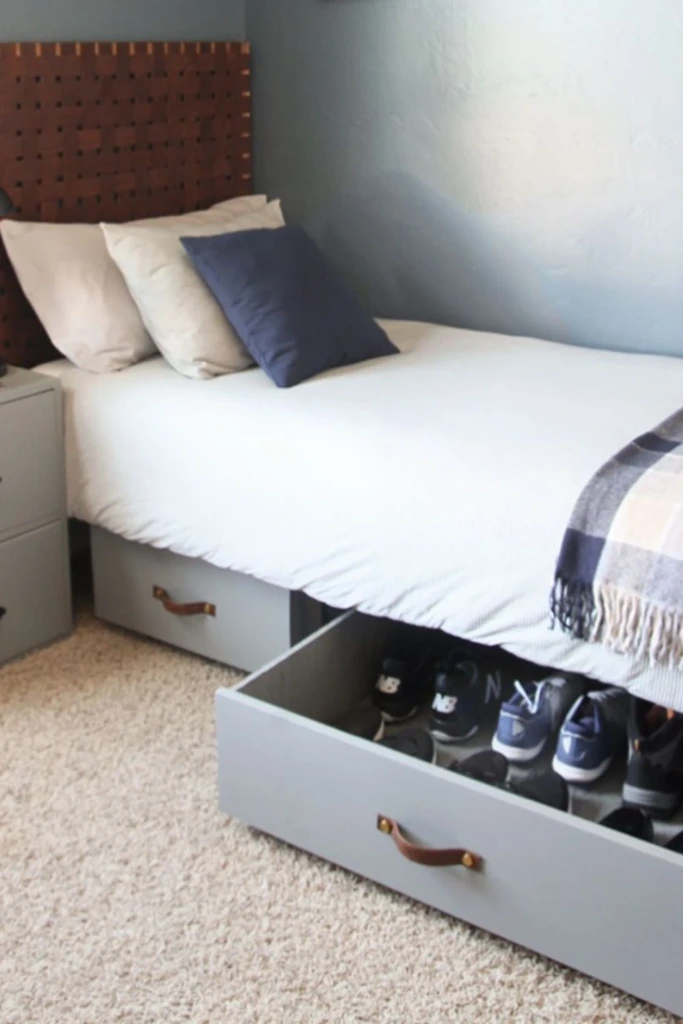
A pull-out shoe drawer can free up valuable space inside a crowded wardrobe.
Rather than stacking shoes on top of one another, a shallow drawer allows you to arrange pairs in orderly rows beneath the bed.
This setup works particularly well for flats, sandals, sneakers, and other footwear that doesn't require much vertical space.
Consider using adjustable separators to prevent shoes from shifting whenever the drawer opens.
Clean and dry footwear before storing it, especially after rainy weather. Keeping shoes in a ventilated organizer also helps prevent trapped moisture and unwanted smells.
10. Slide Trays
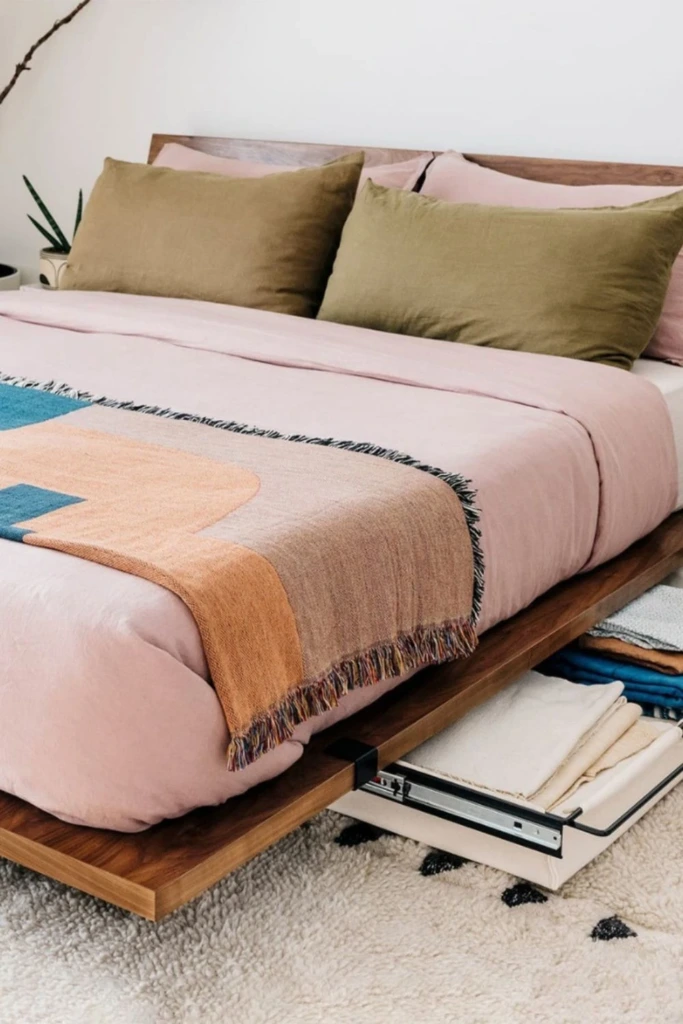
Slide-out trays provide an accessible storage option for beds with relatively limited clearance.
Unlike deep drawers, these shallow platforms are designed to hold items in a single layer. This makes them useful for folded blankets, spare linens, or other flat belongings.
Wooden or metal trays can be installed on suitable drawer runners beneath a compatible bed frame.
Full-extension runners are especially convenient because they allow you to see items positioned toward the back.
For a DIY installation, check that the bed structure can safely support the runners and their intended load without affecting the frame's stability.
11. Clear Bins
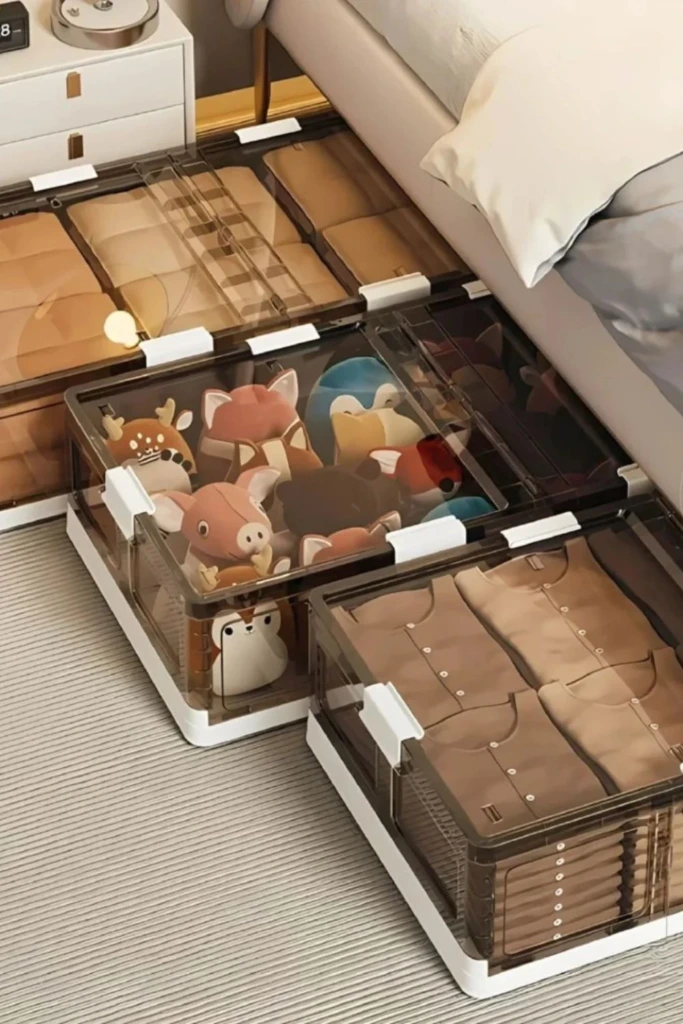
Clear storage bins make finding your belongings much easier, particularly when several containers are kept beneath one bed.
Because the contents remain visible, you can quickly identify the correct container without opening every lid.
They are suitable for folded clothing, seasonal accessories, spare bedding, and children's toys.
Look for durable containers with secure lids and smooth surfaces that are easy to wipe clean.
For better organization, group similar items together and avoid filling each container so tightly that the lid bends or fails to close properly.
12. Wood Drawer
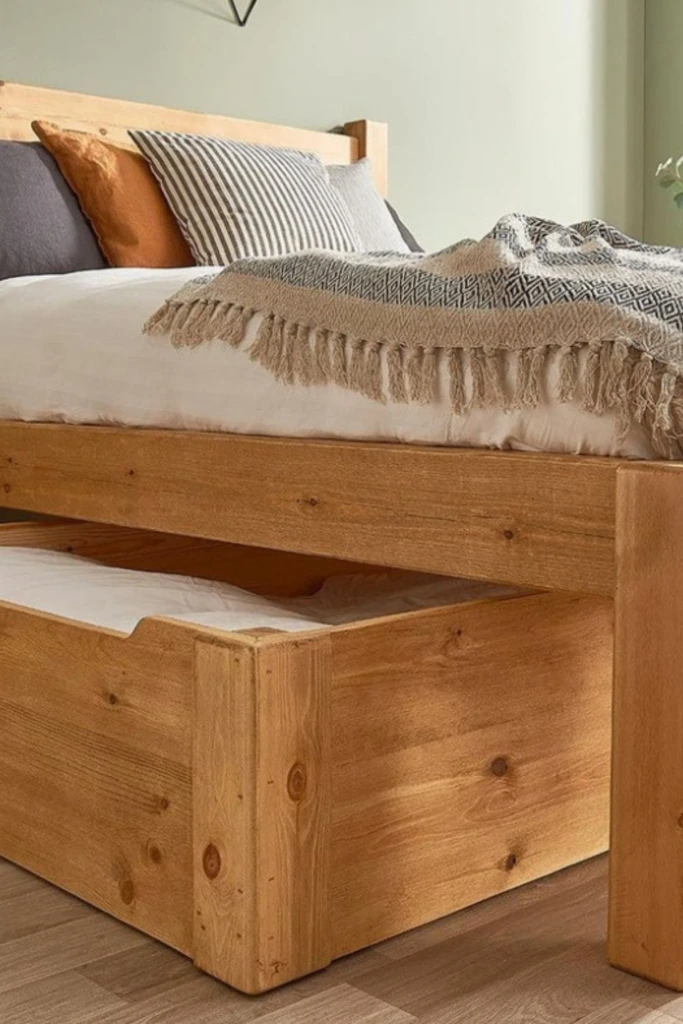
A wooden storage drawer is a durable option that can complement both traditional and modern bedroom furniture.
It offers a more furniture-like appearance than plastic bins and can be customized to match the finish of an existing bed.
Depending on its dimensions and construction, a wooden drawer can accommodate folded bedding, clothing, or heavier household accessories.
For a simple DIY project, build a low rectangular box from suitable plywood, reinforce the corners, and attach appropriately rated casters or runners.
Sand exposed edges thoroughly and use recessed handles if you want the drawer to sit neatly beneath the frame.
13. Blanket Drawer
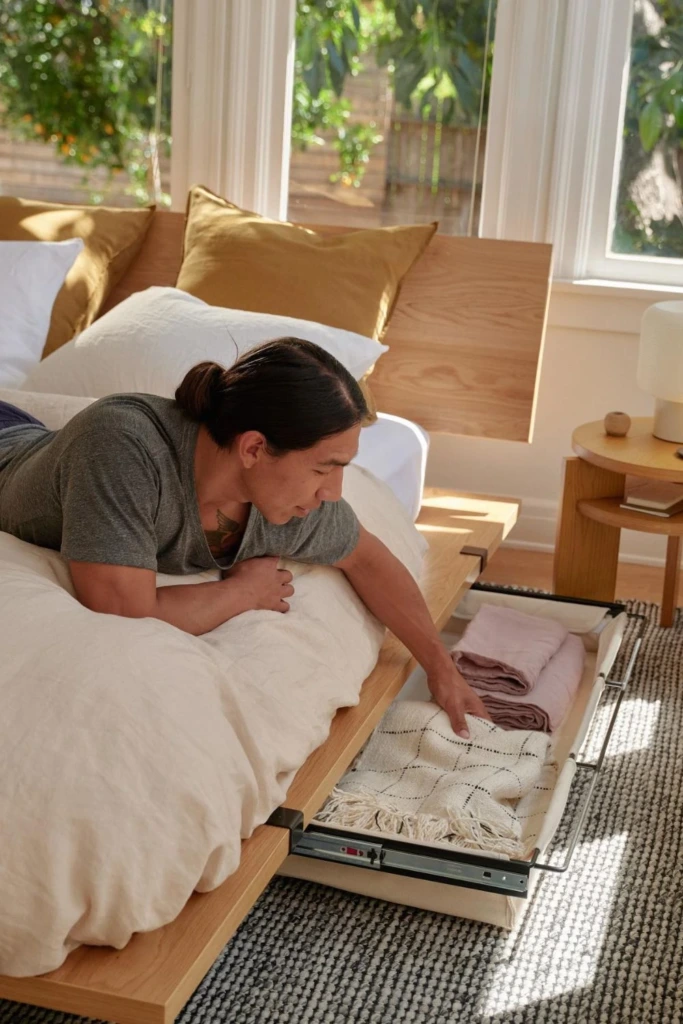
A shallow blanket drawer creates a convenient location for lightweight throws and spare bedding.
This is especially helpful when blankets are frequently used but don't need to remain on the bed throughout the day.
Fold each blanket into a compact rectangle and arrange the pieces in a single layer whenever possible.
A drawer with smooth glides makes it easy to retrieve the blanket you need without disturbing everything else.
Avoid overfilling the compartment, as excessive pressure can make drawers difficult to close and cause fabrics to catch along the edges.
14. Book Drawer
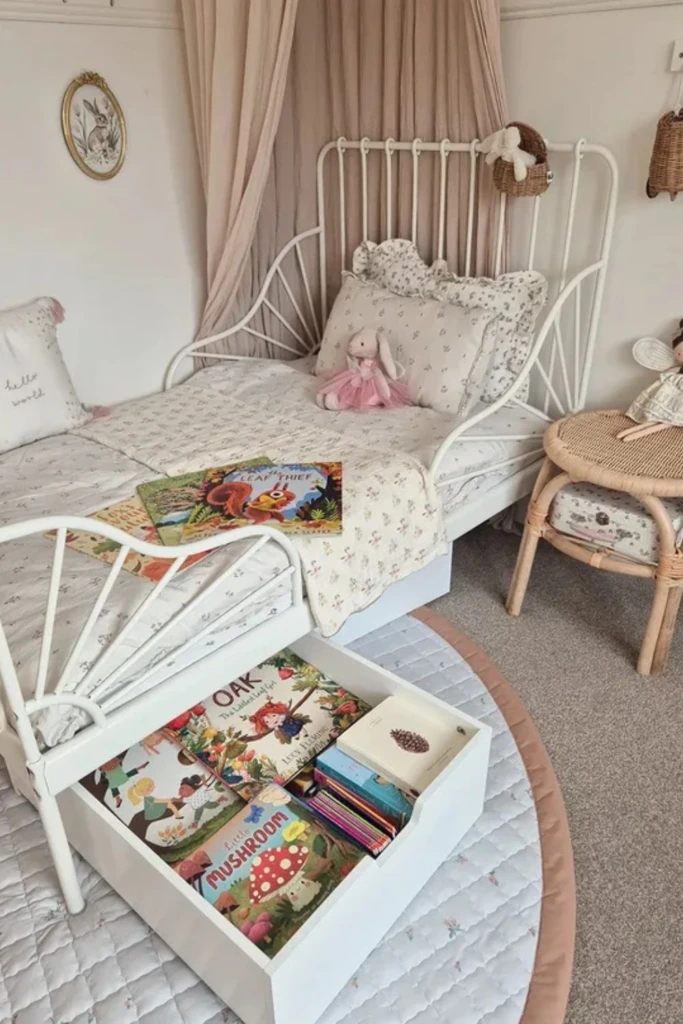
An under-bed book drawer is a useful addition to a child's bedroom or a compact reading space.
It provides room for picture books, activity books, notebooks, and other reading materials without requiring another bookshelf.
Choose a sturdy drawer with a flat bottom because books can become heavy when stored together.
Arrange books with their covers facing upward if the drawer is shallow. In deeper compartments, dividers can help keep smaller books upright.
Keep the drawer away from damp flooring and check occasionally for moisture, since paper is particularly vulnerable to humidity.
15. Rolling Drawers
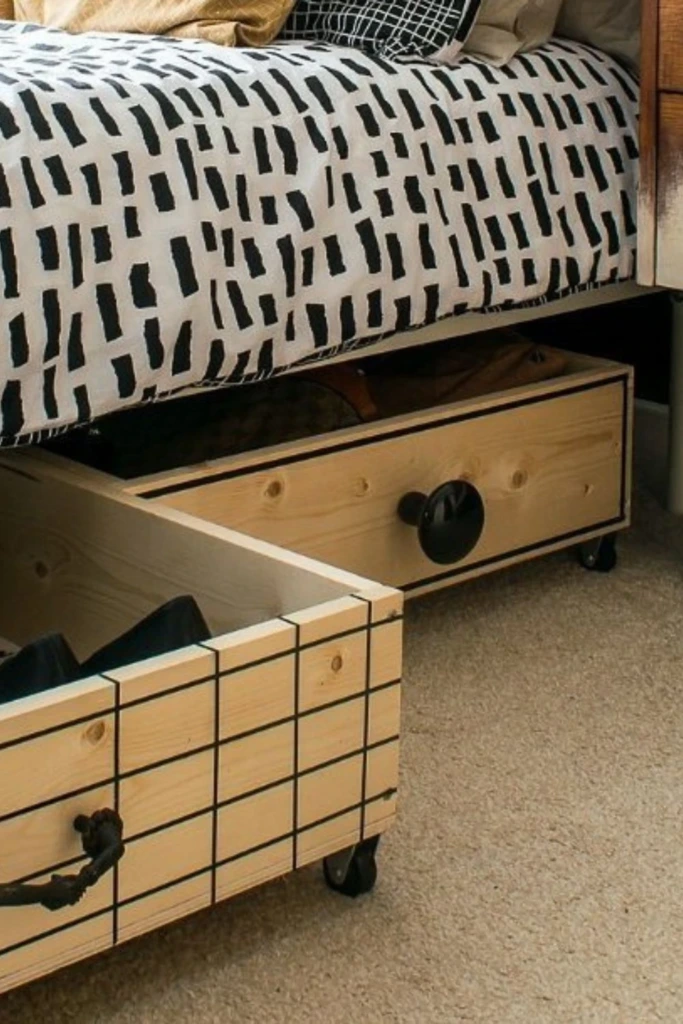
Rolling drawers offer many of the benefits of built-in storage without requiring a new bed frame.
These freestanding compartments sit on wheels and can be moved whenever you need access to their contents.
They work well for folded clothing, extra bedding, hobby supplies, and other items that would otherwise occupy valuable shelf space.
Wooden rolling drawers provide a sturdy structure, while lightweight plastic alternatives are easier to move.
Choose wheels that suit your flooring, and consider soft rubber casters for hard surfaces. If the drawers are heavy, make sure their handles are securely attached.
16. Grid Bins
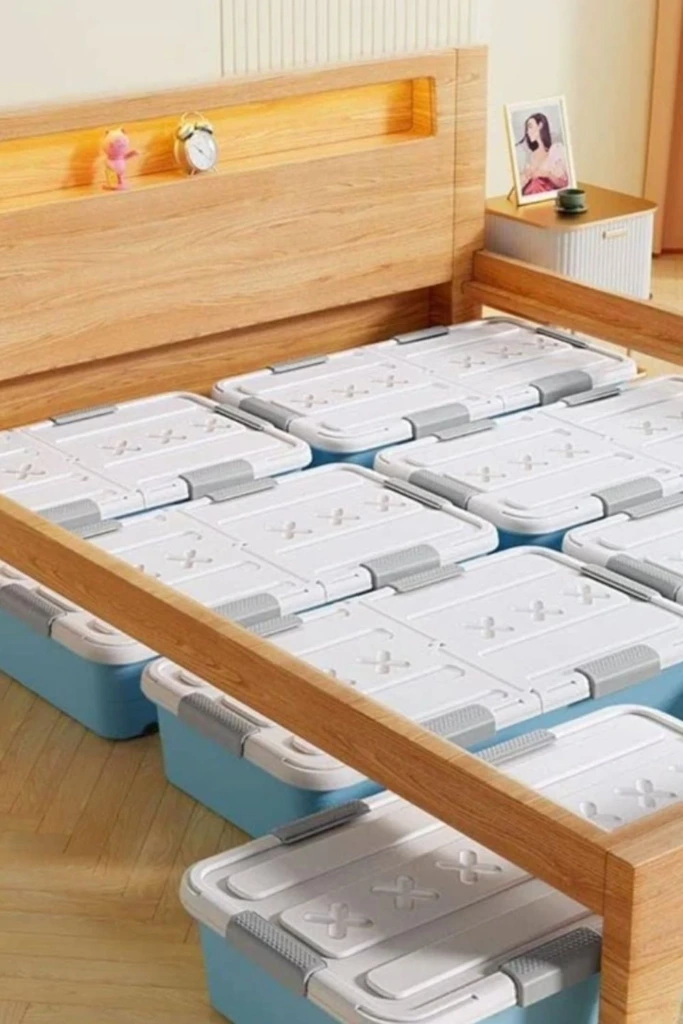
A grid-style arrangement helps make the most of the available space beneath a larger bed.
Instead of using one oversized container, divide the area into several smaller bins arranged in neat rows.
Each bin can hold a specific category, such as scarves, spare towels, seasonal clothes, or personal accessories.
This system is particularly practical when more than one person shares a bedroom because belongings can be separated without additional furniture.
Measure the available width and depth before purchasing containers. Leave a little room between bins so they can be removed without scraping against one another.
17. Trundle Bed
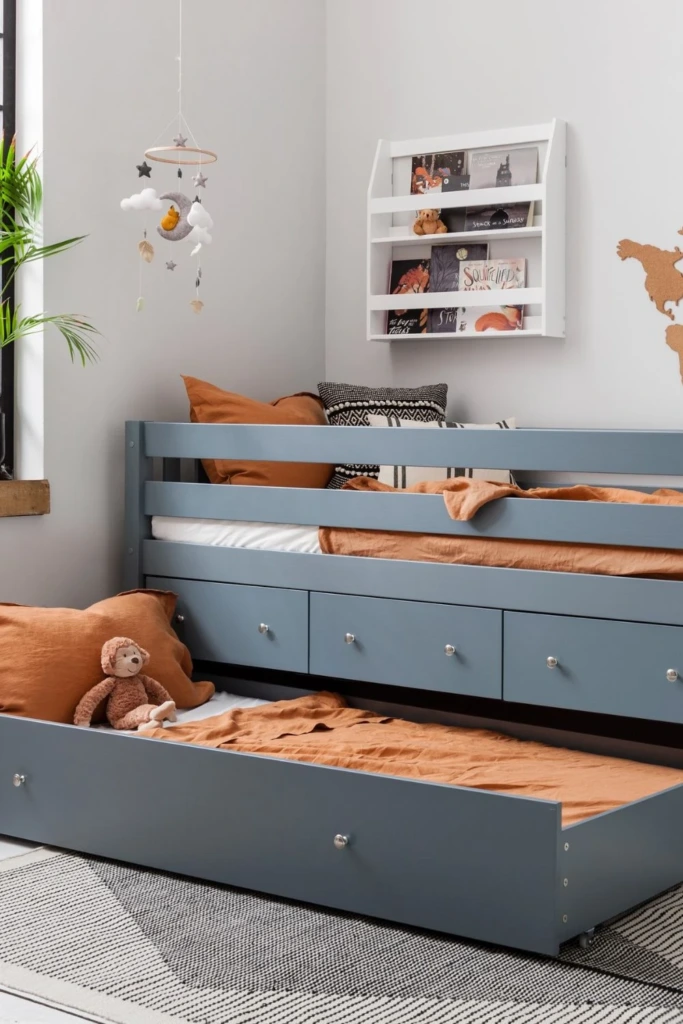
A trundle bed is a practical space-saving solution for bedrooms that occasionally need an additional sleeping area.
It features a second, lower bed that slides beneath the main frame when not in use.
This design is particularly useful for children's sleepovers, guest bedrooms, and smaller homes where a permanent second bed would take up too much space.
Some trundle systems can also accommodate storage drawers instead of a mattress, depending on their design.
Check mattress thickness requirements and allow enough floor space to pull the trundle out completely. A trundle designed for sleeping should not be treated as general storage unless the manufacturer supports that use.
18. Blanket Drawer
A deeper blanket drawer is useful when you need to store thick comforters, winter duvets, or several large throws together.
Unlike shallow linen compartments, this type of drawer provides additional height for bulky fabrics.
A wide wooden drawer on suitable casters can be an effective option, provided the bed has enough clearance.
Fold heavier blankets loosely and avoid forcing oversized bedding into the compartment.
For seasonal storage, consider placing clean blankets inside breathable protective covers before loading them into the drawer.
This keeps the bedding organized and makes seasonal changes easier.
19. Storage Trunk
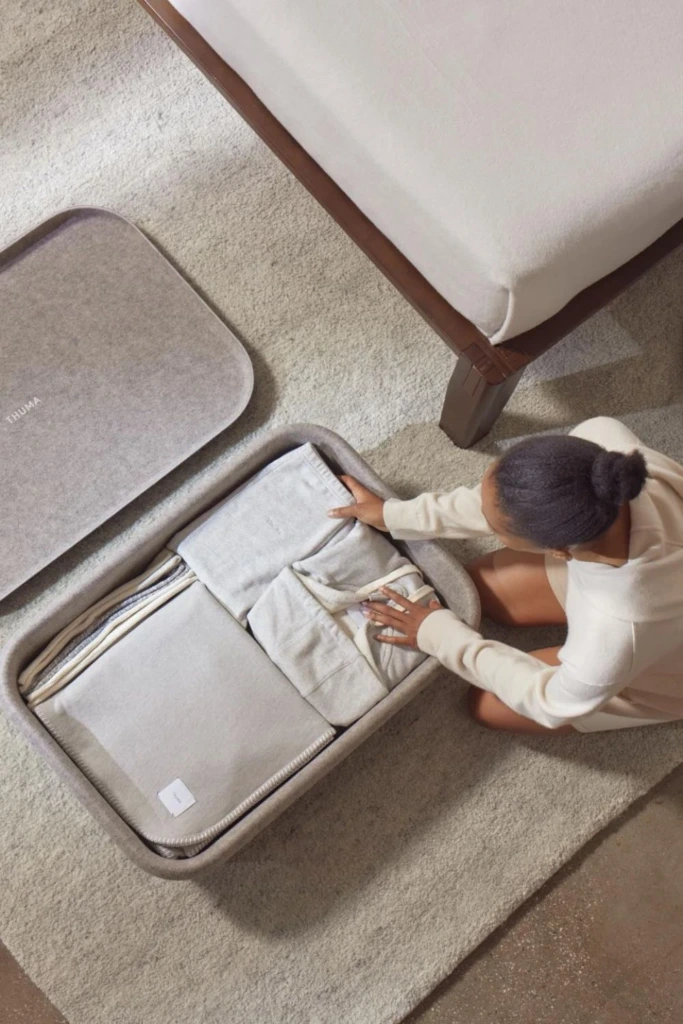
A low storage trunk can provide substantial under-bed capacity while maintaining a simple, uncluttered bedroom appearance.
Soft-sided trunks are especially practical because they are generally lighter than wooden chests and often feature collapsible sides.
Use them for spare pillowcases, seasonal clothes, light blankets, and other items that don't require daily access.
Look for reinforced handles, a strong zipper, and a structured base that helps the trunk retain its shape.
Avoid storing heavy objects in soft fabric trunks unless they are specifically designed to support that weight.
20. Sweater Boxes
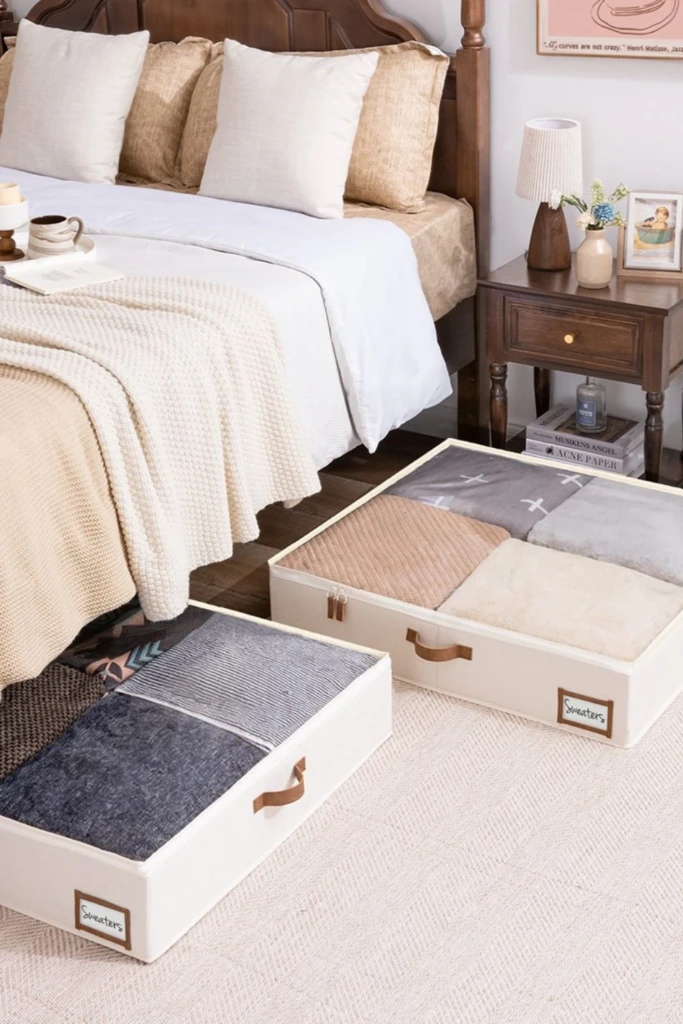
Sweaters can occupy a large portion of wardrobe shelving, particularly during warmer months when they aren't being worn.
Flat sweater boxes allow you to relocate these garments beneath the bed until they're needed again.
Fold knitwear rather than hanging it, since hanging heavy sweaters for extended periods can stretch the shoulders.
Place clean, completely dry sweaters in fabric containers with secure closures. For delicate wool or cashmere, use appropriate moth prevention practices and inspect the garments before storing them.
Avoid compressing delicate knitwear too tightly, as this can create stubborn creases and affect its shape.
21. Labeled Bins
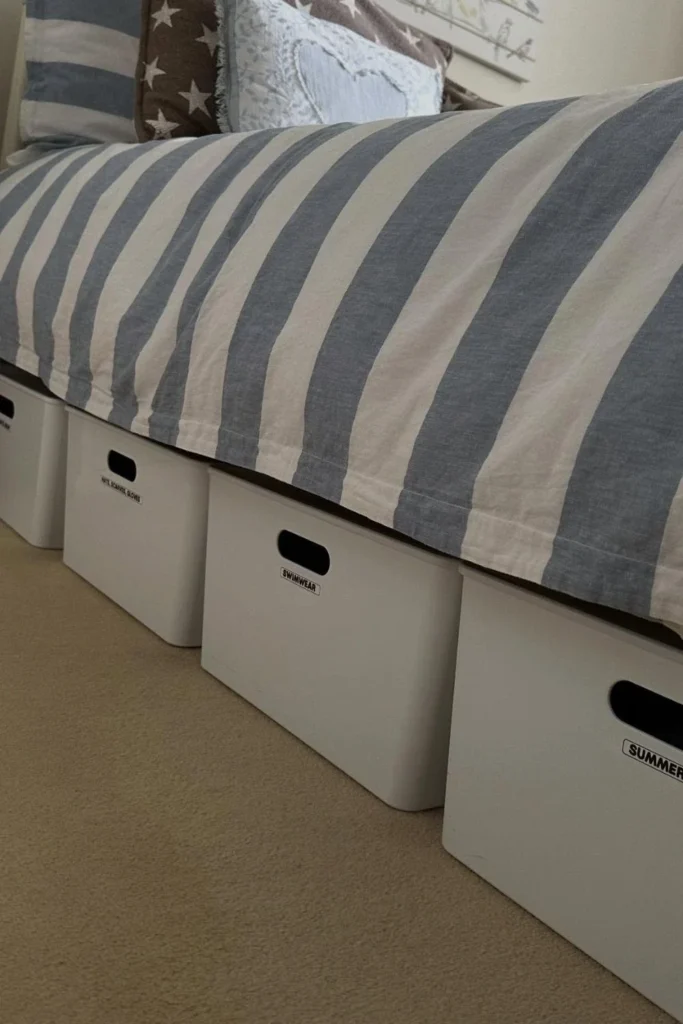
Labels can make even the simplest storage arrangement much easier to maintain.
When several similar containers are stored beneath a bed, clear labels eliminate the need to open each one to find a particular item.
Use short descriptions such as "Winter Clothes," "Spare Sheets," or "Travel Accessories."
For families, color-coded labels can also help identify which containers belong to different household members.
Attach labels to the outward-facing side of each bin rather than only on the lid. This makes them readable while the containers are still beneath the bed.
22. Hidden Drawers
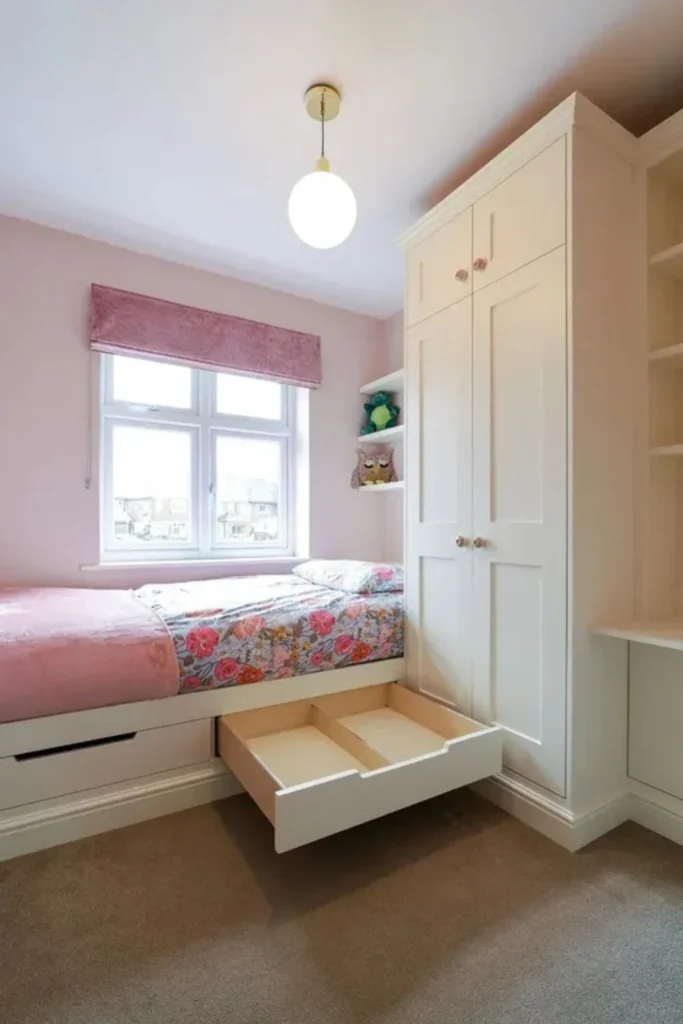
Hidden drawers are ideal for creating a clean bedroom design without displaying storage containers.
These drawers are integrated into the bed base, with fronts that blend into the surrounding frame.
They can hold folded clothes, spare linens, and other belongings while maintaining a consistent furniture finish.
Handleless designs with recessed grips or push-to-open mechanisms are particularly effective in contemporary bedrooms.
If you're considering custom cabinetry, plan the drawer dimensions around the items you actually intend to store. Also ensure the mechanisms remain accessible for cleaning and maintenance.
23. Storage Platform
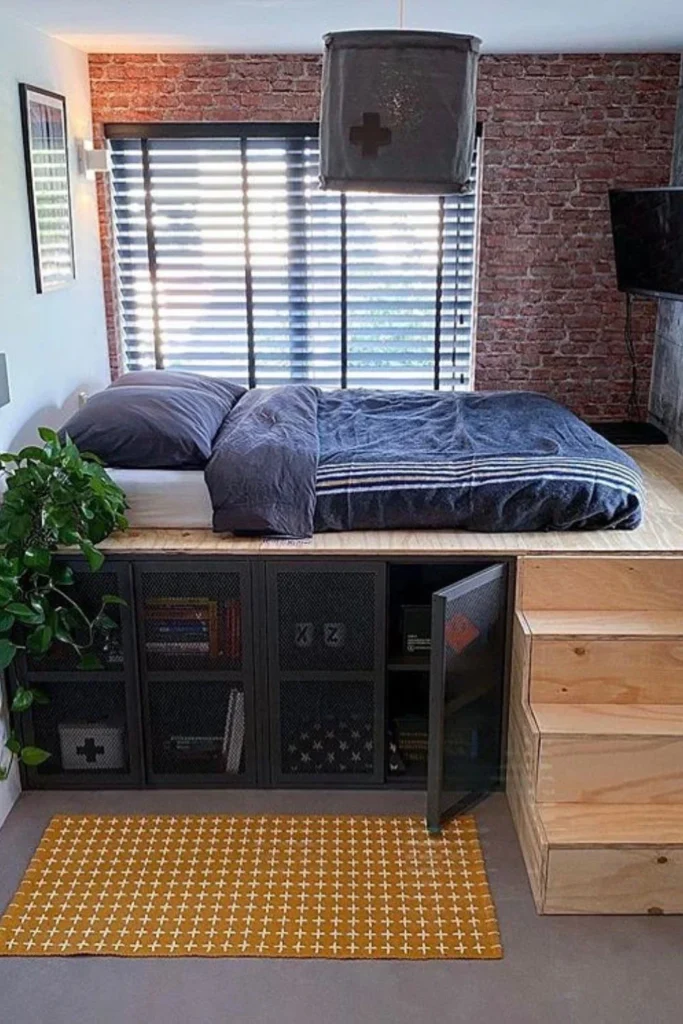
A raised storage platform can provide considerably more capacity than a standard bed frame.
By elevating the sleeping surface, the space underneath can accommodate drawers, cabinets, shelves, and larger compartments.
This approach is particularly useful in studio apartments and compact bedrooms where every piece of furniture needs to serve multiple functions.
You can dedicate separate compartments to clothing, bedding, books, or personal belongings.
However, a raised platform requires careful planning. Check ceiling clearance, safe access to the mattress, structural support, and any applicable building requirements before installing a custom design.
24. Open Cubbies
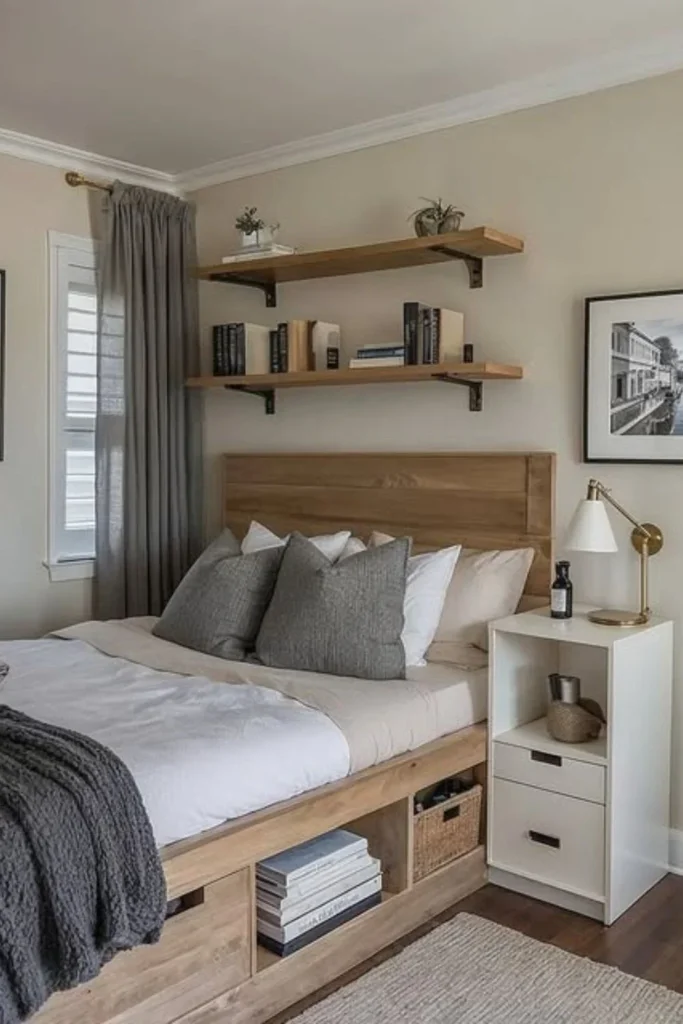
Open cubbies beneath a platform bed offer storage that is both practical and decorative.
Unlike closed drawers, these compartments keep frequently used items visible and accessible.
They are suitable for books, small baskets, folded throws, and lightweight accessories.
For a balanced appearance, avoid filling every cubby completely. Combining a few neatly arranged items with matching storage baskets can prevent the bed base from looking crowded.
Because open compartments collect dust more easily than enclosed containers, they are best suited to belongings you use regularly and clean often.
25. Woven Basket
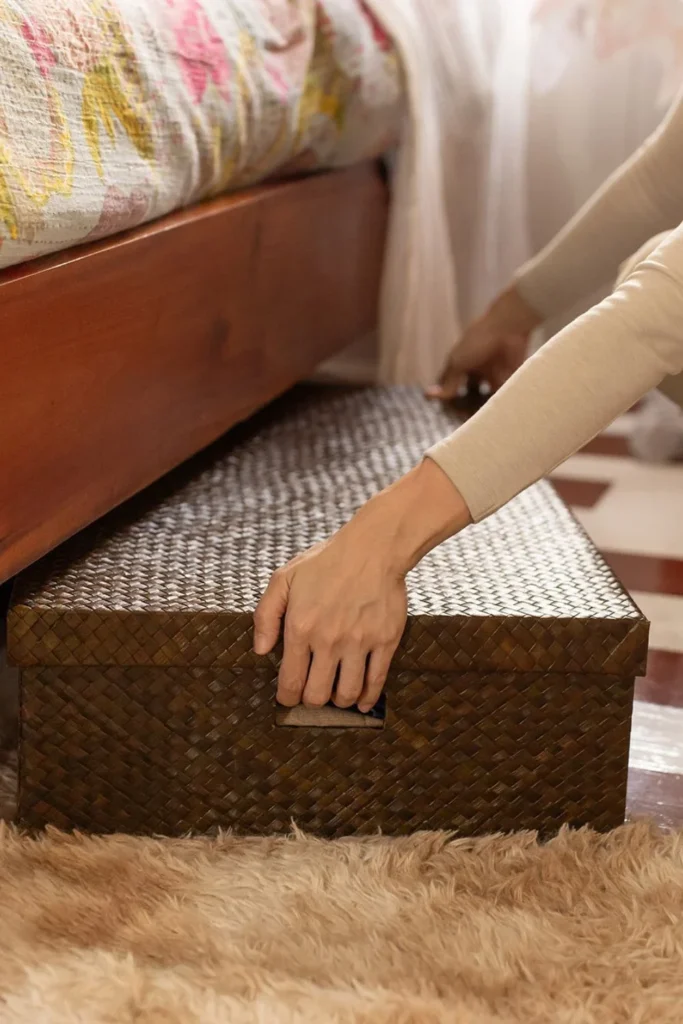
A low woven basket can add warmth and texture to a bedroom while providing useful storage.
Natural materials such as rattan, wicker, and seagrass complement rustic, coastal, Scandinavian, and relaxed contemporary interiors.
Choose a shallow basket with sturdy handles so it can be pulled out without difficulty.
Use it for folded throws, spare cushion covers, or lightweight clothing.
If the basket has a rough interior, add a washable fabric liner to protect delicate textiles from snagging.
For long-term storage, a covered or lined container may be preferable because open woven baskets offer limited protection from dust.
26. Upholstered Drawers
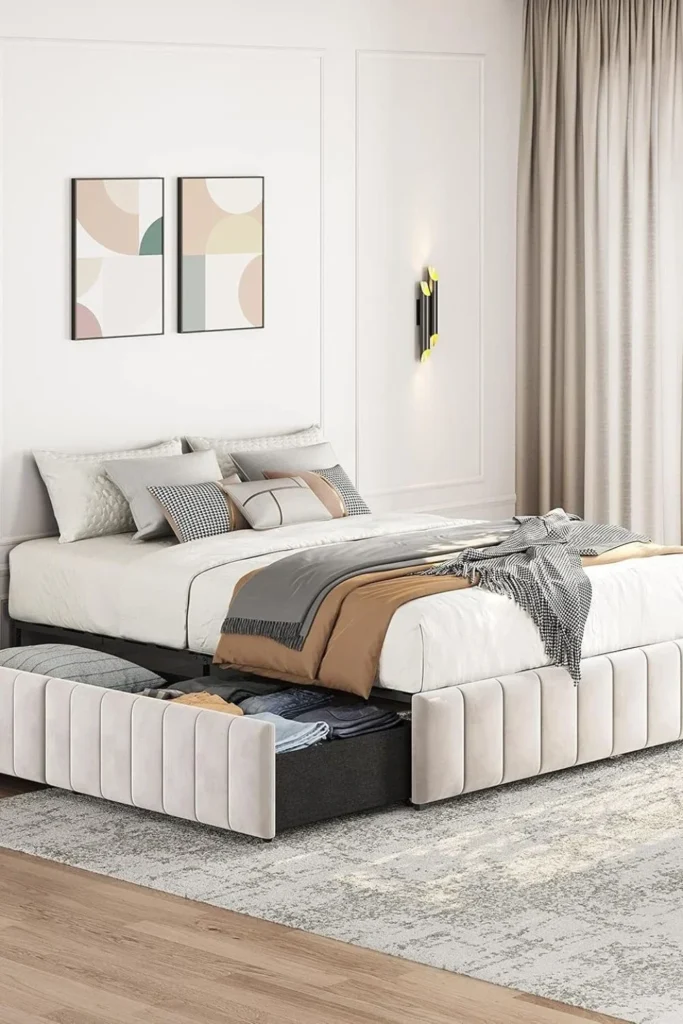
Upholstered storage drawers combine concealed organization with a softer furniture design.
These drawers feature fronts covered in fabric or padded material that coordinates with the bed frame.
They are especially suitable for bedrooms with upholstered headboards, neutral color schemes, or a more luxurious decorative style.
Inside, the drawers can hold clothing, bedding, and other lightweight essentials.
Choose durable upholstery that is easy to clean, particularly in households with pets or children.
Check the drawer mechanism carefully before buying, as decorative padding should not interfere with opening, closing, or gripping the drawer.
27. Basket Cubbies
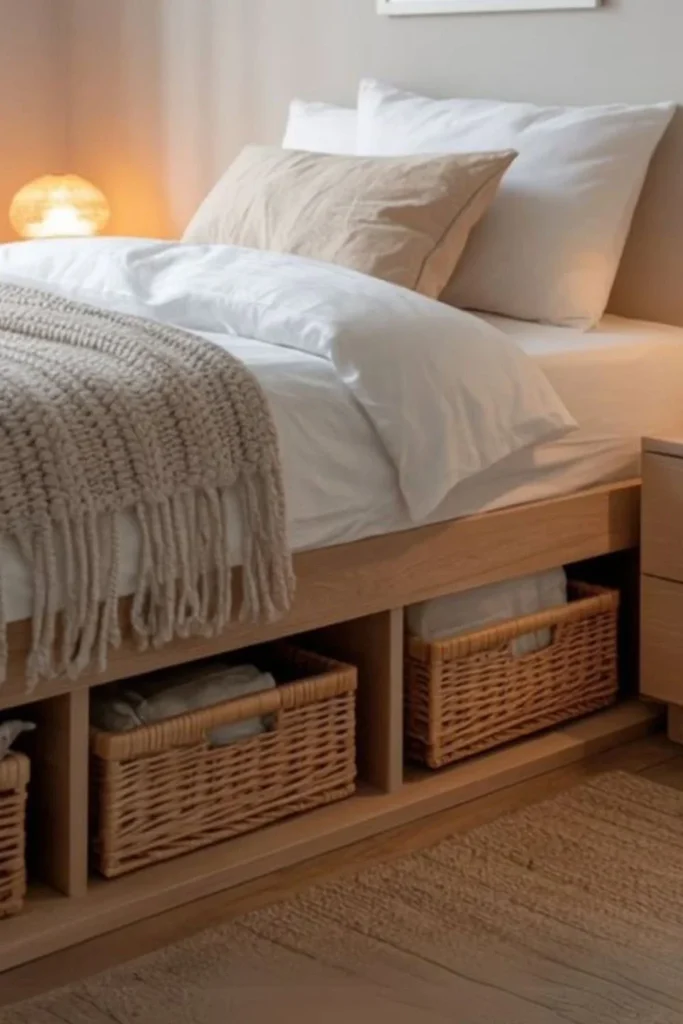
Basket cubbies combine the accessibility of open shelving with the tidiness of concealed storage.
A platform bed with evenly sized compartments can accommodate individual baskets for clothes, blankets, accessories, and other belongings.
Matching baskets create a coordinated appearance, while different labels help keep their contents organized.
Woven baskets are an attractive choice, but fabric and plastic alternatives may be easier to clean.
Measure the internal dimensions of each cubby and allow enough clearance for baskets to slide out smoothly.
This arrangement is particularly useful when you want a flexible storage system that can change as your needs evolve.
28. Industrial Drawers
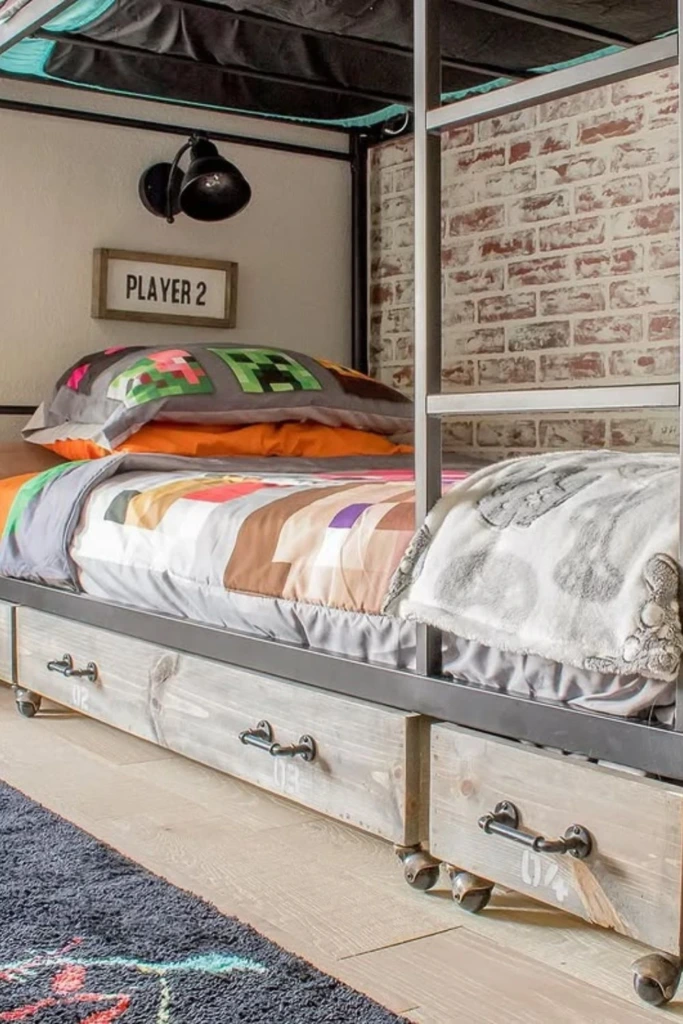
Industrial-style drawers are a practical choice for bedrooms featuring metal furniture, exposed wood, or loft-inspired interiors.
They typically combine sturdy wooden compartments with metal handles, visible hardware, or rolling casters.
The substantial construction makes them suitable for storing bedding, toys, clothing, and other household items, provided the drawers and wheels are rated for the load.
For a coordinated appearance, select a wood finish that complements the bed frame and other furniture.
If you're building the drawers yourself, use properly secured wheels, smooth all exposed edges, and ensure there is enough clearance beneath the bed for easy movement.
How much space do you need under a bed for storage to work properly?
The amount of clearance you need depends on the type of organizer you plan to use.
Many low-profile fabric bags and shallow containers fit beneath beds with approximately 4 to 6 inches of clearance. Larger plastic bins and rolling drawers often require 6 to 12 inches or more.
Measure from the floor to the lowest obstruction beneath the bed, including support rails and central legs.
Choose a container slightly shorter than the measured clearance so it can move freely without catching on the frame. If the organizer has wheels or a raised lid, include those in its overall height.
How do you keep under-bed storage from getting dusty or messy?
The easiest way to control dust is to use covered containers, zippered organizers, or drawers with properly fitted fronts.
Keep items grouped by category and avoid overcrowding containers. Labels also make it easier to return belongings to their correct places.
Vacuum beneath the bed regularly, including areas behind and between storage boxes. Periodically remove the containers to clean the floor and check for moisture.
Only store clean, dry belongings, and avoid placing fabric containers directly against damp surfaces.
A simple seasonal review can help you remove items you no longer need and keep the storage area useful.
Under-bed storage is one of the easiest ways to make a bedroom feel more organized without adding unnecessary furniture. Whether you choose affordable bins, rolling drawers, woven baskets, or a bed with built-in compartments, the right setup can help you reclaim valuable closet and floor space.
Start by measuring the space beneath your bed and identifying the belongings you want to store. With a few practical organizers and a simple system for keeping things in order, that overlooked space can become one of the most useful storage areas in your home.