23 Fabric Storage Ideas for 2026
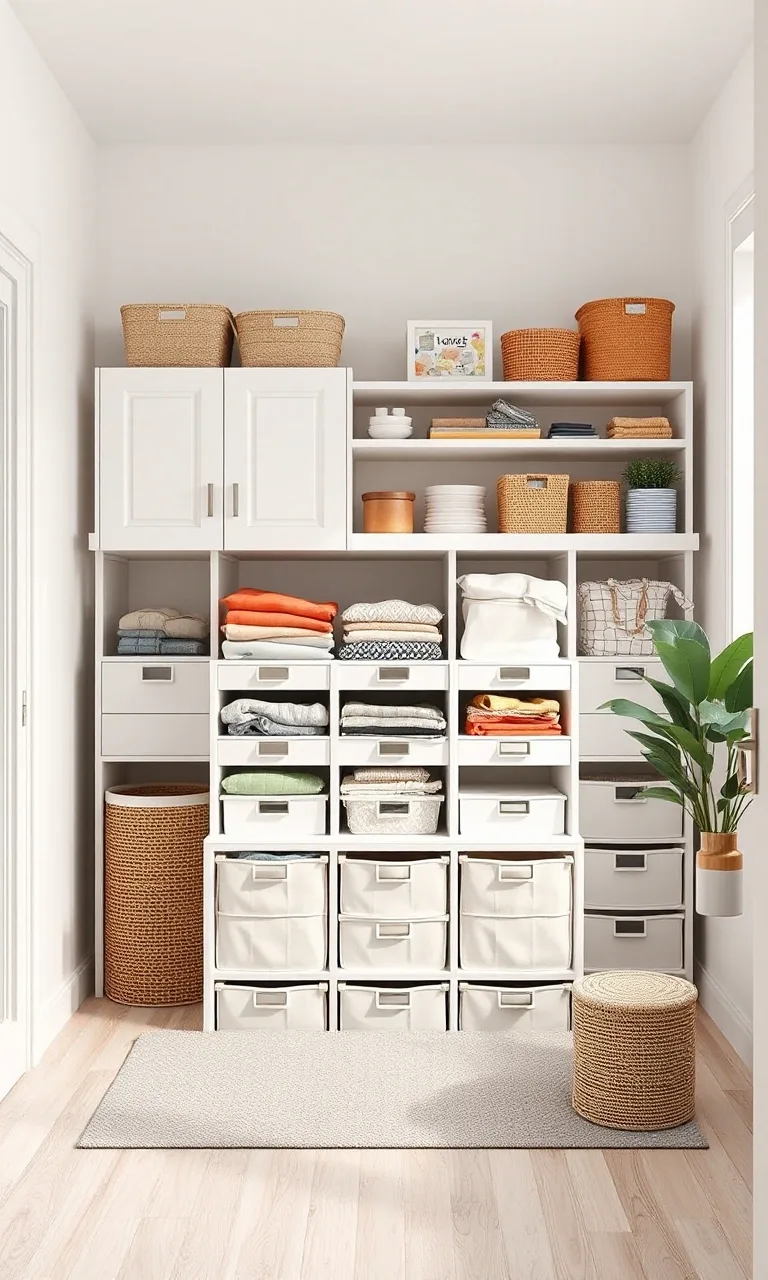
A growing fabric collection can quickly take over your sewing room. One day, your materials are neatly folded, and the next, you're searching through overflowing drawers and tangled piles just to find a particular print.
Whether you enjoy quilting, sewing clothes, or making DIY crafts, keeping fabric organized makes every project easier. A practical storage system helps prevent unnecessary creases, protects delicate materials, and lets you see what you already own.
You don't need an expensive craft room makeover to get everything under control. Simple shelves, clear containers, baskets, and compact cabinets can make a noticeable difference, even in small spaces.
Here are 22 creative fabric storage ideas to help you organize your collection while making your sewing area more attractive and functional.
1. Aesthetic Display Ideas
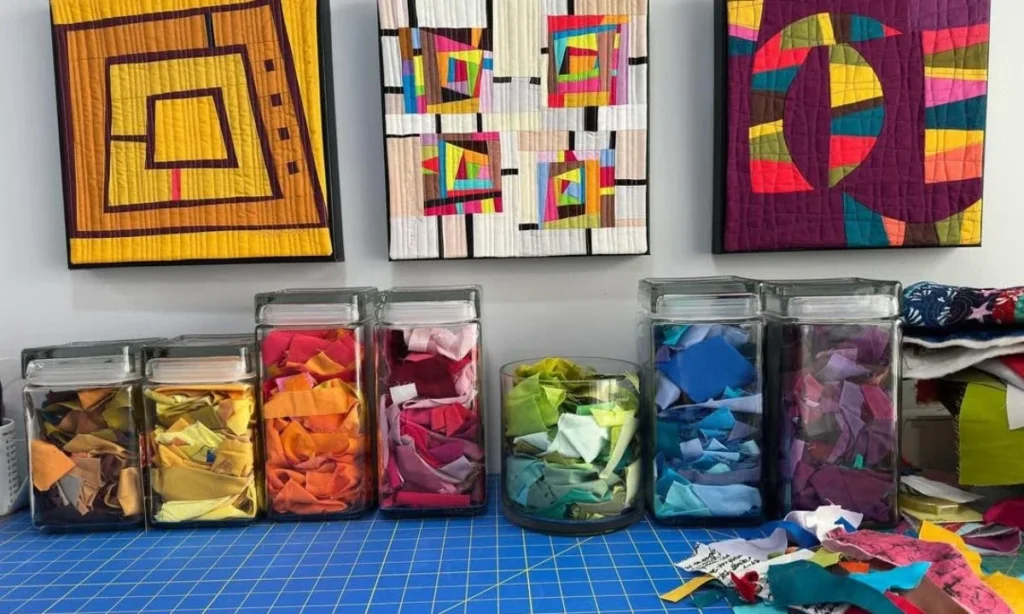
Fabric scraps can become an attractive part of your craft room when arranged inside clear glass jars. Instead of leaving small pieces scattered across your workspace, fold or roll them into compact bundles and place them in containers of different sizes.
Organizing the pieces by shade creates a beautiful visual arrangement, especially when you place coordinating colors together. Smaller jars work well for quilting scraps, while larger containers can hold leftover strips and decorative fabric pieces.
Choose wide-mouth jars so you can remove materials without disturbing everything inside. Keep them away from direct sunlight to help prevent fading, and use separate containers for scraps that are too small to fold neatly.
2. Color-Coded Shelves
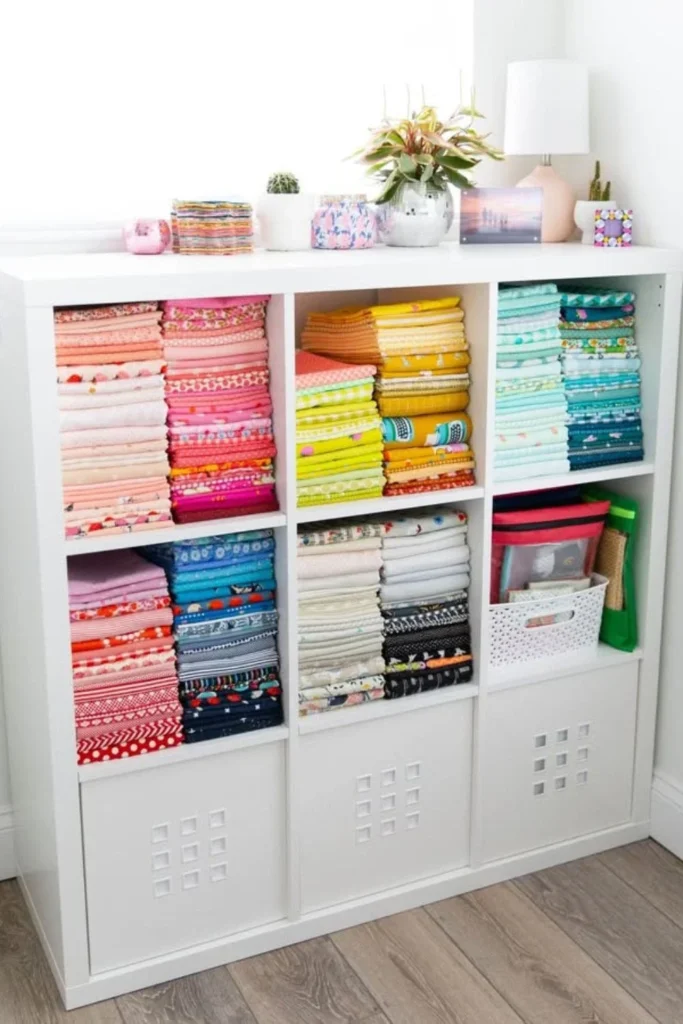
Open shelving makes a fabric collection easier to manage because every stack has a visible location. Arranging materials by color also helps you compare shades when planning quilts, clothing, or decorative projects.
Use individual shelf compartments to separate different color families. Fold pieces to similar dimensions so they sit evenly, and avoid building excessively tall piles that collapse whenever you remove something.
For larger collections, consider dividing each color section into cotton, linen, and other fabric types. This additional organization makes finding the right material much faster.
3. Cabinet Workstation Combo
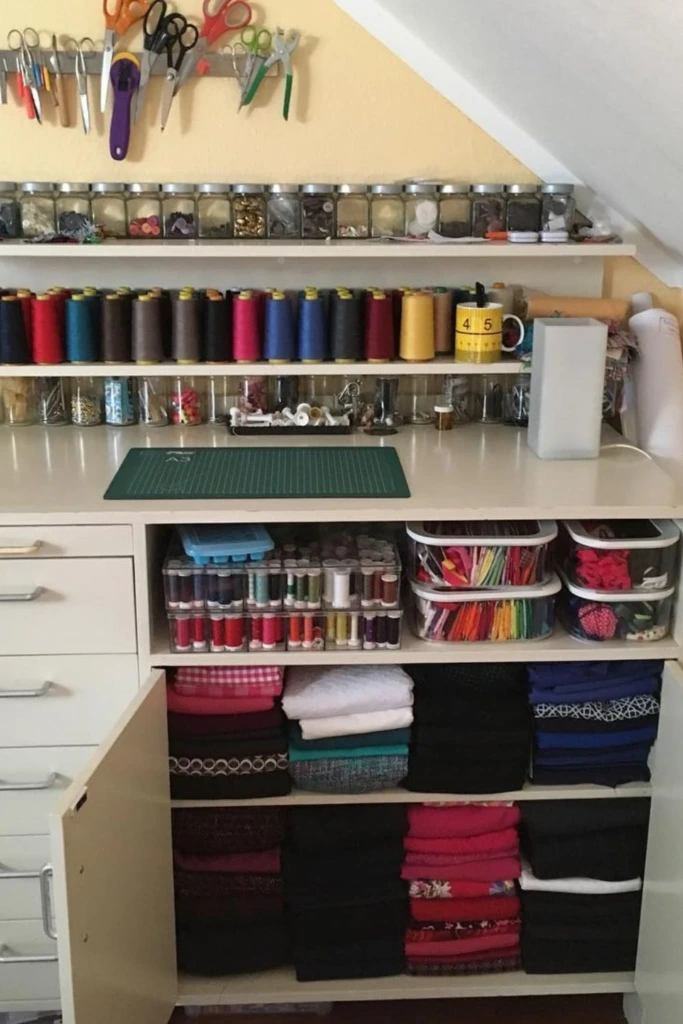
Combining fabric storage with a sewing workstation is particularly useful when you have limited room. A cabinet beside or beneath your sewing table can hold materials while keeping the working surface available for cutting and stitching.
Reserve the most accessible shelves for fabrics you use regularly. Store thread, measuring tapes, scissors, and other small accessories in separate drawers or containers.
A wall-mounted pegboard above the workstation can provide additional storage for frequently used tools. Keeping related supplies together reduces interruptions and makes it easier to clean up after finishing a project.
4. Modular Crate Wall
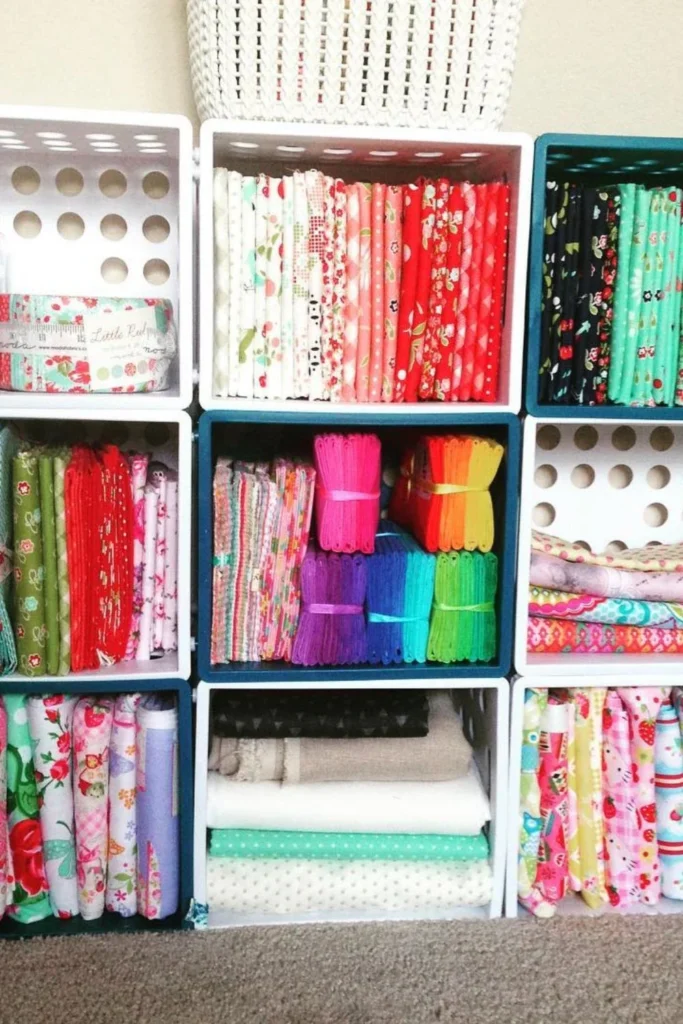
Stackable crates offer a flexible way to organize fabric without investing in permanent shelving. Their individual compartments make it possible to separate materials according to print, color, size, or intended project.
Arrange the crates against a wall and place heavier fabric collections in the lower sections. Lightweight cotton bundles and smaller pieces can occupy the upper compartments.
Choose crates designed to stack securely, and anchor tall arrangements where necessary. As your collection changes, you can rearrange the compartments or add more storage without replacing the entire setup.
5. Closet Bin System
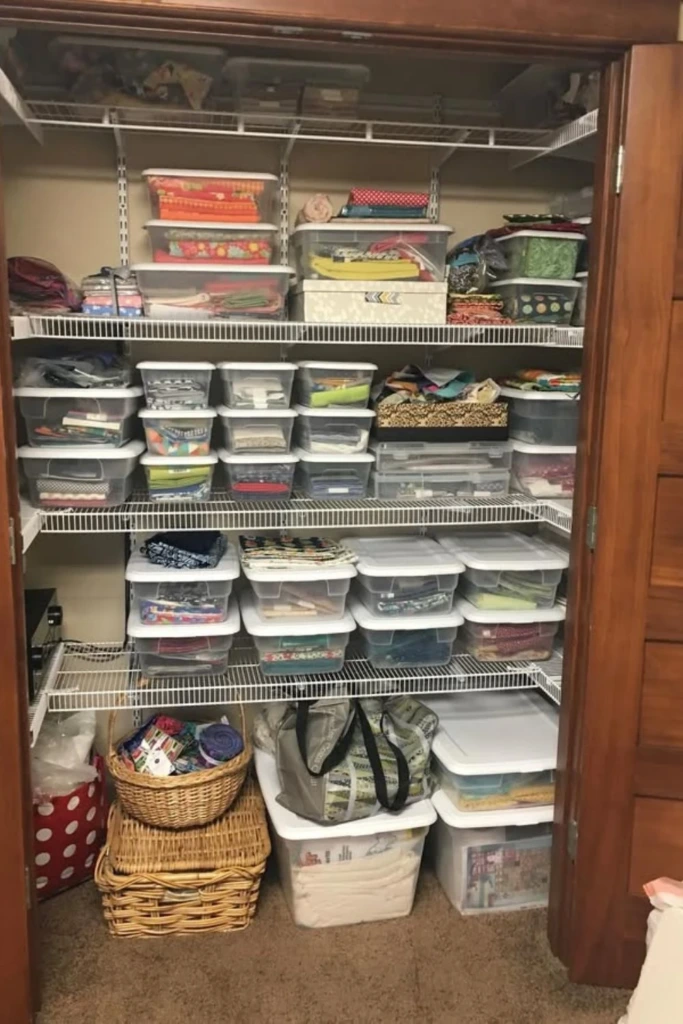
An unused closet can become a dedicated fabric storage area with the addition of sturdy shelves and transparent containers.
Separate your collection into categories such as quilting cotton, dressmaking materials, upholstery fabric, and remnants. Place each group inside a clearly labeled bin so you can identify its contents without opening multiple containers.
Keep heavy bins on lower shelves and lighter supplies above. Before storing fabric for extended periods, make sure it is clean and completely dry to reduce the risk of odors, mildew, and damage.
6. Basket Cube Wall
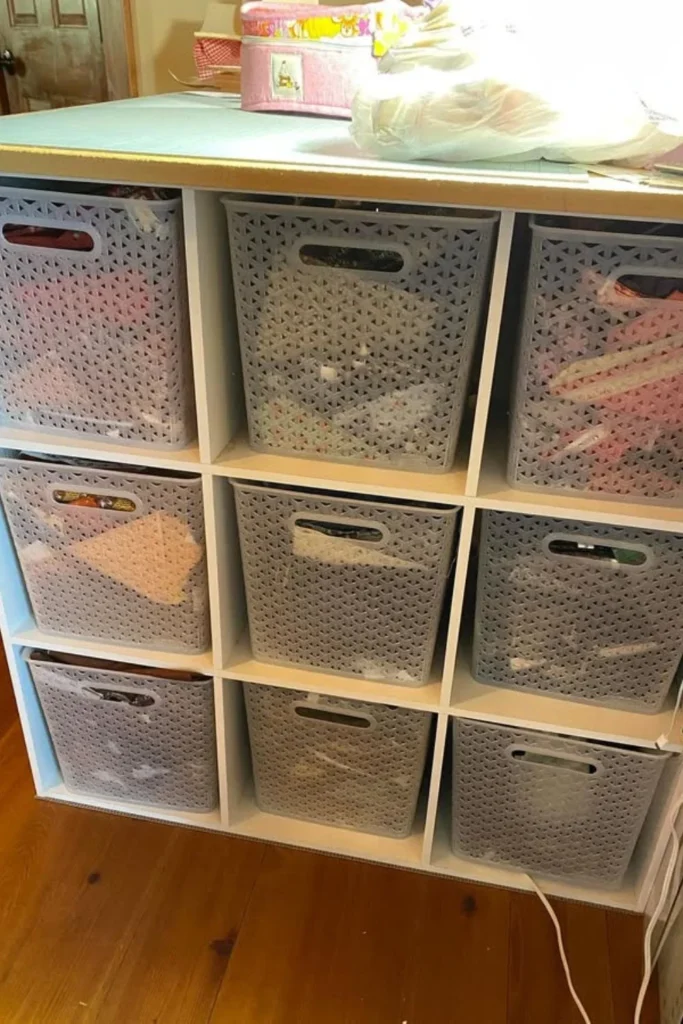
Cube shelving paired with removable baskets provides an organized appearance while keeping fabric collections out of sight.
Assign each basket a specific purpose, such as floral prints, solid colors, seasonal fabrics, or unfinished projects. Pull-out baskets are especially convenient because you can bring an entire category to your sewing table.
Choose baskets with smooth interiors that won't catch delicate threads. Adding small labels to the front also makes the system easier to maintain when several baskets look identical.
A low, sturdy cube organizer can provide additional workspace on top, provided it is appropriately sized and rated for the intended load.
7. Clear Color Drawers
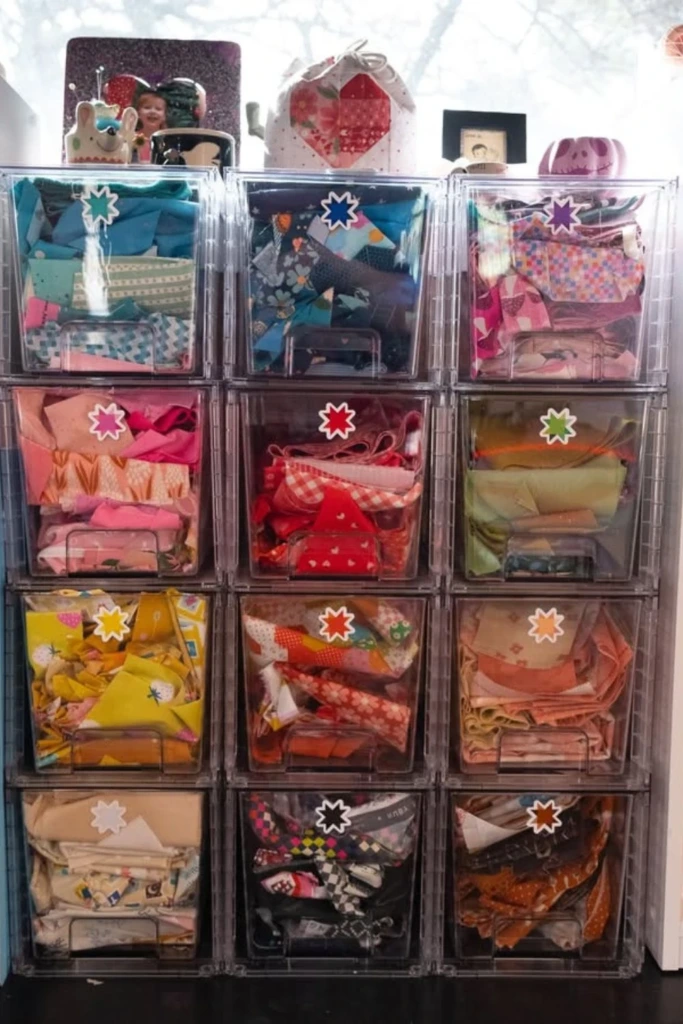
Transparent drawer organizers are ideal for smaller fabric cuts that tend to disappear inside larger storage containers.
Separate fat quarters, quilting squares, and scraps into drawers according to their color families. The clear fronts let you locate materials without repeatedly opening each compartment.
Fold fabric pieces consistently and avoid packing the drawers too tightly. Keeping some extra room makes it easier to browse and return materials after use.
This setup works particularly well for quilters who frequently need small pieces in specific shades.
8. Metal Rack Corner
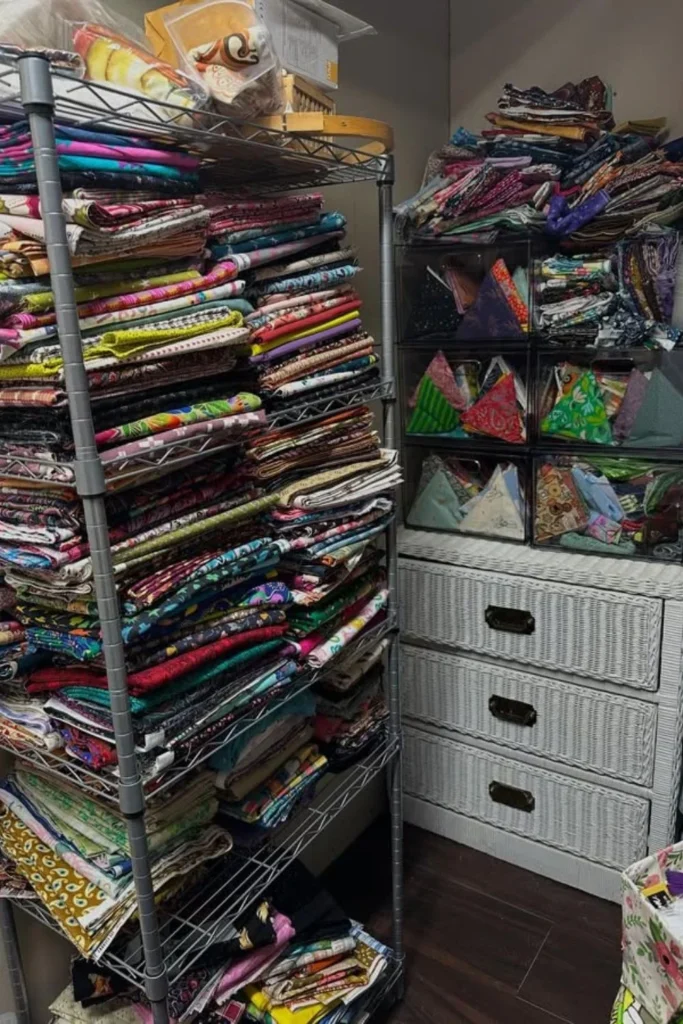
A metal shelving rack can transform an overlooked corner into a useful fabric storage station.
Adjustable shelves accommodate different fabric sizes, from small folded cotton pieces to larger bundles of upholstery material. Arrange frequently used fabrics at a comfortable height and keep heavier supplies near the bottom.
Use baskets or containers for small remnants that would otherwise fall between the shelves. Shelf liners can also prevent delicate materials from catching on exposed wire surfaces.
Before loading the rack, check its weight capacity and secure it appropriately to prevent tipping.
9. Under-Desk Cubes
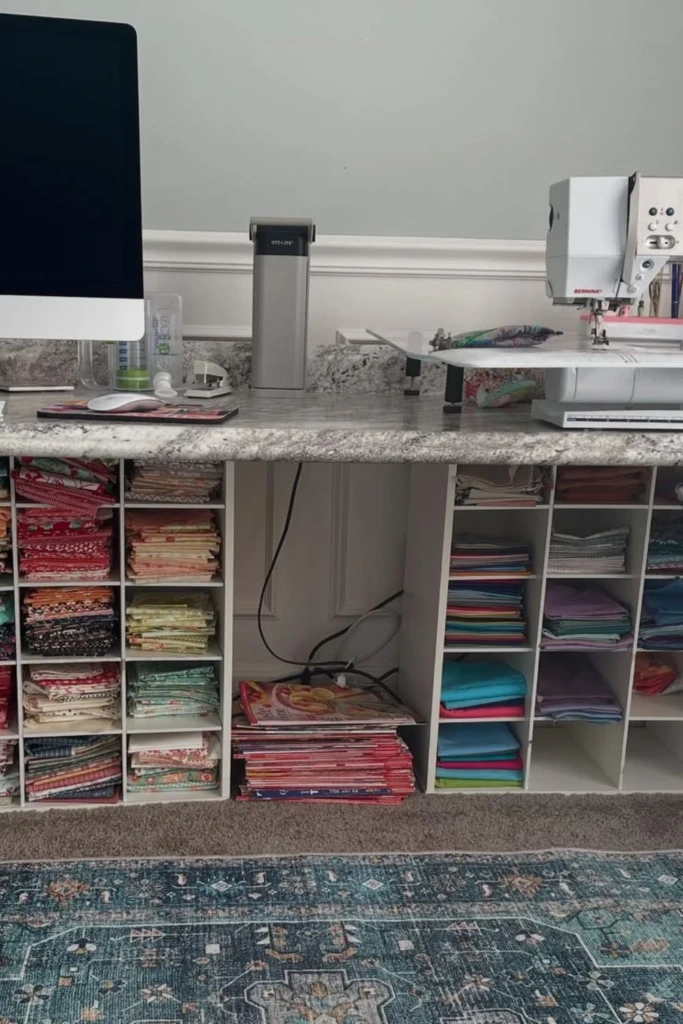
The space beneath a sewing desk often goes unused, even though it can accommodate a surprising amount of fabric.
Compact cube organizers fit beneath many worktables and provide separate compartments for materials you need during ongoing projects.
Arrange fabric vertically or in short stacks so you can identify individual pieces without pulling everything out. Keep your current project materials in the most accessible compartments.
Measure the available space carefully before installing shelves, making sure there is still enough legroom to sit and sew comfortably.
10. Labeled Bin Racks
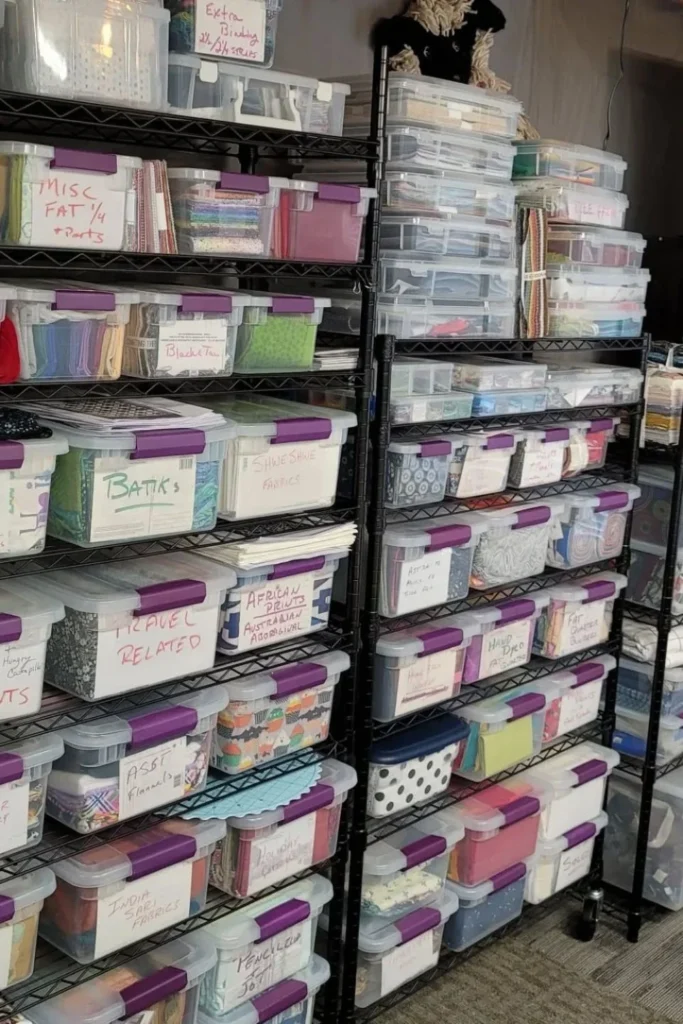
When your fabric collection includes many different patterns and materials, labeled containers can save considerable searching time.
Place matching storage bins on a sturdy shelving rack and give each container a clear category. Labels might identify floral cotton, holiday prints, denim, batiks, or fabric intended for specific projects.
For larger collections, include fabric quantities or measurements on inventory cards inside each bin. This helps you determine whether you have enough material before starting something new.
Use smaller containers for frequently accessed fabrics rather than filling oversized bins that become difficult to lift.
11. Shelf And Drawer Combo
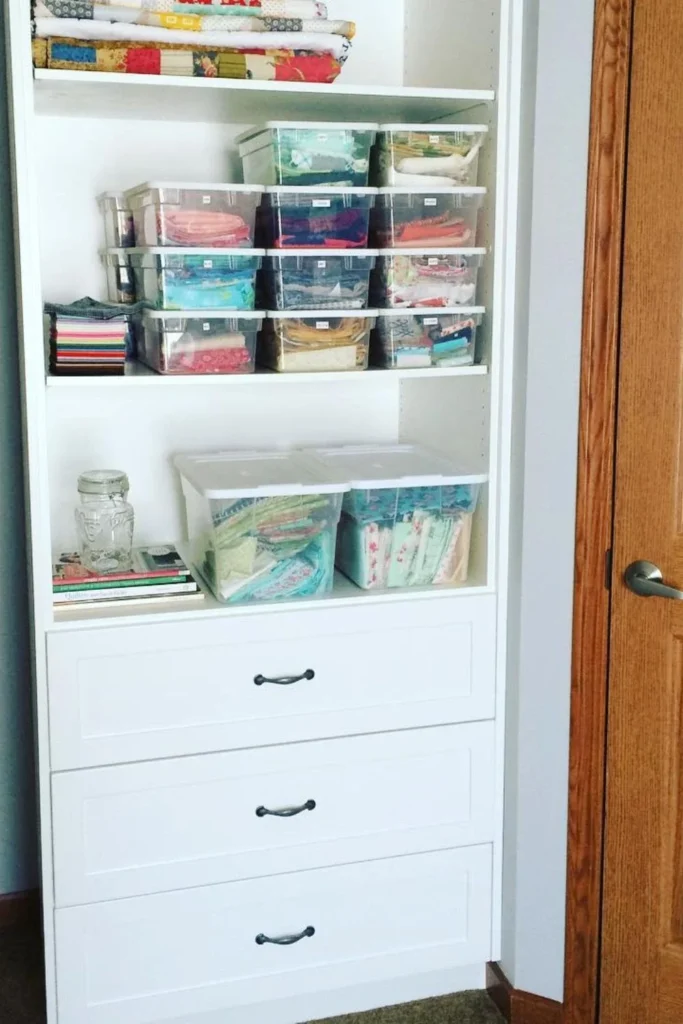
A storage cabinet with both open shelves and drawers offers the flexibility to organize different fabric sizes in one place.
Open shelves are convenient for neatly folded fabrics you use often. Drawers provide more protection for materials that need to stay away from dust and unnecessary handling.
Keep smaller fabric cuts in shallow drawers with dividers, and reserve deeper compartments for bulkier materials.
This arrangement is especially practical in multipurpose rooms because it provides accessible storage without leaving every supply on display.
12. Slanted Wood Shelves
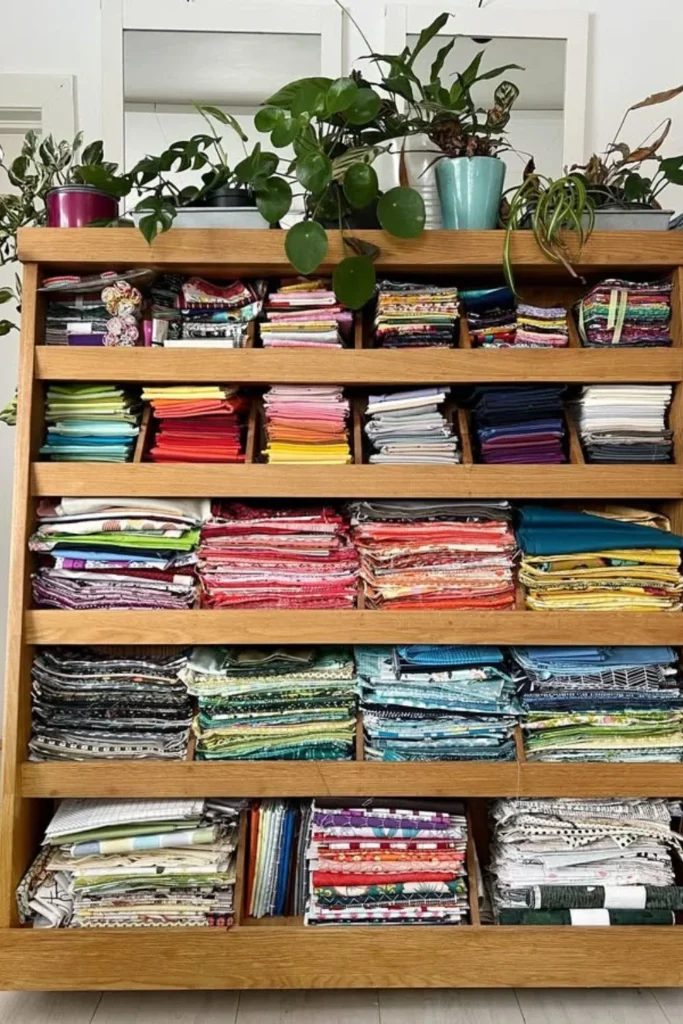
Angled wooden shelves can make a fabric collection easier to browse while creating an attractive display.
The slight incline improves visibility, allowing you to see different fabric colors and prints without moving entire stacks.
Fold materials into manageable bundles and arrange them by shade or category. Avoid placing too many pieces on each shelf, since overloaded stacks may slide forward.
Choose shelves with a front lip or another suitable restraint to keep the fabric securely in place. This style works particularly well for displaying quilting cotton and coordinating fabric collections.
13. Mini Shelf Cubes
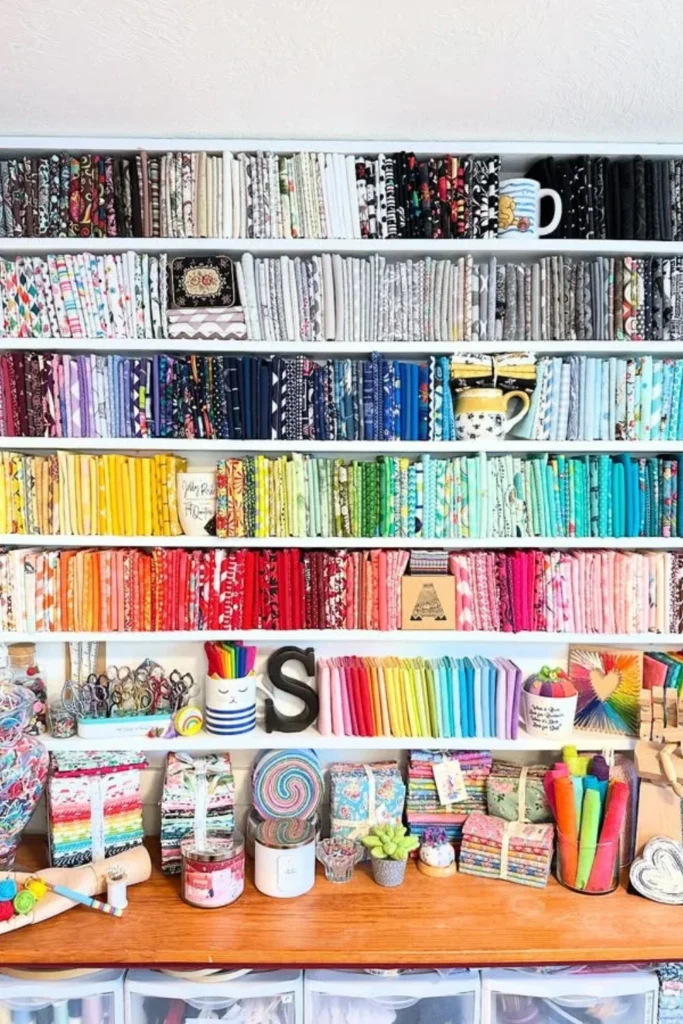
Small shelving compartments are excellent for organizing fat quarters, precut quilting bundles, and other compact materials.
Instead of mixing everything inside one large basket, assign each cube to a particular fabric category. You might keep neutral colors in one compartment, bright prints in another, and seasonal pieces in a third.
Fold each piece to fit the compartment without excessive compression. This keeps the fabric visible and helps maintain a consistent arrangement.
Mini cubes can sit on a desktop, fit inside a larger shelving unit, or occupy unused space beneath a workstation.
14. Minimalist Hidden Cubes
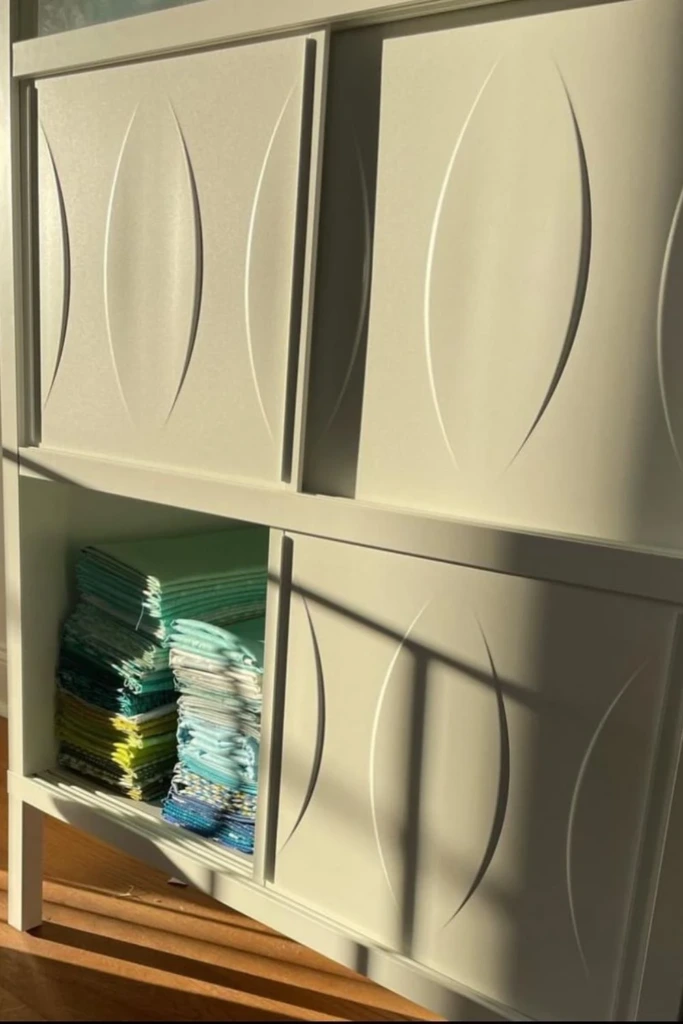
Not every fabric collection needs to be displayed. Closed cube cabinets provide a simple way to maintain a calm, uncluttered sewing area.
Use the concealed compartments for mixed materials, unfinished projects, and supplies that don't need frequent attention. Inside, separate fabrics with labeled baskets or dividers.
If your cabinet includes an open compartment, use it to display a small selection of coordinated fabrics.
This combination is especially suitable for sewing areas located in bedrooms, living rooms, or shared spaces where visual clutter can become distracting.
15. Mesh Drawer Towers
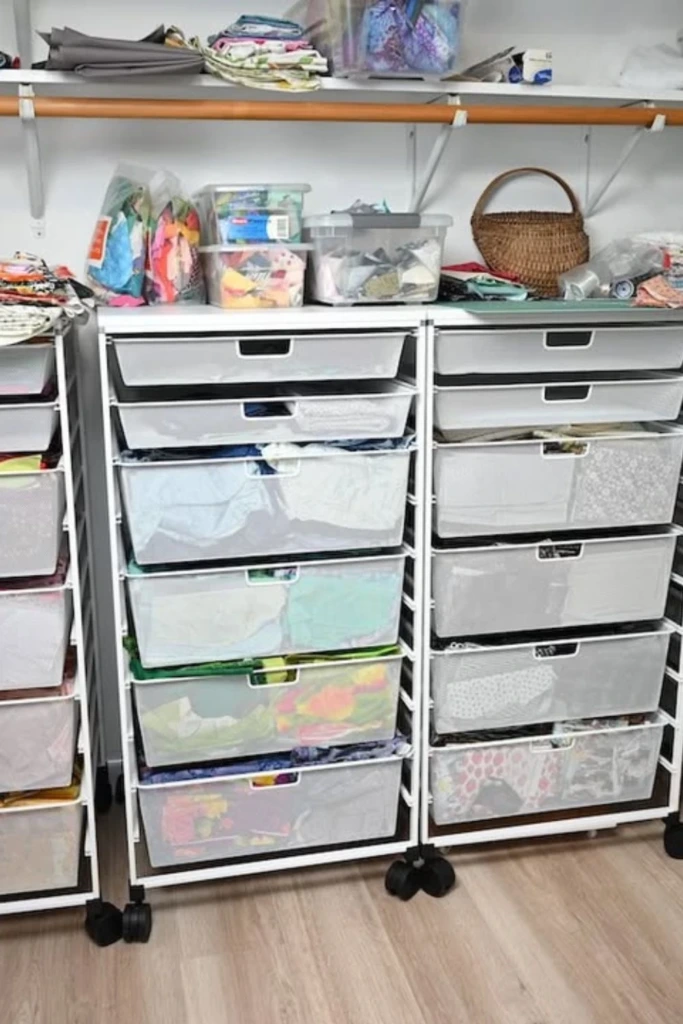
Mesh drawer units provide separate storage compartments while allowing air to circulate around the contents.
Their shallow baskets are useful for folded cotton, sewing patterns, lightweight materials, and small fabric bundles.
Organize each drawer by project or fabric type, and place heavier items in the lower compartments. If you choose a wheeled unit, look for locking casters to keep it steady during use.
Mesh drawers do not completely block dust, so store delicate or valuable textiles inside protective fabric bags when necessary.
16. Acrylic Side Drawers
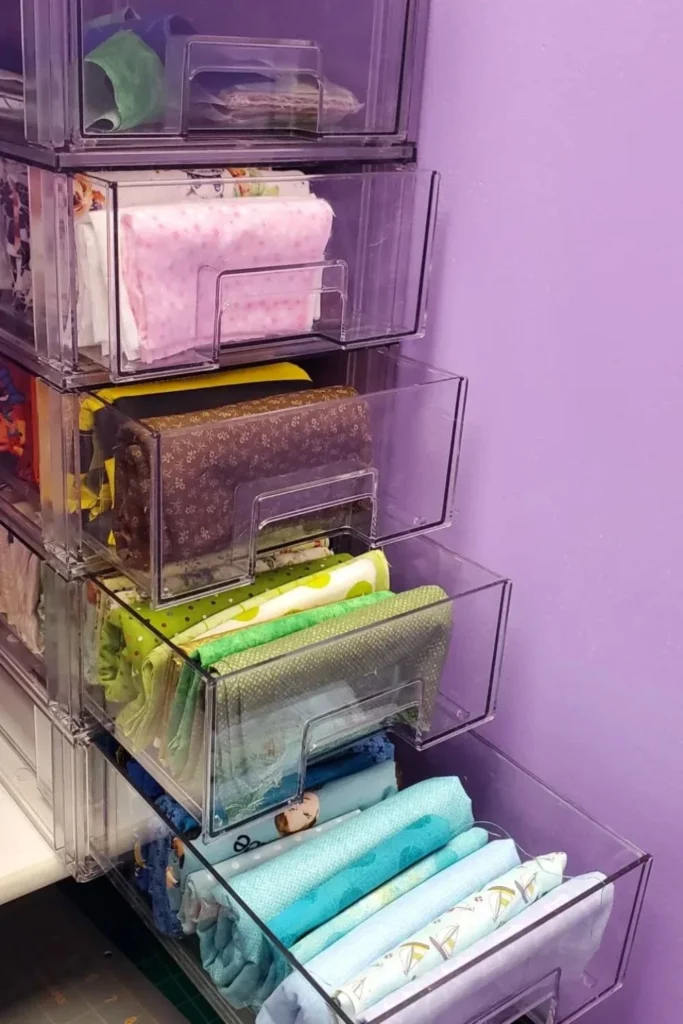
Clear acrylic drawers provide convenient storage for fabric pieces that you want to keep visible and separated.
Their transparent construction makes them particularly useful for organizing quilting squares, fabric samples, and coordinating prints.
Stackable drawer units can fit beside a sewing machine, on a shelf, or inside a cabinet. Choose shallow compartments for smaller pieces and deeper drawers for thicker folded bundles.
Avoid overfilling the drawers, which can make them difficult to open and may cause unnecessary creasing.
Keep acrylic organizers out of prolonged direct sunlight, particularly when storing brightly colored or delicate textiles.
17. Tiny Fabric Cubes
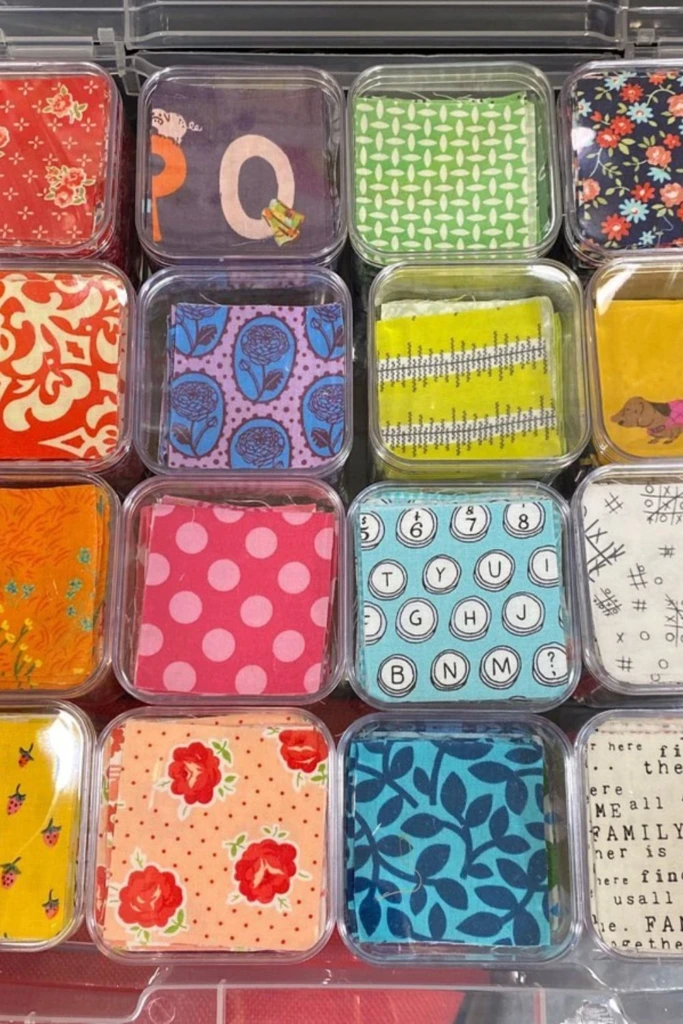
Small containers are a practical solution for the little fabric pieces that accumulate during sewing and quilting projects.
Use individual boxes for charm squares, appliqué shapes, fabric swatches, and other precut materials. Keeping these pieces separated prevents them from becoming mixed with larger remnants.
Transparent lids make identification easier, while stackable containers help conserve drawer and shelf space.
Label each box with the fabric size or project category. For very small pieces, add a paper divider or insert to prevent the contents from shifting around.
18. Vertical Bar Rack
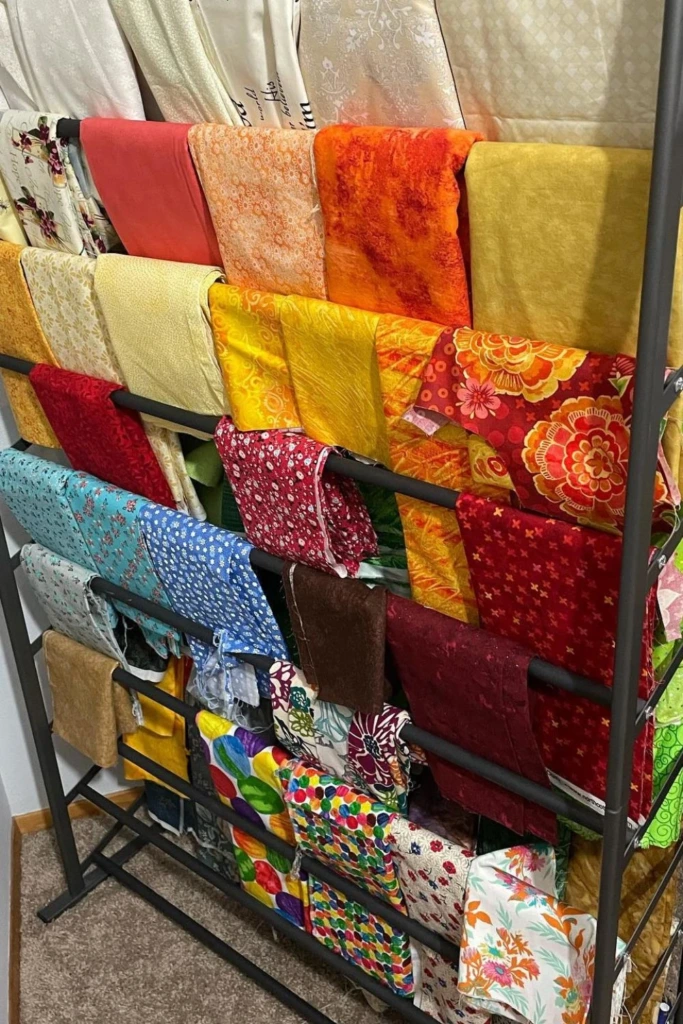
A wall-mounted rack with horizontal bars provides an alternative to folding fabric into piles.
Drape larger pieces over individual bars so they remain visible and easy to remove. This method works well for fabrics that you reach for regularly or want to inspect before choosing a project.
Arrange the materials by color, type, or size to make browsing easier.
Use smooth, rounded bars to avoid snagging delicate fibers, and ensure the rack is securely attached to suitable wall supports.
For long-term storage, folding fabric over wide supports or rolling it may help reduce sharp creases.
19. Rolling Cart System
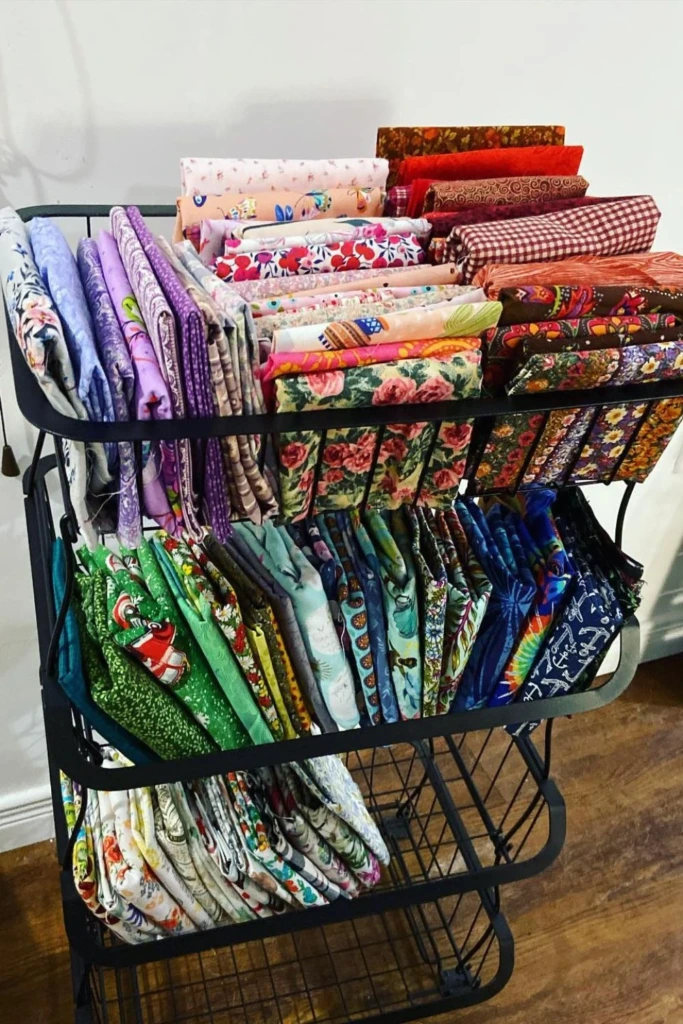
A rolling cart allows you to move fabric and sewing supplies wherever they are needed.
Choose a cart with several shelves or baskets and organize each level for a different purpose. One tier might contain materials for your current project, another could hold coordinating fabrics, and the bottom could store cutting tools or accessories.
Use small dividers to prevent folded pieces from sliding into one another.
A narrow cart is especially useful in compact sewing rooms because it can fit beside a desk or inside a closet when not in use.
20. Narrow Shelf Tower
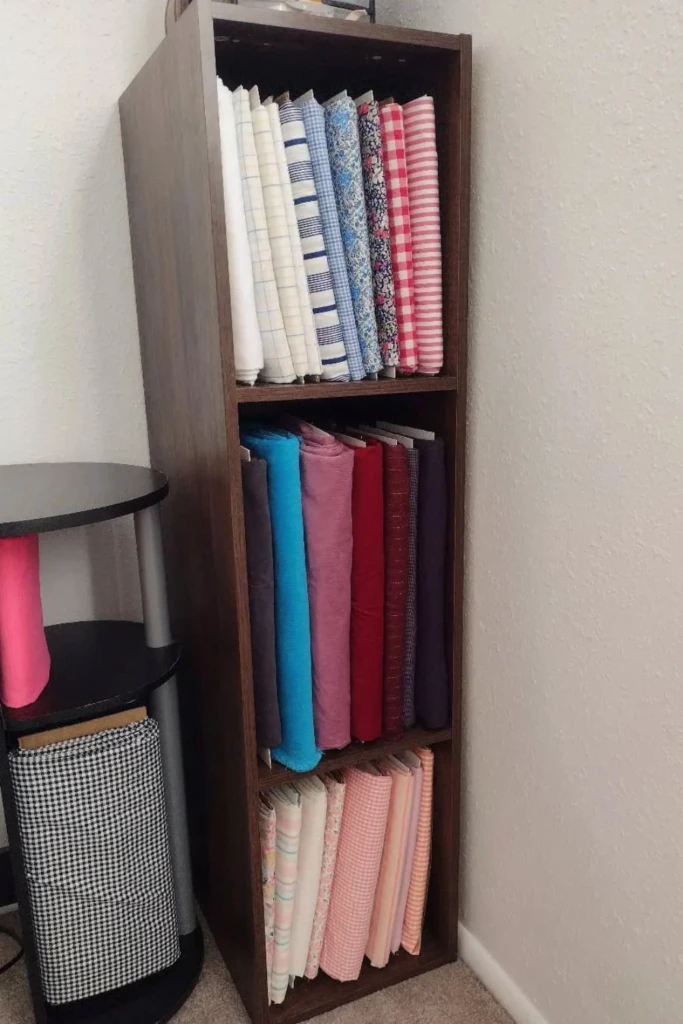
Tall, slim shelving units make use of vertical space without occupying much floor area.
They are particularly useful for storing fabric bundles, small bolts, and larger cuts that don't fit comfortably inside standard drawers.
Organize the shelves according to fabric size or material type. Keep frequently used items around waist or chest height and place heavier fabrics on the lower levels.
If you store fabric upright, support it with sturdy boards or dividers so it doesn't collapse or become misshapen.
Secure tall furniture to the wall to reduce the risk of tipping, especially when using narrow shelving units.
21. Angled Bolt Shelf
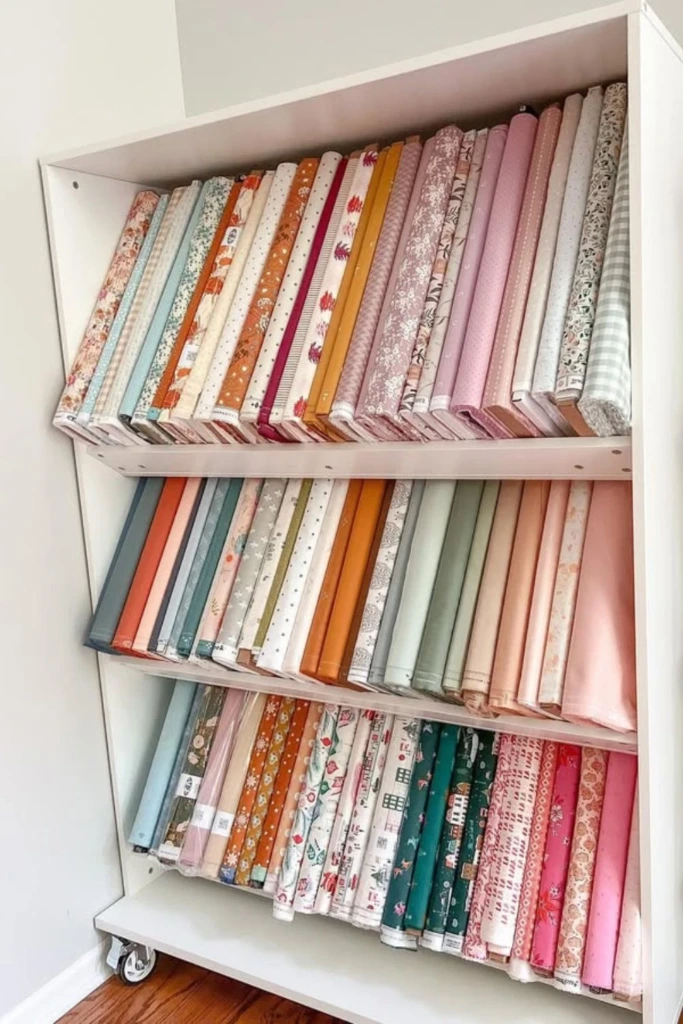
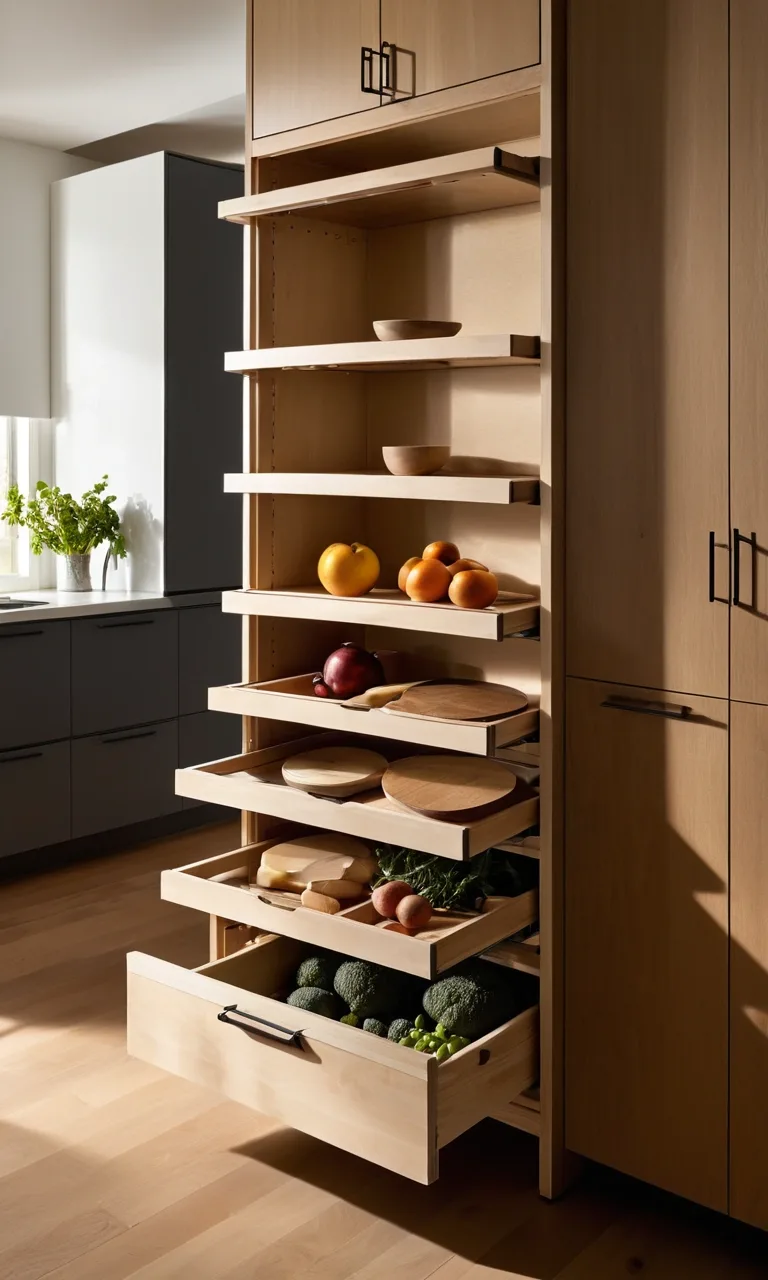
For anyone who buys fabric by the yard or keeps a substantial collection, an angled bolt shelf can make storage more manageable.
Fabric wrapped around sturdy boards can be arranged on inclined shelves, allowing you to view the available prints without unfolding every piece.
Separate bolts by fabric type, color, or intended use. Keep labels visible and include the remaining yardage when possible.
Choose shelves with suitable front stops to prevent bolts from sliding forward. For heavy rolls, confirm that the unit can safely support the weight.
This system is particularly helpful for dressmakers, textile designers, and anyone managing large quantities of fabric.
22. Glass-Front Cabinet
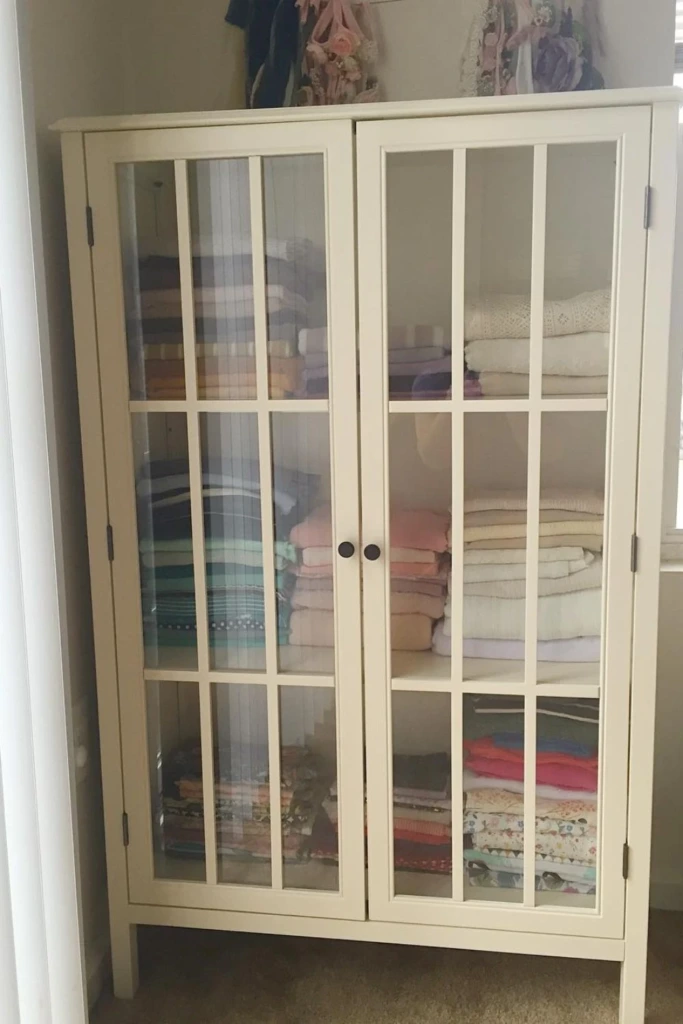
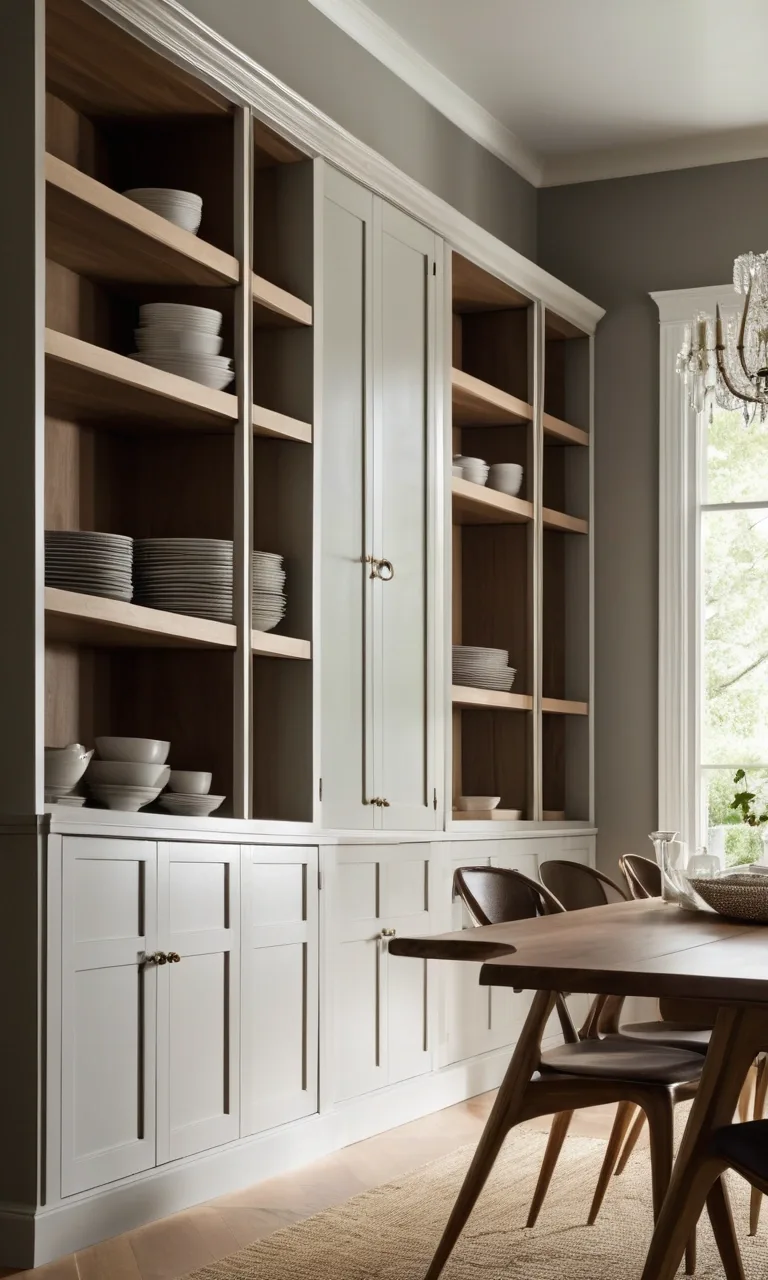
A cabinet with glass doors offers an attractive balance between protected storage and visible organization.
Arrange folded fabrics inside by color, print, or texture. The glass panels help keep dust away while allowing you to browse the collection without opening the doors.
Adjustable shelves are useful for accommodating different fabric thicknesses and bundle sizes.
For delicate materials, use acid-free tissue paper where appropriate and avoid stacking heavy pieces on top of lightweight fabrics.
Position the cabinet away from direct sunlight, since prolonged light exposure can fade textile colors even when the fabric is stored behind glass.
23. Compact Closet Tower
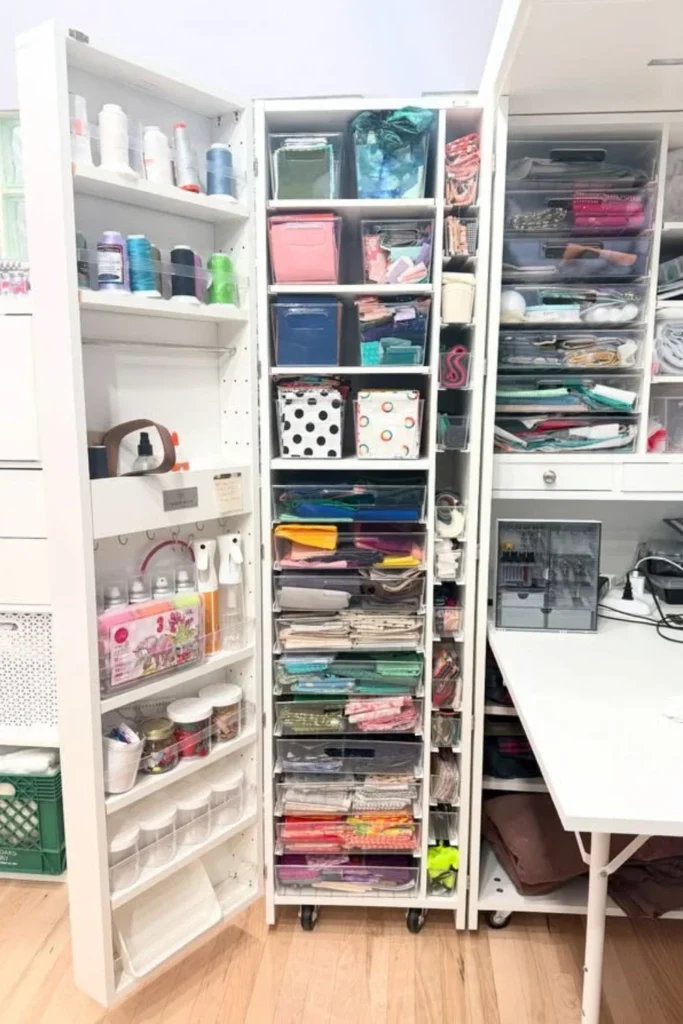
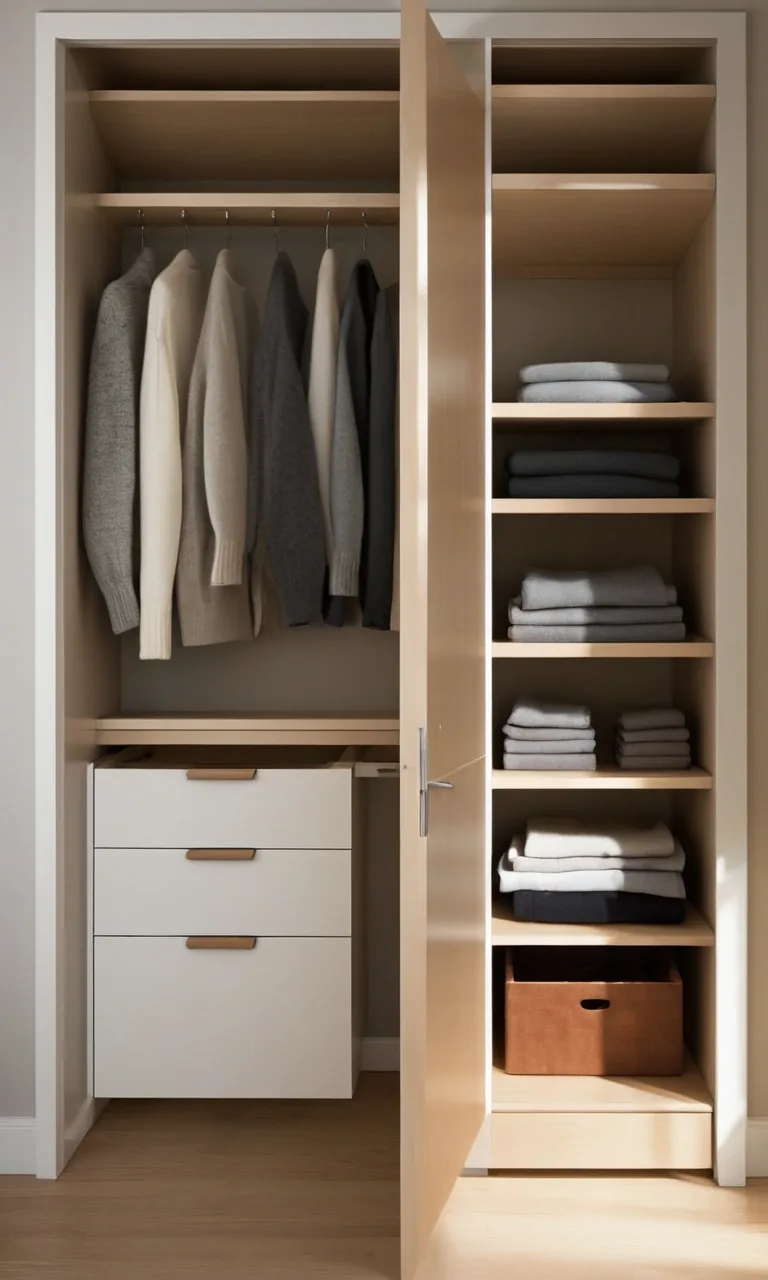
A narrow storage tower can turn a small closet or unused corner into an organized fabric station.
Choose a unit with several shallow shelves so each section holds a manageable amount of material. Use the upper compartments for lightweight fabric bundles and the lower ones for heavier supplies.
Small baskets can hold scraps, while drawers are useful for thread, sewing notions, and accessories.
If the tower has wheels, locking casters can help keep it stable. For tall units, follow the manufacturer's anchoring recommendations.
The main advantage of this arrangement is accessibility. With every category assigned a specific place, you can find materials quickly and return them after each sewing session.
A well-organized fabric collection makes sewing and crafting more enjoyable because your materials are easier to find, compare, and protect. Whether you choose open shelving, compact drawers, or a complete closet system, the best solution is one that suits your available space and the way you work.
Start with the fabrics you use most often, give every category a dedicated location, and leave room for future additions. A few thoughtful storage changes can turn even a crowded sewing corner into a practical, inviting creative space.