21 Shower Organization Ideas for 2026
A cluttered shower can make even a beautiful bathroom feel cramped and difficult to maintain. Shampoo bottles crowd the corners, washcloths end up on the floor, and everyday essentials become harder to find when everything shares the same limited space.
The solution isn't always adding more storage. A better approach is to make thoughtful use of the space you already have, choose organizers suited to your shower, and give every product a designated home. Small adjustments can improve your daily routine while making the entire bathroom look more inviting.
These 21 shower organization ideas explore practical ways to manage toiletries, use overlooked corners, simplify shared spaces, and create a cleaner-looking shower without sacrificing convenience.
How Do I Style My Shower?
Start by identifying the products you use during most showers. Shampoo, conditioner, body wash, and a few essential accessories deserve the easiest access, while occasional treatments and backup supplies can be stored elsewhere.
Next, consider how your shower is arranged. Wall-mounted shelves, corner organizers, and hanging caddies can provide storage without taking up valuable standing room. Choose materials designed for wet environments, with drainage features that help prevent water from collecting.
For a more coordinated appearance, limit the number of items on display and consider using matching dispensers or containers. Keep the arrangement simple enough to maintain after every shower. A well-organized space should make your routine easier, not give you another area to clean and rearrange.
1. Vertical Wire Storage
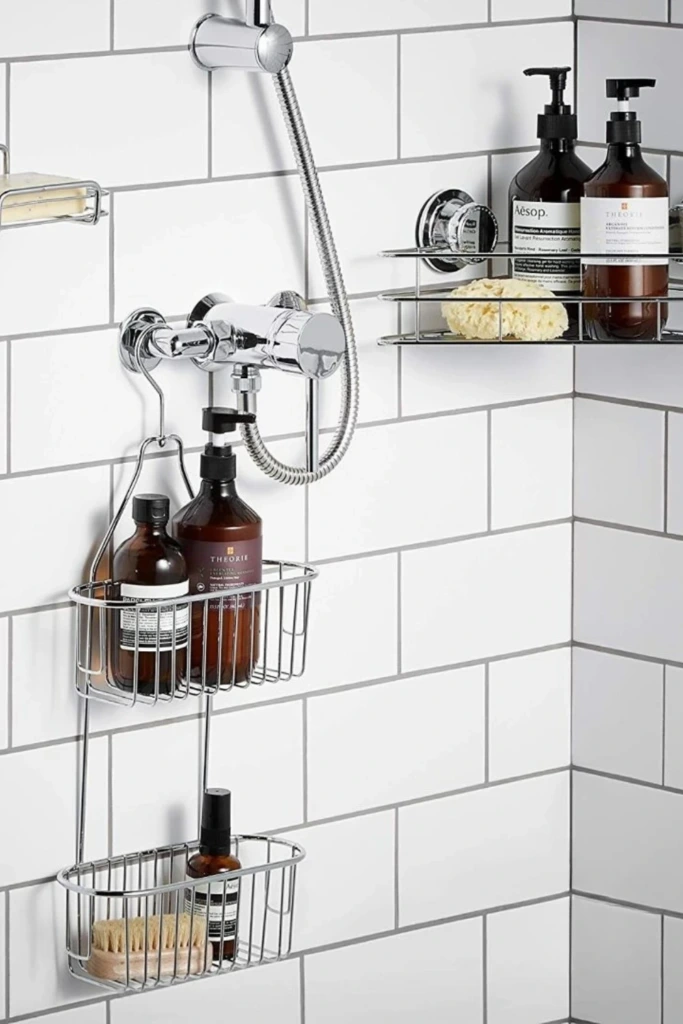
Wall-mounted wire baskets are a practical choice when the shower floor and built-in ledges offer little room for toiletries. Their open construction allows water to drain, while the raised sides help keep bottles and smaller products contained.
Install multiple baskets at comfortable heights to separate everyday essentials from less frequently used items. Before mounting them, check that the wall material and fixing method can support the expected weight. Select corrosion-resistant finishes intended for bathroom use, and leave enough space between baskets to accommodate taller containers.
2. Bottle Line System
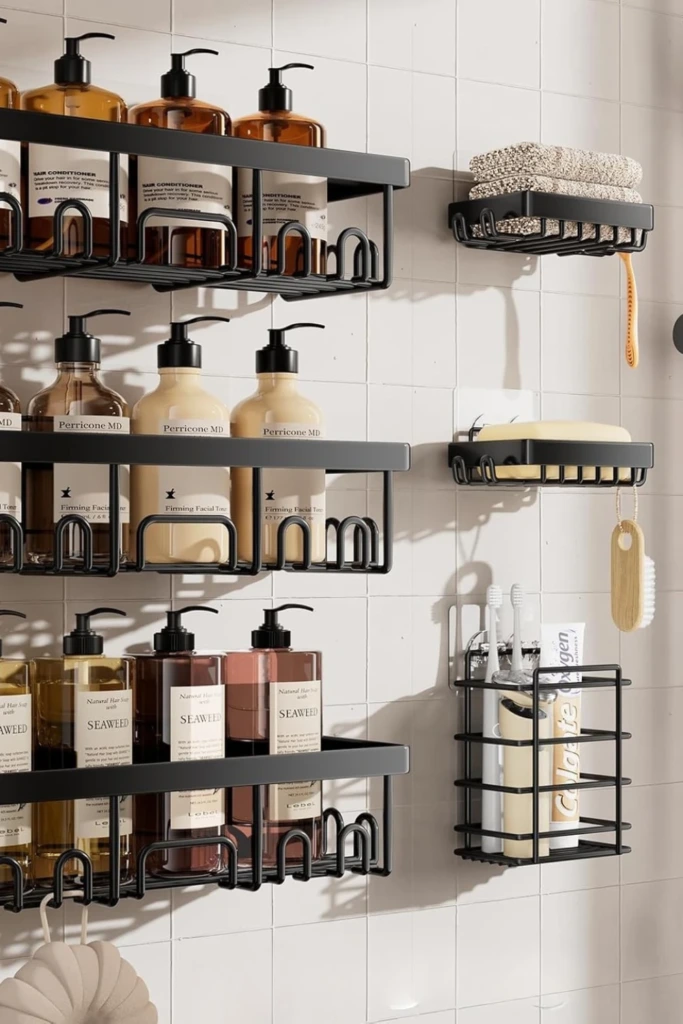
A row of neatly arranged bottles can give a shower a coordinated, uncluttered appearance. This setup works particularly well with open shelving, where different packaging styles can otherwise make the area look busy.
Place commonly used products together and position containers so their labels are easy to identify. Matching refillable dispensers can create a consistent look, but label each one clearly to avoid confusing products. Keep the shelf size appropriate for the bottles you actually use, and avoid overcrowding it with unnecessary extras.
3. Minimal Shelf Edit
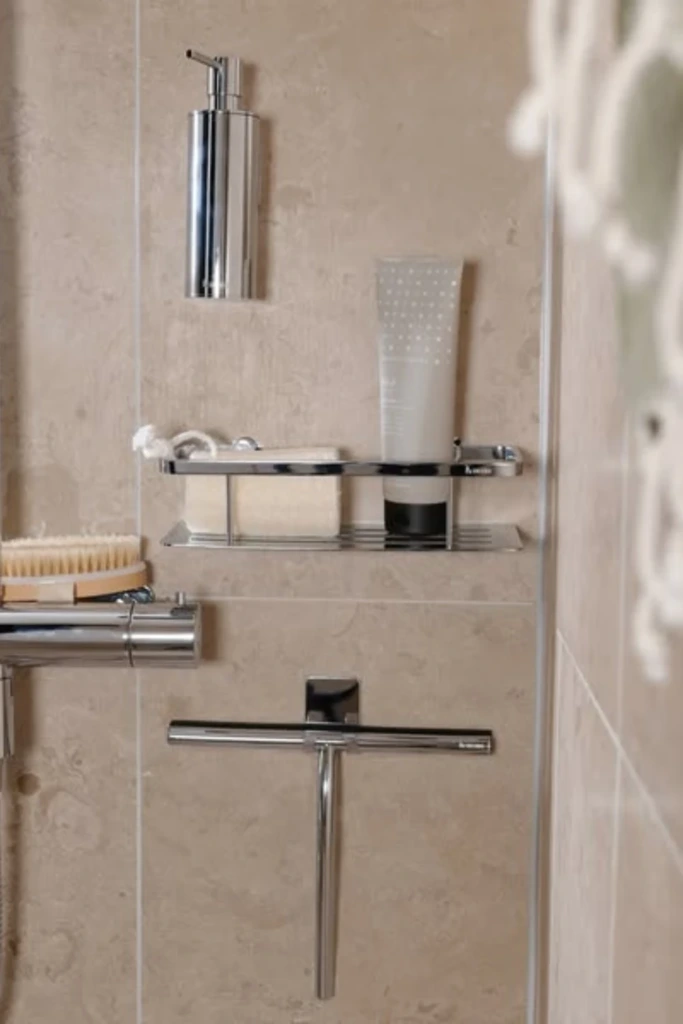
A narrow shelf can encourage a simpler approach to shower storage. Rather than trying to accommodate every product you own, reserve the available space for the essentials you reach for regularly.
Choose a shelf that fits the width of your shower and has a finish suitable for constant moisture. Wall-mounted dispensers may free up additional room if you use several liquid products. Keep occasional-use items in a bathroom cabinet so the shelf remains easy to wipe down and the shower retains an open, spacious feel.
4. Showerhead Caddy Stack
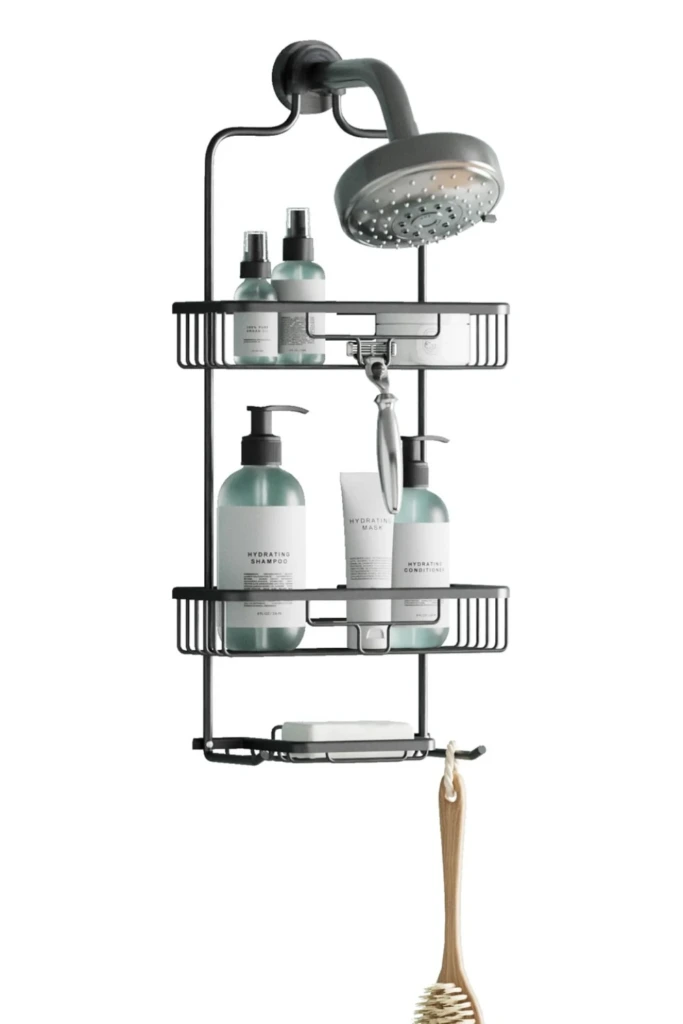
A showerhead caddy is a convenient option for renters or anyone who wants extra storage without installing permanent shelves. Its tiered design can accommodate bottles of different heights while keeping toiletries close to where they are needed.
Look for a model that fits your showerhead securely and includes features to prevent slipping or swinging. Rust-resistant materials and drainage openings are important for long-term use. Distribute heavier bottles evenly, make sure the caddy doesn't interfere with the shower controls, and check that the added weight won't place excessive strain on the showerhead or its fittings.
5. Floating Wire Layers
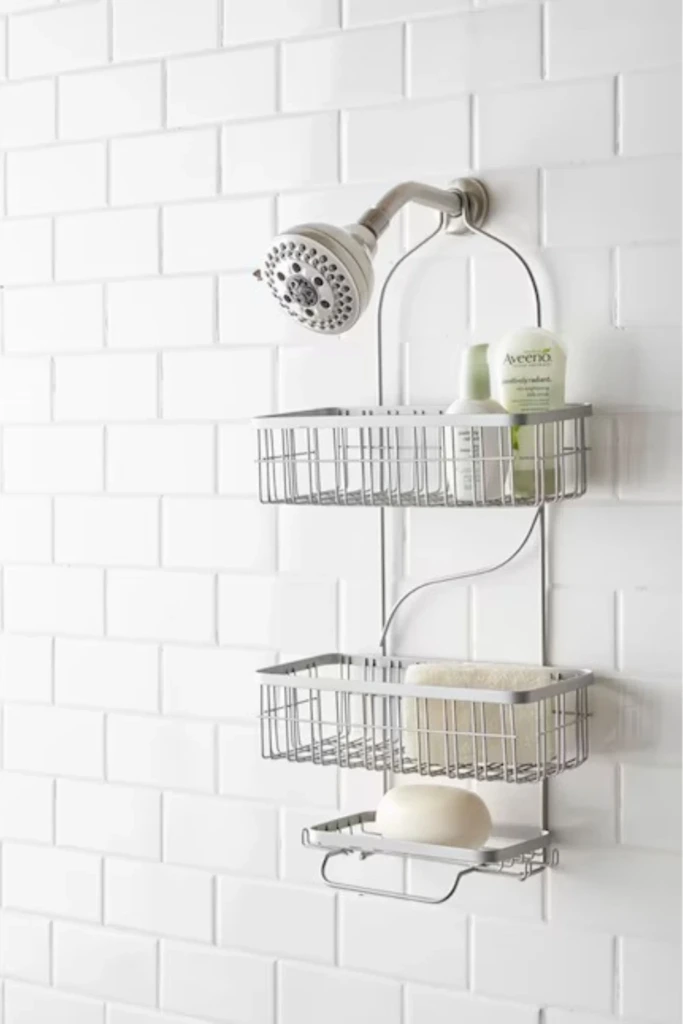
Stacked wire baskets provide several storage levels while leaving much of the wall visible. This arrangement can be especially helpful in compact showers where a large, bulky organizer would make the space feel crowded.
Mount the baskets with enough clearance for your tallest products and leave room to remove bottles without knocking over neighboring items. Assign each level a purpose, such as daily haircare on one shelf and body products on another. Open baskets make it easier to spot supplies and allow water to drain, although they still need regular cleaning to remove soap residue.
6. Contrast Hanging Rack
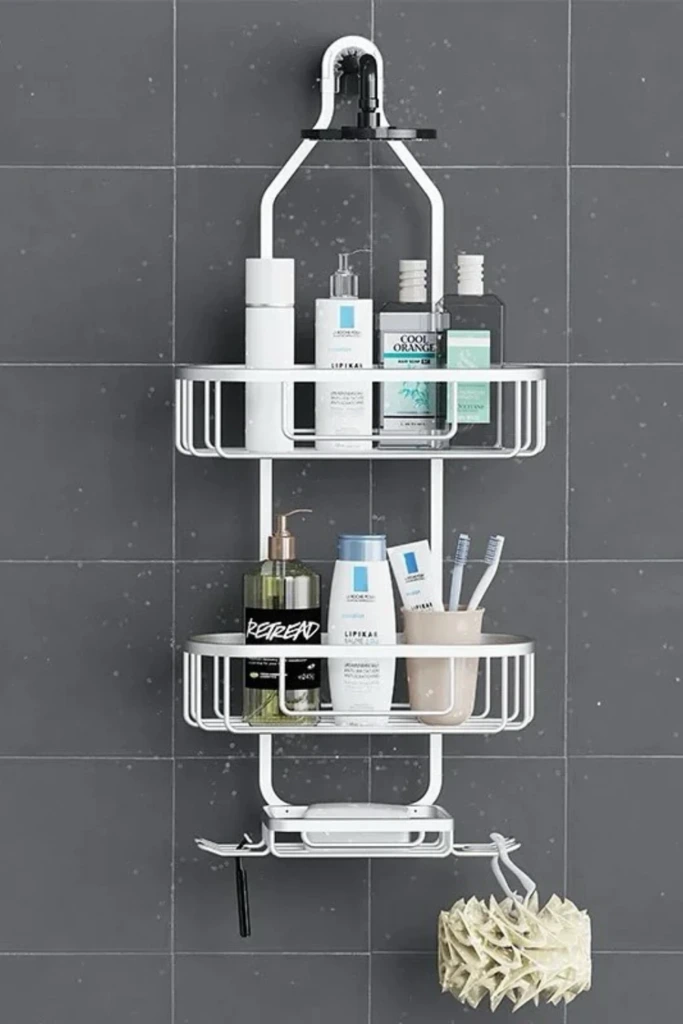
A hanging rack with a contrasting finish can serve as both a storage solution and a visual feature. For example, a dark organizer against light-colored tiles makes its shelves and contents easier to distinguish.
Choose a rack with separate compartments for tall bottles, smaller containers, and shower accessories. Keep frequently used products together and avoid filling every available space simply because it exists. A balanced arrangement looks more intentional and makes individual items easier to retrieve. Check that the rack hangs securely and doesn't obstruct movement or the shower door.
7. Glass-Mounted Frame
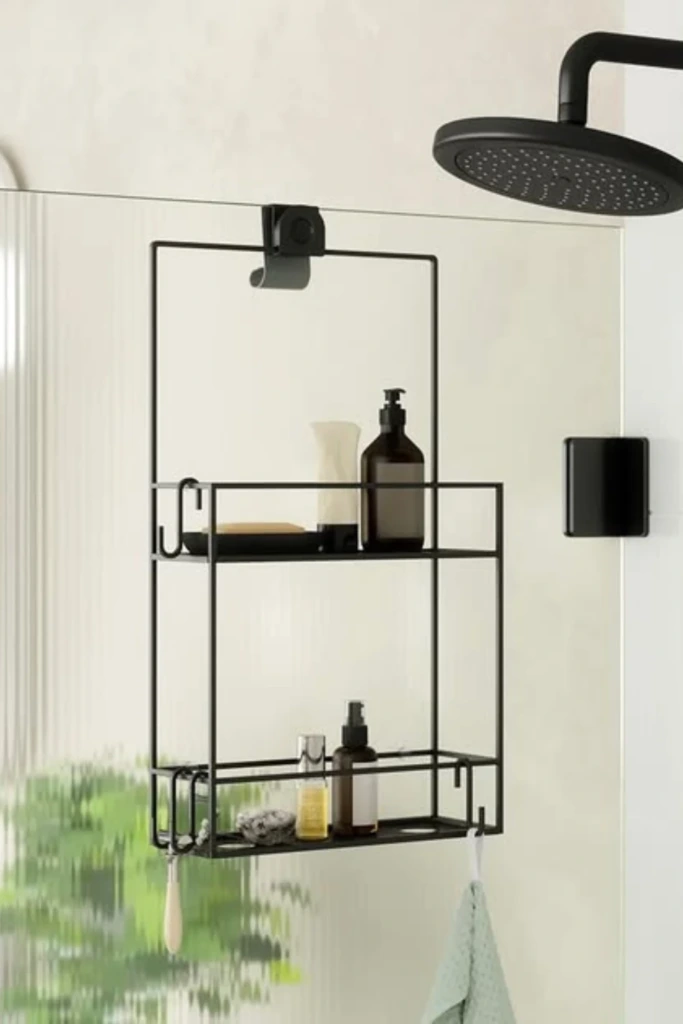
Shower glass can offer useful storage space when the walls have limited room for shelves. A clamp-on organizer or a model specifically designed for shower screens can hold everyday products without requiring holes in the tiled wall.
Measure the glass thickness before selecting a compatible unit, and follow the manufacturer's installation instructions carefully. Avoid placing too much weight on the screen or using hardware that could scratch or damage it. Position the organizer where it remains accessible without interfering with sliding doors, hinges, or entry points. A slim frame helps keep bottles contained while preserving the clean appearance of a glass enclosure.
8. Color-Coded Column
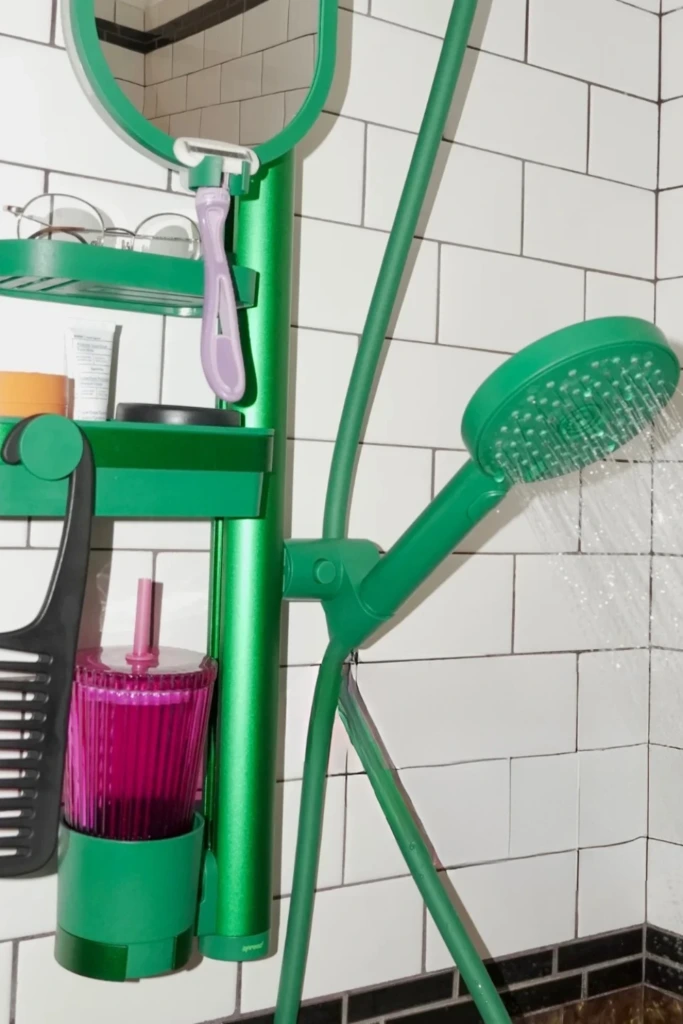
A vertical storage column is useful when you want several types of shower accessories in one compact arrangement. Models with integrated shelves, hooks, and holders can accommodate toiletries, washcloths, and small grooming tools without spreading them across separate surfaces.
Color coding adds another layer of organization, particularly in family bathrooms. Different colors can identify individual users or distinguish haircare from body-care products. Choose a system that suits the bathroom's overall style and provides enough drainage. Keep the most frequently used items within easy reach rather than placing everything at the highest available level.
9. Balanced Vertical Grid
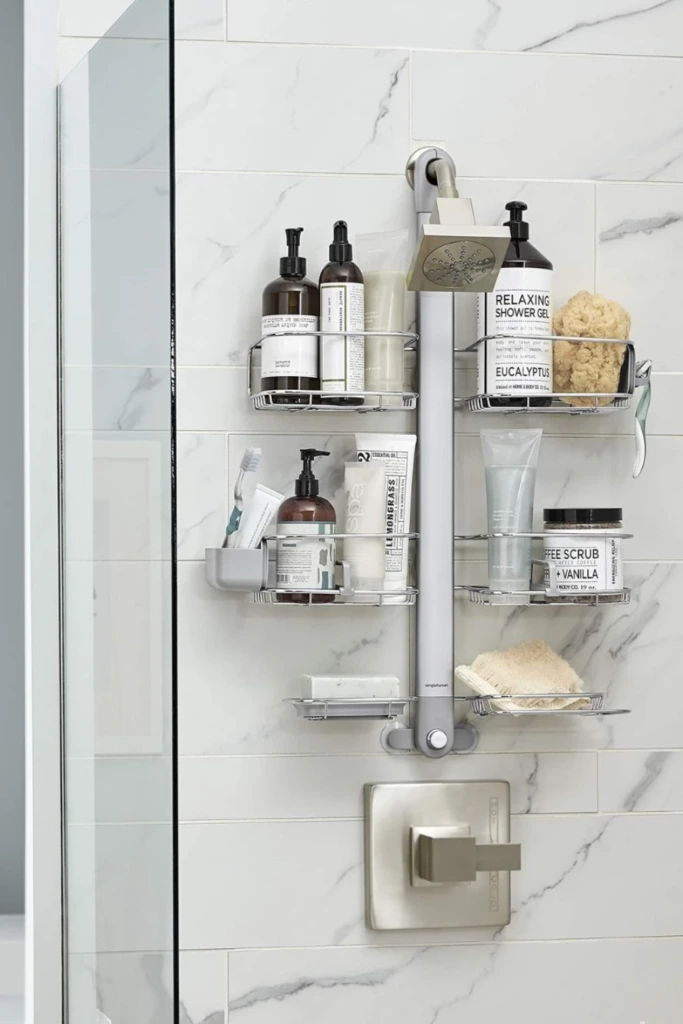
A symmetrical arrangement can make a shared shower feel more orderly. Using a vertical rail or similarly spaced shelves on either side of a central point creates a consistent layout without requiring a large storage unit.
Give each shelf a specific role, such as shampoo and conditioner on one side and body wash or accessories on the other. Keep the placement practical rather than aiming for perfect visual balance at the expense of convenience. Use sturdy mounting hardware appropriate for the wall, and leave enough room around each shelf to reach products comfortably and clean the surrounding tiles.
10. Corner Chain Organizer
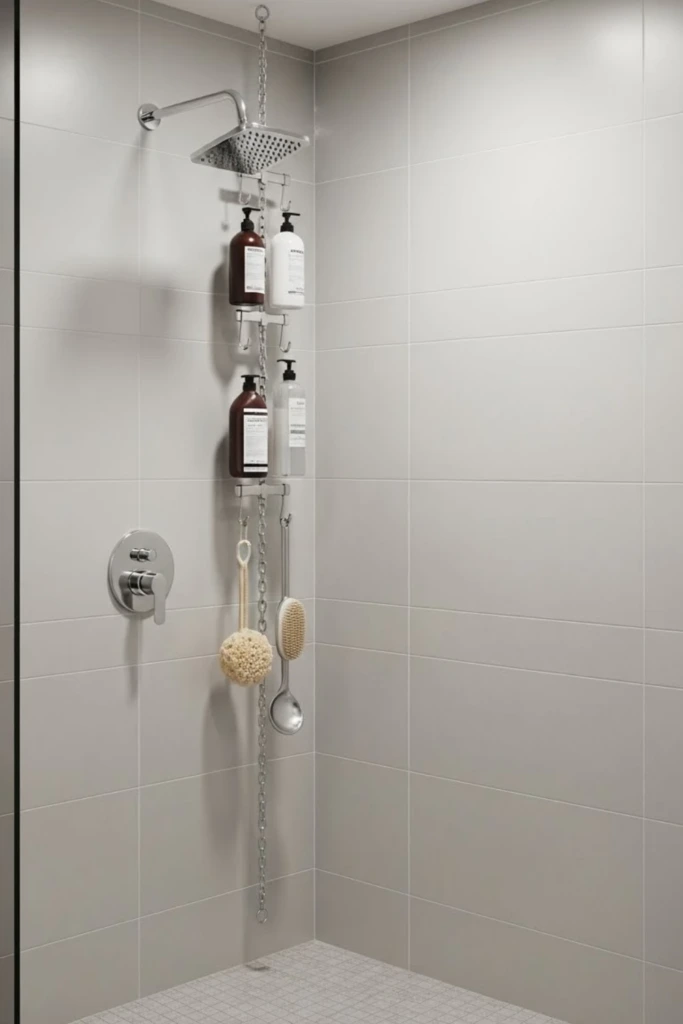
Shower corners often provide unused space that can accommodate a hanging organizer. A chain-style design with suspended baskets or hooks makes use of vertical height instead of extending far into the shower.
Choose a product made for damp environments and confirm that its attachment point can safely support the combined weight of its contents. Use the individual baskets for lightweight toiletries, sponges, or small accessories. Keep heavier bottles in a more stable location when necessary, and space the hanging sections so they don't collide when moved. This arrangement can be particularly helpful in showers with few flat surfaces.
11. Tension Pole Tower
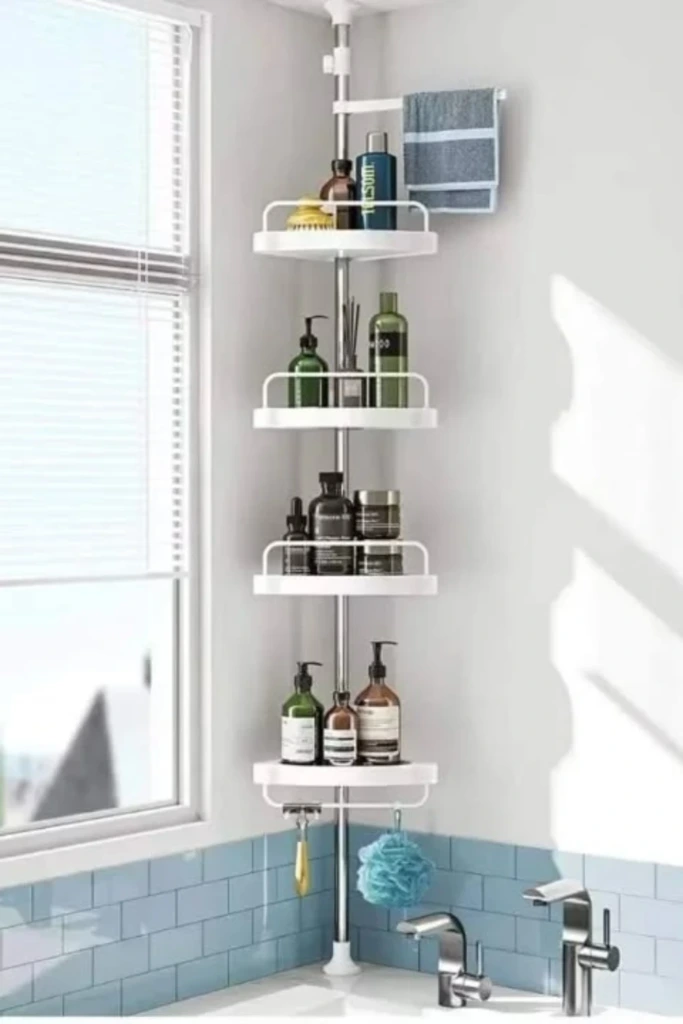
A tension-pole organizer creates several levels of storage between the shower floor and ceiling. It can be useful in bathrooms where drilling into tile isn't desirable and where a narrow vertical footprint is preferable to a wide rack.
Measure the available height before purchasing and verify that the pole is designed for your ceiling and floor surfaces. Install it according to the manufacturer's directions, making sure the ends remain stable. Place heavier items on lower or middle shelves and lighter accessories above them. Check the pole periodically for movement, and avoid overloading it with large containers.
12. Slim Corner Spine
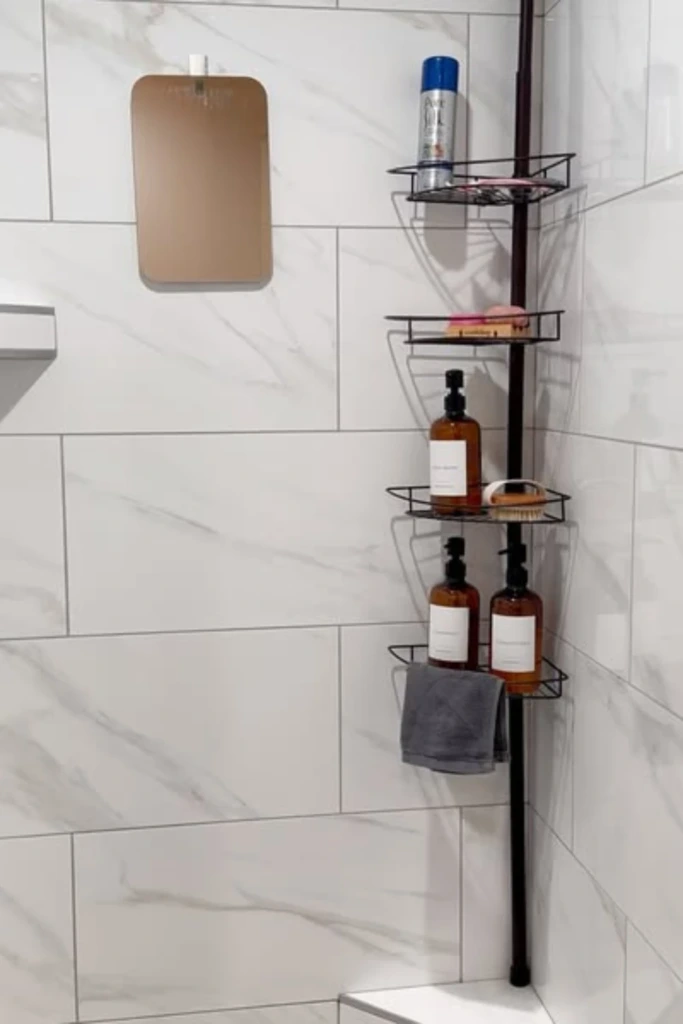
A slim corner organizer offers a simple way to store toiletries without using much wall or floor space. Its narrow profile makes it a good option for compact showers where every inch of standing room matters.
Choose a model with adjustable shelves if your products vary in height. Arrange the baskets around your everyday routine, leaving the most convenient levels for shampoo, conditioner, and body wash. A compact design is especially effective when it fits neatly into an otherwise unused corner. Make sure the unit remains stable and that its shelves can be reached without stretching or twisting awkwardly.
13. Daily-Use Zone
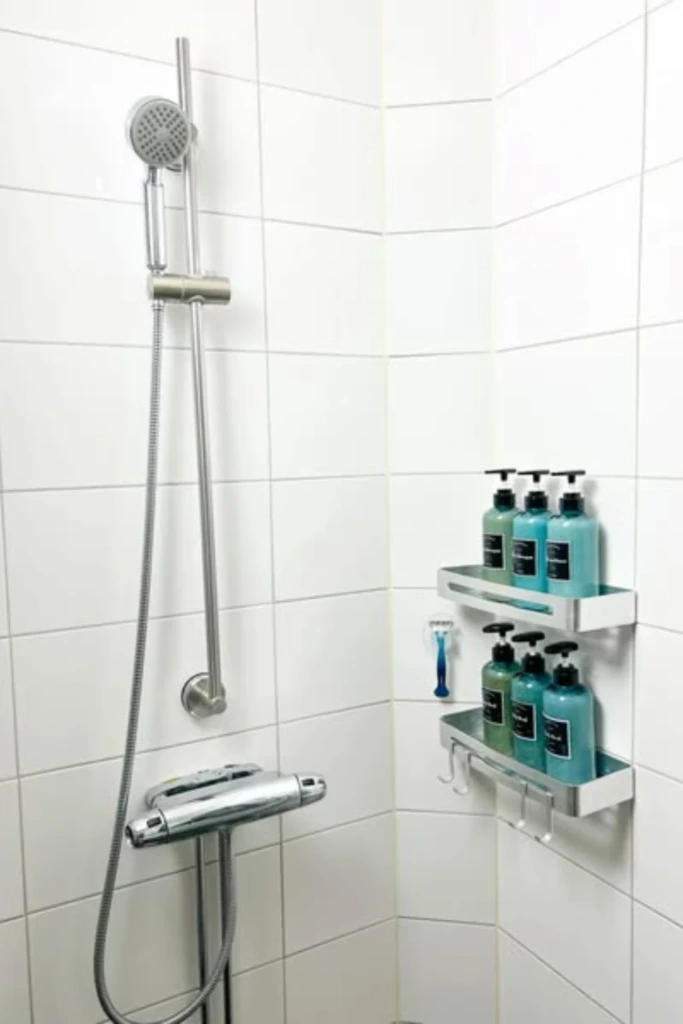
Creating a dedicated area for everyday essentials reduces unnecessary movement during your shower routine. Instead of spreading bottles across several shelves, group your most frequently used products within comfortable reach.
Two small shelves can be enough for shampoo, conditioner, and body wash, provided they are deep enough to hold the containers securely. Keep products upright and allow space for your hands to remove them easily. Store special treatments, scrubs, and spare bottles elsewhere. By reserving this area for regular use, you can make the shower easier to navigate and quicker to tidy.
14. Mixed-Use Rail
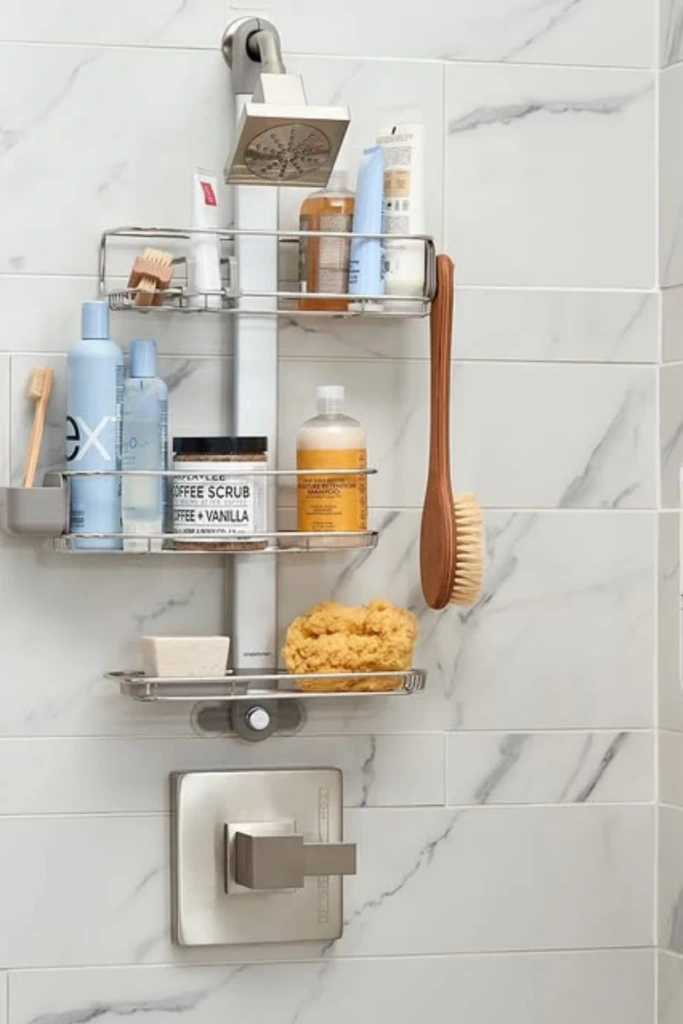
When a shower contains haircare products, skincare treatments, brushes, and bathing accessories, a rail with multiple baskets can help separate these categories.
Assign different levels to different tasks. For example, keep shampoo and conditioner together, place body-care products in another basket, and reserve hooks for washcloths or lightweight tools. Choose shelves with drainage openings and sufficient spacing to prevent bottles from becoming difficult to remove. Review the contents periodically so unused products don't gradually take over the available storage.
15. Built-In Niche Zones
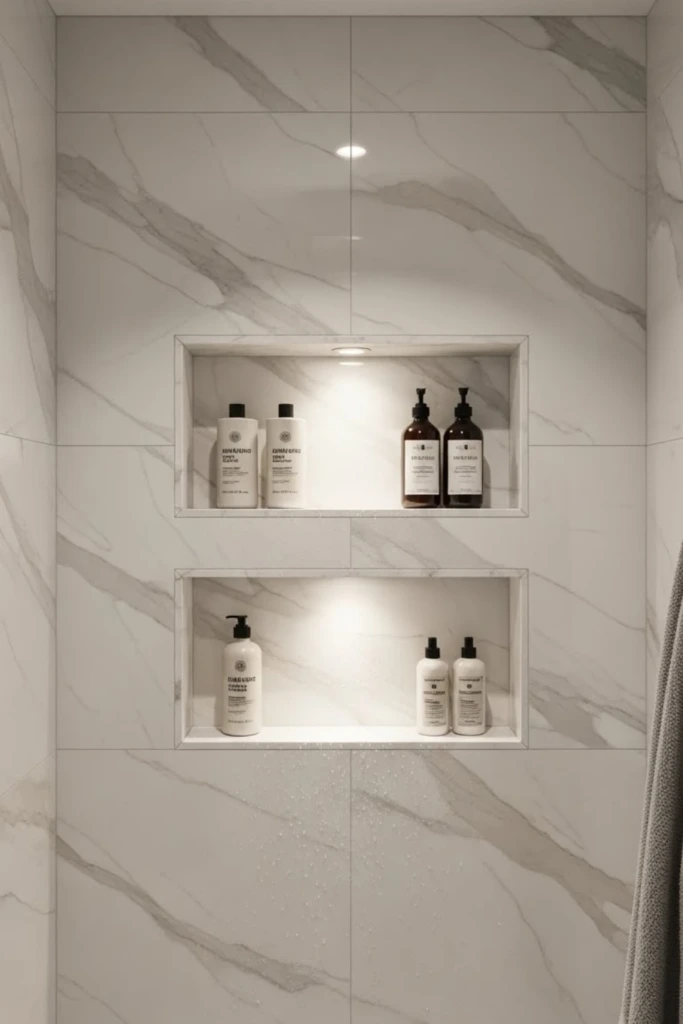
A recessed shower niche creates storage within the wall rather than projecting into the bathing area. Because the products sit inside the wall, the arrangement can feel streamlined and leave more room for movement.
If you're planning a bathroom renovation, consider dividing a wide niche into separate sections for haircare and body-care products. Size each section according to the containers you intend to store. Proper waterproofing, appropriate sloping for drainage, and suitable installation are essential for a durable result. If your shower already has a niche, keep the number of displayed products limited so the recess remains functional and easy to clean.
16. Magnetic Razor Spot
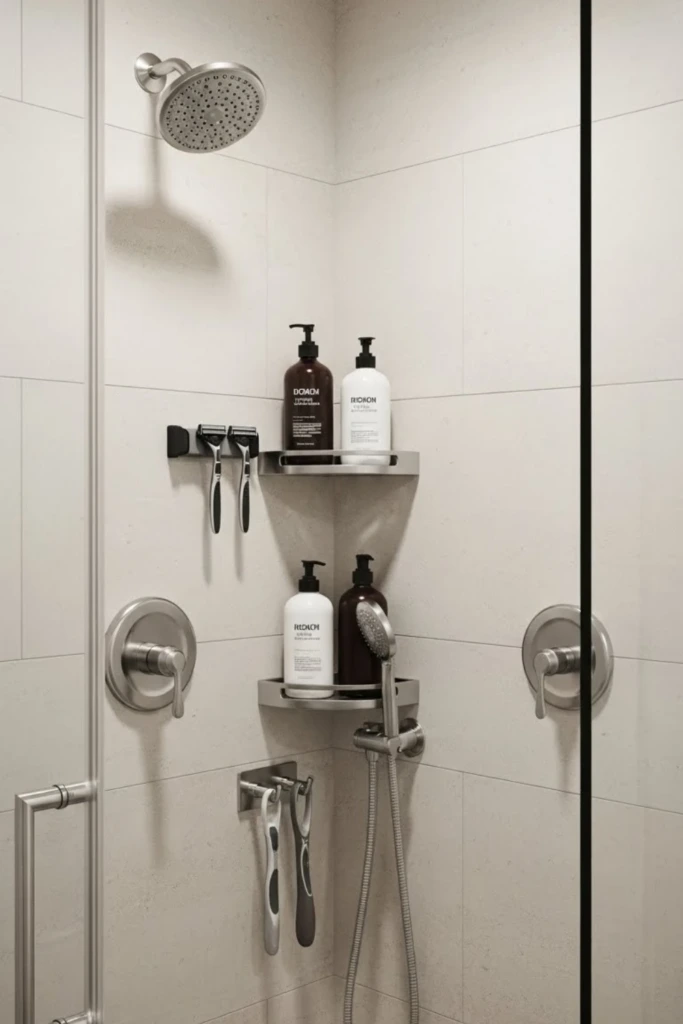
A dedicated razor holder helps prevent grooming tools from being left on shelves or balanced on narrow ledges. A magnetic holder can provide a compact storage point when the razor or its handle is compatible with the system.
Choose a holder designed for bathroom conditions and install it according to its instructions. Keep the razor secured in a position where it cannot fall or be accidentally brushed against. If the razor has exposed blades, use a purpose-built holder that protects against accidental contact, and keep it out of children's reach. Clean and dry the storage area regularly to prevent residue from building up.
17. Over-Bar Hooks
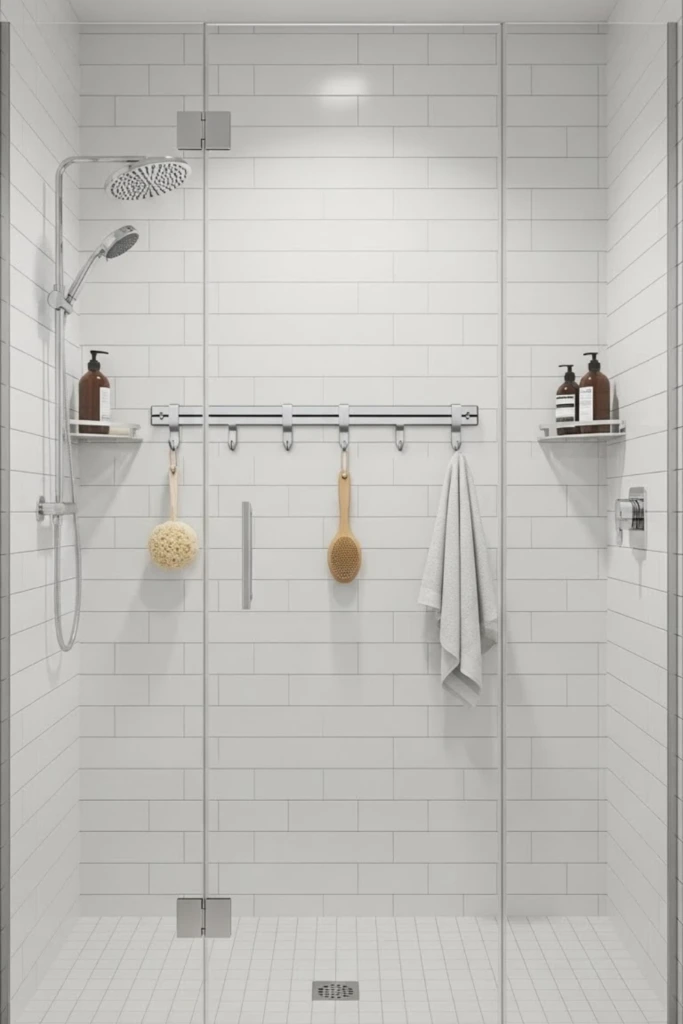
Hooks attached to a suitable shower rail can free up shelf space for bottles and containers. They're particularly useful for lightweight items such as washcloths, loofahs, and shower accessories that need somewhere to hang between uses.
Select hooks that fit the rail securely and won't slide around during normal use. Space them apart so wet items don't remain pressed together, and avoid hanging anything that could interfere with the shower curtain or door. Allow washcloths and bath accessories to dry between uses, and clean the hooks periodically to remove soap buildup.
18. Family Split Shelves
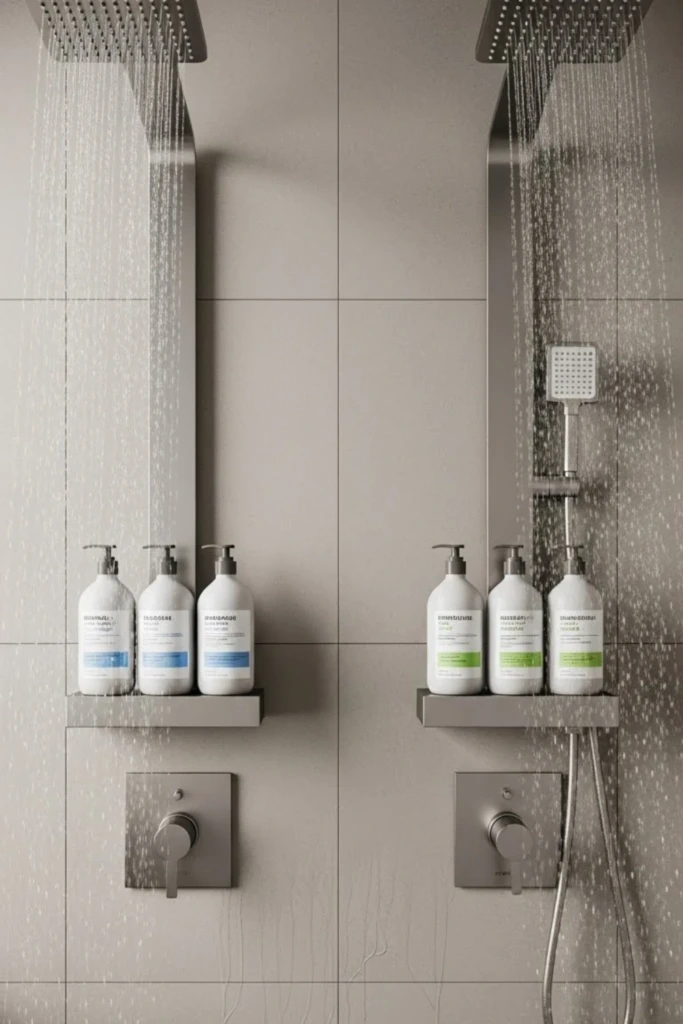
Shared showers are easier to manage when each person has a clearly defined storage area. Separate shelves or labeled baskets reduce confusion and help family members return their belongings to the correct place.
Give each user enough space for their regular products without allowing the shelves to become overloaded. Labels can be especially helpful for children or anyone who uses specialized haircare and skincare items. Keep common essentials in a separate, easily accessible area if needed. This system works best when everyone follows the same simple habit of returning products after use.
19. Refill Bottle Row
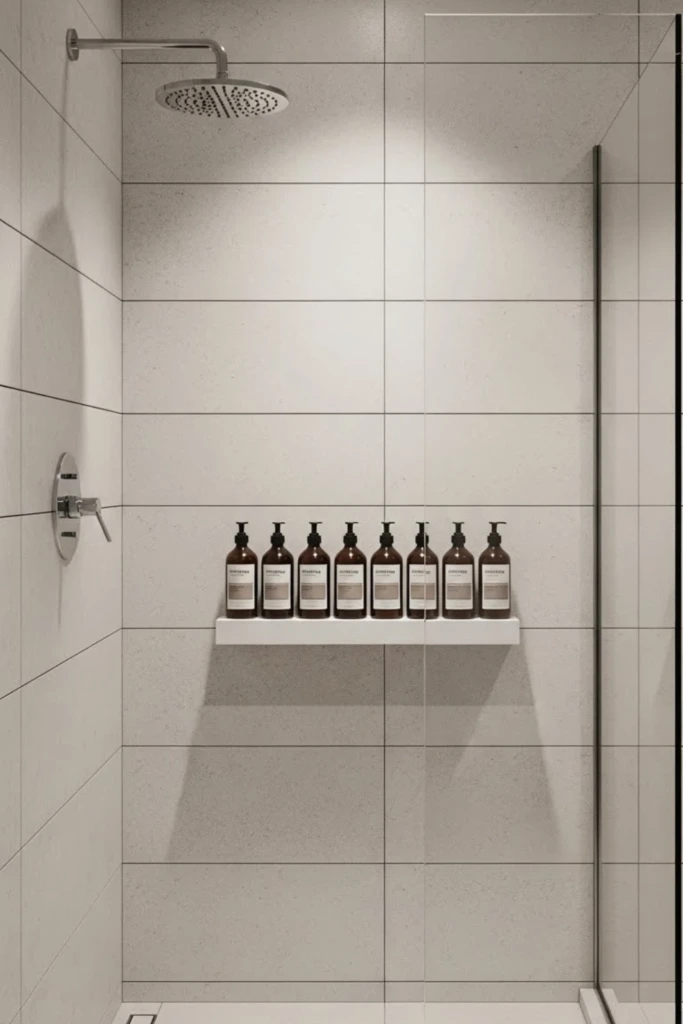
Refillable bottles can create a more consistent appearance than a collection of mismatched commercial containers. Arranging them in a row also makes it easier to see which products belong together and which supplies need replenishing.
Choose durable, water-resistant dispensers that are easy to open and clean. Label every bottle clearly, including products that look similar, and avoid transferring items into containers that aren't suitable for them. Clean and dry the bottles before refilling, and follow the product manufacturer's storage guidance. Keep only the dispensers you need in the shower, with spare supplies stored elsewhere.
20. Fold-Down Seat Shelf
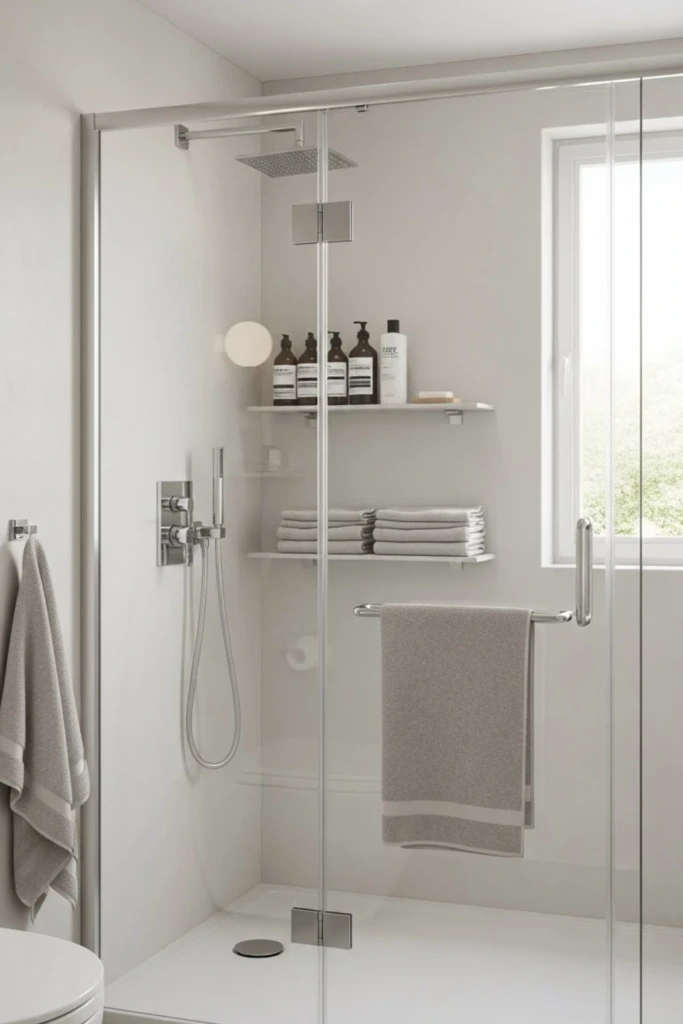
A fold-down shower seat can provide a useful surface in bathrooms designed for seated bathing or accessibility. Some models also offer a limited place for a small number of bathing essentials, depending on their design and the manufacturer's instructions.
If you use the seat for storage, keep it clear enough to serve its primary purpose safely. Never place bottles where they could slide underfoot or interfere with sitting down. Follow the manufacturer's weight limits, and don't assume that a seat can support extra storage loads beyond its intended use. After showering, allow the seat and surrounding area to dry as recommended to reduce moisture buildup.
21. Outside-Shower Storage
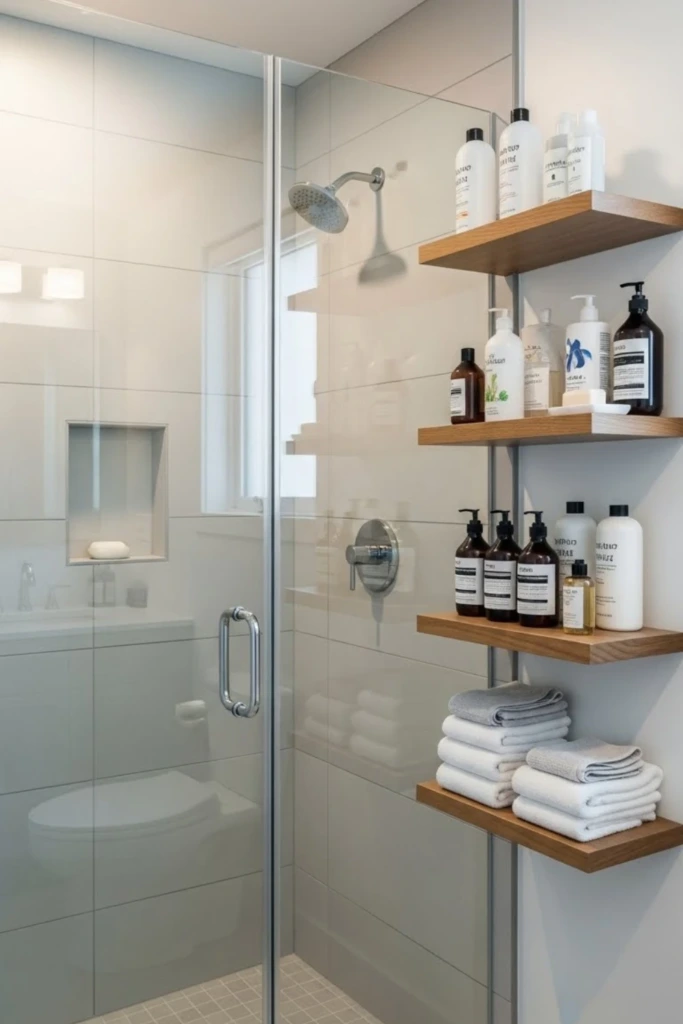
The simplest way to reduce shower clutter may be to move some items beyond the bathing area. Extra shampoo, backup body wash, spare razors, and occasional-use treatments rarely need to remain beside the running water.
Use a nearby bathroom cabinet, vanity drawer, or narrow wall shelf to store these supplies. Group similar products together and keep backups easy to identify. Store moisture-sensitive items in a suitable dry location, and ensure anything placed outside the enclosure doesn't obstruct the bathroom walkway. With fewer items exposed to water, the shower becomes easier to clean and the essentials are easier to reach.
What is the best way to organize my shower?
The most effective method is to keep frequently used products accessible and remove anything that doesn't need to be in the shower. Begin by sorting your toiletries, discarding empty containers, and setting aside products you rarely use.
Next, choose storage that suits your layout. A hanging caddy may work well for renters, while wall-mounted baskets or a built-in niche can offer a more permanent solution. Use vertical space when possible, separate products into practical categories, and select organizers that drain well. Regularly returning items to their designated places will help prevent clutter from building up again.
Where to put products in the shower?
Place everyday essentials such as shampoo, conditioner, and body wash on a stable shelf or in a caddy within comfortable reach. Arrange products according to how often you use them, while keeping taller containers in spaces with enough clearance.
Smaller accessories can go in baskets or on hooks, depending on their shape and how they need to dry. Specialized treatments and occasional-use products can be stored on a separate level or outside the shower. Keep backup supplies elsewhere, avoid unstable bottle stacks, and make sure storage doesn't obstruct the controls, showerhead, entry, or available standing space.