21 Utensil Drawer Organization Ideas for 2026
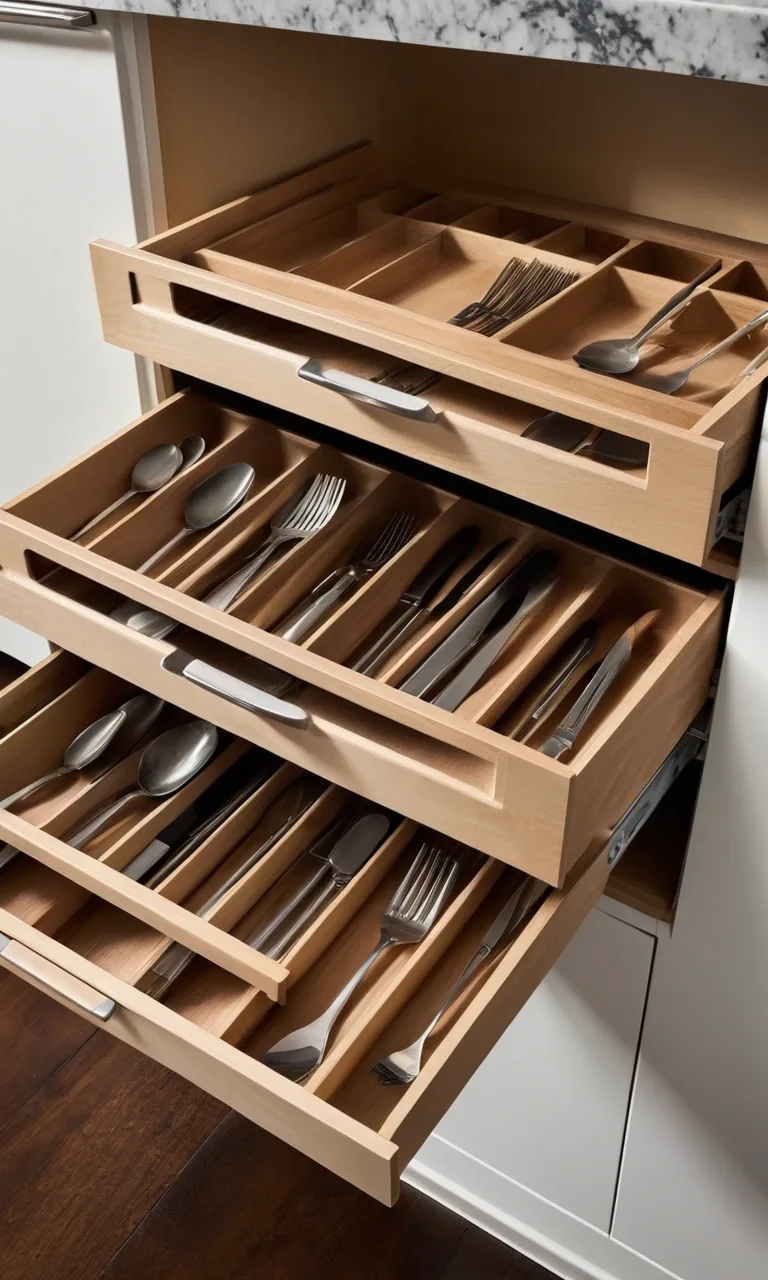
A cluttered utensil drawer can make even simple kitchen tasks more frustrating than they need to be. When measuring spoons get buried beneath spatulas and forks become mixed with cooking gadgets, finding the right tool takes longer than necessary.
The solution is to create a practical arrangement that suits your cooking habits, available space, and collection of kitchen tools. With the right combination of dividers, trays, and thoughtful placement, you can make your drawer easier to navigate and maintain.
These 21 utensil drawer organization ideas offer different ways to manage everyday cutlery, bulky cooking tools, specialty gadgets, and extra utensils without wasting valuable storage space.
How Do You Organize Your Drawers?
Begin by emptying the drawer completely so you can see exactly what you own and how much room you have. Remove broken tools, donate usable duplicates you no longer need, and relocate items that belong elsewhere.
Next, sort the remaining utensils into practical categories, such as eating utensils, cooking tools, measuring equipment, and serving pieces. Measure the drawer's width, depth, and height before purchasing organizers to avoid trays that waste space or prevent the drawer from closing.
Choose storage solutions that keep items separated without making them difficult to retrieve. Place frequently used utensils near the front and reserve less accessible areas for occasional tools. A simple system based on your everyday routine will generally be easier to maintain than an arrangement designed purely for appearance.
1. Tool-By-Tool Zones
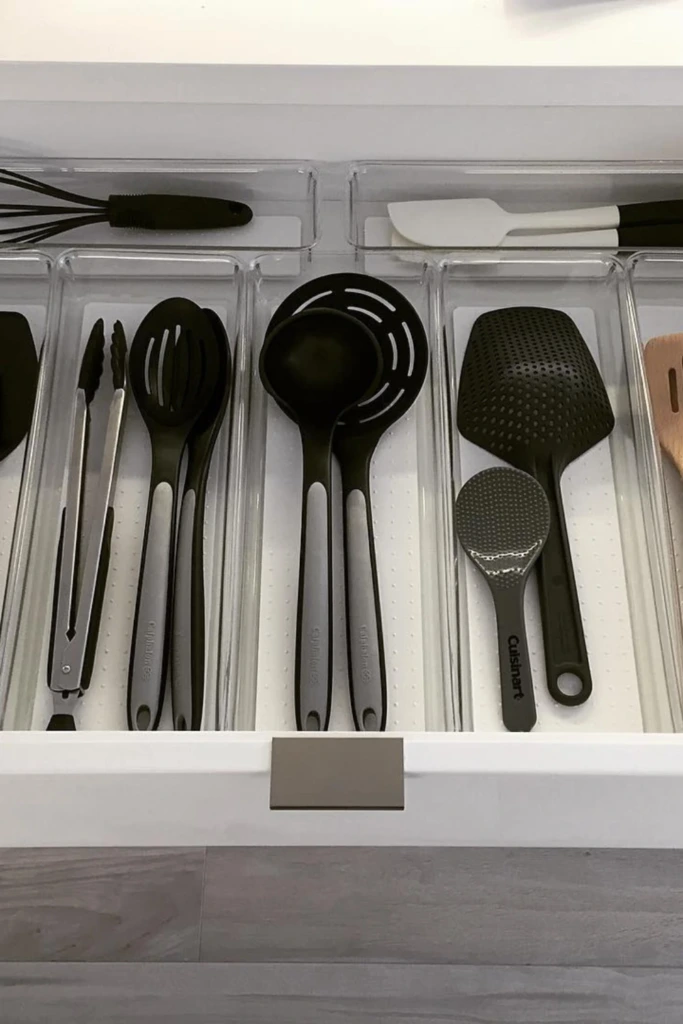
Give each type of utensil a designated compartment so you can locate items without searching through a mixed collection. This method works particularly well in standard kitchen drawers with enough room for several individual trays.
Use modular containers to separate spatulas, wooden spoons, whisks, tongs, and other frequently used tools. Select compartment sizes according to the shape and quantity of each item rather than filling the drawer with identical sections.
Transparent organizers make contents easy to identify, while a fitted drawer liner can help prevent containers from shifting whenever the drawer opens or closes.
2. Material-Based Sorting
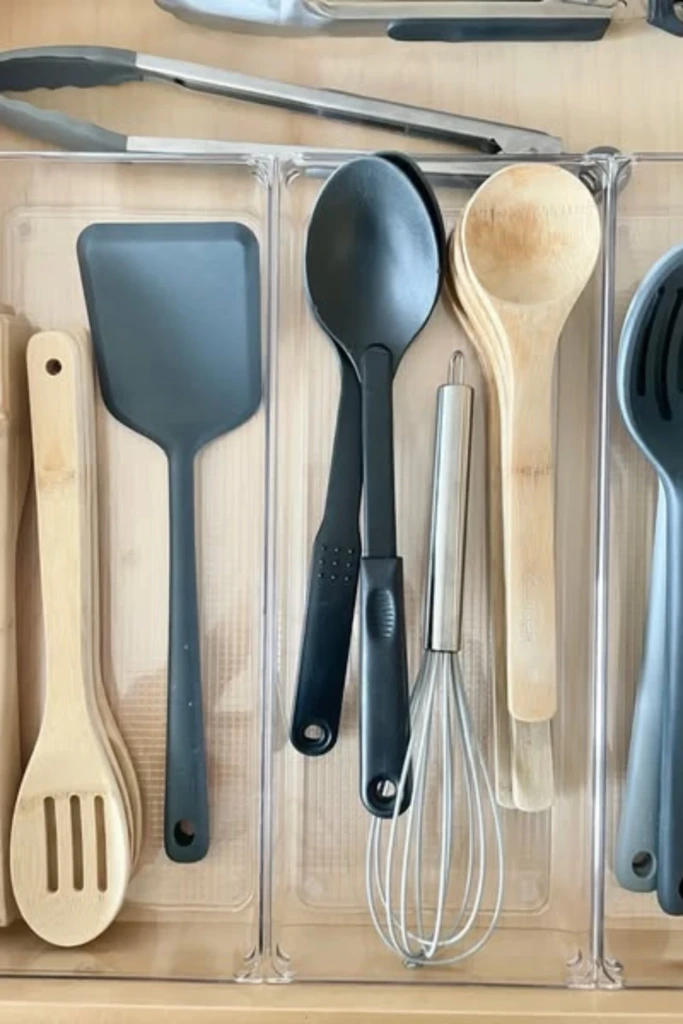
Organizing utensils according to their materials can create a consistent layout, especially when your collection includes wooden spoons, silicone spatulas, and stainless steel tools.
Place similar items together in separate compartments to reduce unnecessary contact and keep the drawer visually tidy. Wooden utensils can occupy one section, silicone tools another, and metal implements a third.
Choose trays with smooth surfaces that are easy to clean, and make sure utensils are completely dry before storing them. This approach is useful for cooks who own many different tools and prefer a simple, coordinated arrangement.
3. Full-Drawer Zoning
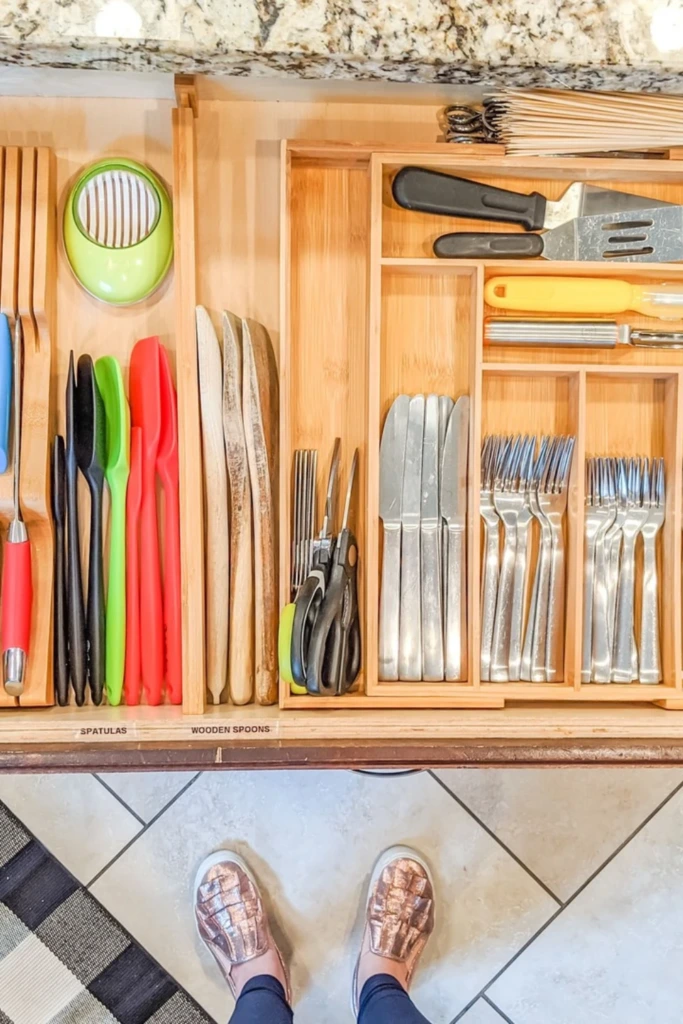
Instead of adding a few small organizers and leaving the remaining space unused, treat the entire drawer as one coordinated storage system.
Position longer trays along one side for cooking spoons and spatulas, then use smaller compartments for measuring spoons, peelers, and everyday cutlery. Fixed or interlocking dividers can establish clear boundaries between categories.
Wooden inserts are a good option if you prefer a natural finish, while plastic or acrylic organizers offer lightweight alternatives. Before installing multiple sections, make sure the layout leaves enough clearance for handles and allows the drawer to open smoothly.
4. Two-Level Storage
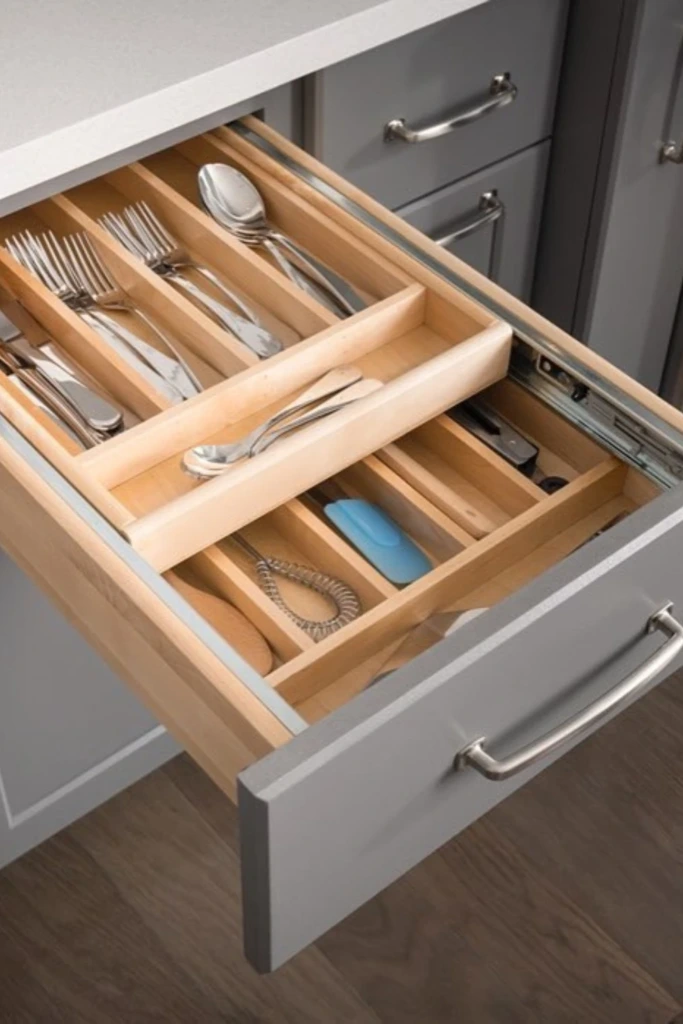
Deep drawers can accommodate more than one layer of utensils, making them useful for kitchens with limited cabinet space.
A sliding upper tray can hold frequently used forks, knives, spoons, and other small items. The space underneath can store less frequently needed gadgets or larger tools that would otherwise crowd the main compartment.
Choose a system that allows the upper level to move easily without catching on utensils below. Keep everyday items on the accessible tier and avoid overloading either layer, since excessive weight can make sliding trays awkward to operate.
5. Vertical Tool Rows
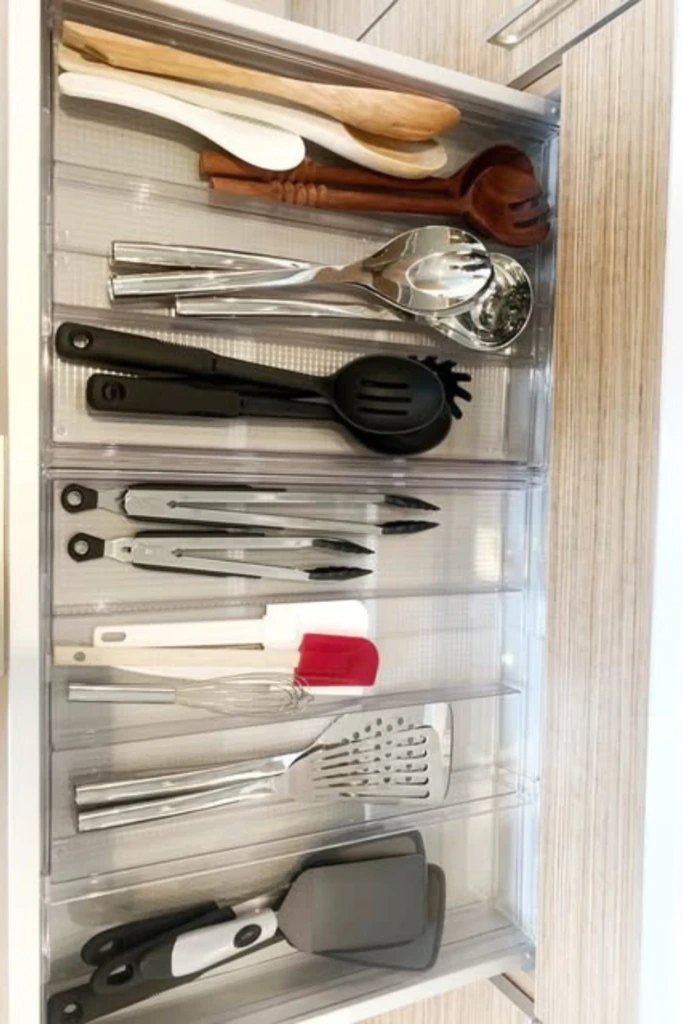
Long utensils can be difficult to arrange in shallow horizontal compartments because their handles overlap or extend into neighboring sections.
If your drawer is deep enough, position suitable tools lengthwise in narrow channels, grouping similar items together. For example, keep cooking spoons in one row and spatulas in another, with enough clearance to lift each utensil out comfortably.
Non-slip inserts help keep the compartments in place, while transparent containers make it easier to identify individual tools. Check the drawer's internal dimensions before adopting this layout, particularly if the handles are unusually long.
6. Length-Based Sections
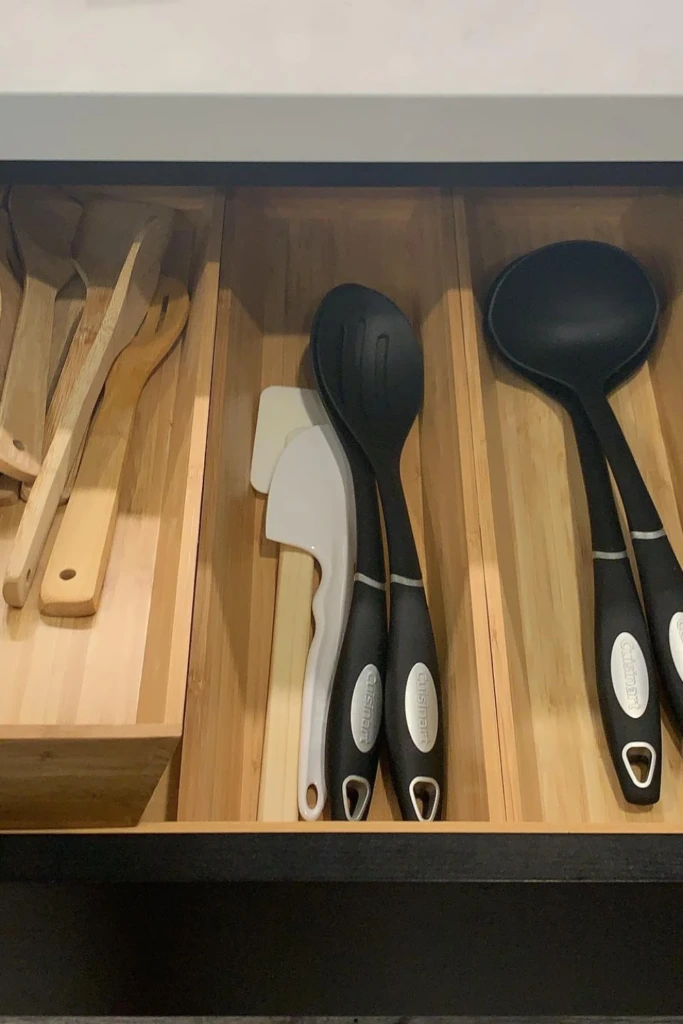
When utensils vary considerably in length, organizing them by size can make better use of the available drawer space.
Reserve longer channels for ladles, serving spoons, and spatulas, then use compact compartments for short tools such as peelers, measuring spoons, and small tongs. Position the longest items along the back or sides when doing so prevents them from obstructing other sections.
Wooden organizers can provide sturdy compartments, although adjustable plastic dividers may work better in drawers with unusual dimensions. Leave enough room to lift out each utensil without moving everything around it.
7. Gadget-Specific Lanes
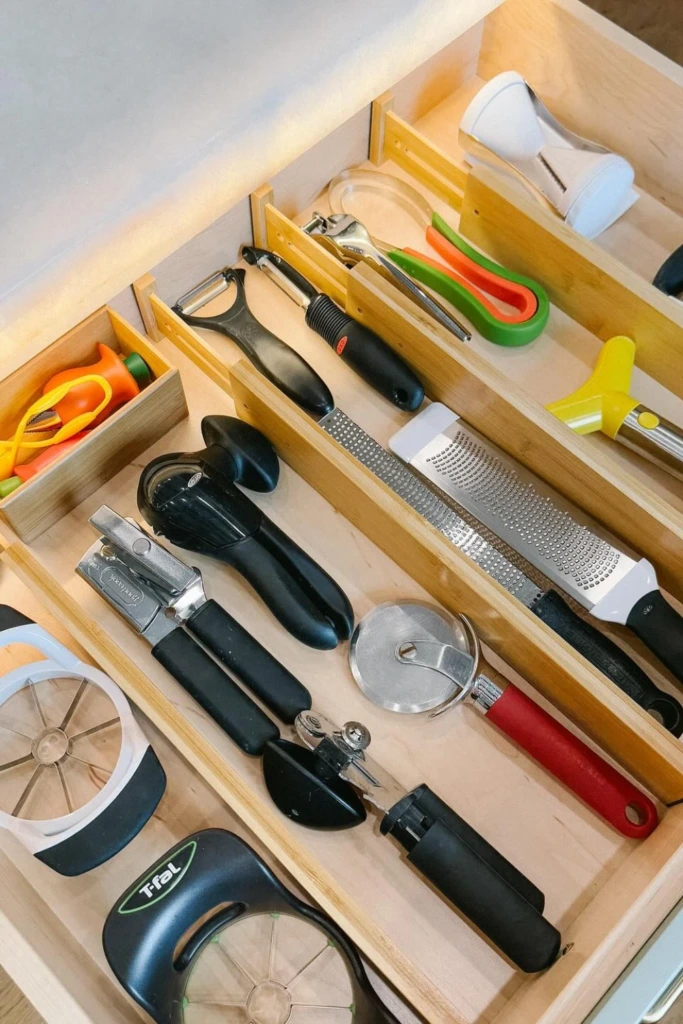
Kitchen gadgets often create clutter because their shapes differ from ordinary cutlery. Garlic presses, peelers, zesters, small graters, and other preparation tools can become difficult to locate when stored together without a plan.
Create dedicated sections for related gadgets using narrow compartments or adjustable dividers. Keep small items together when they serve a similar purpose, but separate sharp blades and pointed accessories from tools you handle frequently.
Wider spaces can accommodate bulky gadgets, while smaller sections prevent compact accessories from disappearing beneath larger objects. This arrangement is especially helpful for people who prepare meals regularly and rely on several specialized tools.
8. Flatware First Layout
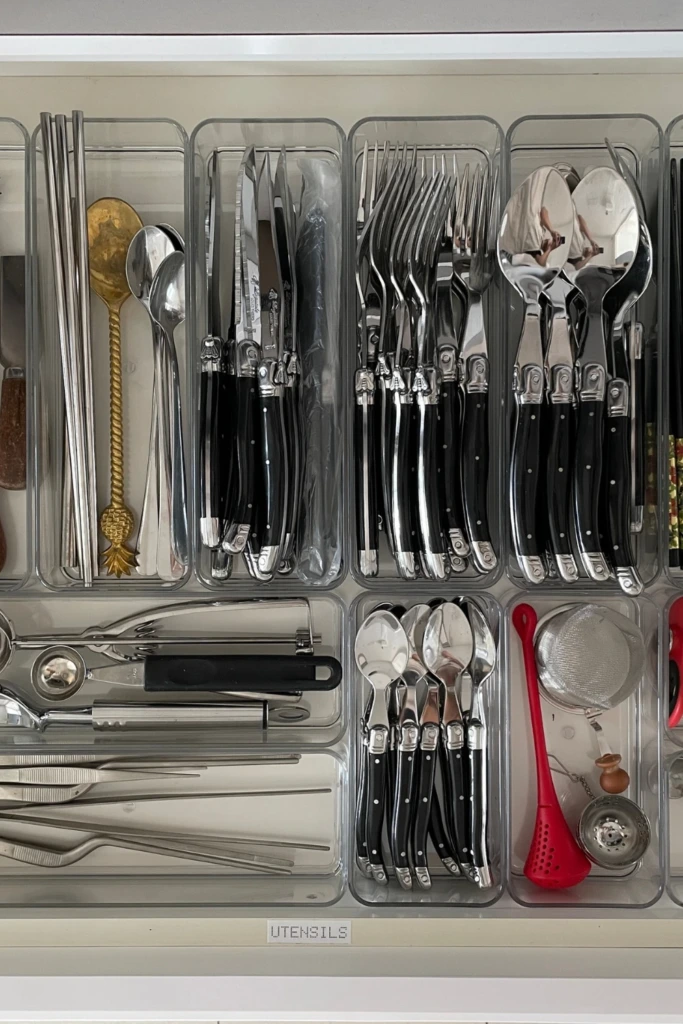
If your drawer serves as the main storage area for eating utensils, give forks, spoons, and knives the most accessible positions.
Use a cutlery tray with separate compartments for each type of utensil. Arrange matching pieces in consistent directions so you can quickly check quantities and return clean items to the correct section after unloading the dishwasher.
Reserve nearby compartments for teaspoons, serving utensils, or other frequently needed extras. Keep sharp knives in a suitable protective insert rather than placing them loosely among forks and spoons.
9. Neutral Tool Grouping
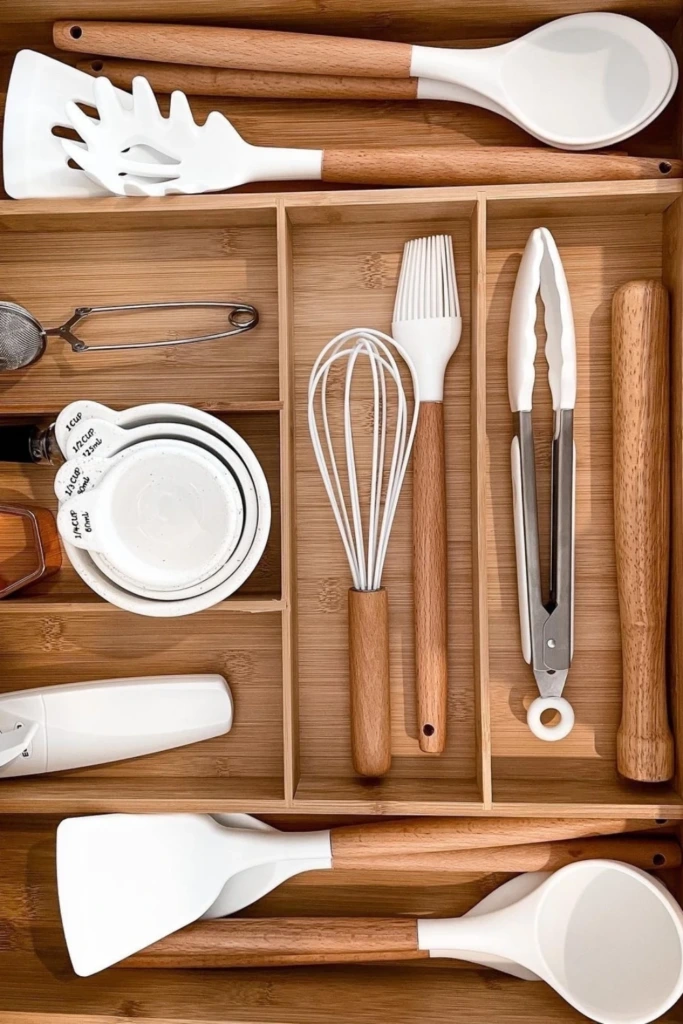
A coordinated collection of organizers can make a utensil drawer look calmer without sacrificing functionality.
Choose containers in complementary shades or materials, such as natural bamboo, white plastic, or clear acrylic. Group utensils according to their purpose while keeping the overall appearance consistent.
Longer tools can occupy perimeter compartments, leaving the central area for smaller items that need frequent access. Avoid overcrowding the sections, since a little open space makes it easier to retrieve utensils and return them to their places.
This option suits kitchens where simple finishes and uncluttered storage are priorities.
10. Mixed-Use Separation
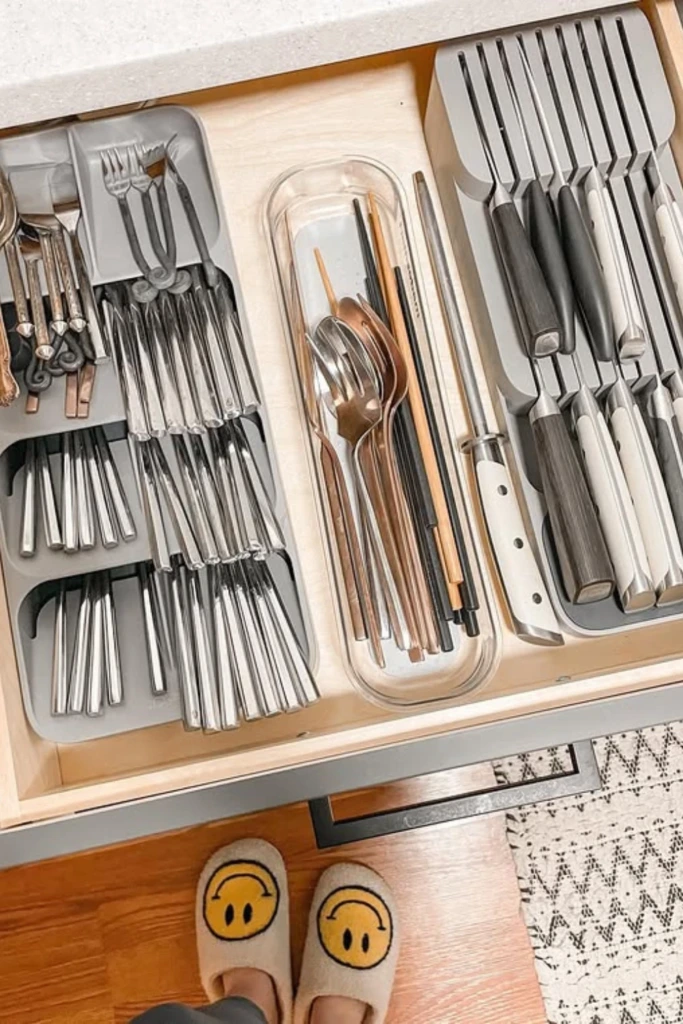
In many households, eating utensils and cooking tools end up sharing the same drawer. Without clear divisions, a serving spoon can become tangled with teaspoons, and bulky spatulas may cover smaller cutlery.
Separate the drawer into functional areas. Keep everyday forks, knives, and spoons together in a fitted tray, then use a longer compartment for chopsticks, serving pieces, or selected cooking utensils.
If space is limited, prioritize the items used most often and relocate oversized tools to another suitable drawer. Clear boundaries make the arrangement easier for everyone in the household to follow.
11. Modular Grid Control
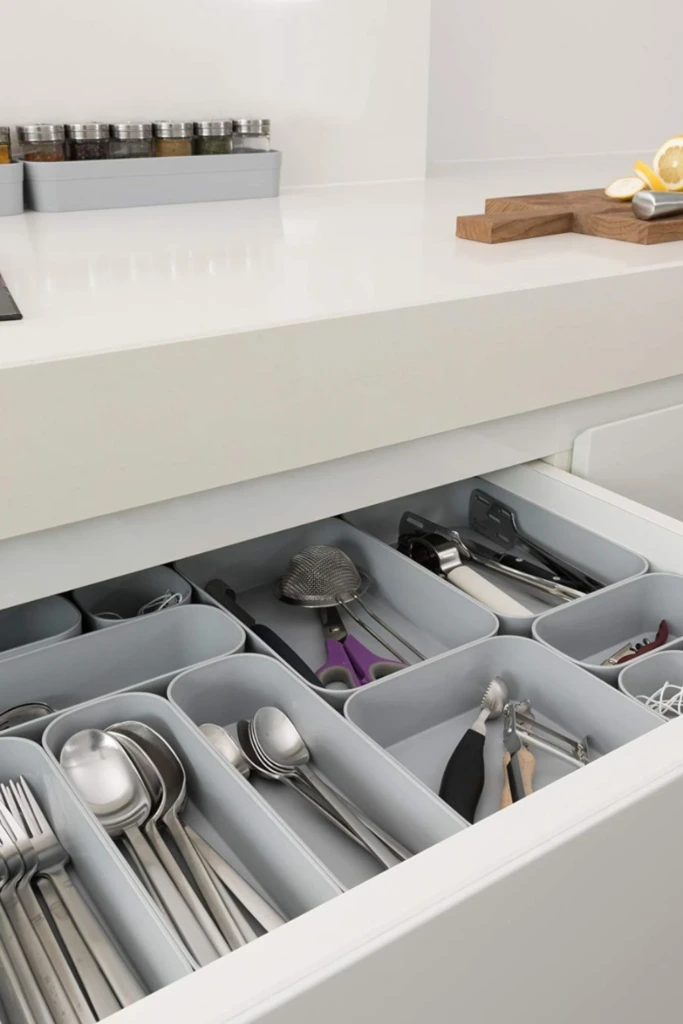
A modular grid is useful when your utensil collection includes a mixture of large implements and small accessories.
Arrange individual bins in a compact pattern, using larger compartments for spatulas and cooking spoons and smaller ones for measuring tools, peelers, and other gadgets. Containers with straight sides generally make it easier to use the available space efficiently.
The main advantage of modular storage is flexibility. You can rearrange the sections as your collection changes without replacing the entire organizer.
Before filling the drawer, test the configuration to ensure the containers fit snugly and leave enough clearance for the drawer to close properly.
12. Vertical Pull-Out Storage
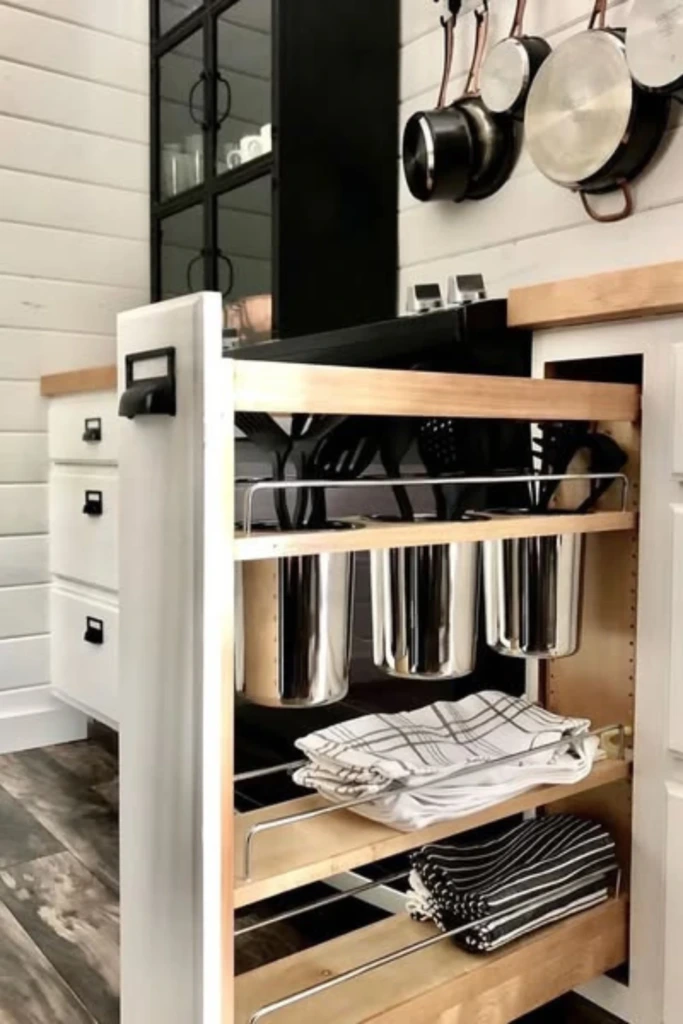
When a kitchen has a narrow base cabinet or limited conventional drawer space, a pull-out storage unit may offer another way to organize utensils.
A cabinet-mounted frame can hold containers or suitable racks that keep selected tools upright and separated. This arrangement can be especially useful for long cooking utensils that do not fit comfortably in a standard cutlery tray.
Position heavier items according to the manufacturer's loading guidance and secure the unit correctly before use. Keep frequently used tools within easy reach, and avoid placing sharp implements where their edges could cause accidental injuries.
Although this solution requires more installation than a simple drawer organizer, it can make otherwise awkward cabinet space more practical.
13. Entertaining-Ready Storage
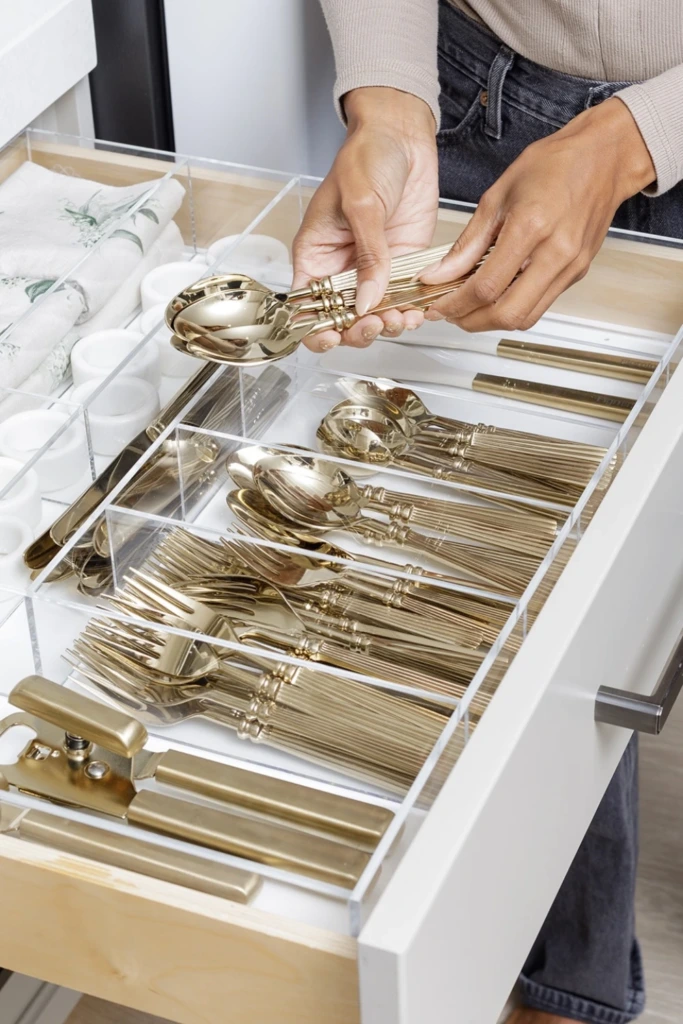
Special-occasion flatware deserves a dedicated arrangement if you use it for holidays, formal dinners, or family gatherings.
Store matching serving sets and decorative cutlery in individual compartments that prevent pieces from rubbing against one another. Soft, suitable liners can help reduce movement and protect delicate finishes.
If you own several sets, label the compartments or group each collection together so the correct pieces are easy to find when setting the table.
Make sure stored utensils are clean and dry before putting them away. This arrangement keeps occasional-use pieces separate from everyday cutlery and reduces unnecessary handling between events.
14. Built-In Dividers
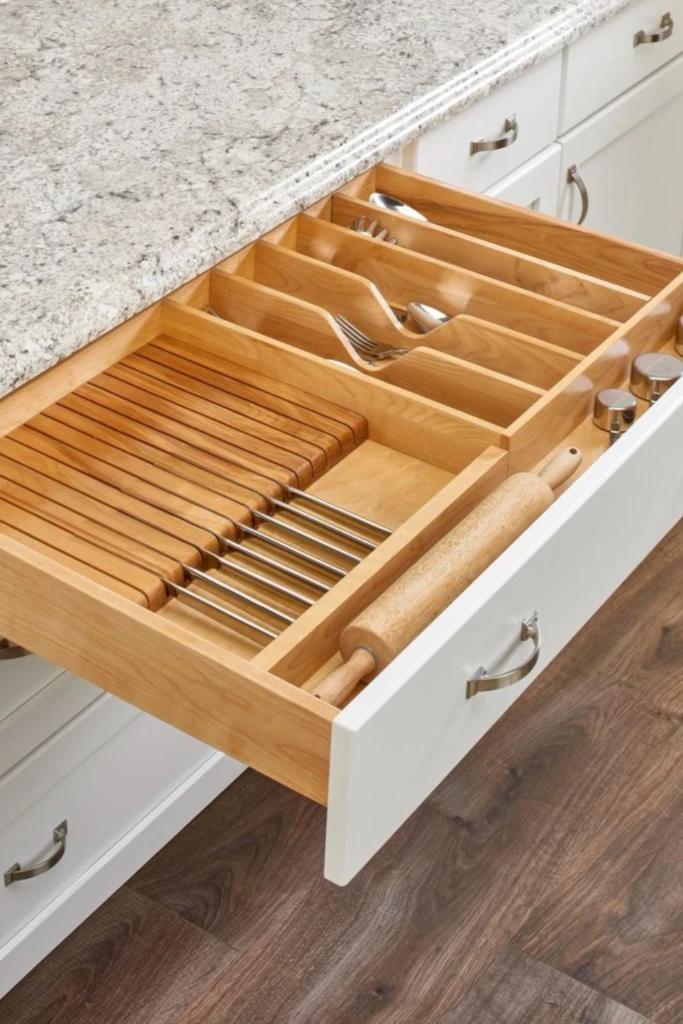
Built-in drawer dividers provide a more permanent alternative to loose trays. They can be particularly useful when a drawer has unusual dimensions or needs to accommodate a consistent collection of cooking tools.
Fixed wooden partitions can create custom spaces for cutlery, serving utensils, rolling tools, and other kitchen essentials. Properly fitted dividers help prevent items from drifting between categories during everyday use.
Measure carefully before installing permanent inserts, and account for the drawer's hardware and internal clearance. If your storage needs are likely to change, adjustable dividers may offer more flexibility than a fixed design.
Choose a finish that is easy to wipe clean and suitable for the kitchen environment.
15. Upright Canister Storage
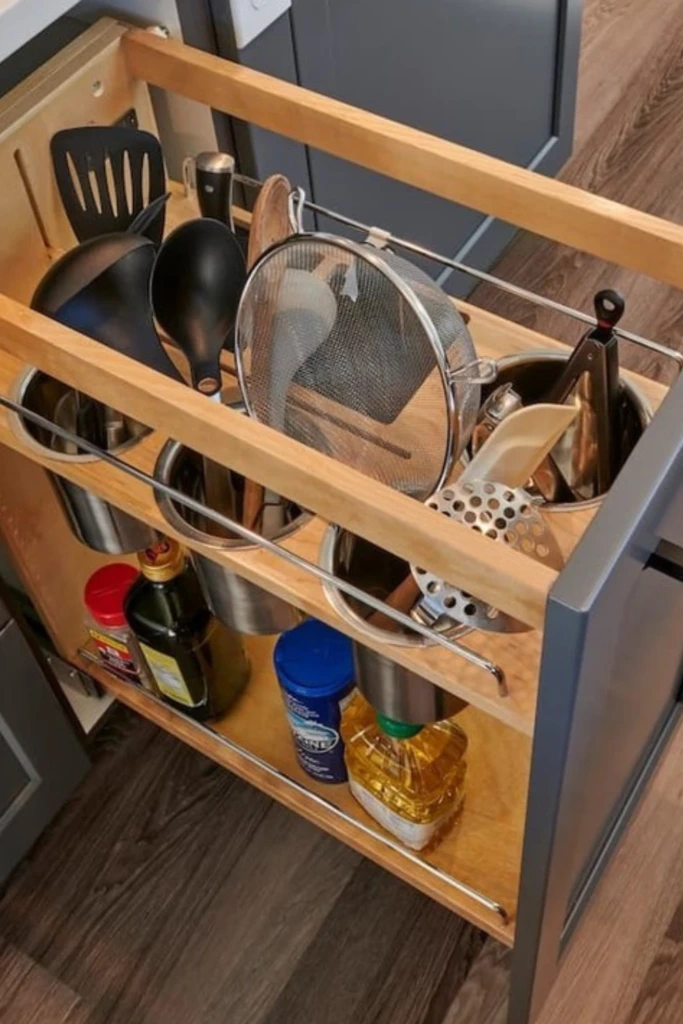
Some bulky utensils take up excessive room when laid flat. Where drawer height and cabinet design permit, upright containers can provide a practical alternative.
Use sturdy canisters or purpose-built holders to group suitable spatulas, ladles, whisks, and similar tools by function. Place the containers in a deep pull-out drawer or another stable storage area where they can be reached easily.
Choose holders with enough space to prevent handles from becoming tangled, and make sure the base is stable enough to support the contents. Store heavy tools securely and keep sharp or delicate implements in appropriate protective holders.
This approach works best when the storage area has enough vertical clearance for the tools to stand without catching on surrounding surfaces.
16. Daily-Use Front Row
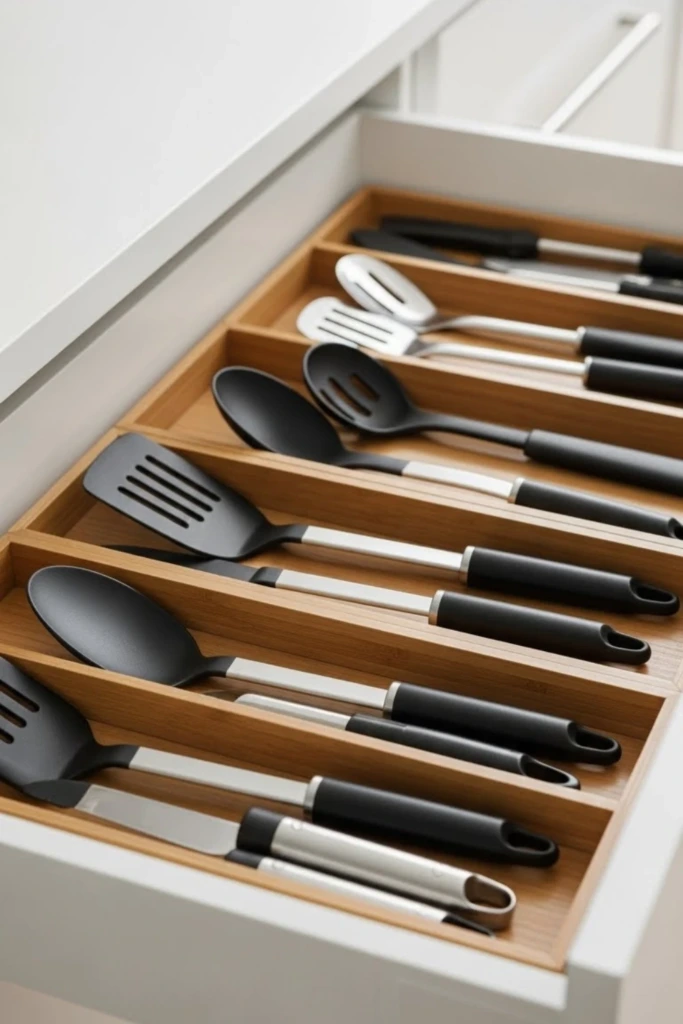
A drawer becomes more efficient when the utensils you reach for most often are positioned where your hand naturally goes.
Place frequently used cooking spoons, spatulas, measuring spoons, or everyday cutlery toward the front. Move specialty gadgets and backup utensils to the rear or to less accessible compartments.
Use shallow organizers near the front so small items remain visible and easy to retrieve. Keep the arrangement consistent with your cooking routine; for example, baking tools may deserve a prominent position if you prepare baked goods regularly.
This simple adjustment reduces unnecessary searching and makes everyday kitchen tasks more convenient.
17. Deep Drawer Decluttering
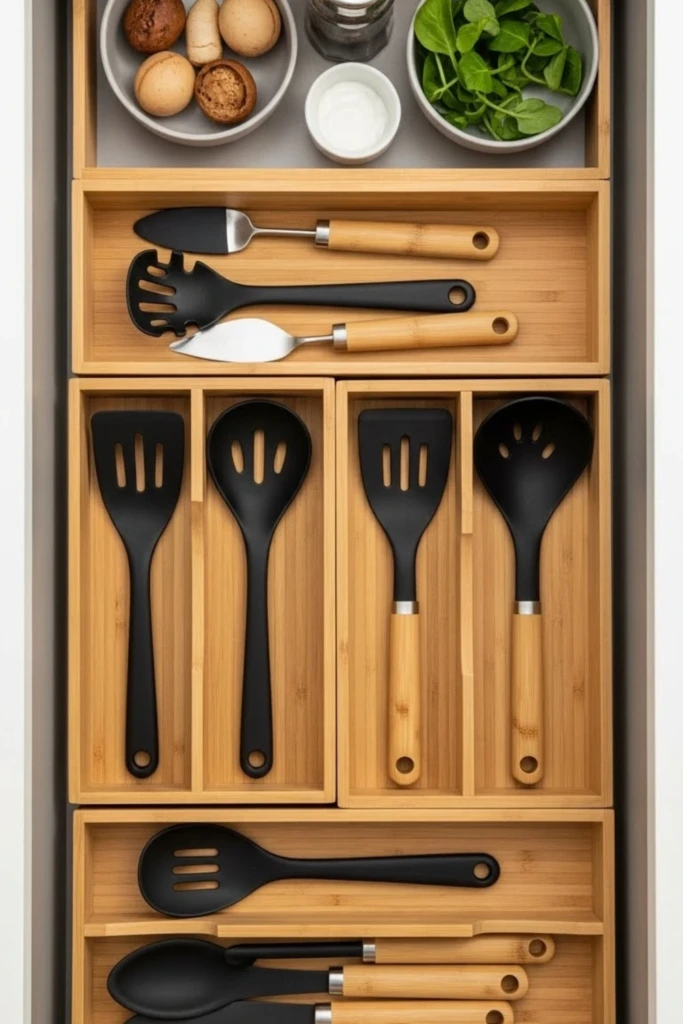
A deep drawer can hold a surprising number of utensils, but extra space often encourages people to keep more items than they actually need.
Start by removing everything and checking each utensil for condition, usefulness, and duplication. Keep the tools you use regularly, retain occasional items that genuinely serve a purpose, and move rarely needed equipment to suitable alternative storage.
Once unnecessary items are removed, divide the remaining space into practical sections. Larger compartments can then hold tools comfortably without forcing handles together or covering smaller accessories.
Decluttering before buying organizers also helps prevent wasted spending on containers you may not need.
18. Adjustable Divider Flex
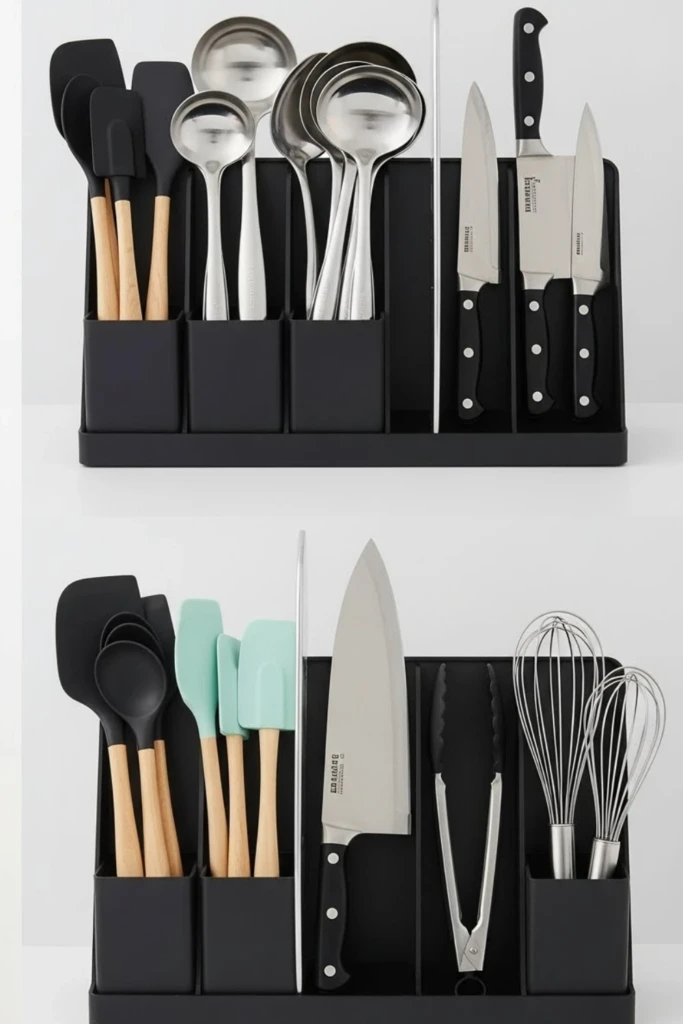
Not every drawer matches standard organizer dimensions, and utensil collections can change over time. Adjustable dividers make it easier to accommodate these differences.
Expandable trays, movable partitions, and tension-fit dividers can create sections of varying widths. Use them to separate cooking tools from cutlery or to provide extra room for a newly acquired utensil.
This flexibility is especially valuable in rental homes, older kitchens, and households that are gradually changing their storage systems.
Check that each divider fits securely and does not interfere with drawer movement. If you frequently reorganize your kitchen, choose a system that can be adjusted without requiring tools or permanent modifications.
19. Non-Slip Base Layer
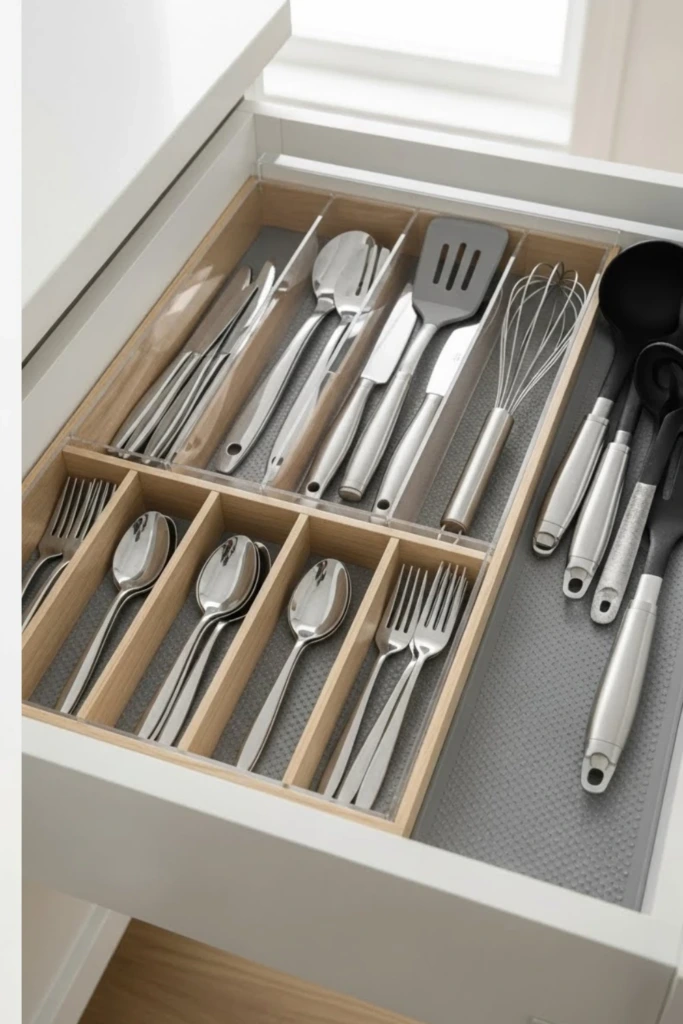
Even a carefully arranged drawer can become disorganized when containers slide every time you open or close it.
A non-slip drawer liner creates a more stable surface for trays and loose organizers. Measure the drawer's base, cut the liner to fit, and smooth it out before placing the containers on top.
Choose a liner that is suitable for the drawer's material and easy to remove for cleaning. Avoid thick or uneven materials that interfere with the drawer's movement.
Once the organizers stay in place, utensils are less likely to shift between compartments, and maintaining the layout becomes much simpler.
20. Backup Tool Zone
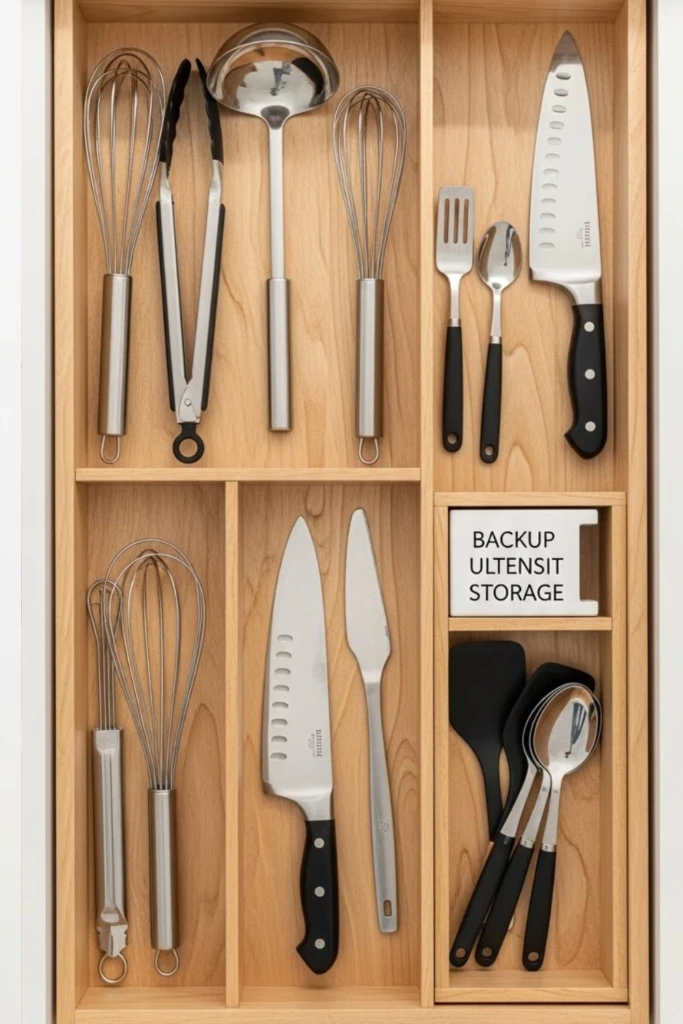
Extra utensils can quickly crowd the main drawer when duplicates are mixed with everyday tools.
Create a small section specifically for spare spoons, additional spatulas, replacement measuring tools, or occasional-use tongs. Keep the primary set separate so you can find what you need without sorting through duplicates.
If the drawer cannot accommodate a backup section without becoming crowded, store surplus items in another designated location. Consider how many extras your household realistically needs before deciding what to retain.
A clearly defined reserve area keeps frequently used utensils accessible while ensuring that useful spare tools remain available when required.
21. Category-Only Sections
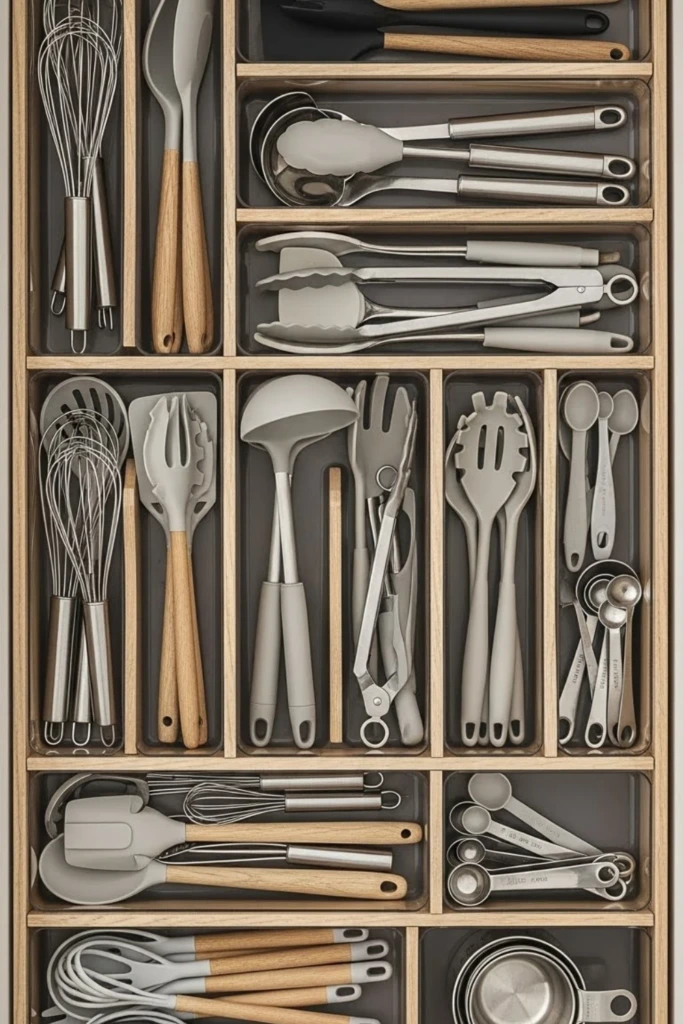
Assigning one purpose to each compartment is a straightforward way to prevent utensils from becoming mixed together.
For example, designate separate sections for stirring tools, measuring equipment, serving utensils, and everyday cutlery. Within each category, arrange pieces so their handles remain visible and each item can be removed independently.
Use dividers or labeled containers if multiple household members share the drawer and need reminders about where things belong.
The system does not have to be complicated. A few well-planned categories can be enough to keep a busy kitchen drawer orderly, provided each section has a clear purpose and the collection does not exceed the available space.
What is the order of utensils in a drawer?
Arrange utensils according to how frequently you use them and what they are designed to do. Place everyday cutlery and regularly used cooking tools in the easiest-to-reach compartments, with occasional-use items toward the back.
Keep similar utensils together, and use longer sections for spatulas, ladles, and serving spoons when needed. Separate sharp tools from ordinary cutlery, and store small accessories in compartments where they cannot disappear beneath larger implements.
The most effective order is the one that makes retrieving and putting away each utensil straightforward.
What is the correct arrangement of utensils?
There is no single arrangement that suits every kitchen, but a functional system should keep related items together and prevent unnecessary overlap.
Separate eating utensils from cooking tools where space allows, and group measuring equipment, serving pieces, and specialty gadgets into distinct sections. Make sure each compartment has enough room for its contents and that sharp implements are stored safely.
Place the items you use most often in accessible positions, and avoid keeping unnecessary duplicates in the main drawer. When every utensil has a logical home, the drawer becomes easier to use and maintain.