22 Nightstand Organization Ideas for 2026
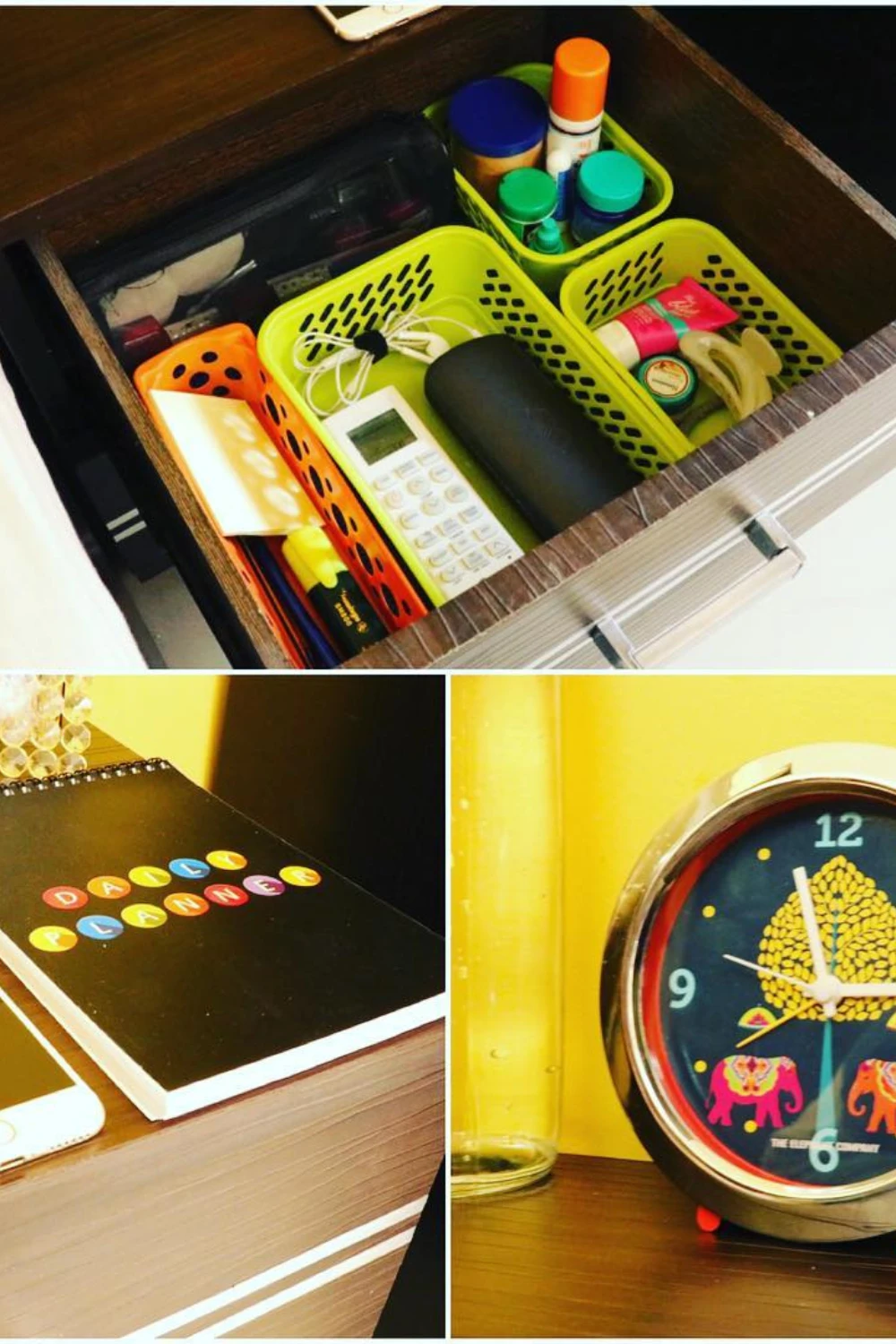
A cluttered nightstand can make even a peaceful bedroom feel disorganized. Between books, charging cables, glasses, skincare products, and everyday essentials, this little piece of furniture can quickly become a catch-all for things that don't have a proper home.
The easiest way to keep your bedside area tidy is to give every item a specific place. With a few practical storage solutions and a little editing, you can create a nightstand that looks inviting and supports your daily routine.
Whether you have a compact bedside table or a larger cabinet with multiple drawers, these nightstand organization ideas will help you make better use of your space without sacrificing comfort or style.
How to Arrange a Nightstand?
Start by emptying your nightstand and deciding which belongings genuinely belong beside your bed. Think about what you reach for before sleeping and immediately after waking up. Your most frequently used items should be easy to access, while occasional-use belongings can be stored elsewhere.
Keep the tabletop relatively clear, use drawers to conceal smaller necessities, and introduce organizers where they solve a specific problem. If you share a bedroom, consider dividing storage according to each person's needs.
The goal isn't to fill every available space. It's to create a convenient, uncluttered setup that remains easy to maintain.
1. Drawer Zoning
A drawer becomes much easier to manage when different belongings have designated sections. Instead of mixing charging accessories, personal care products, and miscellaneous items together, divide the space into practical zones.
Small containers or adjustable drawer dividers work well for separating these categories. Keep everyday necessities toward the front and less frequently used belongings toward the back.
This method is especially helpful if your nightstand has deep drawers that tend to collect clutter. Once everything has a home, putting things away takes only a few seconds.
2. Calm Surface
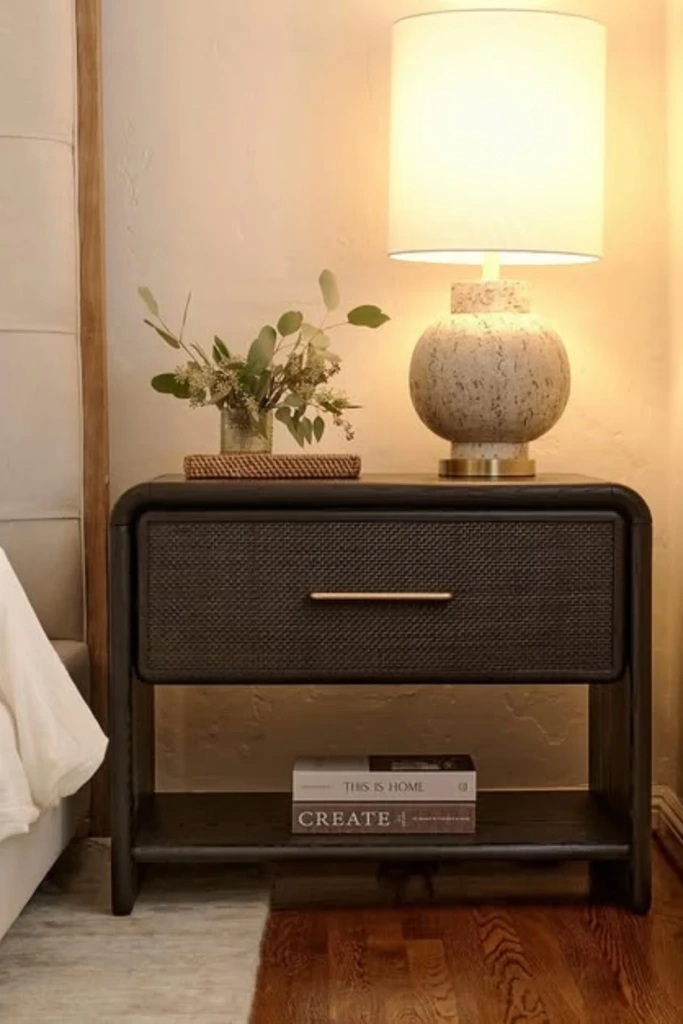
A simple tabletop can make the entire bedroom feel more restful. Rather than covering the surface with decorations and everyday belongings, choose a few useful or meaningful pieces.
A bedside lamp, a small decorative object, or a compact plant can provide enough visual interest without overwhelming the space. Store books, cables, and personal care products in drawers whenever possible.
Choose accessories that complement your bedroom's existing colors and materials. A restrained arrangement creates a polished look while leaving room for the things you actually need at bedtime.
3. Open Layers
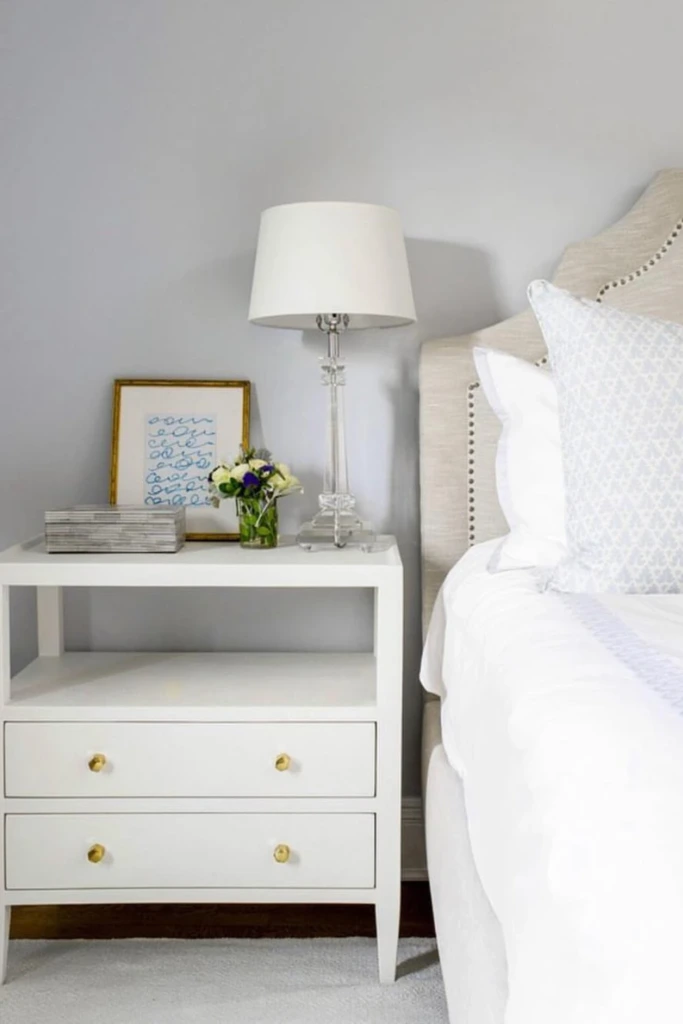
A nightstand with both drawers and open shelving offers several ways to organize everyday belongings. Use closed storage for small items that look messy when left out, and reserve open shelves for books, reading glasses, or an attractive storage basket.
Keep the top shelf or tabletop relatively uncluttered so the furniture doesn't feel visually heavy. Arrange books vertically or stack a few neatly, leaving enough room to remove them easily.
This combination works particularly well in smaller bedrooms because it makes use of the furniture's full height rather than relying entirely on the tabletop.
4. Balanced Storage
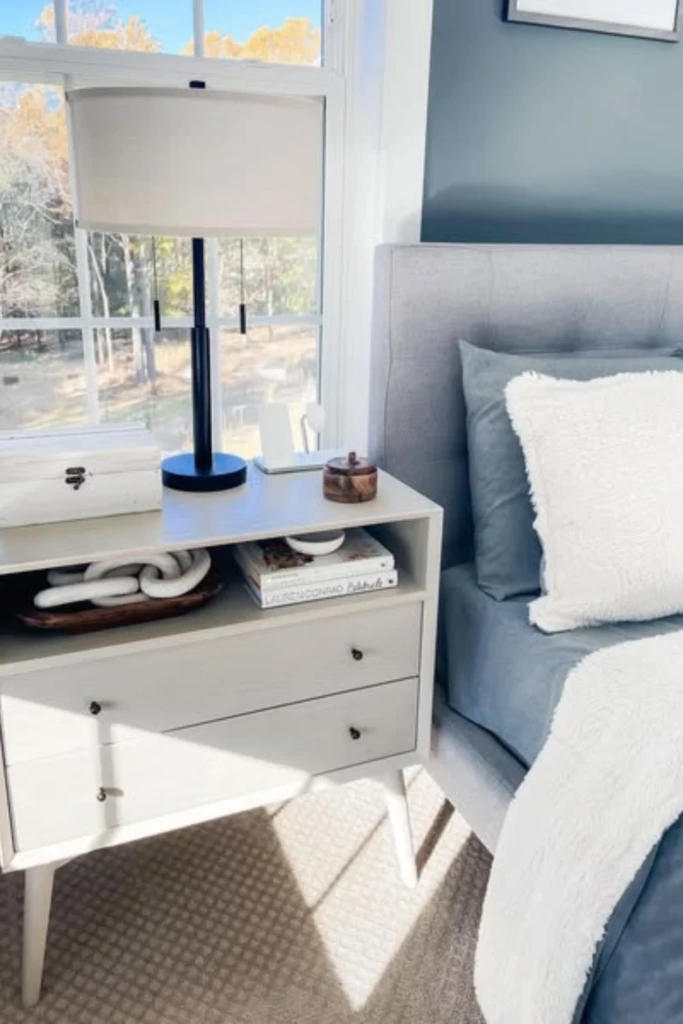
The best bedside storage combines convenient access with a tidy appearance. Drawers are useful for loose objects, while open shelves can display a small collection of books or hold a basket for frequently used accessories.
Avoid treating every shelf as a place to store miscellaneous belongings. Assign a clear purpose to each section and leave some empty space to prevent the arrangement from feeling crowded.
In a bright bedroom, natural daylight can make clutter especially noticeable. A balanced storage system helps the furniture look intentional throughout the day and makes nighttime essentials easier to find.
5. Vertical Substitute
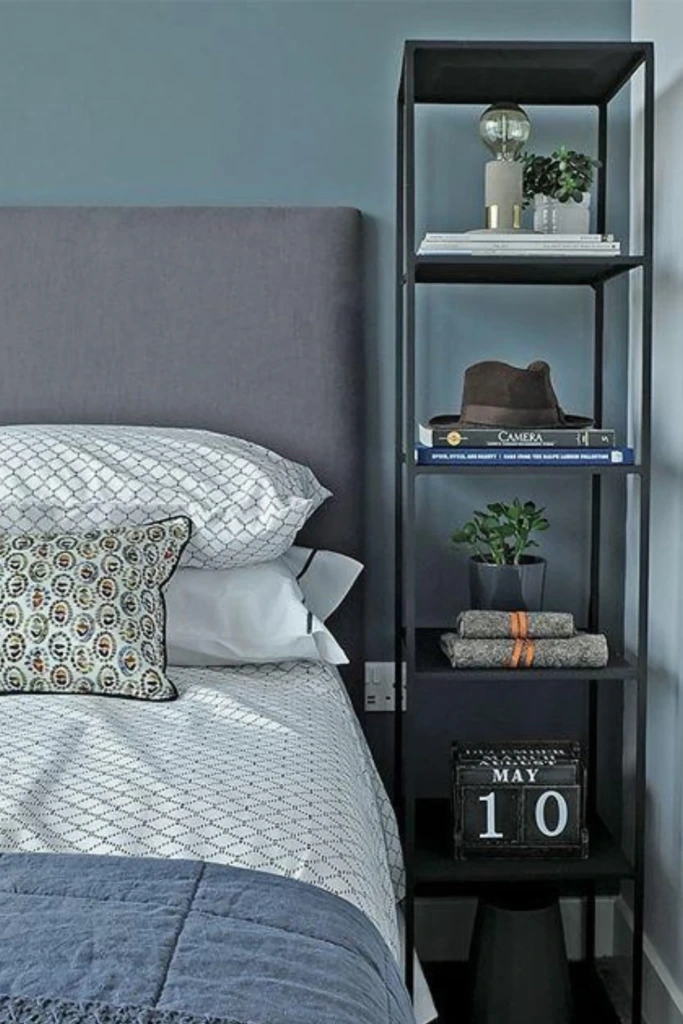
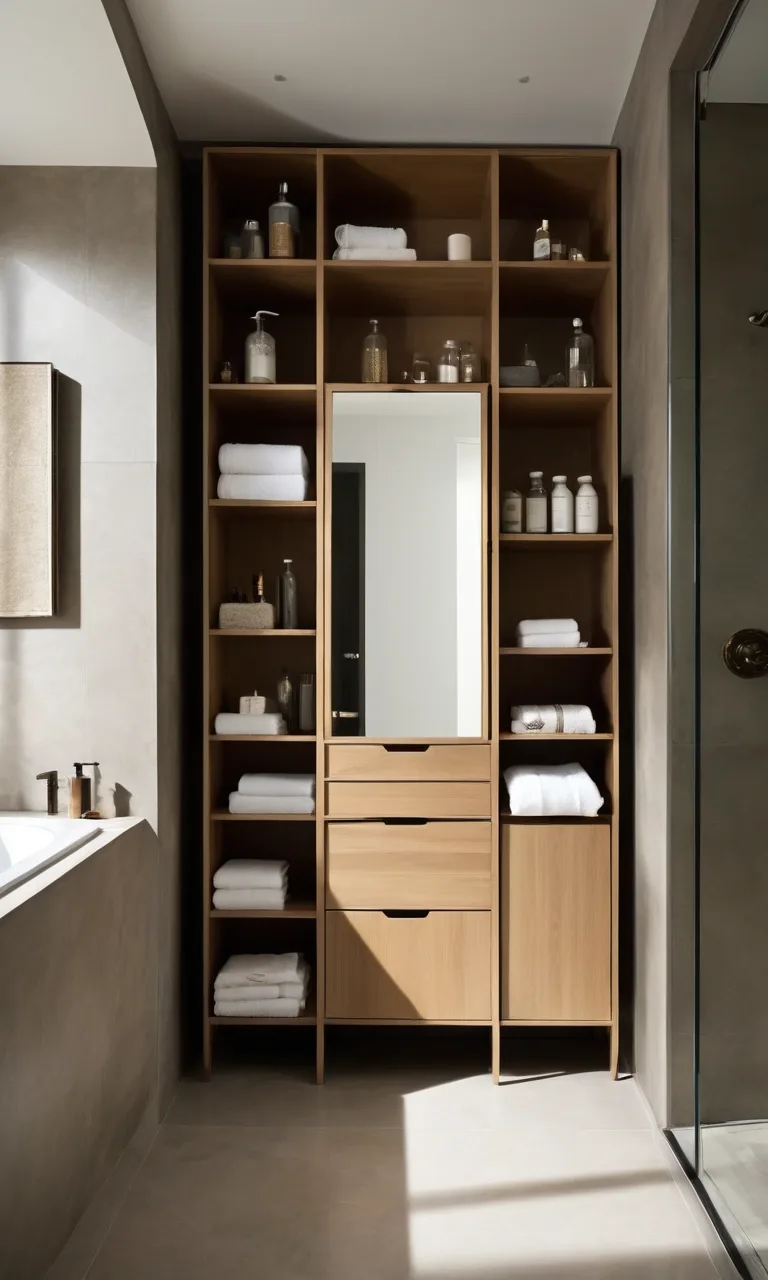
When there's little room beside your bed, a narrow shelving unit can serve as a practical alternative to a traditional nightstand. Its vertical design provides storage without taking up as much floor space as a wide cabinet.
Place bedtime necessities on a shelf that's easy to reach, such as your phone, reading glasses, or current book. Use higher shelves for decorative pieces and items you rarely need at night.
A wall-mounted reading light or adjustable clip lamp can free up additional surface area. Before choosing a unit, check its height and stability to ensure it works comfortably beside your mattress.
6. Micro Sections
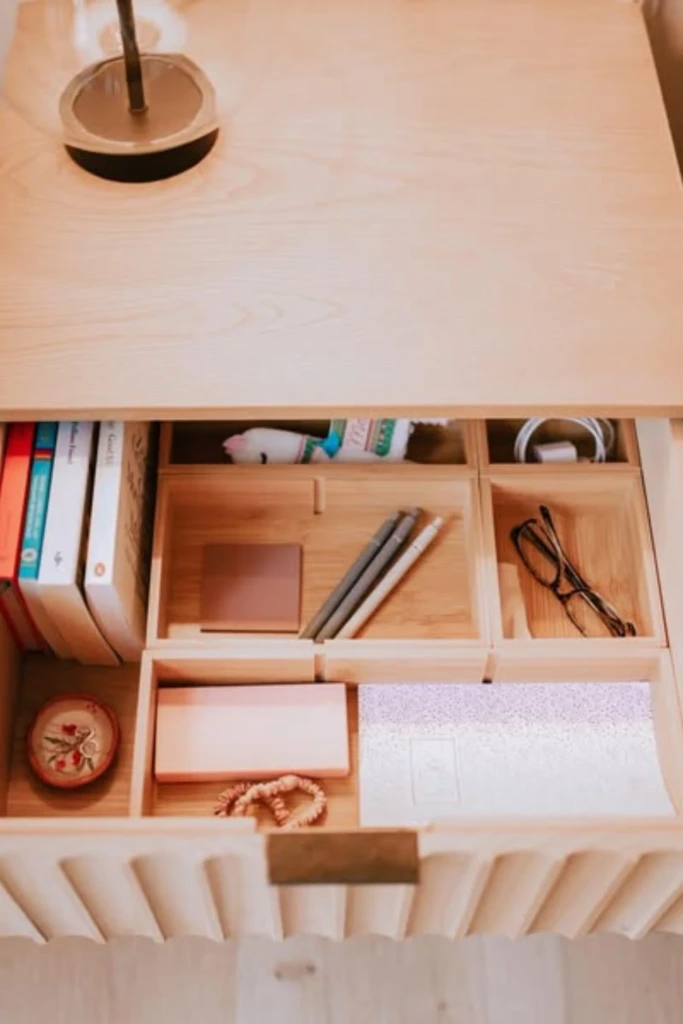
Small objects often create the most frustrating mess because they disappear beneath larger items. Compartment organizers solve this problem by giving each type of belonging its own designated space.
Choose a tray with sections for items such as hair ties, lip balm, earbuds, spare charging adapters, and jewelry. Measure your drawer before purchasing an organizer so you don't waste valuable space on a tray that doesn't fit properly.
Adjustable dividers are particularly useful if your storage needs change over time. With smaller belongings separated, you can locate what you need without rummaging through the entire drawer.
7. Daily Essentials
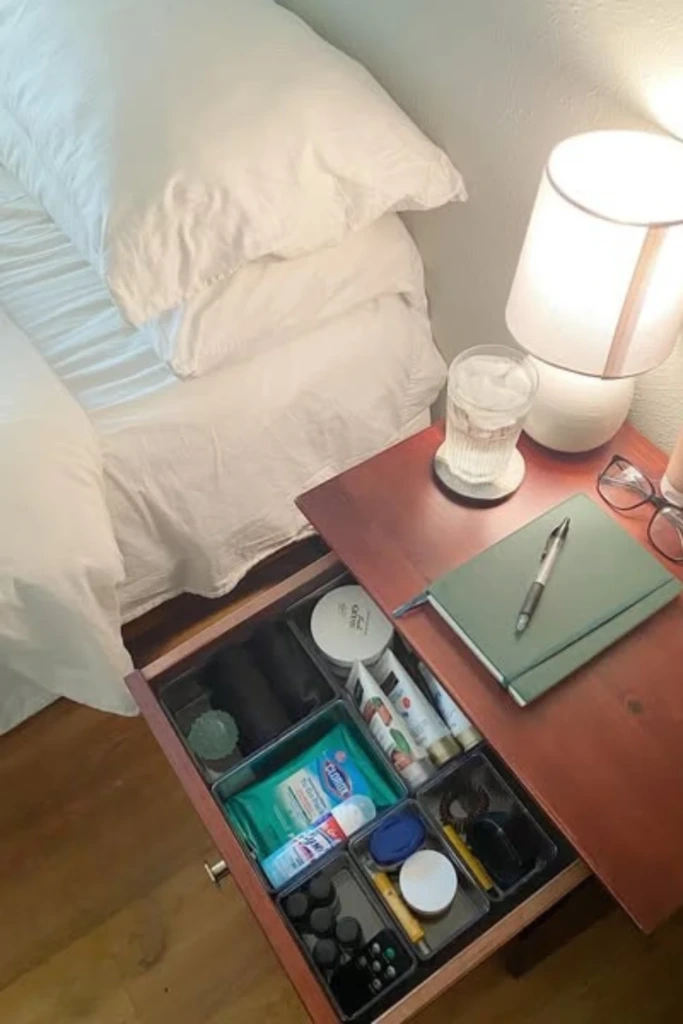
Keep the items you use every evening in one convenient location. Depending on your routine, these might include moisturizer, lip balm, hand cream, reading glasses, or a few grooming accessories.
Use shallow trays for small objects and stable containers for upright bottles. If several products are part of the same routine, group them together so you can reach for everything at once.
This setup is useful for busy households and shared bedrooms where belongings can easily become mixed up. Store products according to their directions, and avoid placing liquids where they could spill onto electronics or other sensitive items.
8. Mindful Drawer
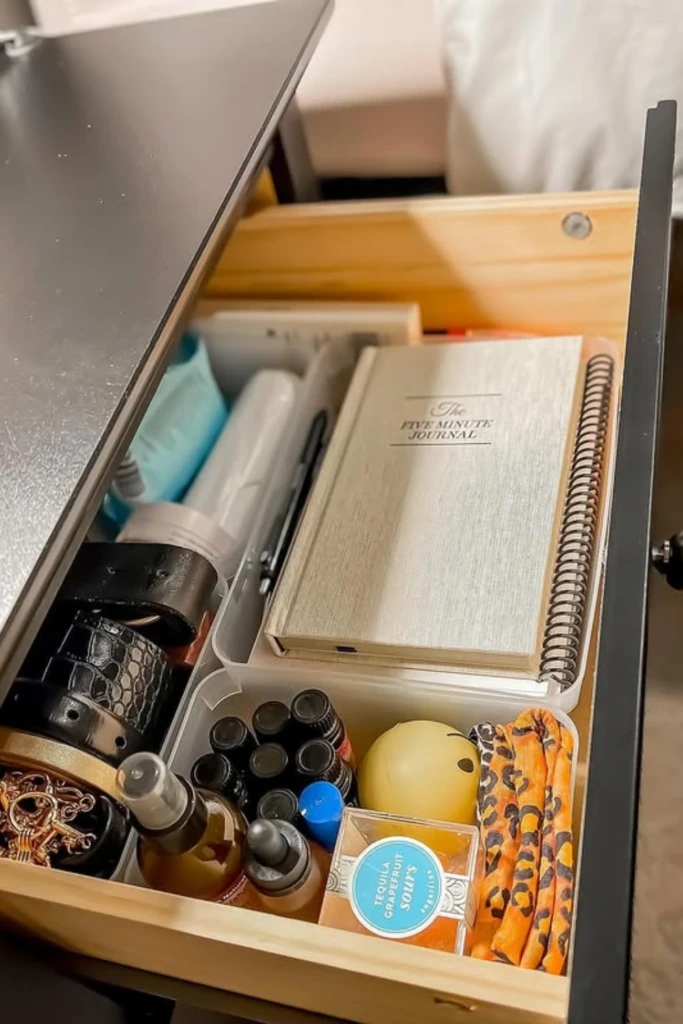
Turn one nightstand drawer into a dedicated space for your evening wind-down routine. A journal, pen, sleep mask, hand cream, or other personal comfort items can all fit neatly when arranged thoughtfully.
Use small containers to separate writing supplies from personal care products. Keep the items you use most often near the front, making it easy to settle into your routine without searching through unrelated belongings.
This approach works especially well if you enjoy reading, journaling, or spending a few quiet minutes preparing for sleep. Keep the collection limited to things you genuinely use so the drawer remains practical rather than becoming another storage space for clutter.
9. Clear Categories
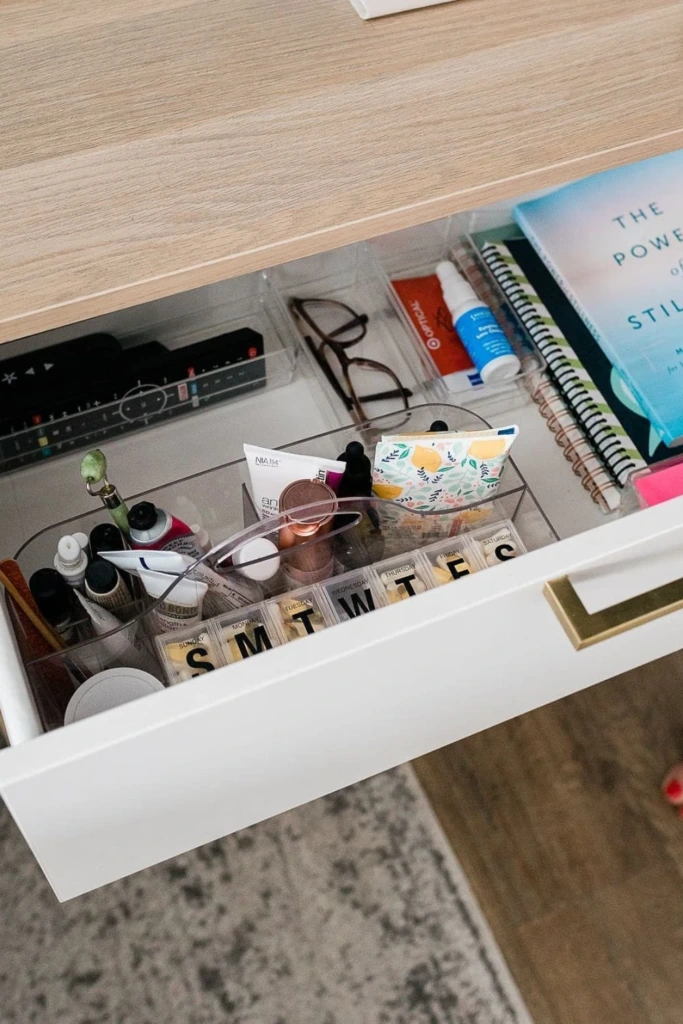
Transparent organizers make it easier to see what's inside each section without moving containers around. They're a practical choice for anyone who stores several small personal care products or accessories in a bedside drawer.
Group similar items together, such as skincare in one section, stationery in another, and small electronics in a separate compartment. Clear containers also make it easier to notice when supplies are running low.
If you prefer a softer aesthetic, combine transparent organizers with fabric-lined trays or wooden dividers. The important thing is to make each category easy to identify and simple to put back in its place.
10. Full Control
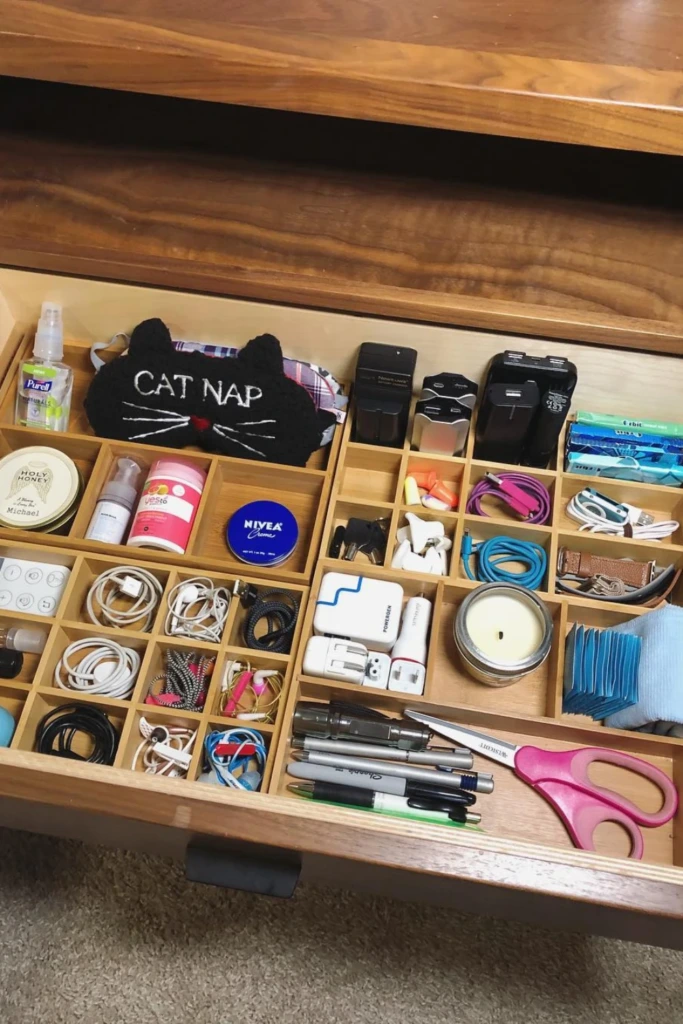
Deep drawers can hold a surprising number of belongings, but without a structure, smaller objects tend to migrate and pile up. Grid-style dividers create individual compartments that keep everything separated.
Use wider sections for bulky items and narrower ones for accessories such as charging blocks, glasses cases, or remote controls. Measure your belongings before arranging the compartments so each section has enough room for easy access.
This system is ideal for people who keep several necessities beside their bed. Avoid filling every compartment to capacity; a little breathing room makes it easier to retrieve and replace items without disturbing everything else.
11. Soft Luxury
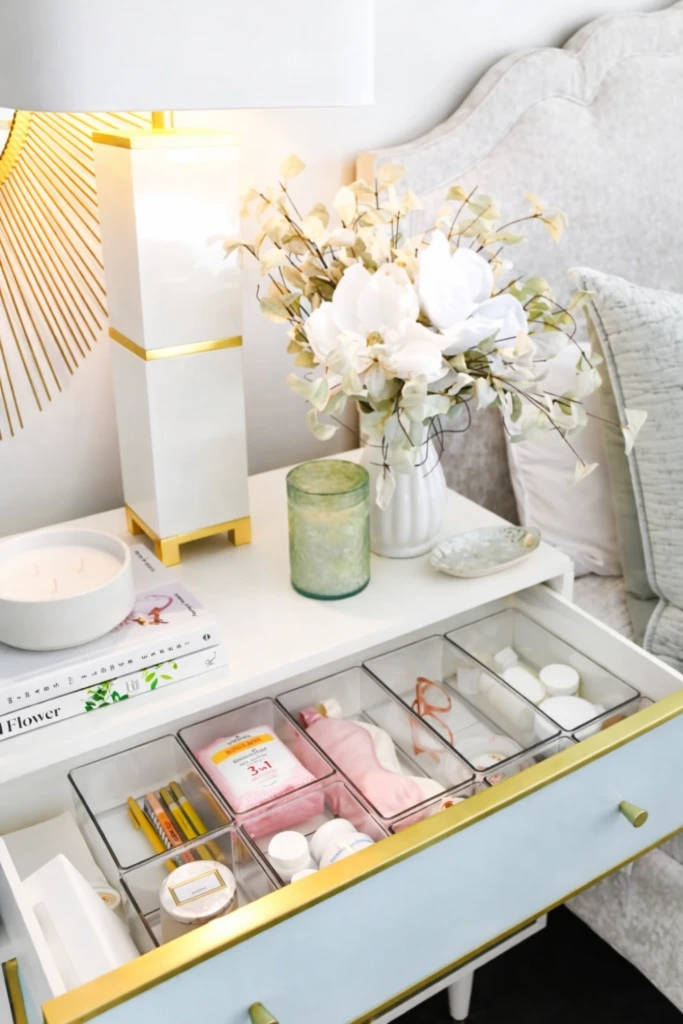
An organized nightstand can feel luxurious without requiring expensive furniture or elaborate accessories. Focus on coordinated colors, quality materials, and enough space between items to create a clean, deliberate arrangement.
Fabric-lined trays, clear dividers, and neutral storage containers can give an ordinary drawer a more refined appearance. Choose a small palette that complements your bedroom rather than introducing several competing colors.
Keep only your most useful nighttime essentials in the drawer. A warm bedside lamp and a carefully edited tabletop can complete the look, making the space feel comfortable and sophisticated at the same time.
12. Tray Control
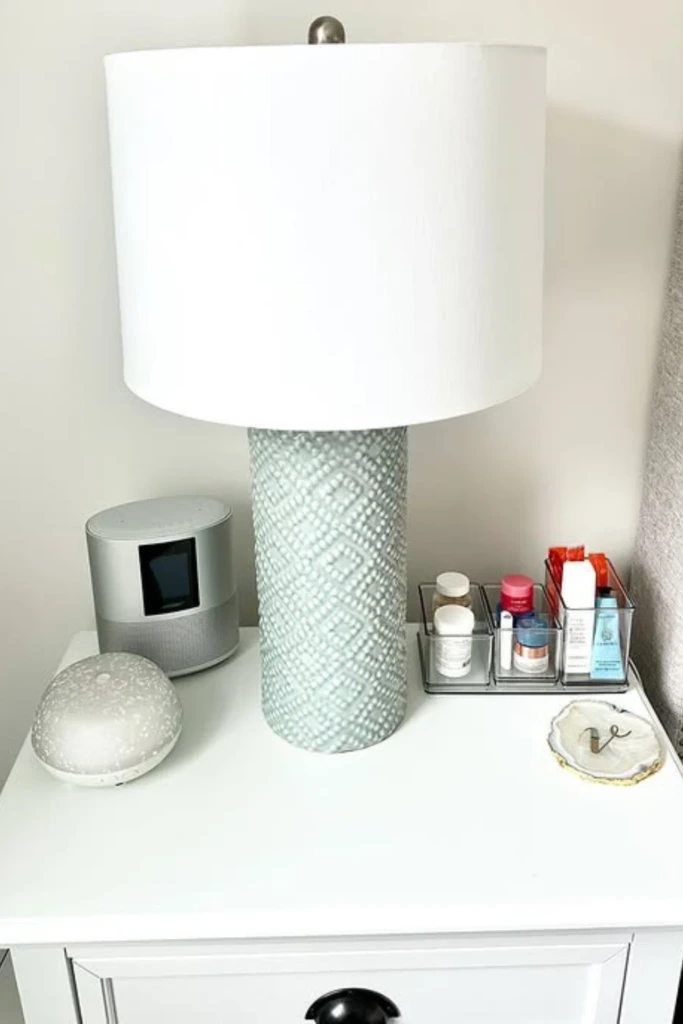
A small tray can prevent frequently used items from spreading across the nightstand. It's an easy solution for holding a few everyday necessities while keeping the rest of the surface clear.
Choose a tray large enough for your essentials but small enough to leave room for your lamp or a glass of water. Ceramic, wood, metal, and acrylic options can all work, depending on your bedroom's style.
Use the tray for things you reach for regularly, such as lip balm, hand cream, or a watch. When it starts overflowing, remove anything that doesn't belong there rather than upgrading to a much larger tray.
13. Charging Drawer
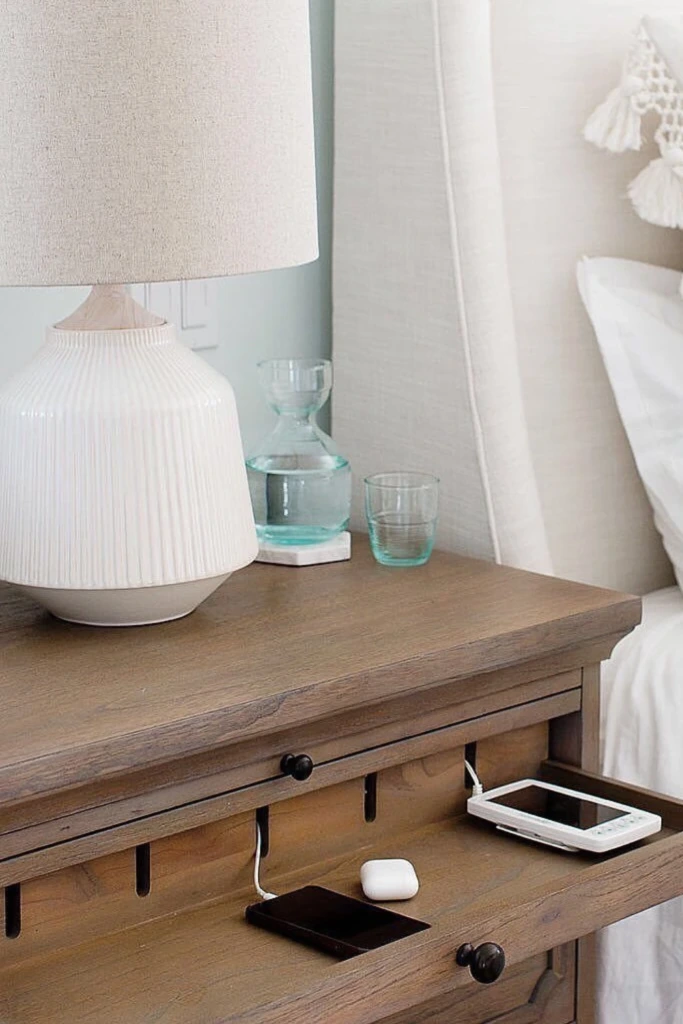
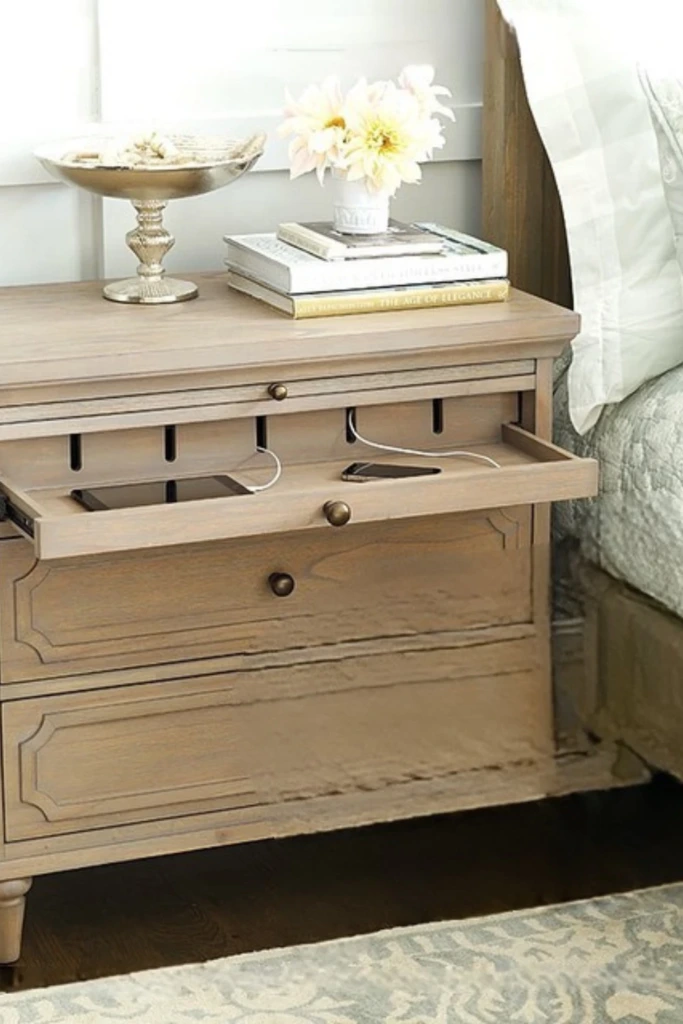
Charging accessories can make even a tidy bedside table look messy. A designated charging drawer helps keep cables and devices organized while preserving the tabletop for other essentials.
Choose a drawer that accommodates your phone, earbuds, or other devices without stacking them. If the furniture has a suitable cable opening, route cords through it to connect to a charger while keeping the setup orderly.
For safety, use compatible charging equipment and ensure devices and adapters have adequate ventilation. Keep cables away from liquids and avoid enclosing equipment that becomes excessively warm. A charging drawer should improve convenience without creating an overheating or electrical hazard.
14. Basket Stack
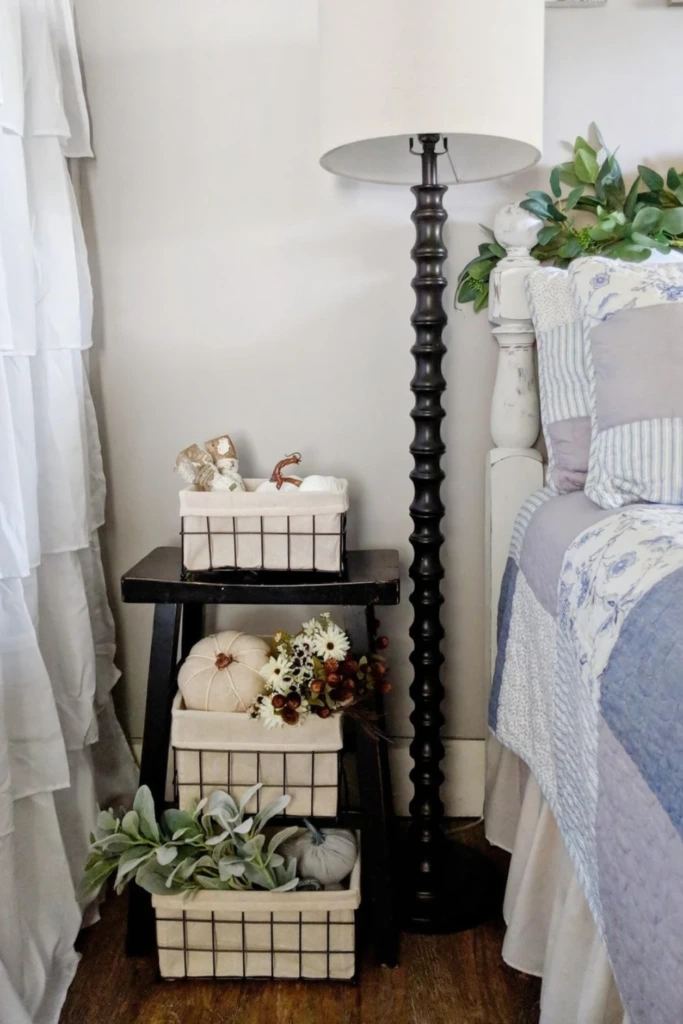
When a traditional nightstand offers too little storage, a tiered stand or small basket unit can provide extra room without requiring a large footprint.
Assign each basket a purpose. One might hold books, another could contain personal care products, and a third might store spare linens or other occasional-use belongings. This prevents the baskets from becoming interchangeable containers for random clutter.
Choose a sturdy unit that fits beside your bed and doesn't interfere with walking space. Keep frequently used items on the most accessible level, and reserve lower baskets for belongings you don't need every night.
15. Medicine Grid
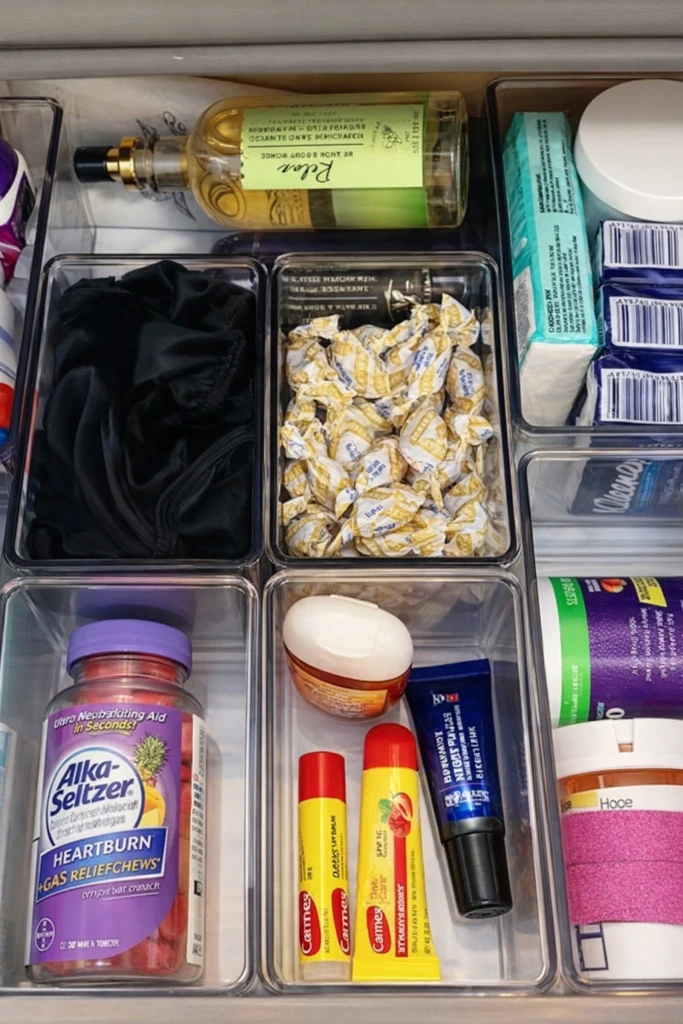
If you need to keep health-related essentials near your bed, organize them so you can identify each item quickly. Separate daily medications from first-aid supplies and occasional-use products rather than placing everything into one container.
Use clearly labeled compartments and retain medicines in their original packaging whenever possible, so instructions and expiration information remain available. Store products according to their specific temperature, moisture, and safety requirements.
Keep all medicines securely out of children's and pets' reach. A bedside drawer is suitable only when it provides the storage conditions and security those products require. If those conditions aren't available, choose a safer location elsewhere in the home.
16. Smart Sorting
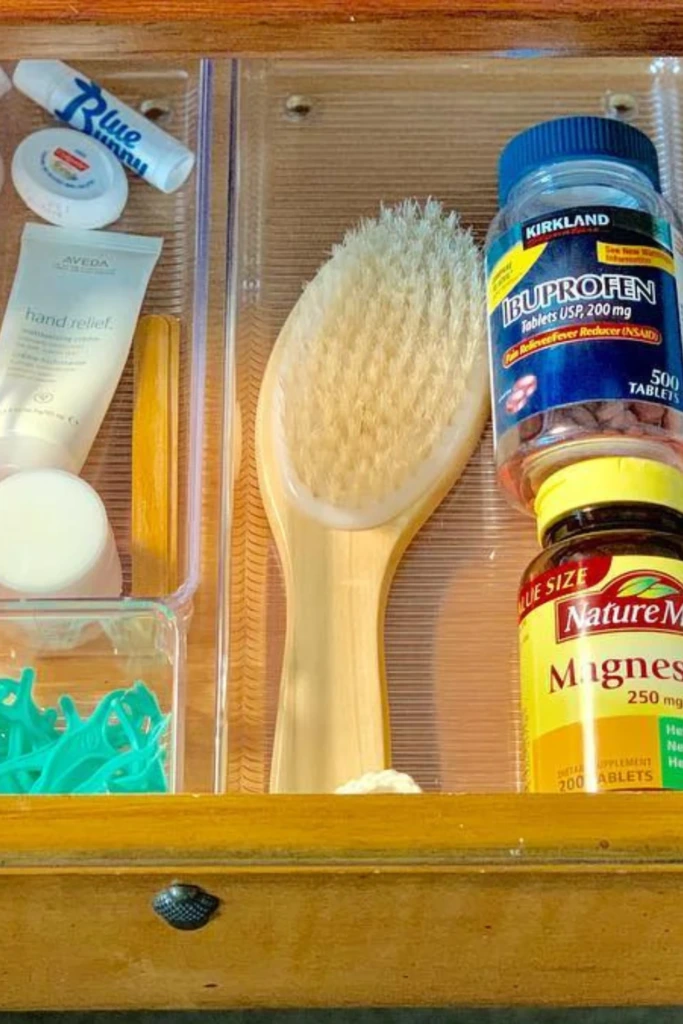
When several types of belongings share a drawer, the easiest solution is to organize them according to their purpose. Give personal care products one section, electronic accessories another, and small comfort items their own space.
This approach is particularly useful for shared nightstands, where one person's belongings can quickly get mixed with another's. Separate compartments make it easier for everyone to locate and return their own items.
Choose dividers that match the objects you're storing instead of buying a complicated organizer with unnecessary sections. A straightforward arrangement usually works better than an elaborate system that takes too much effort to maintain.
17. Hidden Charging
If visible cables distract from your bedroom's appearance, consider furniture with a concealed charging compartment. A dedicated drawer or built-in cable-management feature can keep devices nearby without leaving cords scattered across the tabletop.
Arrange cables so they don't tangle, and provide a separate space for each device. Use the furniture's existing cable openings when available rather than forcing drawers against cords or modifying the unit in ways that compromise its structure.
Make sure charging equipment remains accessible for inspection and has sufficient ventilation. The objective is to hide unnecessary visual clutter, not to conceal electrical problems or trap heat around charging devices.
18. Light Balance
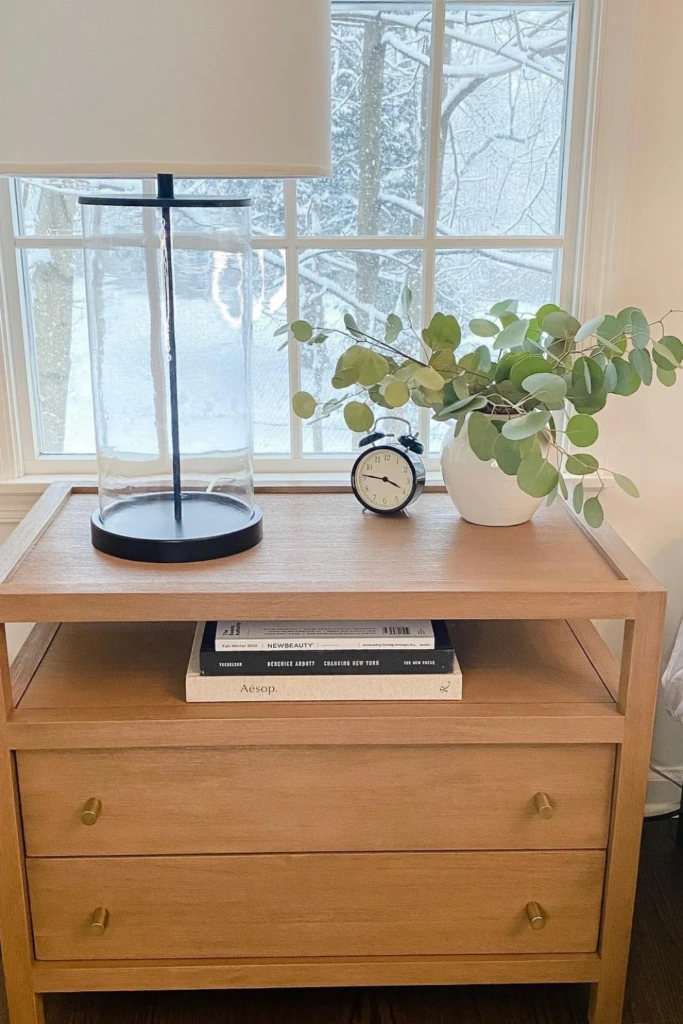
A well-balanced nightstand combines practical lighting with just a few carefully selected accessories. A lamp, a small plant, or an alarm clock may be all you need to create a functional and attractive surface.
Move larger collections of books and spare belongings to a shelf or drawer. Keeping the tabletop open helps the furniture feel less crowded, especially in a bedroom with plenty of natural light.
Consider the lamp's footprint when arranging everything else. A compact base can leave more room for everyday essentials, while a warm bulb can provide comfortable illumination for reading or relaxing before bed.
19. Labeled Zones
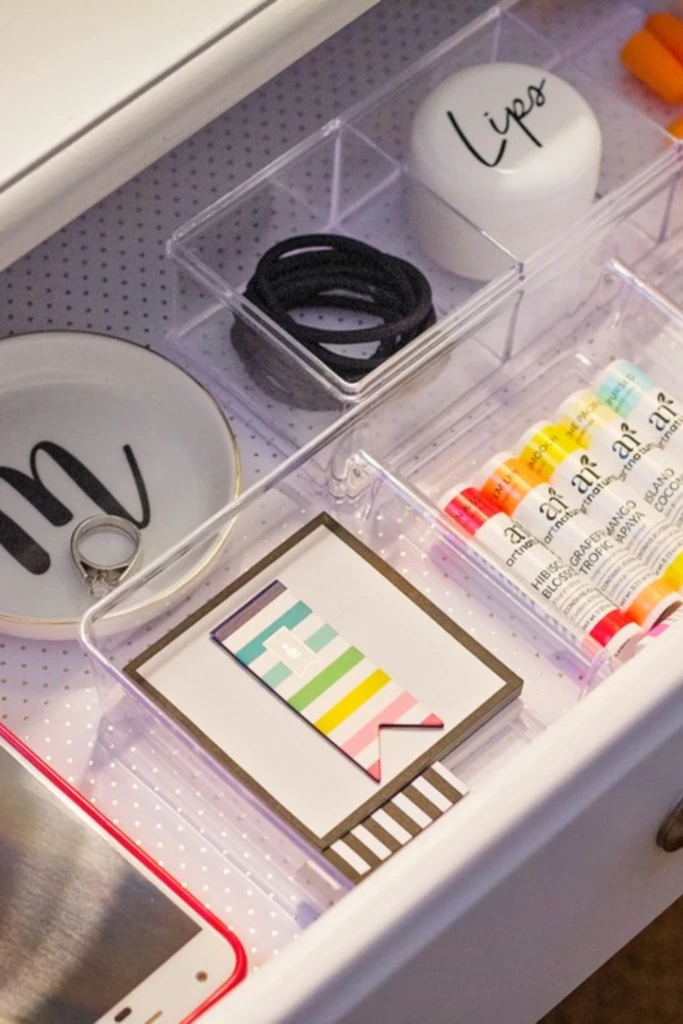
Labels can make a nightstand easier to maintain, particularly when multiple people use the same storage space. Marking containers with broad categories helps everyone understand where belongings should go.
Useful labels might include personal care, electronics, reading accessories, or nighttime essentials. Grouping items by routine rather than labeling every individual object keeps the system simple and avoids unnecessary visual clutter.
Use removable labels if your storage needs change regularly. Transparent containers paired with discreet labels are a good option when you want both visibility and a neat appearance.
20. Surface Reset
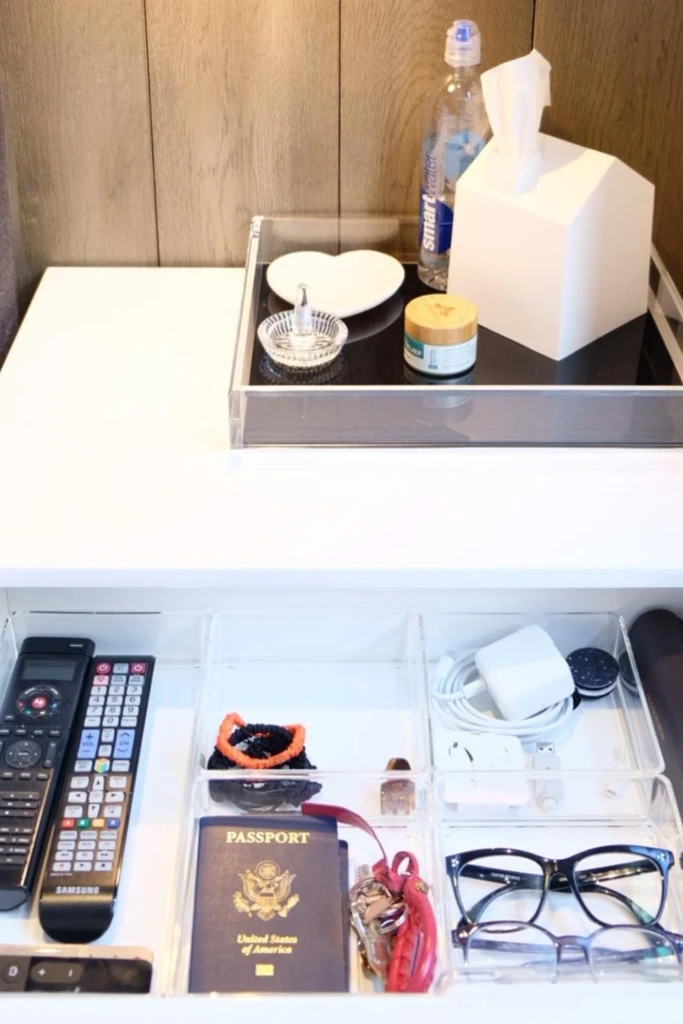
A quick surface reset can keep everyday clutter from taking over your nightstand. Give the tabletop a clear purpose by reserving it for a few essentials, such as your lamp, water glass, tissues, or a small tray.
Move extra products, books, and miscellaneous belongings into their designated storage spaces. If you use a tray, keep only the items you reach for regularly inside it.
Spend a minute each evening returning misplaced objects to their proper locations. This small habit helps prevent clutter from accumulating and makes the bedroom feel more settled when you're ready for sleep.
21. Category First
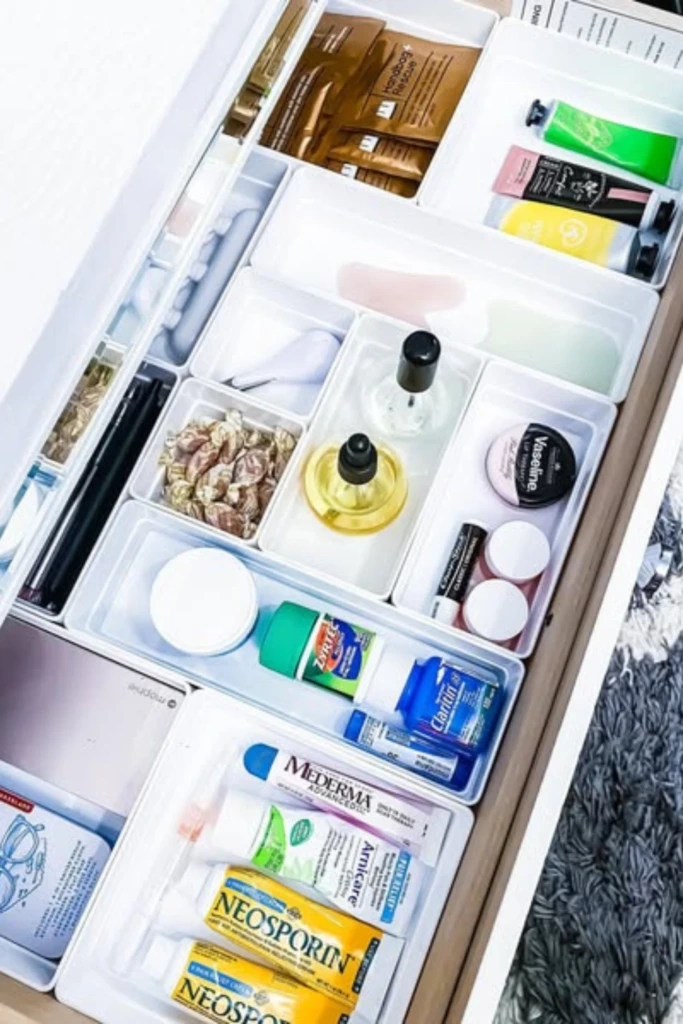
Organizing by category is more effective than placing belongings wherever they happen to fit. Separate skincare, personal care products, first-aid supplies, and spare accessories into clearly defined groups.
Select containers based on the size and quantity of each category. Small items need compact compartments, while taller bottles may require deeper sections that allow them to stand upright.
Avoid keeping excessive backups in the nightstand simply because there's room. Store less frequently used supplies elsewhere, leaving bedside storage for the belongings that make your daily routine more convenient.
22. Tech Order
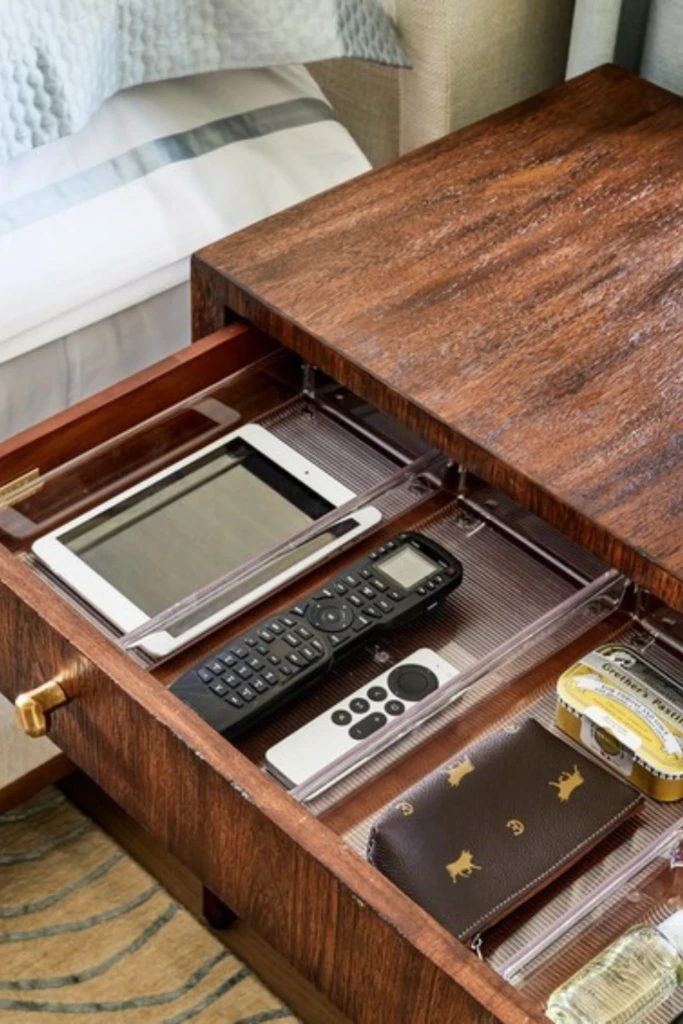
Phones, tablets, remote controls, charging adapters, and headphones can quickly become tangled when they share an unorganized drawer. A simple technology zone keeps these accessories separated and easy to retrieve.
Use slim dividers to create a designated section for each device or accessory group. Coil cables loosely and secure them with reusable cable ties to prevent tangling. Avoid bending cords sharply or placing heavy objects on top of them.
If you regularly use a tablet or e-reader in bed, keep it in an accessible compartment with enough space for safe storage. This arrangement makes your nightstand more functional without allowing electronics to dominate the room's appearance.
How many items should stay on a nightstand?
There's no fixed number that works for every bedroom, but keeping the tabletop to a few essentials is a useful starting point. A lamp, phone, water glass, alarm clock, or one frequently used comfort item may be enough.
Your available space and personal routine should determine what stays. If you have to move several objects to reach something important, the surface probably contains more than it needs.
Store additional belongings in drawers, baskets, or nearby shelves. The goal is to make everyday items accessible while leaving enough open space for comfortable use.
Should nightstand drawers be fully packed?
No. A completely full drawer is harder to use because items become difficult to see, remove, and put back in place.
Leave some room between containers and belongings so you can access everything without rearranging the entire drawer. If storage feels cramped, remove duplicates, relocate occasional-use items, or choose a more suitable organizer.
An effective organization system prioritizes accessibility over maximum capacity. A drawer with a little empty space will generally be easier to maintain than one filled from front to back.