20 Wrapping Paper Organization Ideas for 2026
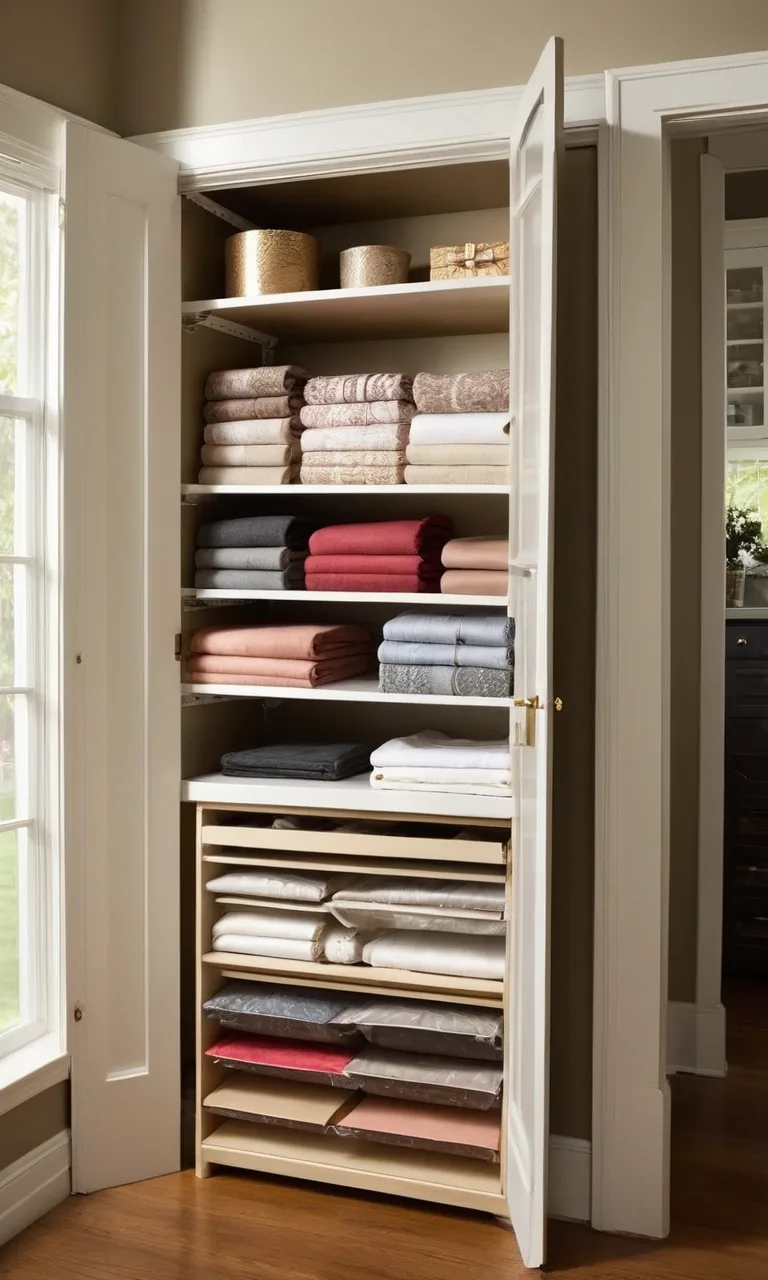
Wrapping gifts should be enjoyable, but tangled ribbons, crushed paper rolls, and missing tape can quickly turn a simple task into a frustrating experience. When your supplies are scattered across different drawers and closets, even wrapping one present becomes unnecessarily complicated.
A practical wrapping paper organization system keeps your materials protected, makes supplies easier to find, and helps you use storage space efficiently. Whether you have a dedicated craft room or a small apartment, there are plenty of creative ways to organize everything without spending a fortune.
These 20 wrapping paper organization ideas will help you create a tidy, functional setup that makes gift wrapping easier throughout the year.
How to Organize Wrapping Paper?
Start by gathering all your gift-wrapping materials in one place. Sort through paper rolls, ribbons, bows, gift bags, tissue paper, scissors, and tape. Recycle damaged materials that cannot be reused, and separate the remaining supplies into categories.
Next, choose a storage location based on how frequently you wrap gifts and how much space is available. Vertical containers work well for long rolls, while drawers and small organizers are better suited to accessories.
Keep frequently used materials within easy reach and store holiday-specific supplies separately. Secure loose rolls with reusable paper bands or gentle fasteners to prevent unraveling.
The most effective system is one that fits your available space and takes only a few minutes to maintain.
1. Wall Rails
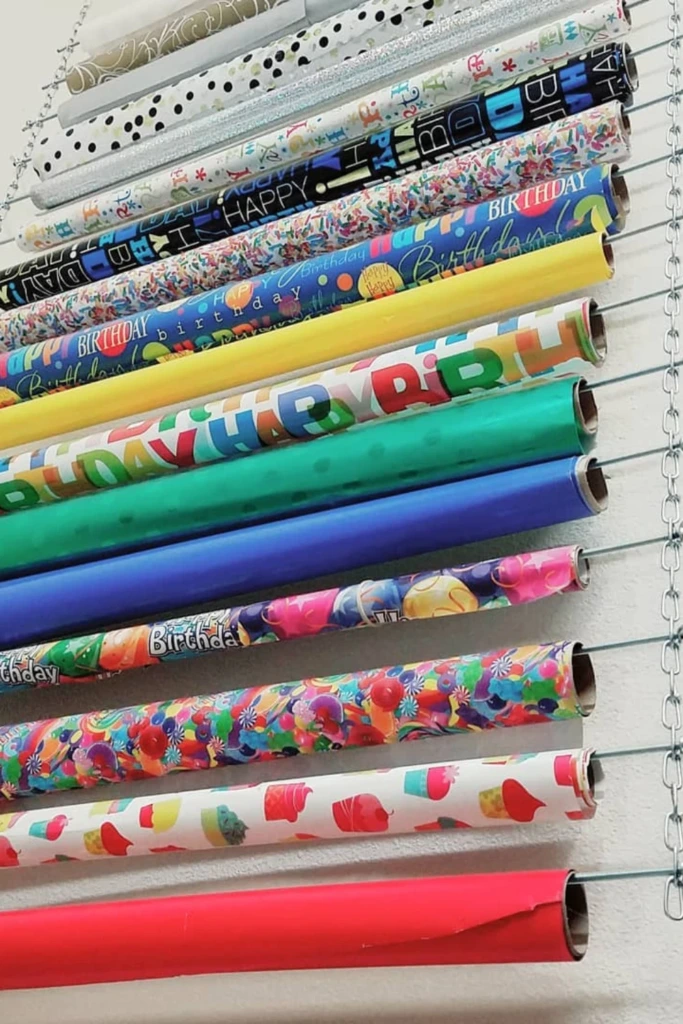
Wall-mounted rails offer a clever way to store wrapping paper without occupying valuable floor space. They are particularly useful in craft rooms, home offices, and utility areas where wall space is available.
Install sturdy horizontal rods or dowels at comfortable heights, leaving enough clearance for different roll diameters. Rolls can rest on supported rails or slide onto removable dowels, depending on the design.
Arrange your favorite patterns where they are visible and place seasonal designs higher up. This arrangement keeps paper accessible while turning a plain wall into an attractive storage feature.
2. Rolling Station
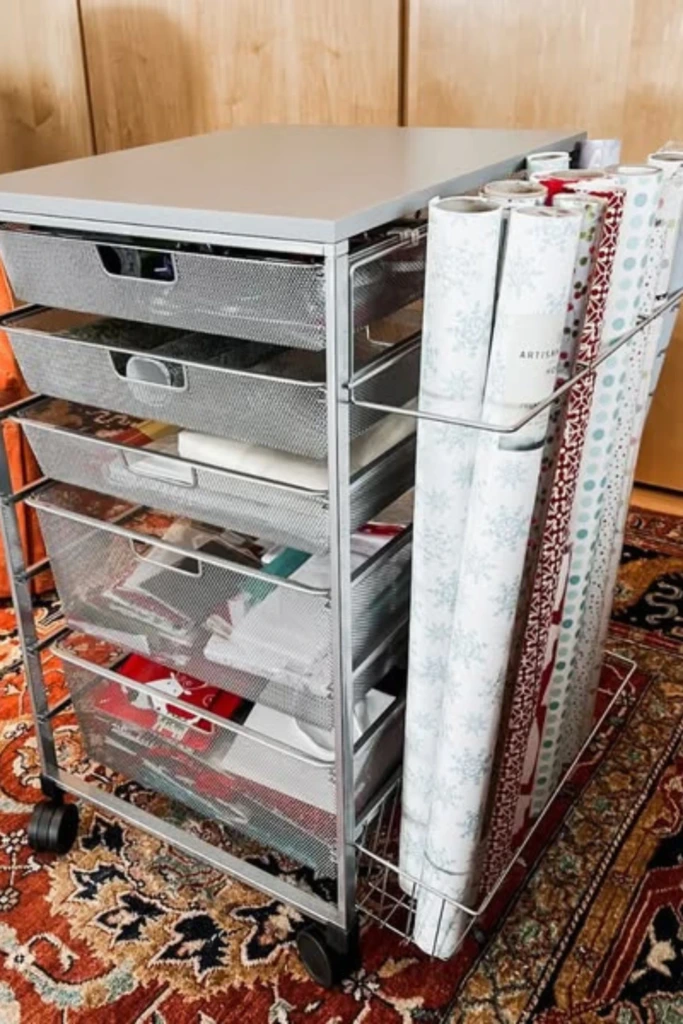
A mobile wrapping station is ideal for anyone who prefers wrapping gifts at different locations around the house.
Choose a utility cart with multiple shelves and attach a tall container or side-mounted holder for paper rolls. Use the upper tray for scissors, tape, and gift tags, while lower compartments can accommodate ribbons, bows, and gift bags.
Small drawer organizers prevent accessories from shifting when the cart moves.
Once finished, roll the station into a closet or unused corner. Locking wheels are especially helpful for keeping the cart steady during wrapping sessions.
3. Door Storage
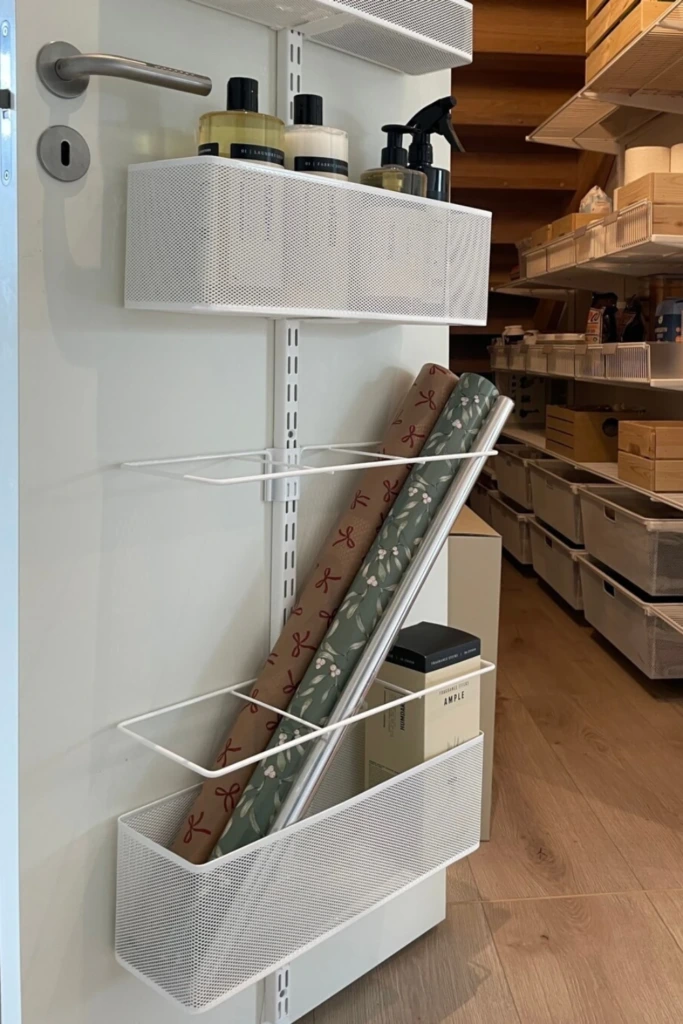
The back of a closet door can become a convenient storage area with an over-the-door organizer or securely mounted wire baskets.
Use taller compartments for wrapping paper rolls and smaller baskets for accessories. Position the containers so the door can open and close freely without damaging the paper.
Before installing anything, check the door's thickness, hinge clearance, and weight capacity.
This solution is particularly helpful in apartments and smaller homes because it makes use of space that might otherwise remain empty.
4. Closet Station
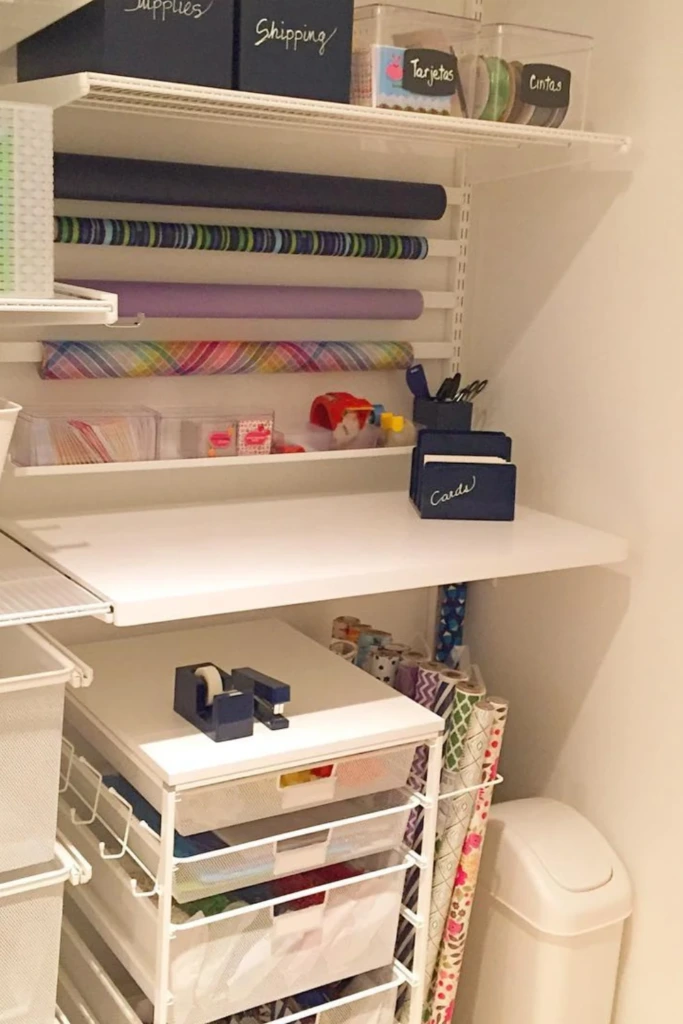
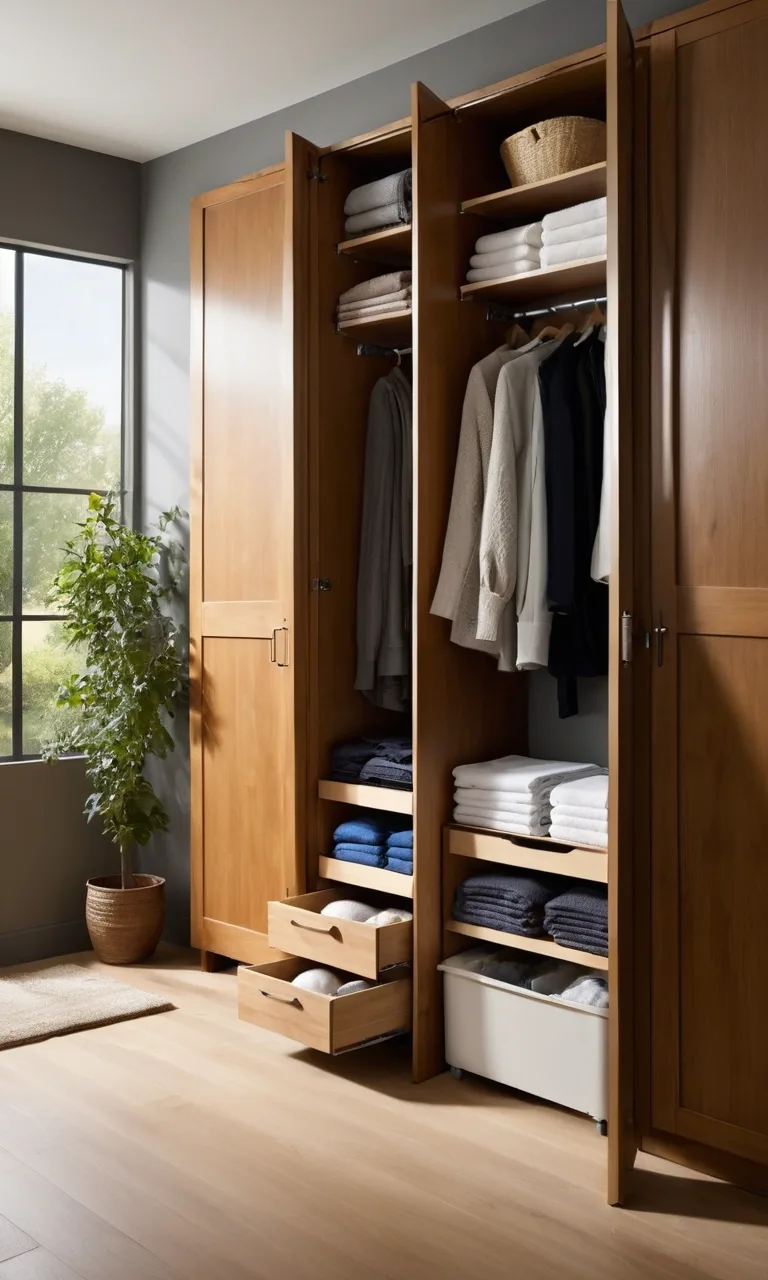
Transform part of an existing closet into a dedicated gift-wrapping area by combining shelves, bins, and roll holders.
Reserve one section for full-length wrapping paper and use nearby shelves for neatly labeled containers. Drawer dividers can separate ribbons, adhesive tape, greeting cards, and decorative accessories.
Consider installing a pull-out tray if the closet is deep enough. It provides a convenient surface for sorting supplies without requiring a separate table.
Keeping everything together makes it easier to check what you already own before purchasing more wrapping materials.
5. Cabinet Storage
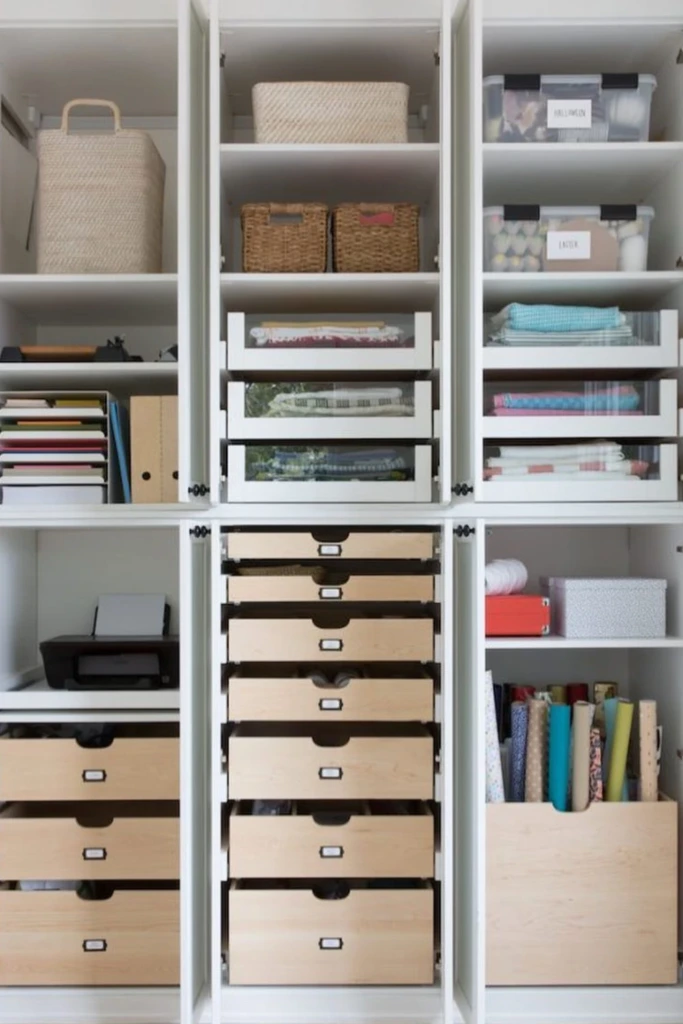
A spare cabinet provides an excellent storage solution for anyone who prefers keeping wrapping supplies completely out of sight.
Use a tall cabinet section for paper rolls and assign smaller drawers to accessories. Adjustable shelves allow you to accommodate containers of different heights without wasting space.
Place heavier supplies in lower compartments and lightweight materials above.
Labeling each drawer helps maintain order, especially when several family members use the same cabinet. Closed storage also reduces dust accumulation and protects delicate decorations from accidental damage.
6. Vertical Bins
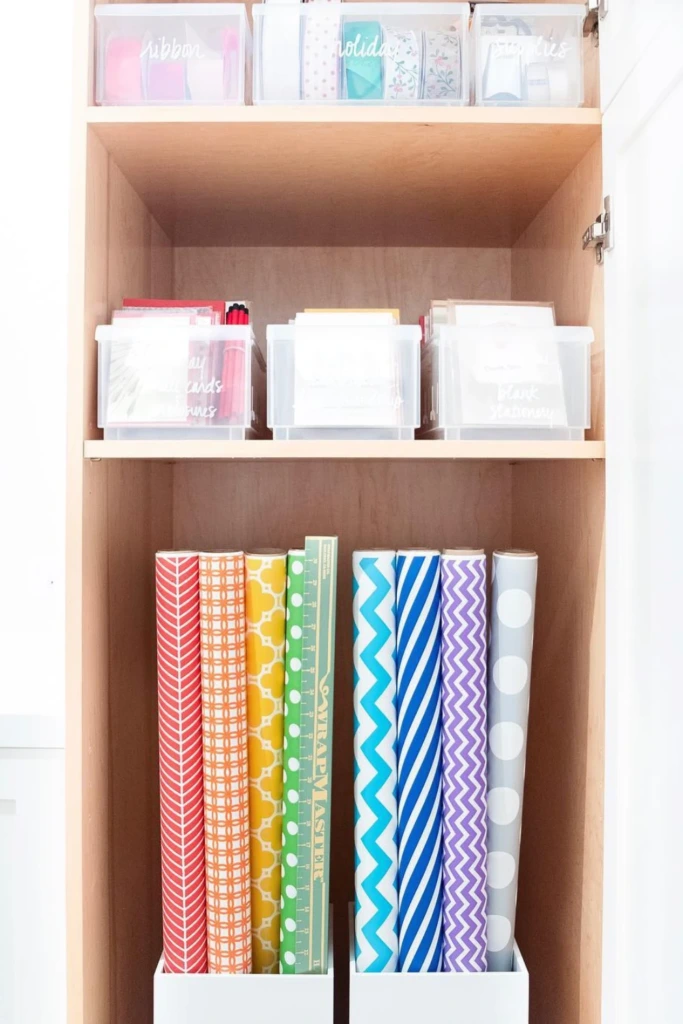
Vertical bins are among the simplest ways to organize a large collection of wrapping paper rolls.
Choose sturdy containers that are tall enough to support the rolls without allowing them to lean excessively. A wide, stable base helps prevent tipping when the container is full.
You can divide the collection into everyday patterns, birthday designs, and holiday wrapping paper.
For shorter leftover rolls, use a separate container so they remain visible instead of disappearing between taller ones.
This approach works particularly well in closets, craft rooms, and storage cabinets.
7. Full Door
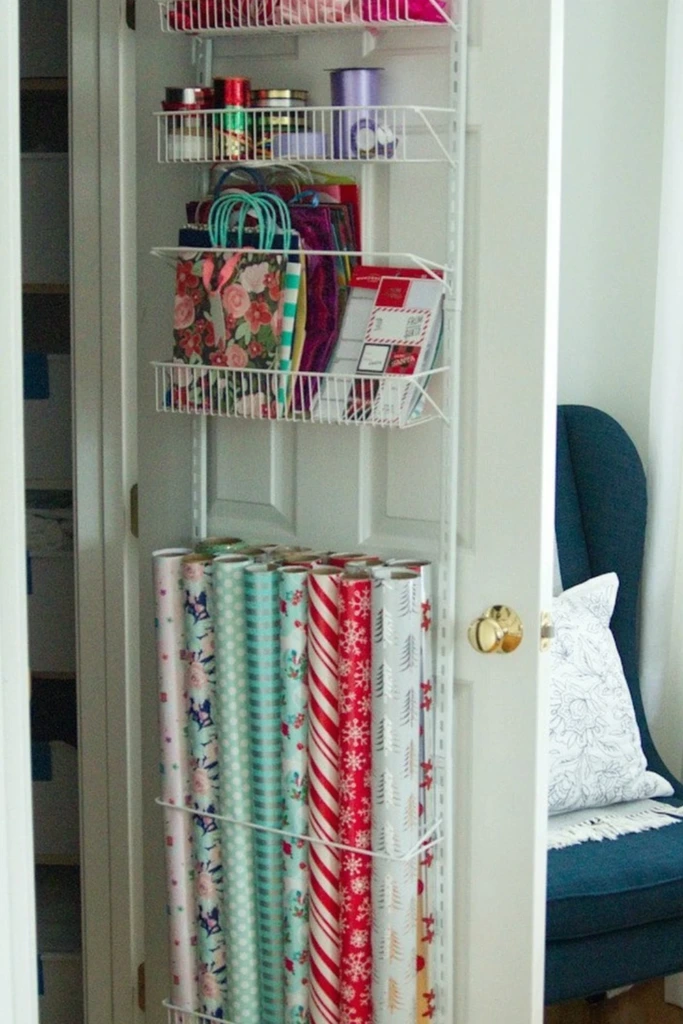
If you have an entire closet door available, consider turning it into a complete wrapping supply organizer.
Install a full-length rack with several storage levels. Position tall roll holders near the bottom and reserve the upper sections for lightweight items such as gift tags, ribbon spools, and folded tissue paper.
A few small hooks can hold scissors or reusable gift-bag handles.
Make sure the organizer is securely attached and does not interfere with shelves inside the closet. A well-planned door system can replace several separate storage boxes.
8. Basket Display
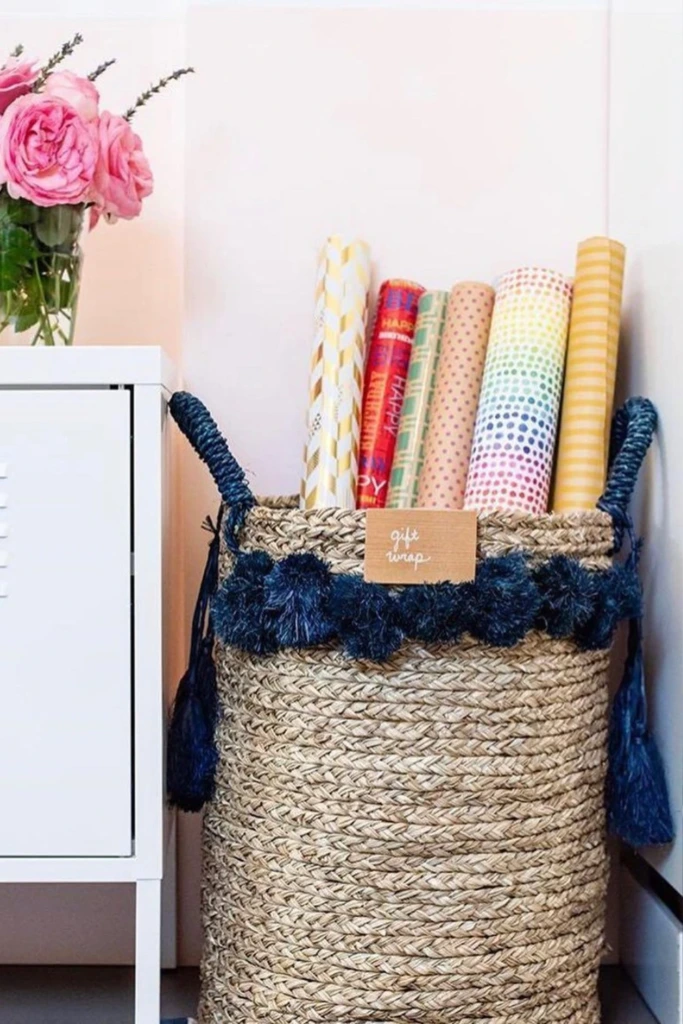
Wrapping paper can also become part of your home decor when stored in an attractive basket.
Select a tall woven, metal, or decorative fabric basket that complements your room. Arrange paper rolls upright with their patterned sides facing outward for a colorful display.
Place the basket beside a desk, bookshelf, or craft table where it will remain stable.
For better organization, limit the display to frequently used rolls and keep additional supplies elsewhere. A removable liner can also help prevent rough basket interiors from catching delicate paper.
9. Hidden Drawer
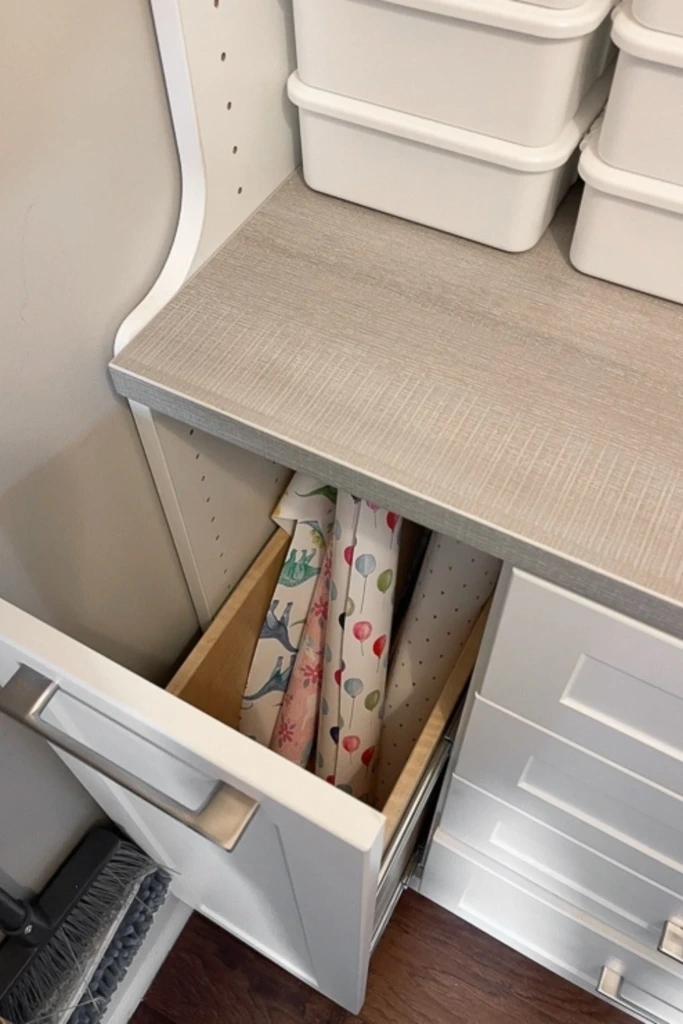
Deep drawers are useful for storing wrapping paper neatly while maintaining a clutter-free appearance.
Measure your longest rolls before selecting a drawer. Ideally, the paper should lie flat without being forced against the sides.
Add adjustable dividers to prevent rolls from moving around whenever the drawer opens. Smaller compartments can hold tape dispensers, tags, and ribbon.
A low-profile drawer beneath a craft table or inside a custom cabinet can be especially convenient.
This arrangement protects wrapping supplies while keeping them readily available whenever you need them.
10. Color Sorting
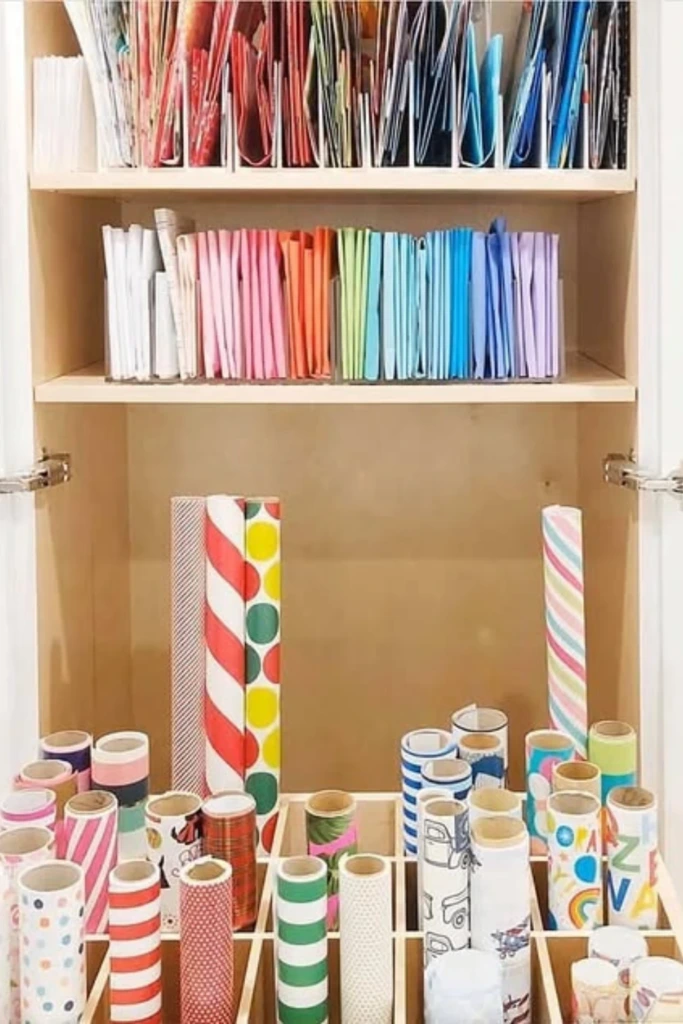
Organizing wrapping paper by color makes it easier to coordinate gift presentations and find suitable designs quickly.
Group rolls into simple categories such as neutrals, pastels, bright colors, metallics, and seasonal patterns.
Use labeled dividers or individual storage sections to maintain the arrangement.
Color sorting is especially helpful if you enjoy matching wrapping paper with ribbons, bows, and gift tags. Store coordinating accessories nearby to simplify the process.
If your collection is small, organizing by occasion may be more practical than creating numerous color categories.
11. Pegboard Wrap
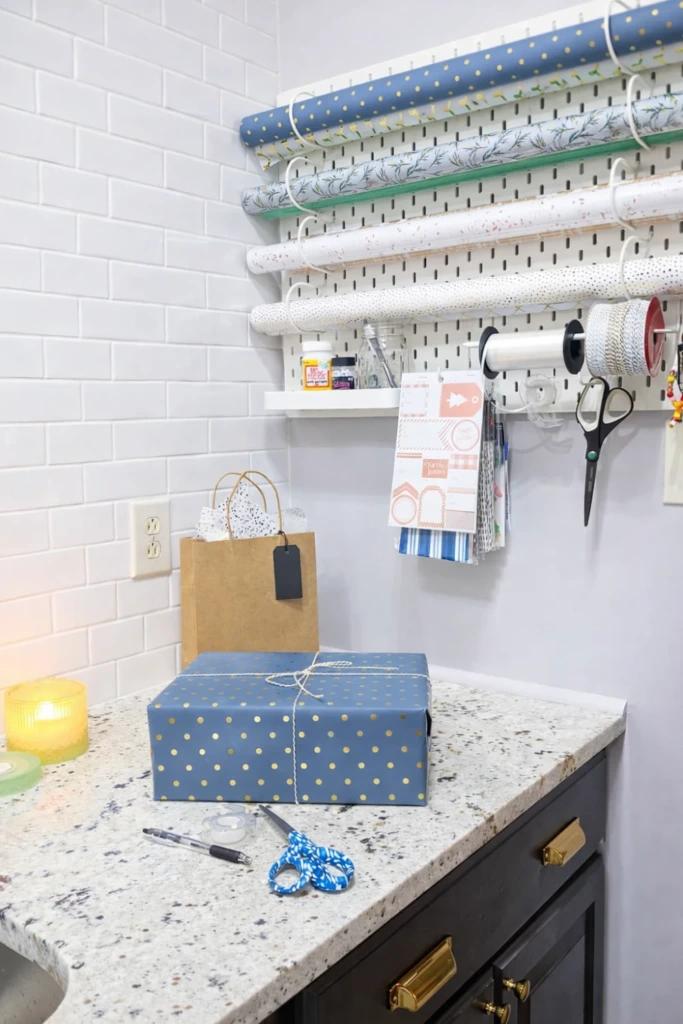
A pegboard offers flexible storage that can be customized as your collection changes.
Mount a sturdy pegboard above a craft desk or along an available wall. Add compatible brackets and dowels to support wrapping paper rolls horizontally.
Use hooks for scissors, ribbon spools, tape dispensers, and other lightweight accessories. Small pegboard baskets can accommodate gift tags and decorative embellishments.
Keep frequently used tools at a comfortable working height.
Because pegboard accessories can be rearranged, you can expand or simplify the system without completely rebuilding your wrapping station.
12. Clear Bags
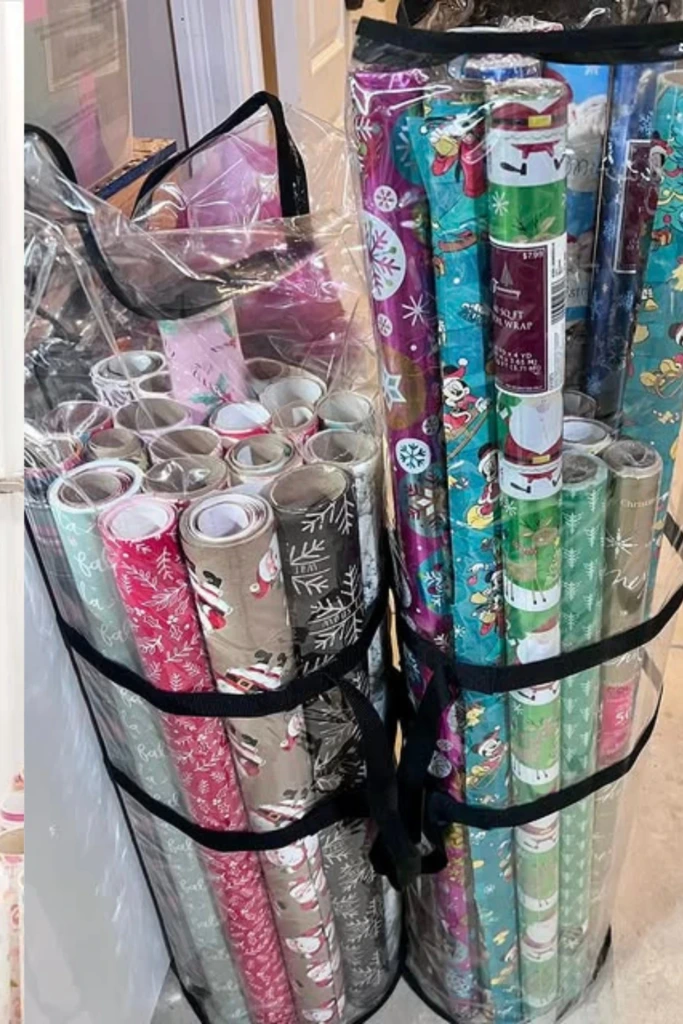
Transparent storage bags are particularly useful for keeping seasonal wrapping paper organized between holidays.
Choose long, zippered bags designed to accommodate standard gift-wrap rolls. Look for reinforced handles and enough internal space to avoid squeezing the paper.
Group materials by occasion, such as Christmas, birthdays, weddings, or general celebrations.
Store the bags flat on a suitable shelf or in another location where they will not be crushed by heavier objects.
Clear sides make it easy to identify the contents, while enclosed storage helps reduce exposure to dust.
13. Tube Holders
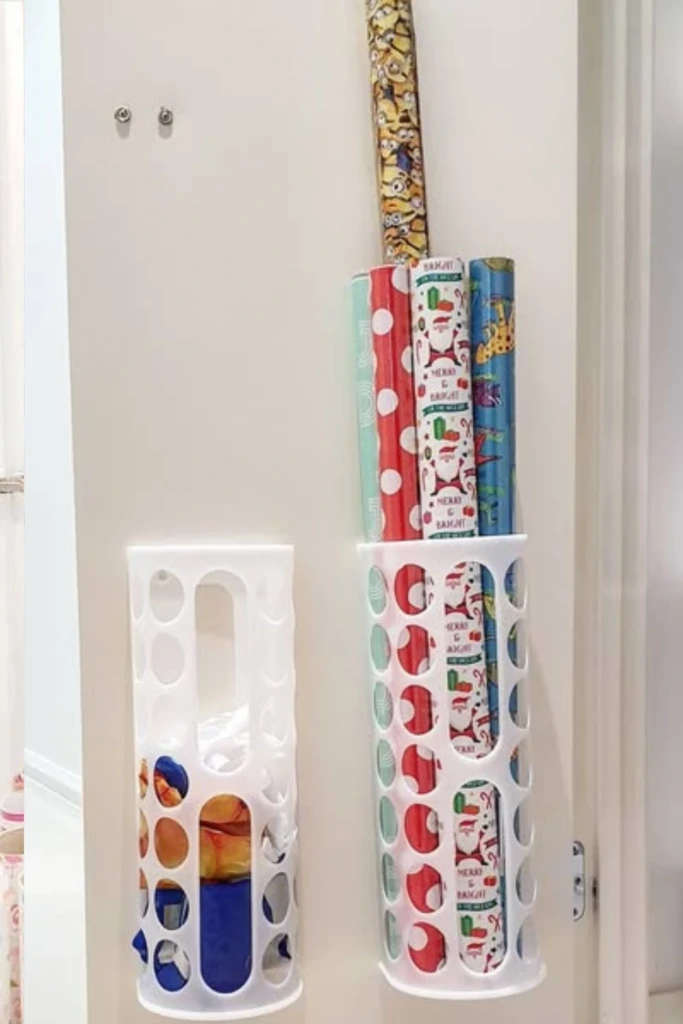
Tall cylindrical holders provide an efficient way to store wrapping paper in narrow spaces.
You can use purpose-made roll organizers or repurpose clean, sturdy containers with smooth interiors. The container should be wide enough to hold several rolls without compressing them.
Place the holder in a closet corner, beside a craft desk, or inside a tall cabinet.
For a more organized arrangement, use separate holders for long rolls and shorter remnants.
This simple setup is especially practical for households that need accessible storage without installing shelves or wall fixtures.
14. Drawer Cubes
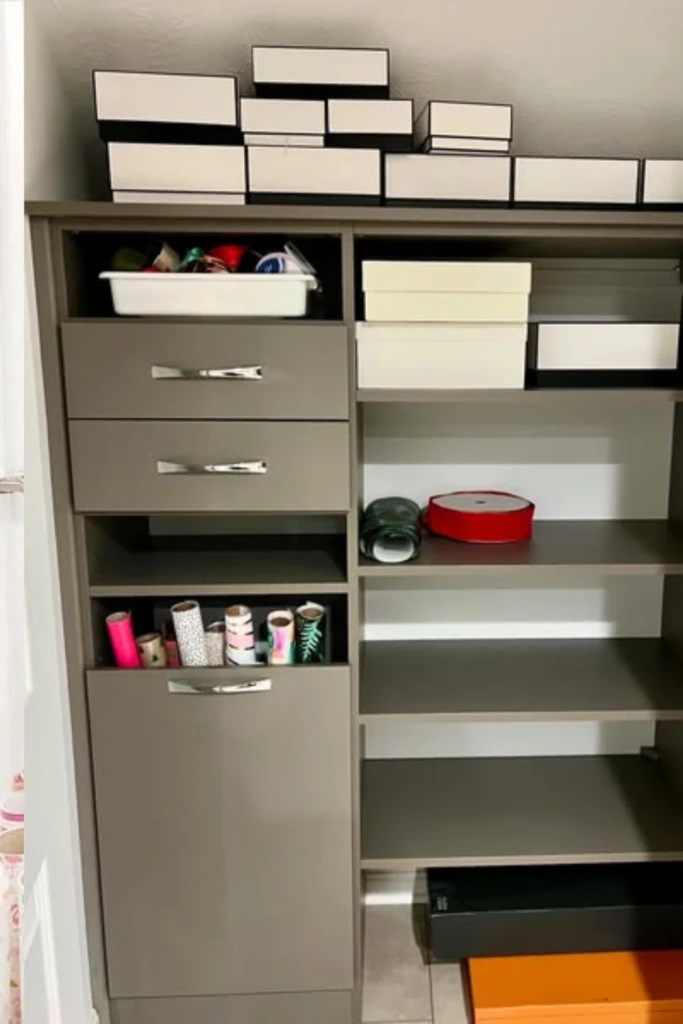
Drawer cubes and divided storage compartments help organize smaller wrapping materials that often become mixed together.
Use deep compartments for short paper rolls and individual sections for folded gift bags, ribbon bundles, and tissue paper.
Choose modular organizers that can be rearranged as your supplies change.
Avoid packing compartments too tightly, particularly when storing delicate bows or decorative paper.
If the drawers are not transparent, add simple labels to the fronts. This makes it easier to return everything to its proper place after wrapping gifts.
15. Tall Bin
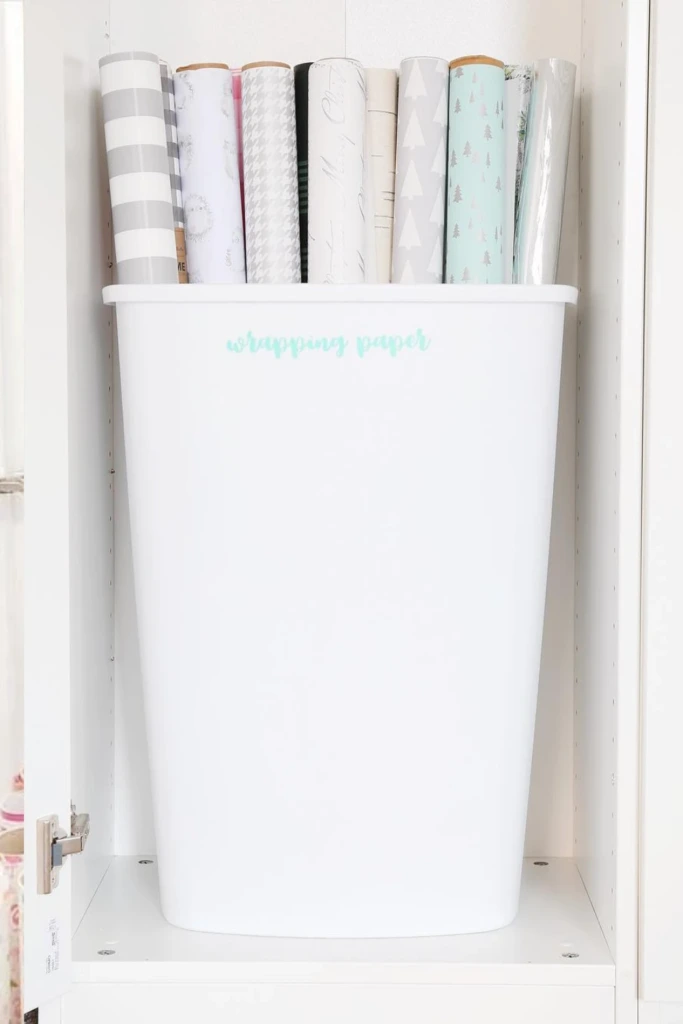
A single tall storage bin can provide an affordable solution for organizing wrapping paper without complicated equipment.
Choose a rigid container with a stable bottom and enough height to support most of your rolls. Smooth interior surfaces are preferable because they reduce the chance of snagging or tearing.
Stand the rolls upright and secure any loose ends with gentle paper bands.
Keep the bin in a dry closet or storage area, away from potential water leaks and excessive humidity.
For additional convenience, attach a small accessory pouch to the outside for frequently used supplies.
16. Rod Cabinet
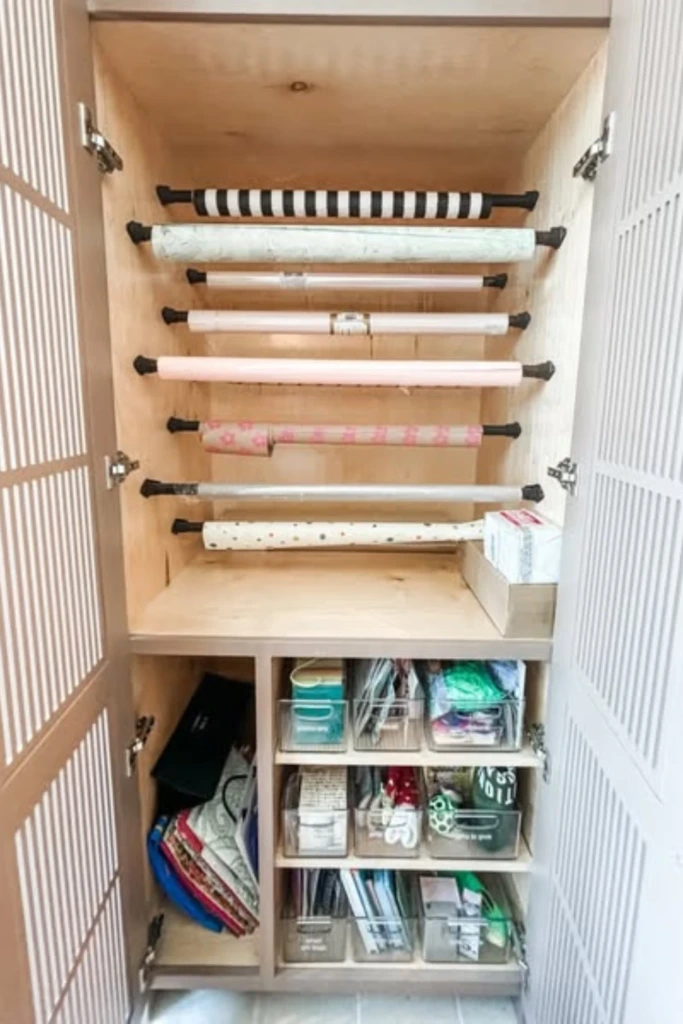
A cabinet fitted with horizontal rods can function as a compact gift-wrapping station.
Install removable dowels or appropriately rated tension rods across the cabinet interior. Depending on the setup, wrapping paper can be supported on the rods or threaded through its cardboard core.
Leave enough space between each level so rolls can rotate or be removed comfortably.
Use lower drawers for ribbons, gift tags, and cutting tools.
Check that the rods are securely supported before loading them. This design works especially well for people who wrap gifts frequently and want their supplies neatly arranged in one location.
17. Fabric Caddy
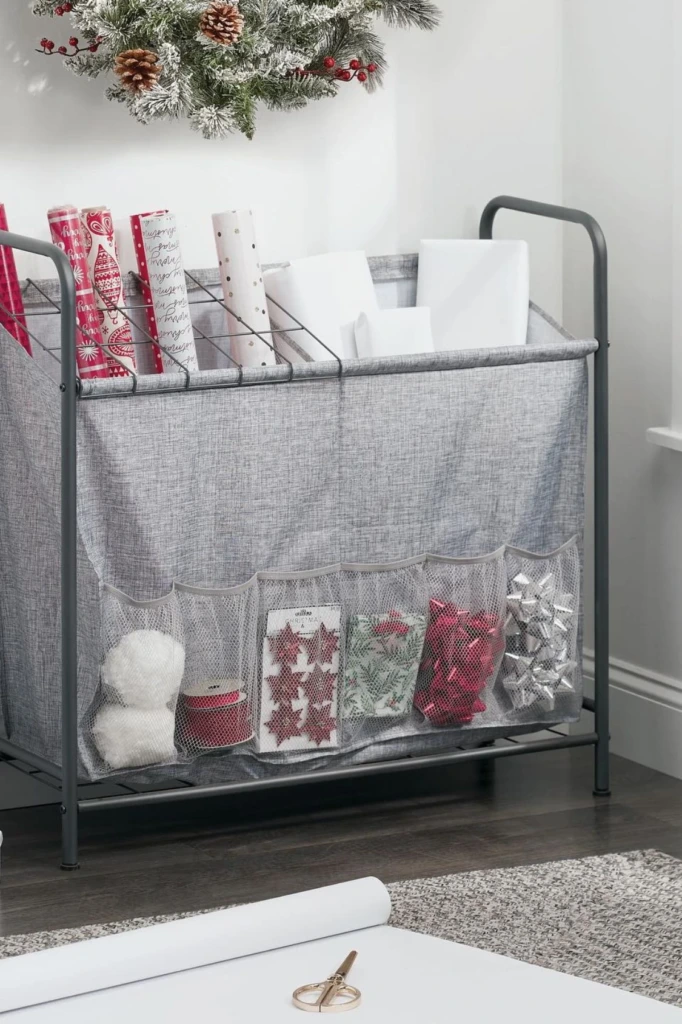
A portable fabric caddy provides lightweight storage for wrapping paper and accessories.
Look for a design with reinforced sides, internal dividers, and exterior pockets. Taller sections can hold rolls, while smaller pockets accommodate scissors, tape, bows, and tags.
Handles make it easy to carry supplies from a storage closet to a dining table or workspace.
Choose a caddy with a stable base to prevent it from collapsing when filled.
When wrapping season is over, the organizer can be tucked into a cabinet or closet without taking up much room.
18. Closet Zones
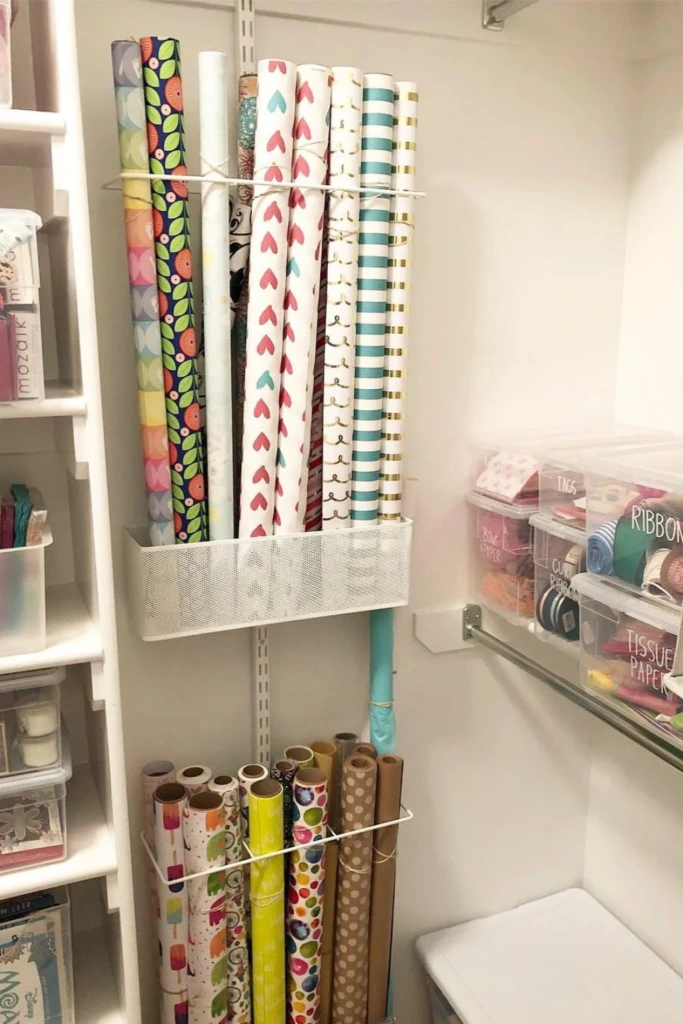
Dividing a closet into designated storage zones helps prevent wrapping supplies from becoming disorganized over time.
Assign one area to full-length paper rolls, another to smaller leftover pieces, and a separate section to accessories.
Place frequently used supplies at eye level or within easy reach. Reserve higher shelves for seasonal items that are only needed occasionally.
Use clear bins, baskets, or shelf dividers to keep each category contained.
This method works particularly well for families with larger collections because it establishes a consistent place for every item.
19. Shelf Guard
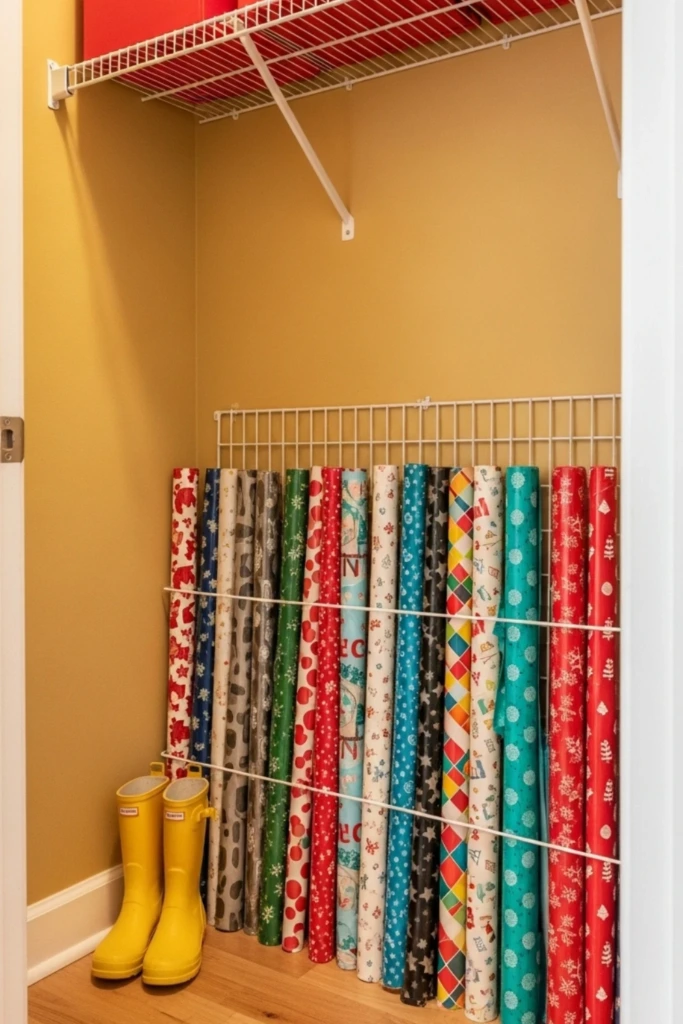
A shelf guard can transform an ordinary closet shelf into a practical wrapping paper storage area.
Install a low wire barrier, retaining rail, or sturdy shelf divider along the front edge to prevent upright rolls from falling forward.
Choose a guard tall enough to contain the lower ends of the rolls without making them difficult to remove.
For greater stability, position the paper against the back wall and avoid overfilling the shelf.
This setup is useful for narrow utility closets and storage spaces where installing a separate organizer would be unnecessary.
20. Slim Door
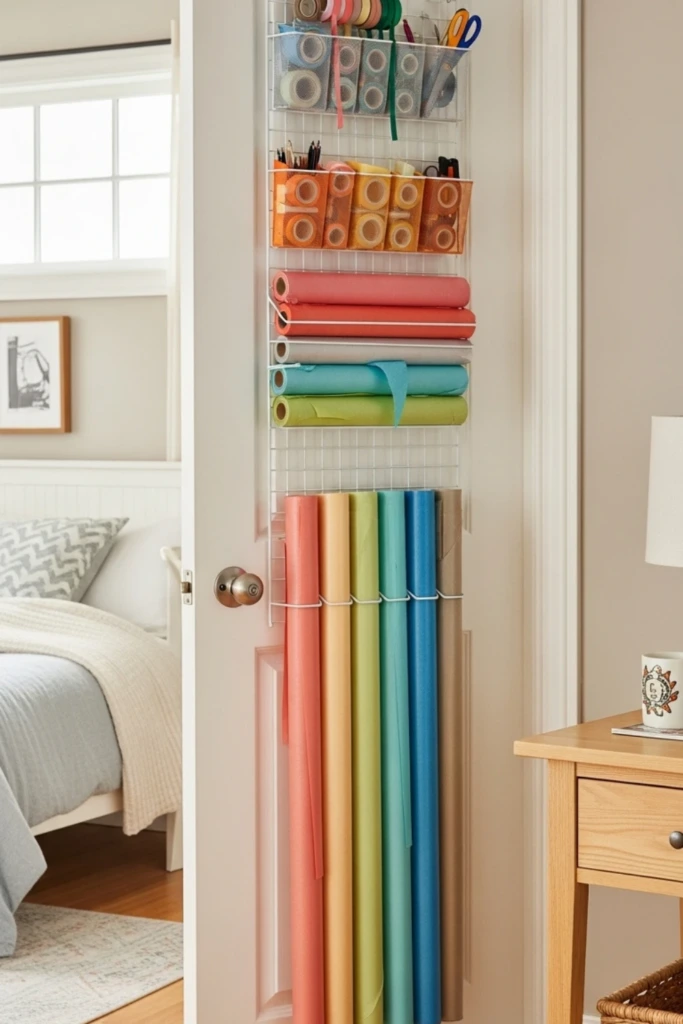
Narrow closet and cabinet doors can still provide useful storage with a carefully chosen slim organizer.
Look for lightweight wire pockets or narrow racks that fit the available door width. Use the longest compartment for wrapping paper and smaller sections for ribbons, tags, and tape.
Measure the door and surrounding clearance before purchasing an organizer, especially if shelves sit directly behind it.
Keep heavier supplies in a separate cabinet to avoid putting unnecessary strain on the door.
A slim organizer is an excellent option when you want to improve storage without sacrificing shelf or floor space.
How do you store wrapping paper without ruining it?
The best way to protect wrapping paper is to keep rolls supported, dry, and free from excessive pressure.
Store them upright in a stable container or horizontally on a shelf that supports their full length. Avoid bending long rolls to fit into short compartments.
Secure loose ends with reusable paper bands or soft fasteners rather than placing adhesive tape directly on decorative paper.
For long-term storage, use enclosed containers or protective bags and keep them away from moisture, direct sunlight, and heavy objects. These precautions help prevent fading, wrinkles, tears, and crushed cardboard cores.
What is the best way to organize wrapping paper in small spaces?
For small spaces, vertical storage and unused door surfaces are often the most practical options.
An over-the-door organizer, narrow upright bin, or wall-mounted rack can hold several rolls without occupying much floor space.
Store accessories in compact containers that fit on existing shelves or inside drawers. Keeping ribbons, scissors, and tape together also eliminates the need for multiple storage locations.
If you have limited room, consider maintaining a smaller collection of versatile wrapping paper designs that work for several occasions.
A compact, well-organized selection is often more useful than a large collection that is difficult to store and access.