21 Paper Flowers DIY Ideas to Make
Paper flowers are a creative way to add color and personality to your home, celebrations, and handmade gifts. With a few basic supplies, you can turn ordinary sheets of paper into beautiful floral decorations that last much longer than fresh blooms.
Whether you enjoy making small flowers for a vase or oversized blossoms for an event backdrop, there are plenty of designs to explore. Different paper textures, petal shapes, and color combinations can produce everything from realistic roses to imaginative tropical arrangements.
The following ideas offer inspiration for beginners and experienced crafters alike. Choose a style that suits your space, gather your materials, and enjoy creating flowers that reflect your personal taste.
1. Time-Saving Shortcuts
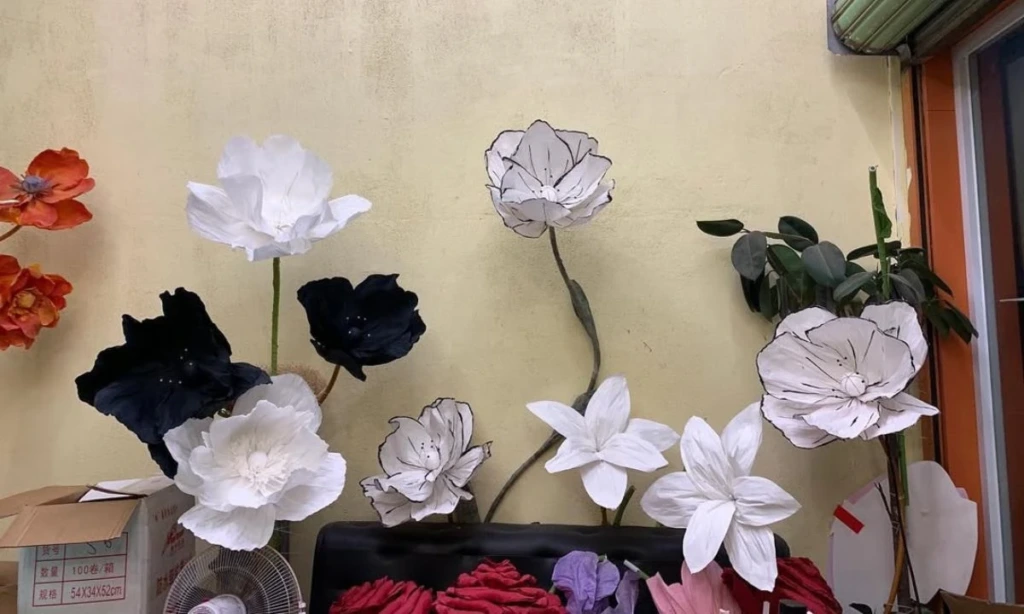
Paper flower projects become much easier when you prepare your materials before starting. Print or trace petal templates to maintain consistent shapes, and organize your paper by color so you can assemble each flower without unnecessary interruptions.
Choose the right adhesive for your project. A glue stick works well for lightweight paper, while craft glue provides a stronger bond for layered designs. A low-temperature hot glue gun can speed up assembly, but use it carefully and follow the manufacturer's safety instructions.
Crepe paper is useful when you want soft curves and realistic-looking petals. Cardstock works better for structured flowers that need to hold their shape. Pre-cut leaves, floral wire, and a bone folder can also save time.
Finally, assemble flowers in stages. Cut all the petals first, shape them together, and then attach the layers. This simple workflow helps you produce several matching flowers efficiently.
2. Tree-Wrapped Blossoms
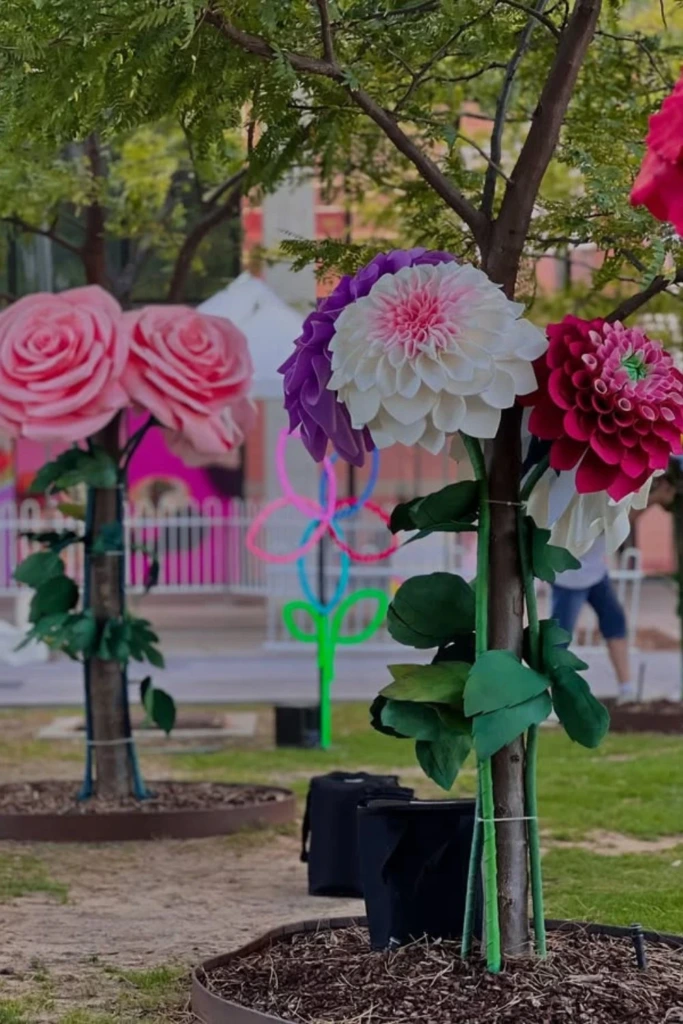
<PRIVATE_PERSON> oversized paper flowers can transform ordinary tree trunks into eye-catching decorative features. Arrange large roses, dahlias, or other layered blooms around selected trunks to create a colorful setting for outdoor celebrations, garden parties, or festival displays.
Choose weather-resistant materials when decorations will be exposed to outdoor conditions. Standard paper can soften or lose its color in rain and humidity, so these installations are best placed in sheltered areas or used for short events.
To create the arrangement, prepare large petal templates, sturdy backing structures, and suitable fasteners. Secure every flower without damaging the tree, and avoid wrapping materials tightly around the trunk. The result is a striking floral display that can turn a simple walkway into a memorable photo location.
3. Blue Peony Cluster
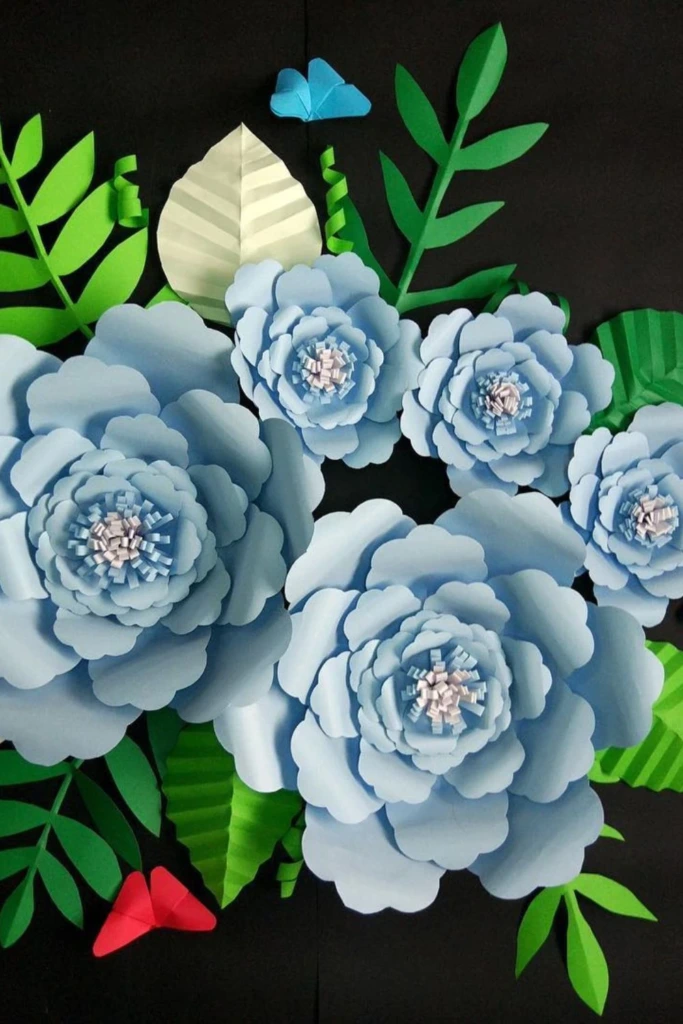
Blue paper peonies offer a sophisticated alternative to traditional floral decorations. Their full, overlapping petals create a sculptural appearance, especially when several flowers are grouped together against a neutral wall.
Use different shades of blue, from pale powder blue to deep navy, to introduce depth. Green paper leaves provide contrast and make the arrangement feel more botanical. You can also add smaller blooms to fill gaps between the larger flowers.
This project works particularly well for bedroom decorations, event backdrops, creative studios, and party photo areas. Cut the petals in several sizes, gently curl their edges, and attach them in layers around a compact center. Cardstock provides structure, while crepe paper creates softer, more natural curves.
4. Tropical Burst
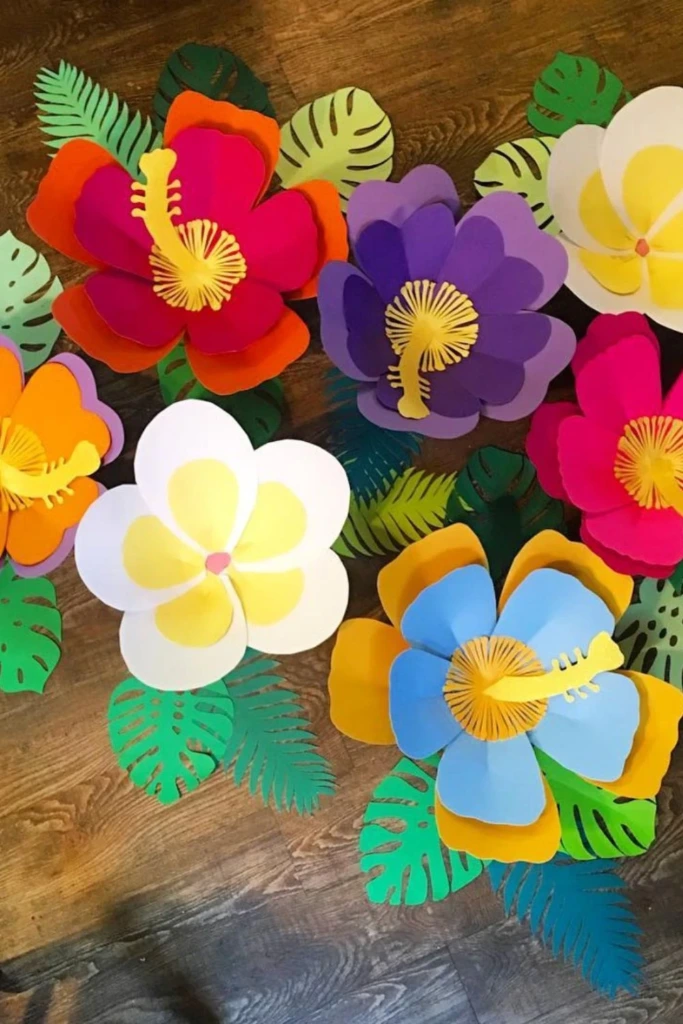
Bring a lively summer atmosphere into your space with tropical-inspired paper flowers. Bold red, yellow, purple, and orange petals can create an energetic display reminiscent of island celebrations.
Combine the blooms with oversized monstera leaves, palm-inspired foliage, or other broad paper greenery. Varying the flower sizes helps the arrangement look more natural and prevents the display from appearing too uniform.
These decorations are suitable for luau parties, children's birthdays, summer gatherings, and themed dessert tables. Use brightly colored cardstock for firm petals and lighter paper for leaves that need gentle shaping.
For an impressive backdrop, arrange the largest flowers first and fill the spaces with smaller blossoms. Mixing complementary colors will help the display feel coordinated without losing its playful character.
5. Lotus Garden Display
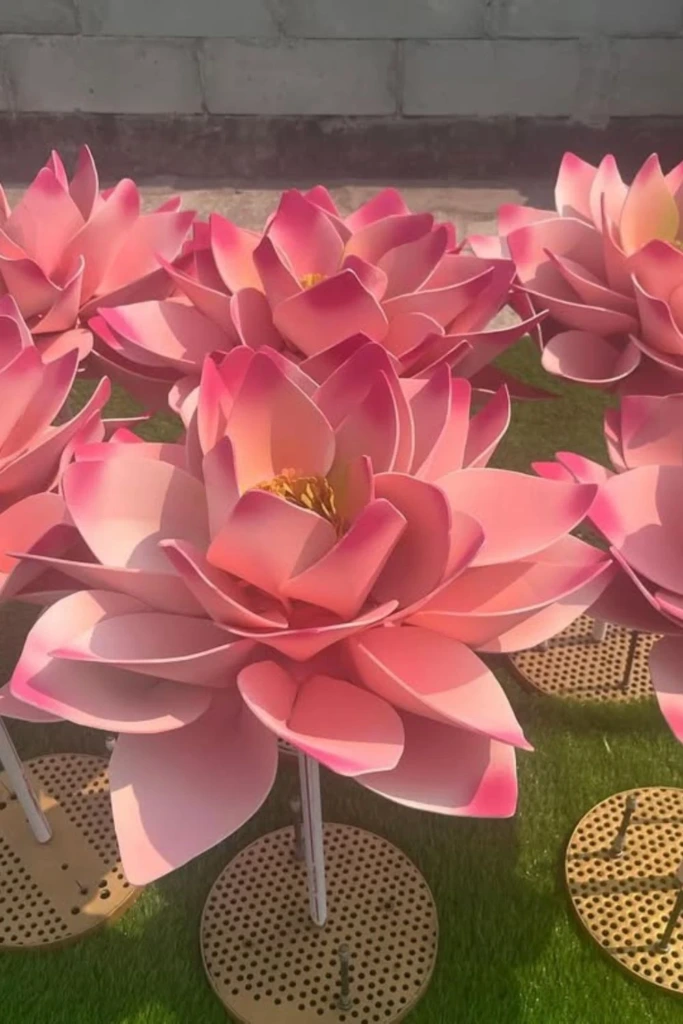
A paper lotus arrangement can introduce a peaceful, elegant touch to a room or event space. Large pink petals arranged in concentric layers create a graceful bloom, while darker pink accents near the centers add visual depth.
Begin with a sturdy circular base and cut several sets of petals in graduated sizes. Curl the edges slightly before attaching each layer, positioning the smaller petals toward the center. A combination of pale pink, rose, and magenta paper can create a subtle color transition.
Mount finished flowers on stable stands if you want a freestanding display. This design suits meditation corners, cultural celebrations, wedding entrances, and decorative installations.
For a coordinated look, pair the flowers with green leaves and simple background elements. Keeping the surrounding decor uncluttered allows the sculptural petals to remain the main attraction.
6. Brick Wall Blooms
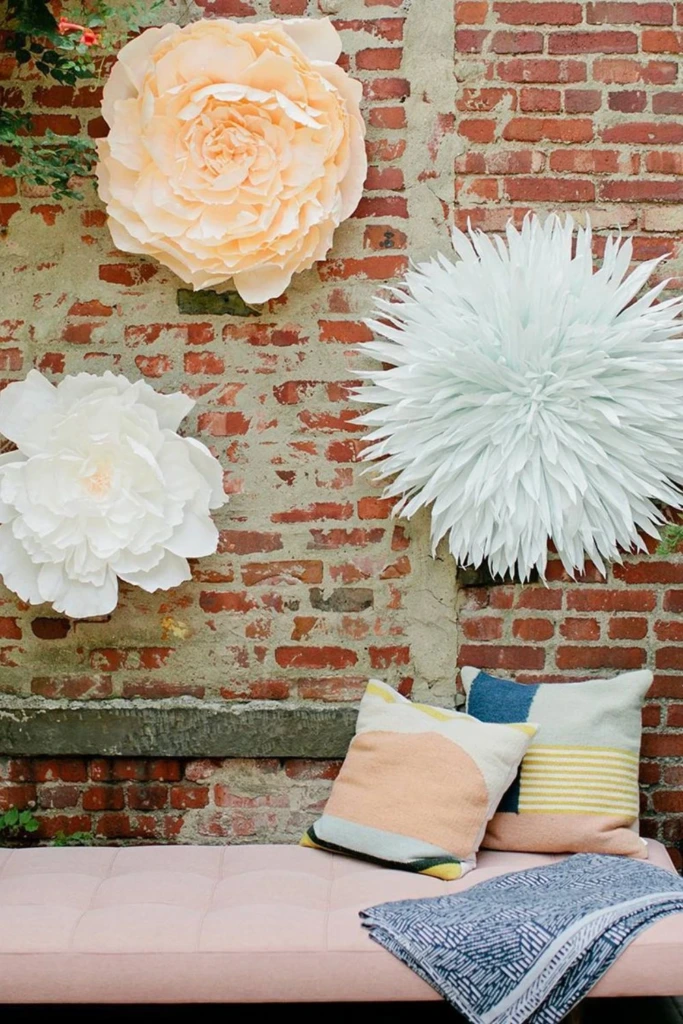
Large paper flowers look especially attractive against a textured brick wall. Soft peach, ivory, and cream blossoms contrast with the rough surface, combining rustic character with delicate floral details.
Choose flowers with broad, curved petals to create volume. You can use several sizes and overlap their outer leaves slightly to give the arrangement a layered appearance. A restrained color palette helps the decorations complement the brick rather than compete with it.
This idea is well suited to garden weddings, covered patios, photography areas, and bohemian-inspired celebrations. If the wall is outdoors, consider how wind, moisture, and sunlight might affect the materials.
Use suitable removable mounting hardware or a separate display panel to protect the wall. Arrange the largest flowers first, then add smaller blooms to create a balanced composition.
7. Muted Rose Garden
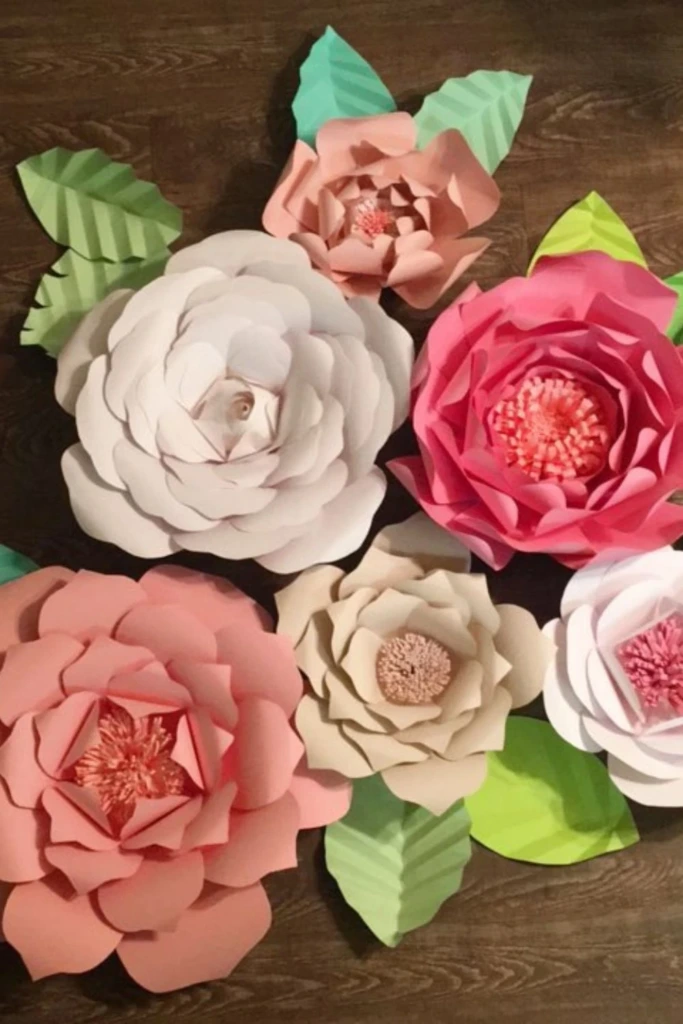
Blush, dusty pink, and warm ivory paper roses create a timeless arrangement with a soft, romantic feel. Adding green leaves and varying the size of the flowers gives the display the appearance of a garden captured in full bloom.
For a cohesive design, choose two or three related shades rather than using every available color. Make some roses tightly layered and others more open to introduce variety.
This arrangement works beautifully for bridal showers, engagement celebrations, wedding backdrops, and understated home decor. Quality crepe paper is particularly useful because its flexibility allows you to shape petals into gentle curves.
Attach the petals gradually around the flower center, checking the shape as you work. Once the roses are finished, arrange them in groups of different heights to create a natural-looking floral display.
8. Sunburst Style
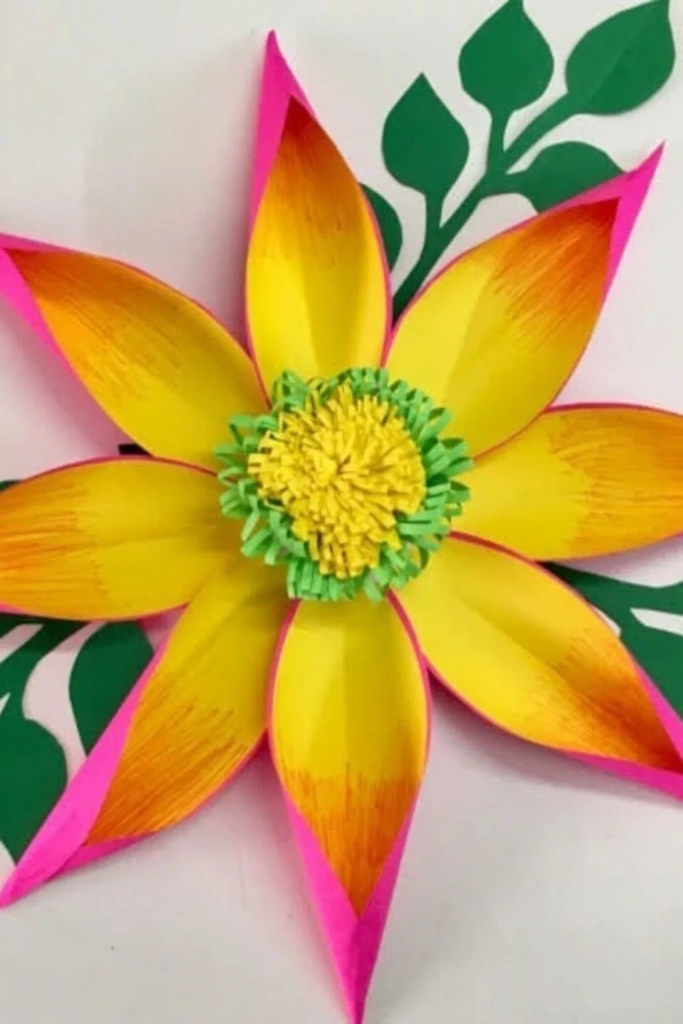
Sunburst paper flowers are ideal when you want a decoration that feels bright, cheerful, and energetic. Yellow petals edged with hot pink create a strong color contrast, while a textured green center adds another layer of interest.
Cut long, pointed petals to produce a radiating shape. You can use yellow cardstock for the main flower and smaller pink pieces along the edges for a decorative border. A fringed paper center creates texture without requiring complicated construction.
These flowers are suitable for children's bedrooms, spring parties, school displays, and colorful photo walls. They also work well as individual decorations on doors or large gift boxes.
To keep the petals symmetrical, prepare a template before cutting the paper. Slightly bending the petal tips can add dimension and make the finished flower look less flat.
9. Color Pop Cluster
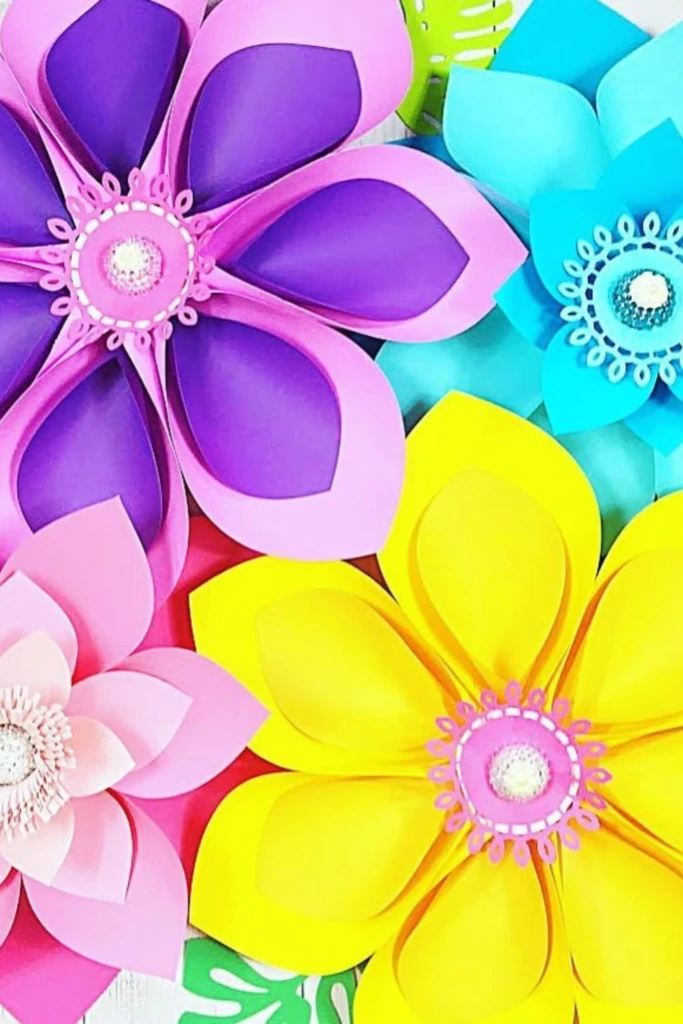
A cluster of brightly colored paper flowers can instantly energize a plain wall or celebration space. Purple, turquoise, yellow, and pink create a lively palette that suits birthdays, baby showers, shop displays, and playful interiors.
The key to a successful arrangement is variety. Combine large open blooms with smaller flowers, and alternate rounded petals with pointed or scalloped designs. Different center details can help distinguish each flower even when the colors are similar.
Cardstock is a practical choice for maintaining crisp petal shapes. Trace templates carefully, cut several matching pieces, and layer them around a central circle. Add contrasting centers to make individual flowers stand out.
Before attaching the flowers to a wall, lay them out on the floor and experiment with different positions. A balanced arrangement usually includes a few prominent blooms surrounded by smaller accents.
10. Realistic Ranunculus
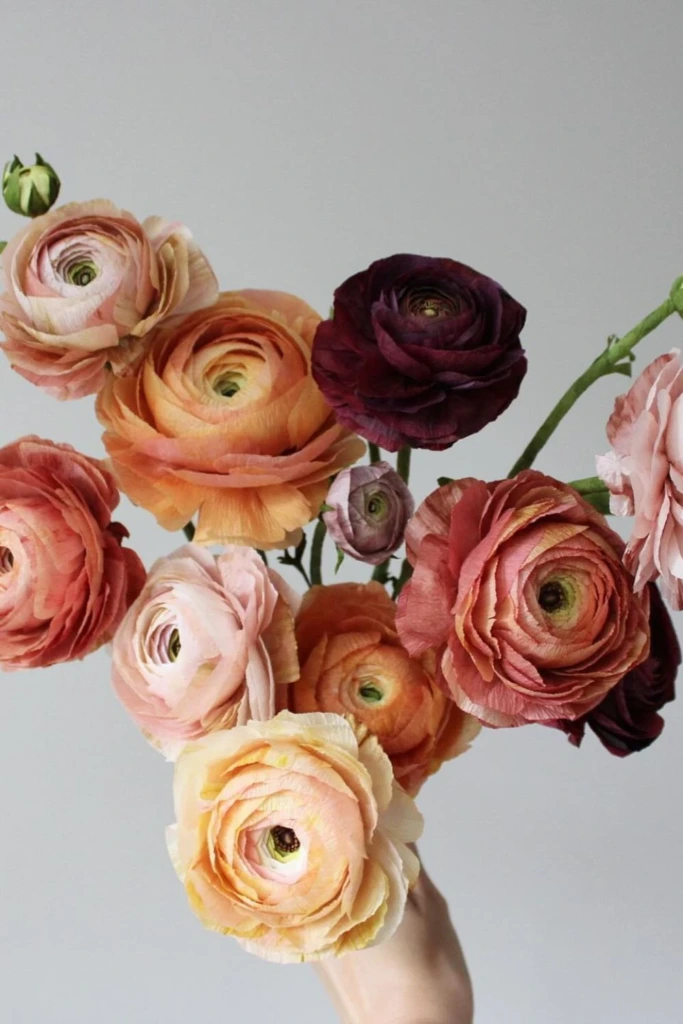
Paper ranunculus flowers are a rewarding project for anyone who enjoys detailed crafting. Their tightly packed petals form a rounded bloom, and the overlapping layers can resemble the delicate structure of a fresh flower.
Crepe paper is an excellent material for this design because it stretches and bends more easily than ordinary paper. Choose blush pink, burnt orange, burgundy, or another natural-looking shade. Floral wire, floral tape, and green paper can be used to build stems and leaves.
Start with a small center, then attach narrow petals around it. Gradually increase the size of the petals as you move outward, alternating their positions to avoid visible gaps. Gentle shaping gives the bloom a fuller appearance.
These flowers are useful for handmade bouquets, wedding arrangements, table decorations, and long-lasting home displays. With careful layering and realistic color choices, they can become convincing alternatives to fresh blooms.
11. Satin Rose Set
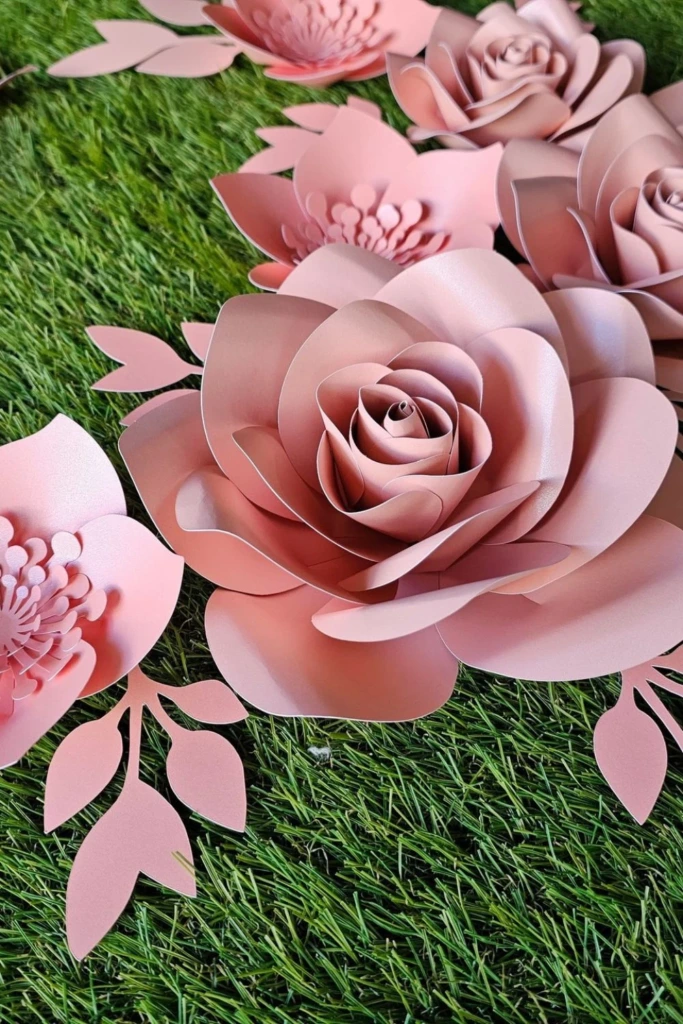
Satin-inspired paper roses combine a smooth appearance with softly curled petals. Blush pink or pale rose shades give these flowers a refined finish, making them suitable for elegant parties, wedding signage, and romantic photo backdrops.
To achieve the look, choose paper with a slight sheen or a smooth surface. Cut rounded petal shapes and curl their edges around a pencil or shaping tool. Assemble the petals around a compact center, gradually opening the flower as you add the outer layers.
Paper leaves in a muted green shade provide contrast without distracting from the roses. Arrange several flowers together for a coordinated display, or use individual blooms as accents on gift packaging.
Avoid creasing glossy paper too sharply, as unwanted folds can spoil its smooth finish. Gentle shaping and careful glue placement will help the petals retain a polished appearance.
12. Daisy Wall Duo
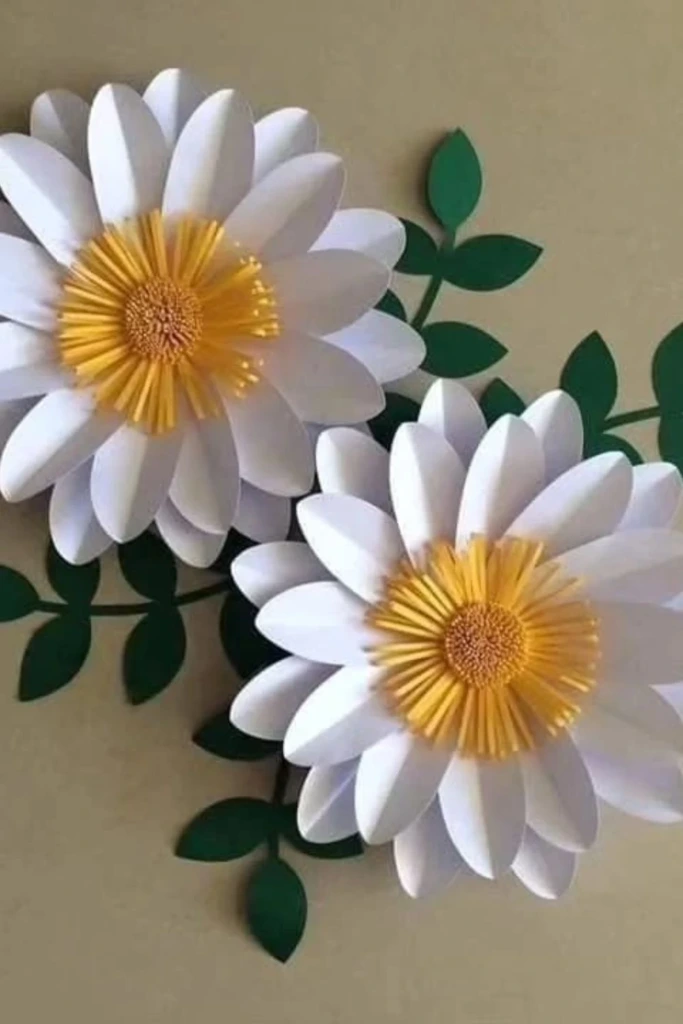
White paper daisies with bright yellow centers are simple, cheerful decorations that suit almost any season. Their clean shapes and familiar appearance make them especially popular for spring displays, classrooms, children's parties, and playful bedroom decor.
Cut several white petals using a consistent template, then arrange them around a circular yellow center. For extra dimension, layer two sets of petals with the upper set positioned between the lower petals.
A fringed yellow center adds texture, while green leaves help complete the floral design. You can make the flowers in different sizes to create a more interesting wall arrangement.
This project is beginner-friendly because the basic shapes are easy to cut and assemble. It is also a useful group activity when children are supervised and provided with age-appropriate scissors and adhesives.
13. Lacy Bloom Rose
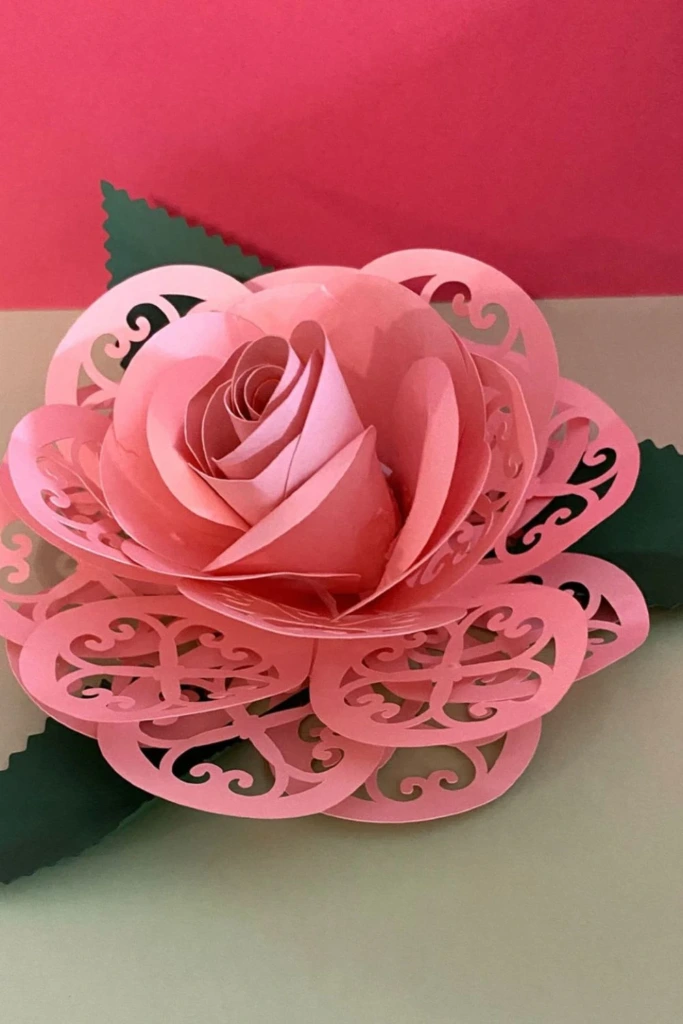
A lacy paper rose offers a more decorative interpretation of the traditional flower. Rounded inner petals can be combined with intricate outer layers featuring scalloped edges, small cutouts, or delicate patterns.
Choose pastel pink, cream, or soft lavender paper for a romantic appearance. Build the center first, then attach increasingly large petals around it. The patterned outer layers provide contrast and make the flower look more elaborate.
This design is suitable for Valentine's Day gifts, anniversary decorations, handmade cards, and elegant gift wrapping. Smaller versions can be attached to hair accessories or used as embellishments on craft projects.
Use a sharp craft knife or precision scissors for detailed cuts, working on a suitable cutting mat. If you're new to intricate paper cutting, practice the pattern on scrap paper before using your final materials.
14. Bedroom Bloom Wall
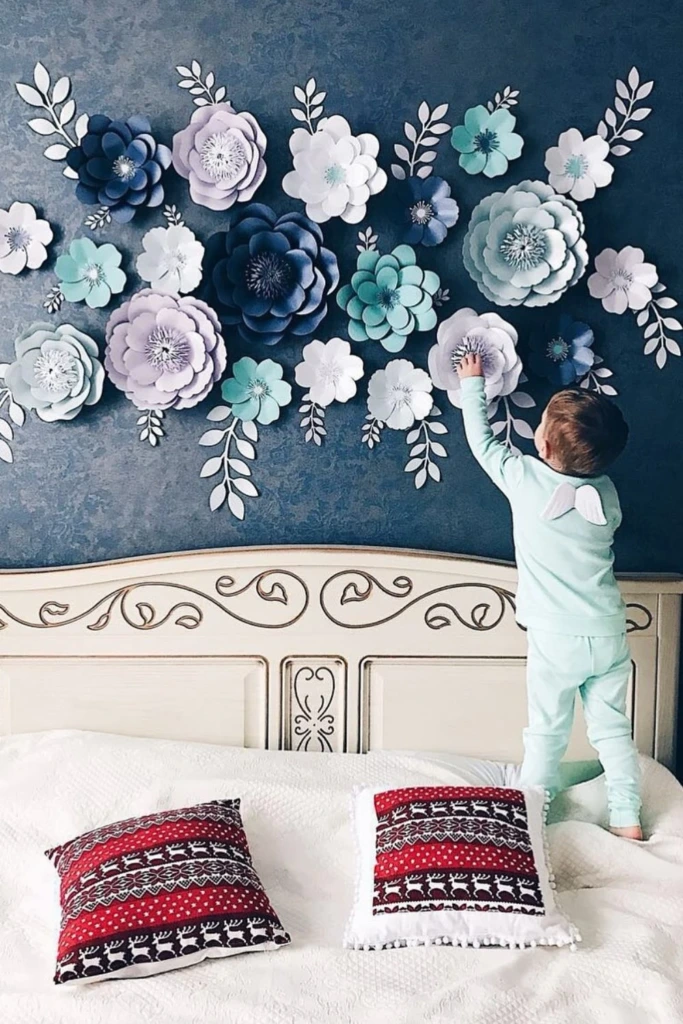
A paper flower wall can turn an ordinary bedroom into a personalized decorative space. Soft aqua, pale blue, lavender, and deeper navy flowers create a balanced palette that feels colorful without becoming overwhelming.
Mix several flower styles and sizes to make the display more dynamic. Large blooms can anchor the arrangement, while smaller flowers and paper leaves fill the gaps. You might also incorporate white or cream accents to provide breathing room between darker colors.
This idea works well in children's bedrooms, nurseries, creative spaces, and reading corners. Choose lightweight cardstock or paper that will not place excessive weight on the mounting surface.
Arrange the flowers on the floor before installing them. Use wall-safe adhesive suitable for your paint or wallpaper, and test it in an inconspicuous spot first. A carefully planned layout makes it easier to create a balanced floral mural without unnecessary wall damage.
15. Laser-Cut Lotus
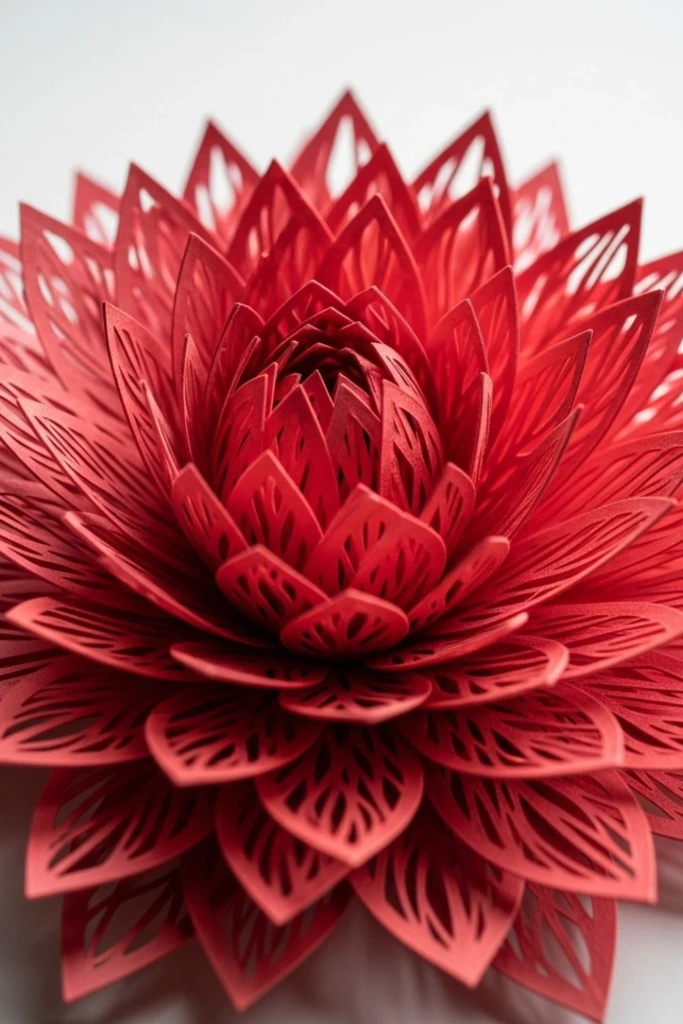
A laser-cut paper lotus is a striking option for crafters who appreciate precise patterns and intricate details. Deep red paper creates a dramatic appearance, while delicate cutouts along the petals introduce a lace-like effect.
The design depends on accurate cutting and thoughtful layering. Specialty cutting equipment can reproduce complex patterns efficiently, although simpler versions can be made with carefully designed templates and precision hand tools.
Use paper with enough strength to retain its shape without becoming difficult to cut. Assemble the petals in graduated layers, ensuring that the decorative openings remain visible when the flower is viewed from the front.
A finished lotus can serve as a centerpiece for an art installation, a decorative wall feature, or an elegant event display. Because intricate petals can tear easily, handle the finished flower gently and support it with a stable backing when mounting it.
16. Stemmed Trio Roses
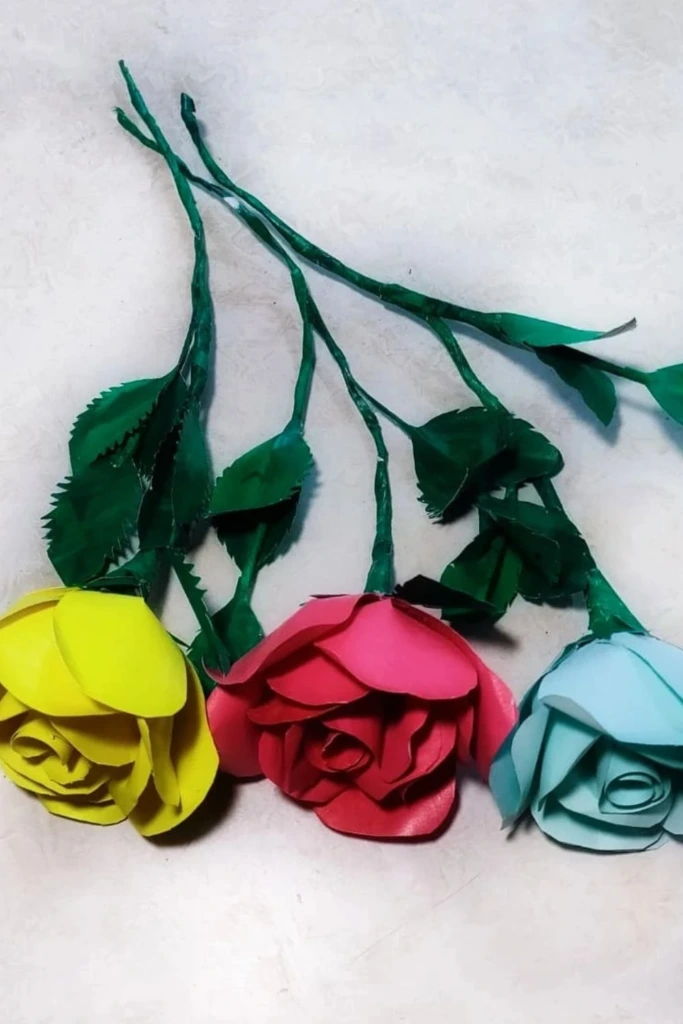
A trio of paper roses in yellow, red, and blue offers a colorful alternative to a traditional bouquet. Each flower can have its own character, while matching green stems and leaves bring the arrangement together.
Create the rose heads by cutting rounded or slightly pointed petals and attaching them around a small center. Use floral wire for the stems, wrapping it with green floral tape or covering it with narrow strips of green paper.
The flowers can be displayed in a small vase, tied together with ribbon, or presented as a handmade gift. They also work well as decorations for desks, shelves, and dining tables.
This project is approachable for beginners because each rose can be made separately before the bouquet is assembled. If you want the flowers to sit securely in a vase, add a suitable weight to the base or use floral foam to support the stems.
17. Lily Pad Flower
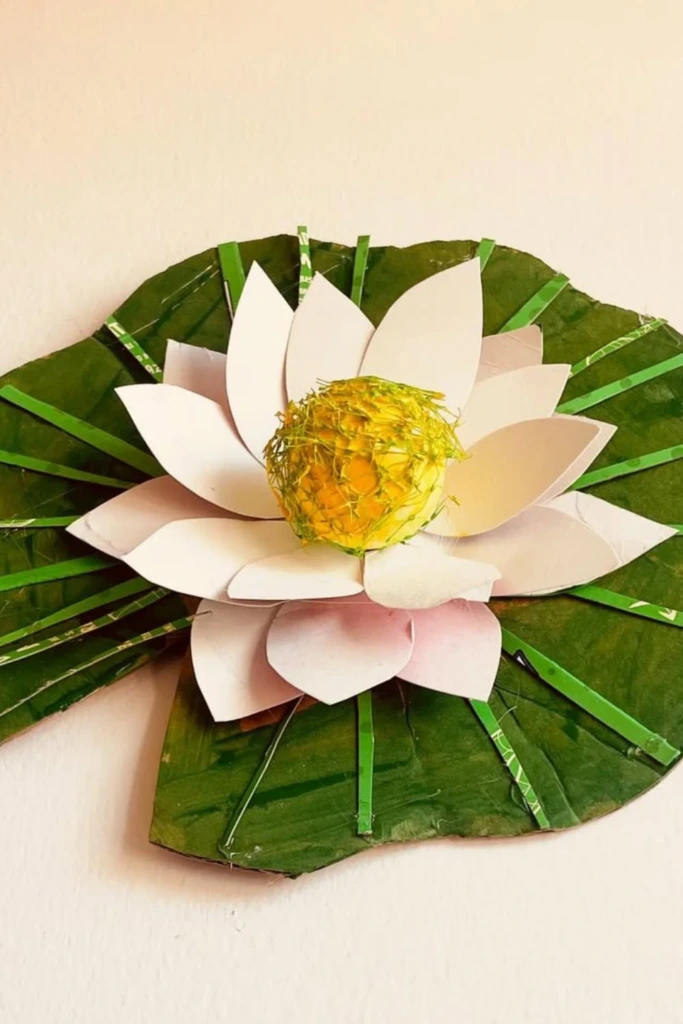
A lotus-inspired paper flower resting on a green lily pad makes a charming nature-themed decoration. White petals surrounding a textured yellow center create a fresh appearance, while the broad green base gives the design a distinctive silhouette.
Cut the lily pad from green cardstock or craft foam, then prepare several white petals in graduated sizes. Arrange the petals around the yellow center, shaping them slightly to produce a raised flower.
This project is well suited to Earth Day activities, classroom displays, garden-themed parties, and nature-inspired home decor. You can also create a small group of flowers in different sizes for a more complete display.
Layered paper and lightweight craft foam can be combined to add texture. Keep the base broad enough to support the flower and attach the center securely so the decoration maintains its shape.
18. Indoor Lotus Garden
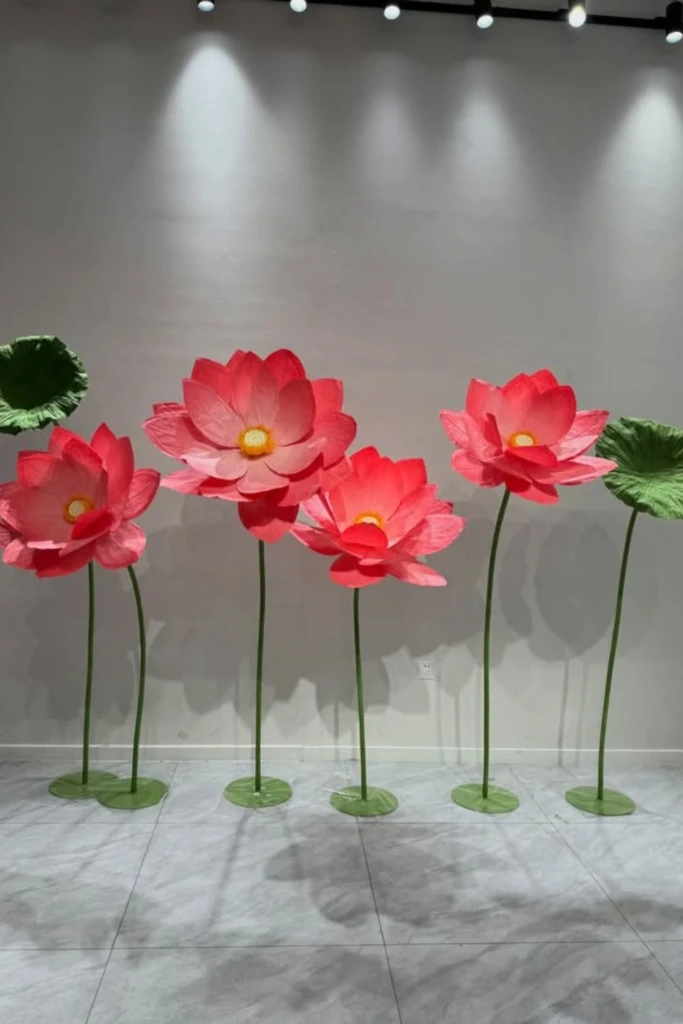
An indoor lotus garden made from oversized paper flowers can create a dramatic focal point in an otherwise simple room. Coral and pink blooms paired with tall green stems and broad leaves give the arrangement height, movement, and a calming botanical quality.
Begin by creating several large lotus flowers, varying their sizes and the number of petal layers. Use sturdy stems or lightweight support rods to keep the flowers upright. The leaves can be made from green cardstock or other materials that retain their shape.
This arrangement is suitable for wedding stages, entrance halls, event displays, and spacious living areas. Grouping the flowers at different heights helps create depth, especially when the display is placed against a plain wall.
Choose a stable base that can support the entire structure, and check that the stems remain secure. Soft lighting can emphasize the layered petals and give the arrangement a more polished appearance.
19. Cream Petal Elegance
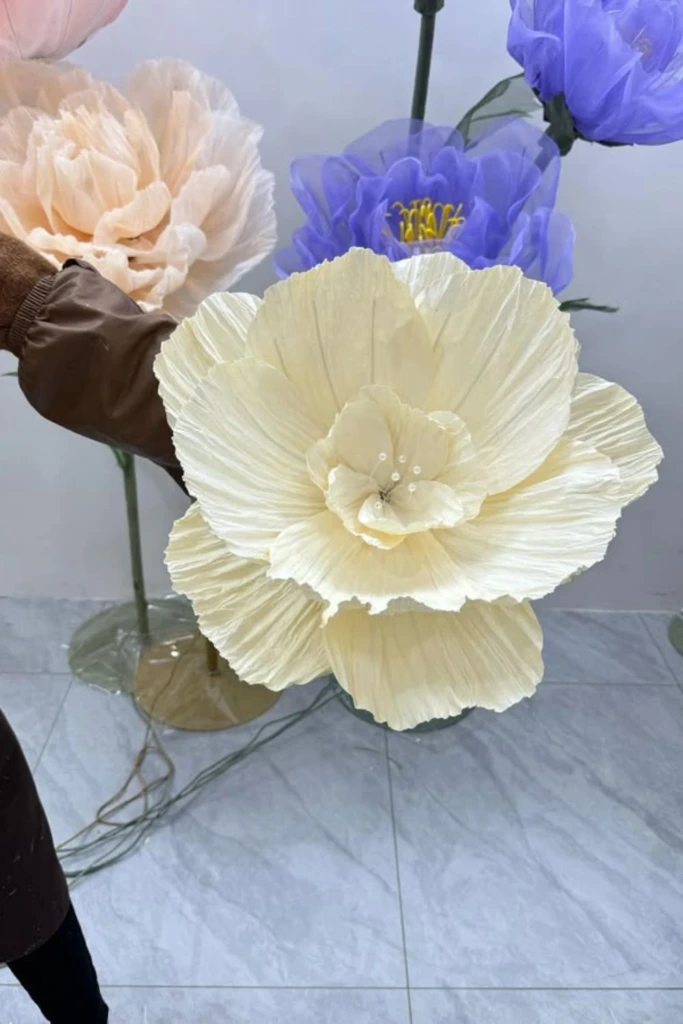
A large cream-colored paper flower brings understated elegance to a decorative arrangement. Its neutral shade works well with many interior styles, from minimalist rooms to romantic wedding settings.
Use crepe paper or another flexible paper that can be shaped into broad, ruffled petals. Cut the petals in several sizes, then attach them around a central base, gradually increasing their dimensions toward the outside. Gentle curling adds movement and prevents the flower from appearing flat.
This design can stand alone as a statement decoration or be paired with beige, blush, pale gray, and soft green accents. It is particularly suitable for boutique displays, wedding backdrops, and sophisticated event styling.
Floral wire and suitable shaping tools can help maintain the structure of a large bloom. If you plan to hang it, reinforce the back so the flower remains secure without distorting its petals.
20. Peony Wall Drama
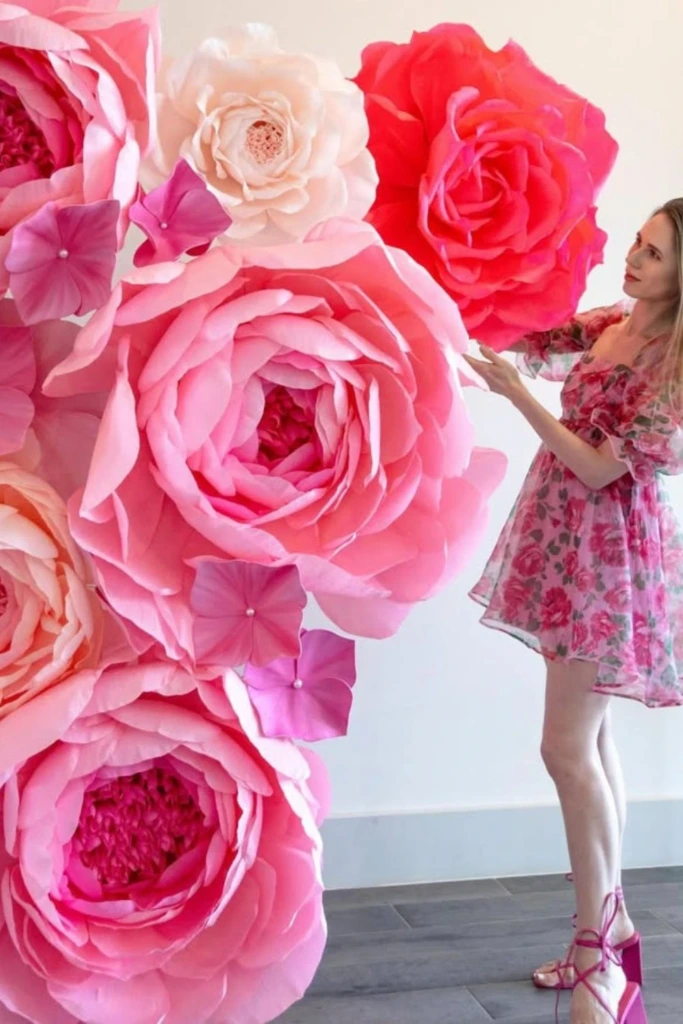
Oversized peonies in hot pink, blush, and coral create a bold decorative feature that immediately attracts attention. Their abundant petals and rounded centers give the arrangement a luxurious appearance, making it a strong choice for bridal photography, brand events, and celebration backdrops.
Create a convincing peony shape by cutting broad petals in several sizes. Curl the edges, form a compact center, and gradually attach larger petals around it. Layering petals closely near the center and more loosely toward the outside produces a fuller silhouette.
Combine several flowers to build a cascading arrangement. Place the largest blooms in prominent positions, then use smaller flowers and leaves to balance the overall composition.
Thick cardstock provides support, while crepe paper offers more flexibility for sculptural petals. For a large installation, mount the flowers on a reinforced backing panel and secure the panel appropriately for the wall or structure.
21. Ocean Blue Poppies
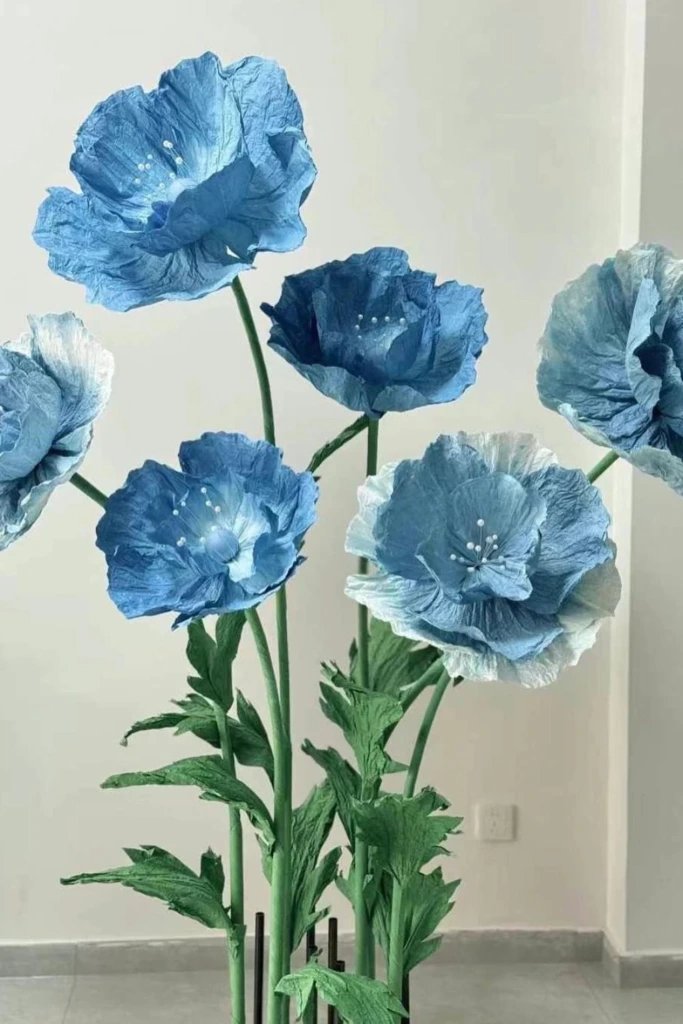
Ocean-blue paper poppies bring a cool, contemporary feel to a room or event. Shades ranging from pale blue to deep ocean blue create a sense of depth, while green stems and leaves add a natural contrast.
To create the blooms, cut broad, gently curved petals and arrange them around a prominent center. Layering different blue tones can imitate the subtle color variations found in natural flowers. A darker center helps define the flower's shape and gives the petals greater visual impact.
These poppies work well in modern interiors, seasonal displays, creative studios, and indoor floral arrangements. They can be grouped into a large installation or arranged individually in decorative containers.
Choose paper that holds its shape while remaining easy to curl. Add sturdy stems if the flowers will stand upright, and secure the base to prevent the arrangement from tipping over.
Paper flowers offer endless opportunities to experiment with color, texture, and shape. Whether you choose delicate daisies, realistic roses, or dramatic oversized peonies, the best design is one that suits your skill level and intended space. Start with a simple flower, practice shaping the petals, and gradually explore more detailed designs as your confidence grows.