22 DIY Bookends Ideas for 2026
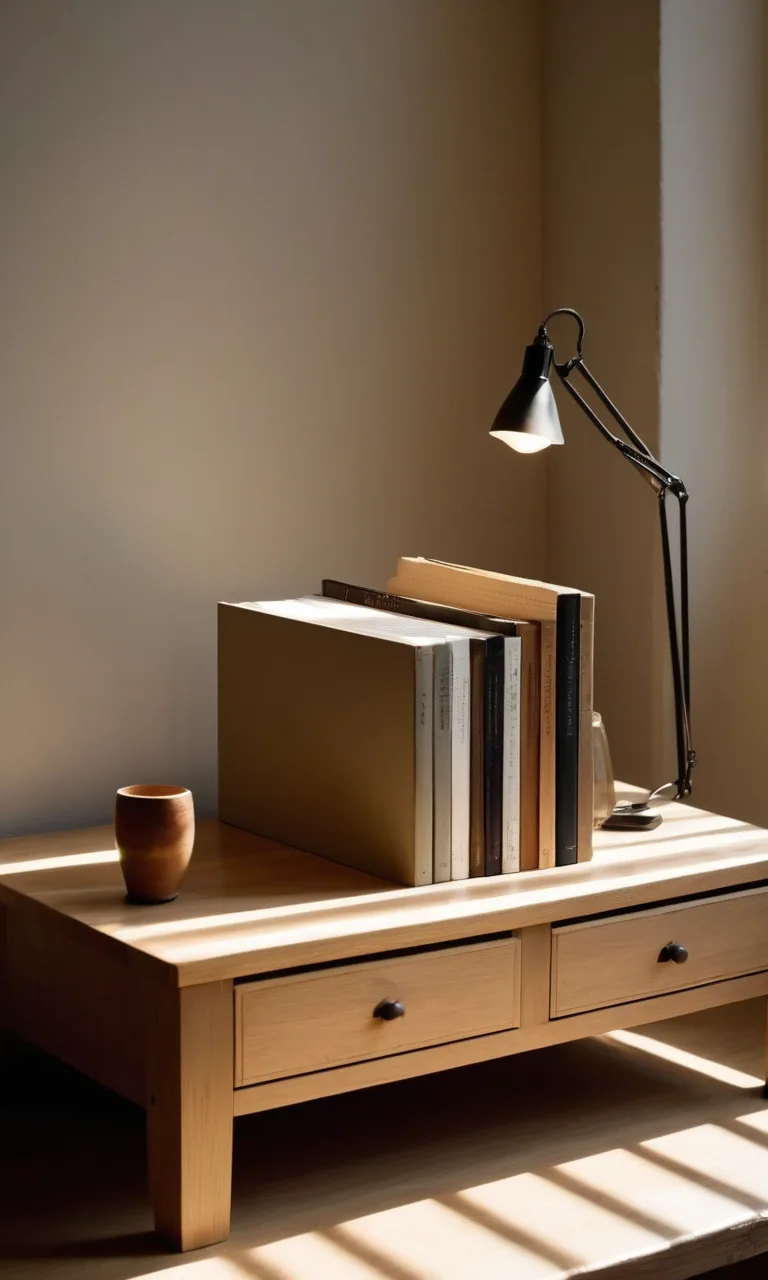
A well-organized bookshelf needs more than attractive decorations. Books require dependable support, especially when you have a collection of heavy novels, cookbooks, or textbooks. Fortunately, DIY bookends can provide that support while adding personality to your shelves.
From natural wood and concrete to colorful clay and miniature sculptures, homemade bookends offer plenty of opportunities to experiment with materials, shapes, and finishes. Many designs can be created using leftover supplies or inexpensive items already available at home.
The secret to a successful project is combining an appealing design with a stable foundation. These 22 DIY bookends ideas offer creative ways to keep your books organized while making your shelves more interesting.
How Do I Add Weight to Homemade Bookends Without Making Them Look Bulky?
A bookend doesn't need to be oversized to support a row of books. What matters most is how its weight is distributed, how firmly it grips the shelf, and whether its base can resist tipping.
One effective approach is to conceal a thin steel plate beneath a wooden or decorative structure. You can also create a small compartment inside a hollow bookend and fill it with sand, gravel, or metal weights before securely closing it.
An L-shaped base extending beneath the books is particularly useful because the books' own weight helps hold the support in position. Rubber feet or non-slip pads can provide additional resistance on polished surfaces.
For the best results, test your finished bookends with the heaviest books you plan to display. This helps identify sliding or tipping problems before they become an everyday annoyance.
1. Oversized Letter Block
Large alphabet letters make attractive bookends for personalized bookshelves. You can use initials, meaningful letters, or matching shapes to create a coordinated pair.
Cut the letters from thick plywood using a jigsaw, or purchase unfinished wooden letters from a craft store. Secure each letter to a sturdy rectangular base with wood glue and screws where practical.
For additional support, attach a concealed metal bracket or weighted plate beneath the structure. Finish the letters with neutral paint for a contemporary appearance or bright colors for a child's bedroom.
These bookends also make thoughtful handmade gifts for teachers, students, and enthusiastic readers.
2. Vase Style Holders
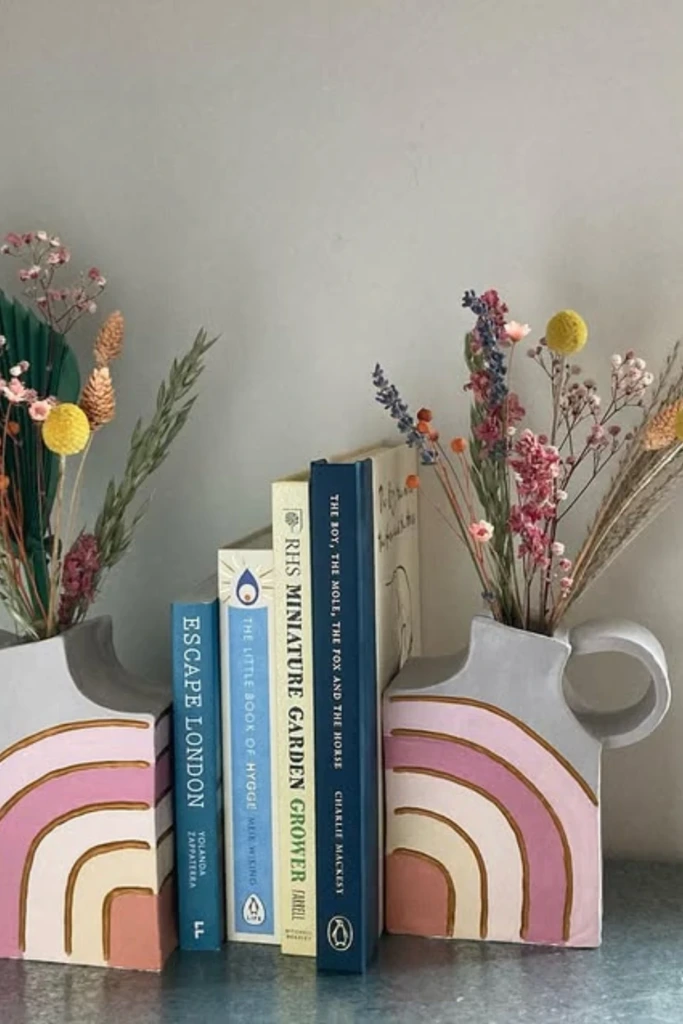
Vase-inspired bookends combine functional storage with decorative styling. Their rounded shapes bring a softer appearance to bookshelves that might otherwise feel dominated by straight lines.
Start with two sturdy, flat-bottomed decorative vessels. If they're hollow and suitable for modification, add sealed weights inside their lower sections to improve stability. Avoid loose filler in containers that could leak or spill.
Small dried floral arrangements can complete the design without requiring regular maintenance. Keep taller decorations lightweight so they don't make the holders top-heavy.
This idea is especially appealing for living rooms, bedrooms, and shelves featuring neutral or botanical decor.
3. Concrete Rose Blocks
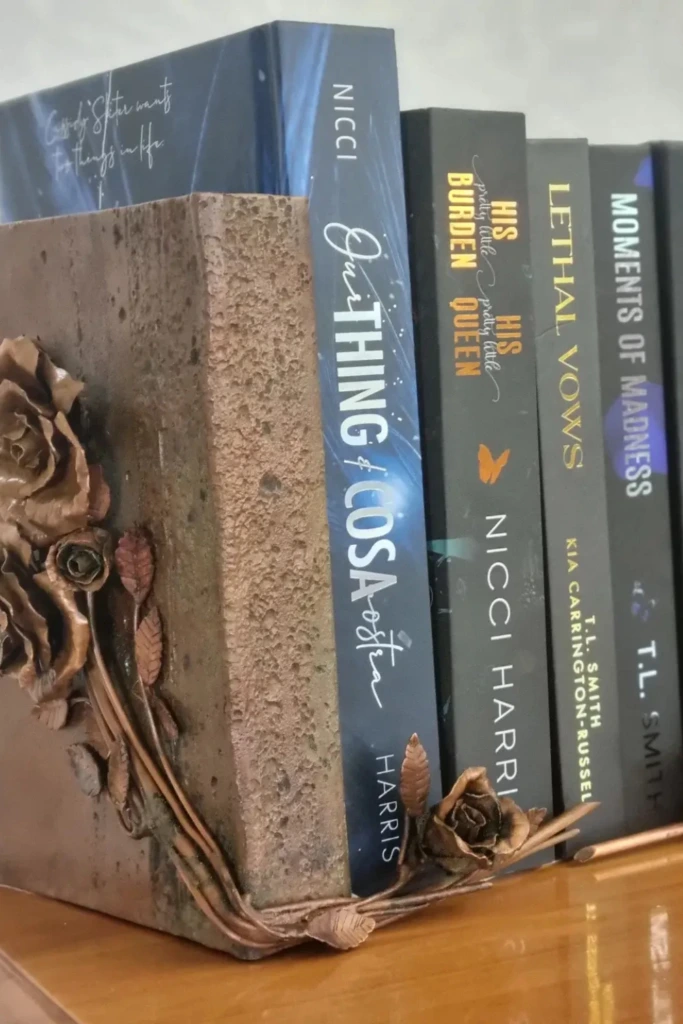
Concrete bookends are a practical option for supporting heavier books because the material provides substantial weight in a relatively compact form.
Prepare two sturdy molds and fill them with concrete mixed according to the manufacturer's directions. For a floral finish, use a rose-patterned mold or create decorative impressions while the mixture is workable.
Allow the concrete to cure properly before removing it from the molds. Smooth any rough contact edges and attach felt or rubber pads to protect the shelf.
You can leave the blocks in their natural gray finish or highlight the rose details with metallic paint. The combination of solid concrete and delicate floral patterns creates an interesting contrast.
4. Chess Piece Ends
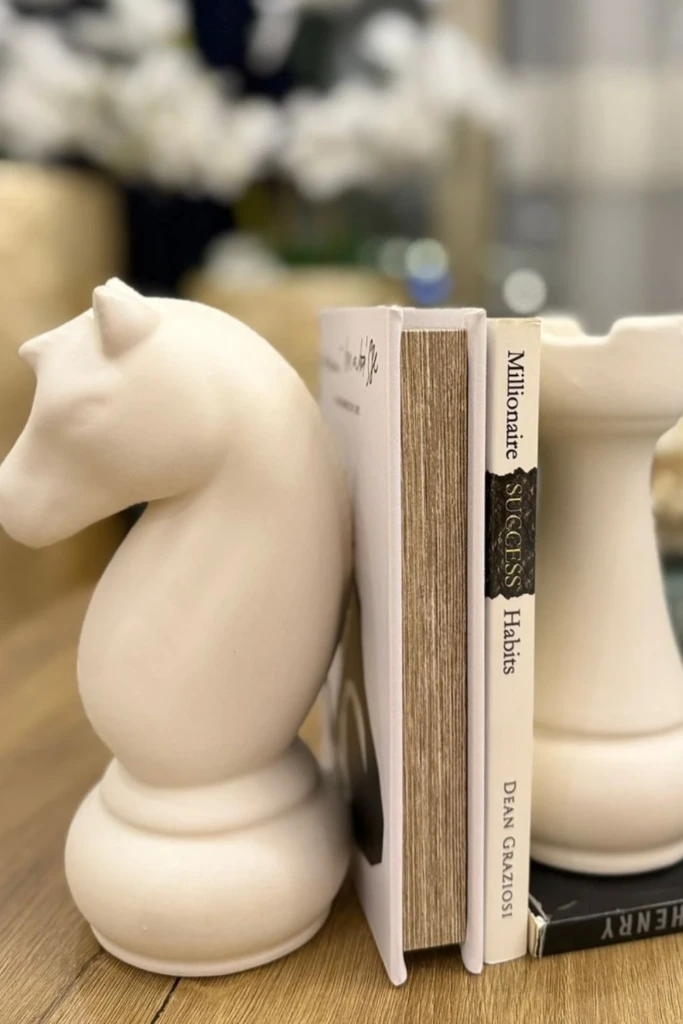
Chess-themed bookends bring a classic, intellectual feel to a home library or study. Knights, rooks, kings, and queens all have distinctive silhouettes that work well as decorative supports.
Find oversized chess pieces made from wood or resin, then secure them to stable bases. For hollow pieces, adding weight to the lower section can help, although the base still needs sufficient width and grip.
Consider painting one bookend black and the other white to reference a traditional chessboard. A matte finish looks sophisticated, while metallic paint creates a more dramatic effect.
These bookends are particularly suitable for chess enthusiasts or anyone decorating a traditional reading space.
5. Mini Scene Nook
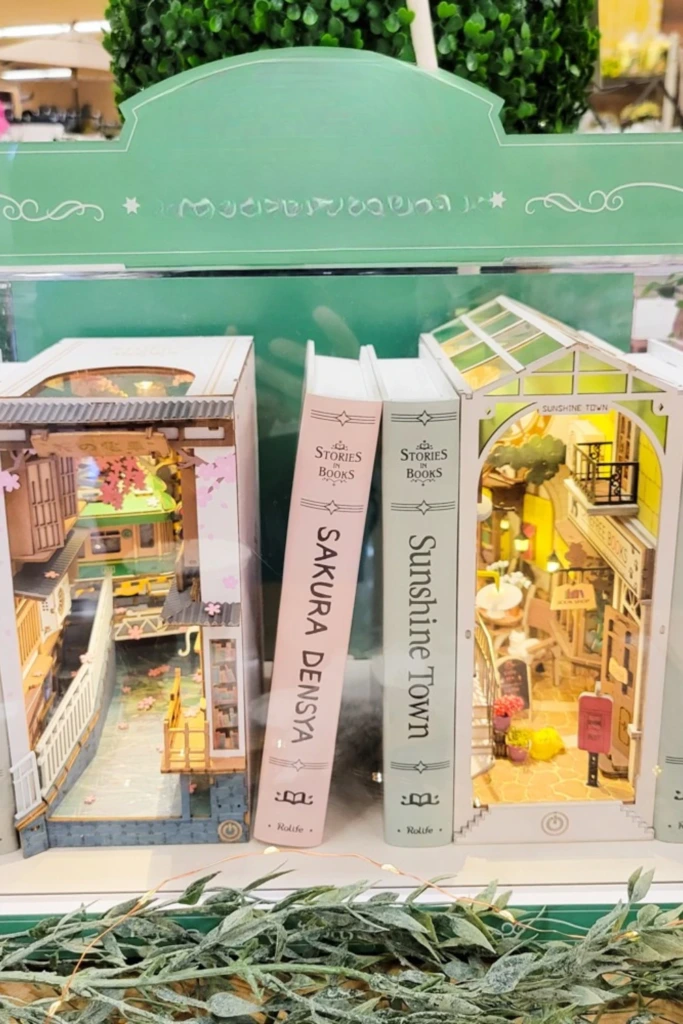
A miniature book nook transforms a small space between books into a detailed imaginary environment. Popular themes include tiny libraries, woodland paths, old-fashioned streets, and fantasy doorways.
Build a narrow wooden box approximately the height of your books. Decorate the interior with miniature furniture, printed scenery, craft materials, and small architectural details.
Battery-powered LED lights can illuminate the scene without requiring complicated wiring. Use components intended for miniature displays and keep batteries accessible.
To make the structure function as a bookend, incorporate a strong bottom plate or secure it to an L-shaped support. The decorative box alone may not withstand pressure from leaning books.
6. Gold Figure Support
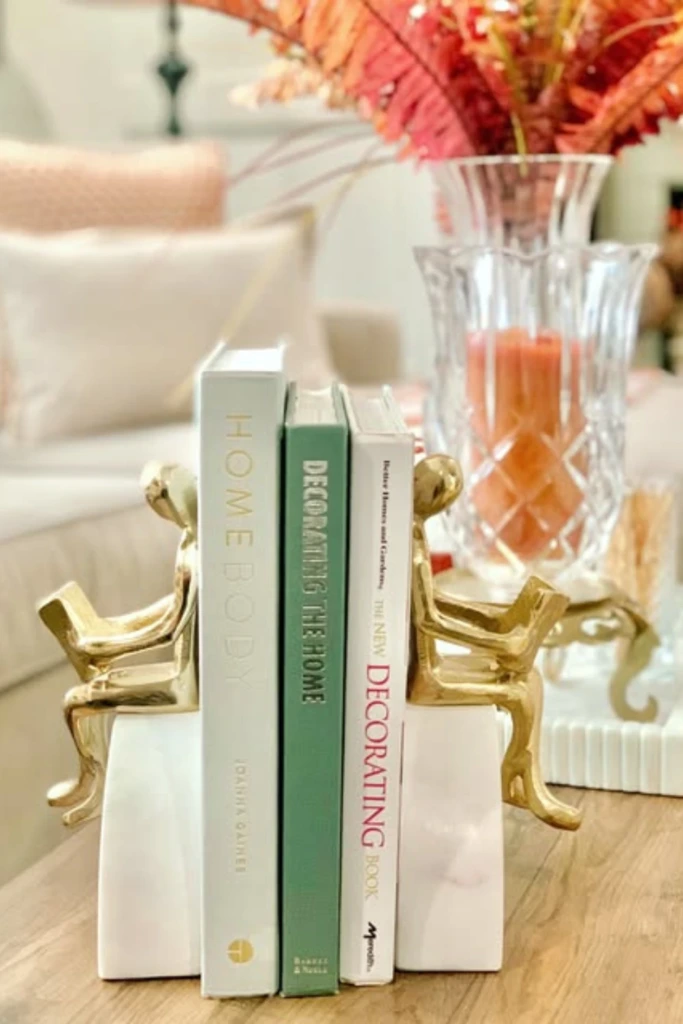
Gold figurine bookends add an artistic touch to contemporary shelves. Small human figures, abstract sculptures, or animal shapes can create the illusion of physically holding the books upright.
Choose two durable figurines and attach them to heavy wooden, stone, or metal bases using an adhesive suitable for both materials.
A metallic gold finish creates a polished appearance, especially when paired with black, white, or dark wood. You can also use antique gold paint for a more traditional style.
Keep the decorative figures close to the supporting surface rather than relying on thin arms or fragile extensions to bear the books' weight.
7. Live Edge Blocks
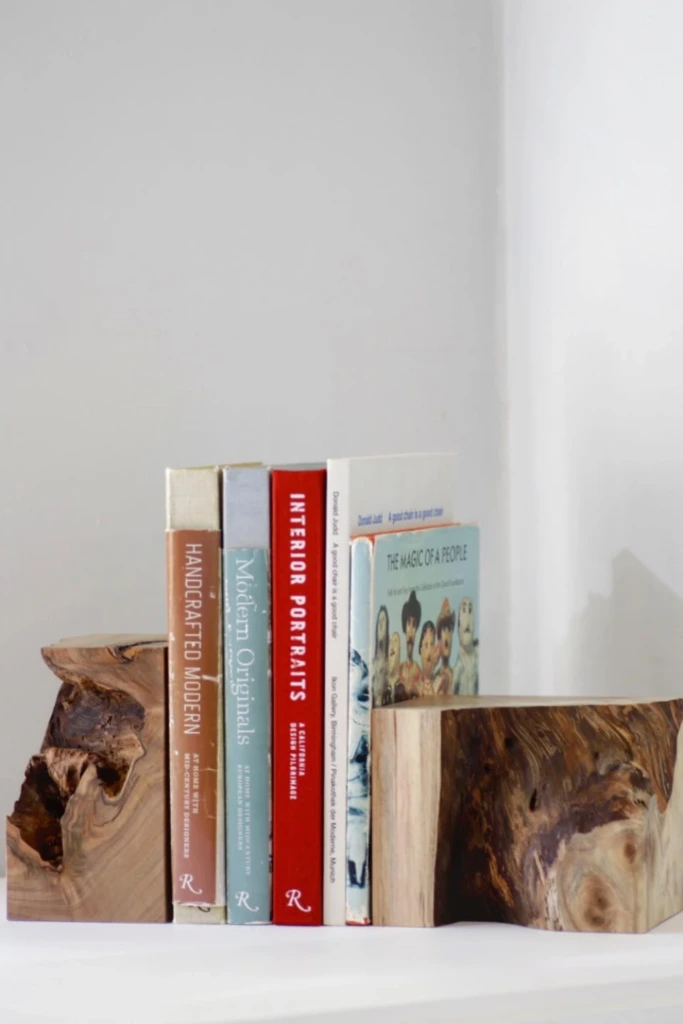
Live-edge wood bookends celebrate the natural shape and grain of timber. Their irregular outlines make each piece slightly different, giving shelves a warm, handcrafted appearance.
Select two dense hardwood offcuts with attractive edges. Cut their bottoms flat so they rest evenly, and create a straight contact face for the books.
Sand away splinters while preserving the organic outer edges. Apply a clear wood finish to enhance the grain and protect the surface.
For greater stability, add non-slip pads or attach a discreet metal base that extends beneath the books. These bookends work particularly well with rustic, farmhouse, and Scandinavian interiors.
8. Sculpted Hand Hold
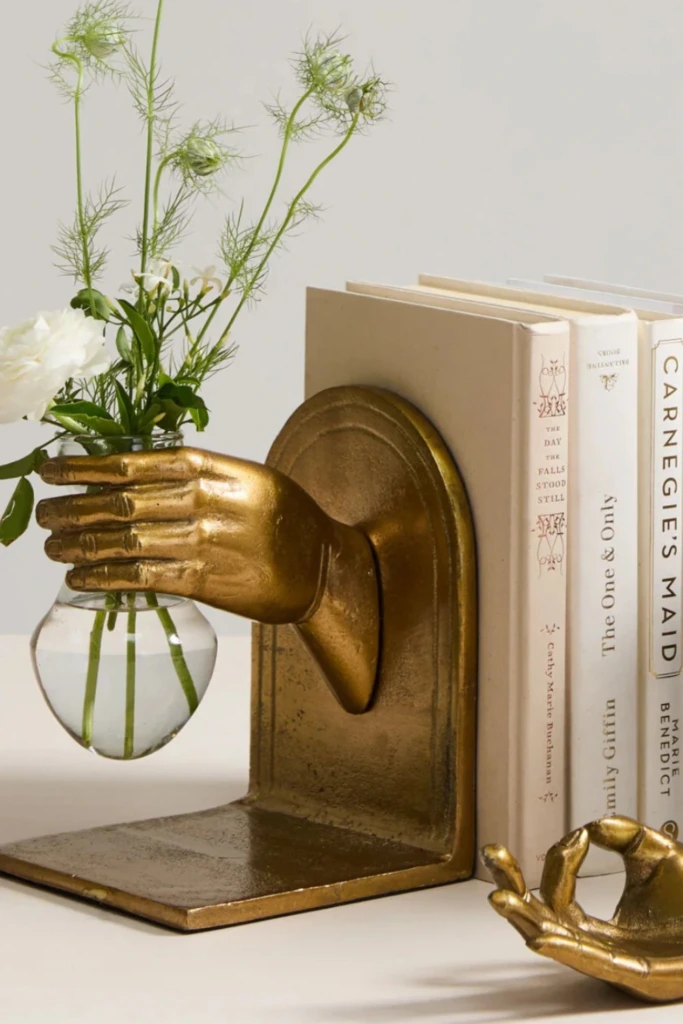
Hand-shaped bookends create a striking visual effect, making it appear as though a sculpture is reaching out to support your collection.
You can use ready-made plaster or resin hands, or create your own using suitable casting molds. Mount each sculpture on a rigid base designed to handle the weight of the books.
Choose a finish that complements your room. White offers a gallery-inspired appearance, black looks contemporary, and bronze or gold introduces vintage character.
Pay attention to the attachment between the sculpture and base. A secure connection is essential because decorative casting materials can crack when exposed to repeated sideways pressure.
9. Wooden Letter Frames
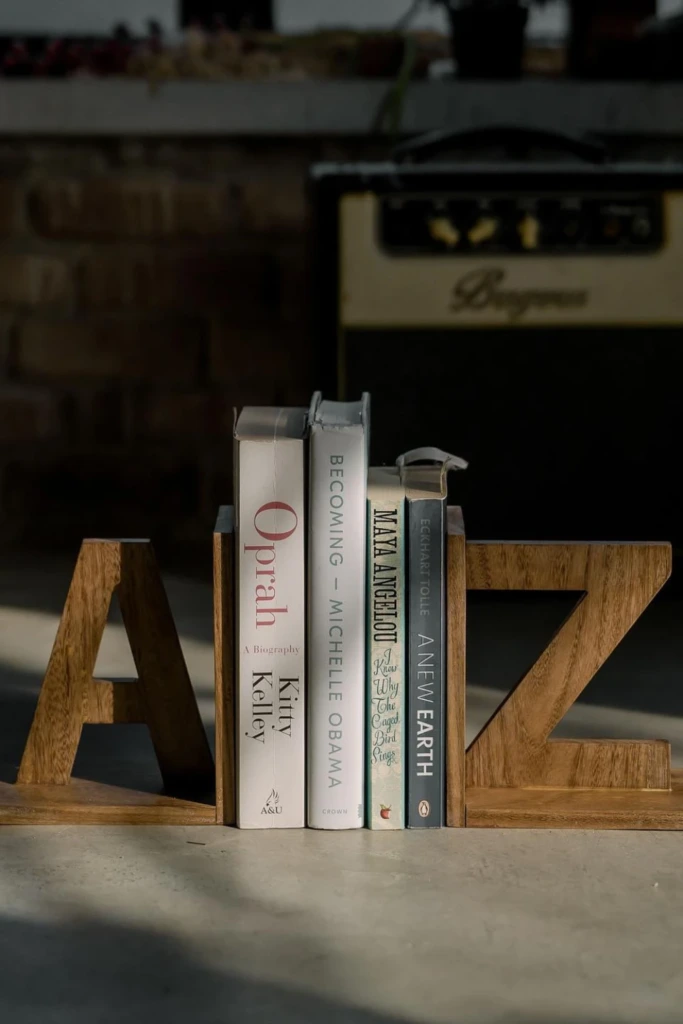
Wooden letter bookends are ideal for displaying initials, names, or meaningful abbreviations. They offer a personalized alternative to ordinary rectangular supports.
Cut letter shapes from hardwood or layered plywood, keeping the design thick enough to remain rigid. Attach each letter to a flat wooden platform that fits neatly beneath the books.
For a natural finish, sand the wood smooth and apply a clear protective coating. Painted letters are another option, particularly for nurseries or children's rooms.
Matching the wood color to your shelving creates a coordinated look, while contrasting colors make the letters stand out as decorative accents.
10. Dragon Claw Ends
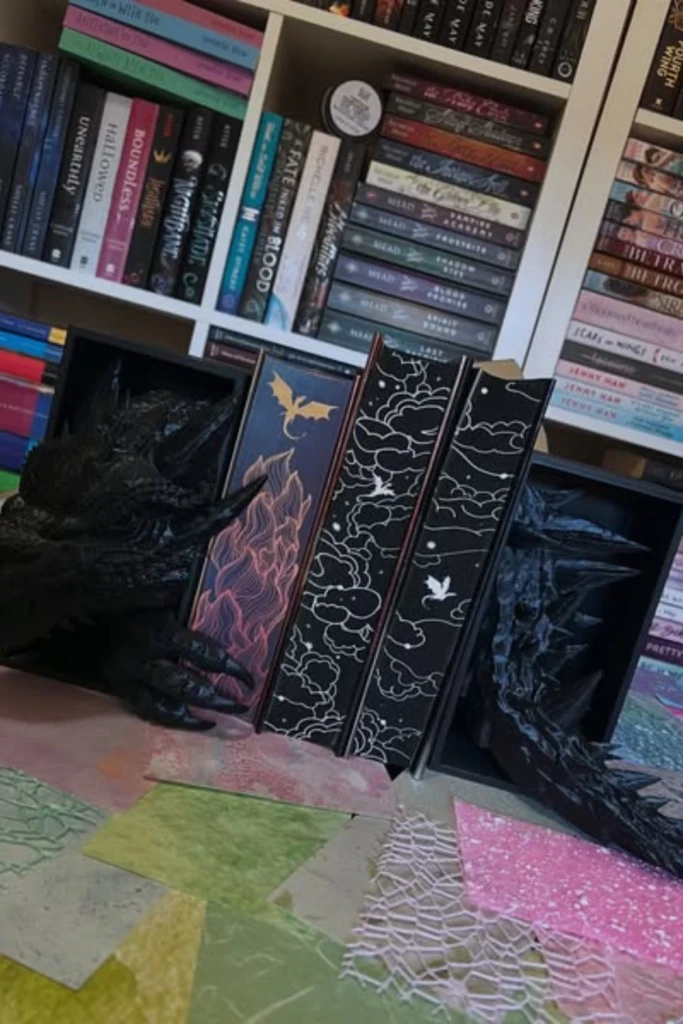
Dragon claw bookends are a creative choice for fantasy collections, gaming rooms, and themed libraries. Their sculptural appearance can make an ordinary bookshelf feel like part of a fictional world.
Create the claw shapes using resin molds or sculpting materials suitable for decorative projects. Add textured scales, curved talons, and painted details to develop the fantasy-inspired appearance.
Mount the claws onto sturdy L-shaped supports rather than allowing the sculpted sections to carry the full load.
Dark green, charcoal, bronze, and aged silver finishes suit this design particularly well. A little dry brushing can highlight raised textures and make the claws appear more detailed.
11. Sculpted Stone Arches
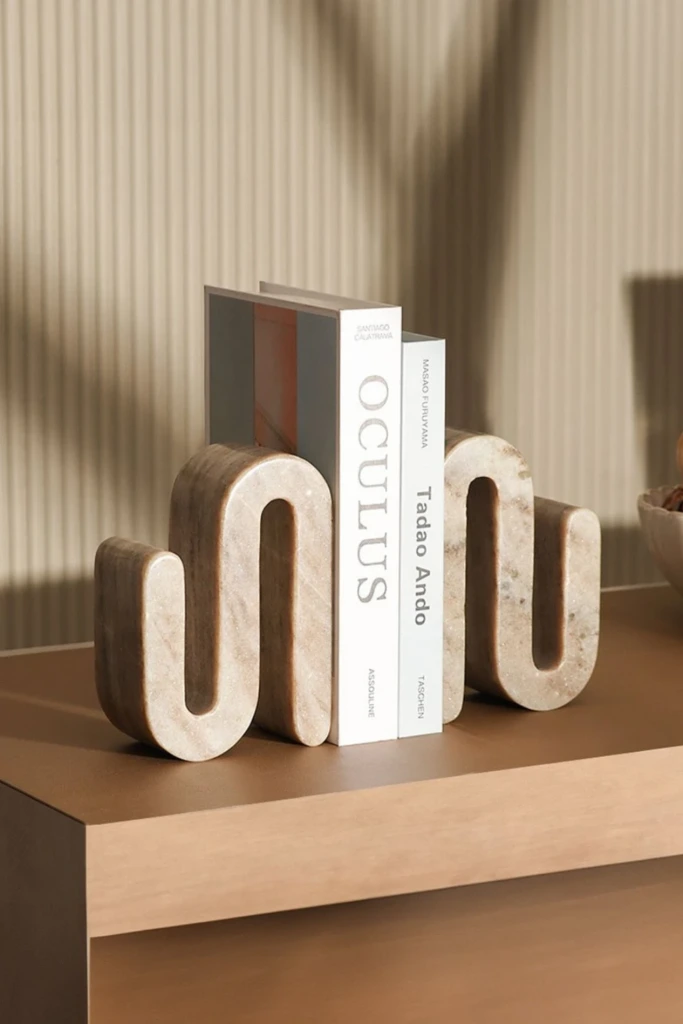
Stone arch bookends offer a clean architectural look that complements modern and minimalist spaces. Their curved outlines introduce visual interest without requiring elaborate decoration.
Use stone blocks cut to shape or cast the arches with an appropriate concrete mixture. If you prefer a lighter decorative shell, attach it to a separate weighted support.
Ensure the bottom is level and the contact surface is broad enough to support books securely. Smooth any sharp edges before placing the bookends on finished furniture.
Cream, beige, and natural gray finishes work beautifully with neutral interiors. The finished pieces can resemble small architectural sculptures while serving a practical purpose.
12. Rounded Bamboo Blocks
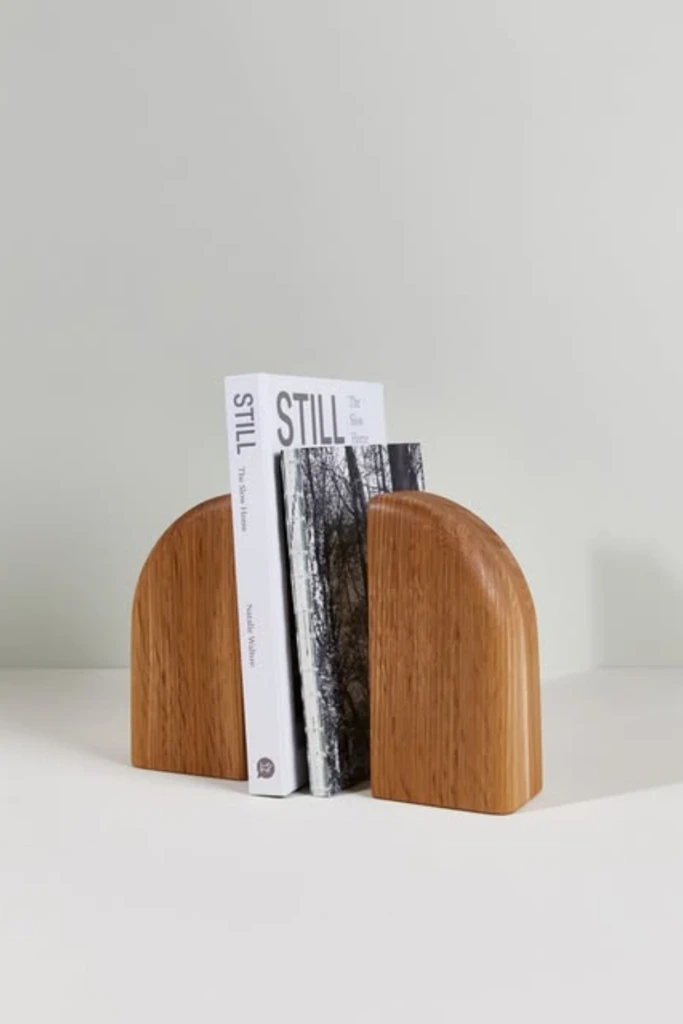
Bamboo bookends bring natural texture and gentle curves to a bookshelf. Their simple shapes suit bedrooms, home offices, and uncluttered reading corners.
Start with thick laminated bamboo boards or suitable solid bamboo stock. Cut matching rounded profiles, then sand the edges until smooth.
Because bamboo pieces vary in density and weight, use a supportive base rather than assuming the material alone will prevent tipping. Thin metal brackets can be concealed beneath the books.
Finish the surfaces with a wood-safe clear coating to preserve the warm natural color. These bookends pair especially well with pale shelving and light-colored interiors.
13. Giant Pencil Ends
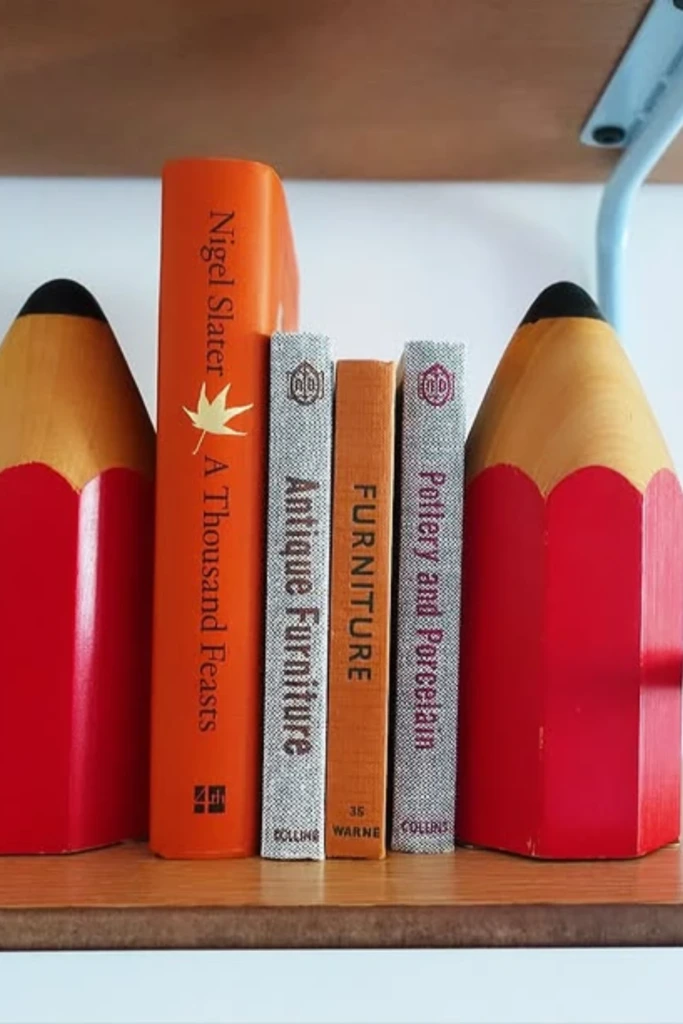
Giant pencil bookends make reading spaces more playful, especially in classrooms, children's bedrooms, and creative studios.
Shape wooden blocks into oversized pencils using a saw and sanding tools. Paint the bodies in cheerful colors, then add contrasting tips, eraser sections, and other recognizable pencil details.
Attach each pencil to a wide wooden base so it remains upright when pressed against books. For tall designs, use an L-shaped metal bracket for additional reinforcement.
You can create matching pencils or choose different colors for each side of the shelf. The finished project adds a school-inspired decorative element without sacrificing useful storage.
14. Resin Wood Cubes
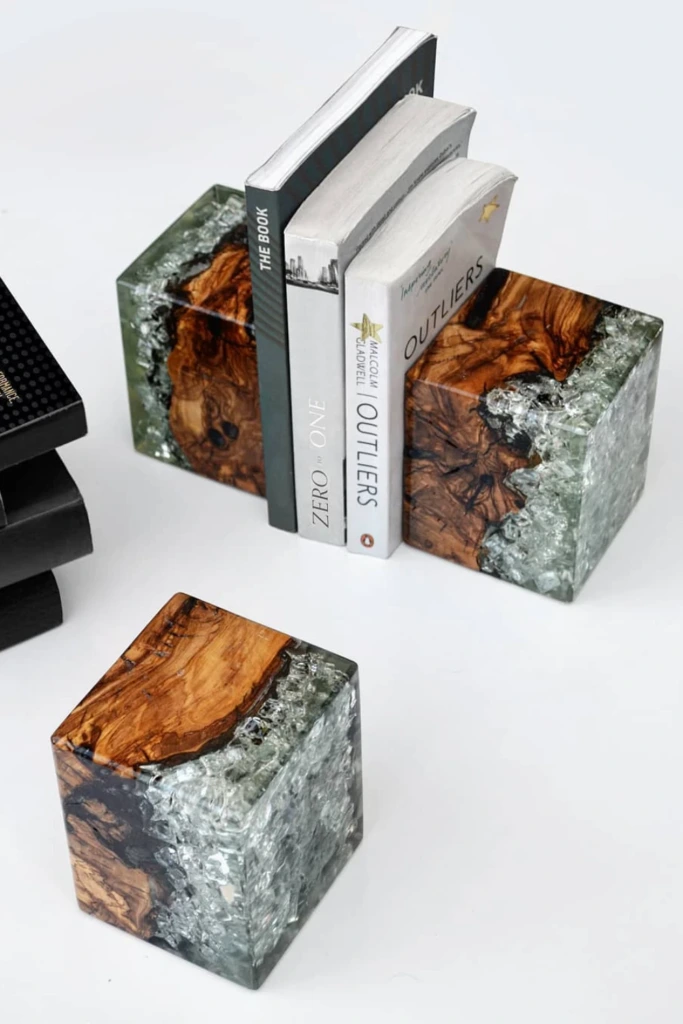
Combining natural wood with epoxy resin produces distinctive bookends featuring contrasting textures and colors.
Choose dry hardwood pieces with interesting grain patterns. Position them inside a suitable mold and pour casting epoxy according to the manufacturer's instructions.
Tinted resin can introduce subtle blue, amber, or green accents, while transparent resin showcases the wood's natural character. Allow the material to cure completely before removing and finishing the blocks.
Work with appropriate ventilation and protective equipment, following the resin manufacturer's safety guidance.
Once finished, add non-slip pads to the bottoms. If the cubes are relatively light, consider a concealed metal base to improve their holding power.
15. Hidden Forest Shelf
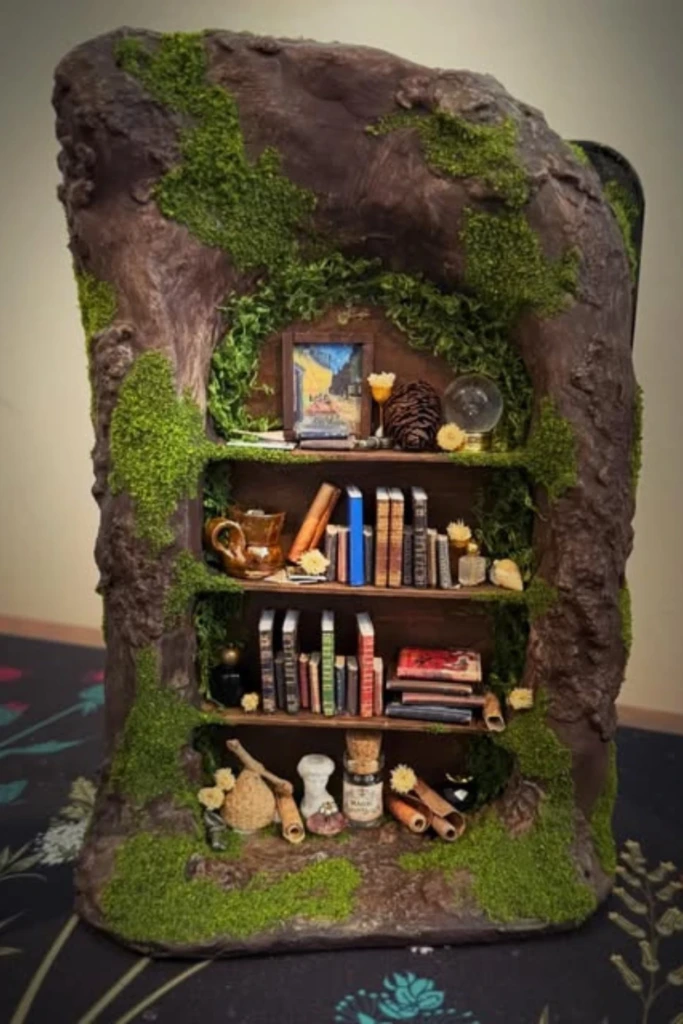
A hidden forest bookend turns a bookshelf into a miniature woodland landscape. Artificial moss, tiny trees, stone textures, and small pathways can create an enchanting scene.
Construct a rigid wooden frame to support the decorative elements. Use lightweight craft foam to shape rocks and uneven terrain, then cover the surface with a suitable hard coating or textured paint.
Arrange miniature plants and woodland details to create depth. Small LED lights can highlight hidden pathways or tiny structures.
Keep the structural support separate from the fragile decorations. A strong base or integrated metal bracket will help the bookend remain stable without damaging the miniature scene.
16. Half Moon Ends
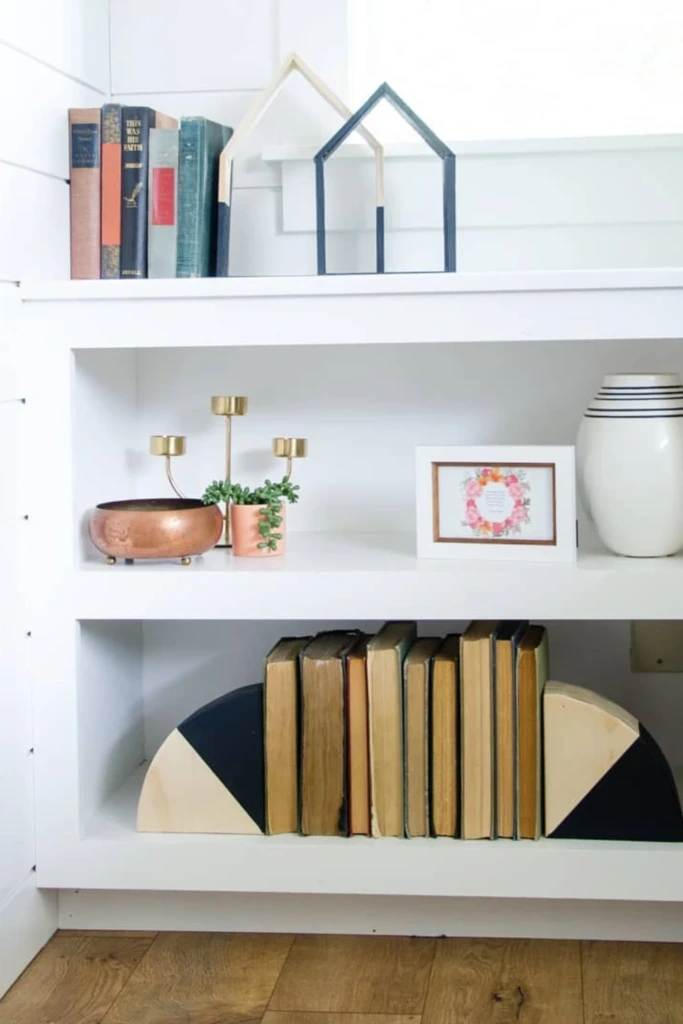
Half-moon bookends are easy to customize and look especially attractive in modern interiors. Their geometric shape makes them suitable for both subtle and colorful designs.
Cut two semicircles from thick wood using a jigsaw or bandsaw. Sand the curved edges and attach each piece to a flat support.
For a two-tone effect, paint one portion of each semicircle while leaving the remaining wood exposed. Earthy colors create a relaxed appearance, while brighter combinations feel more playful.
If your books are heavy, extend the base underneath the row or use metal L-brackets to improve stability. The rounded design works well on open shelves and compact desks.
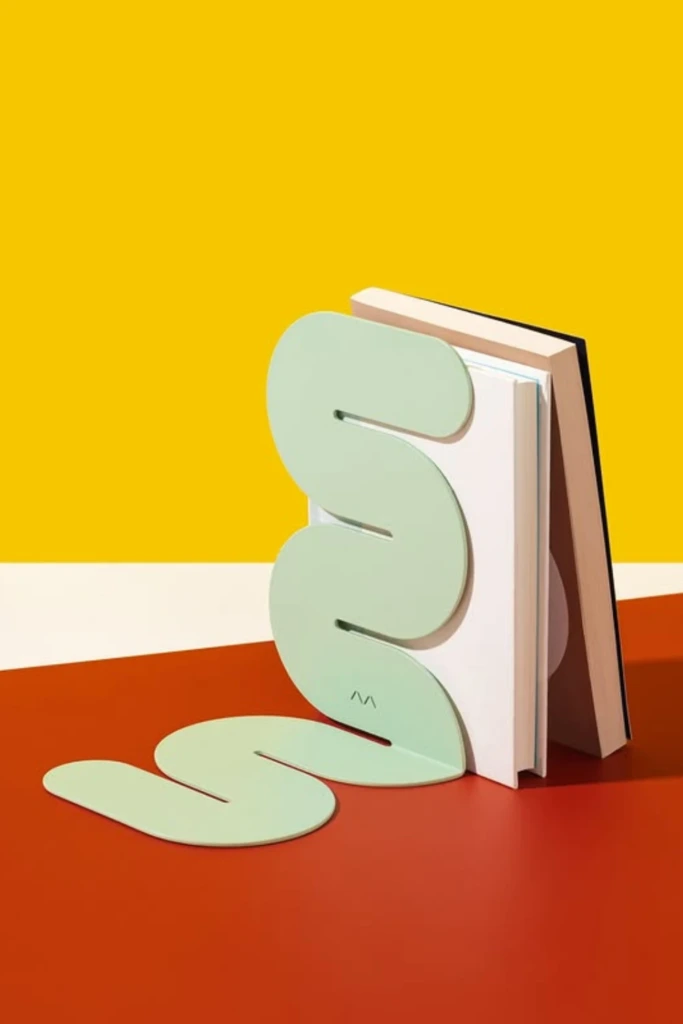
17. Playful Worm Ends
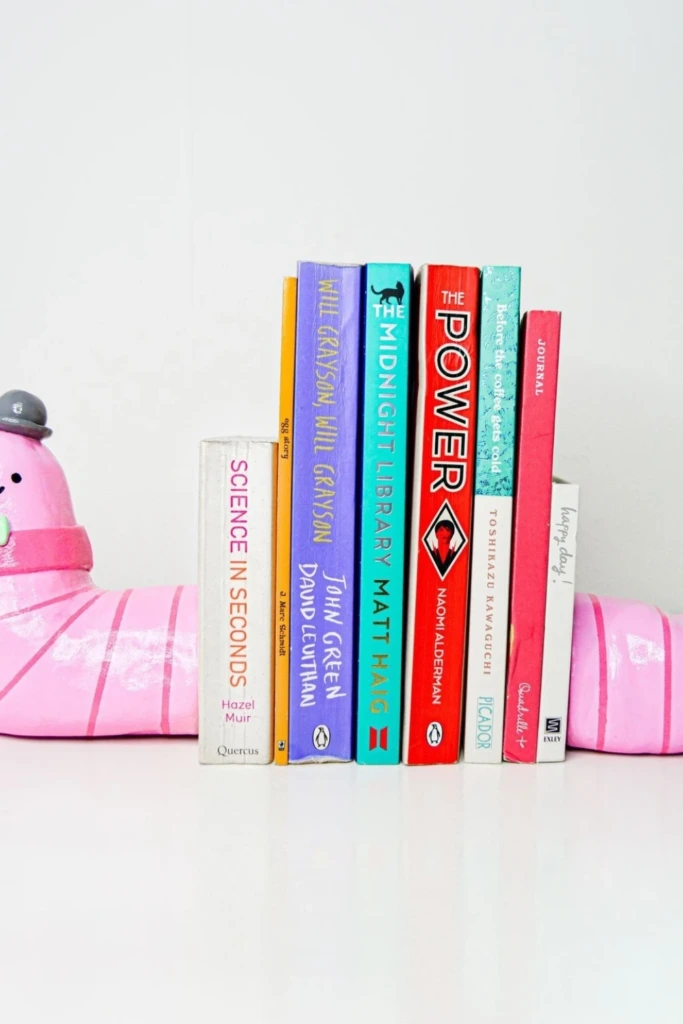
Worm-shaped bookends bring humor and personality to children's reading areas. Their winding forms can resemble friendly cartoon characters or abstract sculptures.
Shape the worm from wood or a suitable sculpting material, keeping its underside level. Create a long, gently curved body with rounded edges and a cheerful painted finish.
For larger designs, attach the sculpture to a concealed rigid base that provides support along its length.
Bright green, orange, pink, and yellow are fun choices for children's rooms. Add simple facial details if you want the bookends to look like friendly characters.
Make sure any decorative pieces are firmly attached, particularly when the bookends will be used around young children.
18. Built-In Shelf Stops
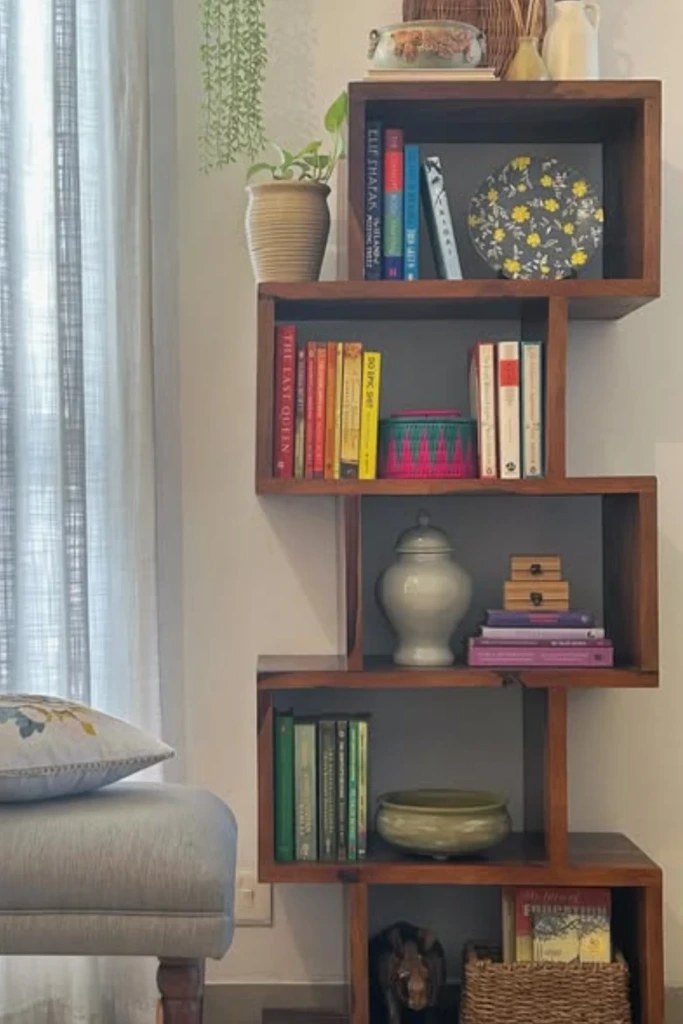
Built-in book stops offer a permanent alternative to movable bookends. Instead of placing separate objects at the ends of a book collection, you incorporate supportive dividers directly into the shelving.
Measure the desired compartments and cut wooden panels to fit. Secure them with suitable joinery, brackets, or shelf-support hardware appropriate to the construction.
For existing shelves, check that the material can safely accept additional fixings without splitting or weakening.
Paint the dividers to match the shelf for a seamless finish, or choose a contrasting wood tone to create visual separation.
This approach is particularly useful for organizing books by genre, size, or subject while maintaining a tidy appearance.
19. Striped Clay Blocks
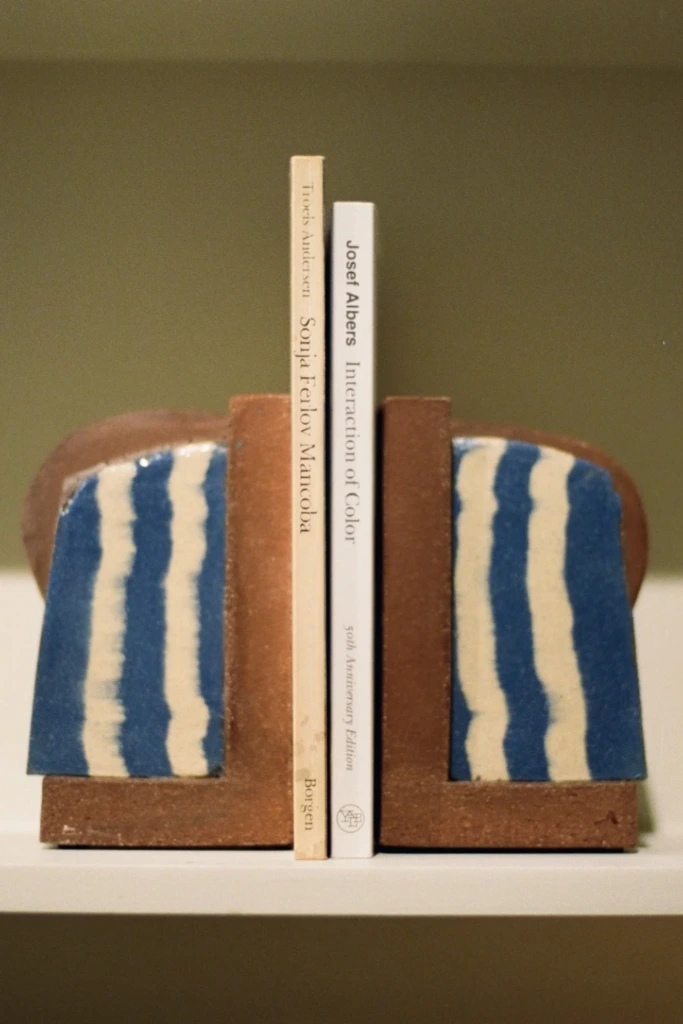
Striped clay bookends are a creative way to introduce pattern and handmade texture to your shelves.
For a ceramic version, use pottery clay to form thick blocks or curved shapes. Add contrasting clay strips to the surface, carefully joining the pieces before drying and firing them according to the clay body's requirements.
If you don't have access to a kiln, air-dry clay can be used as a decorative covering around a rigid weighted structure. It should not be relied upon alone to support heavy books.
Try muted earth tones for a subtle look or bold contrasting stripes for a more energetic design.
Once finished, attach protective pads underneath to reduce scratching and improve grip.
20. Pencil Edge Blocks
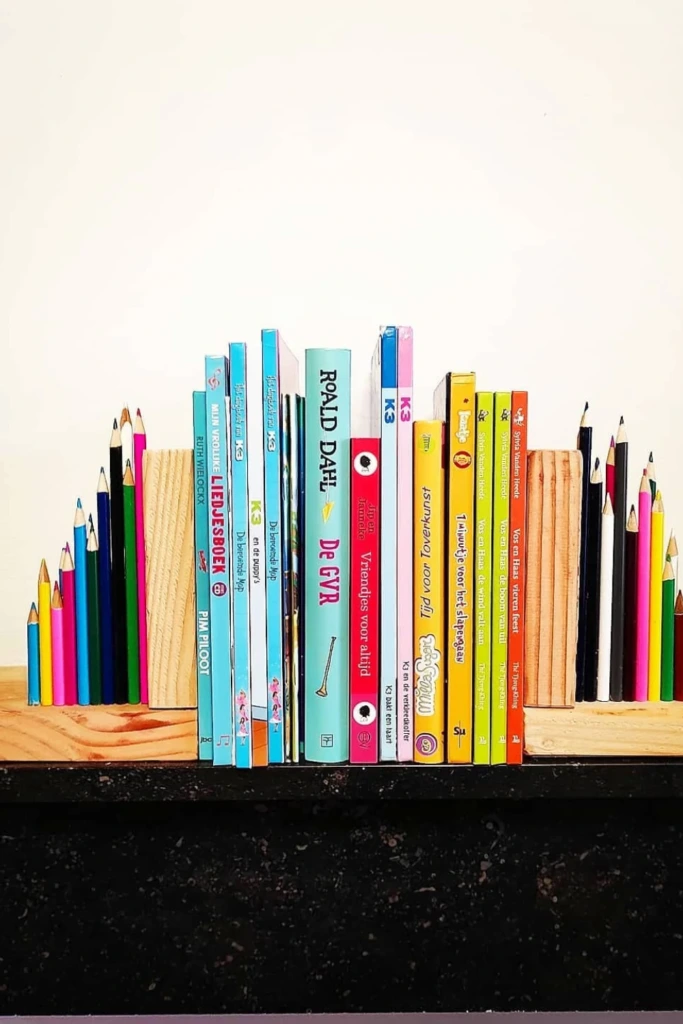
Colored pencil bookends are an enjoyable project for art lovers, teachers, and students. The design turns everyday drawing supplies into a colorful decorative feature.
Begin with two solid wooden blocks or reinforced L-shaped supports. Arrange colored pencils along the visible edges, experimenting with rainbow sequences or coordinated shades.
Use a strong craft adhesive suitable for wood to secure the pencils in place. You can keep them at equal heights for a neat finish or vary their lengths for a more artistic effect.
The pencils should remain decorative rather than bearing the weight of the books. A solid underlying structure ensures the project stays practical.
These bookends look especially attractive on craft-room shelves and children's desks.
21. Painted Rock Ends
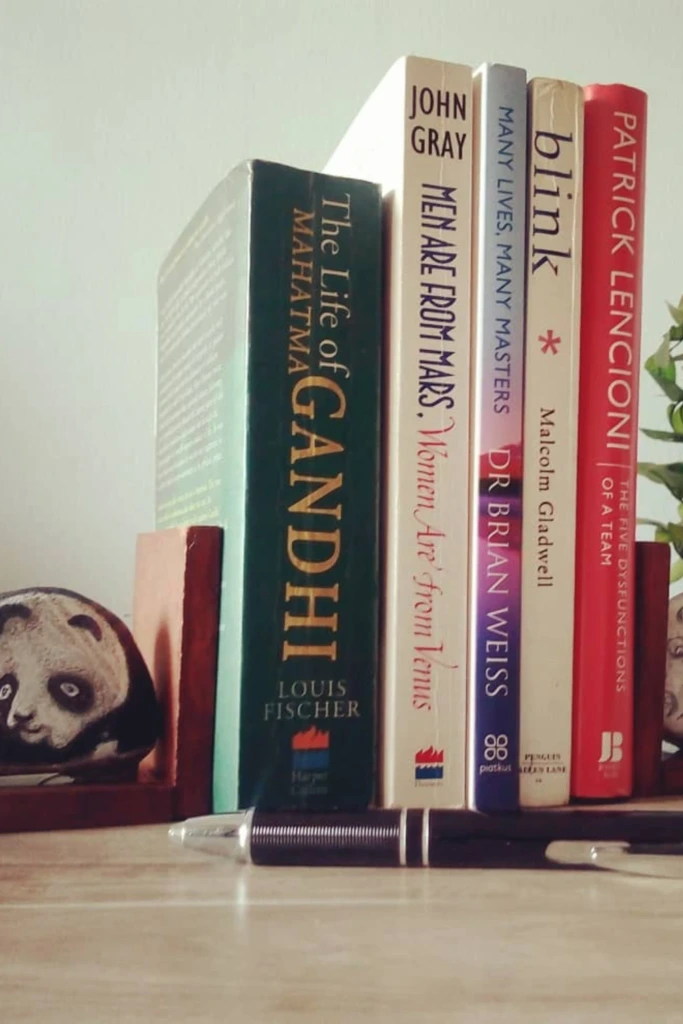
Painted rock bookends are an affordable project that uses naturally heavy materials. Smooth stones can become attractive shelf accessories with only a few basic supplies.
Select rocks with broad, stable surfaces and enough weight to resist movement. Clean them thoroughly and allow them to dry before painting.
Acrylic paints work well for floral illustrations, geometric patterns, abstract designs, and simple landscapes. Once the artwork is dry, apply a compatible protective sealer.
For improved stability, attach the stones to flat wooden or metal bases. Rubber pads underneath can also help prevent sliding.
This project is a good way to create unique bookends without advanced woodworking or casting skills.
22. Wood Slice Stop
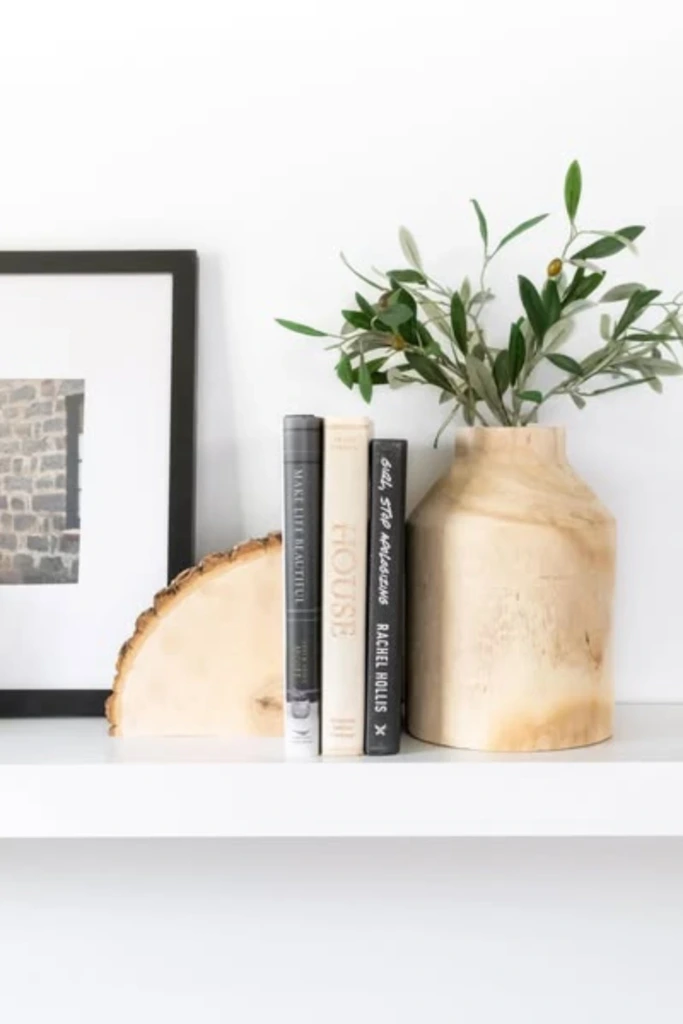
Wood slice bookends are a straightforward option for rustic and nature-inspired interiors. Their visible growth rings, bark, and natural variations make each piece distinctive.
Choose thick, dry hardwood sections and cut a flat bottom and a straight side to rest against the books. Sand the contact surfaces to remove splinters while preserving the natural appearance elsewhere.
A clear finish can protect the wood and emphasize its grain. If the bark is loose, remove or stabilize it so fragments don't fall onto the shelf.
Add non-slip pads underneath and test the pieces with your books. For taller collections, a concealed metal support may be necessary.
These bookends complement farmhouse shelves, cabin interiors, and cozy reading corners.
Can Lightweight Bookends Still Hold Heavy Books?
Yes, lightweight bookends can support heavy books when their structure is designed correctly.
An L-shaped metal bookend is a good example. Although the upright section may be thin, the horizontal base extends beneath the books, allowing their weight to help keep the support in place.
For decorative homemade versions, you can use concealed metal brackets, low-positioned weights, and non-slip materials to improve stability.
However, extremely lightweight freestanding objects with narrow bases are more likely to tip or slide. Always consider the size and weight of your books when selecting a design.
What’s the Best Way to Stop Bookends From Sliding?
The easiest solution is usually to increase friction between the bookend and the shelf.
Self-adhesive rubber pads, silicone feet, and non-slip grip strips can help keep bookends in position. Clean the shelf and the bottom of the bookend before applying adhesive materials so they attach properly.
If sliding continues, check whether the books are leaning too heavily against one side. Straightening the books or using a longer base beneath them may reduce the sideways force.
You can also add concealed weight to a suitable bookend, although weight alone won't always solve the problem on a very smooth surface.
The most reliable setup combines a stable base, adequate grip, and enough support for the books being displayed.
With the right materials and a little creativity, DIY bookends can become both useful organizers and attractive decorative pieces. Whether you prefer simple wooden shapes, colorful handmade designs, or detailed miniature sculptures, the best projects balance personal style with everyday functionality.