16 DIY Stairs Outdoor Ideas for 2026
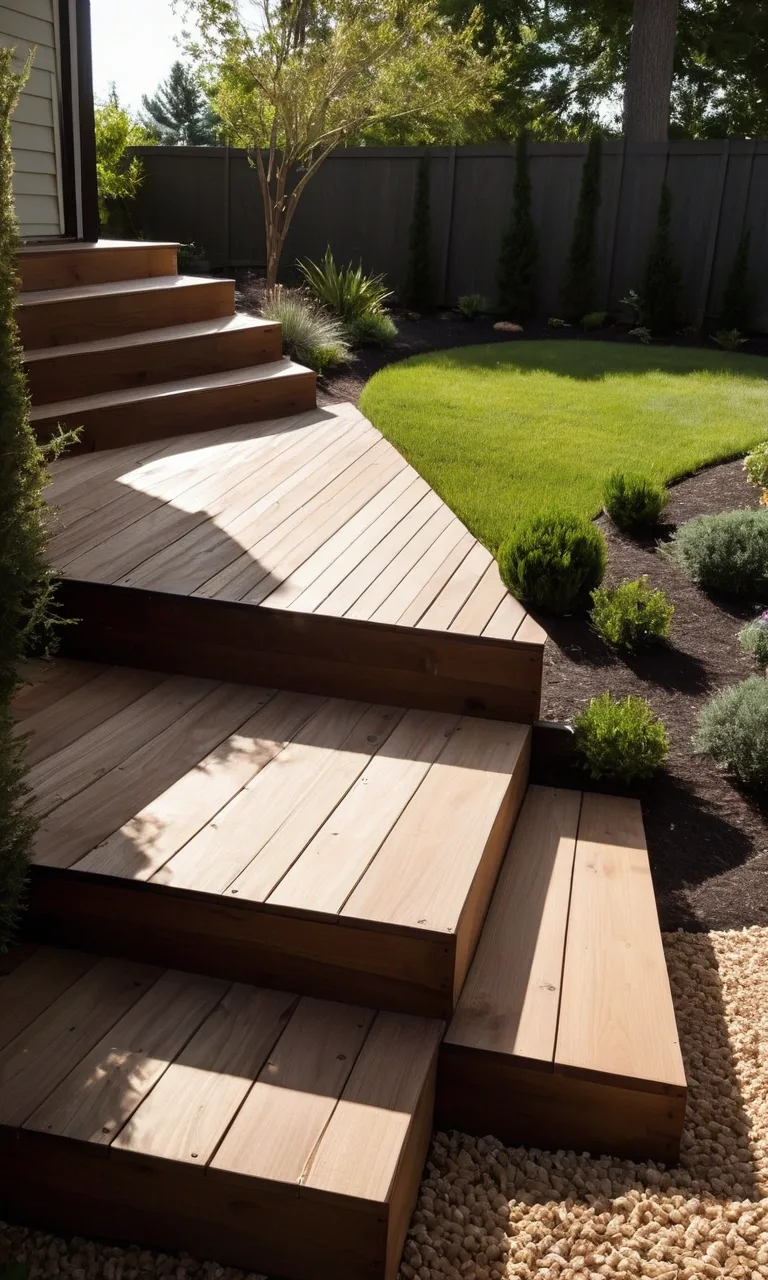
Outdoor stairs can do much more than connect different levels of your property. They can improve accessibility, complement your home's architecture, and turn an ordinary entrance or garden into an attractive focal point. With a thoughtful DIY project, you can create steps that reflect your personal style without automatically investing in an expensive custom installation.
From natural stone pathways to painted wooden steps and contemporary concrete designs, there are plenty of ways to make outdoor stairs both practical and visually appealing. The best choice depends on your available space, budget, climate, and the amount of maintenance you're willing to handle.
1. Planning The DIY Stair Project
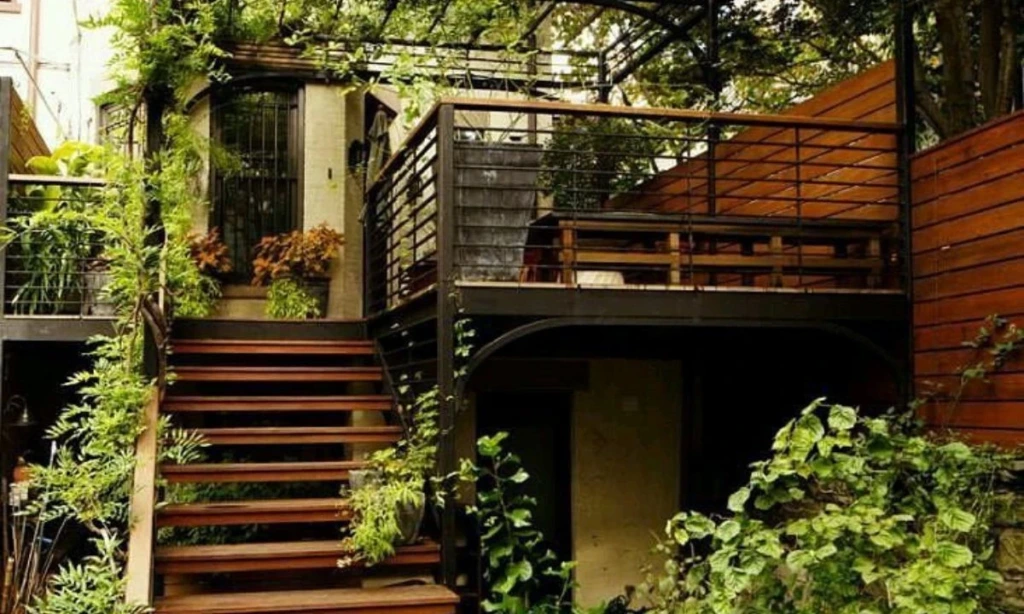
Before purchasing materials or starting construction, evaluate the area where your outdoor staircase will go. Measure the total vertical height, available horizontal space, and width needed for comfortable movement. Consistent riser heights and tread depths are essential because uneven steps can increase the risk of trips and falls.
Think about how the staircase will be used. A front entrance may benefit from wide, welcoming steps, while a garden slope might require a compact staircase that follows the natural terrain. Draw a basic plan showing the dimensions, landing positions, drainage direction, and any railing requirements.
Material selection is another important decision. Pressure-treated timber can suit traditional porches, stone works well in landscaped gardens, and concrete offers strength and design flexibility. Composite decking is another option for homeowners who want a wood-like appearance with relatively low maintenance.
Check local building regulations before construction, particularly for stair dimensions, handrails, foundations, and elevated landings. Make sure the finished surface provides reliable traction when wet, and plan for water to drain away rather than collect on the steps. If the staircase involves a steep slope, retaining walls, or substantial structural loads, consider professional advice before proceeding.
2. Mediterranean Entry
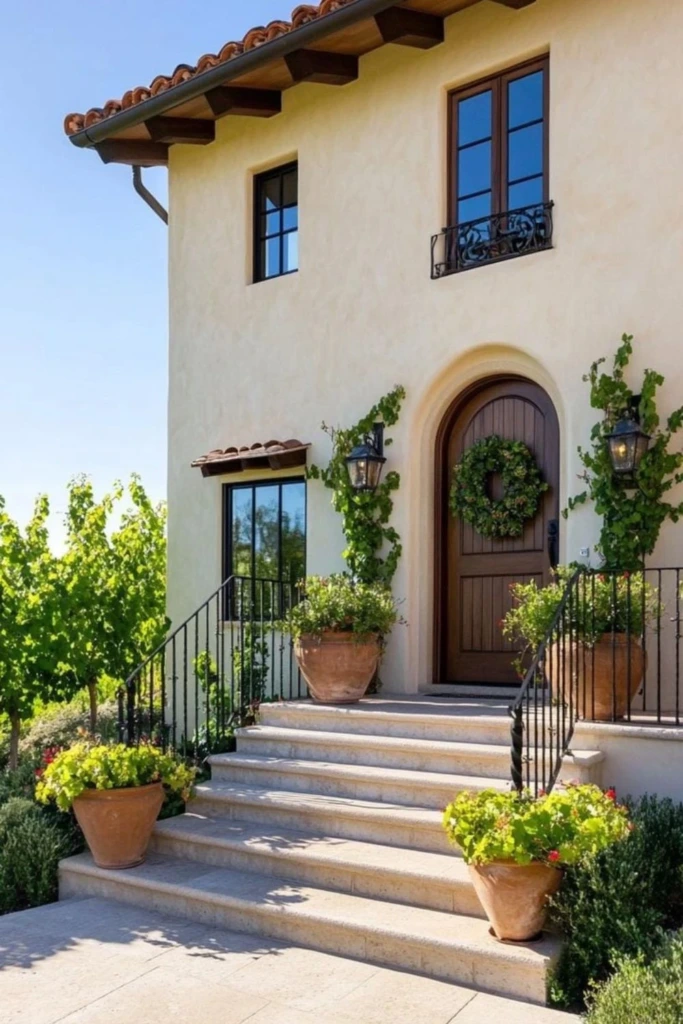
Create a welcoming Mediterranean-inspired entrance with warm-toned stone steps, terracotta containers, and abundant greenery. Natural materials give the staircase an established appearance that works especially well with stucco walls, earthy exterior colors, and rounded architectural details.
Arrange matching pots on either side of the entrance to establish balance, then introduce climbing plants or leafy shrubs for additional texture. A dark metal railing can provide an attractive contrast against pale stone and warm terracotta.
For a practical DIY version, use suitable exterior-rated stone or pavers over a properly prepared, stable base. Choose plants that tolerate your local weather, and keep the walking surfaces free from loose soil, fallen leaves, and overhanging foliage.
3. Classic White Rail
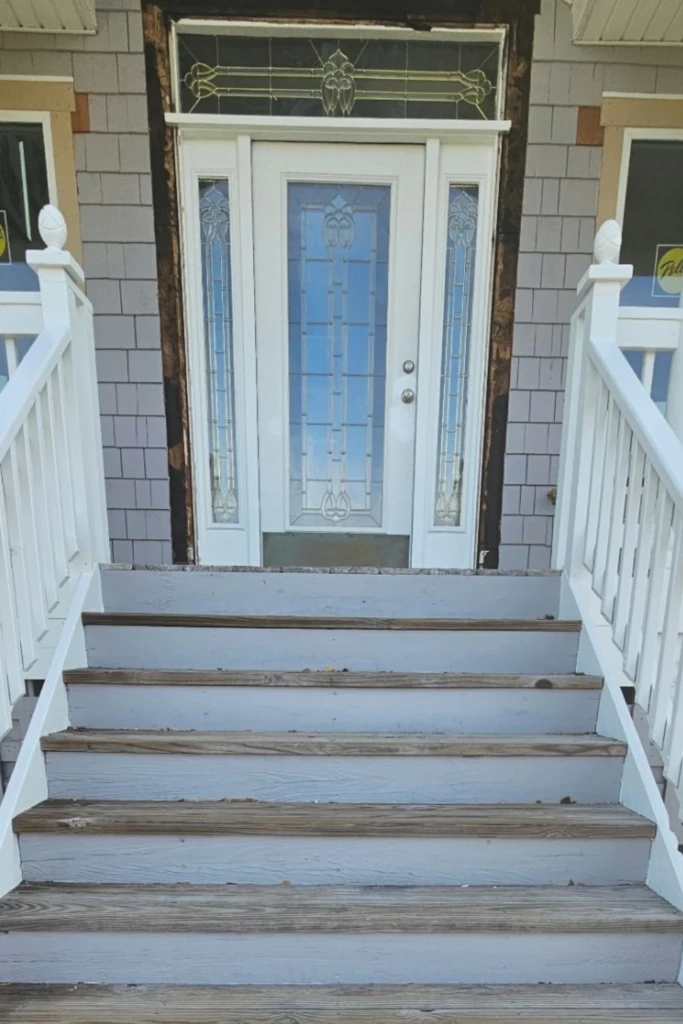
White railings paired with light gray wooden steps create a fresh, traditional look that suits cottage-style houses, coastal properties, and classic front porches. The restrained color palette keeps the entrance bright without making the design feel overly decorative.
Paint or stain the steps in a weather-resistant gray finish, then use white balusters and handrails to define the staircase. A simple front door with glass panels can complement the open, airy appearance.
For durability, select exterior-grade coatings and prepare the wood thoroughly before painting. Use materials designed for outdoor exposure, and inspect the joints periodically for movement, peeling paint, or signs of moisture damage.
4. Urban Garden Steps
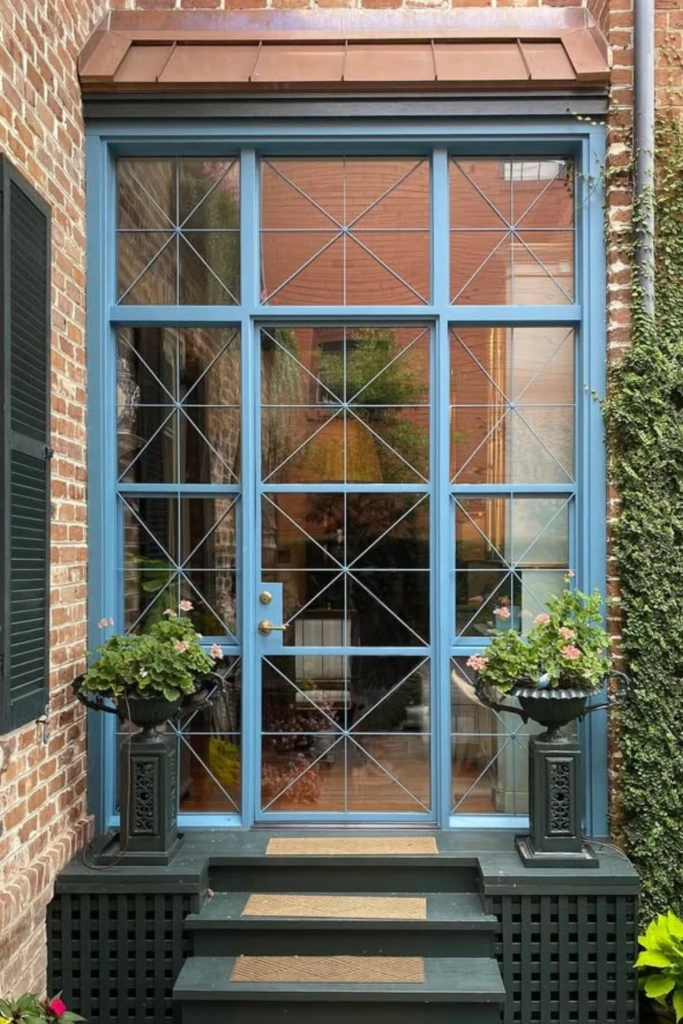
Give a compact outdoor entrance a contemporary edge by combining dark-colored steps with structured landscaping. Black or charcoal finishes create a strong visual foundation, while green plants soften the sharper lines.
A lattice skirt beneath a raised staircase can conceal the space underneath and make the structure look more complete. Add rectangular planters along the sides, and consider a brightly colored door as an accent against the darker surfaces.
This idea works particularly well in small courtyards, townhouses, and modern garden entrances. Choose exterior paint with suitable slip-resistant properties for the walking surface, and make sure planters do not obstruct the steps or narrow the passage.
5. Southern Charm Stairs
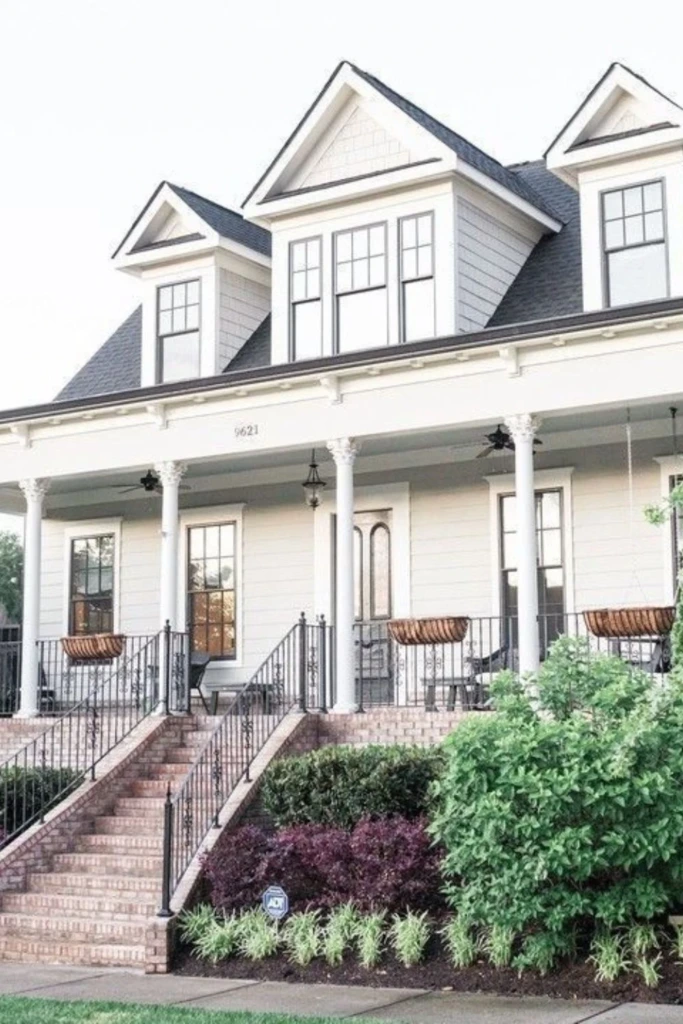
Brick steps, white porch columns, and neatly maintained shrubs create a traditional entrance with plenty of character. This combination feels especially suitable for homes with broad verandas, symmetrical facades, and classic architectural details.
Use brick pavers or properly constructed masonry steps to establish a warm, textured foundation. White columns help frame the entrance, while dark metal railings introduce contrast without overpowering the brickwork.
Complete the setting with hanging baskets, carefully positioned outdoor lanterns, or a wooden porch swing where space allows. For a lasting result, install the brickwork on a stable base with appropriate drainage and mortar suited to exterior conditions.
6. Mosaic Pop
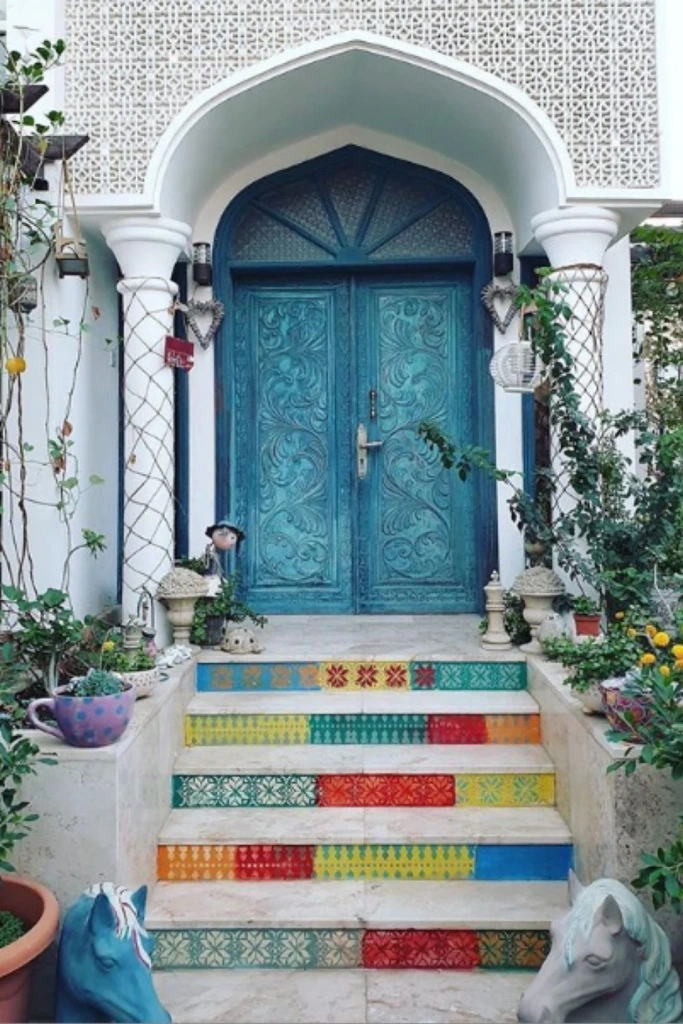
Turn an ordinary staircase into a colorful design feature with decorative mosaic tiles on the vertical faces of the steps. Patterns featuring geometric shapes, floral details, or contrasting colors can bring personality to an otherwise simple entrance.
Pair the patterned risers with neutral stone or concrete treads so the decoration remains the main attraction. A colorful door, textured planters, or a few distinctive garden ornaments can reinforce the playful appearance.
When choosing tiles, make sure they are rated for outdoor use and suitable for the conditions in your area. Keep the horizontal walking surfaces slip-resistant, especially in rainy climates. Use an appropriate exterior tile adhesive and grout, and ensure water cannot easily seep behind the tiled surfaces.
7. Bold Contrast
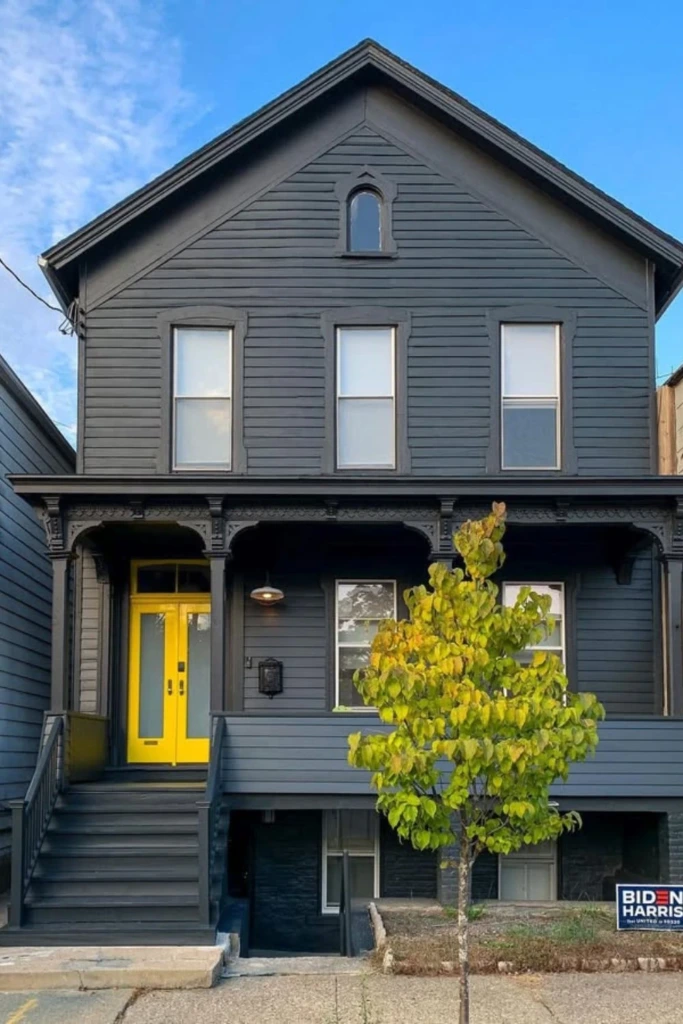
For a striking modern entrance, combine dark steps and railings with a vivid yellow front door. The contrast creates an immediate focal point while allowing the rest of the exterior to remain relatively simple.
Matte black finishes work well with contemporary facades, neutral walls, and minimalist landscaping. A few low-maintenance plants in understated containers can soften the overall appearance without competing with the bold color scheme.
You can adapt this idea to an existing staircase by refinishing suitable surfaces rather than rebuilding everything. Use coatings specifically designed for the material being painted, and avoid applying ordinary decorative paint to walking surfaces unless it is approved for that purpose and provides adequate traction.
8. Rustic Porch Charm
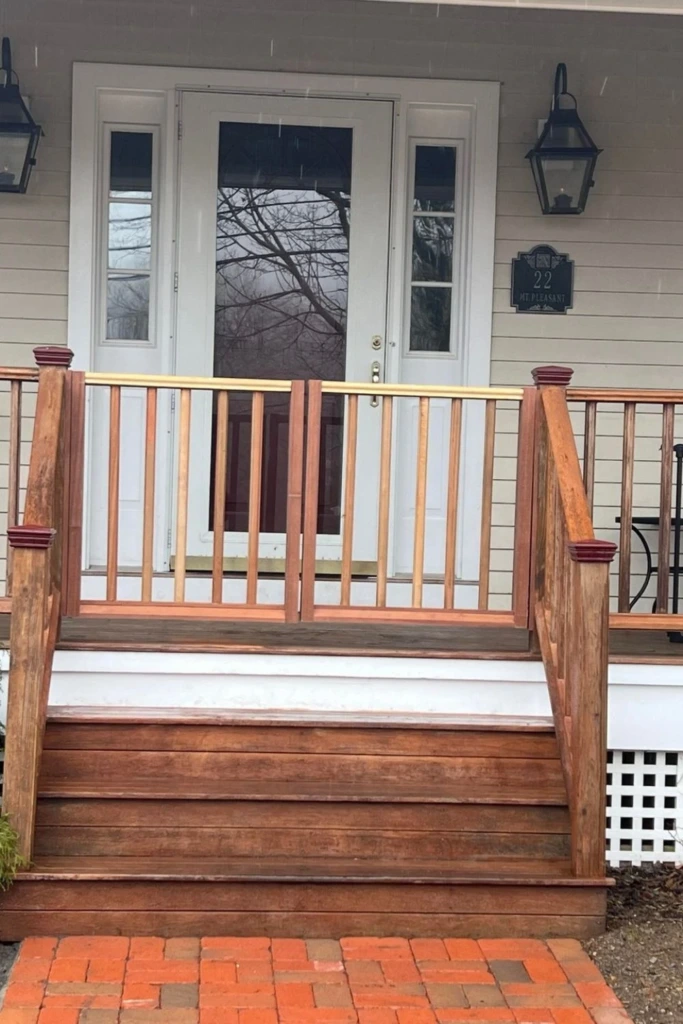
Natural wood stairs are an excellent choice for homeowners who appreciate a relaxed, countryside aesthetic. Rich brown stains highlight the grain, while matching railings give the staircase a coordinated appearance.
A white-painted base or surrounding brick paving adds contrast and helps the timber stand out. Vintage-style wall lights, metal planters, and simple outdoor furniture can complete the rustic look without requiring extensive decoration.
Choose timber suitable for exterior construction, and protect exposed surfaces against moisture and sunlight. Pay particular attention to the areas where posts meet the ground and where water might collect. Regular cleaning, inspections, and refinishing will help preserve the wood's appearance and structural condition.
9. Garden Framed Steps
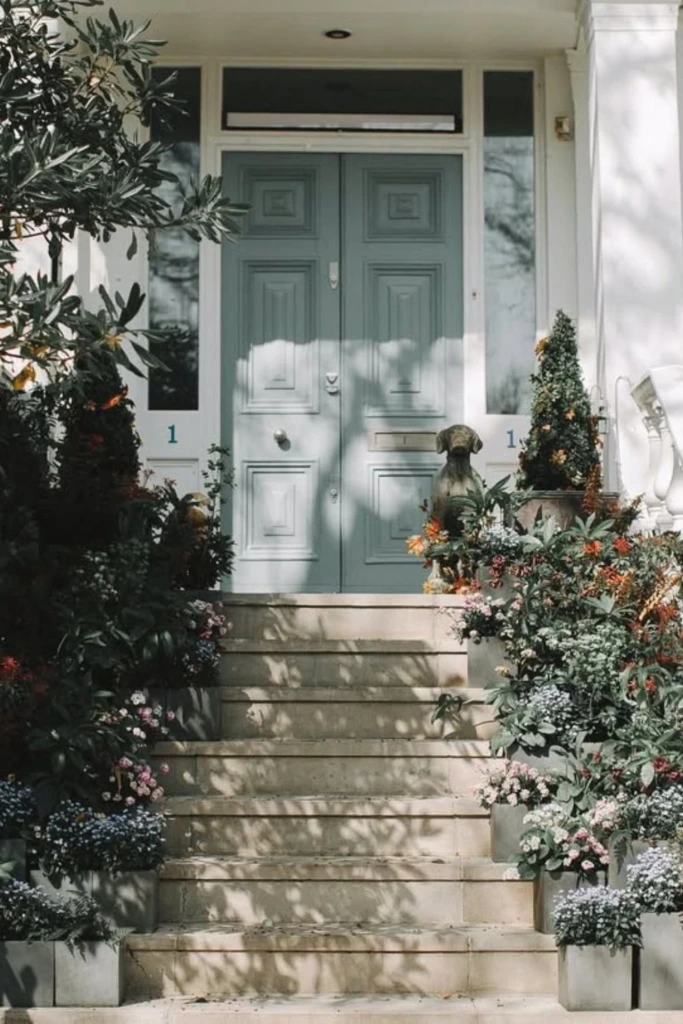
Integrate your staircase into the landscape by surrounding stone steps with flowering plants, ornamental grasses, and low-growing greenery. This approach makes a garden entrance feel like a natural continuation of the outdoor space rather than a separate structure.
Pale beige or cream-colored stone creates a gentle backdrop for colorful flowers. Matching railings can provide support, while a softly colored door complements the garden's natural palette.
For the best results, position plants where they will not spread across the treads or hide the edges of individual steps. Choose species suited to the amount of sunlight and moisture available, and leave enough room to maintain the staircase comfortably.
A well-planned planting scheme should frame the steps without making the walking route slippery, obstructed, or difficult to navigate.
10. Lit Minimalism
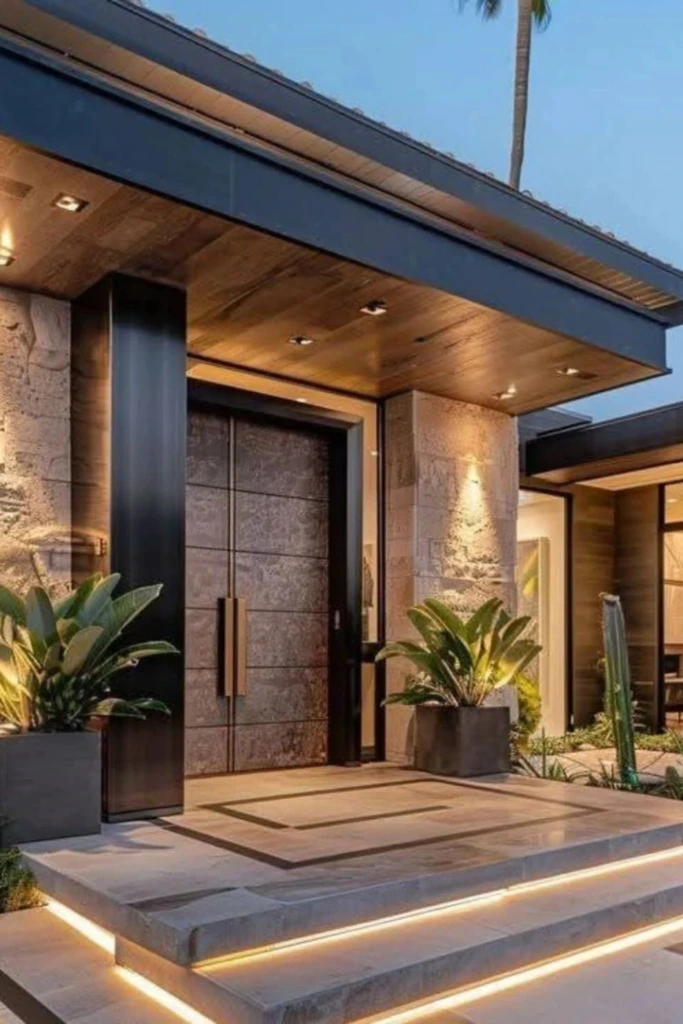
Built-in lighting can give an outdoor staircase a polished appearance while making the individual steps easier to distinguish after dark. Recessed fixtures or appropriately designed LED step lights can work particularly well with smooth concrete, stone, or contemporary composite materials.
Position the lights so they illuminate the walking surfaces without shining directly into people's eyes. A textured stone wall, dark planters, and uncluttered landscaping can reinforce the minimalist design.
For a DIY-friendly alternative, consider outdoor-rated, low-voltage lighting installed according to the manufacturer's instructions. Use weather-resistant fixtures, suitable wiring protection, and a properly rated power supply. Electrical connections exposed to the elements should be installed or checked by a qualified professional where required.
Plan the lighting alongside the staircase construction so cables, fittings, and drainage can be accommodated without weakening the steps or creating trip hazards.
11. Floating Steps
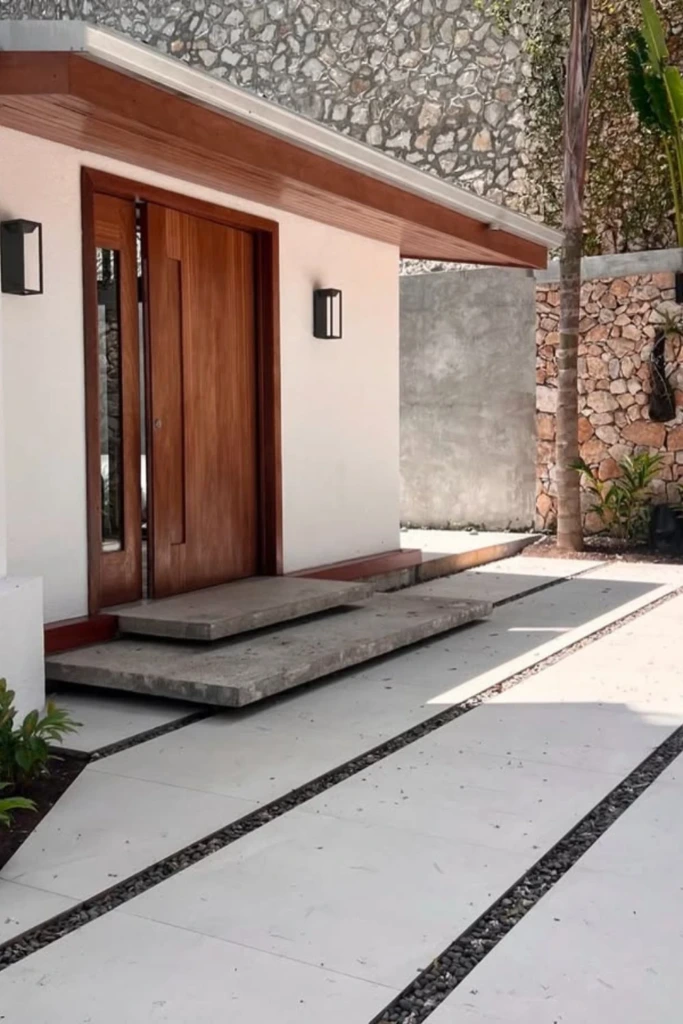
Floating-style outdoor steps create a clean architectural appearance by making each tread appear separated from the ground or surrounding structure. The design is particularly effective in modern gardens, tropical landscapes, and entrances with simple geometric lines.
Large stone slabs, concrete treads, or carefully supported timber elements can create the visual effect. Warm wood accents and restrained planting help balance the cool, minimalist materials.
Although the finished staircase may appear lightweight, every tread needs a secure support system designed for its intended loads and ground conditions. Proper foundations, anchoring, and drainage are essential, even when the supports are hidden from view.
This design is best suited to homeowners who can verify the structural requirements before construction. If the steps are elevated or have unsupported-looking edges, professional design and installation may be the safest approach.
12. Cottage Curve
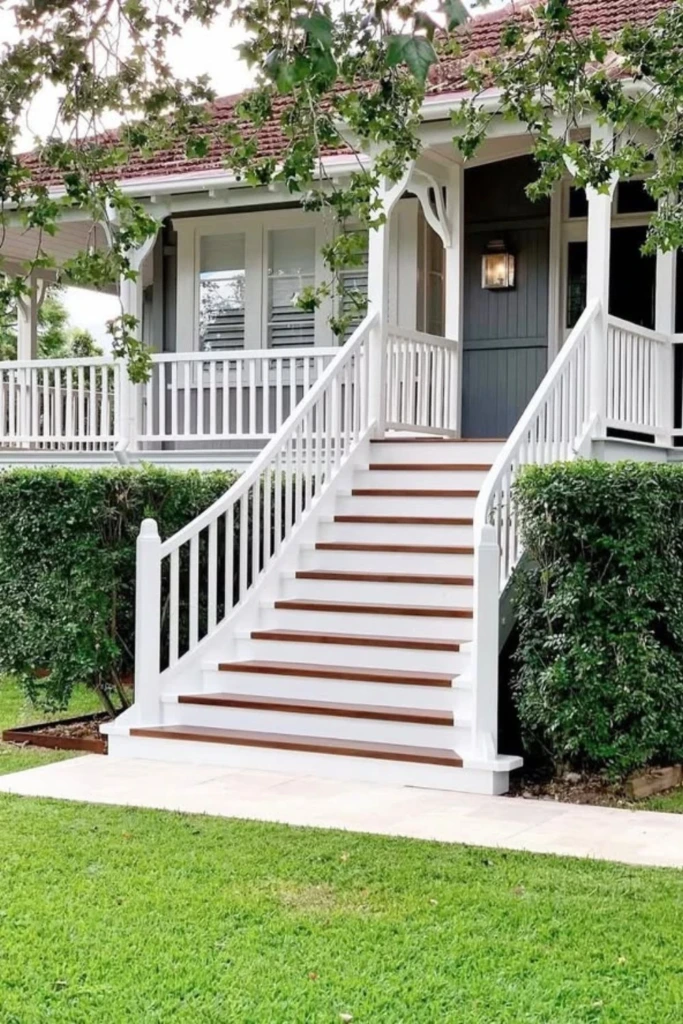
A curved or wraparound staircase can soften the exterior of a traditional home and make a porch feel more inviting. Dark wooden treads paired with white curved railings create a classic contrast that complements cottage architecture and established gardens.
Low hedges, flowering borders, and traditional outdoor lighting can reinforce the welcoming atmosphere. If the porch has a gabled roof or decorative trim, repeat a few of those details in the railing design for a cohesive finish.
Curved staircases generally require more planning and careful cutting than straight runs. Measure the available space accurately, maintain consistent step dimensions, and ensure the handrail follows the curve comfortably.
For a DIY project, a simple curved landing or gently angled approach may offer a similar visual effect with less complicated construction.
13. Compact Chic
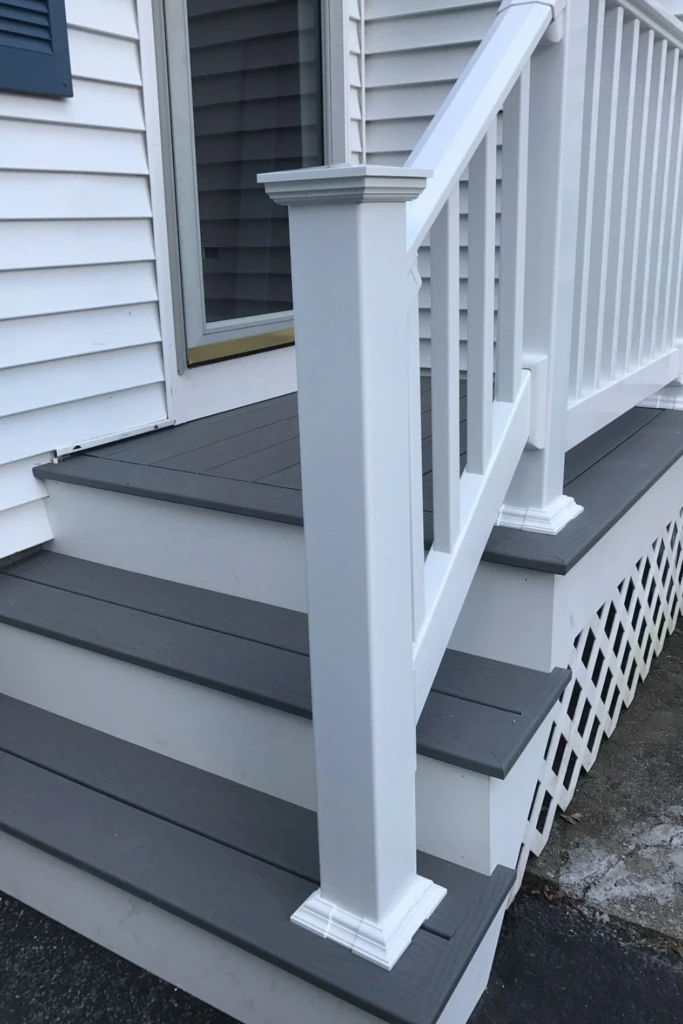
Small side entrances and narrow porches can benefit from a staircase designed around efficient use of space. Gray composite decking paired with white railings provides a neat, contemporary finish without demanding extensive decorative features.
Composite materials can resist many of the problems associated with exposed timber, although performance varies by product. Select boards specifically approved for stair applications and follow the manufacturer's requirements for support spacing, fasteners, and edge finishing.
Lattice skirting beneath an elevated porch can conceal the underside of the staircase and create a more finished appearance. It may also provide a convenient way to visually separate the steps from nearby storage or utility areas.
Keep the layout simple, provide adequate tread depth, and avoid making the stairs excessively steep just to save space. Where the available area is limited, check the applicable building requirements before settling on the final dimensions.
14. Refined Symmetry
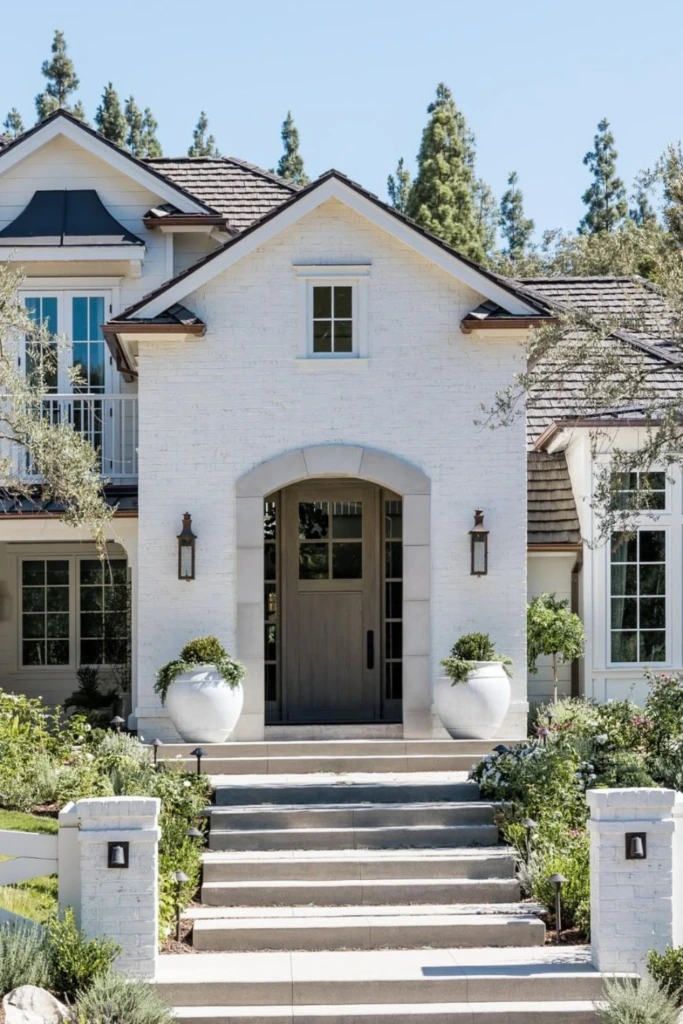
Wide concrete steps and a generously sized landing can give a home entrance a balanced, formal appearance. This design works especially well with centered doorways, modern facades, and properties where clean architectural lines are a priority.
Place matching planters on either side of the entrance to emphasize symmetry. A simple arched doorway or restrained wall detailing can provide visual interest without distracting from the staircase.
Concrete offers flexibility in shape and finish, but successful construction depends on suitable ground preparation, reinforcement where required, correct concrete placement, and proper curing. The steps should also direct water away from the house and avoid standing puddles.
For an elevated entrance or a staircase carrying substantial loads, have the design checked against local construction requirements before pouring the concrete.
15. Classic Cottage
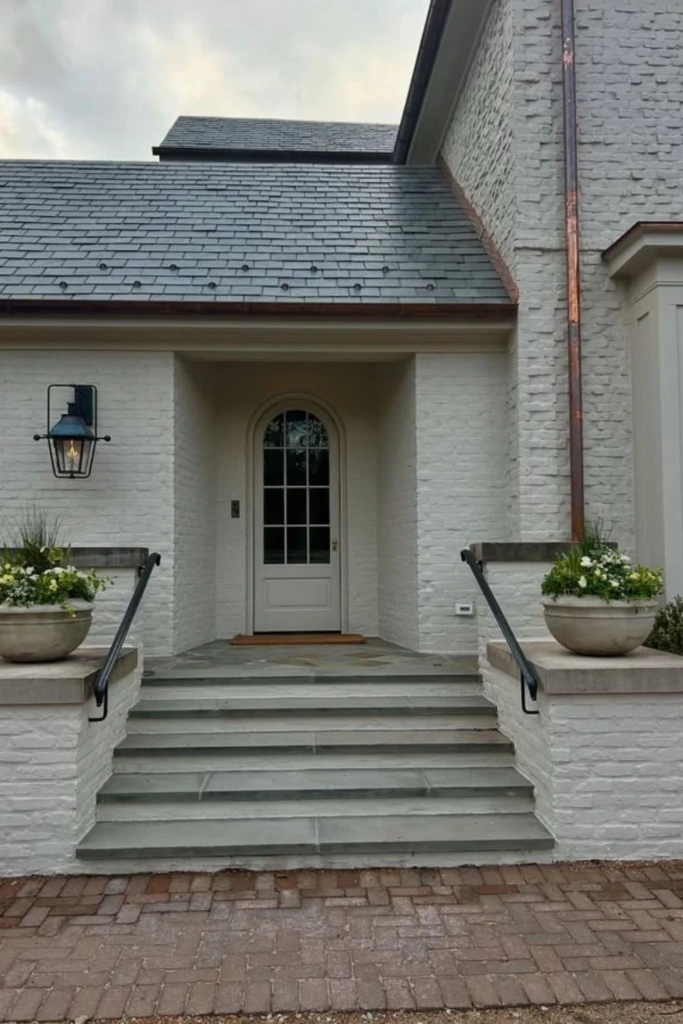
Light-colored stone steps, a white-painted brick base, and large flower-filled containers can give an entrance the charm of a traditional English cottage. The combination feels warm and established while remaining suitable for a range of garden styles.
Use pale stone to brighten the entrance and choose flowers that complement the surrounding landscaping. A copper-colored downspout or other restrained metal accent can add warmth without overwhelming the design.
Side railings can make the stairs easier to use, particularly when the entrance is raised above ground level. Select a stone finish that provides reliable grip when wet, and use materials appropriate for the local climate.
Arrange large planters where they enhance the entrance without reducing the usable width of the steps. Leave enough room for people to pass comfortably and for the staircase to be cleaned and maintained.
16. Sculpted Concrete
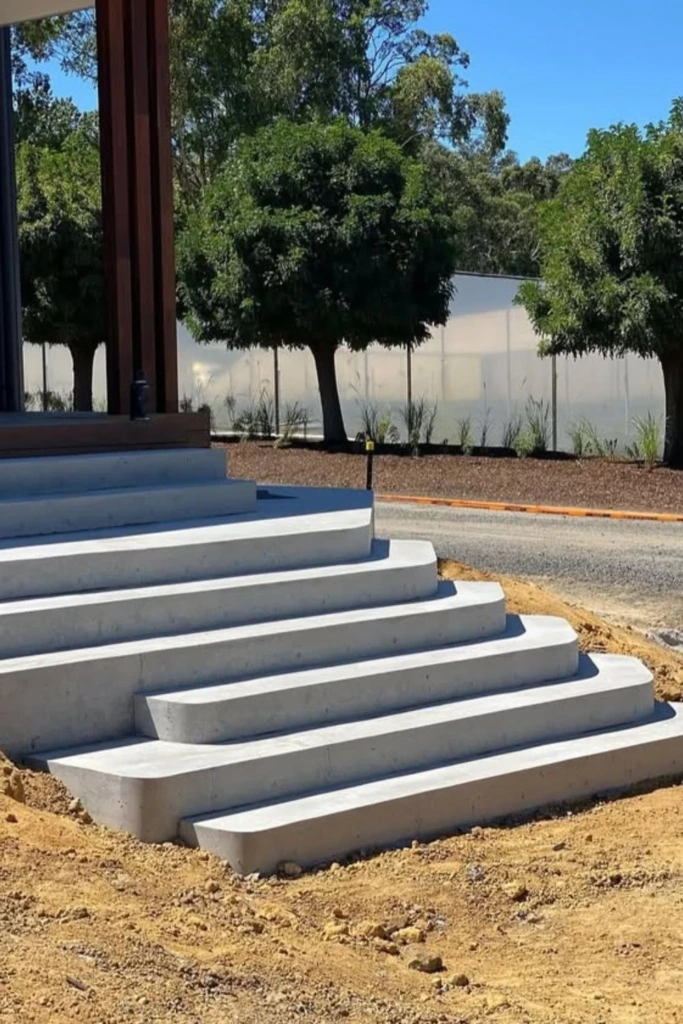
Curved concrete steps offer an opportunity to create an outdoor staircase that feels like part of the architecture itself. Sweeping edges and smooth transitions can complement contemporary homes, landscaped courtyards, and entrances built around bold geometric forms.
The design relies on the shape and finish of the concrete rather than decorative accessories. Simple planting and uncluttered surroundings help the staircase remain the main visual feature.
Creating curved concrete stairs usually requires accurate formwork, careful level control, and a suitable structural design. The supporting ground must be stable, and the finished surface needs appropriate drainage and slip resistance.
A railing-free appearance may be possible in some settings, but it should never take priority over safety. Whether guardrails or handrails are required depends on factors such as the staircase height, configuration, and applicable building regulations. Check those requirements before construction, especially if the stairs will be used by children, older adults, or anyone with limited mobility.