25 DIY Classroom Decorations Ideas for 2026
A thoughtfully decorated classroom can make students feel comfortable, curious, and ready to learn. However, creating an attractive learning environment does not require expensive supplies or weeks of preparation. With a little creativity, teachers can turn ordinary paper, recycled containers, fabric, and existing classroom furniture into practical decorations.
The best classroom designs combine visual appeal with everyday usefulness. A colorful display can celebrate student achievements, an organized shelf can simplify classroom routines, and a welcoming reading corner can encourage children to explore books independently.
Whether you are preparing a classroom for a new school year or refreshing a familiar space, these 25 DIY classroom decoration ideas offer affordable ways to make the environment more engaging, organized, and inviting.
How to create creativity for classroom decoration?
Creative classroom decorating begins with understanding how students use the space. Before purchasing supplies, look at the areas that need improvement. Perhaps a blank wall could display student projects, an unused corner could become a reading area, or an untidy shelf could benefit from colorful labels.
Choose a simple color palette and repeat a few colors throughout the room to create a coordinated appearance. Everyday materials such as construction paper, cardboard, fabric scraps, jars, and storage boxes can become useful decorative elements.
Involve students whenever appropriate by inviting them to make artwork, design labels, or contribute ideas for shared displays. Their participation gives the classroom a personal touch and helps them feel connected to their learning environment.
Remember that decoration should support learning rather than compete with it. Keep frequently used resources accessible, maintain clear walking paths, and avoid covering every available surface. A balanced classroom can feel cheerful without becoming visually overwhelming.
1. Patterned Color Grid
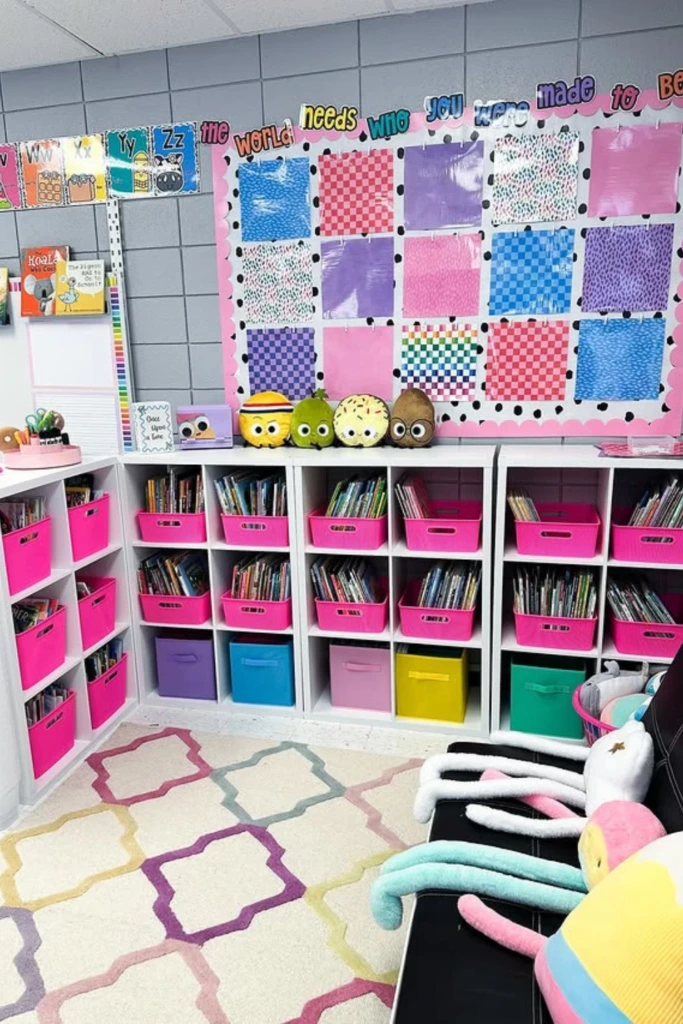
<em>A neat grid of colorful squares creates an attractive bulletin board without requiring elaborate artwork.</em>
Start with a large piece of background paper and divide the display into equal sections. Fill each square with patterned paper, geometric designs, simple drawings, or shades from a coordinated color palette.
You can use wrapping paper leftovers, scrapbook sheets, or handmade patterns to keep costs low. Repeating the same shapes gives the display a consistent appearance, while different patterns introduce variety.
This idea works particularly well above a reading shelf, beside a classroom entrance, or on a wall that needs a decorative focal point. Replace individual squares throughout the year to feature new subjects, holidays, or student creations.
2. Flying Paper Butterflies
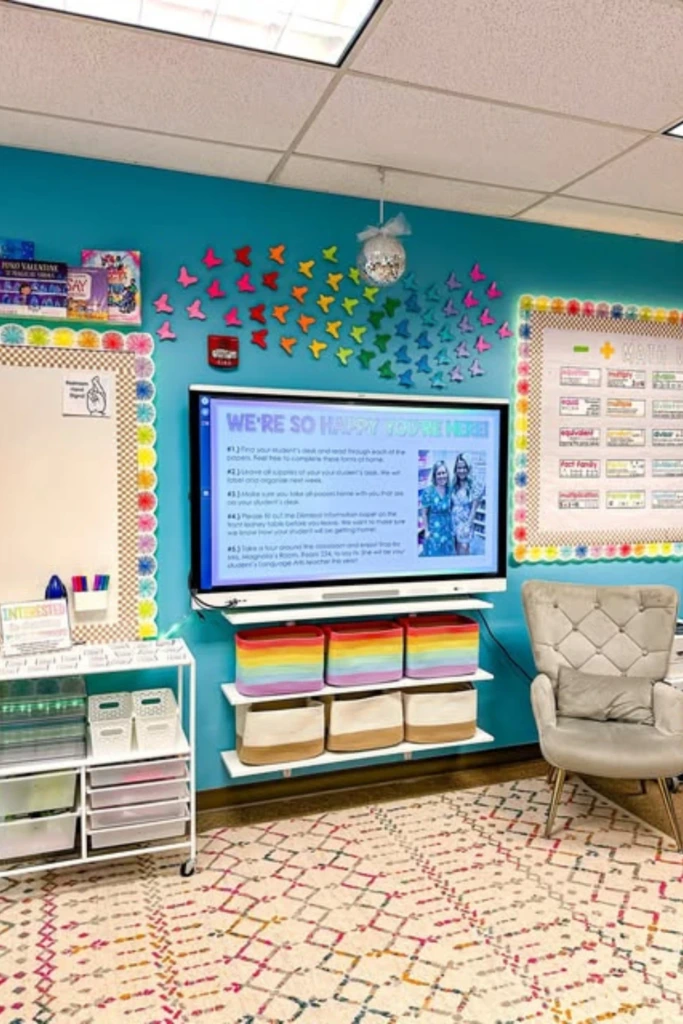
<em>Paper butterflies add movement and color to an otherwise plain classroom wall.</em>
Cut butterfly shapes from colored construction paper, cardstock, or lightweight craft paper. Fold each butterfly gently down the middle to create raised wings, then attach the shapes to a wall or bulletin board using classroom-safe adhesive.
Arrange the butterflies in a sweeping pattern that rises diagonally, as though they are floating through the air. Using several shades of one color creates a gradual transition, while contrasting colors produce a brighter display.
Students can decorate their own butterflies with dots, stripes, or small drawings. This makes the project suitable for art activities as well as classroom decoration. Keep the butterflies away from lights, fans, and other equipment where loose paper could create a hazard.
3. Student Work Spotlight
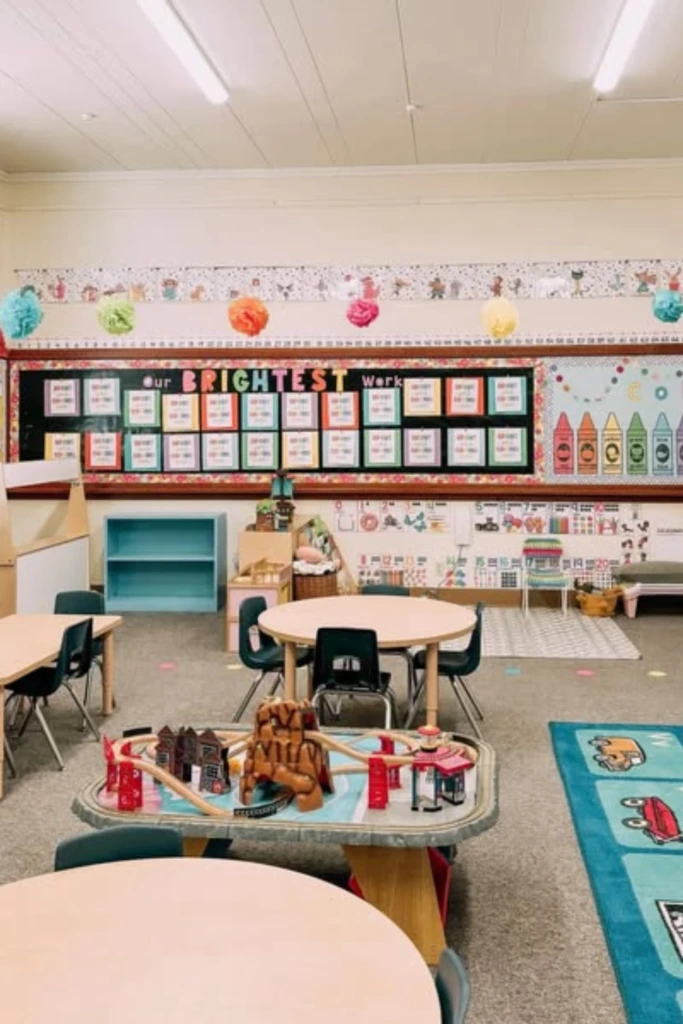
<em>A dedicated display gives children's projects a meaningful place in the classroom.</em>
Choose one bulletin board or open wall area to showcase drawings, writing assignments, science projects, or creative experiments. Cover the board with a simple background so that the children's work remains the main attraction.
Add paper borders, small name labels, or handmade frames to make each contribution stand out. A heading such as "Our Creative Corner" or "Learning in Action" can help tie the display together.
Refresh the collection regularly so every student has an opportunity to participate. You can also rotate the featured subject to reflect current lessons, giving the classroom a decorative element that changes naturally as students learn.
4. Cozy Reading Corner
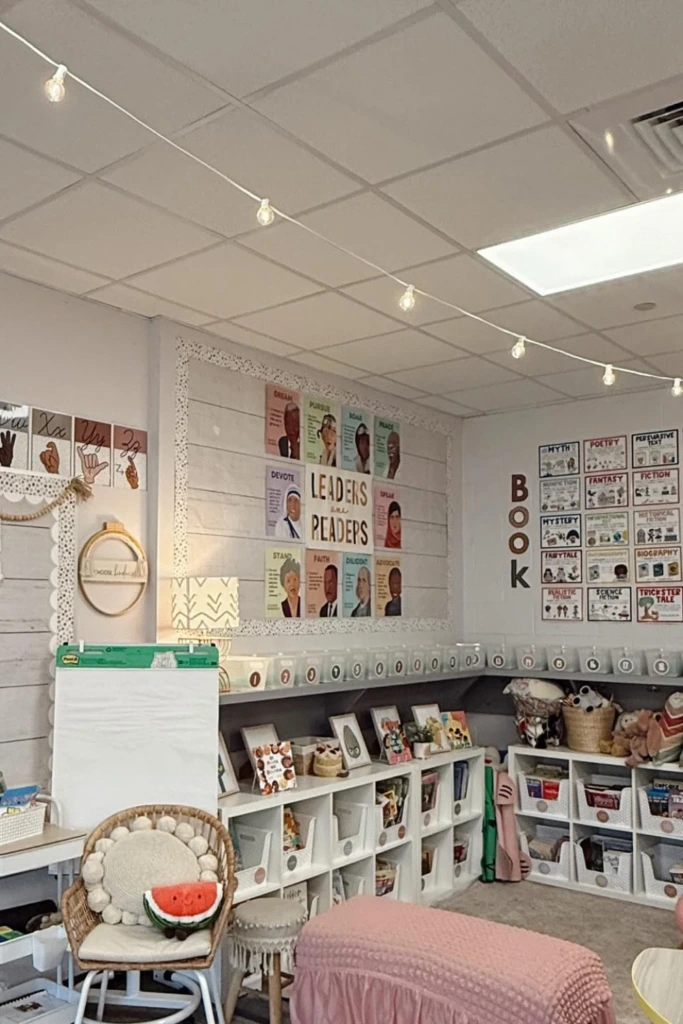
<em>A comfortable reading nook can make books more inviting and encourage independent reading.</em>
Choose a quiet corner with enough room for students to sit comfortably without blocking classroom movement. Add a soft, washable rug, floor cushions, or child-sized seating, depending on your school's rules and available space.
Place books on low shelves or in baskets arranged by topic, reading level, or genre. A few colorful cushions and a handmade reading sign can establish a welcoming atmosphere without filling the area with unnecessary decorations.
Use soft furnishings that are easy to clean, and keep books within students' reach. If additional lighting is needed, select school-approved fixtures that meet classroom safety requirements rather than using unattended electrical decorations.
5. Color-Coded Storage
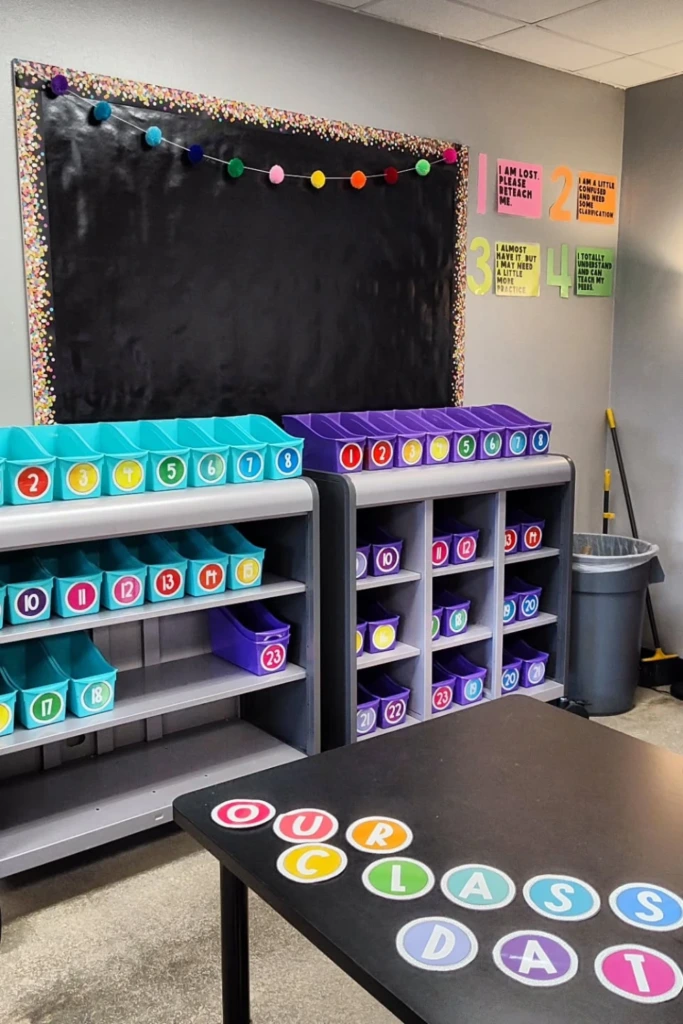
<em>Color-coded containers make classroom supplies easier to identify and return.</em>
Collect sturdy boxes, plastic bins, folders, or containers that can be reused for pencils, markers, paper, art materials, and other everyday essentials. Assign a different color to each category or group of supplies.
Add large labels with both words and pictures so younger students can recognize where materials belong. Matching the labels to the containers makes the system easier to follow and gives shelves a coordinated appearance.
Position frequently used items at an accessible height and store less common materials separately. Once students understand the system, cleanup becomes more straightforward, and the organized containers become part of the room's overall design.
6. Balanced Learning Zones
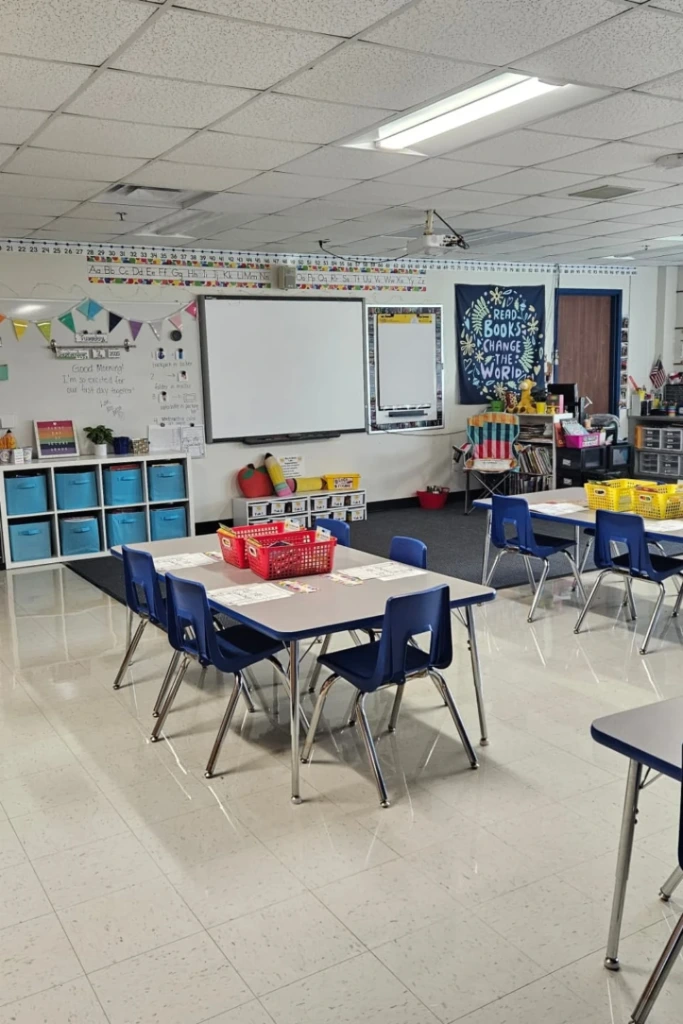
<em>Dividing the classroom into purposeful areas creates a more organized and attractive environment.</em>
Arrange desks, shelves, bulletin boards, and storage units according to the activities that take place in the room. You might establish separate spaces for reading, writing, group projects, independent work, and classroom supplies.
Use small visual cues to distinguish each area. Matching bins, simple signs, coordinated rugs, or different background colors can help students recognize the purpose of each zone.
Keep furniture arrangements practical, with enough space for students and staff to move safely. Instead of decorating every wall, focus on making each learning area recognizable and easy to use.
7. Colorful Reading Circle
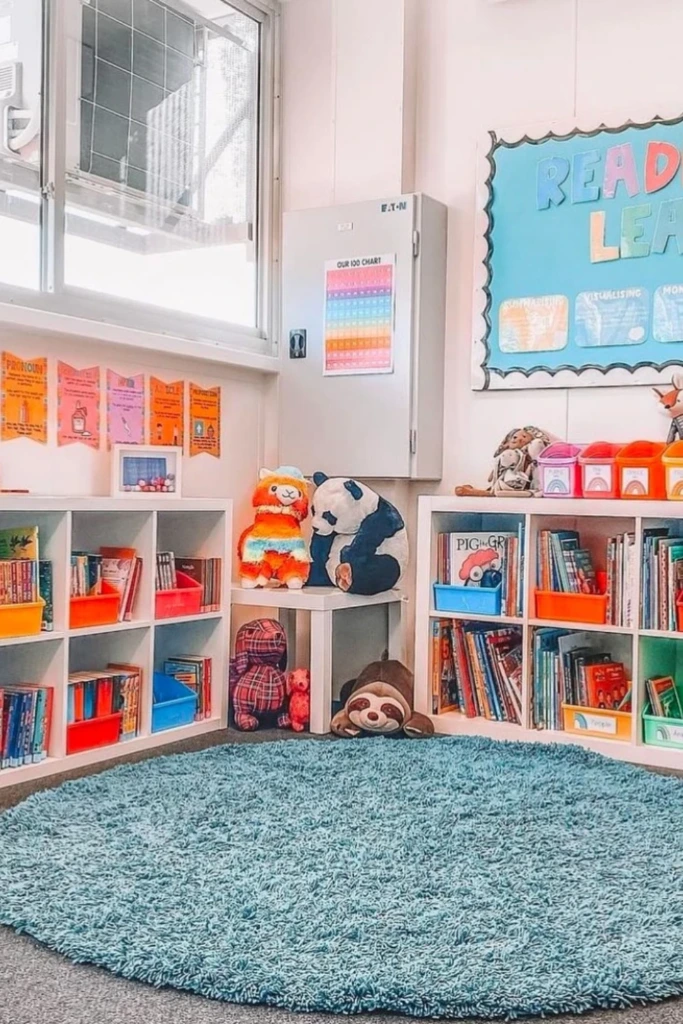
<em>A circular reading area encourages children to gather comfortably for shared stories and discussions.</em>
Begin with a round rug or arrange a few floor cushions in a loose circle. Place a low bookcase nearby and use small baskets to organize picture books, story collections, and other reading materials.
Choose two or three coordinating colors for cushions, book labels, and decorative accents. A handmade sign featuring a book or favorite reading quote can provide a simple finishing touch.
The circle arrangement makes it easier for children to see one another during read-aloud sessions and group conversations. Ensure that the seating does not obstruct classroom walkways and that all materials remain easy to reach.
8. Warm Welcome Wall
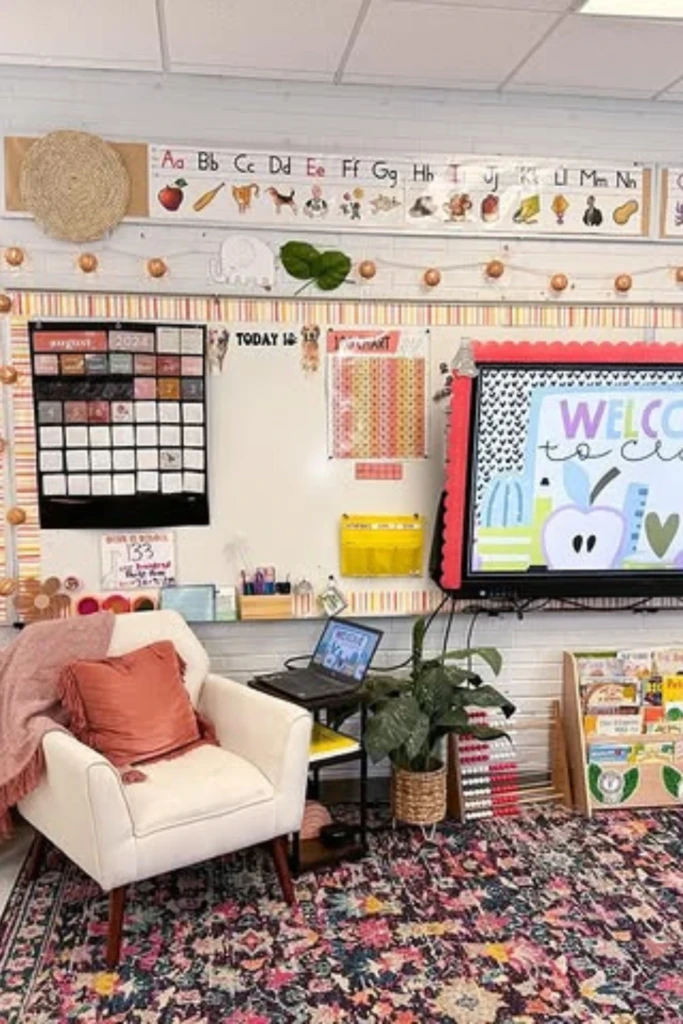
<em>A welcoming wall can help students feel that the classroom is a friendly place to learn.</em>
Create a display near the classroom entrance or main teaching area with a cheerful greeting, a calendar, and a few student-created decorations. Use a calm background color and add brighter accents through paper shapes, artwork, or fabric borders.
Include practical information such as the day's schedule or classroom responsibilities when space allows. A small board for student messages can also encourage participation and communication.
Keep the layout simple enough that important information remains easy to find. The goal is to create a friendly first impression while helping children settle into their daily routine.
9. Soft Light Focus
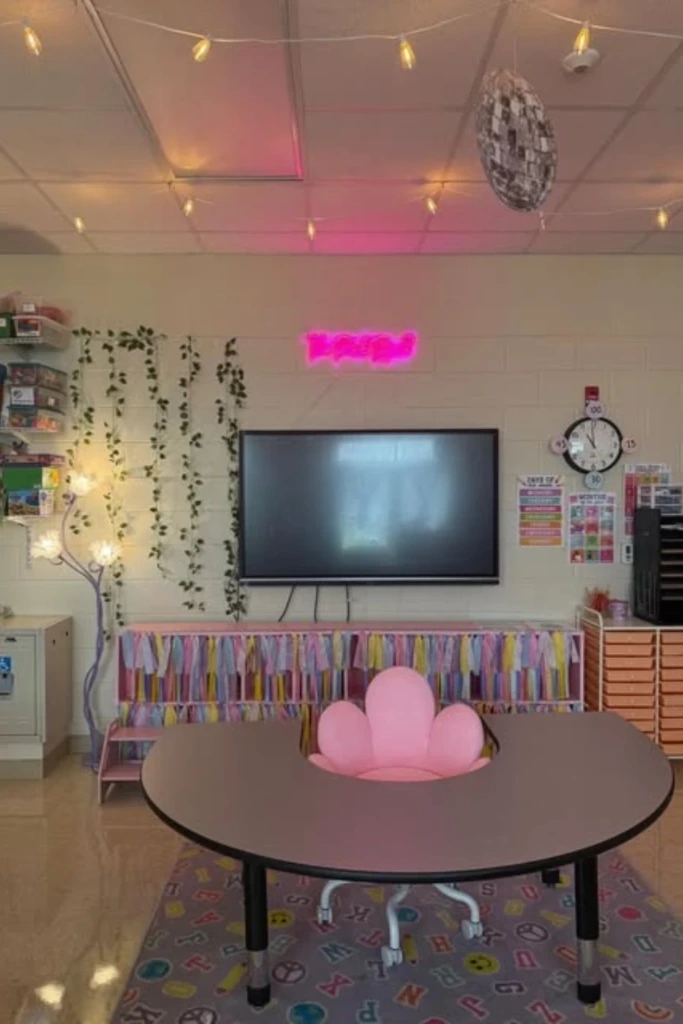
<em>Thoughtful lighting can make a classroom feel comfortable without distracting students from their work.</em>
Start by making the most of existing natural light. Keep windows unobstructed where possible and arrange displays so they do not interfere with daylight or visibility.
For a quiet reading area or relaxation corner, consider a school-approved lamp with suitable light output. If decorative string lights are permitted, use only approved products and install them according to school safety rules.
Avoid placing lights where they create glare on whiteboards, computer screens, or desks. Any additional lighting should support visibility and comfort while meeting applicable electrical and fire-safety requirements.
10. Rainbow Window Draping
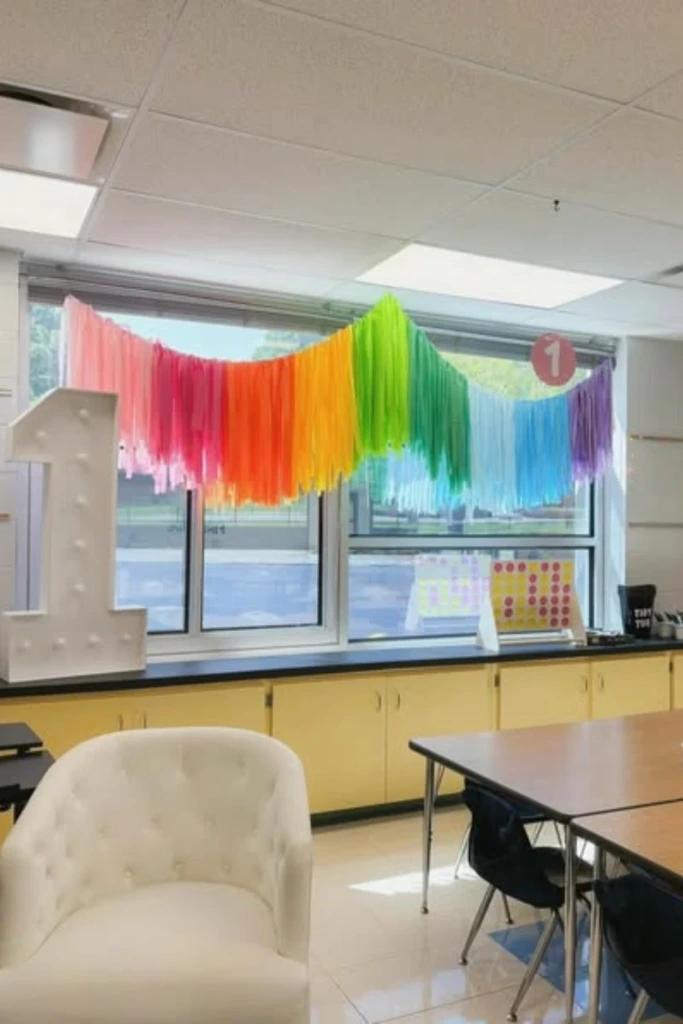
<em>Rainbow-colored paper decorations bring a cheerful accent to classroom windows.</em>
Cut strips of tissue paper, crepe paper, or lightweight craft material in several colors. Attach them above or beside a window in a gentle arch or layered arrangement, using a secure method approved for your classroom.
For a coordinated look, arrange the colors in rainbow order or select a smaller palette that matches the room. The natural daylight can make the colors stand out without requiring extra decorative lighting.
Keep the materials clear of glass openings, blinds, heaters, and ventilation equipment. Do not cover emergency exits or reduce the amount of natural light needed for classroom activities.
11. Interactive Math Corner
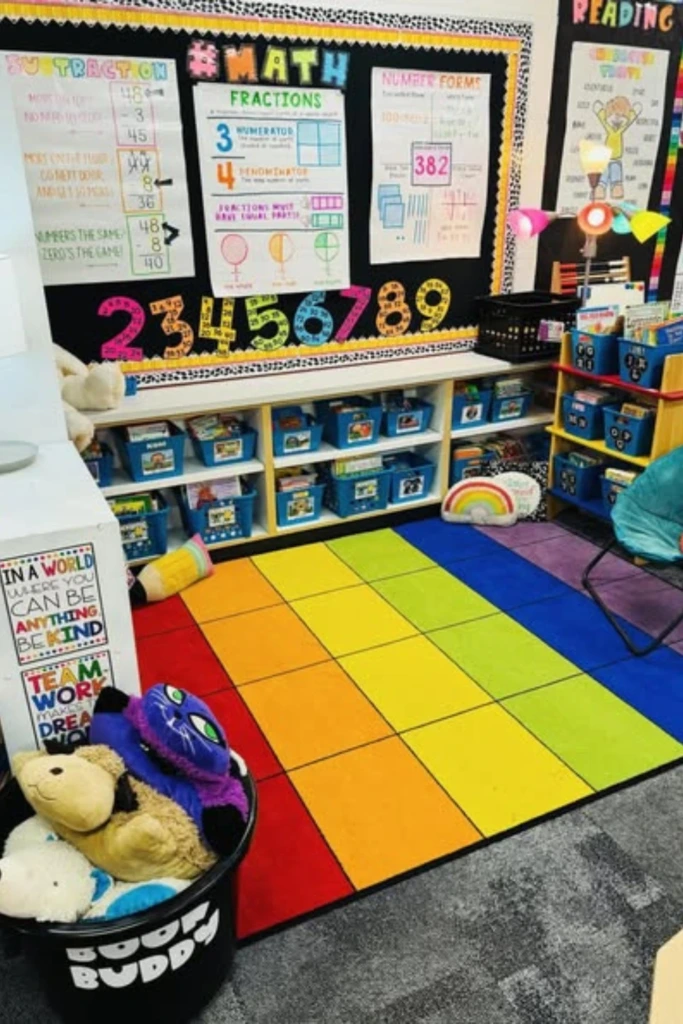
<em>A hands-on math station turns an ordinary classroom corner into a useful learning resource.</em>
Designate a small area for number recognition, counting, shapes, simple equations, or measurement activities. Add a colorful mat, a few reference charts, and clearly labeled containers for counters, number cards, dice, and other learning materials.
Make the information appropriate for the students' age and current lessons. For younger learners, picture-based number cards and manipulatives may be especially helpful. Older students might benefit from multiplication charts, fraction models, or problem-solving prompts.
Arrange resources so children can select materials independently and return them after use. Keeping the display focused on the current topic makes the corner both attractive and educational.
12. Seasonal Reading Nook
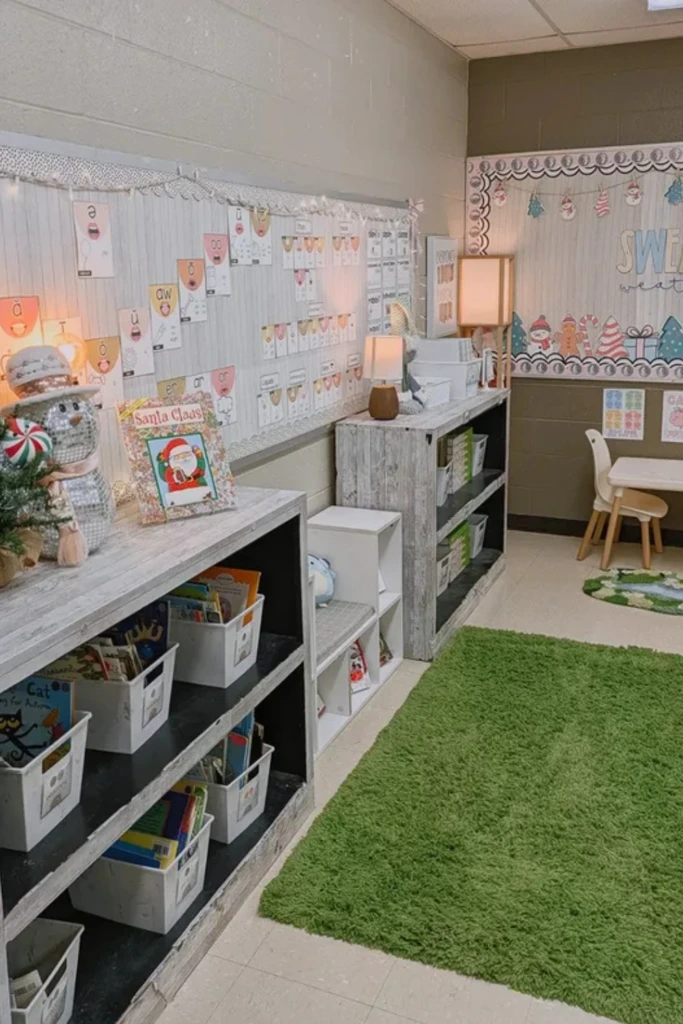
<em>Seasonal accents can refresh a reading corner without requiring a complete redesign.</em>
Keep the main furniture, book storage, and seating relatively neutral so they remain useful throughout the year. Introduce seasonal changes through a small selection of books, paper leaves, snowflakes, flowers, or other themed artwork.
For example, autumn might feature warm-colored paper foliage, while spring could bring handmade flowers and nature-themed stories. Students can contribute drawings or short book recommendations to make each update more personal.
Replace the temporary decorations as the seasons change rather than buying new furniture or rebuilding the entire space. This approach keeps the nook interesting while controlling costs and reducing waste.
13. Writing Station Zone
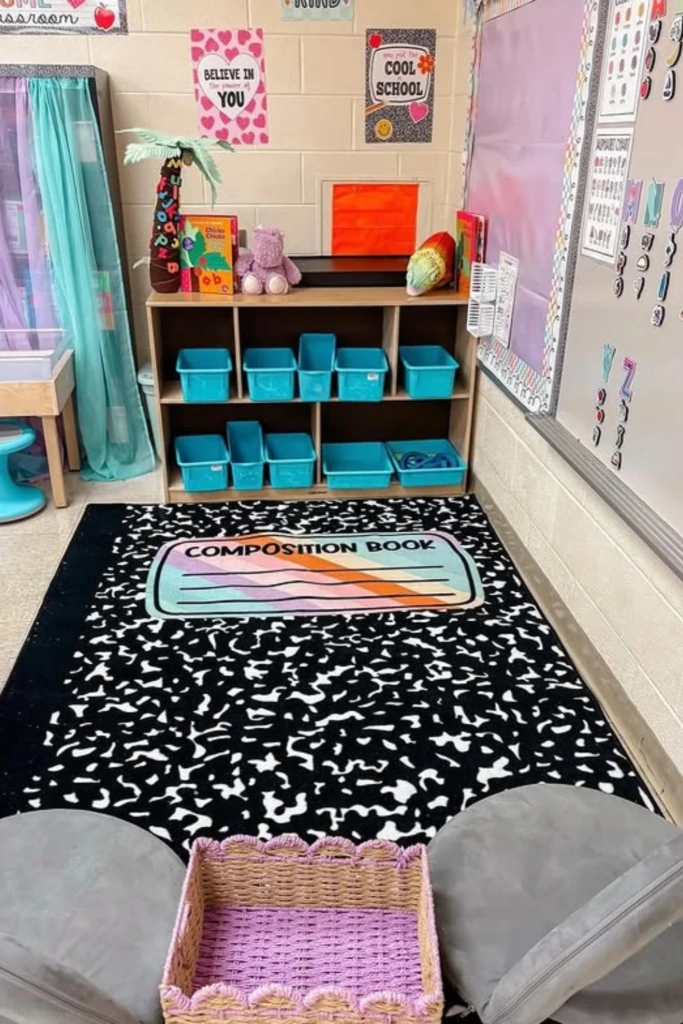
<em>A dedicated writing station gives students an organized place to practice their writing skills.</em>
Choose a quiet area with a table or desk and enough room for students to write comfortably. Provide paper, pencils, erasers, notebooks, and other commonly used supplies in labeled containers.
Decorate the nearby wall with a few useful resources, such as vocabulary cards, punctuation reminders, writing prompts, or examples of student work. A simple sign can help distinguish the station from other classroom areas.
Keep the workspace clear and avoid excessive wall displays directly in front of students. The arrangement should encourage concentration while making writing materials easy to find.
14. Vertical Supply Tower
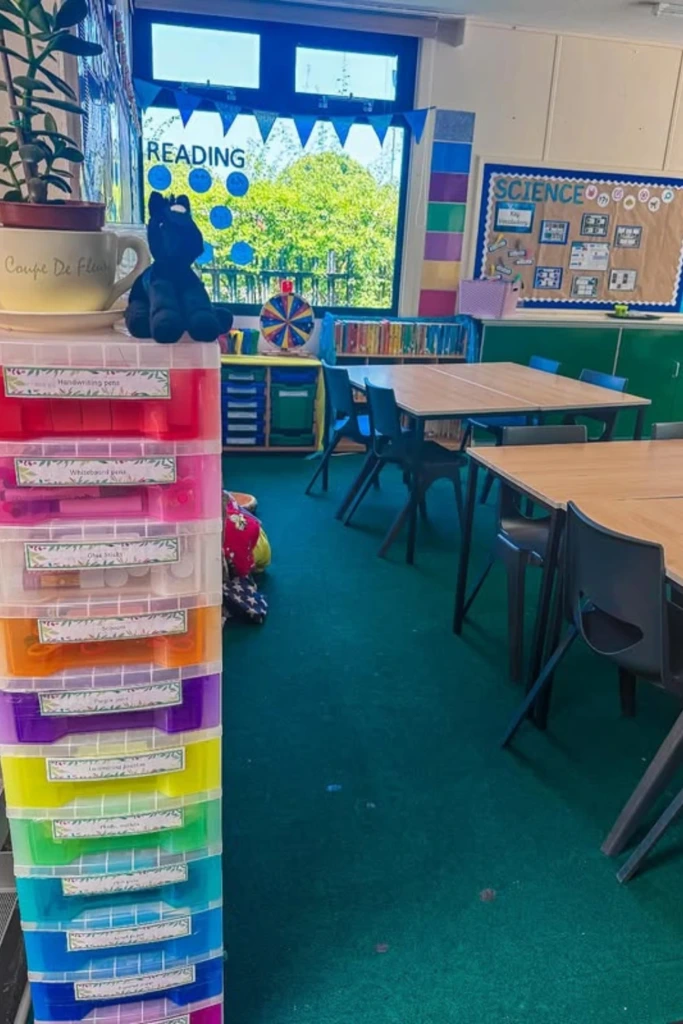
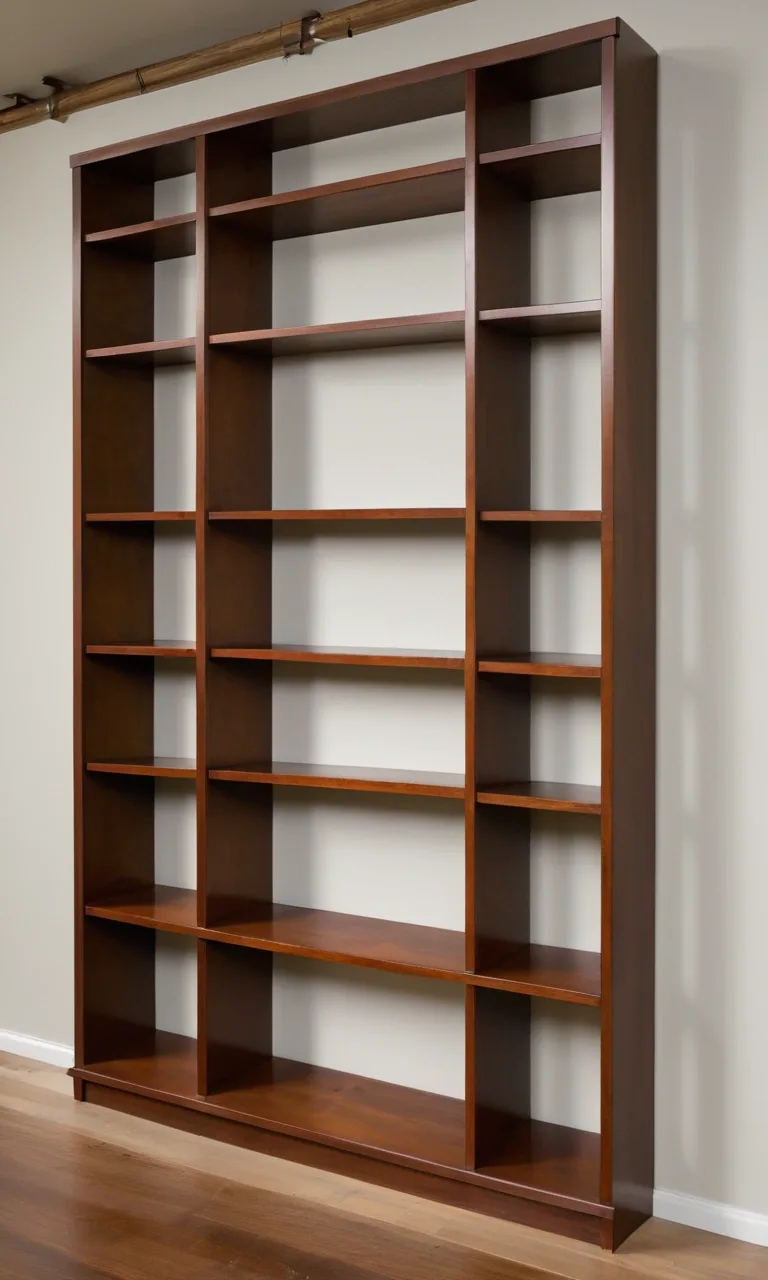
<em>Vertical storage makes better use of limited classroom floor space.</em>
Stack appropriately designed storage drawers or place sturdy containers on a secure shelving unit near group tables or activity stations. Assign each drawer a specific purpose, such as scissors, glue sticks, markers, paper clips, or craft supplies.
Use transparent containers when possible so students can see what is inside. Color-coded labels and simple pictures make identification easier for younger children.
Place heavier items on lower shelves and secure tall storage units according to the manufacturer's instructions. Keep frequently used supplies accessible without allowing containers to protrude into walking paths.
15. Open Play Zones
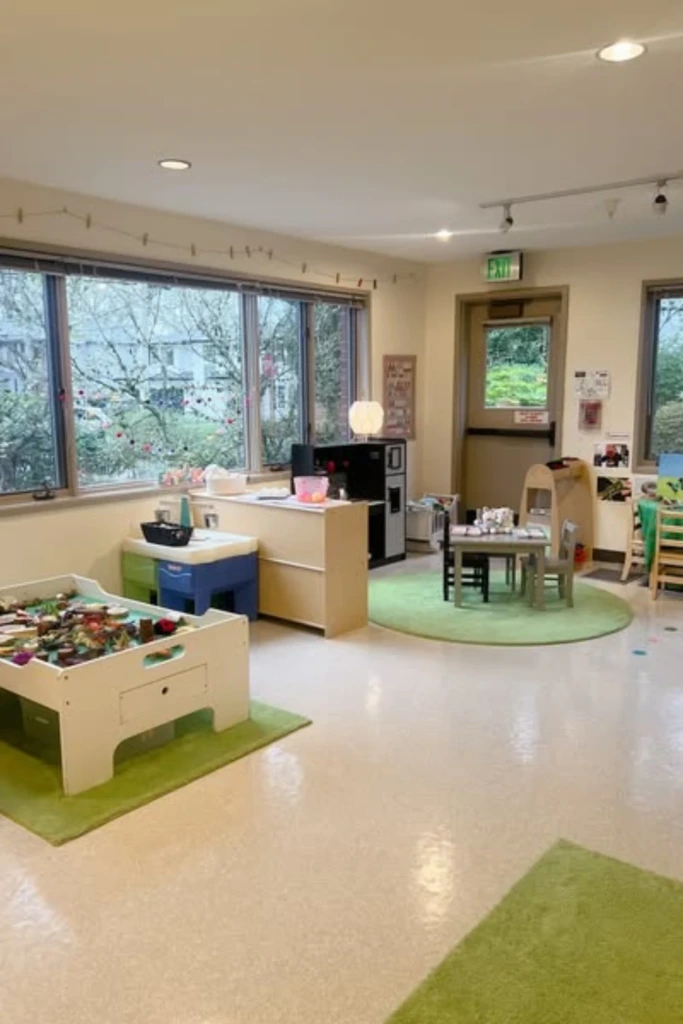
<em>A clearly arranged play area gives young learners room to explore, build, and collaborate.</em>
Set aside a defined section of the classroom for building blocks, pretend play, puzzles, or creative activities. Use low shelves, labeled baskets, and open containers to separate materials into manageable groups.
A washable rug or a simple floor boundary can help children recognize where the play area begins and ends. Display a few student-made signs or pictures to make the zone feel connected to the rest of the classroom.
Keep toys and supplies age-appropriate, and avoid overcrowding the area with too many choices. Ensure that children have sufficient room to play safely and that materials can be returned without difficulty.
16. Natural Classroom Flow
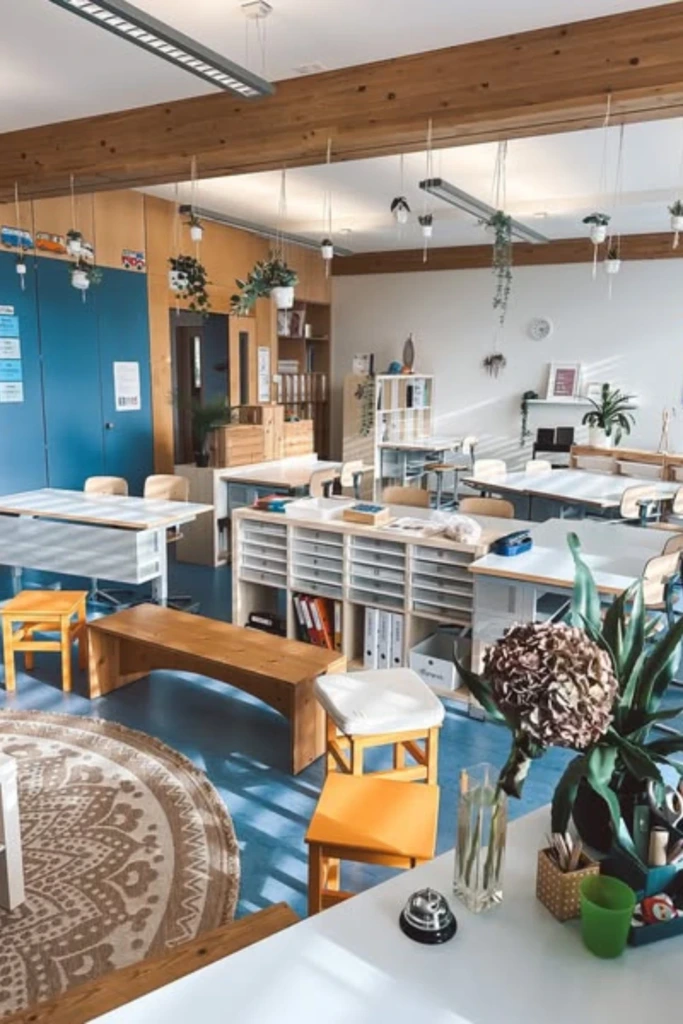
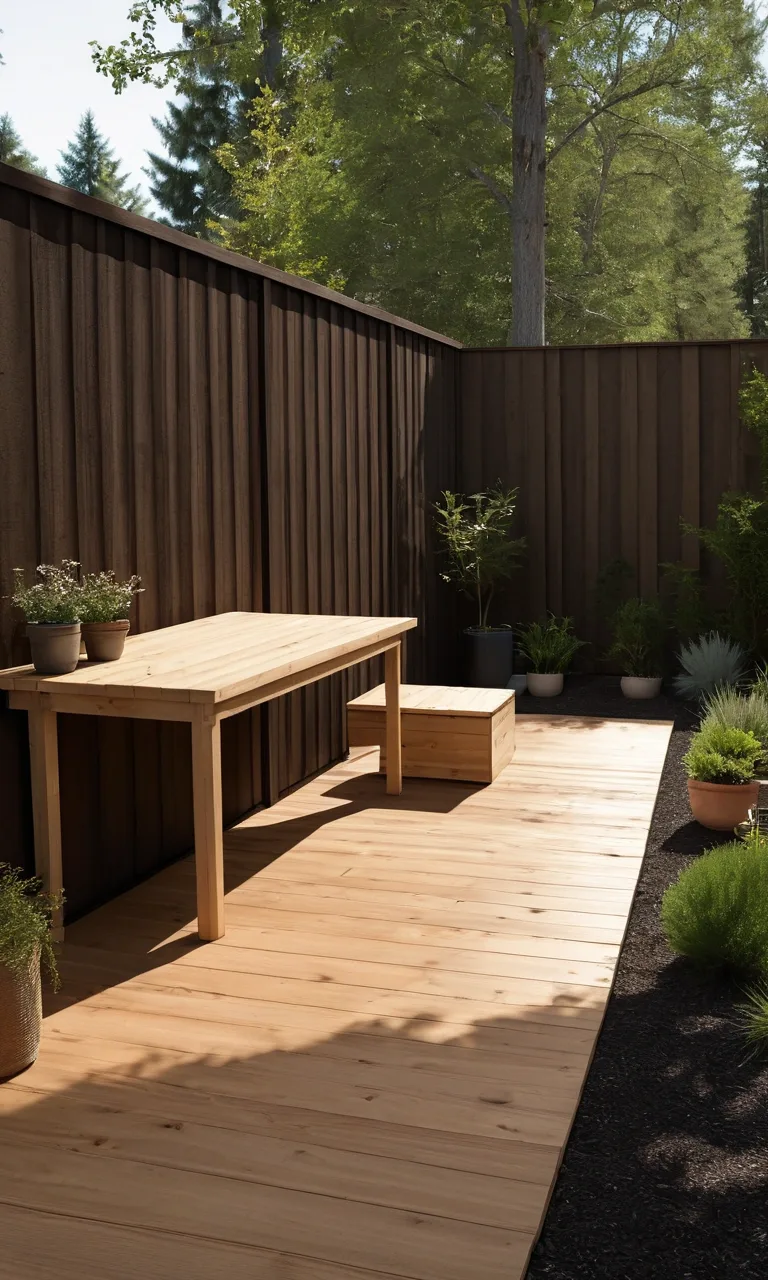
<em>Natural materials and uncluttered surfaces create a relaxed classroom atmosphere.</em>
Bring natural textures into the room through wooden storage boxes, woven baskets, neutral-colored fabrics, and nature-inspired artwork. A small, school-approved plant can introduce greenery where suitable.
Choose a limited palette of earthy shades, such as soft green, beige, cream, and light brown. These colors work well with existing furniture and can help unify different classroom areas.
Preserve open spaces around windows and avoid covering every surface with decorations. If you use living plants, select non-toxic varieties, consider allergies, and follow school policies regarding plant care and placement.
17. Statement Wall Art
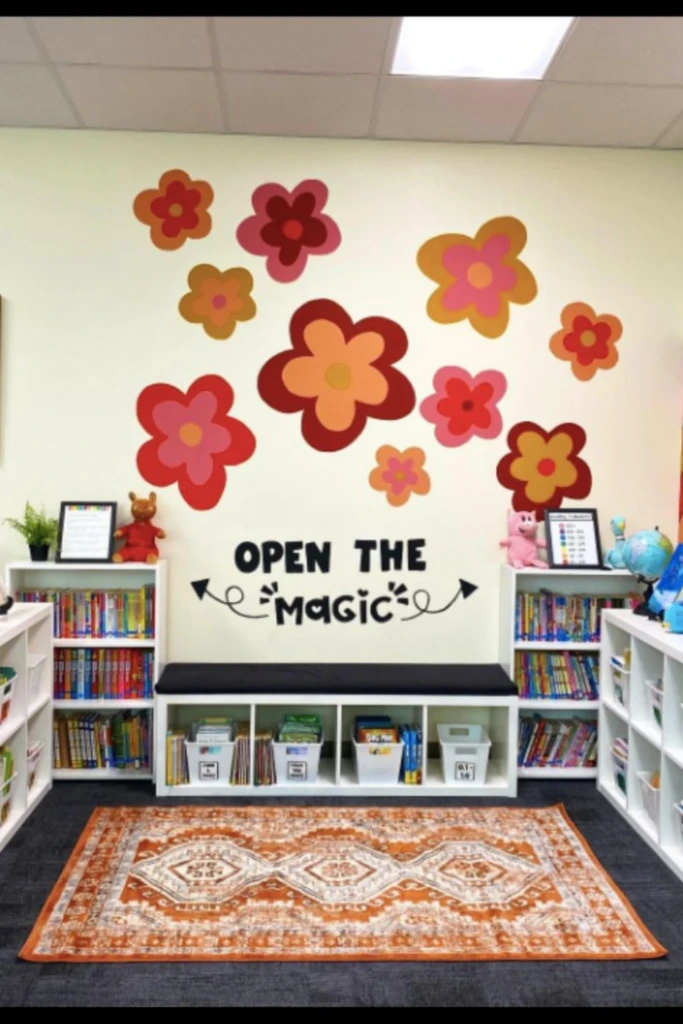
<em>One striking wall can give the entire classroom a recognizable visual identity.</em>
Choose a prominent wall and decorate it with large paper shapes, geometric patterns, oversized letters, or a collection of student illustrations. Select a small group of complementary colors to keep the display cohesive.
You could create a nature-inspired mural, a giant abstract rainbow, or a collection of handmade shapes arranged in a repeating pattern. Cardstock and recycled cardboard are useful options for building lightweight decorative elements.
Keep nearby furniture low enough to preserve visibility and make sure the artwork does not interfere with teaching materials. A single carefully planned focal point often looks more effective than numerous competing displays.
18. Calm Reading Bench
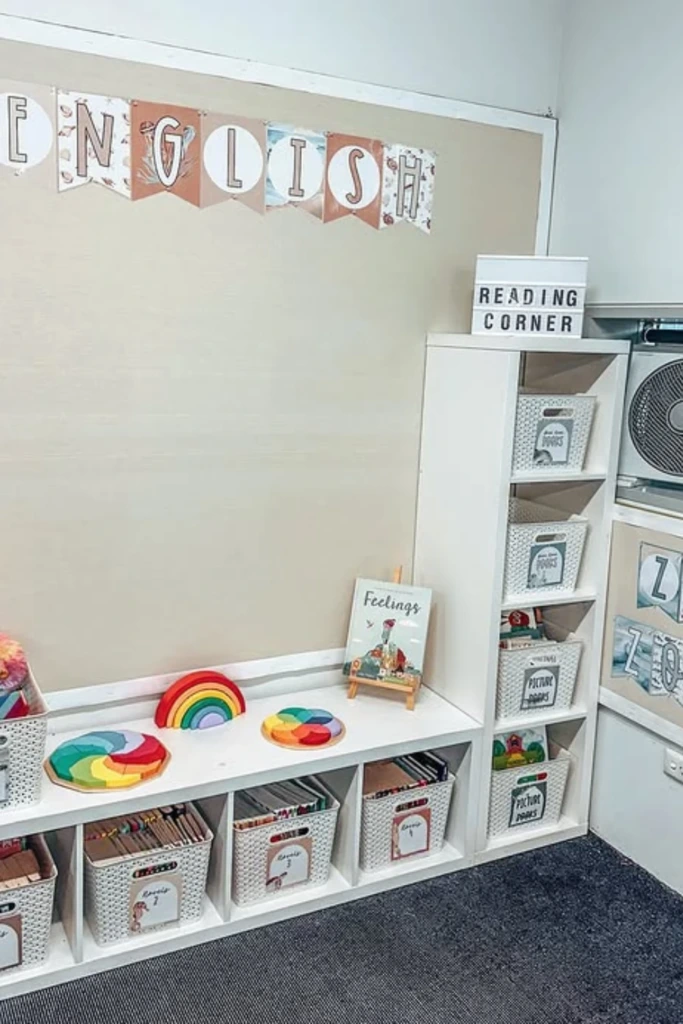
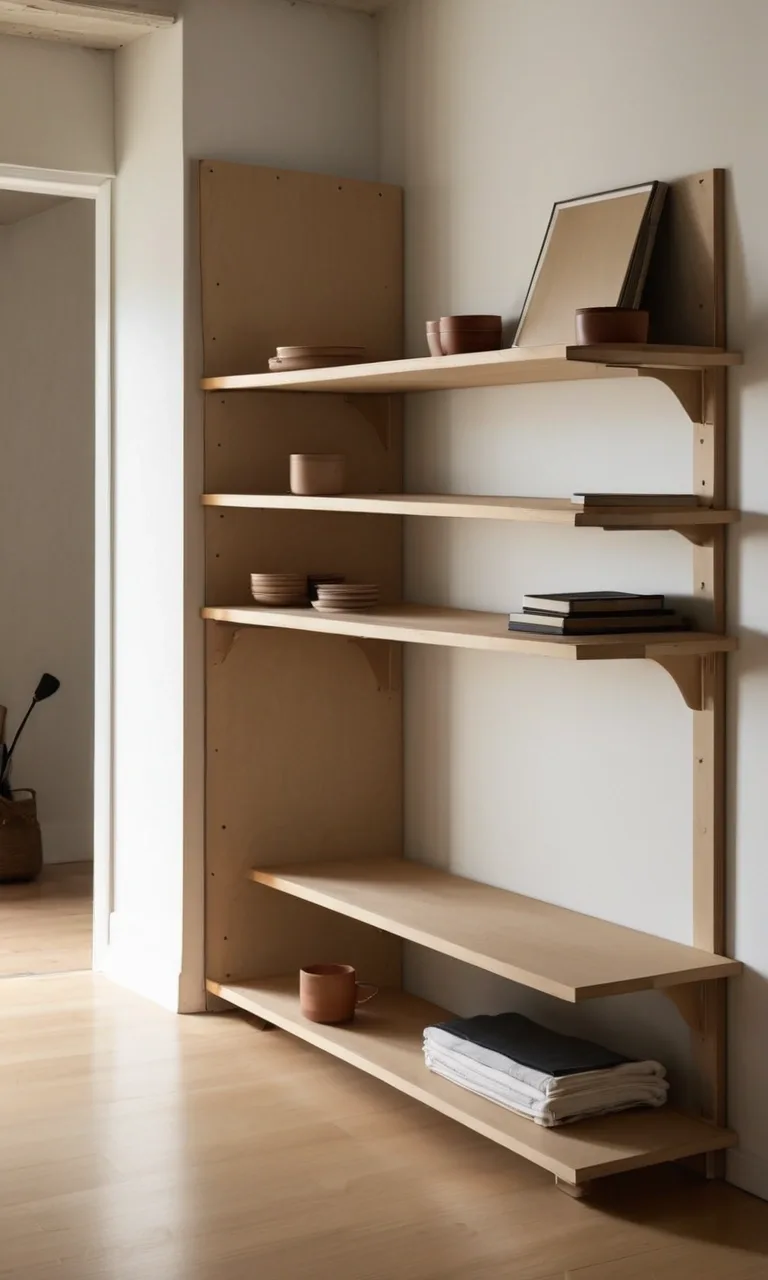
<em>A small reading bench offers students a comfortable place to pause with a book.</em>
Use a sturdy, child-appropriate bench with rounded edges and, if available, built-in storage underneath. Add a washable cushion and a small selection of books within easy reach.
Choose soft, neutral colors for the seating and introduce interest through book covers, a simple wall illustration, or a handmade reading sign. The restrained design helps the space feel restful rather than crowded.
Check that the bench is stable and suitable for classroom use. Store supplies securely, avoid sharp edges, and leave sufficient room for students to sit down and stand up safely.
19. Colorful Learning Wall
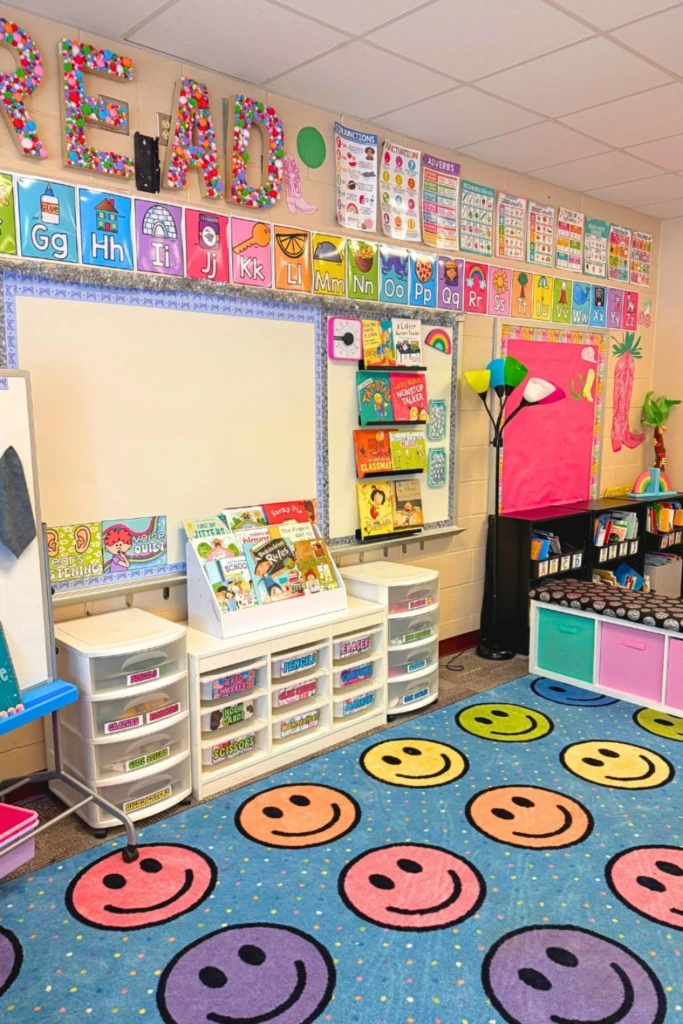
<em>Educational displays can provide decoration while reinforcing concepts students encounter in lessons.</em>
Create a teaching wall with alphabet strips, number charts, vocabulary cards, maps, science diagrams, or subject-specific reference materials. Select resources that match the students' age group and current curriculum.
Use coordinated borders or colored headings to separate topics without making the wall difficult to read. Large lettering, clear diagrams, and adequate spacing help students locate information quickly.
Review the display throughout the year and replace outdated resources with materials relevant to current lessons. A useful learning wall should support instruction first, with decorative details providing a finishing touch.
20. Ceiling Learning Trails
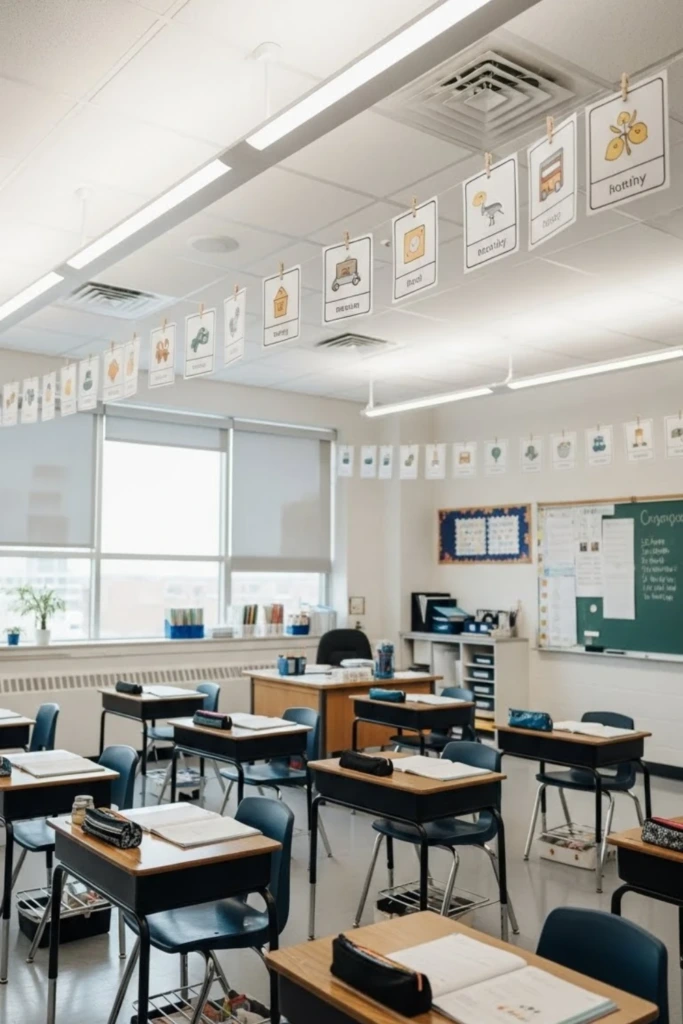
<em>Carefully planned ceiling displays can introduce learning prompts when wall space is limited.</em>
If school rules permit suspended classroom displays, use lightweight cards to present vocabulary, number patterns, scientific facts, or other short learning prompts. Arrange the cards in a simple sequence along an approved display area.
Limit the number of colors and keep the text large enough to read comfortably from below. You could create a number trail, a series of shapes, or a collection of words connected to the current topic.
Safety is essential when decorating overhead spaces. Follow school fire regulations, avoid blocking sprinklers, detectors, lights, or ventilation systems, and never hang decorations where they could fall onto students. Wall-mounted alternatives are preferable whenever overhead displays are not permitted.
21. Student Identity Wall
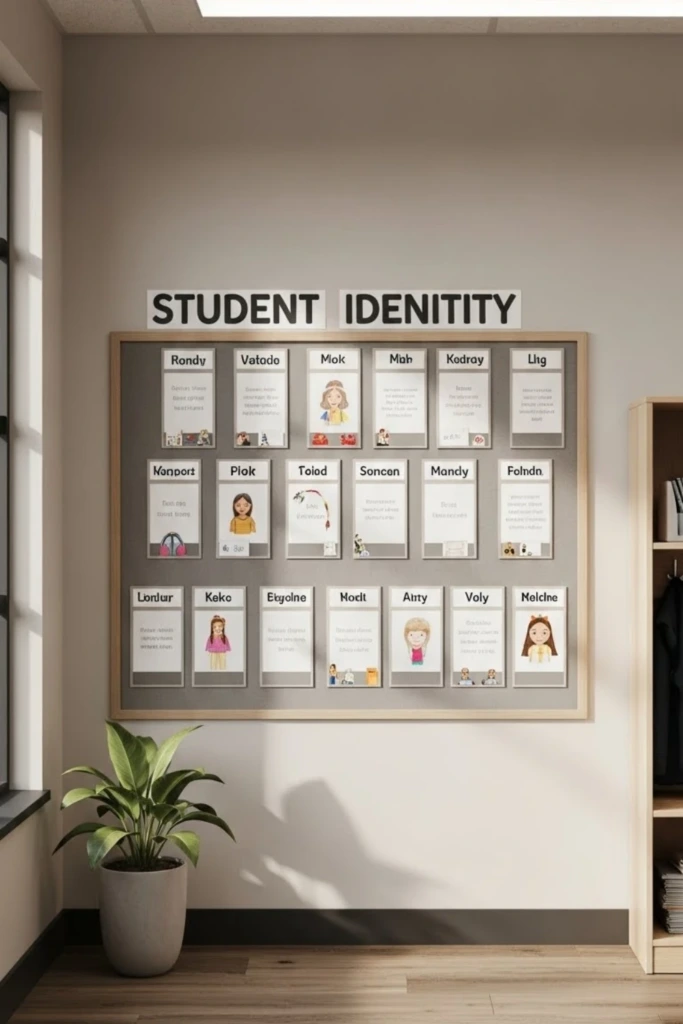
<em>A student identity wall celebrates the different interests, talents, and personalities within the class.</em>
Give each student a small, equally sized space to share a name card, self-portrait, favorite book, hobby, or drawing. Use a consistent template so the finished display looks organized while allowing individual creativity.
Students can update their contributions during the school year as they discover new interests or complete projects. A shared heading such as "Meet Our Class" or "Everyone Belongs Here" helps connect the individual entries.
Ask permission before displaying photographs or personal information, and follow school privacy policies. The display should help children feel included without exposing information they would prefer to keep private.
22. Rotating Quote Strip
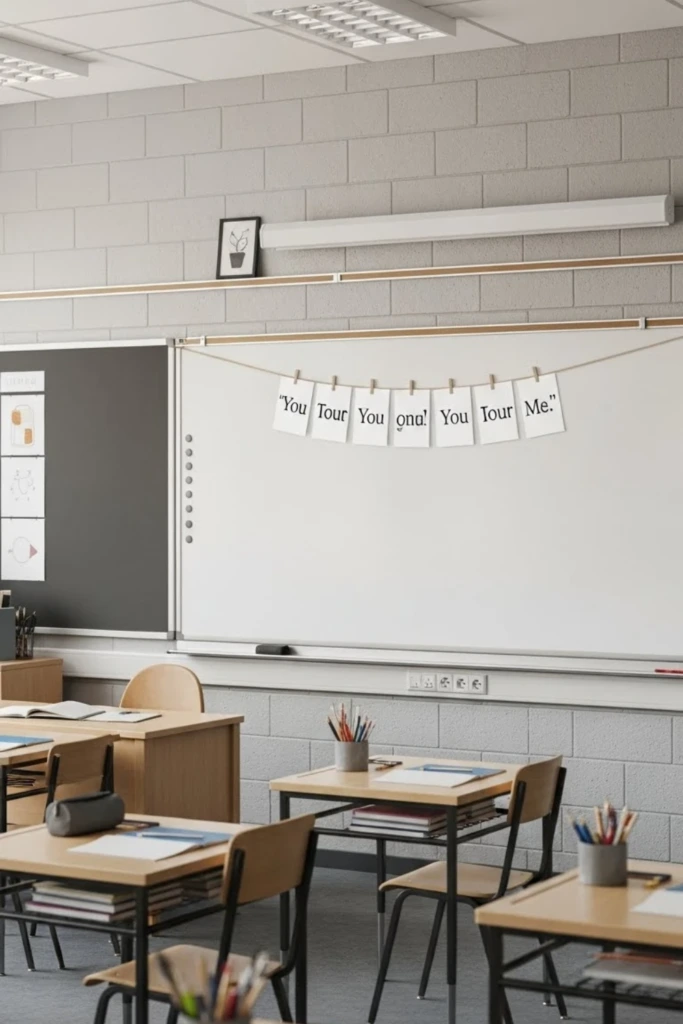
<em>A narrow message display adds inspiration without filling the classroom with permanent posters.</em>
Choose a small strip of wall or bulletin board for a weekly quote, encouraging statement, vocabulary word, or student-written message. Use large, readable lettering and a simple decorative border.
Messages might focus on perseverance, curiosity, teamwork, kindness, or a concept being studied in class. Invite students to suggest new messages so the display reflects the interests and experiences of the group.
Change the message regularly instead of adding more posters. This keeps the area fresh, gives students something new to consider, and requires very little money or preparation.
23. Texture-Based Decor Wall
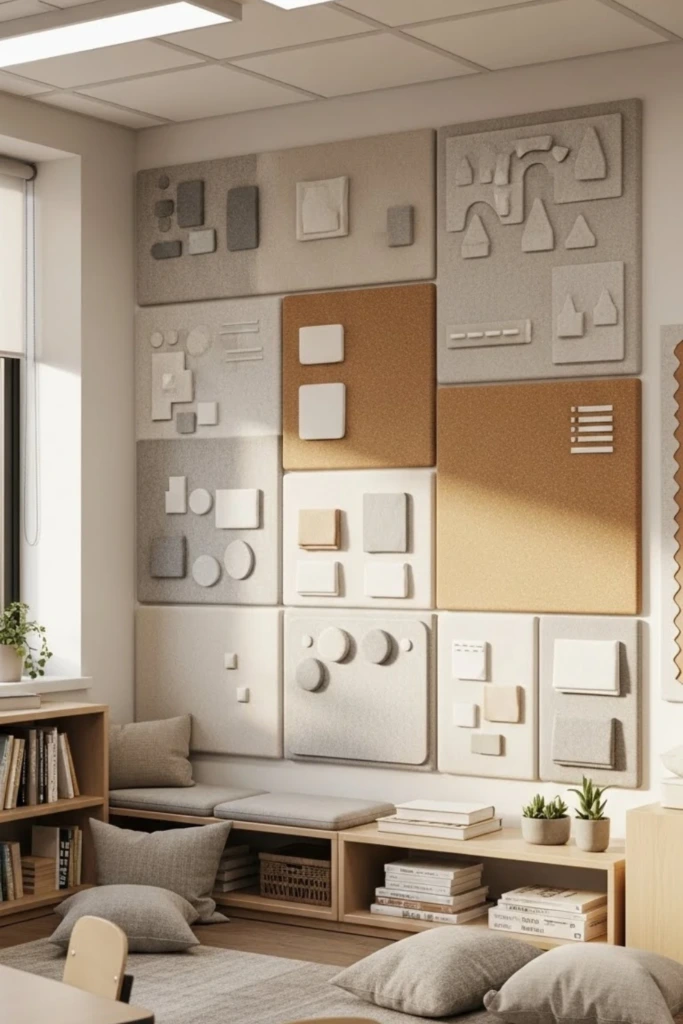
<em>Combining different textures creates visual interest without relying on bright colors or busy patterns.</em>
Gather suitable materials such as felt, fabric remnants, cork sheets, corrugated cardboard, or woven paper. Arrange them in simple panels or geometric shapes on a designated display board.
Choose materials in complementary neutral shades if the classroom already contains plenty of colorful learning resources. Differences in texture can make the display interesting while maintaining a calm appearance.
Secure every element properly and avoid materials that shed fibers, contain exposed sharp edges, or create allergy concerns. For a more practical design, use a cork panel that can also hold classroom notices or student work.
24. Floor-Level Visual Guides
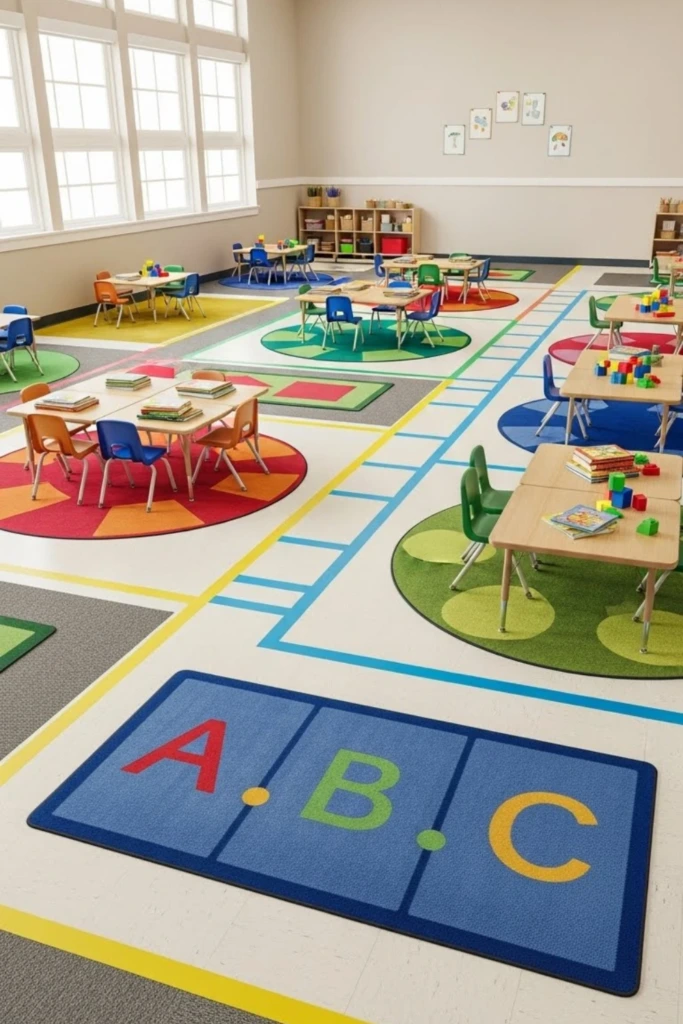
<em>Floor markings can help define classroom areas while adding color to the room.</em>
Use suitable classroom rugs, approved floor decals, or removable marking materials to identify activity zones, reading areas, or group meeting spots. Simple shapes and colors can help younger students understand where to gather for different tasks.
For example, a rug might mark the storytime area, while a designated floor space could identify where students line up for transitions. Keep the system consistent so the markings remain easy to understand.
Choose products appropriate for the flooring and follow the school's installation guidelines. Avoid loose tape, raised edges, and slippery surfaces that could cause trips or falls. Never use floor decorations to obstruct accessible routes or emergency exits.
25. Minimalist Theme Corners
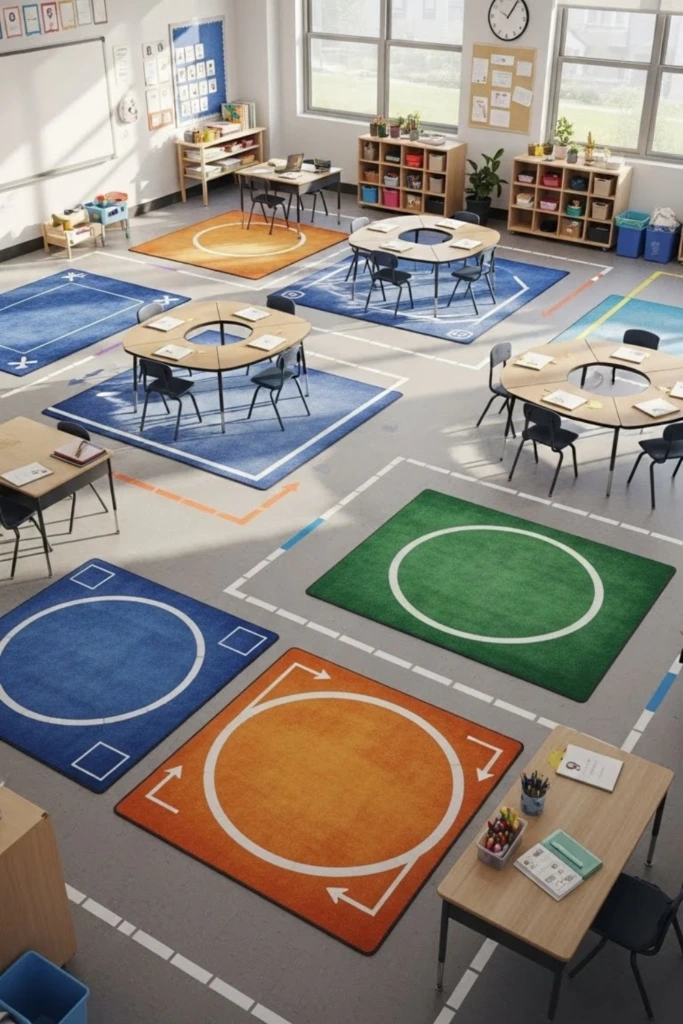
<em>Small themed corners let you introduce creativity without overwhelming the classroom.</em>
Give each selected corner a clear purpose, such as nature exploration, mathematics, reading, or creative expression. Use a few coordinated items to establish the theme rather than filling the area with unrelated decorations.
A nature corner might include a leaf identification chart and nature-inspired artwork, while a mathematics corner could feature shape cards and counting materials. A reading corner might use a small book display and a handmade sign.
Keep the colors and decorative elements simple, especially in smaller classrooms. Review each corner regularly to ensure that its materials remain useful, accessible, and appropriate for the students using them.
How can we make our classroom pretty?
Start by organizing the room and choosing one or two areas to improve. A coordinated bulletin board, an inviting reading corner, or a neatly arranged supply shelf can make a noticeable difference without a large budget.
Use a small color palette throughout the classroom and incorporate student artwork to give the space character. Keep frequently used materials organized, arrange furniture to support movement, and remove decorations that no longer serve a purpose.
You can also reuse items you already have, such as cardboard, fabric scraps, containers, and old folders. Focus on comfort, accessibility, and useful learning displays rather than trying to decorate every wall. A classroom looks its best when its design supports the people who use it.
What do teachers use to decorate their classrooms?
Teachers commonly use affordable materials such as construction paper, bulletin board paper, cardstock, posters, borders, rugs, storage bins, labels, and reusable display boards. Fabric, baskets, student artwork, and carefully selected plants can add warmth and personality.
Many educators also create their own alphabet charts, subject displays, classroom signs, seasonal decorations, and interactive learning resources. Recycled cardboard and repurposed containers are useful for projects that need to stay within a limited budget.
The most effective classroom decorations often serve a practical purpose. Labeled storage helps students find supplies, educational posters reinforce lessons, and student work displays recognize effort and creativity. Choosing reusable, easy-to-maintain materials makes it simpler to refresh the classroom throughout the school year.