27 Pantry Organization Ideas for 2026
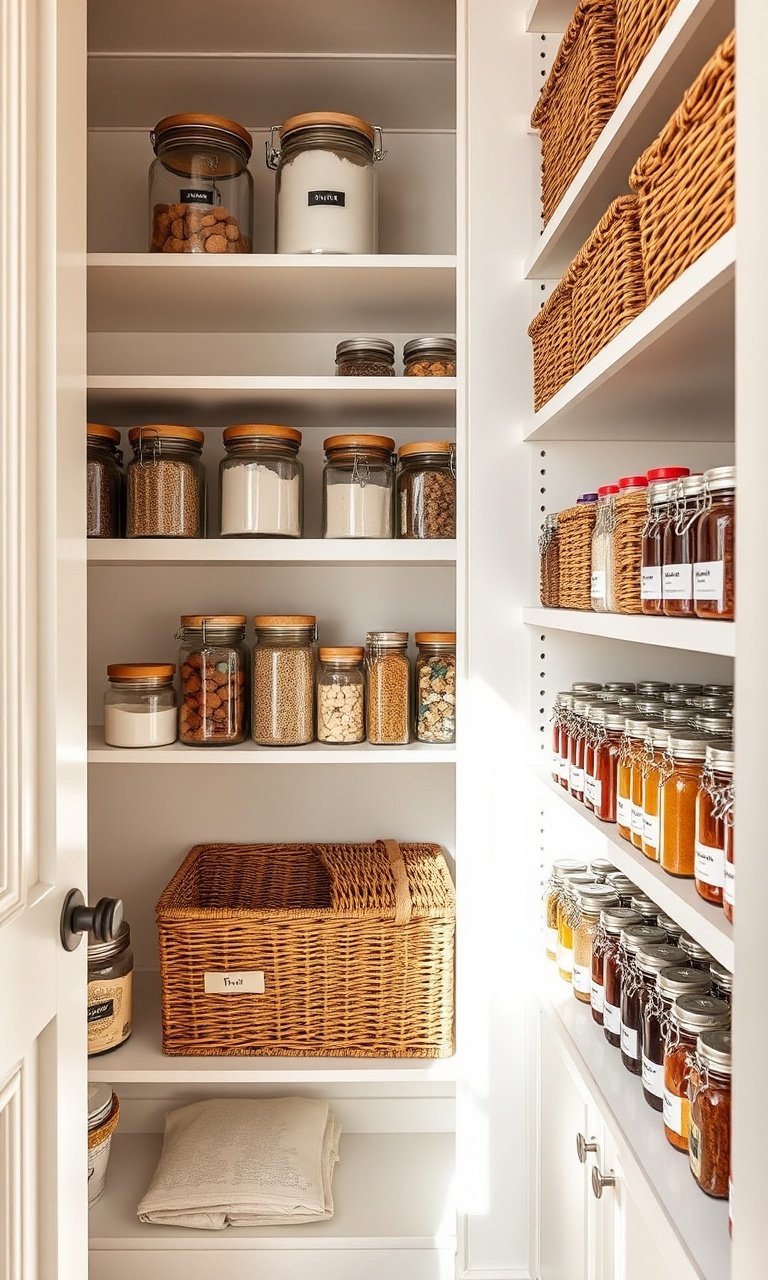
A messy pantry can make even the simplest cooking task frustrating. When cereal boxes, spice jars, canned foods, and snack packets are scattered across different shelves, finding one ingredient becomes a daily challenge.
The good news is that creating an organized pantry doesn't require an expensive renovation or a huge storage area. A few thoughtful changes can make your existing space easier to use, cleaner, and more attractive.
From space-saving baskets to beautiful glass containers and clever corner shelving, these 27 pantry organization ideas will help you create a practical storage system that fits your kitchen and everyday routine.
What is the Best Way to Organize a Pantry?
The most effective way to organize a pantry is to create dedicated storage areas based on how frequently you use different foods.
Begin by emptying your shelves and checking expiration dates, packaging conditions, and duplicate purchases. Clean each surface before putting anything back.
Next, separate your groceries into categories such as breakfast foods, baking ingredients, canned goods, snacks, and cooking essentials.
Place frequently used products within comfortable reach, heavier containers on sturdy lower shelves, and occasional supplies higher up.
Choose storage containers according to your available space rather than buying matching organizers immediately. Clear containers work well for dry ingredients, while baskets help control loose packages.
Finally, label your storage areas and leave a little empty space for new groceries. This makes your pantry easier to maintain between shopping trips.
1. Clear Jar Zoning for Everyday Essentials
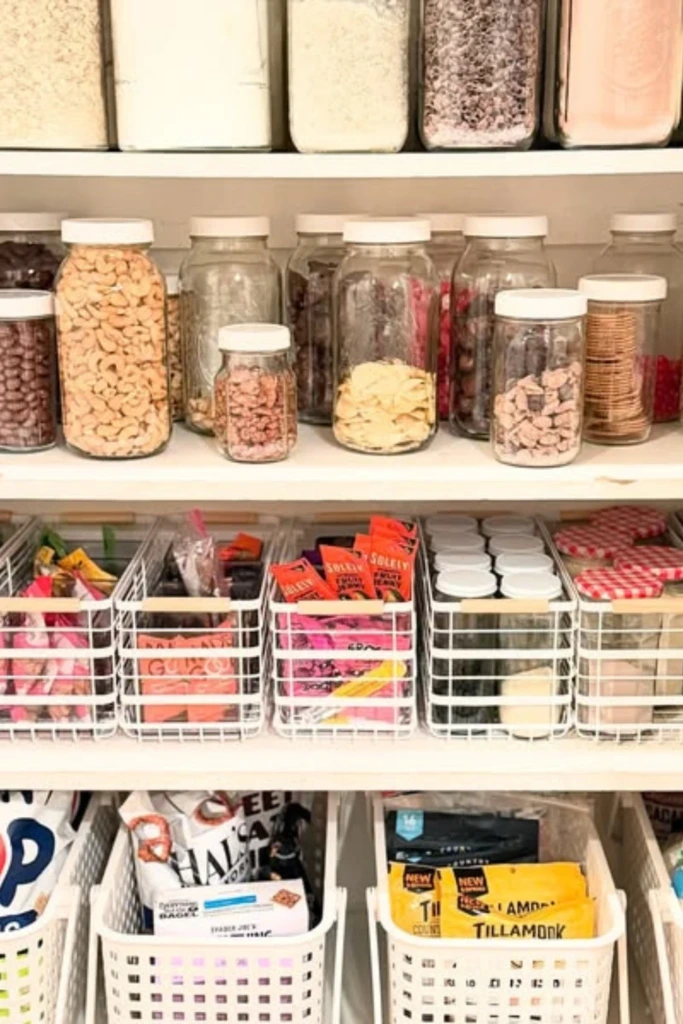
Clear jars are a practical solution for organizing ingredients you reach for regularly. They allow you to identify contents immediately without opening several packages.
Create separate sections for foods such as rice, pasta, oats, nuts, and dried beans. Choose food-safe containers with secure lids, especially for ingredients that need protection from moisture.
Arrange taller jars toward the back and shorter ones near the front so everything remains visible.
For a more coordinated appearance, select containers with similar shapes and simple labels. Include the product name and any important storage or expiration information.
This arrangement is especially useful for open pantry shelves where both appearance and accessibility matter.
2. Tall Glass Jars for a Streamlined Pantry Wall
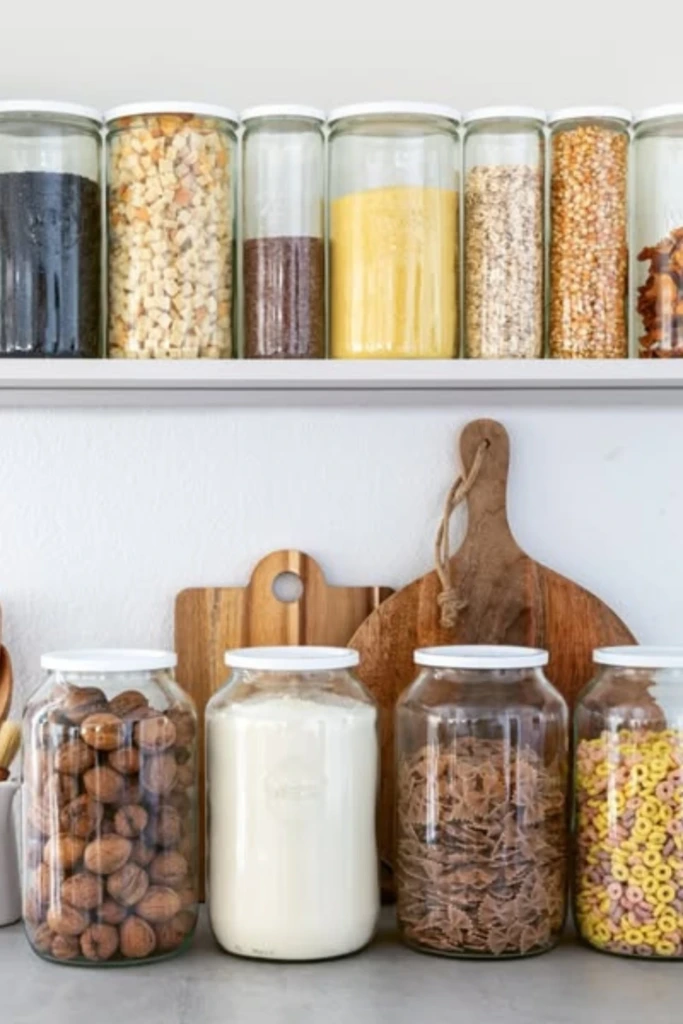
Tall glass containers can turn a crowded pantry wall into a well-organized display while making good use of vertical space.
They are particularly suitable for spaghetti, lentils, cereal, flour, and other dry staples purchased in larger quantities.
Before choosing jars, measure the height between your shelves and allow enough clearance to remove the lids comfortably.
Group containers according to their contents rather than arranging everything solely by appearance. Keep heavier glass jars at a manageable height to reduce the risk of dropping them.
A consistent container style creates visual harmony, while clearly written labels make daily cooking more convenient.
3. Pull-Out Baskets for Quick Grab Zones
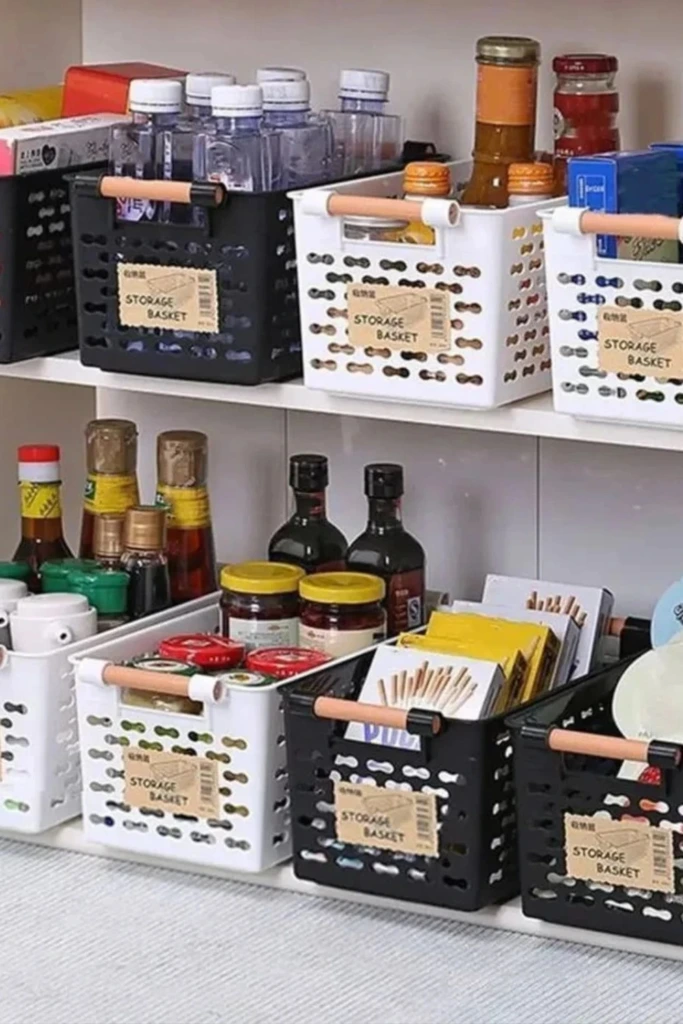
Pull-out baskets make deep pantry shelves considerably easier to manage because you can bring stored items forward instead of reaching into the back.
Use separate baskets for packaged snacks, sauces, breakfast supplies, and small grocery items.
Choose baskets with smooth sliding mechanisms or sturdy handles that allow them to move without catching on neighboring containers.
Labels on the front help family members find what they need and return products to the correct location.
For an affordable alternative to installed drawers, use lightweight removable bins that slide easily across shelf surfaces.
4. Corner Shelving That Maximizes Every Inch
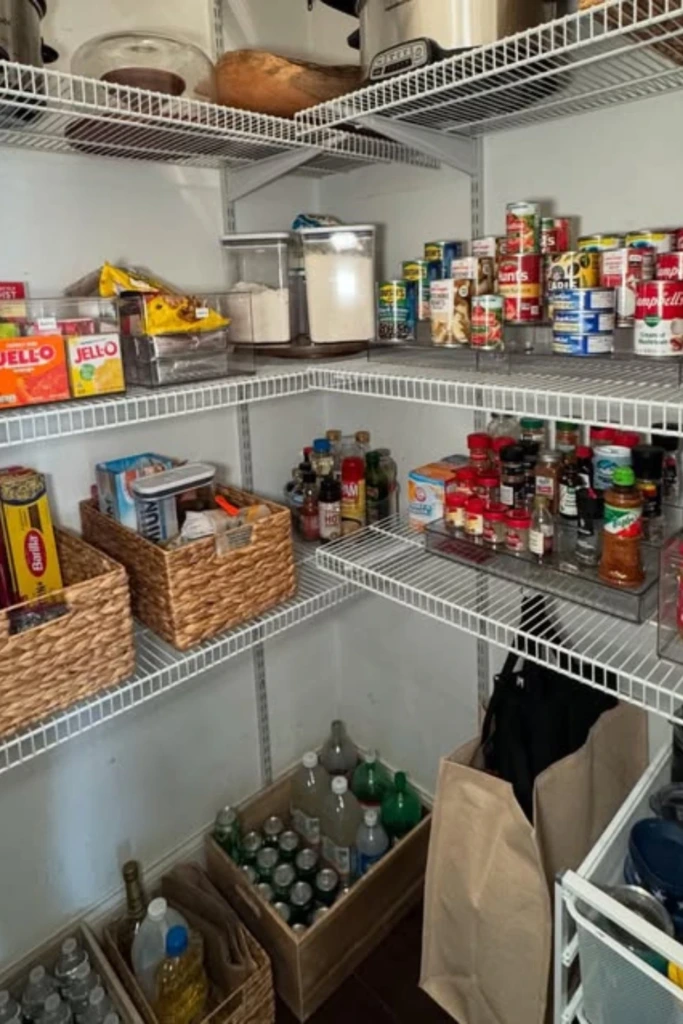
Pantry corners often become wasted storage areas because items placed at the back are difficult to reach.
Corner shelving helps turn these awkward spaces into useful storage without requiring additional floor space.
Consider adjustable wire shelves, compact tiered racks, or corner-specific organizers that fit your pantry dimensions.
Place smaller jars and frequently used ingredients where they remain visible. Use shallow bins for products that would otherwise disappear behind larger containers.
Avoid stacking heavy cans on unstable corner organizers. Always check the weight capacity before loading shelves.
5. Built-In Pantry with Warm Minimal Styling
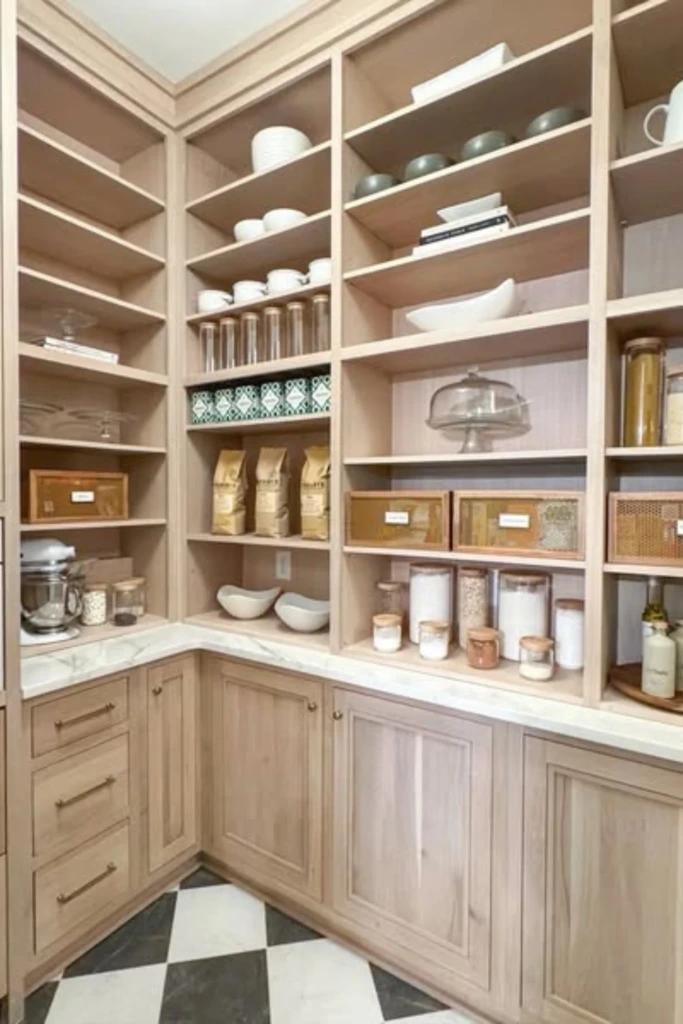
A built-in pantry offers an attractive way to combine everyday food storage with a clean kitchen design.
Open shelves can display regularly used ingredients, while closed cabinets conceal oversized packages, appliances, and less attractive supplies.
Natural wood finishes, neutral containers, and simple hardware create a welcoming atmosphere without overwhelming the room.
Keep the layout practical by positioning everyday foods at convenient heights and reserving higher cabinets for occasional items.
Soft lighting can improve visibility, particularly in deeper storage compartments.
The result is a pantry that feels like an intentional part of your kitchen rather than an overcrowded utility area.
6. Labelled Jars and Turntables for Easy Access
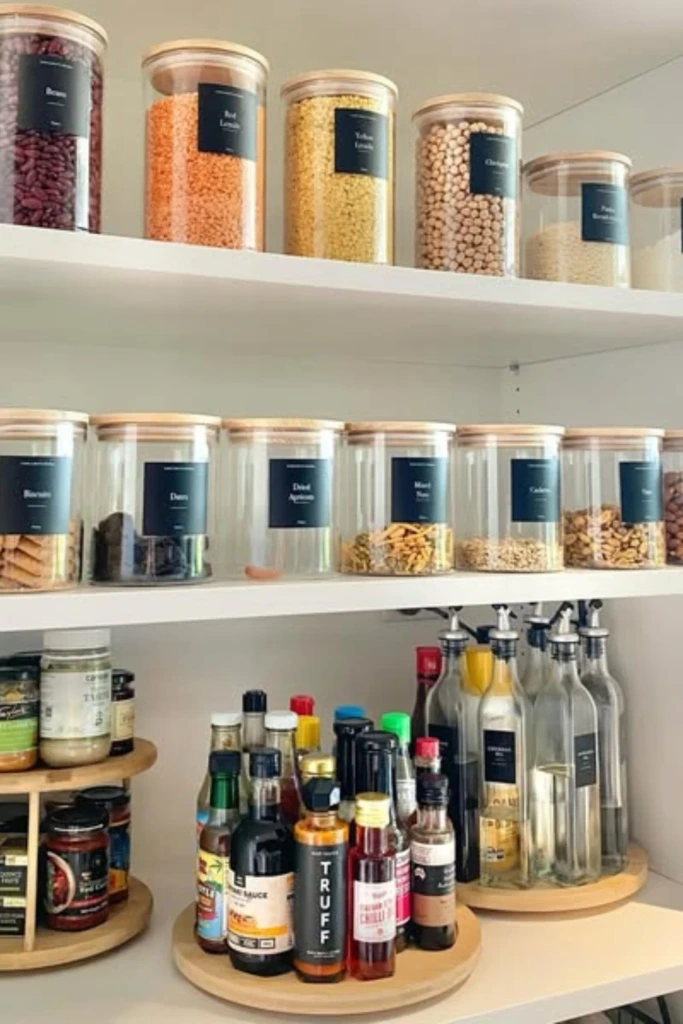
Combining labeled containers with rotating organizers creates an efficient system for storing both dry ingredients and bottled products.
Use jars for foods such as sugar, flour, grains, and pasta. Reserve turntables for vinegar, condiments, sauces, and smaller jars.
A rotating tray allows you to access items near the back without moving everything in front of them.
Choose turntables with raised edges to help prevent bottles from sliding off.
For labels, use large, readable lettering and include dates when transferring ingredients from their original packaging.
This combination works especially well on deep shelves where visibility is limited.
7. Compact Pantry Cabinet with Layered Storage
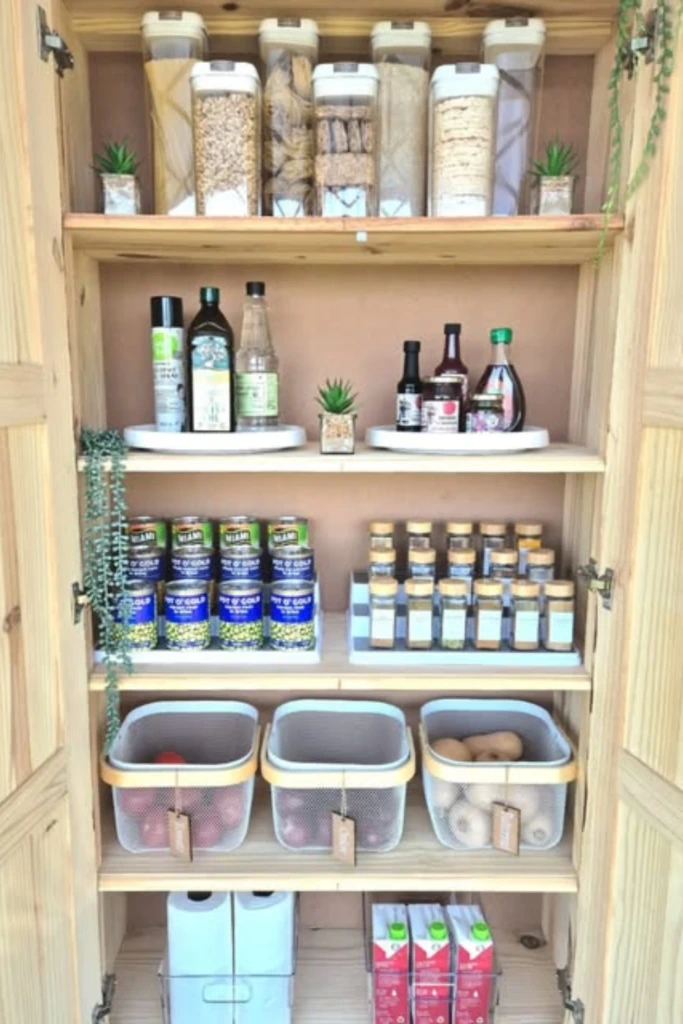
A small pantry cabinet can hold an impressive amount of food when its interior is divided thoughtfully.
Start by placing heavier products and larger containers on the bottom shelf. Use the middle shelves for everyday groceries and the upper section for lightweight extras.
Stackable bins can create additional storage levels, while compact turntables help organize bottles.
If the cabinet has a solid door, consider adding a slim organizer for seasoning packets or small accessories, provided it does not interfere with closing.
Avoid filling every available inch. Leaving some clearance makes products easier to remove and helps prevent accidental spills.
8. Mixed Storage with a Clean, Practical Flow
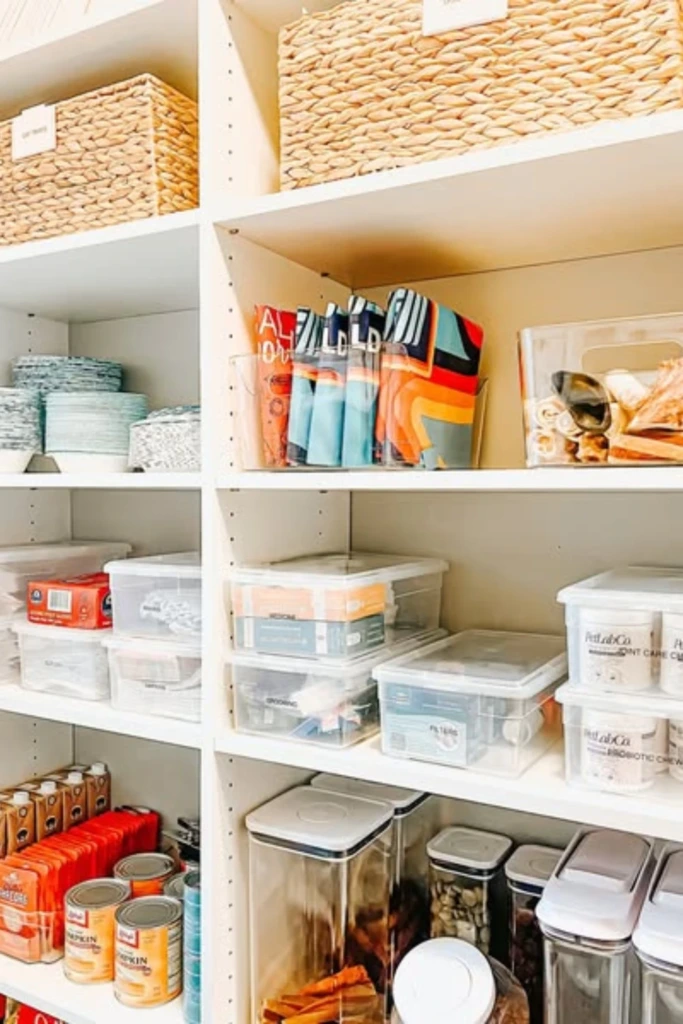
Not every pantry item needs the same type of container. Combining several storage solutions often produces a more useful arrangement.
Clear canisters are excellent for dry staples, open baskets suit packaged snacks, and sturdy bins work well for larger supplies.
Organize each shelf around a specific purpose, such as baking, breakfast preparation, or dinner ingredients.
Keep products used together close to one another. For example, pancake mix, syrup, and breakfast toppings can share one section.
A consistent labeling system helps different containers feel connected without requiring every basket and jar to match.
9. Open Shelf Display with Modern Glass Containers
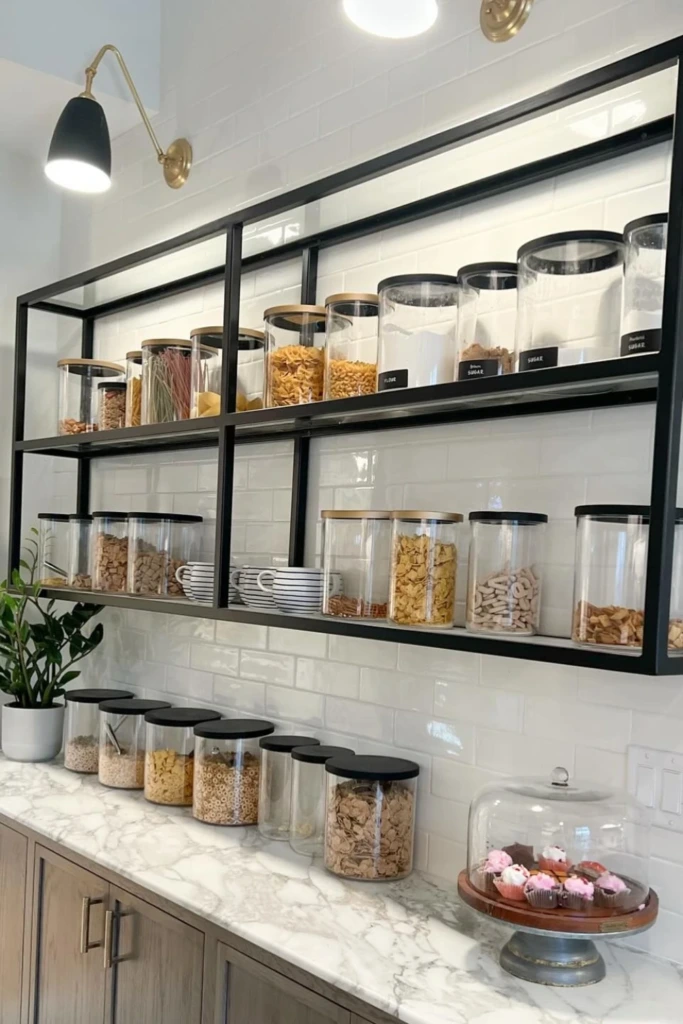
Open pantry shelving can provide convenient storage while contributing to the overall kitchen design.
Glass containers are particularly effective because their contents add subtle color and texture to the display.
Arrange dry foods in practical groups and maintain enough space between containers to make cleaning easier.
Choose shelving materials that can safely support the combined weight of filled jars.
If your pantry is exposed to direct sunlight, avoid displaying ingredients that deteriorate with prolonged light exposure.
A few coordinated containers and a restrained color palette can create an attractive display without sacrificing functionality.
10. Wire Baskets That Keep Categories Clear
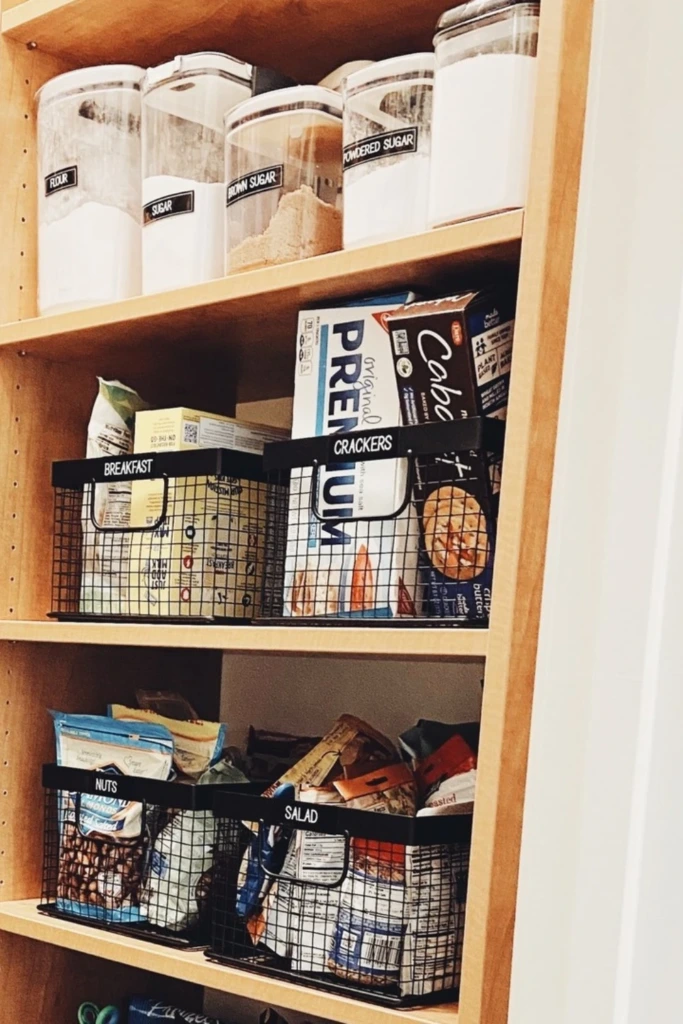
Wire baskets are useful for organizing pantry products that come in different shapes and package sizes.
Their open construction allows you to see what is inside, making it easier to check supplies before grocery shopping.
Use individual baskets for snack bars, seasoning packets, canned foods, or unopened baking ingredients.
For small products that might fall through the openings, choose baskets with finer mesh or add a removable liner.
Front-facing labels make categories easier to recognize, particularly on deeper shelves.
Select baskets with smooth edges to prevent packaging from tearing during regular use.
11. Luxe Pantry with Pull-Out Drawers and Layered Lighting
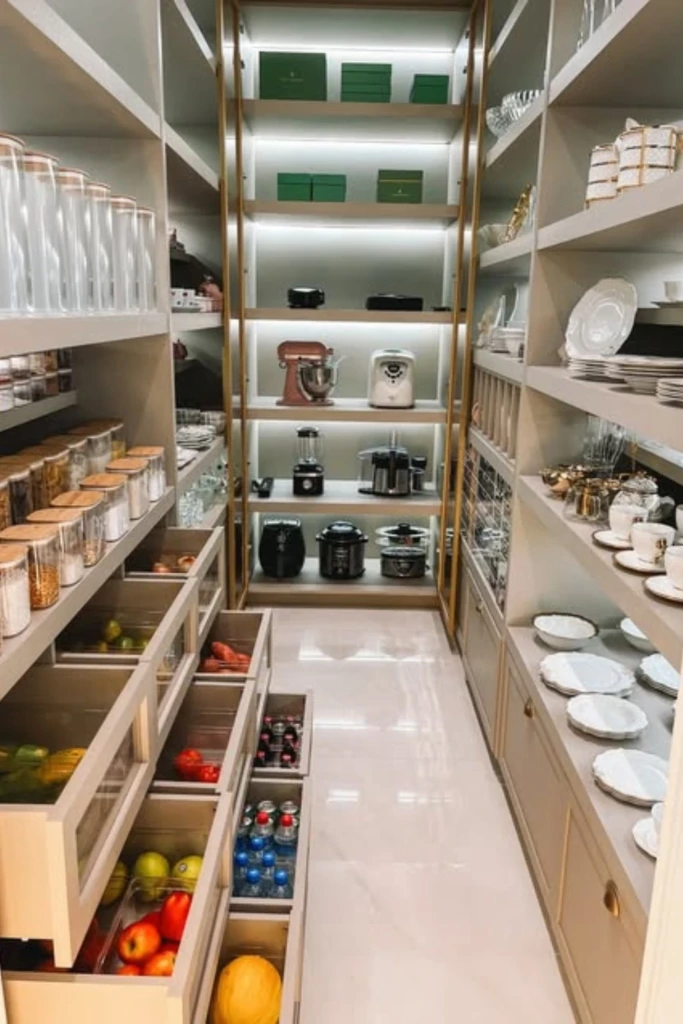
A luxurious pantry can still prioritize everyday convenience.
Deep pull-out drawers provide accessible storage for bottles, canned goods, and larger grocery packages. Full-extension hardware makes it easier to see products at the back.
Combine these drawers with open shelving for frequently used dry ingredients.
Integrated LED lighting can brighten individual storage areas and reduce shadows inside cabinets.
Choose lighting suitable for cabinetry and have electrical components installed safely.
For a refined appearance, coordinate drawer fronts, shelving finishes, and container styles without overcrowding the space with decorative accessories.
12. Small Cabinet Pantry with Woven Storage Baskets
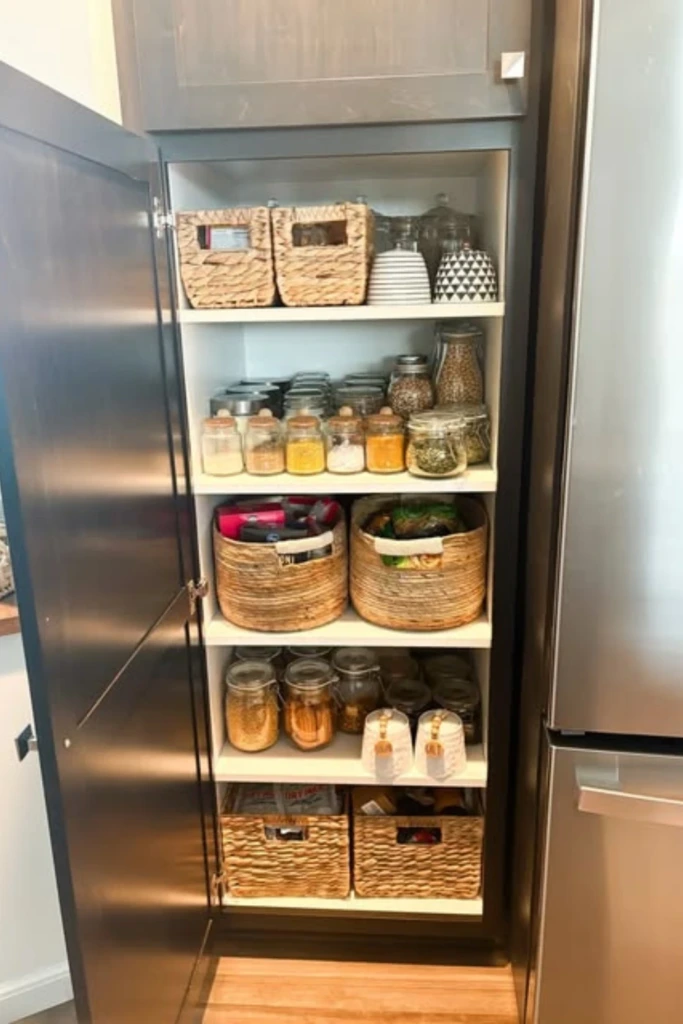
Woven baskets introduce natural texture while keeping loose pantry products contained.
They are especially effective in small cabinets where multiple packages can quickly create visual clutter.
Use baskets for individually wrapped snacks, unopened food packages, napkins, and other lightweight supplies.
Choose washable or easy-to-clean liners when storing products that might leak or shed crumbs.
Position larger baskets on lower shelves and smaller ones higher up for easier handling.
Because woven containers conceal their contents, clear labels are essential for maintaining an efficient storage system.
13. Tall Glass Canisters for a Uniform Pantry Look
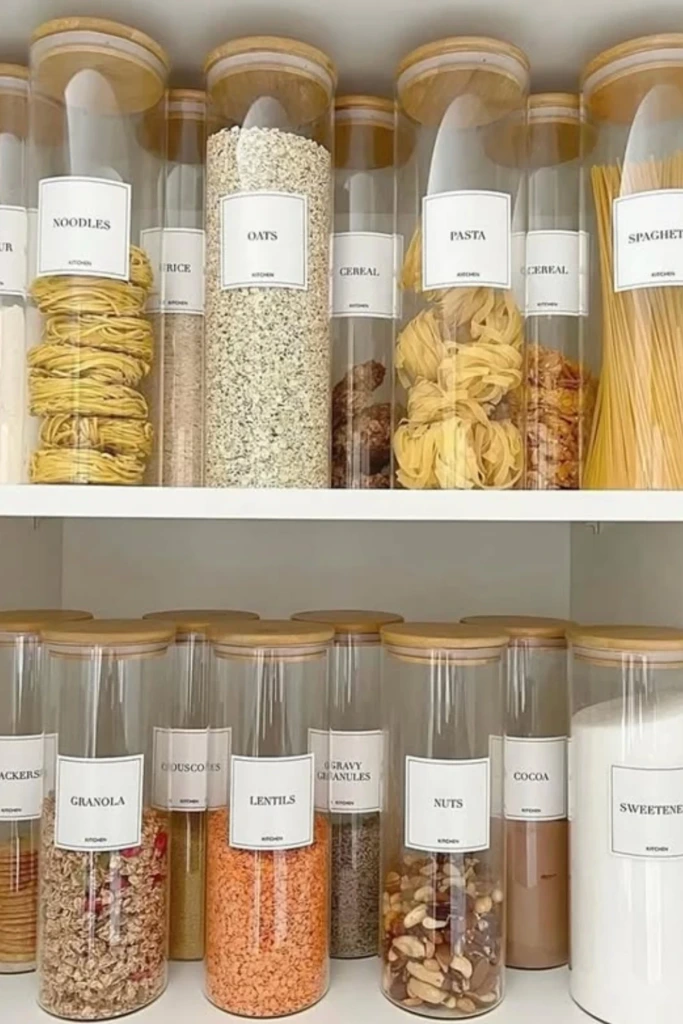
Tall glass canisters provide a coordinated appearance while allowing ingredients to remain visible.
They are ideal for organizing pantry staples such as oats, rice, pasta, beans, and baking supplies.
Select containers with openings wide enough for convenient scooping and cleaning.
For frequently used ingredients, shorter wide-mouth jars may be more practical than extremely tall containers.
Arrange similar products together and use consistent labels to make identification straightforward.
When storing food in glass-door cabinets, avoid exposing light-sensitive ingredients to strong sunlight for extended periods.
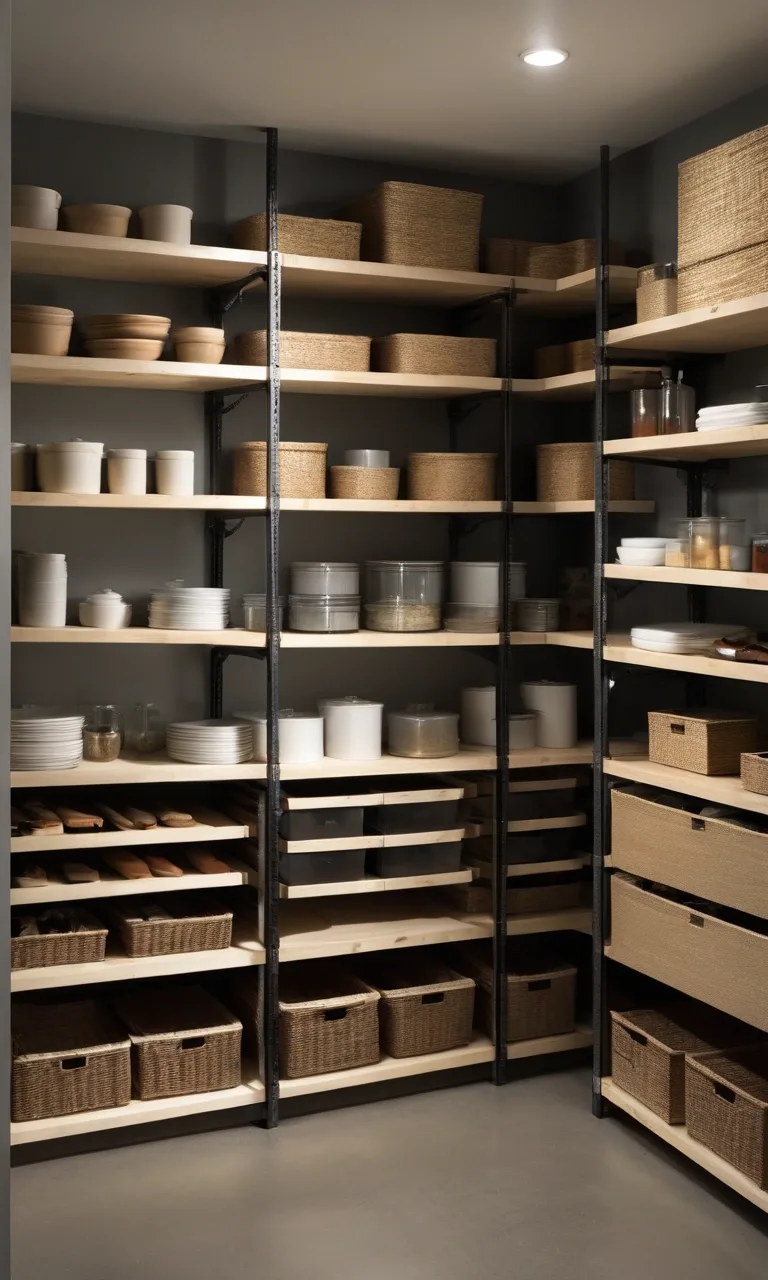
14. Modular Pantry Shelving for Full Control
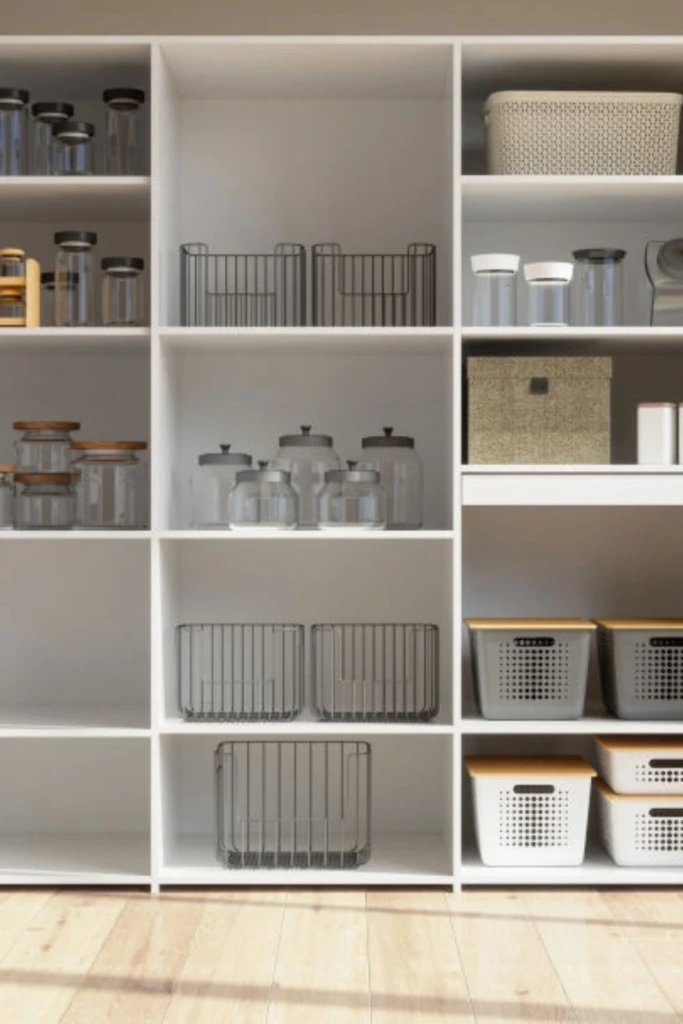
Modular shelving offers flexibility as your grocery habits and storage needs change.
Adjustable shelf heights allow you to accommodate everything from short canned goods to tall cereal containers.
Removable baskets, shelf dividers, and stackable organizers make it possible to reorganize sections without replacing the entire storage system.
Start by measuring your largest regularly purchased products before setting shelf positions.
Leave enough clearance for containers to slide out easily, and distribute weight according to the shelving manufacturer's recommendations.
This approach works particularly well for growing households or kitchens with changing storage requirements.
15. Corner Pantry with Mixed Storage and Beverage Zone
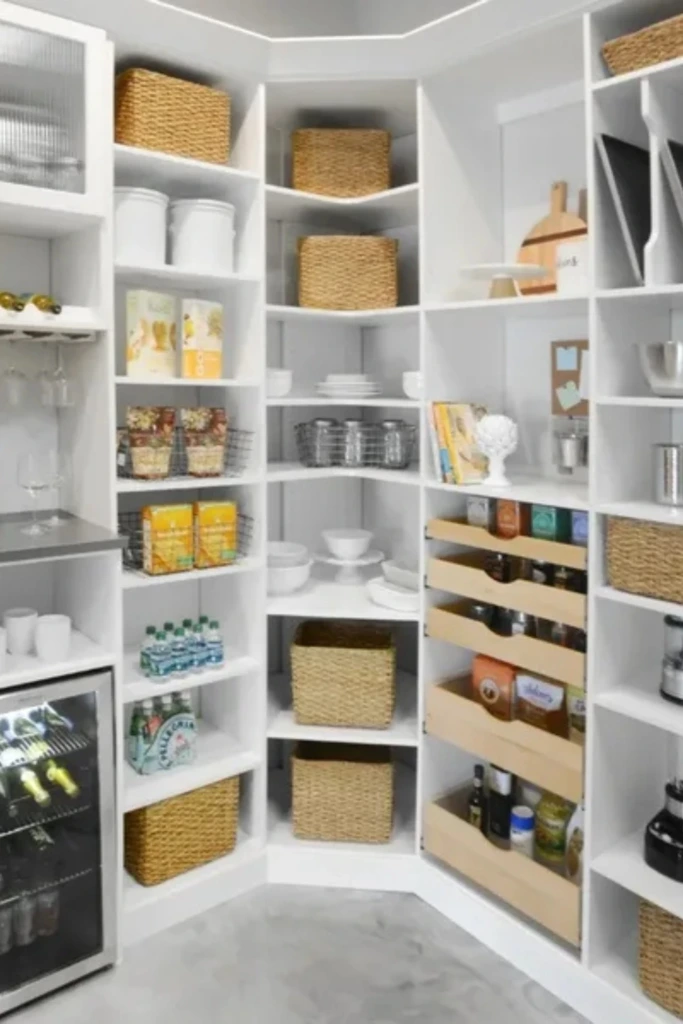
A corner pantry can serve several purposes when its layout is carefully planned.
Use open shelving for food containers, drawers for packaged goods, and vertical dividers for baking trays or cutting boards.
If space allows, create a dedicated beverage section for drink mixes, coffee supplies, reusable bottles, and unopened beverages.
A compact refrigerator can also be incorporated where suitable ventilation, electrical access, and manufacturer-required clearances are available.
Keep beverages and heavy containers on lower shelves to make handling easier.
Separating food preparation supplies from drinks prevents the corner from becoming overcrowded.
16. Under-Stair Pantry with Labelled Bins and Turntables
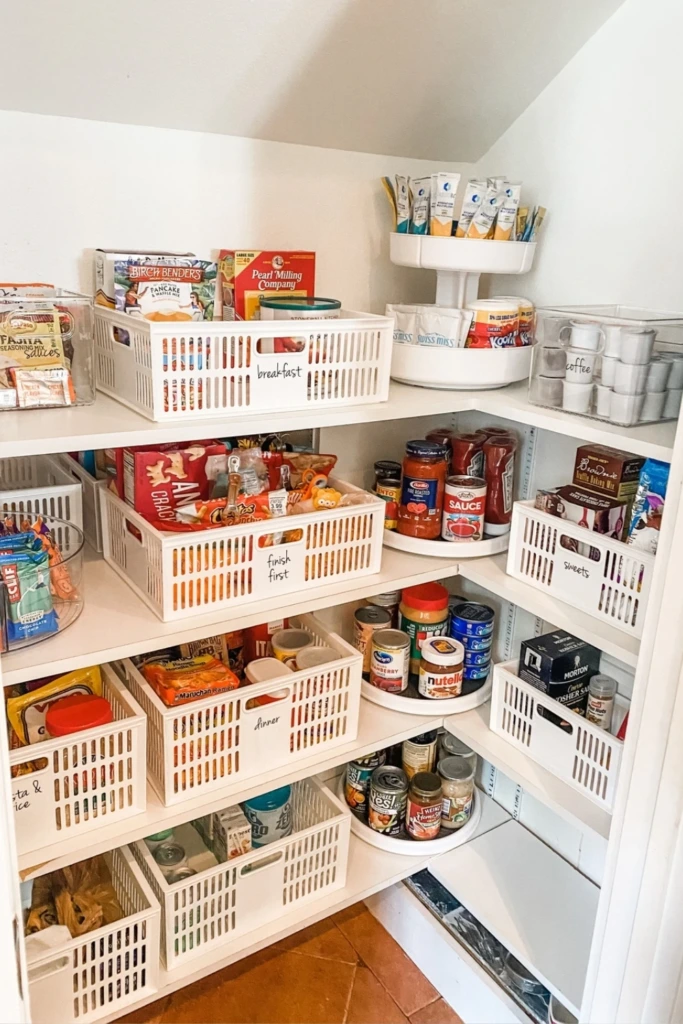
The space beneath a staircase can become a practical pantry when its unusual dimensions are used effectively.
Install shelves that follow the available height, reserving taller sections for larger containers and shorter areas for compact bins.
Turntables help make deep corners accessible, while labeled baskets keep smaller items grouped.
Use low-profile storage containers beneath sloping sections where standard shelves may not fit.
Adequate lighting is particularly important because under-stair spaces often lack natural light.
Before storing food there, ensure the area remains dry, clean, pest-resistant, and suitable for the products being kept.
17. Wooden-Lid Jars for a Warm, Rustic Pantry
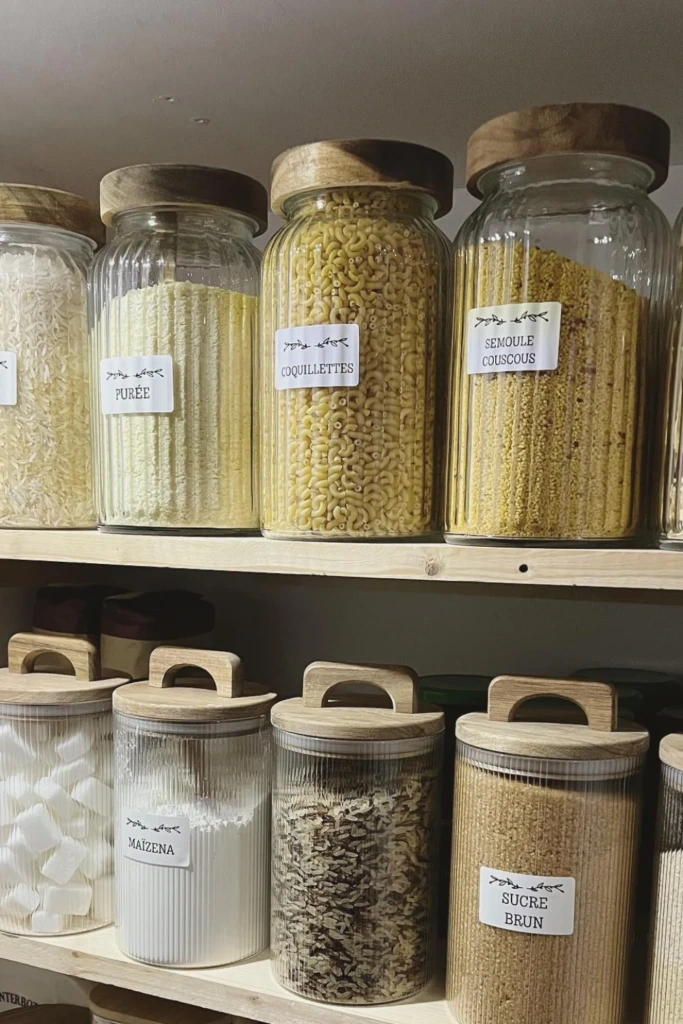
Wooden-lid jars combine practical ingredient storage with a relaxed, natural appearance.
They complement farmhouse kitchens, rustic interiors, and pantry spaces featuring wooden shelves.
Use them for dry ingredients such as oats, lentils, pasta, and dried beans.
Choose lids with food-safe seals when airtight storage is required. Decorative wooden lids without suitable seals may not protect ingredients adequately.
Mix jars of different heights to accommodate various foods while maintaining a consistent material palette.
Simple paper or reusable labels complete the look without making the shelves feel overly decorated.
18. Warm Pantry with Built-In Lighting and Glass Jars
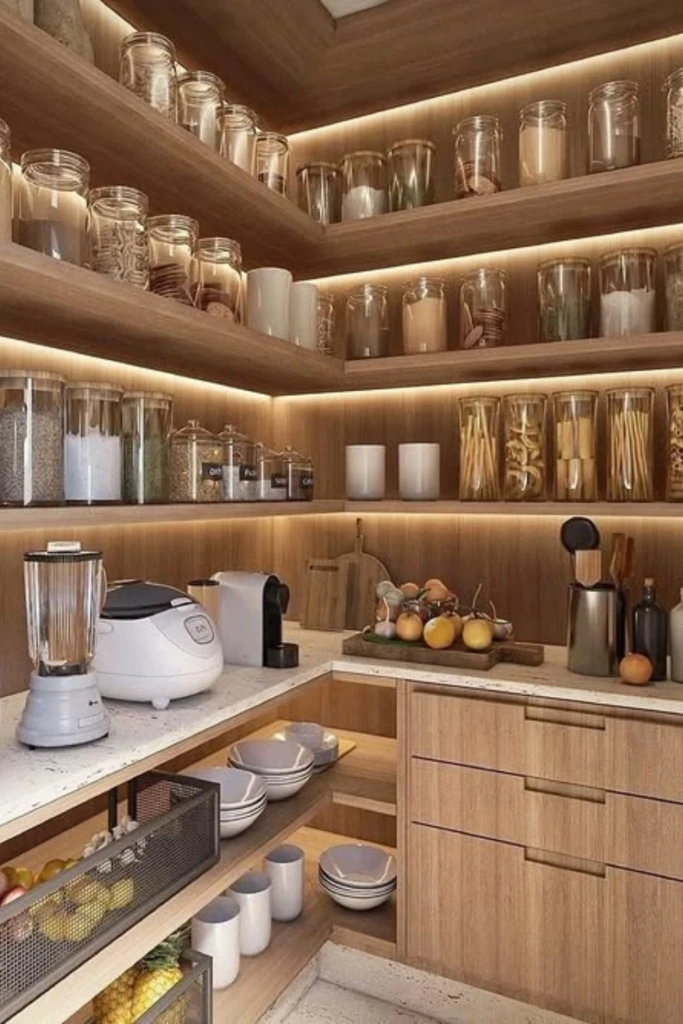
Built-in lighting can make pantry shelves easier to use while creating a comfortable atmosphere.
LED strips installed beneath shelves help illuminate jars and containers that might otherwise sit in shadow.
Warm-white lighting pairs particularly well with wooden cabinetry and neutral storage accessories.
Position lights so they illuminate the shelf below without shining directly into your eyes.
Use glass jars for frequently accessed ingredients and baskets for packages that do not need to be displayed.
Choose low-heat, properly rated lighting components and keep wiring safely separated from stored products.
19. Hidden Drawer Storage for Everyday Ingredients
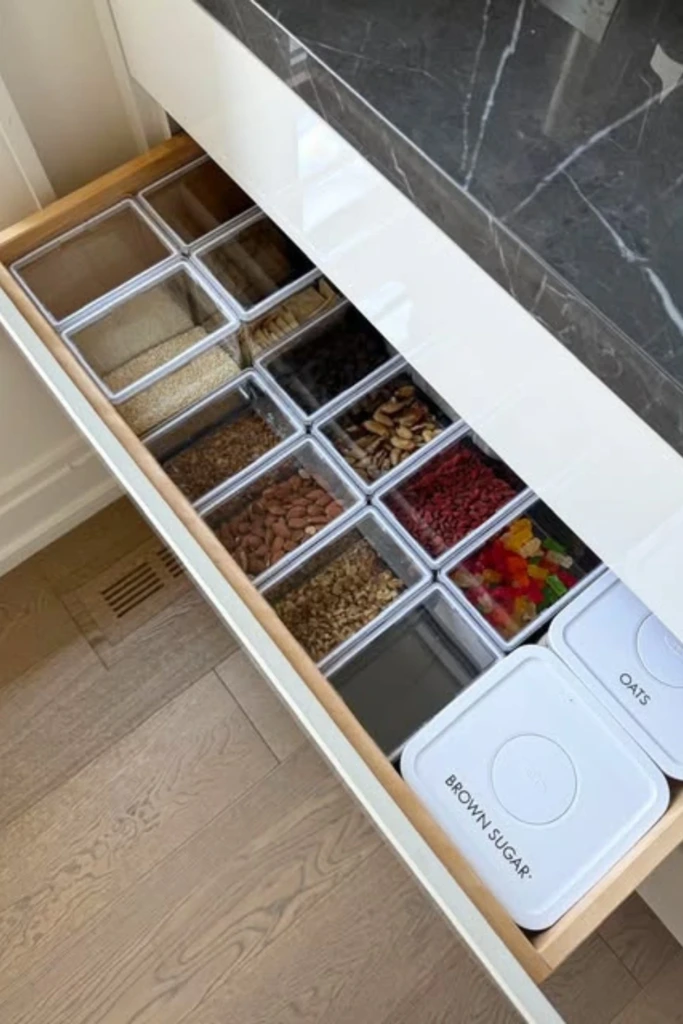
Hidden drawers provide an excellent alternative to traditional shelves, especially in kitchens where countertop space is limited.
They allow you to organize ingredients inside existing cabinetry while maintaining a streamlined exterior.
Use shallow containers for nuts, grains, dried fruit, and smaller packaged foods.
Label container lids so their contents can be identified when looking down into the drawer.
Adjustable dividers prevent containers from shifting whenever the drawer opens.
Check drawer weight limits before filling it with glass jars or large quantities of heavy dry goods.
20. Wooden Box System for a Clean, Natural Pantry
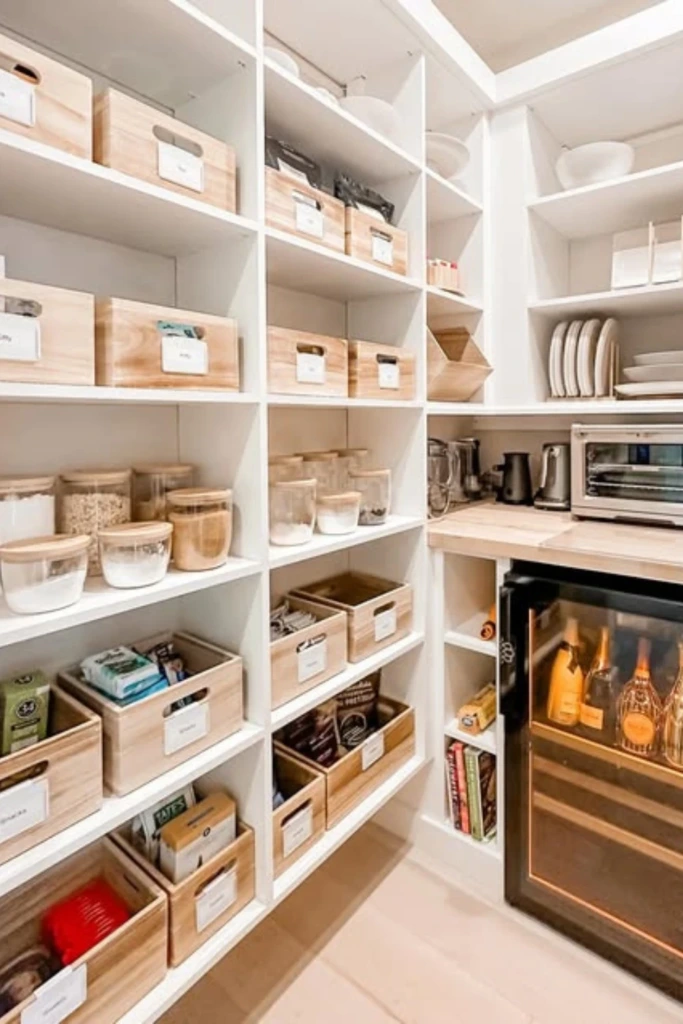
Wooden storage boxes provide a sturdy way to organize packaged foods while adding warmth to pantry shelves.
Use separate boxes for baking supplies, breakfast products, snack packets, and pantry extras.
Select boxes with comfortable handles and smooth finishes to make them easier to remove and clean.
A combination of wooden boxes and transparent containers can balance concealed storage with visibility.
Keep food in its original packaging or in suitable food-safe containers rather than placing unpackaged ingredients directly into decorative wooden boxes.
Consistent labels make the system practical for everyone using the kitchen.
21. White Bin Organization with Smart Zoning
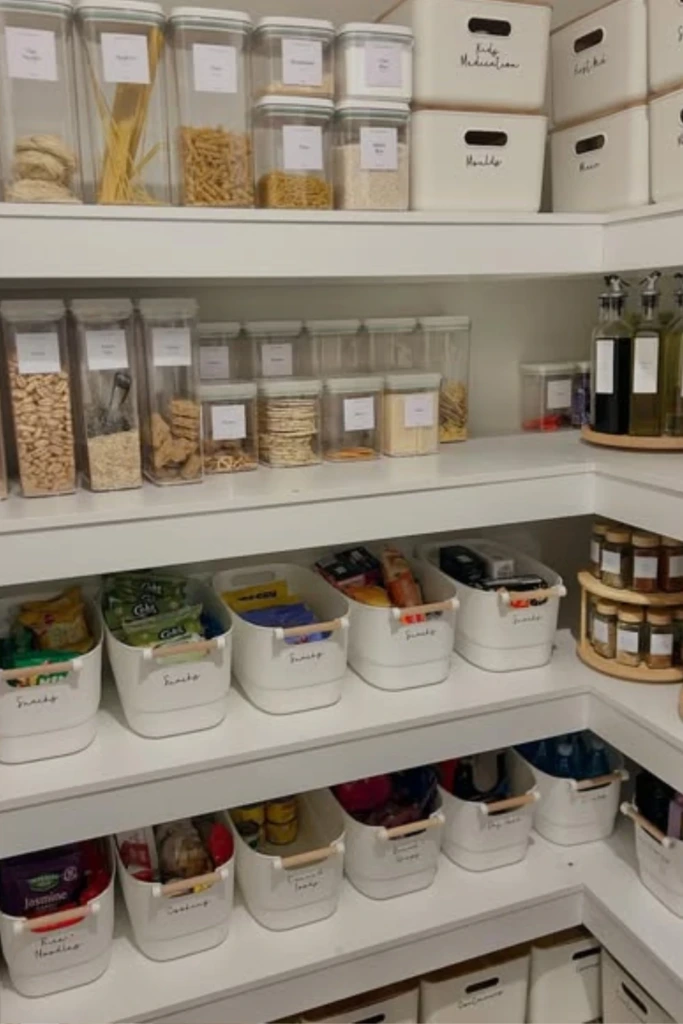
White storage bins create a bright, uncluttered appearance and help conceal visually busy food packaging.
Assign each bin a clear purpose, such as breakfast, snacks, baking, or unopened pantry supplies.
Use transparent containers alongside the bins for ingredients that need regular quantity checks.
Choose bins with handles so they can be removed comfortably from deeper shelves.
Because opaque bins hide their contents, labels should be specific enough to prevent confusion.
A simple arrangement of white bins and clear jars works particularly well in modern or minimalist kitchens.
22. Pull-Out Pantry Hidden Within Cabinetry
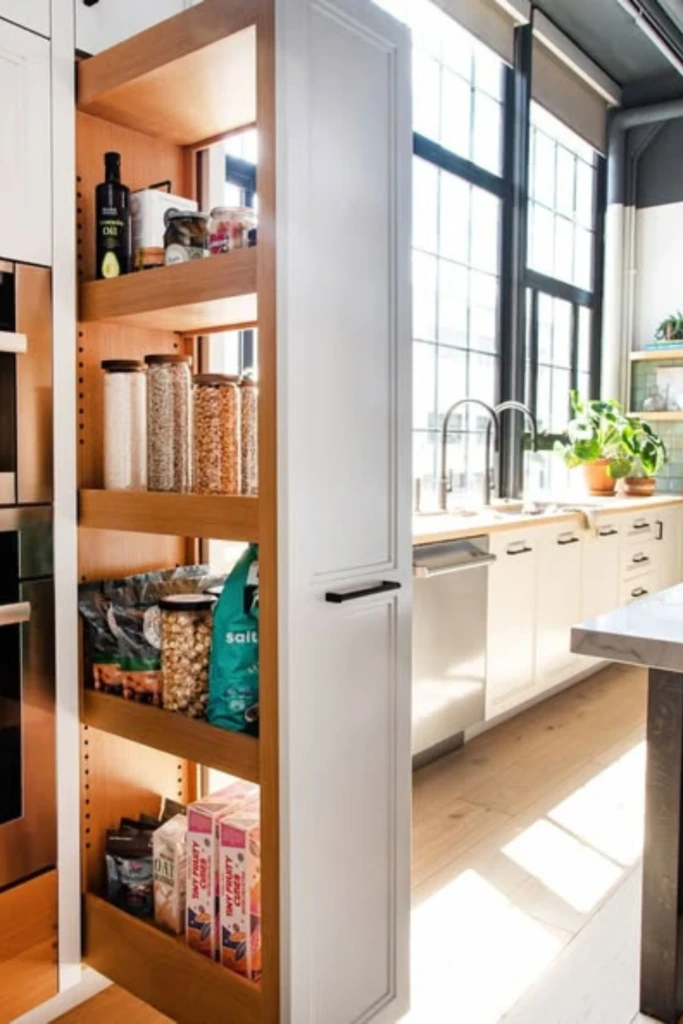
A concealed pull-out pantry makes excellent use of narrow spaces between kitchen cabinets.
Tall sliding units can store bottles, jars, canned goods, and dry ingredients while keeping everything accessible from the side.
Adjustable shelves help accommodate products of different heights.
For safety and convenience, place heavier items toward the bottom and avoid exceeding the unit's weight capacity.
Full-extension runners and sturdy installation are particularly important for tall pantry systems.
This solution is ideal for kitchens where a traditional walk-in pantry is not possible.
23. Cane-Front Baskets with Glass Jar Pairing
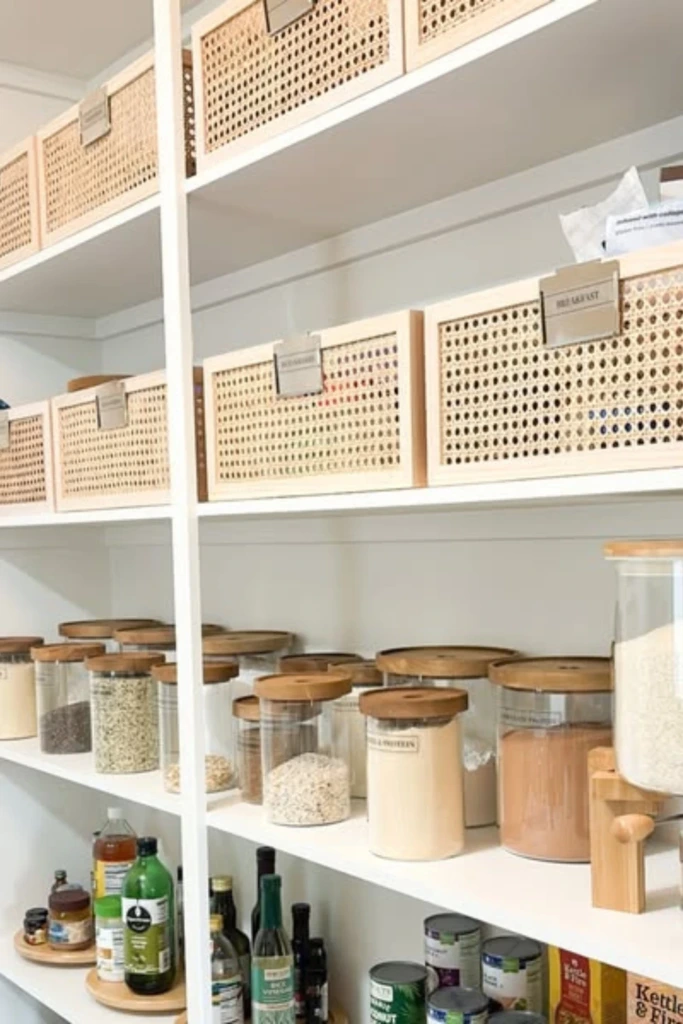
Cane-front baskets bring natural texture to pantry storage while helping conceal irregularly shaped packages.
Pair them with transparent glass containers to create a balanced arrangement that feels both organized and inviting.
Use cane baskets for wrapped snacks, extra packages, and lightweight supplies.
Place dry ingredients such as pasta, flour, and grains in suitable sealed containers nearby.
Choose baskets with smooth interiors or removable liners to prevent delicate packaging from catching on the woven material.
This combination works beautifully in kitchens with wooden cabinetry, neutral colors, and natural finishes.
24. Cozy Pantry Nook with Natural Light and Warm Tones
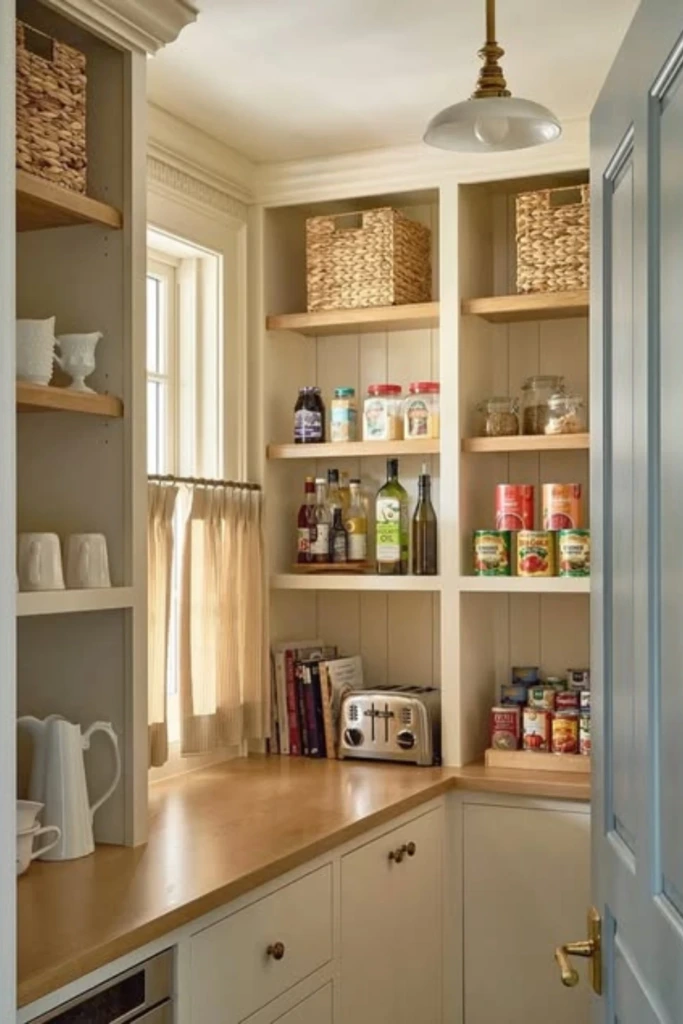
A small pantry nook can become a charming and functional storage area with thoughtful shelf placement.
Wooden shelves, neutral baskets, and glass containers create a comfortable atmosphere without requiring elaborate decoration.
Use lower shelves for heavier jars and canned foods, leaving upper areas for lightweight extras.
If the nook has a window, position sensitive foods away from direct sunlight and excessive heat.
A compact ceiling fixture or wall-mounted light can improve visibility during evening cooking.
Keep decorative items minimal so the available space remains focused on practical storage.
25. Softly Styled Pantry with Warm Lighting and Clear Containers
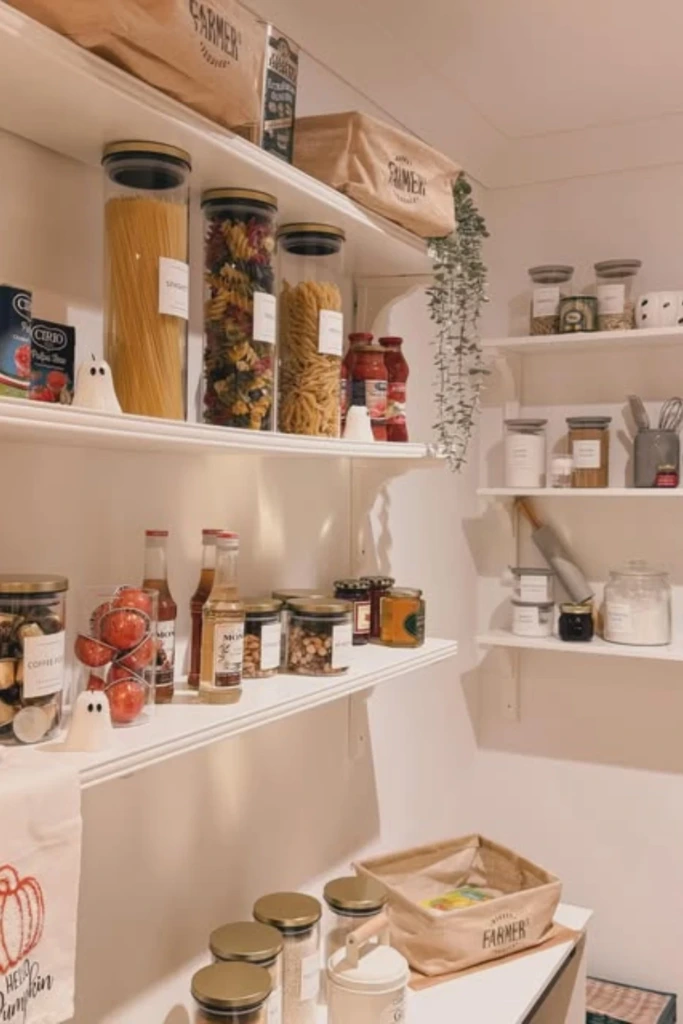
A softly styled pantry combines gentle colors, practical containers, and comfortable lighting.
Start with a neutral foundation using cream, beige, soft gray, or natural wood finishes.
Clear containers keep dry ingredients easy to identify, while fabric or woven bins help organize packaged products.
Choose storage materials that can be cleaned easily, especially around foods that may spill.
Warm lighting can soften the appearance of the space, but it should remain bright enough to read labels and check food packaging.
The key is to create a welcoming pantry that still supports efficient everyday cooking.
26. Full-System Pantry with Rotating and Sectioned Storage
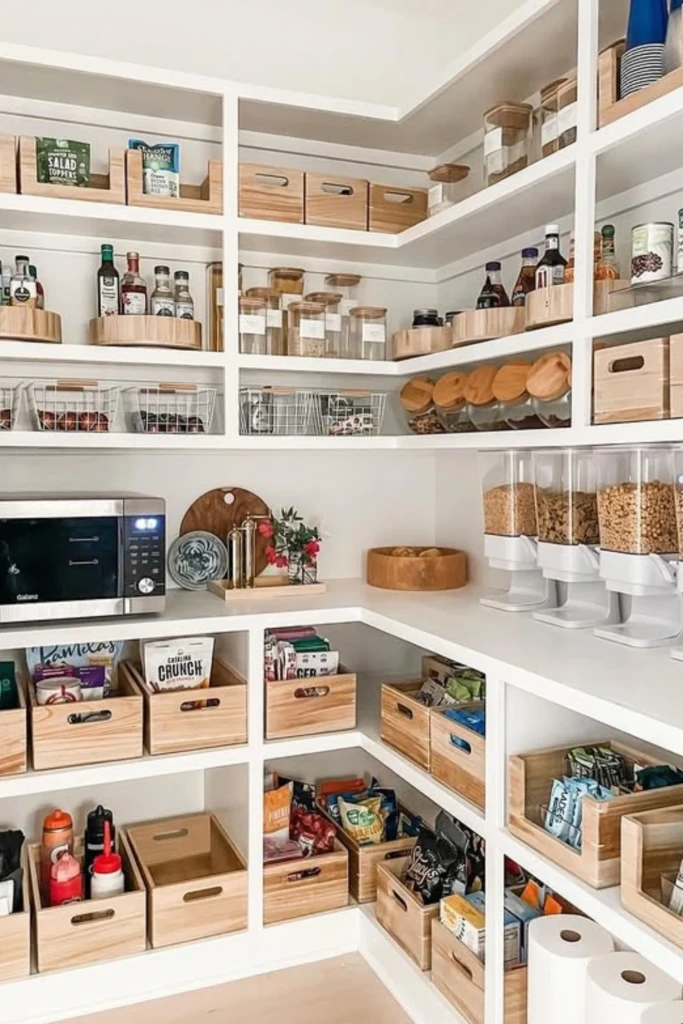
A complete pantry organization system uses several storage methods to accommodate different products.
Install turntables for bottles, dividers for trays, clear containers for dry ingredients, and baskets for snacks or unopened packages.
Dedicated breakfast, baking, and meal-preparation zones can make the layout easier to navigate.
Keep frequently used products near the front and move older stock forward when adding new groceries.
Avoid buying more organizers than your space requires. Each container should solve a specific storage problem.
Review the arrangement occasionally and adjust categories as your household's needs change.
27. Corner Pantry with a Lazy Susan Setup
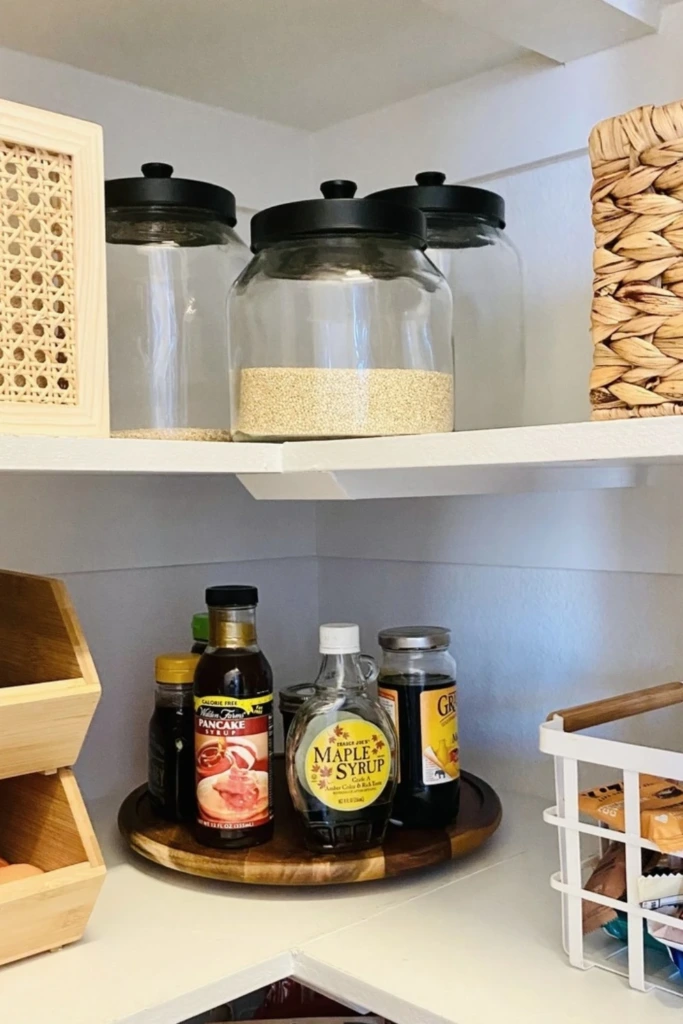
A lazy Susan is one of the simplest ways to improve accessibility in a corner pantry.
Its rotating platform brings bottles and jars into view without requiring you to reach around other products.
Use it for cooking oils, vinegar, sauces, syrups, and smaller condiments.
Choose a sturdy model with a raised rim and enough clearance to rotate freely.
Keep taller containers near the center when possible and avoid overloading the platform.
Combine the turntable with nearby baskets or jars to create a complete storage area that makes efficient use of the corner.
What is the latest trend for pantries?
Pantry organization in 2026 emphasizes flexible storage, natural materials, and designs that combine appearance with everyday convenience.
Popular approaches include adjustable shelving, pull-out drawers, transparent food containers, and woven or wooden baskets.
Integrated lighting is also a useful addition, particularly in deep cabinets and walk-in pantries where visibility can be limited.
Another important direction is organizing food according to daily routines rather than simply arranging products by size or color.
The most practical pantry designs prioritize easy access, simple maintenance, and enough flexibility to accommodate changing grocery needs.
What are some unique pantry storage ideas?
Creative pantry storage ideas often involve making better use of overlooked spaces.
A narrow pull-out rack can turn an unused cabinet gap into useful storage. Door-mounted organizers can hold lightweight packets, while tiered shelves make canned goods easier to see.
You can also create dedicated stations for breakfast preparation, lunchbox packing, baking, or beverages.
For deep cabinets, consider removable bins or rotating trays. In larger pantries, adjustable drawer dividers and vertical tray organizers can improve efficiency.
The best storage idea is one that addresses a problem in your particular kitchen rather than simply making the shelves look attractive.
A well-organized pantry should make everyday life easier. Whether you prefer glass jars, wooden baskets, hidden drawers, or a combination of storage solutions, focus on visibility, accessibility, and simple routines that everyone in your household can follow.