22 Kitchen Wall Storage Ideas for 2026
A cluttered kitchen can make even simple tasks feel frustrating. When cupboards are packed with cookware, spice containers, and dishes, finding room for anything new becomes a challenge. Fortunately, you don't always need additional cabinets or a bigger kitchen to solve the problem.
Your kitchen walls offer valuable space that often goes unused. With the right shelves, racks, hooks, and organizers, you can turn empty wall sections into practical storage areas while keeping countertops clear.
Wall storage also makes everyday essentials easier to reach and gives your kitchen a more organized appearance. Whether you're working with a compact apartment kitchen or a spacious cooking area, these ideas can help you make better use of the room you already have.
How Do Floating Shelves Improve Kitchen Wall Storage?
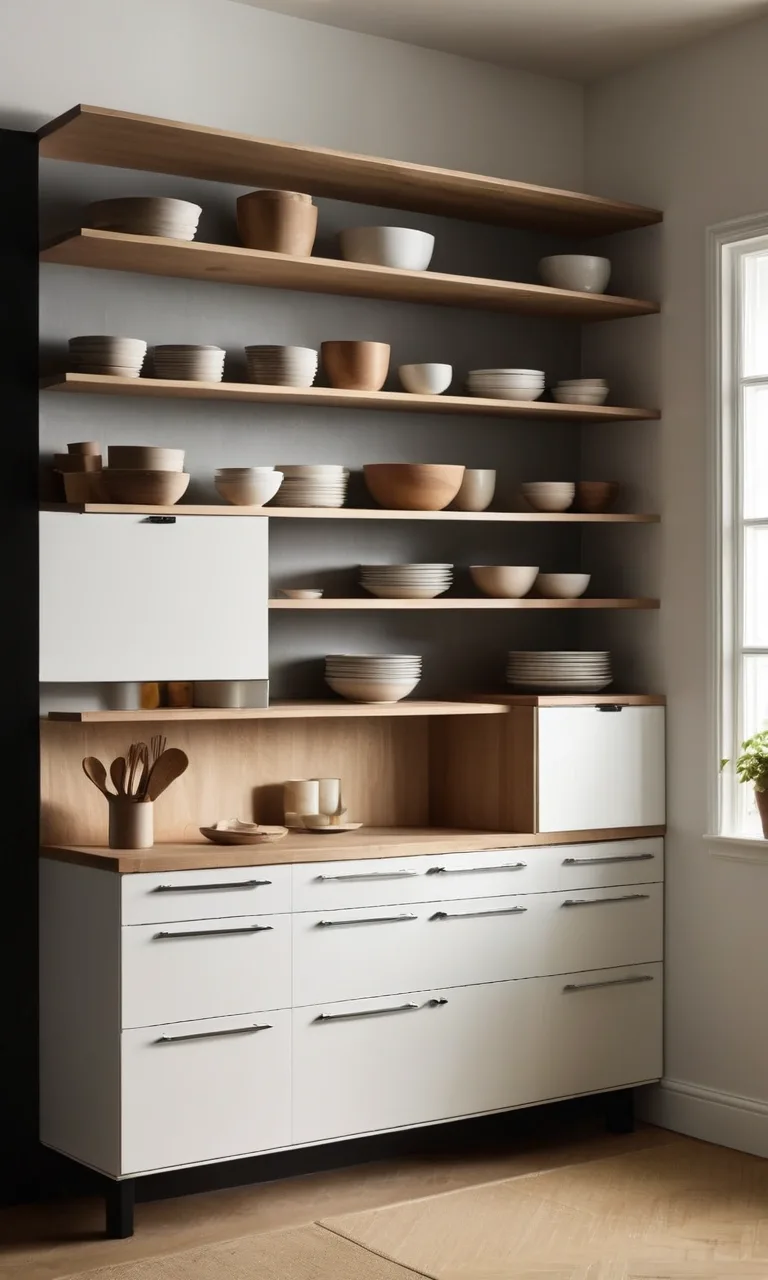
Floating shelves provide extra storage without occupying valuable floor space or making your kitchen feel crowded. They are particularly useful when cabinets are full but certain items need to remain accessible throughout the day.
You can use them to arrange frequently used plates, coffee mugs, spice jars, glassware, and small decorative pieces. Installing shelves near your food preparation area means you won't have to open several cupboards whenever you need something.
Another advantage is their versatility. Wooden shelves bring warmth to a kitchen, while metal finishes create a contemporary appearance. You can install a single shelf above a counter or combine several levels to accommodate different items.
Before installation, consider the weight of everything you plan to store and choose suitable brackets and wall fixings. Keeping everyday essentials on lower shelves and less frequently used objects higher up makes the arrangement more convenient.
1. Lid Rack
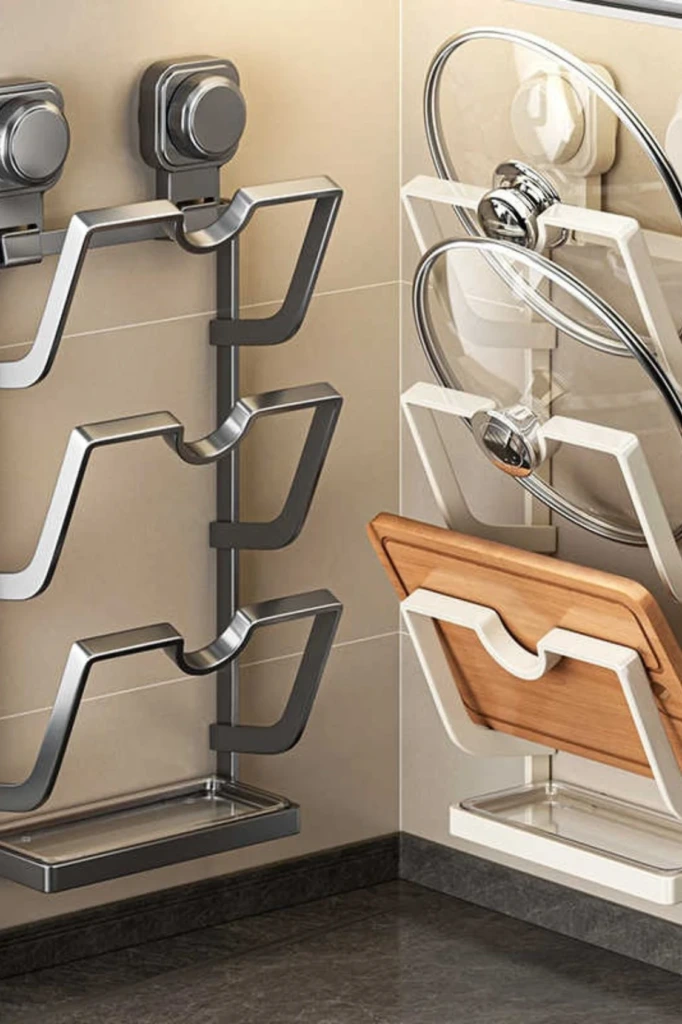
Pot lids can be surprisingly difficult to organize because they have awkward shapes and tend to slide around when stacked. A wall-mounted lid rack gives each lid a designated position, making it easier to find the right size while cooking.
Install the rack beside a cookware cabinet or close to your cooking station so you can reach it without interrupting meal preparation. A narrow vertical design is especially useful in kitchens where every inch matters.
Choose a model with slots that accommodate your largest lids, including those with raised handles. Make sure the rack is securely attached, particularly if the lids are made from heavy glass or metal.
If drilling isn't an option, look for a removable organizer designed for your wall surface. Always check its weight capacity and follow the manufacturer's installation instructions before loading it.
2. Rail Shelves
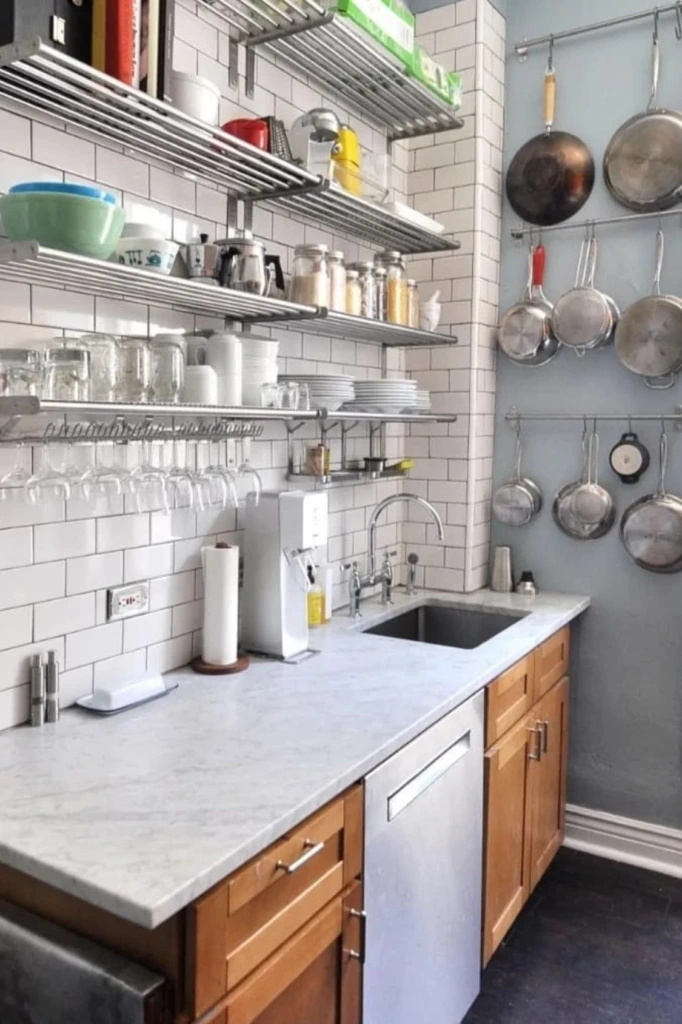
Rail shelves combine the convenience of open shelving with the flexibility of hanging storage. They work well on empty walls above countertops or in areas where conventional cabinets would feel too bulky.
Use the shelves for plates, drinking glasses, food containers, and cookbooks. A rail with movable hooks underneath can provide additional space for mugs, lightweight utensils, or other kitchen accessories.
Arrange items according to how often you use them. Everyday dishes should be easy to reach, while decorative objects and occasional-use pieces can occupy higher shelves.
For a balanced look, leave enough room between levels for taller bottles and stacked dishes. If you install the shelves above a sink, choose materials and finishes that can handle regular exposure to moisture.
3. Shelf Hooks
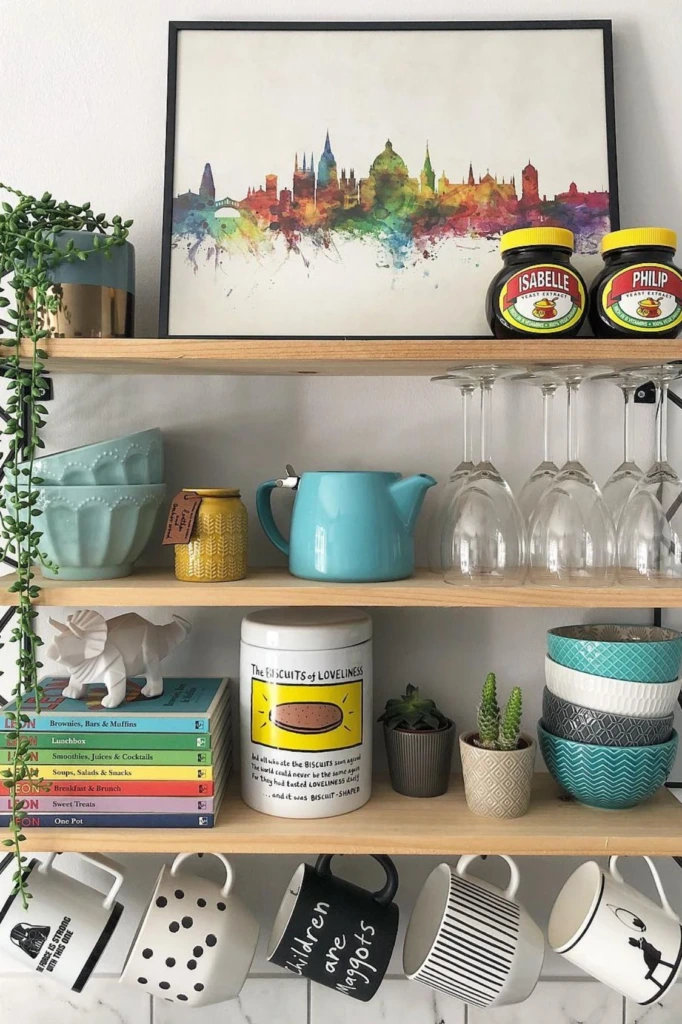
The space underneath a shelf is often overlooked, even though it can provide convenient storage for frequently used mugs. Adding hooks beneath a sturdy shelf lets you hang cups instead of stacking them inside crowded cabinets.
The shelf above can hold tea containers, small bowls, coffee supplies, or decorative accessories. This arrangement creates two useful storage zones within the same wall area.
Place the setup near your coffee machine or breakfast counter to make morning routines easier. Before attaching the hooks, check that they provide enough clearance for the handles and that hanging mugs won't interfere with anything underneath.
If the shelf will also support heavy dishes, install appropriate brackets and secure the unit to a suitable wall structure. Keep the hanging items evenly distributed to avoid unnecessary strain.
4. Open Shelves
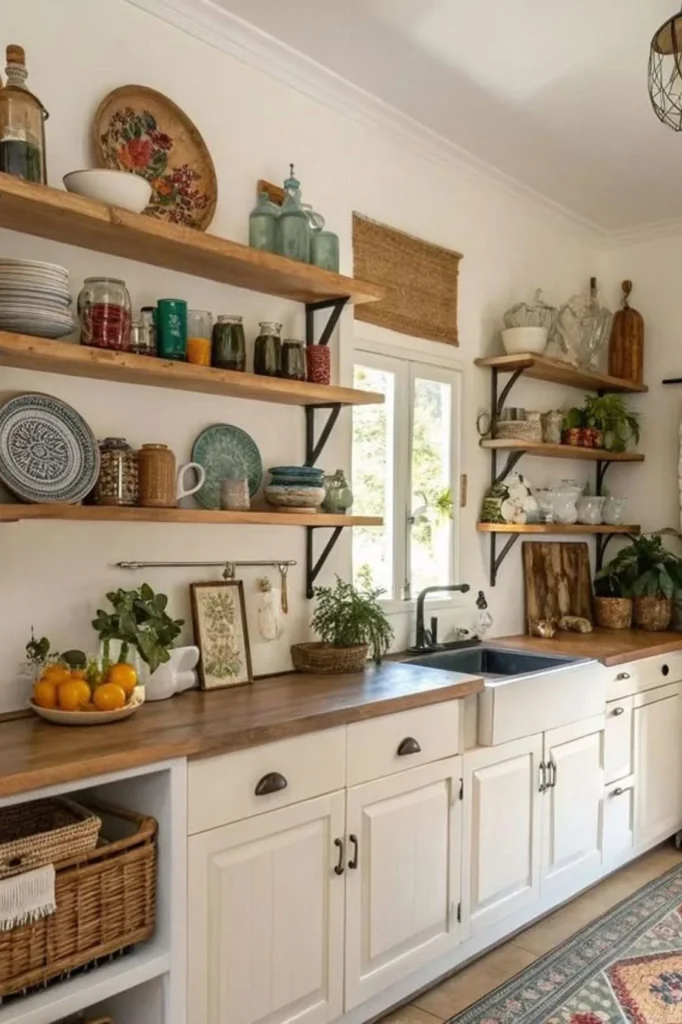
Open shelving is a practical choice for kitchens that lack sufficient upper cabinets. Instead of hiding everyday essentials behind doors, you can arrange plates, jars, bowls, and cooking ingredients where they're easy to see.
Long wooden shelves work particularly well above countertops, while shorter shelves can fill narrow wall sections between cabinets and appliances.
Plan the spacing before installation. Tall bottles need more vertical clearance than small cups, and frequently used dishes should sit at a comfortable height. Grouping similar items together helps maintain an organized appearance without making the shelves look overcrowded.
Open shelves also offer an opportunity to introduce natural textures through wood, ceramic containers, or woven baskets. However, items exposed to cooking grease and dust may require more frequent cleaning than those kept behind cabinet doors.
Use sturdy brackets and suitable wall anchors, especially when storing stacks of plates or other heavy kitchenware.
5. Rack Storage
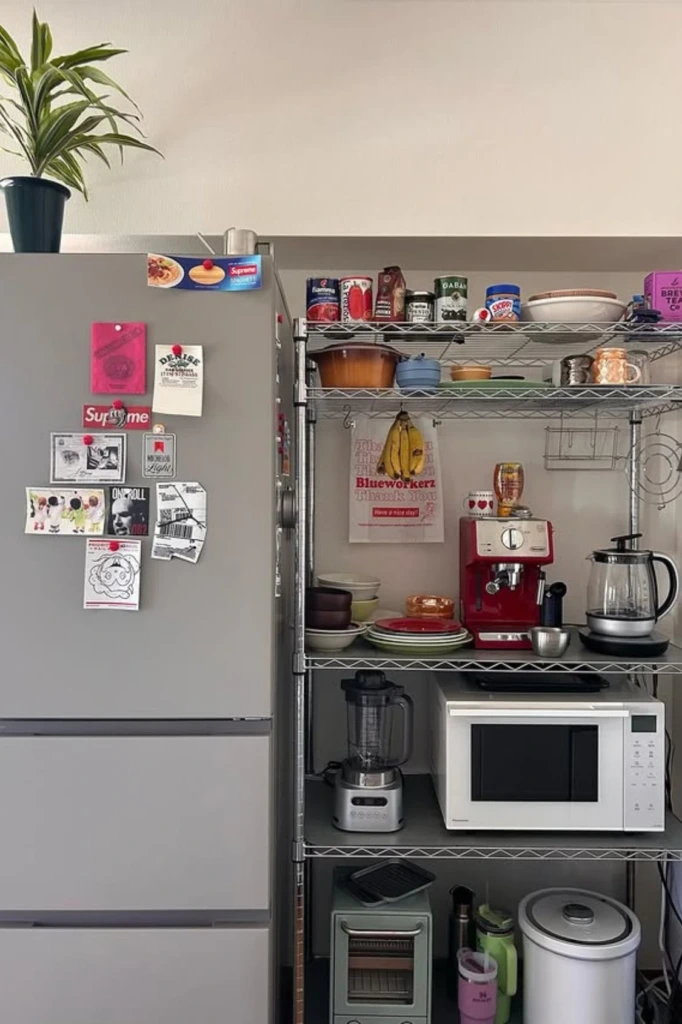
A freestanding or wall-supported rack can transform an unused corner into a dedicated storage zone. This option is especially helpful in small kitchens where additional cabinets would block movement or consume too much floor space.
Choose a tall rack with multiple levels so you can separate pantry supplies, small appliances, containers, and cooking accessories. Keeping everything in designated sections makes it easier to locate items and return them after use.
Place heavier equipment, such as a blender or compact microwave, on a lower level if the rack is designed to support it. Lighter containers and less frequently used accessories can occupy higher shelves.
Measure the available space carefully before buying a rack, particularly if you intend to position it beside a refrigerator or oven. Check the unit's dimensions, stability, and weight limits to ensure it suits your kitchen.
6. Hook Rail
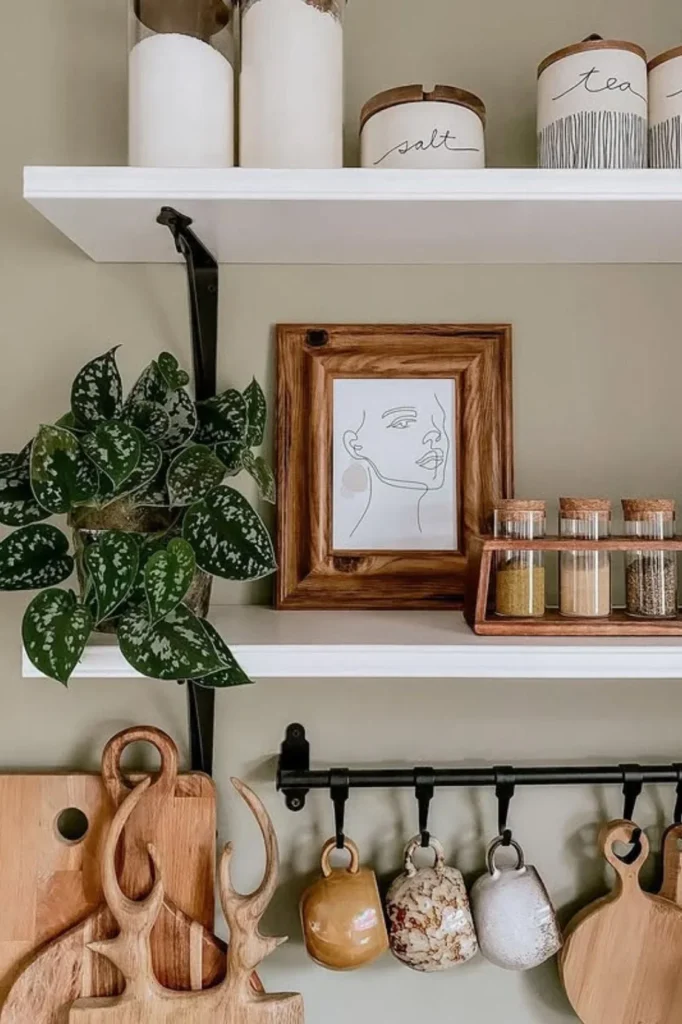
A simple hook rail can make an empty wall more useful without requiring a large storage unit. It provides a convenient place for hanging kitchen towels, lightweight utensils, measuring cups, and frequently used cutting boards with suitable handles.
Install the rail near your main preparation area so essential tools remain close at hand. A short rail can fit beside a cabinet, while a longer version can accommodate several items along an otherwise unused wall.
For a more complete setup, combine the rail with a floating shelf above it. The shelf can hold small containers or tea supplies, while the hooks keep everyday accessories off the countertop.
Select hooks according to the objects you intend to hang. Make sure sharp tools are stored safely and that heavier items are supported by a properly installed rail.
7. Mug Bar
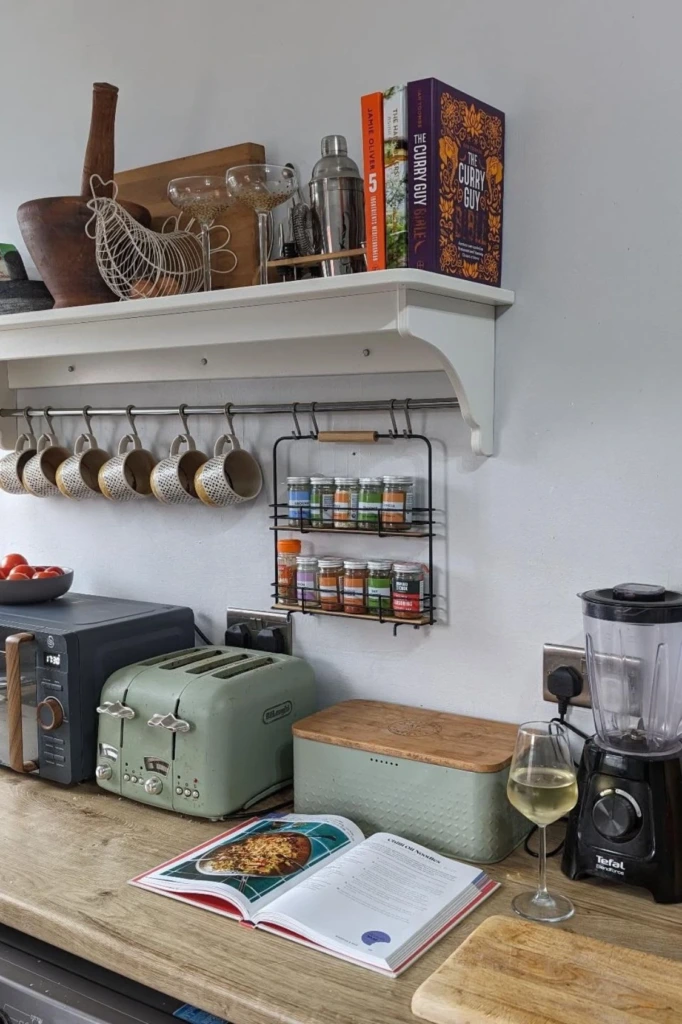
A mug bar is an excellent addition to a coffee corner, especially when your collection takes up too much cabinet space. A horizontal rod fitted with hooks allows you to display cups neatly while keeping them ready for everyday use.
Position the bar beneath a shelf that can hold coffee beans, tea tins, sugar containers, or a few favorite accessories. This creates a compact beverage station without the need for another piece of furniture.
Choose a rod that can accommodate your mugs without forcing their handles together. Leave sufficient clearance below the cups so they hang freely and don't strike the countertop or nearby appliances.
For a coordinated appearance, arrange mugs by size, color, or style. You can also add a small spice or tea shelf nearby, provided the overall arrangement remains easy to clean and access.
8. Towel Shelf
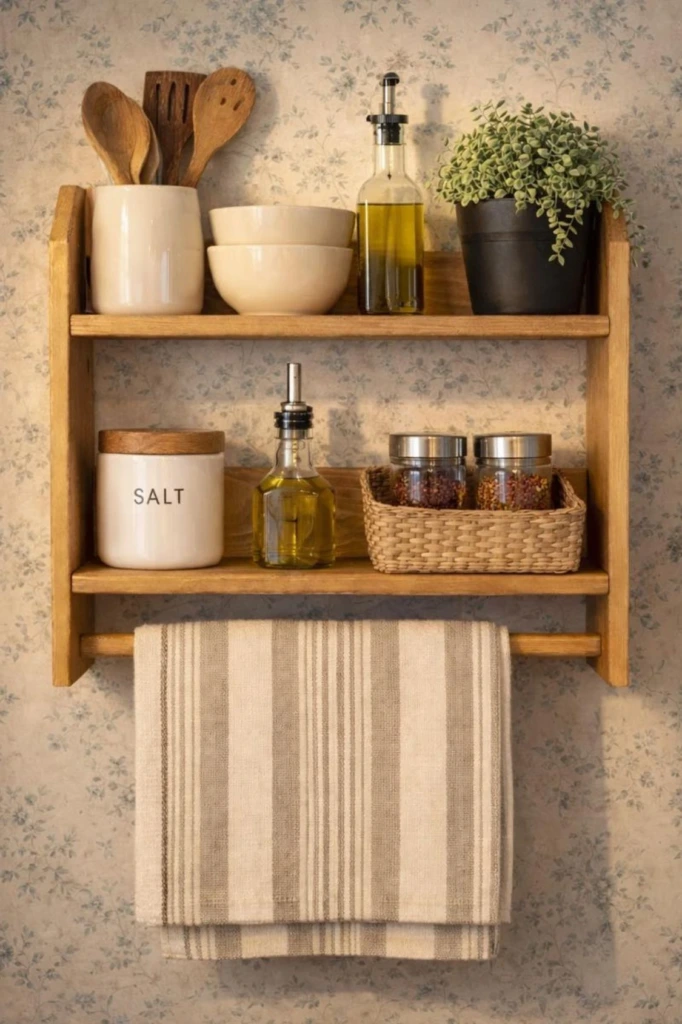
A towel shelf combines a small storage surface with a convenient place to hang kitchen linens. It's particularly useful near the sink, where you regularly need a clean towel for drying your hands or wiping up spills.
The shelf can hold a few spice containers, cooking oils, or small baskets containing frequently used accessories. A lower bar keeps the towel separate from the items stored above.
Choose a design that fits the available wall space without interfering with the sink, faucet, or nearby cabinets. If you keep oils and seasonings on the shelf, position them away from excessive heat and direct splashes.
A compact unit can replace several separate organizers, helping you maintain a tidier countertop. Wipe the shelf regularly and wash kitchen towels frequently to keep the area hygienic.
9. Corner Shelves
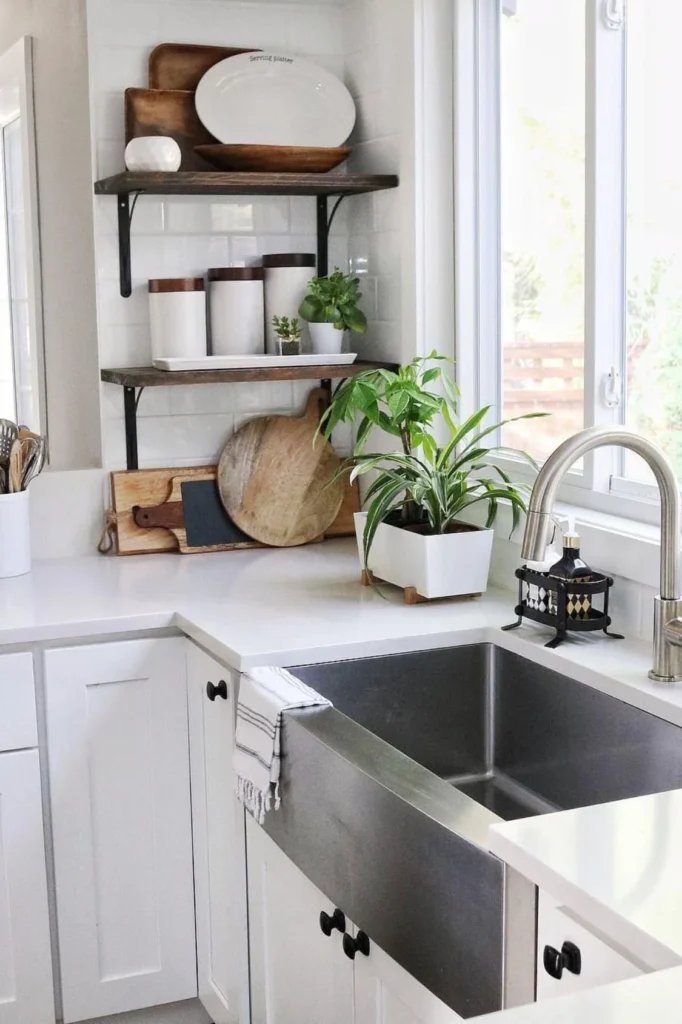
Kitchen corners can be difficult to use effectively, but corner shelves offer a simple way to turn these spaces into useful storage. Their compact shape allows you to store essentials without extending too far into the main work area.
Install a few shelves vertically to hold spice jars, small bowls, lightweight containers, or decorative plants. A lower section may accommodate cutting boards or trays if the shelf dimensions allow it.
Corner shelving is especially useful near a preparation area because it keeps frequently needed items within reach. However, avoid placing bulky objects where they obstruct access to cabinets or create awkward working conditions.
Choose a shelf depth that suits the corner and leaves enough room for nearby appliances. Secure each level properly and keep heavier items on shelves with adequate support.
10. Ladder Shelves
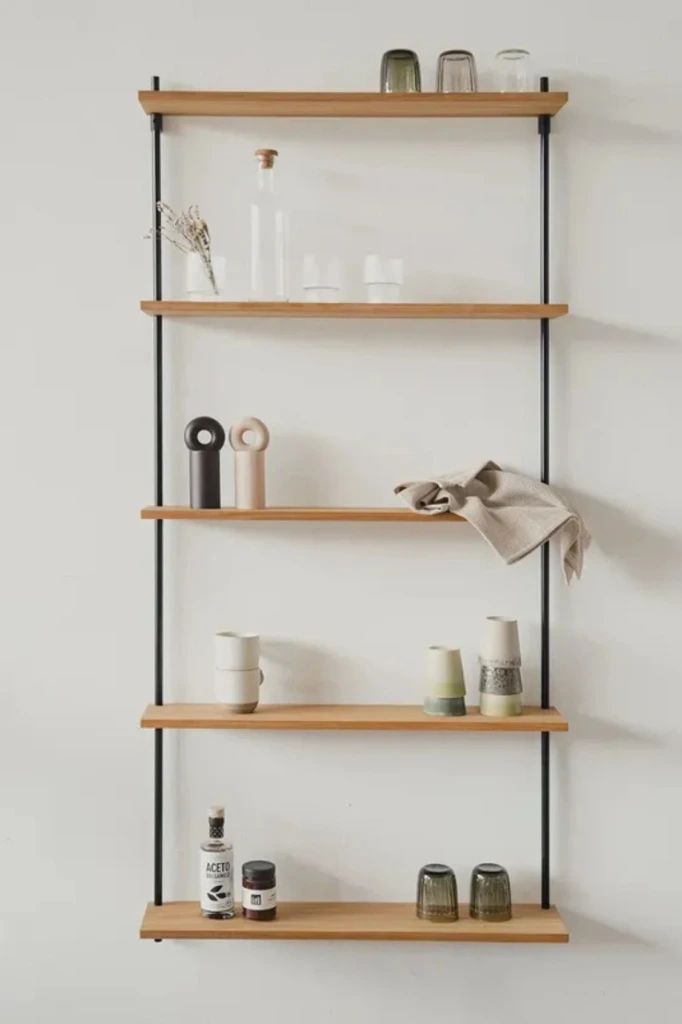
Ladder-style shelving makes good use of vertical wall space while creating a distinctive design feature. Its tiered arrangement offers several storage levels without the visual heaviness of a large cabinet.
Use the lower shelves for everyday dishes, bowls, and other items you reach for regularly. Higher levels can hold lightweight jars, cookbooks, decorative containers, or kitchen accessories that you don't need as often.
The open design allows you to see what you own, which can reduce the time spent searching through cupboards. It also makes it easy to rearrange items when your storage needs change.
Choose a narrow ladder shelf for a small kitchen or a wider model if you have a larger empty wall. If the unit is tall or has a freestanding design, secure it against tipping according to the manufacturer's instructions.
Leave some open space between objects so the shelves remain practical rather than becoming another crowded display.
11. Steel Shelves
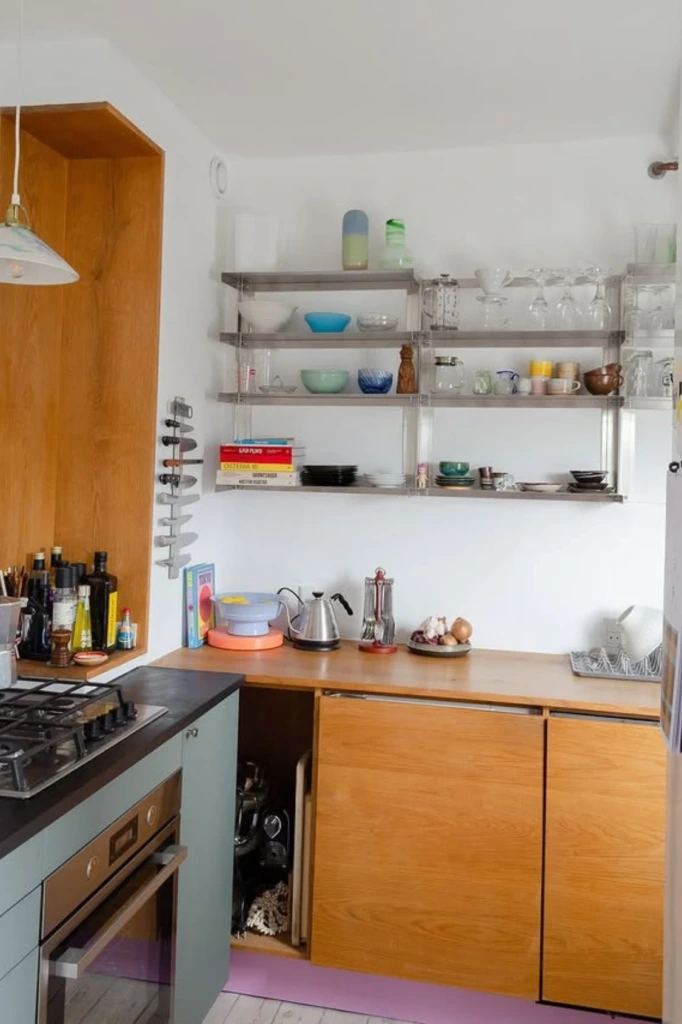
Steel shelves provide a durable storage option for kitchens that need a clean, modern appearance. Their streamlined construction can accommodate plates, bowls, glasses, and other everyday essentials without making the wall look overly bulky.
Metal shelving is particularly useful when you want a functional setup with minimal visual decoration. Depending on the finish and construction, it may also be easier to wipe clean than some porous materials.
Arrange heavier dishes on shelves designed to support their weight, and place delicate glassware where it is less likely to be knocked over. Appropriate spacing helps prevent stacks from becoming unstable.
You can combine steel shelves with a nearby magnetic knife strip or utensil rail to make better use of the surrounding wall. Keep sharp tools away from children and install them securely.
Before purchasing, check whether the steel is suitable for your kitchen's moisture levels and whether its finish resists corrosion.
12. Pantry Wall
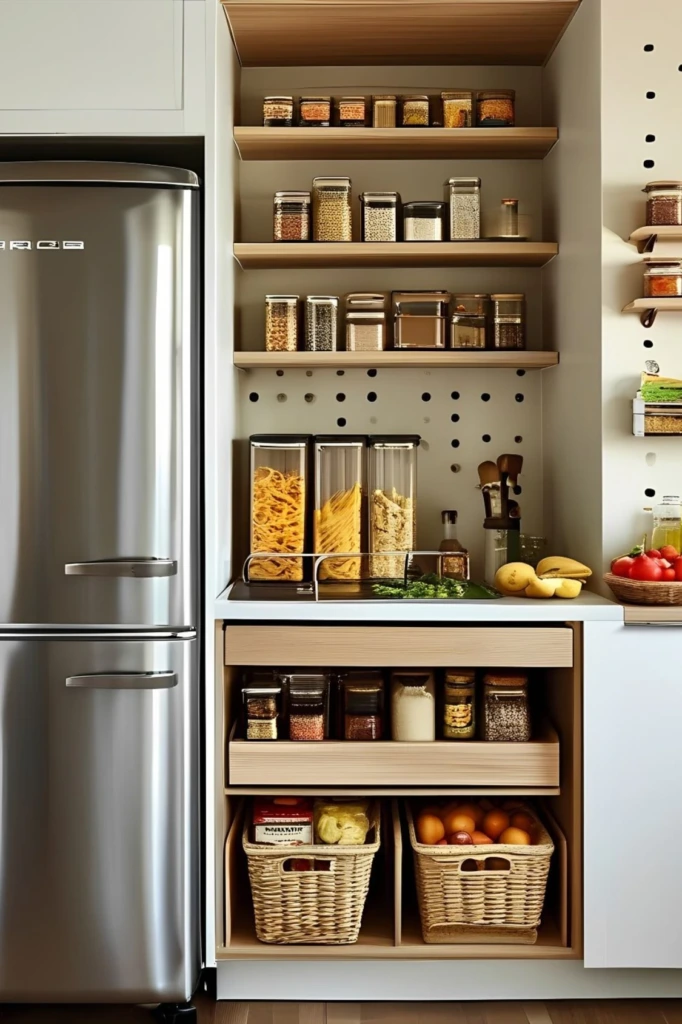
A pantry wall creates a dedicated location for dry goods and packaged ingredients when conventional cupboards are running out of room. Open shelves make it easier to check your supplies and identify items that need replenishing.
Store pasta, rice, flour, grains, and other pantry staples in suitable airtight containers. Clear containers can make their contents easy to identify, while consistent shapes help you use shelf space efficiently.
Use labels to distinguish similar ingredients, especially when different grains or flours look alike. Keep frequently used supplies at accessible heights and reserve upper shelves for lighter or less frequently needed items.
Baskets on lower shelves can accommodate packaged groceries, larger containers, or other pantry essentials. A small pegboard beside the shelves can provide extra room for lightweight accessories.
Place the pantry wall away from excessive heat, steam, and direct sunlight. Food should always be stored in clean, appropriate containers to help preserve quality and prevent pests.
13. Tool Station
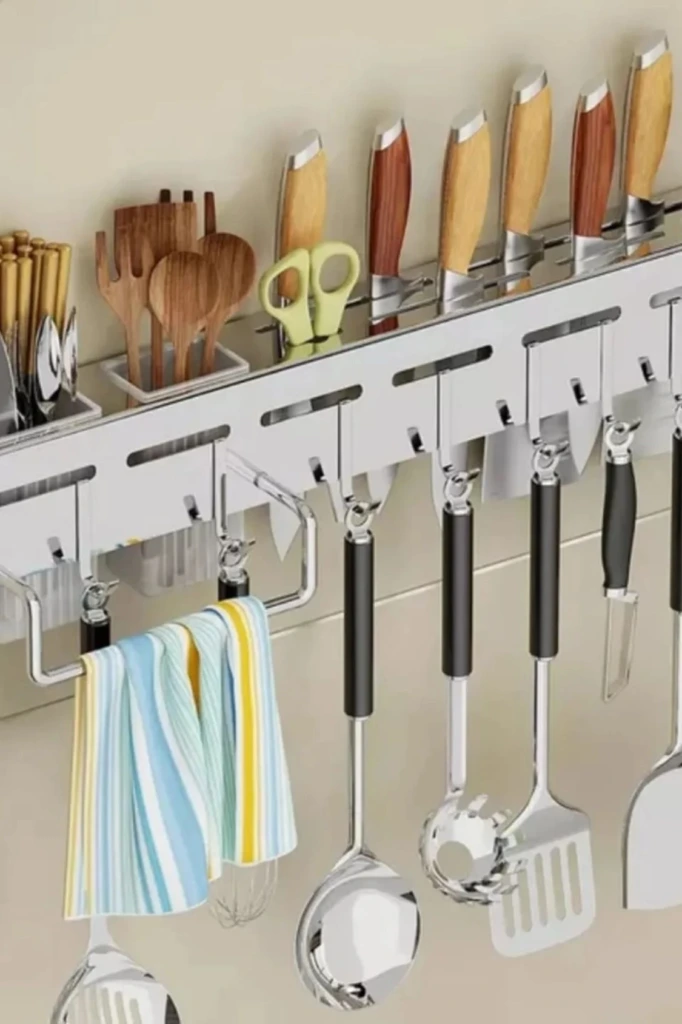
A wall-mounted tool station keeps cooking utensils organized and accessible instead of scattered across drawers and countertops. It can include hooks, small holders, and dedicated compartments for different categories of kitchen equipment.
Hang lightweight spatulas, ladles, whisks, and measuring tools from suitable hooks. Keep knives in a purpose-built holder or on a securely installed magnetic strip rather than leaving sharp blades exposed on an ordinary shelf.
You can add a small towel bar underneath the station to keep kitchen linens nearby. Some organizers also include containers for spoons, chopsticks, or other utensils that are awkward to hang.
Position the station near your preparation area, but keep it far enough from the stove to avoid heat exposure, grease buildup, and accidental contact with hot cookware.
Sort tools by purpose so you can quickly find what you need. A well-arranged station makes cooking more convenient and reduces clutter on the work surface.
14. Basket Wall
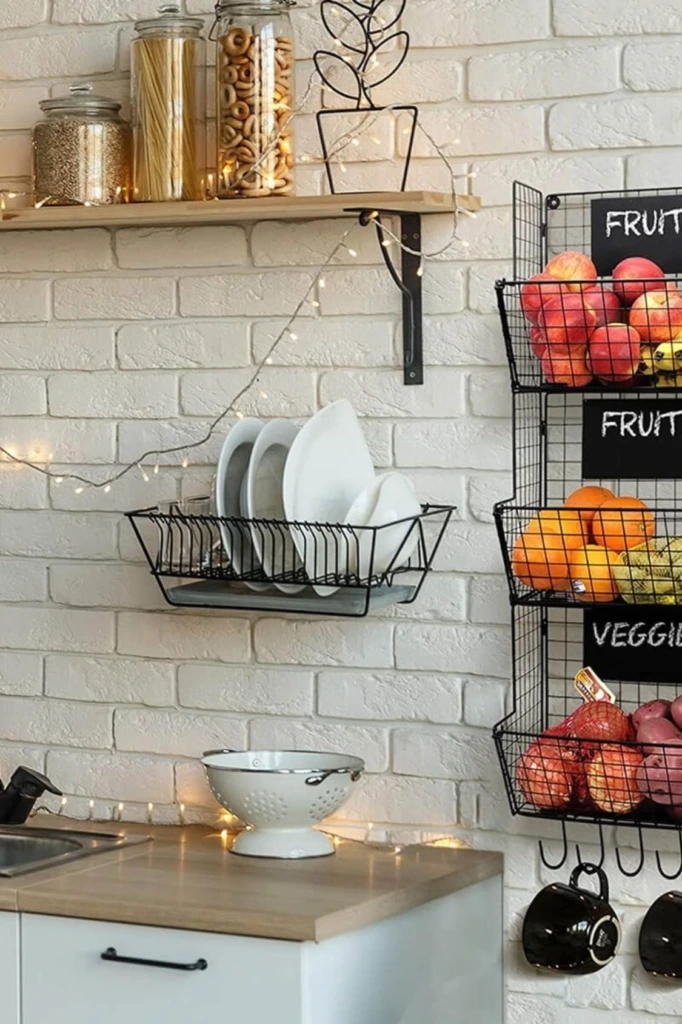
Wall-mounted baskets provide an easy way to organize produce, packaged snacks, and small kitchen supplies without occupying countertop space. A vertical arrangement is particularly useful in compact kitchens where horizontal surfaces are limited.
Use separate baskets for different categories, such as onions, potatoes, fruit, or individually packaged snacks. This makes it easier to see what you have and notice items that need to be used soon.
Choose baskets with openings suitable for their contents. Wire designs offer visibility and airflow, while solid-sided containers may be more appropriate for small objects that could slip through gaps.
Keep produce that requires different storage conditions in separate locations. Not every fruit or vegetable belongs in the same basket, and some items need refrigeration to maintain quality.
You can add a few hooks beneath the basket arrangement for lightweight kitchen accessories. Ensure the mounting system is strong enough to support the combined weight of the baskets and their contents.
15. Pot Display
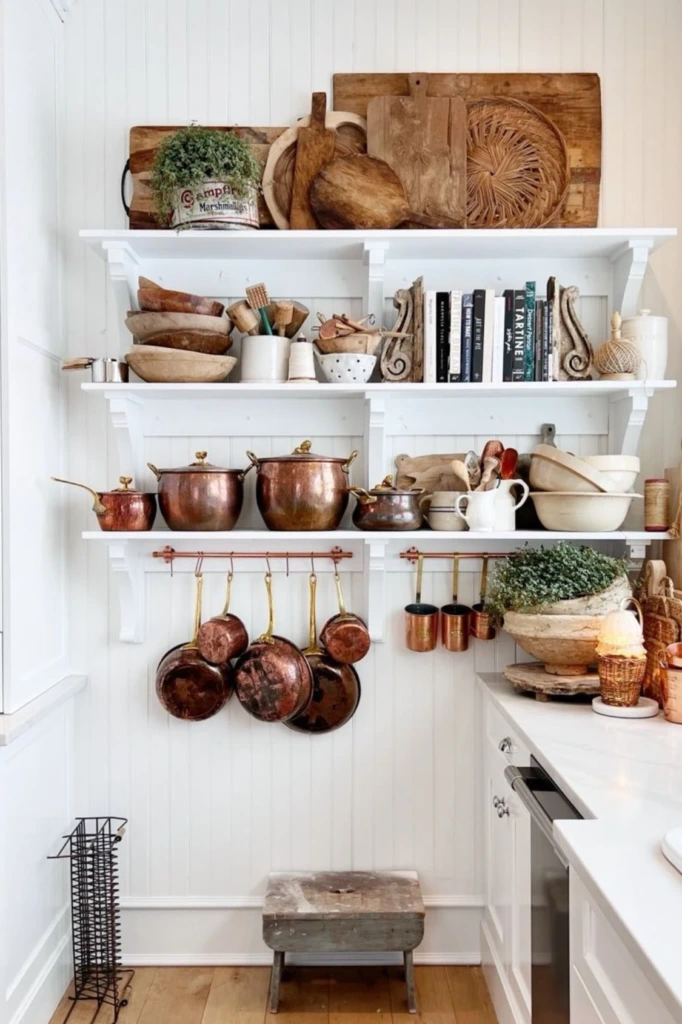
Large pots and pans can occupy a considerable amount of cabinet space, making a wall-mounted cookware rail an attractive alternative. It keeps frequently used pieces accessible while turning functional kitchen equipment into part of the room's design.
Install the rail on a wall that can support the combined weight of your cookware. Securing the mounting hardware to suitable structural supports is particularly important when hanging heavy cast-iron pans or several pots together.
Arrange cookware according to size and frequency of use. Keep your everyday pans within easy reach, and avoid placing heavy pieces above areas where people regularly sit or walk.
If you want additional storage, add a sturdy shelf above the rail for lightweight bowls, serving dishes, or cookbooks. Leave enough clearance between the shelf and hanging cookware so nothing becomes difficult to remove.
Copper and stainless-steel cookware can create an appealing display, but practicality should come first. Hang each piece from a suitable hook and make sure handles cannot easily slide off.
16. Spice Rack
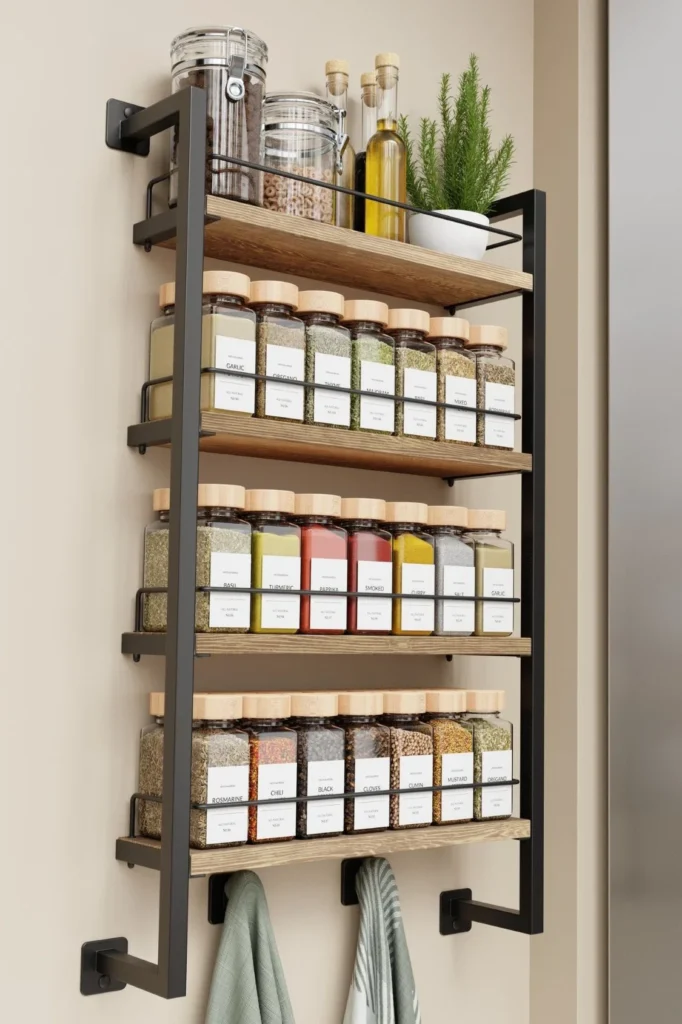
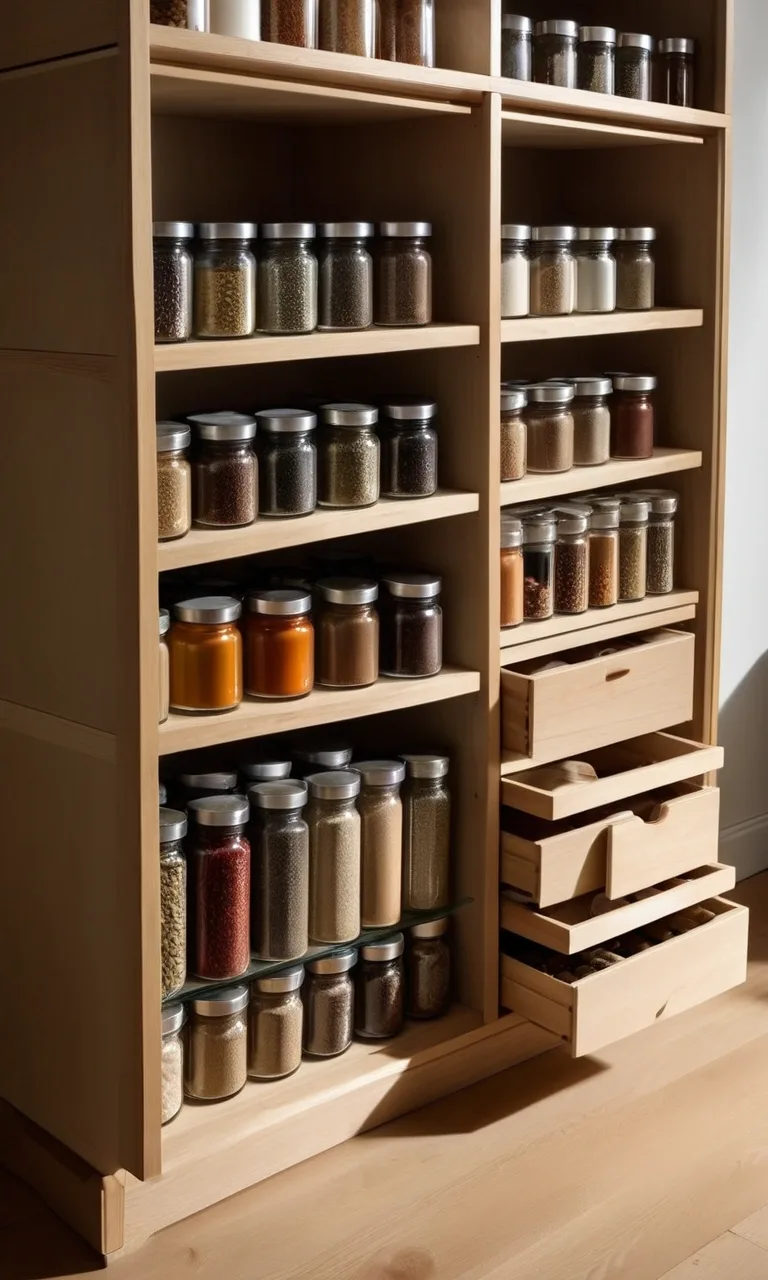
A wall-mounted spice rack helps prevent seasoning jars from disappearing into crowded cabinets. By arranging containers in visible rows, you can quickly identify the ingredient you need while preparing meals.
Choose narrow shelves with a front guard or raised edge to prevent jars from slipping. Tiered designs can make labels easier to read, especially when you store several varieties of spices together.
Position the rack near your food preparation area, but avoid placing it directly above a hot stove. Excessive heat, light, and moisture can reduce the quality of many seasonings over time.
Matching containers create a coordinated appearance, although clearly labeled original packaging can be equally practical. Include the spice name and, where useful, its purchase or expiration information.
If the rack has room underneath, a few hooks can hold lightweight measuring spoons or kitchen towels. Keep the arrangement simple so each container remains easy to reach and return.
17. Slot Shelves
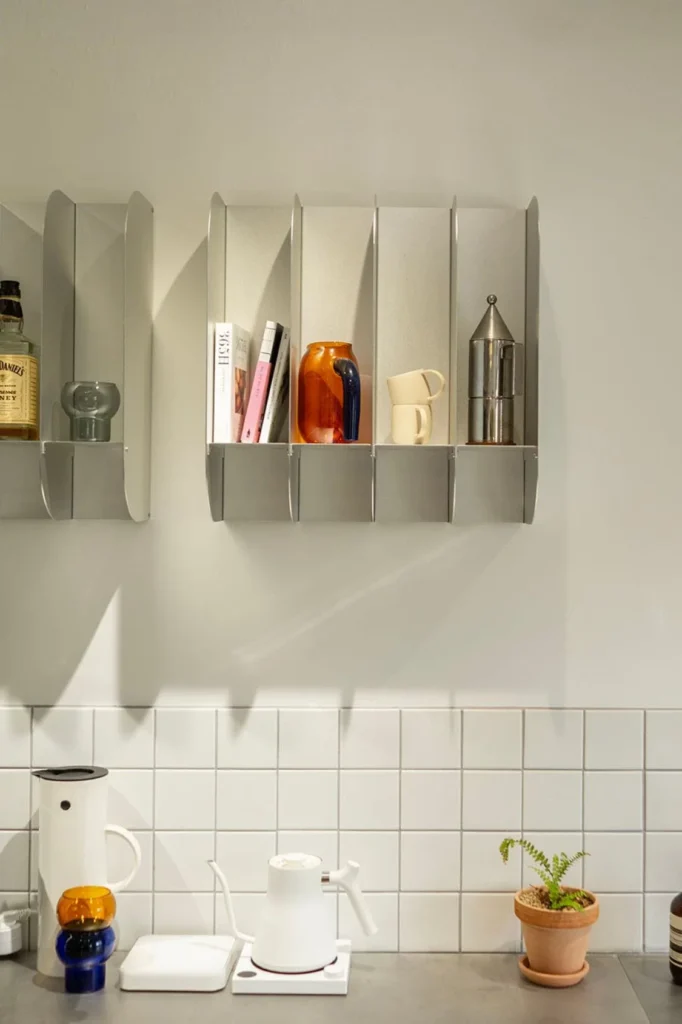
Slot shelves provide individual spaces for items that are difficult to organize on ordinary flat surfaces. Their divided compartments can hold cutting boards, baking trays, cookbooks, plates, and selected kitchen accessories.
Instead of stacking everything together, assign a section to each category. Vertical compartments are particularly helpful for flat objects because you can remove one item without lifting an entire pile.
Wider compartments may accommodate mugs, small jars, or compact containers, depending on the design. Measure your belongings before choosing an organizer to ensure the openings are wide and deep enough.
Install the unit near a preparation area or coffee station if that is where its contents will be used most often. Avoid placing heavy objects in narrow slots that are not designed to support them.
A well-planned slot shelf can improve organization while giving the wall a structured, uncluttered appearance.
18. Pegboard Wall
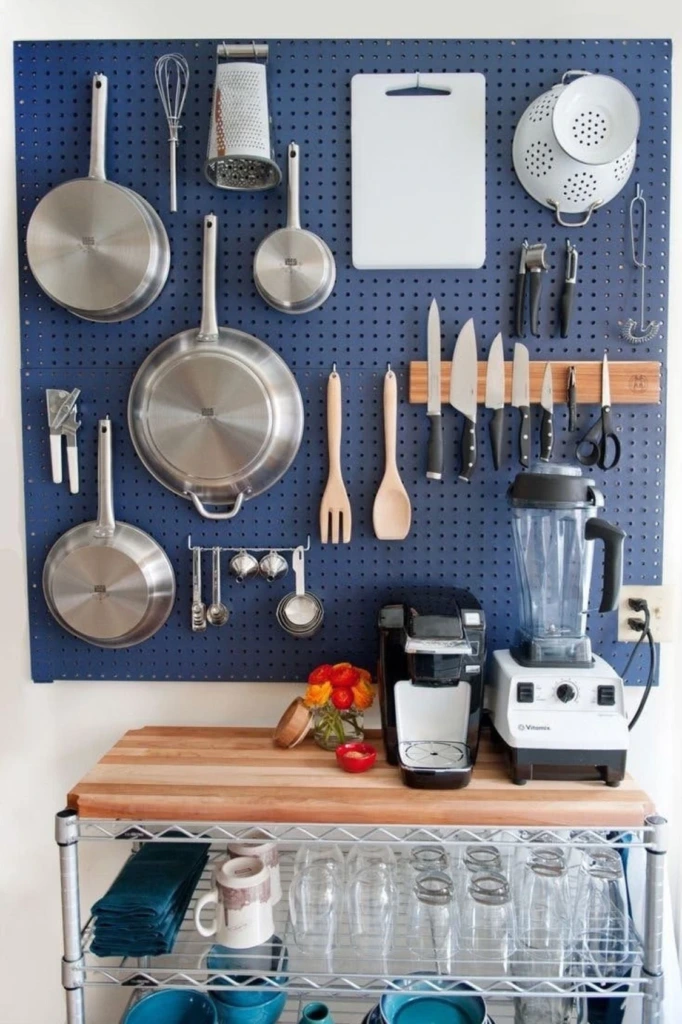
A kitchen pegboard offers flexible storage because hooks and compatible attachments can be repositioned whenever your needs change. It's a useful solution for organizing cooking utensils, measuring cups, lightweight pans, and other frequently used tools.
Start by grouping similar items together. Keep spatulas and ladles in one section, measuring accessories in another, and other small tools in clearly defined areas.
You can customize the board with baskets, shelves, and specialized holders, provided they are compatible with the system. This makes it possible to adjust the arrangement as your cookware collection changes.
Choose a board and mounting system that can handle the intended load. Heavy pots and pans require suitable hardware and strong support rather than ordinary lightweight hooks.
Position the pegboard close to your main preparation area while keeping it away from excessive heat and splashes. Leave enough space around each tool to remove it easily without disturbing the rest of the arrangement.
19. Divider Storage
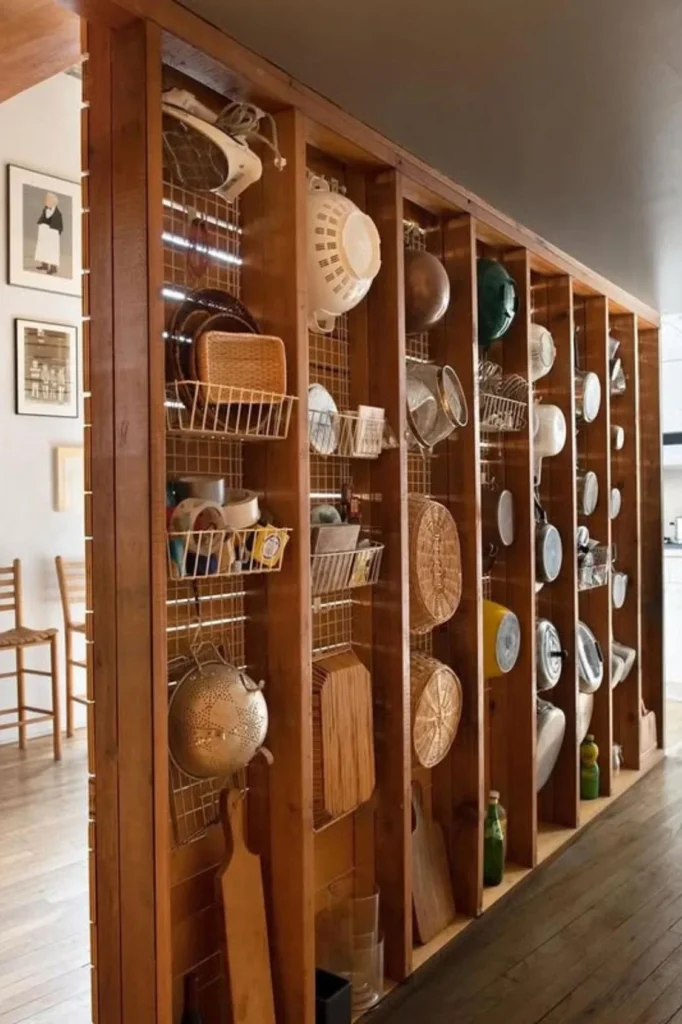
A divider wall between the kitchen and dining area can provide useful storage without requiring another cabinet. Open shelving or a purpose-built rack allows you to use this surface for cookware, trays, cutting boards, and baskets.
Different sections can accommodate different shapes and sizes. Vertical holders are convenient for baking sheets and cutting boards, while deeper compartments may be better for bowls or larger kitchen accessories.
An open design helps preserve the sense of space between adjoining areas. It can also make frequently used items accessible from the kitchen side without blocking the flow of movement.
Before installing anything, check whether the divider wall can safely support the proposed system. Some partitions are not designed to carry substantial loads, so appropriate anchors or additional structural support may be necessary.
Keep the arrangement balanced and avoid filling every available section. Leaving some space between stored items improves access and prevents the divider from looking overcrowded.
20. Wall System
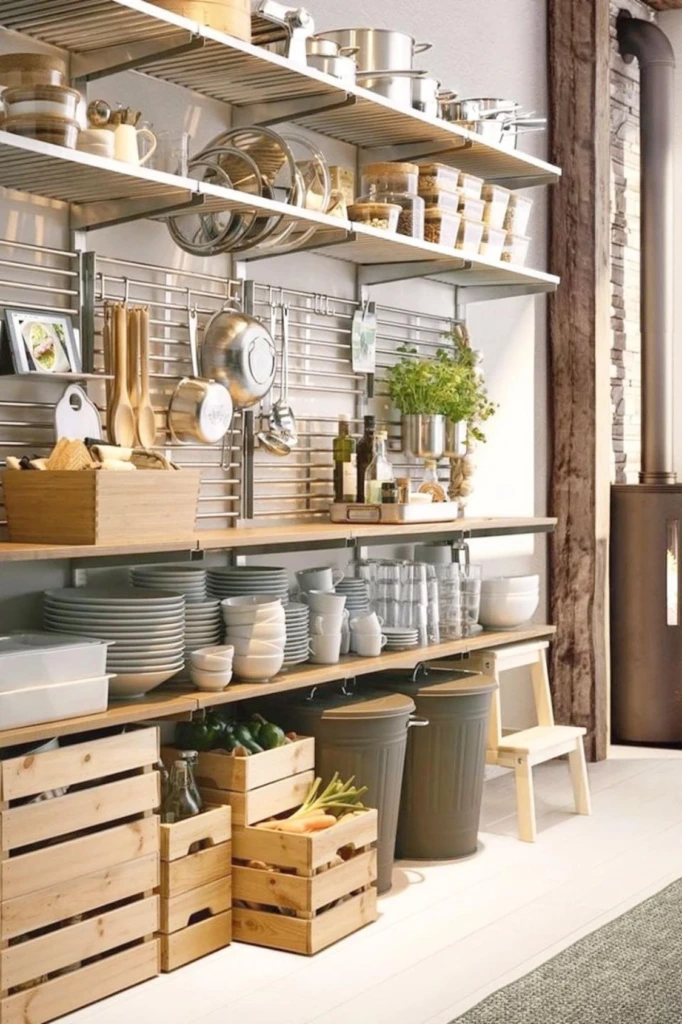
A complete wall storage system combines several organizing methods into one coordinated arrangement. Shelves, rails, hooks, and baskets can work together to accommodate everything from dishes to cooking utensils.
Use upper shelves for lighter objects or items you reach for occasionally. Place everyday cookware and ingredients at convenient heights, and reserve lower sections for heavier items when the structure is designed to support them.
Baskets can hold small supplies that might otherwise become scattered, while hooks keep suitable utensils off the countertop. Dedicated holders for cutting boards, trays, and cookware can make the system even more functional.
The main advantage is flexibility. Rather than relying on one type of organizer, you can assign each section a specific purpose and adjust it as your kitchen needs change.
Measure the wall carefully and plan the layout before purchasing components. Consider nearby doors, windows, electrical outlets, and appliances, and ensure every shelf and rail has suitable mounting support.
A thoughtfully arranged wall system can provide substantial storage while keeping essential kitchen items visible and accessible.
21. Ledge Shelf
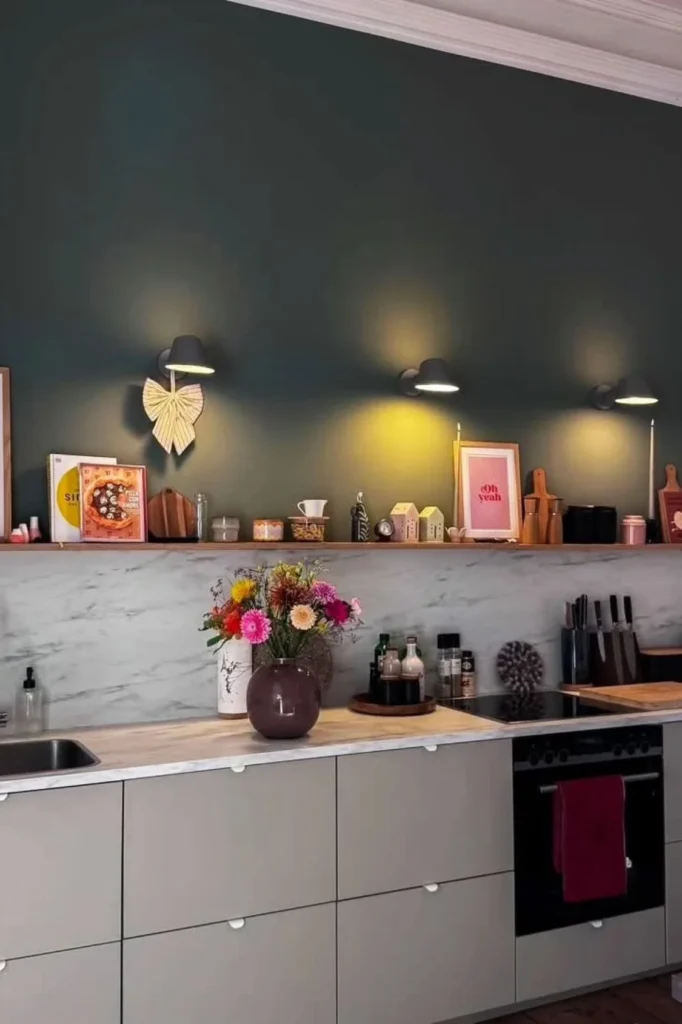
A narrow ledge shelf is ideal when you want extra storage without installing deep shelves that project far into the room. Its shallow surface works well for spice jars, small containers, and a few decorative accents.
Place the ledge above a backsplash or along an empty wall near your preparation area. Because the shelf has limited depth, objects remain visible and are less likely to disappear behind one another.
Choose a ledge with enough width to support the items you plan to store. A raised front edge can provide extra security for small containers, especially if the shelf is positioned near a busy countertop.
Keep heavy or fragile objects away from ledges that are not designed to support them. Avoid storing items where they could fall into food preparation areas or interfere with nearby appliances.
For a more finished appearance, coordinate the shelf material with your cabinets or countertop. Under-shelf or nearby lighting can improve visibility, provided the fixtures are suitable for the kitchen environment.
22. Rustic Shelves
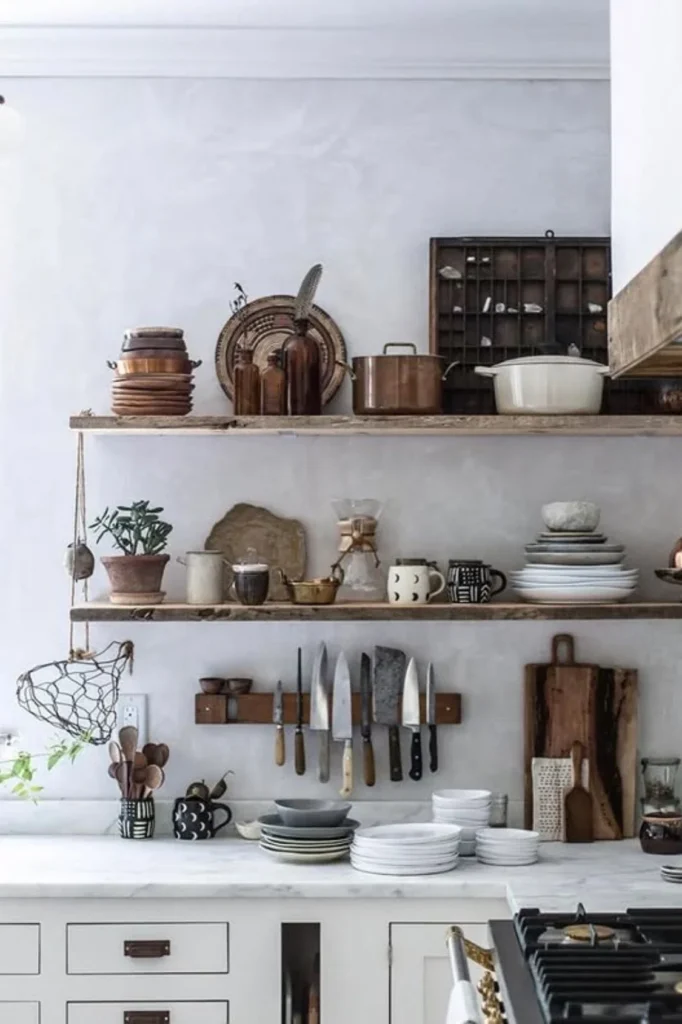
Rustic wooden shelves add warmth and character while providing practical storage for everyday kitchen essentials. Their natural texture works well with farmhouse-inspired interiors, traditional kitchens, and modern spaces that need a softer finish.
Use two or more shelves to arrange plates, bowls, jars, and selected cookware. Keeping similar objects together makes the shelves easier to use and helps prevent the display from becoming visually busy.
A lower shelf can hold frequently used dishes, while the upper level accommodates lighter containers, cookbooks, or occasional-use items. You can combine the wood with metal brackets for a contrasting industrial look.
Consider the finish carefully because kitchen shelves encounter moisture, grease, and temperature changes. Choose properly finished wood and clean spills promptly to protect the surface.
If you want to combine storage methods, install a separate magnetic knife strip or utensil rail nearby. This allows the shelves to handle dishes and containers while keeping tools accessible without consuming additional countertop space.
Select brackets and fixings appropriate for the shelf dimensions, wall construction, and expected weight. Natural wood looks appealing, but safe installation and everyday convenience matter just as much.
How high should floating shelves be in a kitchen?
The ideal height depends on the countertop, the items you intend to store, and how you use the kitchen. As a general starting point, floating shelves are often installed around 18 to 24 inches above a countertop, although the appropriate clearance can vary.
Measure your tallest plates, jars, and appliances before deciding where each shelf should go. If you plan to install multiple levels, leave enough room between them to remove objects without bumping into the shelf above.
Consider your height and how comfortably you can reach the upper shelf. Frequently used items should remain accessible, while lightweight or occasional-use objects can go higher.
If the shelves are above a cooktop, sink, or other appliance, follow the applicable clearance requirements and manufacturer instructions. Secure the shelves with suitable brackets and wall fixings based on the wall type and expected load.
What should you avoid putting on kitchen wall shelves?
Avoid storing anything that exceeds the shelf's rated weight capacity or could fall easily if the shelf becomes unstable. Heavy cookware, bulky appliances, and stacks of dishes need a properly supported shelf with appropriate mounting hardware.
Open shelves may also be unsuitable for items that require protection from heat, moisture, grease, or direct sunlight. Keep food in appropriate containers and store temperature-sensitive ingredients in a suitable location.
Sharp knives should go in dedicated holders or securely installed magnetic strips rather than being left loose on an ordinary shelf. Fragile glassware should be positioned away from busy walkways and places where it could be knocked over.
Finally, avoid filling shelves with objects you rarely use simply because space is available. Unnecessary decorations and forgotten containers can collect dust and make the kitchen harder to maintain.
For the best results, prioritize practical essentials such as everyday dishes, clearly labeled ingredients, and lightweight accessories you regularly need. Keep the arrangement manageable, clean it routinely, and make sure every item has a safe, convenient place.