26 Narrow Storage Ideas for 2026
Making a small home feel organized can be challenging when hallways, closets, and kitchen corners offer very little room. The good news is that narrow spaces often have more storage potential than they appear to have. With thoughtful furniture choices, vertical organizers, and creative built-ins, you can store everyday essentials without making your home feel cramped.
These narrow storage ideas focus on practical ways to use overlooked walls, awkward corners, slim gaps, and compact closets. Whether you need somewhere to keep shoes, household supplies, books, or pantry items, the right setup can help you make every inch count.
How can I make the most of a narrow hallway for storage?
The best way to organize a narrow hallway is to use its height and walls rather than filling the walking area with bulky furniture. Start by identifying what you need to store, such as shoes, coats, bags, keys, or cleaning supplies. Then choose storage solutions that fit those items without creating obstacles.
Wall-mounted hooks, shallow cabinets, floating shelves, and tall, slim cupboards can provide useful capacity while preserving floor space. If the hallway has an alcove or an unused corner, consider adding a fitted shelf or recessed cabinet.
Light colors, mirrors, and good lighting can also help the area feel more spacious. Keep frequently used belongings within easy reach, store seasonal items higher up, and avoid placing anything where it could obstruct doors or narrow the passage.
1. Wall-to-Wall Drop Zone
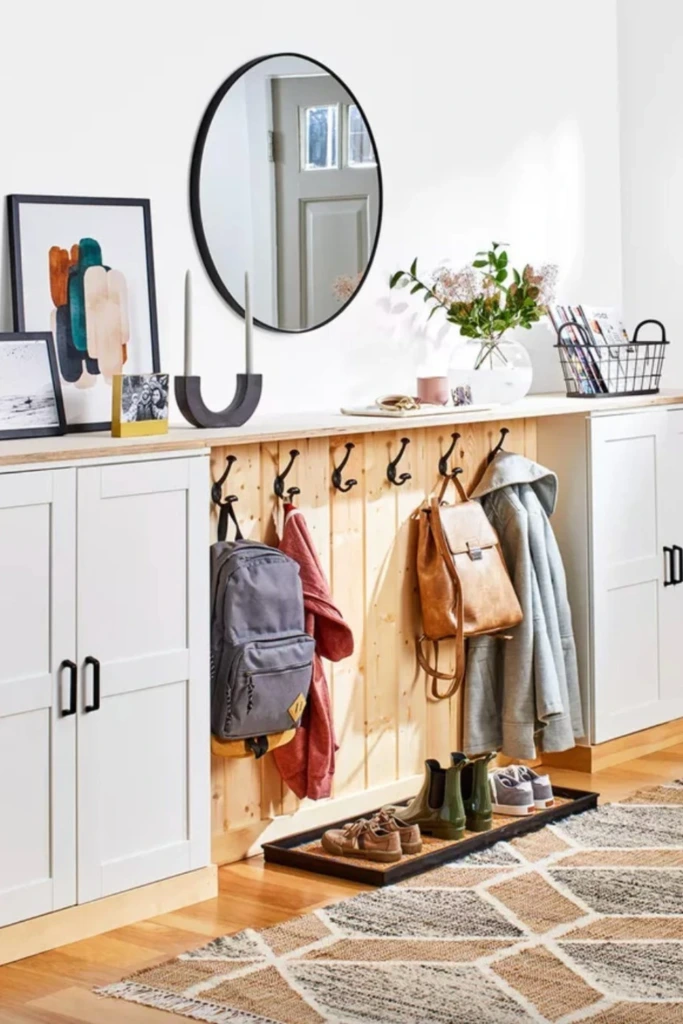
A wall-to-wall drop zone turns an entryway into a dedicated place for the items everyone brings home. Instead of letting shoes, backpacks, mail, and jackets spread across the hallway, give each category a specific location.
A fitted bench with drawers or baskets underneath can hold footwear, while hooks above provide space for coats and bags. A narrow shelf can accommodate keys, sunglasses, and other small essentials. If the hallway is particularly tight, use a floating bench or a shallow cabinet instead of a deep freestanding unit.
For a polished appearance, match the finishes of the shelves, hooks, and storage fronts. Assigning individual baskets to family members can make the arrangement easier to maintain and reduce clutter near the entrance.
2. Fridge-Side Shelving
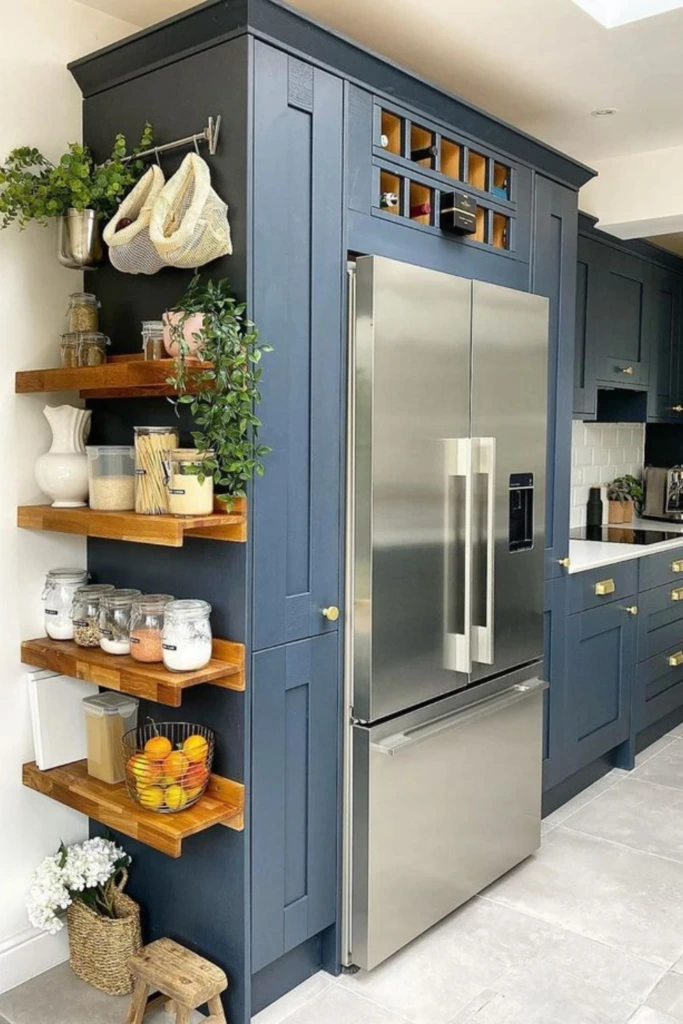
The slim gap beside a refrigerator can be useful for storing kitchen essentials that would otherwise occupy valuable counter or cabinet space. A narrow shelving unit or custom-built pull-out organizer can accommodate spice jars, condiments, cooking oils, wraps, and small pantry packages.
Measure the available width, depth, and height carefully before purchasing anything. The refrigerator needs sufficient ventilation and clearance according to its manufacturer's instructions, so avoid blocking vents or interfering with the door swing.
A wheeled rack can be convenient when you need to move items around, while a fitted pull-out unit offers a cleaner, more integrated appearance. Choose sturdy shelves and keep heavier containers on the bottom to improve stability.
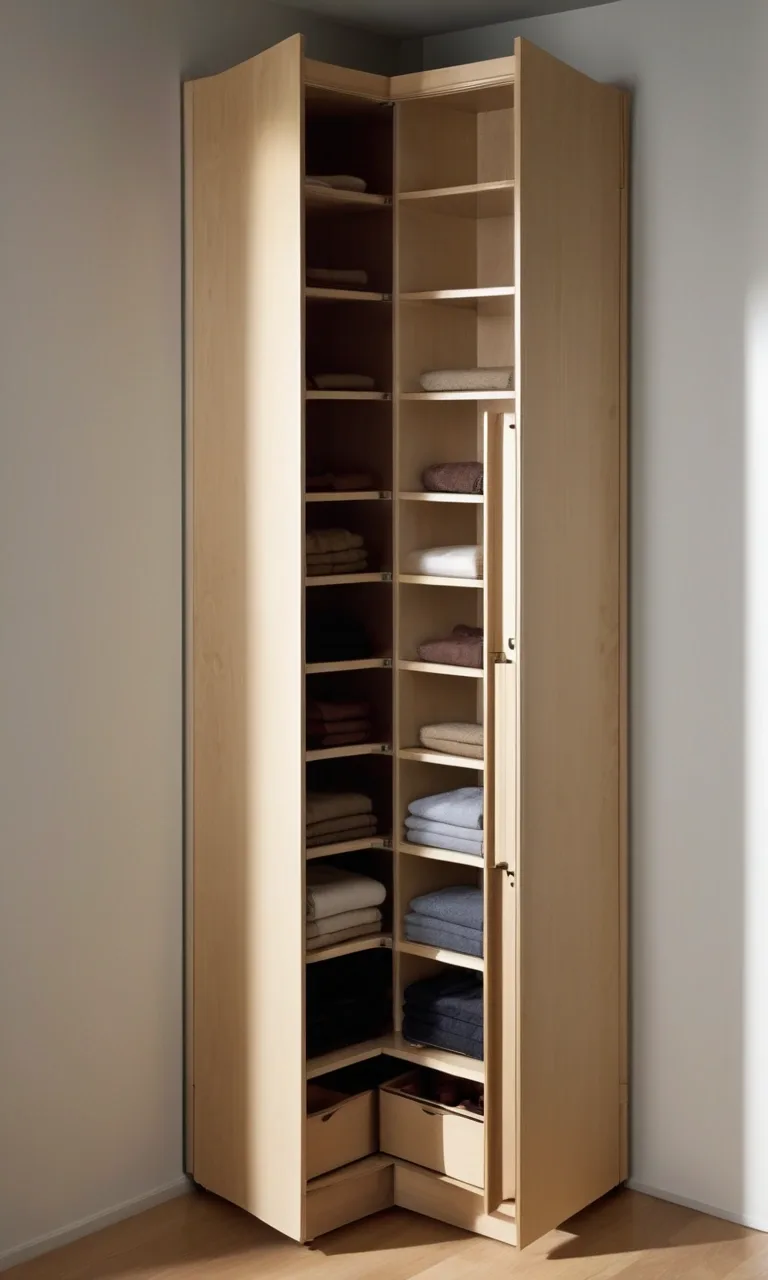
3. Tall Linen Cabinet
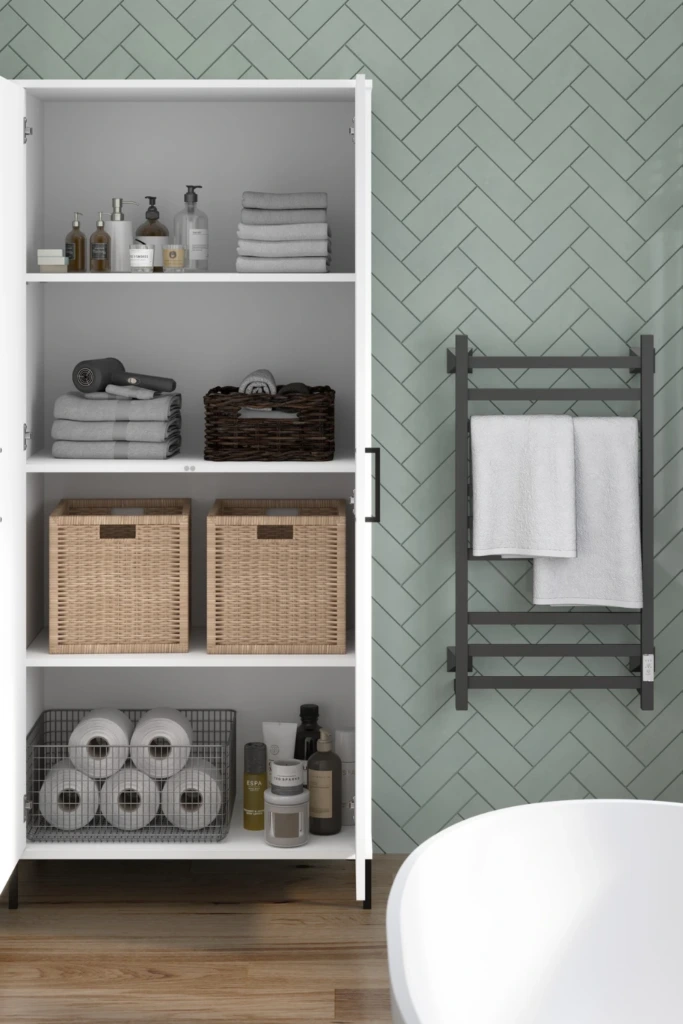
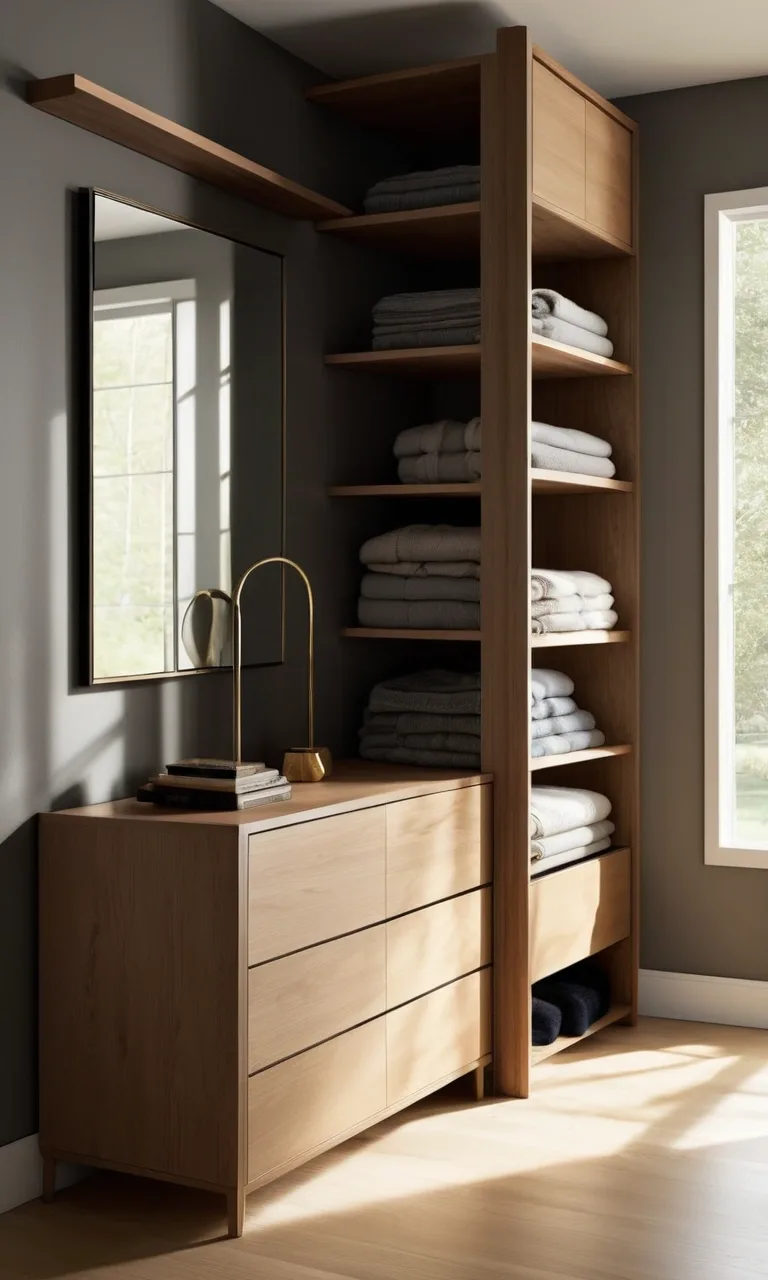
A tall linen cabinet makes excellent use of vertical space in a compact bathroom, hallway, or laundry area. Its narrow footprint allows you to store towels, bedding, toiletries, and household supplies without dedicating an entire room to cupboards.
Look for adjustable shelves so the interior can accommodate folded bath towels, bulky blankets, or smaller containers as your needs change. Doors help conceal mismatched packaging and keep the room looking tidy.
If floor space is limited, a wall-mounted cabinet can be a practical alternative, provided the wall and fixings can safely support its weight. In bathrooms, select moisture-resistant materials and ensure the cabinet does not interfere with plumbing access or ventilation.
4. Built-In Hall Niche
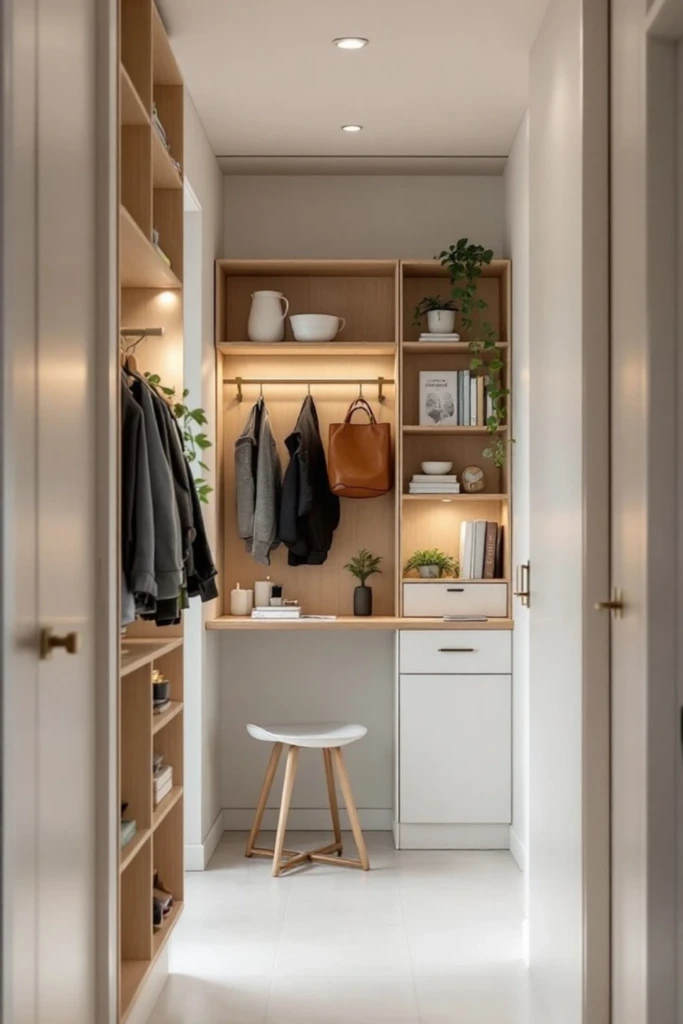
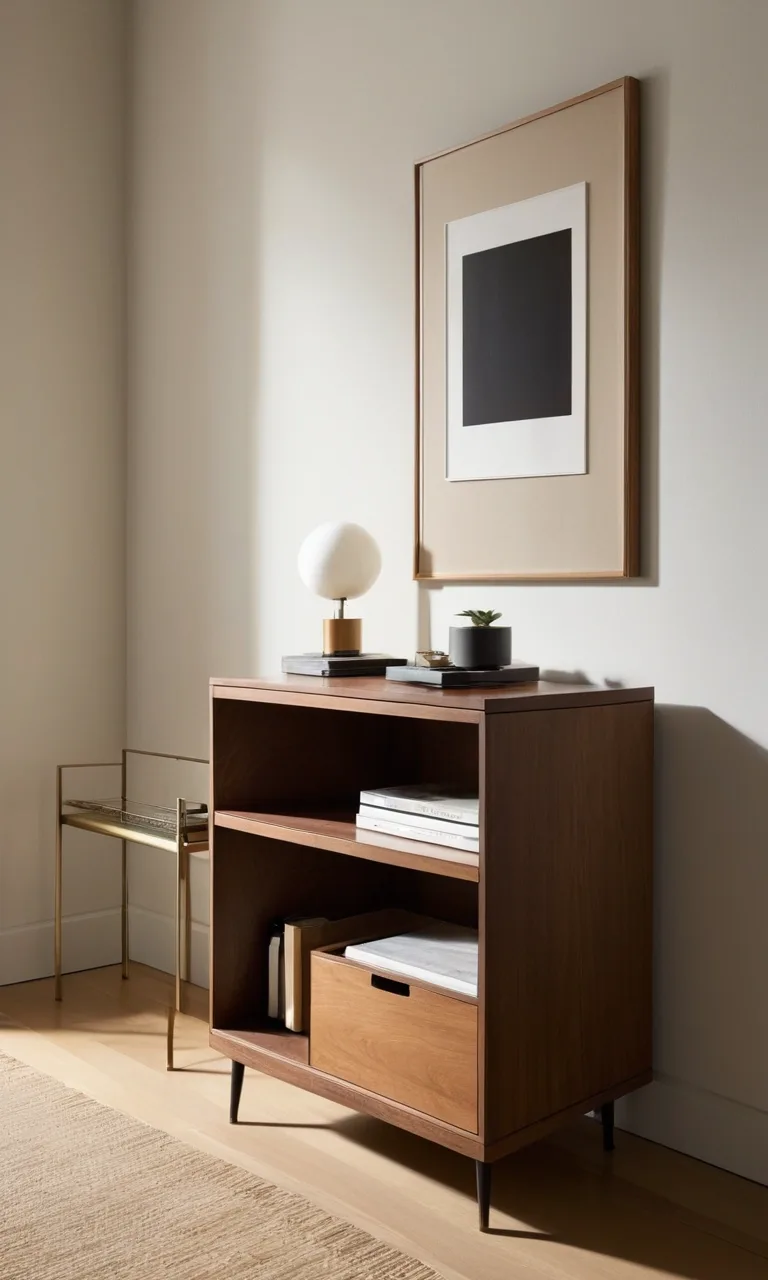
A recessed hallway niche provides storage without projecting as far into the walking space as a conventional cabinet. It can be designed to hold decorative objects, books, baskets, keys, or everyday accessories.
If the hallway already has a natural alcove, install fitted shelves or a small cupboard within it. Adding a shallow drawer or a few hooks can make the niche more functional for daily use.
When planning a new recess, confirm that the wall does not contain plumbing, electrical wiring, structural supports, or other components that would make cutting into it unsafe. A decorative surface-mounted niche can create a similar effect without altering the wall structure.
For a cohesive finish, paint the recess to match the surrounding walls or use contrasting materials to make it a feature.
5. Sloped Wall Storage
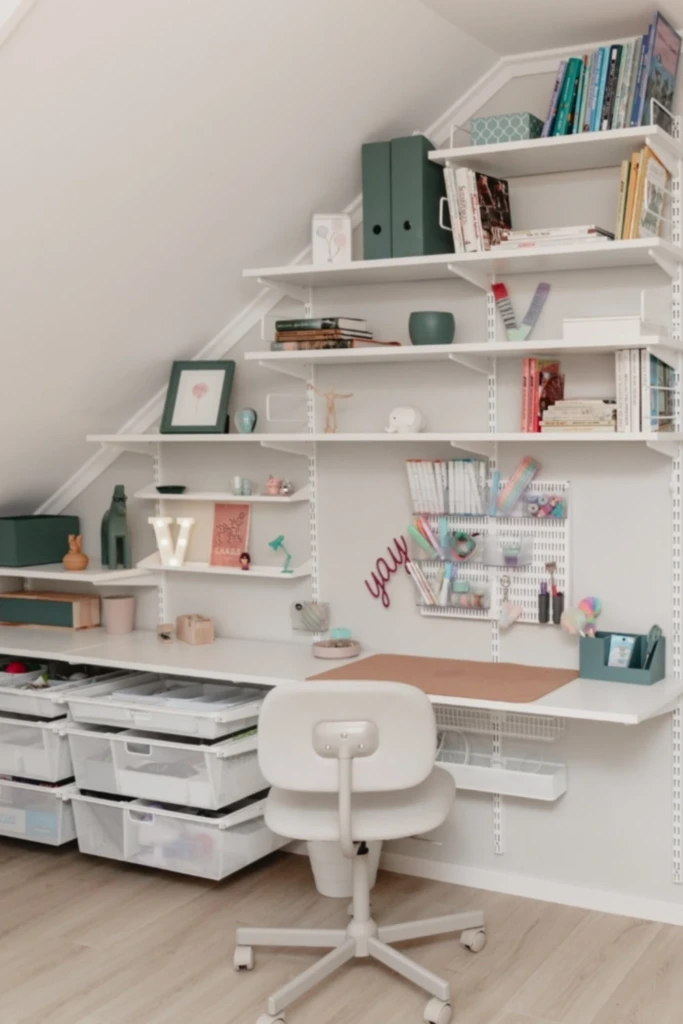
Sloped ceilings and angled walls often leave awkward areas that standard furniture cannot use effectively. Instead of treating these spaces as unusable, fit them with storage designed around their shape.
Low cabinets, custom drawers, and stepped shelving can work well beneath attic rooflines or stair slopes. Store shoes, folded clothes, books, spare linens, and seasonal accessories in these areas, depending on accessibility and available depth.
Measure the full height and depth at several points before ordering furniture. Doors and drawers need enough clearance to open, and items stored in the lowest sections should be things you can retrieve without difficulty.
Custom joinery usually makes the best use of irregular angles, but freestanding low cabinets and matching storage boxes can offer a less expensive alternative.
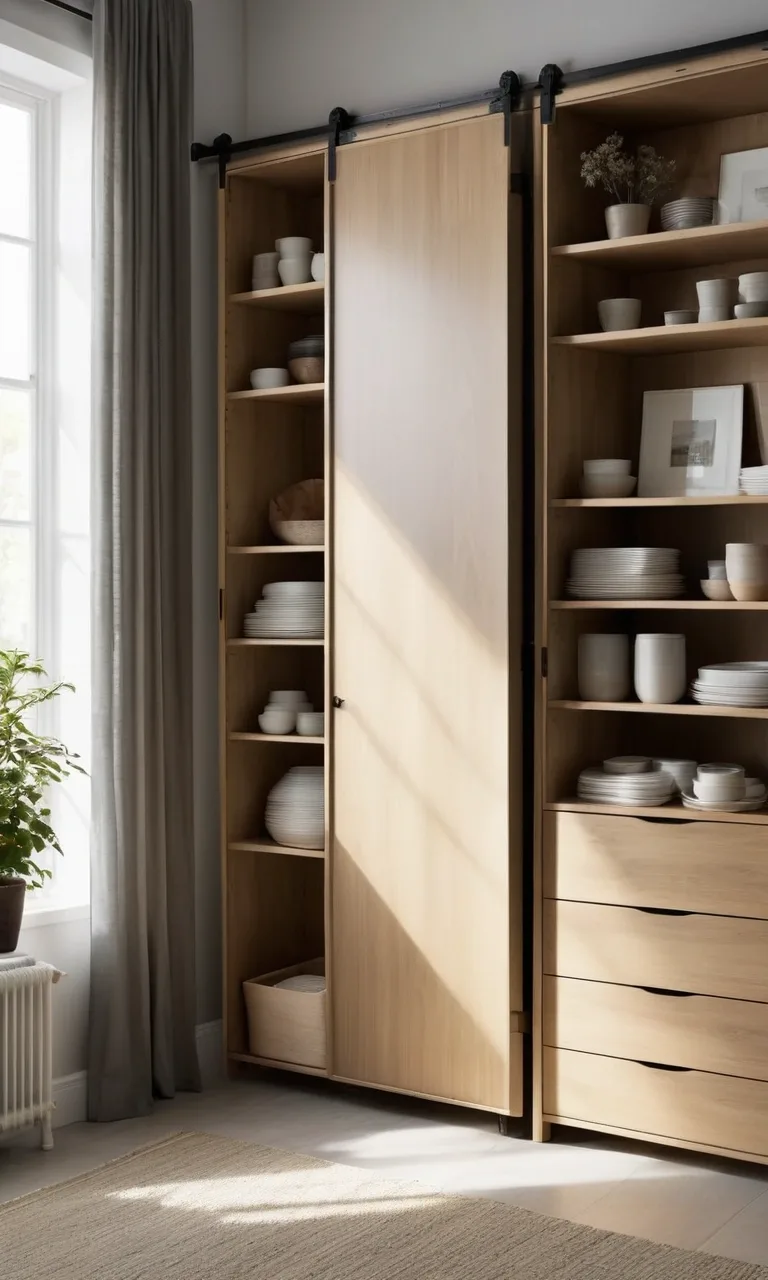
6. Low-Profile Cabinets
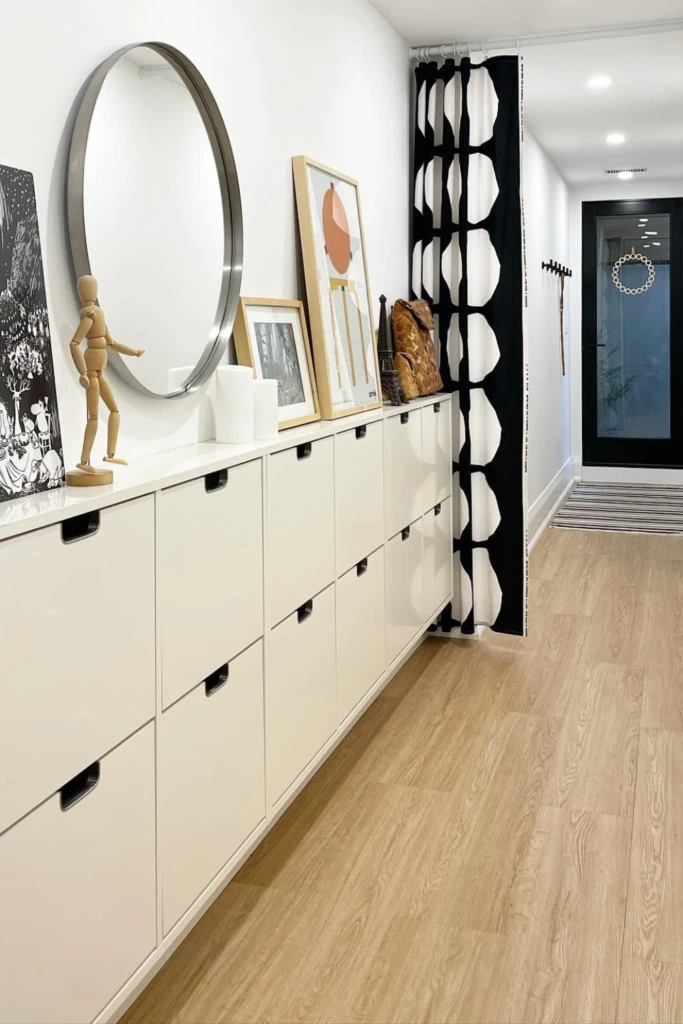
Low-profile cabinets are ideal when a narrow passage needs concealed storage without the visual weight of a tall cupboard. Their shallow depth makes them useful for shoes, mail, small household items, and lightweight accessories.
Place a slim cabinet against an entryway wall, beneath a window, or in an unused section of a corridor. Models with sliding doors may be especially helpful where a hinged door would interfere with movement.
Check the cabinet's internal measurements before buying, since a unit that looks spacious from the outside may not accommodate larger footwear or bulky objects. Secure tall or narrow furniture according to the manufacturer's instructions, particularly in homes with children or pets.
A simple cabinet in a wall-matching color can blend into the background, while a wood finish can introduce warmth to a minimalist hallway.
7. Hidden Utility Storage
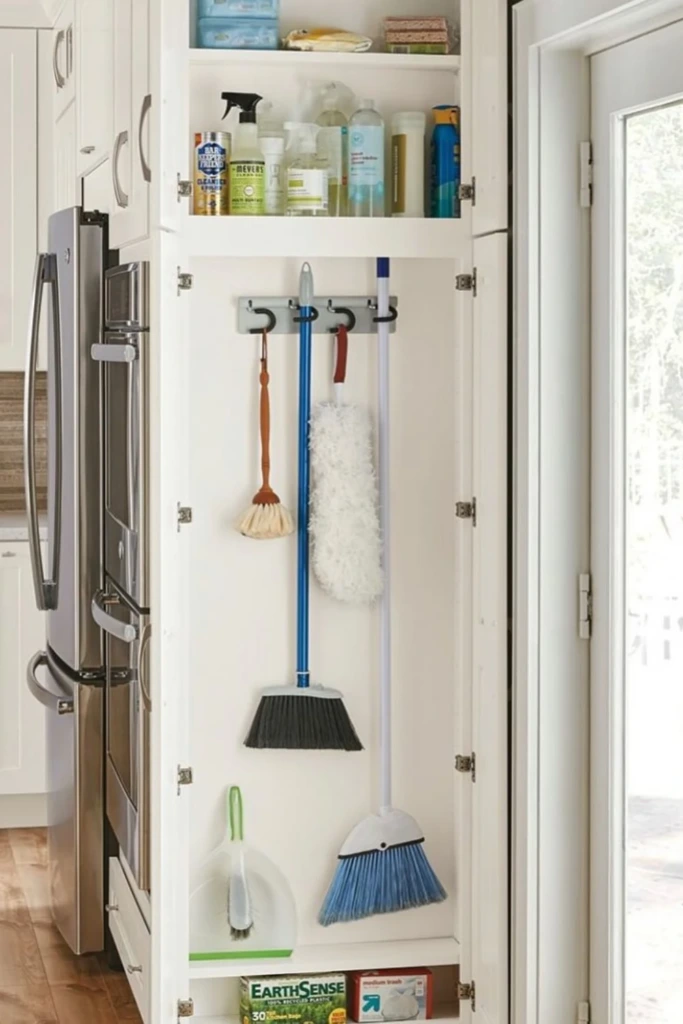
Cleaning products, spare light bulbs, batteries, tools, and miscellaneous household supplies can quickly overwhelm small rooms. Hidden utility storage keeps these practical necessities organized and out of sight.
A narrow cupboard can be fitted into a laundry area, hallway corner, or spare section of a closet. Adjustable shelves are useful for bottles and boxes, while small bins prevent loose items from becoming mixed together.
Store frequently used supplies at accessible heights and reserve upper shelves for lightweight items you rarely need. Heavy equipment should remain low, and tall furniture should be properly secured.
Keep cleaning chemicals in their original containers and follow label instructions for safe storage. They should be separated from food, kept away from children and pets, and stored according to any temperature or ventilation requirements on the packaging.
8. Entryway Command Center
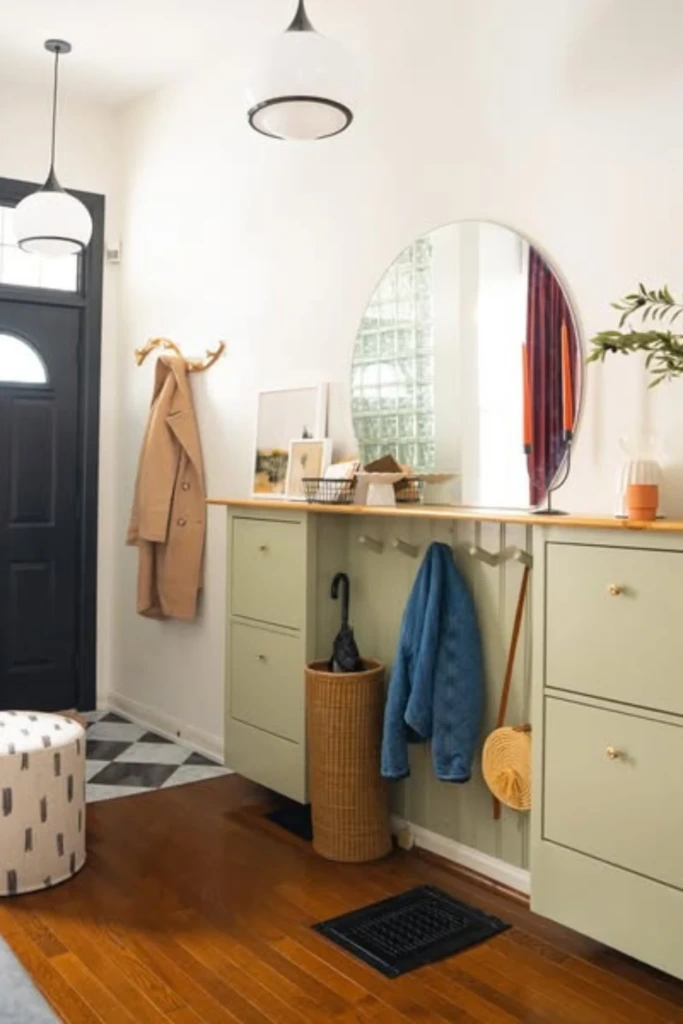
An entryway command center combines several everyday functions in one compact area. It can provide a place for keys, mail, schedules, charging accessories, shopping lists, and items that need to leave the house with you.
Start with a small wall-mounted shelf or organizer. Add hooks for keys and bags, a letter holder for incoming mail, and a calendar or planning board for appointments. If the hallway has limited wall width, arrange the components vertically.
Use trays or labeled containers to prevent small belongings from spreading across the surface. Keep important documents in a secure location rather than leaving personal information visible in an open entryway.
The most effective command center is easy to use when entering or leaving home. Avoid adding decorative accessories that take up space without serving a purpose.
9. Vertical Supply Rack
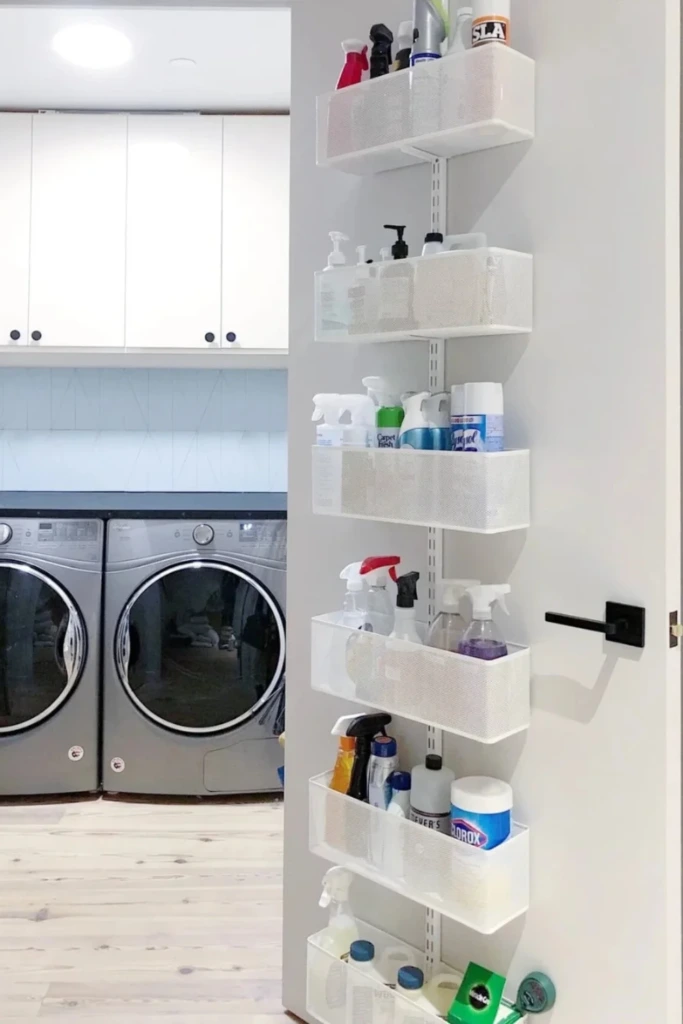
A vertical supply rack uses height to organize items that would otherwise occupy a wide shelf or pile up on the floor. It can be especially useful for craft materials, gardening tools, cleaning equipment, wrapping supplies, and household accessories.
Choose a rack with shelves, hooks, or adjustable compartments suited to the objects you intend to store. Slim wire shelving can make small items visible, while solid shelves work better for containers that might tip through open grids.
Before installation, check the weight capacity of the rack and its mounting hardware. Keep heavier supplies on lower levels and arrange frequently used items where you can reach them comfortably.
For a neat appearance, use containers of consistent sizes and label each section. This makes it easier to find supplies and return them to the correct place after use.
10. Closet Door Storage
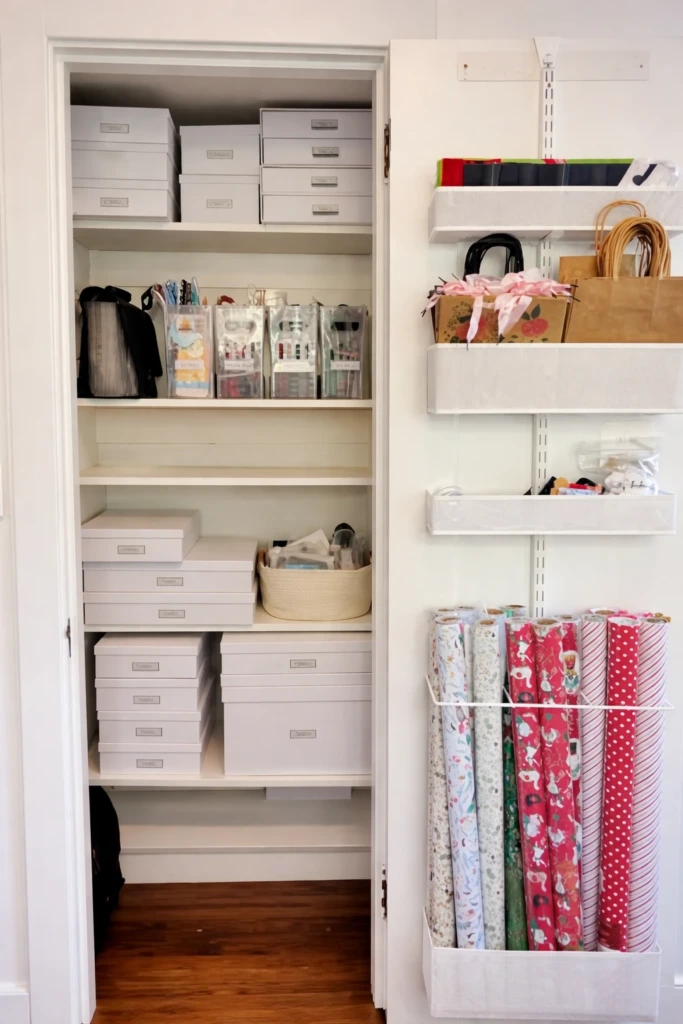
The inside of a closet door can provide extra storage without requiring additional floor space. Hanging organizers, shallow racks, and over-door systems are useful for accessories that are often difficult to arrange on shelves.
Depending on the door's construction and available clearance, you can store scarves, belts, small handbags, cleaning cloths, toiletries, or lightweight footwear. Pocket organizers work well for small items, while hooks can accommodate bags and other accessories.
Measure the door and the space between it and the closet contents before installing anything. An organizer that is too deep may prevent the door from closing or cause stored items to collide with shelves.
Use suitable hardware for the door material and avoid placing excessive weight on lightweight hollow-core doors. Keeping heavier belongings on fixed shelves or properly supported hooks is generally safer.
11. Narrow Walk-In Closet
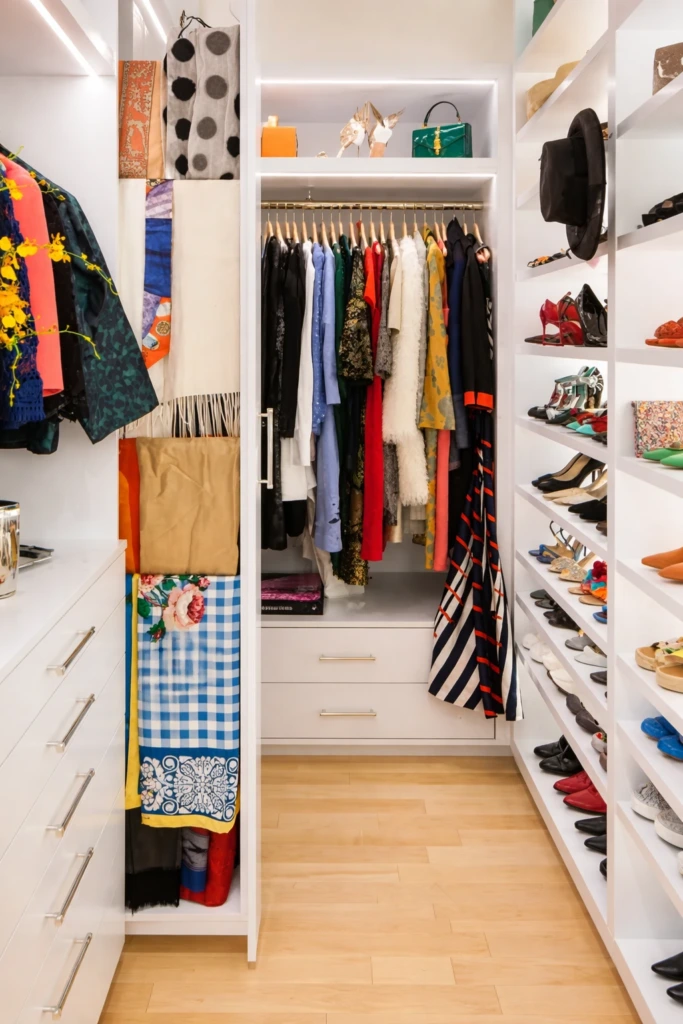
A narrow walk-in closet can still offer generous storage when its layout is planned around the available width. The goal is to balance hanging space, shelving, and comfortable access without making the passage difficult to navigate.
Use one main hanging section for longer garments and another for shorter items if the dimensions allow. Shelves above the hanging rail can hold bags, bedding, and seasonal clothing, while drawers or baskets organize smaller accessories.
If the closet is too narrow for storage on both sides, prioritize one wall for deeper hanging space and use the opposite wall for shallow shelves or hooks. Avoid installing cabinets that prevent doors from opening or make it difficult to reach clothing.
Good lighting is particularly important in compact walk-in closets. A ceiling light combined with targeted illumination can help you see items clearly without crowding the space with additional fixtures.
12. Light-Filled Closet
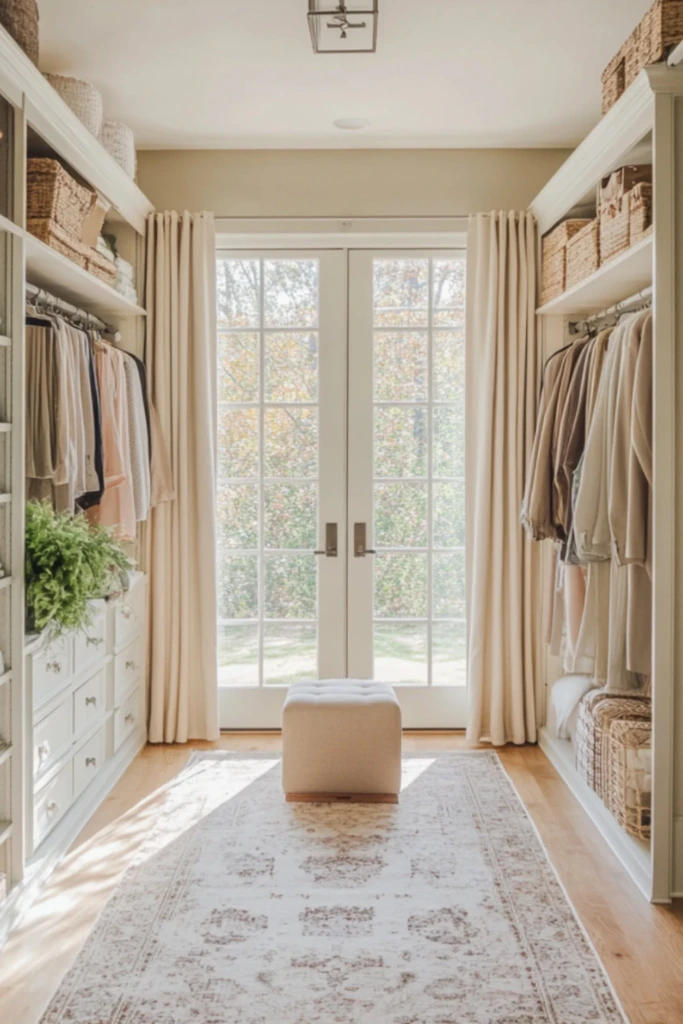
A light-filled closet feels more welcoming and makes it easier to locate clothing, shoes, and accessories. In a small storage area, brightness can also reduce the boxed-in feeling created by closely spaced shelves and hanging garments.
Choose light-colored finishes, such as white, pale gray, or natural wood, to reflect available light. If the closet has a window, keep it unobstructed where possible and use suitable window coverings when privacy is needed.
LED lighting can illuminate shelves and hanging sections without taking up much room. Motion-activated lights are convenient for closets that are used briefly throughout the day.
Mirrors can make the space feel more open, although they should be placed where they will not obstruct access. Keep shelves organized and avoid overfilling the closet, since even a well-lit space can look crowded when every surface is packed.
13. Slim Drawer Tower
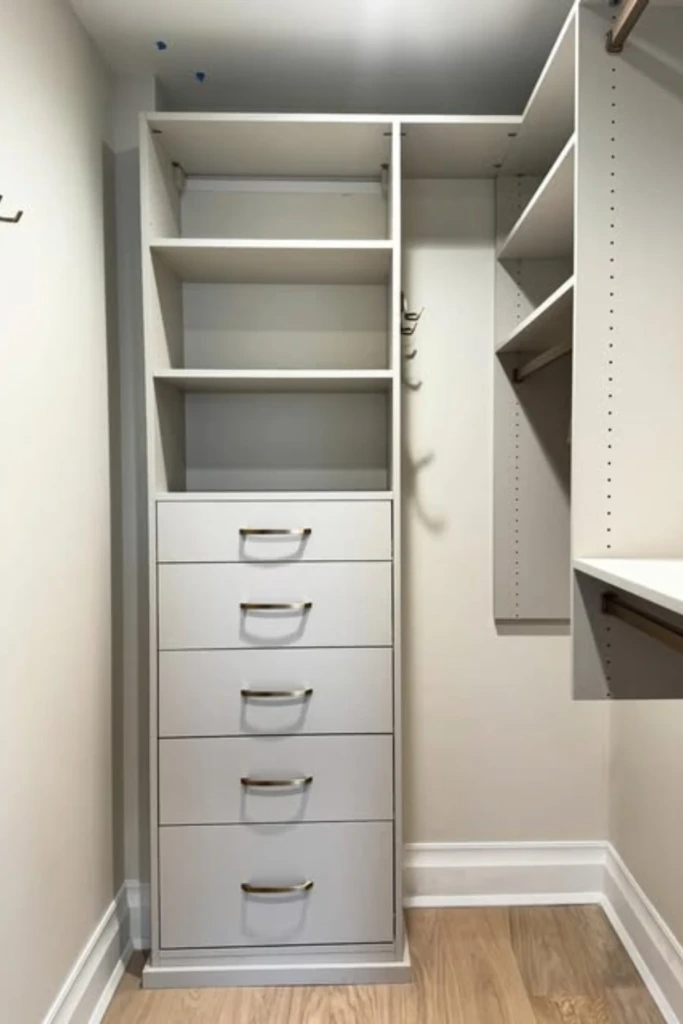
A slim drawer tower offers compact storage for items that are easily lost in larger cupboards. It can hold socks, underwear, accessories, craft supplies, office materials, or small bathroom essentials, depending on the model and location.
Choose a tower with enough drawers to separate categories while remaining narrow enough for the intended space. Transparent drawers make contents easy to identify, whereas opaque fronts provide a cleaner appearance.
Before placing the unit in a closet or beside a desk, check the full extension of the drawers. They need enough clearance to open without blocking a doorway or passage.
For safety, follow the manufacturer's assembly and anchoring instructions. Tall drawer towers can become unstable when multiple drawers are open, so keep heavier objects in lower drawers and avoid using the top as a place for excessive weight.
14. Closet Cube System
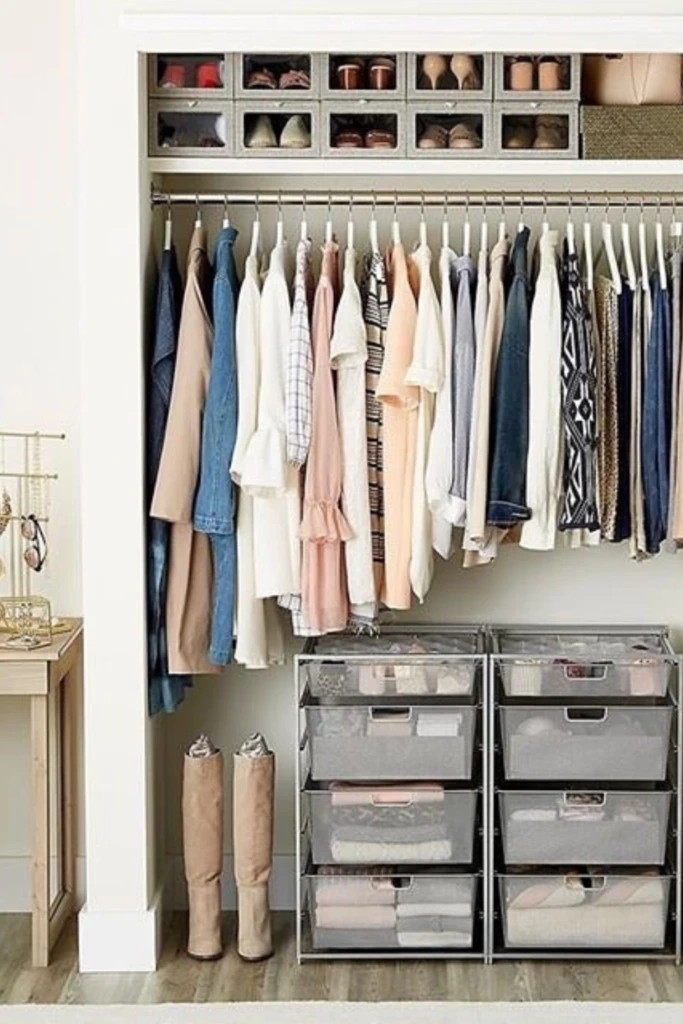
A closet cube system creates separate compartments for belongings that do not fit neatly on hangers. It is useful for folded clothing, handbags, hats, accessories, and storage baskets.
Arrange the cubes according to the closet's height and width, keeping frequently used compartments within easy reach. Matching bins can conceal small objects and give the overall arrangement a more consistent look.
A modular system is especially convenient because it can be expanded or rearranged as your storage needs change. Some units can also fit beneath hanging clothes, making use of the space below shorter garments.
Measure carefully before purchasing a cube organizer, including the depth of the unit and the room needed for nearby doors. Secure tall systems as recommended by the manufacturer, and avoid exceeding the weight limits of individual compartments.
15. Modular Shoe Wall
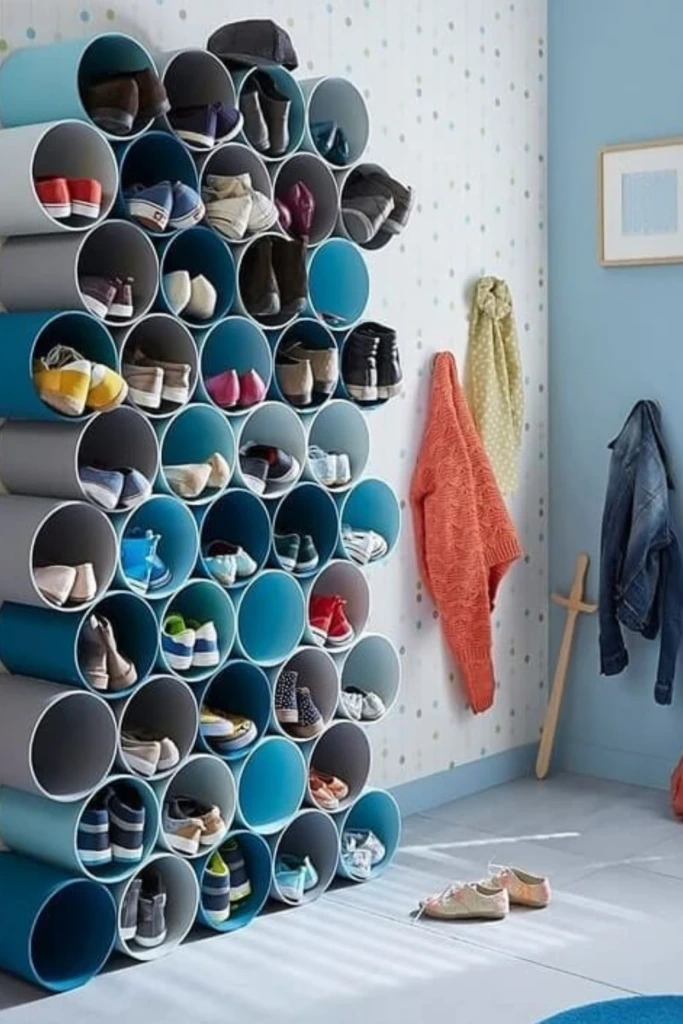
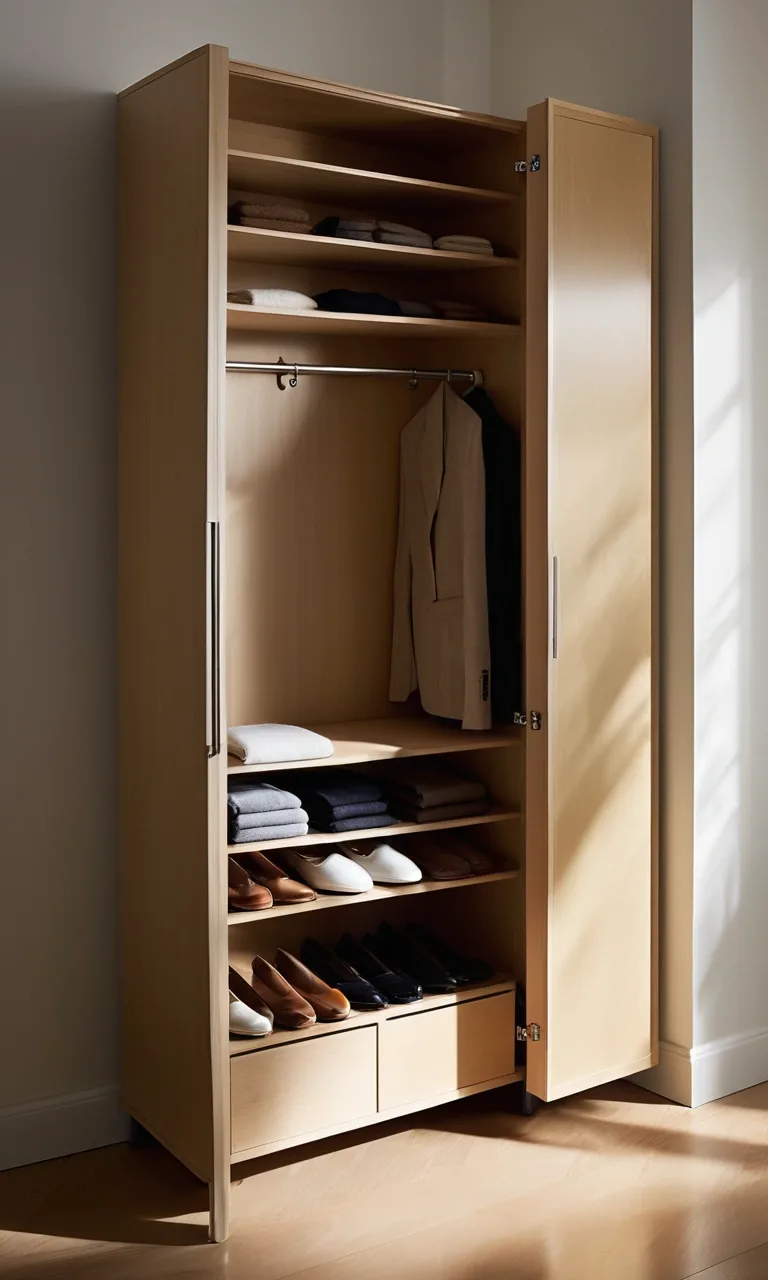
A modular shoe wall turns a collection of footwear into an organized display while making efficient use of vertical space. Instead of spreading shoes across the floor, you can arrange them on adjustable shelves, individual cubbies, or wall-mounted racks.
Choose a system that accommodates the tallest footwear you own. Sneakers and flats need less vertical clearance than boots or high-top shoes, so adjustable spacing can make a substantial difference.
Sort shoes by frequency of use, season, or household member. Keep everyday pairs near the bottom and store special-occasion or seasonal footwear higher up.
Allow damp shoes to dry before placing them in enclosed compartments. Good airflow helps reduce unpleasant odors and moisture buildup. If the wall system is mounted above floor level, use appropriate fixings and respect the load limits of the wall and shelving.
16. Open Locker Storage
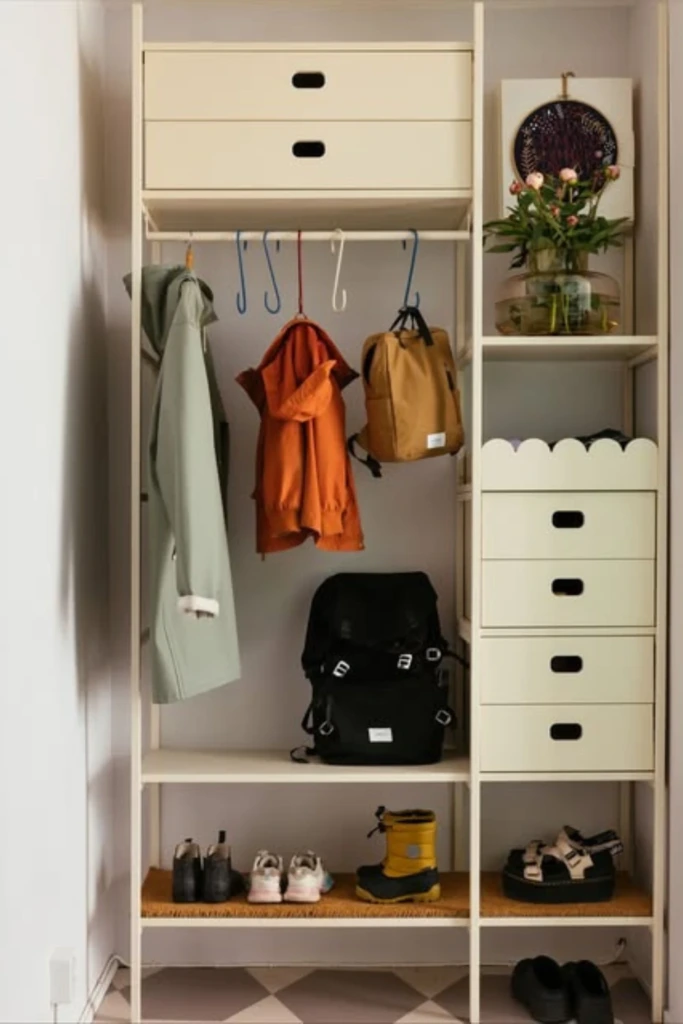
Open locker-style storage brings the convenience of individual compartments to a small entryway, mudroom, or utility area. Each section can hold a person's coat, bag, shoes, and other daily belongings.
A tall unit with several vertical compartments makes good use of limited wall width. Hooks provide space for jackets, while lower cubbies accommodate footwear and baskets. An upper shelf can hold hats, gloves, and other lightweight accessories.
Open lockers make items easy to see and retrieve, which can encourage household members to put things away. However, they also leave belongings visible, so baskets can help contain smaller objects and create a tidier appearance.
For a busy household, assign each locker to a specific person. Choose durable materials and finishes that are easy to wipe clean, especially when the unit is used for wet coats and outdoor shoes.
17. Vertical Shoe Towers
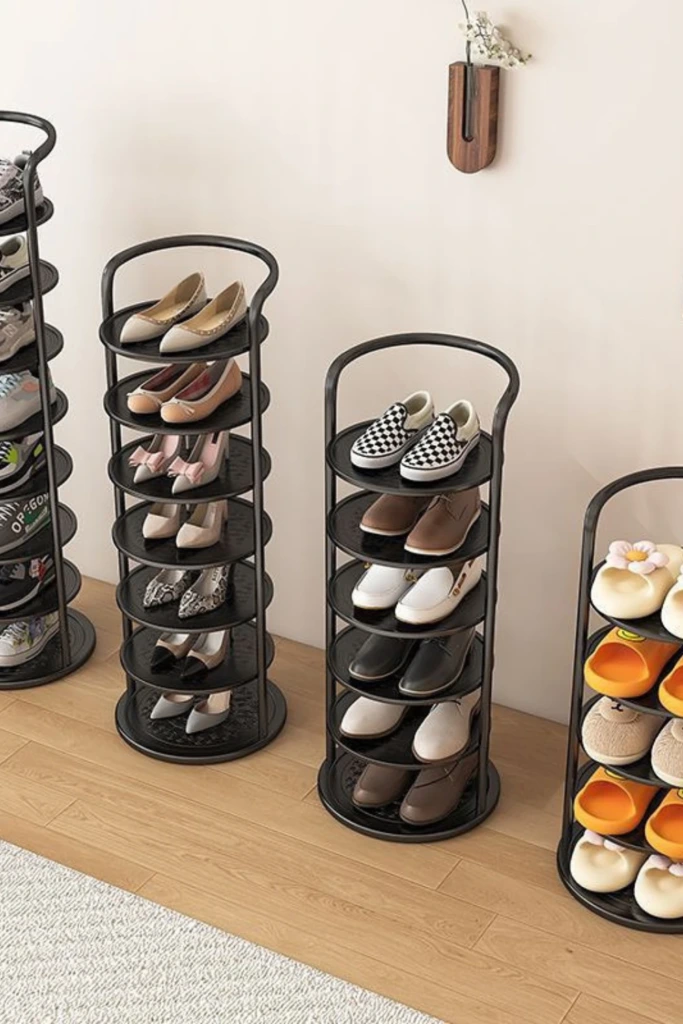
A vertical shoe tower stacks footwear across multiple levels, making it a useful option for compact bedrooms, entryways, and closets. Its small footprint allows you to store several pairs without covering a large section of the floor.
Look for a design with sturdy shelves and enough spacing for the shoes you wear most often. Adjustable tiers can accommodate different styles, while slanted shelves may make footwear easier to see.
Position the tower where it will not interfere with doors or the main walking route. A narrow unit can sometimes fit beside a wardrobe or at the end of a hallway, provided sufficient clearance remains.
Keep the heaviest footwear near the bottom and secure taller models when necessary. For an especially narrow space, a wall-mounted shoe organizer may provide similar storage while leaving the floor clear.
18. Leaning Ladder Shelf
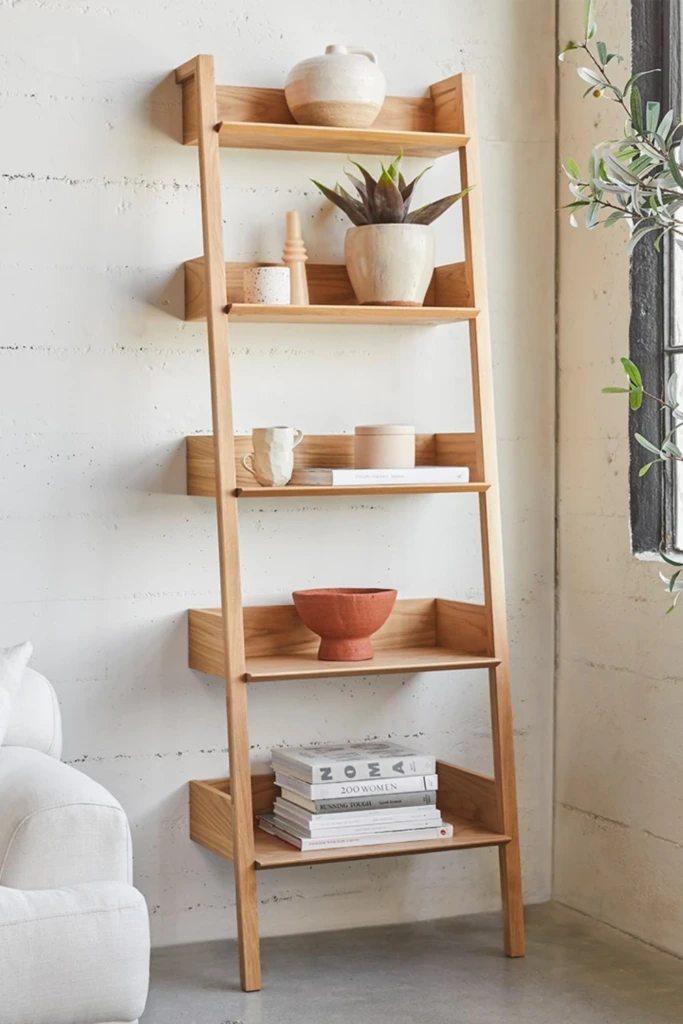
A leaning ladder shelf offers a lightweight-looking way to add vertical storage without installing a full bookcase. Its graduated shelves can hold decorative objects, small baskets, books, folded towels, or everyday accessories.
The narrow upper section takes up less visual space, making this style suitable for small hallways, bedrooms, and bathrooms. Use deeper lower shelves for heavier items and reserve the top levels for lightweight decorations.
Although the design appears simple, stability is essential. Choose a shelf with a suitable wall-contact design and follow the manufacturer's instructions for anchoring it securely. Do not assume that leaning furniture is safe without support.
Avoid overloading the shelves or placing fragile objects where they could fall into a busy walkway. In damp rooms, select a material and finish appropriate for the environment.
19. Flip-Down Shoe Cabinet
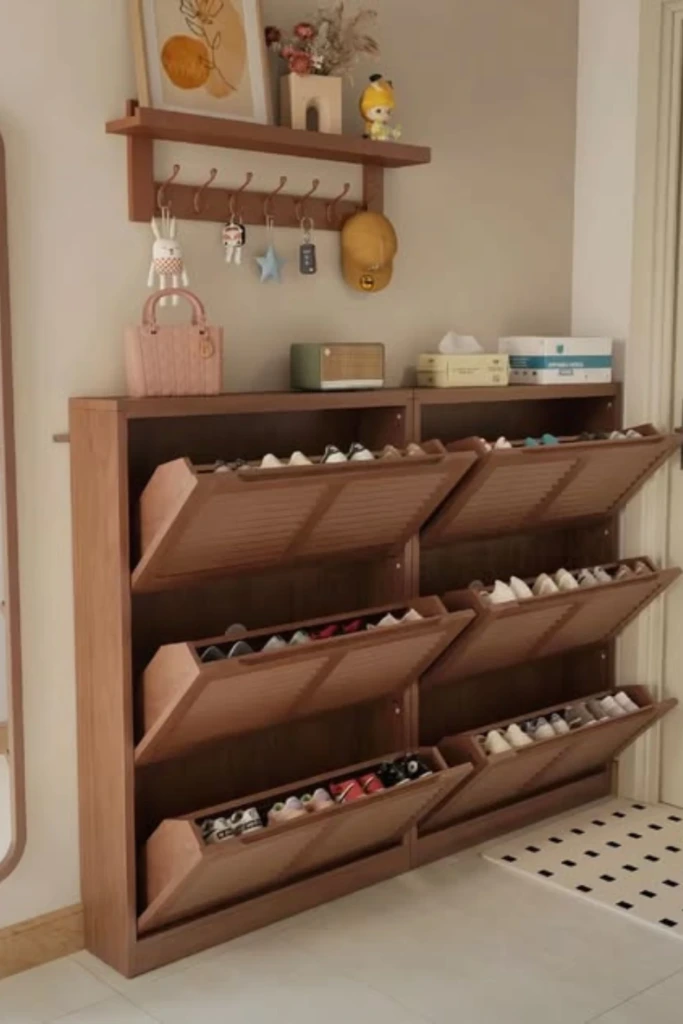
A flip-down shoe cabinet stores footwear in angled compartments rather than requiring deep, traditional shelves. This arrangement can be especially helpful in narrow entryways where a conventional shoe rack would extend too far into the passage.
Each compartment typically tilts forward to reveal the shoes inside. The cabinet can therefore provide concealed storage while maintaining a relatively shallow profile.
Check the compartment dimensions before buying, since bulky sneakers, high-top shoes, and boots may not fit every design. Some models also require space in front for the compartment to open fully.
Measure the available wall width and height, and make sure the cabinet can be mounted securely. A properly fitted unit can keep footwear organized, conceal visual clutter, and make the entrance easier to clean.
20. Wall-Mounted Boot Rack
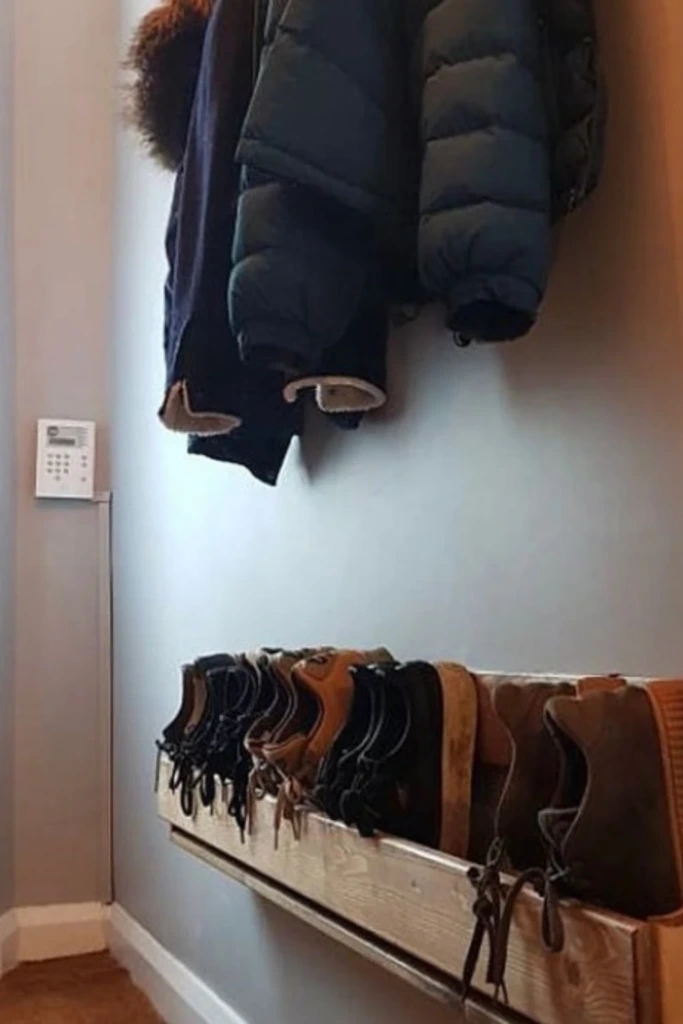
Boots can be difficult to store because they occupy more vertical space than ordinary shoes. A wall-mounted boot rack provides a dedicated location while keeping the floor beneath it available for other uses.
Depending on the design, boots may rest on shelves, hang from supports, or sit in individual holders. Choose a rack that accommodates the height and weight of your footwear without bending or squeezing the shafts.
Place the rack near an entryway, inside a utility room, or along a suitable closet wall. If boots are wet or muddy, allow them to drain and dry in a ventilated area before moving them into enclosed storage.
Make sure the mounting surface and fixings can support the combined weight of the rack and its contents. Position it away from doors and narrow walking routes to prevent accidental bumps.
21. Pegboard Wall Organizer
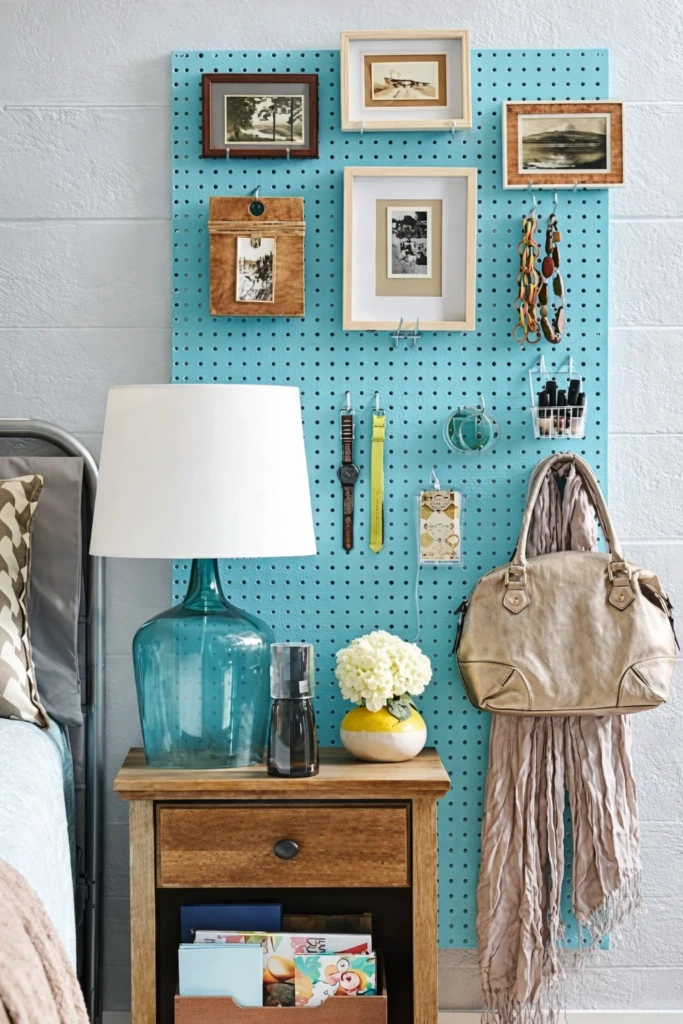
A pegboard wall organizer is a flexible solution for small items and frequently used tools. Its holes accept movable hooks, baskets, and accessories, allowing you to adjust the arrangement whenever your needs change.
In a utility room, it can hold lightweight cleaning tools, gardening accessories, or repair supplies. In a craft area, it can organize scissors, tape, brushes, and other equipment. Smaller versions also work well inside cupboards.
Plan the layout around the objects you want to store rather than filling every available hole. Frequently used items should be easy to reach, while heavier objects need suitable supports and secure mounting.
Leave enough clearance for hooks and baskets to hold their contents without interfering with nearby doors. A pegboard can also be painted to coordinate with the room, making a practical organizer feel like part of the overall design.
22. Built-In Book Wall
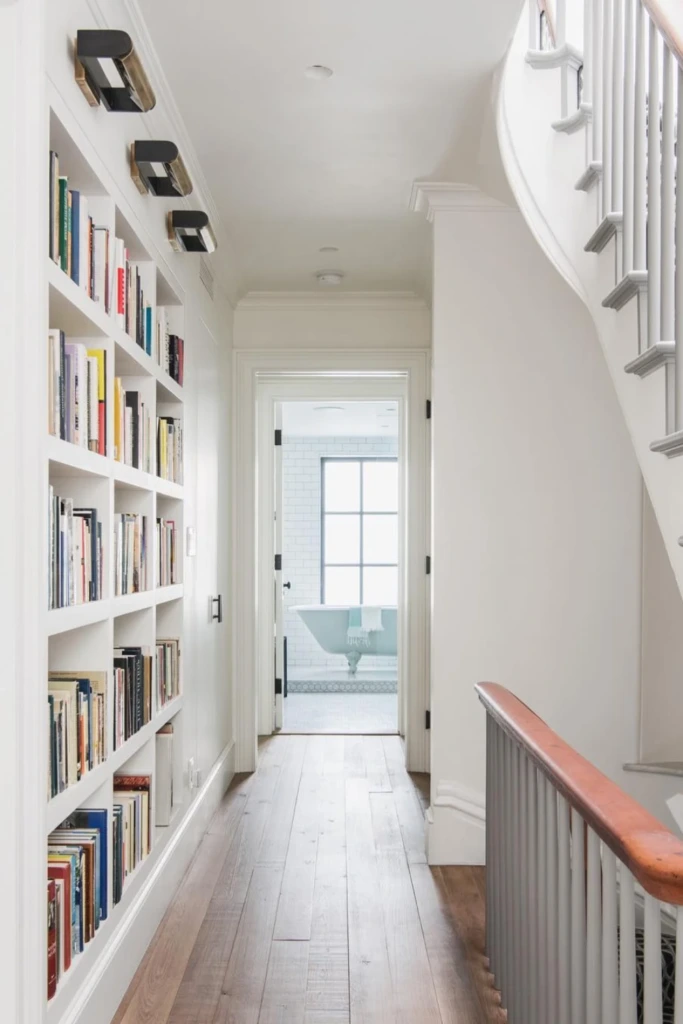
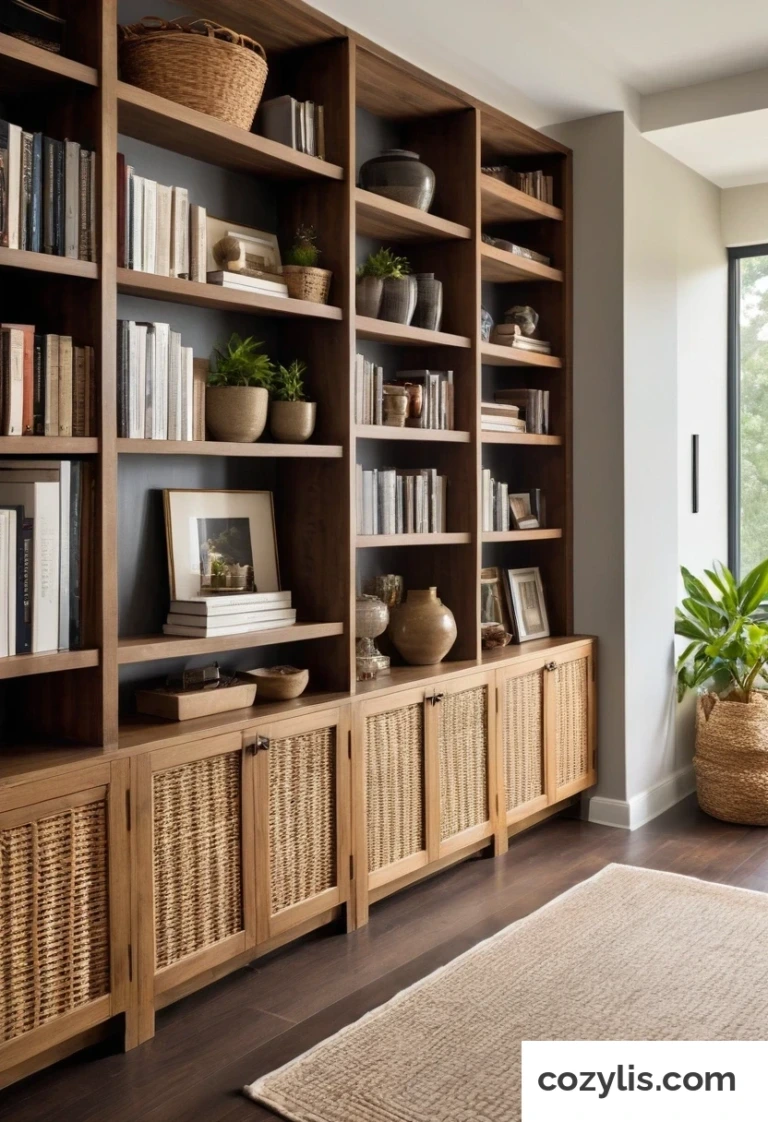
A built-in book wall turns an otherwise unused stretch of hallway into a functional library. Floor-to-ceiling shelves can provide substantial capacity without requiring several separate bookcases.
In a narrow corridor, shallow shelves are often more appropriate than deep units because they preserve walking space. Measure your books before choosing shelf depth, and use adjustable shelf heights to accommodate different formats.
Organize books by subject, author, size, or color, depending on whether easy retrieval or visual presentation matters most. A few closed compartments can conceal paperwork and miscellaneous objects, while open shelves keep reading material accessible.
Books are heavy, so the shelving and wall attachments must be designed for the expected load. Avoid placing deep or poorly secured shelves where they could obstruct movement or create a hazard. Maintain sufficient clearance around doors, stairs, and other access points.
23. Double-Sided Closet Door
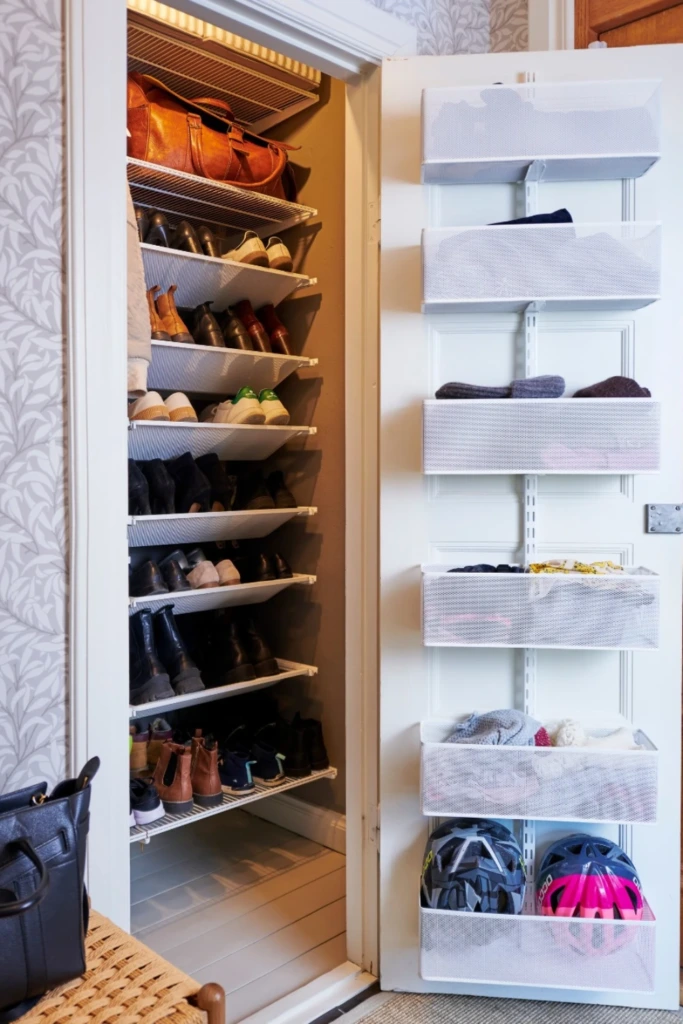
A double-sided closet door storage arrangement uses both the inside and outside surfaces of a door or paired doors to provide additional organization. It can be useful when the closet itself is too small to accommodate all the accessories you need to store.
The inside surface can hold slim organizers for belts, scarves, cleaning cloths, or other lightweight items. On the exterior, a small hook rail or carefully chosen hanging organizer may provide space for frequently used bags or garments.
Before adding storage to either side, check how the door opens and whether it will hit nearby furniture, walls, or stored objects. Heavy accessories can strain hinges, so choose appropriate hardware and keep the load within the door's limits.
For a neat finish, use matching organizers and reserve the most accessible positions for everyday essentials. If exterior storage makes the room feel cluttered, keep the additional organizers inside the closet instead.
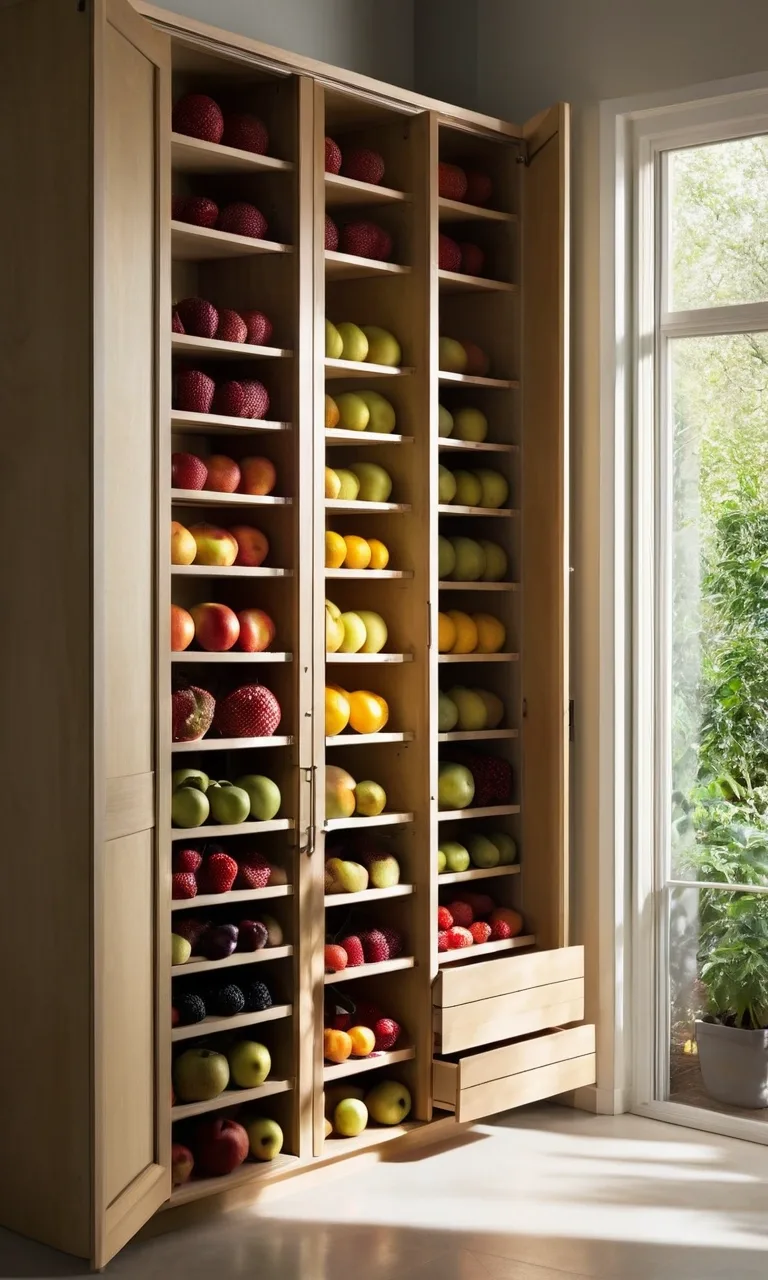
24. Slim Pantry Shelves
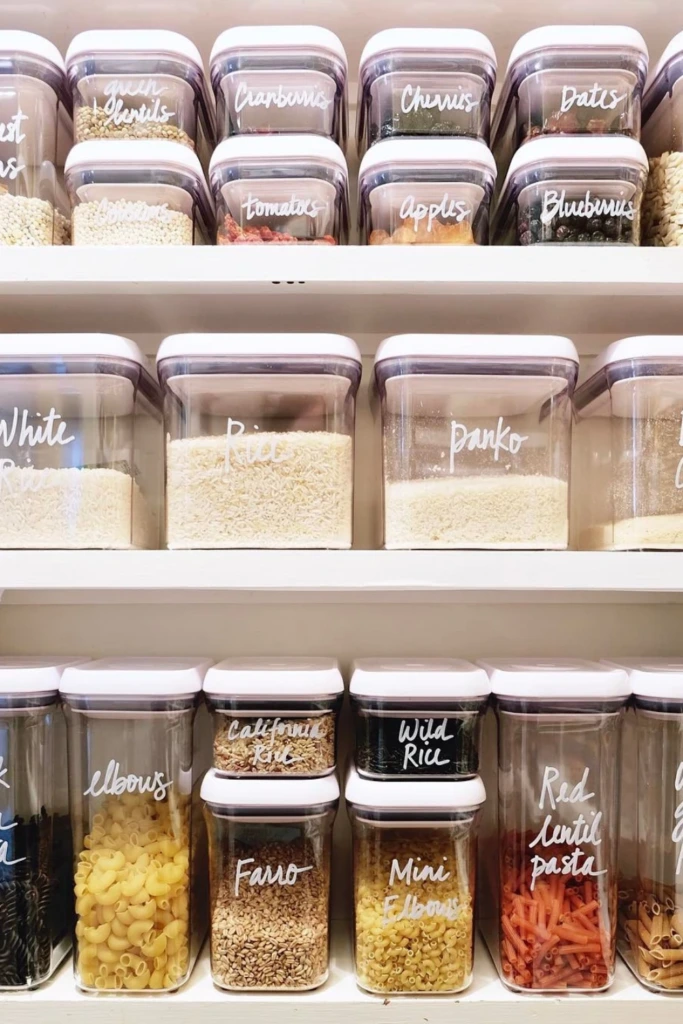
Slim pantry shelves can transform a narrow kitchen gap or small wall section into useful food storage. They are particularly effective for canned goods, spice jars, packets, baking supplies, and other compact products.
Use adjustable shelving so that each level matches the height of its contents. Shallow shelves make it easier to see what you have, reducing the likelihood of forgotten products getting pushed to the back.
Clear containers can help you monitor quantities of dry goods, while labels make identification easier. Keep frequently used ingredients at comfortable heights and place heavier jars or cans on the lower shelves.
Store food in a cool, dry area and follow packaging instructions for products that require specific conditions. Avoid placing shelves where they interfere with cooking equipment, refrigerator ventilation, or safe movement around the kitchen.
If the pantry is especially narrow, consider a slim pull-out unit that lets you access the entire shelf from the side.
25. Pull-Out Base Storage
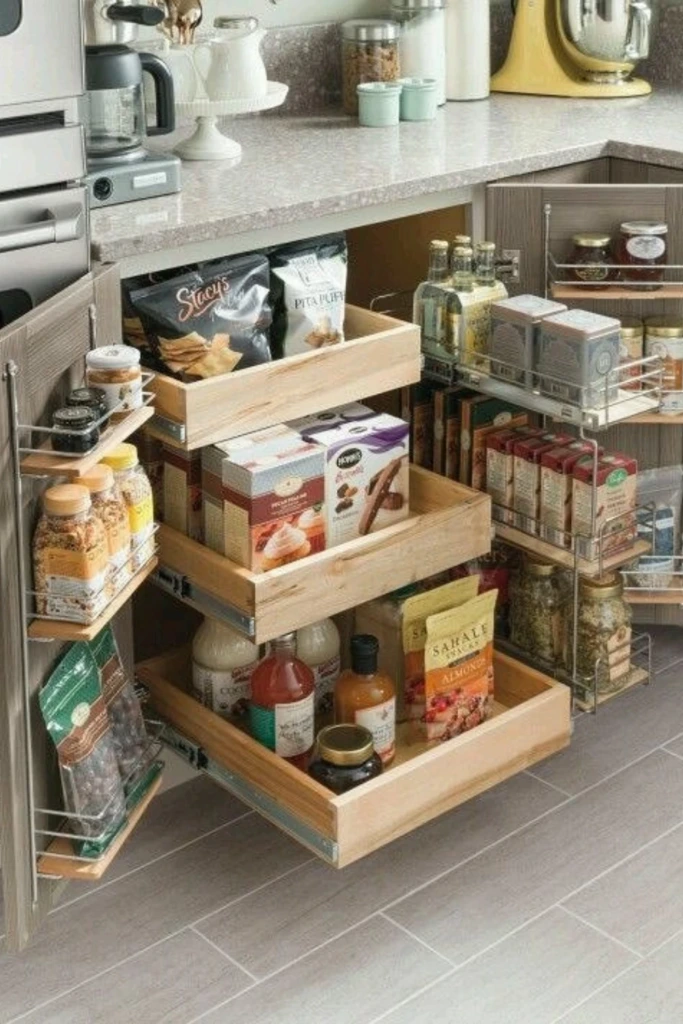
Pull-out base storage makes use of the low, narrow spaces beneath counters, cabinets, and fitted furniture. Rather than reaching into a deep cupboard, you can slide the storage section outward to see and retrieve its contents.
In a kitchen, a pull-out unit may hold spices, bottles, trays, or cooking accessories. In a bathroom, it can organize toiletries and spare supplies. Similar systems can fit beneath workbenches or inside custom cabinetry.
Measure the opening, internal depth, and available clearance before selecting a mechanism. The cabinet must have enough space for the unit to extend fully, and plumbing or other obstructions may limit the design.
Choose sturdy runners suited to the expected load. Store heavier items toward the bottom or in appropriately rated compartments, and avoid overloading narrow units that could become difficult to operate.
26. Library-Style Hallway
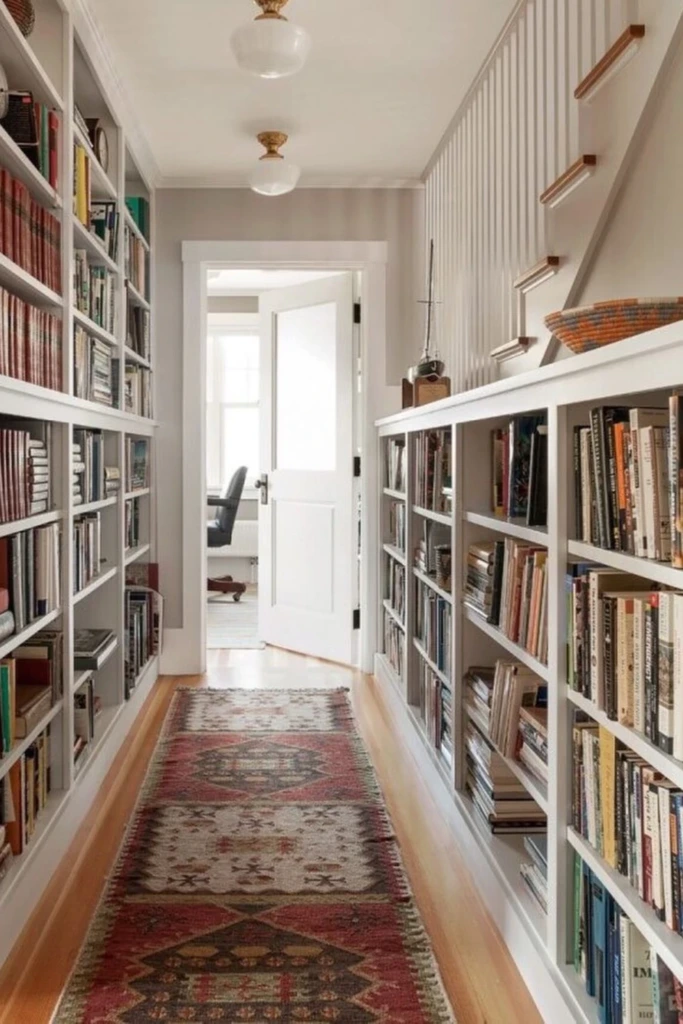
A library-style hallway combines practical book storage with the character of a small home library. Built-in shelves along one wall can display reading material, family photographs, and carefully chosen decorative objects.
For a narrow hallway, use shallow shelving and keep the arrangement simple. A consistent shelf finish can make the installation feel integrated, while a contrasting back panel adds visual interest without requiring extra furniture.
Mix books with a limited number of decorative pieces rather than filling every shelf with objects. This helps the display remain attractive and leaves room for future additions.
Lighting can improve visibility and highlight the collection, but fixtures should be installed without creating glare or obstructing the passage. Secure shelves properly and keep heavier books on lower levels. If the hallway also serves as a main route through the home, prioritize safe clearance over additional storage capacity.
FAQs
Narrow storage works best when it matches the shape of the available space and the items you need to keep there. Before purchasing organizers, measure carefully, consider how doors and drawers will open, and decide whether you prefer visible or concealed storage.
The following answers address common questions about organizing tight hallways and making small storage areas more functional.
How narrow is too narrow for hallway storage?
There is no single width that makes hallway storage unsuitable in every home. The important consideration is how much clear passage remains after furniture, cabinets, and other fixtures are installed.
A shallow shelf or wall-mounted hook may work in a space where a freestanding cabinet would be impractical. However, even slim furniture can become a problem if it blocks a doorway, creates a trip hazard, or makes it difficult for people to pass comfortably.
As a general planning guideline, aim to preserve roughly 36 inches (91 cm) of clear passage where feasible. This is a useful target rather than a universal legal requirement; applicable building codes and accessibility standards may require different dimensions depending on the location and building type.
Measure the narrowest part of the hallway, including any projections from door handles, radiators, and furniture. If the remaining passage feels restrictive, choose recessed storage, wall-mounted organizers, or a different location instead of adding another cabinet.
Should hallway storage be open or closed?
Open and closed storage each have advantages, so the best choice depends on what you need to store and how you use the hallway.
Open storage is convenient for items you reach for frequently. Hooks, exposed shelves, and shoe racks make belongings easy to see, which can encourage everyone to put things away. The downside is that visible items can make a small corridor look untidy when too many are left out.
Closed storage hides visual clutter and gives the hallway a more streamlined appearance. Cabinets and drawers are useful for shoes, accessories, paperwork, and household supplies. However, their doors need enough room to open, and enclosed spaces may require ventilation for items that retain moisture.
For many homes, a combination is the most practical solution. Use a few hooks for everyday coats and bags, then store less attractive or less frequently used belongings in a slim cabinet. This arrangement keeps essentials accessible without allowing the hallway to become overcrowded.
Final Thoughts
Narrow spaces do not have to become cluttered corners or wasted areas. With vertical shelving, shallow cabinets, recessed niches, compact shoe organizers, and carefully planned closet systems, you can create storage that fits your home rather than forcing your home to accommodate bulky furniture.
Begin with the items you need to organize, measure the available space, and choose solutions that preserve comfortable movement. A few well-planned changes can make even the smallest hallway, closet, or kitchen gap more useful, attractive, and easier to maintain.