21 Corner Cabinet Organization Ideas for 2026
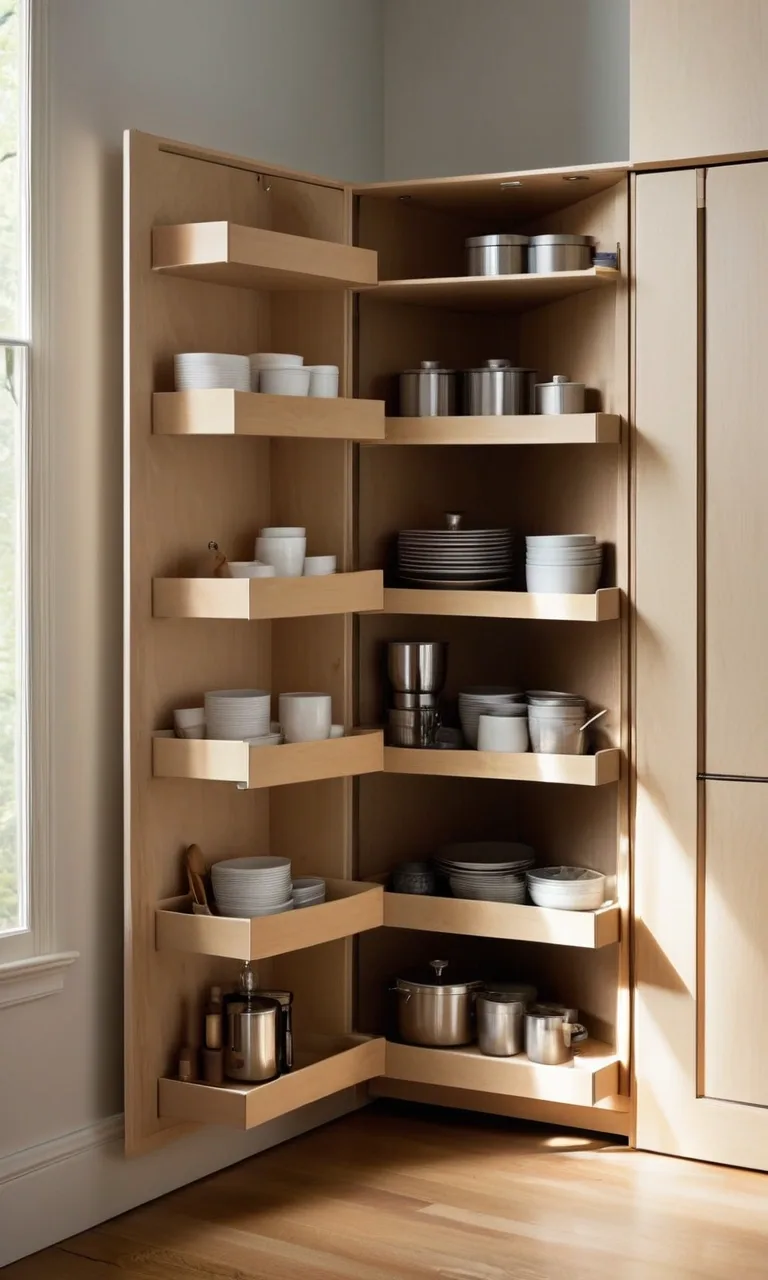
Corner cabinets can be some of the most challenging spaces to organize in a kitchen. Their unusual shape and deep interiors make it easy for cookware, pantry staples, and small appliances to disappear behind other items. Before long, finding one simple kitchen tool can turn into a frustrating search.
Fortunately, the right storage arrangement can make these overlooked spaces far more practical. Whether you have a traditional corner cupboard, a blind corner cabinet, or a tall pantry unit, a few thoughtful changes can improve accessibility and create room for more of your essentials.
From rotating organizers and pull-out baskets to custom shelving and dedicated appliance stations, these 21 corner cabinet organization ideas offer practical ways to make better use of your kitchen.
How Do You Maximize Space Inside a Corner Kitchen Cabinet?
Start by emptying the cabinet and deciding which items genuinely belong there. Remove anything you rarely use, group similar belongings together, and measure the available width, depth, and height before purchasing organizers.
The best solution depends on the cabinet's design. A rotating tray can work beautifully in a cabinet with an accessible opening, while a blind corner often benefits from a pull-out mechanism that brings hidden items into view.
Arrange belongings according to how frequently you use them. Keep everyday cookware and ingredients within easy reach, and reserve less accessible areas for occasional-use items. Use adjustable shelves, stackable containers, and sturdy baskets to create separate zones without overcrowding the cabinet.
A little planning makes the difference between a cabinet that simply holds things and one that genuinely supports your daily routine.
1. Vertical Shelves
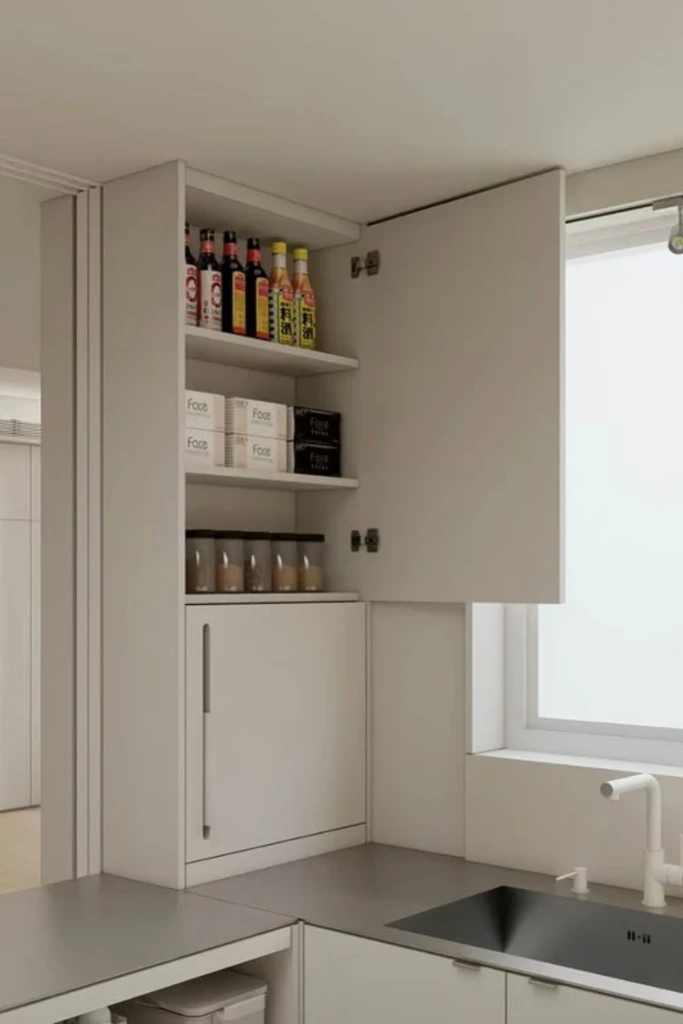
Vertical shelving is a practical choice for tall corner cabinets with plenty of unused height. Rather than piling everything onto one or two large shelves, divide the interior into levels that accommodate different categories of kitchen supplies.
Reserve higher shelves for lightweight serving pieces or occasional-use ingredients. Keep everyday food containers and cooking essentials around eye level, and position heavier items lower down.
Adjustable shelving is especially useful because it lets you change the spacing when your storage needs evolve. You can also use small bins to separate packets, jars, and boxed goods.
The goal is to make every shelf easy to scan. When items have designated places, you spend less time moving things around to find what you need.
2. Rotating Shelves
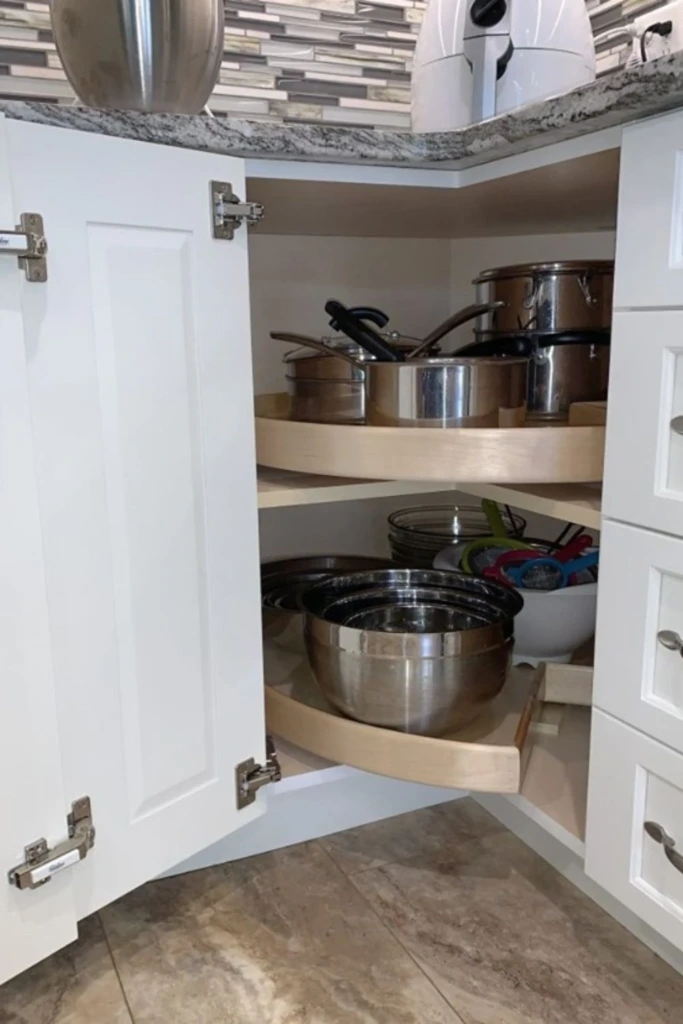
Rotating shelves, commonly known as lazy Susans, are useful for corner cabinets where reaching the back is difficult. A simple turn brings stored items closer to the opening, reducing the need to remove everything in front.
These organizers work well for pots, pans, mixing bowls, cooking oils, and other frequently used supplies. Choose a tray with enough weight capacity for the items you plan to store, and check that its diameter fits comfortably inside the cabinet.
Arrange heavier cookware toward the center or in positions recommended by the organizer's manufacturer. Leave enough room between objects so handles do not catch as the tray turns.
For a smoother experience, avoid overloading the shelves. A rotating organizer should make access easier, not create another crowded surface.
3. Pull-Out Baskets
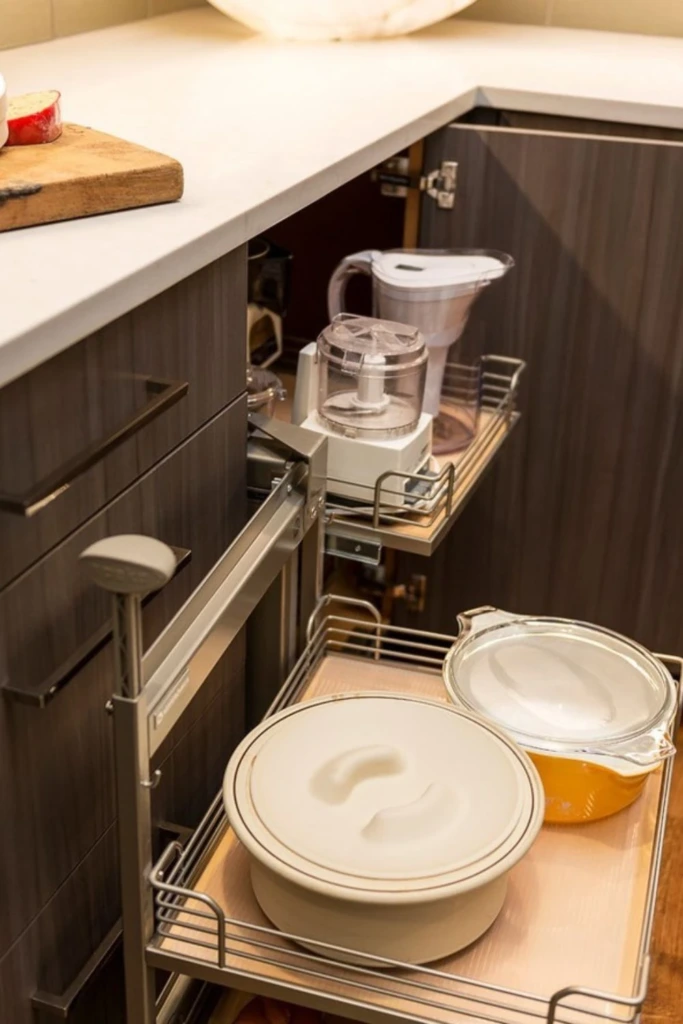
Pull-out baskets help solve one of the most common corner cabinet problems: supplies becoming trapped at the back. Mounted on suitable sliding hardware, these baskets move toward you, making the entire storage area easier to reach.
They are particularly useful for baking accessories, small appliances, dish towels, food packets, and cookware accessories. Wire baskets provide visibility, while solid-sided versions help contain smaller objects.
Organize the baskets according to your routine. Place frequently used items in the easiest-to-access section and keep backup supplies farther inside when the design allows.
Before installing a system, confirm the cabinet dimensions, door clearance, mounting requirements, and weight rating. A well-fitted basket system can improve accessibility without requiring you to remodel the entire kitchen.
4. Slim Shelving
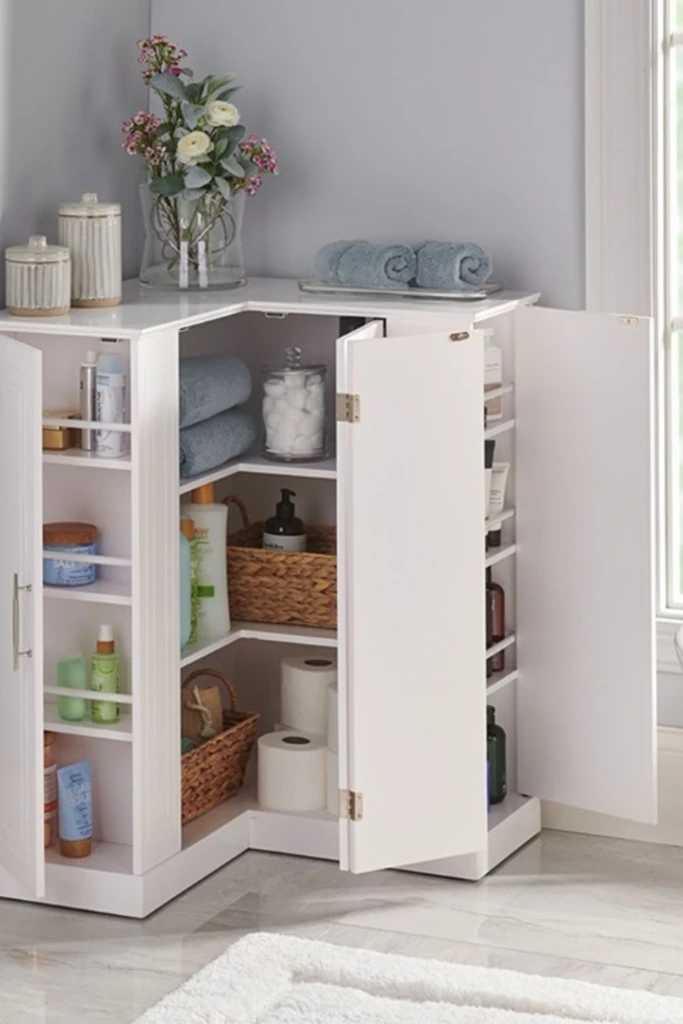
Slim shelving makes use of narrow spaces that might otherwise remain empty. Depending on the cabinet's dimensions, a narrow rack or compact shelf insert can provide a home for spice jars, small containers, lids, or other items that tend to get lost among larger cookware.
This approach is most effective when you identify a specific category of belongings that needs its own space. For example, a narrow organizer can separate small baking supplies from larger mixing bowls.
You can also consider suitable door-mounted racks if the hinges, door thickness, and interior clearance allow them to fit safely.
Avoid filling every available gap simply because it exists. Leaving enough room to remove containers comfortably will make the arrangement more useful over time.
5. Double Turntables
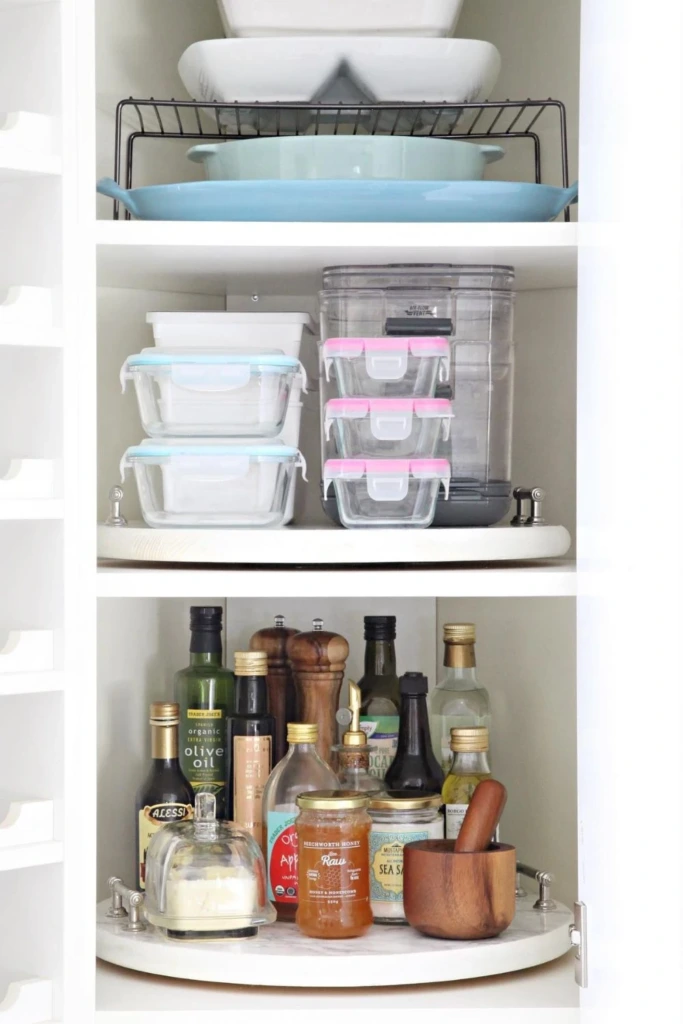
Using two turntables on separate shelves creates multiple accessible storage levels inside a deep cabinet. Each tray can hold a different category, helping you find supplies without searching through unrelated items.
For example, one turntable might store cooking oils, sauces, and vinegar, while the other holds baking ingredients or small pantry containers.
Clear containers are helpful when you want to identify ingredients quickly, but make sure they are appropriate for food storage and labeled when their contents are not obvious.
Choose turntables that fit the cabinet without rubbing against the sides or door. Taller bottles should have sufficient clearance, and containers should remain stable as the trays rotate.
This arrangement is especially convenient when a corner cabinet serves as an extension of your kitchen pantry.
6. Pan Storage
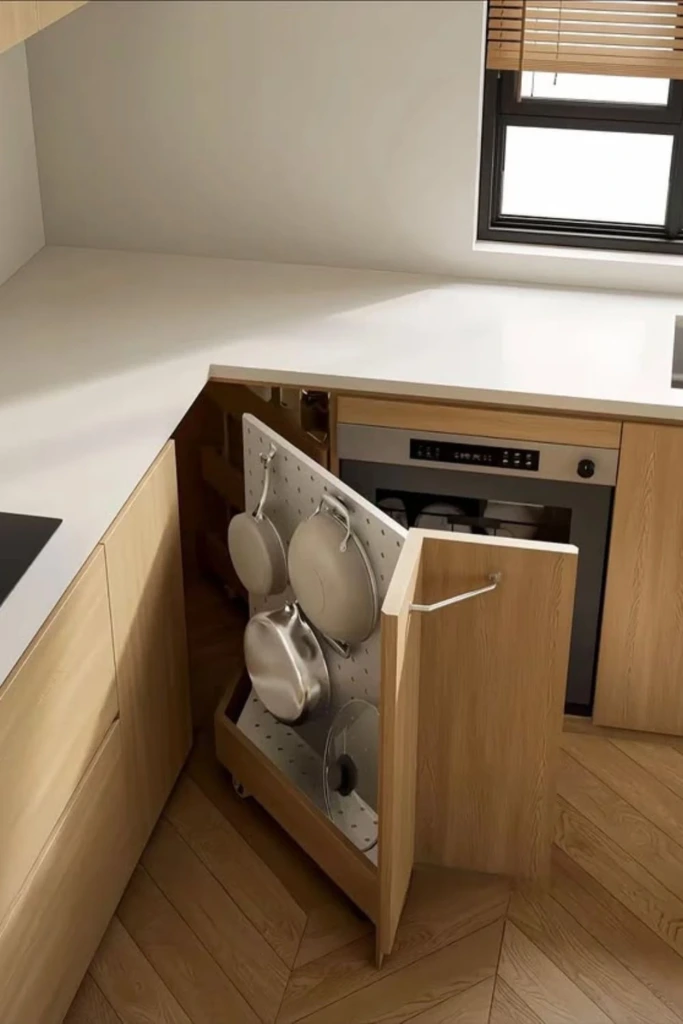
Pans are awkward to store because their handles take up space and stacking them can make the cookware underneath difficult to reach. A dedicated pan organizer can reduce clutter while protecting the surfaces of your cookware.
Depending on the cabinet layout, you might use a vertical rack, adjustable dividers, or a pull-out storage frame. These options allow pans to stand separately rather than forming a heavy pile.
Keep lids close to the pans they belong to, using a lid holder or a separate divider if necessary. Arrange cookware by size so that the pieces you use most frequently are easiest to remove.
Heavy pans should rest on sturdy shelving or properly rated hardware. Before installing hooks or brackets, verify that the mounting surface can support the load.
With a suitable arrangement, you can retrieve the right pan without lifting several others out of the cabinet first.
7. Curved Shelves
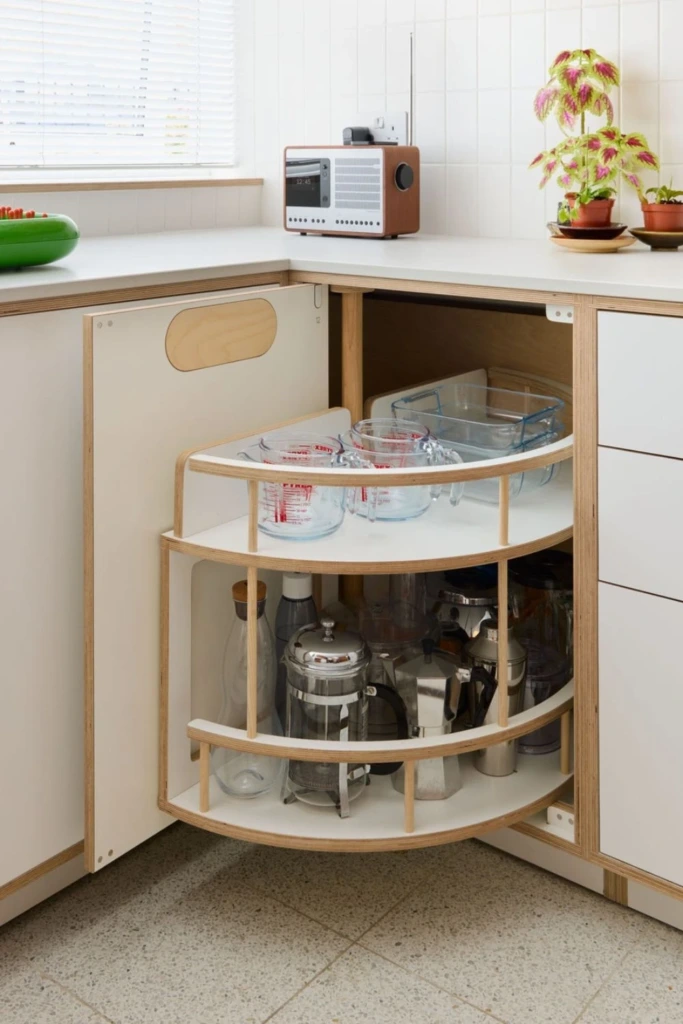
Curved shelves can make better use of corner cabinets designed around rounded or angled interiors. Their shape helps accommodate the cabinet's contours while creating storage surfaces for cookware, bowls, containers, and other kitchen necessities.
If your cabinet already has rounded shelving, organize each level by item size and frequency of use. Small bowls and measuring tools may fit well on upper shelves, while heavier equipment belongs on lower, adequately supported surfaces.
Low protective edges can help prevent objects from slipping when a shelf moves or rotates. Make sure these edges do not interfere with handles or reduce usable space unnecessarily.
For a new installation, choose shelving designed for the cabinet's actual dimensions rather than assuming a standard curved shelf will fit.
The right shape can turn an awkward interior into a storage area that is easier to navigate.
8. Grid Compartments
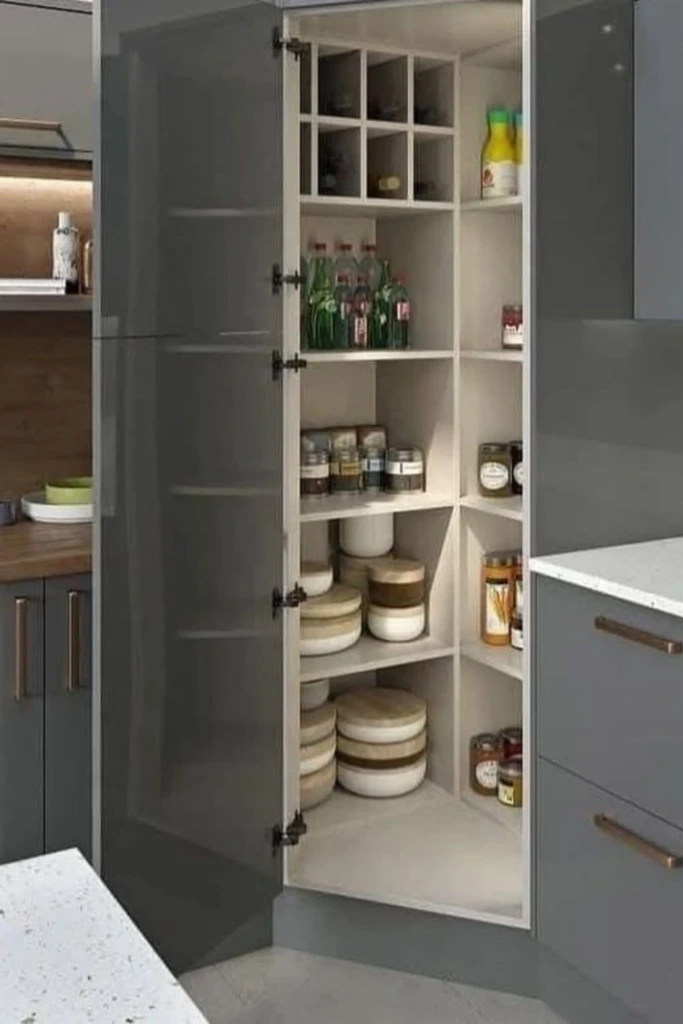
Grid-style compartments divide a large cabinet into smaller sections, giving different categories of kitchen supplies their own designated spaces.
You can create this layout with modular shelf dividers, adjustable inserts, or custom-built compartments. Small sections work well for spice containers, cups, and compact accessories, while wider openings accommodate bottles, bowls, and food storage containers.
Think about the objects you intend to store before deciding on compartment sizes. A grid designed around your actual belongings will be more useful than one made up of identical spaces that leave awkward gaps.
Removable dividers offer flexibility if your collection changes. They also make it easier to clean individual sections without reorganizing the entire cabinet.
For heavier items, ensure that the dividers and shelves are strong enough to support their combined weight.
9. Pantry Turntables
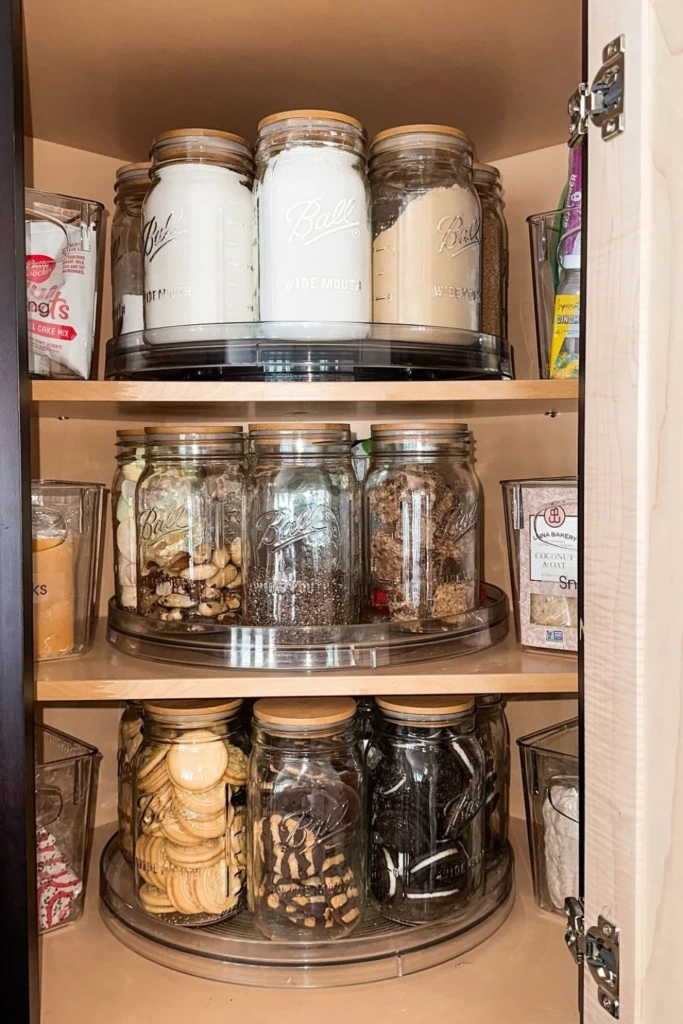
A pantry turntable is a simple way to make dry ingredients more accessible in a deep corner cupboard. Instead of reaching behind several containers, you can rotate the tray until the desired item comes forward.
Use one turntable for baking essentials, another for sauces and condiments, or separate trays for snacks and breakfast ingredients. Keeping each tray dedicated to a particular category prevents different supplies from becoming mixed together.
Choose a design with a stable base and enough surface area for the containers you own. Raised edges can help keep items in place, especially when the tray is turned frequently.
If you transfer ingredients into clear containers, label them with their contents and relevant storage dates. Keep food in airtight, food-safe containers and follow the storage guidance for each ingredient.
This setup can make a pantry corner easier to maintain while helping you see which supplies need replenishing.
10. Shelf Zoning
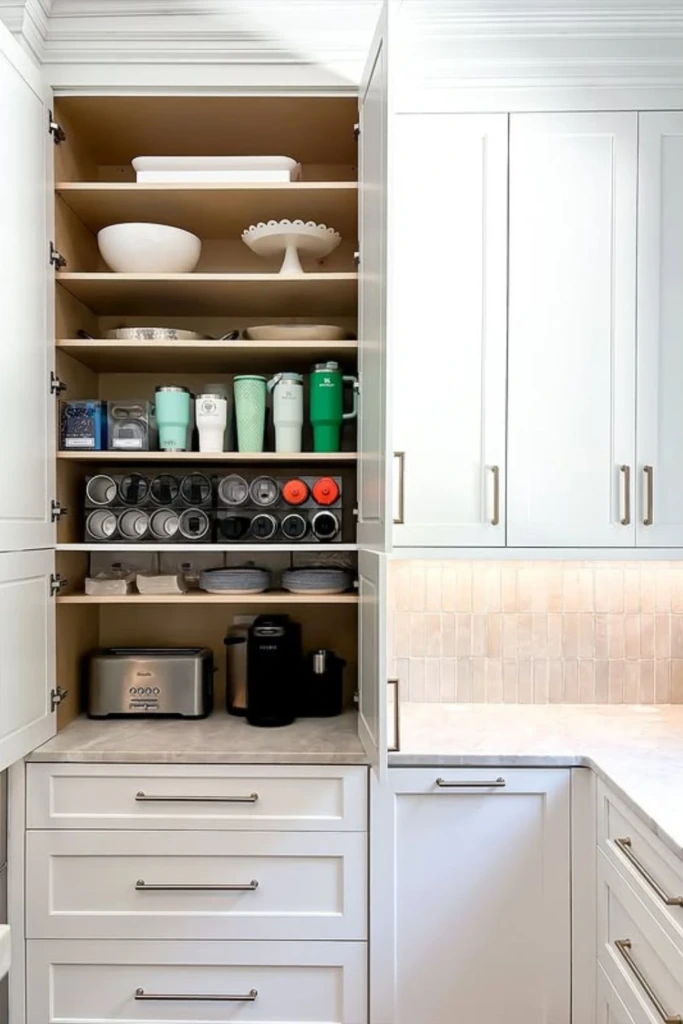
Shelf zoning gives each level of a corner cabinet a specific purpose. Instead of storing items wherever they happen to fit, you create a consistent arrangement that makes putting things away easier.
For example, an upper shelf might hold occasional-use serving dishes, the middle shelves could store mugs and everyday tableware, and the lower shelves might accommodate heavier appliances or cookware.
You can also assign zones according to activity. Keep coffee supplies together, group baking tools in one section, and store everyday cooking essentials near the areas where you prepare meals.
The best arrangement reflects your habits rather than following a rigid set of rules. If you reach for a particular item several times a day, place it somewhere convenient.
Clear categories also help other household members return items to the correct place, reducing the likelihood of clutter building up again.
11. Sliding System
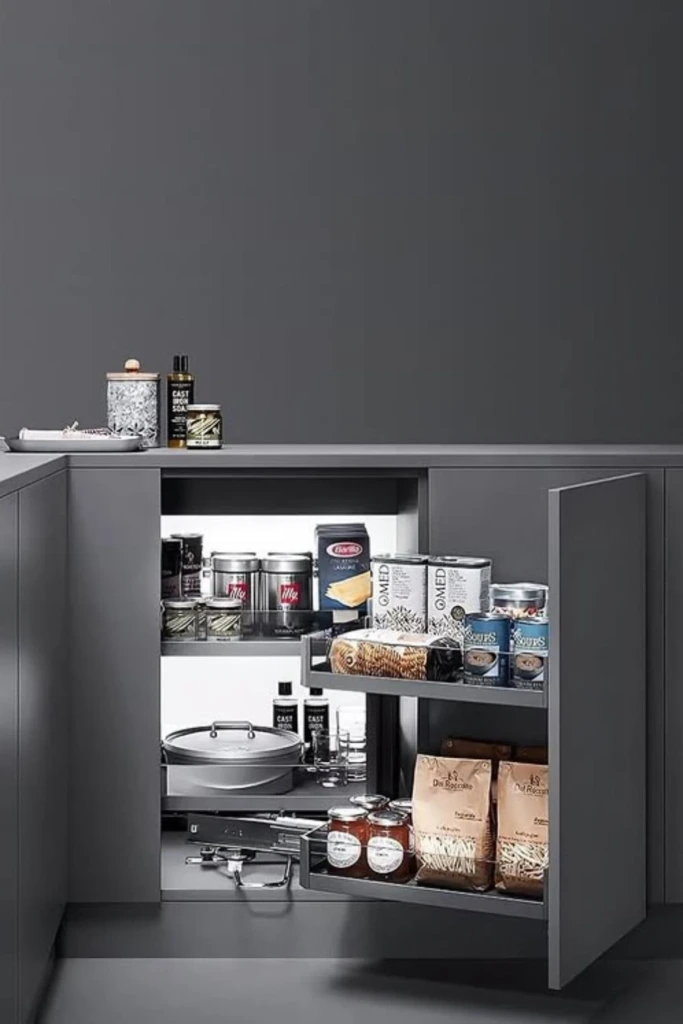
A sliding corner cabinet system allows shelves or baskets to move outward, bringing stored belongings into a more accessible position. It is particularly useful for deep or blind corner cabinets where the back section is difficult to reach.
Depending on the cabinet design, the system may include sliding trays, linked shelves, or a mechanism that moves several storage sections in sequence.
Use the frontmost storage areas for frequently needed supplies and arrange the remaining sections by category. Heavier objects should be placed according to the manufacturer's loading recommendations to keep the mechanism stable and operating smoothly.
Before purchasing a sliding system, measure the opening as well as the cabinet's internal dimensions. Door hinges, plumbing, and nearby drawers can affect whether an organizer will fit.
Although installation may require some adjustment or professional assistance, a properly fitted sliding system can make previously inconvenient storage much easier to use.
12. Swing Shelves
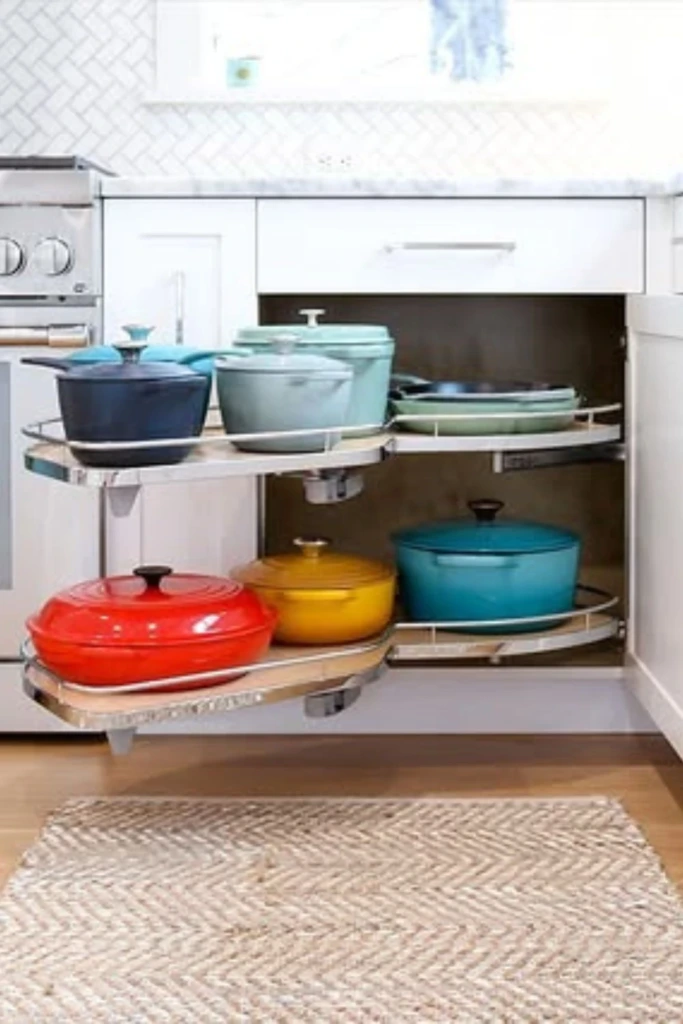
Swing shelves offer another way to bring the contents of a corner cabinet toward the opening. Rather than requiring you to reach deep inside, the shelves pivot outward or move along a purpose-built mechanism.
These systems can be especially helpful for storing bulky cookware, Dutch ovens, mixing bowls, and other items that are difficult to lift from a crowded stack.
Keep heavier cookware on the lower levels when the organizer's design permits it, and reserve upper shelves for lighter pieces. Arrange objects so that handles and edges cannot collide as the shelves move.
Check the mechanism's load limits, mounting requirements, and available clearance before installation. Some swing-out organizers are designed for particular cabinet shapes, so compatibility matters.
When selected for the right cabinet, swing shelves can improve access while making it easier to see what you own.
13. Corner Carousel
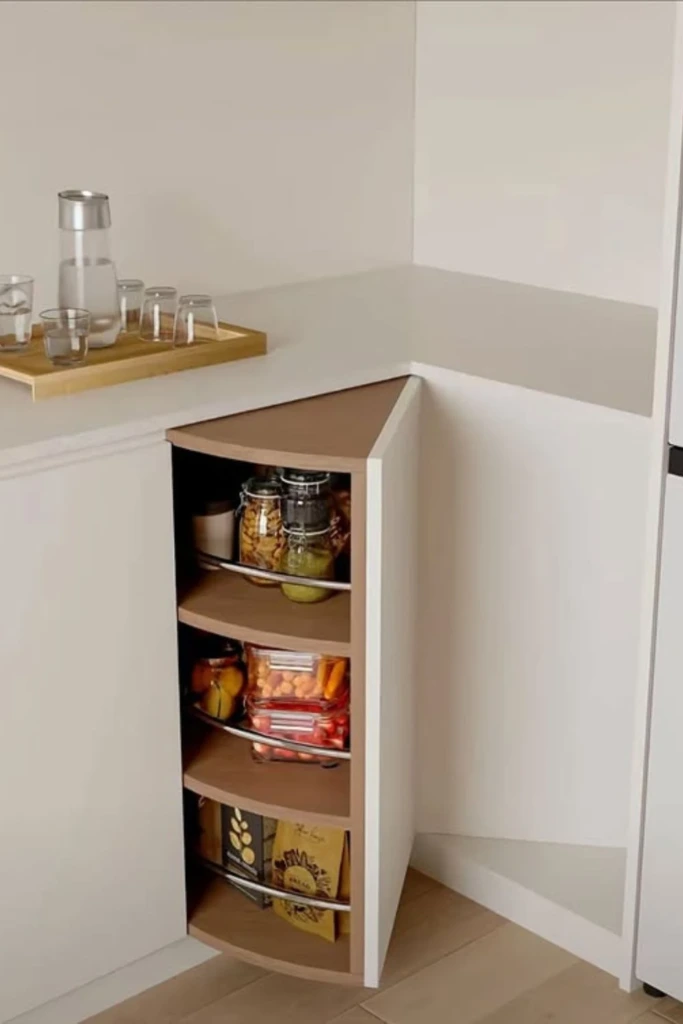
A corner carousel uses rotating shelves to make the contents of an awkward cabinet more accessible. Depending on the design, it may feature circular trays around a central support or specially shaped shelves fitted to the cabinet.
This style of organizer can hold pantry goods, small kitchen appliances, containers, and other items that benefit from easy visibility.
Give each level a clear purpose. For instance, one shelf could contain sauces and condiments, another could hold snack containers, and a lower level could accommodate heavier supplies if the carousel is rated for them.
Leave adequate space between bottles and containers so that they do not knock into one another during rotation. Taller items should fit beneath any upper shelf without catching.
A carousel is most effective when its size matches the cabinet and the items stored on it. A correctly fitted model can turn a neglected corner into an accessible storage area.
14. Corner Pullouts
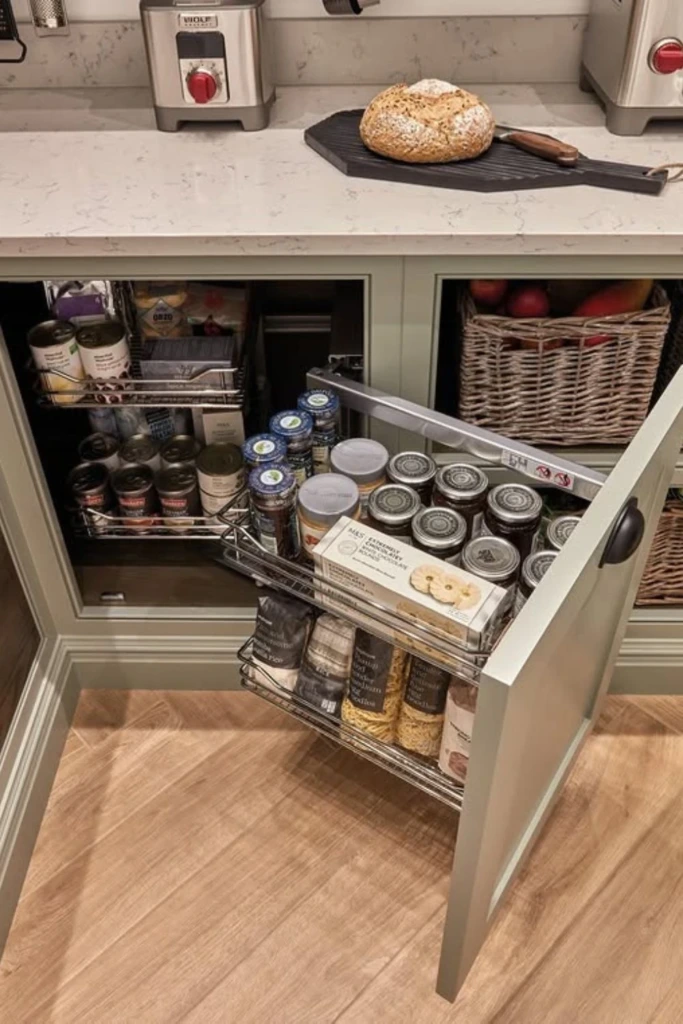
Corner pullouts are designed to bring hidden cabinet contents into the open. Many systems use connected baskets or sliding shelves that move outward, allowing you to access areas that would otherwise require reaching around obstacles.
They are particularly useful for blind corner cabinets, where a portion of the interior extends beyond the doorway.
Use the accessible baskets for frequently used ingredients, cookware, or kitchen tools, and organize the remaining storage by category. Wire baskets offer a clear view of their contents, while solid trays may work better for small objects that could slip through openings.
Pay attention to the system's movement before deciding where individual items belong. Nothing should obstruct the mechanism or tip over when the shelves are extended.
Because blind corner cabinets vary considerably in size and shape, measure carefully and choose hardware specifically suited to your layout.
15. Spice Turntables
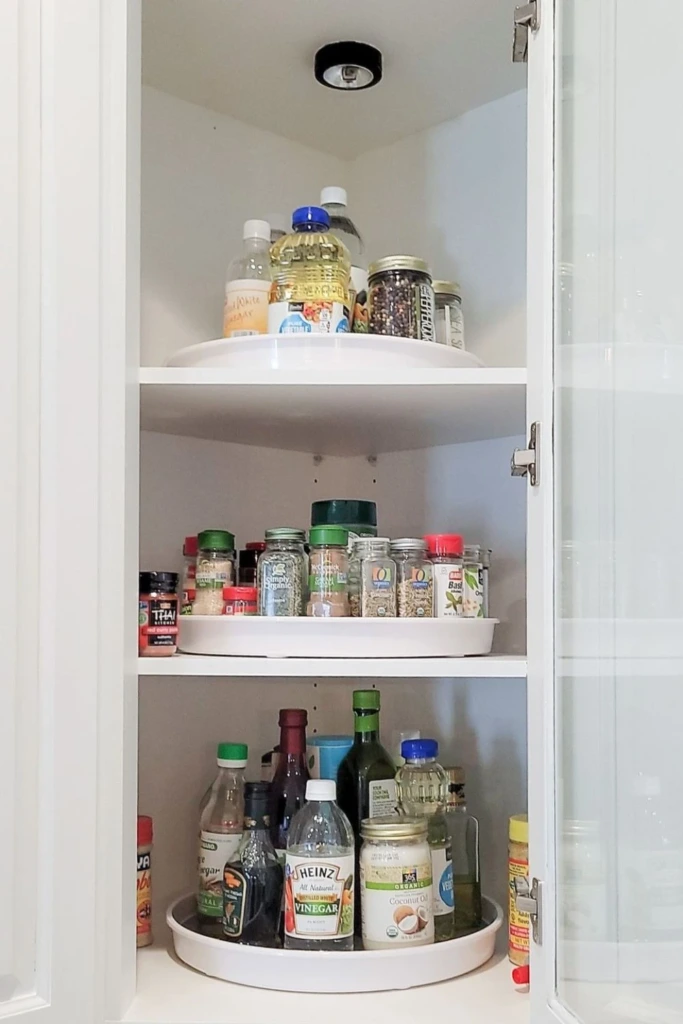
Spice turntables help keep small jars, seasoning bottles, and condiment containers visible inside a corner cabinet. A quick rotation brings items from the back toward the front, reducing the need to move several bottles just to find one ingredient.
Choose a tray with enough room for your collection without making the cabinet difficult to close. A raised rim can provide extra stability, while a divided design can keep smaller containers from shifting.
Arrange spices by cooking style, frequency of use, or alphabetical order. Whichever method you choose, keep it consistent so that locating a seasoning becomes second nature.
If you have multiple turntables, consider using one for spices, another for oils and vinegars, and a separate area for sauces.
Check labels periodically and discard expired products when appropriate. A well-organized spice area makes meal preparation more convenient and helps prevent duplicate purchases.
16. Tiered Rotation
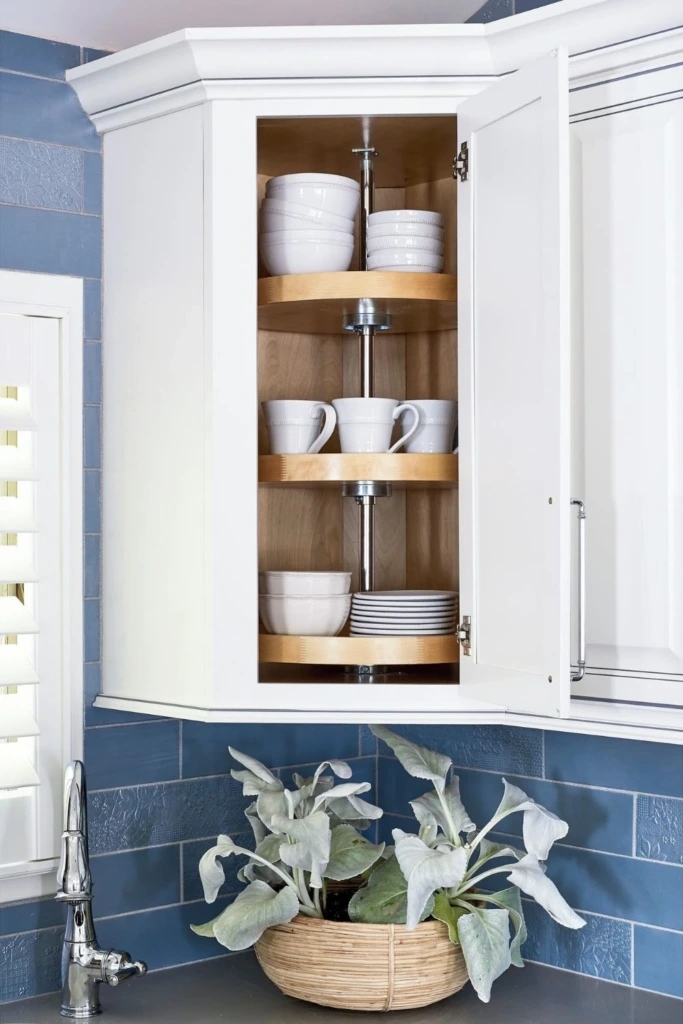
Tiered rotating shelves combine the accessibility of a turntable with multiple storage levels. This design can be useful in tall corner cabinets where the height would otherwise be difficult to organize efficiently.
The different tiers can separate plates, mugs, bowls, and smaller serving pieces while allowing you to rotate the shelves toward the cabinet opening.
Place heavier items on levels designed to support their weight, and keep lighter objects on upper tiers when appropriate. Avoid overcrowding each shelf, since tightly packed dishes may collide when the organizer moves.
Before installing a tiered system, check the height between shelves and the clearance required for the cabinet door. Make sure each level can rotate freely without striking neighboring surfaces.
This arrangement works particularly well for households that want to keep everyday dishes organized without dedicating an entire cabinet to a single type of item.
17. Corner Drawers
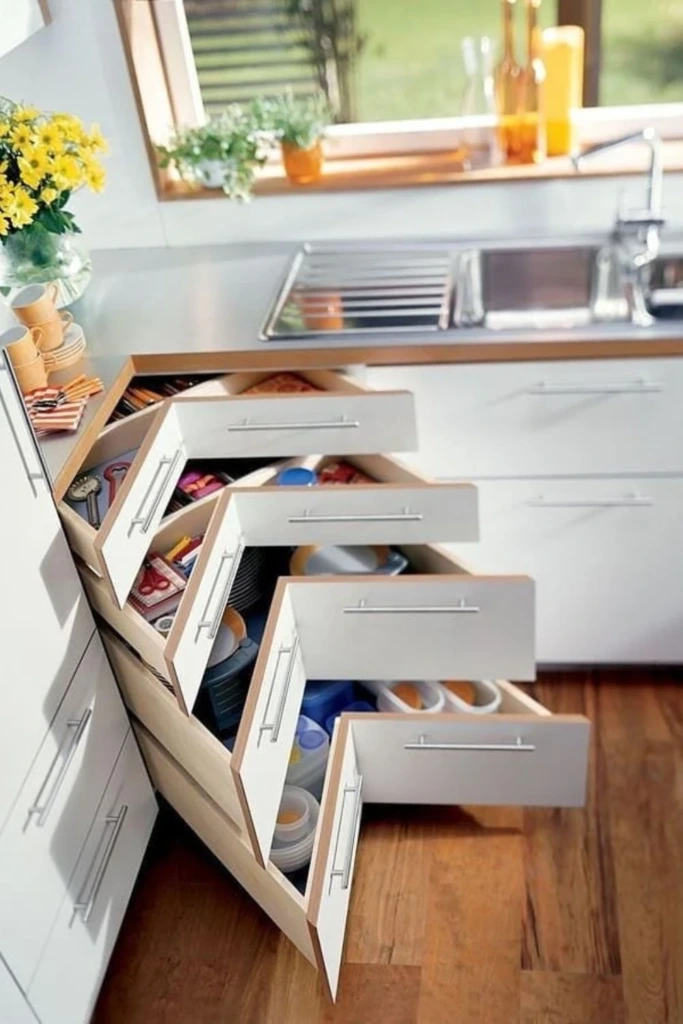
Corner drawers offer a different approach to organizing an awkward kitchen layout. Rather than using deep shelves, the cabinet incorporates drawers shaped to fit the available corner space.
Depending on the design, angled or triangular drawers can accommodate utensils, measuring cups, kitchen gadgets, lids, and smaller accessories.
Use shallow upper drawers for items that are easy to lose in larger compartments. Deeper drawers can hold mixing bowls, food containers, or other belongings that need more room.
Drawer dividers help keep objects separated and prevent everything from shifting when a drawer opens. Choose adjustable inserts if you expect your storage needs to change.
Corner drawers usually require more planning than removable organizers because their shape and hardware are part of the cabinet construction. However, they can provide excellent accessibility when included in a new kitchen design or a suitable renovation.
18. Glass Storage
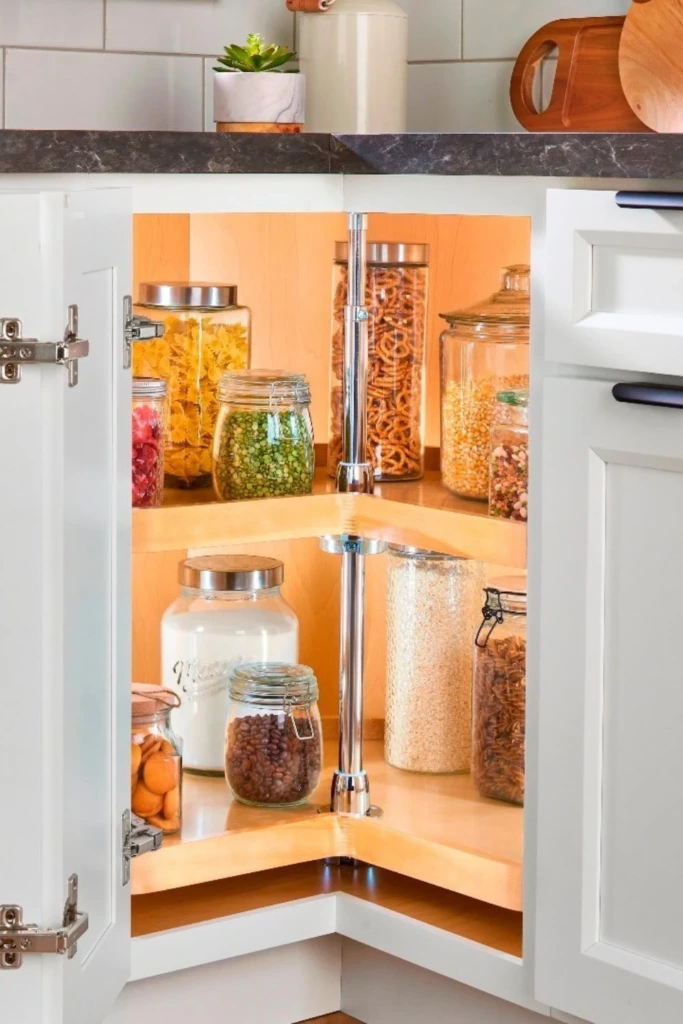
Glass containers can help create a tidy, easy-to-read pantry area inside a corner cabinet. When dry ingredients are transferred into suitable jars, you can identify their contents quickly and keep loose packaging from spreading across the shelves.
Use appropriately sized containers for items such as rice, pasta, beans, lentils, and baking ingredients. Airtight lids are particularly important for preserving freshness and protecting dry goods from moisture and pests.
A rotating shelf or turntable can make the containers easier to reach, especially when the cabinet is deep. Arrange larger jars where they can be lifted safely, and avoid placing heavy glass containers on unstable or difficult-to-access upper shelves.
Labels are useful even when the contents are visible. They can distinguish similar ingredients and help you monitor quantities or storage dates.
For a consistent appearance, choose containers that fit the shelf dimensions and leave enough space to remove each jar without knocking over its neighbors.
19. Wooden Pullouts
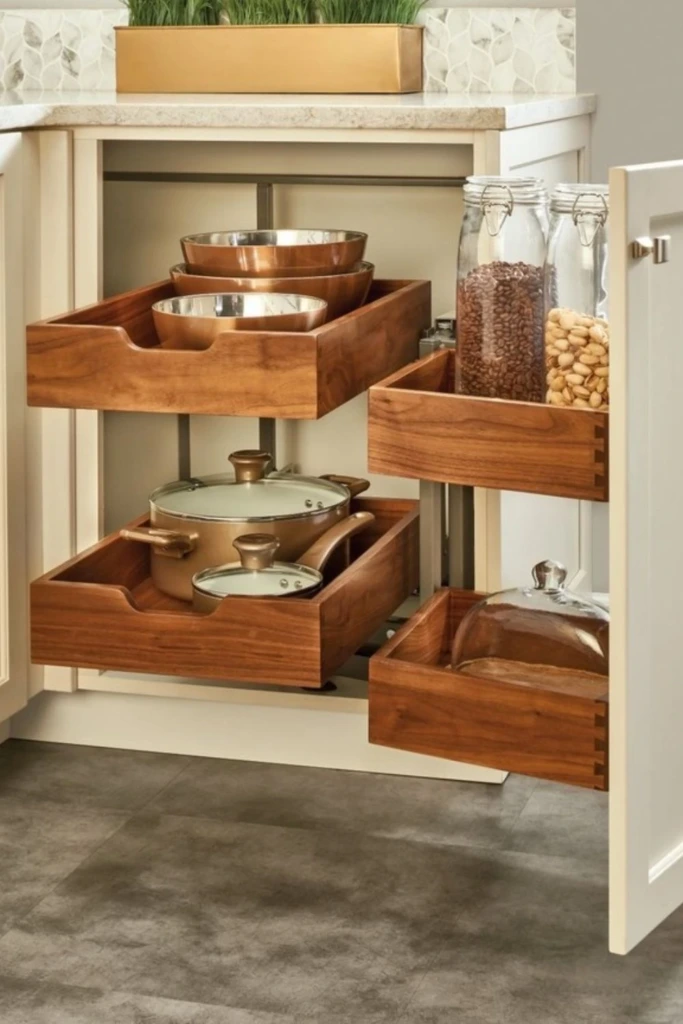
Wooden pullout trays combine a sturdy storage surface with the convenience of sliding access. They can be useful for organizing cookware, food containers, baking equipment, and small appliances in a corner cabinet.
A well-designed pullout creates separate areas for different belongings, reducing the need to stack everything together. Deeper trays may suit pots and pans, while shallower sections can hold jars, bowls, or smaller kitchen tools.
Consider the weight of the items you plan to store. Solid wood trays can be substantial even when empty, so the sliding hardware and cabinet structure must support the complete load.
Choose a finish that is easy to clean and suitable for a kitchen environment. Leave enough clearance around the tray to prevent handles or containers from catching during movement.
With the right dimensions and hardware, wooden pullouts can make cabinet storage feel more organized while providing convenient access to items stored farther inside.
20. Tall Pantry
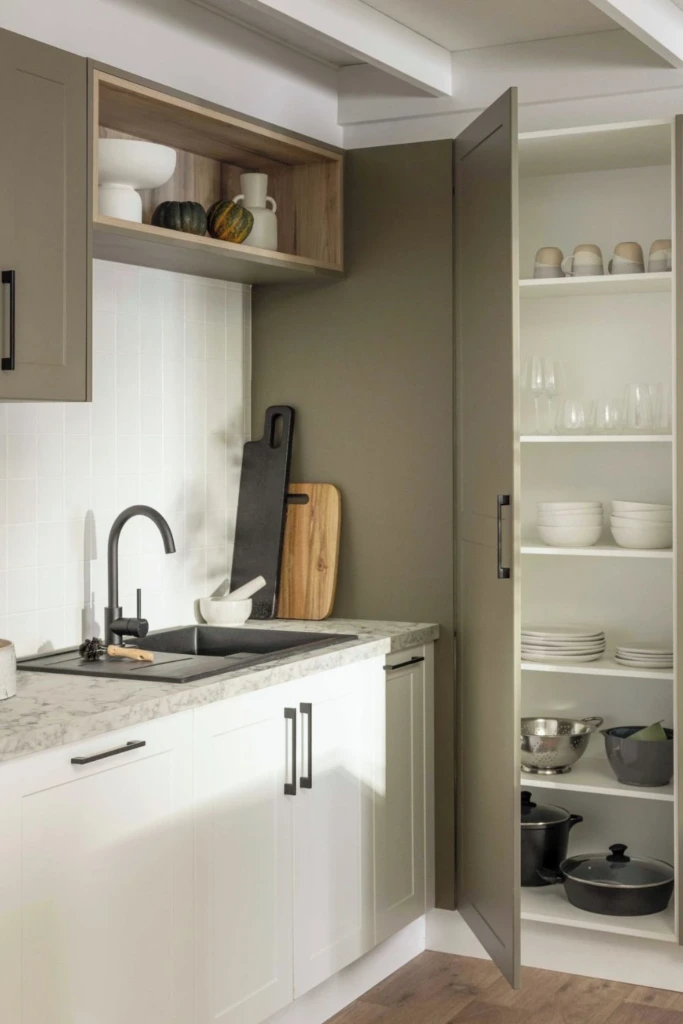
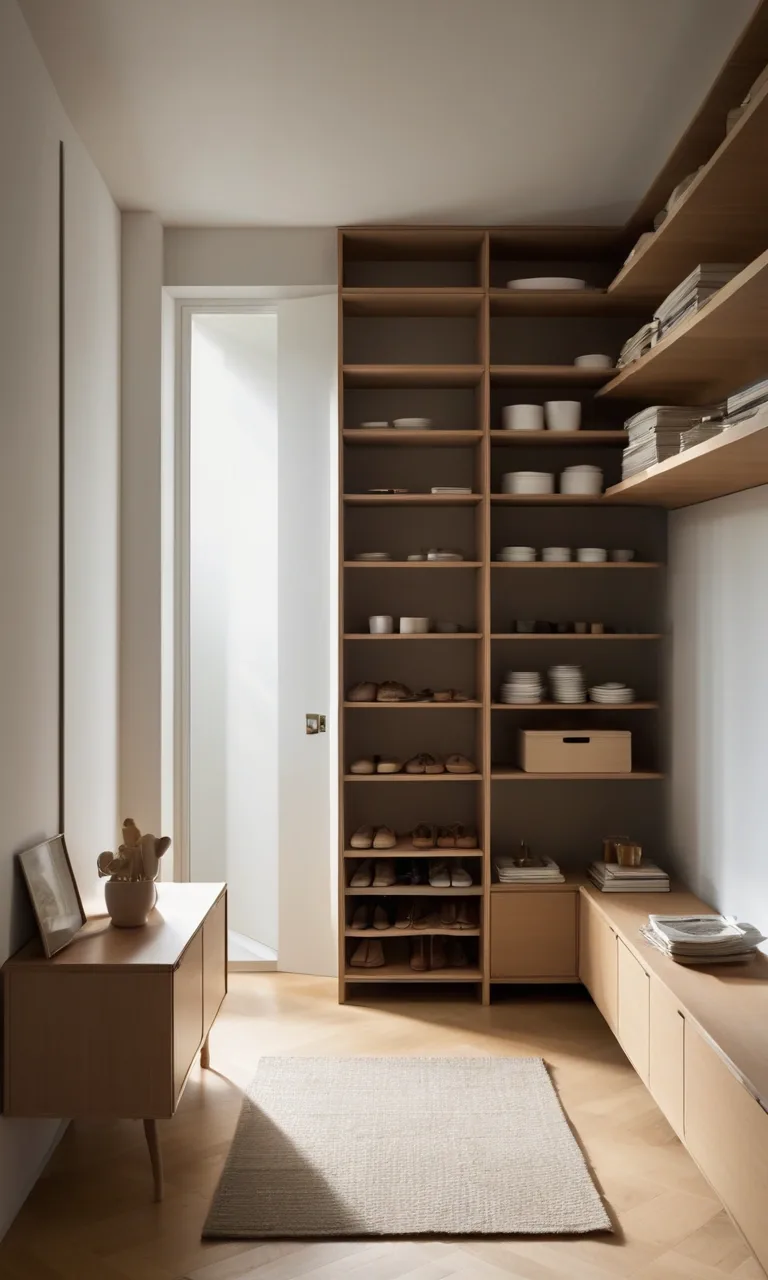
A tall corner pantry can transform an underused section of the kitchen into a substantial storage area. By extending shelving vertically, you can create dedicated spaces for food, tableware, cookware, and occasional-use kitchen equipment.
Use upper shelves for lightweight items or supplies you need infrequently. Keep everyday ingredients and dishes at a comfortable height, and position heavier cookware on lower shelves where it is easier to lift safely.
Group similar items together so that you can see what is available at a glance. Storage bins can contain packets and small products, while adjustable shelves allow you to accommodate taller bottles or larger appliances.
If the pantry is particularly deep, consider adding pull-out baskets or suitable rotating organizers to improve access to the back.
Avoid placing heavy objects in areas that require stretching or climbing to reach. A tall pantry should make storage more efficient without compromising everyday safety.
21. Appliance Nook
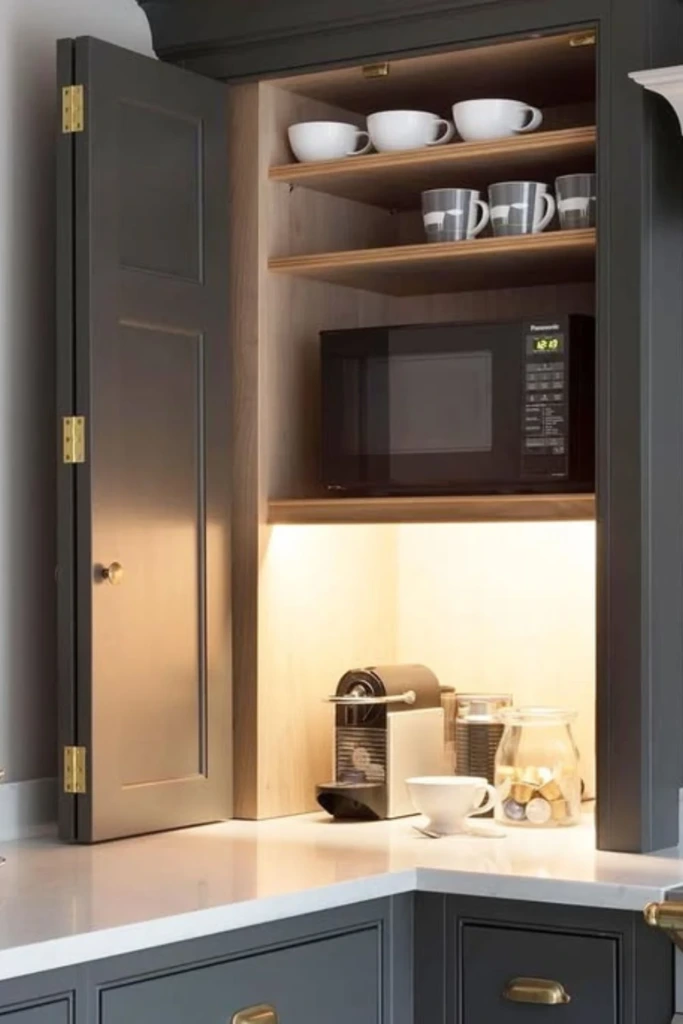
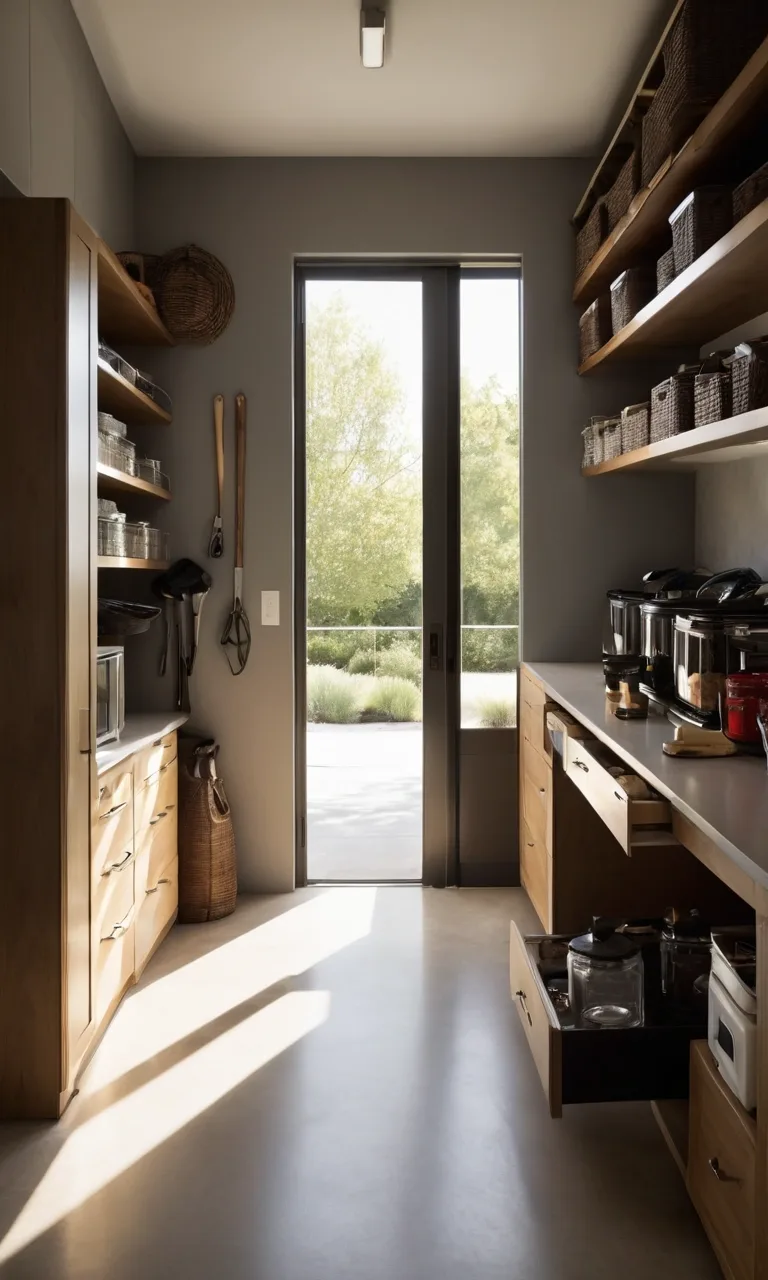
A corner cabinet can serve as a dedicated station for small kitchen appliances, helping reduce clutter on the worktops. Depending on the available space, you might organize a coffee machine, blender, toaster, or other equipment in a designated section.
Start by measuring each appliance, including the extra space needed to open lids, remove accessories, or operate controls comfortably. Store related items nearby, such as coffee filters, measuring spoons, blender attachments, or reusable cups.
Keep heavier appliances on sturdy, accessible shelves rather than placing them where lifting is awkward. If the cabinet will house equipment that needs electricity, have a qualified professional assess the installation of an appropriate outlet and ensure the arrangement meets local electrical and ventilation requirements.
Never operate an appliance inside an enclosed cabinet unless the manufacturer explicitly permits that setup. Heat-producing appliances, in particular, may require substantial clearance and ventilation.
A thoughtfully planned appliance nook can make daily routines more convenient while leaving your main preparation surfaces free for cooking.
What should you avoid storing in a corner kitchen cabinet?
Avoid placing fragile items, frequently used essentials, or heavy objects in locations where they are difficult to reach safely. Deep cabinets can make it harder to retrieve delicate glassware without disturbing neighboring items, while everyday tools may become frustrating to access if they are buried behind other supplies.
This does not mean these belongings can never be stored in a corner cabinet. A suitable organizer can make many of them accessible, provided the cabinet offers enough room and the shelves are stable.
Instead, consider using deep corners for cookware, mixing bowls, pantry backups, food containers, or small appliances that fit comfortably. Store breakable pieces in secure positions and keep heavy items at a convenient height.
The most important consideration is how easily and safely you can retrieve each item. Match the storage arrangement to your kitchen habits rather than filling the cabinet simply because space is available.
Are corner cabinet organizers worth installing?
Corner cabinet organizers can be a worthwhile investment when they solve a specific storage problem. Rotating trays, pull-out baskets, sliding shelves, and swing-out systems help make hidden areas more accessible and can reduce the need to move several objects before reaching the one you want.
However, not every cabinet needs an expensive organizer. A simple shelf insert, a few appropriately sized containers, or a better arrangement of existing cookware may be enough to improve functionality.
Before purchasing anything, measure the cabinet, identify the items that need better access, and compare the organizer's capacity with your storage requirements. Also consider installation costs, weight limits, ease of cleaning, and whether the mechanism will interfere with doors or nearby drawers.
The best organizer is one that makes your everyday routine easier and remains practical as your needs change. Start with the simplest solution that addresses the problem, then invest in specialized hardware if the cabinet still feels difficult to use.