22 Under Sink Organization Kitchen Ideas for 2026
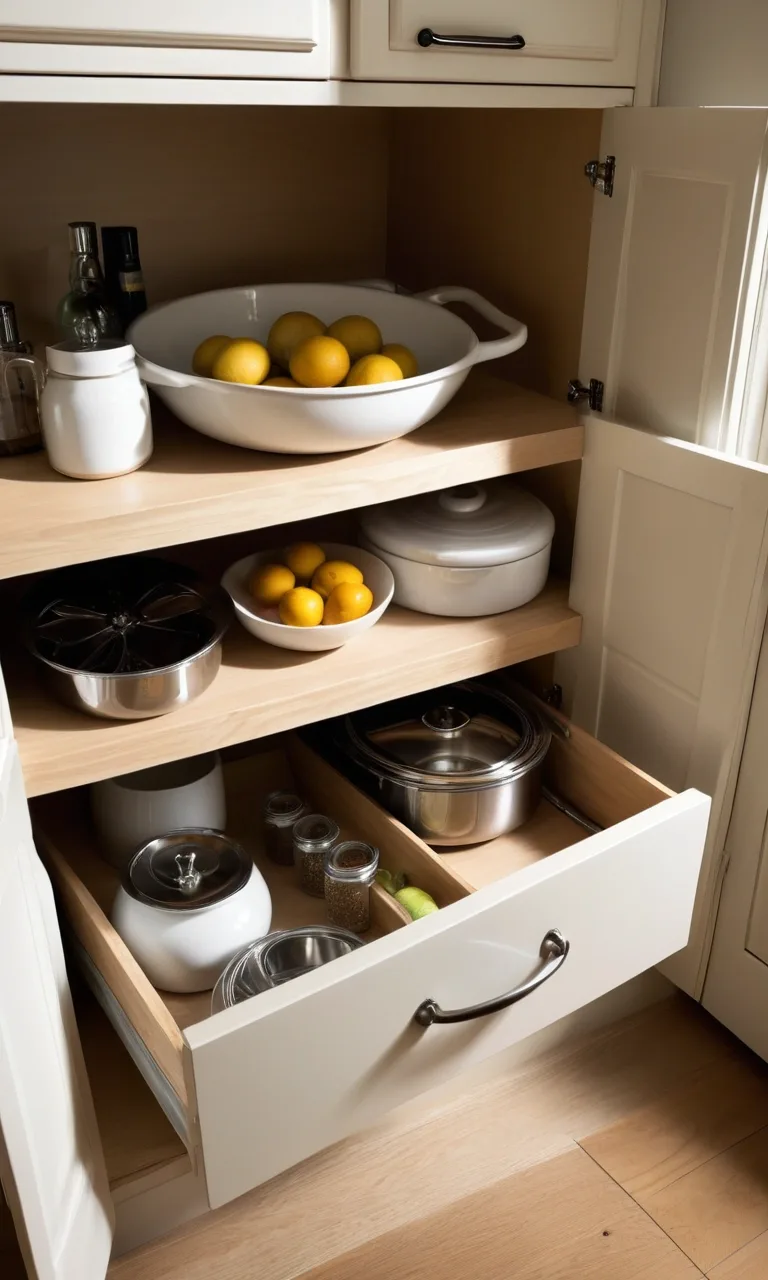
The cabinet beneath your kitchen sink is one of the most useful storage areas in your home, yet it often becomes a collection of cleaning bottles, sponges, trash bags, and forgotten supplies. With plumbing taking up valuable room, keeping everything organized can feel challenging.
Fortunately, you don't need a large cabinet or an expensive renovation to create a practical storage system. A few well-chosen organizers can help you use awkward corners, take advantage of vertical space, and keep everyday essentials within reach.
These 22 under sink organization kitchen ideas offer practical ways to transform a cluttered cabinet into a tidy, functional space that is easier to maintain.
What Are the Best Storage Solutions for Under Sink Organization?
The most effective under-sink storage solutions make use of available space without blocking plumbing connections or restricting access to important fixtures.
Pull-out drawers are particularly useful for deep cabinets because they bring supplies forward without requiring you to reach into dark corners. Stackable baskets and adjustable shelves help maximize cabinet height, while clear containers make it easier to identify items.
Door-mounted organizers provide additional storage for lightweight essentials, and labeled bins help separate cleaning products into manageable categories.
Before purchasing organizers, measure the cabinet's width, depth, and height. Check the position of pipes, garbage disposal units, and water shutoff valves. Choose moisture-resistant materials and leave enough clearance for maintenance.
1. Sliding Baskets
Sliding baskets are an excellent choice for kitchen cabinets where cleaning supplies frequently get pushed toward the back.
Install narrow pull-out baskets along the sides of the cabinet, leaving enough space around the plumbing. This arrangement allows you to access stored products without removing everything in front.
Use lower baskets for heavier cleaning bottles and upper baskets for lightweight supplies such as sponges, gloves, and microfiber cloths.
Look for smooth sliding mechanisms and rust-resistant finishes, especially in cabinets where occasional moisture may be present.
2. Clear Drawers
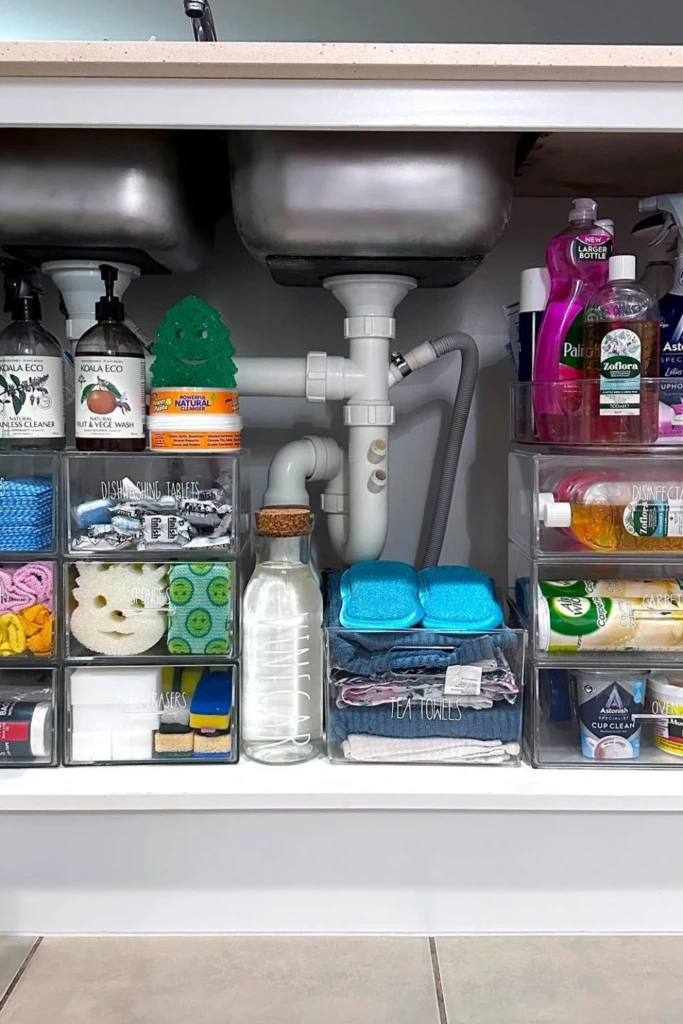
Transparent drawers make it easier to maintain an organized kitchen cabinet because you can identify the contents without opening every compartment.
Choose compact drawers for dishwasher accessories, replacement sponges, scrub brushes, and other small essentials.
Keep similar products together and arrange them according to how frequently you use them. Frequently needed items should occupy the most accessible drawers.
For additional convenience, select drawers with removable inserts that can be washed whenever spills or residue accumulate.
3. Basket Towers
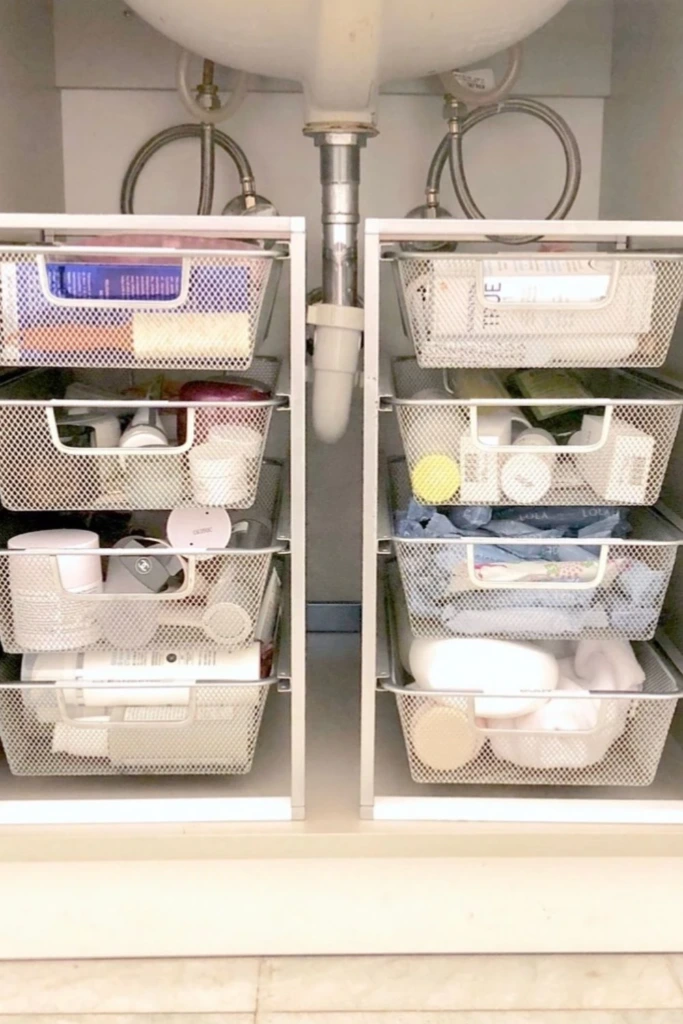
Basket towers help make better use of the vertical space beside your kitchen sink.
Instead of placing supplies across the entire cabinet floor, choose a narrow organizer with several stacked baskets.
Store everyday dishwashing essentials in the easiest-to-reach baskets and reserve other levels for replacement supplies.
A freestanding tower is particularly useful for renters because it typically requires no permanent cabinet modifications.
Choose a stable design with sufficient clearance for pipes, and avoid placing heavy containers on lightweight upper shelves.
4. Labeled Bins
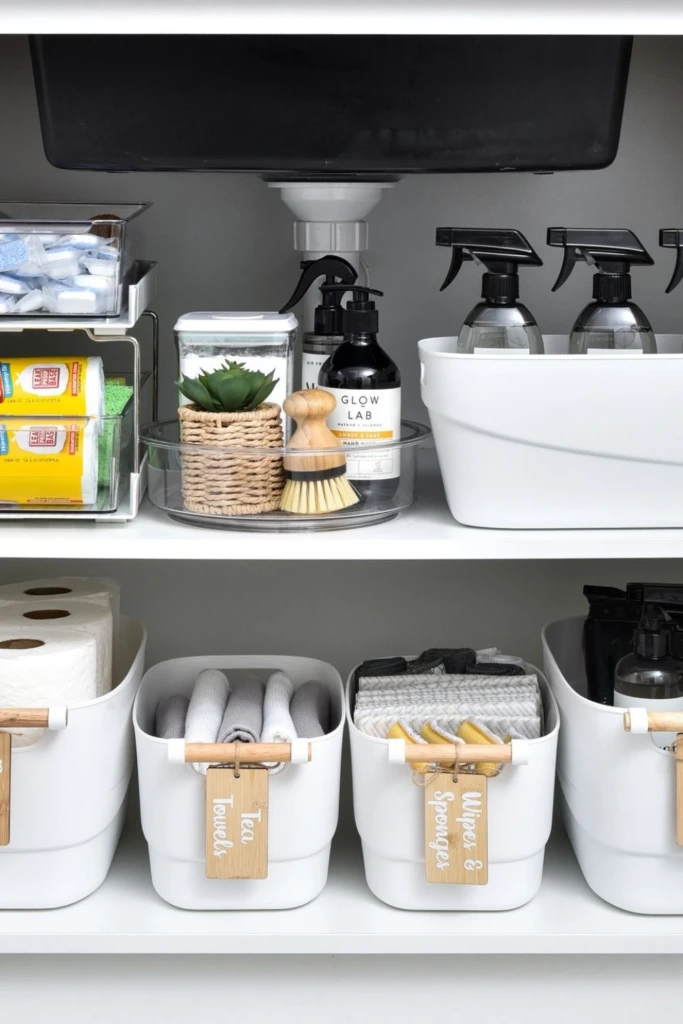
Labeled bins create an easy storage system that everyone in the household can understand.
Separate your supplies into practical groups, such as dishwashing essentials, cleaning cloths, trash bags, and replacement sponges.
Choose washable plastic bins with handles so you can remove an entire category when cleaning or restocking.
Labels should be short and easy to read. Waterproof adhesive labels work especially well in kitchen cabinets where humidity and occasional splashes are common.
Avoid filling containers completely. Leaving some extra room makes it easier to return supplies after use.
5. Category Zones
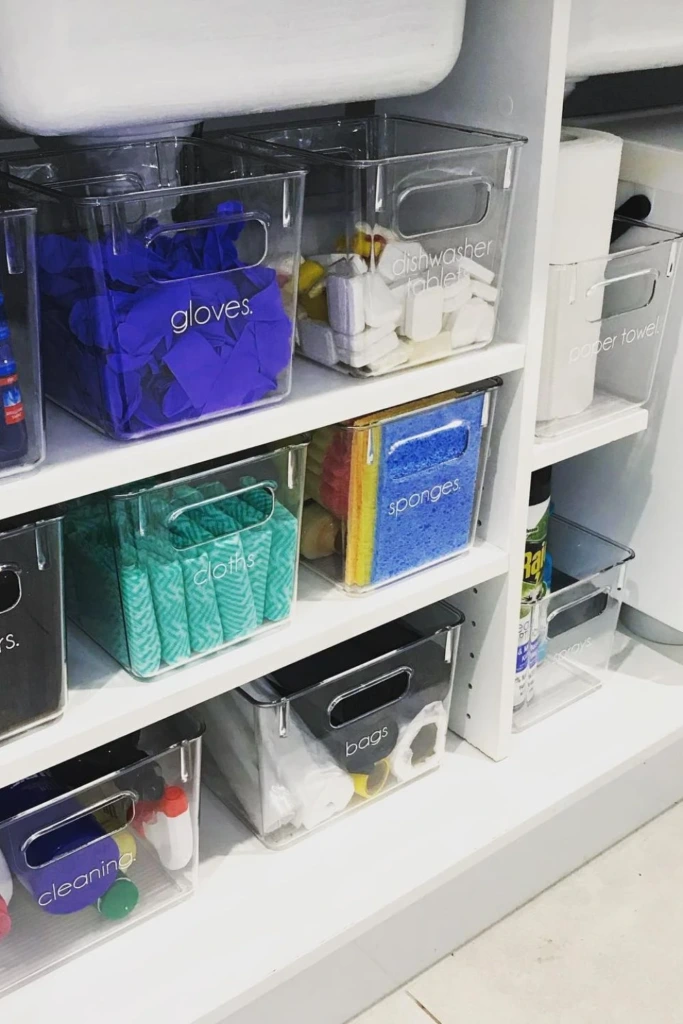
Dividing your under-sink cabinet into dedicated zones helps prevent unrelated products from becoming mixed together.
For example, designate one section for dishwashing supplies, another for general kitchen cleaning, and a separate container for garbage bags.
Arrange these zones according to your daily routine. Keep frequently used products near the front and less frequently needed refills farther back.
Separate incompatible cleaning chemicals and always follow the storage instructions on their original packaging.
This method works particularly well when several household members share responsibility for kitchen cleaning.
6. Pullout Shelves
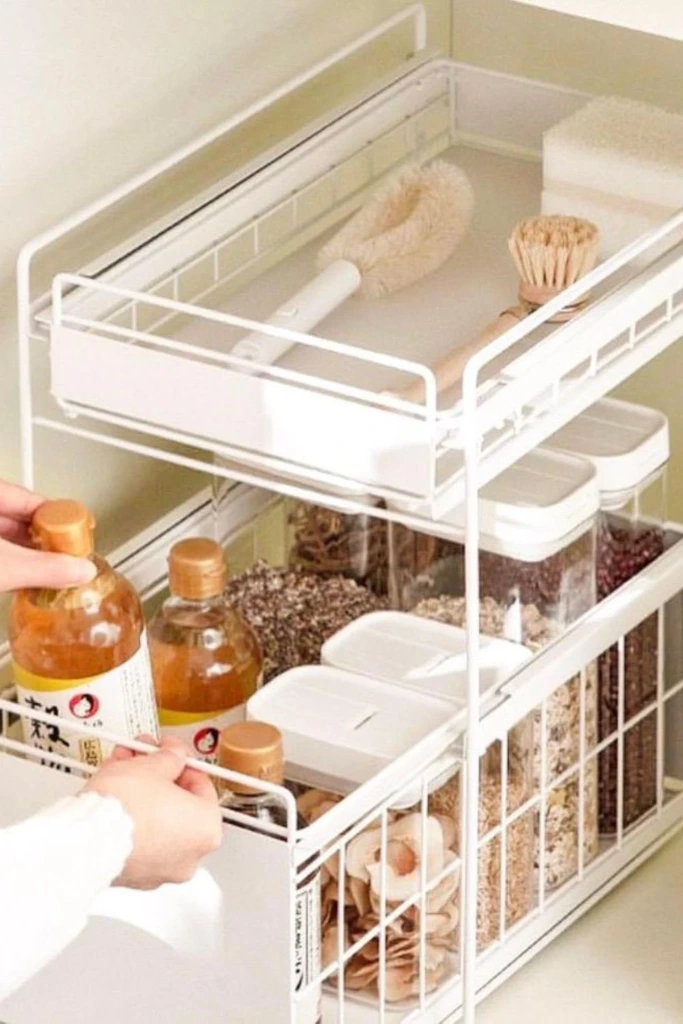
Pull-out shelves can transform a deep kitchen cabinet into a much more accessible storage area.
Unlike stationary shelves, sliding shelves allow you to bring supplies into view without reaching around bottles or plumbing.
Choose a compact two-level organizer that fits beside the sink's drainpipe.
Use the bottom level for taller containers and the upper level for smaller accessories, provided there is sufficient clearance.
Before installation, check that the shelf can extend fully without hitting cabinet hinges, pipes, or the door frame.
7. Shelf Layers
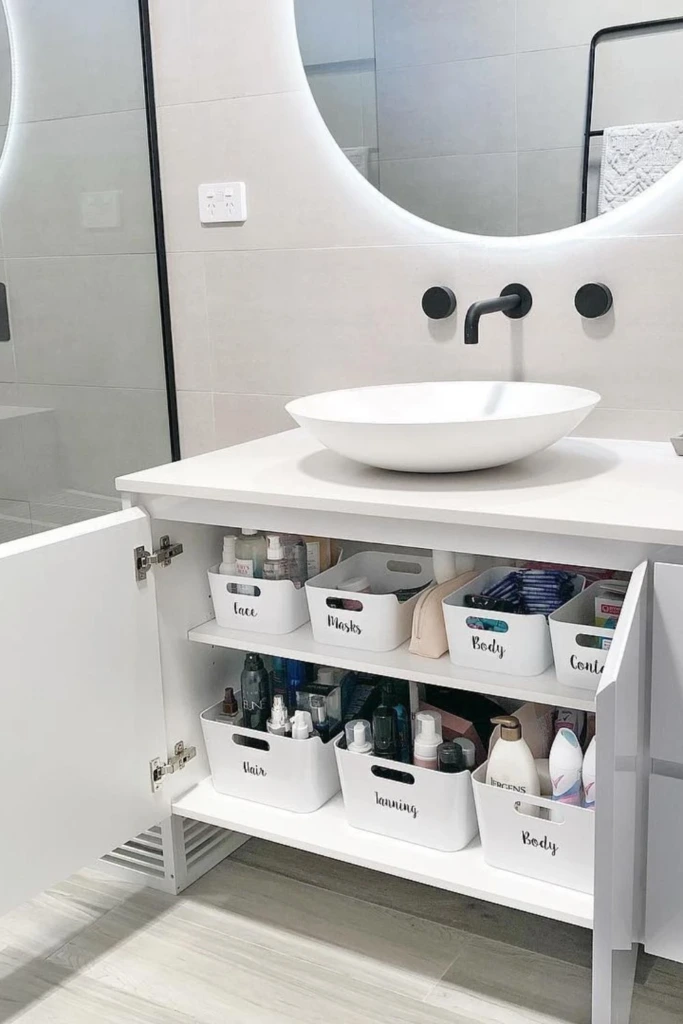
Adding another storage level is a simple way to make better use of unused cabinet height.
An adjustable shelf can create separate spaces for short containers and taller cleaning bottles.
Place smaller items on the upper level and reserve the lower section for products that need more vertical clearance.
Freestanding shelf risers are useful when you want extra storage without drilling into the cabinet.
Select shelves made from moisture-resistant materials and ensure they can support the weight of the products you intend to store.
8. Layered Zones
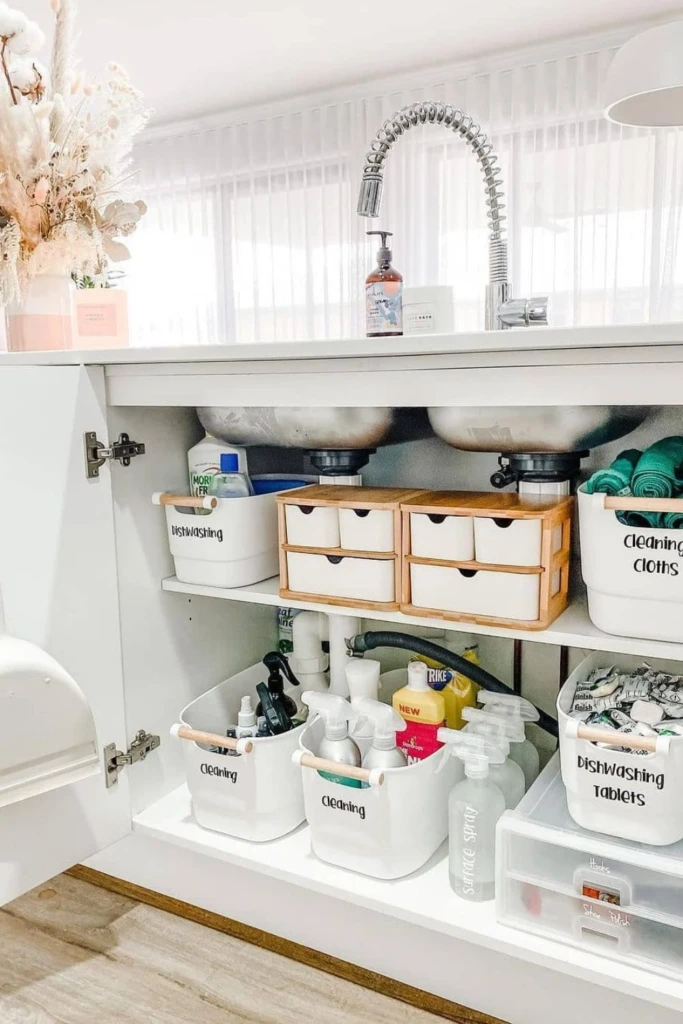
Layered zones combine vertical storage with thoughtful product placement.
Instead of arranging everything in one crowded row, create separate levels for different types of supplies.
A shallow upper tray might hold spare sponges, cleaning brushes, and gloves, while a lower compartment accommodates dish soap refills and larger containers.
Keep frequently used items accessible without requiring you to move another container first.
This arrangement is especially helpful in cabinets with limited floor space but enough height to accommodate compact shelving.
9. Tier Racks
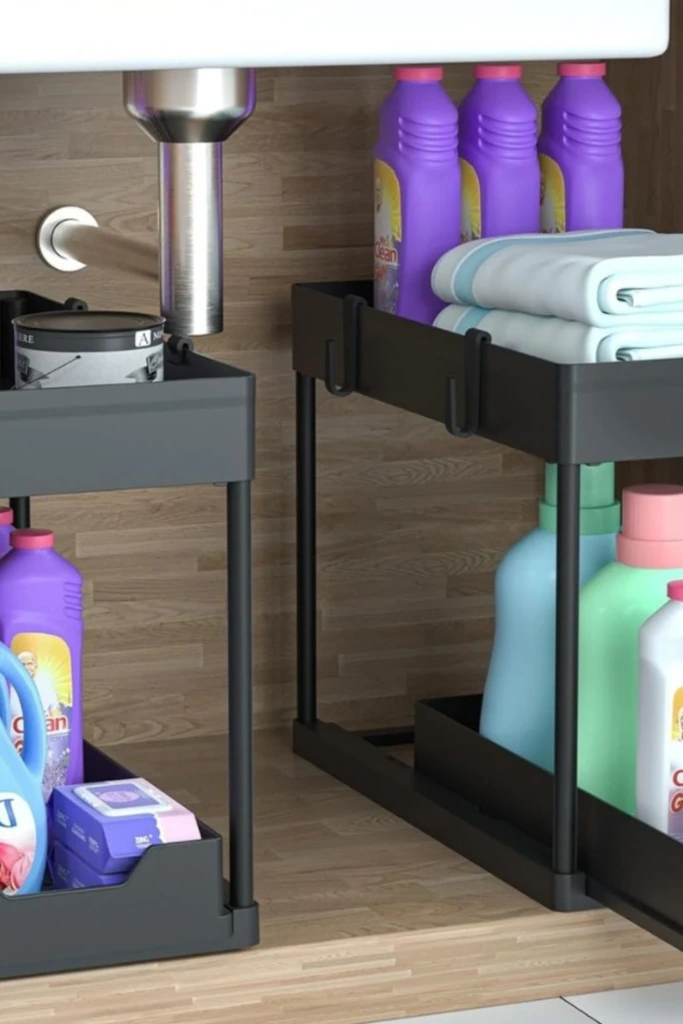
Two-tier racks offer an efficient storage solution for narrow spaces beside kitchen plumbing.
Their stacked design creates additional storage without requiring a wider cabinet.
Choose a rack with sturdy shelves and enough room between levels for the products you plan to store.
Place heavier containers on the bottom and lighter accessories above to improve stability.
Plastic racks are easy to wipe clean, while coated metal designs can provide additional strength. Select materials suitable for damp environments.
10. Cabinet Pullouts
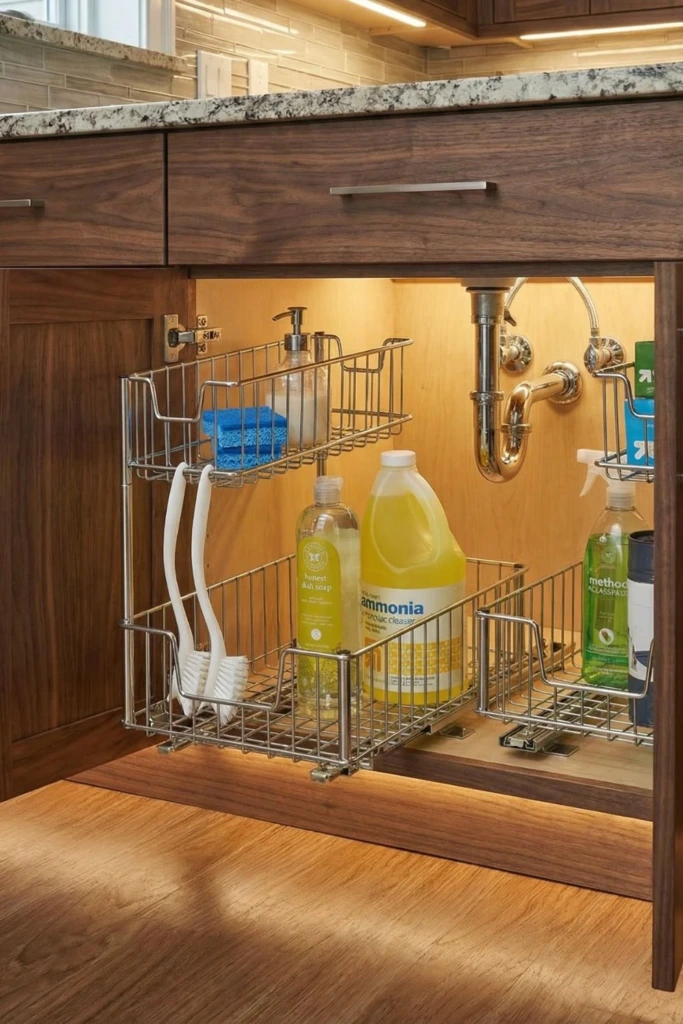
Cabinet pullouts are particularly practical when you want convenient access to frequently used cleaning products.
These organizers use sliding rails or frames to bring stored items forward when needed.
A narrow pullout can hold dishwashing liquid, surface cleaners, brushes, and spare cleaning supplies in separate compartments.
Some models attach to the cabinet base, while others operate as freestanding units.
For a secure installation, verify the organizer's weight capacity and ensure mounting hardware does not interfere with plumbing or cabinet construction.
11. Acrylic Organizers
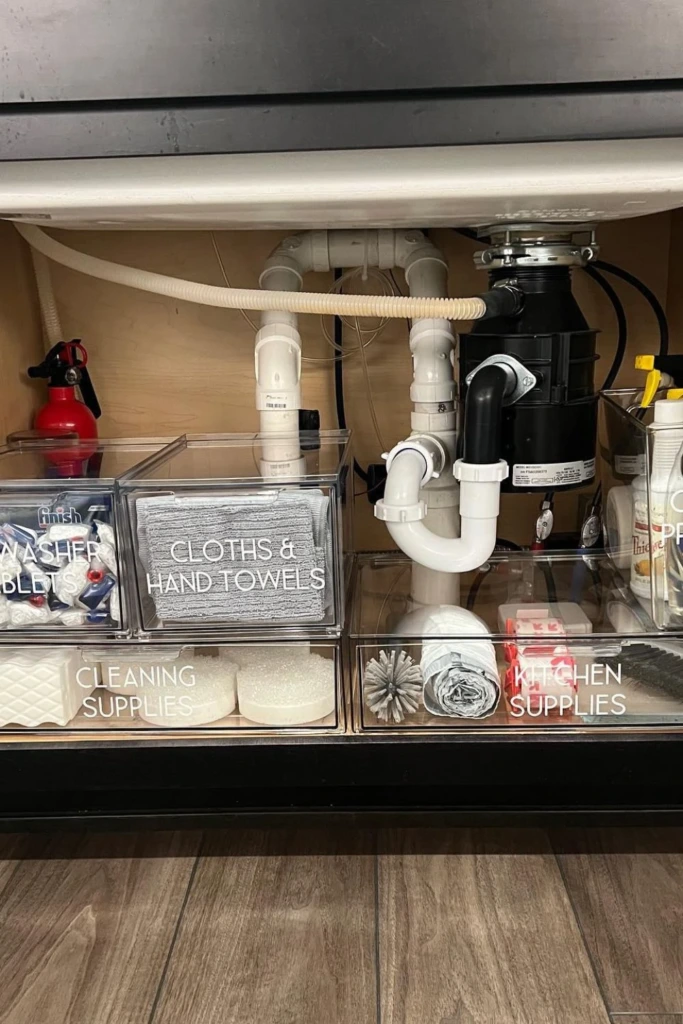
Acrylic organizers provide a clean, streamlined appearance while keeping kitchen essentials visible.
Use shallow acrylic trays for smaller supplies and deeper containers for products that need additional support.
Their transparent construction helps you notice when cleaning products are running low.
Arrange the containers along the sides or front of the cabinet to preserve access to plumbing fixtures.
Because acrylic can scratch or crack under excessive pressure, avoid overloading delicate containers with heavy bottles.
12. Drawer Stacks
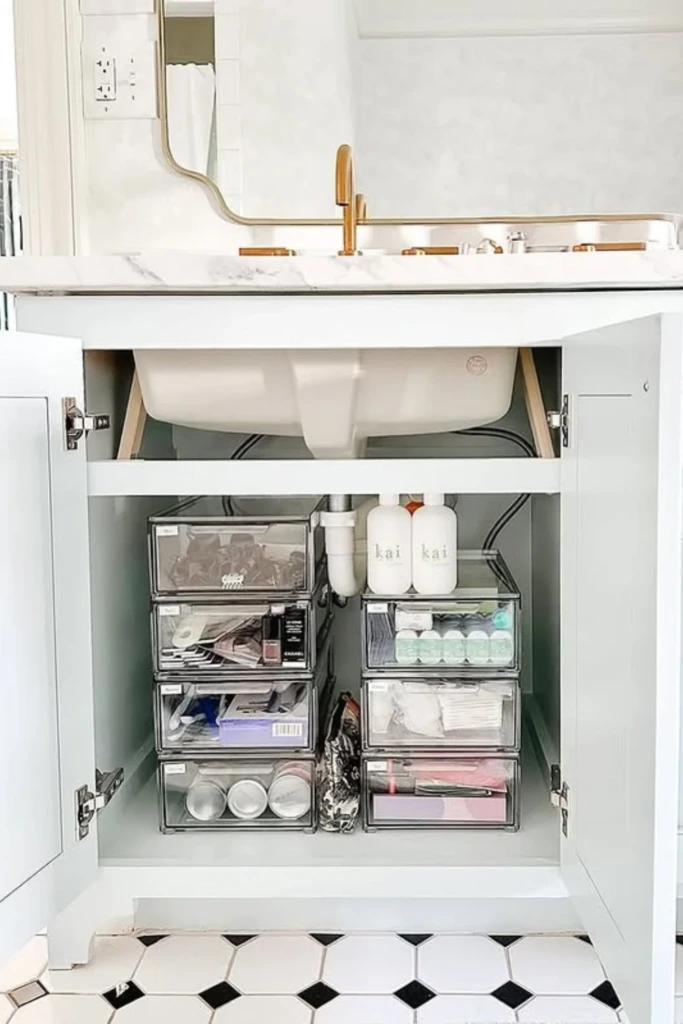
Stacked drawers are useful for organizing small kitchen cleaning accessories that otherwise disappear beneath larger products.
Create separate drawers for replacement scrubbers, microfiber cloths, cleaning gloves, and other compact supplies.
Choose drawers with easy-grip handles and smooth movement so you can access items without disturbing the entire stack.
Position the organizer on a level surface and check that it remains stable when the drawers are extended.
This solution works especially well in tall cabinets where smaller supplies occupy only a fraction of the available height.
13. Cube Containers
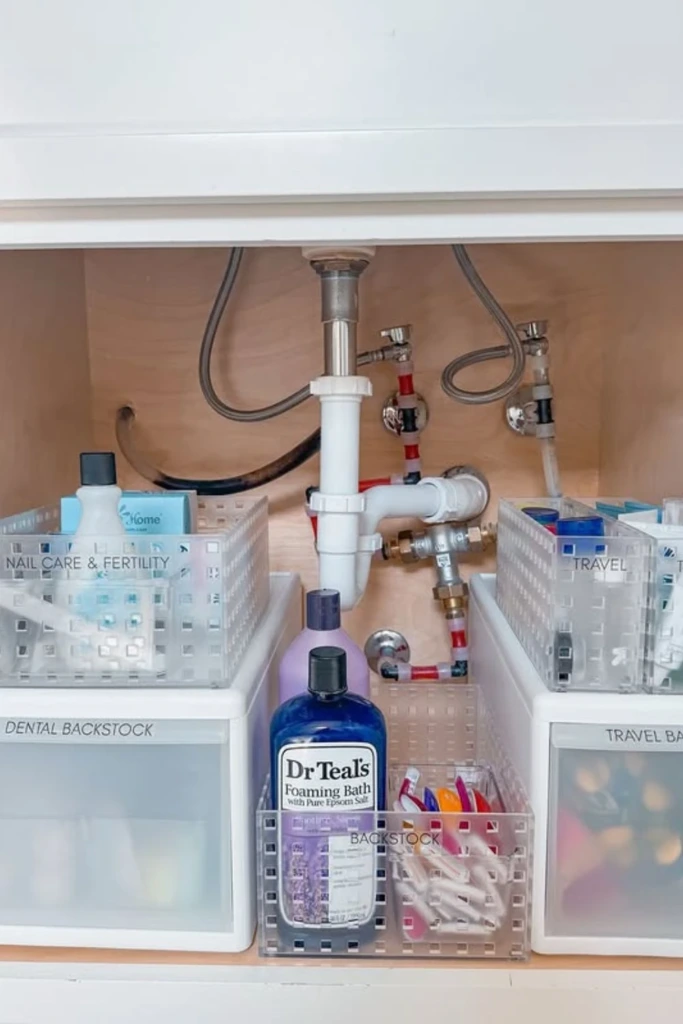
Cube-shaped containers offer flexible storage for extra household supplies.
Their uniform shape makes it easier to arrange multiple containers together while maintaining clearly defined compartments.
Use separate cubes for spare dish brushes, trash bag rolls, cleaning accessories, and unopened replacement products.
Stack only containers specifically designed for stacking, and keep heavier supplies at the bottom.
Clear or open-front designs make inventory checks easier, helping you avoid purchasing items you already have.
14. Front Access
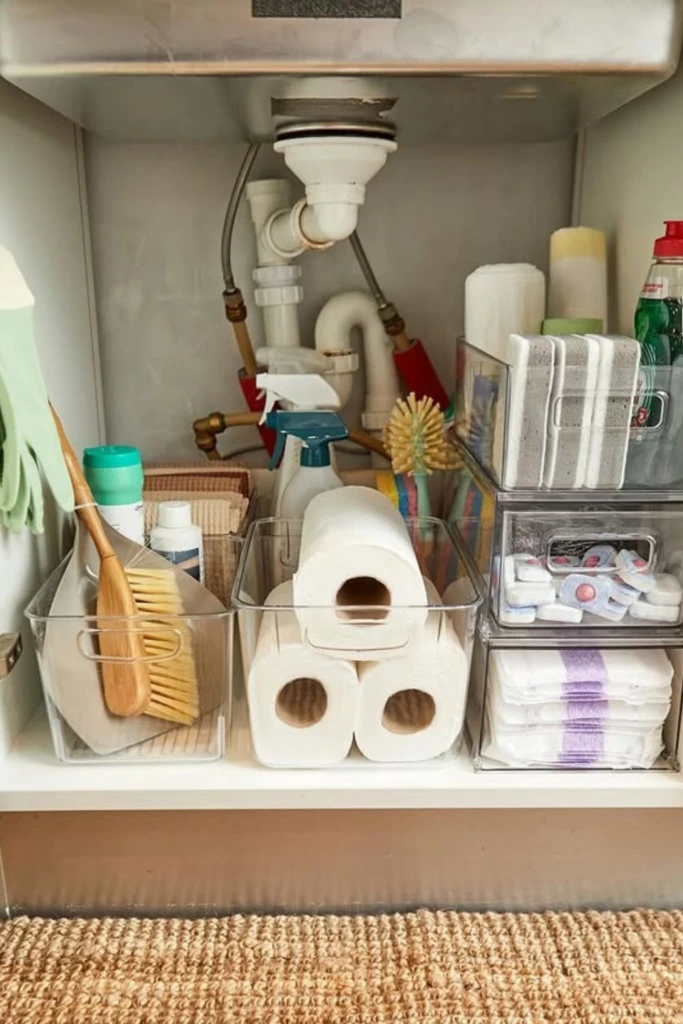
An effective under-sink organization system should prioritize accessibility rather than simply maximizing storage capacity.
Place the products you use every day near the cabinet opening, where they can be reached immediately.
Dish soap refills, cleaning sprays, and frequently used brushes should have convenient positions.
Reserve deeper areas for occasional-use supplies, provided they remain accessible and do not block plumbing.
A small removable caddy can also be helpful because it allows you to carry several cleaning products together when needed.
15. Stack Drawers
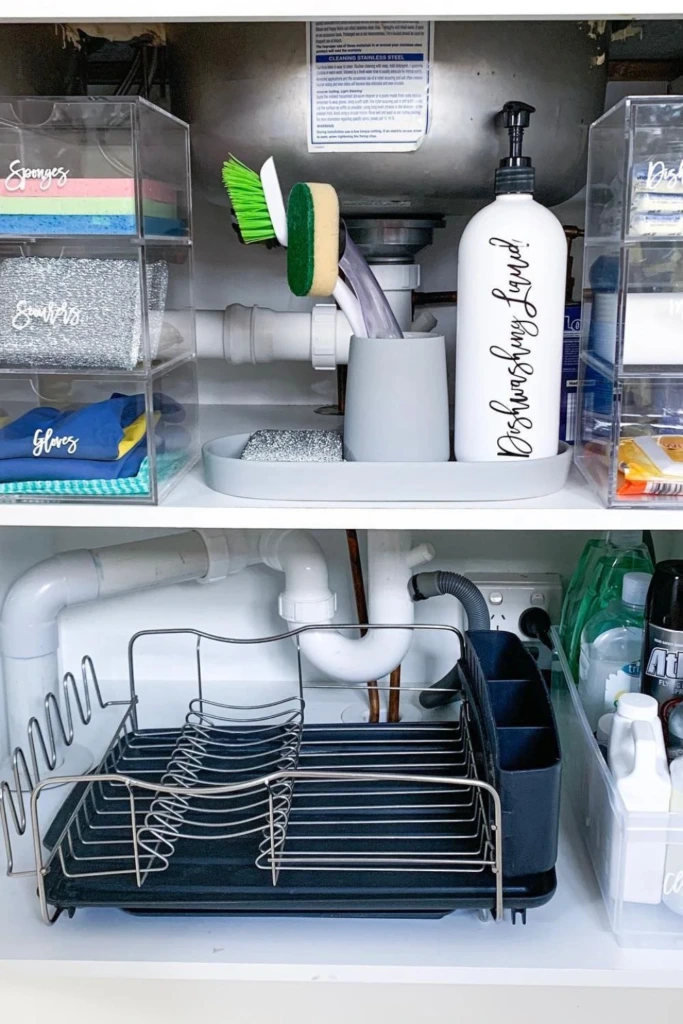
Stack drawers provide a compact solution for keeping smaller supplies separated in cabinets with limited width.
Choose modular drawers that can be arranged according to the available space.
Dedicate each drawer to one category, such as sponges, cleaning pads, spare cloths, or small kitchen accessories.
Select moisture-resistant containers and keep their contents dry to discourage unpleasant odors and mildew.
If you frequently change the products stored beneath your sink, modular drawers offer flexibility because you can rearrange them without replacing the entire system.
16. Vanity Drawers
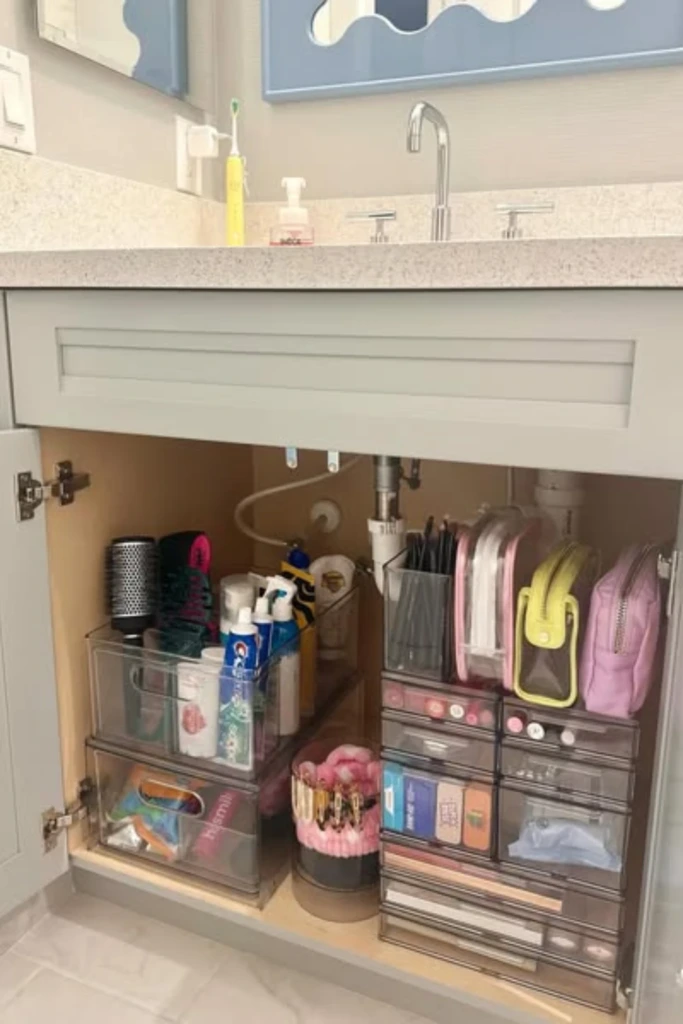
Although vanity drawers are commonly associated with bathroom storage, compact versions can also work well beneath a kitchen sink.
Their shallow compartments are suitable for small kitchen essentials that would otherwise become scattered.
Use them for spare dishwashing brushes, reusable cleaning cloths, sink accessories, or individually packaged cleaning tools.
Choose drawers made from easy-to-clean materials and avoid storing personal-care products alongside household cleaning chemicals.
A compact vanity-style drawer unit can be particularly useful when your cabinet has a narrow opening or an awkward plumbing layout.
17. Product Rows
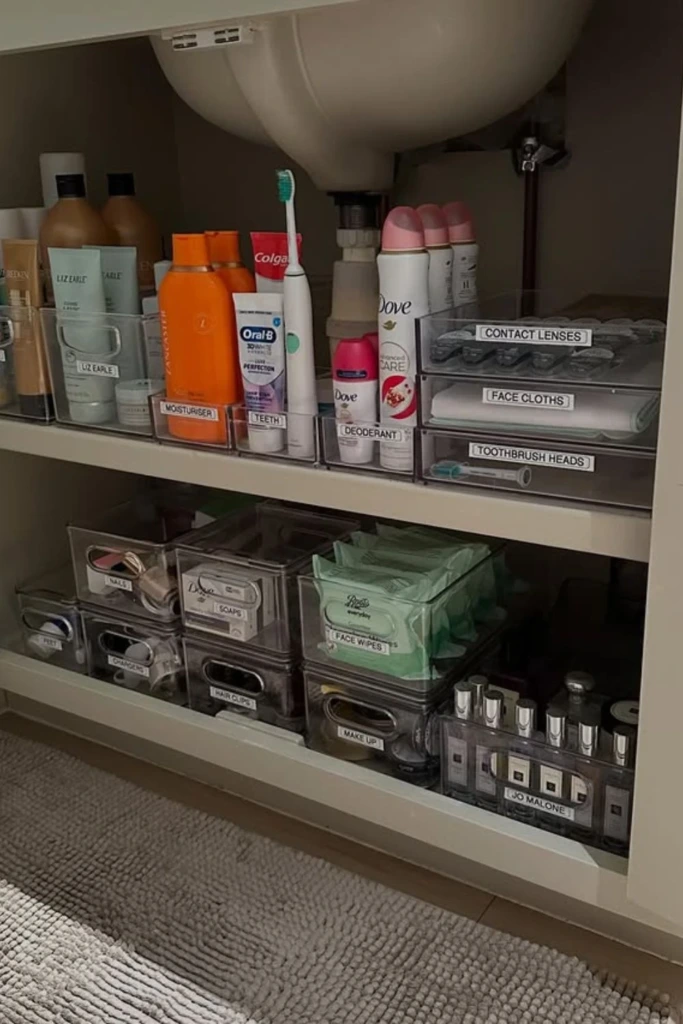
Arranging products in visible rows creates a straightforward storage system that requires very little equipment.
Group similar bottles together and position them so their labels face forward.
Keep taller products toward the back or sides, ensuring they remain easy to remove.
Use shallow trays to prevent bottles from shifting whenever you reach into the cabinet.
Avoid creating multiple tightly packed rows that hide products from view. A little open space makes cleaning and restocking significantly easier.
This approach is ideal for anyone who prefers a simple organization method without purchasing numerous containers.
18. Door Storage
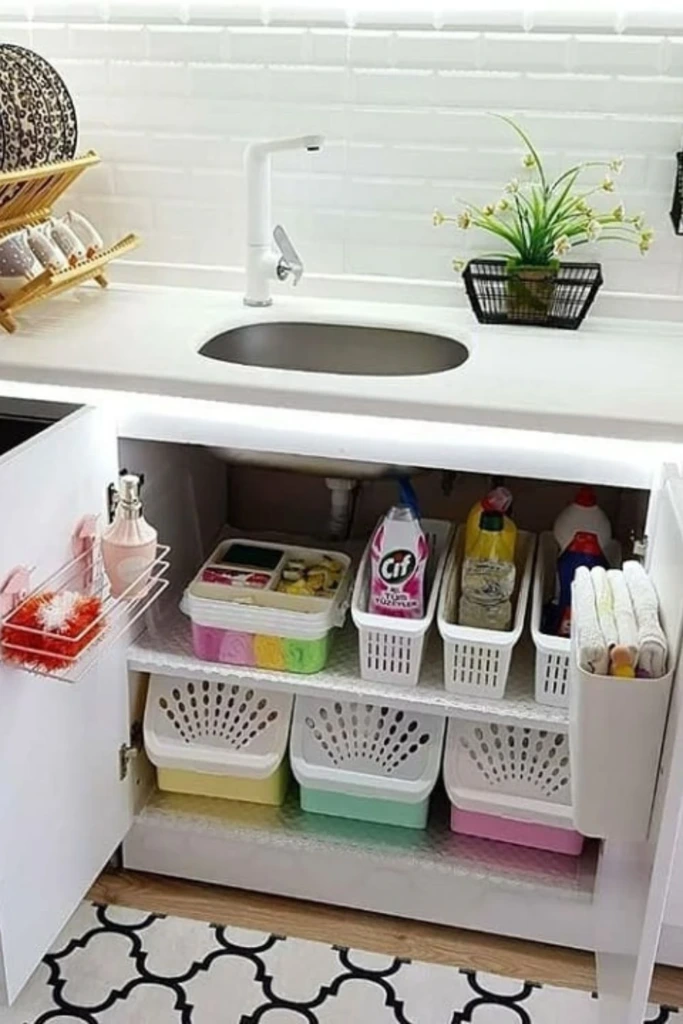
The inside of a cabinet door can provide useful additional storage when the main compartment is crowded.
Install a slim organizer designed for lightweight kitchen accessories such as cleaning gloves, small brushes, and spare sponges.
Adhesive-mounted holders may work for very light items, while securely attached racks are generally better for heavier loads.
Before installation, close the cabinet door slowly to check for contact with shelves, pipes, or stored bottles.
Avoid overloading door organizers because excessive weight can strain hinges or prevent the cabinet from closing properly.
19. Clear Layers
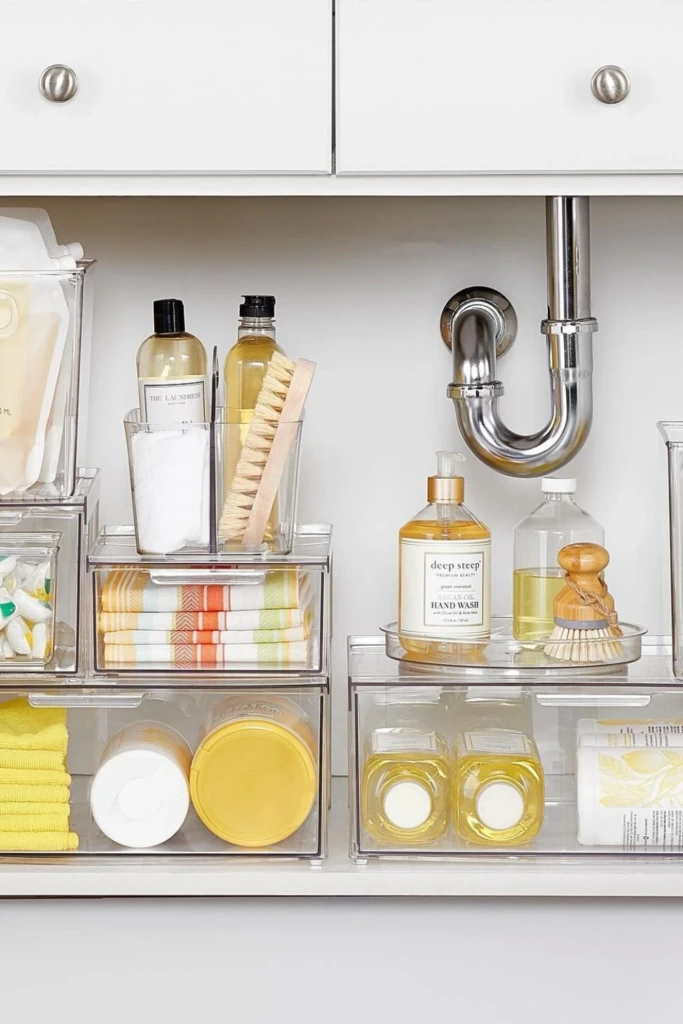
Clear layered organizers combine visibility with efficient use of cabinet height.
Use transparent trays or drawers to create separate storage levels without hiding the contents of lower compartments.
For example, keep small cleaning accessories in shallow upper trays and packaged refills in deeper lower containers.
This setup allows you to locate supplies quickly while keeping different categories separated.
Choose removable organizers whenever possible so you can inspect the cabinet floor for moisture and clean underneath them.
20. Label System
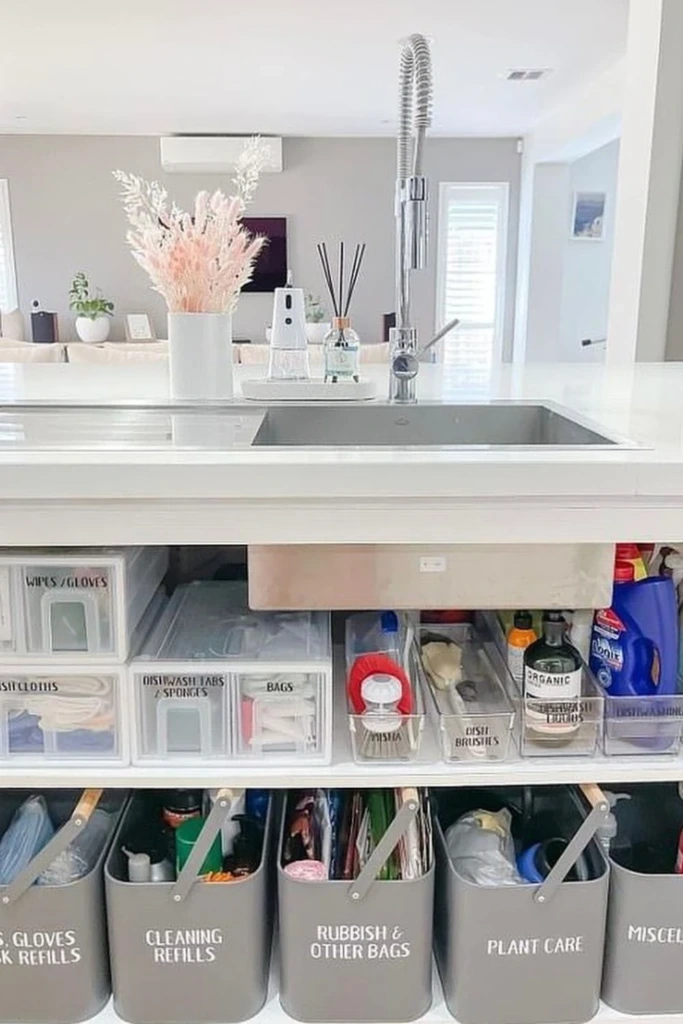
A consistent labeling system helps maintain organization long after the initial cabinet makeover.
Assign a specific location to every category and label containers according to their contents.
Use simple names such as "Sponges," "Gloves," "Trash Bags," and "Cleaning Cloths."
Water-resistant labels are a practical choice because they can withstand routine cabinet cleaning.
Keep cleaning chemicals in their original labeled containers rather than transferring them into decorative jars or unmarked bottles.
Review the categories occasionally and adjust them as your household's storage needs change.
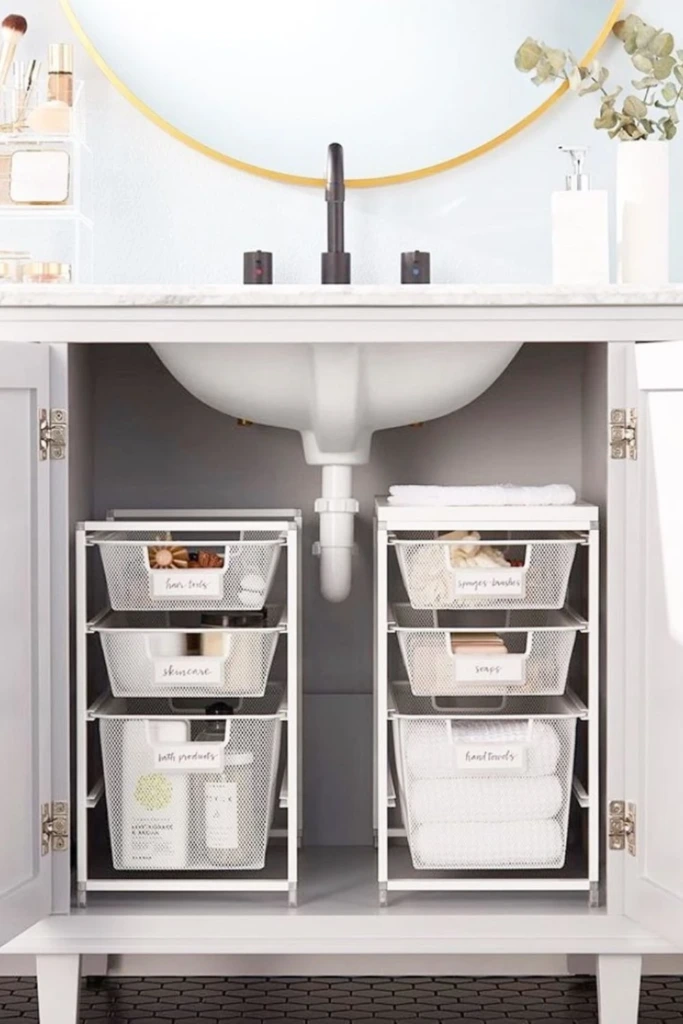
21. Twin Stacks
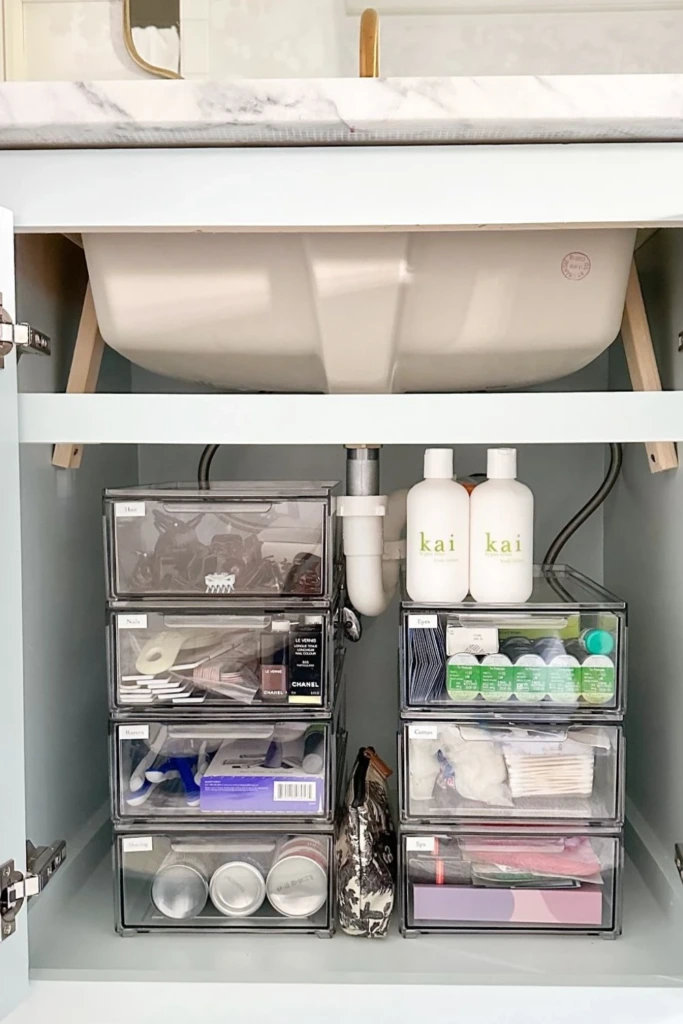
Twin stacks create a balanced arrangement by placing matching storage units on opposite sides of the plumbing.
This approach works best in cabinets with similar amounts of free space on both sides.
Use one drawer stack for everyday cleaning accessories and the other for spare supplies.
Matching units can create a cohesive appearance, but functionality should determine their size and placement.
Make sure both stacks are stable and leave enough room to inspect plumbing connections and reach shutoff valves.
22. Slide Drawers
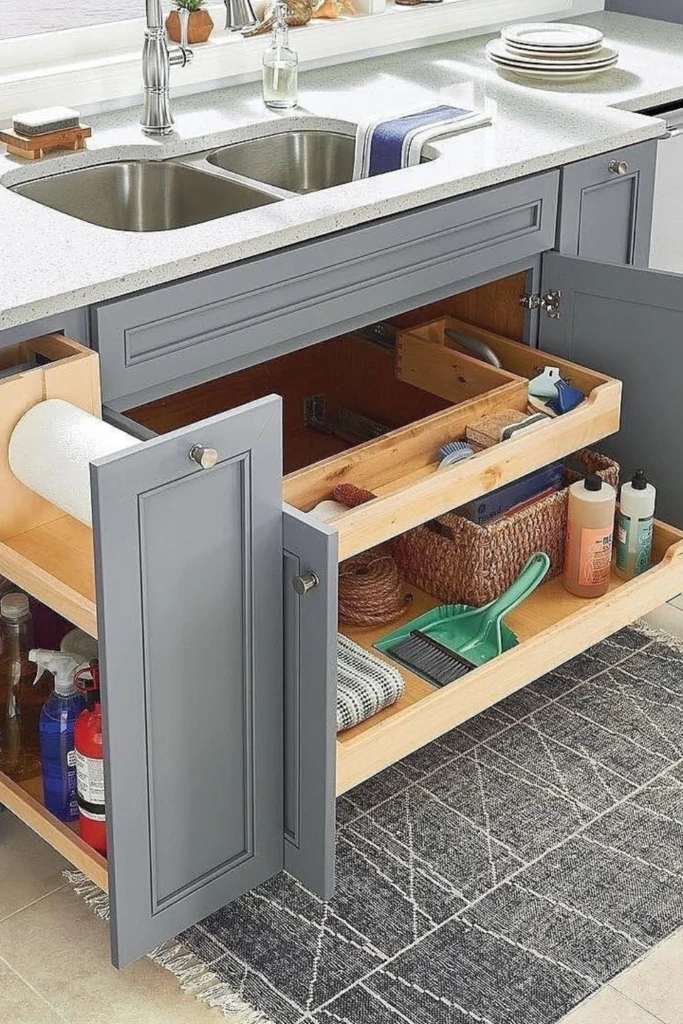
Slide drawers offer a more permanent storage solution for homeowners who want to upgrade their kitchen cabinetry.
Unlike removable baskets, built-in sliding drawers can be customized to fit the cabinet's dimensions.
A lower drawer can accommodate larger cleaning containers, while a shallower upper drawer provides storage for brushes, cloths, and smaller accessories.
Choose durable drawer slides designed to support the expected load.
For cabinets with complicated plumbing, custom-sized drawers may provide better clearance than standard organizers.
Before installing any permanent system, confirm that plumbing connections and maintenance areas will remain accessible.
How do you organize under the sink when pipes are in the way?
Start by emptying the cabinet and measuring the available space around the plumbing.
Identify areas where narrow drawers, removable bins, or adjustable shelves can fit without touching pipes or blocking shutoff valves.
Use vertical storage along the cabinet walls and reserve the center for plumbing access.
Under-sink shelves with adjustable sections are particularly useful because they can accommodate different pipe configurations.
A removable waterproof cabinet liner or shallow leak tray can help protect the cabinet base from minor drips, but it should not conceal ongoing leaks.
The goal is to make the space functional while keeping plumbing connections accessible for inspection and repairs.
What should you not store under the kitchen sink?
Avoid storing items that could become damaged, contaminated, or unsafe if exposed to leaks, humidity, or cleaning chemicals.
Food, pet food, electrical appliances, important documents, and moisture-sensitive household items are better kept elsewhere.
Paper towels and cardboard-packaged products can also absorb moisture, so a dry pantry or utility cupboard is often more suitable.
Cleaning products require additional care. Keep chemicals in their original containers, follow manufacturer storage instructions, and never store incompatible substances together. In particular, bleach should be kept separate from ammonia-based and acidic cleaners.
If children or pets can access the cabinet, use suitable child-resistant locks and store hazardous products in a secure location.
A well-organized under-sink cabinet should be easy to use, easy to clean, and safe for everyone in the household. By choosing storage solutions that suit your cabinet's dimensions and everyday needs, you can keep this often-overlooked space organized without constant rearranging.