20 Water Bottle Organization Ideas for 2026
Keeping water bottles organized can be surprisingly challenging, especially when your kitchen cabinets are filled with reusable bottles, insulated tumblers, travel mugs, and kids' drink containers. Different shapes and sizes make stacking difficult, while loose lids and straws create additional clutter.
Fortunately, you don't need a complete kitchen makeover to solve the problem. A few thoughtful storage solutions can transform crowded cabinets and drawers into practical spaces where everything is easy to find.
Whether you're working with a small kitchen, a spacious pantry, or limited drawer space, these 18 water bottle organization ideas will help you make better use of your storage while keeping your favorite bottles accessible.
1. Vertical Drawer Dividers
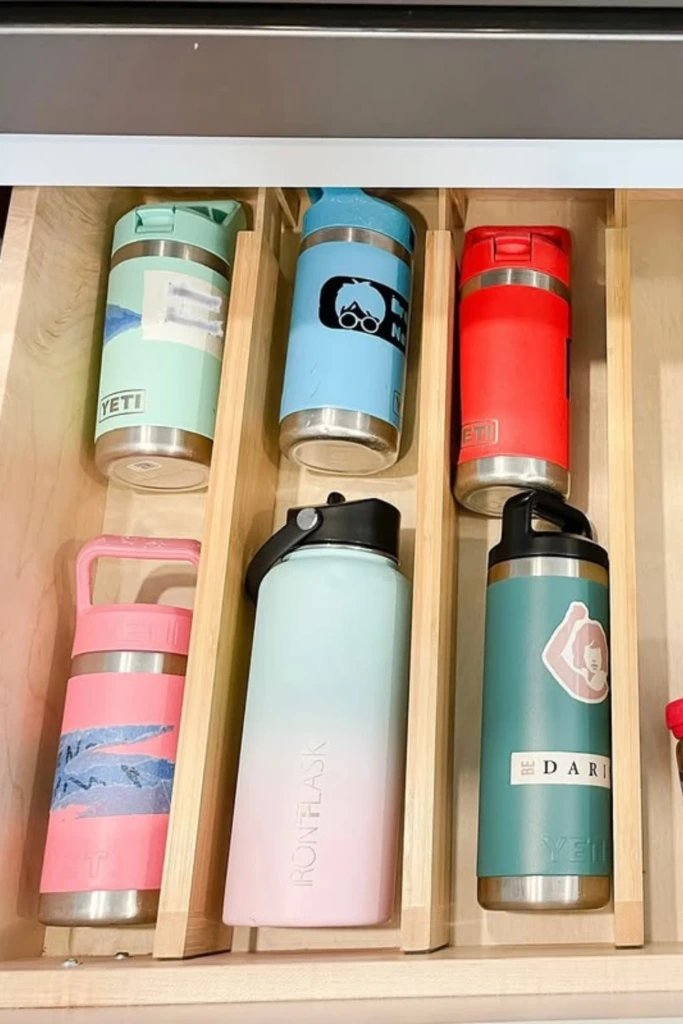
Deep kitchen drawers can provide excellent storage for reusable water bottles when equipped with vertical dividers.
Instead of allowing bottles to shift around, create separate compartments that keep each container in place. Adjustable dividers are particularly helpful because you can customize the layout for narrow sports bottles, wide tumblers, and travel mugs.
Before arranging everything, check the drawer's interior height to ensure your tallest bottles fit comfortably. Position frequently used bottles toward the front so they're easy to grab during busy mornings.
2. Magazine Holder Storage
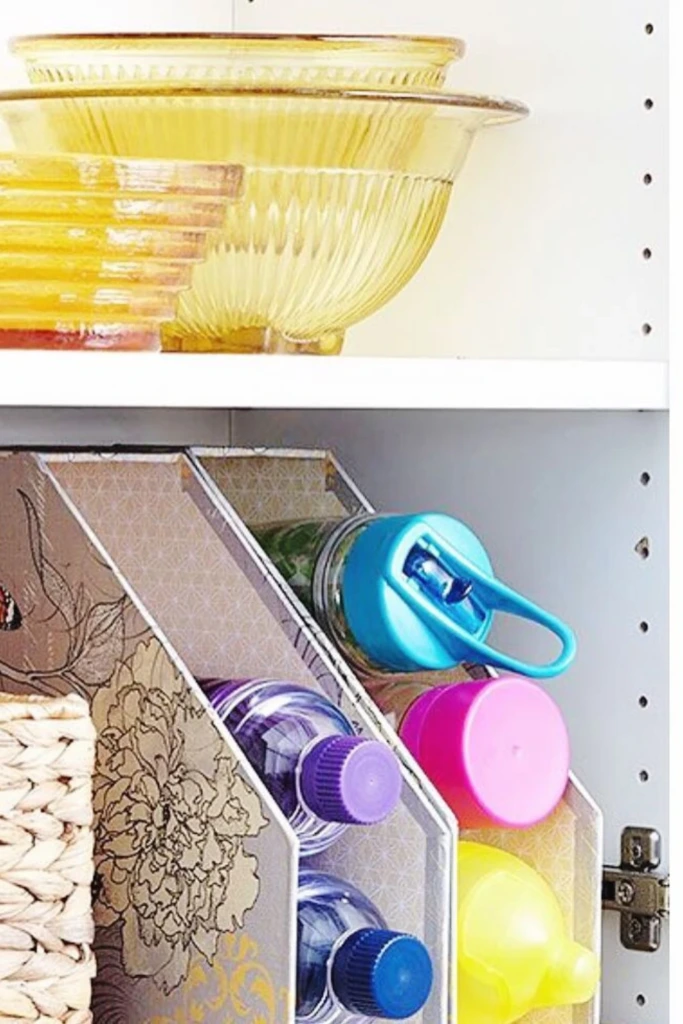
Magazine holders offer an affordable way to organize water bottles without purchasing specialized kitchen accessories.
Choose durable plastic, metal, or sturdy wooden holders and position them inside your cabinets. Their rectangular shape creates convenient storage sections for bottles placed horizontally.
This arrangement is particularly useful for shelves with limited vertical clearance. You can also position several holders side by side to separate different bottle categories.
For a cleaner appearance, select matching holders that complement your cabinet interiors.
3. Over-the-Door Bottle Storage
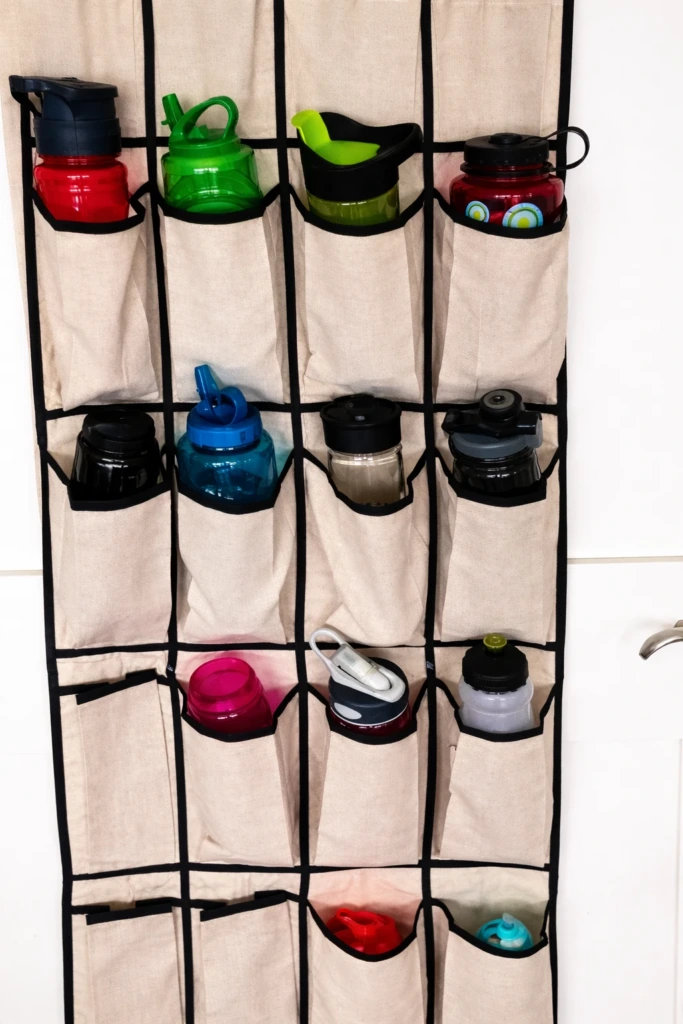
Unused door space can become valuable storage when kitchen cabinets are already overflowing.
A hanging pocket organizer attached to a pantry door provides individual compartments for smaller reusable bottles and lightweight drinking containers.
Choose an organizer with sufficiently deep pockets to prevent bottles from slipping out when the door moves. Avoid overloading it with heavy insulated tumblers, which may place excessive strain on the hooks or door.
This solution works particularly well in compact kitchens where every shelf matters.
4. Sports Bottle Station
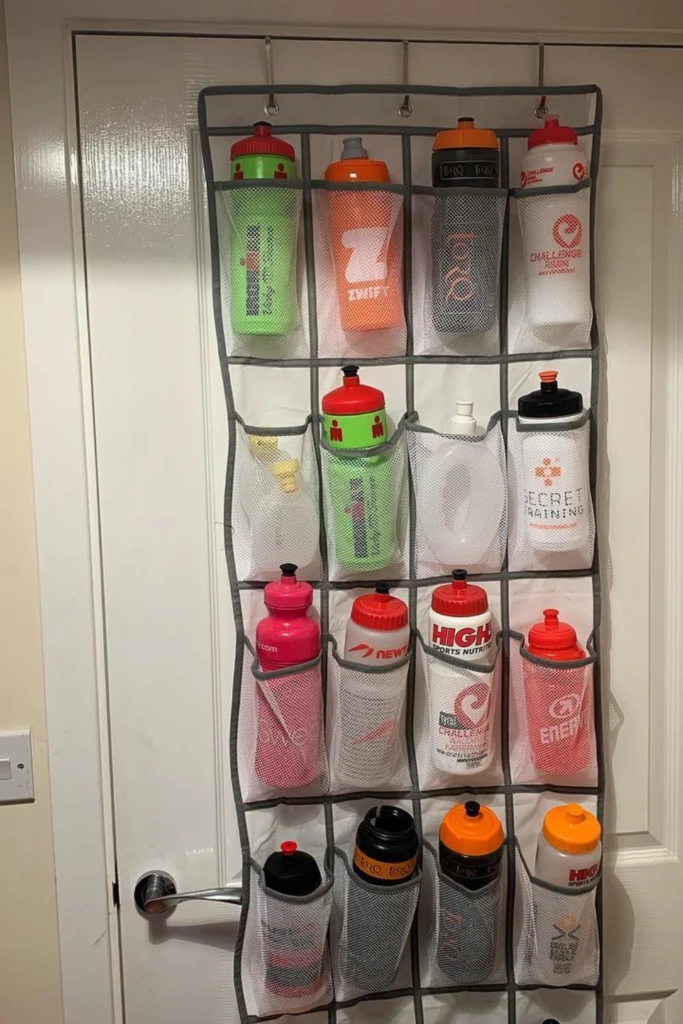
Families with active schedules often accumulate bottles for school, workouts, cycling, and outdoor activities.
Creating a dedicated sports bottle station makes it easier to prepare for daily routines. Use an accessible shelf, open basket, or small storage unit near your kitchen or entryway.
Arrange bottles according to household members or activities. For example, children's school bottles can occupy one section, while gym bottles and protein shakers have another.
Keep compatible lids nearby so everyone can quickly assemble their bottles before leaving home.
5. Custom Door Rack
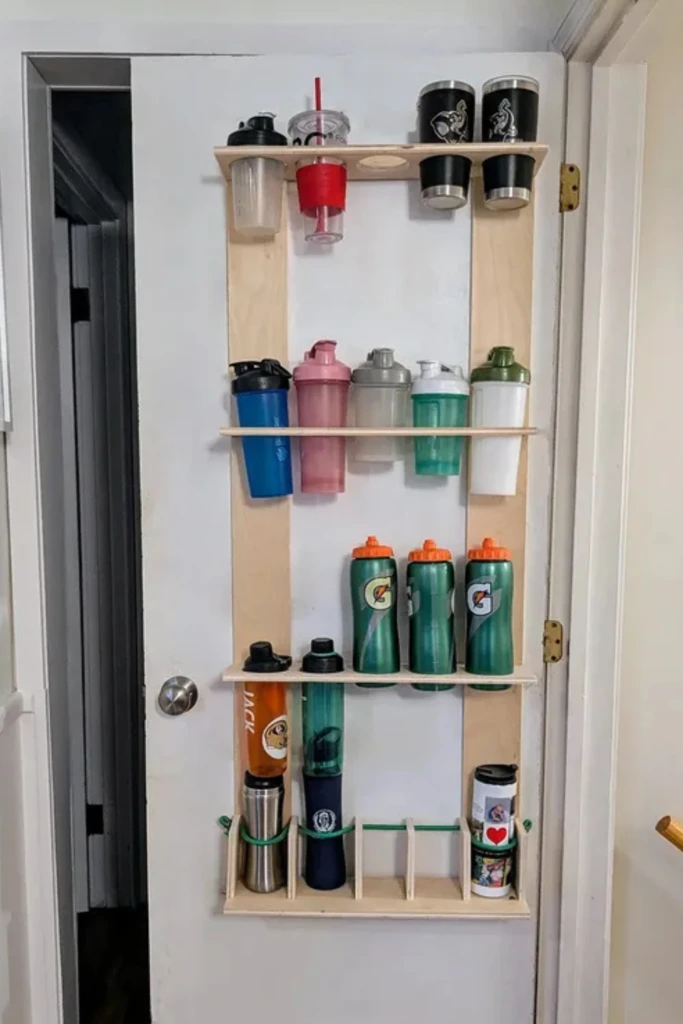
A custom door rack can turn an overlooked pantry door into a practical storage area.
Install shallow shelves or a purpose-built rack designed around the dimensions of your water bottles. Adding a retaining bar along the front of each shelf helps prevent containers from falling when the door opens.
Measure the available clearance carefully, including the space occupied by cabinet shelves and door hardware.
For heavier bottles, use appropriate mounting hardware and confirm that the door can safely support the additional weight.
6. Stackable Horizontal Rack
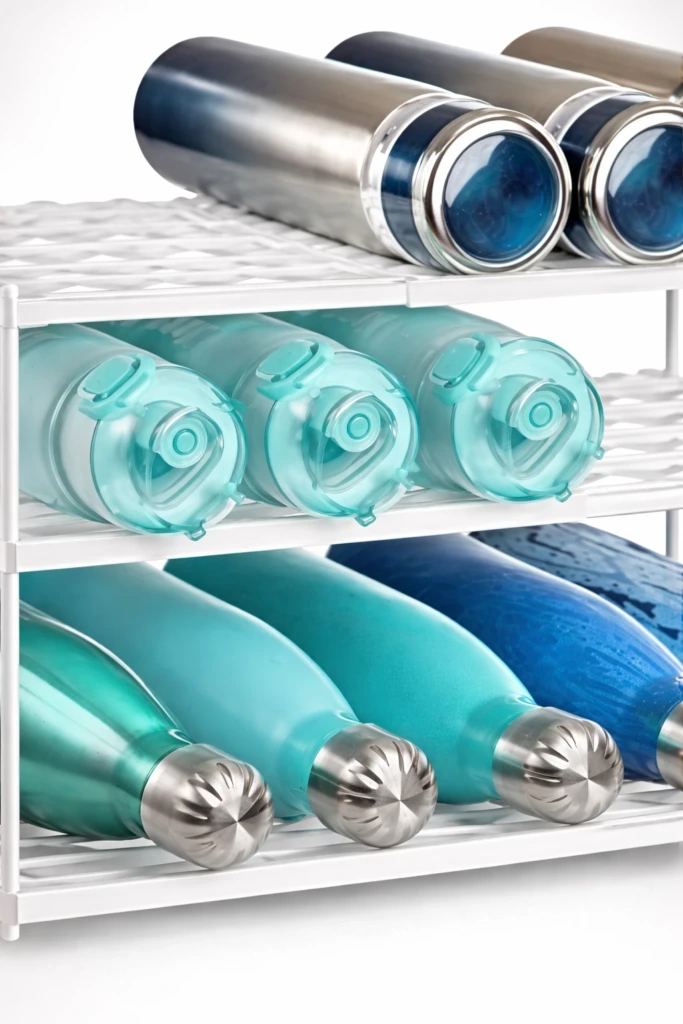
Stackable horizontal racks are an effective solution for bottles that frequently fall over inside cabinets.
These organizers feature separate compartments that support bottles on their sides, allowing you to remove one without disturbing the others.
Stackable designs also take advantage of unused vertical space, making them suitable for cabinets with adjustable shelving.
Look for racks with compartments wide enough to accommodate your bottle collection. Models with stable bases and secure stacking features are especially useful for preventing movement.
7. Large Water Jug Rack
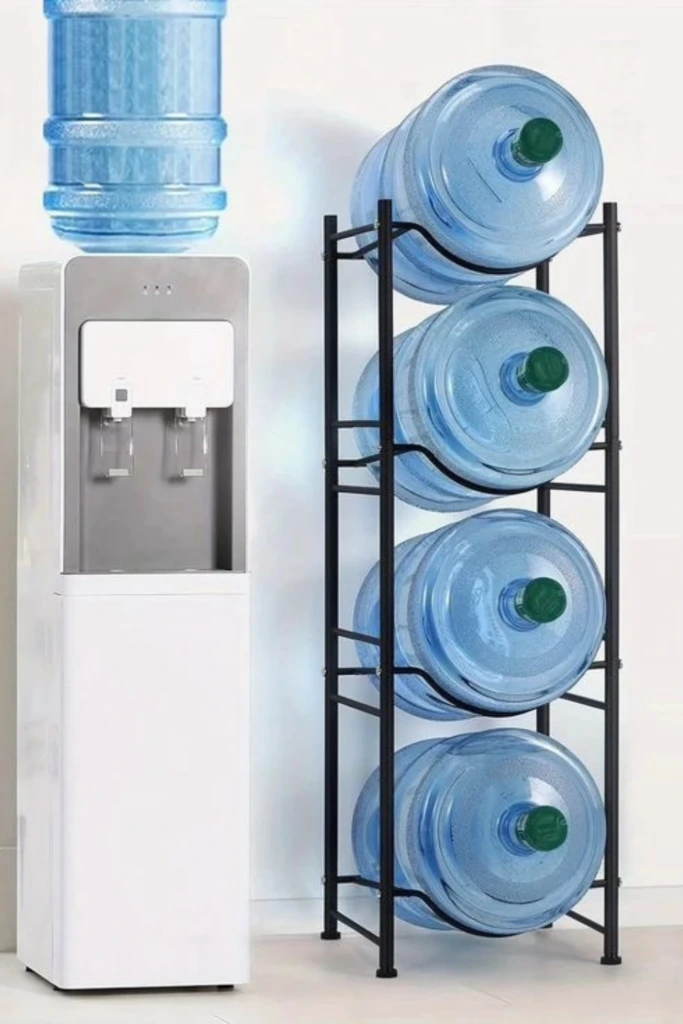
Oversized water jugs require stronger storage solutions than ordinary reusable bottles.
A dedicated jug rack keeps large containers arranged in a stable position while freeing up valuable floor space. Depending on the design, racks may hold multiple jugs horizontally in individual cradles.
Choose a rack specifically rated for the size and weight of your containers, particularly if you store filled water jugs.
Place the rack on a level surface in a pantry, utility room, or another suitable location. Avoid positioning heavy containers where children might accidentally pull them down.
8. Clear Bin Rows
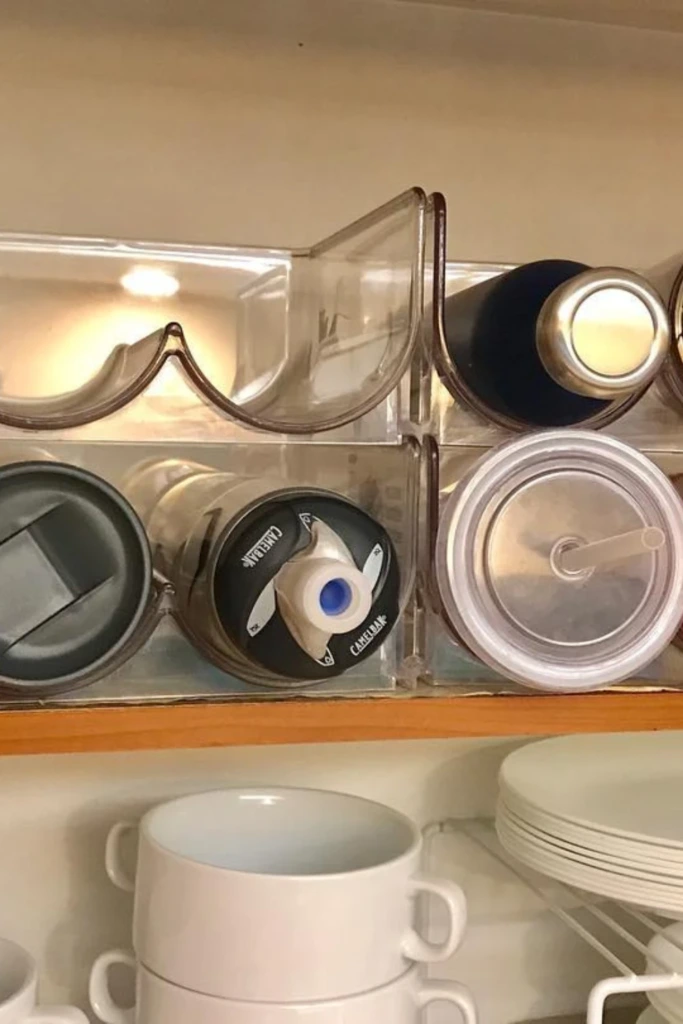
Transparent storage bins make it easier to see your water bottle collection without searching through crowded shelves.
Arrange bottles in rows inside appropriately sized bins, grouping similar shapes together. When you need a particular bottle, pull out the container rather than reaching behind several others.
Clear bins are especially helpful in deep cupboards where items often become hidden.
Choose bins with smooth surfaces that are easy to clean, and avoid packing them so tightly that bottles become difficult to remove.
9. Wall-Mounted Holders
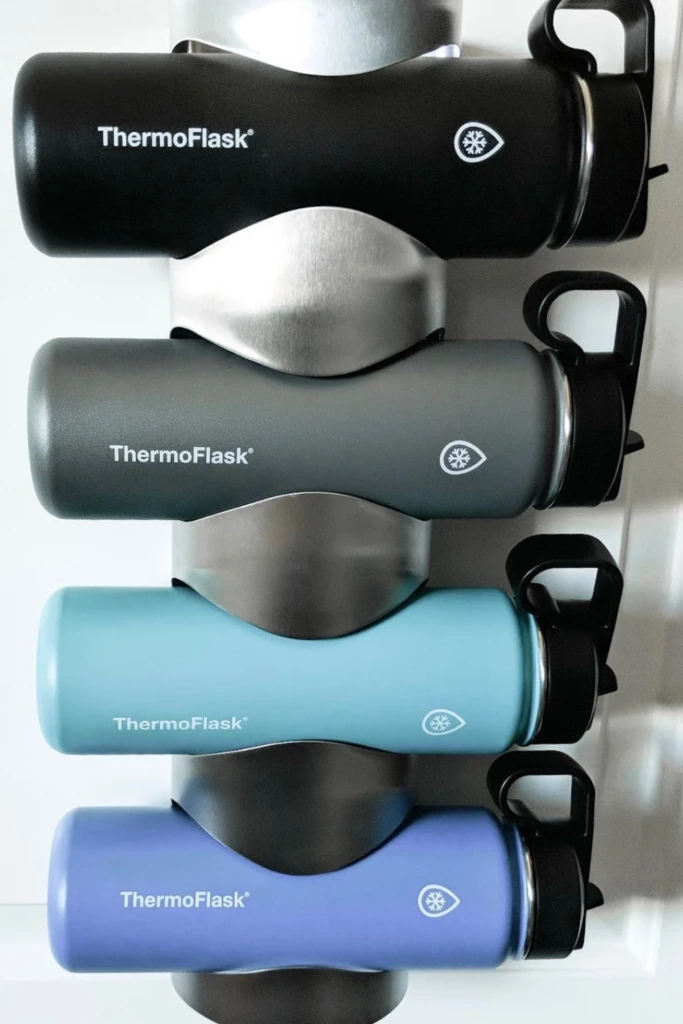
Wall-mounted bottle holders provide convenient storage while preserving cabinet and countertop space.
Install individual holders on an available pantry wall, inside a utility area, or along a suitable kitchen wall. Each holder creates a designated place for a bottle, helping prevent clutter from spreading.
Consider the width of your bottles, especially those with handles or oversized lids, when planning the spacing.
Use hardware appropriate for the wall material and expected load. Position everyday bottles at a comfortable reaching height for convenient access.
10. Give Each Shelf a Job
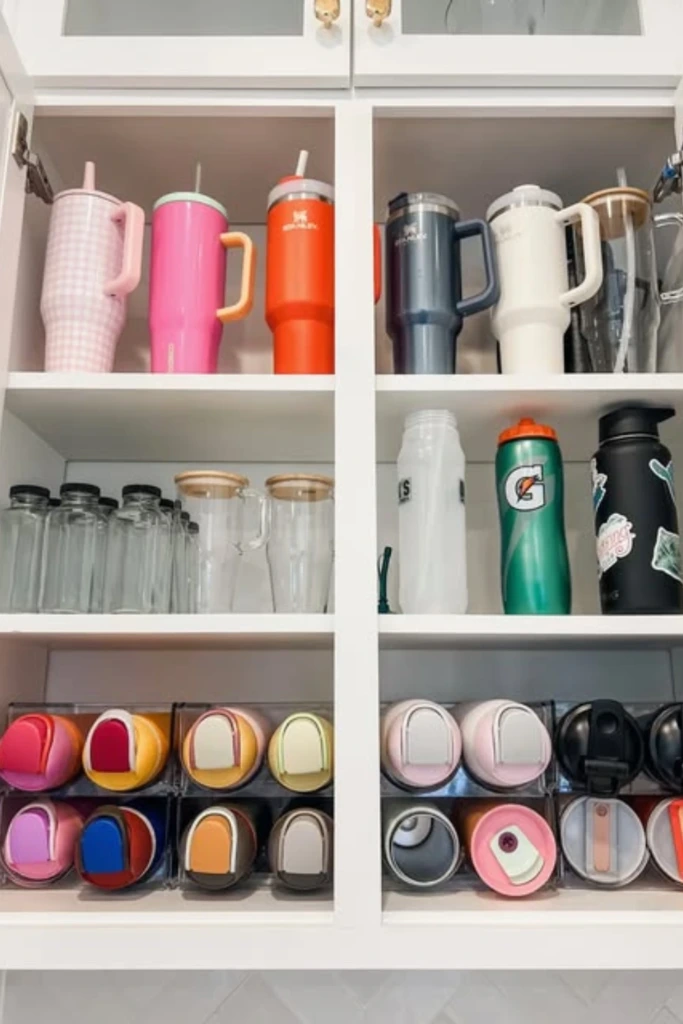
A well-organized cabinet doesn't always require extra accessories. Sometimes, assigning a specific purpose to each shelf is enough.
Dedicate one shelf to everyday drinking bottles, another to travel tumblers, and a separate section to children's containers.
This approach makes it easier to locate items and encourages everyone in the household to return bottles to the correct place.
Keep heavier bottles on lower shelves and reserve higher spaces for lightweight or less frequently used items.
11. Countertop Turntable
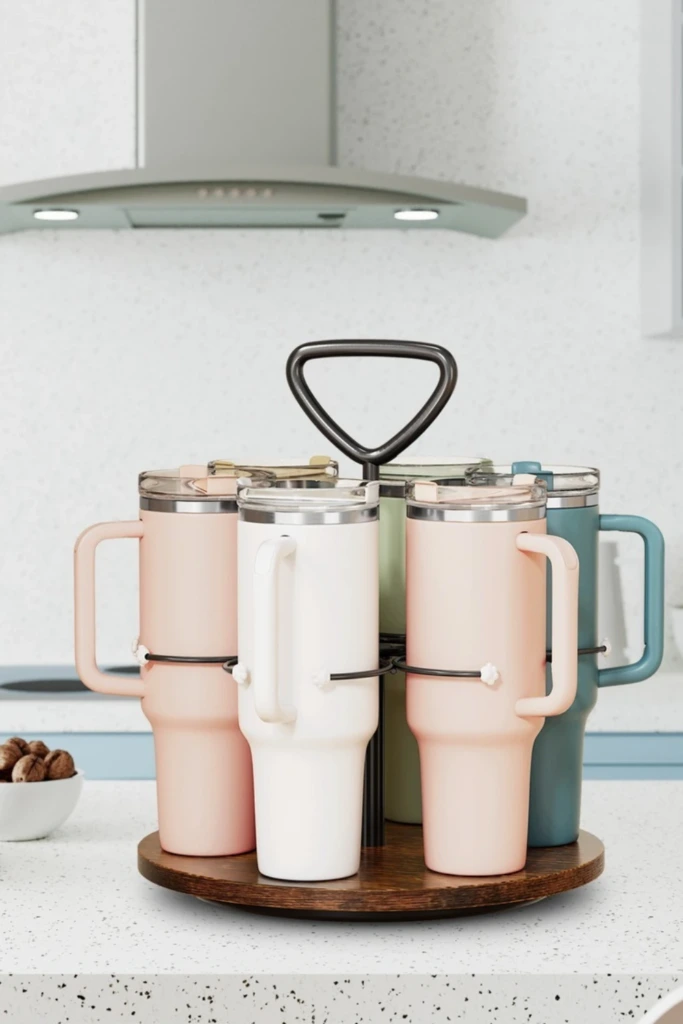
A rotating turntable can make a collection of frequently used tumblers easier to access.
Place a sturdy, non-slip turntable on a countertop or pantry shelf and arrange your bottles around it. Instead of moving several containers to reach one at the back, simply rotate the tray.
This setup works particularly well for large tumblers that are difficult to stack or store horizontally.
Select a turntable with a suitable diameter and weight capacity. Leave enough clearance around bottle handles so the tray can rotate freely.
12. Cubby-Style Bottle Slots
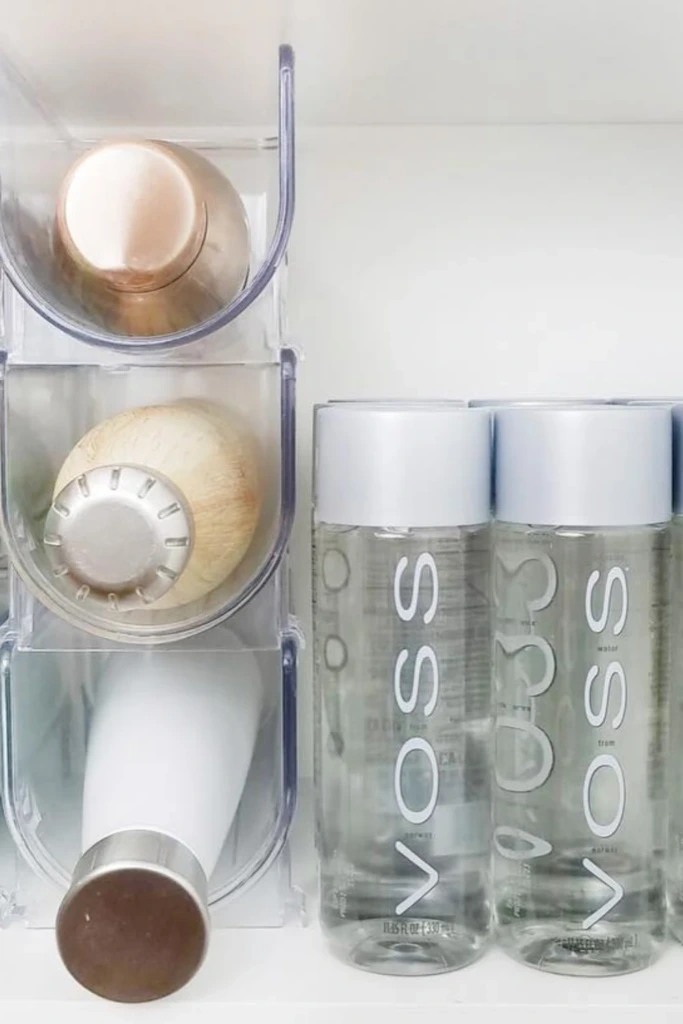
Individual cubby compartments offer a structured way to store reusable water bottles.
Each bottle occupies its own space, reducing the likelihood of containers rolling into one another or becoming buried behind larger items.
You can use modular cubby organizers, compartmentalized shelving, or stackable bottle holders to create this arrangement.
For households with several people, consider assigning particular compartments to each family member.
Cubby storage is also useful for displaying colorful bottle collections while maintaining a tidy appearance.
13. Drawer Compartment Grid
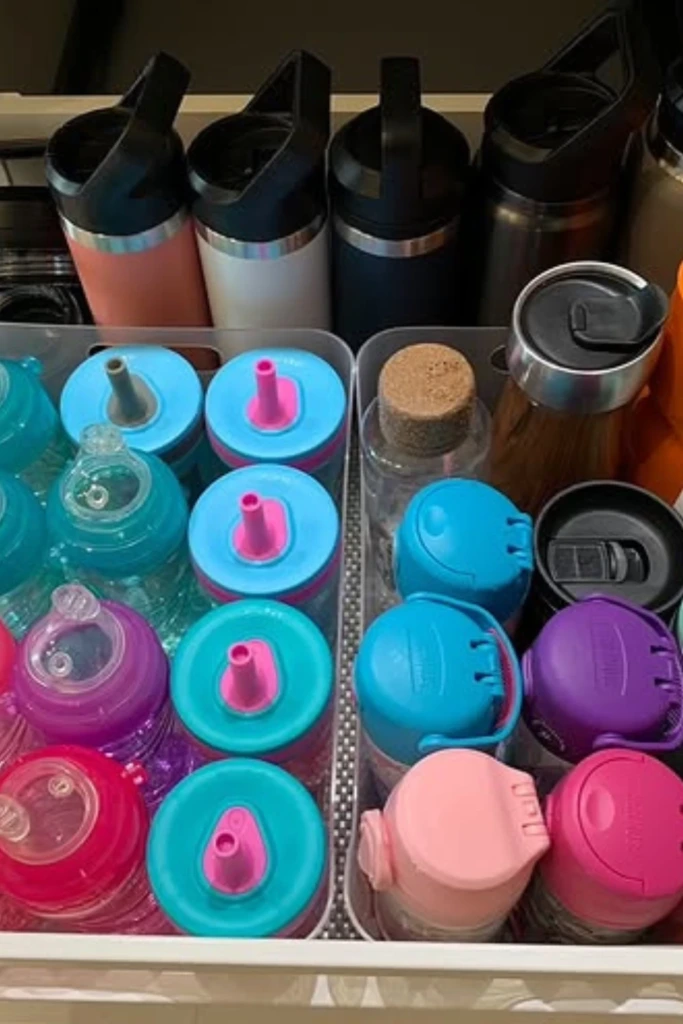
Wide kitchen drawers can become efficient bottle storage areas with a compartment grid.
Use adjustable dividers to divide the drawer into sections based on bottle size or function. Smaller compartments can hold children's bottles, while larger spaces accommodate insulated tumblers and travel mugs.
A grid layout keeps containers separated and makes it easier to identify what is available.
Choose a flexible arrangement that can be modified as your collection changes. Ensure the compartments provide enough room to remove bottles without scraping their surfaces.
14. Give the Lids Their Own Home
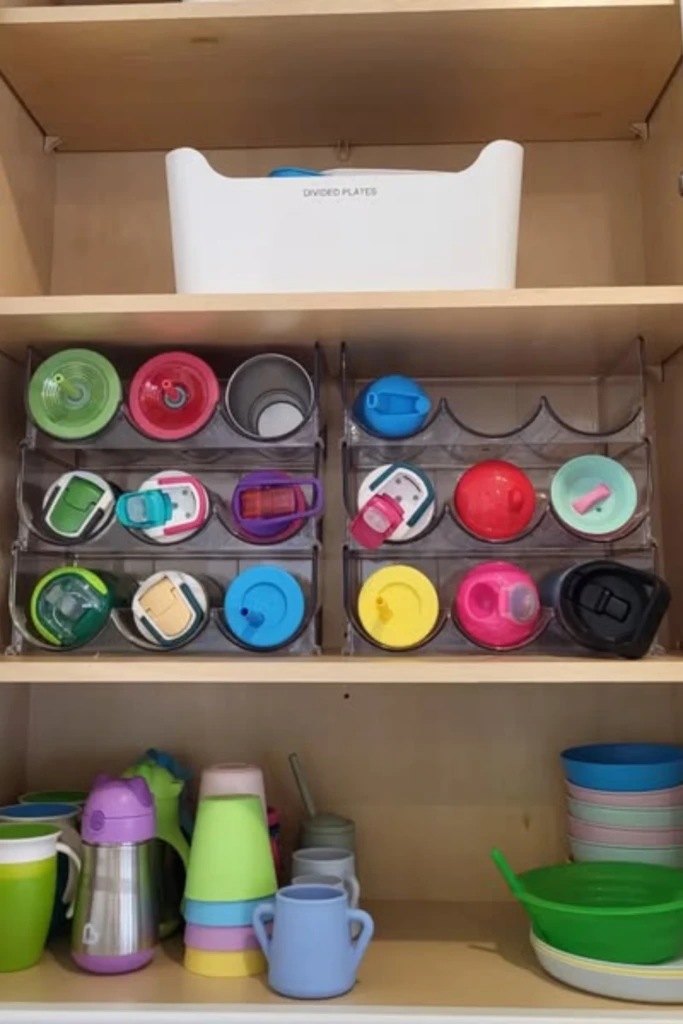
Water bottle lids, drinking spouts, and reusable straws can quickly create clutter when they don't have a designated storage area.
Use a small divided container or shallow drawer organizer to keep these accessories together.
Separate lids according to bottle type or size so compatible pieces are easier to match. For households with several similar-looking bottles, discreet labels can help identify the correct combinations.
Allow all components to dry thoroughly before storing them to discourage trapped moisture and unpleasant odors.
15. Labeled Bottle Bins
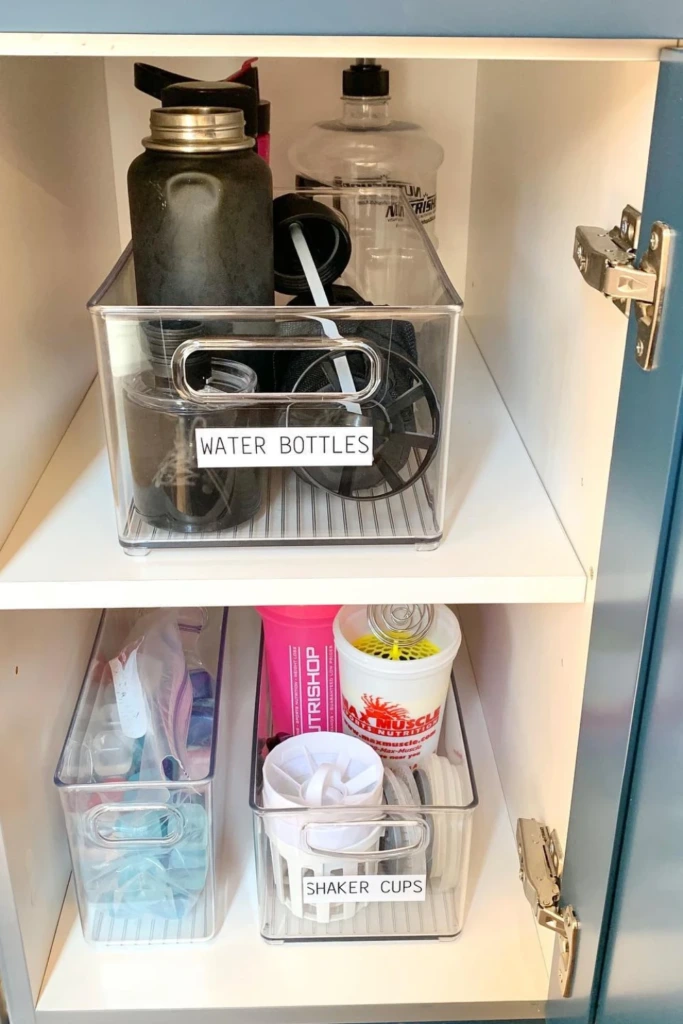
Labeled bins provide a straightforward organization system that everyone in the household can understand.
Choose a few containers and assign each one a clear category, such as school bottles, workout bottles, or everyday tumblers.
Labels are particularly helpful when using opaque baskets or storing items on higher shelves.
Keep your categories simple and practical. A system with only a few clearly defined groups is usually easier to maintain than one with numerous detailed divisions.
16. Mix Different Storage Types
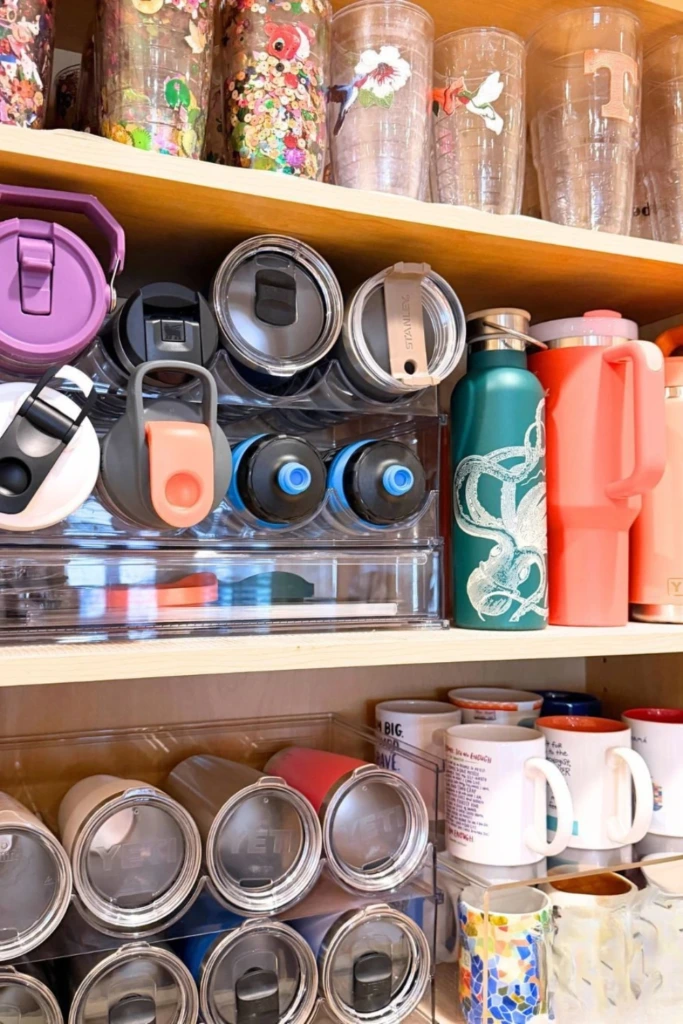
Water bottles come in many shapes, so using a combination of storage methods can be more effective than relying on a single organizer.
For example, place standard bottles in horizontal racks, store handled tumblers upright, and keep smaller accessories in divided bins.
You might also combine drawer storage with a pantry shelf to accommodate bottles used for different purposes.
The goal is to choose storage that suits each container rather than forcing every item into identical compartments.
17. Split the Cabinet by Use
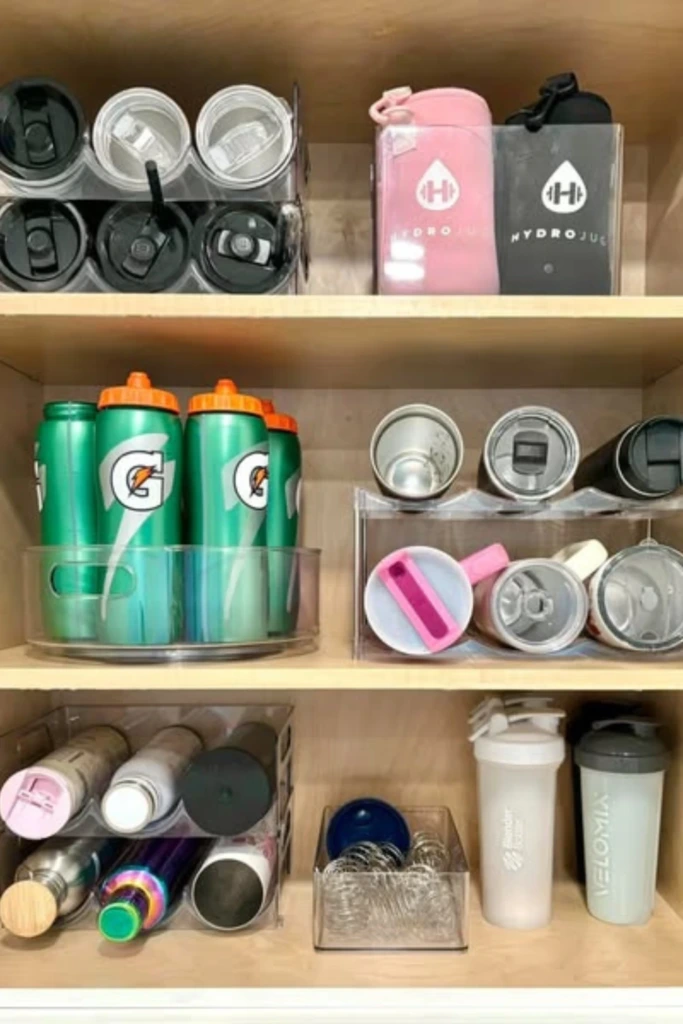
Organizing bottles according to daily activities can make your kitchen more functional.
Create separate cabinet zones for school, work, fitness, and general household use. This arrangement allows everyone to find the appropriate bottle without sorting through unrelated containers.
Place the most frequently used bottles at the front or at eye level. Reserve harder-to-reach areas for seasonal bottles, occasional-use travel mugs, and spare containers.
This method is particularly useful for larger families with several different hydration needs.
18. Use a Turntable in a Deep Cabinet
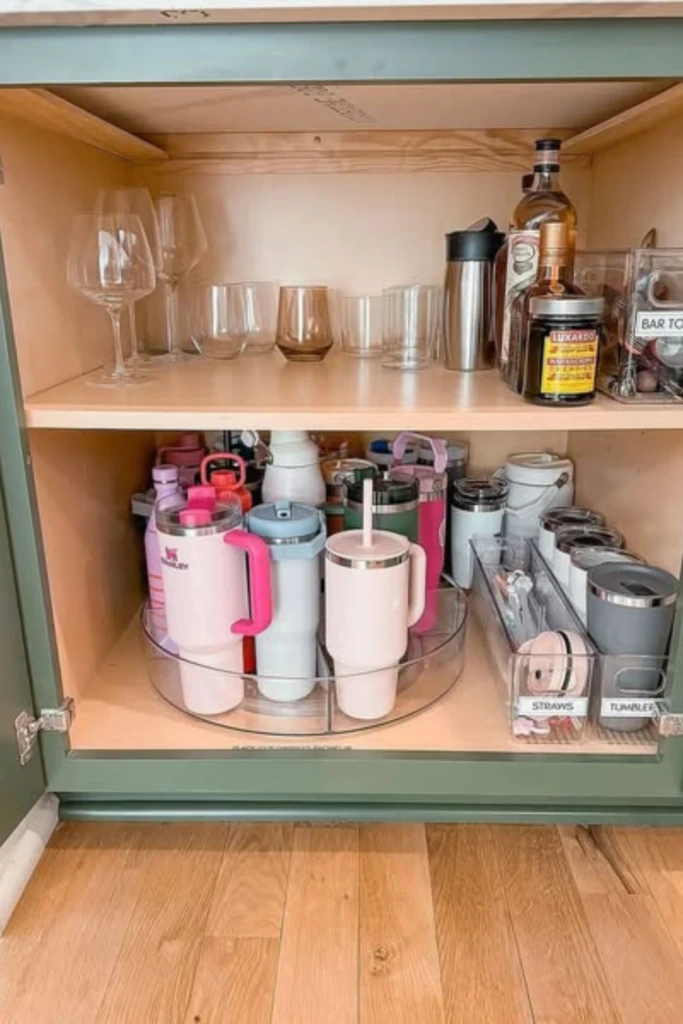
Deep cabinets often contain wasted space because items at the back are difficult to reach.
A rotating organizer solves this problem by bringing stored bottles forward with a simple turn.
Choose a turntable that fits comfortably inside the cabinet while leaving enough space for smooth rotation. Arrange bottles so their weight is distributed evenly and their handles don't catch on surrounding surfaces.
For especially deep lower cabinets, a large turntable can reduce the need to bend down and move multiple containers whenever you need a bottle.
19. Before You Buy an Organizer
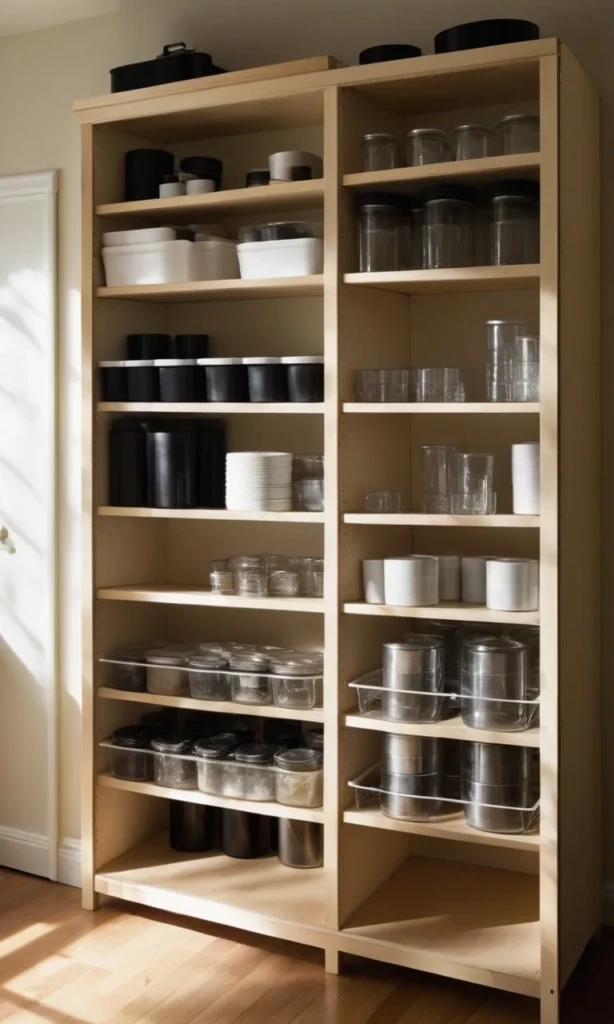
Before investing in water bottle storage accessories, evaluate your existing collection and the space available.
Start by gathering all your reusable bottles, tumblers, travel mugs, and related accessories in one place. Identify which containers are used regularly and which ones have been sitting untouched for months.
Next, measure your storage area carefully. Record the width, depth, and height of the cabinet or drawer, along with the dimensions of your largest bottles.
Consider how you prefer to access your containers. Horizontal racks may be ideal for standard bottles, while deep drawers or open shelves might be better for oversized tumblers.
Think about maintenance as well. Organizers with removable sections and washable surfaces are easier to keep clean.
Finally, prioritize functionality over appearance. An attractive storage system is only worthwhile if it makes your daily routine easier.
What About All the Lids?
Lids are often the most frustrating part of organizing reusable water bottles because they vary in shape, size, and design.
The simplest approach is to keep each lid with its matching bottle whenever space allows. However, bulky handles, flip-top mechanisms, and drinking spouts can make this arrangement impractical.
If separate storage works better, dedicate a small bin or divided drawer section to bottle accessories.
Keep reusable straws, silicone seals, and other removable components organized so they don't become misplaced. Check that all pieces are completely clean and dry before putting them away.
For bottles with similar-looking lids, consider labeling the containers or storing matching pieces in individual compartments.
Regularly inspect lids for damaged seals, cracks, or missing components. Discard pieces that can no longer be used safely, following the manufacturer's replacement guidance.
A simple lid organization system can save time and prevent the frustration of searching for matching parts every morning.
20. If Your Cabinet Is Still Too Full
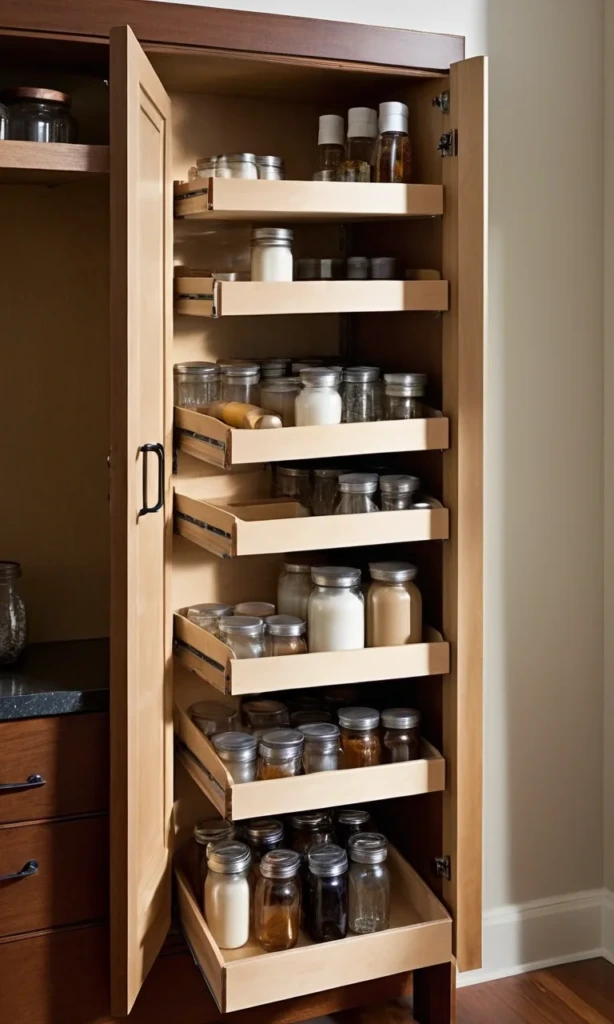
Even the best organizers cannot compensate for a cabinet containing more bottles than the available space can reasonably accommodate.
If your storage area remains crowded, review your collection and decide which bottles genuinely deserve a place in your kitchen.
Start by removing damaged containers, bottles with missing essential parts, and items that are no longer suitable for use.
Next, consider whether you need multiple bottles serving exactly the same purpose. Keeping a few reliable favorites may be more practical than maintaining a large collection of rarely used alternatives.
Move occasional-use bottles to another appropriate storage location if you have room elsewhere.
You can also donate clean, functional bottles that are no longer needed, provided the receiving organization accepts them.
Once you've reduced the excess, rearrange the remaining bottles with enough space between them for easy access.
The best water bottle organization system is one that fits your household's habits and is simple enough to maintain. Whether you choose stackable racks, drawer dividers, labeled bins, or a combination of storage solutions, the goal is to make your kitchen more organized and everyday routines more convenient.