14 Pegboard Organization Ideas for 2026
A well-organized pegboard can turn an unused wall into practical storage for tools, craft supplies, kitchen accessories, and everyday essentials. The secret is choosing the right accessories, arranging items according to how often you use them, and leaving enough room for everything to stay accessible.
Whether you're organizing a busy workshop or refreshing a small home office, a pegboard offers a flexible way to keep supplies visible without filling every drawer or countertop. With a little planning, you can create a setup that looks attractive and makes daily tasks easier.
How to Make a Pegboard Organizer?
Start by identifying the items you want to store and the space available on your wall. Measure the area before buying a board, and consider the weight of your supplies when selecting the material and mounting hardware.
Follow these steps to build a functional organizer:
Choose the right board: Hardboard is suitable for lightweight items, while metal boards are better for heavier tools and demanding environments.
Plan your layout: Place frequently used items at a comfortable height and reserve upper sections for things you reach less often.
Select compatible accessories: Match hooks, baskets, shelves, and containers to your board's hole pattern and the size of your belongings.
Create designated zones: Keep similar items together so you can locate supplies quickly and return them to the correct place.
Install the board securely: Use suitable wall anchors or fasteners, and provide the required clearance behind the board for hooks and attachments.
Review the arrangement: After using the organizer for a few days, adjust the positions of accessories to suit your routine.
The most effective pegboard is one that supports your everyday habits. Avoid filling every available hole, because a little empty space makes the arrangement easier to use and maintain.
1. Thread Color Wall
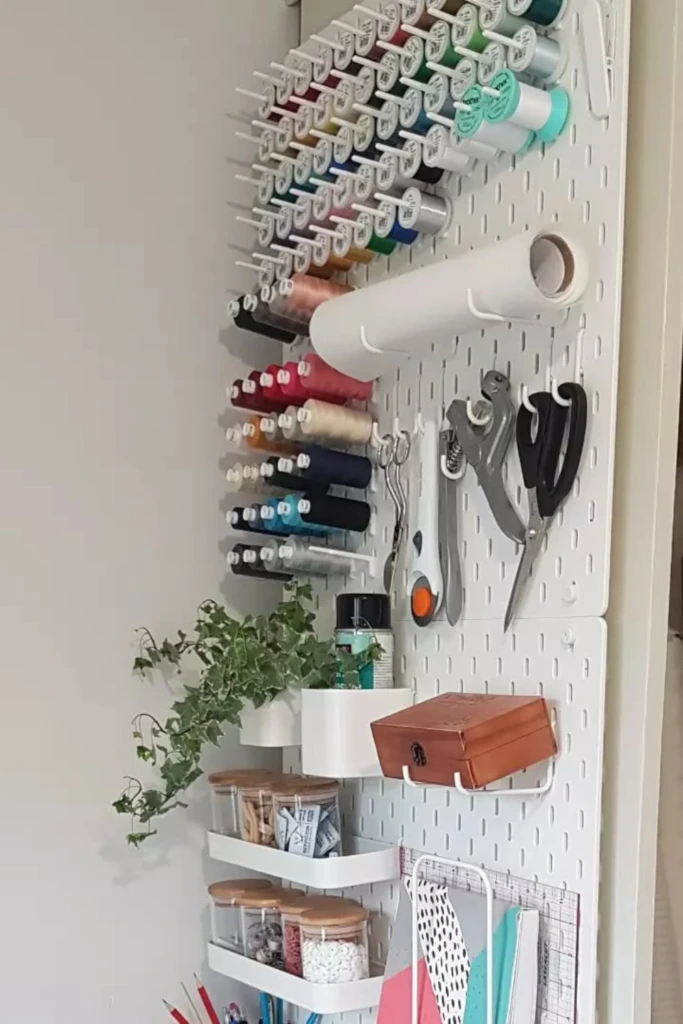
A thread display is a practical addition to any sewing room, quilting corner, or craft studio. Mount horizontal pegs across the board and arrange spools by color family, such as warm tones, cool shades, neutrals, and bright accents.
This arrangement makes it easier to find a matching thread when working on a project. It also transforms colorful spools into an attractive wall display.
Keep the spools spaced far enough apart to remove them without disturbing neighboring colors. Position frequently used shades within easy reach, and protect the thread from prolonged direct sunlight to help prevent fading.
2. Gaming Gear Grid
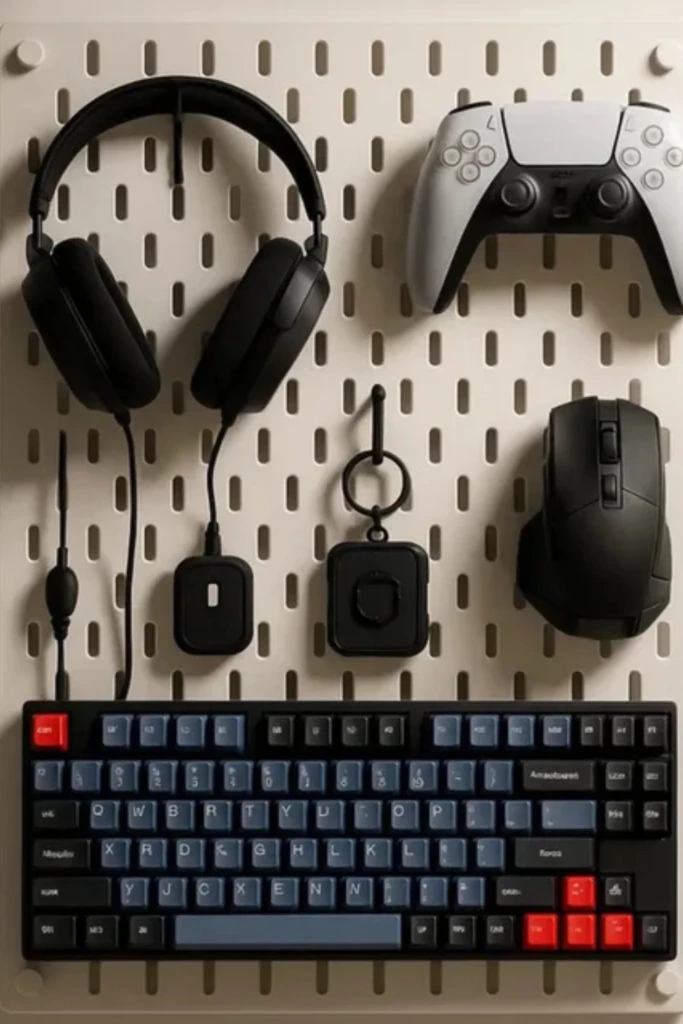
Gaming accessories can quickly take over a desk, especially when you use multiple controllers, headphones, and charging cables. A dedicated pegboard creates separate storage spots for these items while keeping the desktop available for gaming.
Use sturdy hooks for headphones and controllers, small containers for adapters, and cable holders to prevent cords from becoming tangled. Arrange frequently used equipment near your chair so you can grab it without interrupting your session.
For a coordinated appearance, choose accessories that complement your desk and gaming setup. Leave enough space between electronic accessories to prevent accidental falls, and avoid placing equipment where it could be exposed to moisture or excessive heat.
3. Tool Zone Layout
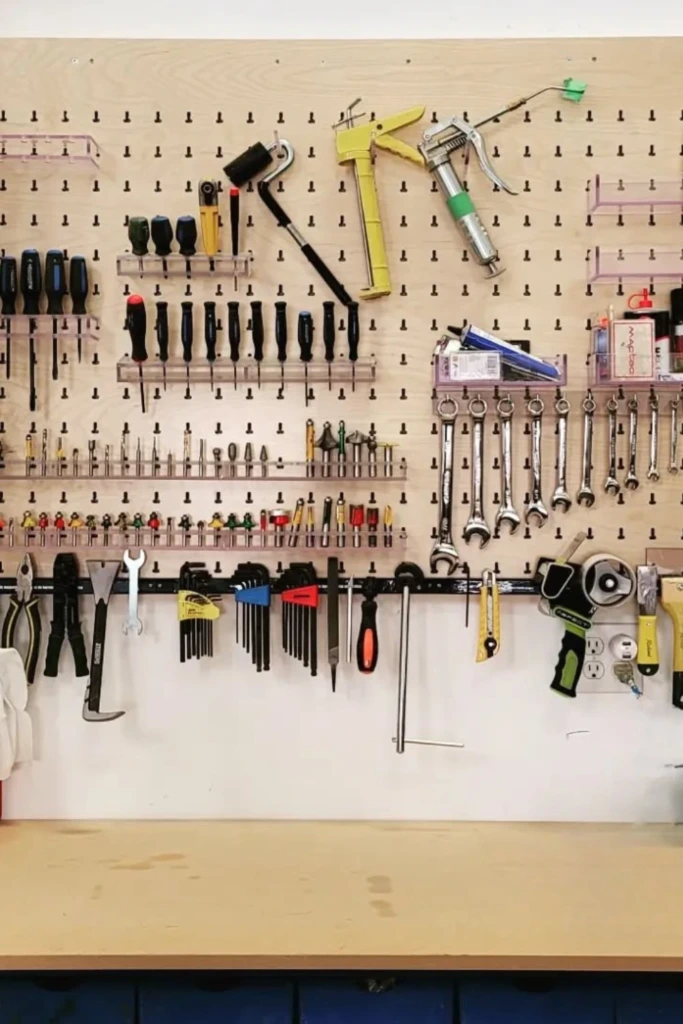
A workshop pegboard makes it easier to keep hand tools organized and ready for the next repair. Instead of searching through crowded drawers, you can assign a specific section to screwdrivers, pliers, wrenches, measuring tools, and frequently used accessories.
Arrange tools according to their purpose or size, and use appropriately rated hooks that support their weight. Small shelves can hold compact toolboxes, while labeled containers are useful for screws, nails, and other hardware.
For an especially practical setup, outline frequently used tools on the board or add simple labels beneath each group. This makes missing items easier to notice and helps everyone in the household return tools to the right place.
4. Paint Supply Wall
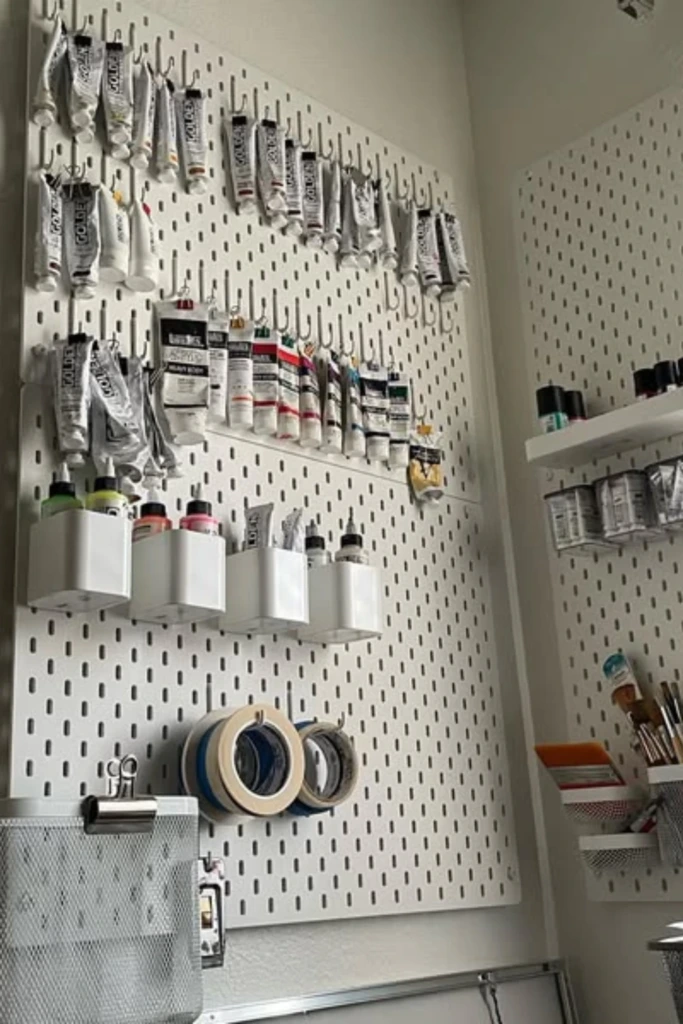
Artists can use a pegboard to keep paints, brushes, palette knives, and other supplies within easy reach. Organizing materials vertically frees up valuable table space and makes it easier to see what is available before starting a project.
Install small baskets for paint tubes, cups for brushes, and narrow shelves for bottles or mediums. Separate supplies by color, type, or frequency of use so the arrangement supports your preferred creative process.
Keep paints upright when their packaging requires it, and check that containers are securely stored. Good task lighting is particularly helpful when selecting colors or mixing shades, while keeping the board away from excessive heat helps protect sensitive materials.
5. Craft Command Center
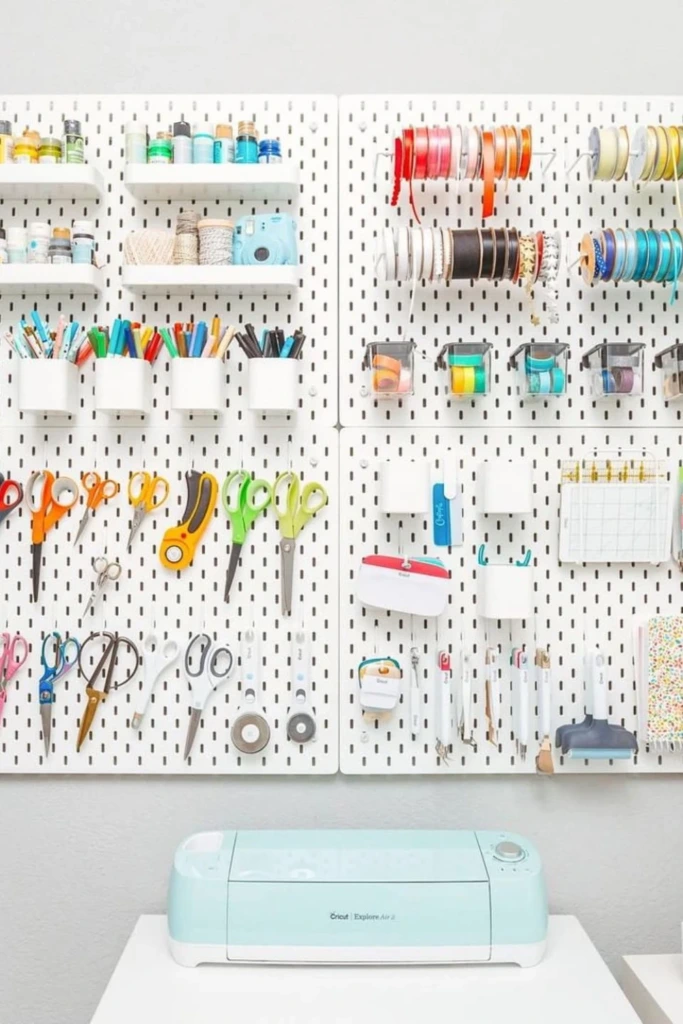
A craft command center brings the supplies you regularly use into one organized area. It works particularly well for scrapbooking, gift wrapping, card making, and other hobbies that require many small tools.
Divide the board into practical sections for cutting tools, writing supplies, adhesives, ribbons, and embellishments. Hooks can hold scissors and rulers, while cups and divided bins keep smaller materials from getting mixed together.
Place the accessories you reach for most often near the center of the board. If several people share the workspace, clearly defined zones make it easier for everyone to find what they need and put it away afterward.
6. Layered Craft Wall
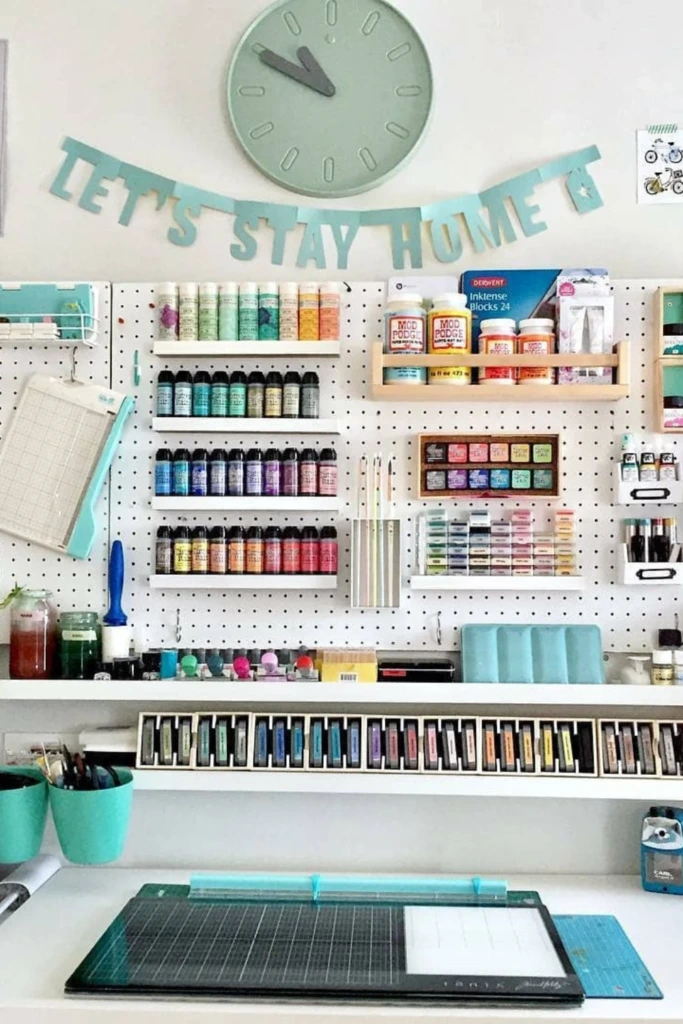
When a basic pegboard does not provide enough storage, combine it with shallow shelves, hanging cups, baskets, and adjustable hooks. This layered approach makes better use of vertical space without requiring a large cabinet.
Keep lightweight materials and small containers on the upper shelves, and place heavier supplies on securely mounted lower shelves. Arrange materials in separate groups so the board remains useful rather than becoming a collection of miscellaneous objects.
This design works well in larger craft rooms and shared creative spaces. Choose accessories that fit the board's mounting system, and leave enough open area to accommodate new materials as your projects change.
7. Kitchen Tool Board
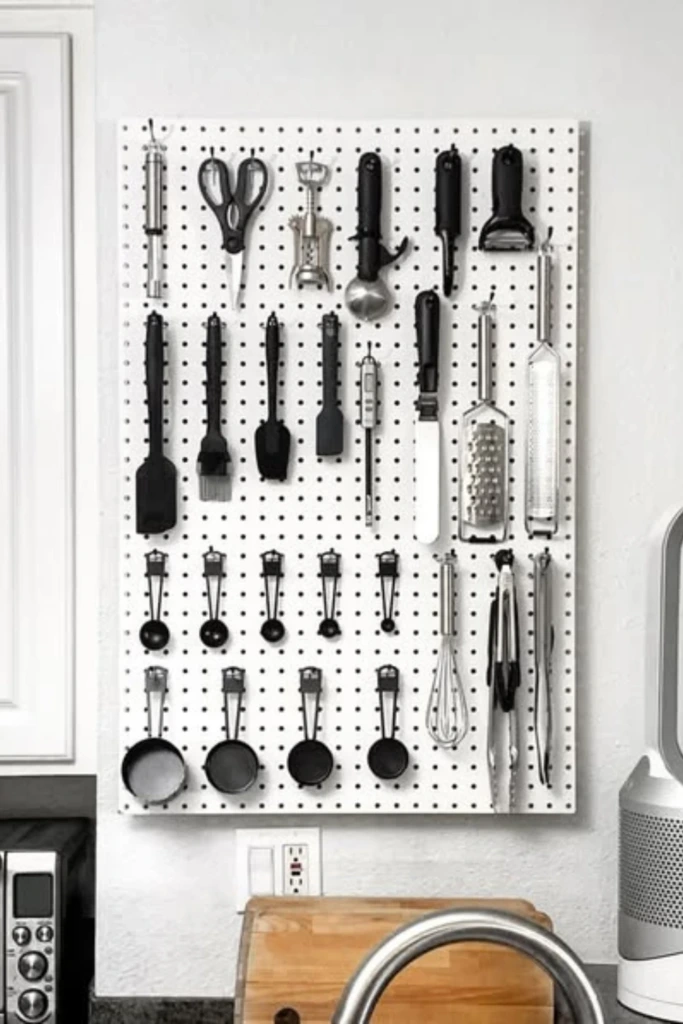
A kitchen pegboard can make a compact cooking area more efficient by moving frequently used utensils off crowded countertops. Hang spatulas, ladles, measuring tools, and other lightweight kitchen accessories where they are easy to reach.
Arrange tools according to how you cook. Keep everyday utensils near the food preparation area, while less frequently used accessories can occupy the outer edges of the board.
Choose a material and finish suitable for the kitchen environment, and clean the board regularly to prevent grease and dust buildup. Keep the arrangement away from direct heat and splashing water, and make sure the installation is secure before hanging cookware or heavier utensils.
8. Soft Craft Station
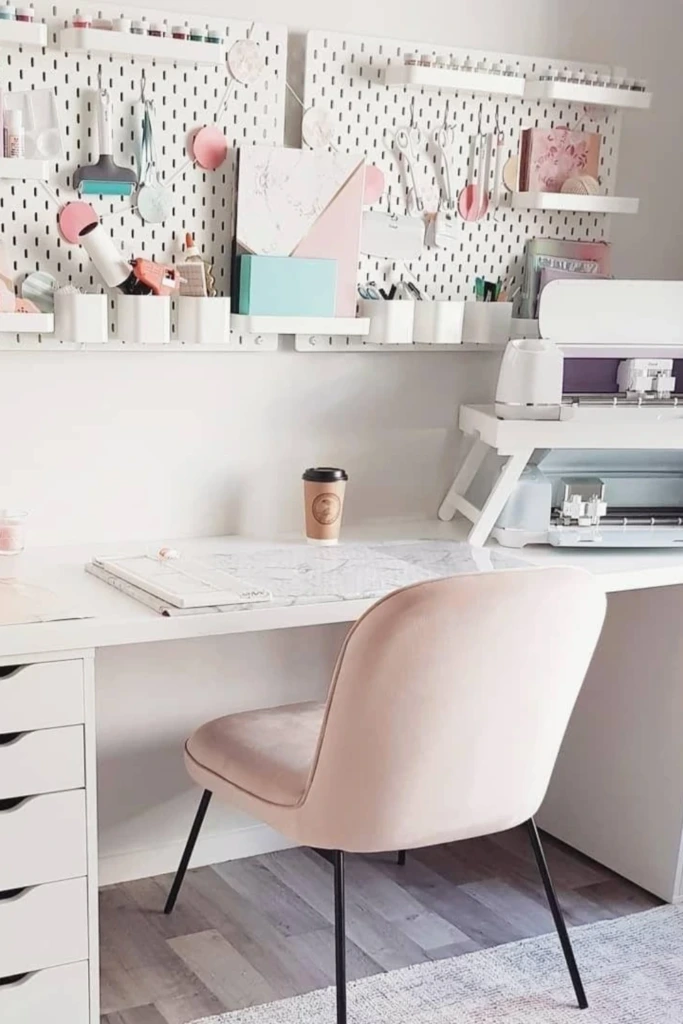
A soft craft station combines useful storage with a relaxed, uncluttered appearance. It is ideal for journaling, paper crafts, drawing, and other activities that benefit from a comfortable workspace.
Use a neutral-colored pegboard with a few carefully selected accessories. Small cups can hold pens and pencils, shallow shelves can support notebooks, and hooks can keep scissors or rulers off the desk.
Rather than displaying every supply you own, keep only your current essentials on the board and store extras elsewhere. Natural daylight, comfortable task lighting, and a few decorative touches can make the workspace inviting without distracting from the activity.
9. Kids Supply Wall
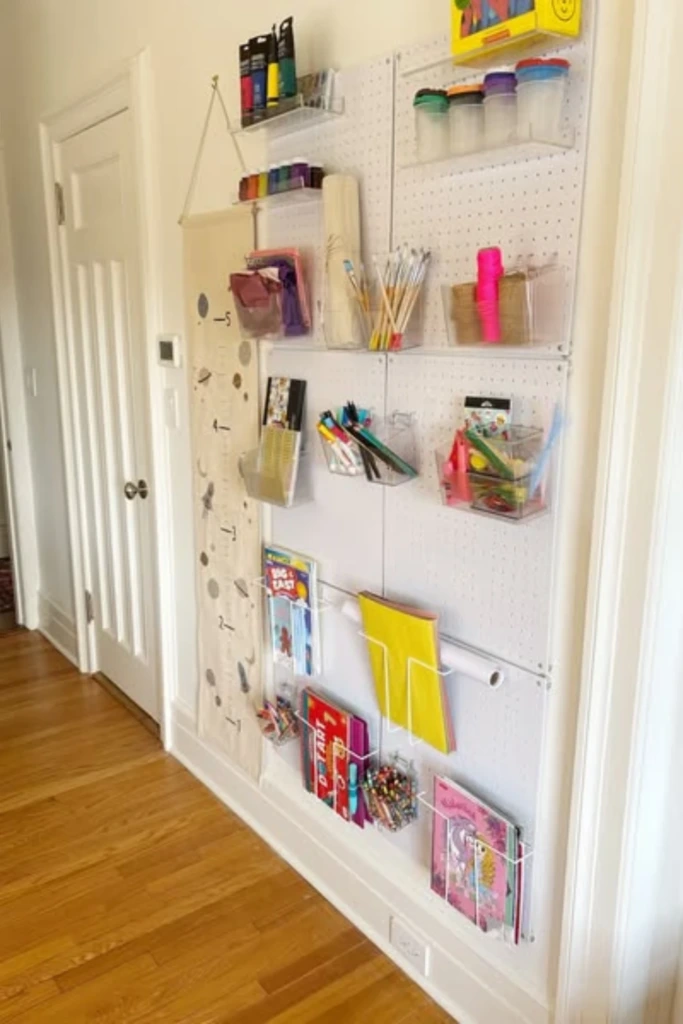
A children's supply wall gives young artists a designated place for crayons, markers, paper, and age-appropriate craft materials. Making supplies visible can encourage children to choose activities independently and participate in tidying up.
Mount the board at a suitable height and use lightweight baskets, rounded accessories, and secure hooks. Divide supplies by activity, such as drawing, painting, and paper crafts, so children can identify where things belong.
Keep sharp tools, heavy objects, choking hazards, and potentially harmful materials out of children's reach. Secure the board firmly to the wall, and choose containers that are easy for children to handle safely.
10. Desk Display Hub
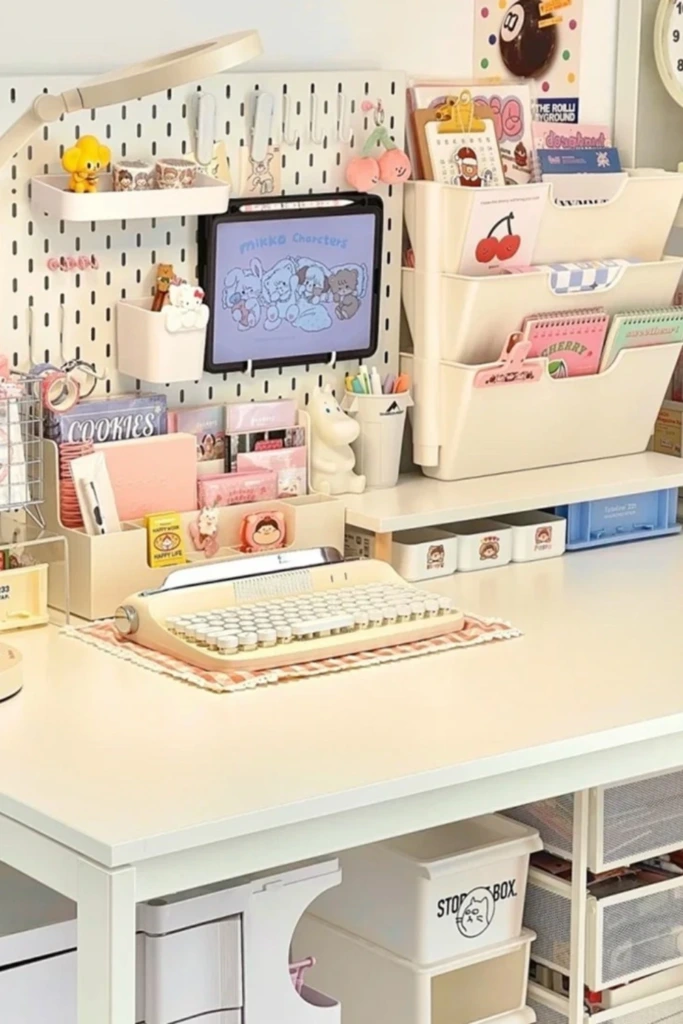
A desk display hub is a simple way to add storage above a work or study area. By moving stationery and small accessories onto the wall, you can keep the main surface open for a laptop, books, or creative projects.
Use small trays for sticky notes, hooks for scissors and cables, and compact shelves for notebooks or decorative objects. A calendar or planning card can also make the board useful for keeping track of current tasks.
Keep the arrangement focused on items that support your work. Position accessories so they do not obstruct your screen, interfere with lighting, or crowd the space immediately above your desk.
11. Minimal Work Wall
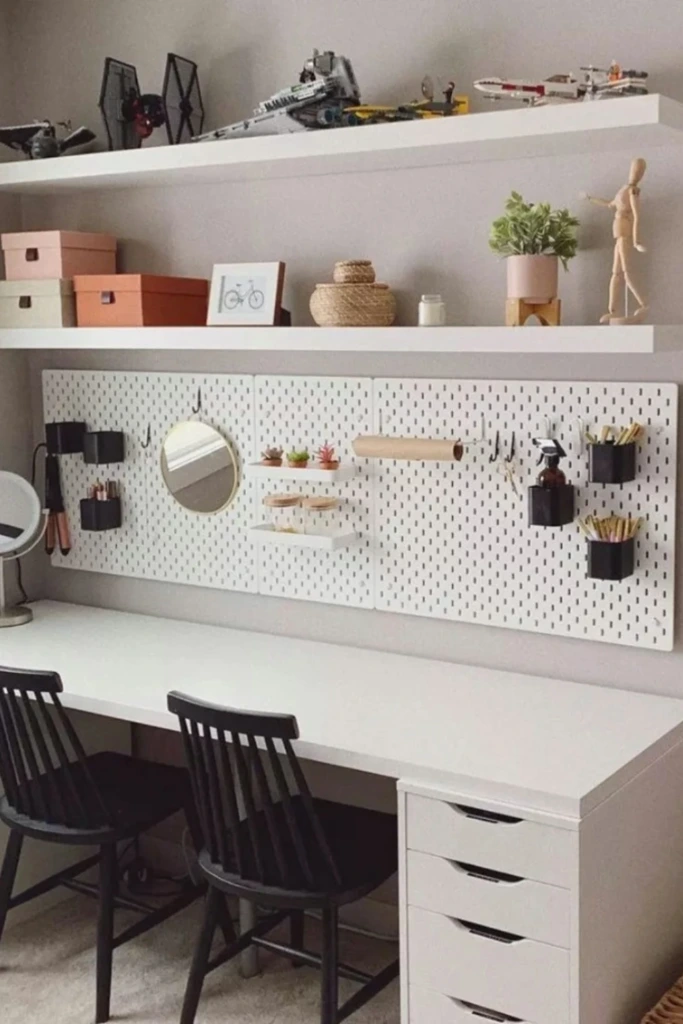
If you prefer a clean workspace, a minimalist pegboard offers useful storage without creating a busy visual display. The idea is to select a small number of essential items rather than filling the entire board.
Choose a few hooks for headphones or scissors, a container for pens, and a narrow shelf for frequently referenced items. Keep similar accessories together and leave generous gaps between groups.
A restrained color palette can help the board blend into the room. This arrangement is particularly useful in shared offices, small apartments, and multipurpose rooms where visual simplicity matters as much as storage capacity.
12. Framed Craft Nook
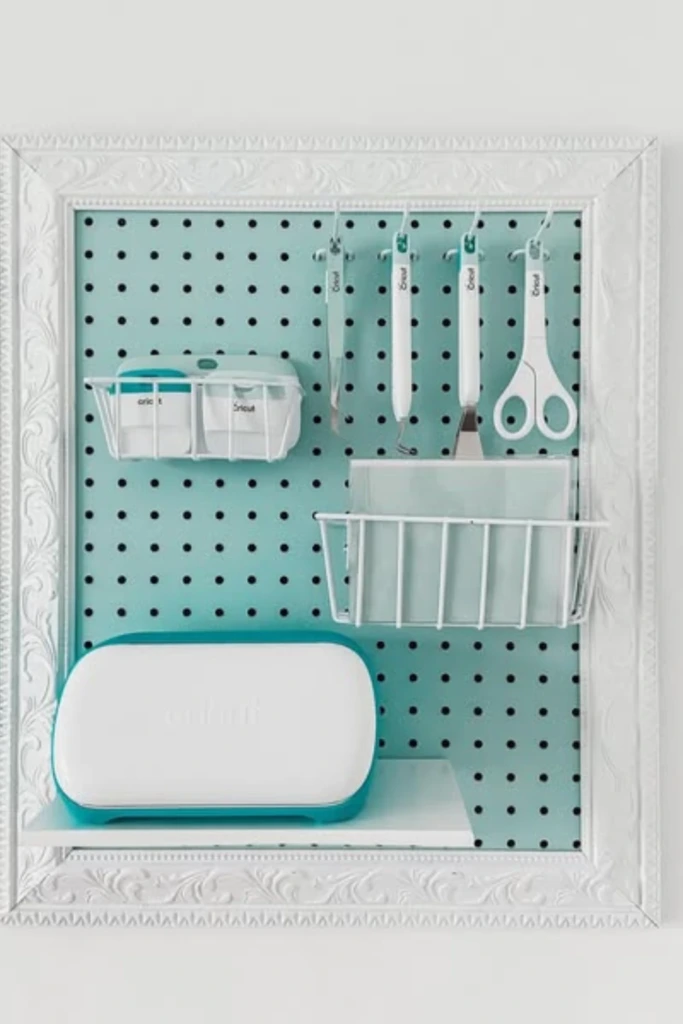
A framed pegboard can turn a small, otherwise unused wall into a functional craft nook. The frame gives the organizer a finished appearance, helping it feel like part of the room's design rather than purely practical storage.
Choose a board size that suits your available wall space, then add a few hooks, a shallow shelf, and small baskets for loose supplies. A soft paint color or a frame that matches nearby furniture can tie the arrangement together.
This idea works well in bedrooms, sewing corners, and compact home offices. Keep the design proportionate to the wall, and make sure the frame does not interfere with the hooks or accessories.
13. Decorative Craft Frame
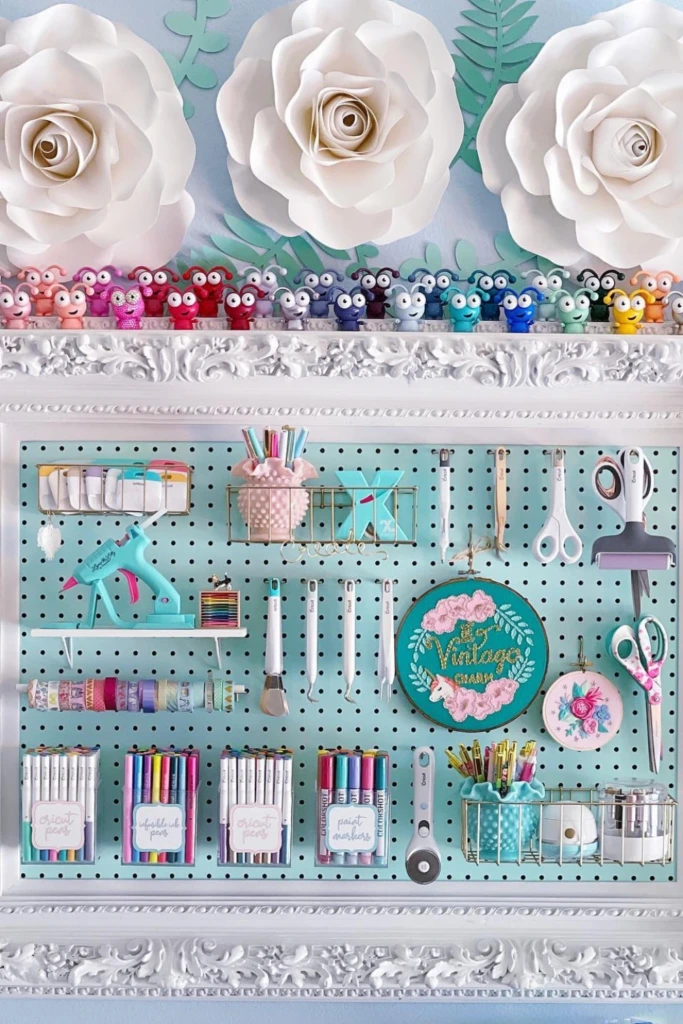
For a more decorative approach, treat the pegboard as both a storage system and a feature wall. A distinctive frame, coordinated accessories, and thoughtfully arranged supplies can make everyday tools part of the room's visual identity.
Choose a frame finish that complements your furniture, then group supplies by color or purpose. Matching containers can create a cohesive appearance, while a few contrasting accessories add personality.
The key is to balance decoration with function. Avoid placing too many objects on the board, and make sure every displayed item remains easy to remove and return when you need it.
14. Vertical Pan Storage
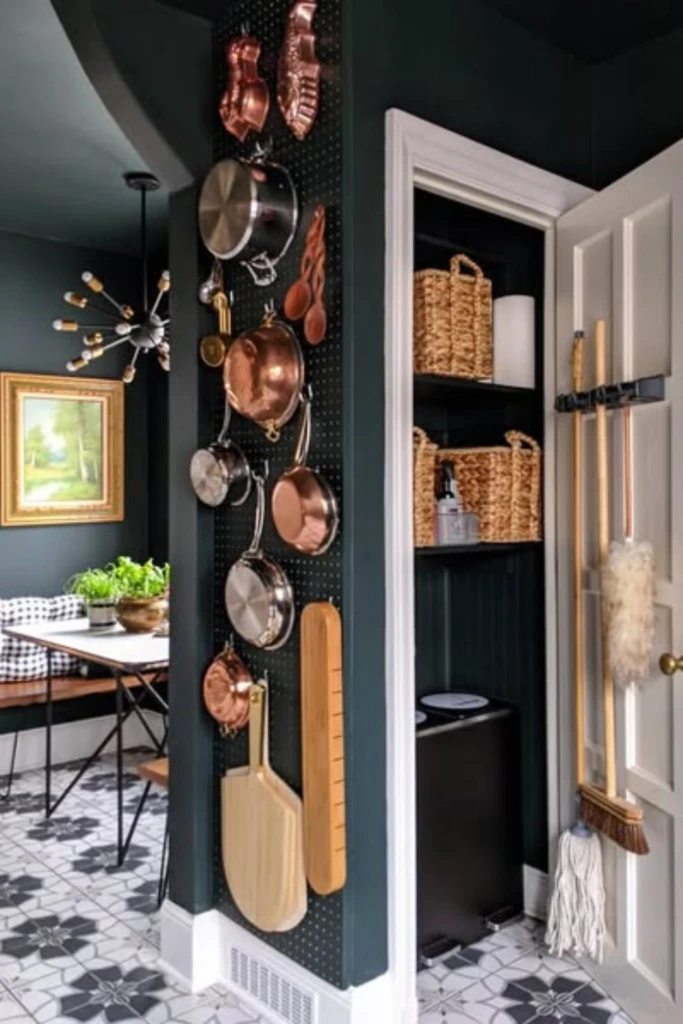
A vertical cookware display can help free up cabinet space in a small kitchen. With a suitably strong pegboard system, selected pots, pans, and lightweight cookware can be arranged along the wall for convenient access.
Before installing this setup, check the combined weight of the cookware and confirm that the board, hooks, and wall fasteners are designed to support it. Heavy pans require especially secure mounting, and a purpose-built rail or rack may be a safer choice if the pegboard is not rated for cookware.
Arrange pieces so handles do not overlap or protrude into walkways. Keep the board away from stovetop heat and ensure that the cookware is clean and dry before hanging it.