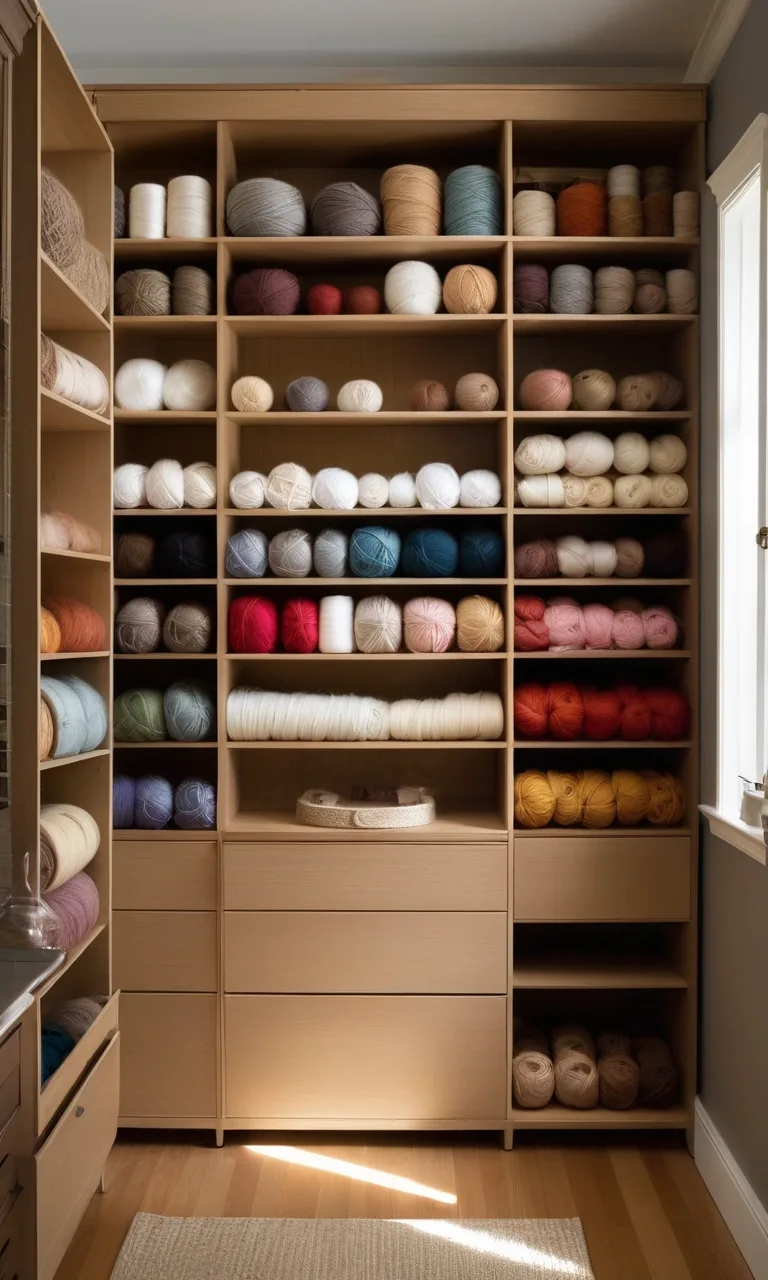
20 Pencil Storage Ideas for 2026

Keeping pencils organized makes drawing, writing, studying, and crafting much easier. Whether you have a compact study desk, a busy art corner, or an extensive collection of colored pencils, the right storage solution helps you find what you need without wasting valuable space. From simple containers to purpose-built organizers, these pencil storage ideas offer practical ways to keep supplies tidy, accessible, and protected.
What Are the Best Pencil Storage Ideas for Small Spaces?
The best pencil storage ideas for small spaces make use of vertical surfaces, unused corners, and containers that fit neatly inside drawers. Instead of spreading pencils across your entire desk, choose a storage method that suits the size of your collection and how frequently you use different supplies.
For a small study area, a divided tray or compact desk sorter can keep everyday pencils within reach. Artists with numerous colored pencils may prefer clear drawers, stacking organizers, or a rotating holder that makes different shades easy to identify. Wall-mounted racks are another useful option when desk space is limited.
You can also repurpose household items, such as clean tins, sturdy boxes, and small cups, to create an affordable organizing system. Before purchasing anything, count your pencils, measure the available space, and decide whether you prefer upright storage, horizontal compartments, or portable cases.
1. Tray Organizer
A tray organizer is a practical choice for anyone who wants pencils arranged neatly inside a desk drawer. Shallow compartments keep pencils separated from erasers, sharpeners, pens, and other small supplies, preventing everything from becoming mixed together.
Choose a tray with compartments that accommodate the length of your pencils. Adjustable dividers are especially useful because they let you change the layout as your collection grows. If you own many colored pencils, dedicate individual sections to different color families.
For the best results, measure the drawer before buying a tray. A snug fit prevents the organizer from sliding around whenever you open or close the drawer. This solution works particularly well in bedrooms, classrooms, and home offices where a clean desktop is a priority.
2. Closet Station
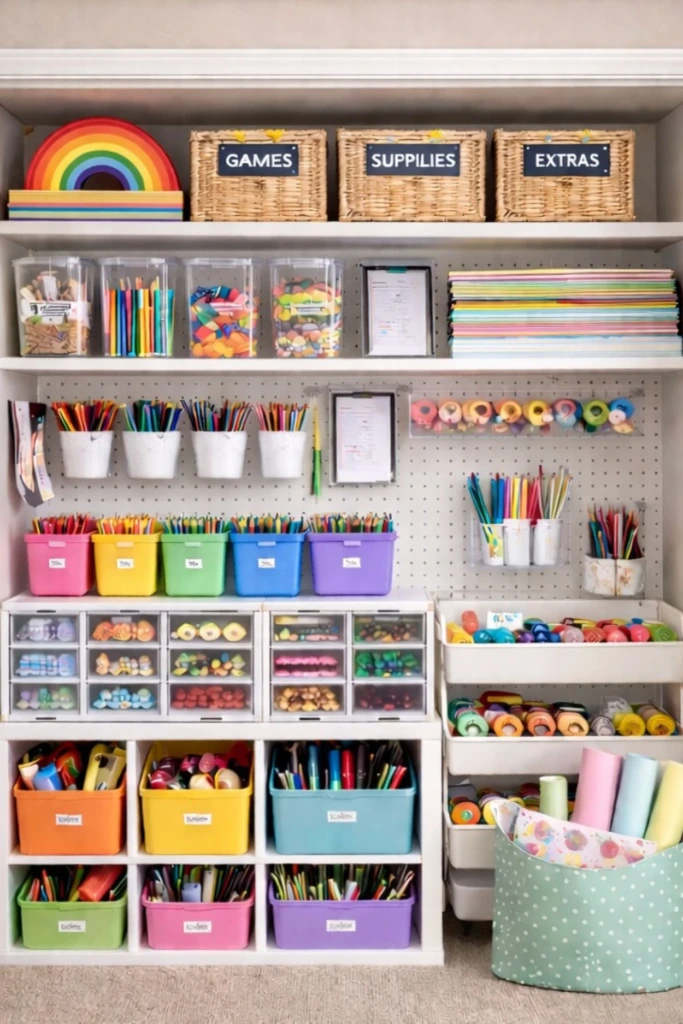
A closet station can turn an underused shelf into a dedicated area for art and stationery supplies. This arrangement is particularly helpful when your pencil collection is too large for a desk organizer but you do not have room for a separate craft cabinet.
Place pencils in labeled boxes, small bins, or divided containers on a reachable shelf. Keep frequently used writing pencils and colored pencils at the front, while spare supplies and specialty drawing tools can occupy the upper shelves.
A small set of drawers inside the closet provides additional separation for different pencil types. If several family members share the space, label each container by purpose or owner.
Make sure the storage area remains dry and free from excessive heat. Keeping pencils away from damp walls and direct sunlight helps preserve wooden barrels, labels, and packaging.
3. Clear Drawers
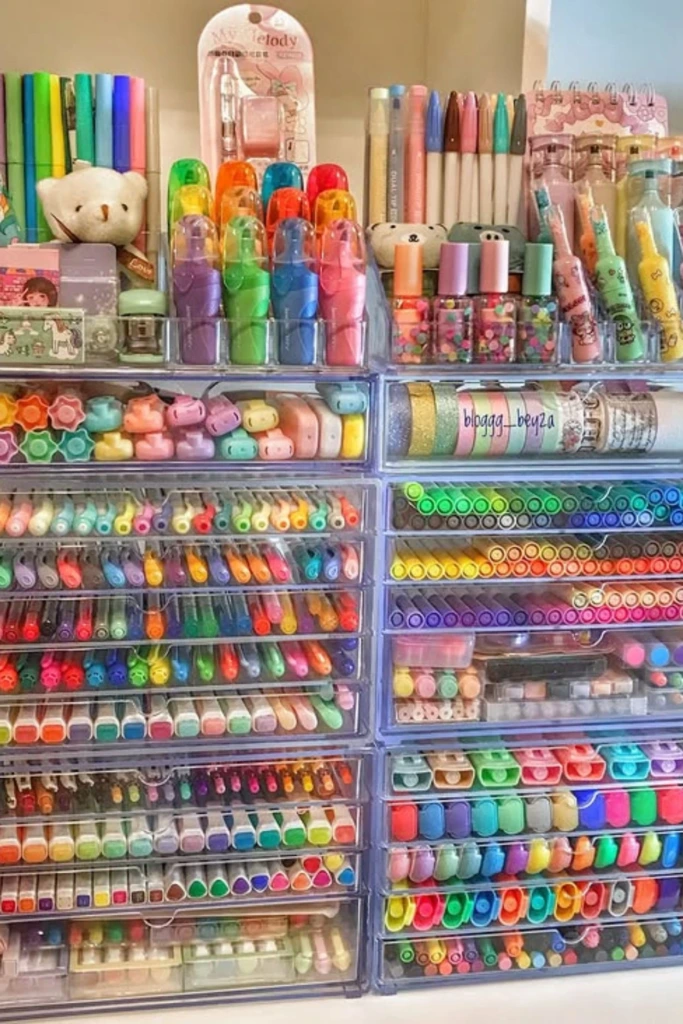
Clear drawers make it easy to identify pencil colors and supplies without opening every container. They are particularly useful for artists who work with multiple pencil sets and want to see their materials at a glance.
Use shallow drawers for colored pencils arranged by hue, and reserve deeper compartments for larger collections or spare supplies. Small removable dividers can prevent pencils from rolling together and help maintain an orderly layout.
Transparent drawers also make inventory checks easier. You can quickly see when a particular color family is running low or when sharpened pencils need replenishing.
For a compact workspace, select a stackable unit that fits beneath a desk or on a shelf. Choose drawers that slide smoothly and are wide enough to accommodate your pencils without forcing them into tight spaces.
4. Desk Divider
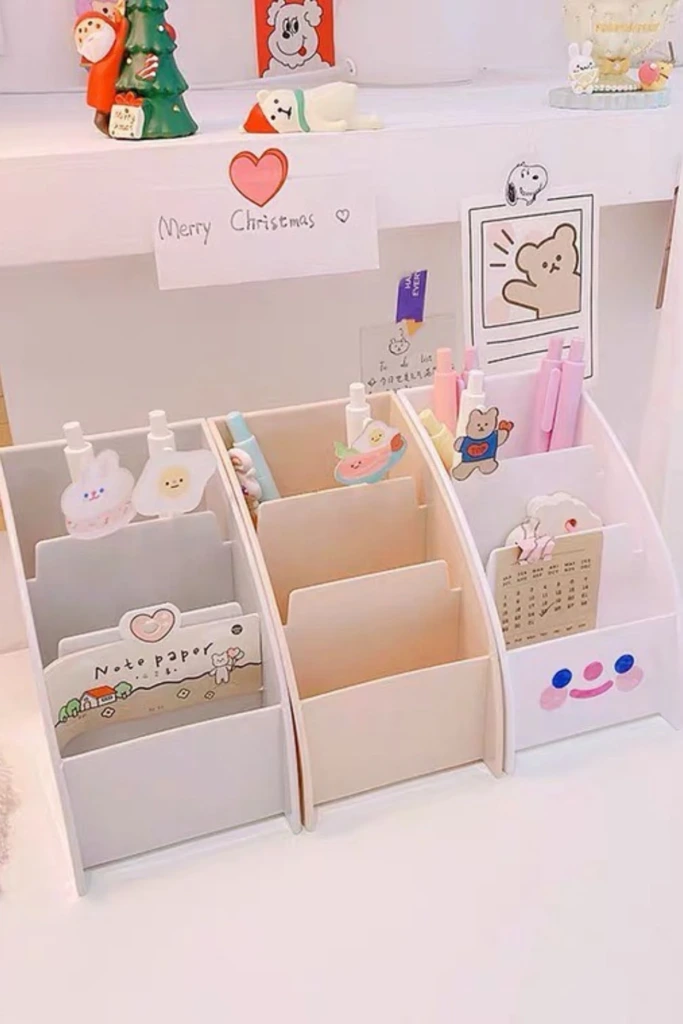
A desk divider creates separate zones for pencils and other frequently used supplies. Depending on the design, it may be a compartmentalized insert placed inside a drawer or a desktop organizer with several individual sections.
Use one compartment for graphite pencils, another for colored pencils, and a third for markers or pens. Keeping similar items together reduces the time spent searching for the right tool during homework or creative projects.
Adjustable dividers are ideal if you regularly switch between writing and drawing. You can enlarge one section when a pencil collection grows or create a dedicated compartment for sharpeners and erasers.
If you prefer a minimalist desk, choose an organizer that fits inside an existing drawer. For a shared study area, a divided desktop unit keeps essential supplies visible and easy to return after use.
5. Pencil Cabinet
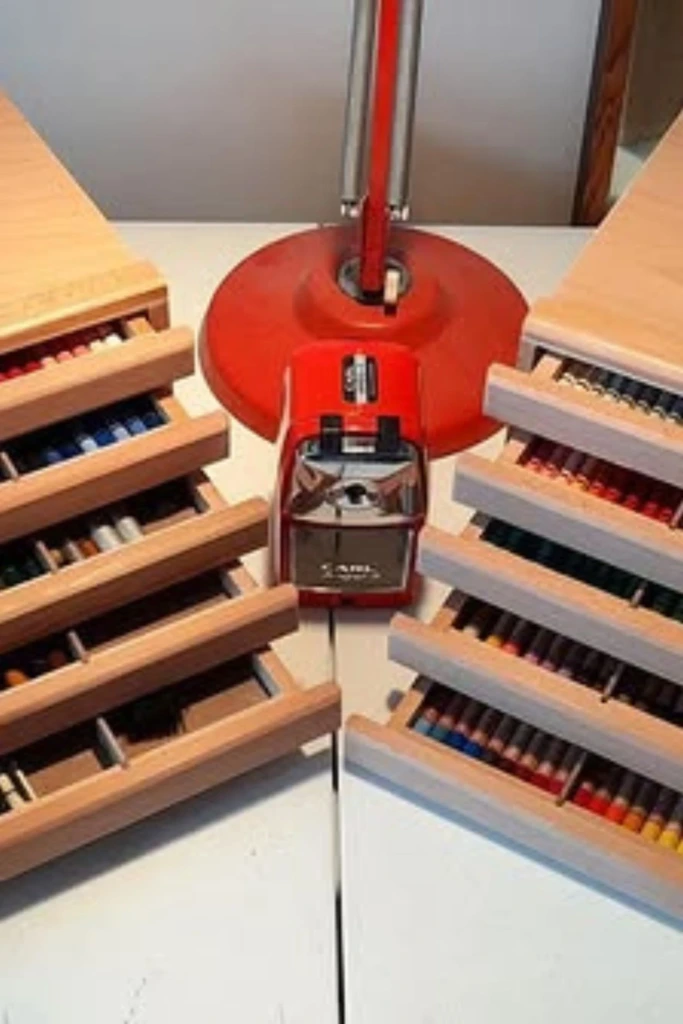
A pencil cabinet provides a more permanent storage solution for large stationery collections. Small cabinets with multiple drawers can accommodate colored pencils, graphite pencils, charcoal pencils, blending tools, and other art materials in one organized location.
Choose a cabinet based on the size of your collection and the space available. Shallow drawers work well for arranging pencils in rows, while larger drawers can hold unopened sets and accessories.
Label each drawer according to its contents. For colored pencils, you might organize by color family, brand, or pencil type, depending on how you work.
A cabinet with a stable base is preferable in busy households or classrooms. If you keep expensive or delicate art supplies, look for drawers that close securely and protect the contents from dust.
6. Storage Case
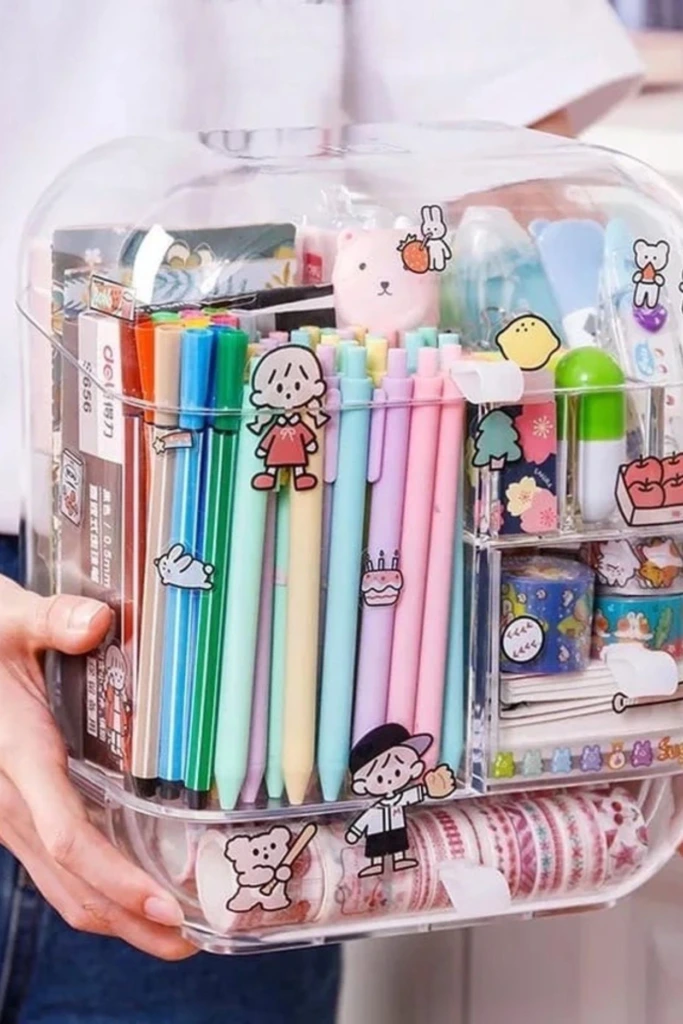
A storage case is useful when you need to keep pencils protected between drawing sessions or move them between rooms. Cases are available in hard-shell, fabric, plastic, and compartmentalized designs, offering different levels of protection and convenience.
A hard case is suitable for transporting pencils in a backpack because it helps prevent the contents from being crushed. Fabric cases are lightweight and flexible, while larger storage boxes can hold several sets together.
Look for individual loops, fitted compartments, or removable trays if you want to keep pencils from rubbing against one another. Artists who use colored pencils may appreciate transparent lids that reveal the contents without requiring the case to be unpacked.
For home storage, stackable cases help conserve shelf space. For school or travel, a compact case with a secure closure is usually more practical than a large organizer.
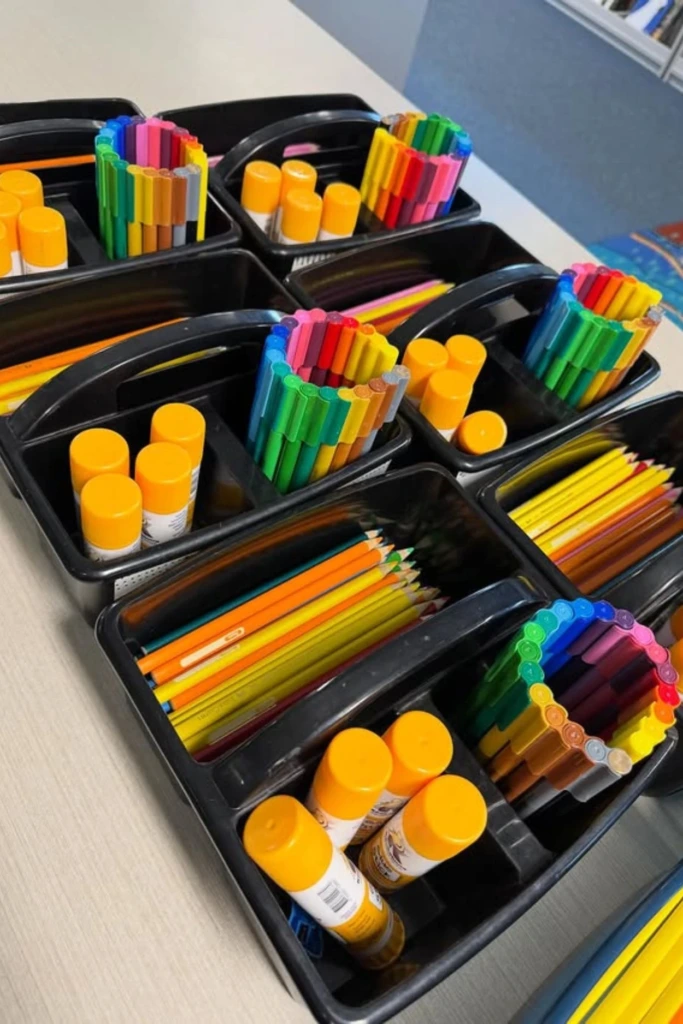
7. Supply Caddy
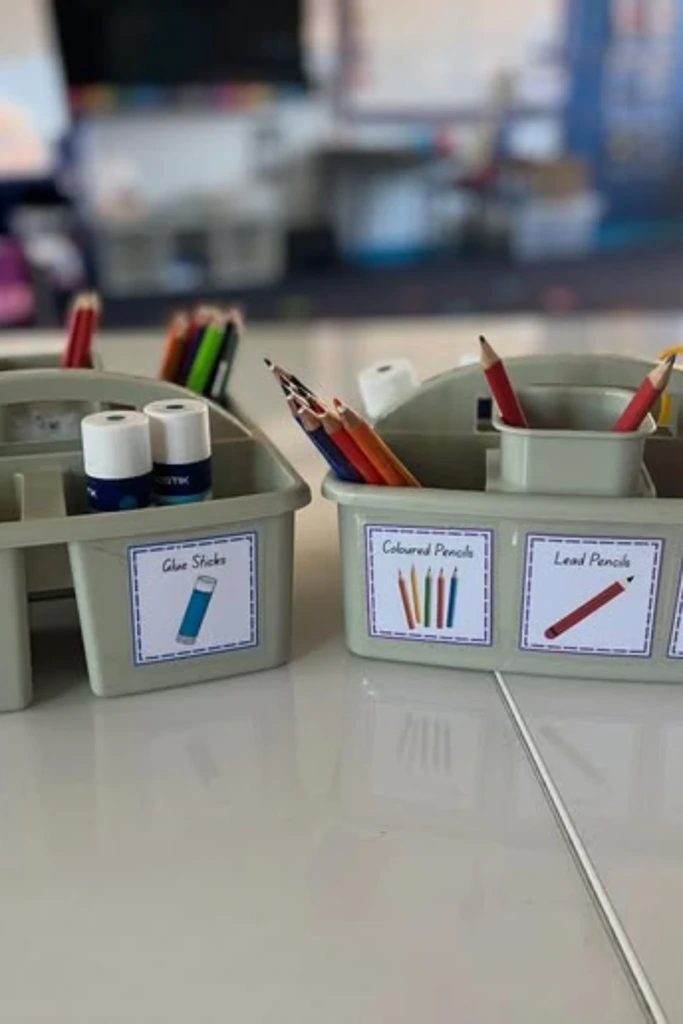
A supply caddy keeps pencils and other frequently used tools together in a portable container. Its handle makes it easy to carry supplies from a desk to a dining table, classroom, or craft area.
Choose a caddy with several compartments so pencils can remain separate from scissors, glue sticks, rulers, and other materials. Taller sections are useful for upright pencils, while smaller sections can accommodate erasers and sharpeners.
If you use colored pencils regularly, reserve a section for your most-used shades and store the rest elsewhere. This creates a convenient everyday collection without overcrowding the caddy.
Plastic caddies are lightweight and easy to clean, while wooden or metal versions can provide a more decorative appearance. Before buying one, check that the compartments are deep enough to prevent long pencils from tipping out during transport.
8. Wood Station
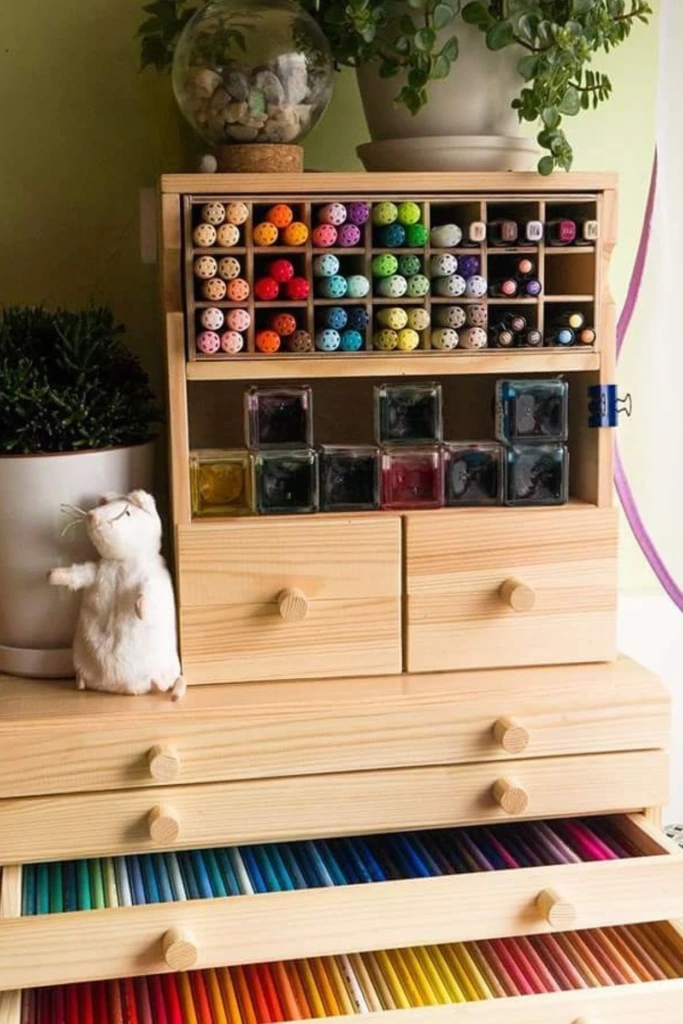
A wooden pencil station adds warmth to a study desk while providing a dedicated place for writing and drawing tools. Depending on its design, it may include upright holders, horizontal grooves, small drawers, or separate sections for accessories.
A wooden block with drilled openings works well for frequently used pencils, while a larger station with multiple compartments can accommodate a broader stationery collection. Natural wood also pairs easily with other desk accessories.
For a more organized setup, dedicate individual sections to graphite pencils, colored pencils, and pens. Keep only your most frequently used supplies on the desktop to prevent the station from becoming overcrowded.
Choose a stable design with smooth, finished edges. If you make a DIY version, sand the openings carefully and ensure they are wide enough to hold pencils without damaging their paint or wooden barrels.
9. Wall Rack
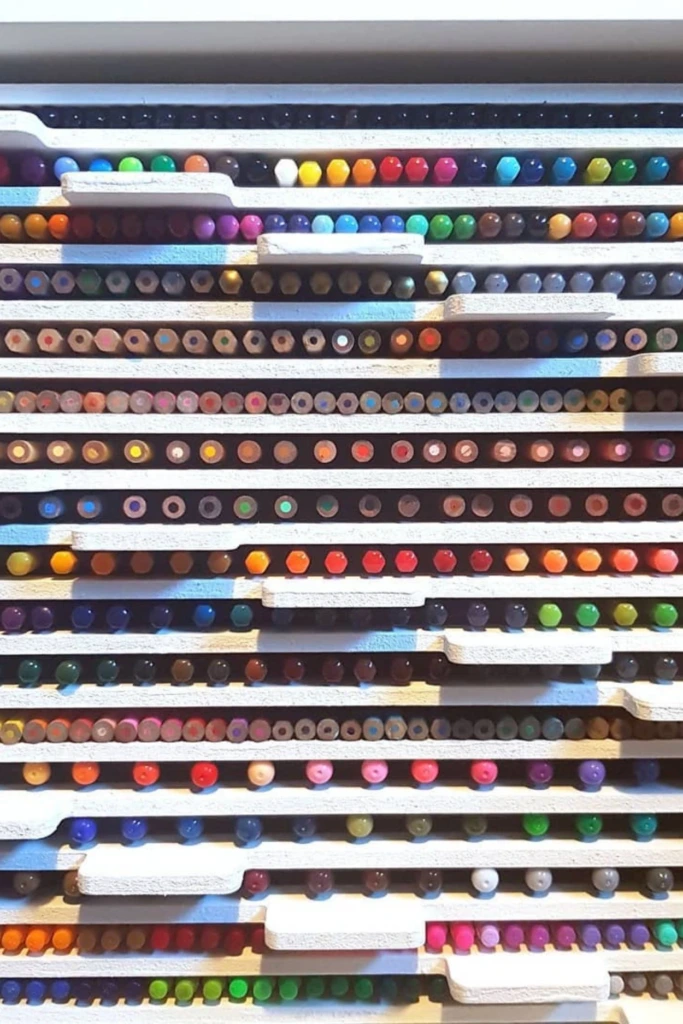
A wall rack frees up desk space by moving pencil storage onto a vertical surface. It works especially well in small bedrooms, compact studios, classrooms, and craft rooms where every inch of the work surface matters.
You can use a purpose-built stationery rack, a small shelf with containers, or a pegboard fitted with suitable holders. Arrange pencils in labeled cups or narrow compartments so different categories remain easy to identify.
Position the rack near your desk at a comfortable height. Frequently used pencils should be easy to reach, while backup supplies can be placed on higher shelves.
Always select mounting hardware appropriate for the wall material and the combined weight of the organizer and its contents. If you are renting or cannot drill holes, an over-the-door organizer or freestanding shelf may provide a similar benefit.
10. Angle Rack
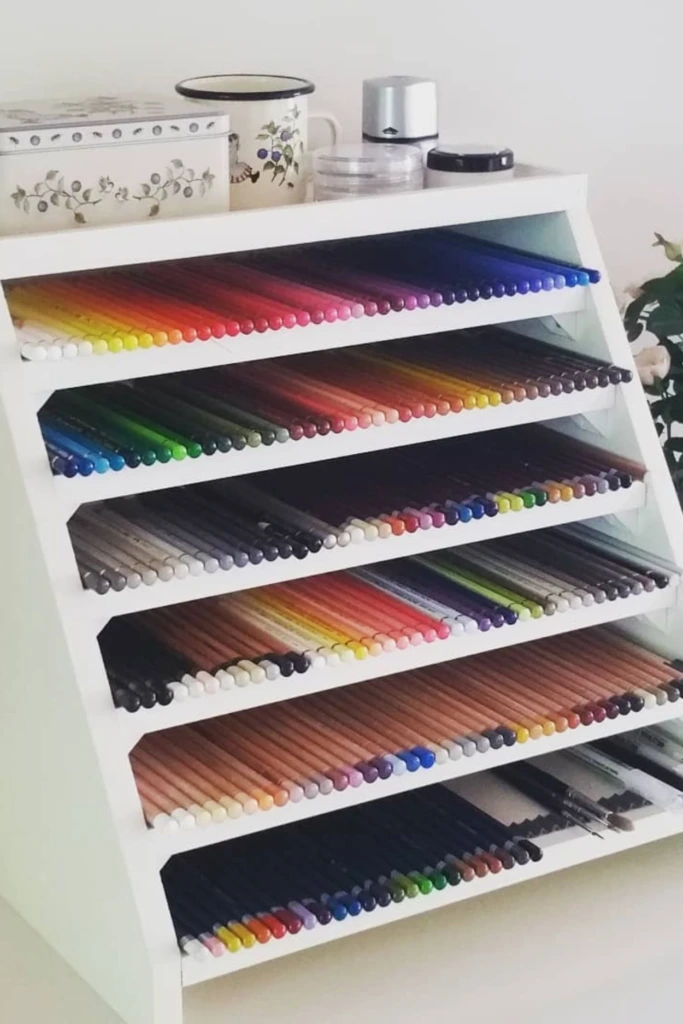
An angled pencil rack displays pencils in slanted rows, making their colors and markings easier to see. This arrangement is especially useful for artists who need to select individual shades quickly while working on detailed drawings.
Look for a rack with several sloped compartments or rows that hold pencils securely. Arrange each row by color family, such as blues, greens, reds, and yellows, or group pencils according to their intended use.
A tiered design can make a large collection easier to browse without taking up as much horizontal space as separate containers. However, check the dimensions carefully because some display racks are designed for short pencils or cosmetics rather than full-length art pencils.
Keep the rack on a stable surface and avoid steep angles that allow pencils to slide out. This option is best for people who value visibility and quick access over completely concealed storage.
11. Rotating Tray
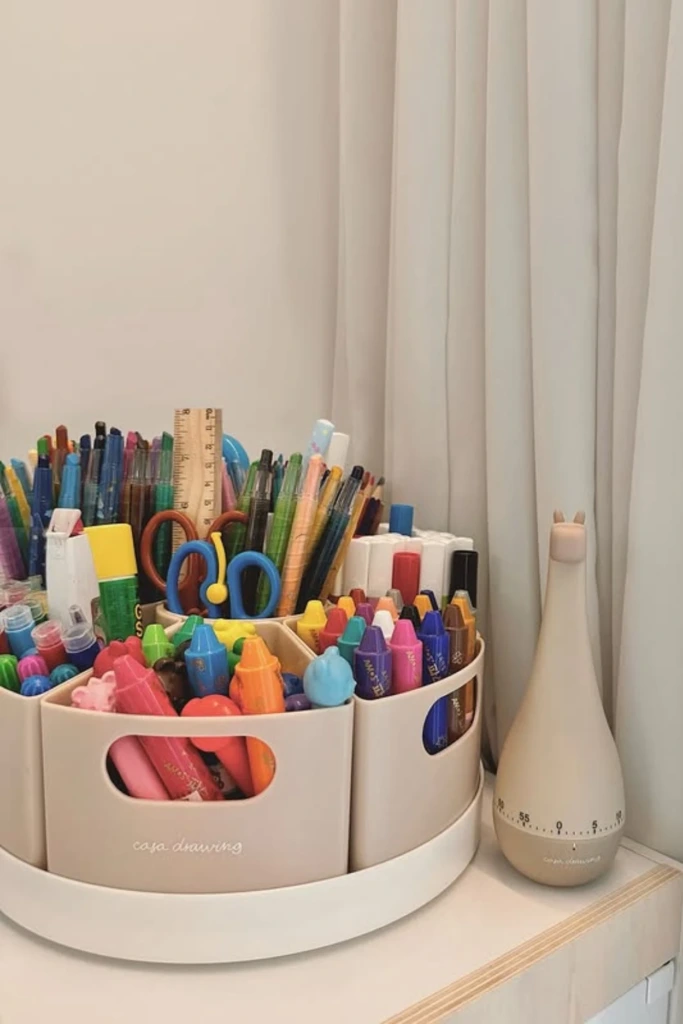
A rotating tray, often called a lazy Susan organizer, lets you access pencils by turning the holder instead of reaching across the desk. It is particularly convenient when several people share a workspace or when the organizer contains many different pencil categories.
Choose a model with divided sections or attach small containers to the tray to keep supplies separated. You might arrange colored pencils around the edge by hue and reserve the center for erasers, sharpeners, or blending tools.
A rotating organizer can sit on a desk, craft table, or shelf with enough clearance for it to turn freely. Check the tray's diameter before purchasing to make sure it will not interfere with nearby equipment.
Avoid overloading one side, as uneven weight can make some designs wobble. A stable base and smooth rotation will make this storage method more convenient for everyday use.
12. Rolling Cart
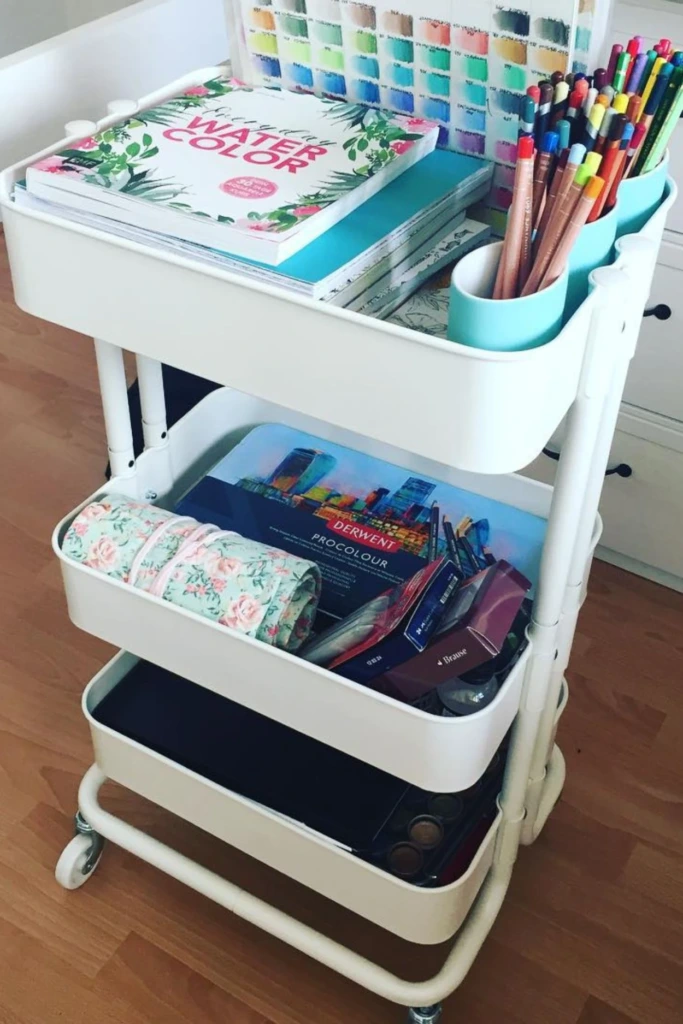
A rolling cart is an excellent choice for artists, teachers, and students who keep more supplies than a standard pencil holder can accommodate. Its multiple shelves or drawers can create a mobile storage station that moves wherever you need to work.
Use the top level for everyday pencils, sharpeners, erasers, and other frequently used items. Reserve lower shelves for backup pencil sets, sketchbooks, coloring materials, and larger art supplies.
Small bins or drawer dividers help prevent pencils from becoming mixed with unrelated tools. Label each section so you can return supplies to the correct place after finishing a project.
Choose a cart with locking wheels if you want it to remain stationary while drawing. Measure the route between rooms and the space beneath your desk before buying one, and avoid placing heavy objects on top of tall, unstable units.
13. Tin Holders
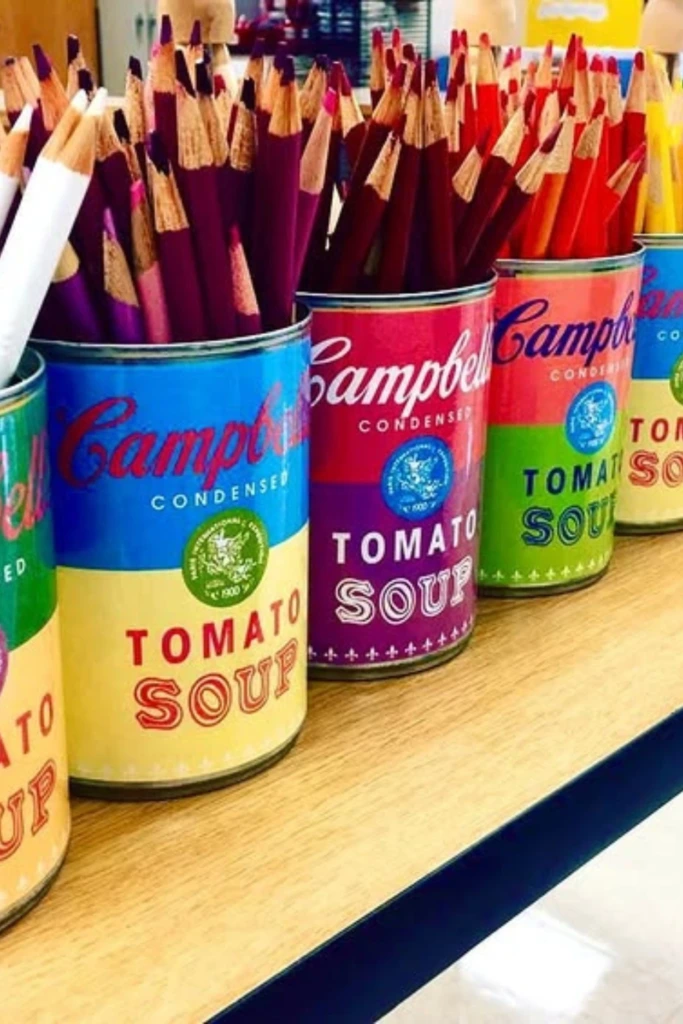
Tin holders offer an inexpensive way to store pencils upright while reusing containers you already own. Clean food tins, decorative metal cans, and purpose-made stationery tins can all work when their interiors are suitable for storing writing tools.
Remove any sharp edges and ensure the container is completely clean and dry before using it. If the tin is lightweight, add a little weight to the base or place it inside a stable tray to prevent tipping.
You can dedicate separate tins to graphite pencils, colored pencils, markers, and pens. Labeling each container makes it easier to maintain the arrangement, especially if several people use the same desk.
For a coordinated appearance, cover the outside with paper or fabric, or group matching tins together. Keep in mind that open tins offer limited protection against dust and may not be ideal for transporting pencils in a bag.
14. Mini Drawer
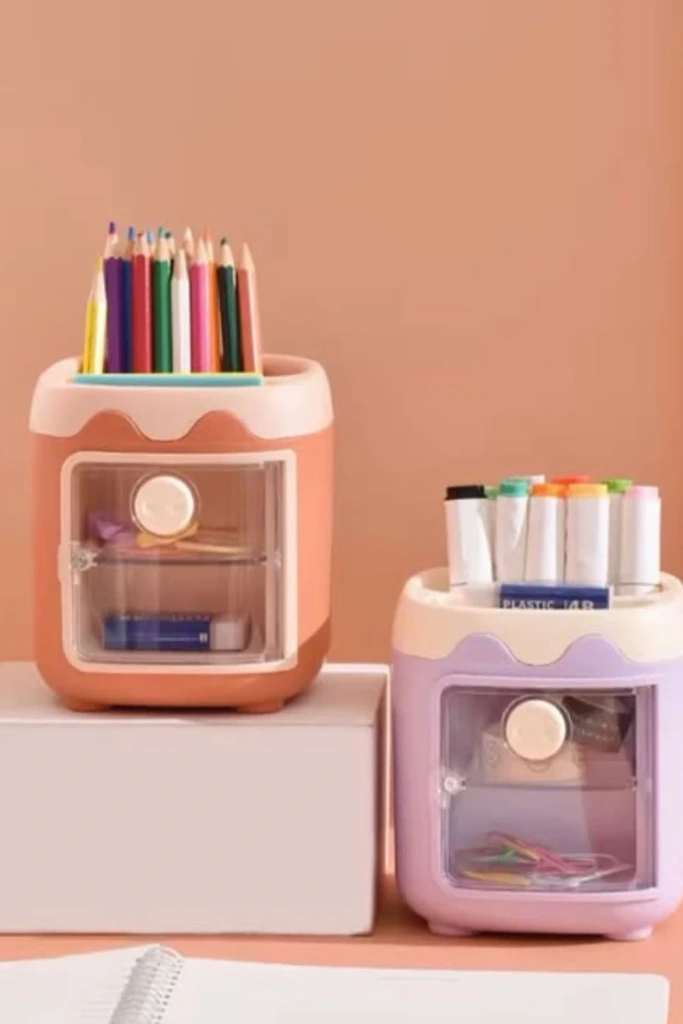
Mini drawers are a practical solution for organizing small pencil collections without dedicating an entire cabinet to stationery. Compact units can fit on a desk, inside a cupboard, or beneath a shelf.
Use each drawer for a different category, such as everyday writing pencils, colored pencils, drawing pencils, and spare sharpeners. Shallow drawers make it easier to lay pencils in neat rows, while deeper drawers can hold boxes and unopened sets.
Adding small dividers prevents supplies from shifting whenever you open the drawer. Labels on the front help you locate specific items without checking every compartment.
If you have a large collection, stackable mini-drawer units offer room to expand gradually. Before stacking them, confirm that the design supports safe stacking and that the drawers remain accessible.
15. Acrylic Tower
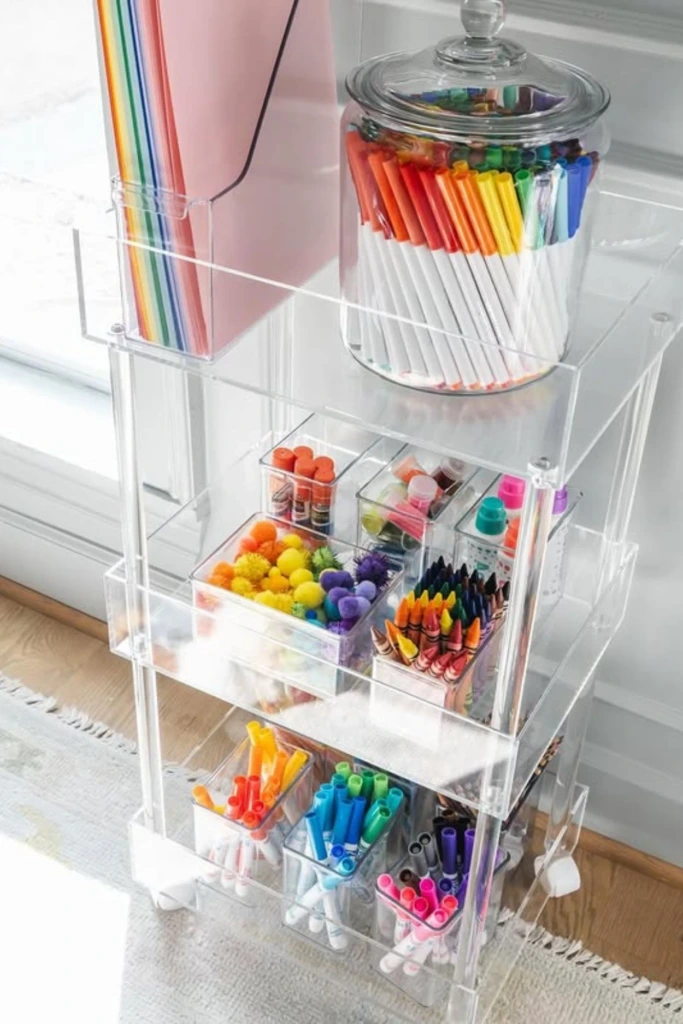
An acrylic tower provides transparent, vertically arranged storage for people who want to keep a collection visible without spreading it across the desk. Depending on the model, it may contain several drawers, open compartments, or rotating sections.
Clear construction makes it easy to identify pencil colors and see which sets are stored in each level. A vertical design also uses less desk area than multiple separate containers.
Arrange pencils by color family, pencil type, or frequency of use. Keep everyday supplies in the most accessible section and reserve upper or lower compartments for less frequently used materials, depending on the tower's layout.
Look for sturdy construction and drawers that slide easily. Acrylic can scratch, so clean it with a soft cloth and avoid abrasive products. Place the tower away from areas where it could be knocked over.
16. Desk Sorter
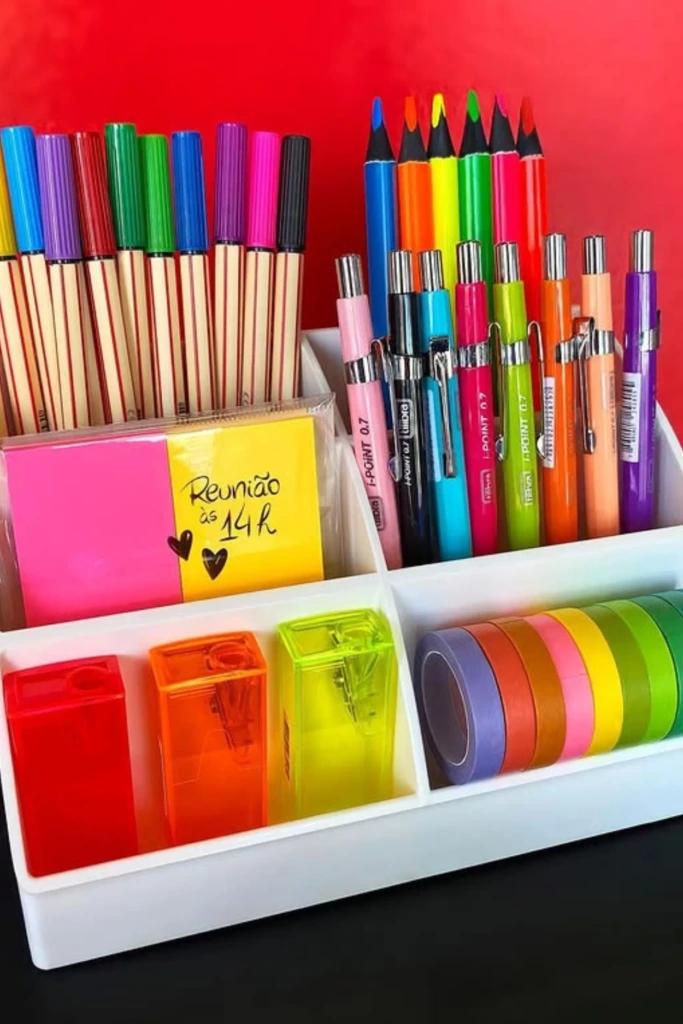
A desk sorter keeps frequently used pencils organized and within reach during study or creative work. Many designs combine pencil compartments with spaces for notebooks, paper clips, sticky notes, and other desk essentials.
For a simple setup, select a sorter with several upright sections and assign each one a clear purpose. Keep graphite pencils together, place colored pencils in another section, and reserve a smaller compartment for erasers and sharpeners.
If you use your desk for both work and drawing, a sorter with removable dividers offers greater flexibility. You can adjust the arrangement whenever your needs change.
Avoid choosing a unit with too many small compartments if you only own a few supplies. A compact organizer that holds your essentials comfortably is often more useful than a large one that consumes valuable workspace.
17. Cup Clusters
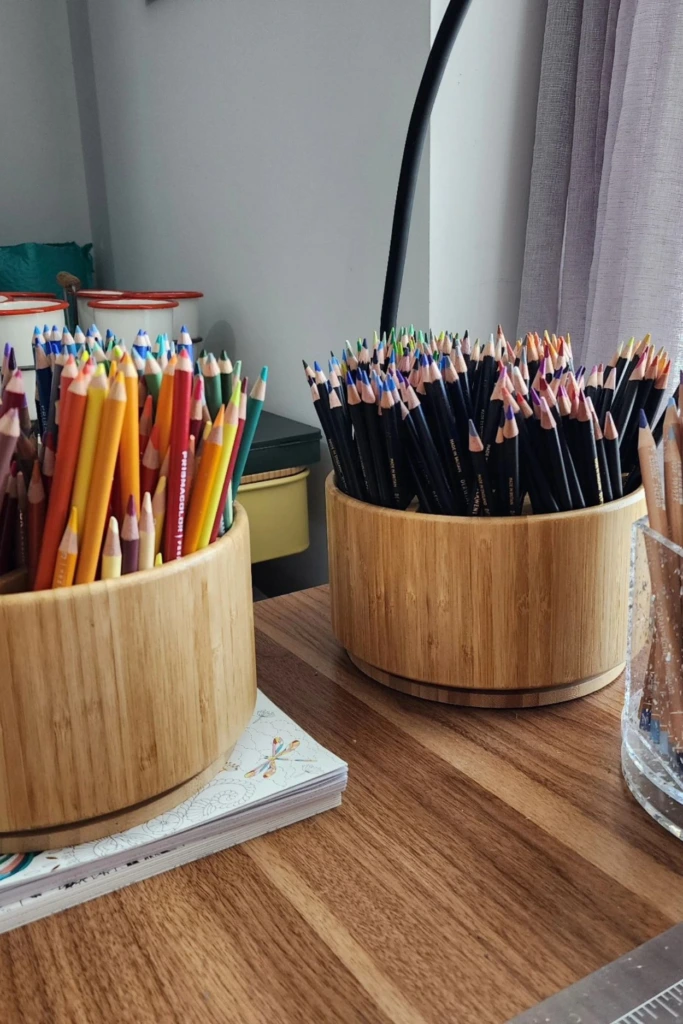
Cup clusters use several small containers grouped together to separate pencils by category or color. This arrangement is easy to customize and works well on desks, shelves, and craft tables.
Start with three or four cups, assigning each one a purpose. For example, one can hold graphite pencils, another can store warm-colored pencils, and a third can contain cool shades. Add more containers only when your collection requires them.
Matching cups create a coordinated look, while different colors or labels make each category easy to recognize. You can also place the cups on a tray to keep them together and make cleaning the desk simpler.
Choose containers with a broad enough base to prevent tipping. If your pencils are short, avoid very deep cups that make them difficult to retrieve. For safety, make sure any repurposed containers have smooth interiors and no sharp edges.
18. Sharp Sorter
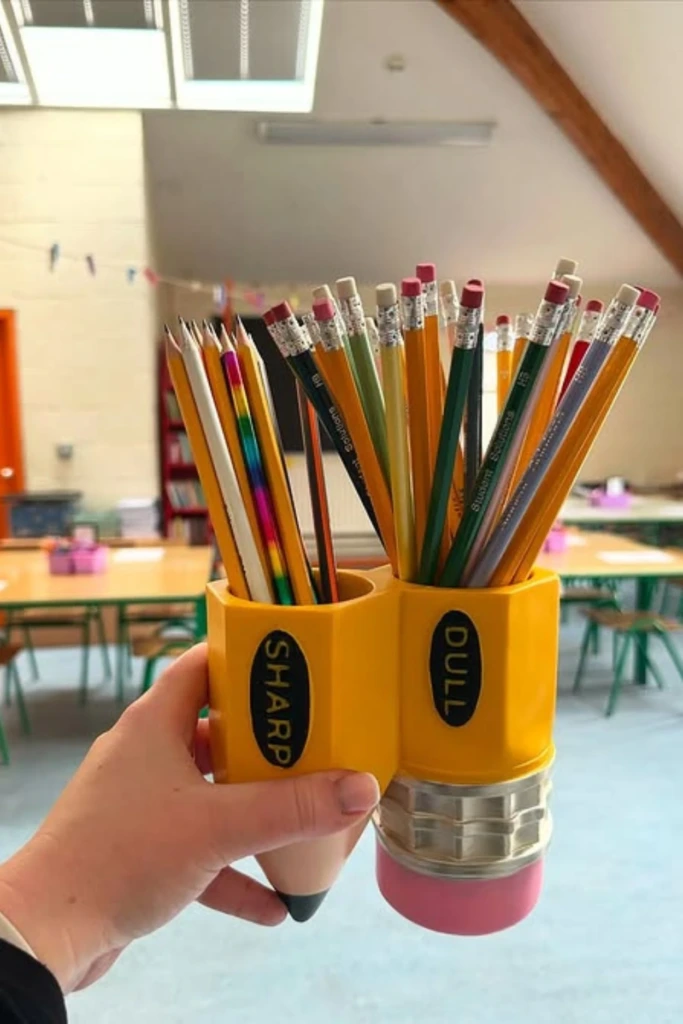
A sharp sorter is designed to keep sharpened pencils separate from blunt or unsharpened ones. This small organizational detail can be especially useful for artists who work with colored pencils and need different points for fine details and broader coverage.
Use a divided container or two labeled compartments to separate pencils according to their condition. Keep the sharpened pencils ready for immediate use and place pencils that need attention in the other section.
If you use a manual or electric sharpener, position it nearby and provide a separate place for collecting shavings. Empty the shaving container regularly to prevent mess and maintain proper sharpener performance.
Avoid storing pencil shavings in the same compartment as usable pencils. Fine wood particles and graphite residue can make supplies dirty and create unnecessary cleanup.
19. Pencil Case
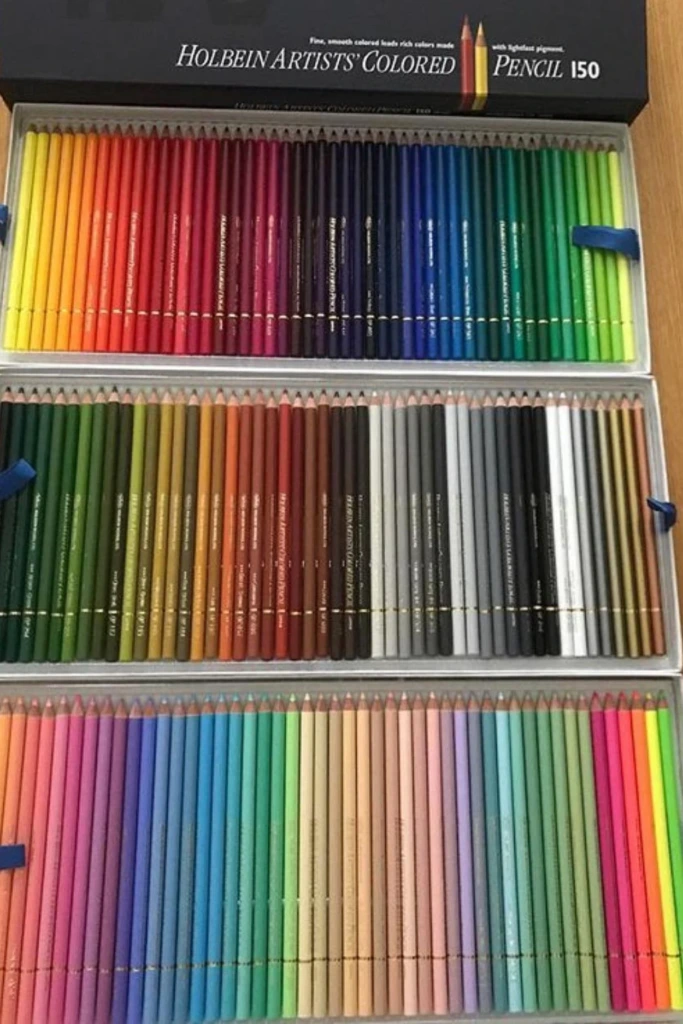
A pencil case is one of the simplest options for keeping a manageable collection organized. It works well for school, office use, sketching on the go, or storing a small selection of favorite colors.
Choose a design based on how many pencils you carry. A basic zippered pouch suits everyday writing tools, while a multi-layer case with individual slots is better for artists who want to arrange pencils by shade.
For colored pencils, individual loops or elastic holders can keep the pencils separated and reduce movement during transport. A case with an additional pocket provides room for an eraser, small sharpener, or ruler.
Avoid squeezing too many pencils into a small case, as this can damage closures and make individual tools harder to retrieve. At home, you can keep a portable case for everyday use and store the remainder of your collection in drawers or boxes.
20. Foam Block
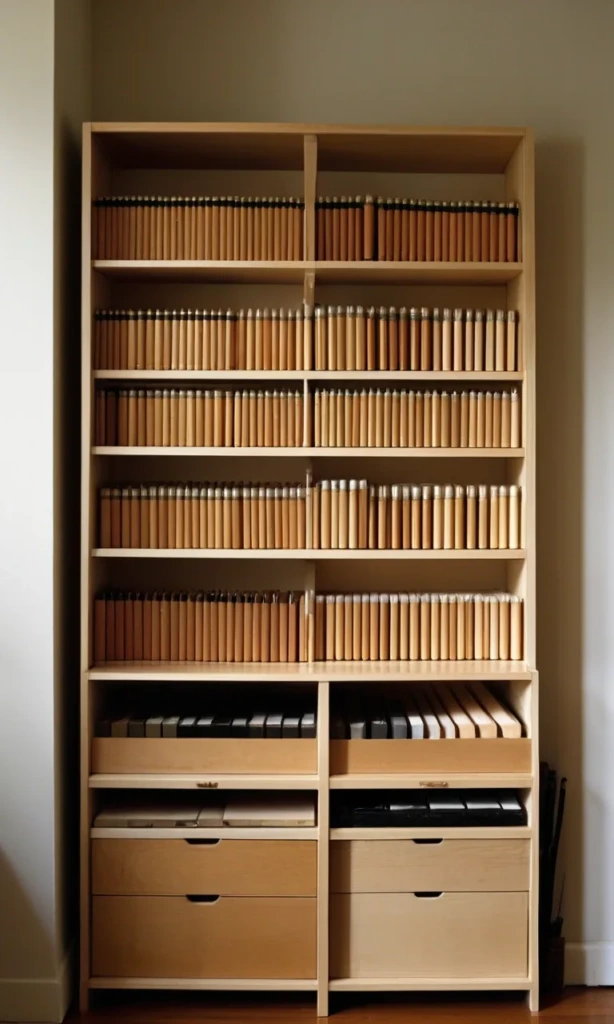
A foam block offers a customizable way to store pencils upright in a compact area. By creating evenly spaced openings, you can give each pencil its own position and reduce the chance of pencils rubbing against one another.
Choose a dense foam that holds its shape rather than a material that crumbles easily. Measure the pencil diameter and test the hole size with a spare pencil before creating the entire arrangement.
A foam block can be placed inside a drawer, on a workbench, or in a larger container. It is especially useful for separating frequently used pencils or displaying a small selection of tools in an orderly row.
If you make one yourself, use an appropriate cutting tool carefully and keep the openings deep enough to support the pencils without forcing them into the material. Store the block away from heat and inspect it periodically for wear.
FAQs
Pencil storage depends on the size of your collection, your available space, and whether you need to transport your supplies. Small collections can usually be managed with cups, cases, or drawer dividers, while larger art collections benefit from categorized drawers, cabinets, or tiered organizers.
When choosing a storage method, consider three practical factors: visibility, accessibility, and protection. Open holders make frequently used pencils easy to grab, transparent drawers help you identify colors, and closed cases keep dust away from supplies.
You do not need to buy an elaborate organizer to create an effective system. Repurposed tins, cardboard dividers, and labeled boxes can work just as well when they fit your collection and keep supplies separated.
How can pencils be organized so colors are easier to find while drawing?
Arrange colored pencils in a consistent sequence rather than placing them randomly in a container. Grouping similar shades together allows you to compare colors quickly and makes it easier to choose the right pencil for a particular part of a drawing.
A useful approach is to divide the collection into broad color families, such as reds, oranges, yellows, greens, blues, purples, browns, and neutrals. Within each group, arrange pencils from light to dark when possible.
Transparent drawers, slanted racks, and compartmentalized cases are particularly helpful because they let you see the collection without searching through a mixed pile. If you keep pencils upright, arrange them with their color-coded ends visible whenever possible.
For pencils with unclear or similar end colors, create a small swatch chart. Write the pencil name or number beside a sample of its actual color, since the barrel or end coating may not perfectly represent the color on paper.
Return each pencil to its designated section after use. Maintaining the same arrangement over time is what makes the system genuinely useful.
What is the easiest way to store a large number of pencils without cluttering a desk?
The easiest method for a large pencil collection is to move most of the supplies into a dedicated drawer unit, cabinet, or stackable storage system. Keep only the pencils you use regularly on the desk and store the remaining collection nearby.
For colored pencils, use shallow drawers with dividers or separate trays for each color family. This arrangement allows you to lay pencils out in rows, identify individual shades, and retrieve them without disturbing the rest of the collection.
If you lack floor space, a vertical organizer or wall-mounted rack can make better use of the available area. A rolling cart is another good option when you need to move pencils between workstations.
Label the containers clearly and establish a designated place for every category. Avoid combining pencils, sharpeners, paper clips, and unrelated supplies in one large container, because mixed contents become difficult to manage as the collection grows.
The most effective setup is one that gives you enough room to see and retrieve your pencils while leaving the main work surface clear.
In conclusion, organizing pencils does not require a complicated setup or expensive storage products. A simple tray, a few labeled cups, or a compact drawer unit can make a noticeable difference in how efficiently you work. Choose an arrangement that suits your collection, use the available space wisely, and return pencils to their proper places after each session. With a consistent system, your pencils will stay easier to find, simpler to maintain, and ready whenever inspiration strikes.