24 Elementary Classroom Organization Ideas for 2026
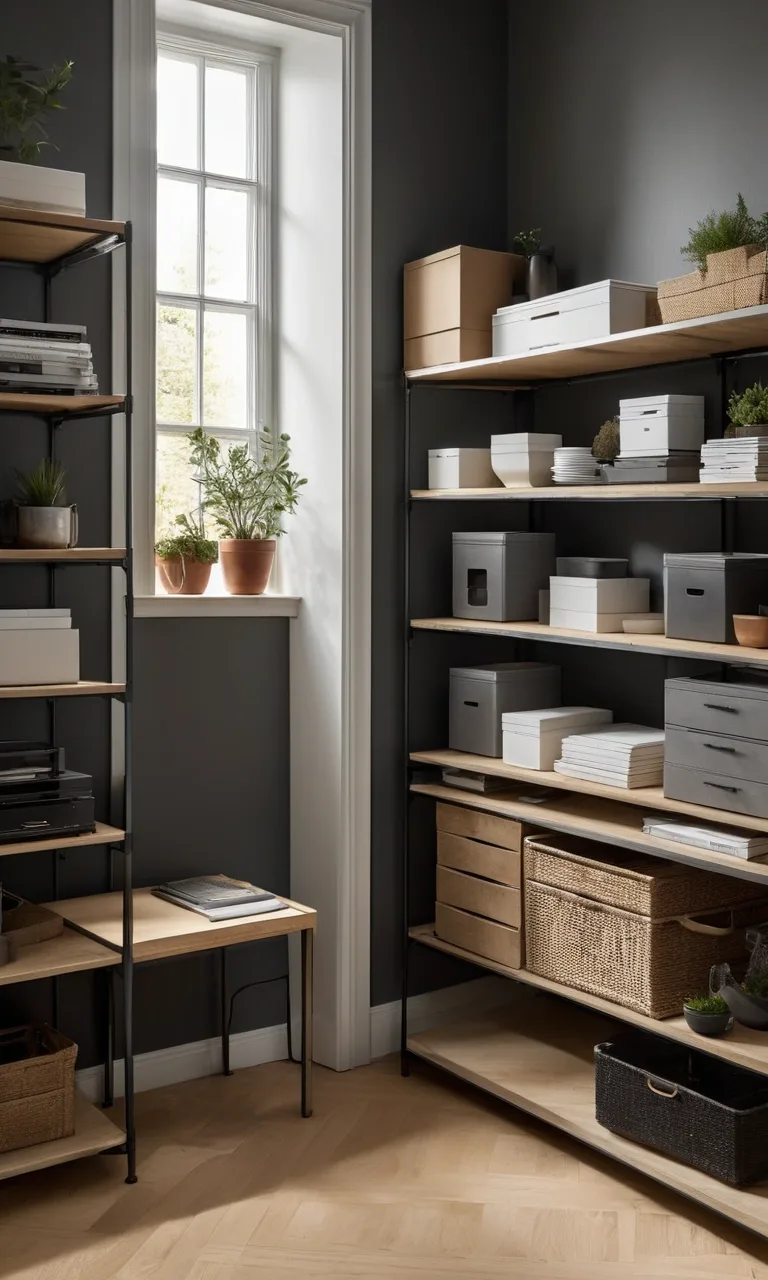
An organized elementary classroom helps students feel comfortable, find their supplies independently, and focus on learning instead of searching for misplaced materials. With a few thoughtful storage solutions, teachers can make even a small classroom easier to manage throughout the school year. From colorful supply caddies to dedicated reading spaces, these classroom organization elementary ideas combine practical storage with child-friendly design. The goal is to create a space that supports daily routines, encourages responsibility, and makes teaching more efficient.
1. Classroom Library Setup
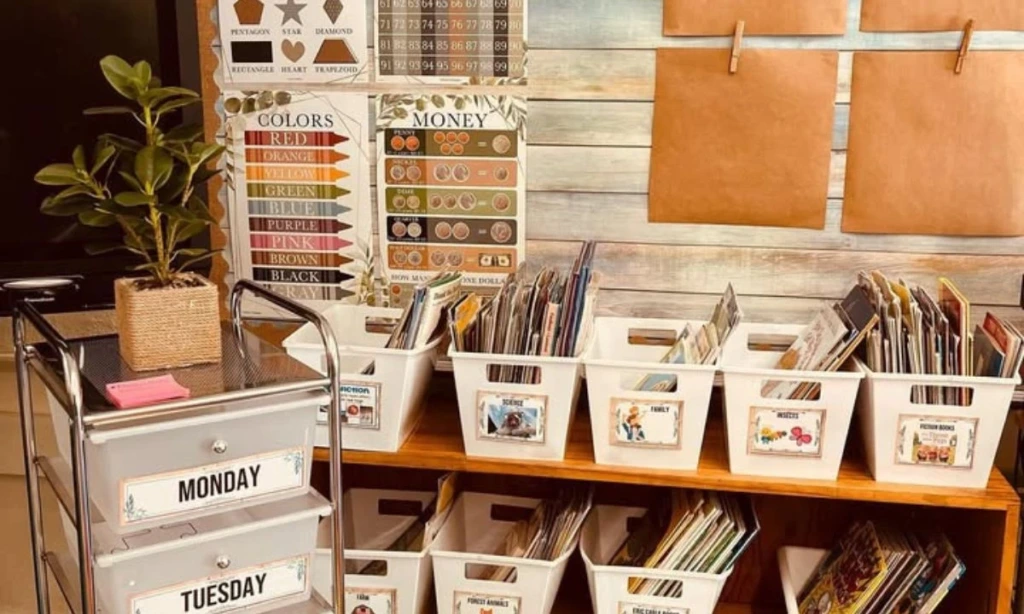
A well-organized classroom library encourages children to explore books and develop a regular reading habit. Arrange books on low shelves so students can reach them without assistance, and use forward-facing displays to highlight selected titles. Group books by reading level, subject, author, or theme, depending on your students' needs. Add simple picture labels for younger readers who are still developing their reading skills. Keep popular titles near the front and rotate seasonal selections to maintain interest. A comfortable rug, a few cushions, and clearly defined browsing areas can turn an ordinary book corner into an inviting learning destination.
2. Elementary Classroom Organization
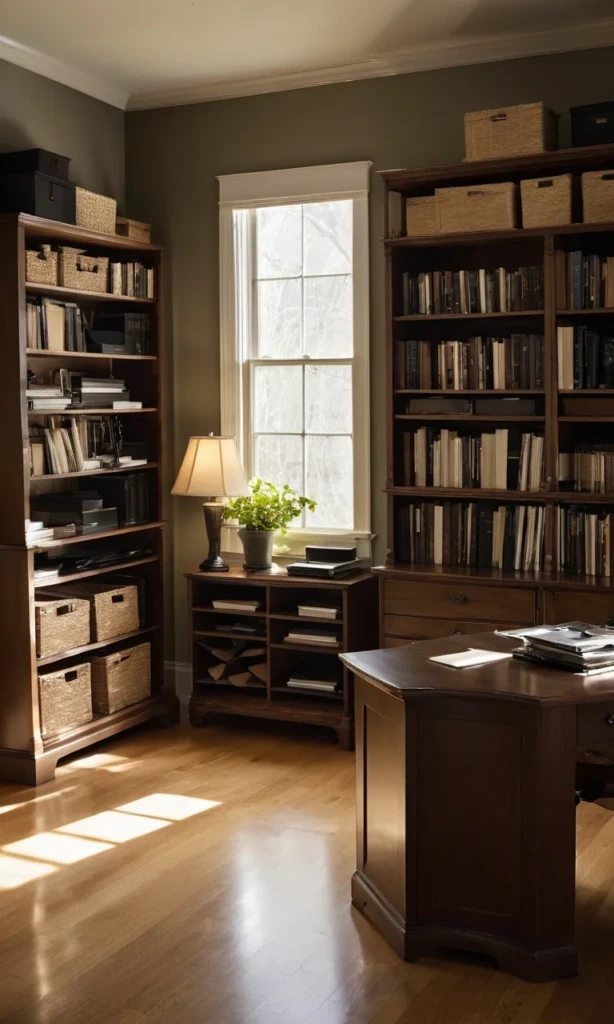
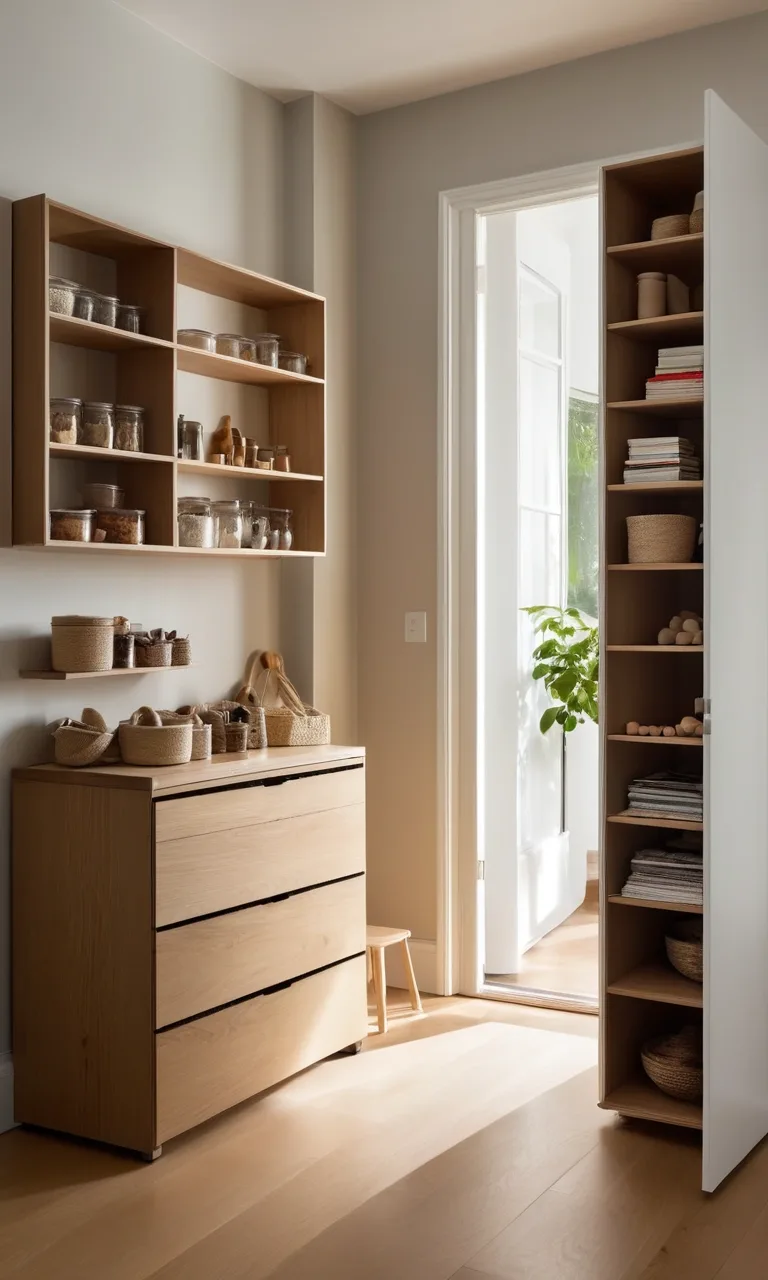
Effective elementary classroom organization starts with assigning a specific place to everything students use regularly. Divide the room into functional areas for instruction, independent work, art, reading, and personal belongings. Keep frequently needed supplies within easy reach while storing occasional-use materials on higher shelves or inside closed cabinets. Use consistent labels, baskets, and visual reminders so children can follow routines without asking the teacher for every item. Avoid overcrowding shelves and desktops, as too many materials can make the room feel distracting. Review the arrangement every few weeks and adjust it when classroom activities or student needs change.
3. Cozy Corner
A cozy corner provides students with a quiet place to read, reflect, or take a short break when they feel overwhelmed. Choose a low-traffic area and furnish it with a soft rug, comfortable floor cushions, and a small selection of books. A visual timer, emotion cards, or simple breathing prompts can help children use the space appropriately. Establish clear expectations so students understand when and how the corner may be used. Keep the area calm and uncluttered rather than filling it with too many decorations. When thoughtfully managed, this space can support emotional regulation while giving students a comfortable alternative to sitting at their desks.
4. Station Drawers
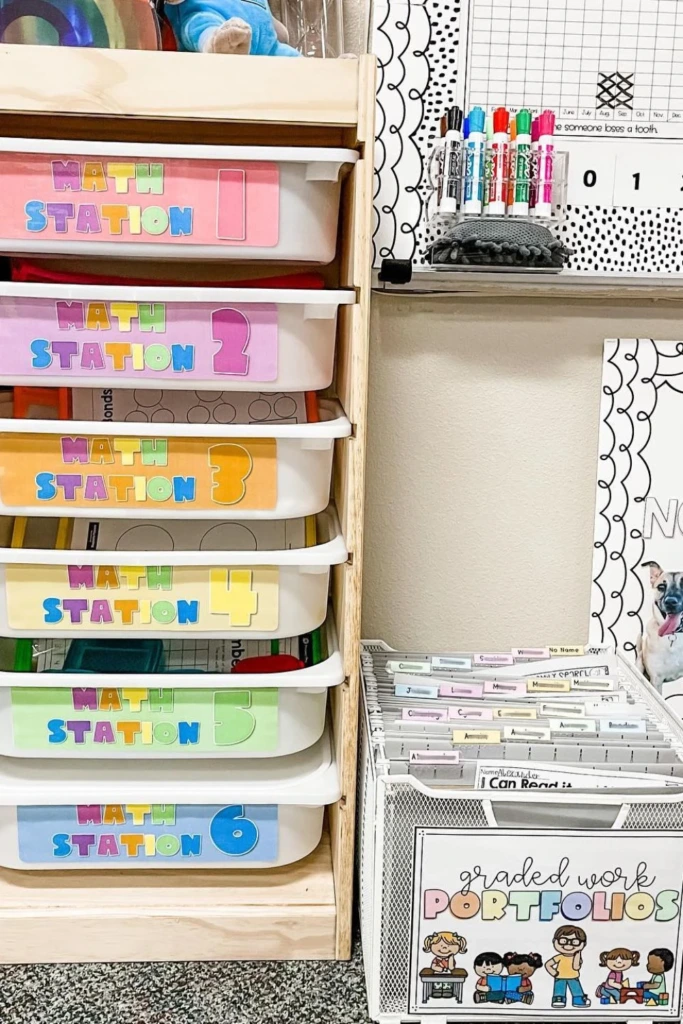
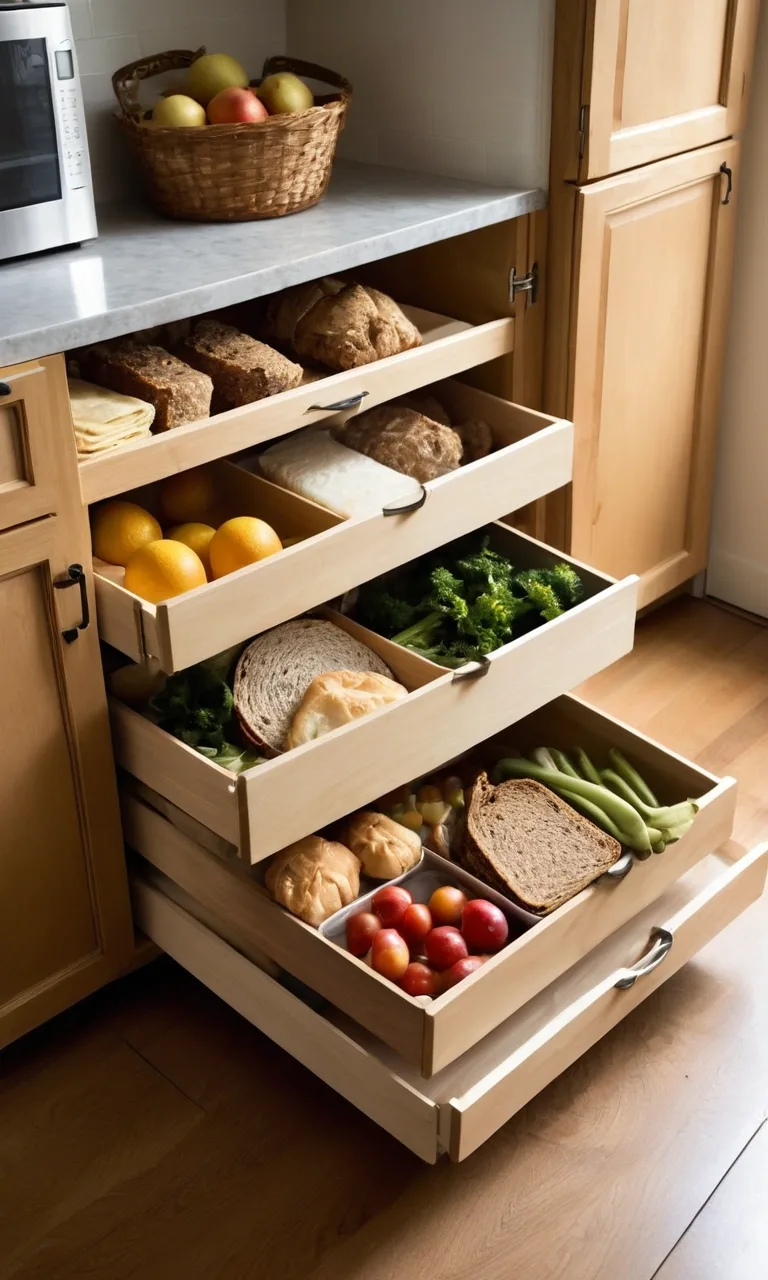
Drawer units make it easier to organize materials for different classroom activities. Assign each drawer a purpose, such as mathematics practice, literacy centers, science activities, or independent learning tasks. Label the fronts with words and pictures so students can identify the correct materials quickly. Teachers can prepare activity packets or place worksheets, manipulatives, and instruction cards inside each drawer before the school day begins. For rotating centers, use removable labels that can be changed as lessons progress. Keep the heaviest materials in lower drawers and avoid overfilling them. A clearly arranged drawer system reduces transitions and allows children to begin their assignments with less assistance.
5. Neon File Carts
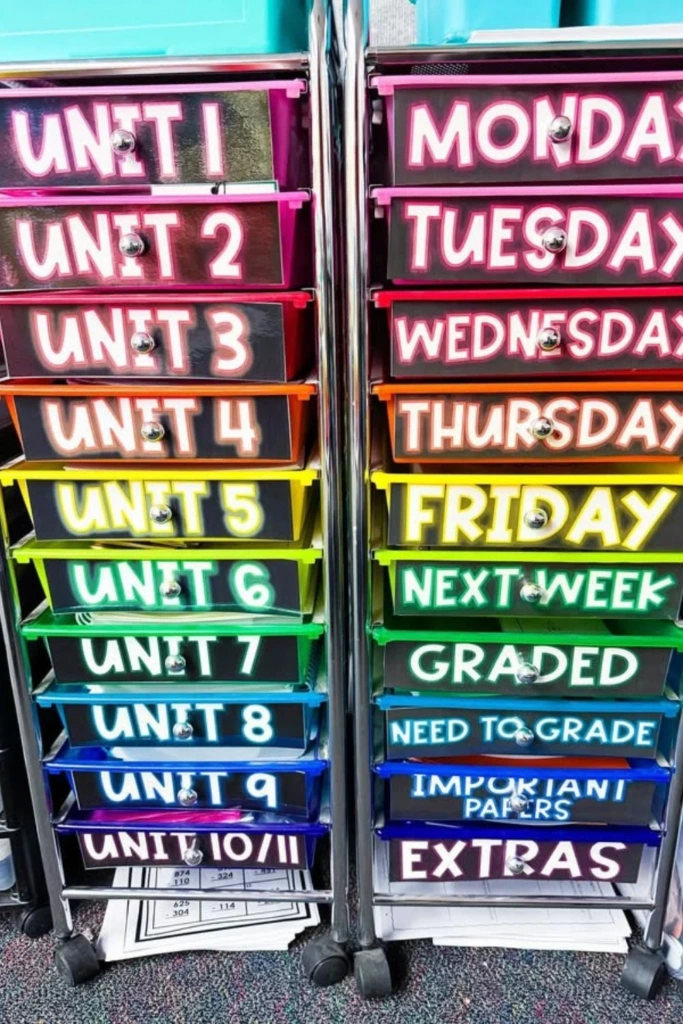
Brightly colored file carts bring visibility and energy to classroom storage. Use a rolling cart with hanging folders to separate worksheets, lesson materials, unfinished assignments, or resources for different subjects. Assign a distinct color to each category, then reinforce the system with written labels so students do not have to rely on color alone. The cart can move between teaching stations when needed and return to a designated parking spot afterward. Choose a model with sturdy wheels and enough space for the materials you plan to store. Keep pathways clear and avoid placing heavy objects on top. This setup is particularly useful for teachers who frequently move between small-group instruction and whole-class lessons.
6. Color-Coded Caddies
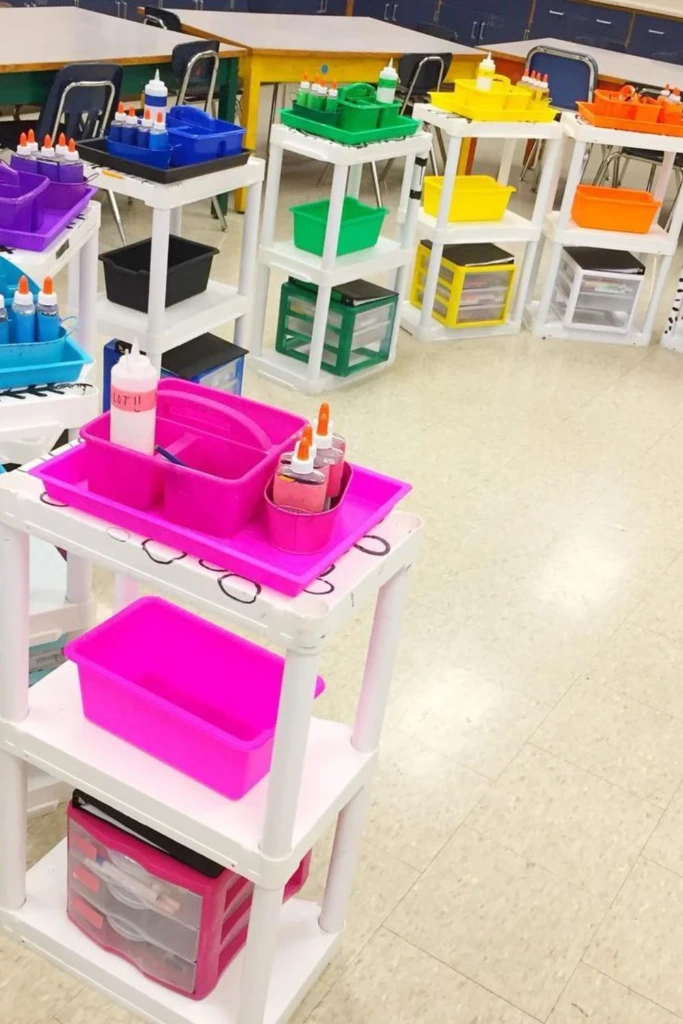
Color-coded caddies help students collect and return shared supplies without creating unnecessary classroom traffic. Give each table group a caddy containing items such as pencils, erasers, crayons, scissors, and glue sticks. Different colors can identify individual groups, making it easier to distribute materials and spot missing containers. Establish a consistent inventory so students know what belongs in each caddy. For younger children, add picture labels to support independent cleanup. Store potentially hazardous items securely when they are not in use, and check supplies regularly for damaged tools or empty containers. This system keeps common materials accessible while teaching students to care for shared classroom resources.
7. Table Caddies
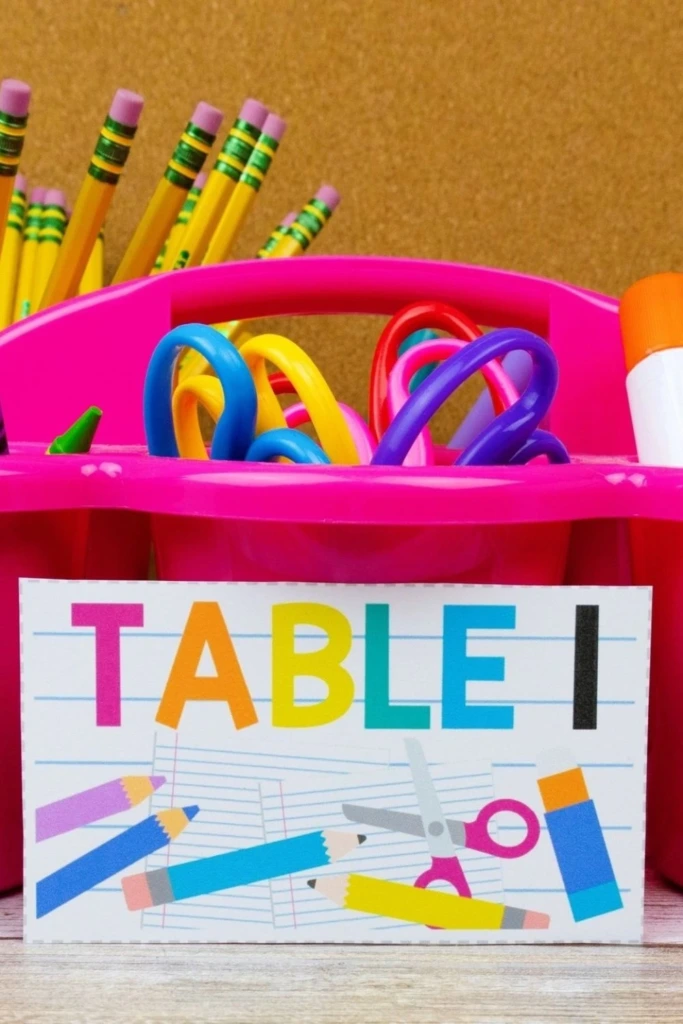
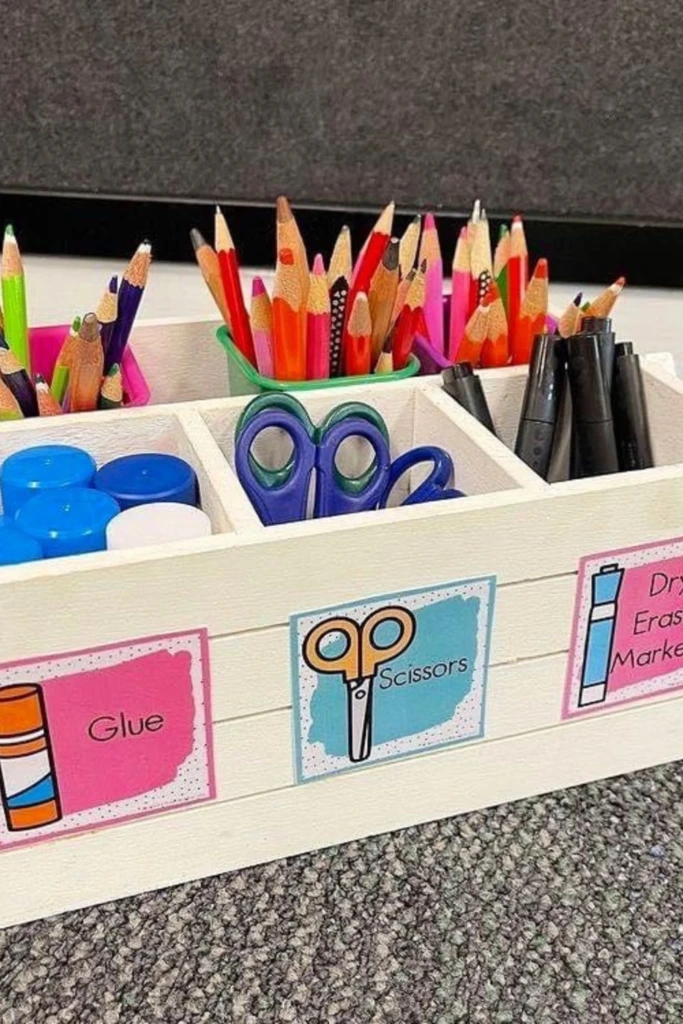
Table caddies are ideal for keeping everyday learning tools close to students during lessons. Place one in the center of each table or shared workspace, using separate compartments for pencils, colored pencils, rulers, glue, and other frequently used materials. Avoid filling every section with unnecessary items, as an overloaded caddy can take up valuable working space. For younger grades, choose lightweight containers that children can move safely when desks need to be rearranged. Create a simple end-of-day checklist so each group can return supplies to their proper sections. Well-maintained table caddies reduce interruptions and help students develop consistent habits around organizing their own work areas.
8. Supply Cart
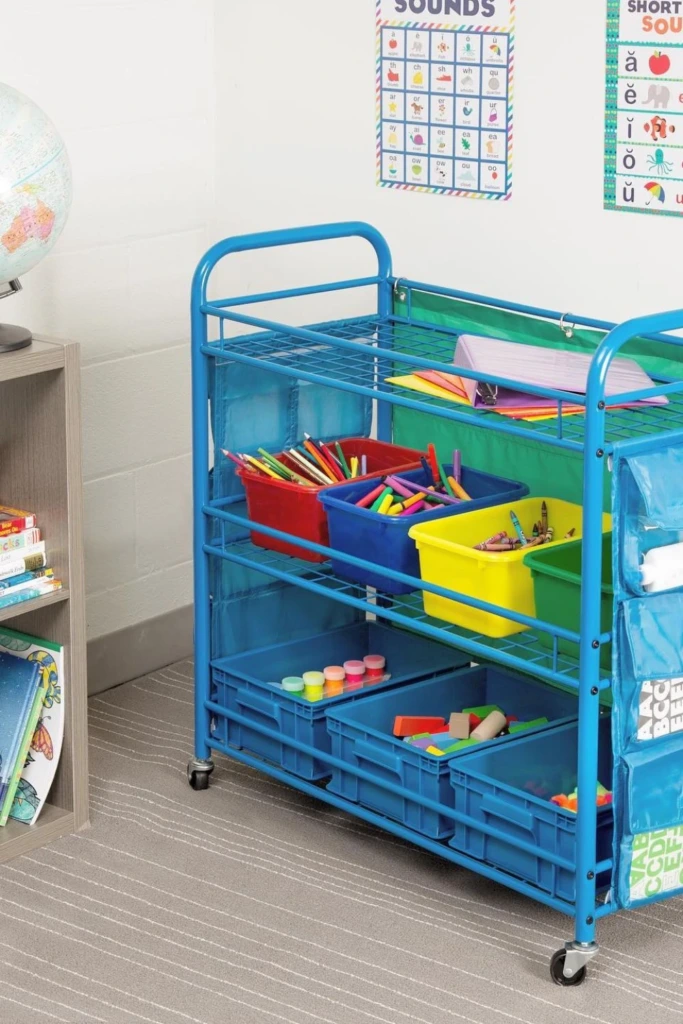
A dedicated supply cart creates a mobile storage station for materials used throughout the day. Choose a cart with multiple shelves or drawers and assign each level a category, such as writing tools, paper products, art materials, and extra classroom supplies. Use small containers inside larger shelves to prevent loose items from becoming mixed together. Locking wheels can help keep the cart stationary during lessons. If students are allowed to access it independently, place appropriate materials on the lower shelves and explain which items require teacher permission. Return the cart to the same location after use so it does not obstruct walkways. A supply cart works especially well in classrooms where storage cabinets are limited.
9. iPad Storage
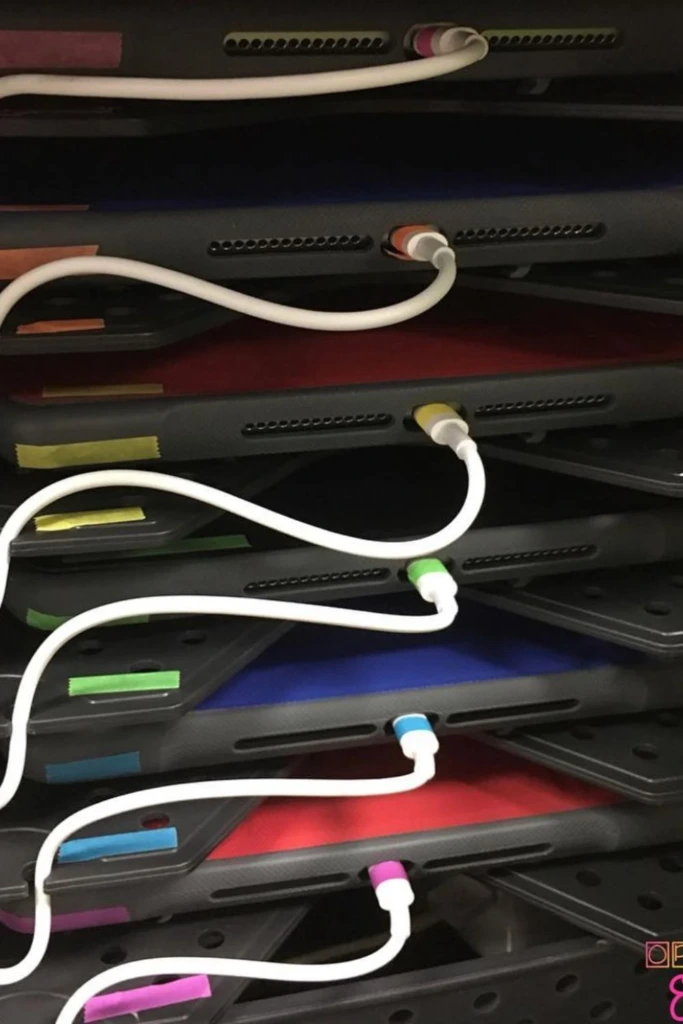
A designated iPad station protects classroom devices and makes technology routines easier to manage. Use a sturdy charging cabinet, charging cart, or compartmentalized shelf designed for the number and size of your devices. Assign each device a numbered slot and match the number to its case or inventory list. This helps students return tablets to the correct location and allows teachers to notice missing equipment quickly. Keep charging cables organized to prevent tangles, and follow the device manufacturer's guidance for ventilation and charging safety. Store tablets away from liquids and busy traffic areas. Establish clear procedures for collecting, using, charging, and returning devices so technology remains ready for the next lesson.
10. Craft Shelf
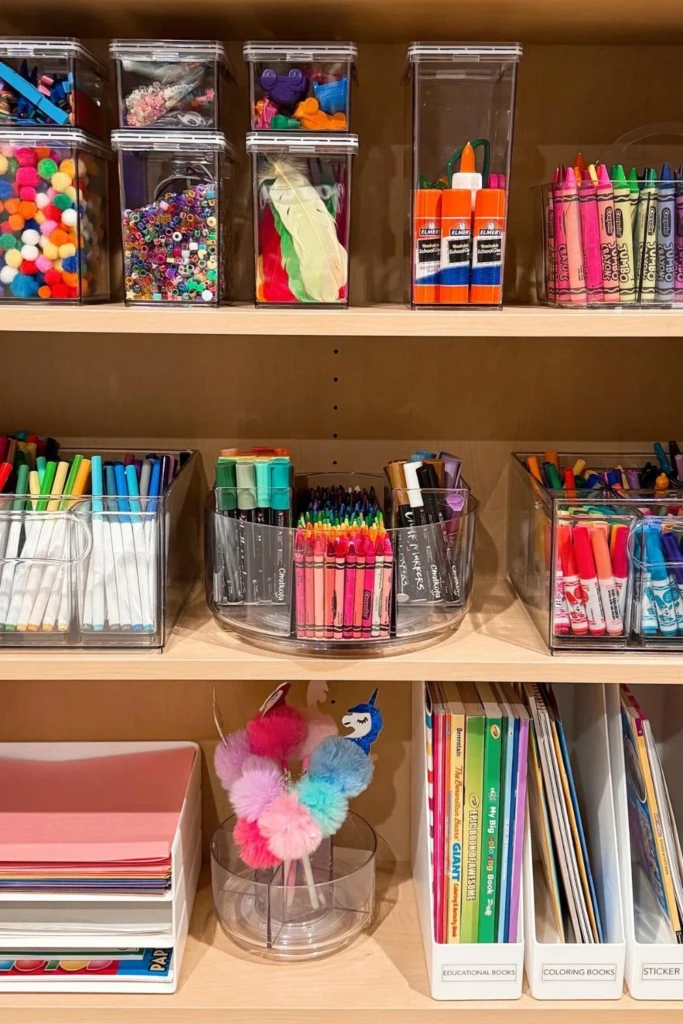
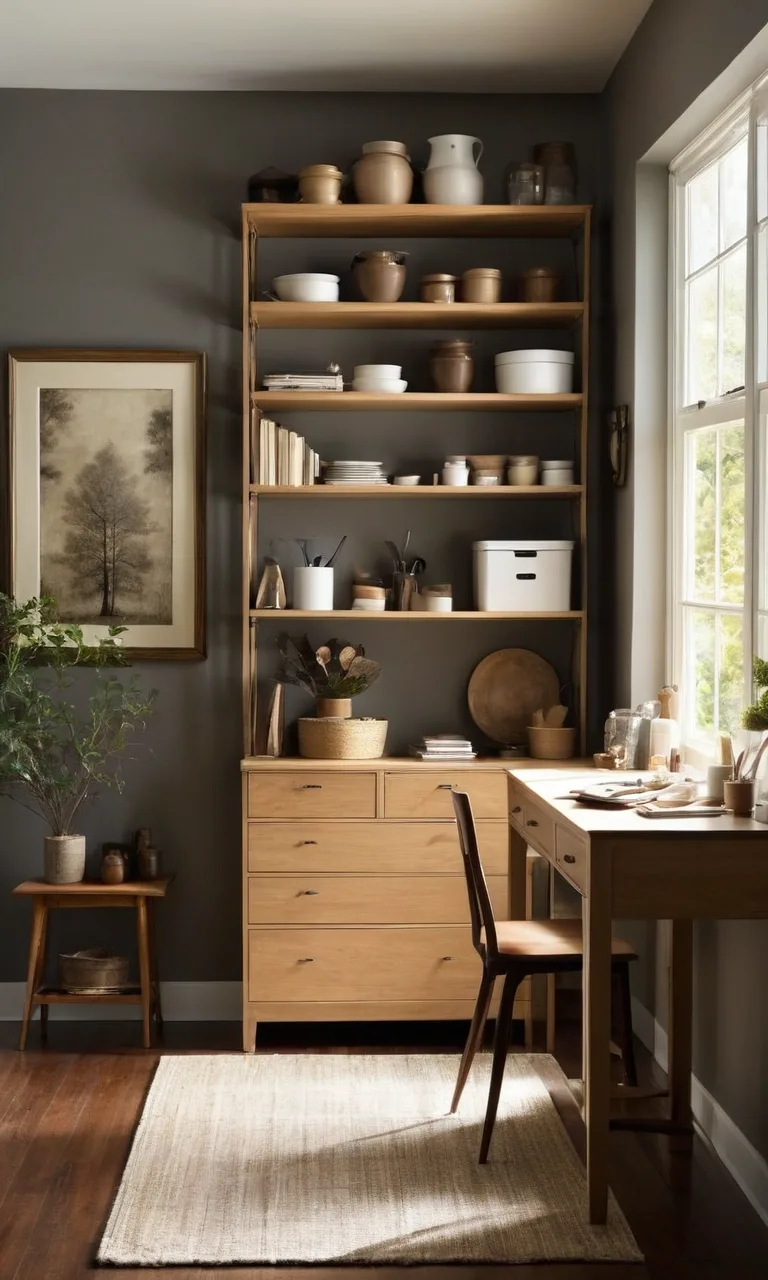
A craft shelf keeps creative materials accessible without allowing art supplies to spread across the classroom. Divide the shelves into categories such as paper, paints, markers, collage materials, modeling supplies, and recycled craft items. Transparent containers make it easy to identify contents, while picture labels help younger students choose the right materials. Place frequently used items at student height and keep sharp tools or specialty supplies in teacher-controlled storage. Use trays for projects that are still drying and a separate container for reusable scraps. Review the shelf regularly to remove dried-out markers, empty glue bottles, and damaged materials. An organized craft station makes art activities easier to prepare and cleanup less time-consuming.
11. Cabinet Zones
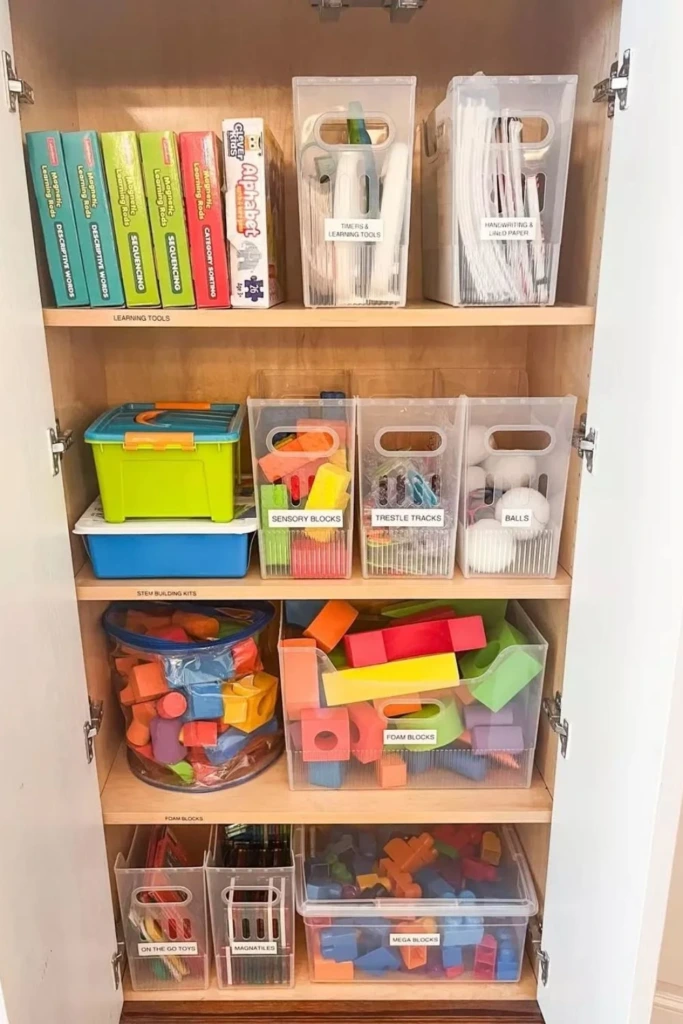
Cabinet zones transform crowded storage into a system that is easier to maintain. Assign each cabinet or section a clear purpose, such as mathematics resources, reading materials, teacher supplies, assessment tools, or classroom decorations. Keep similar items together and use shelf dividers or labeled boxes to prevent categories from blending into one another. Place materials needed every day at convenient heights, while storing seasonal or rarely used resources higher up. A simple inventory attached to the inside of each cabinet door can help teachers locate supplies without opening every container. Review the zones at the end of each term to remove outdated materials and make room for resources needed in upcoming units.
12. Color Coded Bins
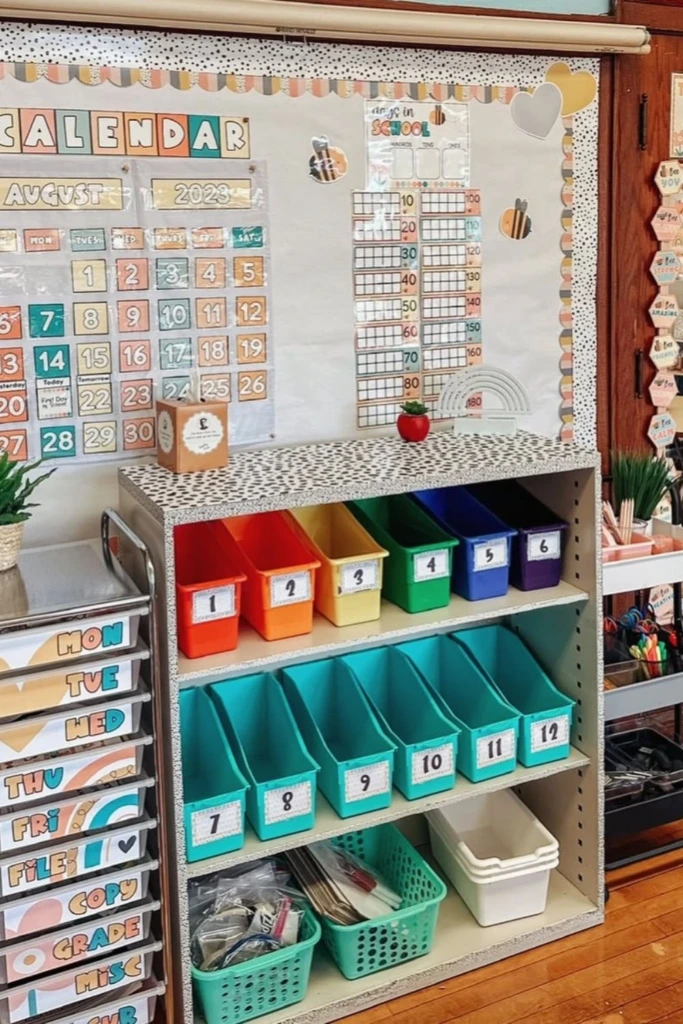
Color-coded bins provide a straightforward way to separate classroom materials by subject, activity, or student group. For example, blue bins might hold mathematics resources, green bins could contain science materials, and yellow bins might be reserved for writing activities. Choose a color scheme that is easy to remember and use it consistently across shelves, carts, and folders. Add printed labels to make the system accessible to students who have difficulty distinguishing colors. Stack bins only when they remain stable and can be retrieved safely. For frequently used materials, consider open-top containers that allow quick access. This approach helps students return items correctly and makes it easier to identify misplaced supplies during classroom cleanup.
13. Book Bins
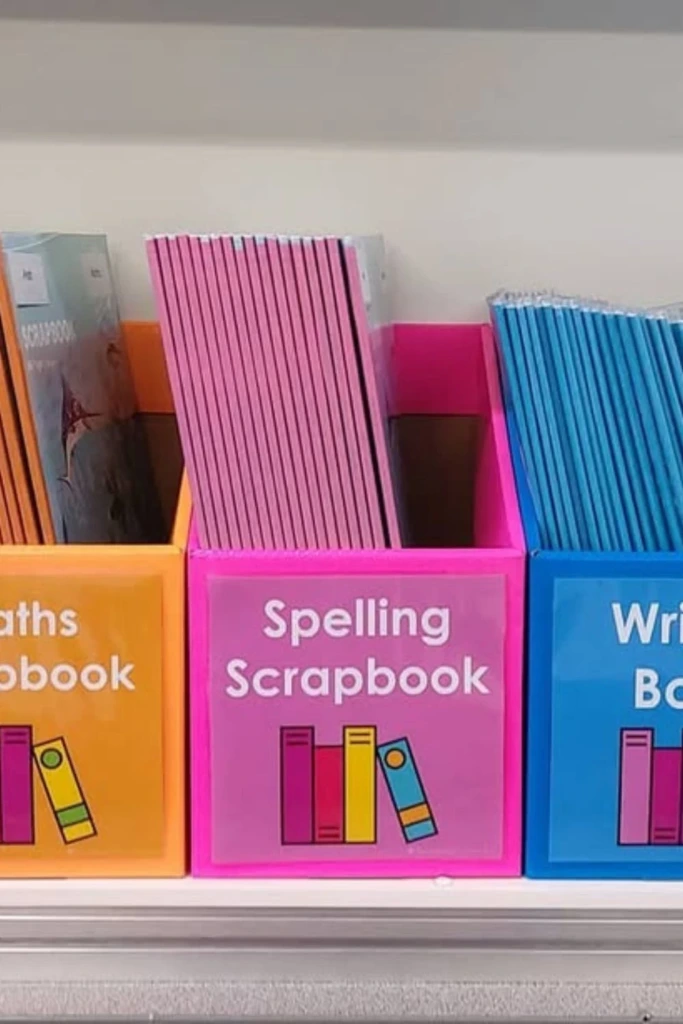
Individual book bins help students keep reading materials organized and prevent books from becoming scattered around the room. Assign each student a personal container or create shared bins for classroom reading groups. Depending on the classroom's needs, students can store library books, independent reading selections, reading logs, and notebooks together. Choose bins that fit neatly on shelves without making books difficult to remove. Label personal bins with names or numbers, and add picture cues for younger learners. Set aside a short period each week for students to return misplaced books and straighten their collections. When children have a consistent place for reading materials, they can spend more time enjoying books and less time looking for them.
14. Desktop Crate
A desktop crate offers compact storage for worksheets, notebooks, and materials that students need throughout the day. Place a small crate beside a workstation or at the end of a shared table, using upright file folders to separate different subjects. Teachers can also use desktop crates to organize lesson plans, frequently referenced documents, or papers awaiting review. Select a size that fits the available surface without reducing the space needed for writing and other activities. Add labels to the dividers and remove completed or outdated papers regularly. For student desks, keep the contents limited to current assignments and essential supplies. A tidy crate helps prevent loose papers from accumulating in piles.
15. Monthly Bins
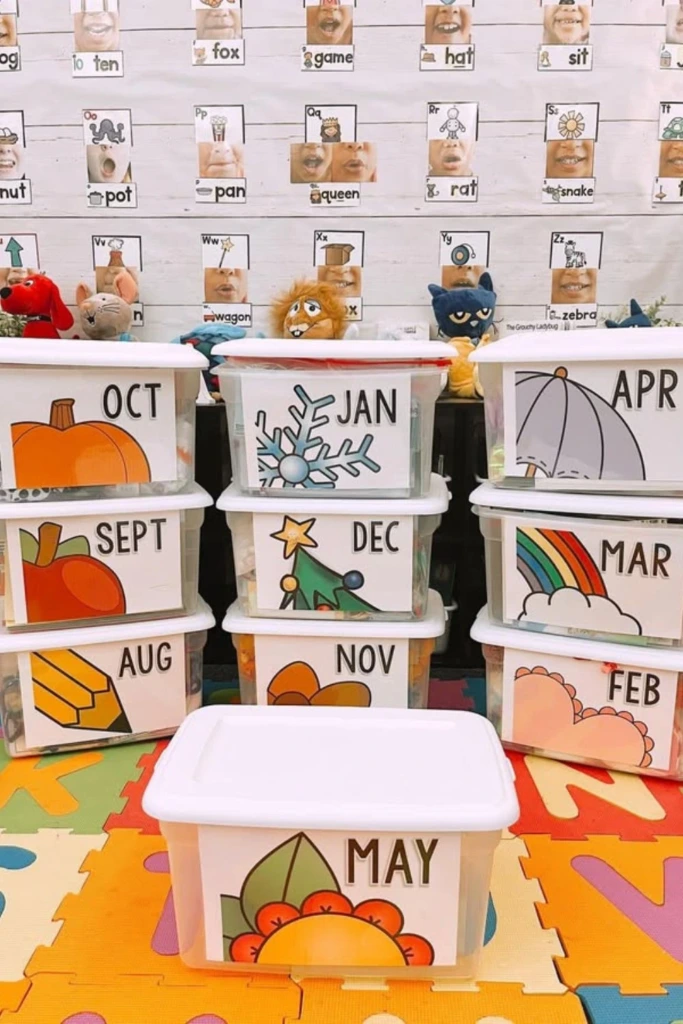
Monthly bins provide a convenient way to store materials for upcoming themes, seasonal projects, celebrations, and special classroom events. Label each container with the relevant month and place worksheets, decorations, activity instructions, and reusable supplies inside. If you prepare resources well in advance, keep the current month's bin in an accessible location and store future months together on a dedicated shelf. Use transparent containers or attach an inventory list so you can see what is available before purchasing additional materials. At the end of each month, return reusable items to their proper containers and discard damaged or outdated materials. This system reduces last-minute preparation and makes recurring classroom activities easier to organize.
16. Assessment Crate
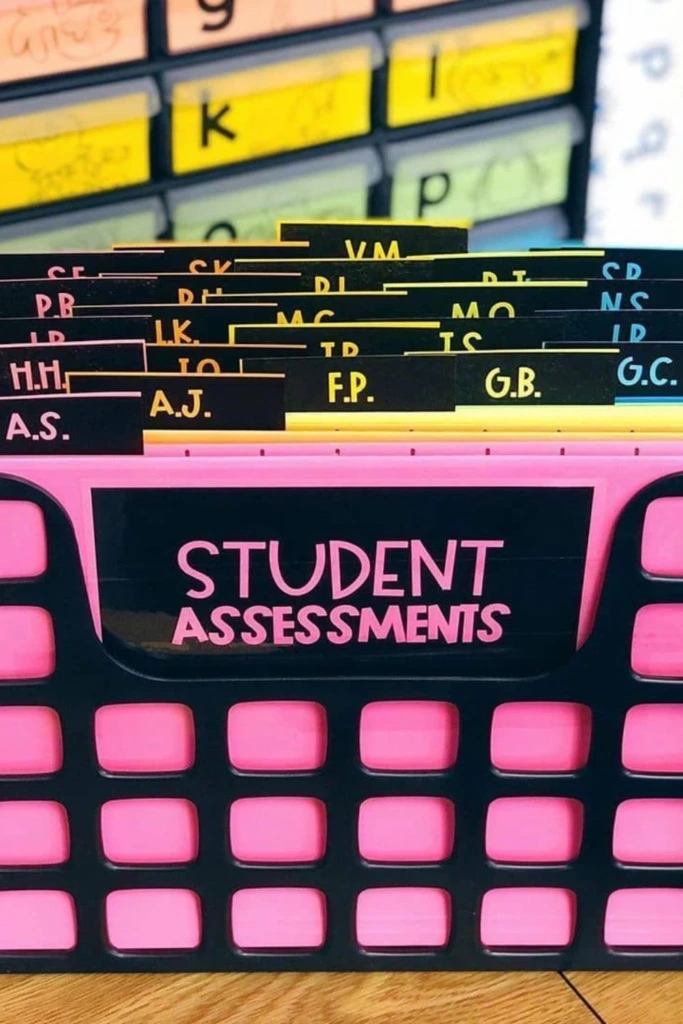
An assessment crate helps teachers keep quizzes, evaluation sheets, rubrics, and other progress-monitoring documents in one designated place. Use separate hanging folders or labeled dividers for each subject, class, or assessment period. If student work contains personal information, keep the crate in secure teacher-only storage rather than on an open classroom shelf. Add a folder for assessments that still need grading and another for completed work awaiting recording or return. Establish a regular review schedule to prevent papers from building up throughout the term. Follow your school's rules for retaining, sharing, and disposing of student records. A well-organized assessment crate makes it easier to track progress and prepare for parent conferences or instructional planning.
17. Clear Supply Bins
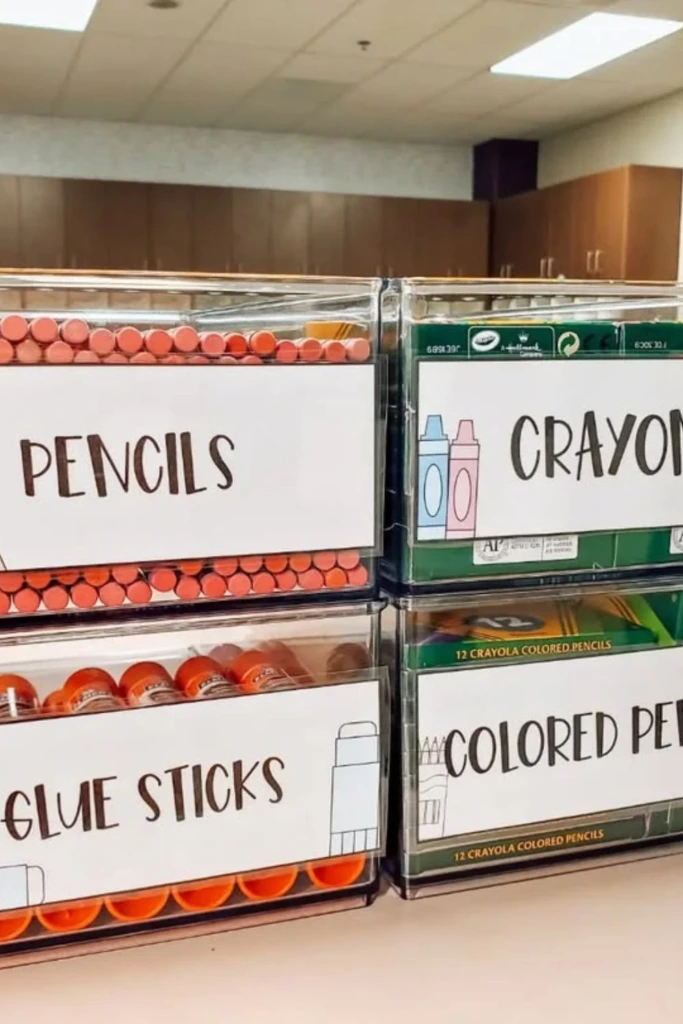
Clear supply bins allow teachers and students to identify materials without opening multiple containers. Use them for items such as pencils, erasers, glue sticks, sticky notes, manipulatives, and spare classroom tools. Choose different sizes to suit the contents, making sure small items do not disappear in oversized containers. Attach labels to the front or lid so the storage system remains understandable even when bins are moved. Keep frequently used containers on accessible shelves and reserve higher storage for extra stock. Transparent bins are particularly useful for monitoring supply levels because low quantities are visible at a glance. To maintain the system, assign each bin a specific category and return items to their designated containers after every activity.
18. Genre Library
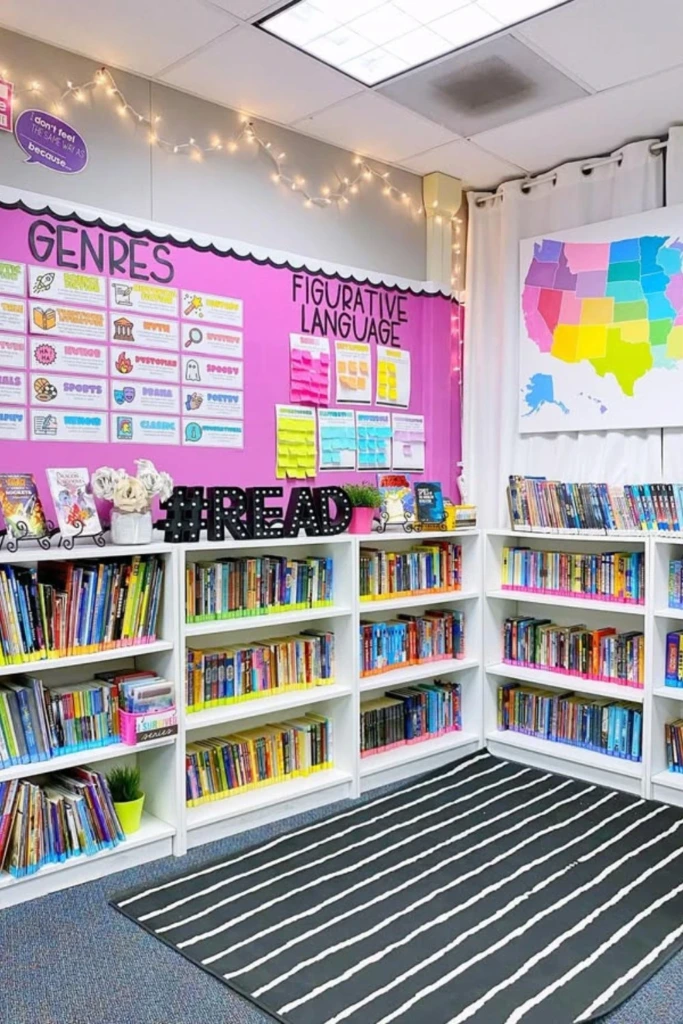
Organizing a classroom library by genre can help students discover books that match their interests and encourage them to explore unfamiliar types of reading. Create sections for fiction, fantasy, mystery, historical stories, poetry, biographies, informational texts, and other categories suited to your collection. Use shelf markers or labeled baskets to identify each section, and include examples of book covers when helpful for beginning readers. Some books may fit multiple categories, so choose the primary label that makes the most sense for your students. Avoid relying entirely on reading levels, since interest and personal choice are also important. Review the categories as the collection grows and invite students to recommend books for featured displays.
19. Labeled Baskets
Labeled baskets offer flexible storage for materials that do not fit neatly into drawers or standard file holders. Use them for manipulatives, writing journals, math games, reading response cards, or small-group activity supplies. Labels should clearly explain what belongs inside, using simple words and images when appropriate for the age group. Choose baskets that fit the shelf dimensions and can be lifted comfortably by students. For shared resources, consider adding a small checklist showing which items should be returned after use. Keep frequently accessed baskets near the relevant learning station so children do not have to cross the room to collect supplies. Regularly sorting their contents prevents unrelated items from accumulating together.
20. Wall Bins
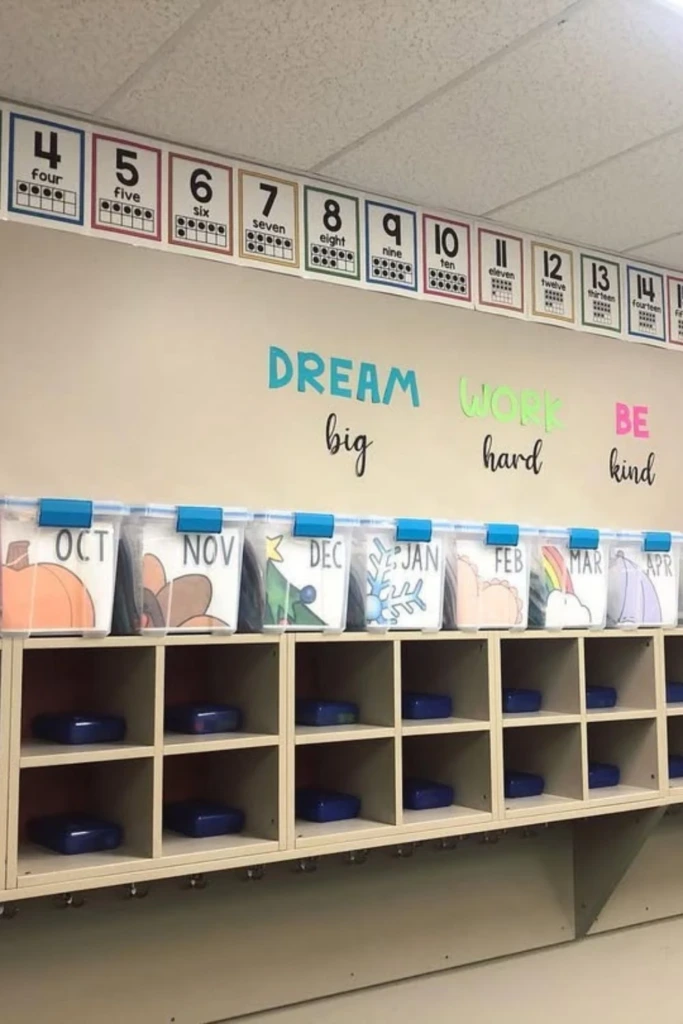
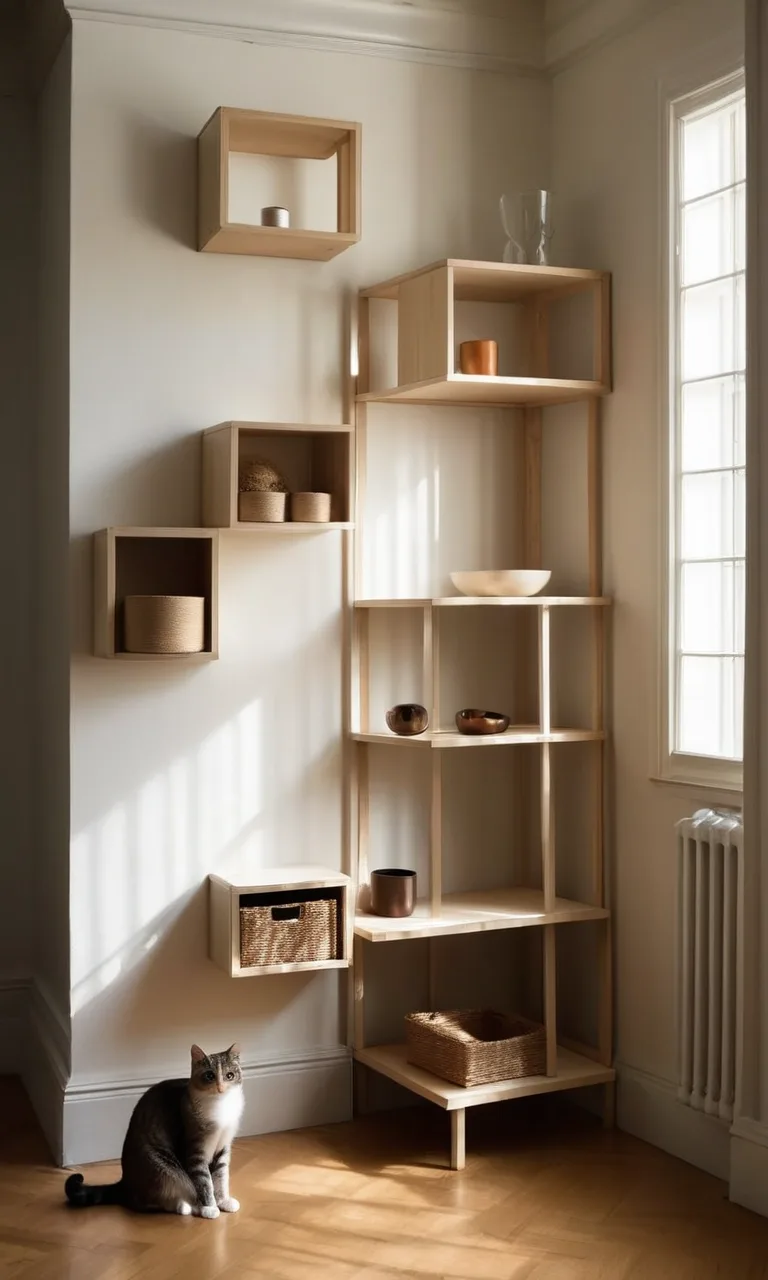
Wall bins take advantage of vertical space and help keep desks, countertops, and shelves free for learning activities. Install sturdy organizers near the areas where students need them, such as beside a writing station, homework drop-off point, or teacher workspace. Use individual compartments for forms, worksheets, library notices, or assignments awaiting collection. Label every bin with a clear purpose, and place student-accessible containers at a suitable height. Secure wall-mounted units properly and avoid positioning heavy objects above areas where children sit or stand. Keep pathways and emergency equipment unobstructed. Wall storage is particularly useful in smaller classrooms where floor space is limited, provided the bins remain easy to reach and maintain.
21. Grading Folders
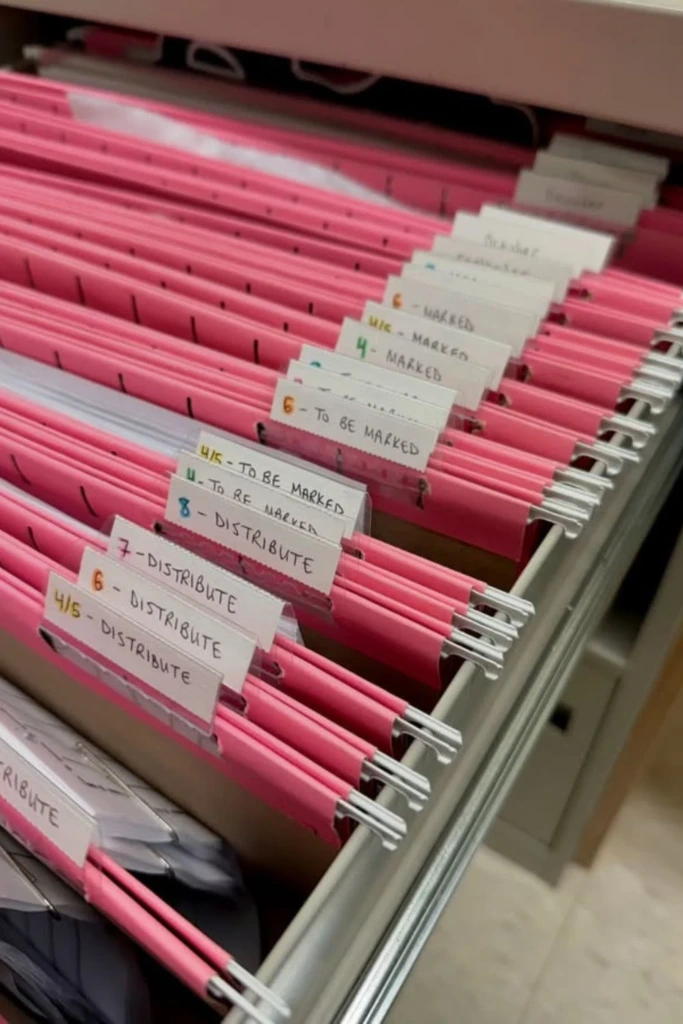
Grading folders create a clear workflow for managing student assignments from collection to return. Set up separate folders for work that needs grading, completed work ready to be recorded, and papers prepared for distribution. Teachers with multiple classes can use subject labels, class names, or period numbers to prevent assignments from getting mixed together. For younger students, a simple turn-in folder and a return-work folder may be sufficient. Keep folders in a consistent location so students know where to submit their work without interrupting instruction. Schedule a brief daily or weekly review to move papers through each stage. A dependable folder system reduces lost assignments and makes grading responsibilities easier to manage.
22. Reading Files
Reading files help teachers organize records and resources associated with individual students' reading development. Depending on your classroom system, a file might contain reading logs, conference notes, book recommendations, fluency observations, or goals for independent reading. Use one folder per student or organize shared files by reading group, keeping confidential information in secure storage. Establish a consistent format so notes are easy to compare over time. Include space to record accomplishments as well as areas where additional practice may be useful. Review the files periodically to select appropriate books, plan small-group instruction, and discuss progress with families. Keep the paperwork manageable by recording only information that supports meaningful teaching decisions.
23. Labeled Book Bins
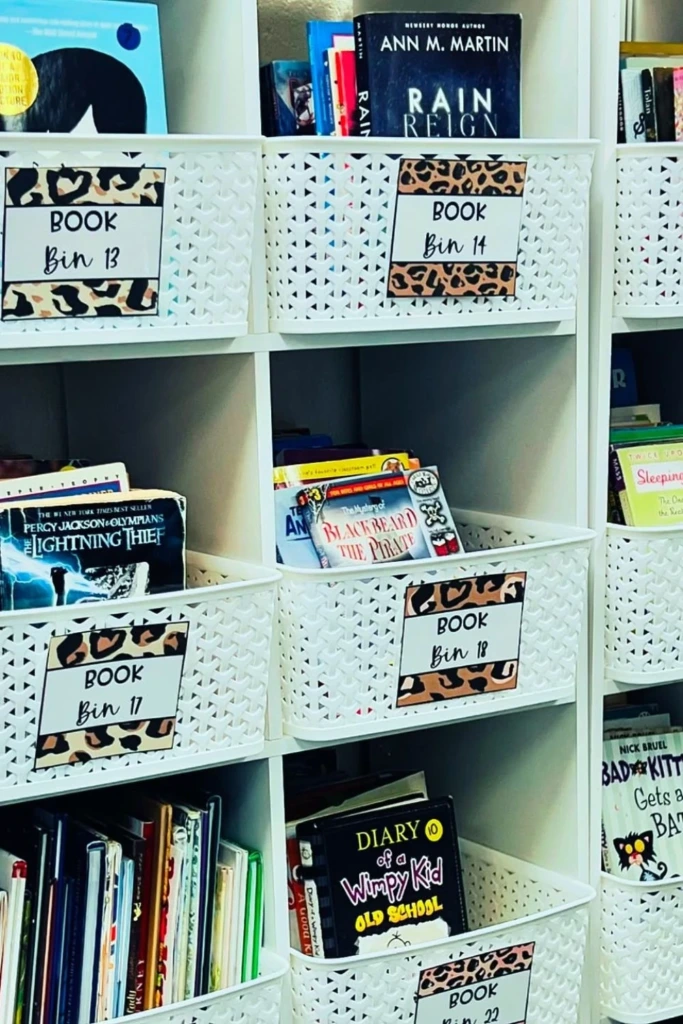
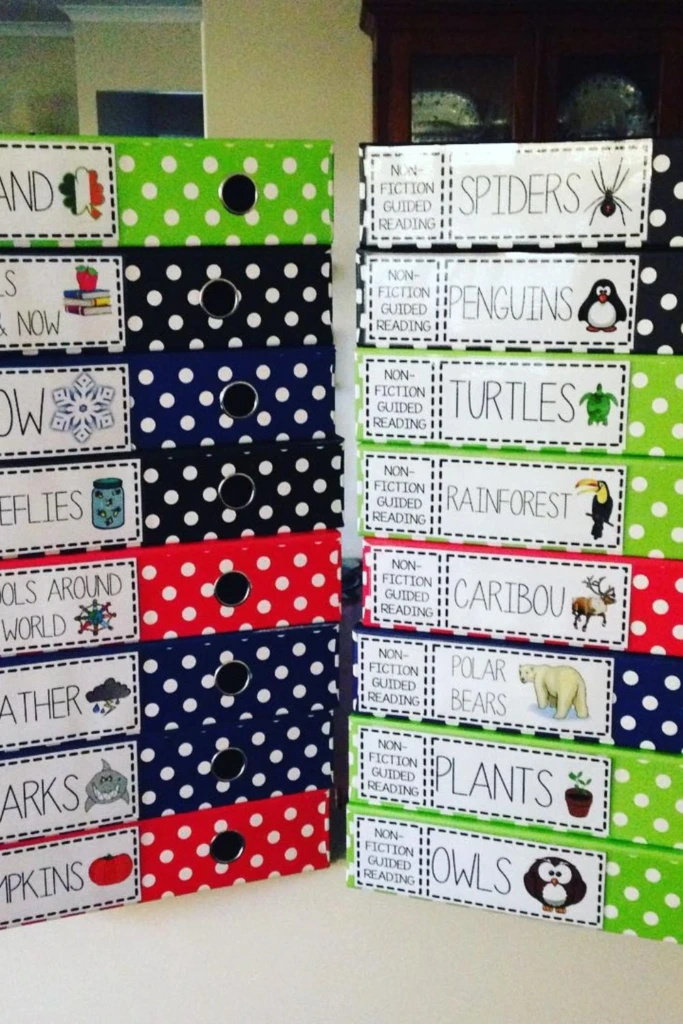
Labeled book bins make it easier to maintain an accessible and inviting classroom library. Assign each bin a clear category, such as animal stories, beginner readers, science books, fairy tales, or books about friendship. Labels can combine a short title with a representative image, allowing children to recognize categories before they can read every word. Arrange bins so covers and spines remain visible, and avoid packing them so tightly that students struggle to remove books. If the library uses reading levels, consider including interest-based labels too, giving children more ways to find books they enjoy. Check the bins regularly for misplaced titles and damaged books. A consistent labeling system encourages independent browsing and makes library cleanup easier for everyone.
24. Catch-Up Crates
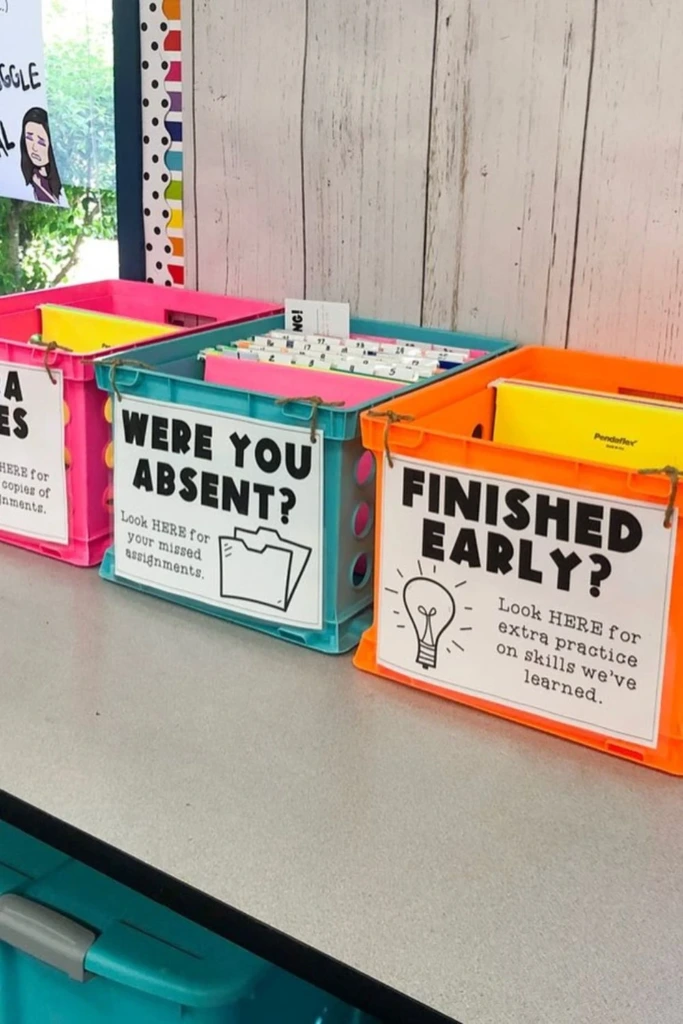
Catch-up crates help students manage missed lessons, incomplete assignments, or activities they need to finish after an absence. Create separate folders or compartments for each day of the week, subject, or type of task, depending on how your classroom operates. When a student misses class, place relevant worksheets and written instructions in the appropriate section so the student can collect everything in one visit. Include a clear checklist explaining what must be completed and where finished work should go. Avoid allowing the crate to become a permanent pile of overdue assignments; review it regularly and help students prioritize tasks. For younger learners, brief teacher check-ins can make the system more manageable and prevent missed work from becoming overwhelming.
Final Thoughts
A thoughtfully organized elementary classroom supports smoother transitions, more independent students, and a calmer learning environment. Start with a few high-impact changes, such as labeled book bins, table caddies, subject-based storage, and a clear system for unfinished assignments. Introduce each routine gradually, demonstrate how materials should be used, and involve students in maintaining the space. The most effective classroom organization system is not necessarily the most elaborate one; it is the one children can understand and use consistently. With regular adjustments and simple storage habits, teachers can create a classroom that stays functional, welcoming, and ready for learning throughout the school year.