25 Hidden Storage Ideas for 2026
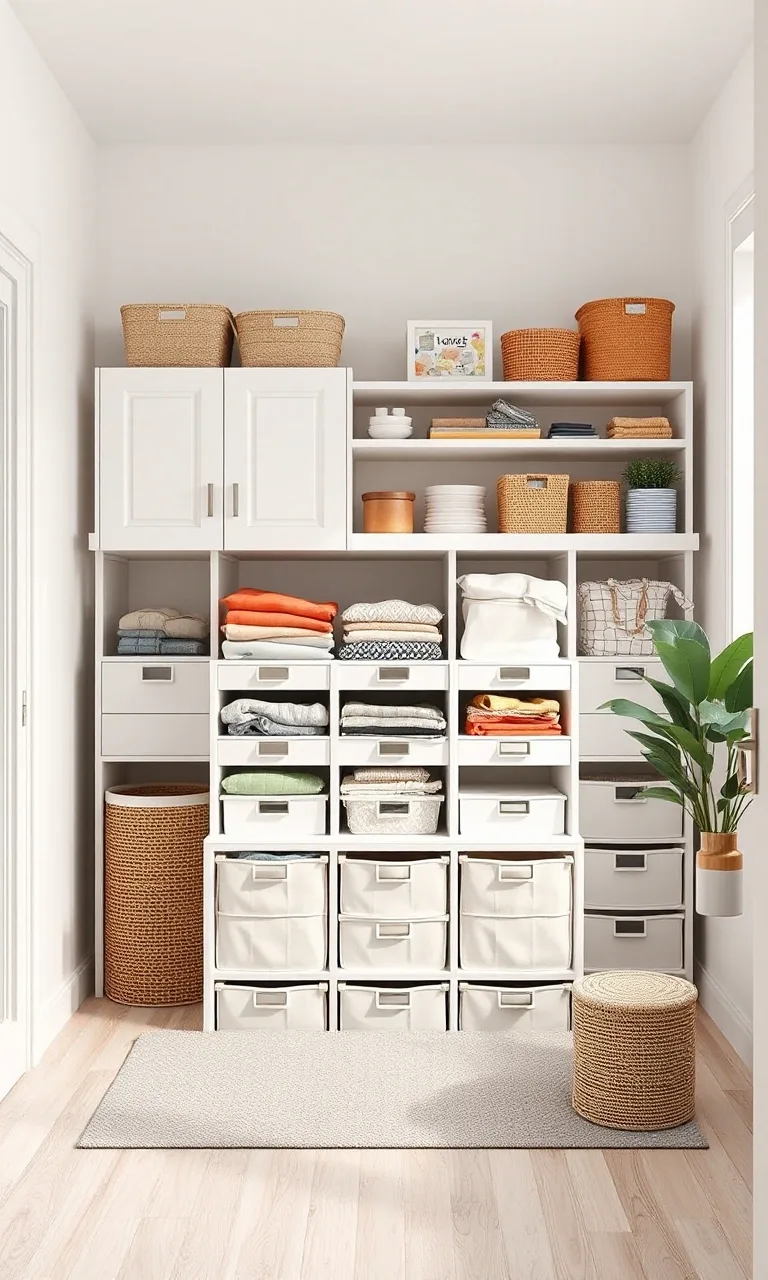
A home can have plenty of cabinets and shelves yet still feel crowded. Everyday belongings have a way of collecting on countertops, chairs, and floors, especially when there isn't a convenient place to put them.
Hidden storage offers a practical solution by making better use of spaces that often go unnoticed. From furniture with built-in compartments to cleverly designed cabinets, these ideas help keep your belongings organized without filling every room with additional furniture.
The best part is that concealed storage doesn't always require expensive remodeling. Some improvements are as simple as choosing multifunctional furniture or reorganizing existing cabinets.
Here are 25 hidden storage ideas that can help you create a more functional, comfortable, and organized home.
How Can You Create Hidden Storage Without Renovating?
You can introduce hidden storage into almost any home by making smarter use of existing furniture and overlooked spaces.
Start by identifying areas that aren't being used effectively, such as the space beneath beds, inside deep cabinets, or underneath entryway benches.
Furniture with built-in compartments is especially useful. Storage ottomans can hold extra blankets, while coffee tables with drawers provide a convenient place for remotes, chargers, and magazines.
You can also improve existing cupboards with removable organizers, sliding baskets, and adjustable shelves.
For renters, freestanding storage benches, under-bed containers, and over-the-door organizers offer practical solutions without permanent changes.
The key is to choose storage that suits your daily routine. Frequently used items should remain easy to reach, while seasonal belongings can occupy less accessible compartments.
1. Hidden Pantry
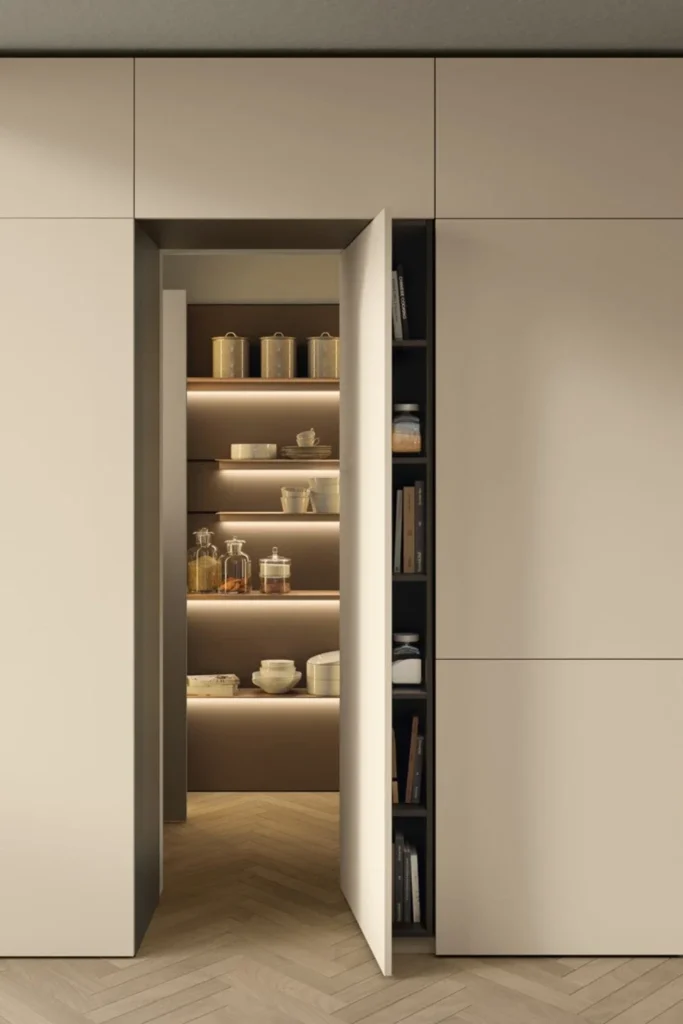
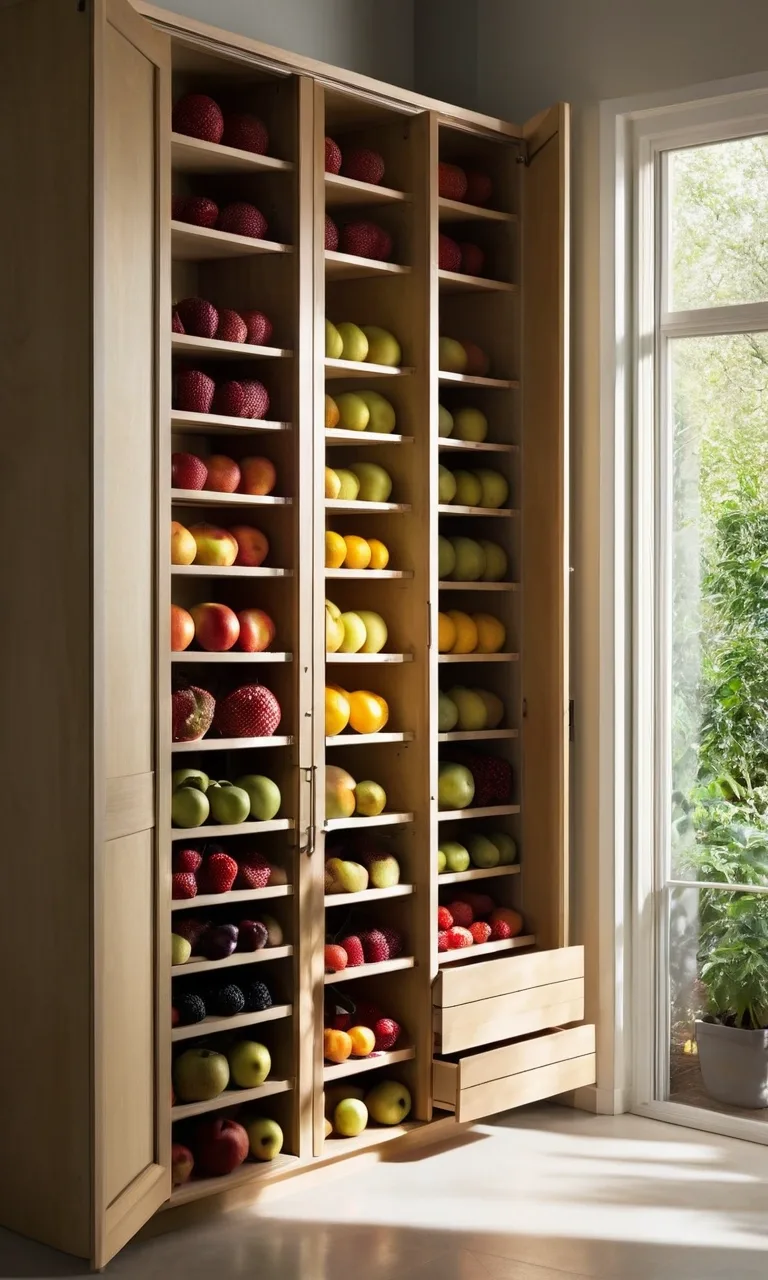
A concealed pantry is an excellent way to maintain a streamlined kitchen while keeping groceries and cooking essentials organized.
Instead of installing an obvious pantry door, you can incorporate a tall cabinet that matches the surrounding kitchen units. Handleless fronts create a continuous appearance that blends with the cabinetry.
Inside, adjustable shelves can accommodate cereal boxes, jars, dry ingredients, and small kitchen appliances.
Consider adding motion-activated lighting so everything becomes visible when the door opens.
For a practical arrangement, place frequently used ingredients at comfortable reaching height and reserve upper shelves for occasional-use supplies.
2. Stair Storage
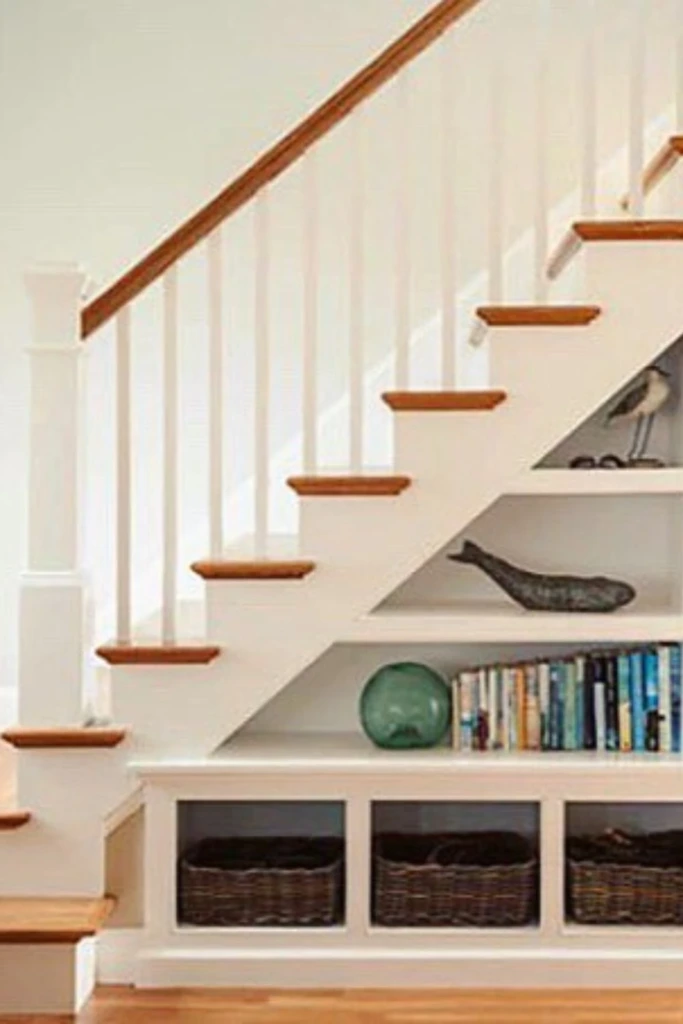
The space underneath a staircase can provide valuable storage without requiring additional floor area.
Custom shelving that follows the staircase's slope makes it possible to use awkward corners that ordinary furniture cannot accommodate.
Combine open compartments for books or decorative accessories with enclosed sections for household belongings.
Woven baskets can conceal smaller objects while adding texture to the overall design.
If you're planning built-in storage, measure the available depth carefully and avoid altering structural staircase components without professional guidance.
This arrangement is particularly effective in homes where the staircase opens into a hallway or living area.
3. Cabinet Pantry
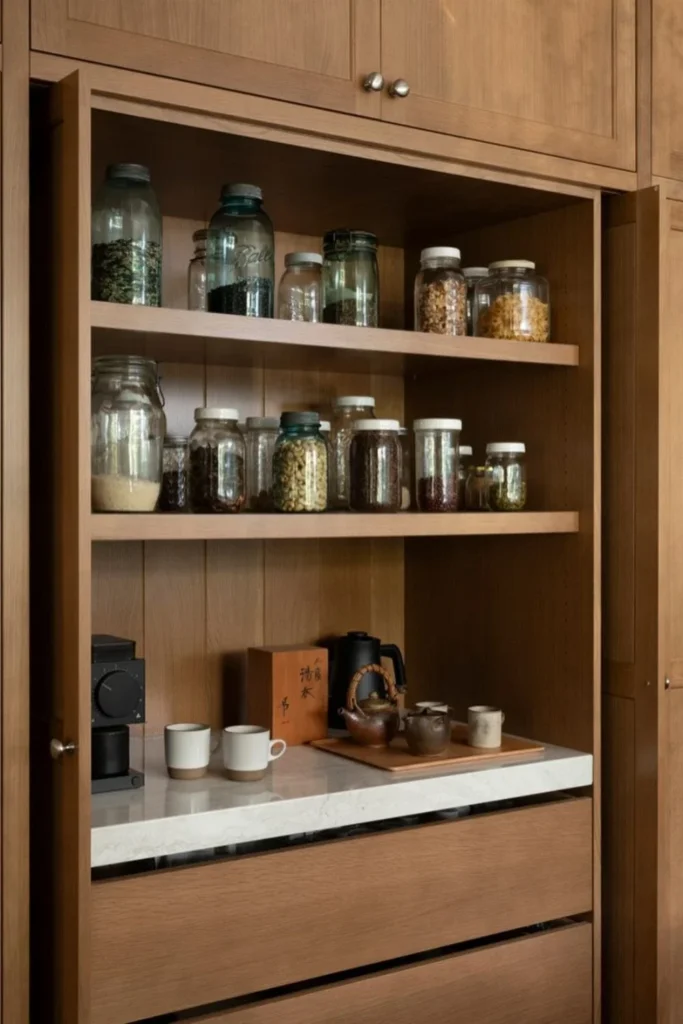
An ordinary kitchen cupboard can become an efficient pantry with a few thoughtful adjustments.
Begin by removing unnecessary packaging and grouping groceries into categories such as baking ingredients, breakfast foods, snacks, and canned goods.
Adjustable shelving allows you to accommodate containers of different heights without wasting vertical space.
Clear, airtight food containers are useful for dry goods because they help protect ingredients and make quantities easier to monitor.
Small baskets can hold packets and sachets that might otherwise disappear behind larger products.
Keep heavier items on lower shelves and avoid overcrowding the cabinet so you can retrieve groceries without rearranging everything.
4. Laundry Closet
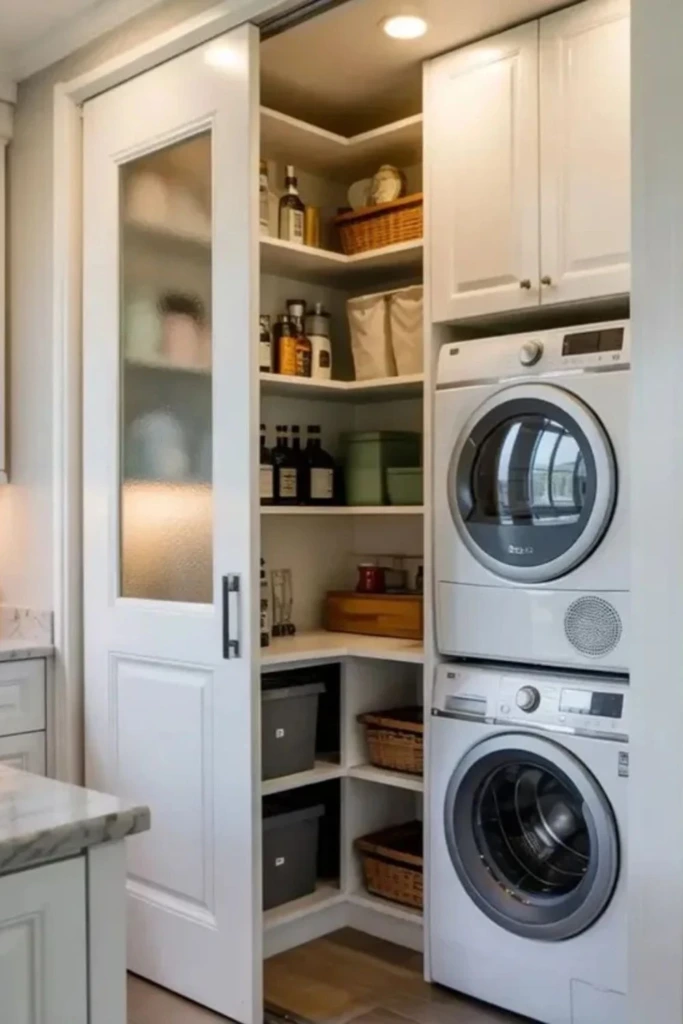
A laundry closet allows washing equipment and supplies to occupy a compact, designated area.
Depending on the available space, a washer and dryer can sit side by side or be stacked using a manufacturer-approved stacking kit.
Shelves above the machines provide convenient storage for detergent, stain removers, and laundry accessories.
Sliding, folding, or pocket doors can help conceal the appliances when they're not being used.
However, proper ventilation, electrical connections, plumbing access, and manufacturer-required clearances are essential.
A well-planned laundry closet works particularly well in apartments, utility areas, and homes without a separate laundry room.
5. Art Cabinet
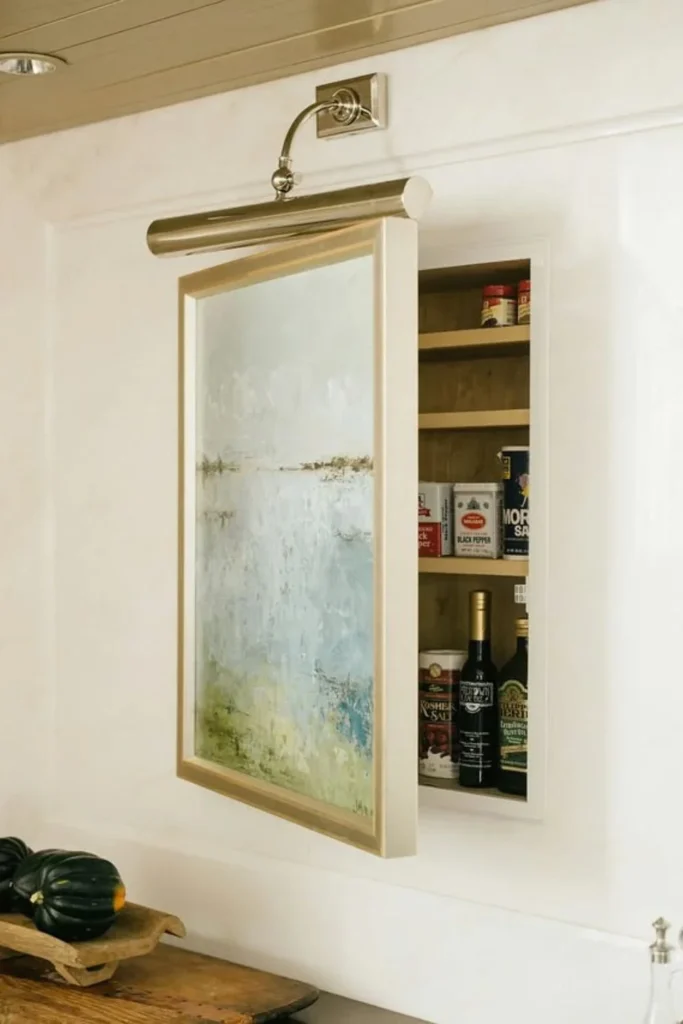
A framed artwork can serve as an attractive cover for a shallow storage cabinet.
This idea works well in areas where you need additional storage but prefer not to install visibly bulky cupboards.
A hinged frame can conceal narrow shelves suitable for keys, stationery, small accessories, or lightweight household essentials.
Choose artwork that complements the surrounding decor so the cabinet looks intentional rather than out of place.
For installation, use appropriate wall fixings and hinges designed to support the combined weight of the frame and cabinet door.
A surface-mounted version may be preferable when recessing a cabinet into the wall isn't practical.
6. Fold Station
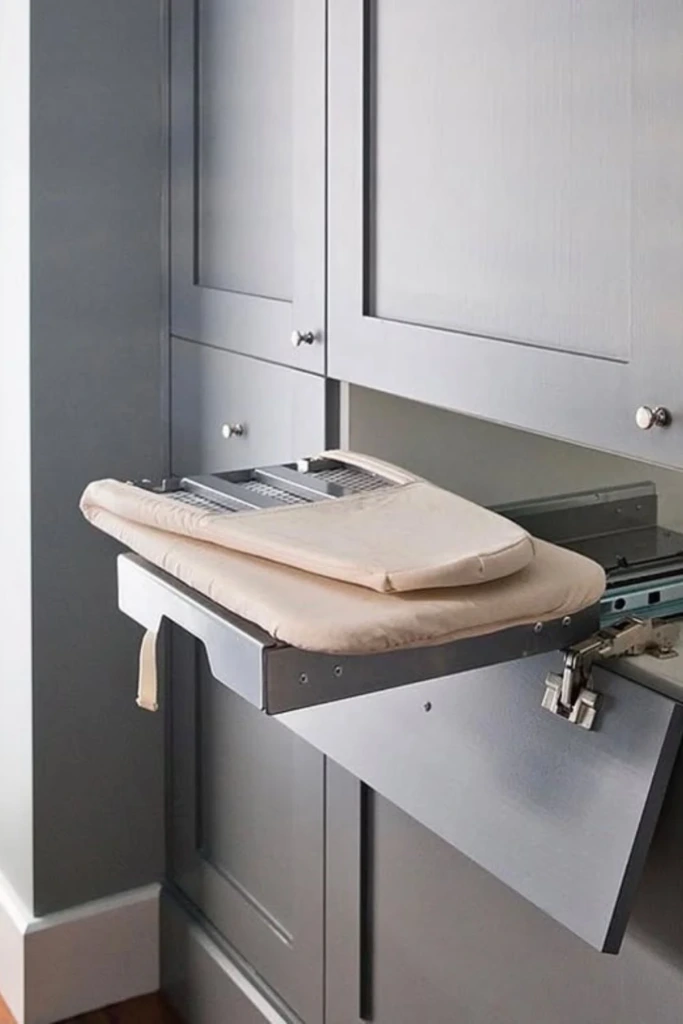
A retractable folding station gives you a dedicated laundry workspace without permanently occupying valuable floor space.
The folding surface can slide out from a cabinet or fold down from a wall-mounted unit whenever needed.
Once the laundry is finished, the surface disappears into its storage position.
This feature is particularly helpful in narrow laundry rooms where a permanent countertop would restrict movement.
Choose sturdy hardware rated for the intended load and ensure the board remains stable during use.
Installing the station close to laundry baskets and clothing storage can make sorting and folding more convenient.
7. Panel Storage
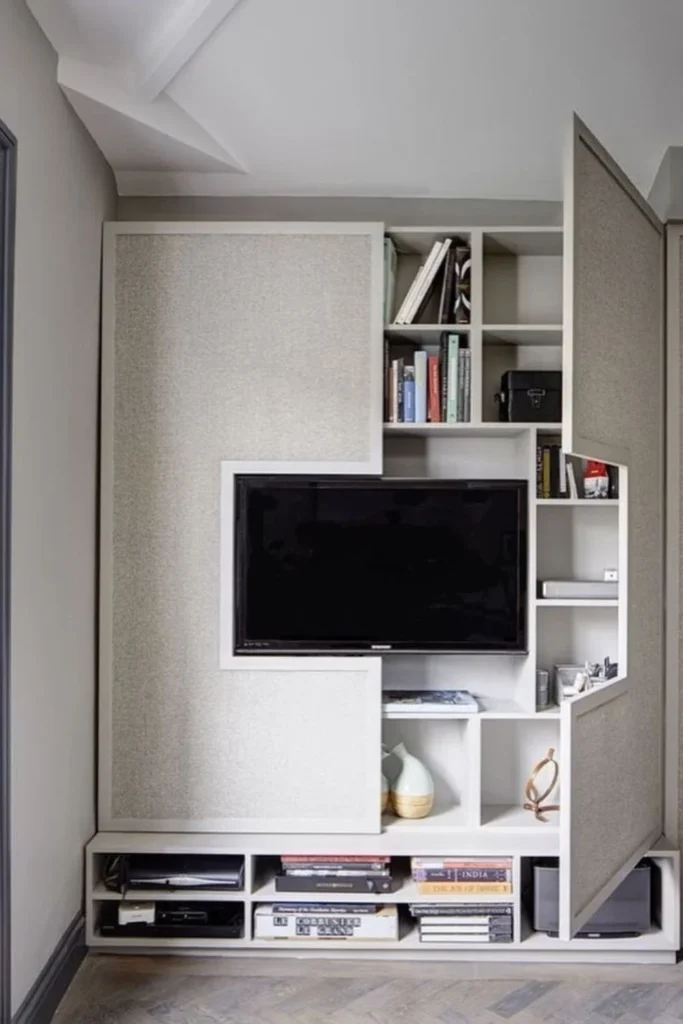
Sliding panels can transform ordinary shelving into flexible concealed storage.
A wall unit with movable doors allows you to display selected decorative pieces while hiding electronics, documents, and other belongings.
The panels can feature wood finishes, painted surfaces, or textured materials that coordinate with the room.
In living rooms, this approach works especially well around entertainment centers.
Use smooth-running tracks and leave sufficient clearance for the panels to move without obstruction.
If electronic equipment is stored behind closed panels, provide adequate ventilation and cable management.
8. Stair Drawers
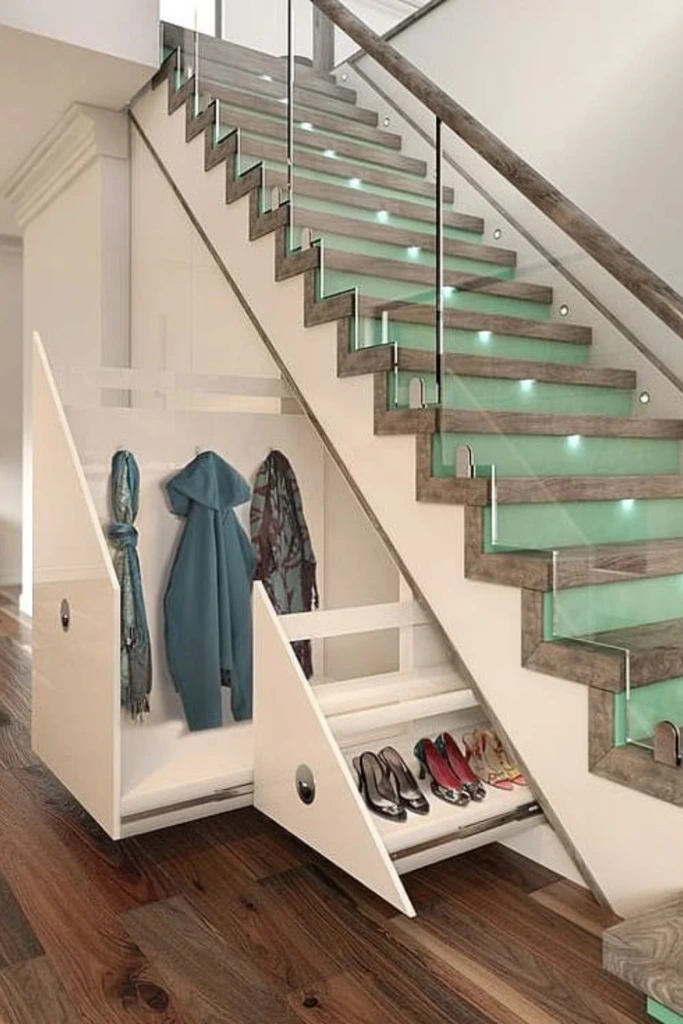
Deep drawers built into the space beneath a staircase offer an organized alternative to traditional cupboards.
Each drawer can serve a different purpose, making it easier to separate shoes, accessories, sports equipment, and seasonal belongings.
Full-extension drawer runners improve accessibility, especially in deeper compartments.
Soft-close mechanisms can also reduce noise and prevent drawers from slamming.
Consider incorporating dividers to stop smaller objects from shifting around.
For homes with an entrance near the staircase, these drawers create a convenient storage location for items used before leaving the house.
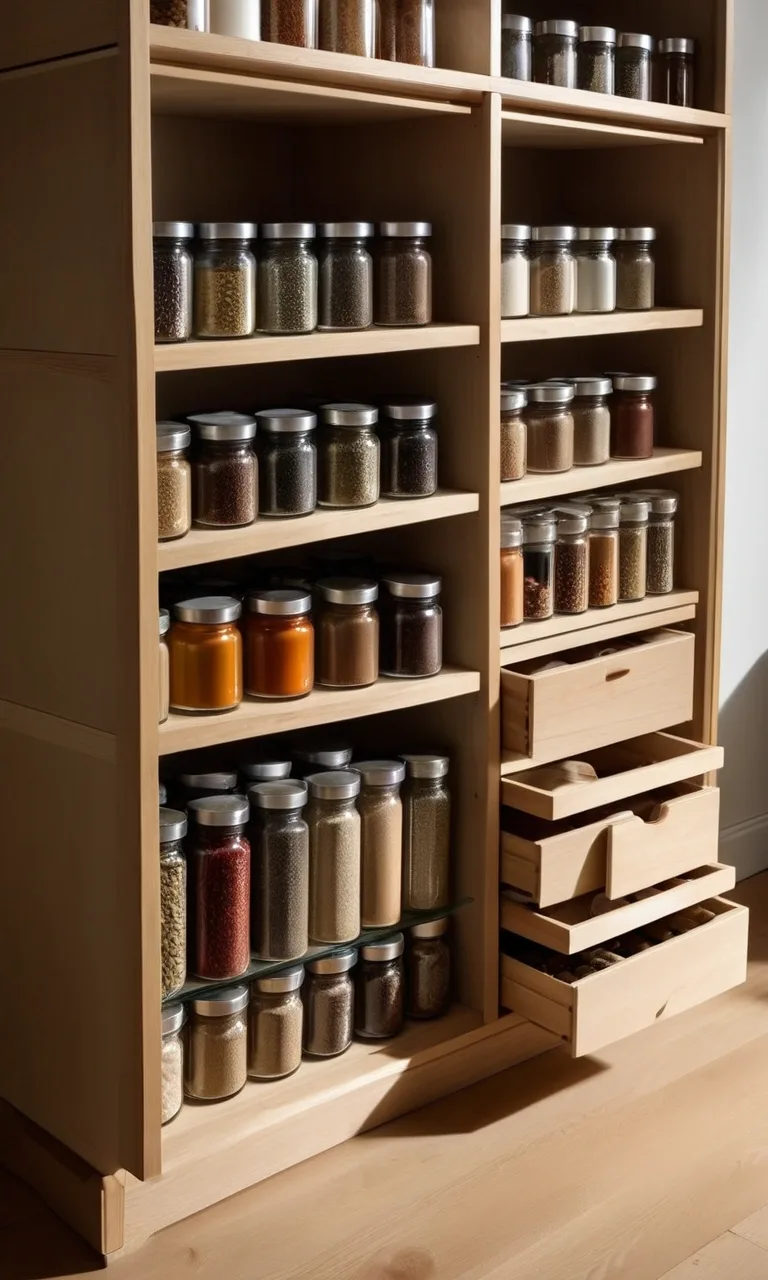
9. Pull Pantry
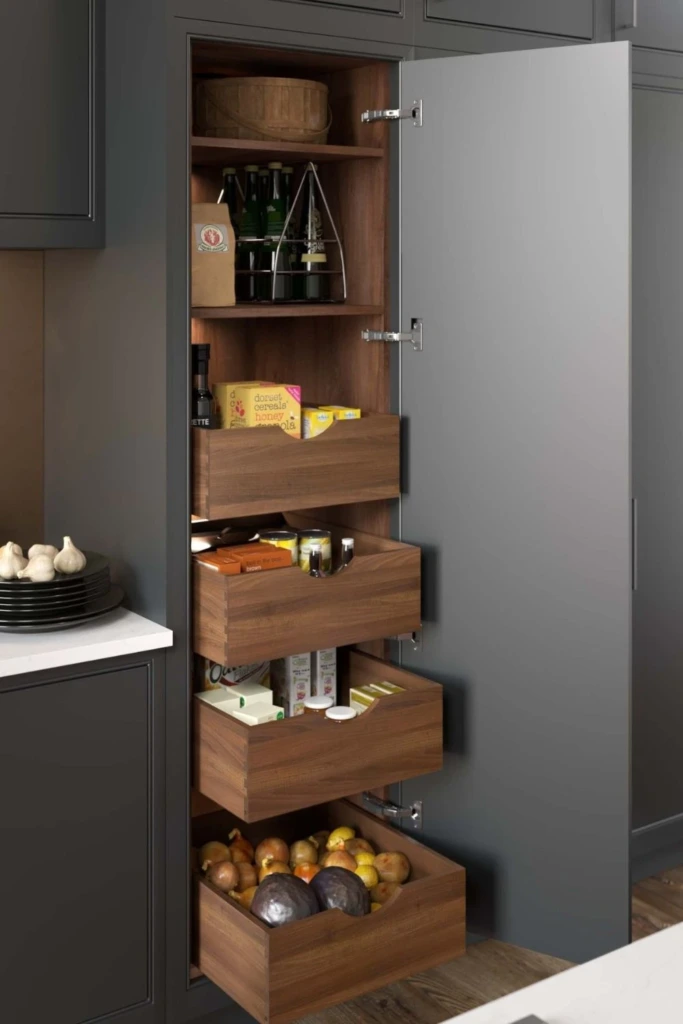
A pull-out pantry makes narrow or deep kitchen cabinets easier to use.
Instead of reaching toward the back of a cupboard, you can slide the entire storage section forward and access its contents.
Multiple tiers provide space for jars, canned foods, sauces, and packaged ingredients.
Choose runners and baskets with suitable weight ratings, particularly if you intend to store heavy bottles or canned goods.
A tall pull-out unit can be especially useful beside a refrigerator or between existing cabinets.
Organizing contents by category makes meal preparation more efficient and helps prevent forgotten groceries from accumulating.
10. Wall Shelf
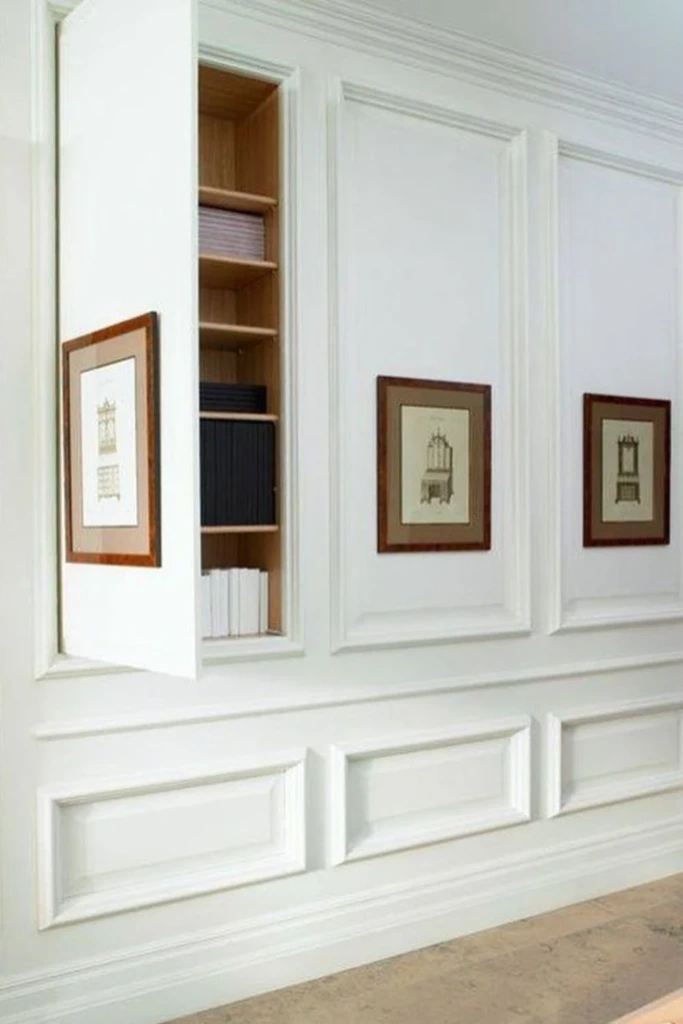
A concealed wall shelf offers storage while preserving a simple, uncluttered appearance.
The cabinet can be covered by a hinged panel finished to match the surrounding wall, making it less noticeable when closed.
Shallow compartments are suitable for documents, small electronics, stationery, or everyday accessories.
In home offices, concealed shelving can help keep work materials nearby without leaving everything on display.
Before installing recessed storage, check for electrical wiring, plumbing, and structural components.
Where wall modifications aren't possible, a shallow surface-mounted cabinet painted to match the wall provides a similar visual effect.
11. Mirror Cabinet
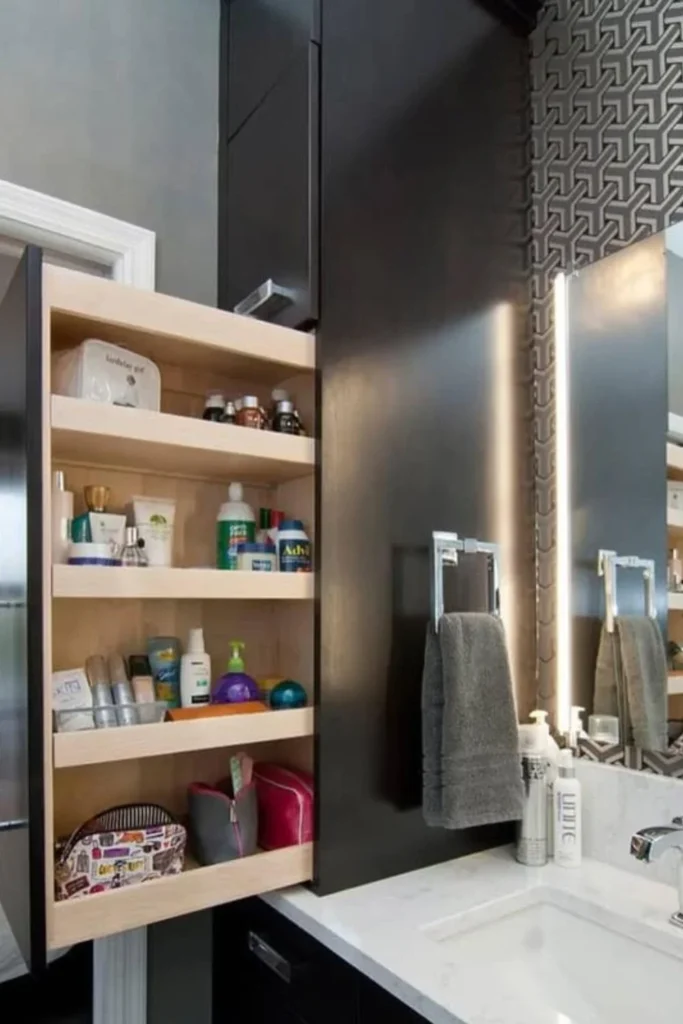
A mirrored cabinet combines two bathroom essentials in one compact fixture.
Behind the mirror, narrow shelves can hold toothbrushes, skincare products, grooming tools, and other daily necessities.
This arrangement frees up countertop space and keeps frequently used products within easy reach.
Recessed designs create a particularly streamlined appearance, although surface-mounted models are easier to install in many bathrooms.
Choose moisture-resistant materials and corrosion-resistant hardware suitable for humid environments.
Avoid storing medicines in a humid bathroom unless their storage instructions specifically permit those conditions.
12. Entry Storage
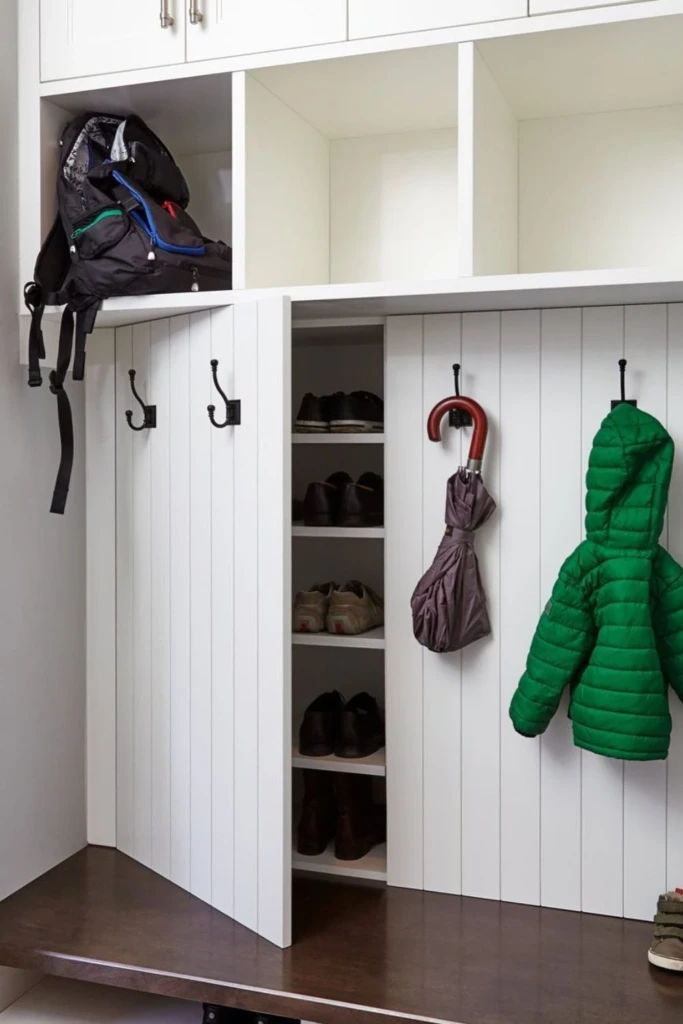
An organized entrance makes daily routines easier by providing designated spaces for belongings as soon as you arrive home.
A compact storage unit can combine hooks, a seating area, concealed shoe compartments, and overhead cupboards.
The seating area is useful when putting on footwear, while enclosed compartments prevent shoes and bags from spreading across the floor.
Assigning individual hooks or baskets to household members can reduce confusion in busy family homes.
For narrow hallways, choose shallow cabinetry that doesn't interfere with door movement or walking space.
A durable, easy-to-clean finish is particularly useful in areas exposed to wet shoes and outdoor clothing.
13. Bar Cabinet
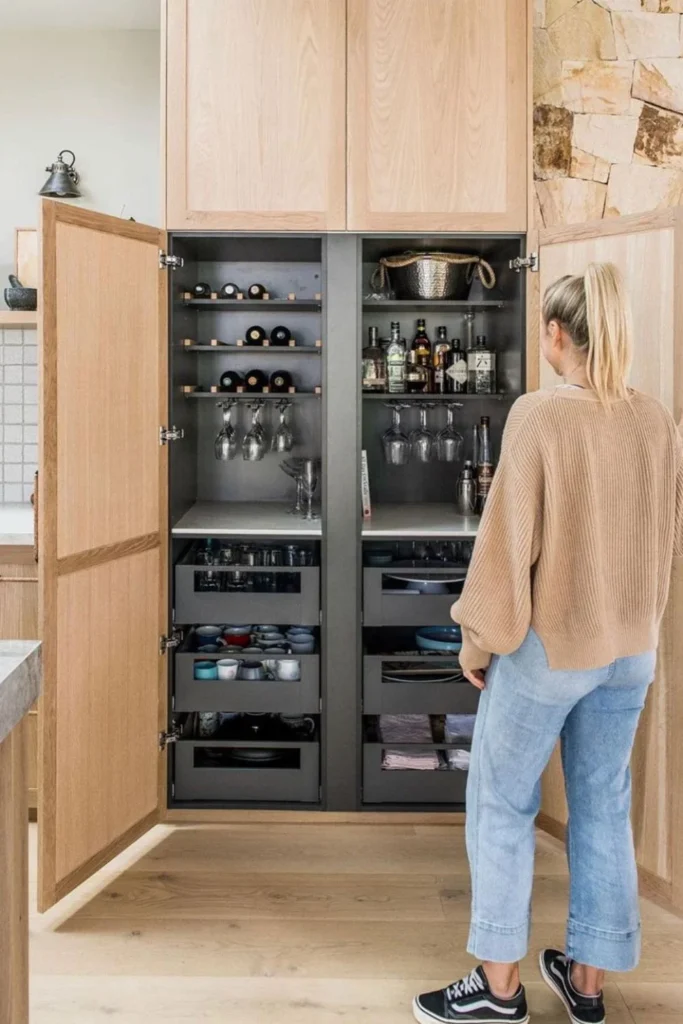
A concealed bar cabinet creates a dedicated place for drinkware and entertaining accessories without leaving them permanently displayed.
Tall cabinets can accommodate glasses, serving trays, bottles, and cocktail-making equipment.
Internal drawers are useful for coasters, napkins, and smaller accessories.
Glass racks and adjustable shelves help prevent fragile items from becoming overcrowded.
You can also include a compact preparation surface if the cabinet is deep enough.
For a more versatile setup, the same cabinet can function as a coffee or tea station, with storage for mugs, beverages, and serving essentials.
14. Laundry Cabinet
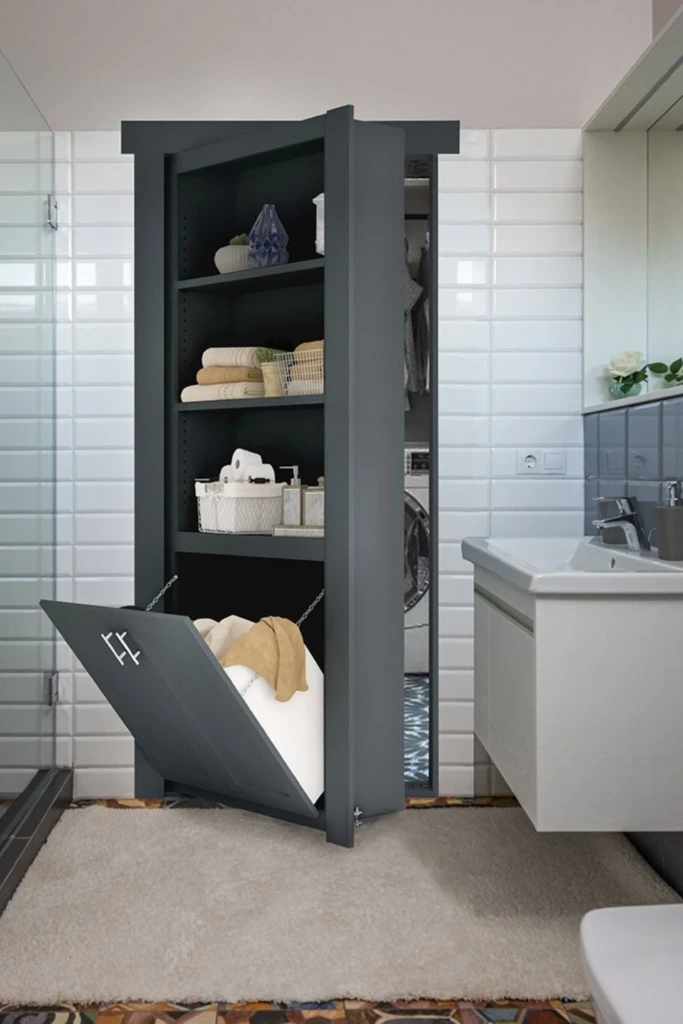
A laundry cabinet with an integrated hamper helps prevent dirty clothing from collecting around bedrooms and bathrooms.
Tilt-out compartments are particularly convenient because they allow clothes to be deposited without pulling out a large basket.
A removable inner hamper makes transporting laundry to the washing machine easier.
Additional shelves can accommodate folded towels, detergent, and spare linens.
Choose a design that allows airflow around stored clothing, especially when damp items may occasionally be placed inside.
For small bathrooms, a tall, narrow cabinet can provide useful capacity while occupying relatively little floor space.
15. Bed Drawers
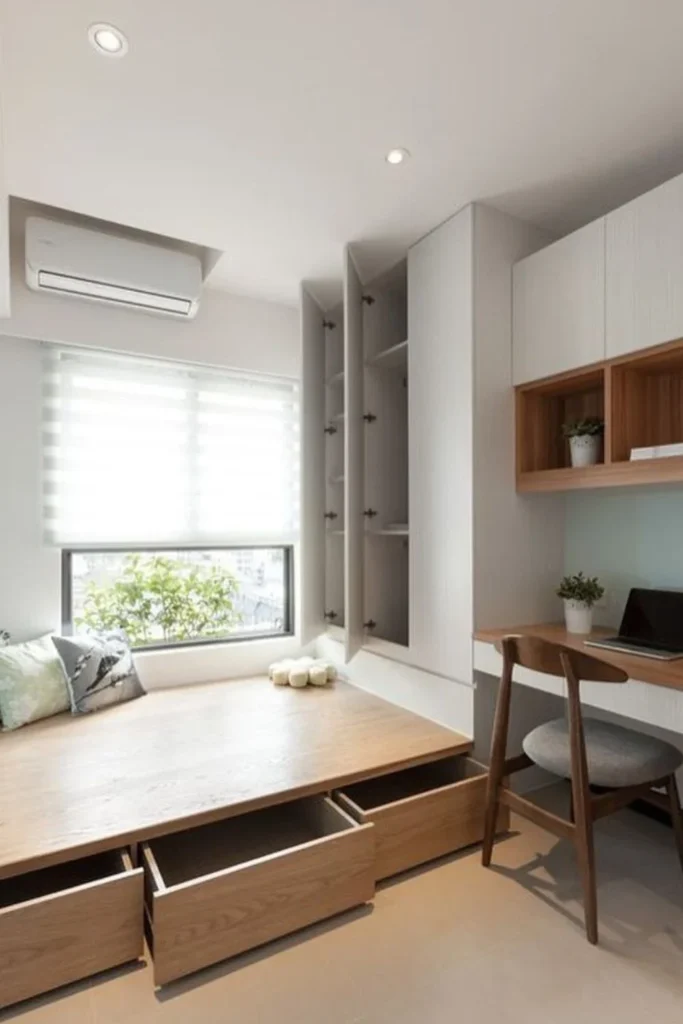
Drawers beneath a bed make excellent use of an area that often remains empty.
They can hold spare bedding, out-of-season clothing, pajamas, and other items that don't require permanent wardrobe space.
Built-in drawers offer a neat appearance, while separate rolling containers provide an affordable alternative.
Measure the clearance beneath the bed before choosing storage boxes, and account for handles and flooring.
If the room is narrow, ensure there is enough space to pull drawers out fully.
Dividers and fabric organizers can keep clothing separated and prevent the compartments from becoming disorganized.
16. Tub Storage
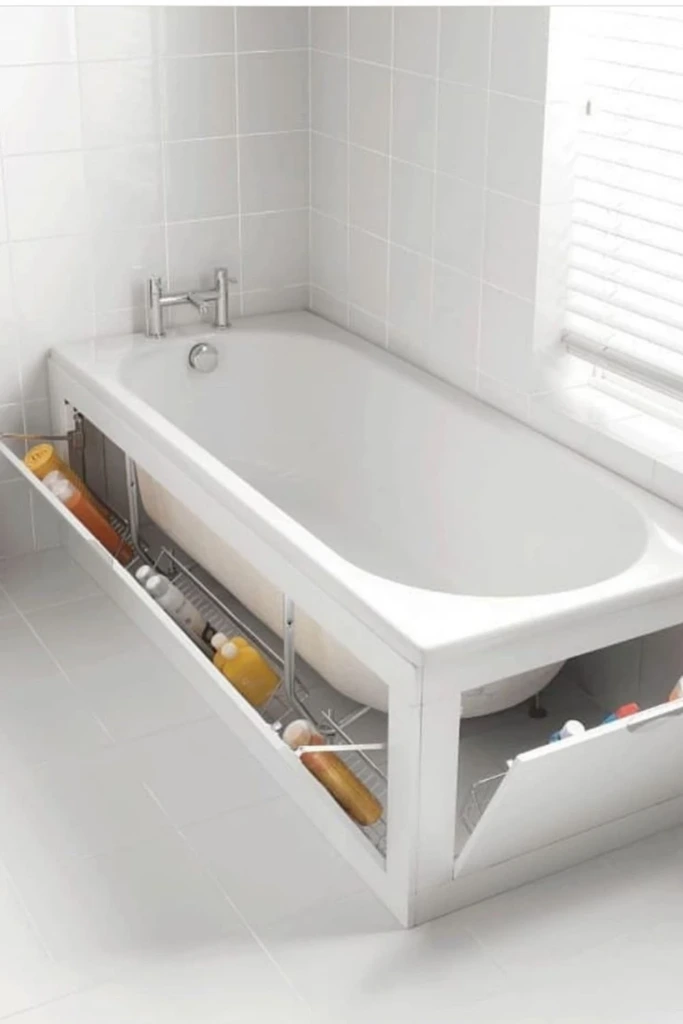
The space surrounding a bathtub can sometimes accommodate discreet storage compartments.
In suitable installations, access panels or shallow drawers within a purpose-built bath surround may provide room for spare toiletries and cleaning accessories.
However, this option requires careful planning because plumbing connections, waterproofing, and maintenance access must remain protected.
Any storage modification should avoid interfering with the bathtub's structural support or required service openings.
Moisture-resistant materials and properly sealed surfaces are essential.
For bathrooms where built-in tub storage isn't feasible, a narrow freestanding cabinet beside the bathtub may be a safer and simpler alternative.
17. Stair Closet
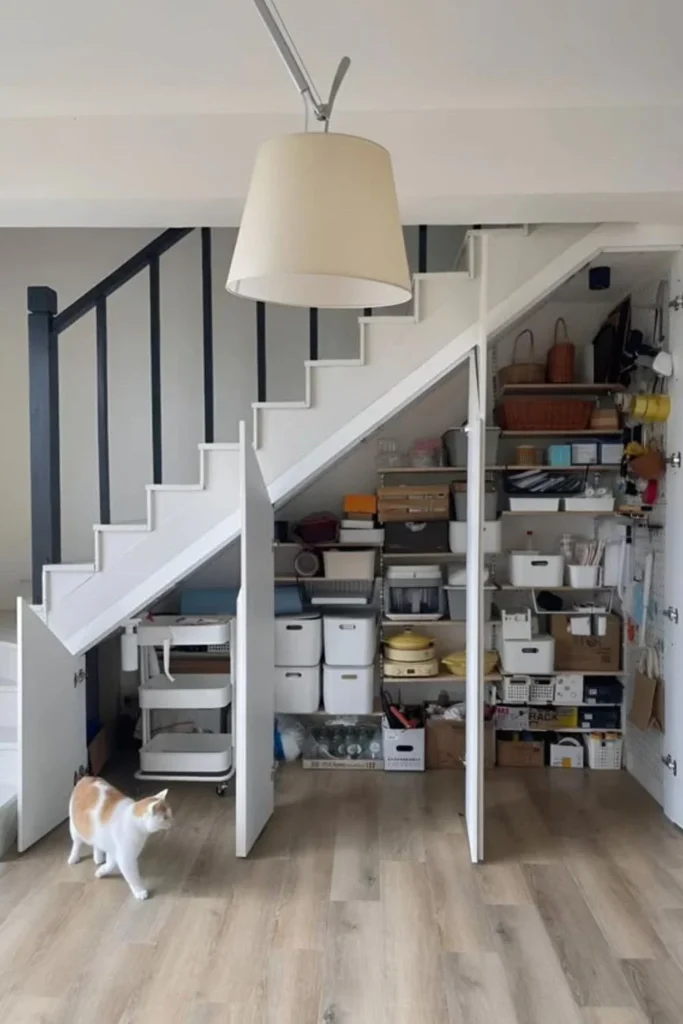
An enclosed cupboard beneath the stairs can become one of the most versatile storage areas in a home.
Its irregular shape is suitable for a combination of shelving, hooks, and larger floor-level compartments.
You might use it for vacuum cleaners, cleaning tools, luggage, or infrequently used household supplies.
Install shelves at different heights to accommodate the sloping ceiling.
Clearly labeled containers make it easier to locate smaller belongings without unpacking the entire cupboard.
Keep access to electrical panels, plumbing, and other building services unobstructed, and follow applicable fire-safety requirements.
18. Pan Storage
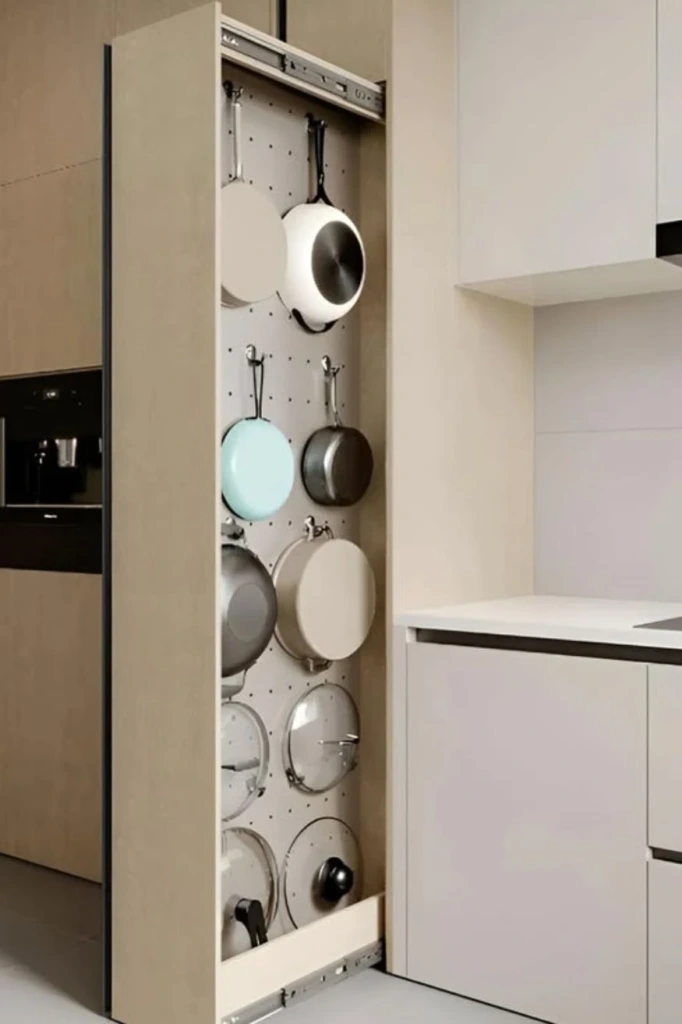
A dedicated pull-out organizer can make storing cookware significantly easier.
Rather than stacking heavy pans in unstable piles, individual compartments allow each item to be removed separately.
Vertical dividers are especially helpful for frying pans, baking trays, and lids.
A narrow sliding cabinet can also incorporate hooks or racks, depending on the size and weight of the cookware.
Position heavier pans toward the bottom to improve stability.
Before purchasing a pull-out system, measure the cabinet's internal dimensions and confirm that the hardware can safely support the intended load.
19. Step Drawers
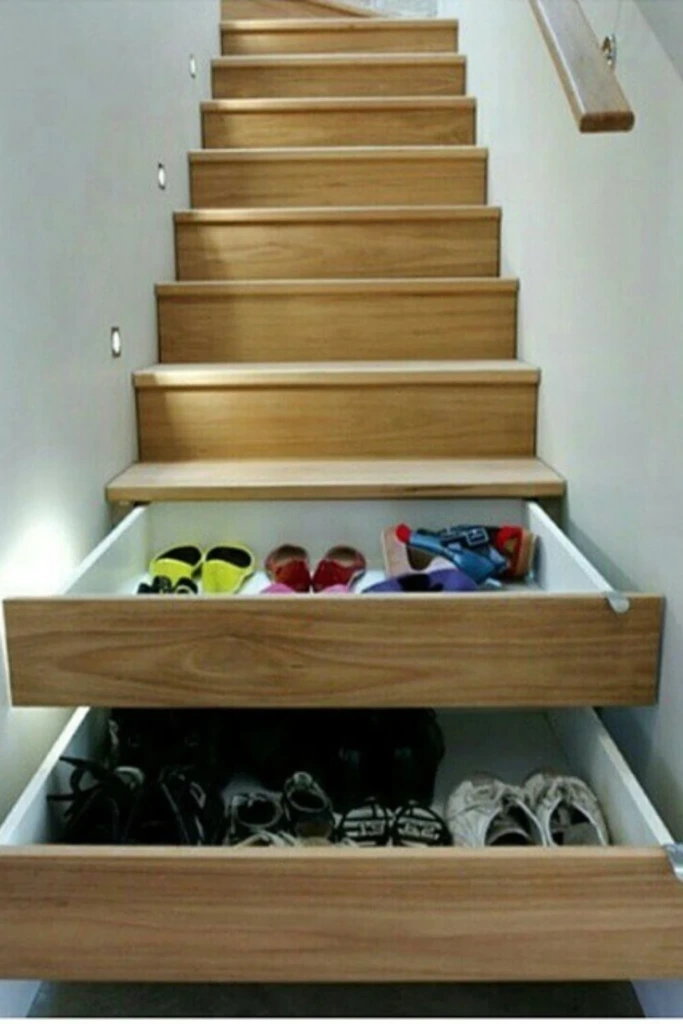
Drawers integrated into staircase risers are an unusual way to introduce additional storage without placing furniture in the hallway.
These compartments can accommodate lightweight accessories, spare slippers, and small seasonal belongings.
Flush-fitting fronts help maintain the staircase's appearance while reducing protrusions that could create tripping hazards.
Because stairs are structural and safety-critical elements, this type of installation should be assessed and completed by a qualified professional.
The drawers must not weaken the staircase or interfere with safe movement.
When properly designed, they can offer extra capacity in homes where conventional storage options are limited.
20. Shoe Column
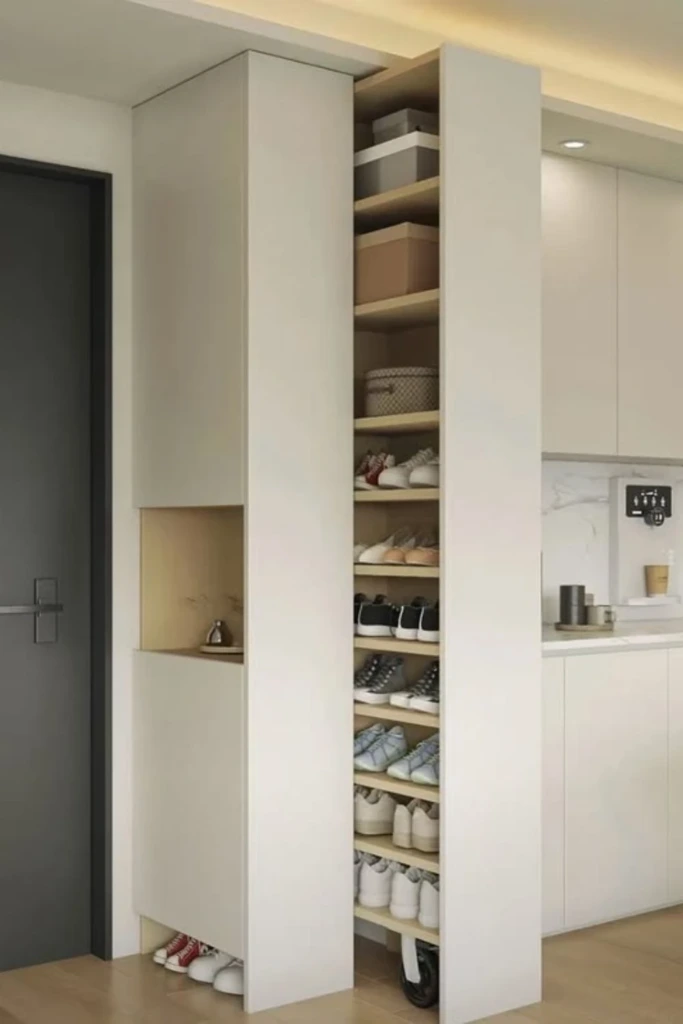
A slim vertical shoe cabinet makes use of narrow spaces that might otherwise remain empty.
Its compact design is especially suitable for hallways, bedrooms, and entrance areas.
Depending on the cabinet's depth, shoes can be arranged on angled shelves or in pull-out compartments.
Separate sections help prevent footwear from becoming tangled or crushed.
Allow adequate airflow, particularly for shoes that may retain moisture after use.
Tall, narrow cabinets should be securely anchored to prevent tipping.
For a coordinated appearance, choose a finish that matches nearby doors, wardrobes, or wall panels.
21. Cleaning Cabinet
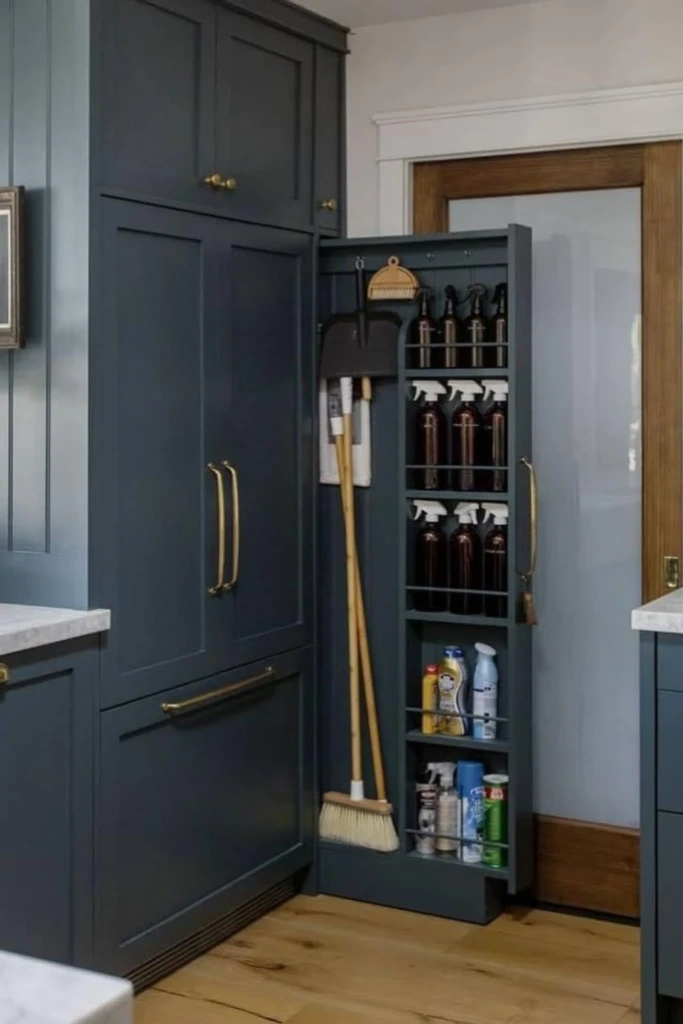
A dedicated cleaning cabinet keeps household supplies together and makes routine chores more manageable.
A tall, narrow unit can accommodate spray bottles, cloths, brushes, and cleaning tools.
Install hooks for lightweight accessories and adjustable shelves for products of different heights.
Removable trays can help contain minor spills and simplify cleaning.
Keep chemicals in their original labeled containers, follow product storage instructions, and separate incompatible substances.
If children are present, use appropriate child-resistant locks and keep hazardous products securely out of reach.
A well-organized cabinet also makes it easier to see which supplies need replacing.
22. Wall Hooks
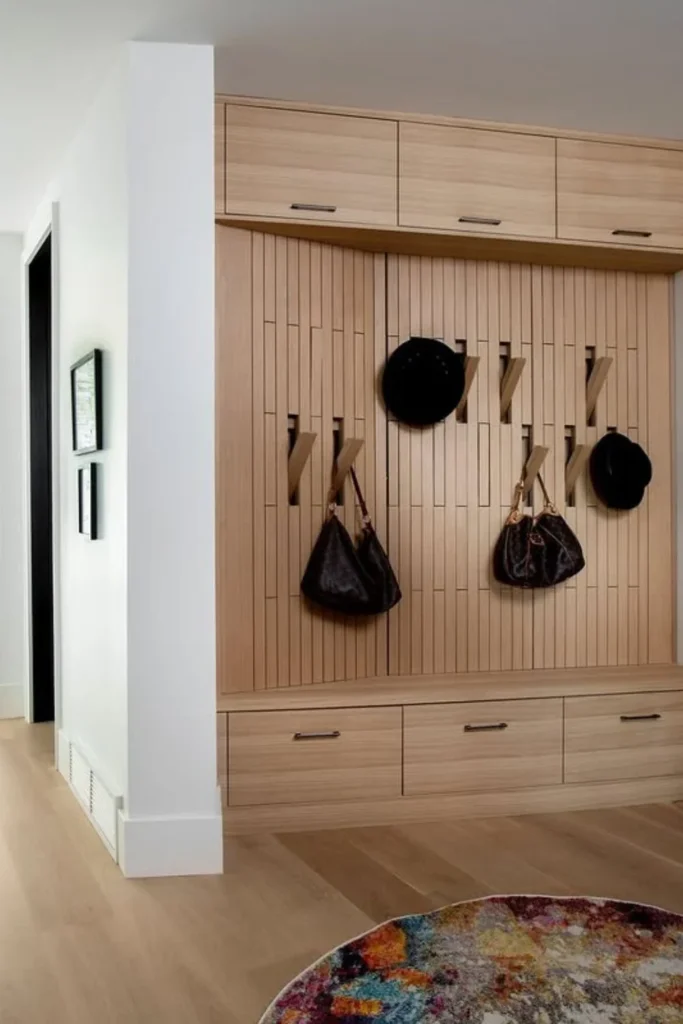
Wall-mounted hooks offer a simple way to organize everyday accessories without requiring a large wardrobe or storage unit.
In an entrance area, hooks can hold coats, hats, backpacks, and reusable shopping bags.
Pairing them with concealed drawers or cupboards underneath creates a practical combination of visible and hidden storage.
Choose sturdy hooks and install them at heights suitable for the people who use them.
A slatted or paneled backing can protect the wall from scuffs while creating a coordinated appearance.
Leave enough spacing between hooks so jackets and bags don't become difficult to remove.
23. Display Shelves
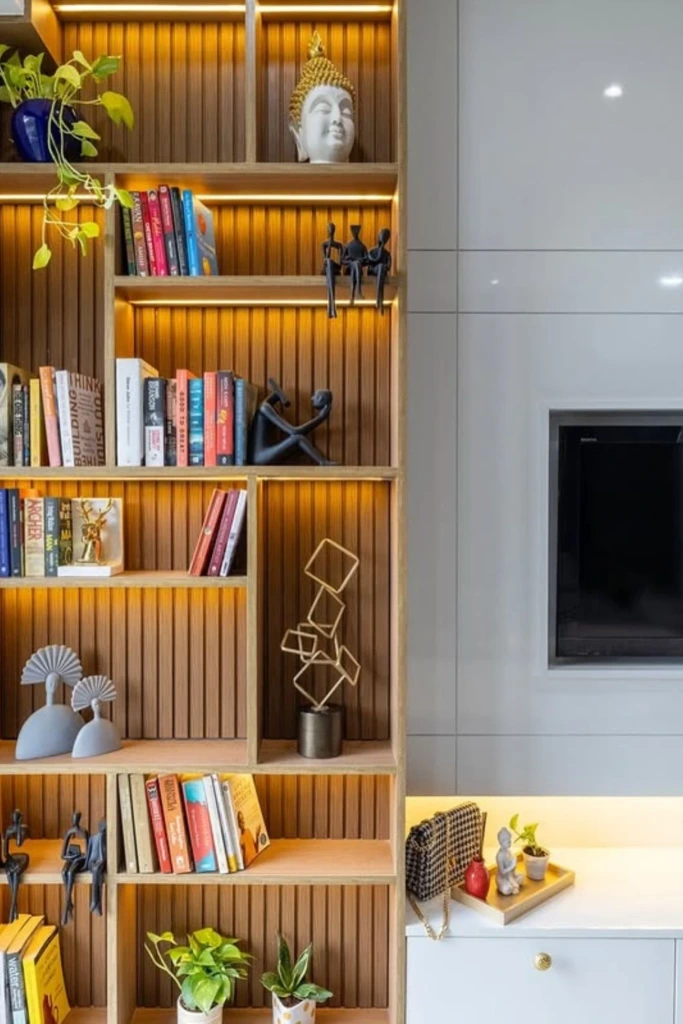
Built-in display shelves can make a room feel more organized while adding architectural interest.
Although open shelving isn't completely hidden, combining it with closed cupboards allows you to balance decorative displays with concealed storage.
Use the exposed sections for books, framed photographs, and a few carefully selected accessories.
Closed compartments below can accommodate electronics, games, documents, and other items that create visual clutter.
Integrated LED lighting can highlight decorative objects and improve visibility.
Avoid filling every shelf. Leaving some open space creates a more balanced appearance and makes cleaning easier.
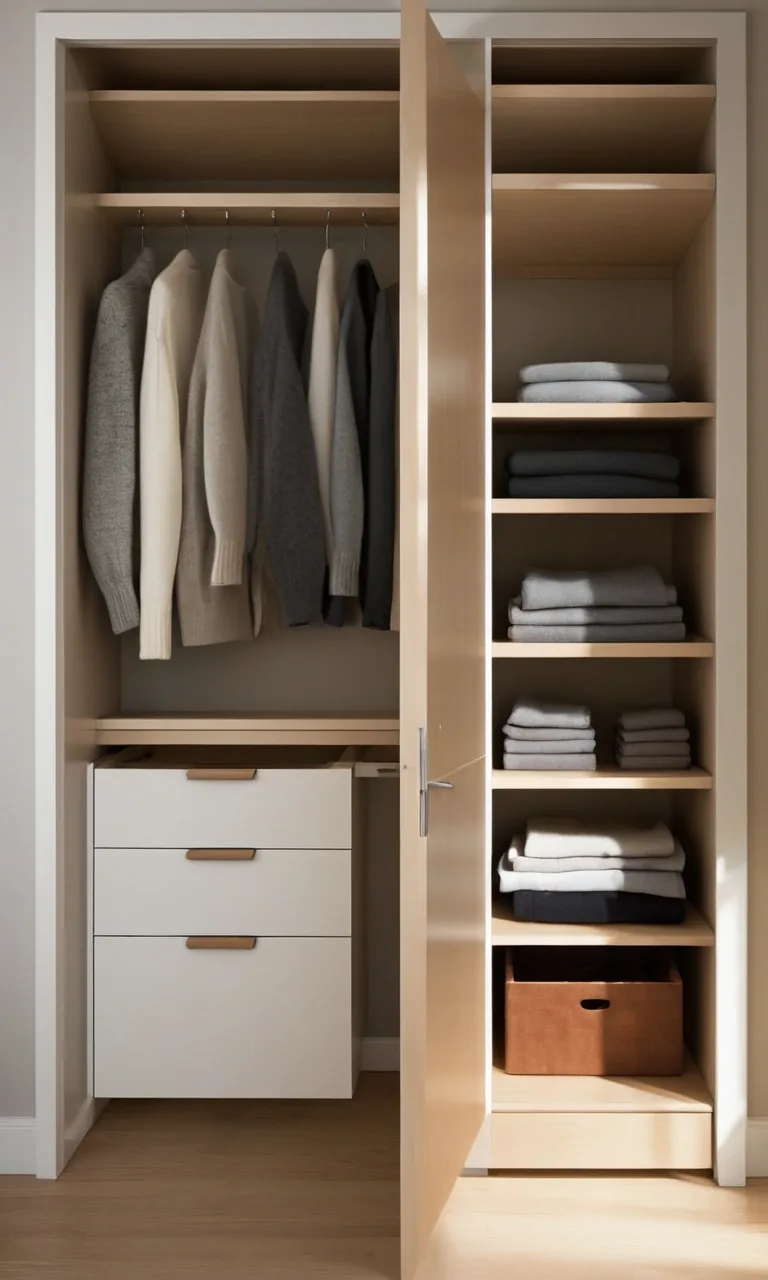
24. Wardrobe Closet
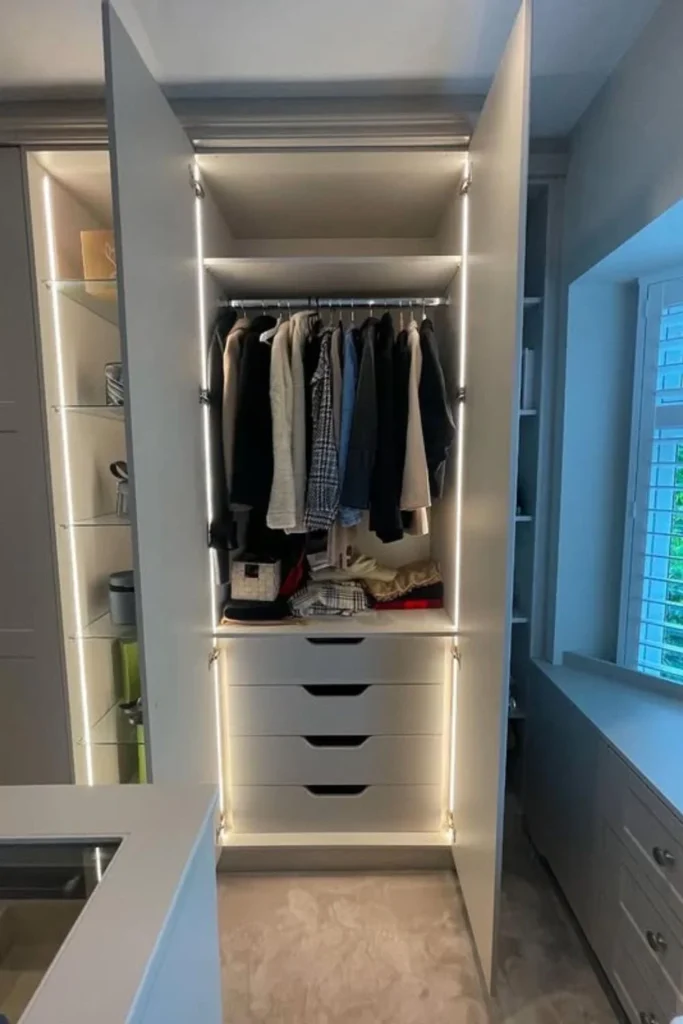
A full-height wardrobe provides substantial concealed storage while maintaining a tidy bedroom appearance.
Inside, combine hanging rails, drawers, shelves, and accessory organizers to accommodate different types of clothing.
Double hanging rails can increase capacity for shorter garments, while full-length sections are useful for dresses and coats.
Drawers keep socks, underwear, and smaller accessories separated.
Upper compartments are ideal for luggage and seasonal bedding.
Consider installing interior lighting, particularly in deep wardrobes where natural light doesn't reach.
A well-designed wardrobe should reflect your clothing collection rather than relying on a generic arrangement.
25. Corner Cabinet
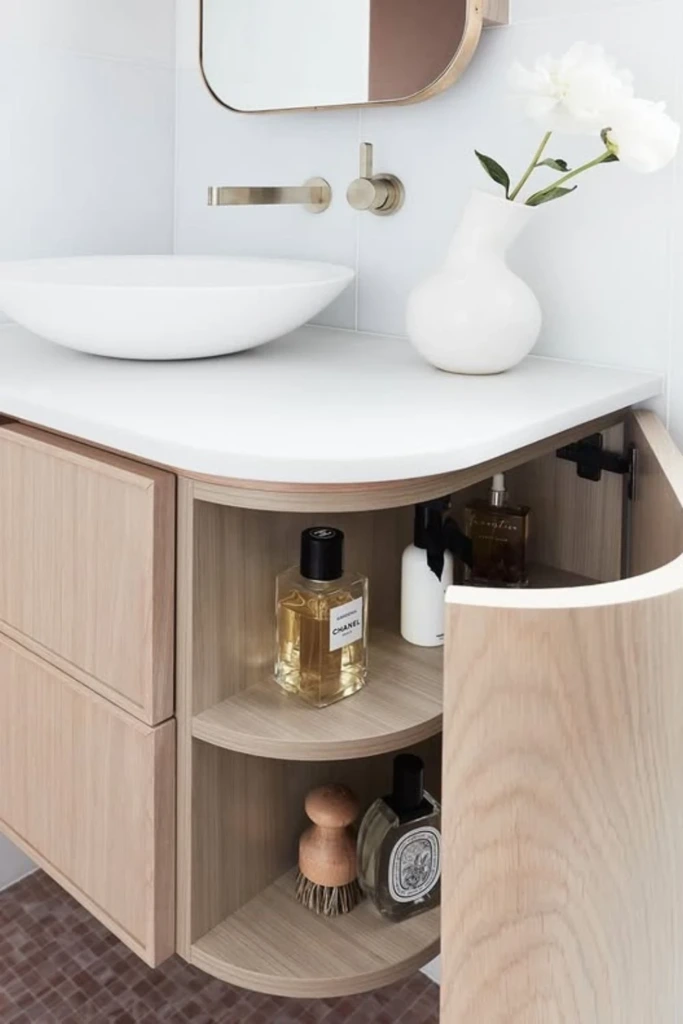
Corners often present storage challenges because standard rectangular cabinets can leave difficult-to-reach areas.
A purpose-designed corner cabinet can turn this awkward space into practical storage.
Curved fronts, angled shelves, or rotating organizers can improve access while maintaining a compact footprint.
In bathrooms, corner cabinets are useful for toiletries and spare supplies.
In kitchens, they can accommodate pantry products, small cookware, or serving accessories.
Choose a door design that opens comfortably without hitting nearby fixtures.
Adjustable shelves make the cabinet more adaptable as your storage needs change.
What is the easiest way to add hidden storage in a small home?
The simplest approach is to use furniture that already occupies space in your home.
Storage benches, ottomans with removable lids, beds with drawers, and coffee tables with compartments provide additional capacity without requiring major alterations.
You can also place labeled containers beneath existing furniture or install removable organizers inside cupboards.
Start with the areas where clutter accumulates most frequently. Improving one troublesome space often makes a noticeable difference in how organized the entire room feels.
How do you hide clutter without making storage hard to access?
Choose concealed storage that opens easily and allows you to identify its contents quickly.
Pull-out drawers, labeled baskets, adjustable shelves, and compartment dividers are generally more convenient than deep containers filled with unrelated belongings.
Keep everyday essentials near the front or at comfortable reaching height. Store occasional-use items in higher or less accessible compartments.
Avoid overfilling cupboards, since cramped storage can make even simple tasks frustrating.
The most successful hidden storage system isn't necessarily the one that holds the most belongings. It's the one that makes putting things away and finding them again effortless.