25 Nursery Dresser Organization Ideas for 2026
Organizing a nursery dresser can make everyday baby care much easier. Between tiny clothes, diapers, blankets, and changing supplies, even a spacious dresser can become messy without a practical storage system.
A well-arranged dresser helps you find what you need quickly, especially during nighttime diaper changes and rushed mornings. It also makes better use of limited nursery space while keeping the room comfortable and welcoming.
Whether you prefer simple drawer organizers, decorative storage baskets, or a complete changing station, these 24 nursery dresser organization ideas offer practical ways to create a beautiful and functional space for your baby.
1. Drawer Dividers and Bins
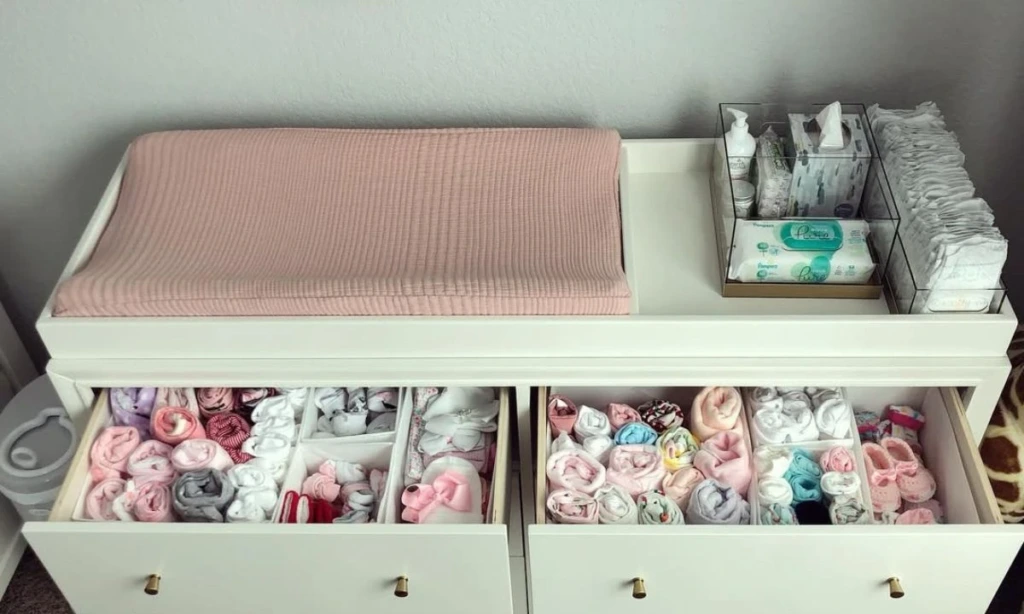
Drawer dividers and storage bins are among the easiest ways to organize baby essentials without replacing your existing furniture.
Adjustable dividers create separate spaces for bodysuits, socks, pajamas, and other small clothing items. This prevents neatly folded pieces from becoming mixed together whenever you open a drawer.
Soft fabric bins work especially well for lightweight accessories, while sturdy plastic or wooden organizers provide more structure. Choose compartments that fit your drawer dimensions and can be rearranged as your baby's clothing sizes change.
2. Labeled Drawers
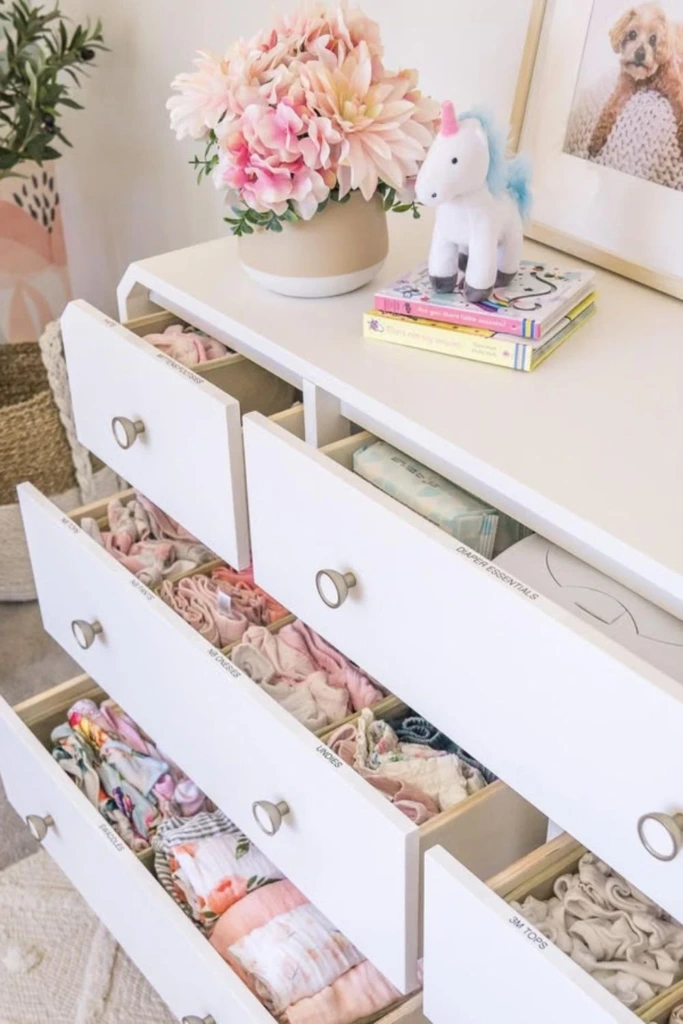
Labeling dresser drawers creates a straightforward storage system that everyone caring for your baby can follow.
Assign different drawers to everyday clothing, sleepwear, changing supplies, and extra accessories. Use removable labels on the inside edges or fronts so you can update categories as needed.
Within each drawer, arrange folded items in upright rows rather than tall stacks. This makes it easier to see available outfits without disturbing everything else.
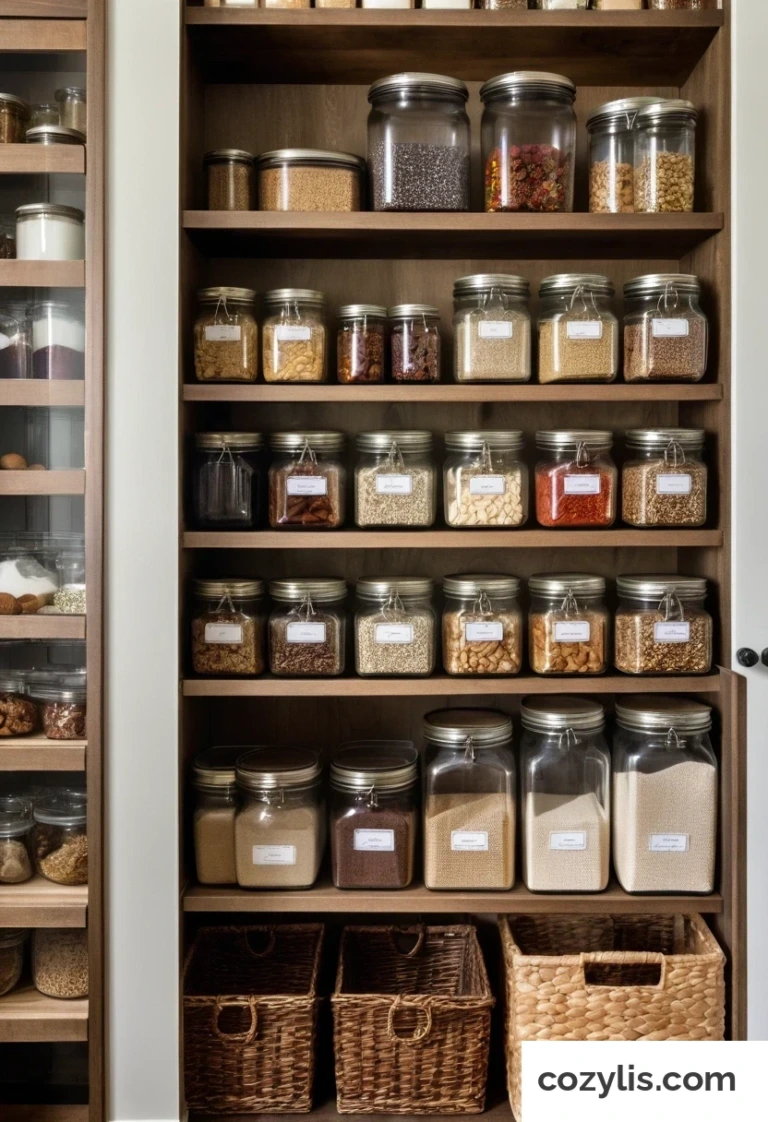
3. Basket Closet
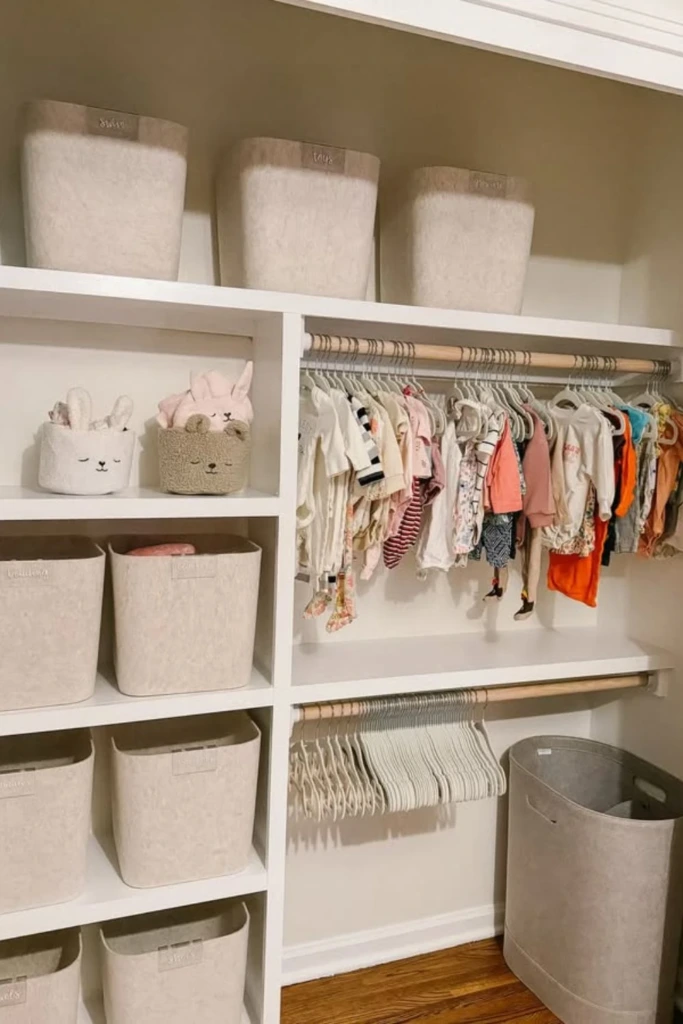
A basket-based closet arrangement provides additional storage when dresser drawers are already full.
Place lightweight baskets on accessible shelves and organize them by purpose, such as blankets, seasonal clothing, shoes, or spare bedding. Labels help distinguish similar-looking containers.
Keep frequently used items at a comfortable height and reserve higher shelves for supplies adults retrieve less often. This approach creates an orderly closet while complementing the nursery dresser.
4. Minimal Dresser
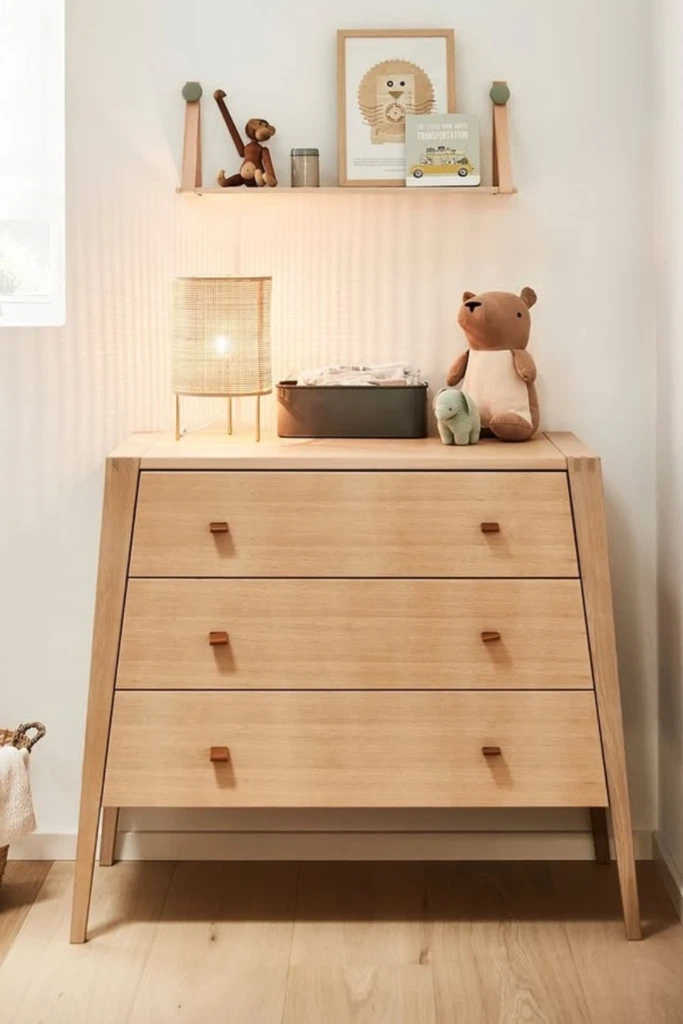
A minimalist dresser works beautifully in nurseries where simplicity and open space are priorities.
Choose furniture with uncomplicated shapes, smooth drawer fronts, and a neutral finish. Instead of filling the surface with decorations, keep only the items needed for daily care.
Inside the drawers, use a few well-sized organizers rather than numerous small containers. The goal is to give each essential a convenient location without making the storage system unnecessarily complicated.
5. Rainbow Diaper Drawer
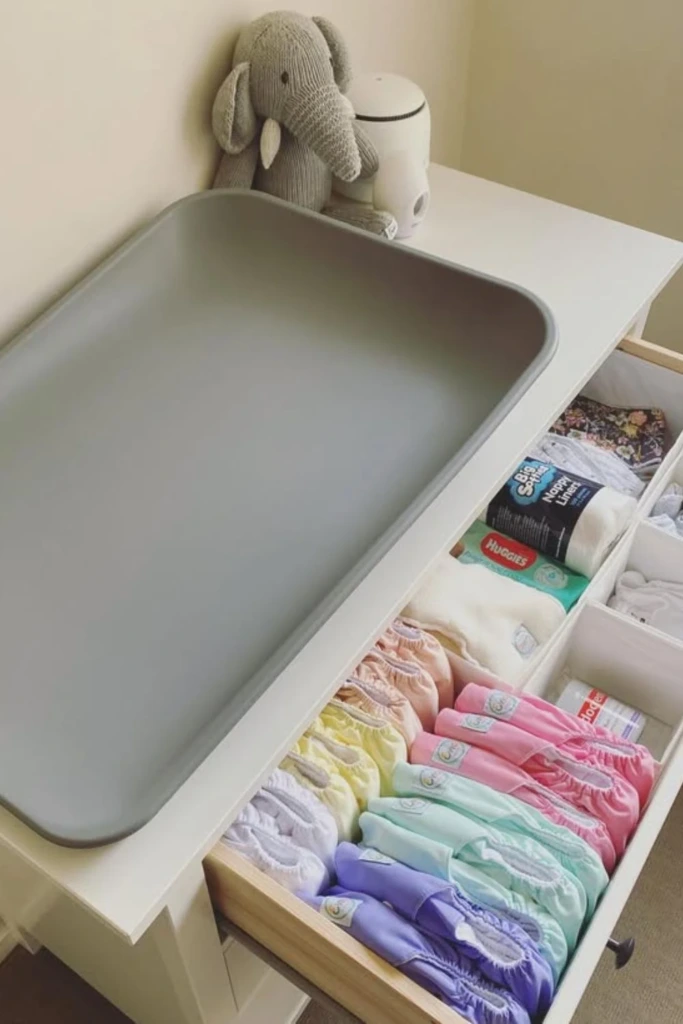
A colorful diaper drawer can turn ordinary storage into a cheerful feature.
For families using reusable cloth diapers, arrange clean diapers in color groups or patterns. Folding them consistently makes the drawer look coordinated and helps you identify different styles quickly.
Separate inserts, liners, and other accessories into individual compartments. Keep wet or soiled diapers in an appropriate separate container rather than mixing them with clean supplies.
6. Soft Bin Setup
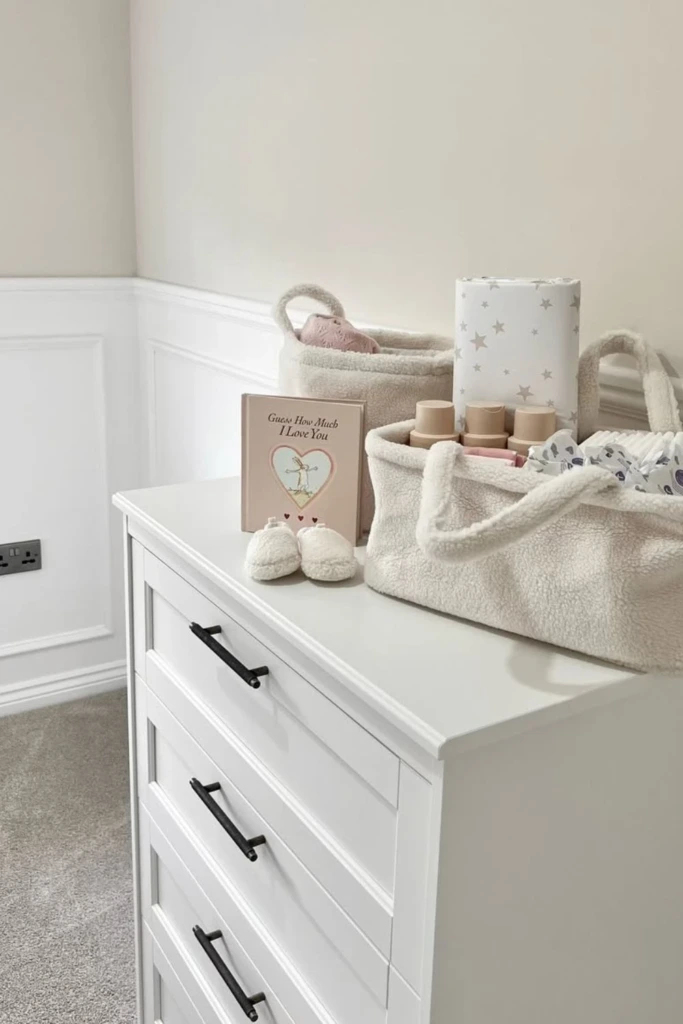
Soft storage bins bring a relaxed appearance to the nursery while keeping smaller necessities organized.
Use fabric containers for clean washcloths, spare outfits, burp cloths, and other lightweight essentials. Their flexible sides make them particularly useful inside drawers with unusual dimensions.
Choose washable materials whenever possible, since baby supplies often need frequent cleaning. Avoid overcrowding the dresser top, and keep any loose containers away from the baby's changing area.
7. Pink Accent Station
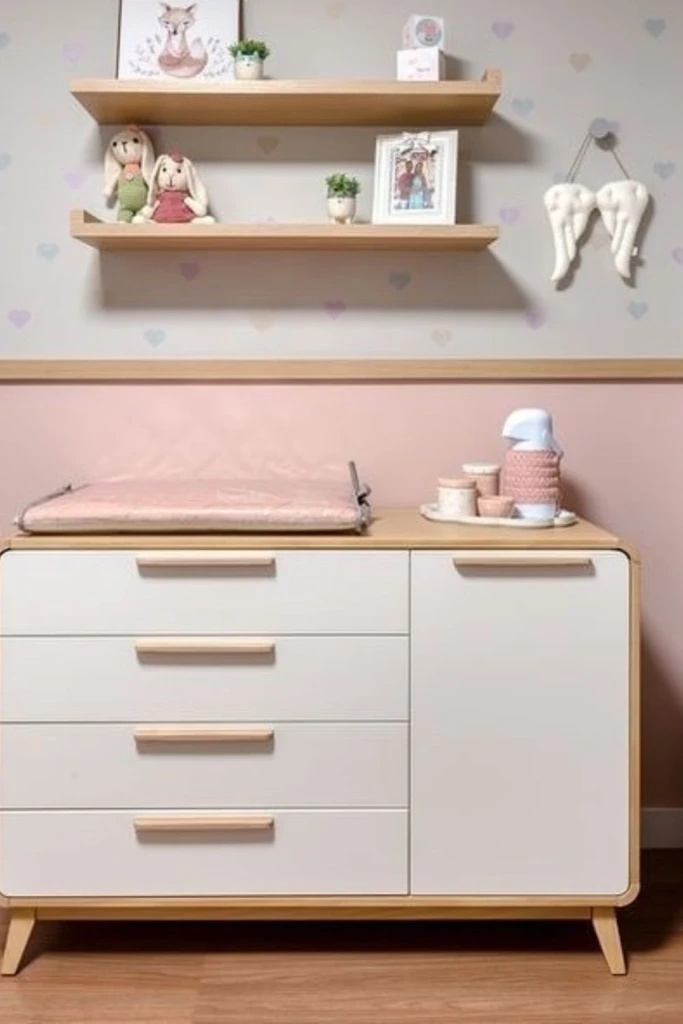
A pink-accented dresser can create a gentle, coordinated nursery without compromising everyday practicality.
Start with a stable dresser and add a compatible changing pad if the furniture is designed to accommodate one. Organize diapers, wipes, and clean clothing in nearby drawers.
Soft pink drawer pulls, storage containers, or wall decorations can introduce color without requiring a completely new furniture set.
Keep decorative objects securely positioned away from the changing surface, where they cannot fall or become accessible to the baby.
8. Adventure Theme Chest
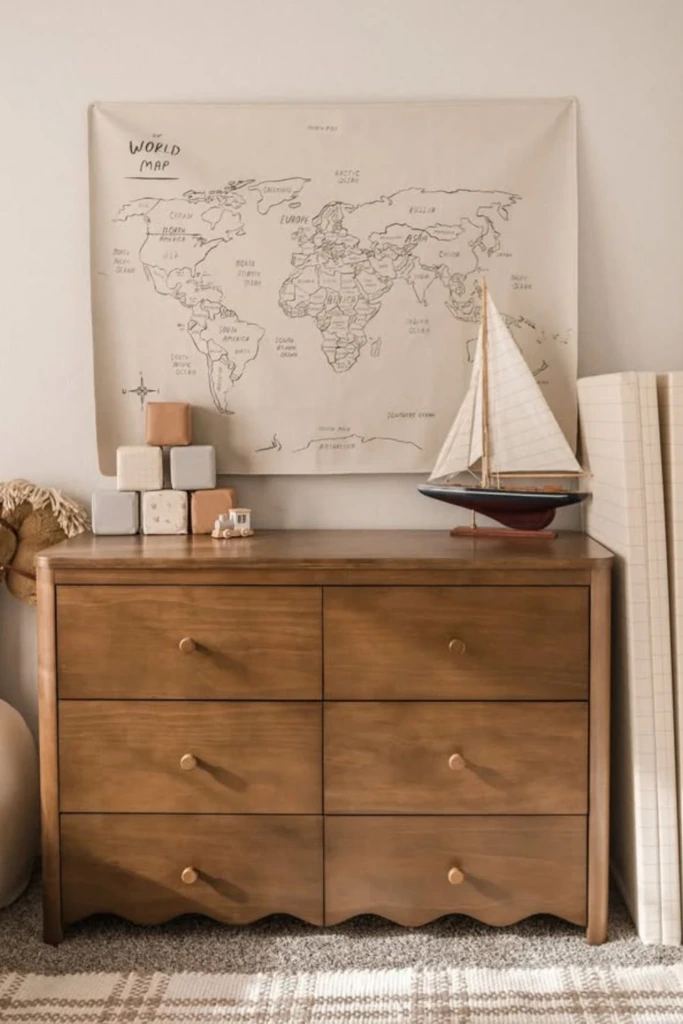
An adventure-inspired dresser adds personality to a nursery through natural materials and imaginative details.
A wooden chest with generous drawers provides space for clothing, blankets, and baby-care supplies. Nautical colors, illustrated landscapes, or travel-themed wall art can establish the room's character.
Use interior organizers to maintain order behind the decorative exterior. Secure the dresser to the wall with appropriate anti-tip hardware, particularly as your baby becomes more mobile.
9. Drawer Divider System
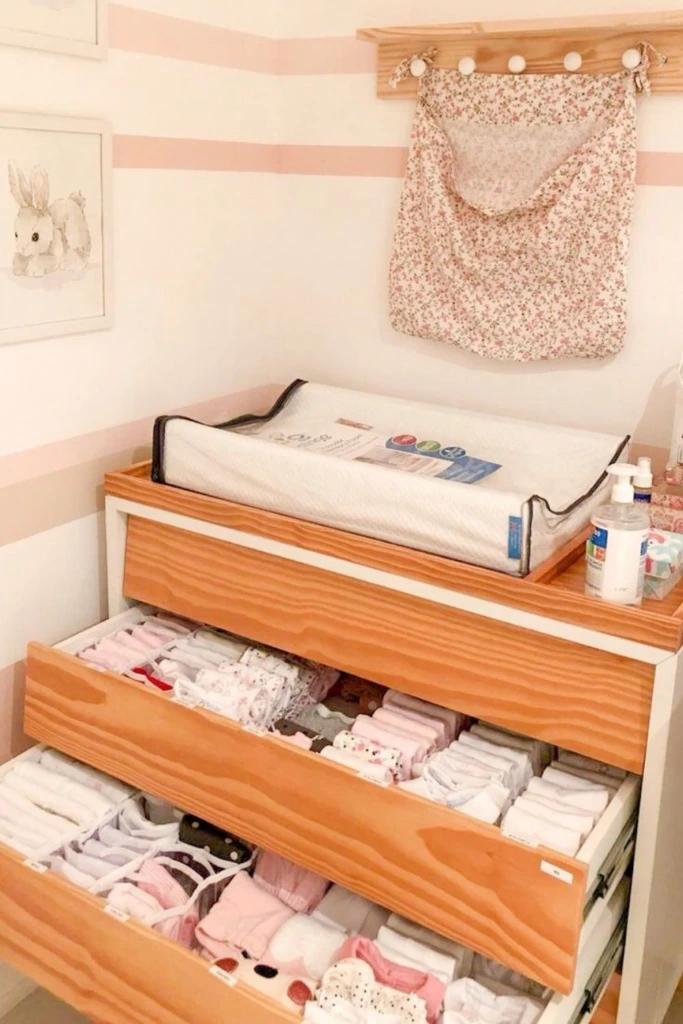
A complete drawer divider system makes it possible to organize nearly every category of baby clothing.
Measure each drawer before selecting organizers. Create compartments for short-sleeved bodysuits, long-sleeved outfits, leggings, socks, and sleepwear.
Place the smallest items in narrower sections and allow larger spaces for thicker garments. Revisit the layout periodically as your baby's wardrobe changes.
A flexible system is especially useful because newborn clothing and toddler outfits require very different amounts of storage space.
10. Neutral Display Top
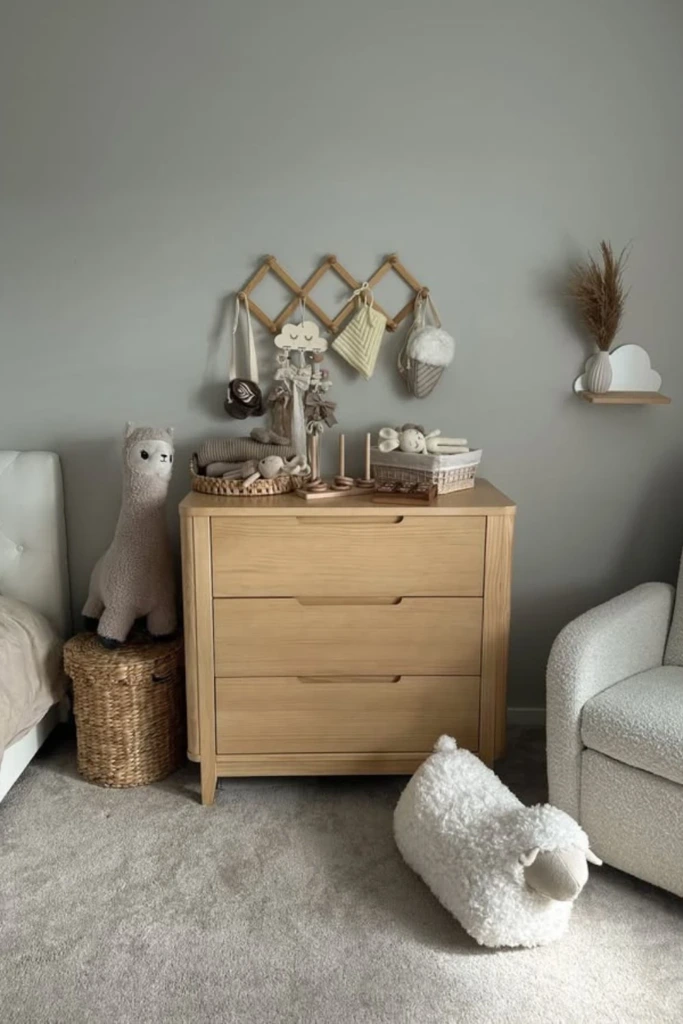
A neutral dresser display creates a peaceful nursery atmosphere through restrained colors and carefully selected accessories.
Natural wood, cream, beige, and soft white work well together. A small storage tray can hold supplies used by adults, while drawers conceal extra clothing and accessories.
If the dresser also serves as a changing station, prioritize a clear, secure working surface over decoration. Place framed artwork and other decorative pieces on securely mounted wall fixtures outside the baby's reach.
11. Cubby Changing Station
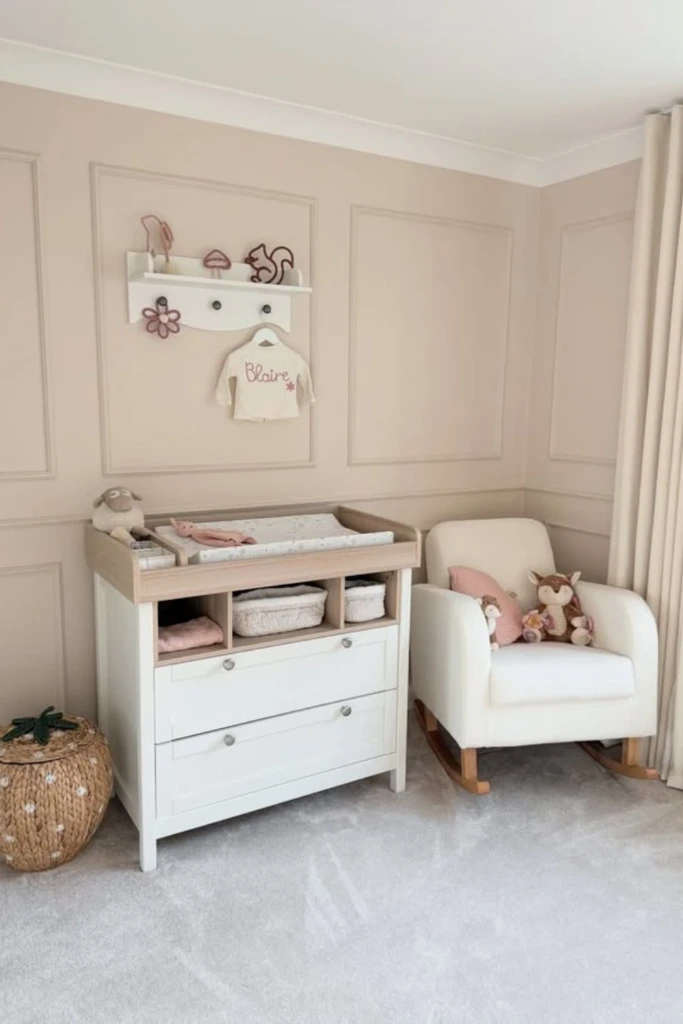
A dresser with open cubbies combines concealed storage with quick access to daily necessities.
Use the open sections for frequently replaced supplies such as diapers, clean towels, and spare changing-pad covers. Matching baskets help prevent the cubbies from looking cluttered.
Reserve closed drawers for clothing and less frequently used items.
If you use the dresser for diaper changes, follow the furniture and changing-pad manufacturer's instructions, and keep one hand on your baby throughout every change.
12. Rolling Diaper Cart
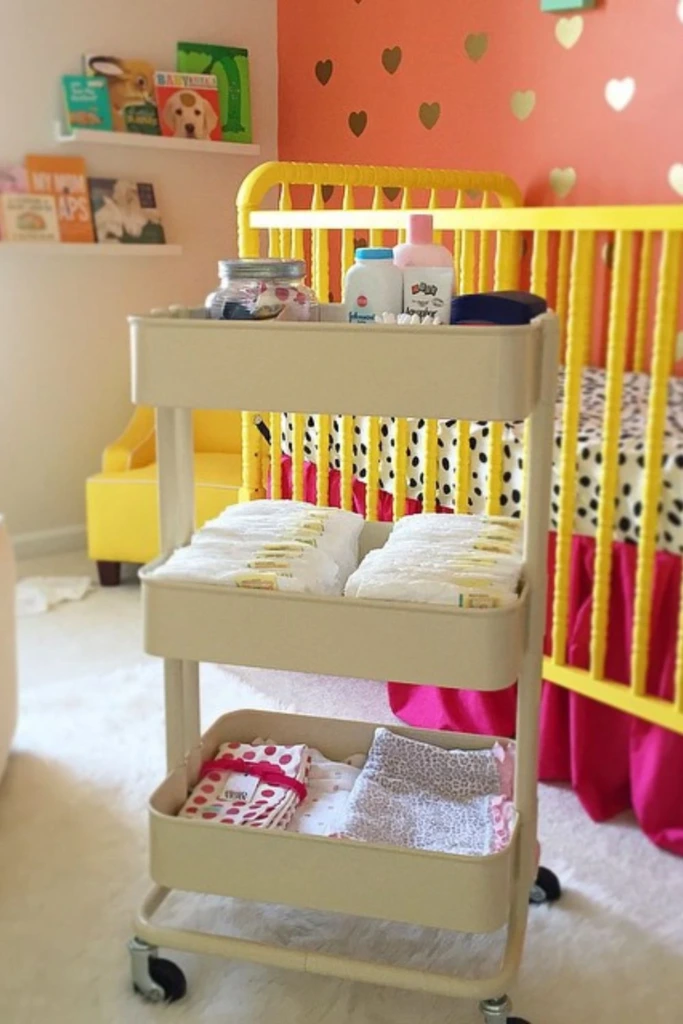
A rolling diaper cart provides a convenient companion to the nursery dresser, especially when baby care happens in several rooms.
Organize the top tier with diapers and wipes, the middle tier with clean clothes and burp cloths, and the bottom tier with backup supplies.
Choose a stable cart with secure wheels and avoid placing heavy items on its upper shelves. Park it away from the baby's reach.
The cart works best as portable supply storage rather than a changing surface. Always use an appropriate, safe location for diaper changes.
13. Hanging Wardrobe Touch
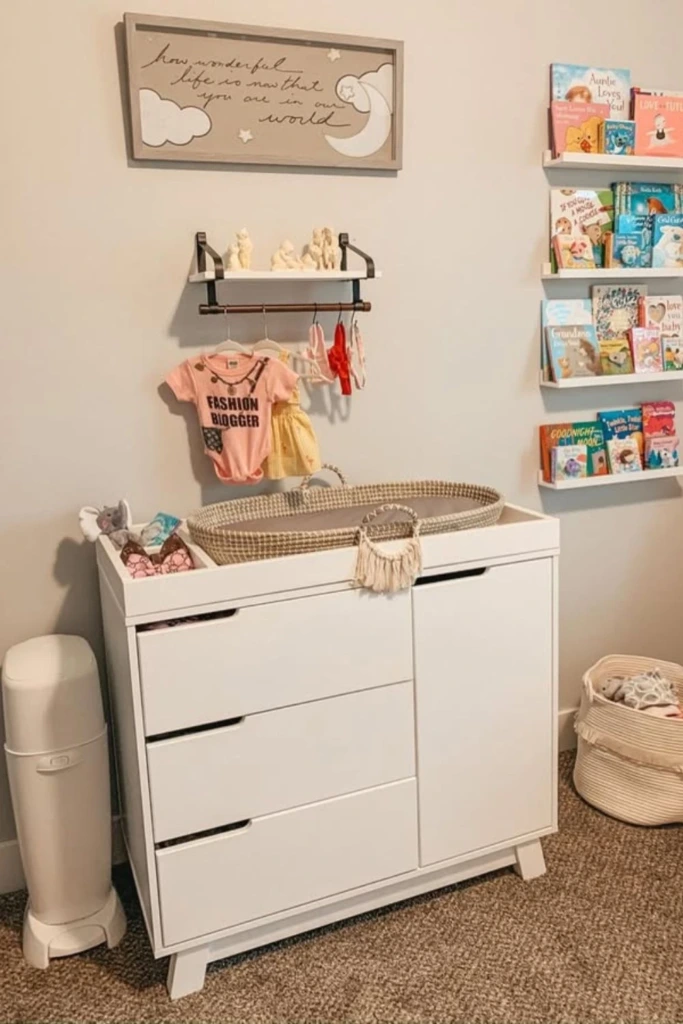
Combining a dresser with hanging storage helps maximize the available space in a small nursery.
Install a secure clothing rail or use an existing closet rod for outfits that are easier to hang than fold. Dresses, jackets, and matching sets can remain visible and ready to wear.
Keep socks, undershirts, and sleepwear inside dresser drawers. Small baskets can accommodate accessories that do not require hangers.
This combination prevents drawers from becoming overcrowded and makes outfit selection more convenient.
14. Elegant Pink Dresser
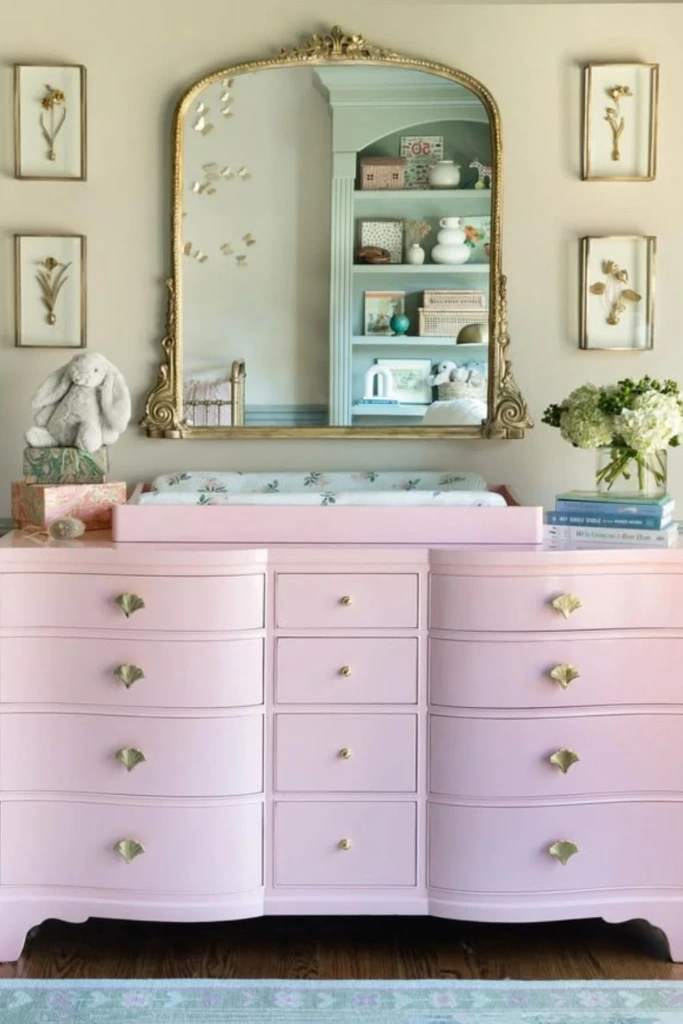
An elegant pink dresser can become a charming focal point while providing practical storage for baby essentials.
Consider a muted blush finish, traditional drawer shapes, and simple decorative hardware. The furniture can coordinate with floral wallpaper, cream textiles, or vintage-inspired nursery accessories.
Inside, organize clothing by type and size rather than relying on the dresser's appearance alone.
For safety, select securely attached handles without loose embellishments, anchor the furniture, and keep fragile decorations away from areas used for baby care.
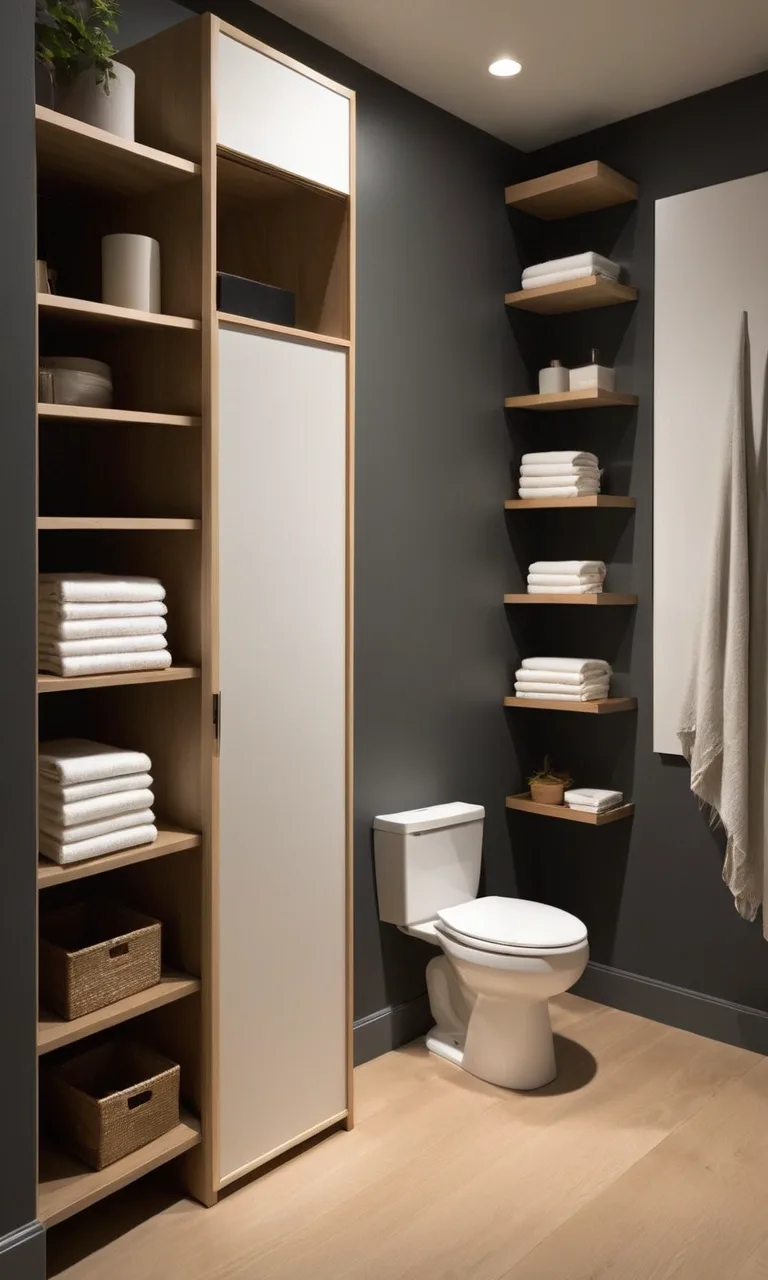
15. Closet Cube System
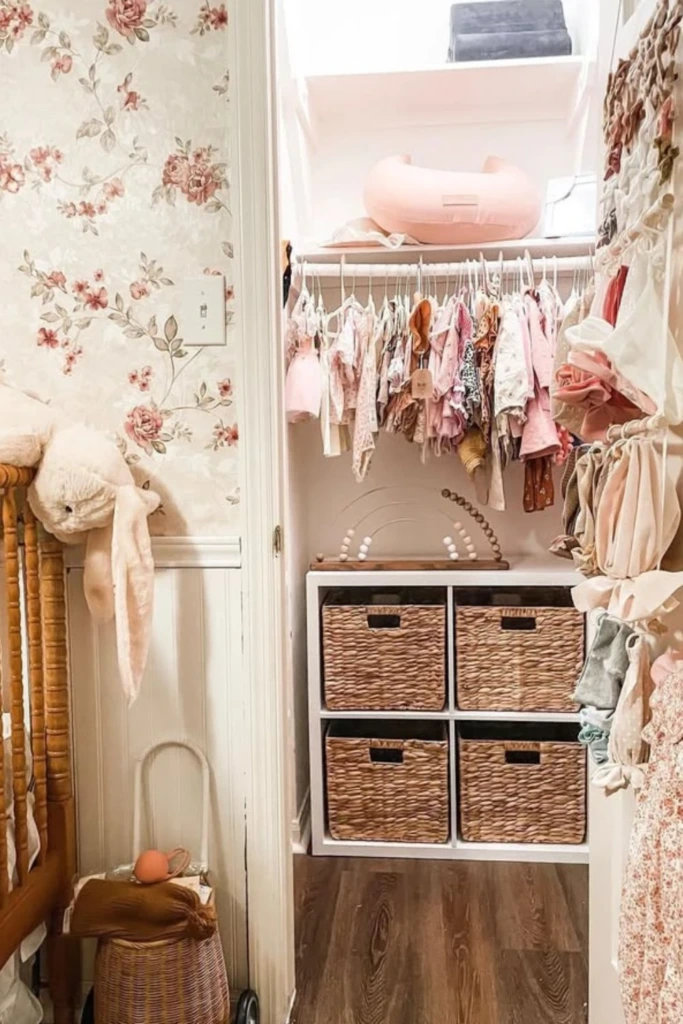
A cube storage system offers flexible organization alongside a traditional nursery dresser.
Use individual compartments for folded blankets, spare clothing, bedding, and accessories. Fabric bins can conceal smaller items, while open cubes make larger supplies easy to identify.
Arrange the cubes according to how frequently you need their contents. Keep heavier items low and secure freestanding units to the wall.
As your child grows, the same storage system can accommodate books, toys, and other belongings.
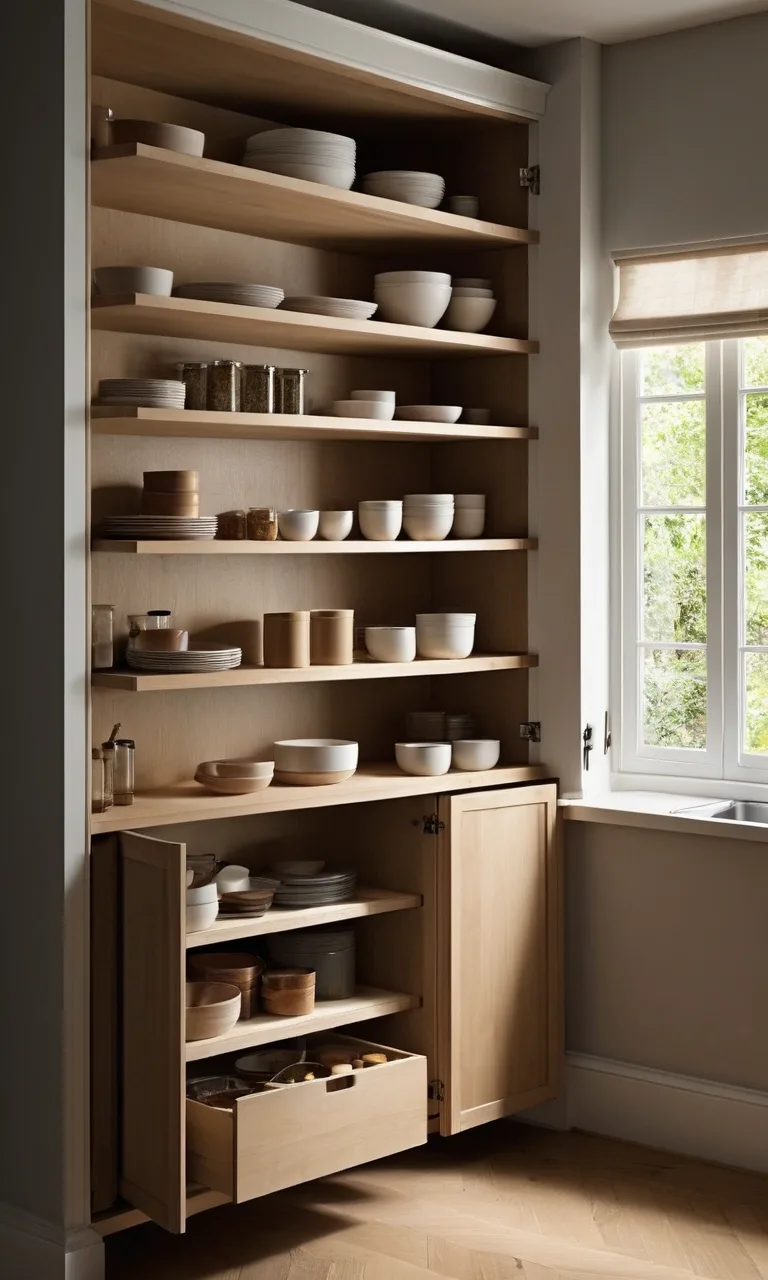
16. Open Wardrobe Layout
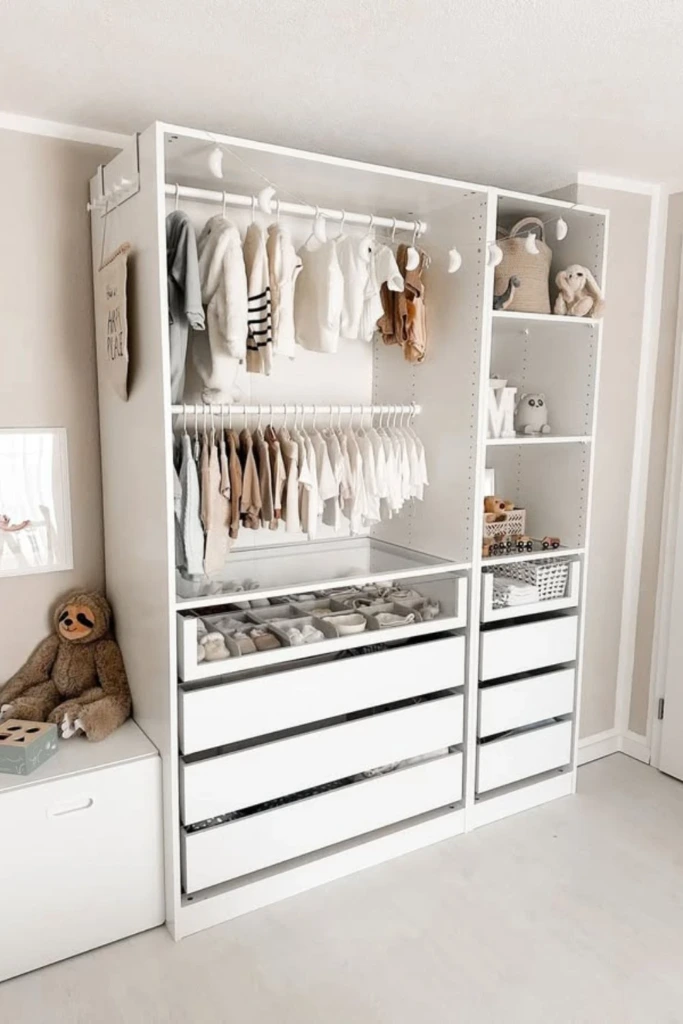
An open wardrobe makes it easier to see your baby's clothing collection without searching through several drawers.
Combine hanging rails with accessible shelves and shallow storage compartments. Group clothes by size, garment type, or season so that everything has a predictable location.
Clear-front drawers are useful for identifying smaller accessories, while labeled containers work well for items that are not needed every day.
Regularly remove outgrown clothing to prevent the visible storage from becoming overcrowded.
17. Space-Themed Station
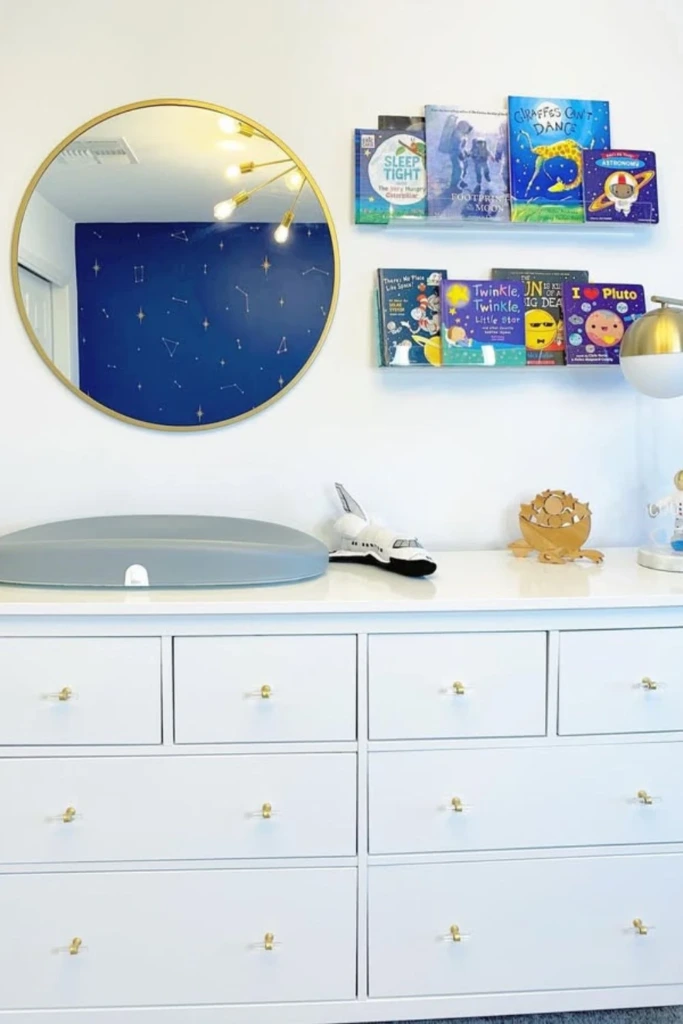
A space-themed nursery dresser introduces playful design while maintaining an organized changing area.
Choose a dresser in white, navy, gray, or natural wood, then incorporate celestial details through wallpaper, framed illustrations, or decorative drawer accents.
Keep everyday supplies in clearly separated drawers, with diapers and clean clothing closest to the changing station.
Securely mounted book ledges can display favorite children's books away from the changing area. Avoid hanging heavy or loose decorations directly above the baby's sleeping or changing space.
18. Dual Dresser Setup
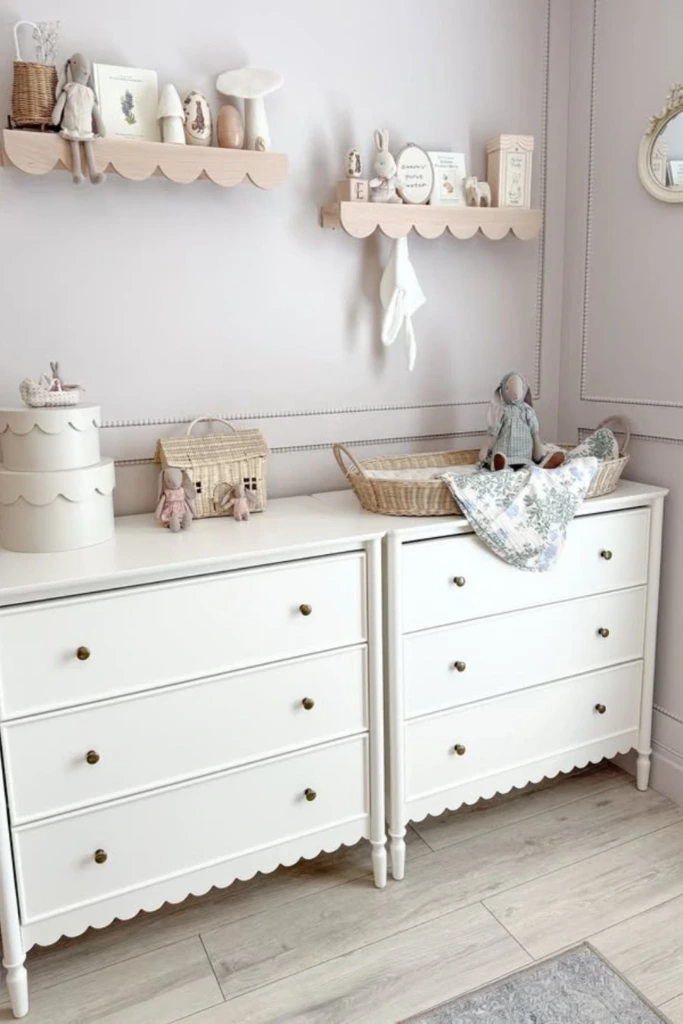
Two dressers can provide an effective storage arrangement in a shared nursery or a room with a large clothing collection.
Dedicate one dresser to everyday essentials and use the second for extra outfits, bedding, and seasonal items. Alternatively, assign one dresser to each child.
Matching finishes can create a coordinated appearance, although different furniture styles can also work when they share similar colors or hardware.
Anchor both units separately and keep the area between them clear for comfortable movement.
19. Deep Divider Drawers
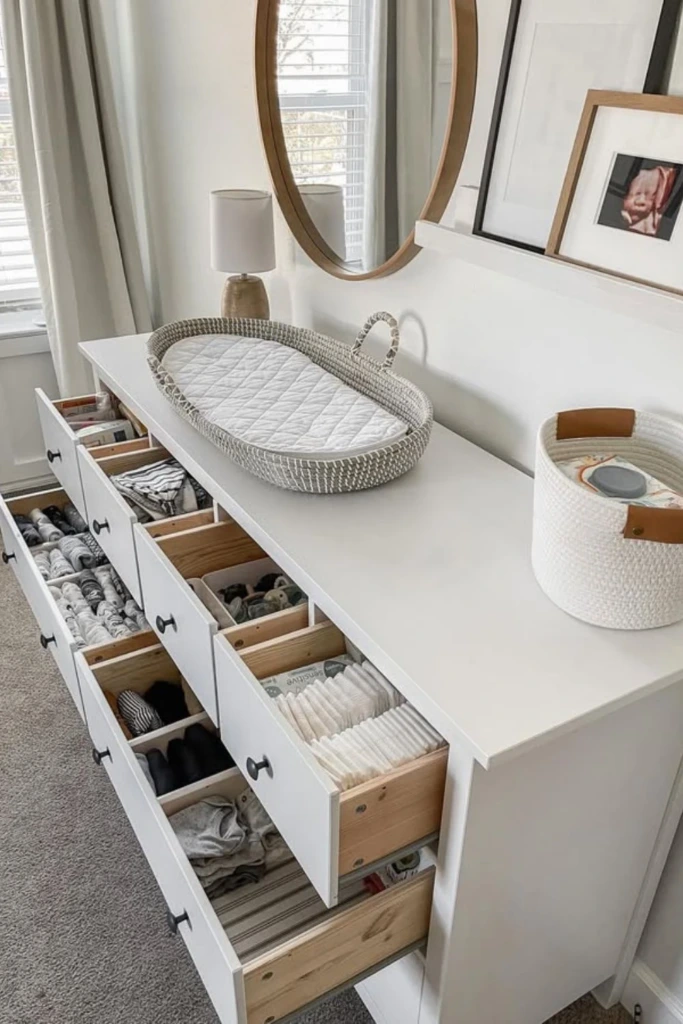
Deep drawers are excellent for storing bulky baby items, but they can become disorganized without internal compartments.
Use tall dividers or appropriately sized storage boxes to separate swaddles, blankets, thicker pajamas, and diaper supplies.
Fold soft items into compact, visible bundles rather than stacking them too high. This makes it easier to remove one piece without disrupting the rest.
Keep heavier supplies in lower drawers to reduce unnecessary lifting and help maintain furniture stability.
20. Blue Scallop Charm
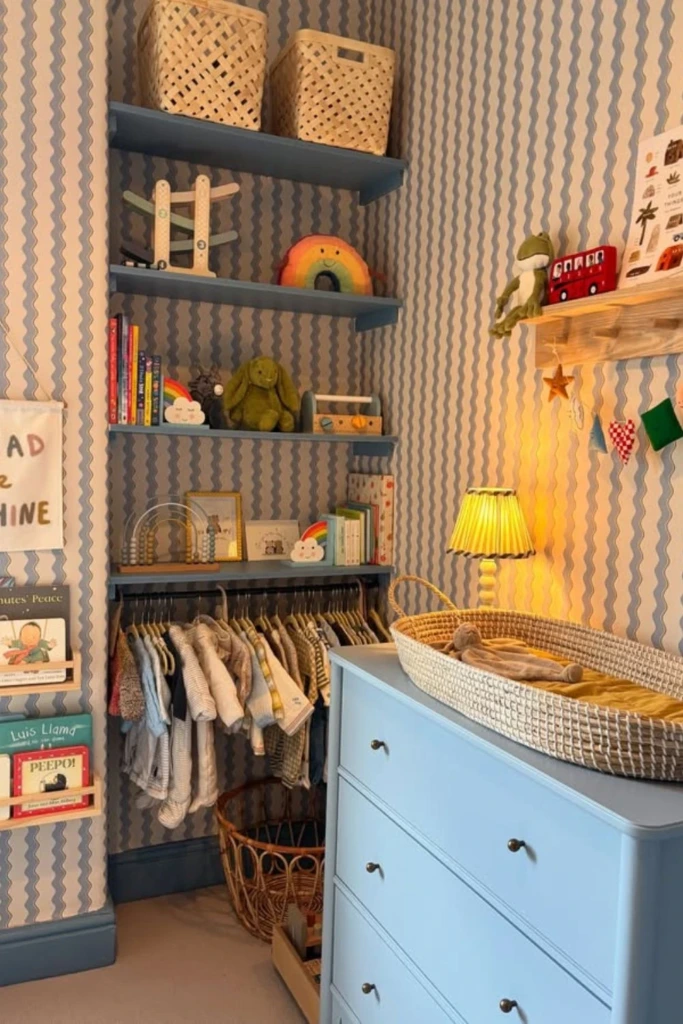
A blue dresser with scalloped detailing brings a playful, traditional feel to nursery furniture.
Choose a soft blue shade that coordinates with warm whites, natural wood, or patterned textiles. Decorative edges can add visual interest without taking up extra floor space.
Use the upper drawers for frequently worn clothing and reserve lower drawers for larger items.
If refinishing an older dresser, check its structural condition, drawer operation, and finish safety before placing it in the nursery. Secure it against tipping.
21. Natural Wood Finish
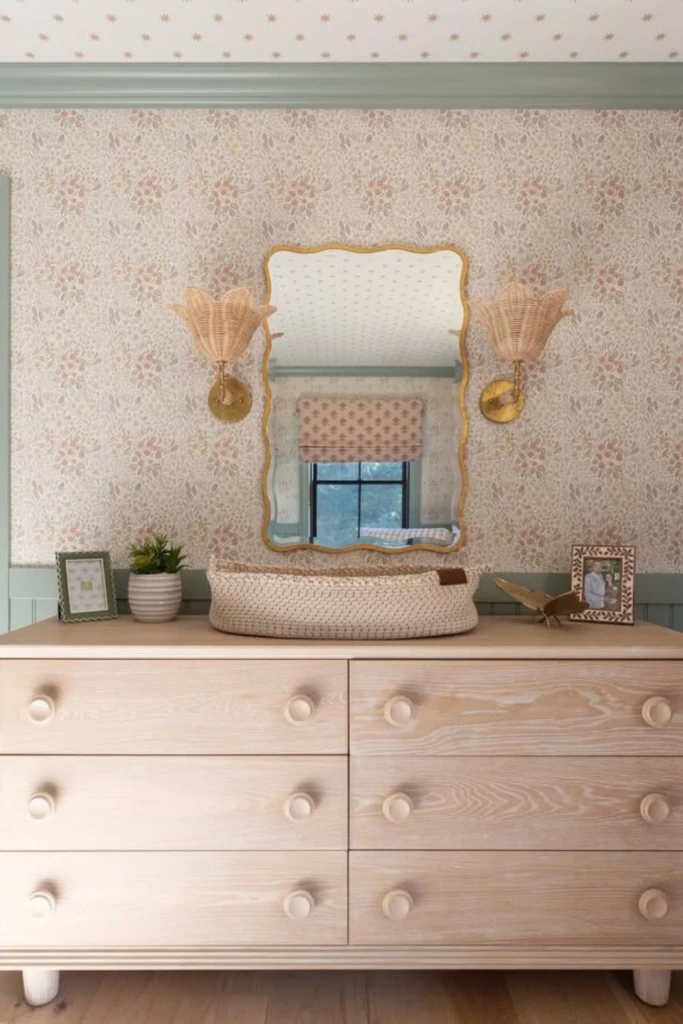
A natural wood dresser is a versatile choice that can adapt as your child grows.
Light oak, maple, and other wood finishes introduce warmth without requiring elaborate decoration. Simple knobs and spacious drawers provide a timeless appearance.
Organize the interior with removable dividers and fabric containers that can be adjusted over time.
A natural finish also pairs easily with different nursery themes, allowing you to update surrounding colors and accessories without replacing the furniture.
22. Labeled Compartment Drawers
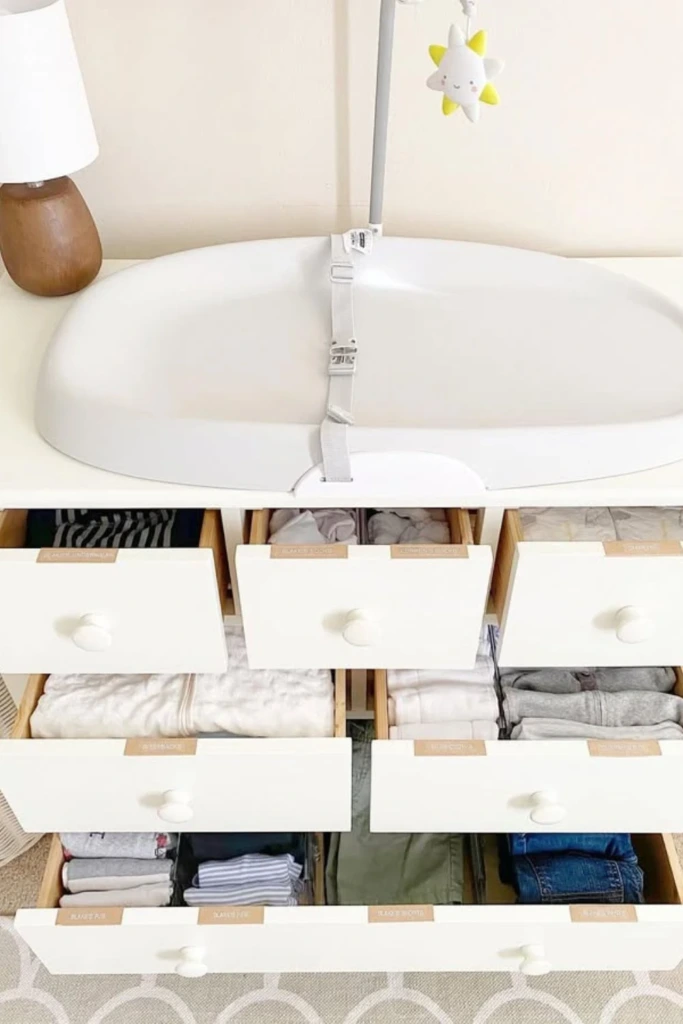
Labeled compartments make dresser organization more precise, particularly when several people share baby-care responsibilities.
Instead of labeling only entire drawers, identify smaller sections for bodysuits, pants, socks, bibs, and other essentials.
Use clear, easy-to-read labels and arrange items according to the order in which you typically need them.
Removable labels are preferable because clothing categories will change as your baby grows. Review the compartments regularly and remove items that no longer fit.
23. Velvet Touch Dresser
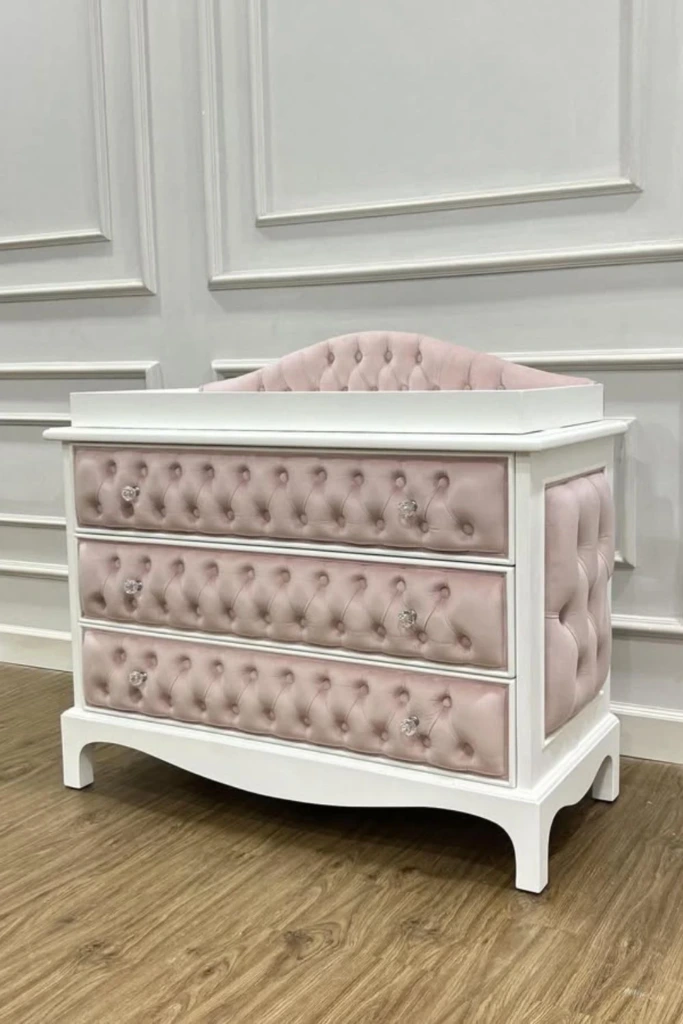
A velvet-accented dresser can introduce a soft, luxurious appearance to a nursery with an elegant decorating style.
If choosing upholstered furniture, look for durable, easy-to-clean materials and a stable frame. Smooth drawer operation and securely attached hardware are more important than elaborate decorative details.
Use interior bins to protect clothing from dust and maintain a neat arrangement.
Avoid loose buttons, detachable trim, and other small decorative pieces that could create hazards as your child becomes curious and mobile.
24. Neutral Cozy Corner
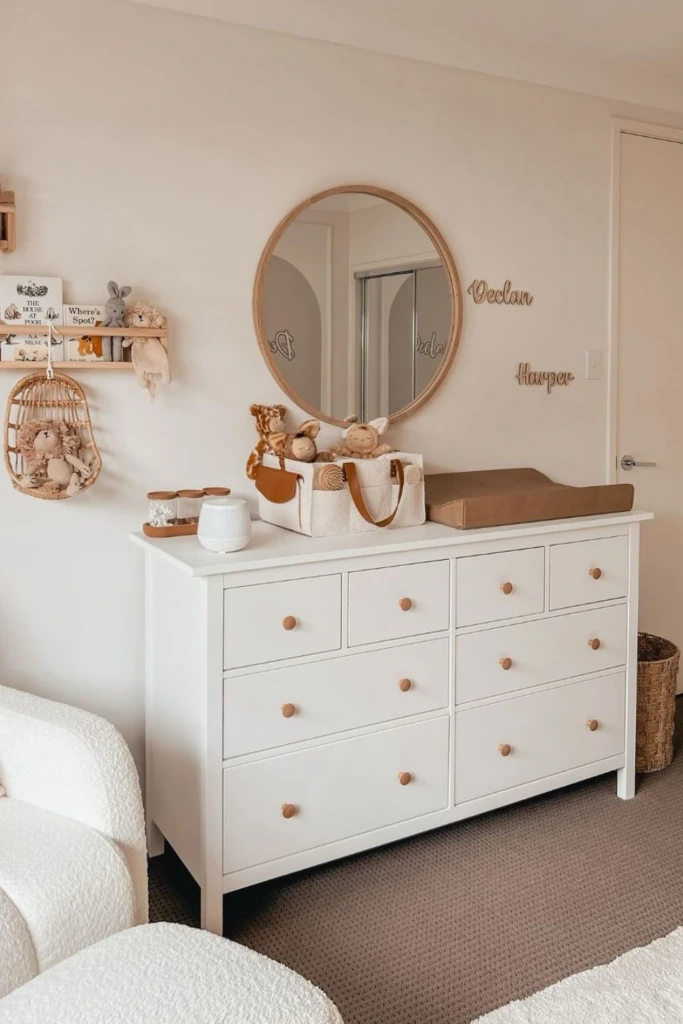
A cozy nursery corner can be created with a simple dresser, warm neutral colors, and practical storage.
Pair a light-colored dresser with wooden knobs, soft textiles, and a comfortable nearby nursing or feeding chair. Keep frequently used baby supplies organized in the upper drawers.
A small basket can hold clean burp cloths or spare clothing, while a separate shelf provides space for books.
Leave enough room to open every drawer fully and move comfortably around the furniture, particularly during nighttime care.
25. Layered Texture Station
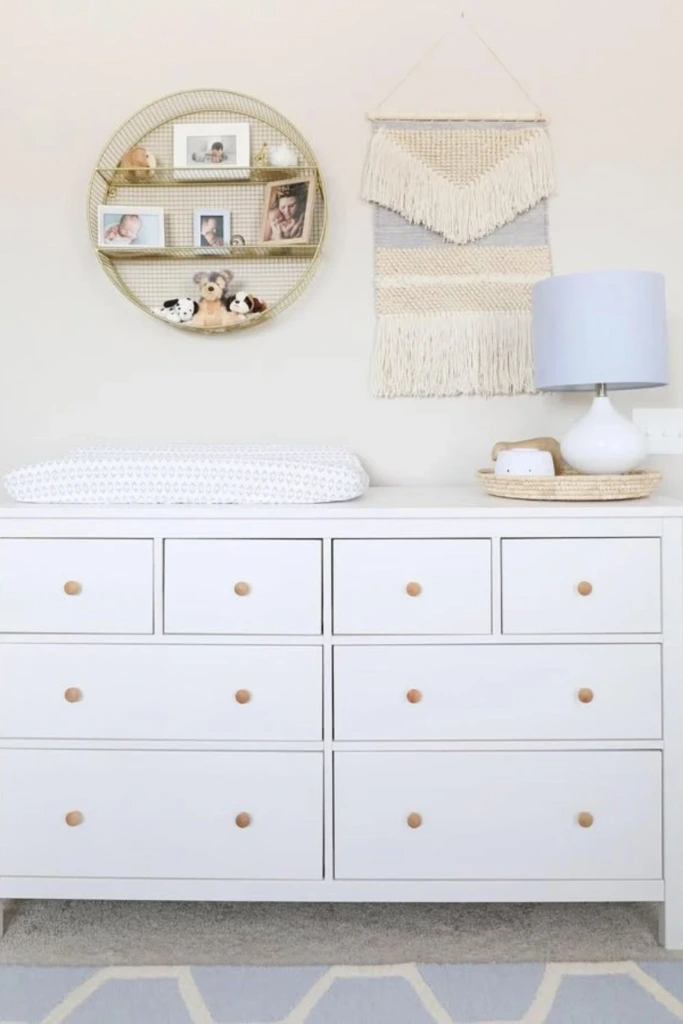
A layered texture dresser arrangement adds visual depth without requiring bold colors or excessive decoration.
Combine smooth wood, woven storage containers, cotton fabrics, and subtle patterns to create a balanced nursery design.
Use washable drawer liners and removable organizers to make cleaning easier. Keep decorative textures on surrounding furnishings rather than adding unnecessary objects to the changing surface.
By combining practical storage with carefully chosen materials, you can create a nursery dresser that feels welcoming, stays manageable, and continues to serve your family as your baby grows.