23 Garage Workshop Organization Ideas for 2026
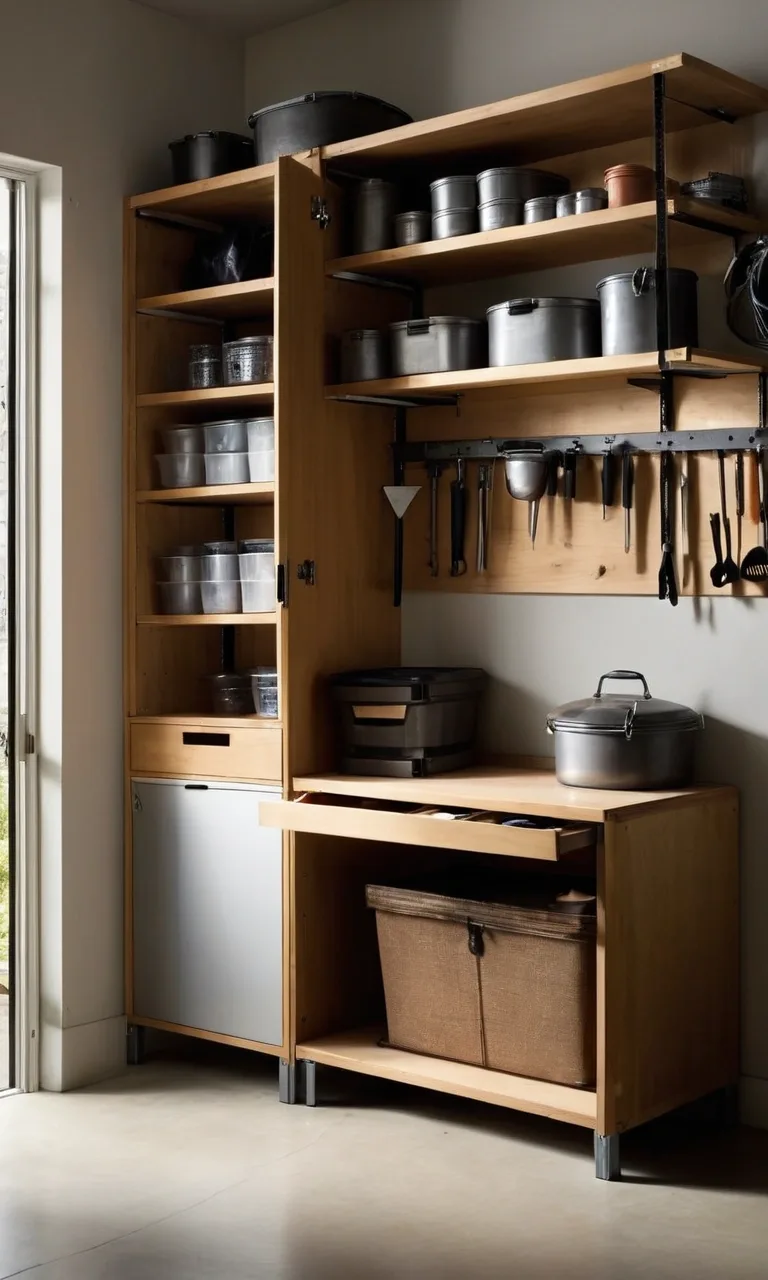
A garage workshop should be a place where you can build, repair, and create without constantly searching for missing tools. Unfortunately, crowded workbenches, tangled cords, and overflowing storage boxes can make even simple projects frustrating.
The right organization system can completely change how your garage functions. Whether you have a small DIY corner or a spacious workshop, thoughtful storage solutions help protect equipment, improve safety, and make everyday tasks easier.
These 28 garage workshop organization ideas offer practical ways to arrange hand tools, power equipment, hardware, and project supplies while making the most of your available space.
1. Wall-Mounted Storage
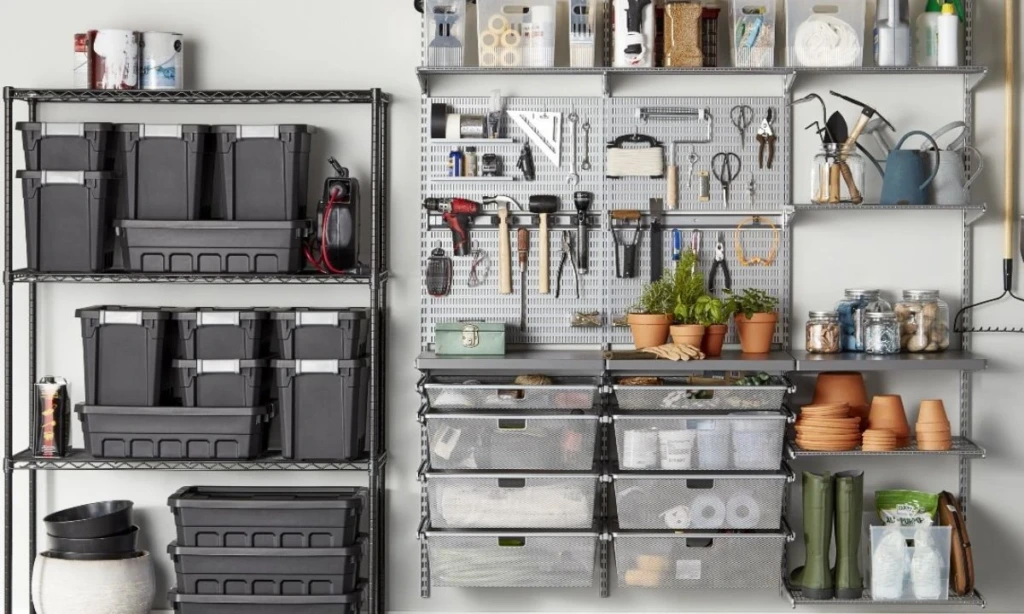
Wall-mounted storage is one of the most effective ways to organize a garage workshop without sacrificing valuable floor space. Instead of keeping tools scattered across tables or inside oversized containers, you can give frequently used equipment a dedicated place on the wall.
Pegboards, adjustable rails, hooks, and mounted shelves are especially useful because they accommodate different tool sizes. Position everyday essentials near your workbench and reserve higher sections for lightweight items you use less frequently.
For the best results, attach storage systems securely to suitable wall supports and follow their weight limits. A well-planned wall arrangement makes tools easier to locate while leaving more room for projects.
2. Pegboard Walls
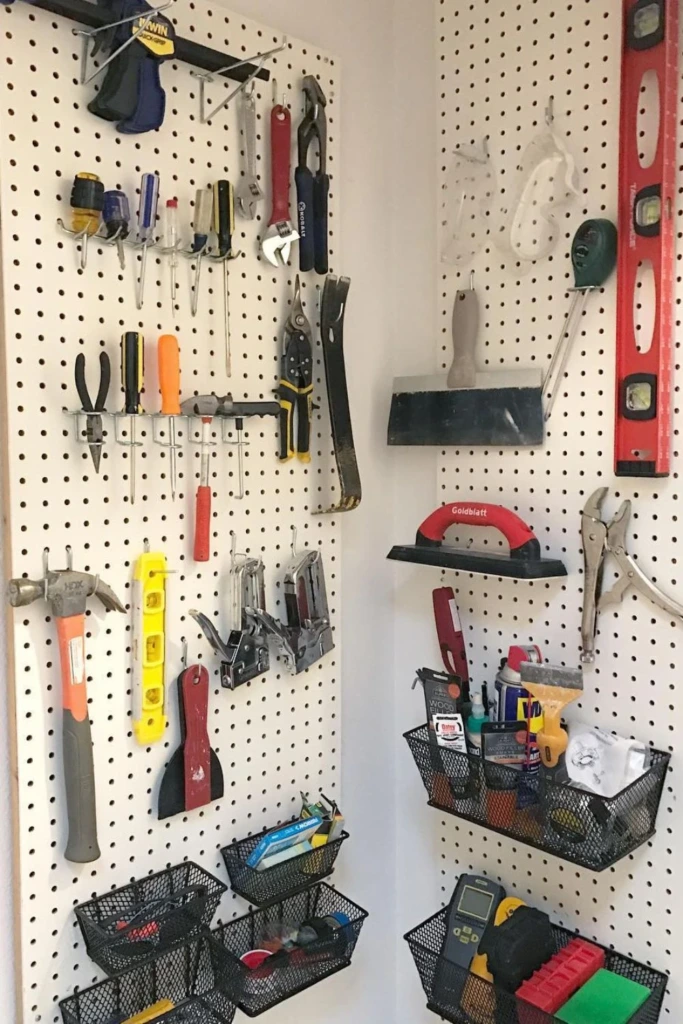
Pegboard walls offer a simple and affordable way to organize hand tools while keeping everything visible. Install a large pegboard above your workbench and arrange screwdrivers, measuring tapes, pliers, and hammers using compatible hooks.
Small hanging baskets can hold items that don't fit neatly on hooks, such as sanding blocks and rolls of tape.
Group similar tools together and leave a little extra room for future additions. Outlining frequently used tools can also help you remember where everything belongs.
3. Labeled Drawers
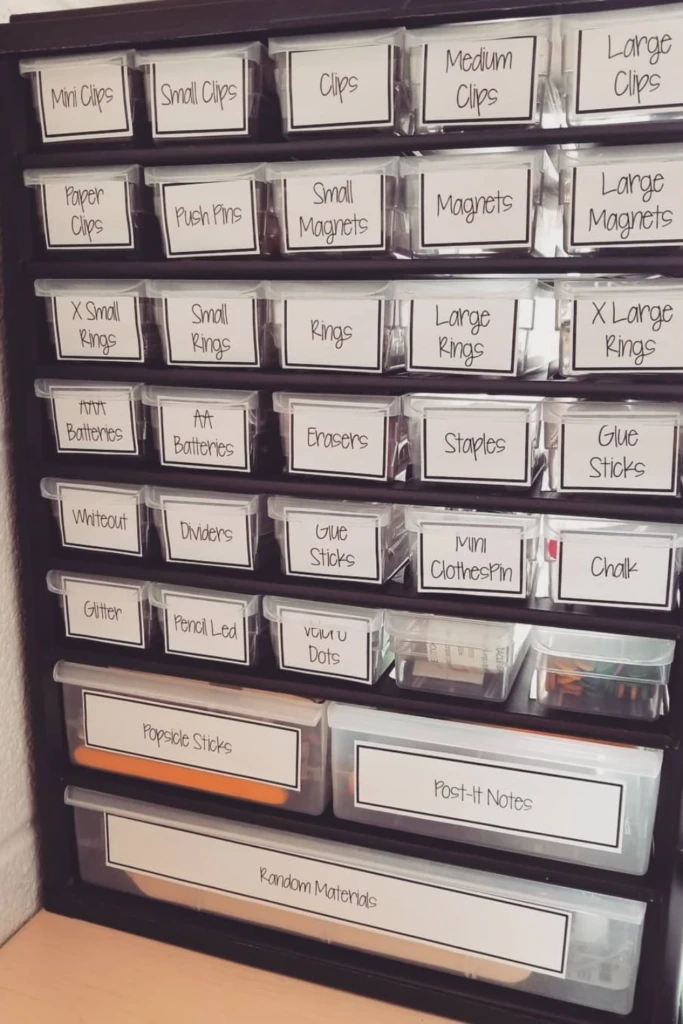
Small workshop supplies can become difficult to manage when screws, washers, nuts, and electrical connectors are mixed together.
A drawer organizer with clearly marked compartments makes these pieces much easier to find. Choose shallow drawers for tiny hardware and deeper compartments for larger accessories.
Label each drawer according to its contents, using specific descriptions such as wood screws, drill bits, or cable connectors. This simple system reduces unnecessary searching and makes it easier to identify supplies that need replacing.
4. Tall Utility Shelves
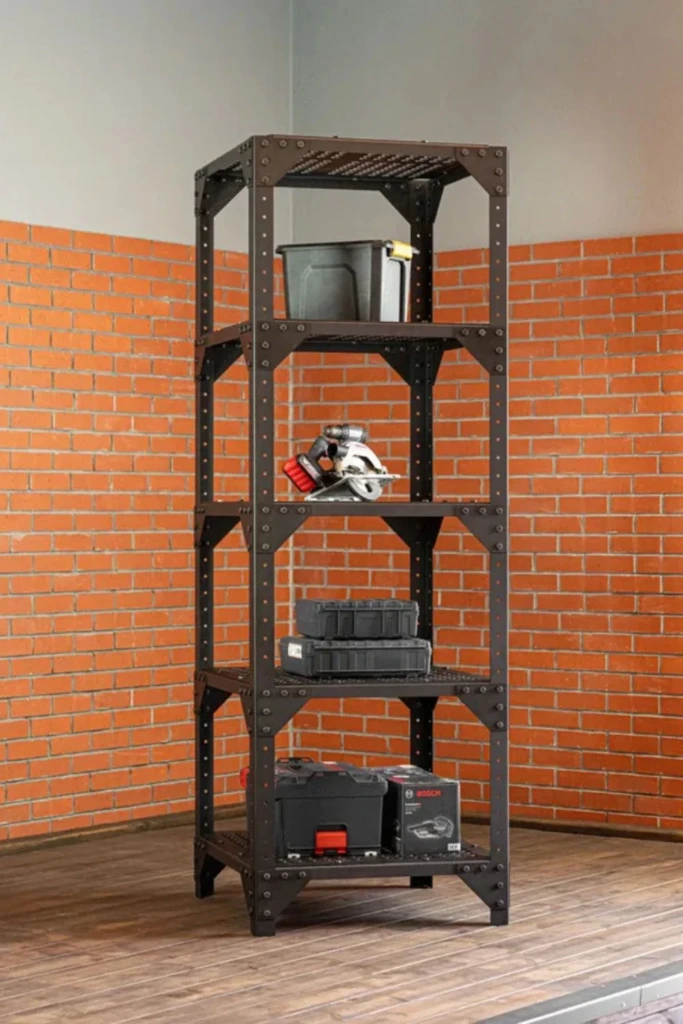
Heavy-duty utility shelves provide practical storage for equipment that doesn't belong on a workbench.
Use sturdy shelving units to organize tool cases, paint accessories, storage containers, and spare materials. Adjustable shelves are particularly helpful because you can change their spacing as your storage needs evolve.
Keep heavier items on lower levels and lightweight supplies higher up. Choose shelves rated for the intended loads, and anchor tall units where required to prevent tipping.
5. Compartment Toolboxes
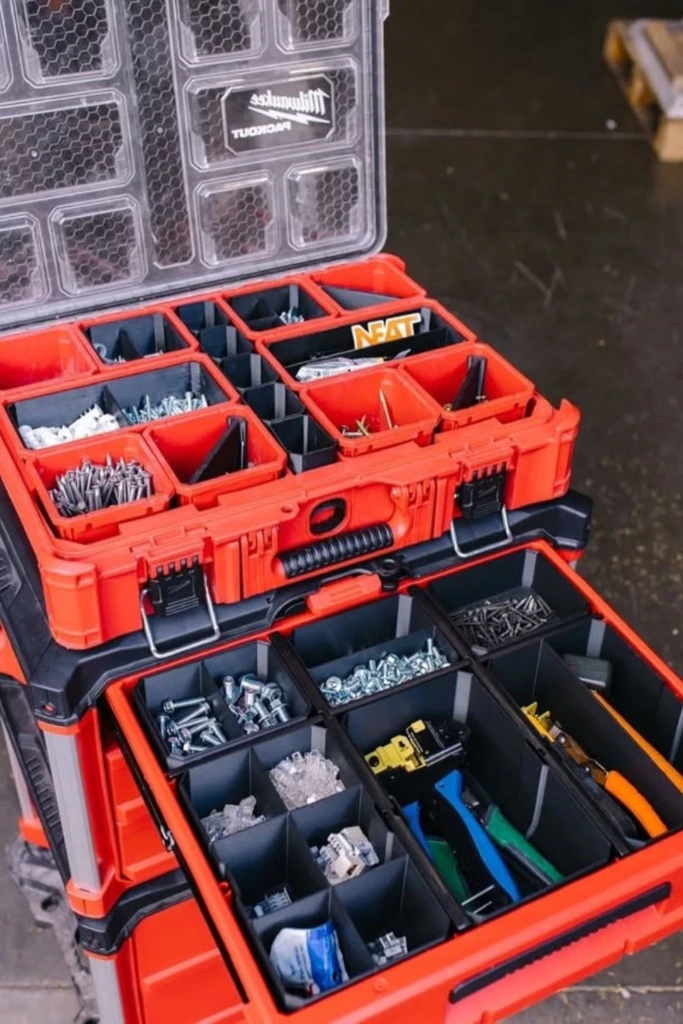
A compartment toolbox is ideal for keeping small tools and hardware organized, especially when you regularly work in different areas.
Look for a toolbox with adjustable dividers so you can create separate sections for drill accessories, fasteners, sockets, and measuring tools.
Portable models with secure latches help prevent items from spilling during transport. For additional convenience, prepare separate toolboxes for specific tasks, such as electrical repairs, furniture assembly, or general household maintenance.
6. Power Tool Wall
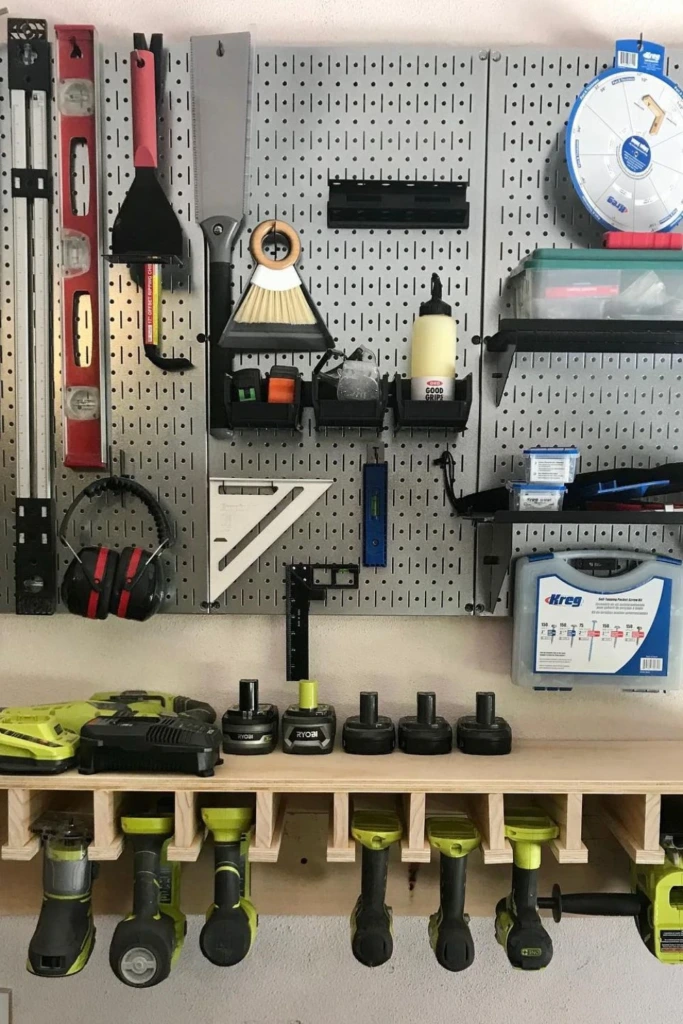
A dedicated power tool wall keeps cordless drills, impact drivers, and other commonly used equipment within easy reach.
Install sturdy holders designed for your tools, leaving enough space between them for comfortable removal. A shelf above or beside the holders can accommodate batteries, chargers, and accessory cases.
Arrange equipment according to how often you use it, placing everyday tools closest to the main work area.
Keep charging equipment away from sawdust, moisture, and flammable materials, and follow the manufacturer's charging instructions.
7. Drawer Wall System
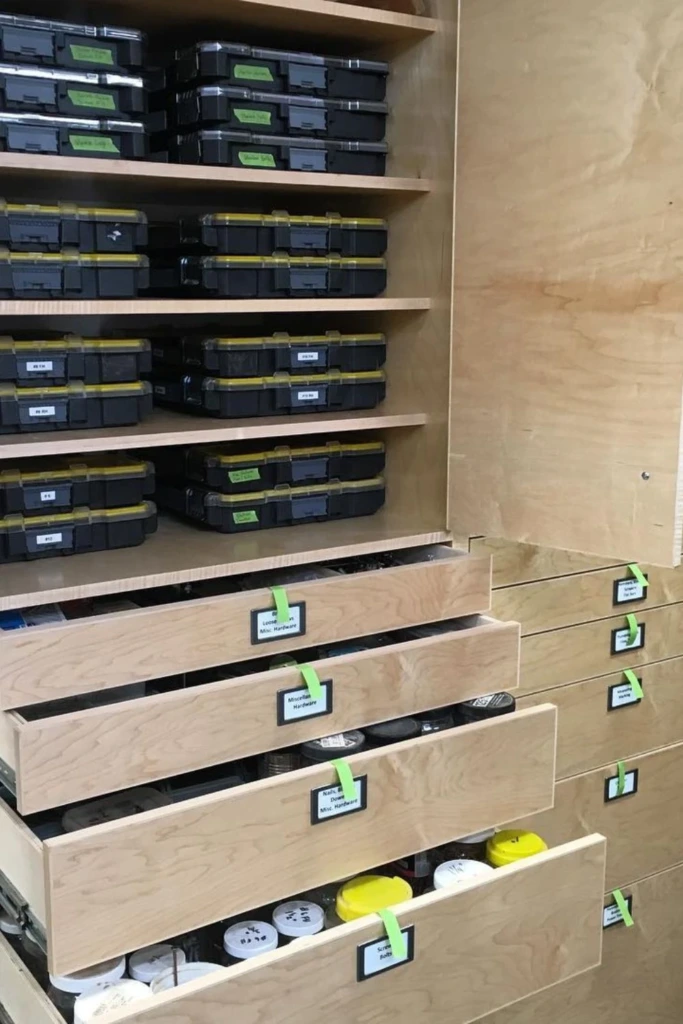
A drawer wall system works especially well in workshops with large collections of small components.
Install a cabinet or modular storage unit with multiple drawers, then divide the contents into practical categories. Fasteners, replacement blades, electrical fittings, and woodworking accessories can each have designated sections.
Use consistent labels and organize frequently needed supplies around waist or chest height.
A drawer wall also helps keep dust away from delicate parts while maintaining a cleaner appearance throughout the workshop.
8. Wrench Rack Wall
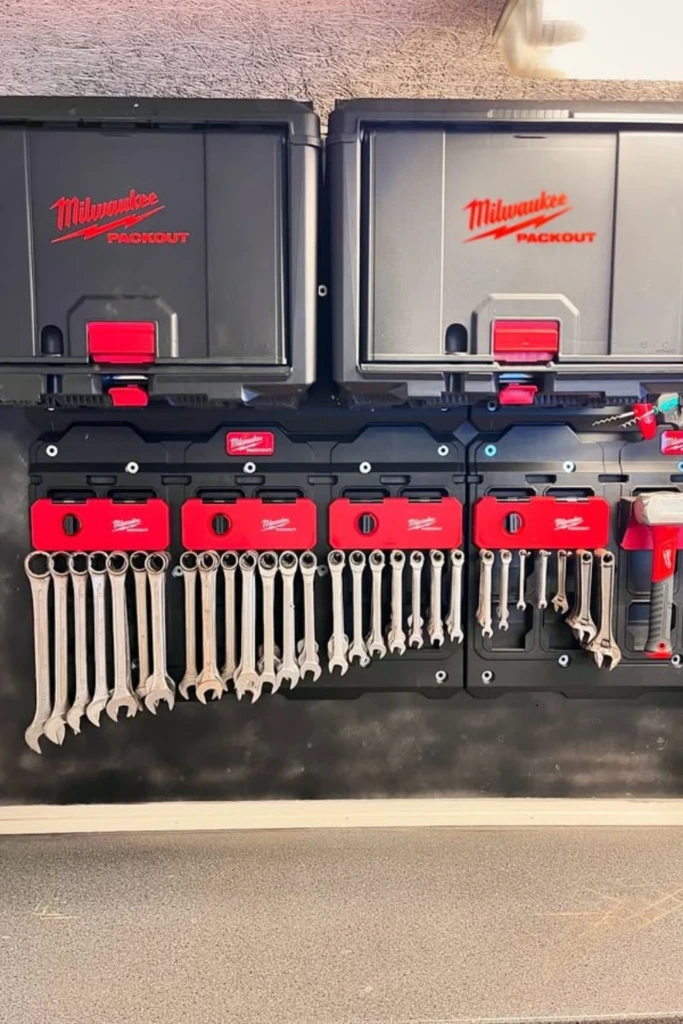
A wall-mounted wrench rack creates a dedicated storage area for combination wrenches, adjustable wrenches, and specialty tools.
Arrange standard and metric sizes separately, preferably in ascending order. This makes selecting the correct wrench quicker and helps you notice when one is missing.
Individual hooks, purpose-built wrench holders, or compatible modular wall systems can all work well.
Position the rack near your mechanical workbench so the tools remain accessible during repairs and maintenance.
9. PVC Rod Organizer

PVC pipes can be turned into inexpensive storage holders for long, narrow workshop materials.
Cut sections of suitable pipe and secure them to a sturdy wooden frame or wall-mounted support. Use individual tubes to separate welding rods, metal stock, dowels, or similar materials.
Label each section by material and diameter to avoid mixing supplies.
Smooth any rough pipe edges and make sure the holders are properly supported, especially when storing heavy metal pieces. Keep sharp or hazardous materials safely contained.
10. Ceiling Rack
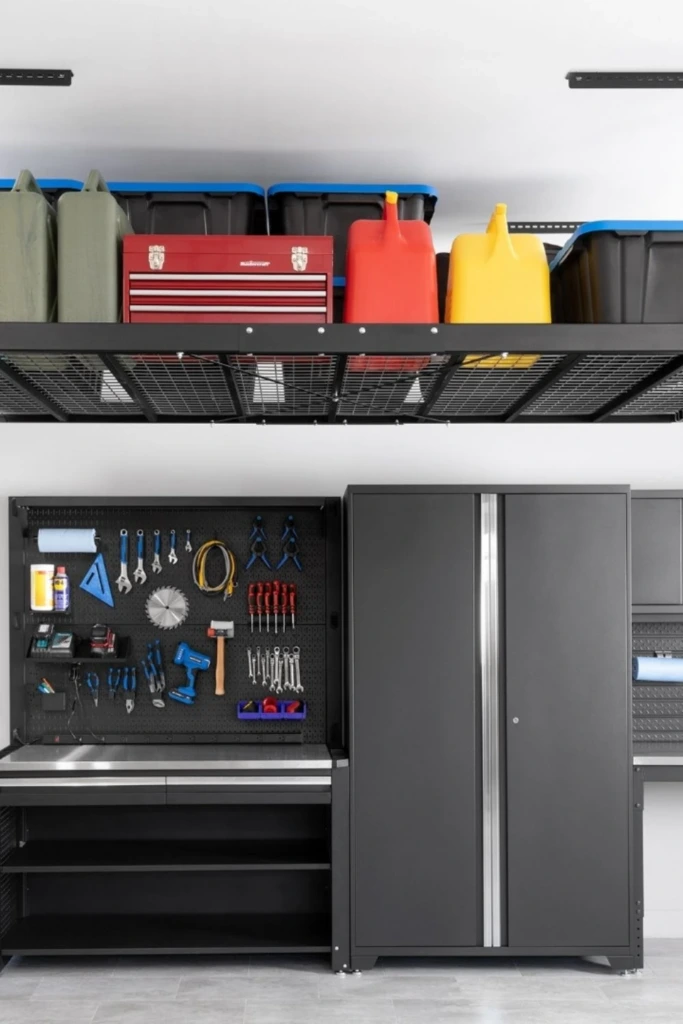
Overhead storage racks help reclaim garage floor space by using areas that would otherwise remain empty.
They are best suited to lightweight or moderately heavy seasonal belongings, depending on the rack's rated capacity and installation requirements. Storage bins, camping accessories, and infrequently used supplies are good candidates.
Before installing a ceiling rack, check the structural support, available headroom, and clearance for garage doors.
Avoid placing fuel containers, hazardous chemicals, or unstable heavy equipment overhead. Keep anything you need regularly at a more convenient height.
11. Metal Pegboard
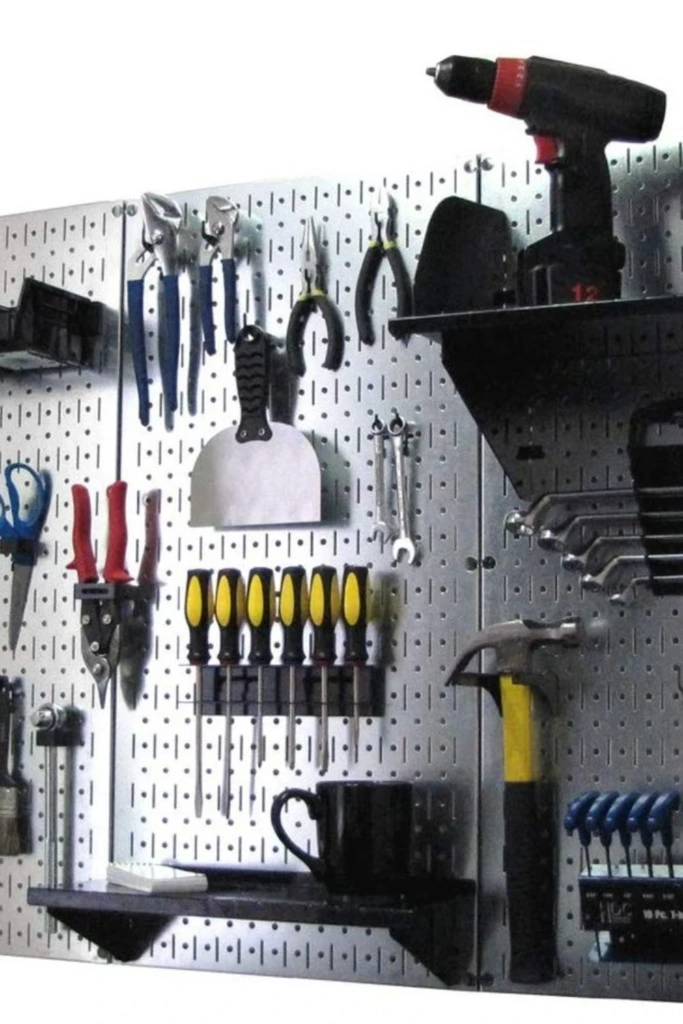
Metal pegboards provide a durable storage option for busy workshops where tools are frequently removed and replaced.
Their rigid construction works well with compatible hooks, shelves, and accessory holders. Create separate areas for screwdrivers, measuring instruments, pliers, and frequently used power tool accessories.
Choose a corrosion-resistant finish if your garage experiences humidity.
Check the panel's mounting instructions and weight rating rather than assuming every metal pegboard can support heavy equipment.
12. Rolling Pegboard
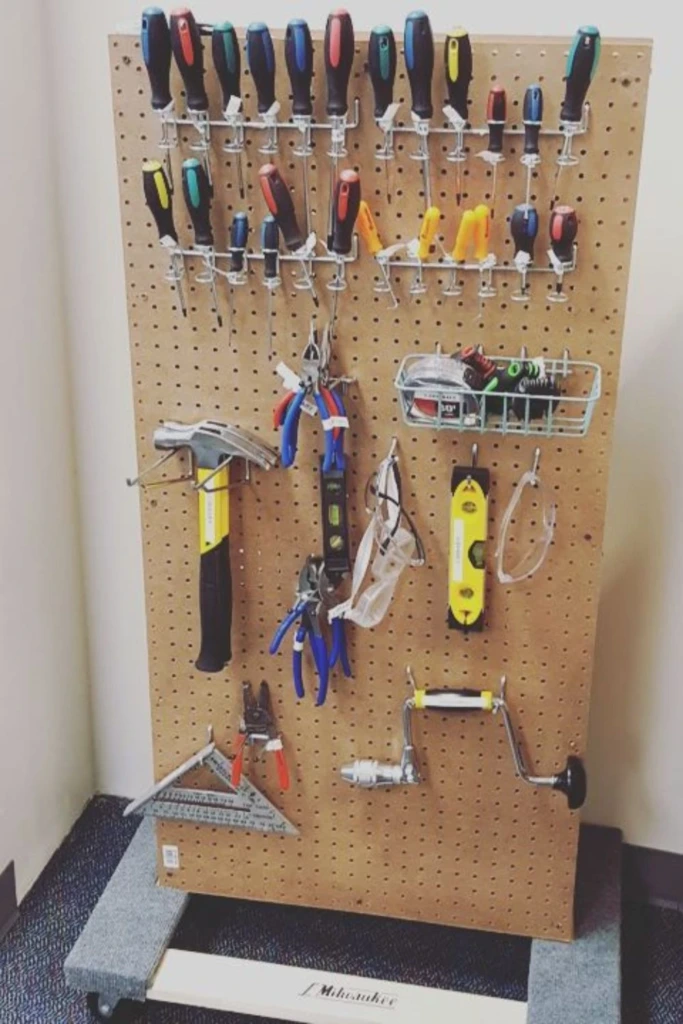
A rolling pegboard allows you to move your most-used tools between different workstations.
Mount pegboard panels on a stable mobile frame and add hooks for hand tools, measuring equipment, and safety accessories. Double-sided designs can provide extra storage without requiring much floor space.
Lockable casters are useful because they keep the organizer stationary while you work.
This setup is especially practical in garages where woodworking, repairs, and assembly projects share the same space.
13. Rolling Tool Chest
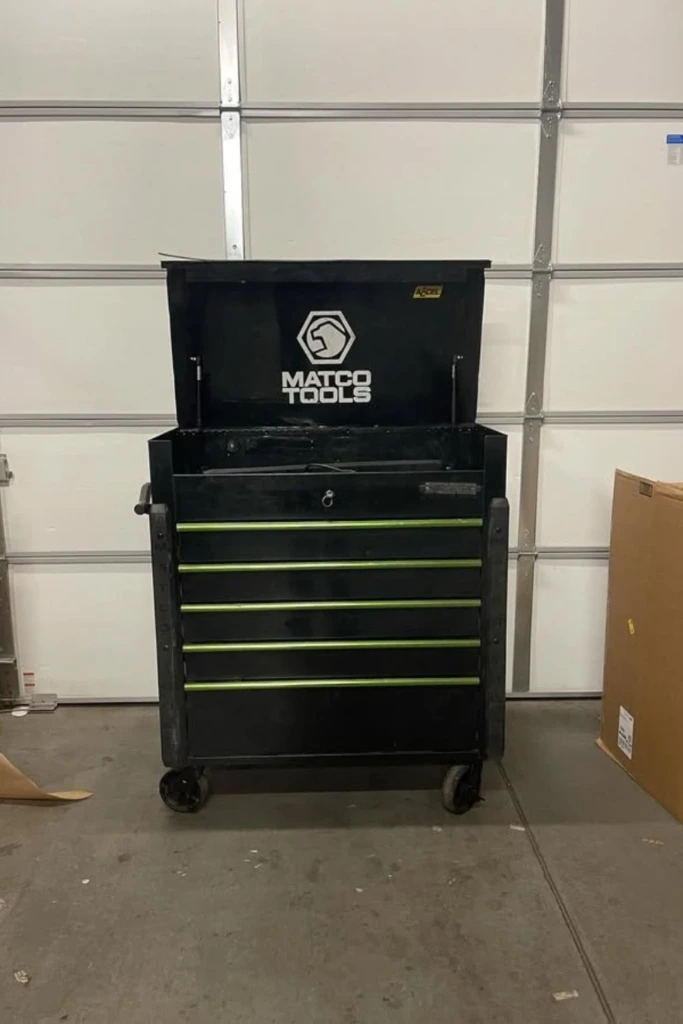
A rolling tool chest combines protected drawer storage with the convenience of mobility.
Assign different drawers to sockets, wrenches, screwdrivers, and specialty equipment. Drawer liners and fitted organizers help prevent tools from sliding around.
Choose a chest with smooth drawer mechanisms, sturdy casters, and a locking system.
Keep heavier tools in lower drawers for stability, and avoid opening multiple heavily loaded drawers at once. Position the chest beside your work area when needed, then move it aside to restore floor space.
14. Charging Station
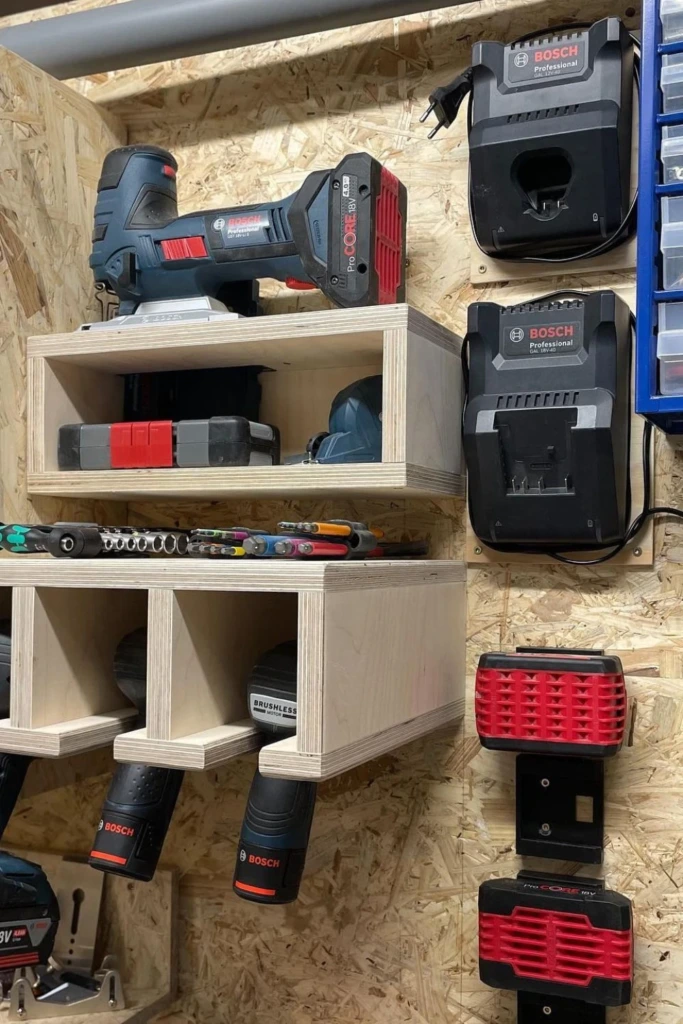
A centralized charging station prevents cordless tool batteries and chargers from spreading across your workbench.
Install a dedicated shelf or cabinet section near a suitable electrical outlet. Give each charger enough space for airflow and organize charging cables with clips or cable guides.
Separate charged batteries from those waiting to be charged using clearly marked storage areas.
Follow battery manufacturer recommendations, avoid overloaded outlets, and keep the station away from combustible materials and excessive heat.
15. Precision Tool Cabinet
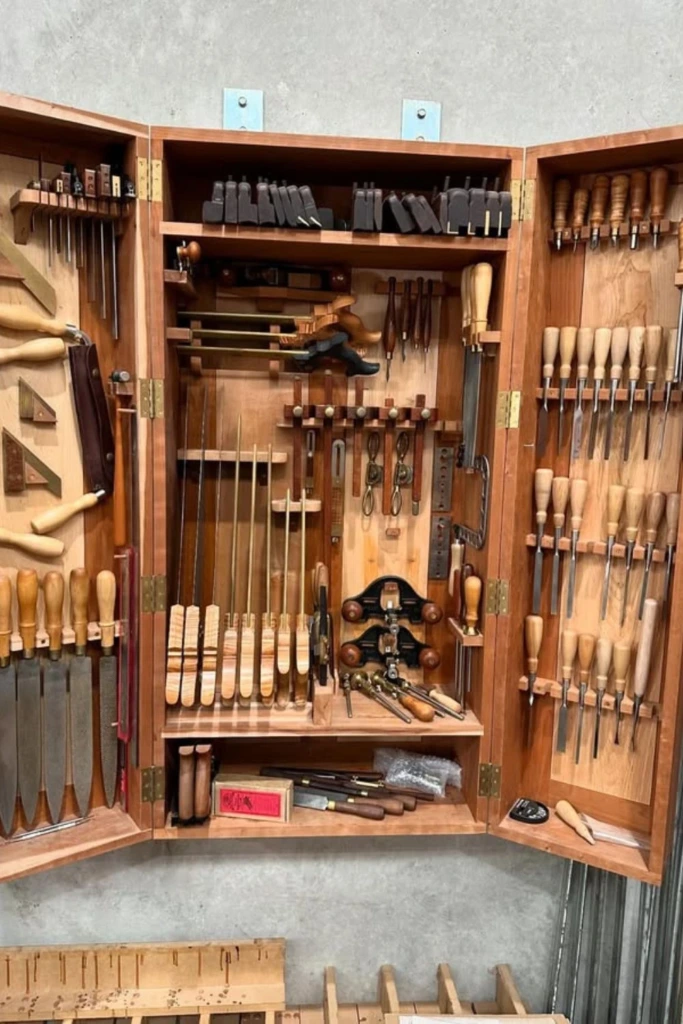
Precision tools deserve storage that protects their edges, alignment, and delicate surfaces.
A dedicated cabinet with fitted holders is an excellent solution for chisels, hand planes, marking gauges, and fine measuring instruments.
Line contact surfaces with suitable protective material and use individual compartments to prevent tools from striking one another.
A cabinet with doors can also reduce dust exposure. Keep the interior dry and inspect tools regularly for corrosion, particularly in humid garages.
16. Lathe Tool Wall
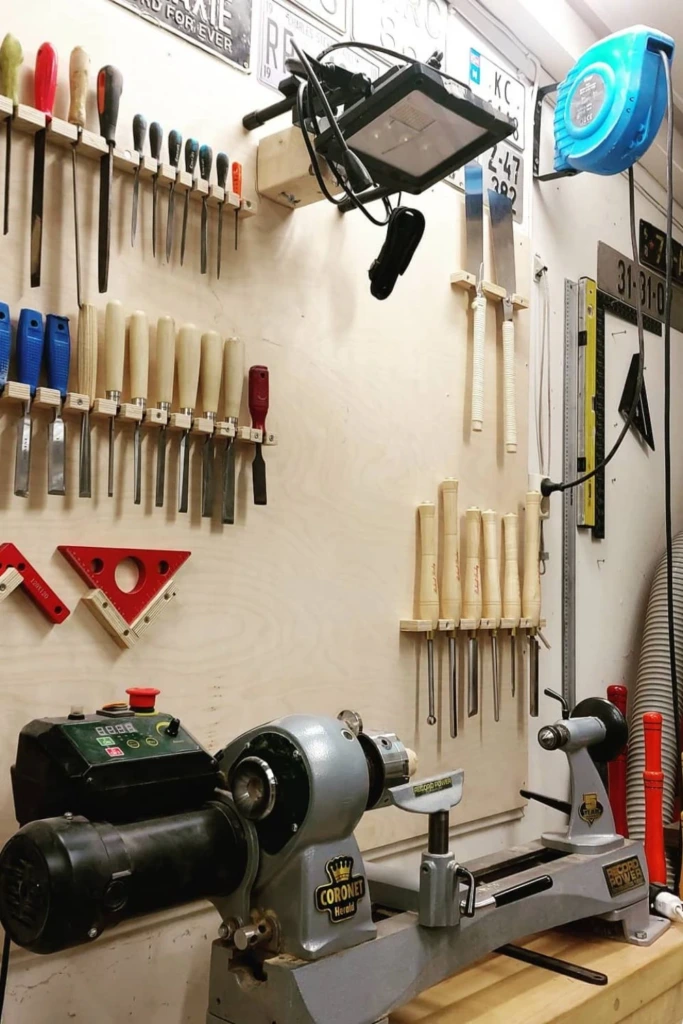
Woodturning tools are easier to manage when they have a dedicated storage area close to the lathe.
Install a secure wall rack with individual holders for gouges, scrapers, parting tools, and other turning accessories. Arrange them by purpose or size so you can select the correct tool without interrupting your workflow.
Make sure sharp edges are protected and cannot be accidentally brushed against.
Place the rack outside the machine's moving parts and operating clearance, but close enough for convenient access when the lathe is stopped.
17. Lathe Cart Station
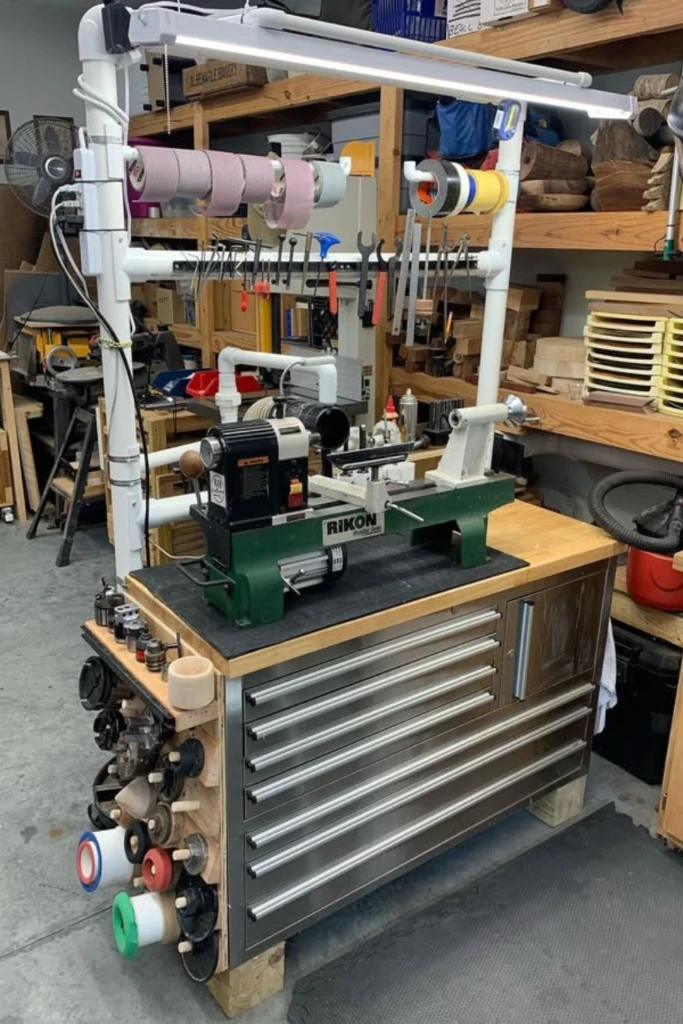
A mobile lathe cart creates a convenient home for turning accessories, finishing supplies, and maintenance tools.
Choose a sturdy cart with drawers for smaller components and open shelves for frequently used equipment. Side-mounted holders can accommodate sanding rolls, polishing accessories, or other lightweight supplies.
Organize drawers according to different stages of your projects, such as preparation, shaping, sanding, and finishing.
Lock the wheels before working and keep loose items away from rotating machinery. The cart should support your workflow without crowding the lathe.
18. Slat Wall Rail
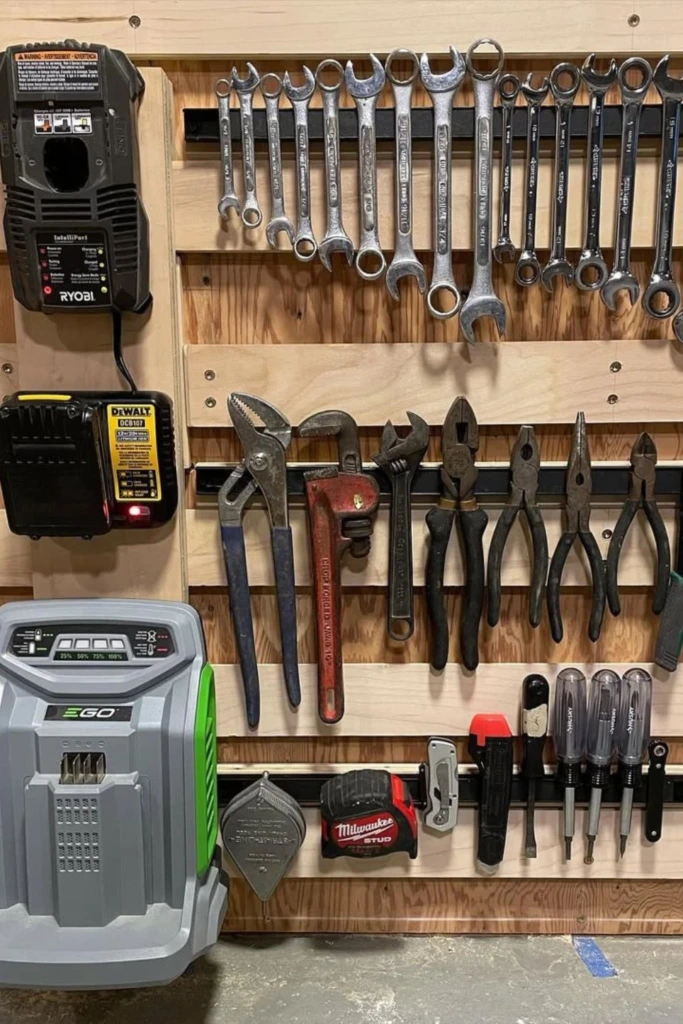
Slat wall rails offer a flexible alternative to fixed hooks and permanent tool holders.
These horizontal storage systems accept compatible brackets, baskets, and shelves that can be repositioned as your workshop changes.
Use them to organize hand tools, measuring equipment, small cases, and lightweight accessories.
The ability to rearrange holders makes slat walls especially useful for growing tool collections. Always check that accessories are compatible with your chosen rail system and suitable for the weight of the stored items.
19. Magnetic Strip Rack
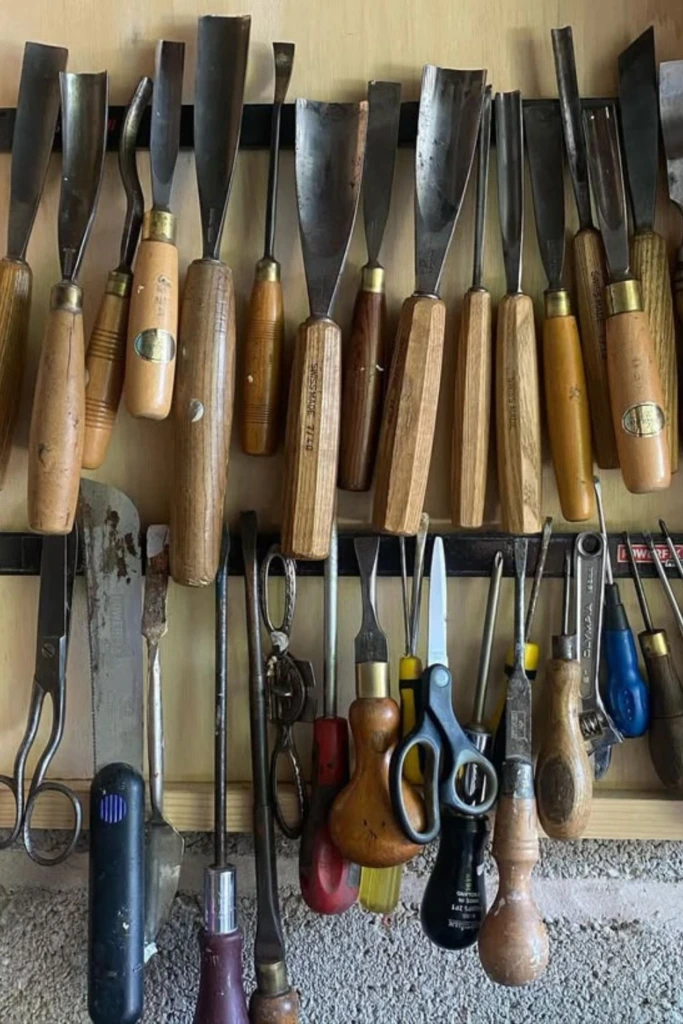
Magnetic tool strips are a compact solution for storing suitable steel hand tools.
Mount them near your workbench to hold items such as wrenches, screwdriver bits, and certain metal accessories.
Arrange tools with enough spacing to make removal easy, and choose a strip with adequate holding strength.
Avoid using magnetic strips for heavy or dangerously sharp tools where an accidental fall could cause injury. Keep sensitive measuring instruments and electronics away from strong magnets when recommended by their manufacturers.
20. Labeled Bin Shelves
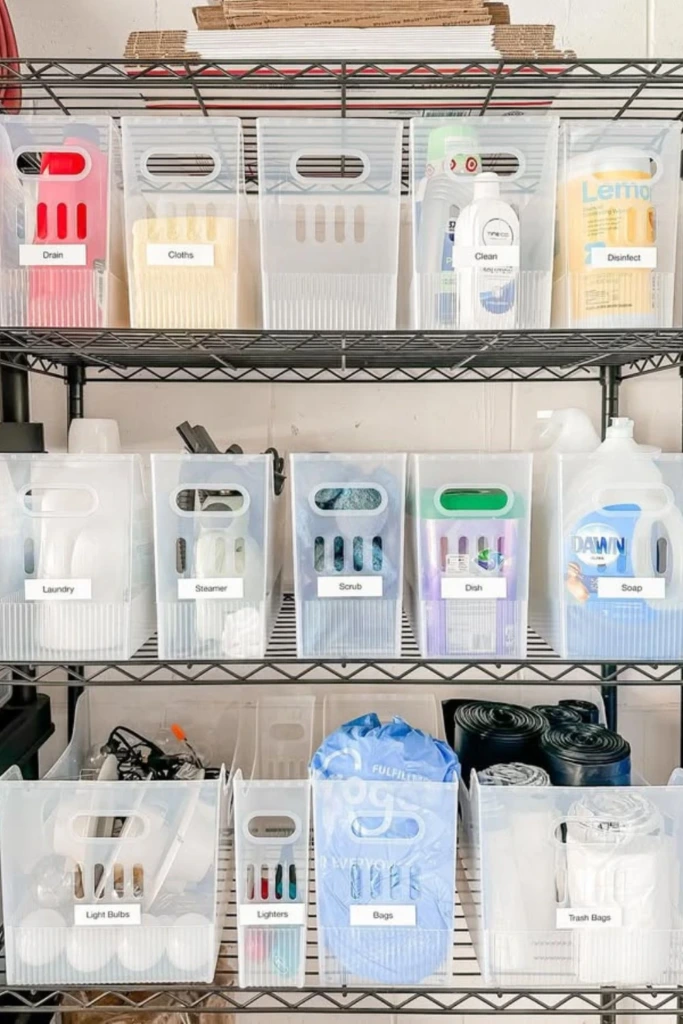
Labeled storage bins make it easier to organize the wide variety of supplies commonly found in garages.
Use separate containers for sanding materials, protective equipment, replacement parts, cleaning accessories, and general workshop supplies.
Clear bins are helpful when you want to see their contents, while opaque containers can protect light-sensitive items where appropriate.
Choose stackable bins that fit your shelves without overhanging. Place frequently used supplies at an accessible height and label both the front and, when useful, the top of each container.
21. Custom Drawer Cart
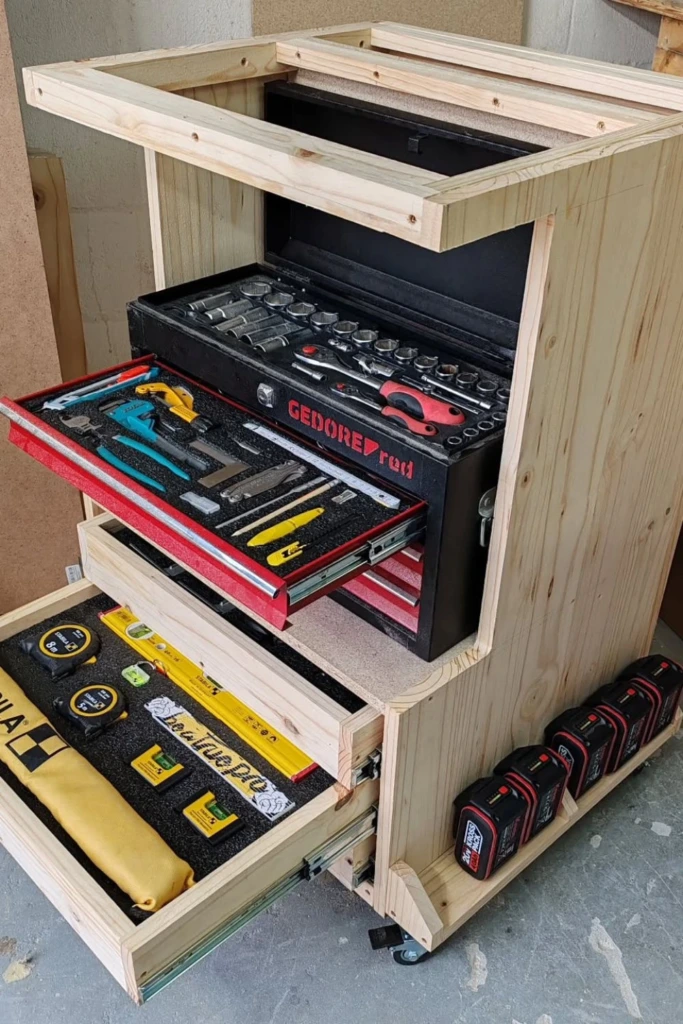
A custom drawer cart can be designed around your specific tools and working habits.
Start with a sturdy mobile cabinet and add drawer dividers, foam inserts, or fitted compartments. Arrange sockets, pliers, measuring tools, and other equipment so each piece has its own location.
Foam inserts are particularly useful for protecting delicate tools and making missing items obvious.
You can also add side-mounted holders for compatible accessories, provided they don't affect the cart's stability. This setup is ideal for workshops that require flexible storage.
22. Slat Wall Grid
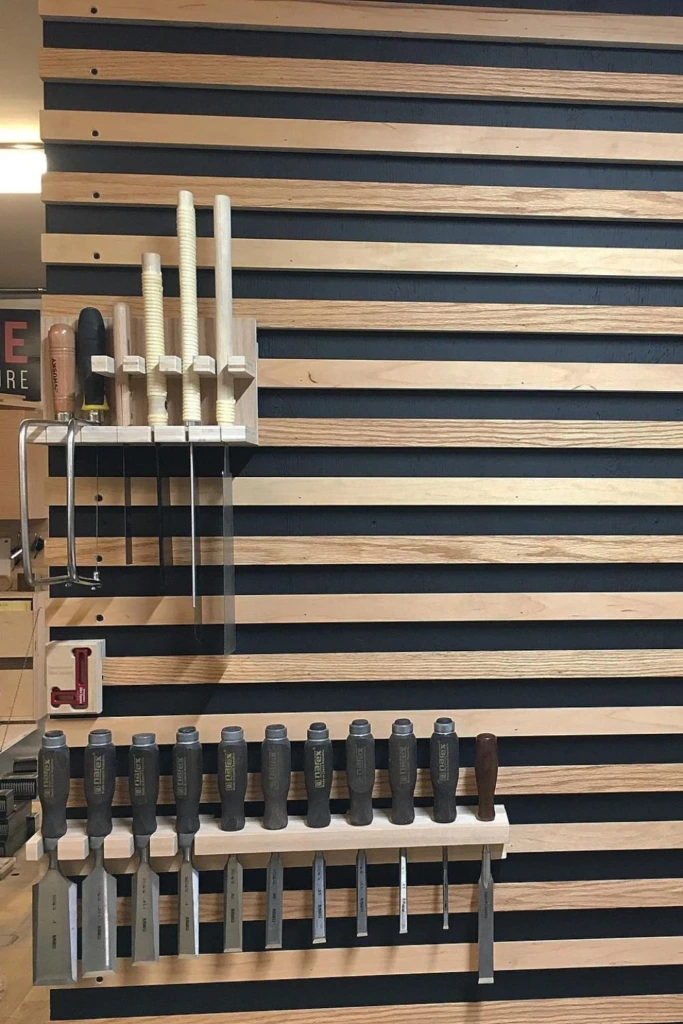
A slat wall grid combines adaptable storage with a clean, structured appearance.
Install a system of horizontal rails or wooden mounting strips and attach movable holders for clamps, hand tools, and workshop accessories.
Instead of committing to a permanent arrangement, you can reposition holders whenever you purchase new equipment or change your projects.
Keep the most frequently used tools in the central section and reserve surrounding space for less common items.
A consistent layout makes the workshop easier to navigate and maintain.
23. Gear Wall Rack

A gear wall rack helps separate outdoor equipment from the main workshop area.
Use strong hooks, shelves, and brackets to organize backpacks, ropes, helmets, boots, and sporting accessories. A small bench beneath the rack can provide a convenient place to prepare equipment before heading outside.
Allow damp gear to dry before placing