20 Bag Organization Ideas for 2026
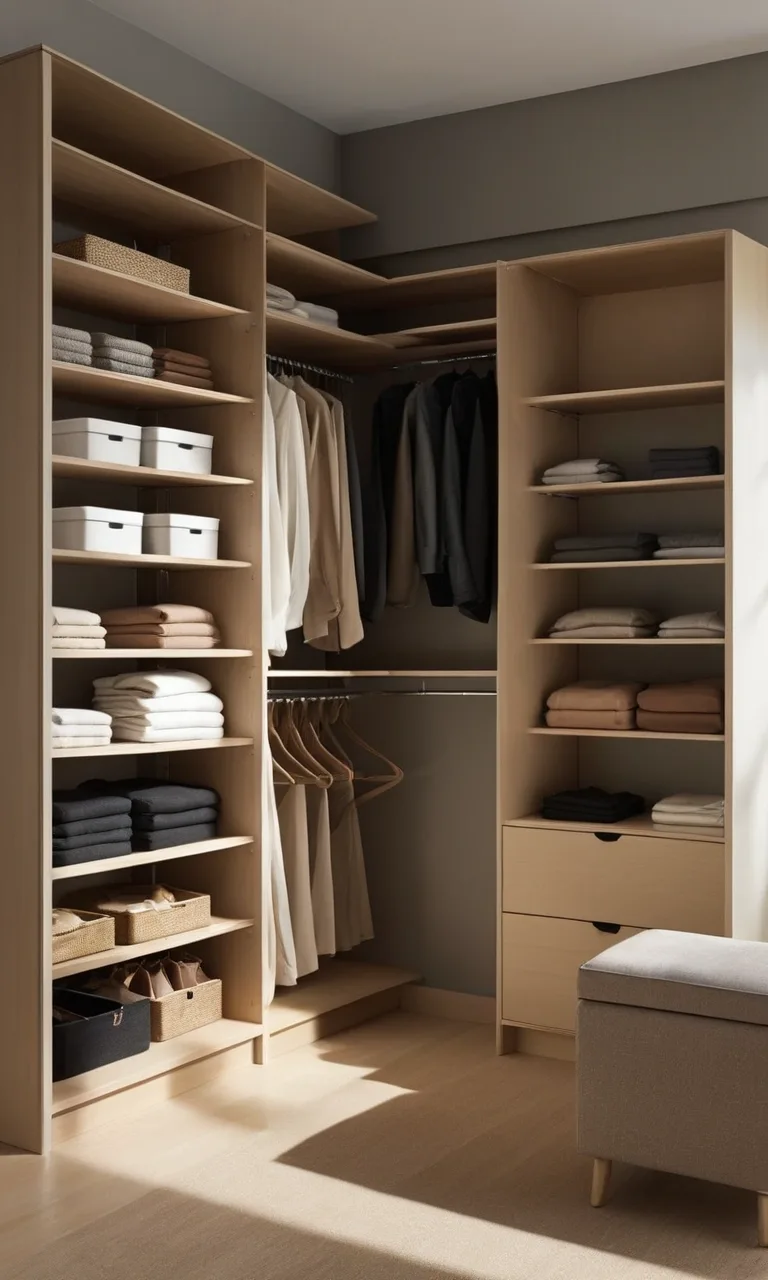
A well-organized bag collection makes getting ready easier, protects your favorite accessories, and helps you make better use of your storage space. Whether you own a few everyday handbags or a growing collection of totes, clutches, and travel bags, the right storage setup can keep everything accessible and in good condition.
The key is to choose a system that matches your collection, available space, and daily habits. Open shelves work well for displaying favorite pieces, while hanging organizers and enclosed cabinets offer practical alternatives for smaller rooms or delicate bags.
With a little planning, you can create a storage arrangement that looks attractive without sacrificing functionality.
How to Organize a Bunch of Bags?
Start by gathering all your bags in one place so you can see what you own. Empty any bags that contain receipts, old packaging, loose change, or other unnecessary items. Wipe down the interiors and exteriors according to each bag's care instructions before putting them away.
Next, sort your collection into useful categories, such as everyday handbags, work totes, evening clutches, backpacks, and travel bags. This makes it easier to determine which pieces need frequent access and which can be stored elsewhere.
Assign a specific home to each category. Shelves, wall hooks, storage baskets, drawer dividers, and closet organizers can all work, depending on the size and style of your collection. Store bags upright whenever possible, stuff soft-sided bags with acid-free tissue paper to help them retain their shape, and avoid placing heavy items on top of delicate materials.
Keep your most frequently used bags within easy reach. Once a week, spend a few minutes returning everything to its designated place and removing any accumulated clutter. A consistent routine makes organization much easier to maintain.
1. Open Shelf Bag Display
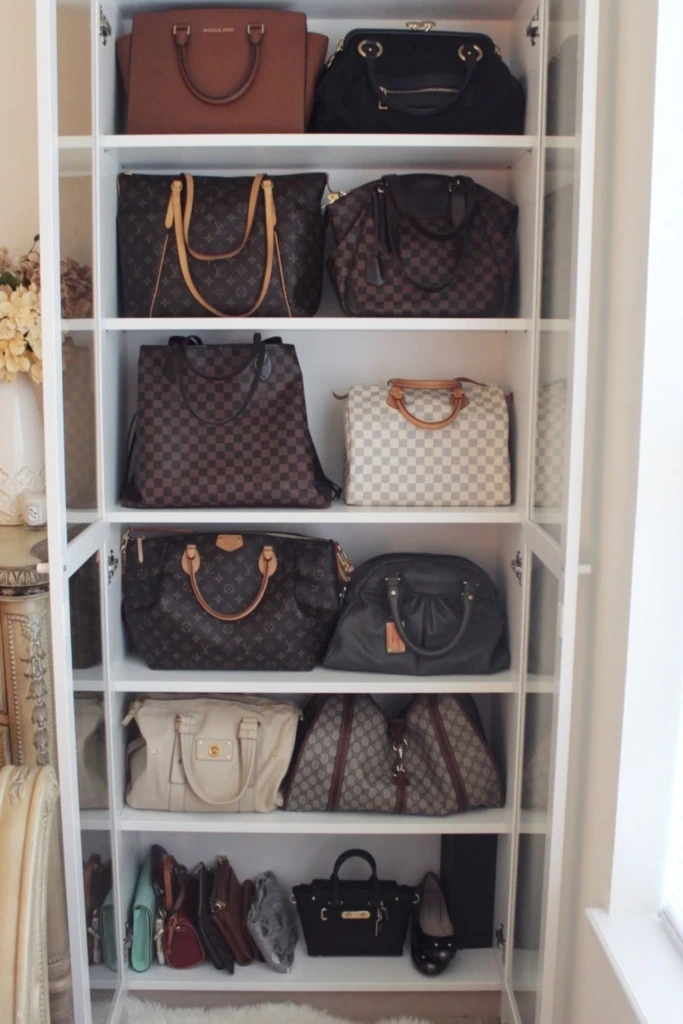
Open shelving is a practical choice for anyone who wants their bags to serve as part of the room's decor. It keeps the collection visible and allows you to choose an accessory without opening drawers or moving other items.
Arrange handbags by size, color, or style to create a balanced display. Larger totes can occupy wider sections, while compact purses and clutches fit neatly into smaller spaces. Leave enough room between bags to prevent them from becoming crowded or losing their shape.
Choose sturdy shelves with enough depth to support your largest bags. If your collection includes delicate leather pieces, consider individual dust bags to reduce exposure to dust and sunlight.
2. Hanging Bag Rail Setup
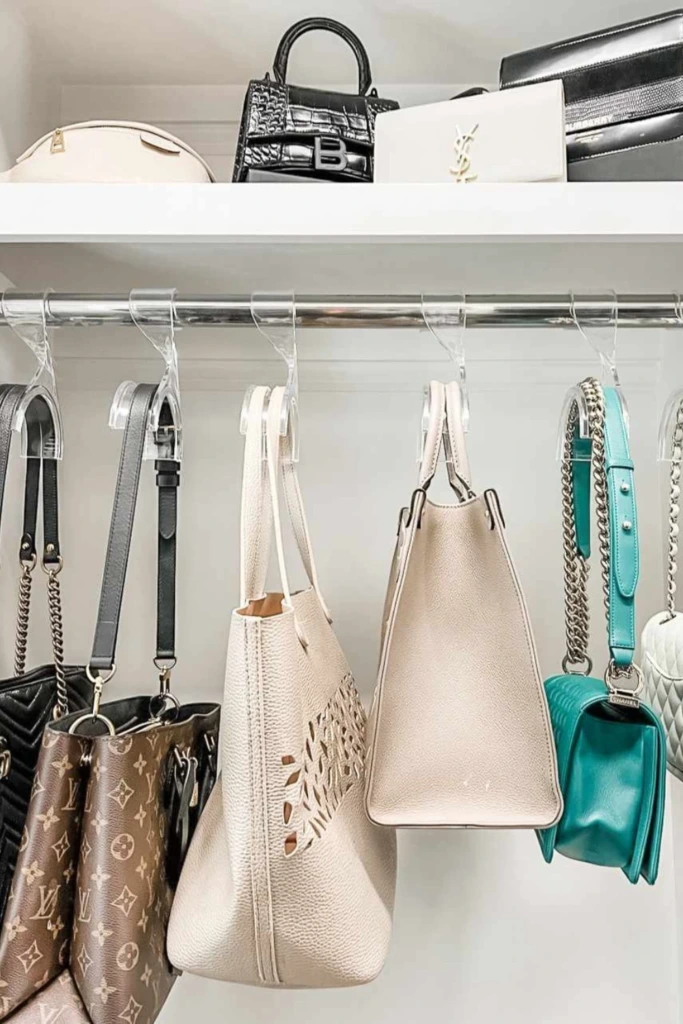
A hanging rail provides accessible storage without requiring a large shelving unit. It works especially well for lightweight handbags, canvas totes, and crossbody bags that you use regularly.
Install the rail at a convenient height and use suitable hooks that support the weight of each bag. Leave enough space between pieces so straps do not become tangled and bags can be removed easily.
Place frequently used items toward the front of the rail. Heavier bags should be supported by strong hooks, but avoid hanging delicate or heavy handbags by thin straps or decorative chains that may stretch or become damaged.
3. Vertical Wall Hook Display
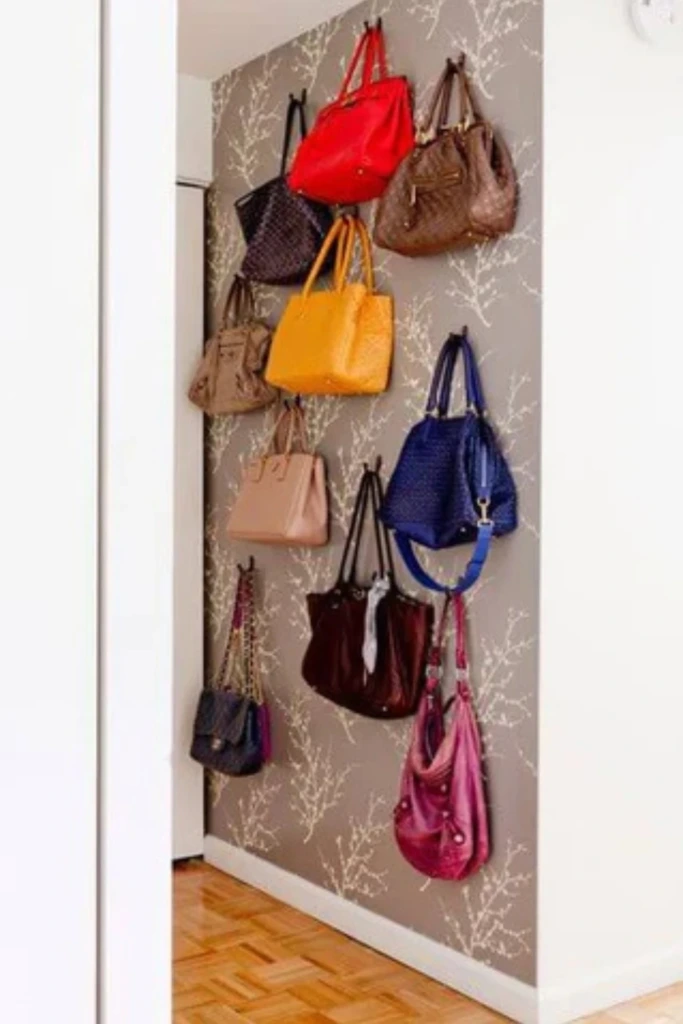
When floor space is limited, a vertical wall display can turn an unused section of wall into useful storage. A row of hooks near an entryway, bedroom door, or dressing area keeps everyday bags ready to grab before leaving home.
Choose hooks that are wide enough to support bag handles without creating sharp bends. Install them securely into suitable wall anchors or studs, especially if you plan to hang heavier totes.
Arrange the hooks according to how often each bag is used. Keep everyday essentials at a comfortable height and reserve higher positions for lightweight or less frequently used accessories. Avoid overcrowding the display, as tightly packed bags can rub against one another.
4. Compartment & Hanging Combo
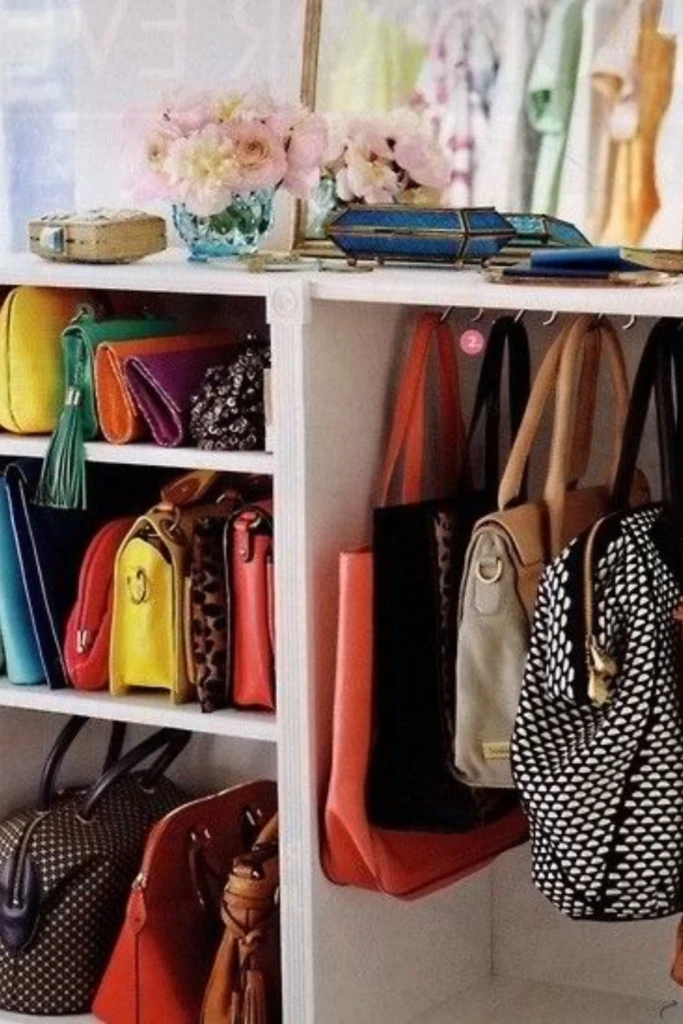
Combining shelves with hanging storage allows you to accommodate different bag shapes in one compact area. Structured handbags can stand inside individual cubbies, while flexible totes and crossbody bags hang from a nearby rail.
This arrangement is useful for collections that include both small accessories and larger everyday bags. Grouping similar colors together can create a coordinated appearance, while separating categories makes everything easier to locate.
Use shelves deep enough to support your bags without forcing them against the back wall. Keep the hanging section spacious enough for straps to fall naturally, and reserve a small compartment for wallets, removable straps, or bag accessories.
5. Divider Box Organizer
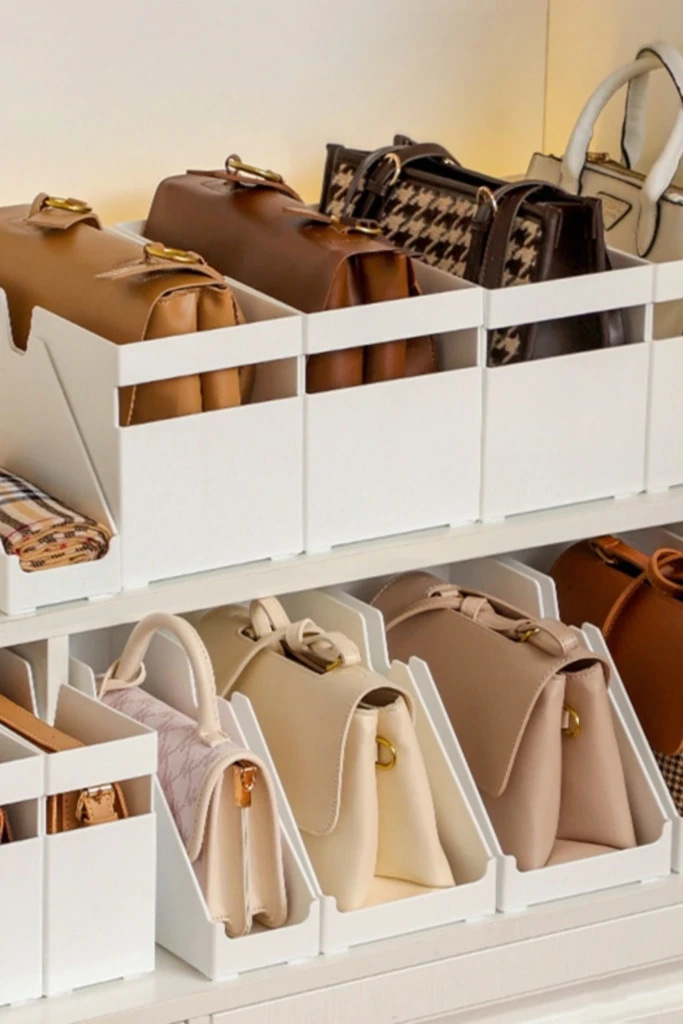
Divider boxes help keep handbags separated when you have several pieces sharing the same shelf. Instead of allowing bags to lean against one another, individual compartments give each item a defined space.
Choose organizers that match the dimensions of your handbags. Adjustable dividers are particularly useful because they can accommodate changing collections and different bag widths.
Neutral-colored boxes can create a cohesive look, while transparent options make it easier to identify what is stored inside. Avoid squeezing bags into compartments that are too small, and make sure the organizers are sturdy enough to prevent heavier pieces from tipping over.
6. Basket Bin Storage
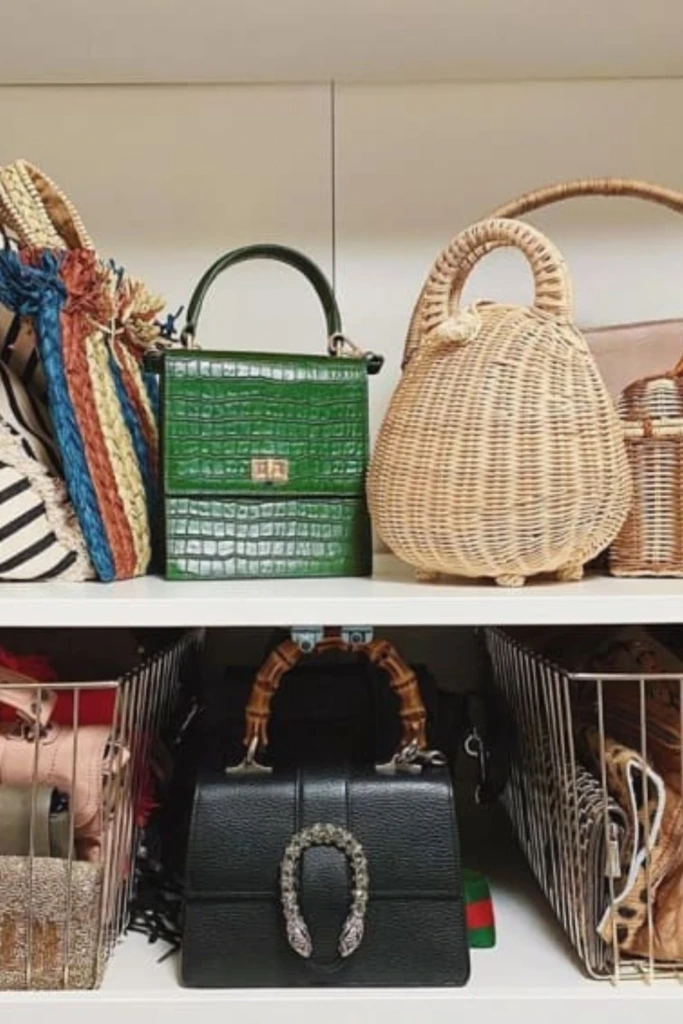
Storage baskets are a flexible option for casual bags, reusable shopping totes, fabric purses, and other accessories that do not need individual display space.
Use separate bins for different categories rather than placing every bag into one large container. This prevents the collection from becoming a pile that is difficult to search through.
Wire baskets provide visibility and ventilation, while woven bins can give a closet a softer, decorative appearance. If you use deep baskets, place the bags you reach for most often near the top and avoid stacking delicate handbags underneath heavier items.
7. Over-the-Door Bag Hanger
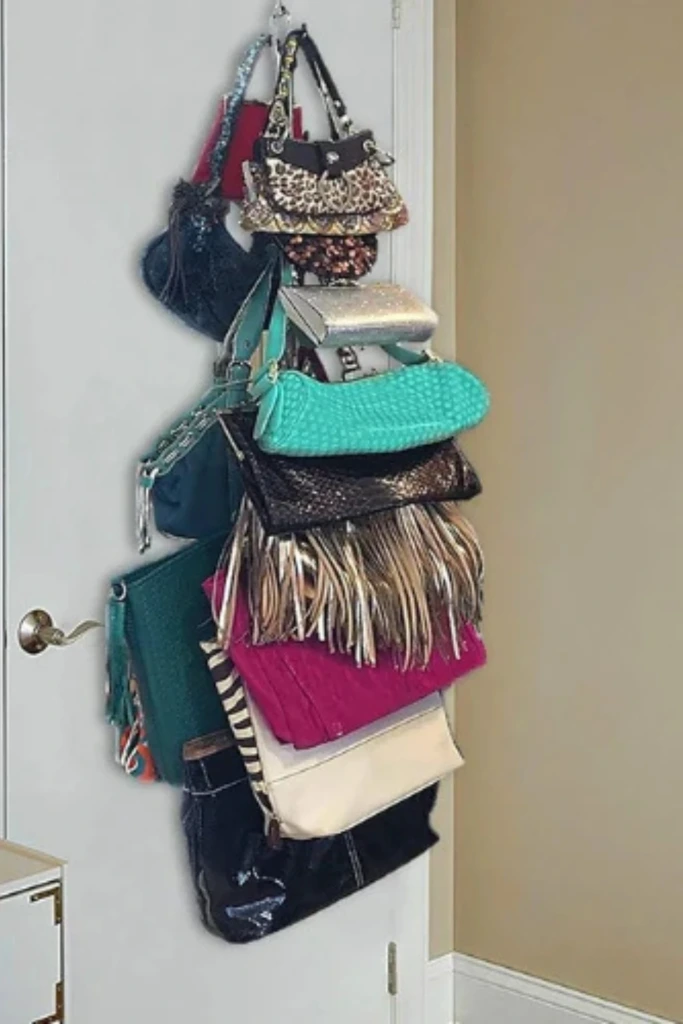
An over-the-door hanger makes use of an area that often goes unused. It is particularly helpful in apartments, dorm rooms, and small bedrooms where adding a cabinet or shelving unit is not practical.
Choose a hanger designed for the thickness and weight of your door. Check that the door can close comfortably and that the hooks will not scratch the surface.
Use the organizer for lightweight handbags, everyday totes, and other frequently used accessories. For heavier bags or delicate leather pieces, consider a sturdier storage method that does not place unnecessary stress on the handles.
8. Closet Hanging & Shelf Combo
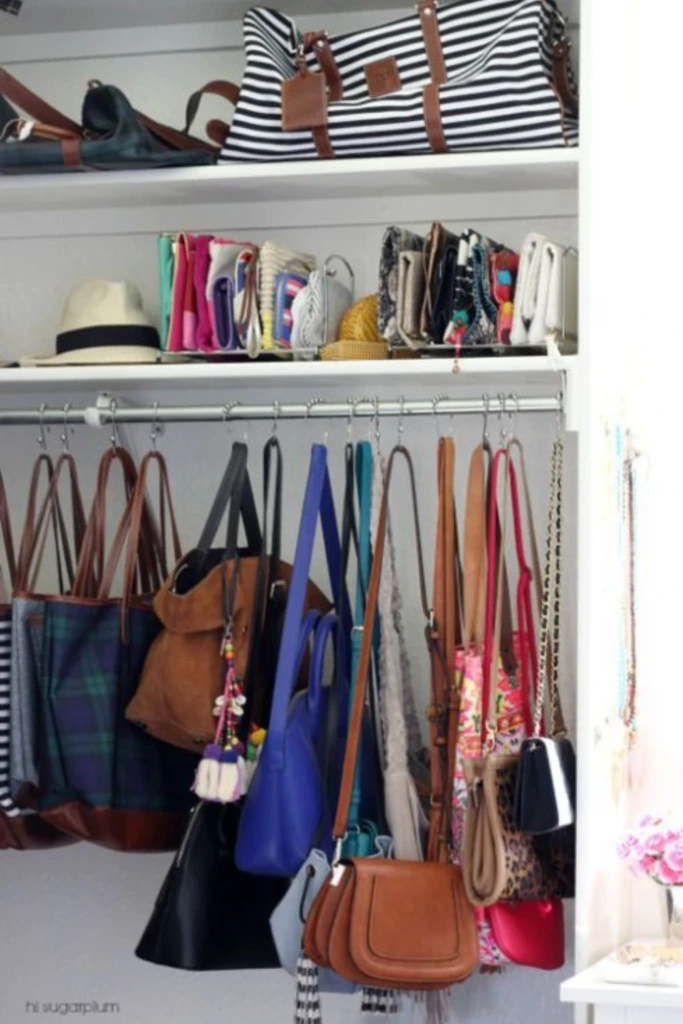
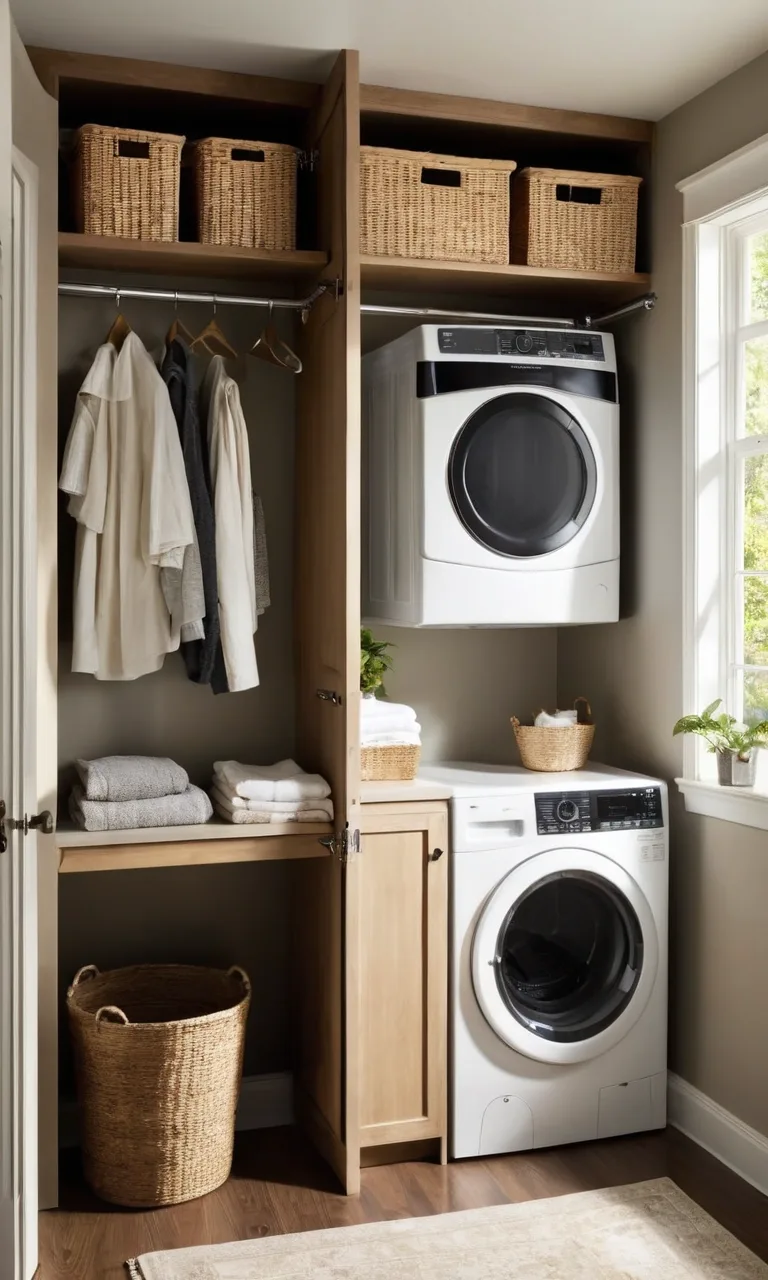
A closet arrangement that combines hanging hooks and shelves provides separate spaces for different bag styles without requiring additional furniture.
Hang suitable crossbody bags and lightweight totes from a rail or dedicated hooks. Place structured handbags upright on shelves, with smaller clutches stored in individual compartments or protective pouches.
Keep the most frequently used pieces at eye level and move seasonal accessories to less accessible areas. If your closet is deep, avoid placing bags behind clothing where they can become hidden or difficult to retrieve.
This setup is especially effective when you want an organized wardrobe that remains practical for everyday use.
9. Glass Cabinet Display
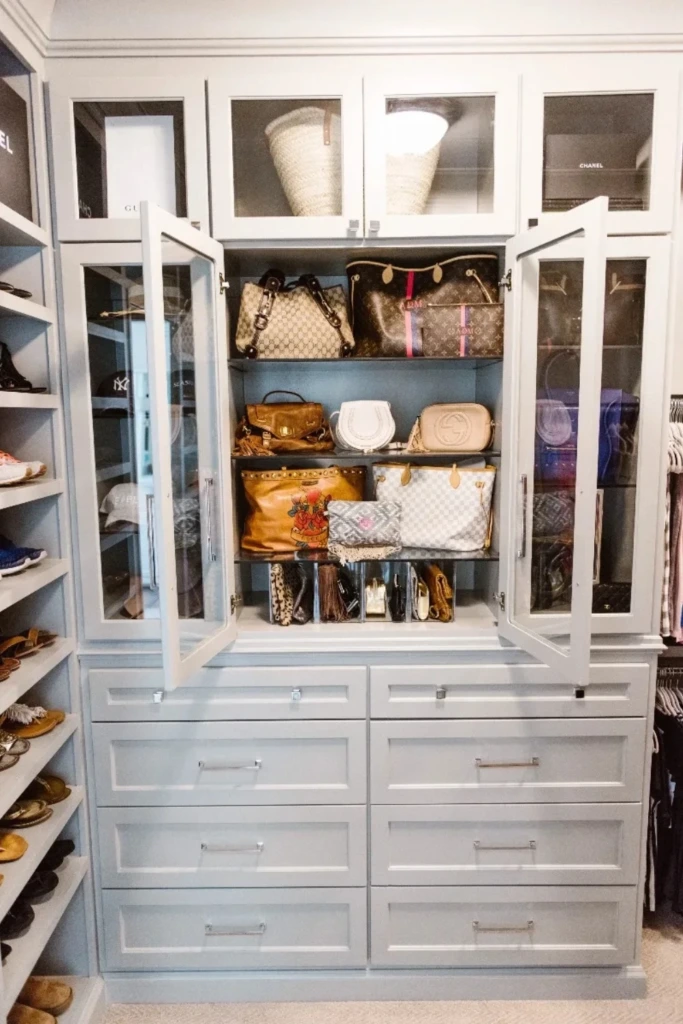
A glass-front cabinet offers a way to display handbags while providing a barrier against everyday dust. It is a good option for collectors who want their favorite pieces visible without leaving them completely exposed.
Arrange the bags according to size, color, or occasion. Give each item enough room to stand naturally, and avoid allowing handles or metal hardware to press against neighboring bags.
Make sure the shelves can safely support the combined weight of your collection. For leather and other sensitive materials, keep the cabinet away from direct sunlight, radiators, and damp areas. A glass door alone does not guarantee protection from humidity or temperature changes.
10. Open Gold Shelf Display
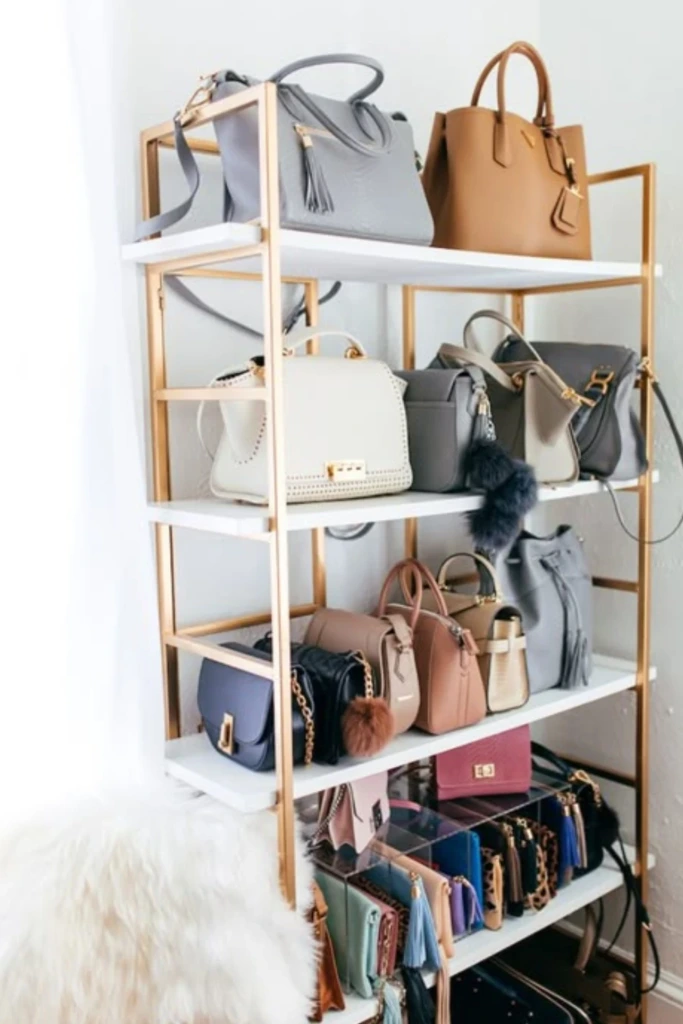
An open shelf with a gold-colored frame can turn handbag storage into a decorative feature. The metallic finish pairs well with neutral walls, warm wood, and contemporary dressing-room furniture.
Arrange bags in small groups, leaving some open space so the display feels intentional rather than crowded. Structured bags can sit upright on individual shelves, while compact purses and clutches can be grouped together.
Before purchasing a shelving unit, check its dimensions and weight capacity. Make sure the shelves are wide enough for your largest bags and secure the unit to the wall if needed. Keep valuable accessories away from direct sunlight to reduce the risk of fading.
11. Multi-Rail Hanging System
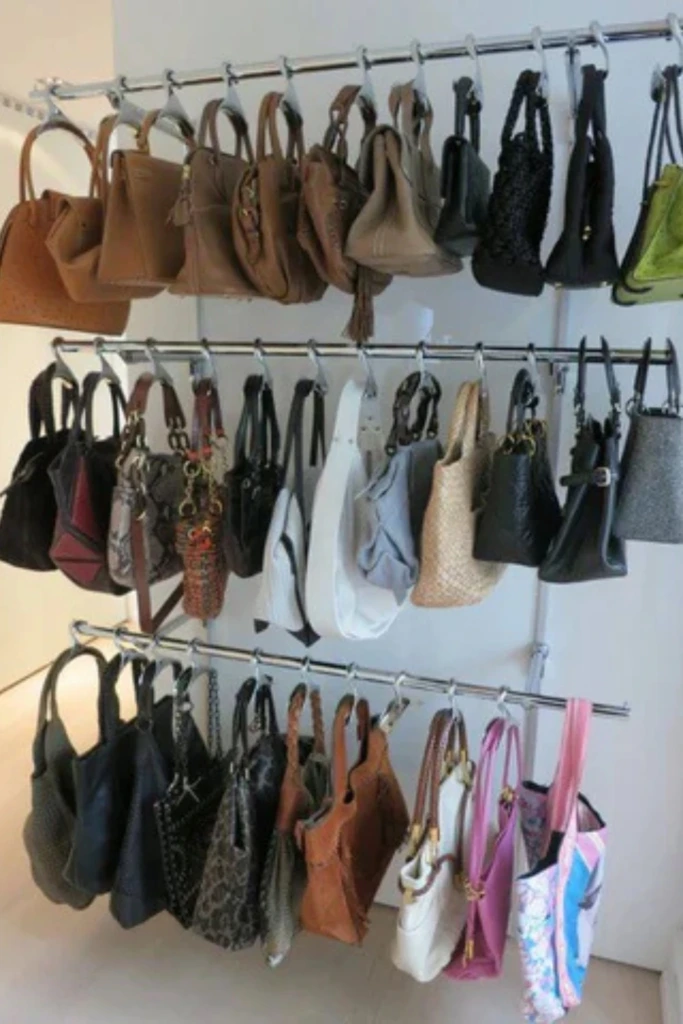
A multi-rail system can accommodate a large bag collection by using vertical space efficiently. Several rows of hooks or rails allow you to separate everyday bags, work accessories, and occasional-use pieces.
Arrange the rails so that each bag can be removed without disturbing the others. Keep lighter pieces on higher rails only when they remain easy and safe to reach, and position heavier bags on sturdy supports at a comfortable height.
This method works well in spacious closets, dressing rooms, and dedicated accessory areas. If you install multiple rails on a wall, verify that the mounting hardware and wall structure can handle the total load.
12. Chain Strap Hanging Display
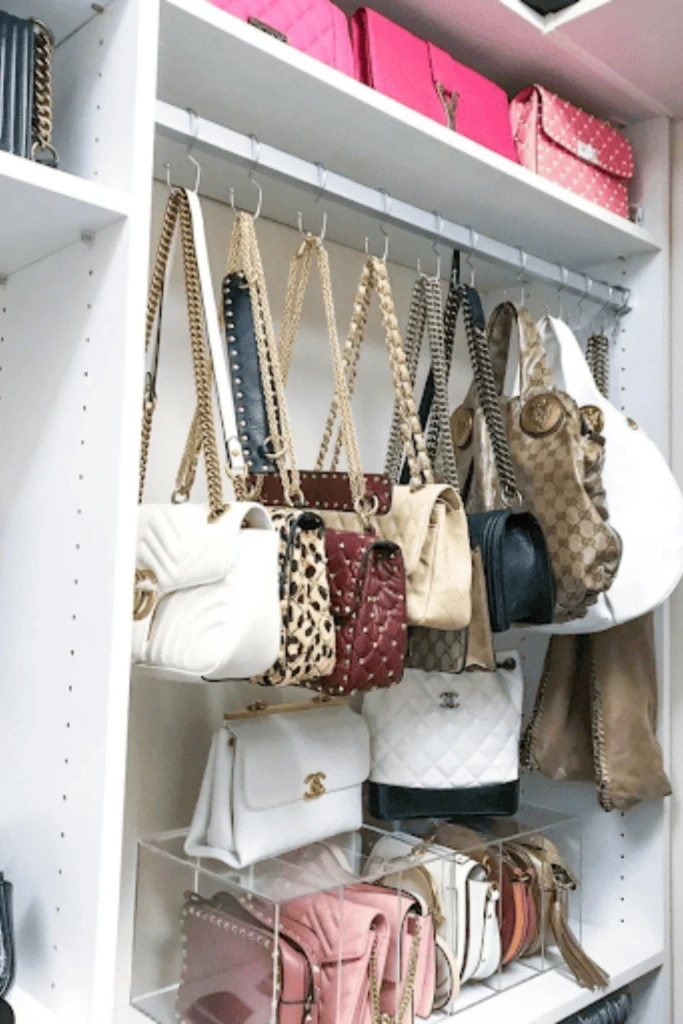
Chain-strap handbags can be difficult to store because their chains may tangle with neighboring accessories or leave marks on delicate surfaces. A dedicated display area helps keep these pieces separate and easier to access.
Use padded supports or appropriate hangers when possible. For valuable bags, storing them upright on a shelf may be safer than suspending them by their chains, particularly if the bag is heavy or the chain is delicate.
Place small clutches and wallets in separate compartments nearby. Keep metal hardware from rubbing against leather or other bags, and use protective covers when recommended by the manufacturer.
13. Arch Frame Shelf Display
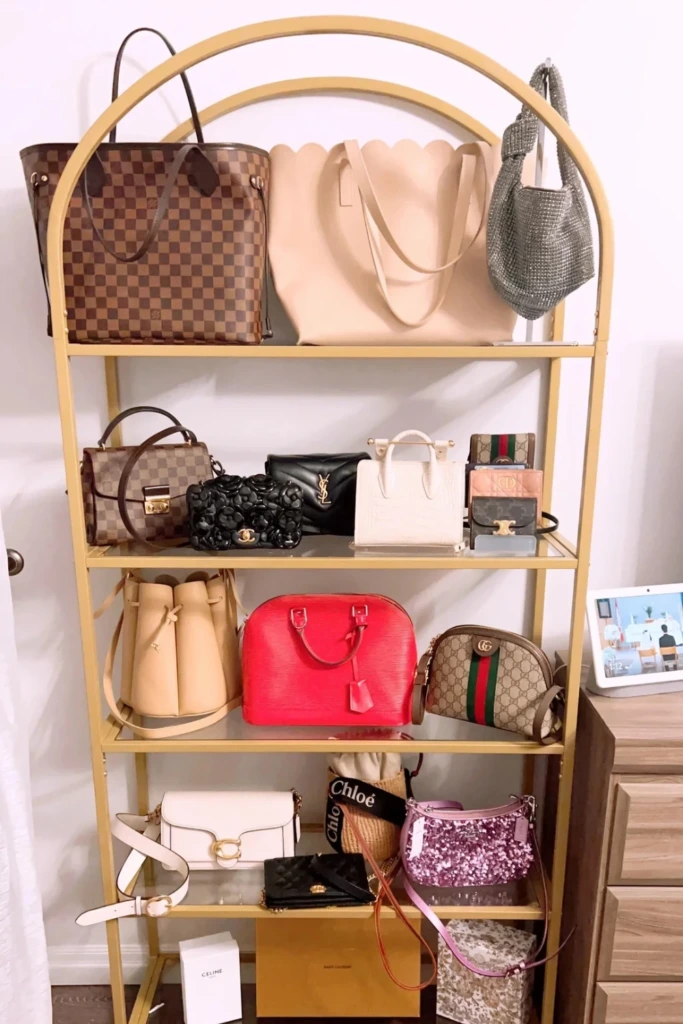
An arched shelving unit adds a distinctive shape to a bedroom or dressing area while providing useful storage for handbags. Its curved frame can create a softer visual effect than traditional square shelving.
Arrange the bags so the overall display feels balanced. Larger pieces can occupy wider shelves, while smaller handbags and clutches fit into more compact areas. Avoid forcing oversized bags into narrow sections where they may become distorted.
Choose a unit with a stable base and shelves suitable for the weight of your collection. If the shelving is tall or narrow, secure it properly to help prevent tipping.
14. Pull-Out Drawer Organizer
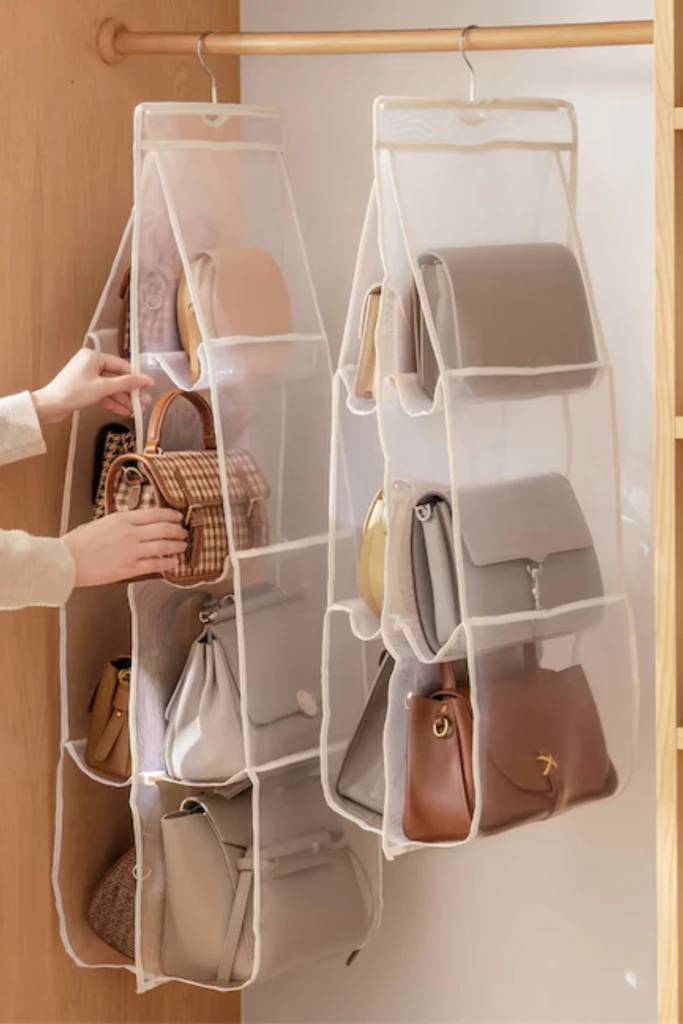
Pull-out drawers are useful for keeping handbags out of sight while maintaining easy access. They are particularly convenient for smaller bedrooms and wardrobes where an open display might make the space feel busy.
Use adjustable dividers to separate bags by size or category. Keep structured handbags upright where possible, and avoid stacking heavy pieces on top of softer ones.
Lined drawers can help prevent scratches, while a clean, dry interior protects accessories from unnecessary exposure to dust. Before storing a bag, make sure it is completely dry and free of crumbs, makeup residue, or other debris.
15. Clear Box Display
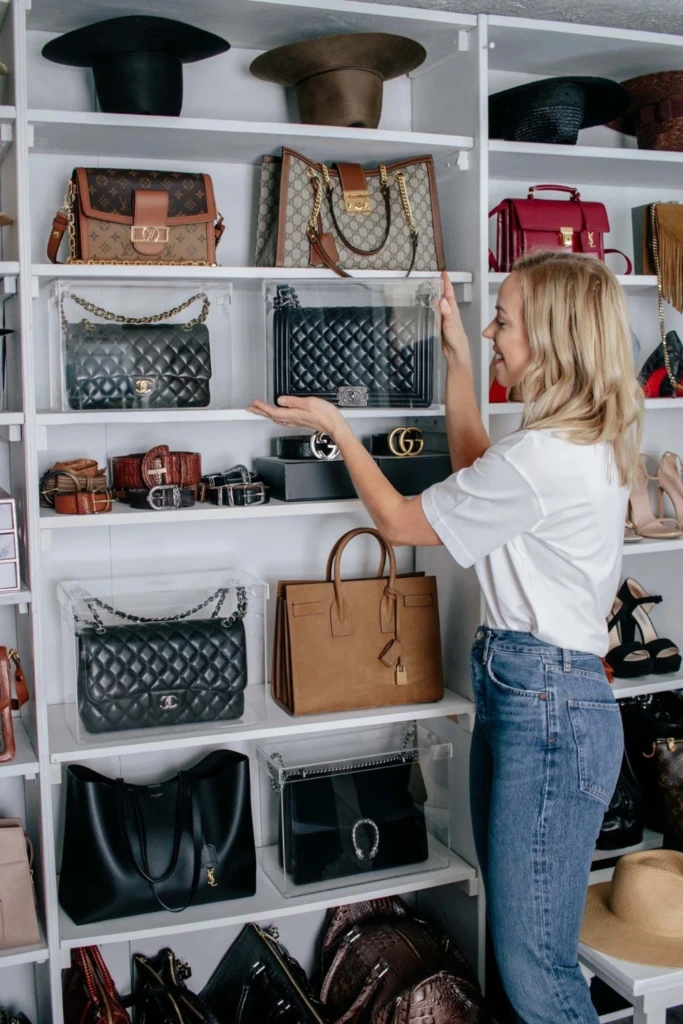
Transparent storage boxes make it easier to identify handbags without opening every container. They are particularly useful for accessories that you use occasionally but still want to keep organized.
Choose boxes large enough for each bag to sit naturally. Avoid folding handles tightly or compressing soft materials just to make them fit. Ventilated storage or breathable dust bags may be preferable for some leather items, depending on the manufacturer's care recommendations.
Label boxes when several bags look similar, and store them away from direct sunlight and damp conditions. Clear containers provide visibility, but they should not be treated as a substitute for proper temperature and humidity control.
16. Built-In Compartment Storage
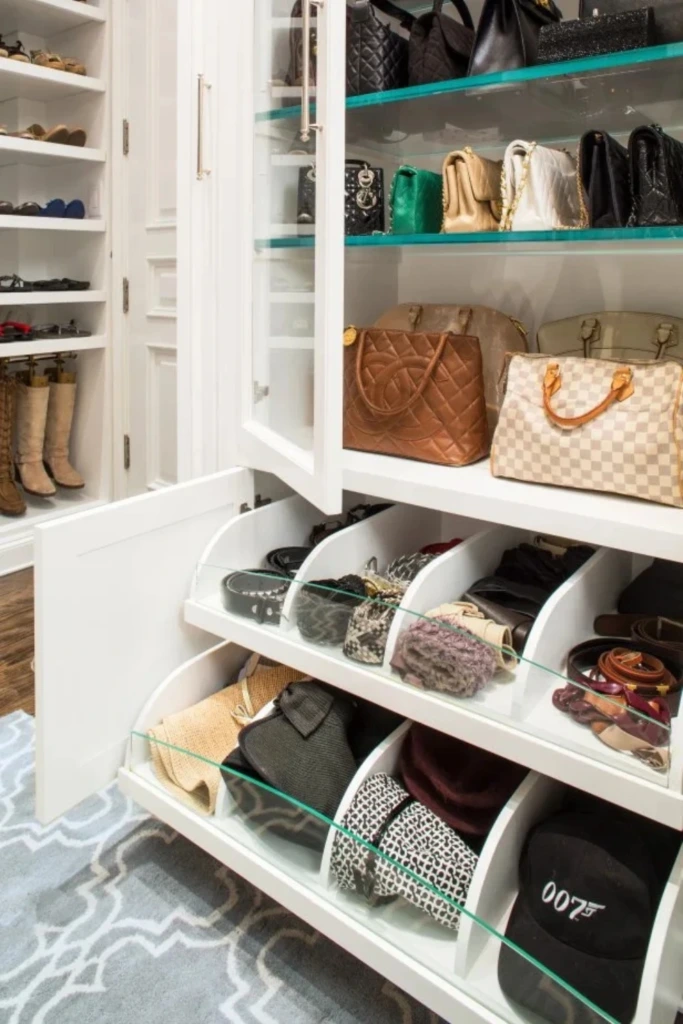
Built-in compartments provide a tailored storage solution for collections of different sizes. Individual cubbies keep handbags separated and make it easier to maintain a consistent arrangement.
Plan the compartment dimensions around the bags you actually own. Larger totes need enough height and depth to stand upright, while clutches and small purses can fit into narrower sections.
Use adjustable shelves if you expect your collection to change. For a polished appearance, arrange similar styles together and leave enough clearance to remove each bag without catching its handles or hardware.
17. Clear Divider Shelf System
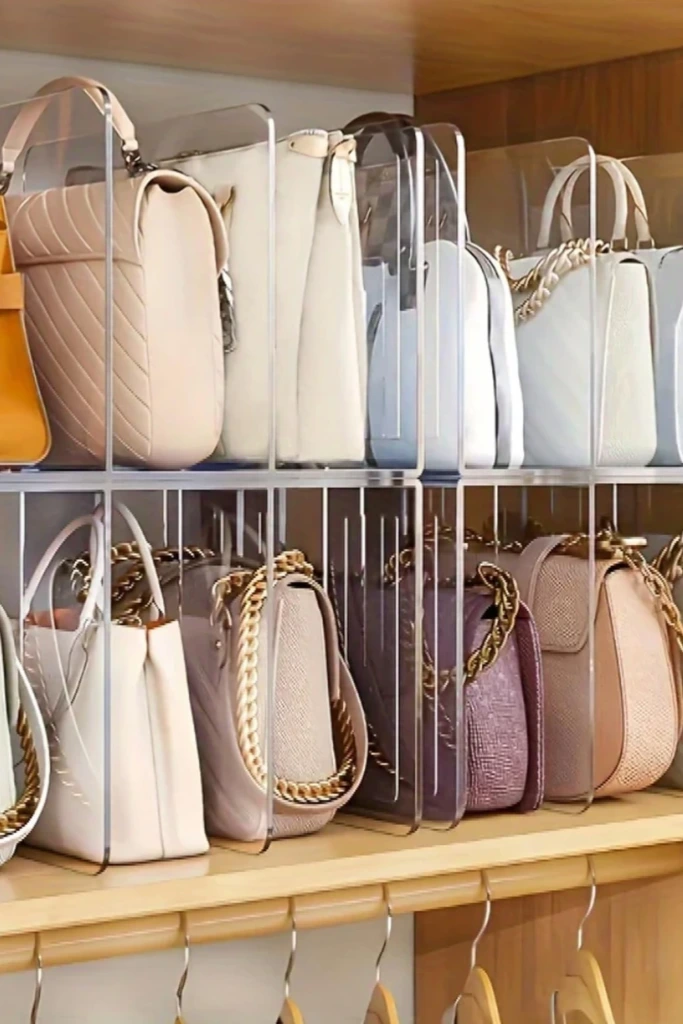
Clear shelf dividers create individual spaces without blocking the view of your handbags. They are a simple way to stop upright bags from leaning into one another, especially on long wardrobe shelves.
Select dividers with smooth edges and a suitable height for the bags being stored. Position them so the bags remain supported without being squeezed tightly between panels.
This approach works especially well for structured handbags and medium-sized totes. For soft or expensive bags, add appropriate stuffing to help maintain their shape rather than relying on the dividers alone.
18. Shelf and Acrylic Divider Combo
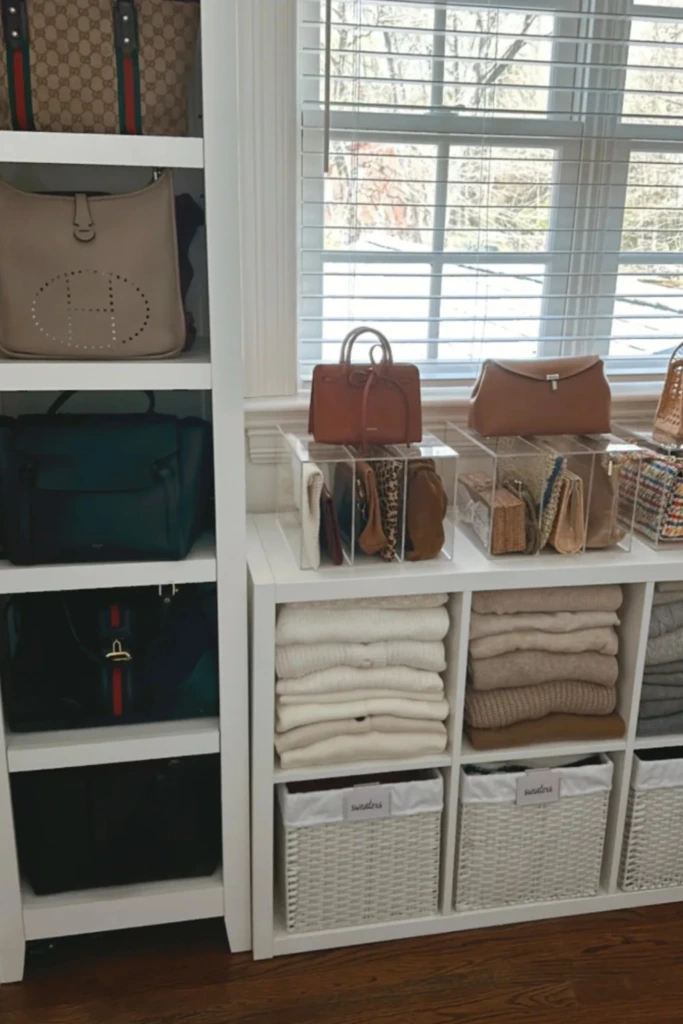
Combining ordinary shelves with acrylic dividers creates an organized display without requiring a custom cabinet. The transparent panels separate accessories while allowing the shelf surface and the bags themselves to remain visible.
Use the dividers for compact handbags, evening clutches, and smaller purses that tend to slide around. Larger bags can occupy the open sections of the shelf, provided they have enough space to stand comfortably.
Keep the arrangement simple by grouping accessories according to color, size, or purpose. Avoid placing unrelated heavy objects above delicate bags, and leave enough room to remove each item without disturbing the rest.
19. Corner Shelf Display
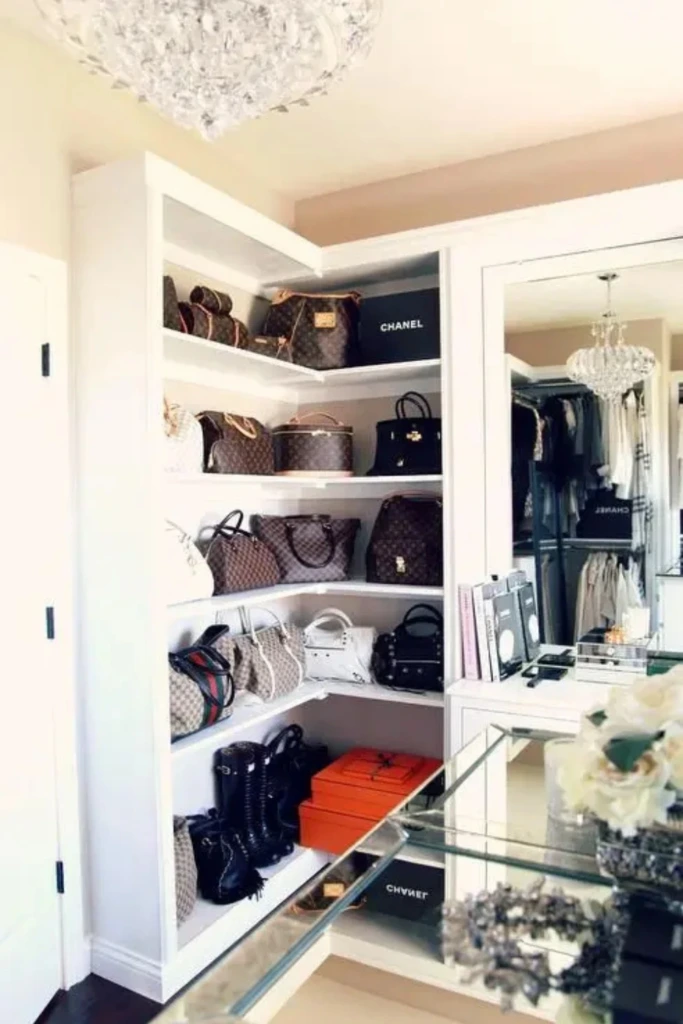
Corner shelving makes use of space that might otherwise remain empty. It can be especially helpful in dressing rooms, walk-in closets, or bedrooms with limited wall space.
Arrange handbags according to their dimensions and how often you use them. Place everyday pieces where they are easy to reach, and use higher shelves for lightweight bags that are needed less frequently.
Check that the shelves provide adequate depth and support. Corner units can sometimes make items at the back difficult to access, so avoid storing your most frequently used handbags in hard-to-reach positions.
20. Acrylic Slot Organizer
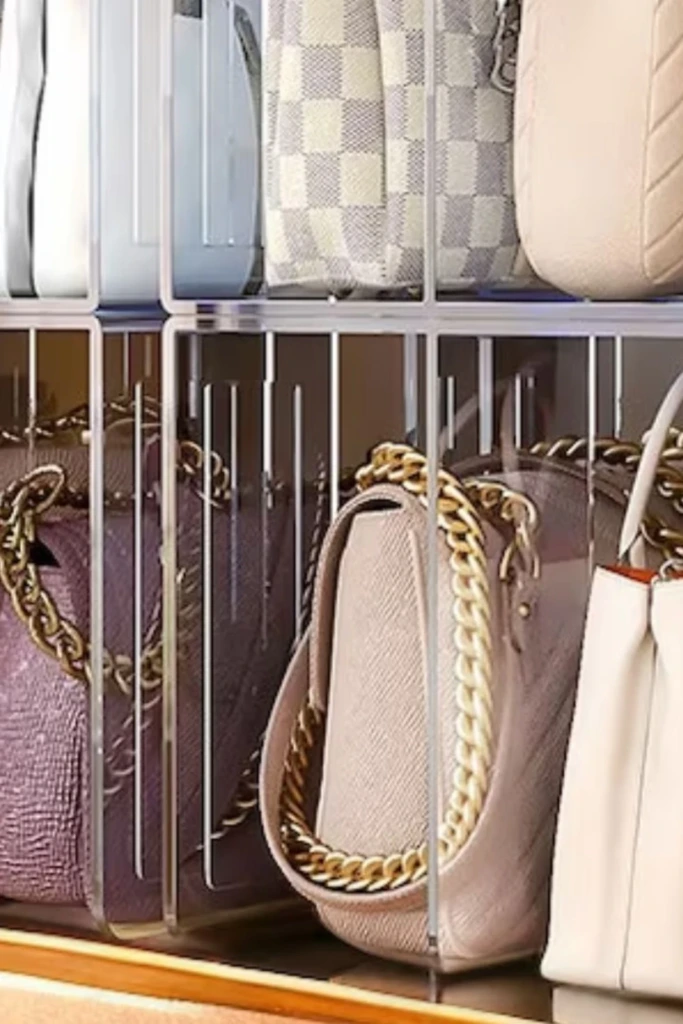
An acrylic slot organizer is useful for keeping structured handbags separated in a compact space. Each section provides a defined position, helping prevent bags from sliding over or leaning against one another.
Choose slots wide enough for the bags you plan to store. Tight compartments can press against the sides of a handbag and cause unwanted creases, particularly when the material is soft.
This method works best for relatively small or medium-sized bags with stable shapes. For delicate leather, use suitable protective storage and ensure the organizer has smooth edges that will not scratch the surface.
How to organise a bag collection?
Begin by emptying your bags and sorting them into categories such as totes, crossbody bags, clutches, work bags, and travel accessories. This gives you a clear picture of your collection and helps you identify the best storage solution for each group.
Use shelves for structured bags, hooks for suitable lightweight pieces, and divided drawers or boxes for smaller accessories. Keep the bags you use most often in accessible locations and move occasional-use items to higher shelves or protected storage.
To maintain the arrangement, return each bag to its designated spot after use. A short weekly check can help you remove clutter, inspect stored accessories, and keep the entire collection easy to manage.
How to organize handbags?
Store handbags according to their shape, material, size, and frequency of use. Structured bags generally benefit from upright storage, while soft-sided styles may need gentle stuffing to retain their shape.
Use shelf dividers to keep bags separated, and choose hooks or hanging rails only when the handles and construction can safely support the weight. Dust bags can help protect delicate materials, while transparent containers make less frequently used pieces easier to identify.
Avoid overcrowding shelves, stacking heavy handbags on top of delicate ones, or leaving leather accessories in direct sunlight or damp environments. The best organization system keeps each handbag accessible while protecting its appearance and construction.