18 Office Wall Organization Ideas for 2025
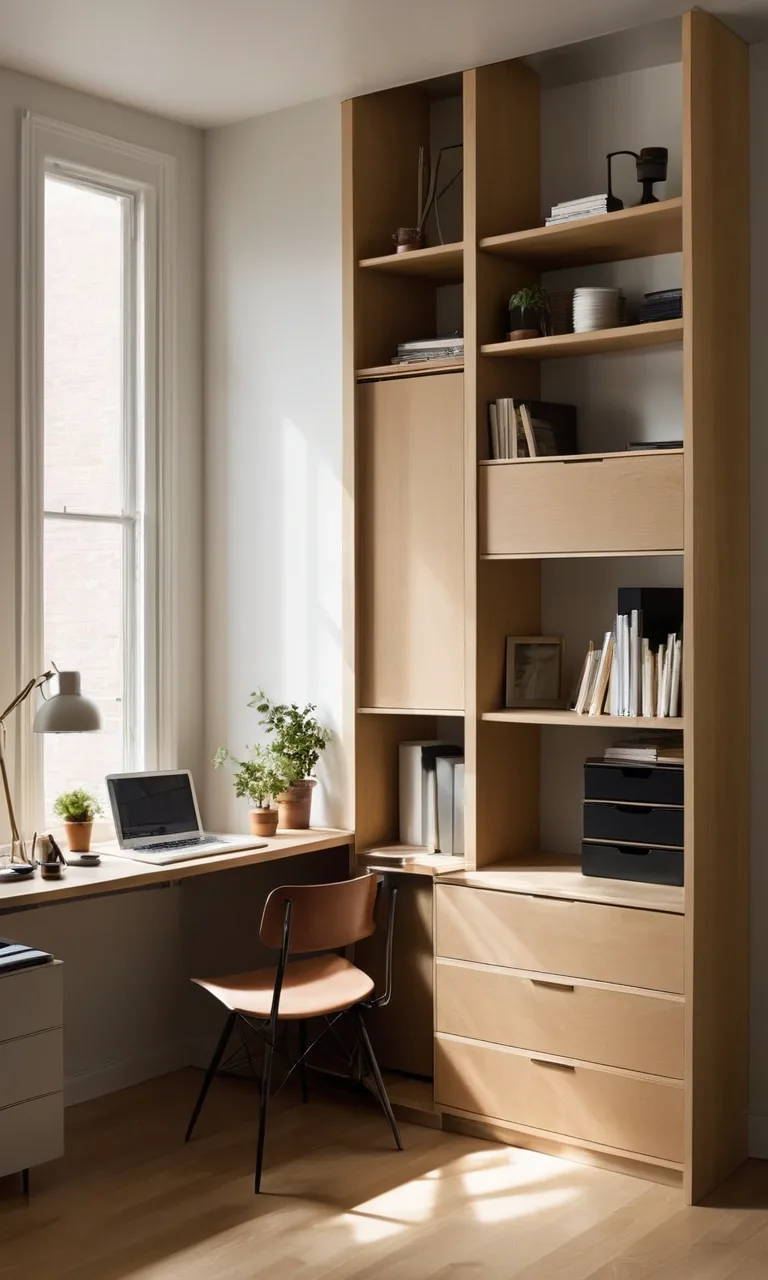
A cluttered desk can make even a beautiful home office feel chaotic. Papers accumulate, stationery gets misplaced, and useful supplies take up valuable workspace. Meanwhile, the walls often remain completely unused.
Making better use of your office walls can transform the way you work. With thoughtful storage, practical organizers, and a few decorative touches, you can create a workspace that feels spacious, looks attractive, and supports your daily routine.
Whether you have a dedicated office or a small desk tucked into a bedroom, the right wall organization ideas can help you keep essential items accessible without sacrificing style.
What is the meaning of office organization?
Office organization means creating a practical system for arranging your workspace so that everything has a designated place. It includes managing paperwork, storing supplies, keeping frequently used tools accessible, and maintaining an environment that supports productivity.
An organized office is about more than appearances. When you know where your documents, chargers, notebooks, and other essentials belong, you spend less time searching for things and more time completing important tasks.
Wall storage can make a particularly noticeable difference. Shelves, hooks, wall-mounted file holders, and pegboards move everyday items away from the desk while keeping them within reach. A consistent arrangement also makes it easier to put things back after use.
The best organizational system is one that fits your working habits, available space, and storage requirements. It should be simple enough to maintain even on your busiest days.
How to Style an Office Wall?
Styling an office wall starts with identifying what you need to store and how you use your workspace. Instead of choosing decorations first, look at the items currently occupying your desk. Paperwork, books, cables, stationery, and accessories can often be relocated to the wall.
Consider combining several storage options. Floating shelves work well for books and decorative objects, pegboards accommodate frequently used tools, and wall-mounted baskets help separate smaller supplies. A calendar or noticeboard can keep appointments and important reminders visible.
Once the practical elements are in place, focus on the overall appearance. Choose colors that complement your desk and furniture, maintain consistent spacing between shelves, and avoid overcrowding every available surface.
Lighting can improve both the atmosphere and functionality of the room. Wall sconces, desk lamps, or subtle under-shelf lights help illuminate your working area. For a minimalist office, choose streamlined storage in neutral shades. If you prefer a more expressive space, incorporate colorful organizers, artwork, or natural wood finishes.
1. Built-In Wall Shelf Grid for a Polished Office Look
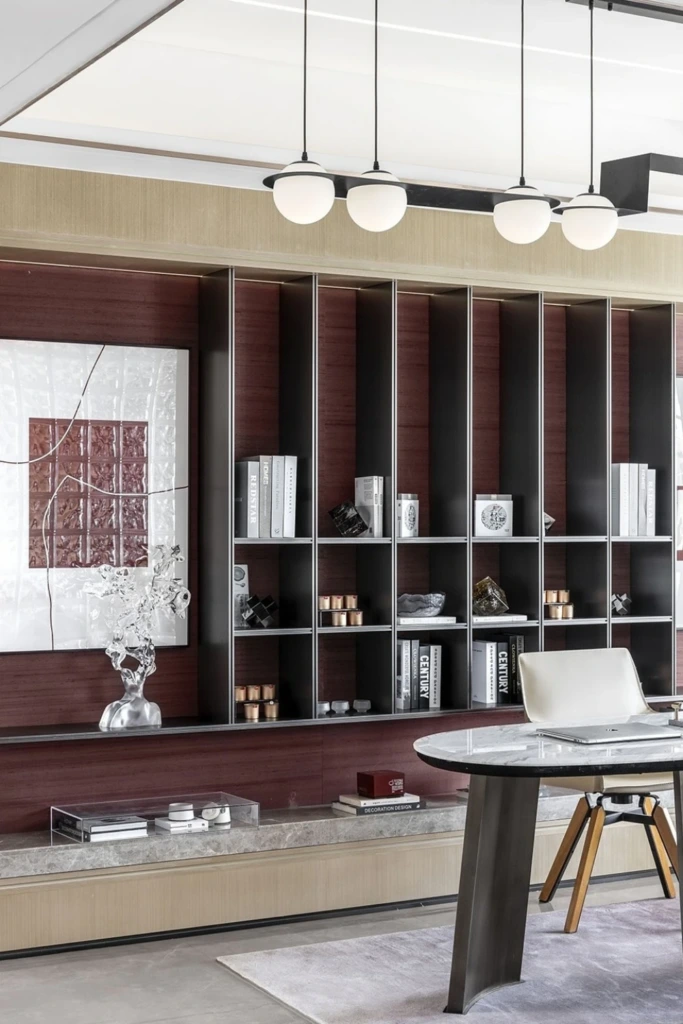
A built-in grid of shelves creates a structured backdrop that looks especially effective behind a desk. The symmetrical arrangement gives books, storage boxes, and decorative accessories a designated place without making the room feel disorganized.
Use a mixture of open compartments and vertical dividers to accommodate different objects. Keep frequently referenced books at a comfortable height and reserve less accessible sections for items you rarely need.
For a cohesive finish, coordinate the shelving with your desk or cabinetry. Integrated lighting or carefully positioned pendant lights can emphasize the design while providing useful illumination.
This option works particularly well in offices where a clean, architectural appearance is just as important as storage capacity.
2. Open Shelf Wall System
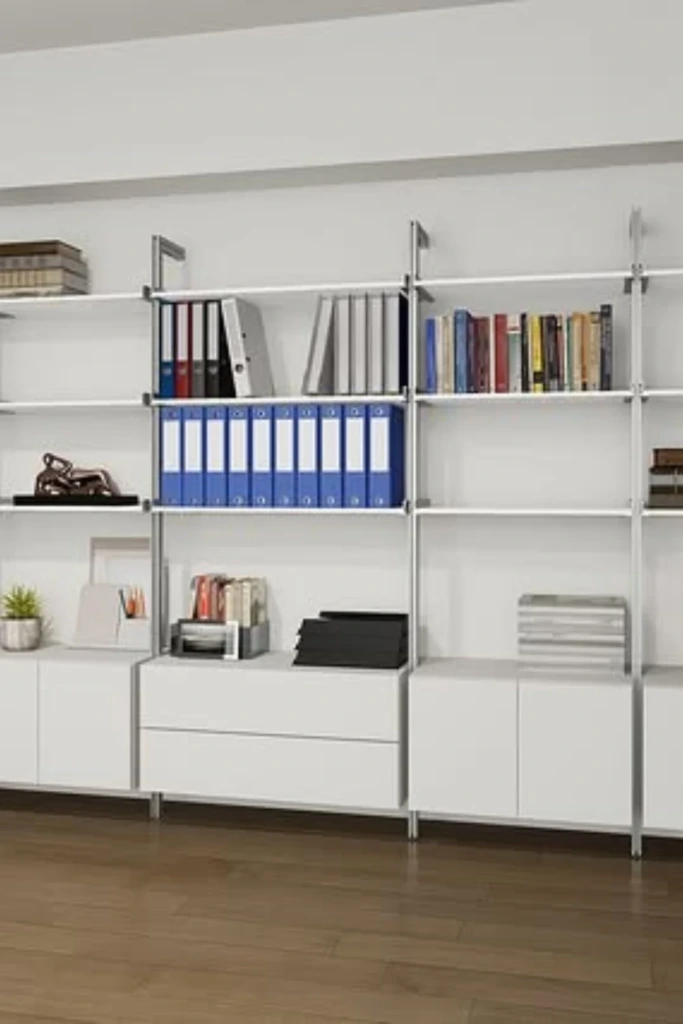
An open shelving system provides convenient access to office supplies while making use of otherwise empty wall space. It is a practical choice for people who regularly use books, folders, reference materials, and storage containers.
Arrange the shelves according to the size and frequency of use of your belongings. Place everyday essentials at eye level or within easy reach, and store heavier or less attractive items in lower cabinets when available.
Adjustable shelves offer additional flexibility because their spacing can be changed as your storage needs evolve. Matching containers can also make an open system appear less cluttered.
To keep the arrangement visually appealing, avoid filling every shelf completely. Leaving some breathing room between objects makes the office feel more spacious.
3. Floating Cabinet Wall with Under Glow
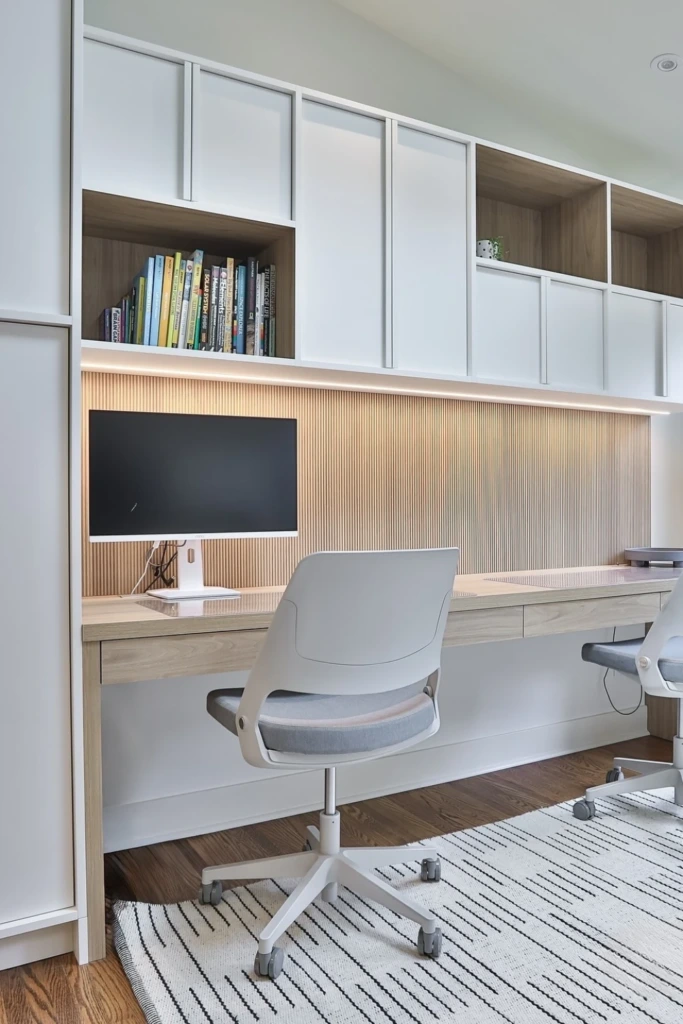
Floating cabinets combine useful storage with a streamlined appearance. Because the units are mounted above the floor, the room can feel more open, making this arrangement especially appealing in contemporary home offices.
Choose closed cabinets for paperwork, electronics, and miscellaneous supplies that you would rather keep out of sight. Leave a few open shelves for books, small plants, or objects that contribute to the room's character.
Under-cabinet lighting adds a subtle glow while helping illuminate the desk below. LED strips are one option, provided they are installed safely and positioned to avoid uncomfortable glare.
For the best result, select cabinets that are proportionate to the wall and desk. Secure them properly to suitable wall supports, particularly when storing heavy items.
4. Minimal Wall Frame with Hidden Storage
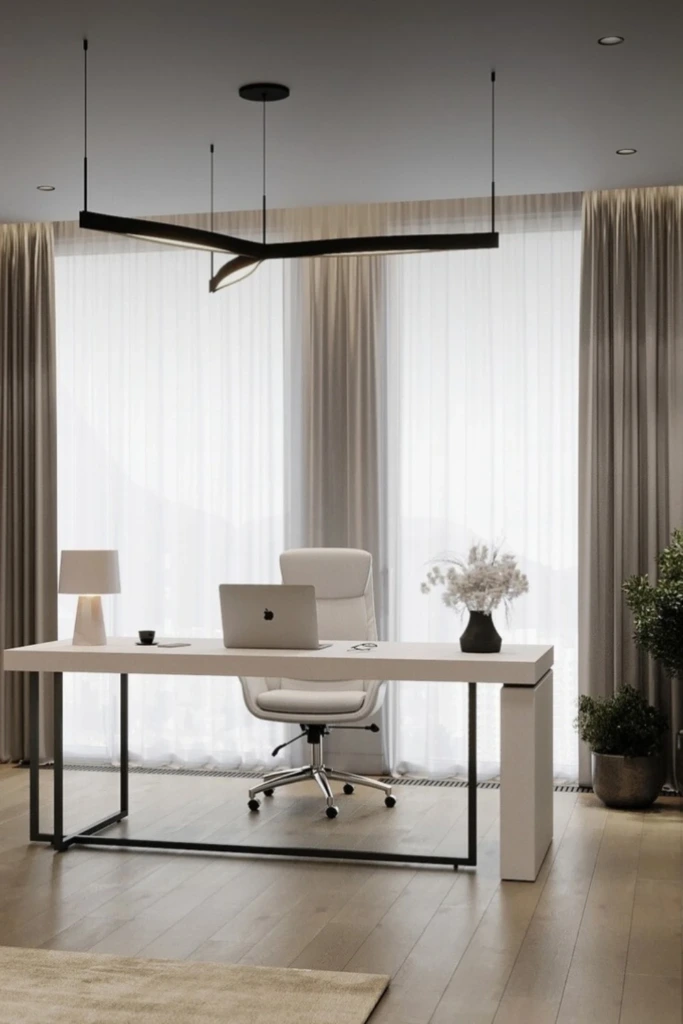
A minimalist wall design can make a workspace feel calm without sacrificing practical storage. This approach uses simple lines, restrained colors, and concealed compartments to reduce visual distractions.
Built-in cabinets or flush-mounted shelving blend into the surrounding wall, allowing the desk and a few carefully selected decorative pieces to stand out. Hidden storage is especially useful for documents, spare cables, stationery, and other everyday necessities.
Choose a finish that complements the wall color for a seamless appearance. If you want to introduce warmth, consider a wooden desk, a small plant, or a decorative lamp.
This style suits people who prefer a tidy, uncluttered environment and want their office to feel organized without displaying every item they own.
5. Wood-Tone Cabinet Wall with Pattern Accent
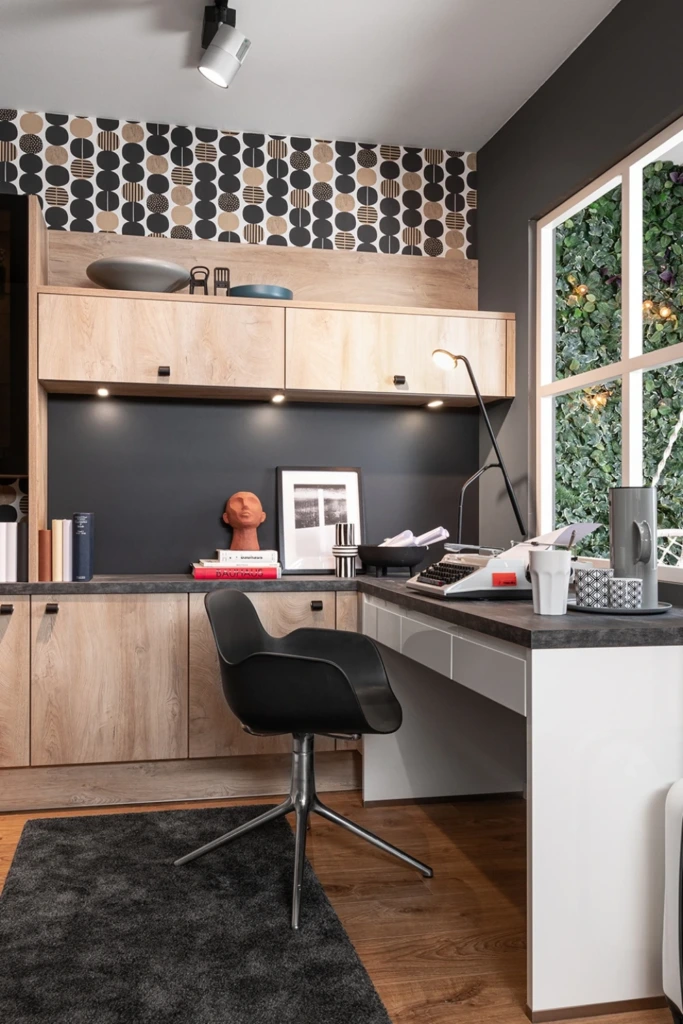
Wood-finished cabinets bring natural warmth to an office and can make the workspace feel more inviting. Pairing them with patterned wallpaper or a textured accent wall adds personality without requiring numerous decorative accessories.
Use tall cabinets to accommodate files, equipment, and supplies that would otherwise occupy the desk. Open sections can display a few books or meaningful objects, while closed compartments keep miscellaneous belongings out of sight.
When choosing a wallpaper pattern, consider the size of the room and the amount of furniture already present. A subtle design may be more comfortable in a compact office, while a bolder pattern can create a striking feature wall.
Combine overhead lighting with task lighting beneath the cabinets to illuminate the workspace effectively. The result is a balance of practical storage, natural texture, and visual interest.
6. Navy Built-In Wall Organizer
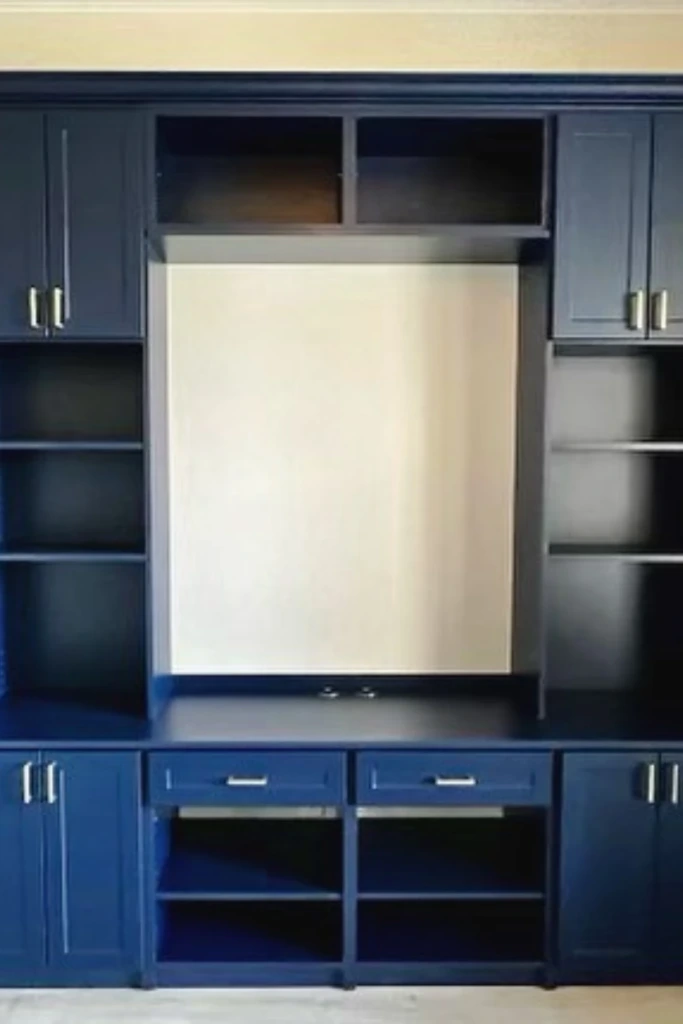
A navy built-in organizer creates a distinctive backdrop while offering generous space for office essentials. The deep color adds contrast and works particularly well with white walls, light wood, brass details, or neutral furniture.
Use the lower cabinets for paperwork, printer supplies, and other items that benefit from concealed storage. Upper shelves can hold books, labeled boxes, and a small selection of decorative accessories.
To prevent the dark finish from making the room feel too heavy, introduce lighter objects and adequate lighting. Wall sconces or warm overhead fixtures can highlight the shelving while creating a comfortable atmosphere.
This design is ideal for anyone who wants a sophisticated office that combines substantial storage with a bold, coordinated appearance.
7. Floor-to-Ceiling Cabinet Wall
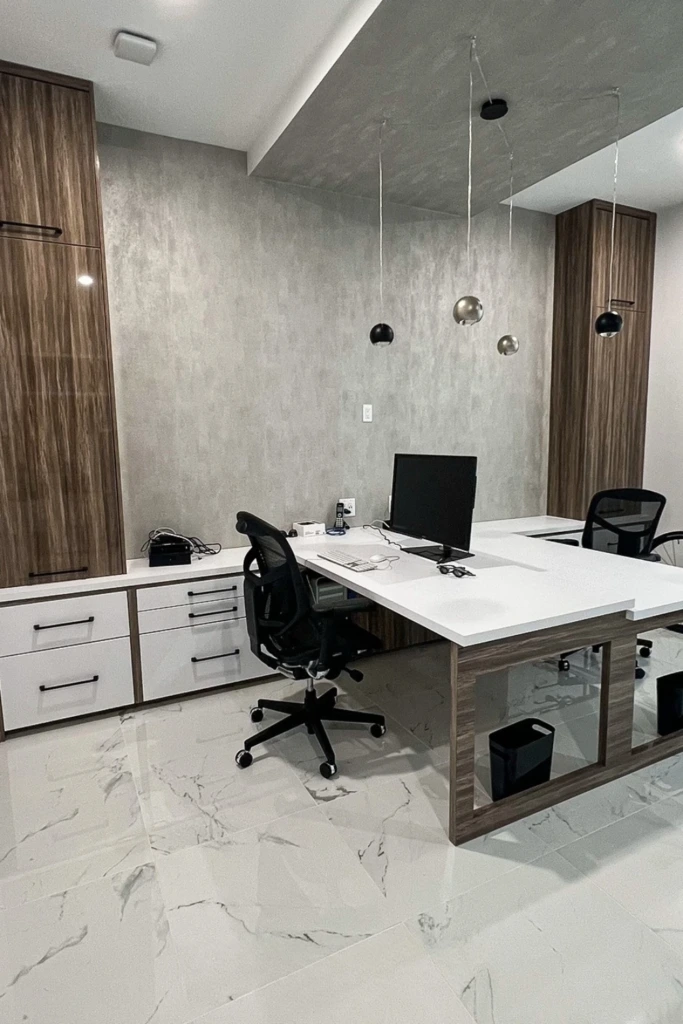
Floor-to-ceiling cabinetry makes excellent use of vertical space, particularly in offices that need to accommodate a large collection of files, books, equipment, or supplies.
Divide the storage into functional sections. Upper cabinets can hold seasonal materials and rarely used belongings, while accessible shelves accommodate reference books and frequently needed items. Deep drawers or dedicated filing compartments are useful for documents that need to remain organized.
If possible, incorporate a desk area into the cabinetry to create a unified workspace. This arrangement can make separate storage pieces feel like one carefully planned installation.
Lighting helps soften the substantial appearance of tall cabinets. Pendant fixtures or wall-mounted lights can add visual balance, while lighter finishes keep the space from feeling enclosed.
Before installing a full-height system, measure the wall carefully and consider door clearances, ceiling height, and the weight of stored items.
8. Classic White Shelf Wall
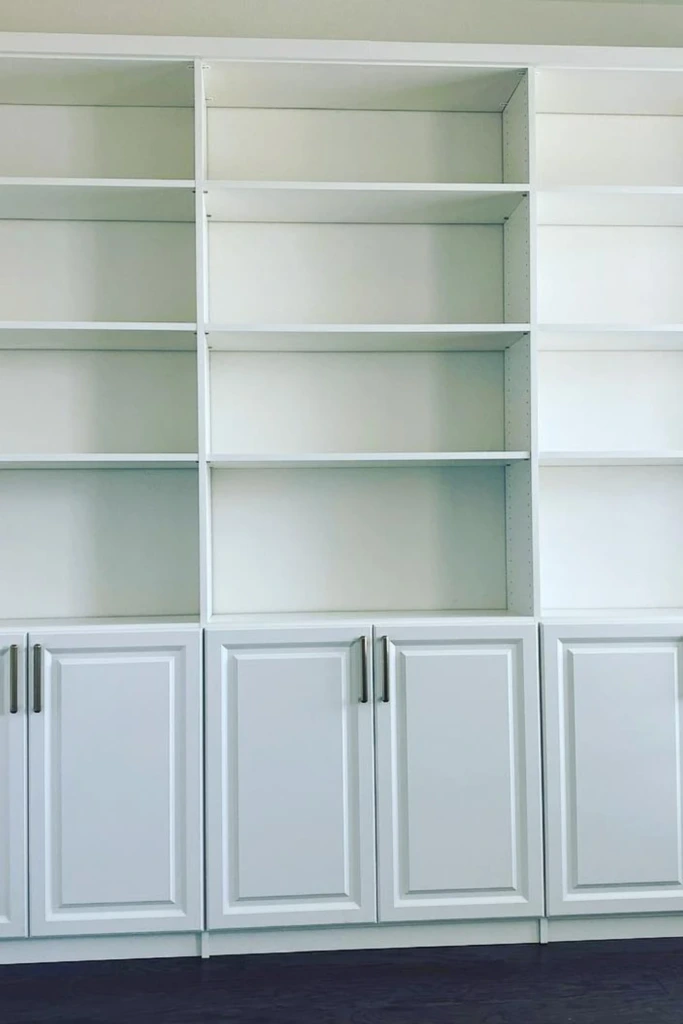
White shelving creates a bright, versatile background that works in both home offices and professional environments. Its simple appearance pairs easily with colorful accessories, wooden furniture, black hardware, and a wide range of interior styles.
Use upper shelves for books, baskets, and decorative objects, reserving lower cabinets or drawers for files and bulkier supplies. Keeping similar items together makes the storage easier to navigate.
White surfaces can make a compact room feel lighter, although a completely white arrangement may benefit from a little contrast. Wooden accessories, greenery, or a few framed prints can introduce warmth without overwhelming the design.
Wall sconces or soft overhead lighting complete the setup. If you choose open shelving, leave enough space between objects to keep the wall looking orderly rather than crowded.
9. Labeled Basket Wall Organizer
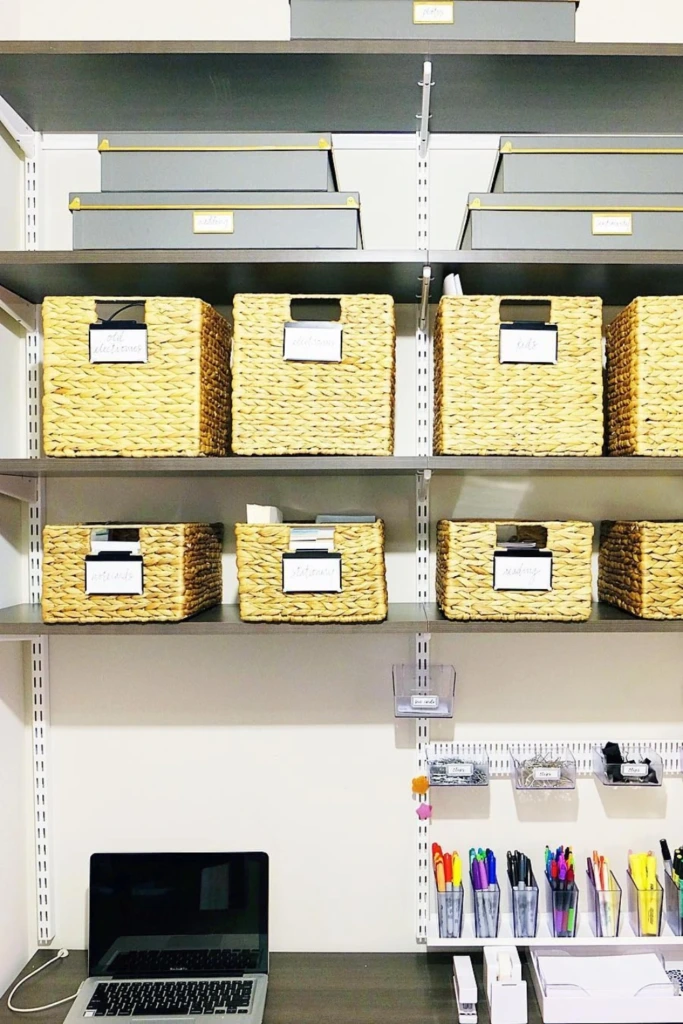
Labeled baskets provide a straightforward way to sort office supplies without creating a complicated storage system. Each container can serve a specific purpose, such as holding printer paper, charging cables, stationery, notebooks, or miscellaneous accessories.
Place the baskets on sturdy wall shelves or inside an appropriate wall-mounted storage unit. Choose containers that fit comfortably within the available space and can be removed easily when needed.
Labels are particularly helpful when several people share an office or when multiple baskets look alike. Use clear, readable wording that identifies the contents at a glance.
For smaller items, transparent wall bins can make supplies easier to identify. Larger baskets are better suited to bulkier materials that do not need to remain visible.
Keep frequently used containers within easy reach and store heavier items on lower shelves. Consistent lighting and coordinated basket finishes can make the entire system feel intentional as well as practical.
10. Full Wall Library Organizer
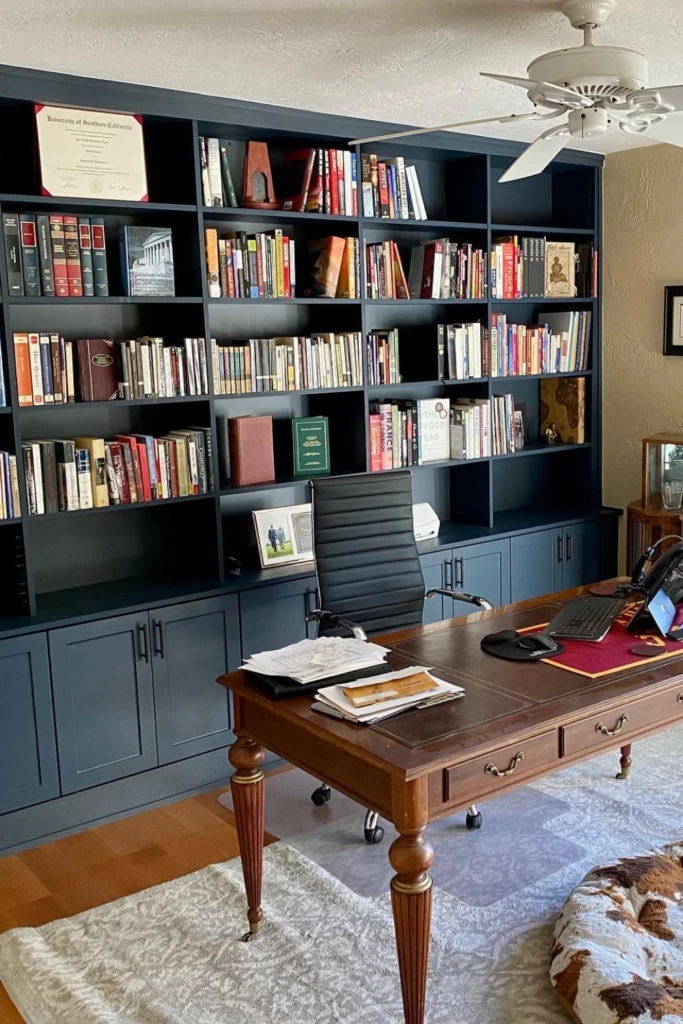
A wall-spanning bookcase turns an office wall into a dedicated library while providing room for reference materials, documents, and display pieces.
Arrange books by subject, project, or frequency of use so that important resources are easy to locate. Storage boxes and labeled binders can hold paperwork that does not need to be displayed openly.
Lower cabinets are useful for supplies you want to conceal, while upper shelves can accommodate books and a limited number of decorative objects. Avoid placing heavy items on shelves that are not designed to support their weight.
Lighting can make the collection easier to browse and give the office a welcoming atmosphere. Wall sconces or well-positioned ceiling lights are practical options.
For a balanced appearance, combine full shelves with a few open sections. This creates visual variety without sacrificing the main purpose of the installation: accessible, organized storage.
11. Bright Display Shelf Wall
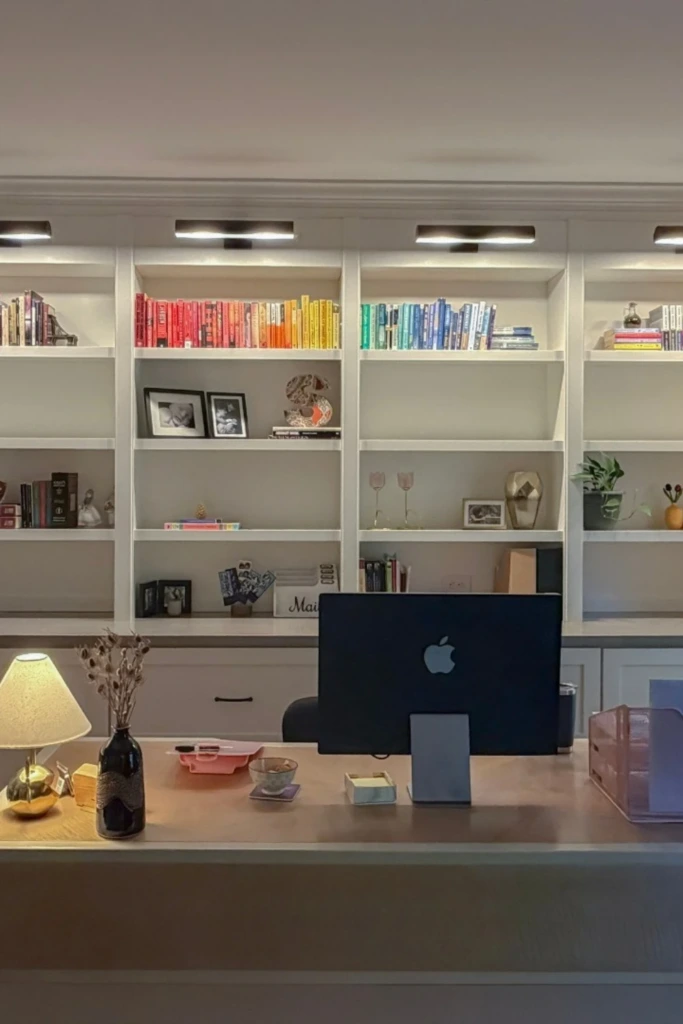
A bright display shelf wall combines functional storage with carefully planned lighting. White or light-colored shelves reflect available light and create a fresh backdrop for books, small plants, framed artwork, and office accessories.
Keep the most frequently used objects on convenient shelves, and use lower cabinets or closed containers for items that would otherwise make the arrangement look busy.
Lighting can highlight selected sections and improve visibility around the desk. Choose fixtures that provide sufficient illumination without reflecting directly into your eyes or computer screen.
The key to this design is selective styling. A few coordinated objects can make the shelves attractive, while leaving some empty space prevents the display from becoming overwhelming.
This option works well for home offices that need to feel both professional and personal, particularly when the shelving is coordinated with the desk and surrounding furniture.
12. Sleek Matte Wall Organizer
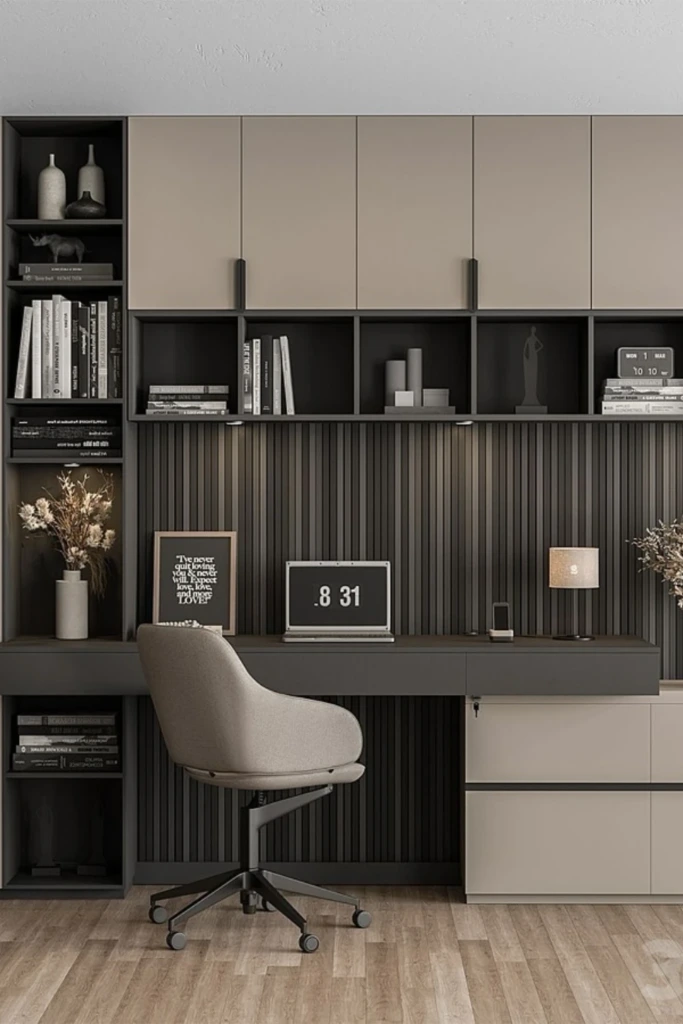
Matte-finish cabinets and shelves create a contemporary office wall with a restrained, sophisticated appearance. Finishes in charcoal, black, gray, or muted earth tones can complement modern furniture and help the workspace feel cohesive.
Combine closed cabinets with a few open compartments to balance concealed storage and everyday accessibility. Keep office supplies, documents, and spare equipment behind cabinet doors, leaving frequently used items in convenient locations.
A clean-lined design is especially useful when your desk already contains monitors, stationery, or other equipment. By moving additional belongings onto the wall, you can preserve valuable working space.
Warm under-cabinet lighting can soften darker finishes and improve visibility. If the room is small, consider pairing a darker organizer with light walls or a brighter desk surface.
Choose durable materials and reliable mounting hardware, and plan the cabinet layout around the items you actually need to store.
13. Gray Built-In Wall with Side Bench
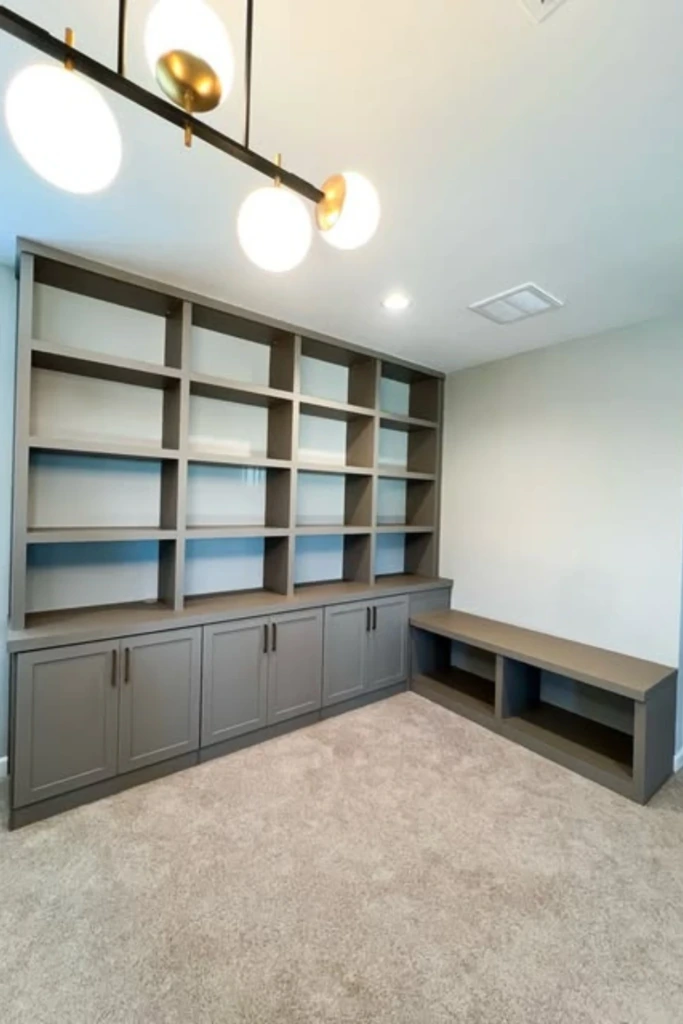
A gray built-in wall with a side bench combines shelving, concealed storage, and an additional seating area in one coordinated arrangement. It can be useful in larger home offices, shared workspaces, or rooms where visitors occasionally need a place to sit.
Use lower cabinets to store documents and supplies, keeping the upper shelves available for books, small storage boxes, and decorative pieces. A bench can provide a convenient spot for reading, reviewing paperwork, or taking a short break away from the desk.
Choose a gray finish that complements the room's existing colors. Lighter gray can keep the design feeling airy, while deeper shades provide more contrast.
Soft overhead lighting or wall sconces can make the built-in arrangement feel comfortable and inviting. If the bench will be used regularly, include suitable cushioning and ensure the surrounding area remains easy to move through.
The most successful designs give each part of the wall a clear purpose without allowing storage or seating to interfere with the main working area.
14. Green Shiplap Wall Organizer
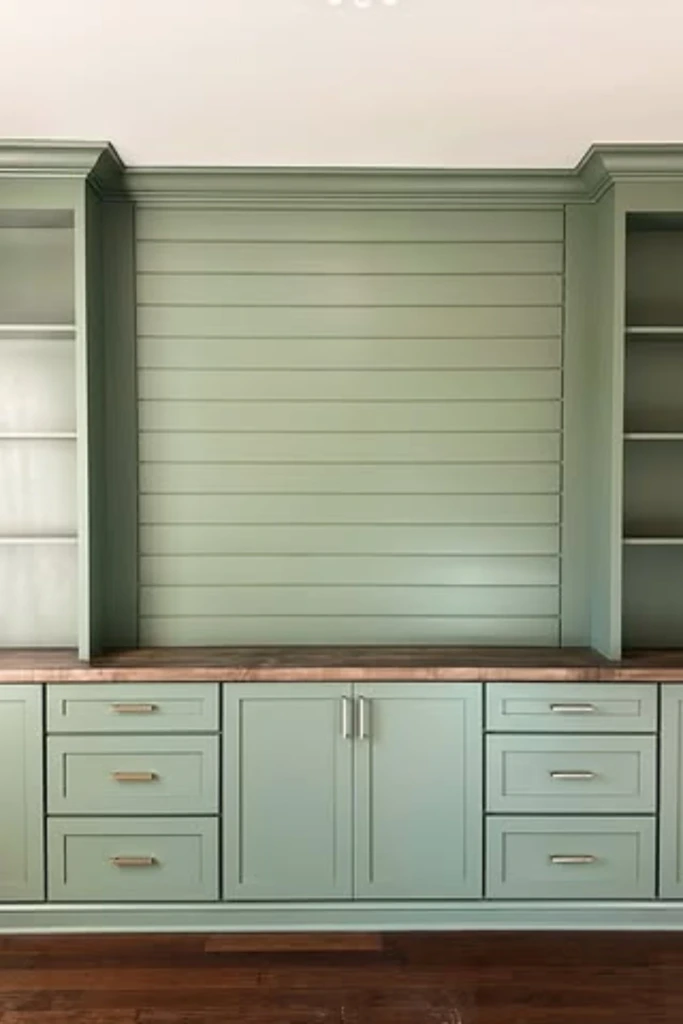
A green shiplap wall introduces texture and color while maintaining a relaxed, organized appearance. The horizontal paneling creates visual interest, and the green finish can work beautifully with natural wood, white shelving, and simple black or brass accents.
Built-in shelves positioned along the sides of the wall can hold books, containers, and decorative accessories. Keep the central section relatively open for artwork, a monitor, or a framed noticeboard, depending on the layout of your office.
Choose a green shade that suits the room's lighting. Softer sage tones create a subtle background, while deeper greens establish a more dramatic focal point.
Wall sconces or warm overhead fixtures can emphasize the paneling and make the workspace feel more welcoming. Avoid placing too many decorative objects on the shelves, as the textured wall already provides visual detail.
This arrangement is a good choice if you want an office that feels distinctive and comfortable while still supporting everyday organization.
15. Open Industrial Wall Shelving
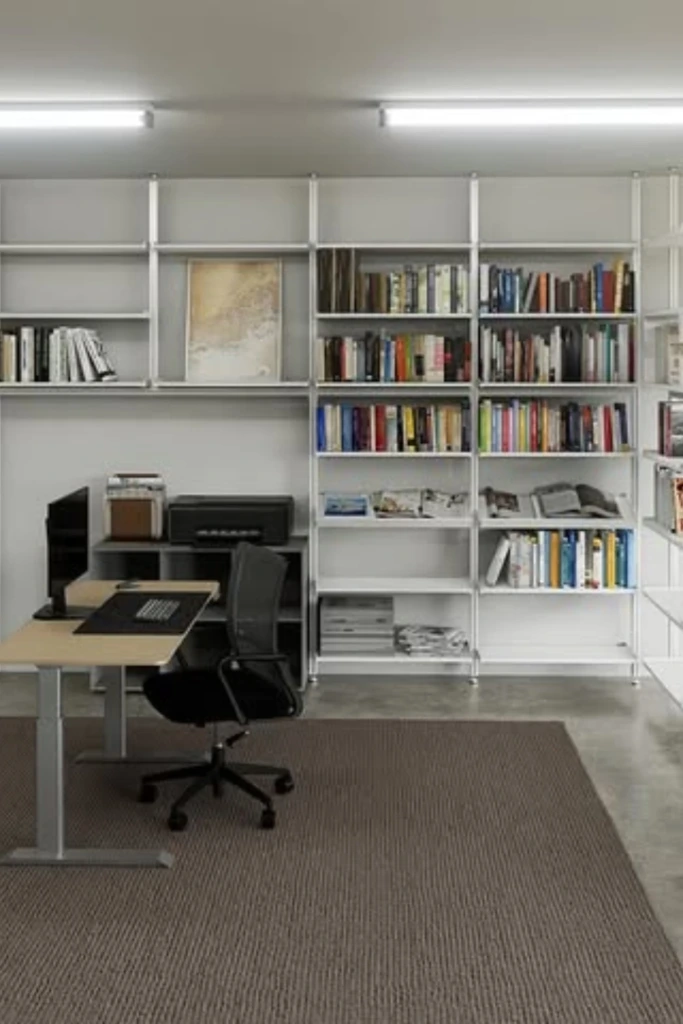
Industrial-style shelving combines metal framing with open shelves to create a durable, practical storage system. Its straightforward structure makes it useful for offices that need room for files, books, equipment, and shared supplies.
Install the shelving where it can accommodate your storage needs without obstructing the desk or creating an awkward walkway. Use matching boxes or labeled containers to group smaller items, and keep frequently accessed materials on the middle shelves.
Metal frames paired with wood shelves can soften the industrial appearance and coordinate with a range of furniture styles. Black metal offers a bold contrast, while lighter wood introduces warmth.
Good lighting is important when the shelves extend across a large wall. Ceiling fixtures or dedicated task lighting can help make the contents visible without creating harsh shadows.
Because open industrial shelving exposes everything on display, regular sorting is essential. Keep the arrangement functional, avoid overloading the shelves, and secure the structure according to the manufacturer's instructions.
16. Compact Ladder Shelf Organizer
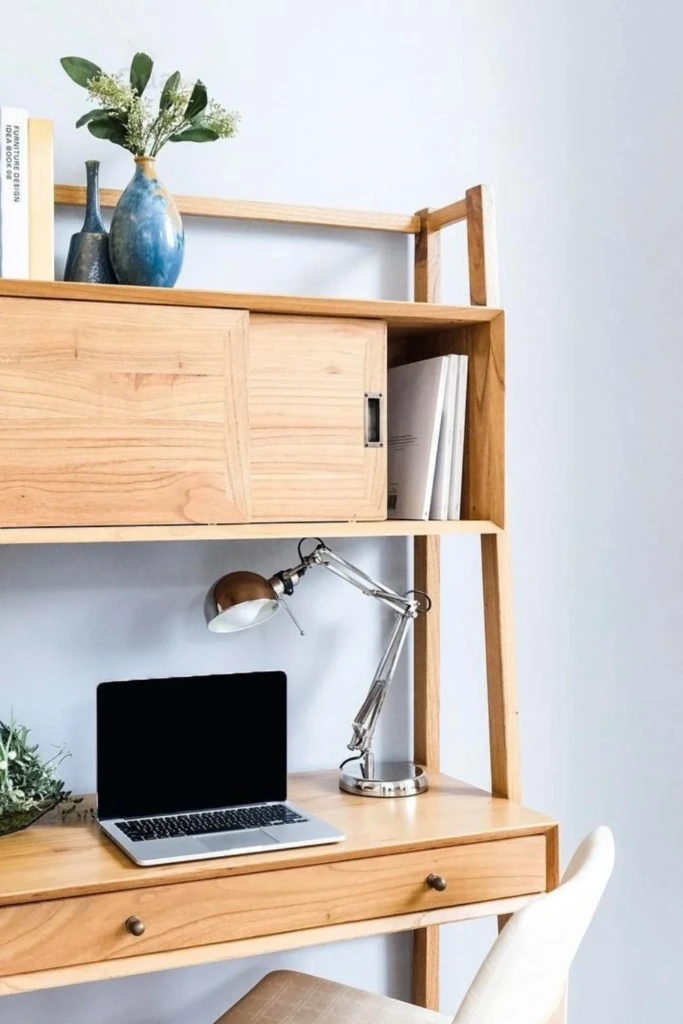
A ladder-style shelf is an excellent option for a small office, an unused corner, or a workspace that cannot accommodate bulky built-in cabinets. Its graduated shelves provide vertical storage while maintaining a relatively light visual footprint.
Use the lower levels for larger baskets or heavier supplies, the middle shelves for books and everyday accessories, and the upper levels for lightweight decorative objects. If the unit includes a cabinet or drawer, reserve it for smaller items that you prefer to keep hidden.
Position the shelf where it will not interfere with chair movement, doors, or walkways. In a particularly tight space, a narrow design can make the most of an otherwise neglected corner.
A compact desk lamp can provide additional task lighting, while a small plant or framed print adds personality without using much room.
Choose a stable ladder shelf with a suitable load capacity, and anchor it to the wall when recommended by the manufacturer, especially if the office is used by children or pets.
17. Wall Command Center
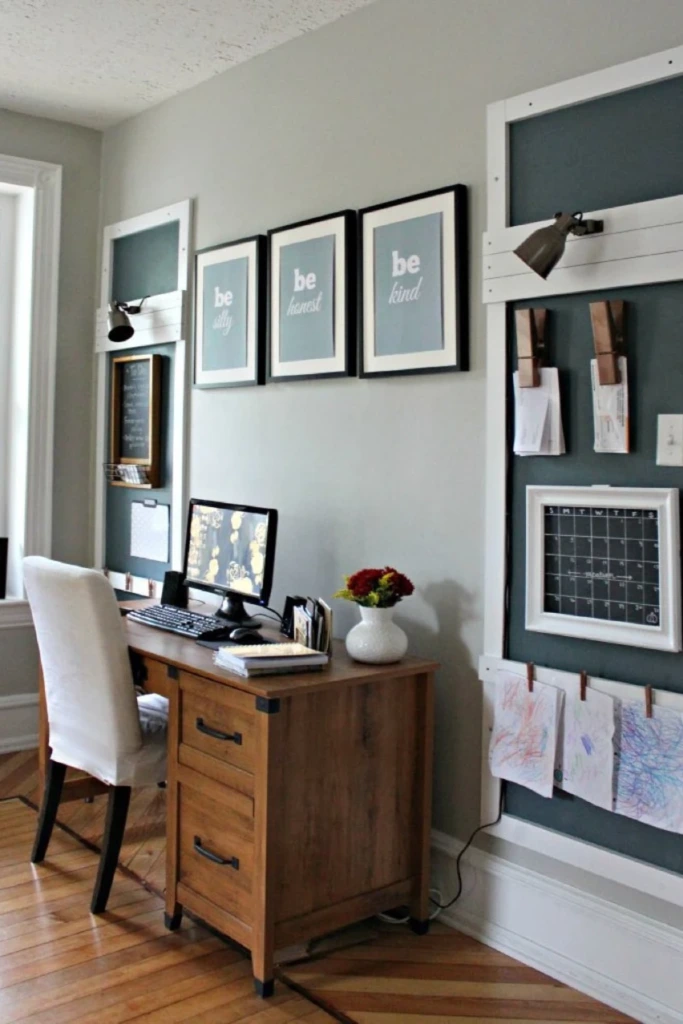
A wall command center brings schedules, reminders, paperwork, and important notes together in one convenient location. It is especially useful for busy home offices, shared workspaces, and people who manage several projects at once.
Start with a calendar or whiteboard, then add wall-mounted file holders, clipboards, a pinboard, or small supply containers according to your needs. Assign each section a clear purpose, such as incoming paperwork, upcoming deadlines, pending tasks, or important reference information.
Position the command center where you can see it easily while working. Frequently updated information should be placed at a comfortable height, while less important documents can be stored in lower compartments.
Use simple labels and remove outdated notes regularly so that the board remains useful rather than becoming another source of clutter. A consistent color system can also help distinguish different projects or priorities.
Focused wall lighting improves visibility, and a compact design leaves more room on the desk for actual work.
18. Rustic Gallery Wall Organizer
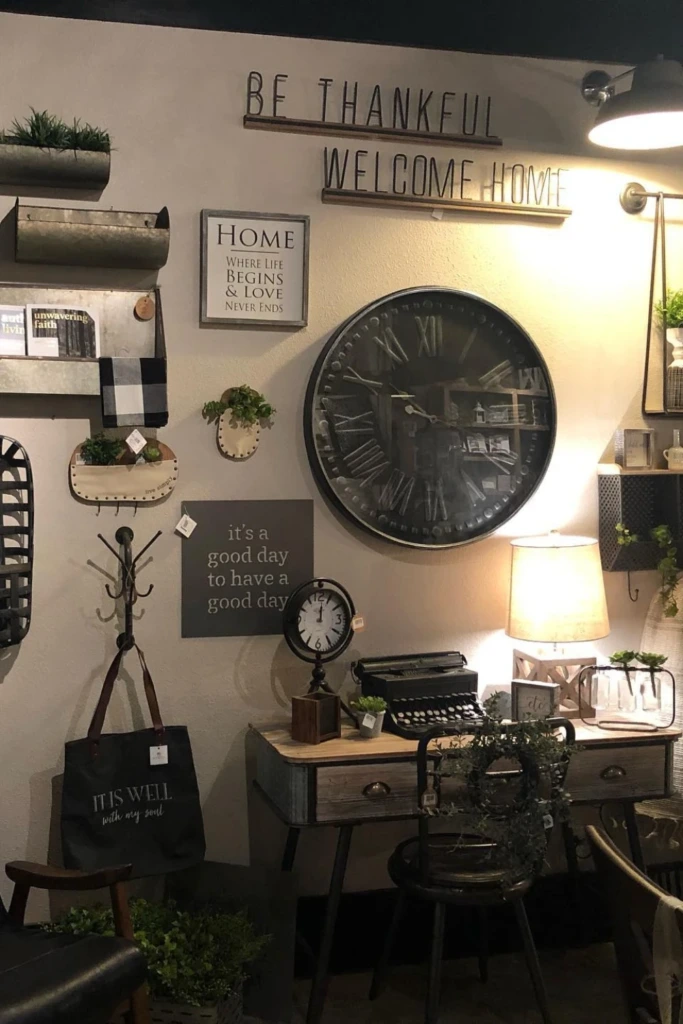
A rustic gallery wall combines decorative elements with practical storage to create a warm, personalized office. Natural wood shelves, woven baskets, simple hooks, and framed artwork can work together to give the space character without sacrificing usefulness.
Begin by deciding which items need to be stored on the wall. Add shelves for books and containers, hooks for lightweight accessories, and baskets for supplies that are easier to manage when grouped together.
Arrange framed prints or photographs around the storage elements, keeping the composition balanced rather than filling every empty section. Mixing different frame sizes can add interest, while a consistent color palette helps the wall feel coordinated.
Warm lamps or wall sconces can emphasize the natural textures and create a comfortable atmosphere. If you use the office for detailed tasks, make sure the decorative lighting is supplemented by adequate task illumination.
The result is a workspace that feels inviting and individual while still providing convenient places for everyday essentials.
What are some creative desk organization ideas?
Creative desk organization begins with reducing the number of items that need to remain on the work surface. Move books, paperwork, and supplies into suitable wall storage, drawers, or cabinets so that your desk has room for the tasks you perform most often.
A pegboard is useful for hanging lightweight tools, headphones, and accessories. Wall-mounted file holders can separate current projects, while floating shelves accommodate reference books and storage containers.
Inside drawers, dividers help keep pens, clips, charging accessories, and other small items separated. Labeled bins make it easier to locate supplies, and a cable management system prevents wires from spreading across the workspace.
You can also create a dedicated charging station or use a small tray to collect the items you reach for throughout the day.
The most effective setup depends on your routine. Keep everyday essentials close, store rarely used items elsewhere, and spend a few minutes returning belongings to their assigned places at the end of each workday.
How do I make my desk more fun?
A desk can feel more enjoyable when it reflects your personality while remaining comfortable and functional. Start with a few meaningful additions rather than covering the entire workspace with decorations.
A small plant, framed photograph, favorite artwork, or colorful desk accessory can make the area feel more personal. Choose a desk mat or pen holder that complements your existing color scheme, or introduce a brighter accent if the room feels too neutral.
Lighting can also change the atmosphere. A well-designed desk lamp provides useful illumination while adding character, and warm ambient lighting can make the office feel more inviting outside focused work periods.
If you enjoy visual organization, try a decorative calendar, an attractive notebook stand, or coordinated storage containers. Keep the objects you use regularly within reach and place purely decorative items where they will not interfere with your work.
The goal is to create a workspace that feels pleasant and motivating without introducing unnecessary clutter. A few thoughtful details can make a noticeable difference while leaving plenty of room to concentrate.