15 Spice Drawer Organization Ideas for 2026
A well-organized spice drawer can make everyday cooking easier, whether you prepare quick breakfasts or elaborate family dinners. When jars are scattered, labels are hidden, and duplicate seasonings take up valuable space, finding the right ingredient becomes unnecessarily frustrating. A thoughtful storage system helps you see what you own, reach frequently used spices quickly, and keep your kitchen looking tidy.
The best setup depends on your drawer dimensions, the number of seasonings you use, and whether you prefer matching containers or original packaging. From adjustable wooden inserts to compact magnetic tins, there are plenty of ways to create a practical arrangement without sacrificing style.
These 15 spice drawer organization ideas offer solutions for different kitchen layouts, storage needs, and budgets.
How to Organize a Lot of Spices?
Managing a large spice collection starts with knowing exactly what you have. Empty the drawer, inspect each container, remove stale or unwanted seasonings, and combine duplicates only when you can safely verify that they contain the same spice and are still fresh.
Next, choose an arrangement that suits your cooking habits. Keep everyday essentials such as salt, pepper, garlic powder, and paprika in the easiest-to-reach section. Reserve less frequently used seasonings, specialty blends, and baking spices for other areas.
Matching containers can make a crowded drawer easier to navigate, but they are not essential. You can also organize original packaging with dividers, bins, or a nonslip liner. Use labels on the lids when jars lie flat and labels on the front when containers stand upright.
Before purchasing organizers, measure the drawer's interior width, length, and usable height. Check that the drawer closes properly with the jars inside. Finally, store spices away from direct sunlight, moisture, and excessive heat to help preserve their aroma and flavor.
1. Tiered Drawer Spice Layout
A tiered insert is an excellent choice when you want to identify every spice without lifting or moving other containers. Its stepped design places jars at different heights, making labels easier to read at a glance.
Choose an insert that fits the drawer securely and provides enough depth for your preferred jars. Wooden tiers offer a warm, natural appearance, while plastic versions are often lightweight and easy to clean.
Arrange your most frequently used seasonings along the front edge. Place occasional ingredients toward the back, and keep the labels facing upward or toward you, depending on the insert's design. This approach works particularly well in wide drawers with enough depth for several rows.
2. Wire Rack Drawer Organizer
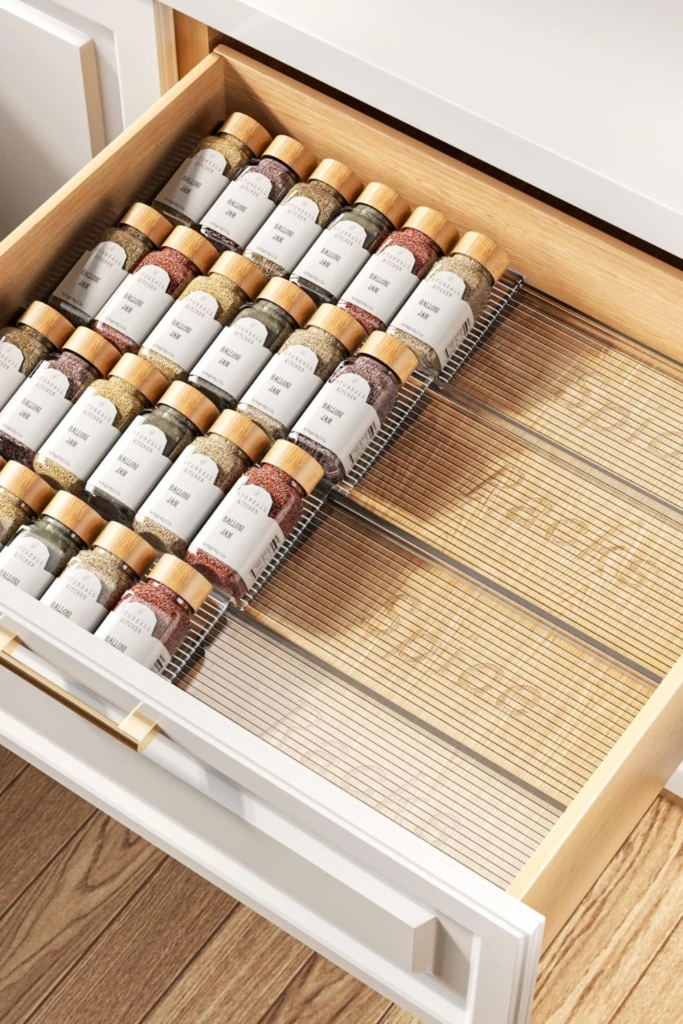
Wire rack organizers provide a lightweight way to keep spice jars separated and visible. Depending on the model, the racks may hold containers at an angle, allowing you to read their labels without removing them from the drawer.
This arrangement is useful for cooks who prefer a structured layout but do not want a bulky wooden insert. The open construction also makes it easier to notice missing jars and identify empty spaces.
Measure your containers before selecting a rack because wire spacing and jar dimensions vary. Add a nonslip liner if the rack moves when the drawer opens or closes. For a consistent appearance, arrange similar-sized jars together and position their labels in the same direction.
3. Mixed Jar Spice Drawer
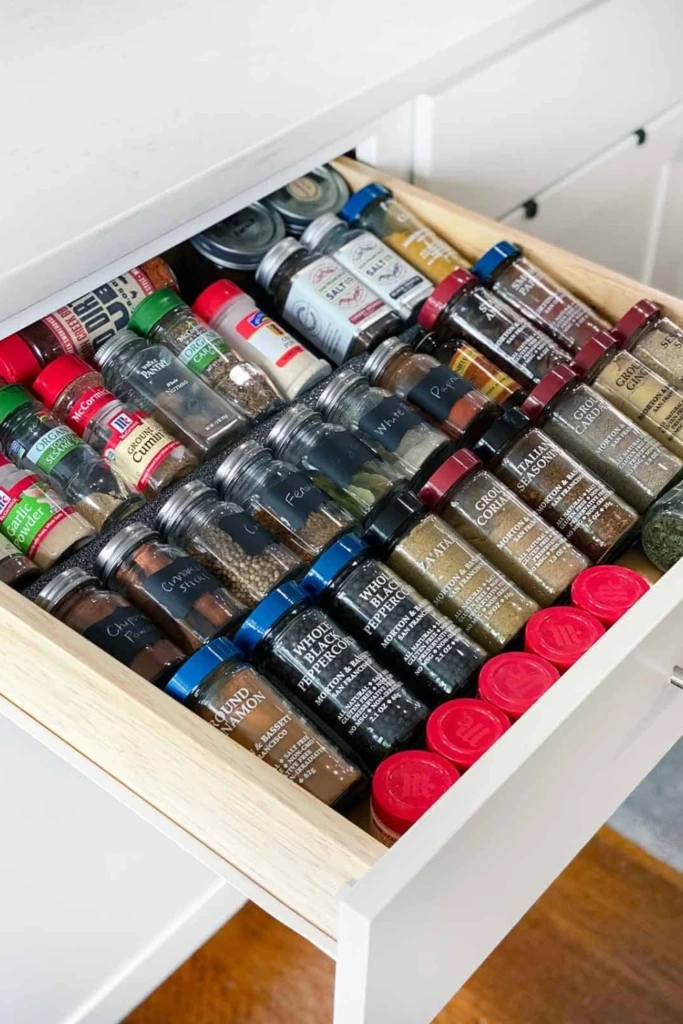
You do not need to replace every container to create an organized spice drawer. A mixed-jar arrangement accommodates different bottle shapes and sizes while giving each seasoning a designated place.
Use small dividers or adjustable inserts to prevent shorter jars from rolling beneath taller bottles. Place bulky containers in a section with sufficient clearance and keep smaller, frequently used spices close to the front.
Grouping related seasonings can make the collection easier to navigate. For example, keep herbs together, arrange ground spices in another section, and place specialty blends in a separate row. Clear labels are especially important when containers have different shapes or when their original packaging is no longer visible.
4. Narrow Drawer Spice System
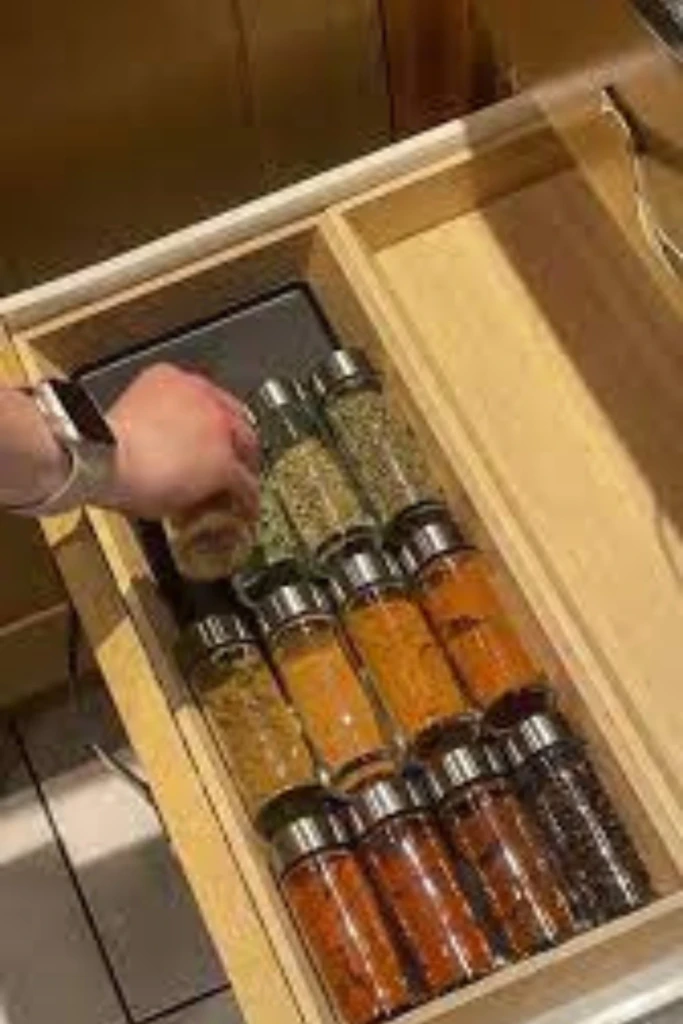
A slim drawer can still hold a useful spice collection when the storage layout is planned carefully. Narrow glass jars, compact containers, or a fitted organizer can help you use the available width without wasting space.
Start by measuring the usable interior rather than relying on the drawer's exterior dimensions. Check how many jars fit across each row and leave enough room to remove them comfortably.
A shallow insert or nonslip mat can help prevent containers from sliding as the drawer moves. Store the most important seasonings near the front and relocate oversized bottles to a cupboard or pantry shelf. This solution is ideal for compact kitchens where every inch of storage matters.
5. Deep Drawer Spice Insert
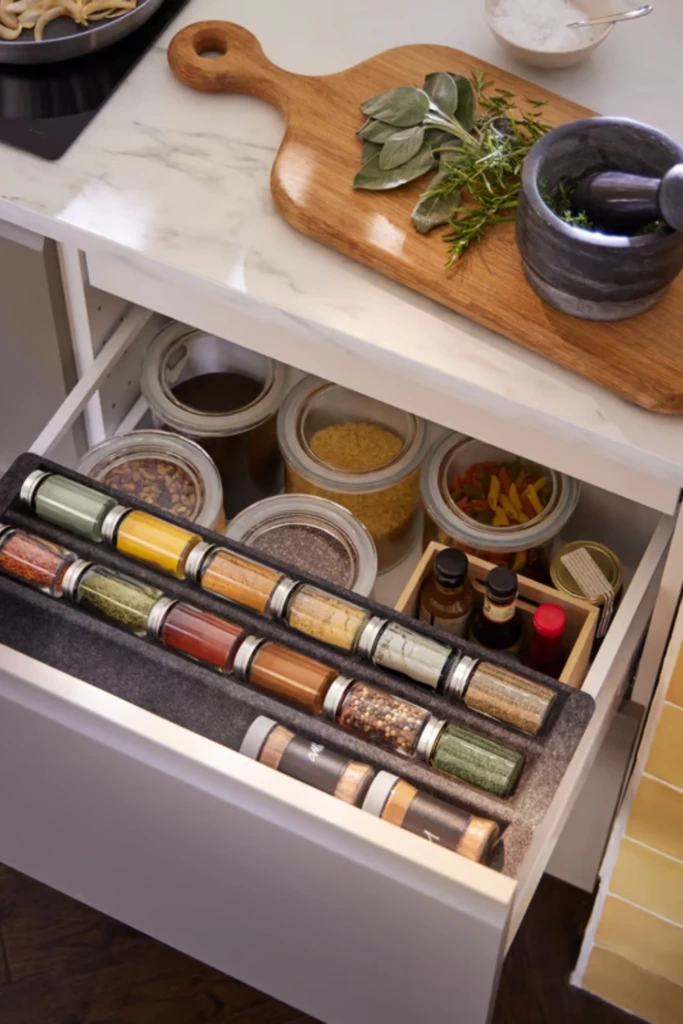
Deep drawers provide plenty of room for larger spice collections, but their extra height can encourage messy stacking. A fitted tiered insert makes better use of the space by arranging containers in visible rows instead of hiding them behind one another.
Choose a design that matches the drawer's depth and accommodates the height of your jars. If the drawer is unusually deep, check whether the organizer leaves enough room to open and close it without catching on the cabinet frame.
Keep labels readable and use separate sections for different container sizes. Rather than stacking loose spice bottles, give each jar a stable position. This makes it easier to retrieve a seasoning quickly and return it to the correct place after cooking.
6. Full-Length Spice Drawer
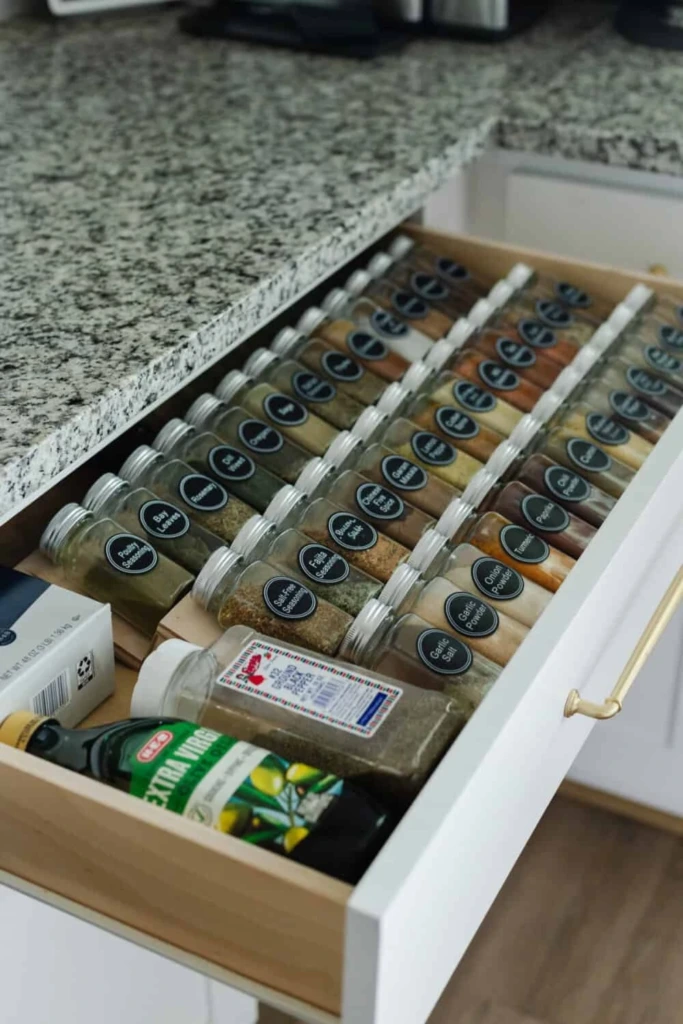
A full-length drawer can serve as a dedicated home for your entire everyday spice collection. Long, orderly rows make it possible to see numerous seasonings at once, reducing the need to search through cupboards.
Arrange jars according to how you use them. One end might hold basic seasonings, the middle could contain herbs and ground spices, and the remaining section could accommodate specialty blends or less common ingredients.
Uniform containers can improve the appearance and make the available space easier to plan. However, check their capacity before transferring spices, particularly if you purchase ingredients in bulk. Use clear, easy-to-read labels and leave enough space to lift each jar out without disturbing neighboring containers.
7. Pull-Out Spice Rack Shelves
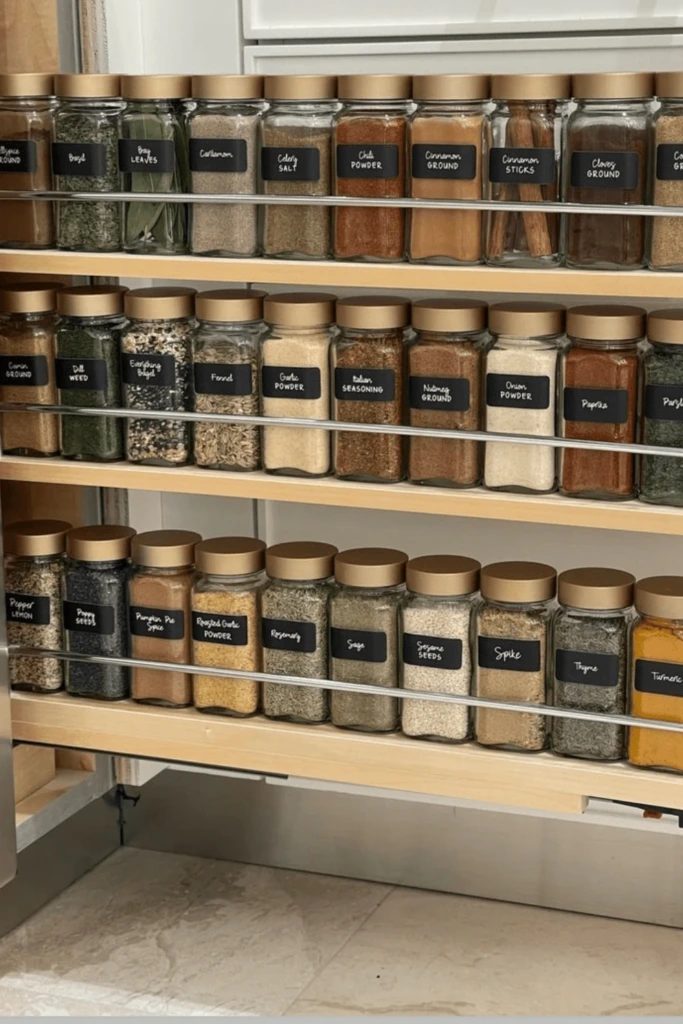
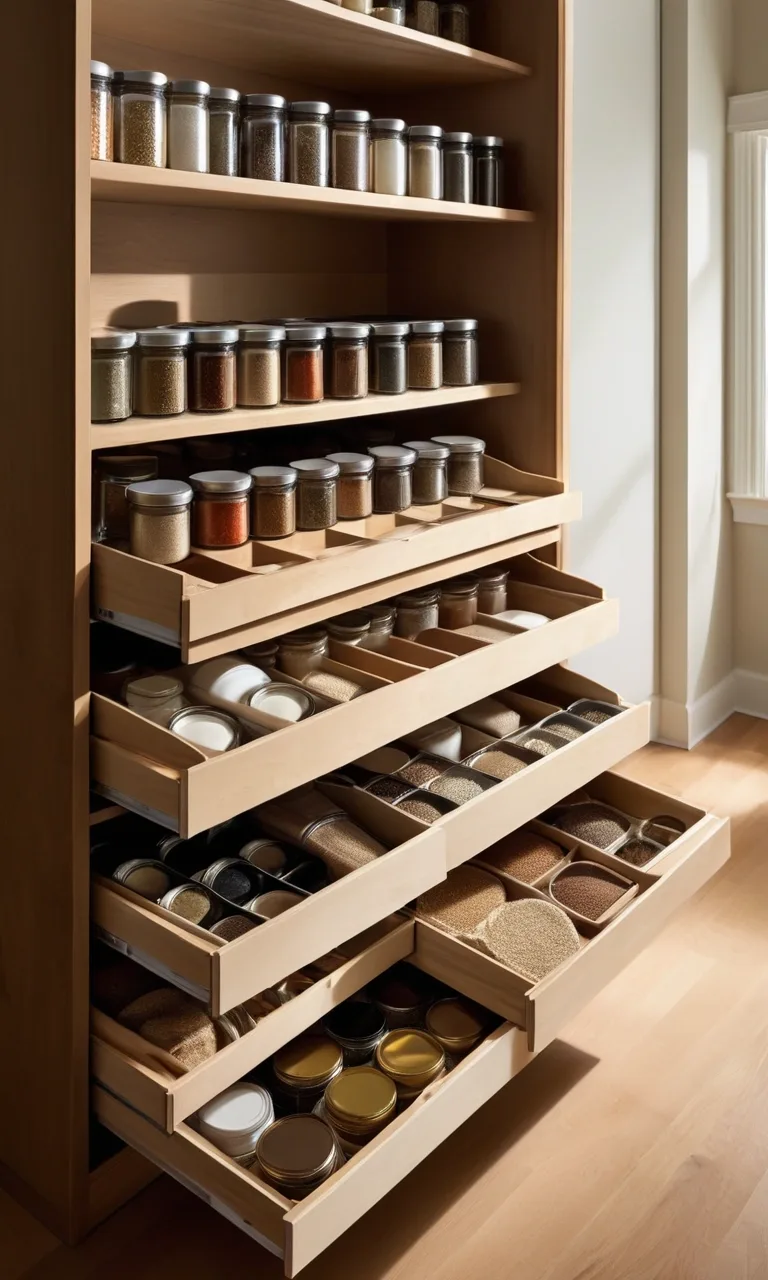
Pull-out spice racks are especially useful when a kitchen has narrow cabinet spaces or limited accessible storage. These units slide outward, bringing the containers into view instead of requiring you to reach into a deep cupboard.
Although many pull-out systems are installed inside cabinets rather than drawers, the same idea can help you make better use of otherwise awkward storage areas.
Select a rack with suitable dimensions and weight capacity. Arrange smaller jars on the most accessible level and reserve larger bottles for shelves with enough clearance. Front-facing labels make identification simple, while matching containers help maintain an orderly appearance.
For a frequently used setup, check that the rack slides smoothly and that jars remain secure when the unit moves.
8. Expandable Bamboo Drawer Tiers
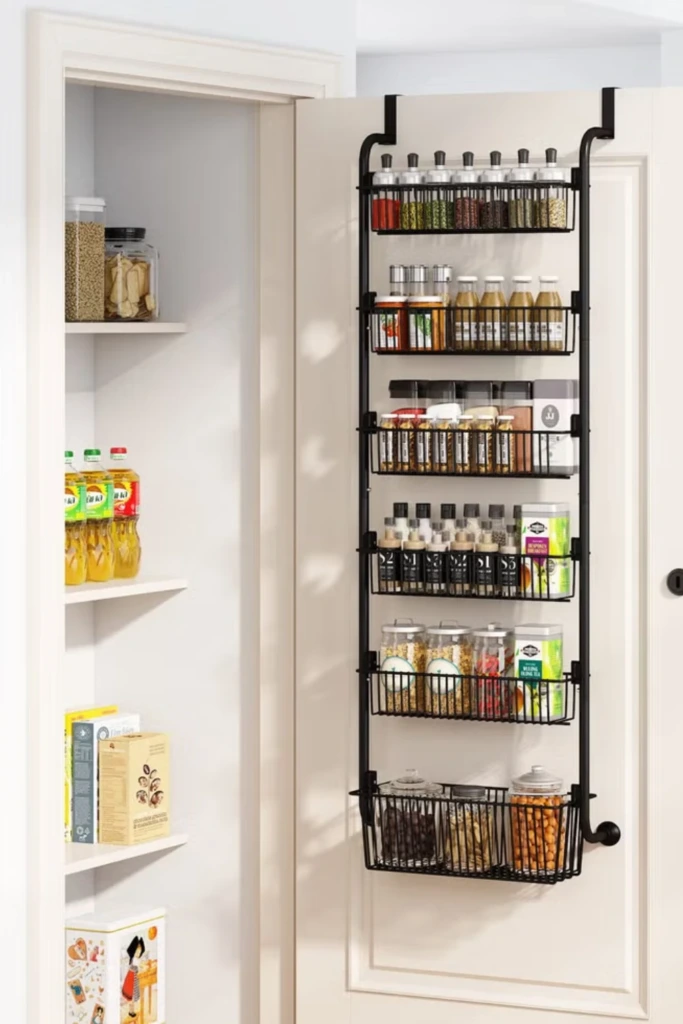
An expandable bamboo organizer offers flexibility when a standard insert does not fit your drawer perfectly. Its adjustable width helps accommodate different cabinet dimensions, while the stepped levels create a clear view of the jars.
Bamboo is a popular choice for kitchens because its natural finish complements both modern and traditional interiors. It can also provide a more decorative alternative to basic plastic organizers.
Extend the insert only as far as necessary to achieve a stable fit, following the manufacturer's instructions. Arrange jars by frequency of use and make sure their labels remain visible. This type of organizer is particularly suitable for medium-width drawers with enough vertical clearance for tiered storage.
Keep the bamboo dry and clean according to its care instructions, especially if spices spill inside the drawer.
9. Tiered Mason Jar Spice Drawer
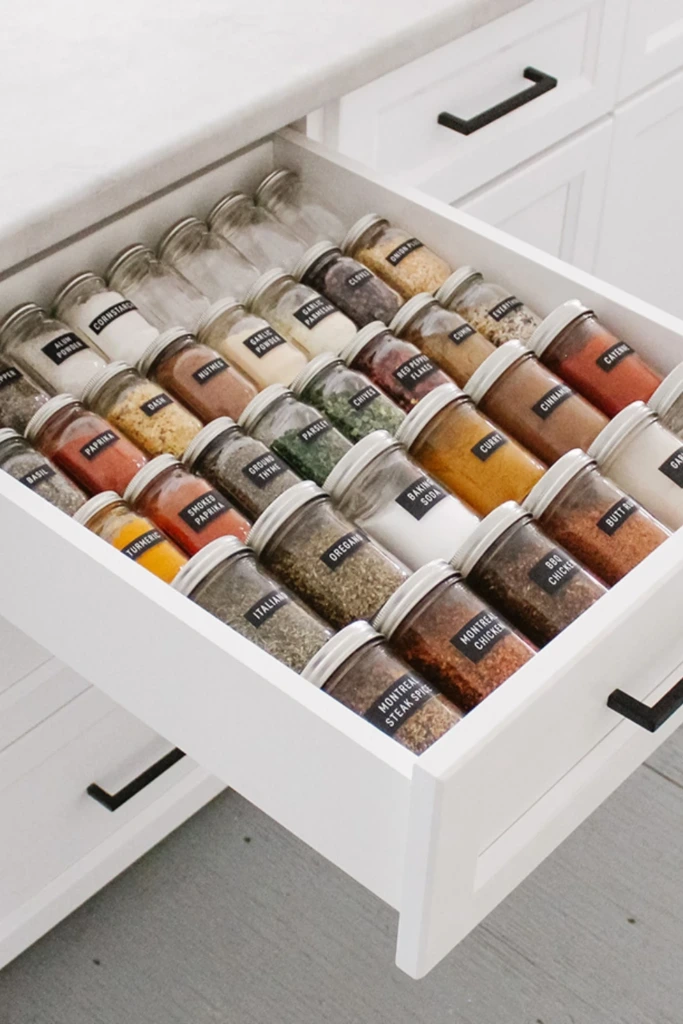
Small mason jars can create a coordinated storage system for people who prefer glass containers. When paired with a tiered insert, their matching shapes make the collection look orderly while allowing labels to remain visible.
Before transferring spices, ensure that each jar is completely clean and dry. Choose containers with secure, appropriately sized lids, and avoid filling them beyond a level that allows comfortable opening and closing.
Apply labels to the lids when the jars lie flat or to the sides when the insert displays them at an angle. Include the spice name and, when useful, the date of purchase or transfer.
This arrangement works well in wider drawers where several rows of jars can sit comfortably without becoming difficult to reach.
10. Divided Drawer Organizer
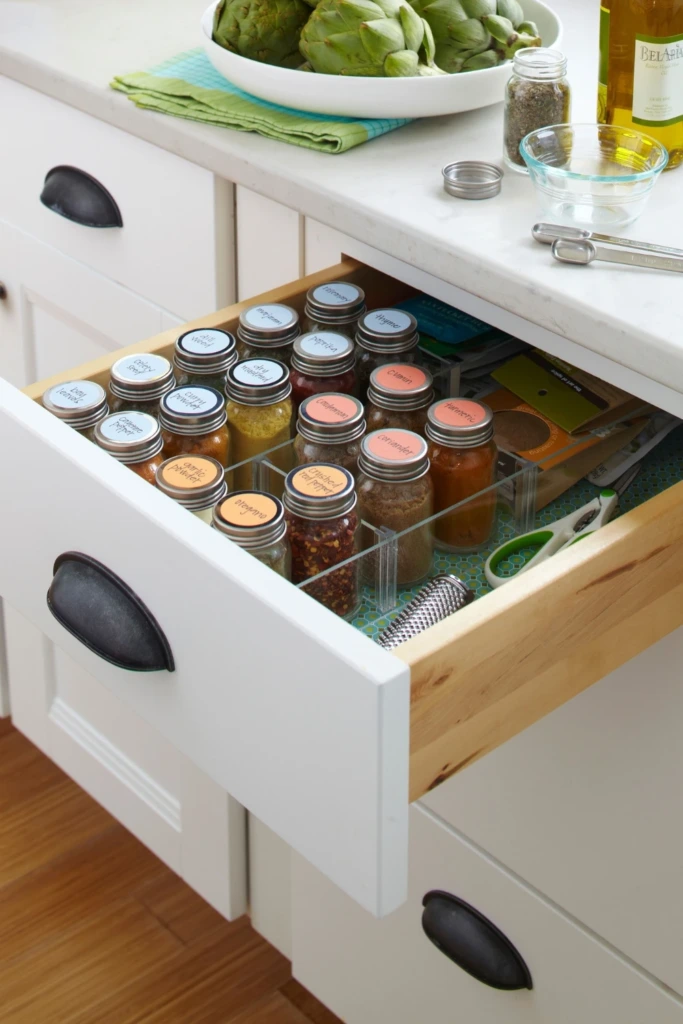
Drawer dividers offer a simple way to organize spices without investing in a specialized rack. Adjustable partitions or clear acrylic sections create separate compartments that keep containers from drifting into one another.
This method is especially practical if you want to retain your spices in their original packaging. It also makes it easier to accommodate a mixture of bottles, refill packets, and small seasoning tins.
Create compartments based on container size or spice category. Keep commonly used ingredients in the most accessible section and reserve another area for occasional seasonings. A nonslip liner can help stabilize the contents, particularly when the drawer is opened frequently.
Choose dividers that fit securely and leave enough room to remove jars without squeezing them between the partitions.
11. Vertical Spice Grid
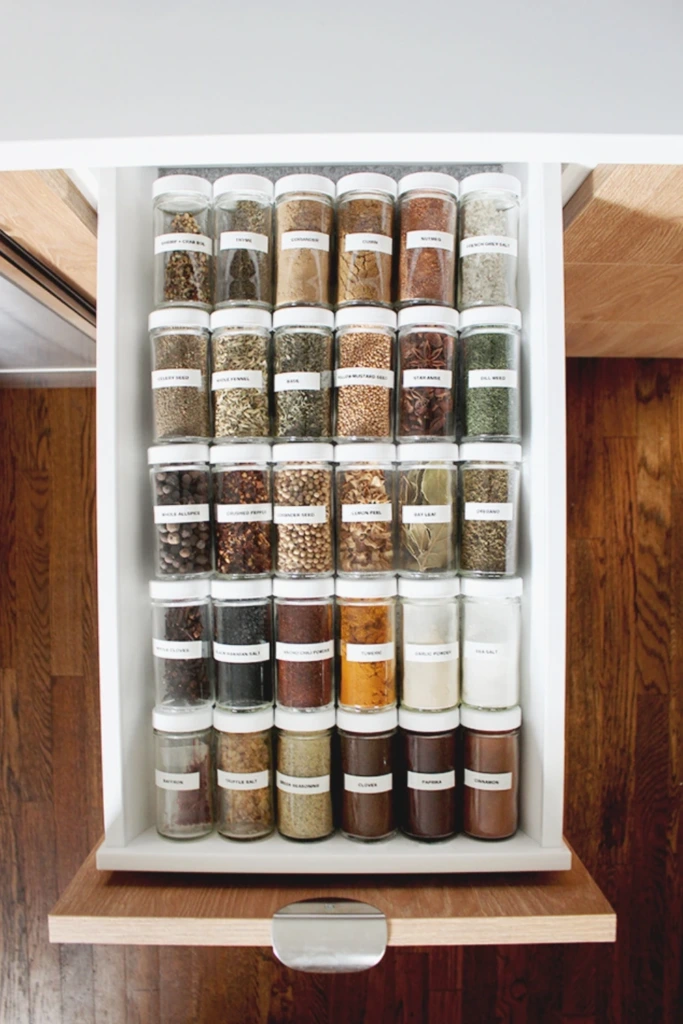
A vertical grid arranges containers in evenly spaced rows, making it easier to maintain a consistent layout. Depending on the organizer, jars may stand upright or sit in designated positions that prevent them from shifting.
This approach can work particularly well in deep, narrow drawers where loose bottles tend to collect in uneven piles. Individual spaces also make it easier to spot missing containers and return spices to their assigned locations.
Use jars that fit the grid comfortably, and make sure the lid design allows you to identify each seasoning. Clear labels are essential if the containers look alike.
If your collection includes unusually tall or wide bottles, place them in a separate compartment instead of forcing them into spaces that are too small.
12. Pull-Out Spice and Sauce Rack
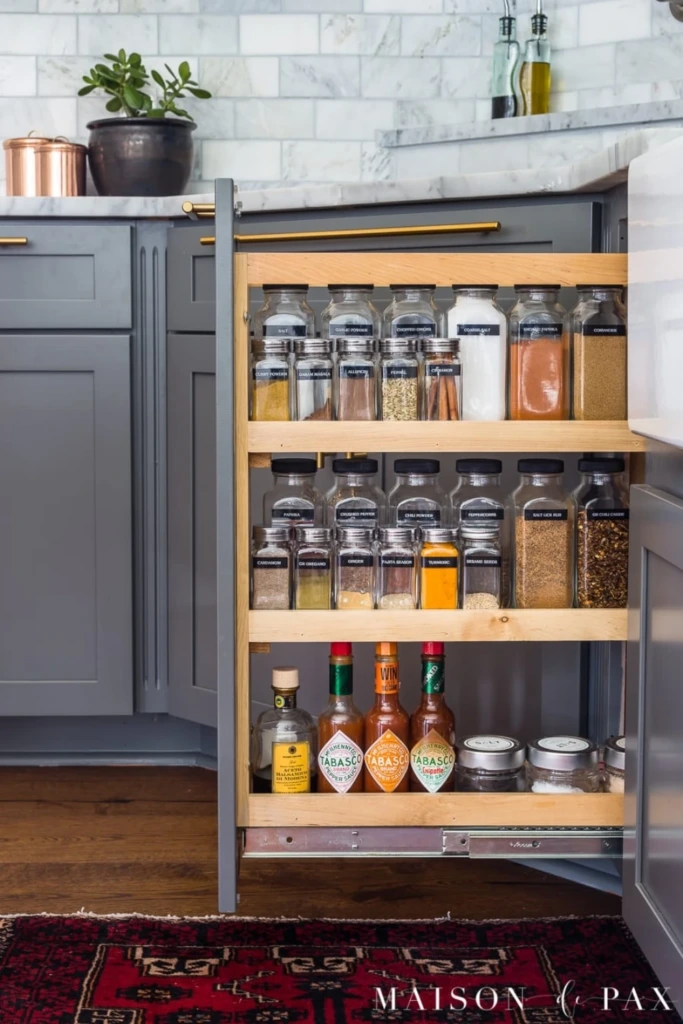
If your kitchen has a narrow gap beside a refrigerator or cabinet, a slim pull-out rack may provide useful extra storage. These units can accommodate spice jars, condiment bottles, and other small cooking essentials that otherwise occupy valuable countertop or cupboard space.
Look for a model with suitable shelf spacing and enough support for the containers you plan to store. Keep lightweight spice jars on convenient shelves and place taller sauce bottles where they can stand securely.
Organize the rack by function so you can locate ingredients without searching through every level. Labels facing outward make the contents easier to identify, while small containers can be grouped together to prevent them from becoming scattered.
Measure the installation area carefully before purchasing, and confirm that the rack can move freely without obstructing nearby doors or drawers.
13. Magnetic Lid Spice Drawer
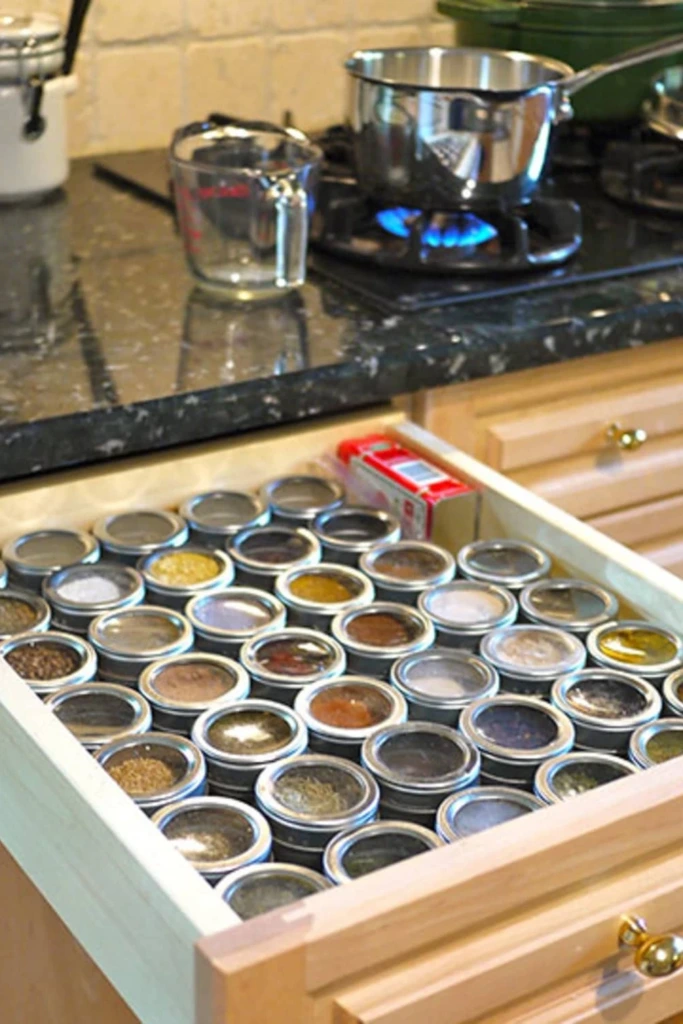
Magnetic spice containers provide an alternative to conventional glass jars. Depending on the design, their magnetic lids or bases allow them to attach to a compatible metal surface or fit into a purpose-built storage system.
They are particularly useful for cooks who want a compact, modern arrangement and prefer to keep spices in a single layer. Some designs also allow containers to be removed individually without disturbing the rest of the collection.
Check that the containers close securely and that the magnets are compatible with the intended surface. Label every tin clearly, since similar-looking containers can make identification difficult.
A drawer with limited height may be suitable for shallow magnetic tins, provided there is enough clearance for the lids and your fingers. Keep the containers dry, and follow the manufacturer's cleaning instructions to protect their finish and magnetic components.
14. Double-Section Spice Drawer
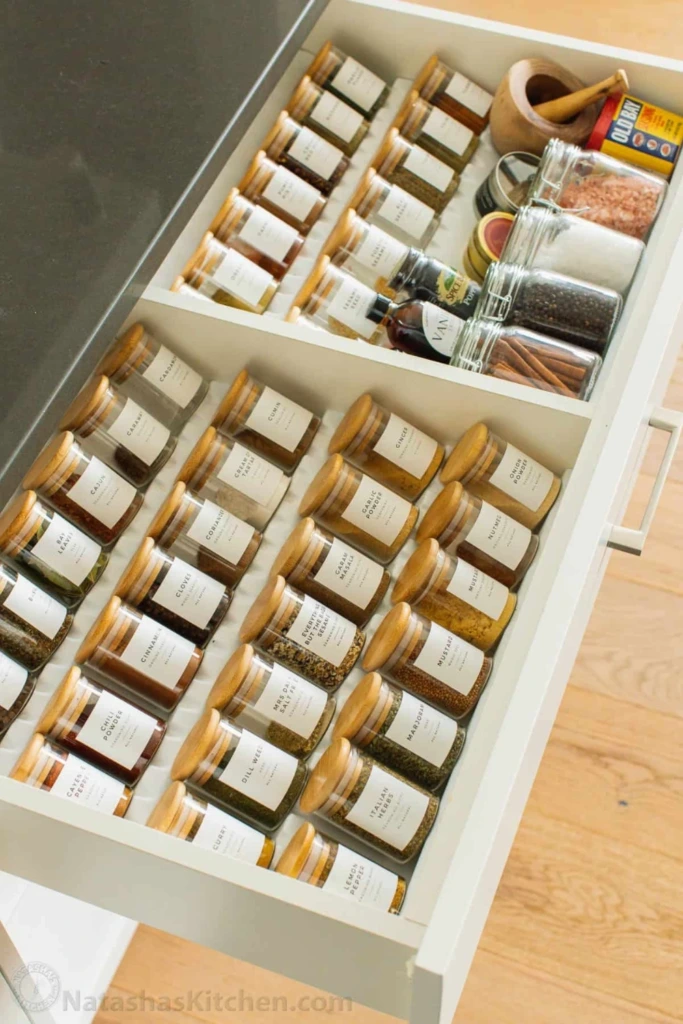
A two-section drawer divides your collection into distinct storage zones. One compartment can hold standard spice jars, while the other accommodates larger bottles, bulk seasonings, refill containers, or specialty ingredients.
This layout works well for households that use a combination of everyday seasonings and larger quantities of particular spices. Separate sections prevent bulky containers from taking over the space intended for smaller jars.
Use a divider that fits securely and does not interfere with the drawer's movement. Within each section, arrange the contents by frequency of use or ingredient category.
If you use tiered inserts for the smaller jars, reserve the second compartment for containers that cannot fit comfortably into the same arrangement. The result is a flexible system that keeps different storage needs organized without requiring multiple drawers.
15. Sleek Square Jar Drawer
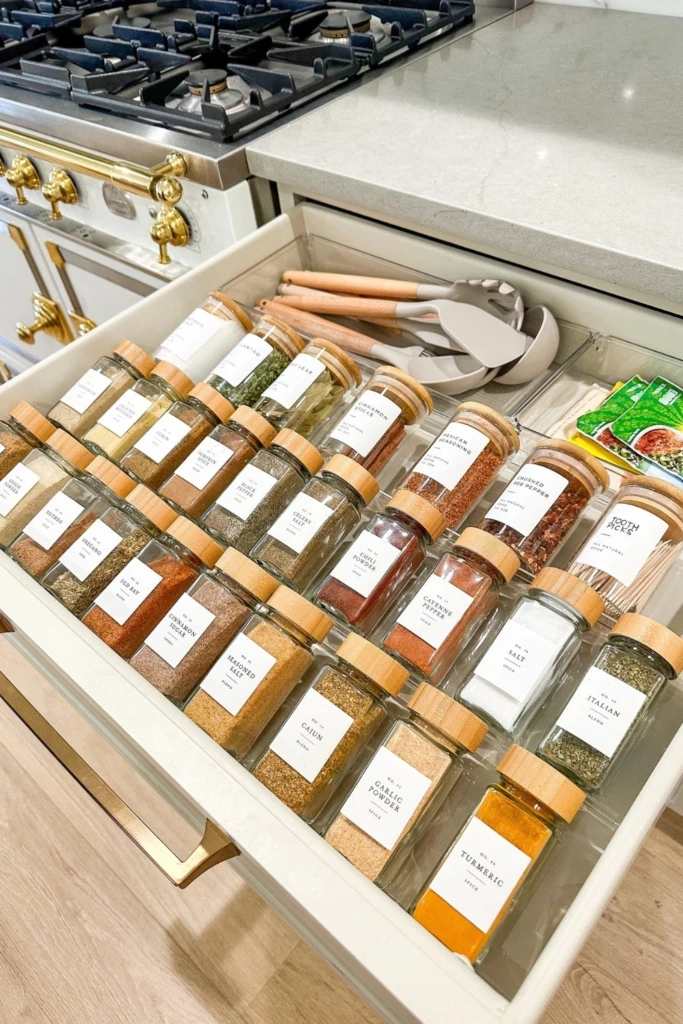
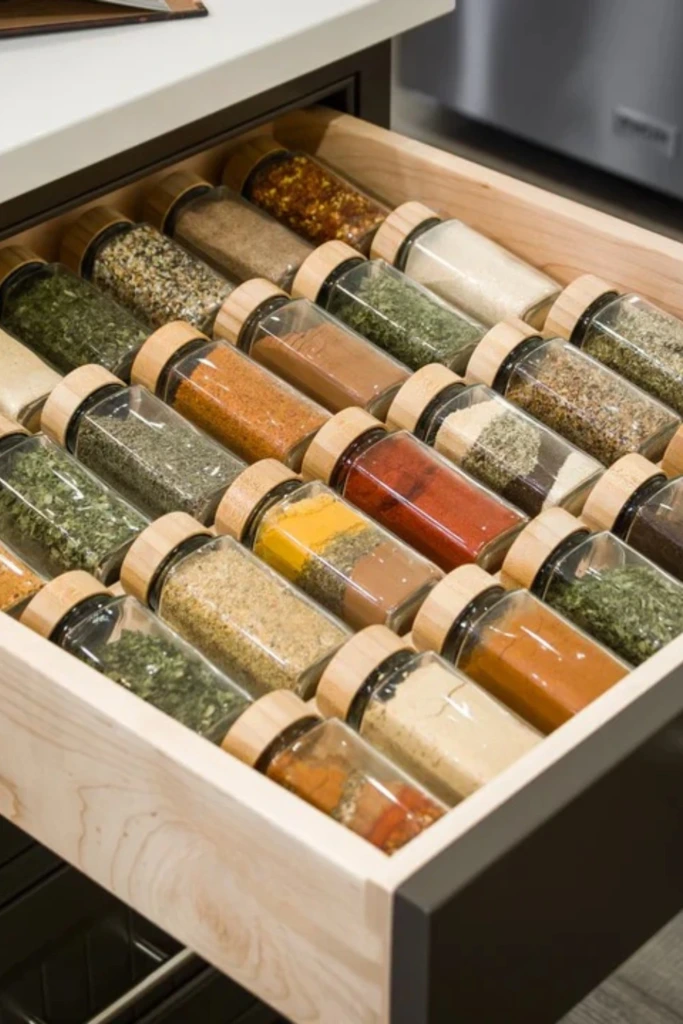
Square spice jars are an attractive option when you want to maximize storage efficiency and create a uniform appearance. Their flat sides allow them to sit close together, often reducing the gaps that occur between round containers.
Pair them with a fitted drawer insert to keep the rows straight and the jars stable. Choose labels that are easy to read and apply them consistently to the lids or fronts, depending on how the containers sit.
This setup is particularly appealing in contemporary kitchens, but it is also practical for everyday use. You can see which seasonings are running low, identify ingredients more quickly, and return jars to their assigned positions after cooking.
Before purchasing a full set, check the capacity of the containers and the dimensions of the organizer. A coordinated collection is most useful when the jars fit comfortably and hold the quantities you regularly need.
What is the best way to pack spices?
The best way to pack spices is to use clean, completely dry containers with secure lids and clear labels. Choose a container size that suits how much of each seasoning you use, rather than transferring every ingredient into the same oversized jar.
Keep each spice identifiable by including its name on the container. You can also record the purchase or transfer date when freshness tracking is helpful. If you refill jars, avoid topping up old spices with new supplies without first checking the remaining contents and cleaning the container when needed.
For storage, select a cool, dry location away from direct sunlight, steam, and heat-producing appliances. A drawer near the cooking area can be convenient, but it should not become hot from the oven or stovetop.
Organize containers by frequency of use, ingredient type, or cooking purpose. The best arrangement is one that makes your spices easy to find, keeps them properly sealed, and remains simple to maintain.
What are the best containers for spices?
The right spice containers depend on your available space, preferred appearance, and storage habits. Glass jars with secure lids are a popular option because they are easy to clean and do not readily retain odors. However, glass is heavier and can break if dropped.
Square containers can fit neatly into straight rows, while round jars are widely available and often easy to handle. Lightweight plastic containers may be practical for busy households, provided they are food-safe and close securely. Metal spice tins can work well for compact collections when their lids protect the contents from moisture.
Choose containers that fit your organizer and are comfortable to open. Clear labeling is important regardless of the material, especially when several jars have identical shapes.
Most importantly, protect spices from light, moisture, and heat. An attractive container is useful only if it also keeps the contents dry, identifiable, and convenient to access.