26 Kitchen Drawer Organization Ideas for 2026
Kitchen drawers are easy to organize for a day, but keeping them neat over time can be surprisingly difficult. Utensils get mixed together, containers shift around, and small items disappear beneath larger ones. The solution is to create a storage system that suits your cooking habits instead of relying on occasional cleanouts.
A well-organized kitchen drawer makes meal preparation easier, reduces wasted space, and helps you find everyday essentials without opening every cabinet. The best approach combines practical dividers, accessible storage, and a clear place for each item.
These 26 kitchen drawer organization ideas offer practical ways to improve everything from narrow spice drawers to deep cookware storage. Whether you have a compact kitchen or plenty of cabinetry, you can adapt these ideas to make your space more functional.
What Are The Latest Kitchen Drawer Organizer Trends?
Kitchen storage is moving toward flexible solutions that adapt to different utensils, cookware, and household routines. Adjustable dividers, removable trays, and modular containers make it easier to customize drawers without committing to a permanent layout.
Another popular approach is organizing by activity. Instead of keeping every utensil in one crowded compartment, create separate areas for food preparation, cooking, baking, and serving. This reduces unnecessary searching and makes it easier for everyone to return items to their proper places.
Vertical storage is also useful for maximizing drawer capacity. Upright pan organizers, plate dividers, and dedicated knife inserts can free up room that would otherwise be lost to unstable stacks. Non-slip liners provide additional stability, particularly for lightweight utensils and small containers.
The most effective organizer is one that fits your drawer dimensions, accommodates the items you actually use, and remains convenient to maintain.
How Can You Organize Deep Kitchen Drawers Without Wasting Space?
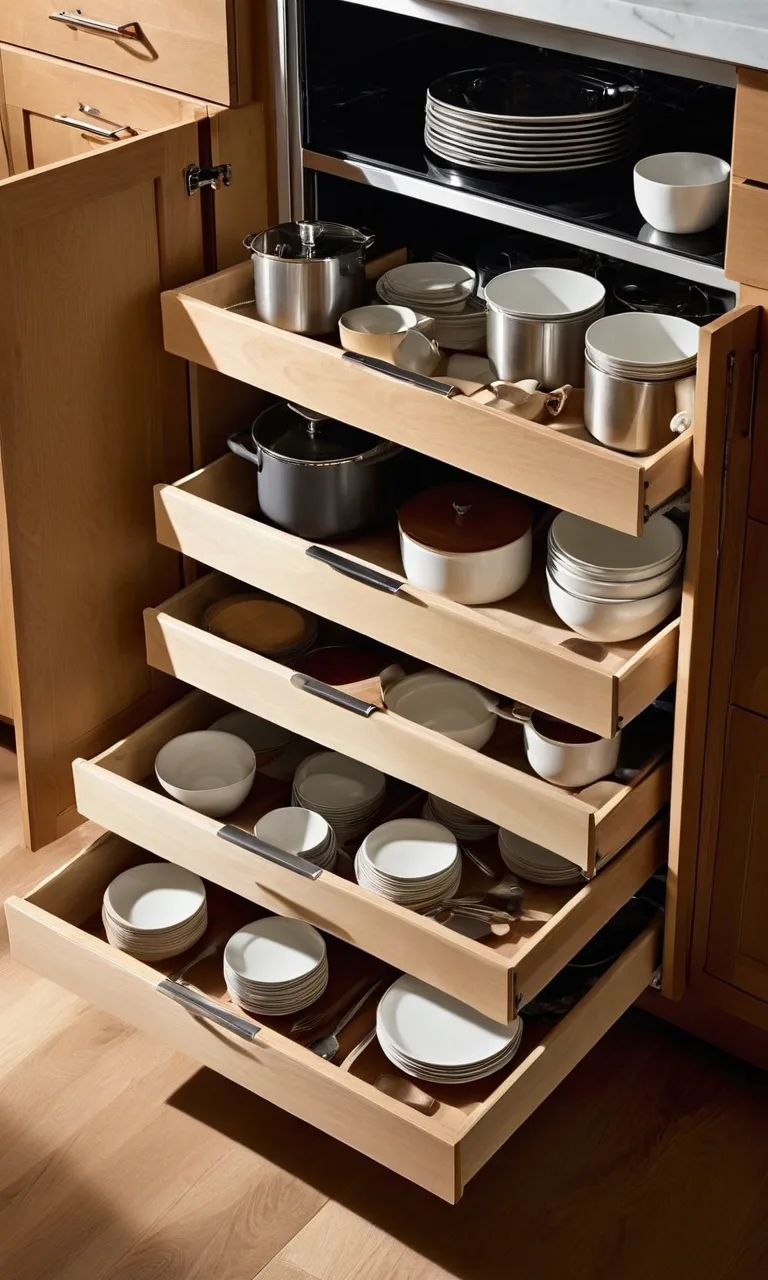
Deep drawers offer generous storage, but their extra height can encourage messy piles and hidden items. Rather than stacking everything together, divide the drawer into smaller sections based on size, shape, and purpose.
Adjustable peg systems work well for pans, plates, and bowls because they hold items in position while allowing you to change the arrangement later. Removable bins are useful for grouping smaller accessories, while vertical racks make lids and cutting boards easier to retrieve.
Place frequently used items toward the front and reserve the rear sections for occasional-use equipment. Before buying organizers, measure the drawer's interior width, depth, and usable height, taking the drawer slides and handles into account.
1. Pull-Out Spices
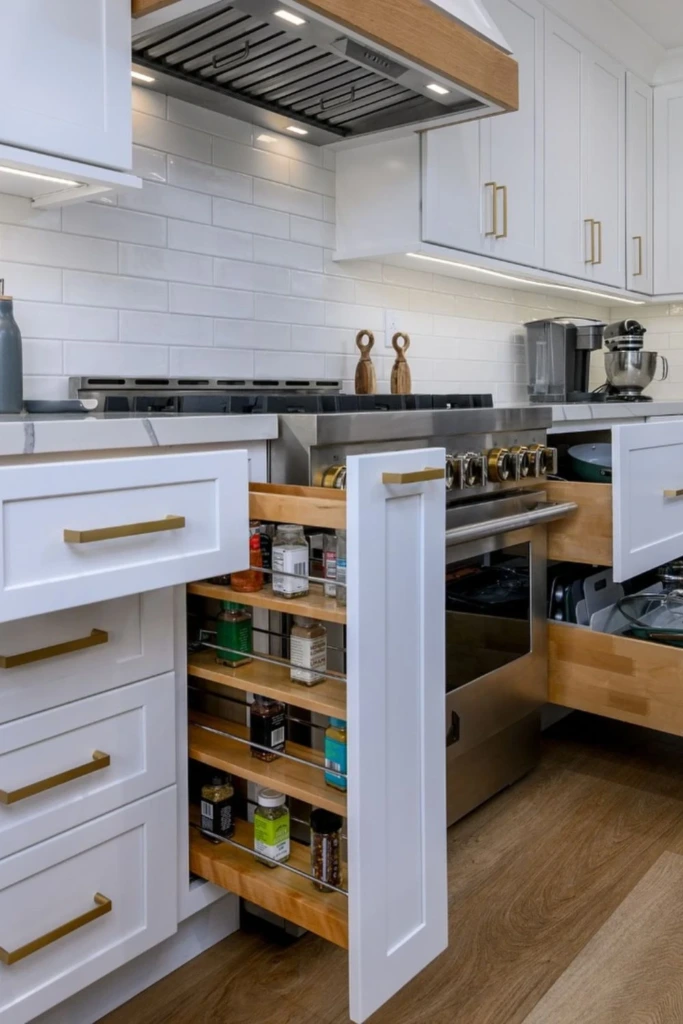
A pull-out spice organizer is a practical solution for narrow spaces near the cooking area. Instead of searching through a crowded cabinet, you can slide the entire collection into view and select the seasoning you need.
Choose a rack or slim drawer insert that keeps containers upright and prevents them from tipping as the drawer moves. Arrange everyday seasonings toward the front and specialty spices farther back.
Check the available height before installing the system, particularly if you use tall spice bottles. Keeping labels visible and grouping frequently used seasonings together can make cooking more efficient.
2. Flat Spices
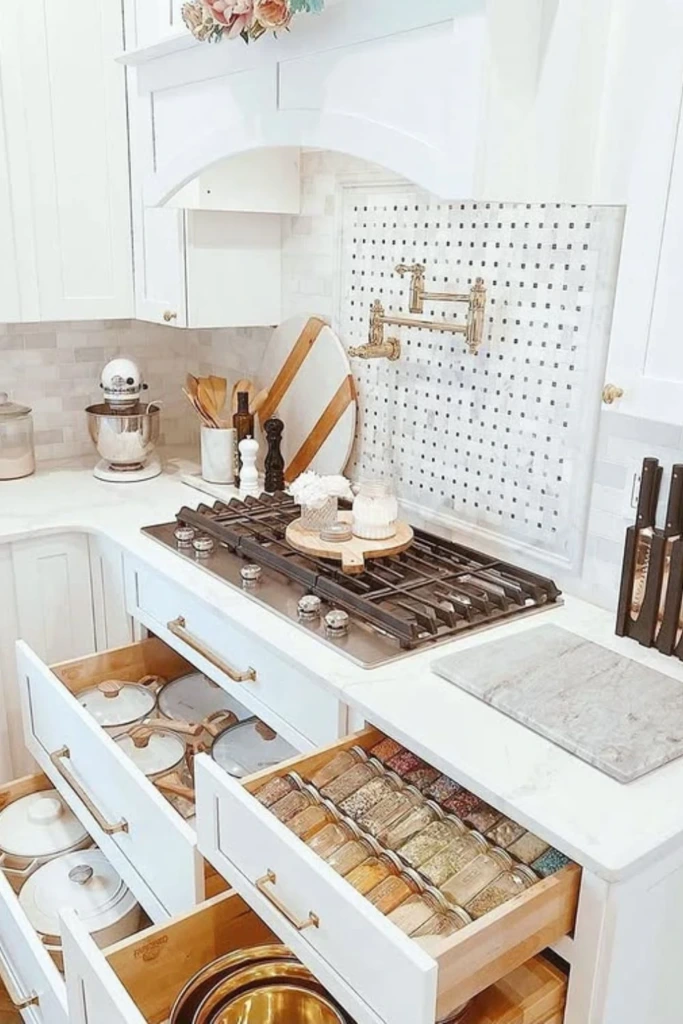
Wide, shallow drawers can accommodate spice jars horizontally, creating a convenient display that uses less vertical space. Position each container with its label facing upward so you can identify the contents without lifting several jars.
A fitted insert or compartmentalized tray helps stop jars from rolling when the drawer opens. You can arrange seasonings by cuisine, cooking frequency, or general purpose, depending on how you prepare meals.
This setup is particularly useful when conventional upright racks do not fit your drawer dimensions. Measure the jars first to ensure the compartments provide enough room for different container sizes.
3. Bottle Zoning
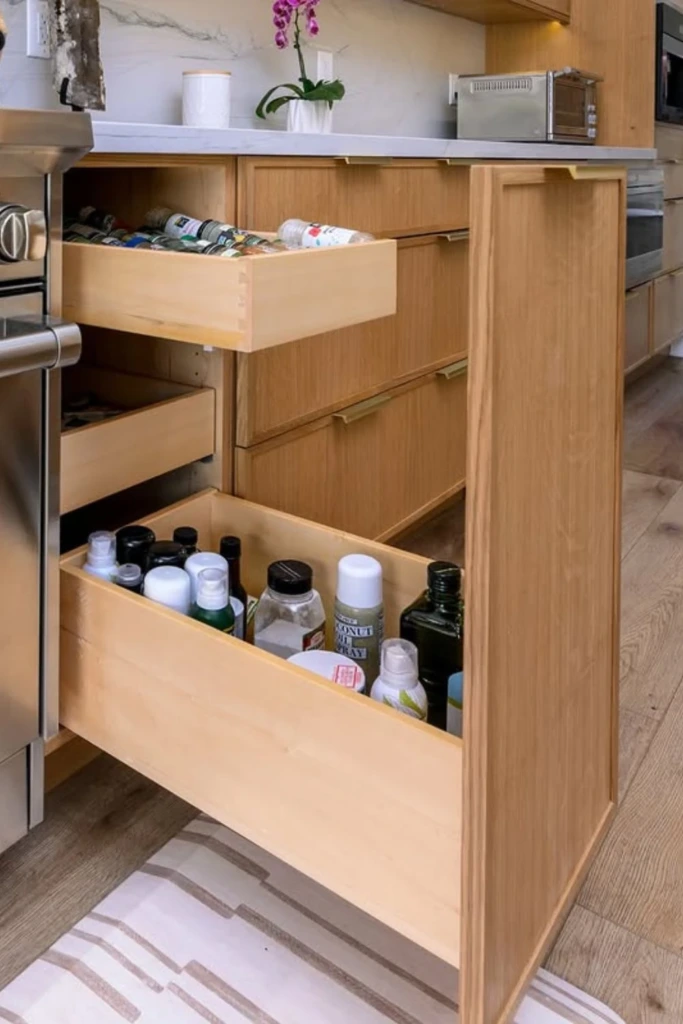
Cooking oils, vinegar, sauces, and other tall bottles can make drawers difficult to manage when they slide against one another. A dedicated bottle section keeps these products upright and makes them easier to access.
Use sturdy dividers or a fitted bottle organizer to separate containers and prevent collisions. Store heavier bottles in a stable position, and place frequently used oils and sauces where they are easiest to reach.
Check that the drawer can support the combined weight of the bottles and that the containers fit comfortably when closed. A separate tray can also help contain minor leaks and simplify cleaning.
4. Double Layers
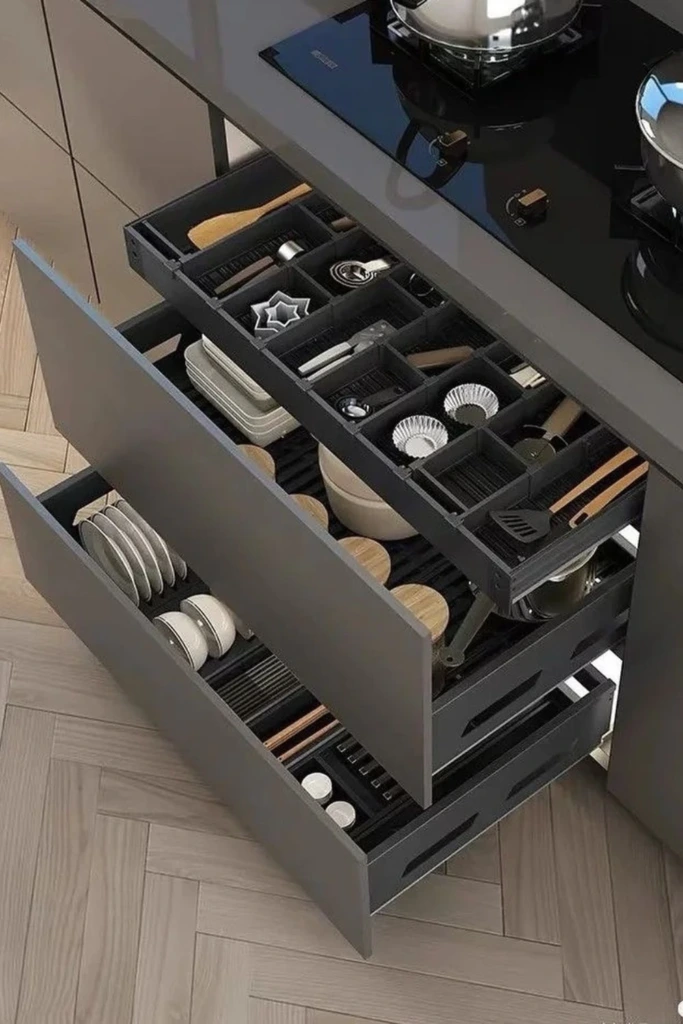
A two-level drawer organizer creates additional storage without requiring another drawer. A shallow sliding tray holds small accessories on top, while the lower compartment accommodates larger items such as bowls, plates, or cookware.
This arrangement works best when the drawer has sufficient height for both levels. The upper tray should slide or lift easily so that items underneath remain accessible.
Use the upper section for lightweight tools and small accessories that you reach for regularly. Keep heavier dishes and cookware below to maintain stability and make lifting items safer.
5. Pantry Pullout
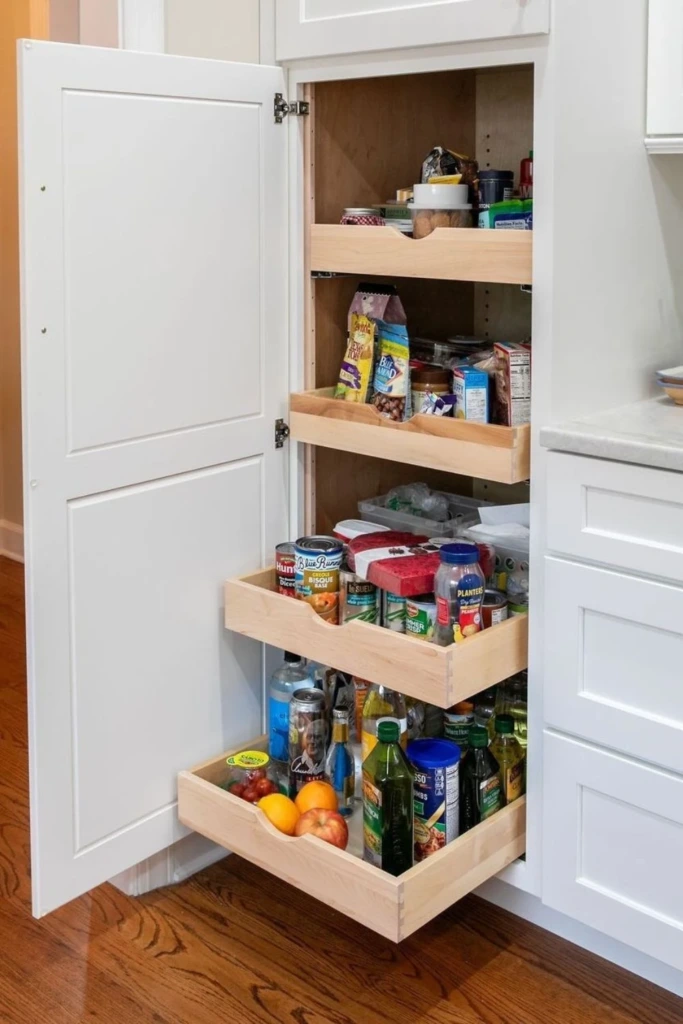
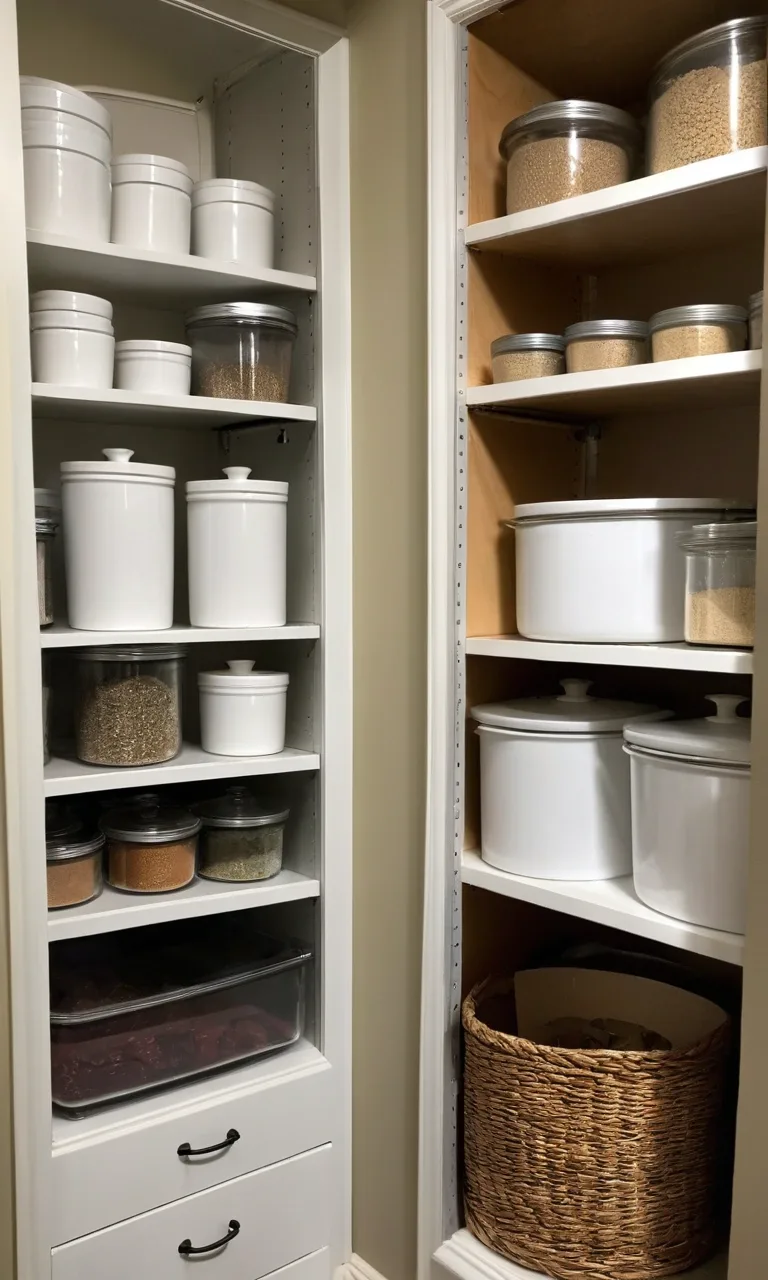
Tall pantry cabinets often contain food packages that become difficult to see once they move toward the back. A pull-out storage system brings the contents forward, making it easier to identify supplies and use them before they expire.
Choose full-extension slides when possible so that the rear of the cabinet remains accessible. Store heavier cans and jars on lower shelves, while lighter packets and snacks can occupy upper sections.
Group foods by category, such as baking ingredients, canned goods, breakfast supplies, and snacks. This approach works particularly well in narrow kitchens where conventional shelves make it difficult to reach stored items.
6. Spice Grid
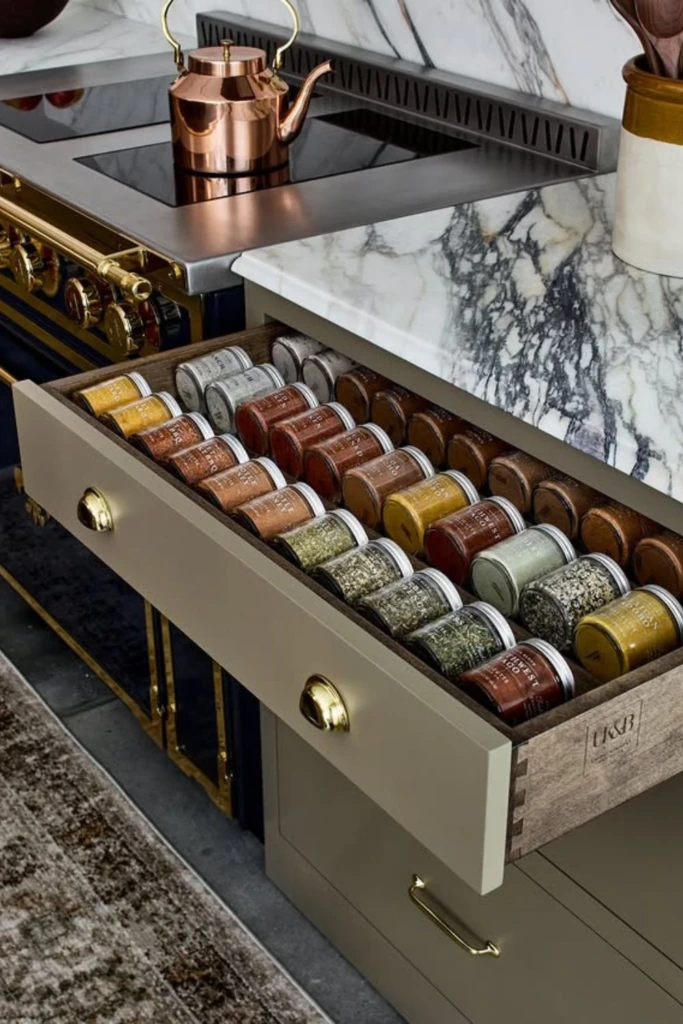
A compartmentalized spice grid gives every jar a designated position and reduces the movement that often creates clutter. It is especially effective in a wide, shallow drawer near the stove or food preparation area.
Arrange the jars so their labels are easy to read, and keep commonly used seasonings in the most accessible sections. A consistent container size can make the layout look cleaner, although adjustable compartments are preferable if your collection includes different jar shapes.
Before choosing an insert, compare its compartment dimensions with your spice containers. A well-fitted grid should keep jars secure without making them difficult to remove.
7. Peg Storage
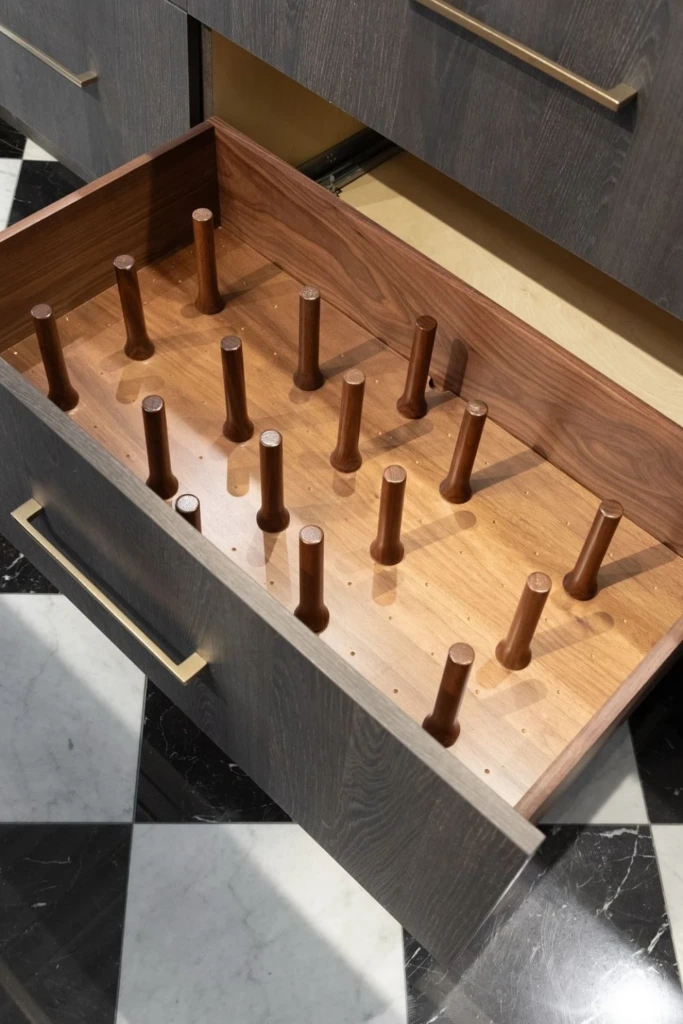
Pots and pans can consume a surprising amount of drawer space when they are stacked in unstable piles. An adjustable peg organizer offers an alternative by holding cookware in separate sections.
Begin by positioning the pegs around your largest pans, then adjust the remaining supports to accommodate smaller pots and lids. This creates a flexible arrangement that can change as your cookware collection evolves.
Place the organizer in a deep drawer that can comfortably support the weight. Leave enough clearance to remove each pan without disturbing its neighbors, and use suitable protective separators if your cookware has delicate finishes.
8. Beverage Drawer
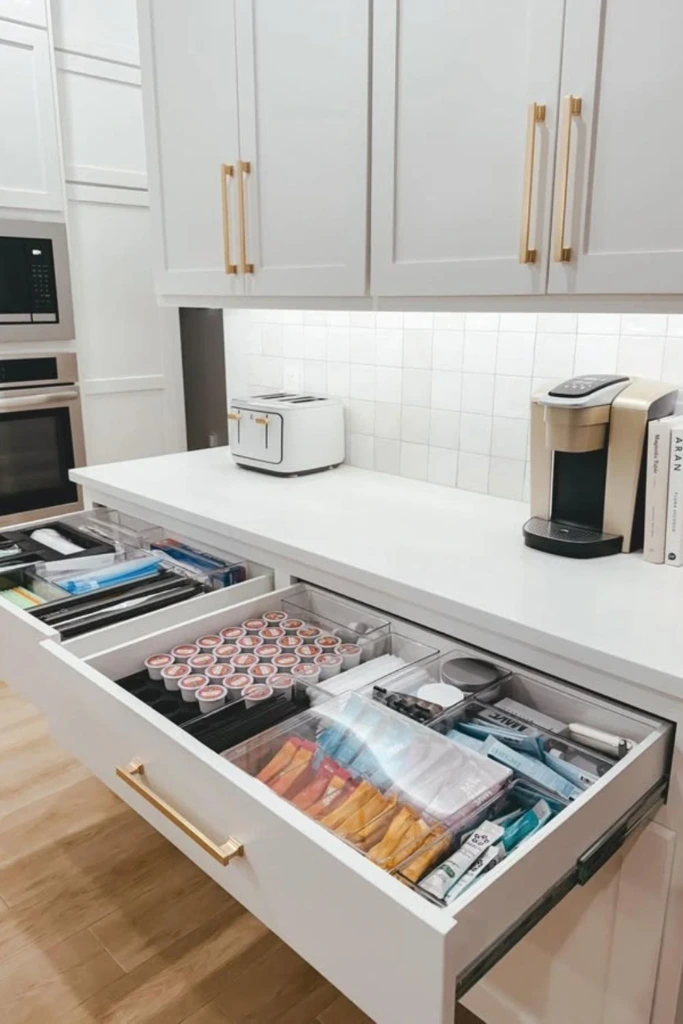
A dedicated beverage drawer brings coffee, tea, and related accessories into one convenient location. Coffee pods, tea bags, filters, sweeteners, and measuring spoons can all be stored together without spreading across the countertop.
Use small bins to separate different drink types and shallow compartments for individual packets. Transparent containers make it easier to monitor supplies, while labels help family members find what they need.
Position the drawer near your coffee machine or kettle when possible. Keeping related items together also makes restocking easier because you can quickly see which supplies are running low.
9. Narrow Spices
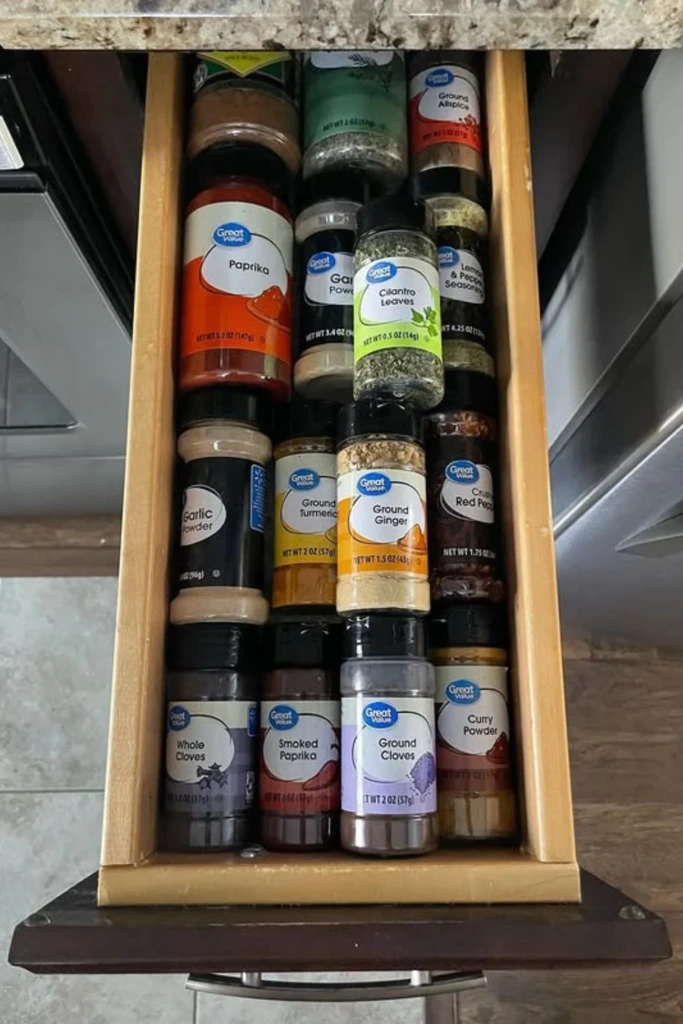
Slim drawers are well suited to storing spice jars in upright rows. This arrangement makes use of limited width while keeping containers visible and easy to remove.
Choose an insert with compartments that fit your jars securely. Similar-sized containers generally create a more consistent layout, while forward-facing labels help you distinguish between seasonings quickly.
Arrange the spices according to how often you use them rather than filling the drawer alphabetically by default. Everyday favorites should be easiest to reach, with less frequently used ingredients occupying the remaining spaces.
10. Produce Baskets
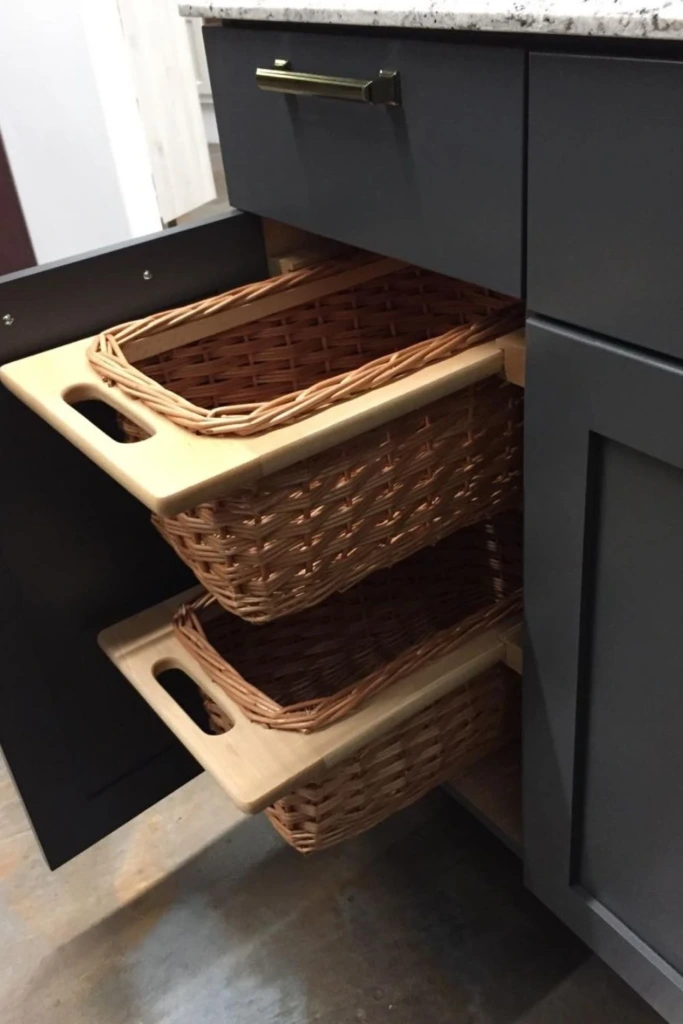
Pull-out baskets can make certain fruits and vegetables easier to store and inspect. Instead of allowing produce to disappear behind other groceries, separate items into visible groups that are simple to access.
Use appropriately sized, ventilated baskets for produce that benefits from airflow, such as onions and potatoes. Keep produce with different storage requirements separate, and avoid placing moisture-sensitive foods in damp or poorly ventilated compartments.
Deeper baskets can accommodate bulkier vegetables, while smaller containers work for produce you use regularly. Check stored food frequently and remove spoiled items promptly to keep the storage area clean.
11. Modular Cutlery
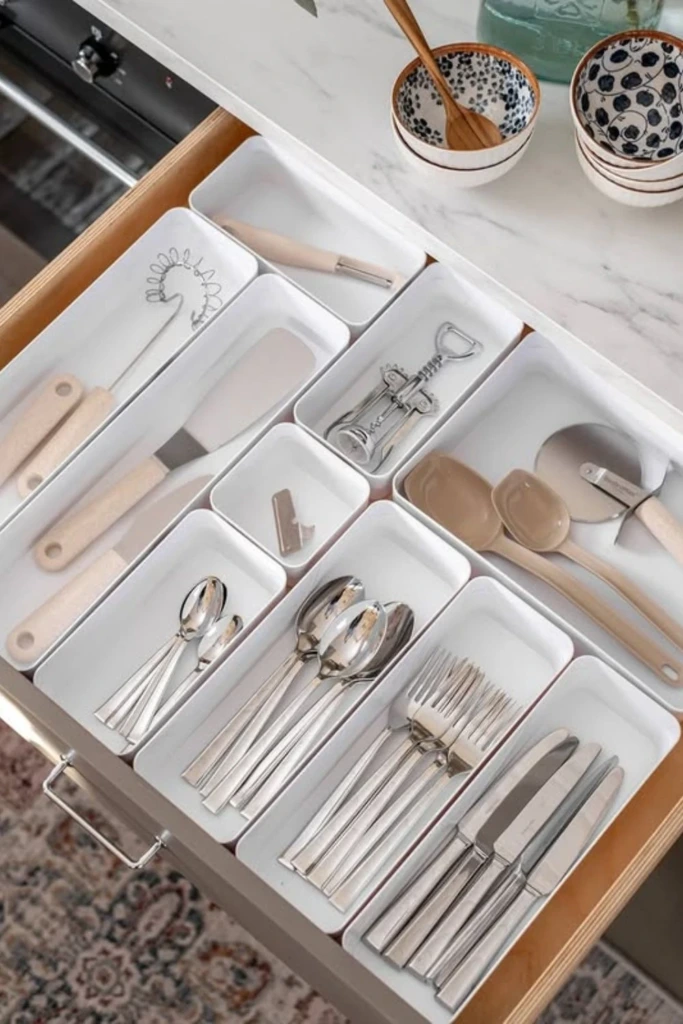
A modular cutlery organizer makes utensil storage easier by giving each category its own compartment. Spoons, forks, knives, measuring tools, and specialty utensils no longer need to compete for the same space.
Combine different tray sizes to suit the drawer's dimensions and the quantity of each item. Shallow sections work well for everyday cutlery, while longer compartments can accommodate serving spoons and kitchen tools.
A drawer near the dishwasher is particularly convenient because clean utensils can be returned to their places quickly. Choose removable inserts that are easy to lift out and wash whenever crumbs or residue accumulate.
12. Plate Pegs
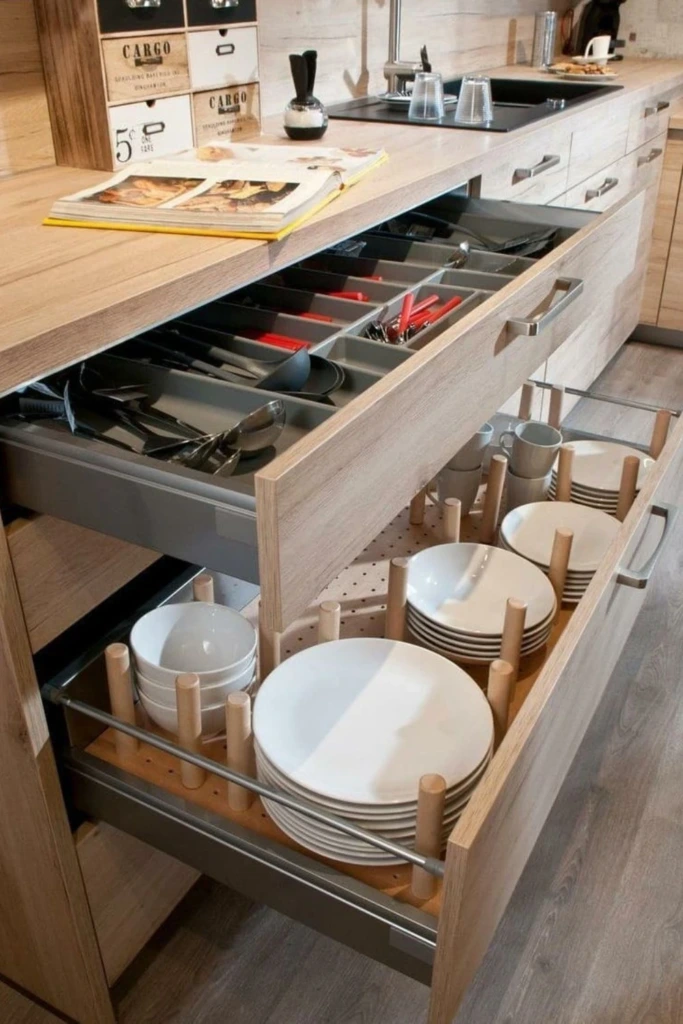
Plate pegs help prevent dishes from sliding against one another when a drawer opens or closes. They are especially useful in deep drawers designed for everyday dinnerware.
Arrange adjustable pegs around the plate stacks so each group remains stable without being squeezed too tightly. You can create separate sections for dinner plates, side plates, and bowls, adjusting the layout to accommodate different sizes.
Check the drawer's weight capacity before storing heavy ceramic dishes. Keep the plates easy to lift out, and avoid forcing too many items into one section, which can increase the risk of chips and breakage.
13. Corner Control
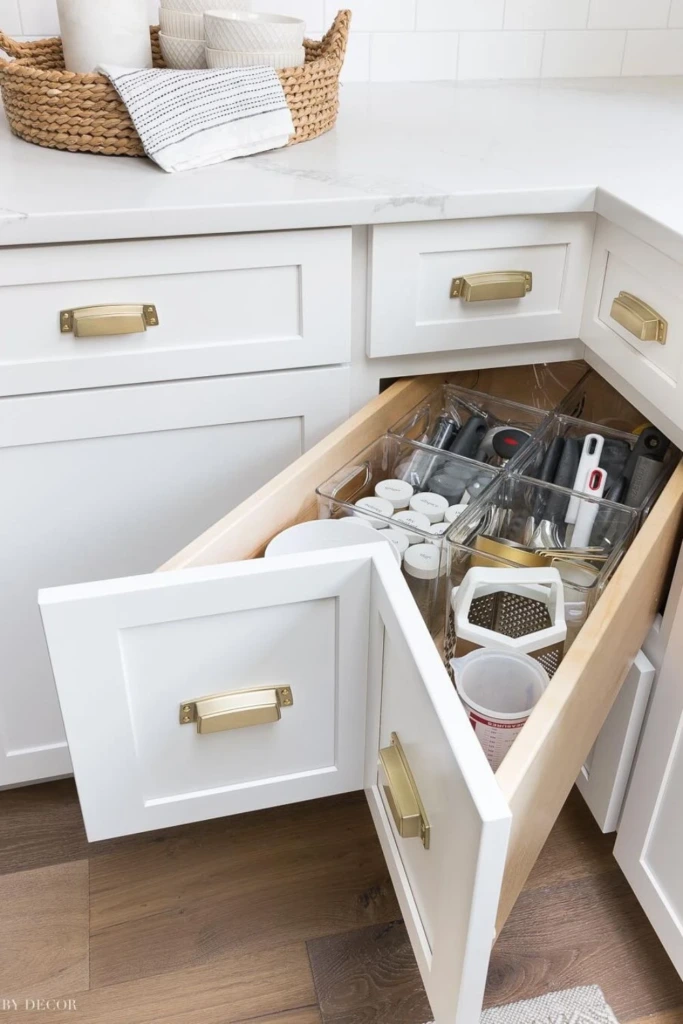
Corner drawers can be awkward to organize because their unusual shapes leave areas that are difficult to reach. Custom-fitted trays and angled containers help turn these spaces into useful storage.
Measure the drawer carefully before selecting an organizer, paying attention to angled edges and changes in width. Clear bins can hold baking accessories, measuring tools, specialty utensils, or other small items that would otherwise disappear into the corners.
Reserve the most accessible sections for items you use regularly. Less frequently needed equipment can occupy the deeper or narrower areas, provided it remains possible to retrieve without emptying the entire drawer.
14. Wrap Station
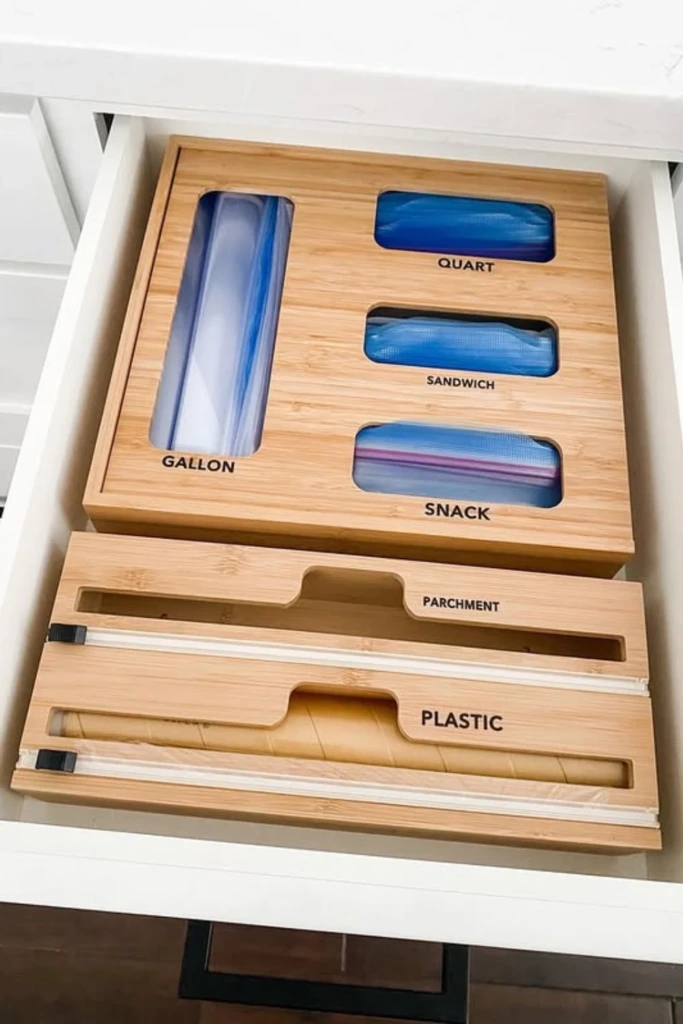
Plastic wrap, aluminum foil, parchment paper, and sandwich bags are easier to manage when they have a dedicated storage area. A drawer insert designed for these supplies keeps rolls from shifting and prevents loose boxes from becoming tangled together.
Select compartments that match the dimensions of your packaging, leaving enough clearance for the drawer to close smoothly. If the organizer includes a cutting edge, make sure it can be used safely without catching on neighboring items.
Arrange products according to their purpose and label the sections if several household members use the drawer. Keeping everything together also makes it easier to check supplies before shopping.
15. Vertical Dishes
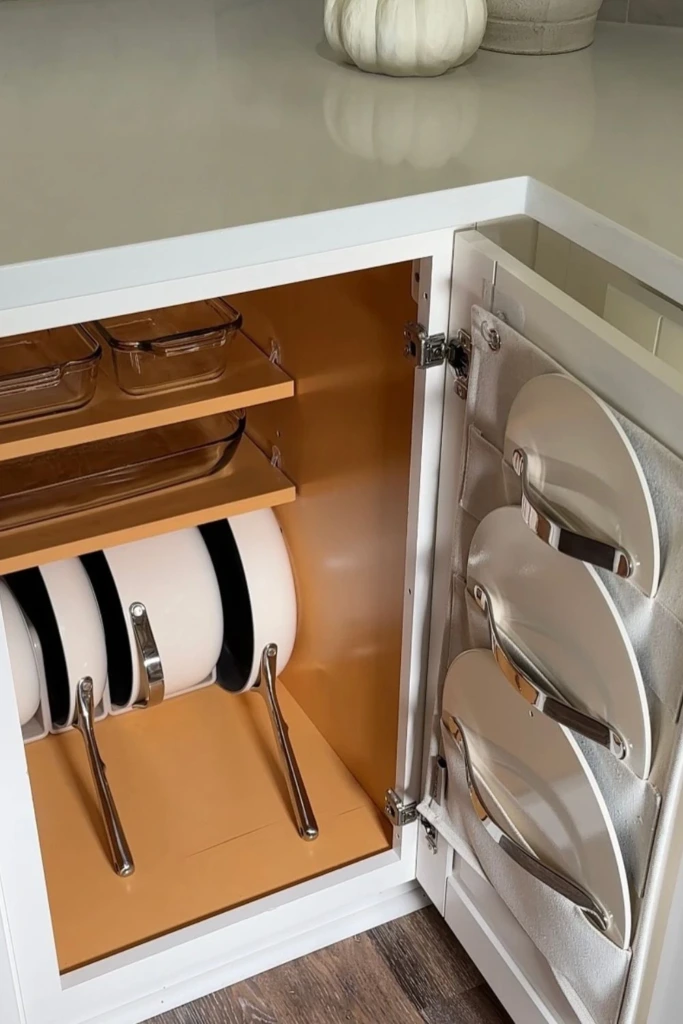
Storing suitable dishes vertically can improve access and make better use of a deep drawer or lower cabinet. Plate racks and adjustable dividers allow individual dishes to stand in separate slots rather than forming heavy stacks.
Choose supports that hold the dishes securely while leaving enough room to lift them out comfortably. This method is particularly useful for cutting boards, baking sheets, serving platters, and other flat kitchen items.
Lids can also benefit from dedicated vertical holders. Whether you use a drawer insert or a cabinet-mounted rack, ensure that the supports can bear the weight and that stored items will not slide out unexpectedly.
16. Cooking Stack
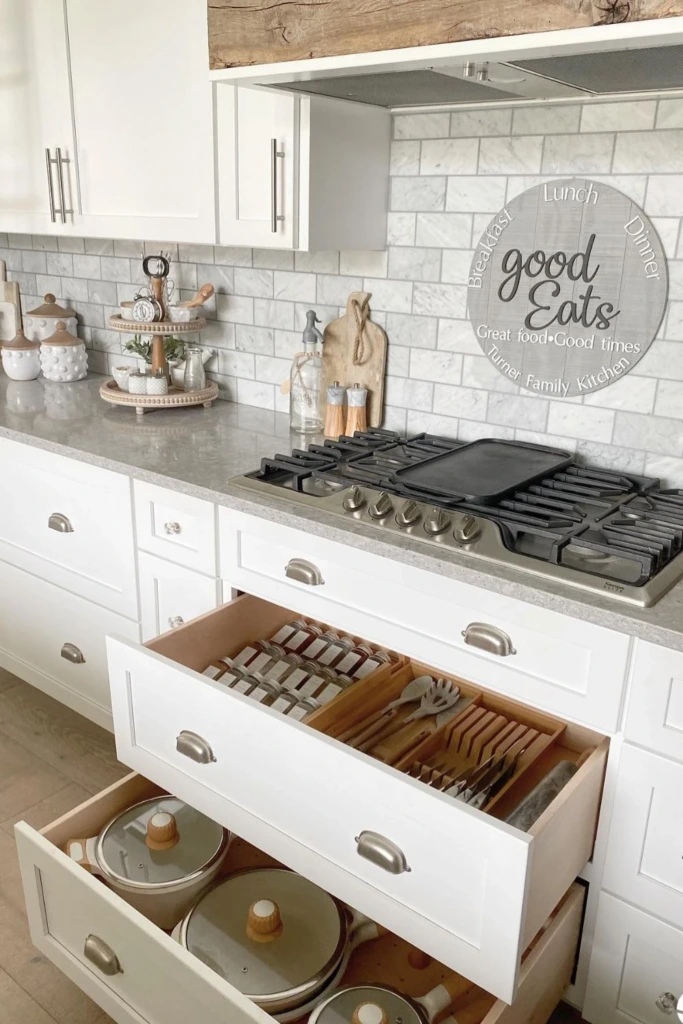
Keeping cooking tools close to your pots and pans reduces unnecessary movement during meal preparation. A coordinated storage zone can combine a shallow utensil drawer with a deeper cookware drawer beneath the stovetop.
Use the upper drawer for spatulas, wooden spoons, tongs, and other tools used while cooking. The lower section can hold pots, pans, and compatible lids, with dividers keeping everything stable.
Arrange the drawers around your actual cooking routine. Items used together should be easy to reach without forcing you to move several other objects first.
17. Drink Sorting
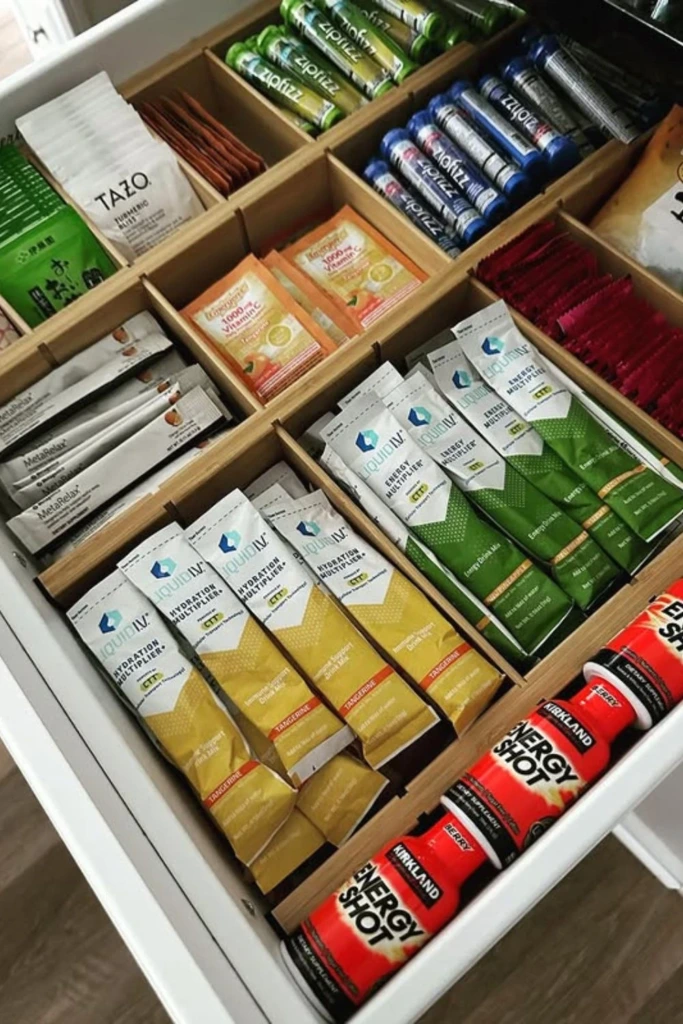
Drink mixes, tea sachets, instant coffee packets, and powdered beverages can quickly accumulate in a shared drawer. Divided compartments prevent different flavors and products from becoming mixed together.
Group packets by drink type or intended use, such as breakfast beverages, caffeine-free options, and flavored drinks. A wide drawer near the refrigerator or beverage station can provide enough space for clear categories without overcrowding.
Keep a reasonable quantity in each section and move unopened backup supplies to a pantry. This makes it easier to identify what you already have and reduces unnecessary duplicate purchases.
18. Bamboo Zoning
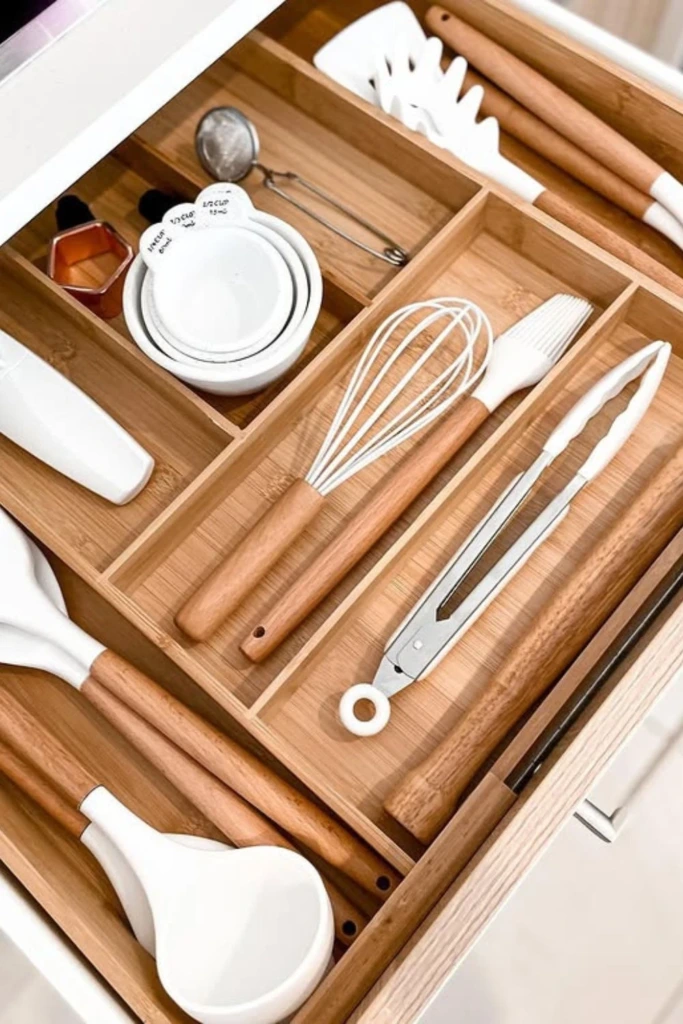
Bamboo drawer dividers offer a simple way to separate cooking utensils while adding a natural finish to your kitchen storage. Adjustable models can create individual spaces for whisks, spatulas, tongs, ladles, and other tools.
Choose dividers that fit the drawer securely and do not interfere with its opening mechanism. Arrange utensils according to their length and shape so long-handled tools do not overlap smaller accessories or prevent the drawer from closing.
Bamboo is a useful option when you prefer a warm, coordinated appearance, but it should be kept clean and dry. Removable dividers also make it easier to wipe away crumbs and food residue.
19. Drink Hub
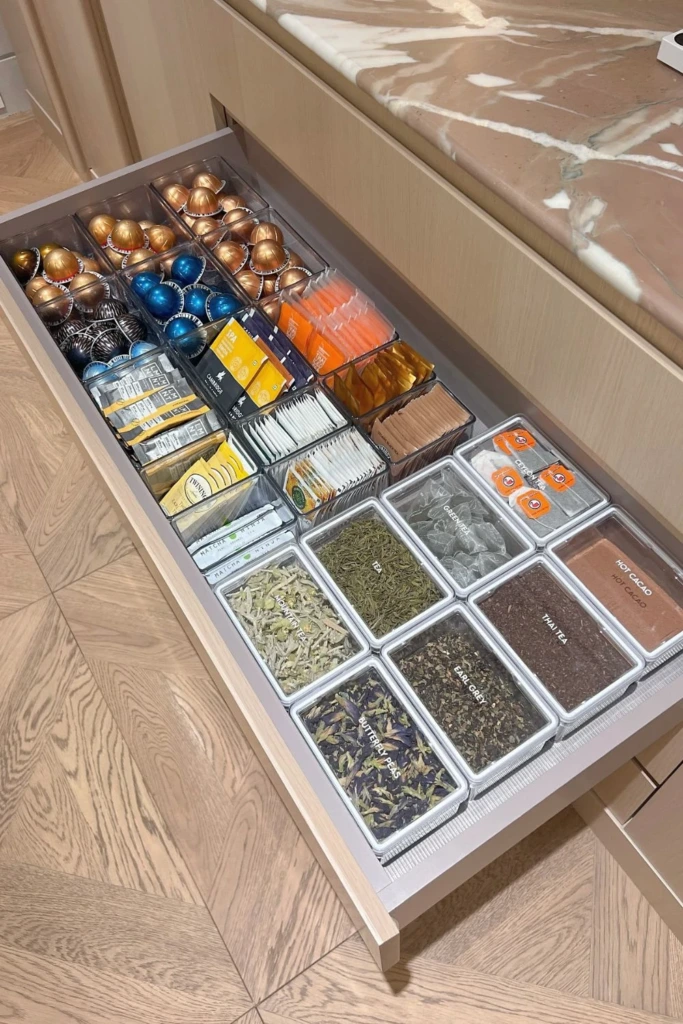
A dedicated drink station drawer keeps coffee pods, tea bags, sweeteners, filters, and preparation accessories together. Rather than storing each product in a different cabinet, create a compact system around your regular beverage routine.
Use compartment trays to separate supplies by purpose, with frequently used items in the easiest-to-reach sections. If you have a coffee machine, kettle, or hot-water dispenser, locate the drawer nearby when practical.
Clear categories help you recognize when something needs replenishing. Leave a little room for new supplies instead of filling every compartment to its maximum capacity.
20. Tool Zoning
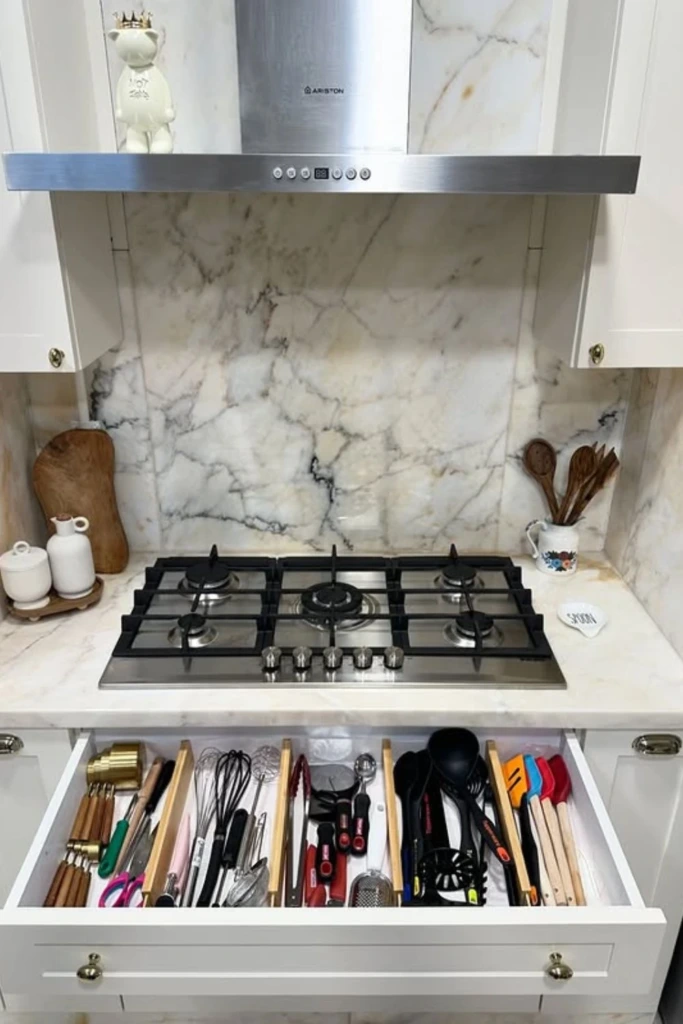
Long kitchen utensils often become tangled when they are placed together in a single narrow compartment. Extended dividers create separate lanes for tools and make each one easier to retrieve.
This method works well for drawers near the stovetop, where you might keep ladles, spatulas, cooking spoons, and whisks. Organize tools according to what they do, grouping stirring utensils together and turning tools into another section.
Check that the compartments accommodate the full length of each utensil. Keeping handles aligned and avoiding excessive overlap will help the drawer remain functional even during busy cooking sessions.
21. Reset Drawer
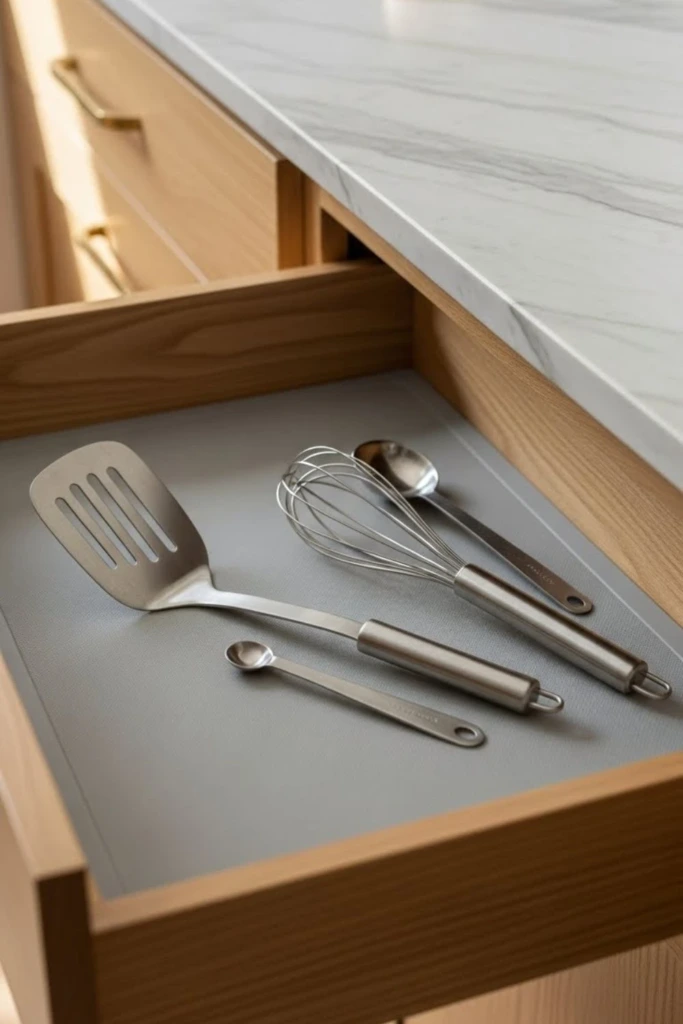
A reset drawer can provide a temporary place for used utensils and small tools during food preparation. Instead of leaving everything scattered across the counter, you can keep the workspace clearer until it is time to wash up.
Choose a shallow drawer in a convenient location and use a removable, washable tray or liner. Place only suitable utensils inside, and keep sharp knives, hot tools, and food-contaminated items away from an area that could create a safety or hygiene problem.
Once preparation is finished, transfer the contents to the sink or dishwasher and clean the tray as needed. The drawer should serve as a short-term convenience rather than a place to leave dirty equipment.
22. Zone Labels
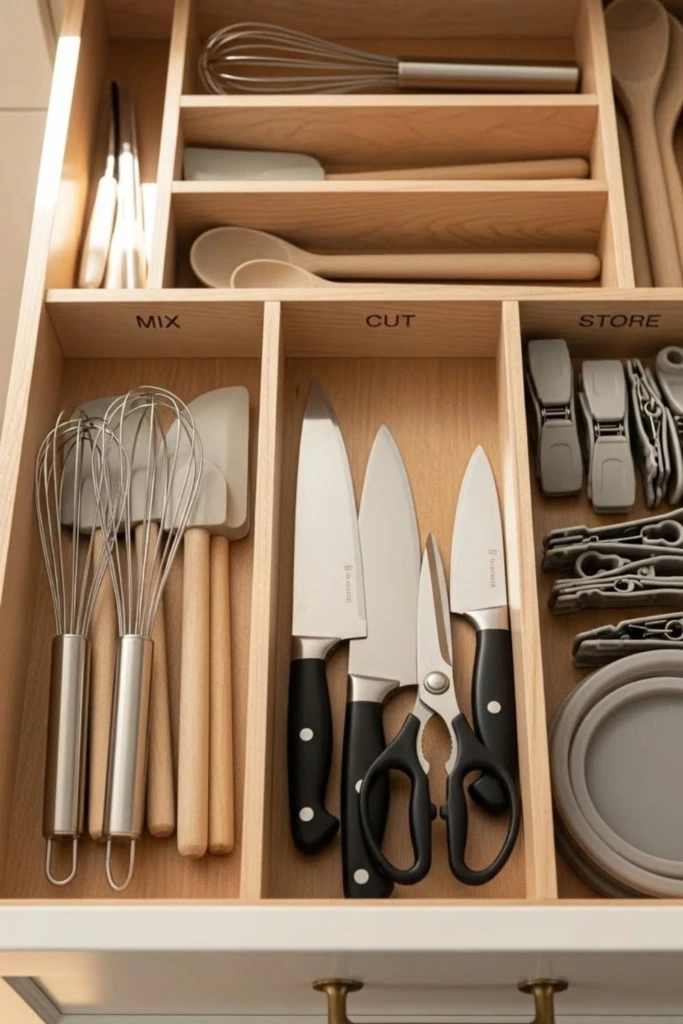
Labels can make an organized kitchen easier for everyone to maintain, especially in shared households. When drawers have clearly defined sections, family members can return tools to their intended locations instead of placing them wherever space is available.
Use removable labels, small adhesive markers, or discreet tags to identify the main zones. Labels based on activities, such as baking, food preparation, or serving, can be more useful than overly detailed lists of individual utensils.
Keep the labeling system simple and consistent. Review it whenever your storage needs change, and avoid assigning more categories than the drawer can comfortably support.
23. Height Sorting
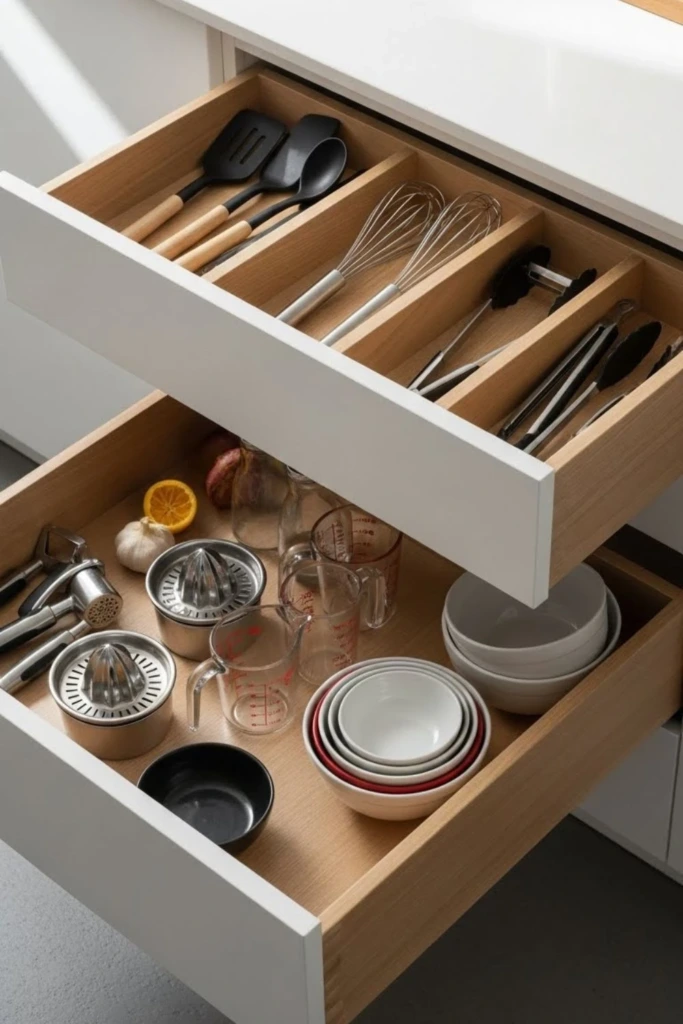
Kitchen drawers become difficult to use when tall utensils, flat accessories, and bulky equipment compete for the same space. Sorting items according to their height and shape helps you choose appropriate storage locations.
Shallow drawers are suitable for flat tools, cutlery, peelers, and measuring spoons. Deeper compartments can accommodate taller utensils, small appliances, and larger accessories that need additional clearance.
Measure the usable interior height before arranging everything. This helps prevent handles from catching against the drawer above and ensures the drawer closes properly without pressure on its contents.
24. Prep Flow
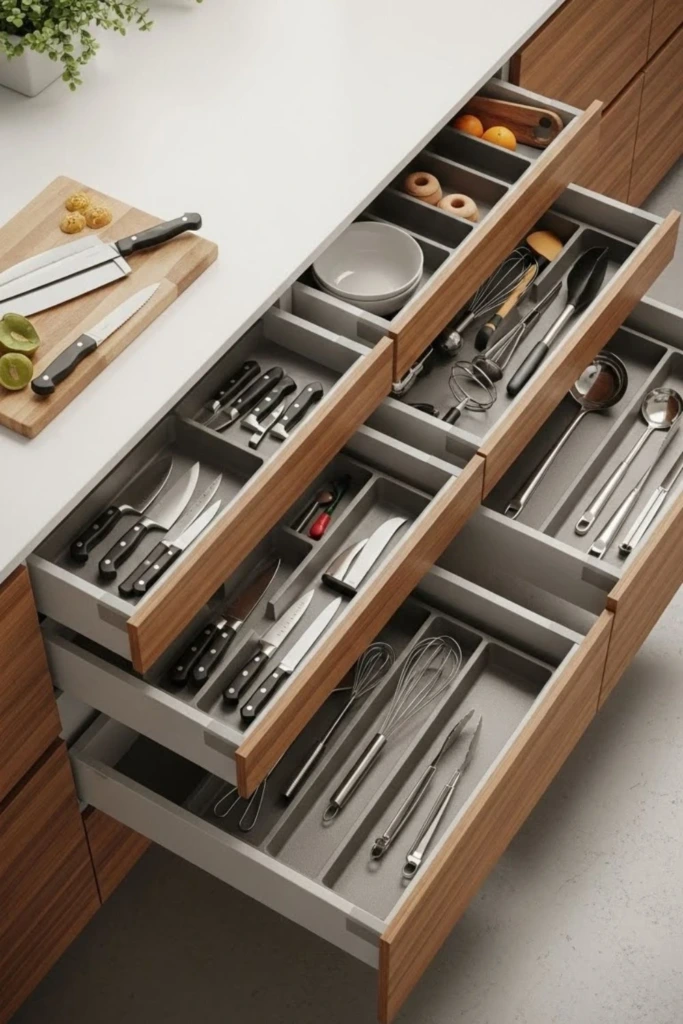
An efficient kitchen storage system follows the order in which you prepare meals. Instead of grouping everything only by item type, arrange essential tools so the next step of a recipe requires minimal movement.
For example, cutting boards and measuring tools can go near your preparation area, while mixing accessories belong close to the space where you combine ingredients. Cooking utensils should be accessible beside the stovetop, and serving tools can be stored near the dishes.
Adapt this arrangement to your kitchen layout and cooking habits. The goal is to reduce repeated trips between cabinets and keep the tools needed for each task within easy reach.
25. Overflow Control
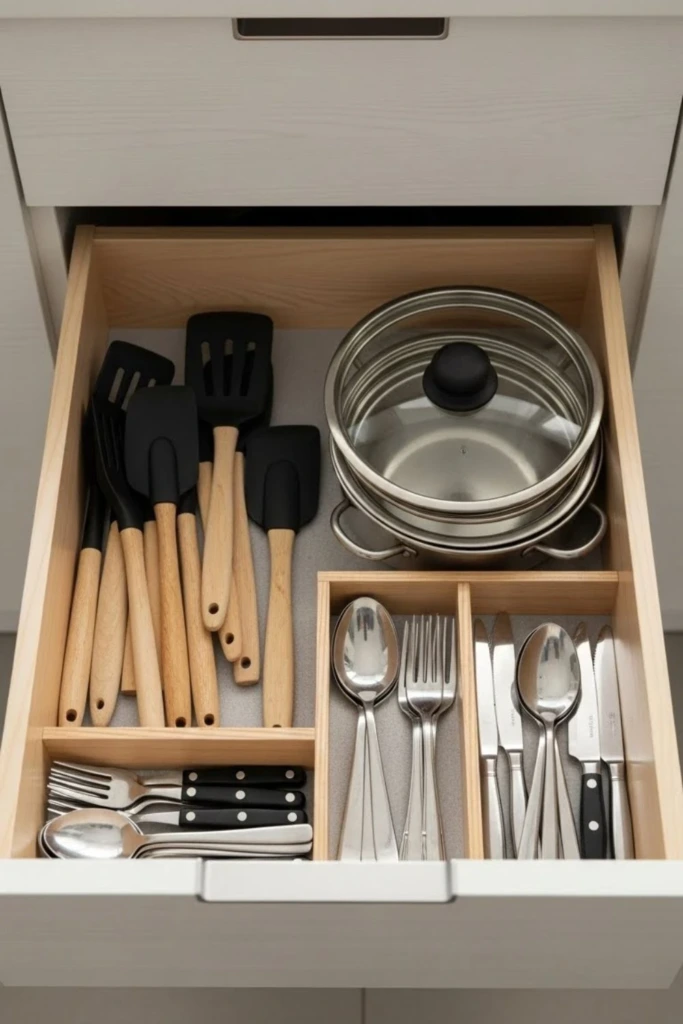
Overfilled drawers are difficult to maintain, even when they contain well-designed organizers. A separate overflow area gives duplicates, spare accessories, and occasional-use equipment a place without crowding everyday storage.
Choose a less convenient drawer or cabinet for backup spatulas, extra measuring cups, spare lids, and specialty gadgets. Keep the primary drawers reserved for the items you reach for most often.
Review the overflow section periodically and donate or discard suitable items that you no longer need. Leaving some empty space in frequently used drawers makes it easier to return equipment after cooking and reduces the need for constant rearranging.
26. Grip Zones
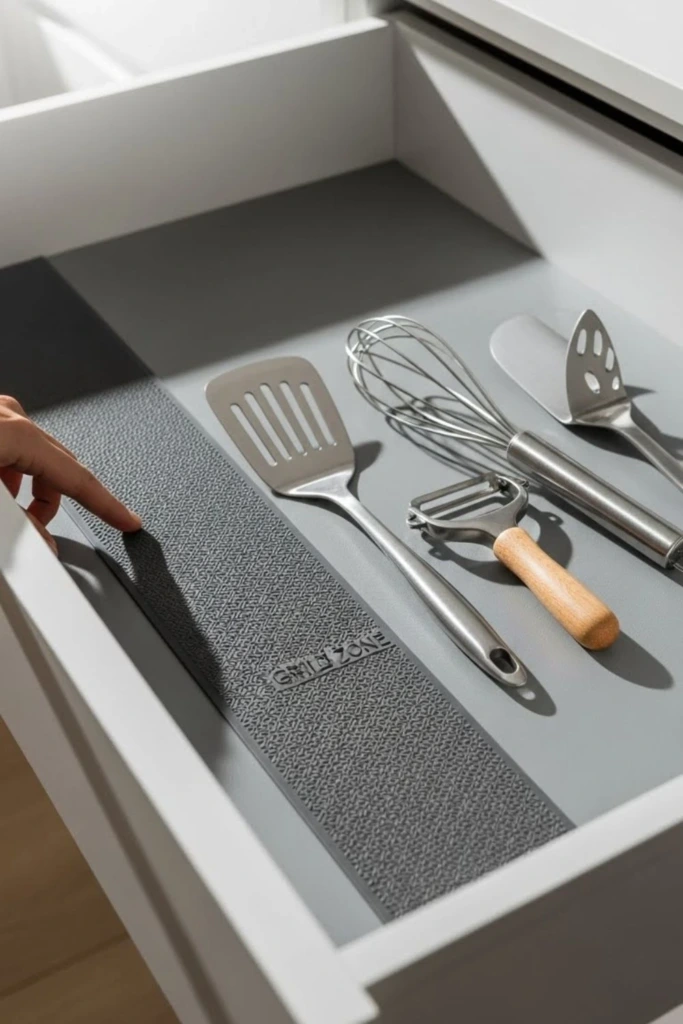
Utensils can shift around when drawers open and close, causing clutter and occasionally damaging delicate items. Non-slip liners help improve stability, particularly in drawers containing lightweight tools or small containers.
Measure the drawer base and cut the liner to fit without covering moving parts. Use a washable, food-safe material suitable for kitchen storage, and make sure it lies flat rather than bunching up beneath the organizer.
For a more flexible arrangement, combine a liner with dividers or fitted trays. The liner helps reduce sliding, while the compartments keep different categories of utensils separated. Clean and dry the liner regularly to prevent crumbs and moisture from accumulating underneath.
Why do kitchen drawers get messy again even after organizing them?
Kitchen drawers often become cluttered because the storage arrangement does not match how the household actually uses its tools. Too many items, poorly sized dividers, and inconvenient locations can make even a tidy drawer difficult to maintain.
Start by removing anything you no longer use, then group the remaining items according to purpose and frequency of use. Make sure each category has enough room and that the organizer fits the drawer properly.
It also helps to establish a simple habit of returning utensils to their designated compartments after use. An effective system should be easy enough to maintain during everyday cooking, not just immediately after a major cleanout.
Is it better to organize kitchen drawers by item type or by how often they’re used?
The most practical approach combines both methods. Keep frequently used items in accessible drawers near the areas where you need them, then arrange each drawer into logical categories.
For example, everyday cutlery belongs near the dishwasher or dining area, while cooking utensils should be close to the stovetop. Baking tools can be grouped together near your preparation space, with specialty equipment stored farther away.
Frequency of use determines accessibility, while item type determines how things are grouped within each drawer. Combining these principles creates a storage system that is easy to understand, convenient to use, and simpler to keep organized over time.