25 Hallway Closet Organization Ideas for 2026
A hallway closet can quickly become one of the most cluttered spaces in a home. Coats overlap, shoes pile up, and everyday essentials disappear beneath things nobody has touched in months. The good news is that you don't need a larger closet to make the space more useful.
With a few thoughtful adjustments, you can create a storage system that makes leaving the house easier and keeps frequently used items within reach. From vertical shelving to family-friendly storage zones, these hallway closet organization ideas offer practical ways to make the most of every inch.
How Can You Maximize Storage In A Small Hallway Closet?
Making a small hallway closet more functional starts with identifying which belongings deserve the easiest access. Remove anything that doesn't belong there, then separate daily necessities from seasonal items and occasional-use supplies.
Place frequently worn jackets, everyday shoes, and bags where you can reach them without moving other things. Store spare blankets, winter accessories, and less frequently used belongings on higher shelves in labeled containers.
Look for unused space on the inside of the door, above the hanging rod, and along the closet walls. Hooks, narrow organizers, and adjustable shelving can add useful storage without taking up much room. If the closet feels cramped, consider whether a shorter hanging section would leave enough space for a shoe rack or storage basket underneath.
The goal is to give every category a designated location while keeping the most important items easy to retrieve.
How Can You Organize A Hallway Closet For Both Adults And Kids?
A shared hallway closet works best when its layout accommodates everyone's height and daily habits. Children may struggle to maintain an organized space if their coats and backpacks are stored beyond their reach.
Install sturdy, child-height hooks for jackets, school bags, and hats. Assign each child a basket, shelf, or section of the closet so belongings don't become mixed together. Adults can use the higher hanging rod and upper shelves for their own items or things children shouldn't handle independently.
Keep everyday footwear on a low rack and reserve less accessible areas for seasonal accessories and spare supplies. Simple picture labels can help younger children recognize where their belongings belong.
When everyone has an easy-to-use storage spot, putting things away becomes a natural part of the daily routine rather than another chore for parents.
1. Door Storage
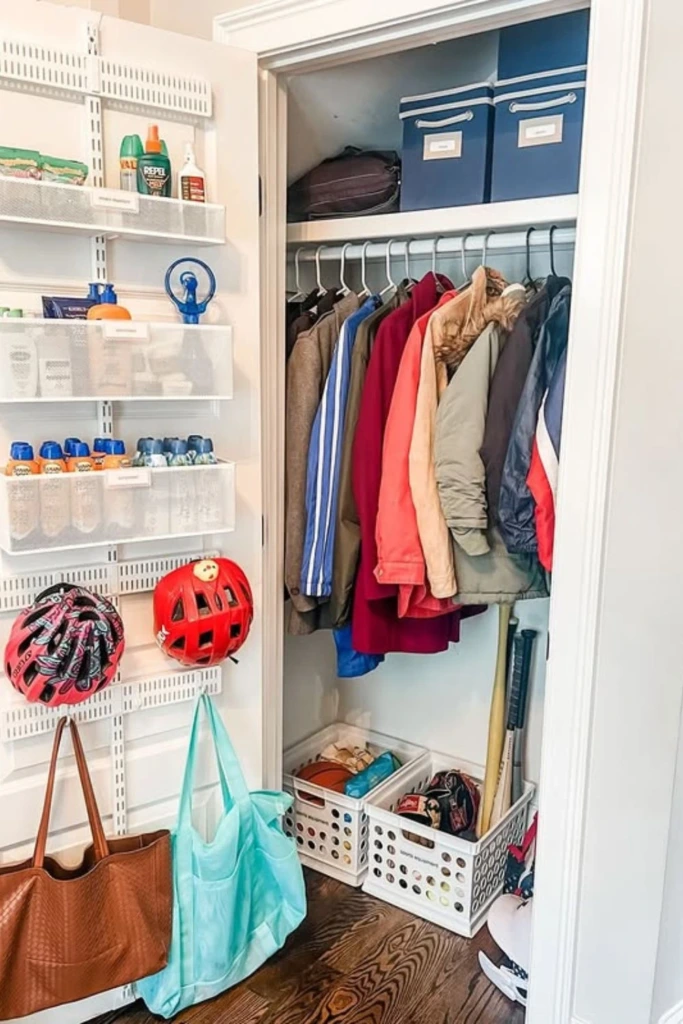
The inside of a hallway closet door can provide valuable storage when the main shelves are already full. Depending on the door's clearance, you can install a hanging organizer, slim racks, or sturdy hooks to hold lightweight accessories.
Use this area for gloves, scarves, hats, reusable shopping bags, and other small essentials that tend to get lost. A pocket organizer can also keep compact items separated instead of allowing them to collect in a single basket.
Before installing anything, check that the door closes properly and that the organizer won't interfere with hanging clothes. Choose mounting hardware suitable for the door material and the weight of the items.
2. Clear Bins
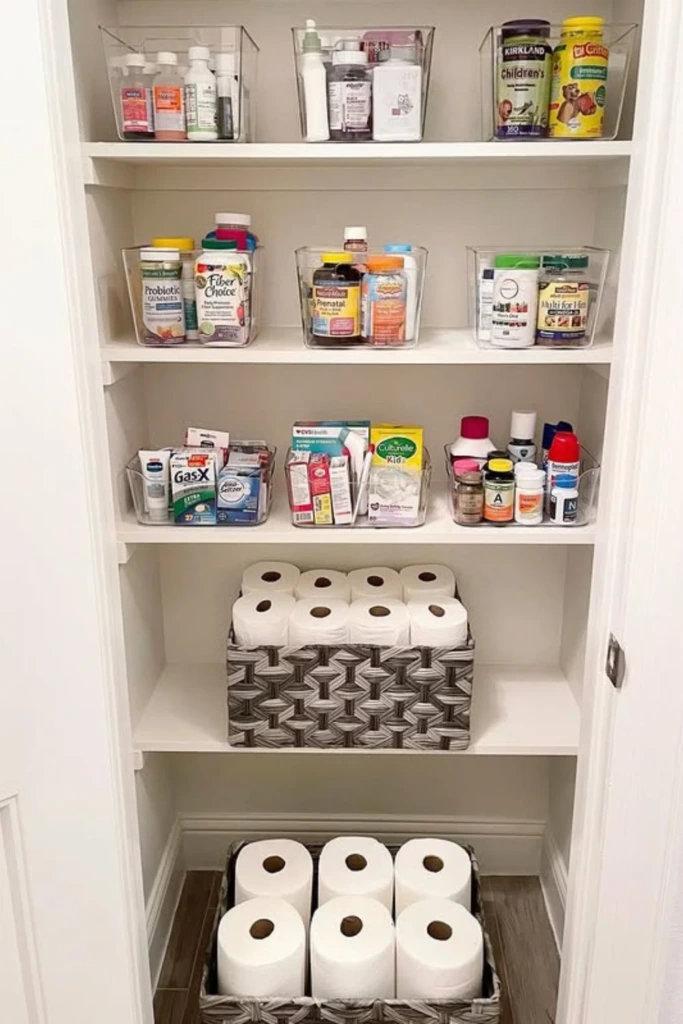
Transparent bins make it easier to identify stored belongings without opening every container. They are particularly useful for organizing spare household supplies, seasonal accessories, and small items that would otherwise become scattered across shelves.
Group similar belongings together rather than combining unrelated objects in one container. For example, keep winter accessories in one bin and extra household essentials in another. Label the front of each container so other family members can quickly find what they need.
Place heavier containers on lower shelves and lighter items above them. If the closet holds medicines or potentially hazardous products, use secure storage away from children rather than leaving them in easily accessible bins.
3. Zoned Shelving
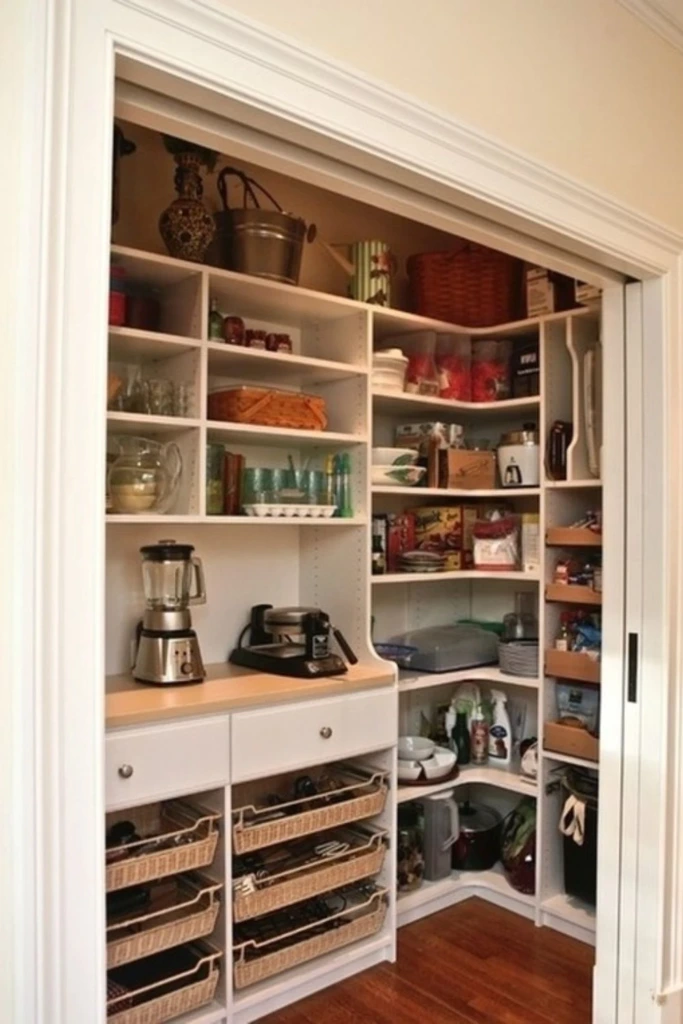
Dividing a hallway closet into clearly defined sections helps prevent different categories of belongings from competing for the same space. Instead of placing items wherever an empty spot appears, decide what each shelf or section will hold.
One area might be dedicated to outerwear, another to shoes, and a third to household cleaning supplies or spare linens. Use shelf dividers or small baskets to maintain those boundaries.
Adjustable shelving is especially helpful because it allows you to accommodate tall boots, folded blankets, or cleaning equipment as your needs change. For deeper closets, place frequently used belongings toward the front and occasional-use items farther back.
A well-planned layout makes it easier to spot clutter before it spreads.
4. Cubby Control
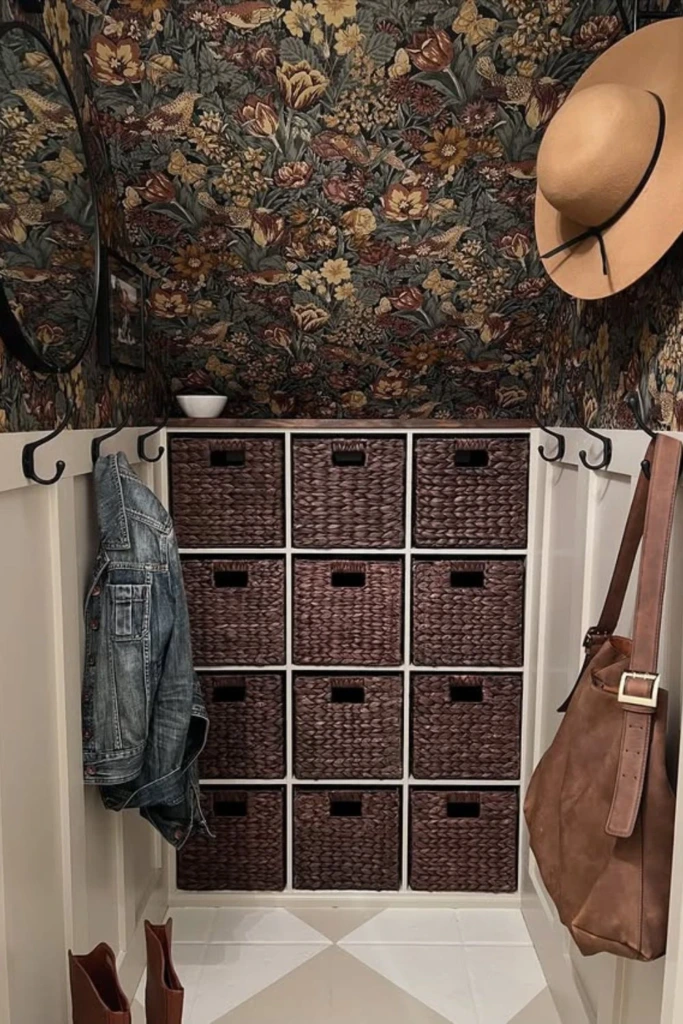
Cubbies provide individual storage compartments for the smaller belongings that usually end up scattered across the closet floor. They work particularly well for gloves, scarves, hats, pet accessories, and reusable bags.
Assign one compartment to each category or household member. Add baskets inside larger cubbies if you need to contain loose accessories and keep them from spilling into neighboring spaces.
Hooks alongside the cubbies can hold backpacks, lightweight jackets, and handbags. Keep footwear on a separate shelf or rack to prevent dirt from transferring to clean accessories.
Choose compartments that are easy to reach and large enough for the items they hold. The more convenient the arrangement, the easier it will be for everyone to maintain it.
5. Label Logic
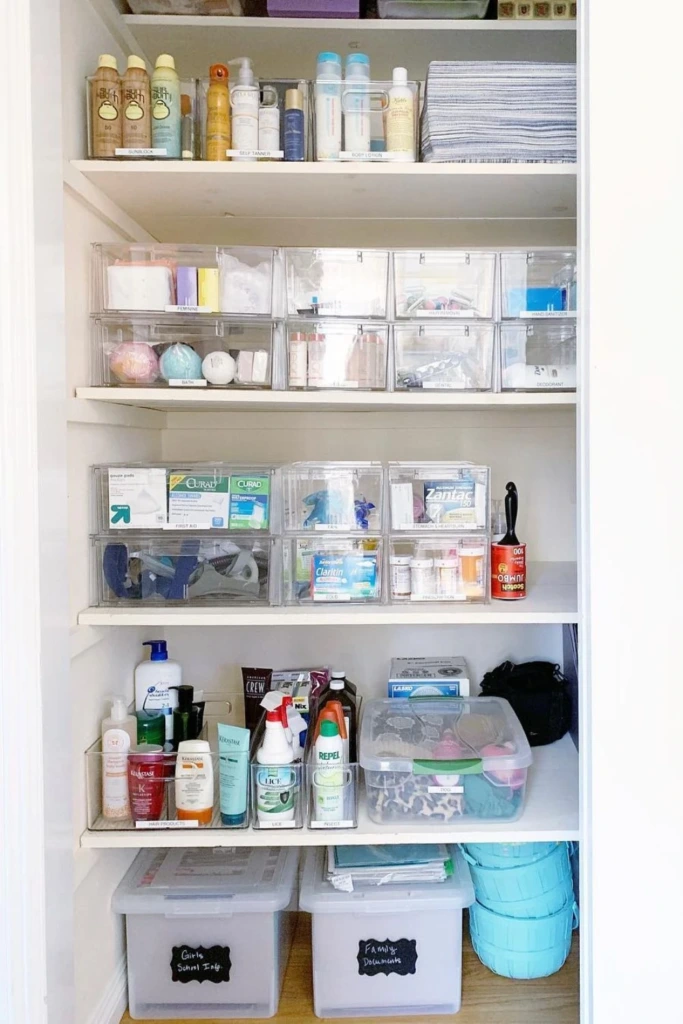
Labels turn a collection of storage containers into a system that everyone can understand. Without them, even neatly arranged bins can become confusing when several categories look alike.
Use short, specific labels such as "Gloves," "Dog Supplies," "Winter Hats," or "Extra Linens." Place labels on the front of baskets and bins so they remain visible when the containers are stored on shelves.
Clear containers work well with labels because you can see their contents at a glance while still knowing where each item belongs. For opaque baskets, labels become even more useful.
If several people share the closet, keep the wording consistent and avoid creating too many categories. A straightforward labeling system saves time during both daily use and routine restocking.
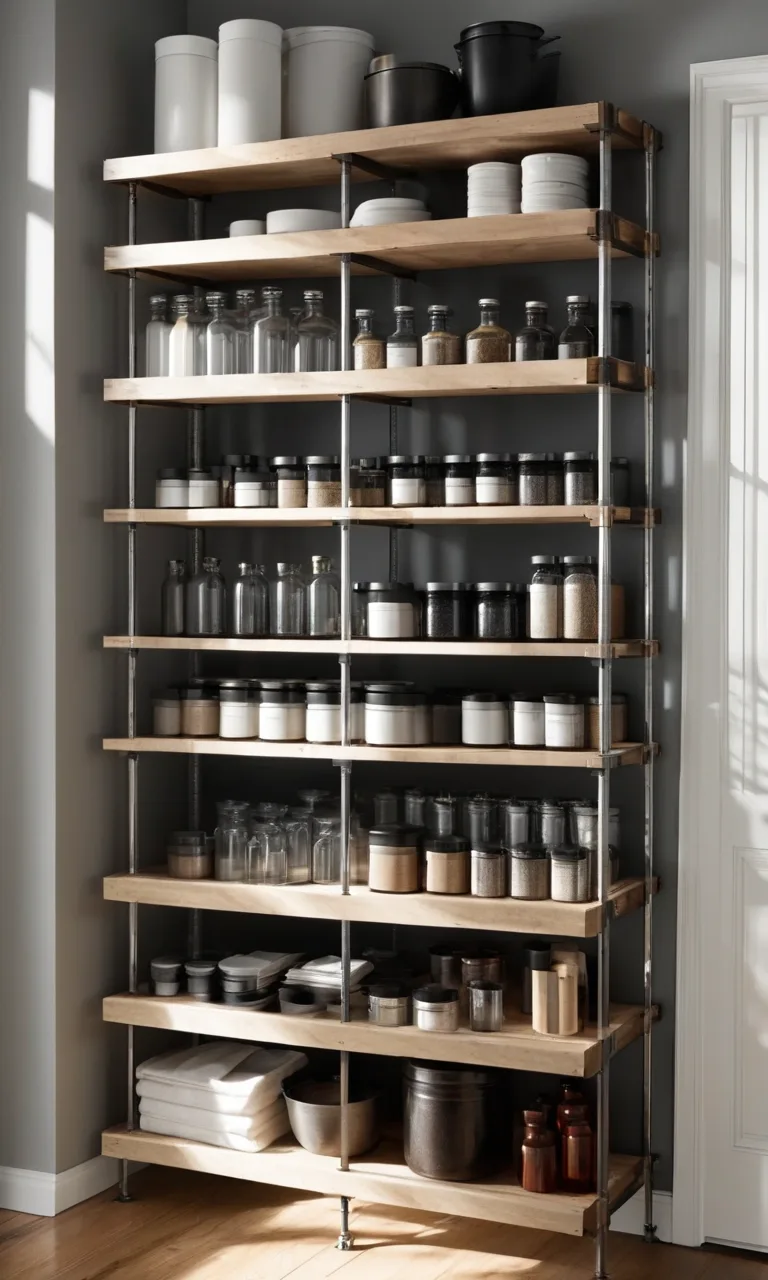
6. Vertical Balance
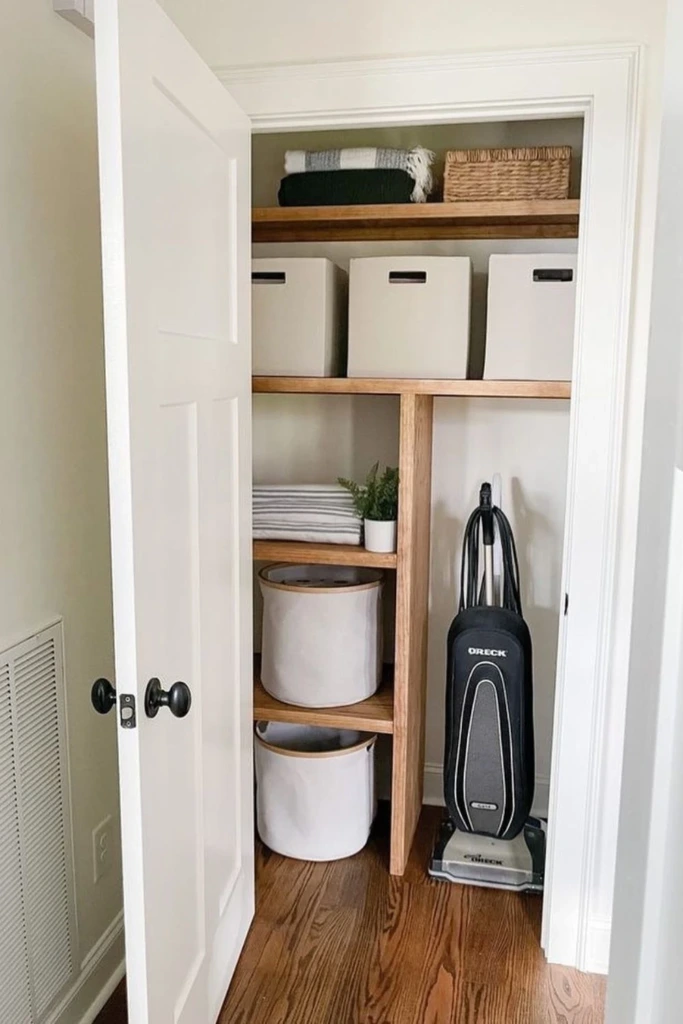
Using the closet's height effectively can free up floor space for larger or heavier belongings. A narrow shelving unit or a combination of wall-mounted shelves and hooks creates separate storage levels without requiring a wider closet.
Store tall equipment, such as a vacuum cleaner or mop, in a designated vertical space. Place folded blankets, spare towels, and smaller storage containers on nearby shelves.
Keep heavy items low and frequently used belongings at a comfortable height. Reserve the uppermost shelf for lightweight seasonal accessories or items you rarely need.
Measure the available height and width before purchasing a shelving unit, especially if the closet has a narrow doorway. A properly fitted vertical organizer can make an awkward storage area considerably easier to use.
7. Bench Storage
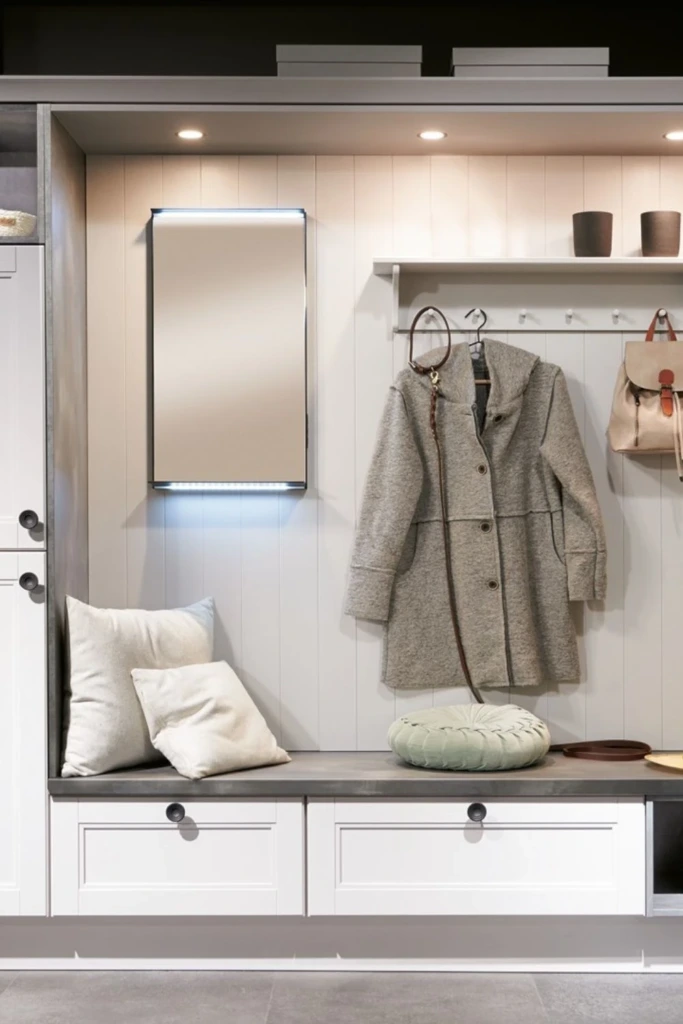
A storage bench can transform a hallway closet or nearby entryway into a convenient place to put on shoes and organize everyday belongings.
Choose a bench with drawers, lift-up seating, or open cubbies underneath. Closed compartments are useful for hiding visual clutter, while open sections make frequently worn shoes easier to grab.
Install hooks above the bench for jackets, backpacks, and handbags. If space permits, add a shelf overhead for hats or seasonal accessories.
A bench is most effective when it fits comfortably within the available walkway and doesn't obstruct the closet door. Keep its compartments reserved for specific items so they don't become another place to accumulate miscellaneous clutter.
8. Double Hanging
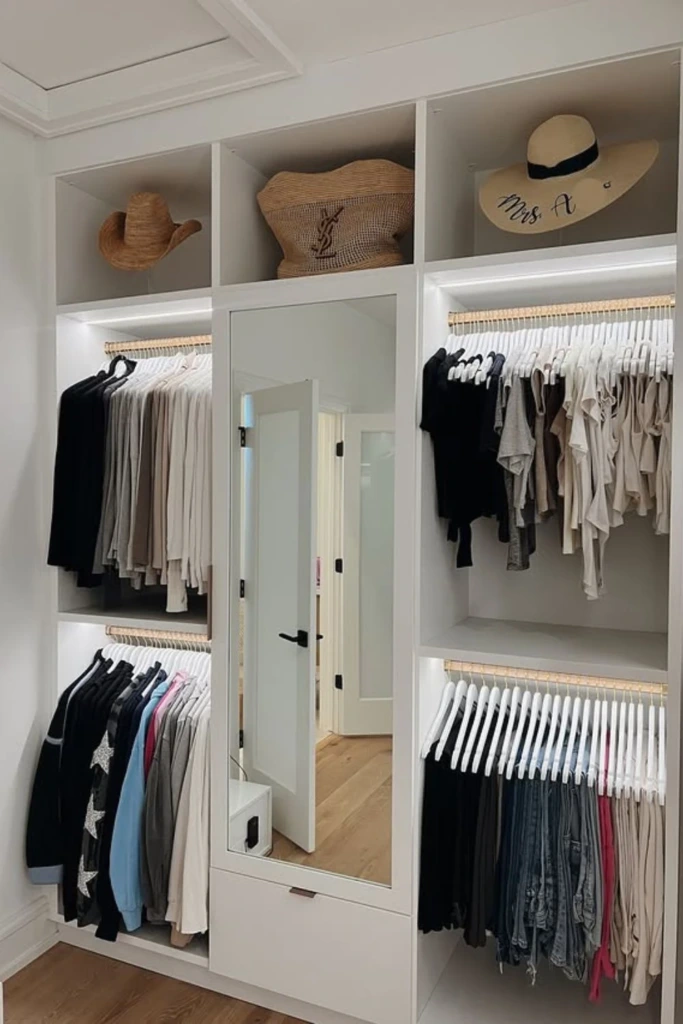
A second hanging rod can significantly increase the capacity of a closet with enough vertical clearance. Rather than leaving a large empty gap beneath shorter garments, use that space for another row of jackets or other suitable clothing.
The upper rod can hold adult jackets, while the lower rod accommodates shorter coats or children's outerwear. Alternatively, separate everyday clothing from occasional-use garments.
Use slim hangers to reduce wasted width and leave enough space between garments for easy access. If the closet is deep enough, an overhead shelf can hold hats, folded accessories, or labeled seasonal containers.
Double hanging is less suitable for long coats, dresses, or other garments that need additional vertical clearance. Measure your clothing before changing the rod arrangement to avoid creating a setup that is difficult to use.
9. Linen Cabinet
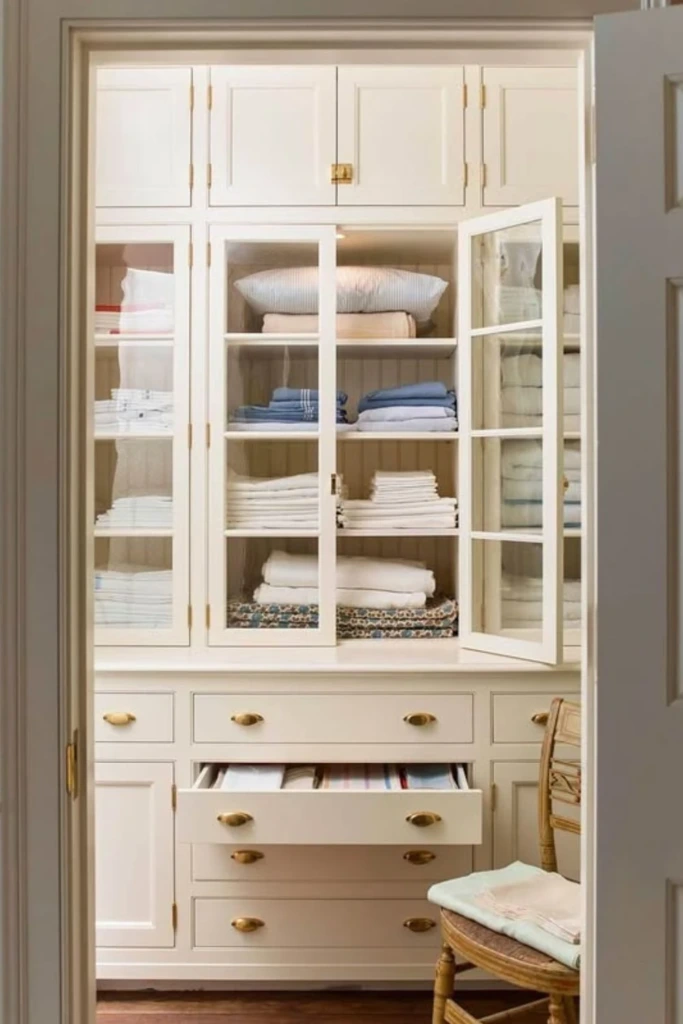
If your hallway closet also stores towels, sheets, and blankets, a dedicated linen section can keep these items separate from coats and shoes.
Use adjustable shelves to create spaces suited to different types of fabric. Store sheet sets together, fold towels into manageable stacks, and place spare blankets on a shelf with sufficient clearance.
Baskets or drawers can contain smaller items such as washcloths, pillowcases, and extra toiletries. Label containers when several people use the same storage area.
Keep clean linens away from damp footwear and cleaning chemicals. If the closet is narrow, consider storing bulky bedding on a higher shelf while keeping frequently used towels at a convenient height.
A clearly defined linen area prevents fabric items from becoming mixed with unrelated household supplies.
10. Family Lockers
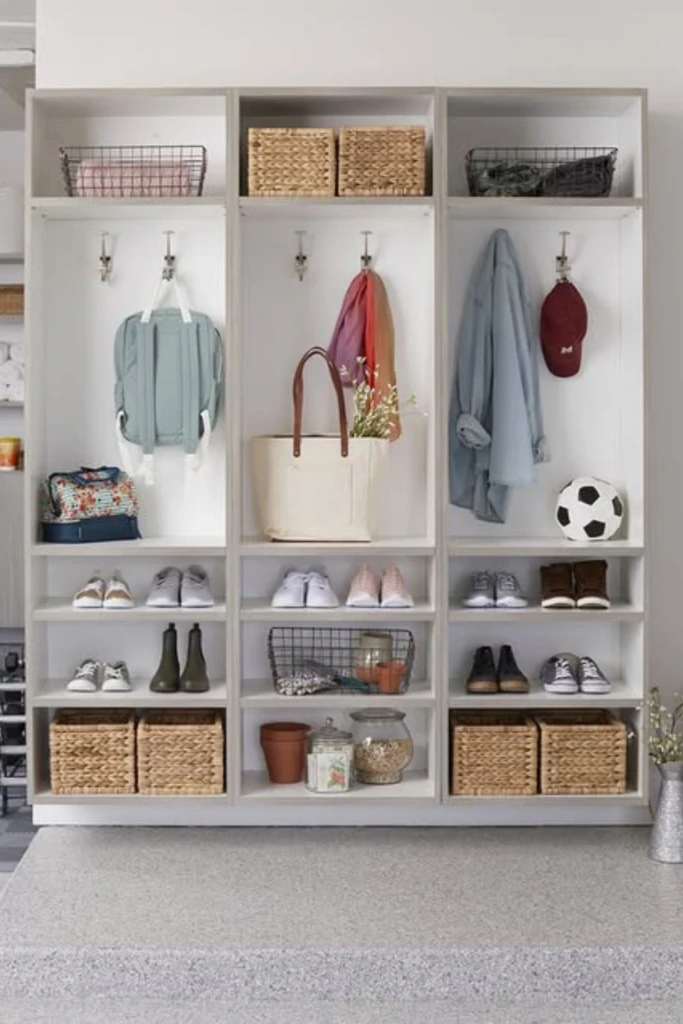
Individual locker-style sections can make a shared hallway closet easier to manage, especially in busy households. Each person receives a dedicated space for coats, bags, shoes, and everyday accessories.
Create these sections using vertical dividers, hooks, shelves, or labeled baskets. Keep children's storage low enough for them to use independently, while adults can use higher shelves for less frequently needed belongings.
A small basket in each section can hold gloves, hats, and other loose accessories. Shoes should have their own clearly defined spot to prevent them from spreading across the closet floor.
You don't necessarily need custom-built lockers. A combination of inexpensive cubbies, hooks, and baskets can create a similar arrangement while allowing you to change the layout later.
11. Personal Sections
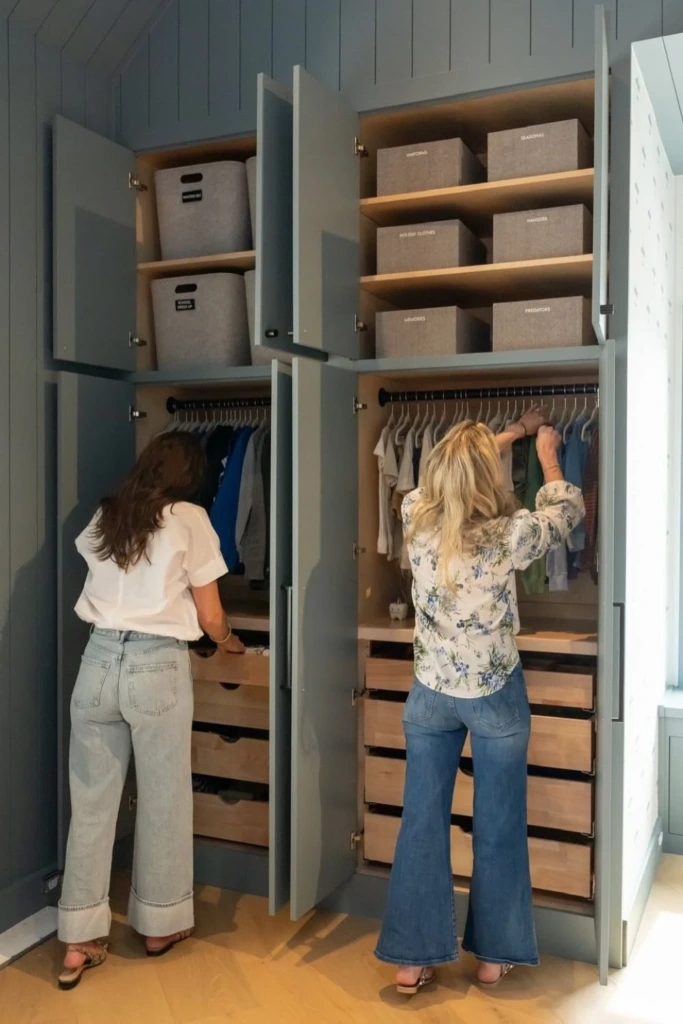
When several adults share a hallway closet, dividing the available space by person can prevent belongings from becoming mixed together.
Assign each person a portion of the hanging rod, a shelf, or a set of drawers. Keep commonly used jackets and accessories in the designated section, with seasonal belongings stored above or elsewhere.
Personal baskets can hold scarves, gloves, hats, and smaller everyday items. If some family members own significantly more outerwear than others, divide the space according to actual storage needs rather than insisting on identical sections.
The main advantage of this arrangement is accountability. Each person can quickly identify their belongings and return them to the appropriate place without reorganizing the entire closet.
12. Shoe Command
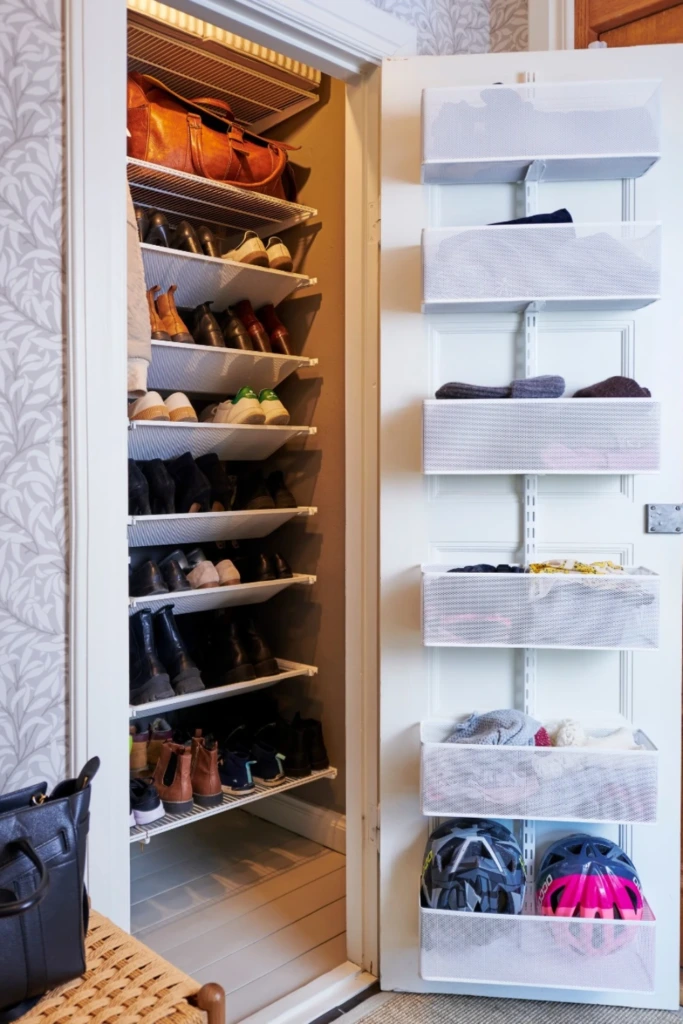
Shoes can consume most of a small hallway closet's floor space when pairs are left in an unstructured pile. A dedicated shoe rack or adjustable shelving system helps keep footwear visible and easy to retrieve.
Arrange everyday shoes on the lowest shelves and move occasional-use footwear to higher or less accessible areas. If the closet is narrow, a compact vertical rack may hold more pairs than a wide, low organizer.
Over-the-door pockets can accommodate lightweight accessories such as shoe-care products, spare laces, or gloves, provided the door can close safely. Avoid placing heavy footwear in organizers that aren't designed to support it.
Allow wet shoes to dry before storing them in enclosed spaces. A washable tray beneath the rack can catch dirt and moisture, making routine cleaning easier.
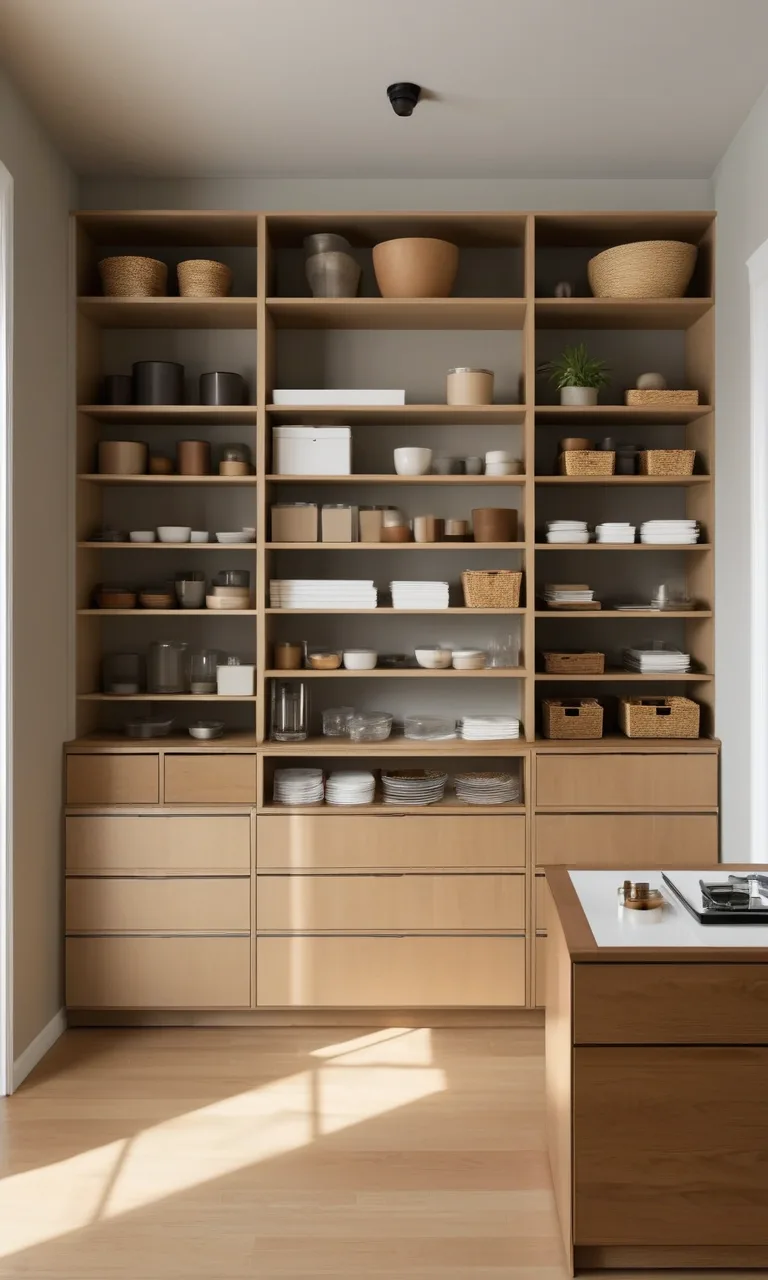
13. Drawer Wall
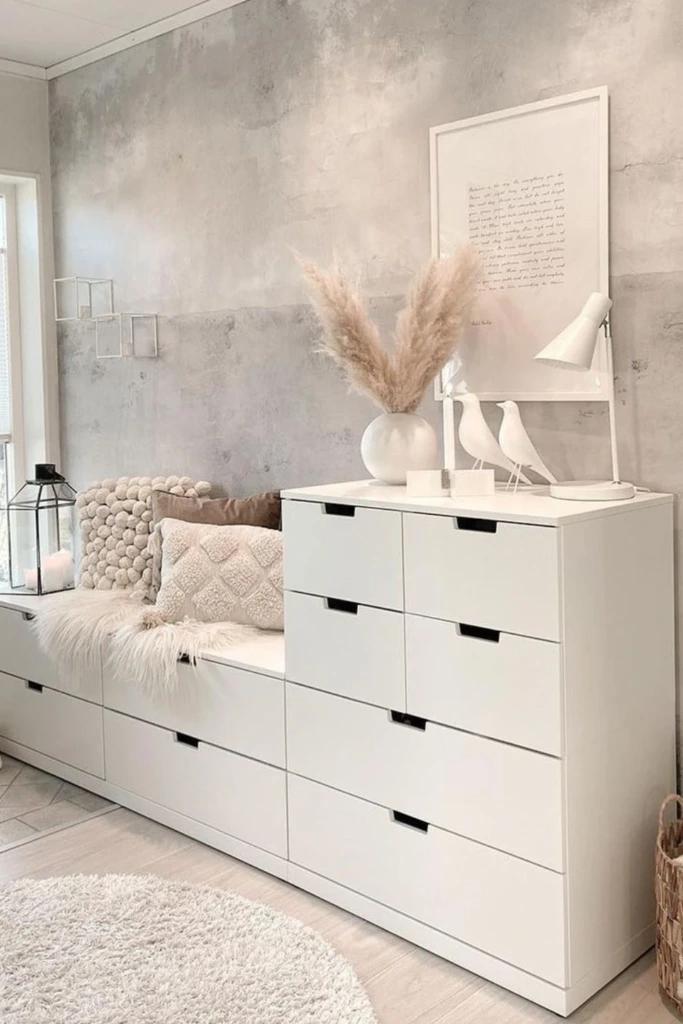
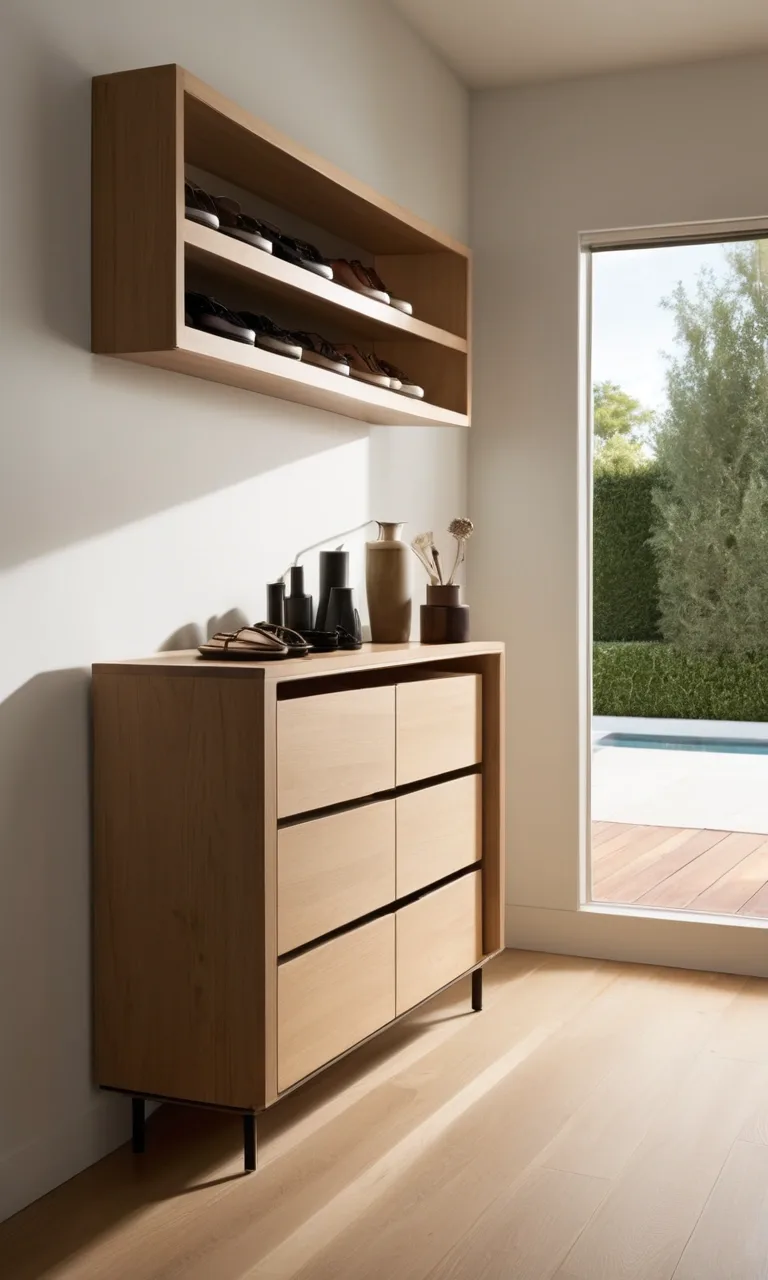
If the hallway closet cannot accommodate all your everyday belongings, a nearby drawer unit may provide additional storage without requiring a larger closet.
Choose a narrow cabinet that fits against an available hallway wall while leaving enough room for people to pass comfortably. Use the drawers for scarves, hats, gloves, small bags, and other accessories that are difficult to arrange on open shelves.
The top surface can serve as a temporary landing area for items you need when leaving home. Keep this surface limited to a few essentials so it doesn't become another cluttered zone.
Measure the available wall space and check that drawers can open fully without obstructing doors or walkways. A well-positioned cabinet extends your storage capacity while keeping the main closet less crowded.
14. Cleaning Command
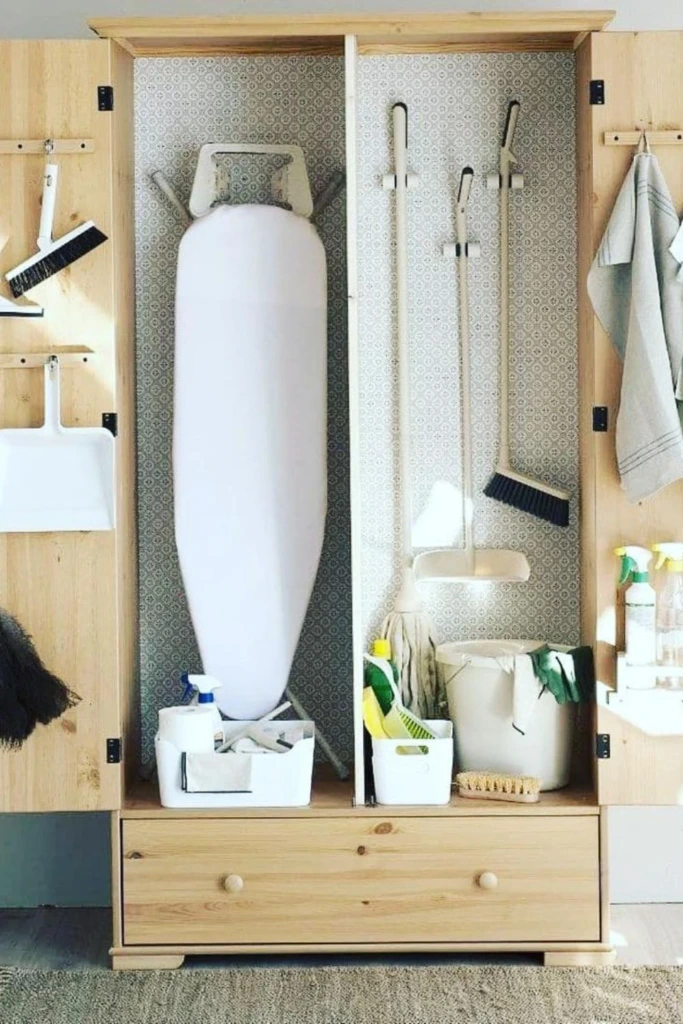
A hallway closet used for cleaning equipment benefits from a layout that keeps tools upright and supplies grouped by purpose.
Install suitable wall hooks or a purpose-built tool holder for brooms, mops, and dustpans. A tall, narrow section can accommodate a vacuum cleaner or ironing board, while shelves hold cloths, sponges, and refill containers.
Use a handled caddy to carry frequently used cleaning products between rooms. Keep liquids in secure, leak-resistant containers and place them on a stable shelf rather than above delicate belongings.
Store hazardous products according to their labels and keep them inaccessible to children and pets. Never transfer chemicals into unmarked containers or store incompatible products together.
Separating tools from smaller supplies makes the closet easier to navigate and helps you notice when products need replenishing.
15. Assigned Spots
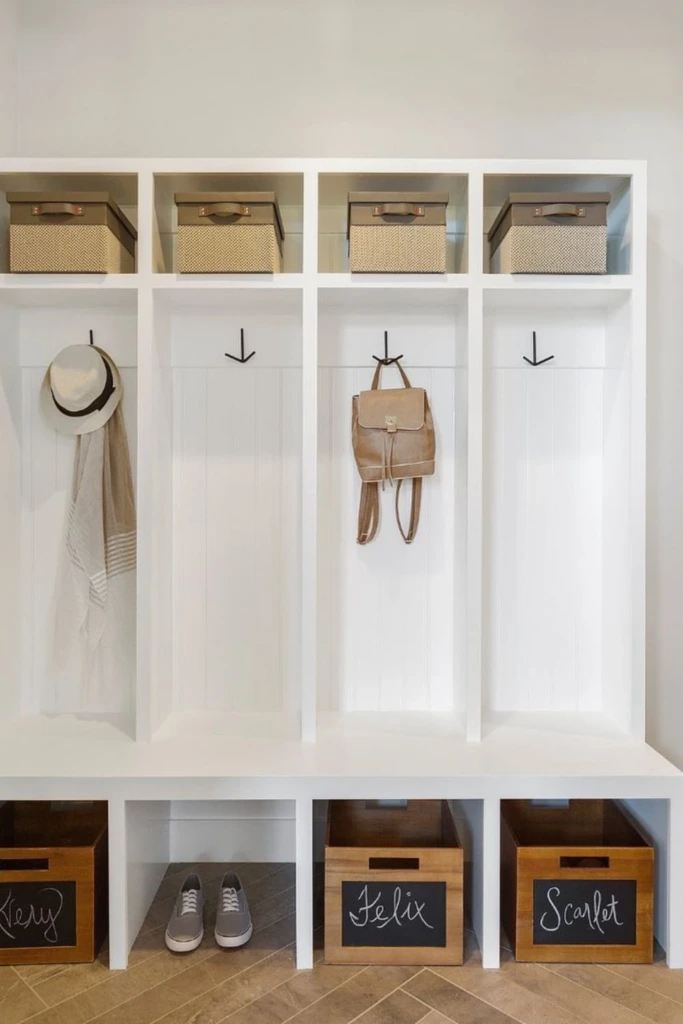
An effective hallway closet doesn't require an elaborate storage system. It requires a clear place for each item and a routine for returning belongings after use.
Give everyday shoes a designated rack, hang bags on specific hooks, and keep small accessories in labeled baskets. If several people use the closet, assign individual hooks or containers to reduce confusion.
A bench or nearby shelf can provide a convenient place to handle items before heading out. However, avoid allowing this surface to become a permanent collection point for unrelated belongings.
Make sure the storage arrangement matches your household's actual habits. If people consistently drop their bags near the door, placing hooks there may be more effective than expecting everyone to carry those bags deeper into the closet.
16. Overflow Storage
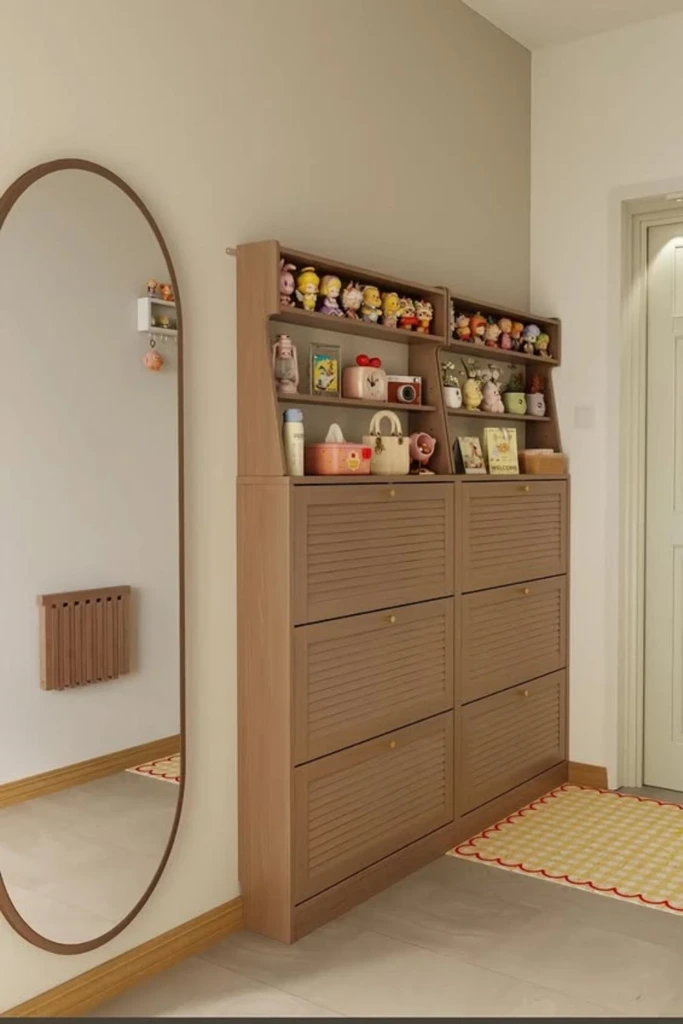
Sometimes the closet simply cannot hold every household item, even after unnecessary belongings have been removed. In that situation, a separate storage piece in the hallway may offer a practical solution.
A slim cabinet can accommodate spare shoes, handbags, seasonal accessories, or other belongings that don't need to occupy prime closet space. Open shelves provide convenient access to frequently used items, while closed compartments keep less attractive supplies out of sight.
Use the additional storage selectively. Moving every miscellaneous object into another cabinet may hide clutter without solving the underlying problem.
Choose a piece that complements the hallway and leaves the main walking route unobstructed. Before purchasing it, measure the available floor space and account for nearby doors, switches, and furniture.
17. Drop Station
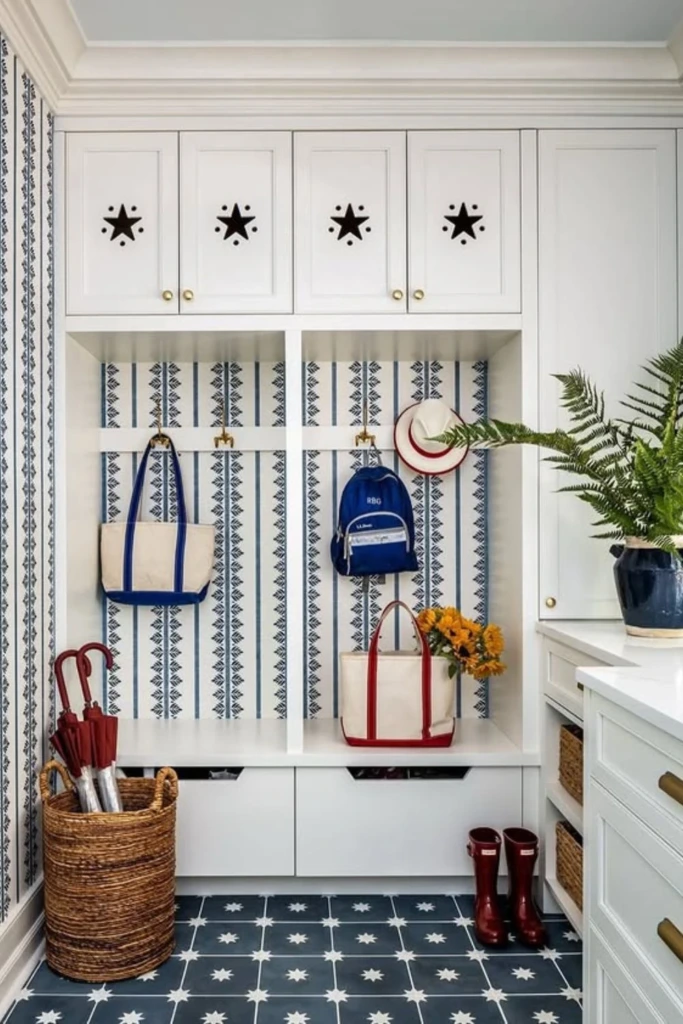
A designated drop station creates a predictable place for everyday belongings as soon as you enter the house.
Install hooks for coats, bags, and hats, with a small shelf or cabinet for other essentials. Drawers can hold gloves, sunglasses, and similar accessories, while an upper compartment stores seasonal gear or backup supplies.
If you have children, provide lower hooks and baskets so they can put away their own belongings. Adults can use the upper sections for items that require more careful handling.
Keep the station focused on things associated with coming and going. Mail, household paperwork, and unrelated objects should have separate storage areas so the entryway doesn't become overwhelmed.
A consistent drop-off routine reduces last-minute searches and makes it easier to leave home on time.
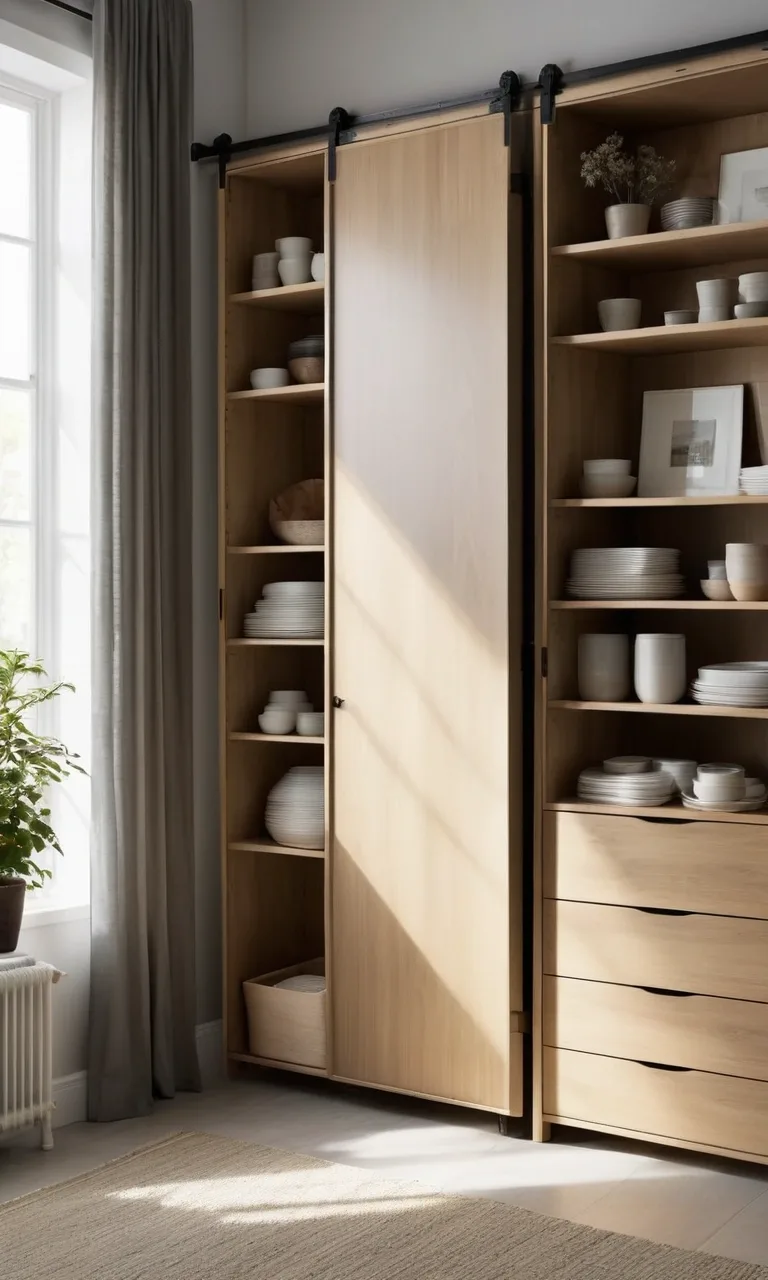
18. Sliding Storage
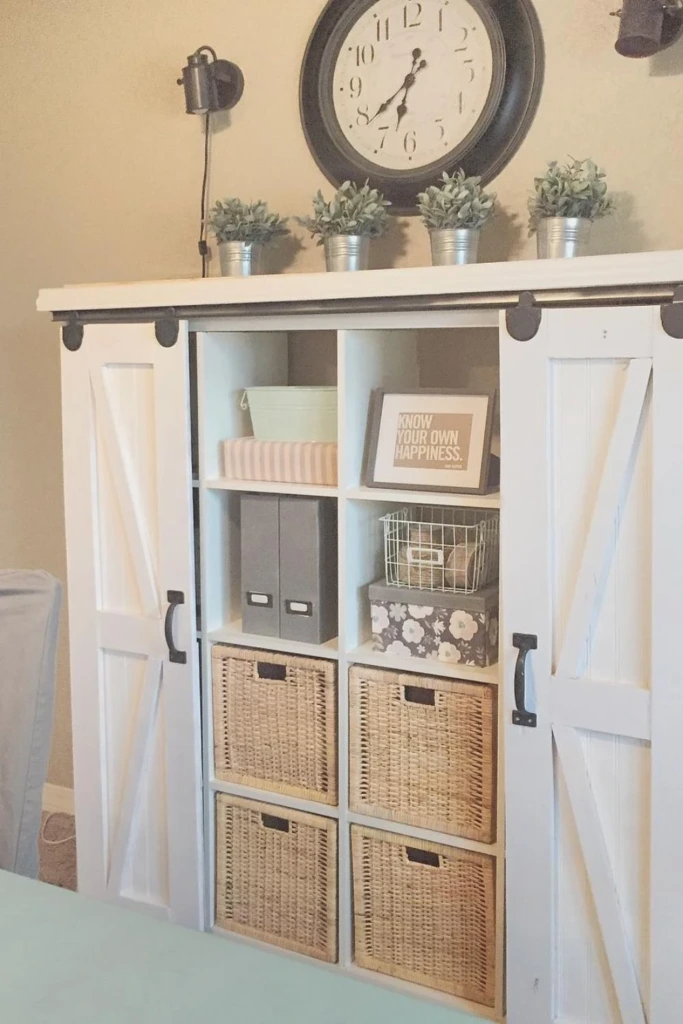
Sliding-door cabinets can provide additional storage in a hallway where conventional doors would take up too much clearance.
Inside the cabinet, use shelves and baskets to separate shoes, accessories, documents, and other household items. Choose adjustable compartments when possible so the interior can adapt to changing storage needs.
Sliding fronts keep the contents less visible, which can make the hallway appear tidier. However, closed doors alone won't prevent clutter, so assign each compartment a specific purpose.
A freestanding unit can be useful when you want additional storage without committing to permanent built-ins. Measure the available wall space, cabinet depth, and walking clearance before selecting a model.
This approach is particularly helpful when a small hallway needs more storage but cannot accommodate doors that swing outward.
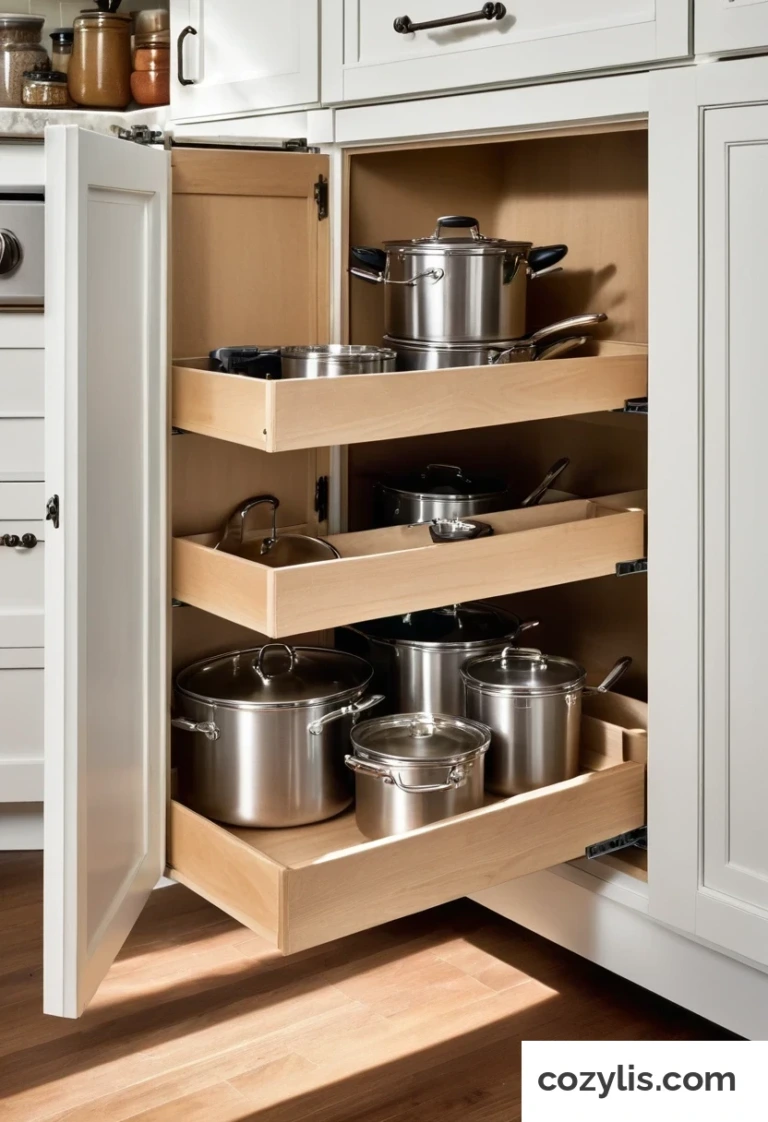
19. Pull-Out Pantry
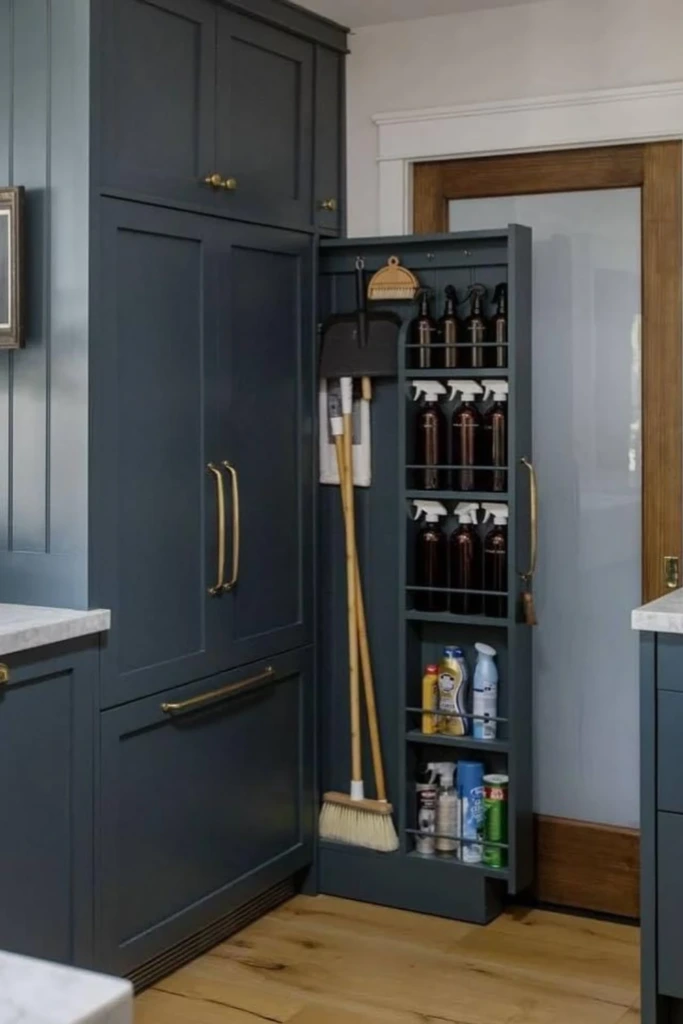
Narrow gaps beside existing shelving or between furniture and walls can sometimes accommodate a slim pull-out organizer. These units use a compact footprint while providing access to supplies stored along a vertical frame.
Depending on the product and its location, a pull-out cabinet may hold cleaning refills, small tools, household accessories, or other lightweight items. Choose a model with enough capacity for the intended contents and a mechanism that moves smoothly.
Before installing one, measure the gap carefully, including any baseboards, door trim, and handle clearance. Check the manufacturer's weight limits and secure the unit according to its instructions.
Keep frequently used supplies toward the front of the organizer and group similar items together. A pull-out system works best when everything remains visible and accessible rather than becoming tightly packed.
20. Rotation Shelf
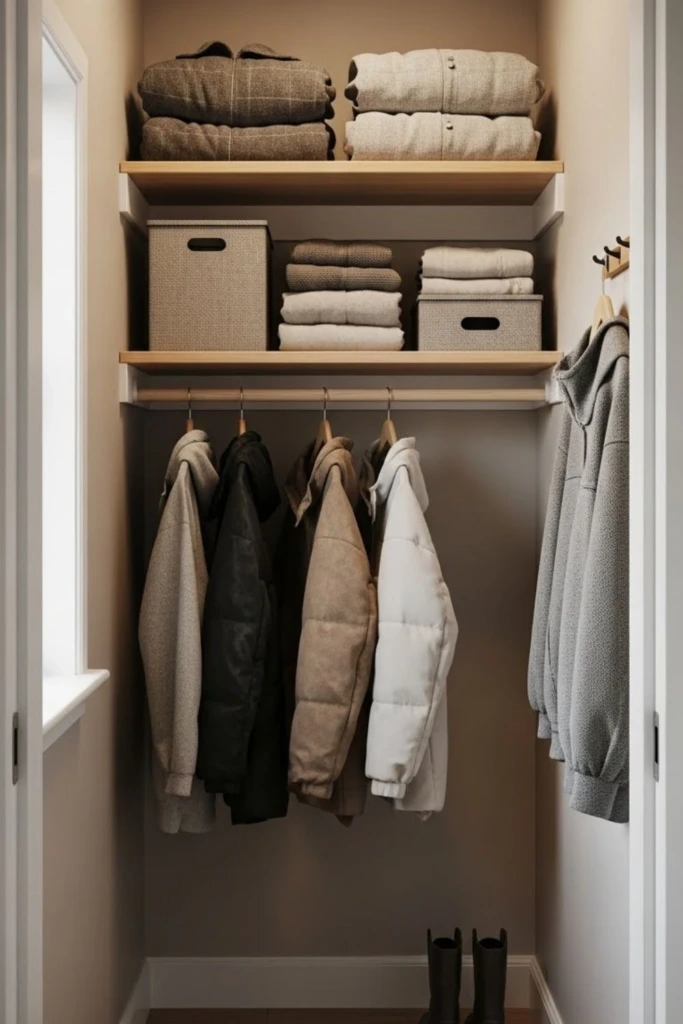
Seasonal belongings can take up valuable space when they remain in the main storage area throughout the year. A dedicated rotation shelf makes it easier to change the closet's contents as weather and household needs change.
During warmer months, store bulky winter accessories and rarely worn cold-weather items in labeled containers. When temperatures drop, exchange them for the seasonal belongings you need most.
Set a reminder to review the shelf twice a year, or whenever your household's routine changes. Before putting items away, make sure they are clean and completely dry.
Use the upper shelf for lightweight containers that you can retrieve safely. If an item is rarely used and doesn't fit comfortably within the designated space, consider whether it belongs elsewhere.
A simple seasonal rotation keeps the most useful parts of the closet available for everyday essentials.
21. Exit Tray
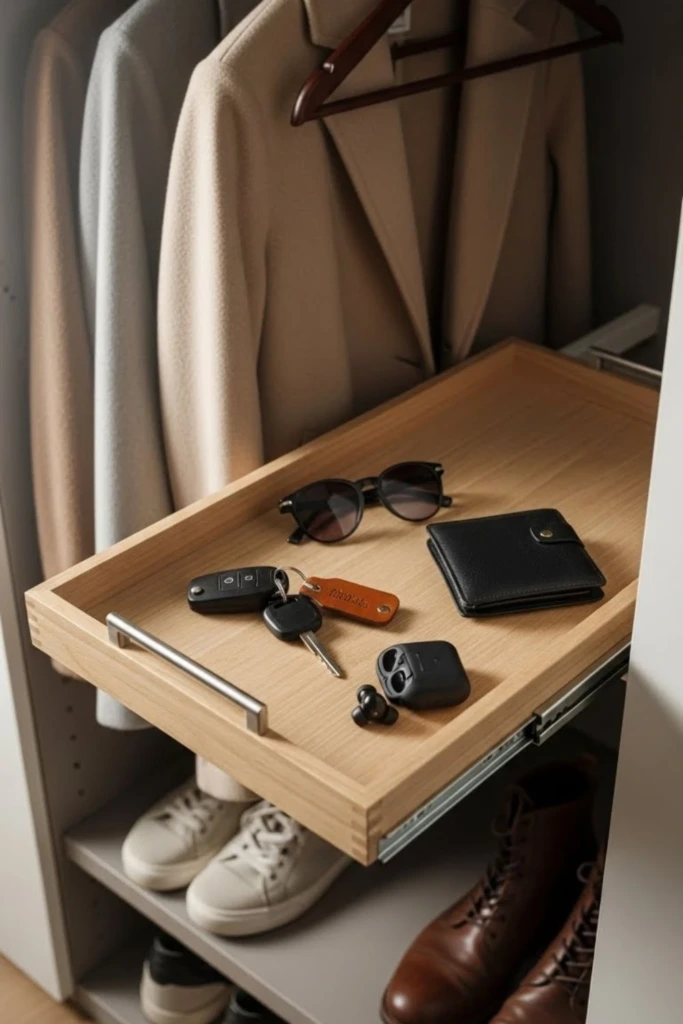
Small essentials such as keys, wallets, sunglasses, and access cards are easy to misplace when they lack a consistent home. A shallow tray inside the closet or on a nearby shelf can provide a reliable place to keep them.
Choose a location that you naturally pass when leaving the house. If the closet has a suitable shelf, a small removable tray can keep loose items contained without requiring permanent installation.
Use separate compartments for items that look similar, and avoid piling receipts, coins, and miscellaneous objects into the same space. If you regularly carry several sets of keys, label them or use distinct key rings.
Keep the tray away from areas where coats or bags can knock things onto the floor. A simple, consistent drop-off habit can eliminate many last-minute searches.
22. Soft Divider
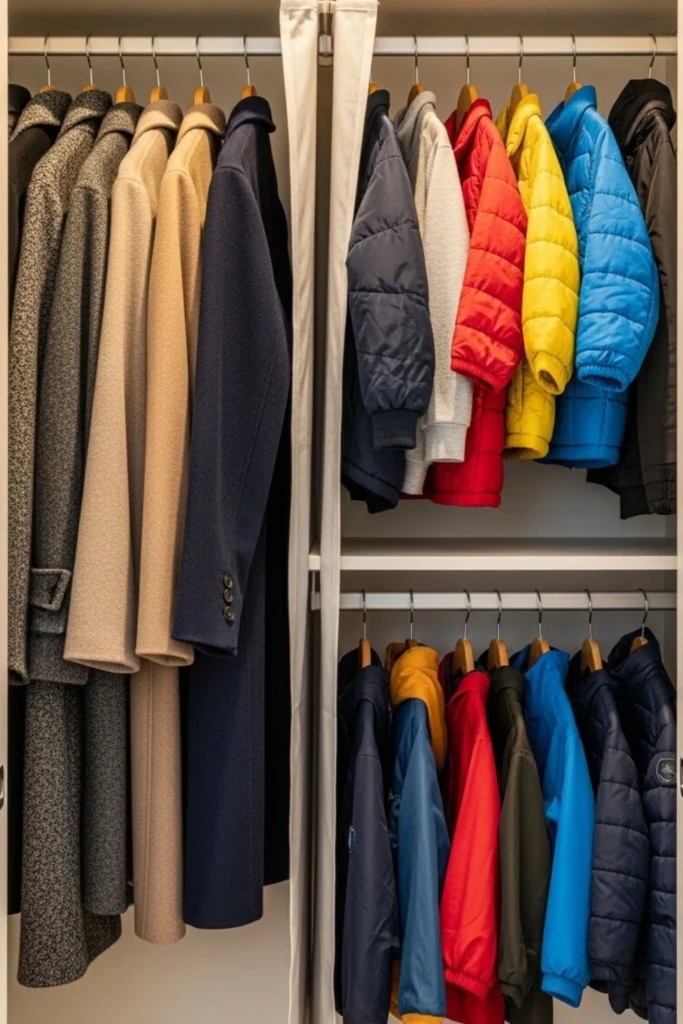
When jackets and coats share one long hanging rod, garments can become tangled or crowded together. Fabric dividers offer a simple way to separate sections without making permanent changes to the closet.
Slide dividers onto the rod to mark categories such as adult coats, children's jackets, and lightweight outerwear. You can also use different sections for school bags, workwear, or seasonal clothing accessories.
Because these dividers are lightweight, they can be useful in rental homes where drilling or installing additional hardware isn't practical. Choose durable materials that won't snag clothing or shift too easily.
Remember that dividers organize the existing space rather than increasing its capacity. If garments are still tightly packed, remove items that no longer fit your household's needs or relocate seasonal clothing.
23. Drop Basket
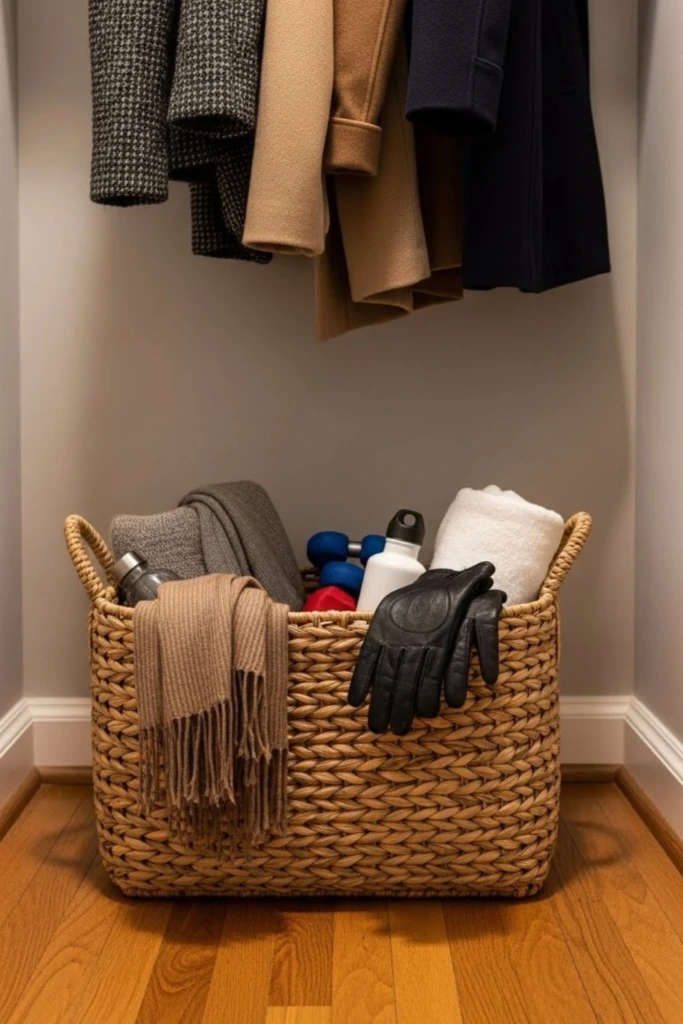
A dedicated basket can prevent small, frequently used belongings from spreading across the closet floor. It provides a convenient temporary home for items such as scarves, gloves, hats, and lightweight accessories.
Select a basket that fits neatly beneath the hanging clothes or on a low shelf. An open design makes it easy to drop items inside, while a washable liner can help contain dirt from frequently handled accessories.
Keep the basket limited to one category or a small group of related belongings. If it becomes a catch-all for everything that doesn't have a proper home, it will eventually recreate the same clutter you're trying to eliminate.
Empty and sort the basket regularly, returning misplaced items to their designated locations. This approach offers a low-maintenance solution for busy households that need convenience more than perfect visual uniformity.
24. Height Reset
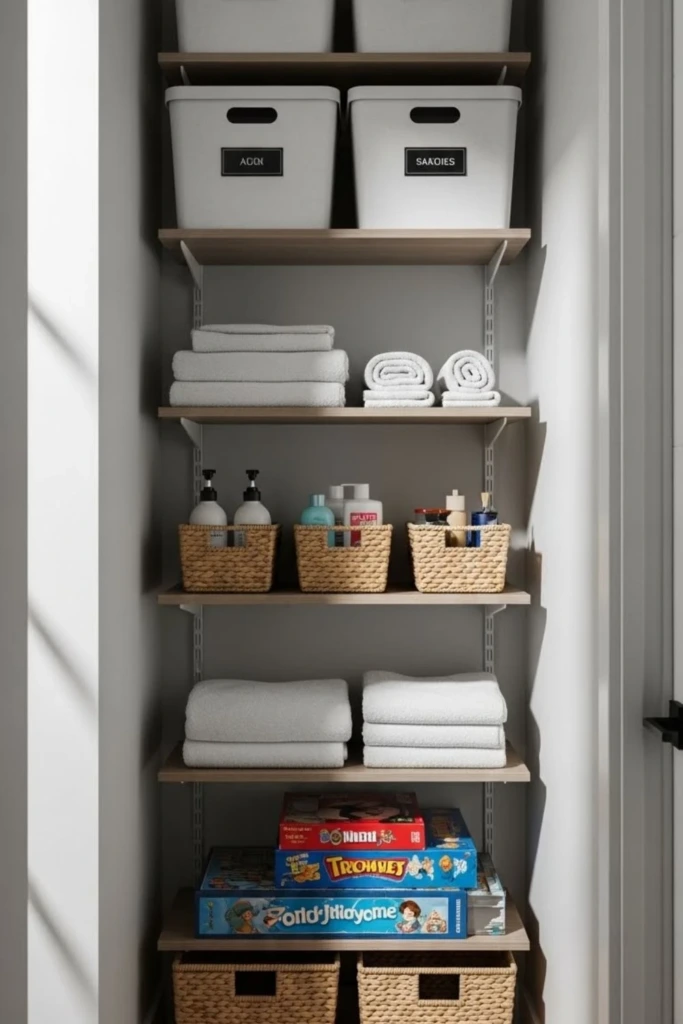
A hallway closet becomes more practical when its storage levels match the people and belongings using it. Items that are difficult to reach are less likely to be returned to their proper places.
Move everyday jackets, handbags, and commonly used accessories to comfortable heights. Install lower hooks for children's belongings and place shoe storage where everyone can access it easily.
Use the upper shelves for seasonal clothing, spare linens, or other items you rarely need. Heavy containers should remain lower down to reduce the risk of injury when retrieving them.
If you plan to reposition shelves or hanging rods, check that the hardware is suitable for the closet's construction and the intended load. The goal is to make frequently used belongings accessible while reserving less convenient areas for occasional-use storage.
25. One Rule
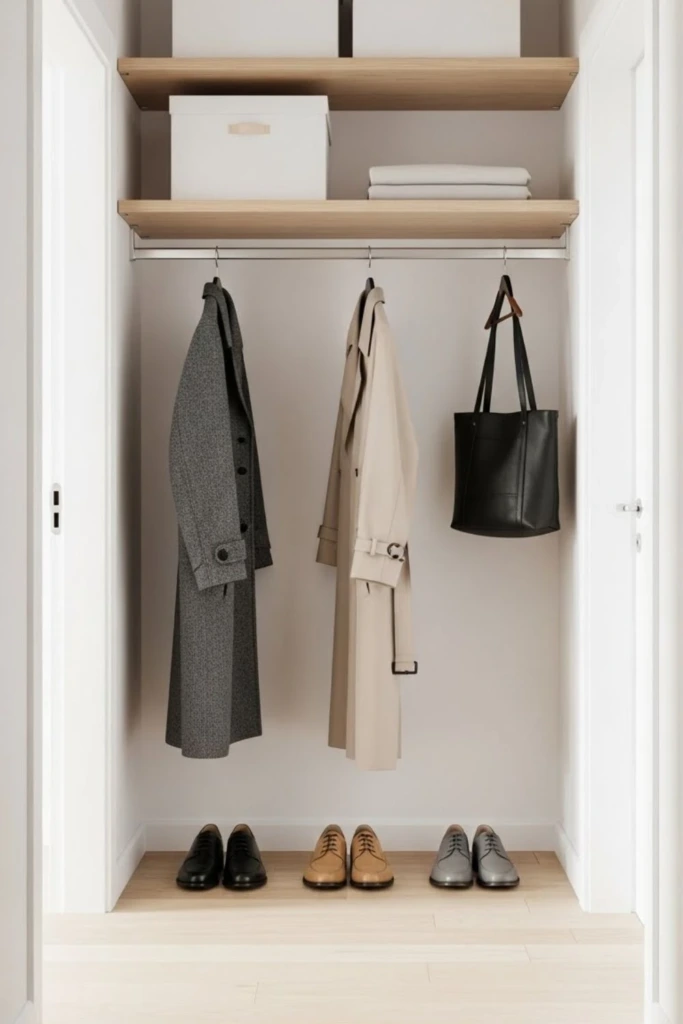
The simplest way to prevent a hallway closet from becoming overcrowded is to limit how many belongings it holds. A one-in, one-out rule can help maintain that balance over time.
Whenever you bring home a new coat, bag, or pair of shoes, review what you already own and decide whether an older or unused item should be donated, recycled, or otherwise removed.
This doesn't mean replacing every item immediately or discarding things that remain useful. Instead, it encourages you to consider available space before adding another belonging to the closet.
Review seasonal clothing before each change of season, and remove damaged items or things nobody uses. By making these decisions regularly, you can avoid the larger cleanup projects that often happen when storage becomes completely overwhelmed.
Why does my hallway closet get messy even after I organize it?
A hallway closet often becomes messy again when the storage arrangement doesn't reflect how your household uses the space. If everyday shoes, coats, bags, seasonal accessories, and household supplies all compete for the same shelves, belongings can quickly become mixed together.
Another common problem is having more items than the closet can comfortably accommodate. Even a neatly arranged space becomes difficult to maintain when shelves are overcrowded or frequently used belongings are hard to reach.
Start by removing unnecessary items and separating the remaining belongings into practical categories. Make daily essentials easy to access, use baskets or dividers to control smaller objects, and assign every category a permanent home.
It's also important to choose a system that fits your routine. A convenient hook near the entrance may work better than a complicated storage arrangement that requires several steps. Brief weekly resets can help maintain order without repeating the entire organizing process.
Should everything in a hallway closet be hidden?
No. The best hallway closet balances a tidy appearance with convenient access to everyday belongings.
Items you reach for regularly, such as jackets, shoes, backpacks, and frequently used accessories, can remain visible on hooks, racks, or open shelves. This makes it easier to find what you need and return it to the correct place.
Less frequently used belongings, seasonal clothing, spare supplies, and miscellaneous accessories can be stored in labeled bins or behind cabinet doors. Closed storage is particularly useful when you want the hallway to look less cluttered, while transparent containers make it easier to identify items on enclosed shelves.
Choose storage according to function rather than appearance alone. A closet that looks perfectly uniform but makes everyday essentials difficult to reach may be frustrating to maintain. The most successful arrangement keeps important items accessible, contains smaller belongings, and conceals only what benefits from being out of sight.