23 Bathroom Cabinet Organization Ideas for 2026
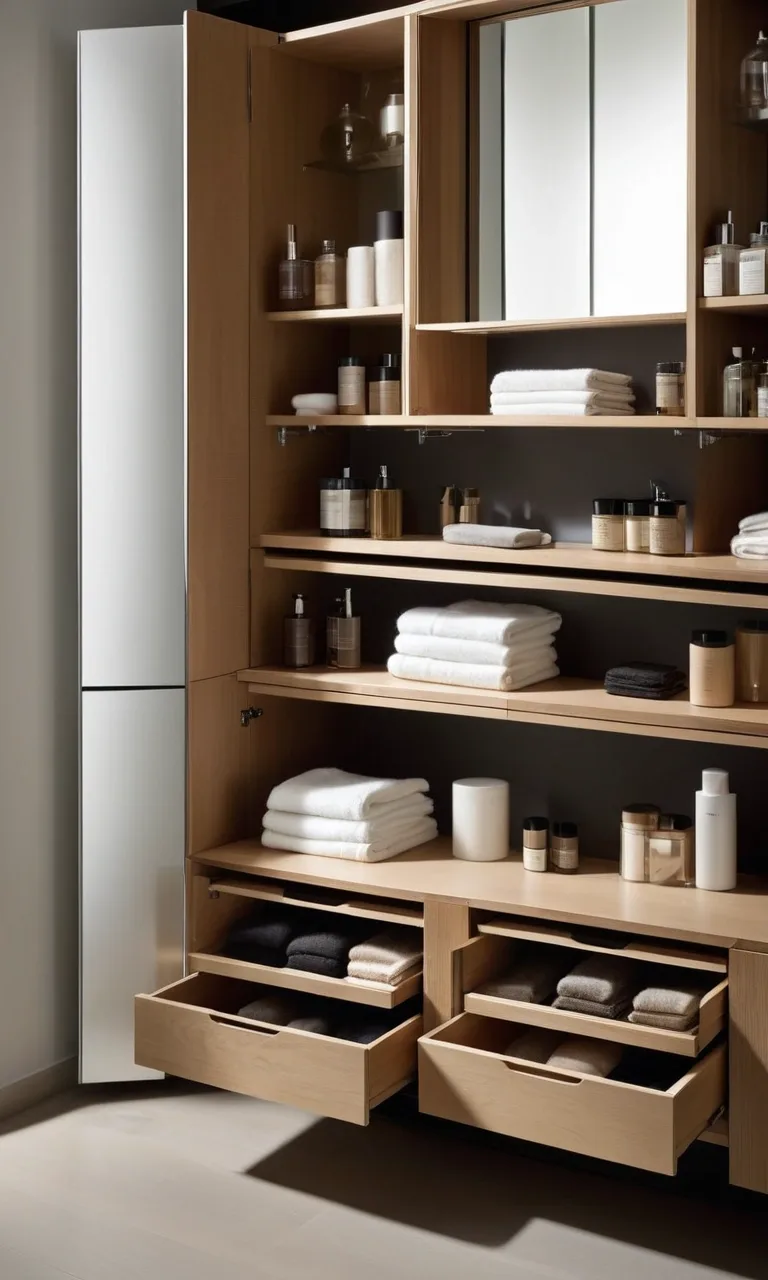
A well-organized bathroom cabinet makes everyday routines easier, whether you're getting ready for work, preparing for bed, or searching for a particular product. When toiletries, grooming tools, towels, and extra supplies are piled together, even a spacious cabinet can become difficult to use.
The solution is to give every item a designated place. By grouping similar products, using available vertical space, and choosing storage that fits your cabinet, you can create a system that stays practical without requiring expensive accessories.
These bathroom cabinet organization ideas offer simple ways to improve storage, reduce clutter, and make better use of the space you already have.
How to Organize Things in the Bathroom Cabinet?
Start by removing everything from your bathroom cabinet. This gives you a clear view of the available space and helps you identify products that have expired, run out, or are no longer useful.
Next, sort the remaining items into categories such as skincare, hair care, dental supplies, medicines, grooming tools, and extra toiletries. Keep frequently used products separate from unopened replacements so you can find what you need without searching through several containers.
Measure the shelves, drawers, and space around any plumbing before purchasing organizers. Choose containers that fit comfortably and leave enough room to remove items easily. Place everyday essentials within easy reach, while less frequently used supplies can go on higher or lower shelves.
Finally, return each item to its assigned location and make a habit of putting things back after use. A successful organization system should be easy to maintain during a busy morning, not just look attractive immediately after cleaning.
1. Vertical Product Zoning
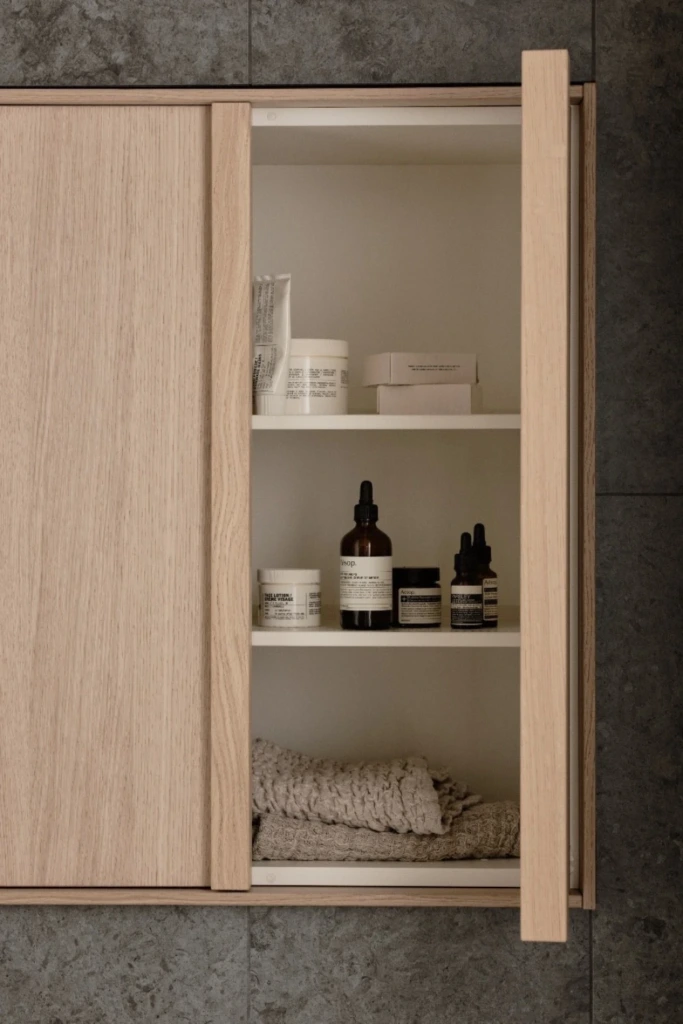
Make the most of your cabinet by assigning different shelves to different types of products. This approach prevents small items from becoming buried beneath taller bottles and makes the entire cabinet easier to navigate.
Keep everyday skincare and personal care products at a comfortable height. Place occasional-use products on upper shelves and reserve lower areas for heavier items or neatly folded washcloths.
Use small trays or matching containers to keep related products together. If your cabinet has adjustable shelves, position them according to the height of your bottles rather than leaving large amounts of unused space above them.
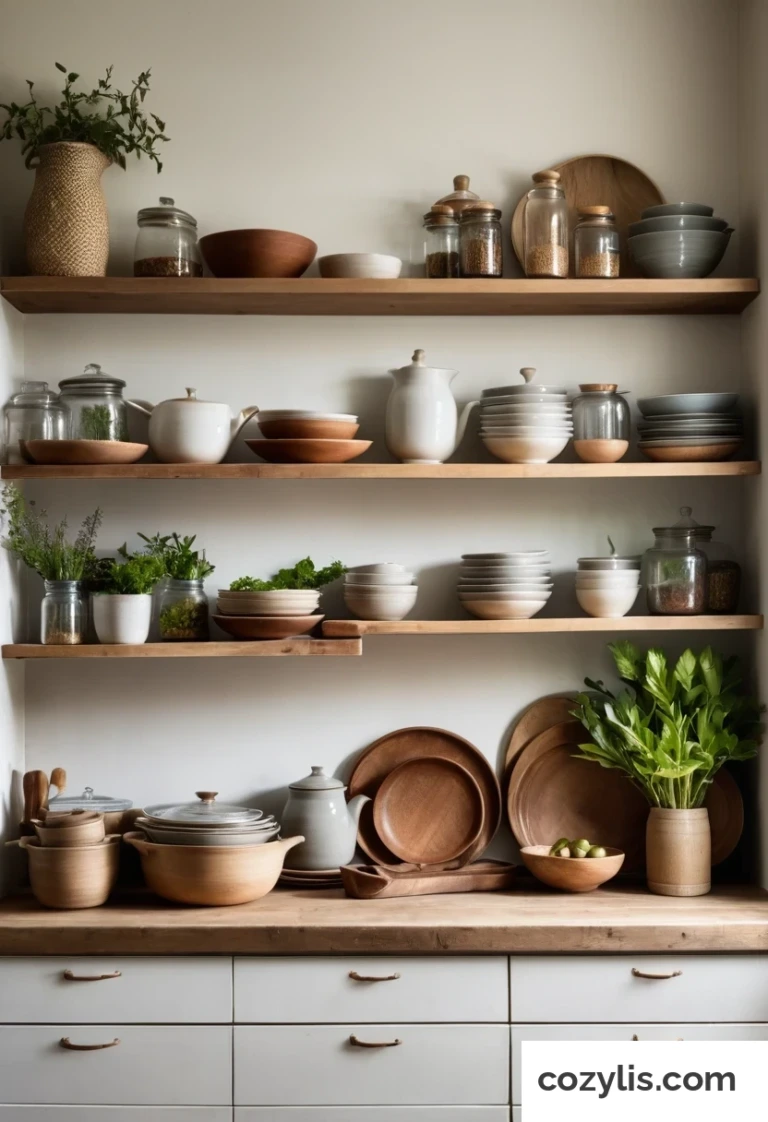
2. Open Shelf Layers
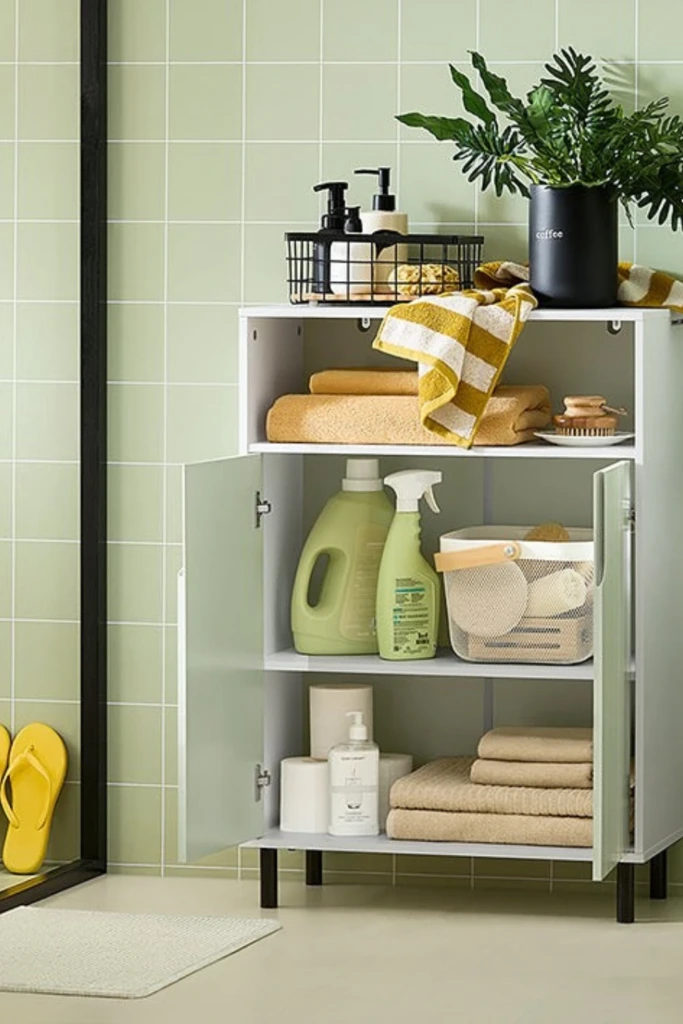
Open shelving works well when you want supplies to remain visible and accessible. It is especially useful for neatly folded towels, frequently used toiletries, and attractive everyday essentials.
Combine open shelves with a few baskets or bins to prevent smaller items from spreading across the entire surface. For example, place extra soap and skincare products in one container while keeping folded towels together on another shelf.
Avoid filling every available inch. Leaving some breathing room makes it easier to remove products and return them without disturbing everything else. Since open shelves collect dust more readily than closed cabinets, choose washable containers and clean the surfaces regularly.
3. Daily-Use Display
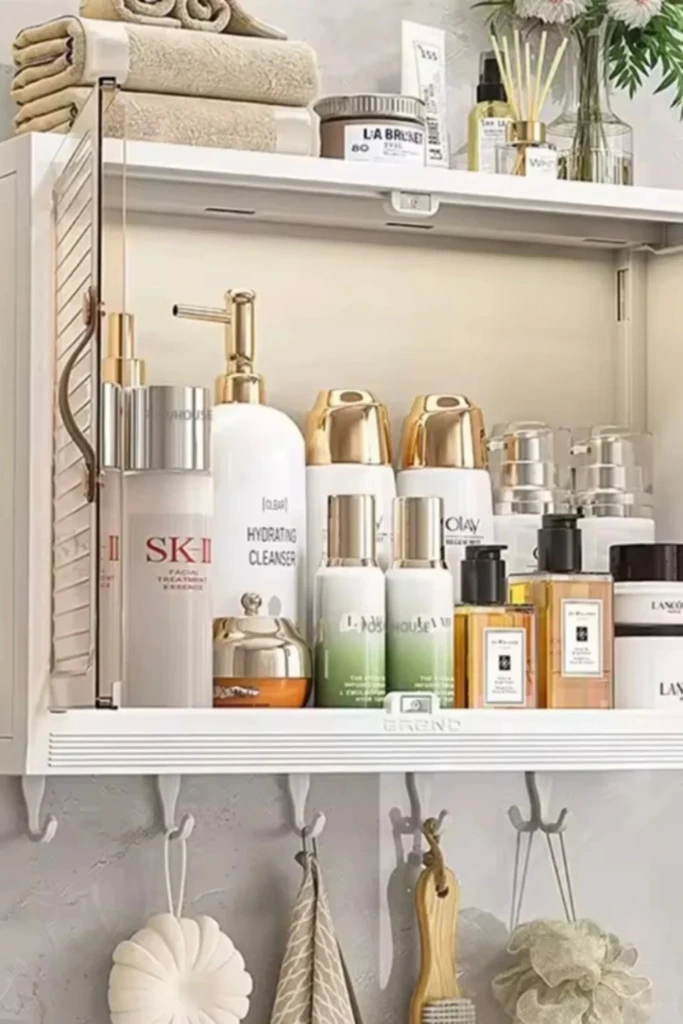
Create a dedicated area for the products you reach for every day. Cleansers, moisturizers, deodorant, toothpaste, and other regular essentials should be easy to grab without moving several other items.
Arrange taller bottles toward the back and shorter products toward the front so the labels remain visible. A shallow tray can keep frequently used skincare products together while protecting the shelf from small spills.
Keep backup products elsewhere to prevent your everyday section from becoming overcrowded. If several people share the bathroom, consider giving each person a separate container to reduce mix-ups and make the morning routine smoother.
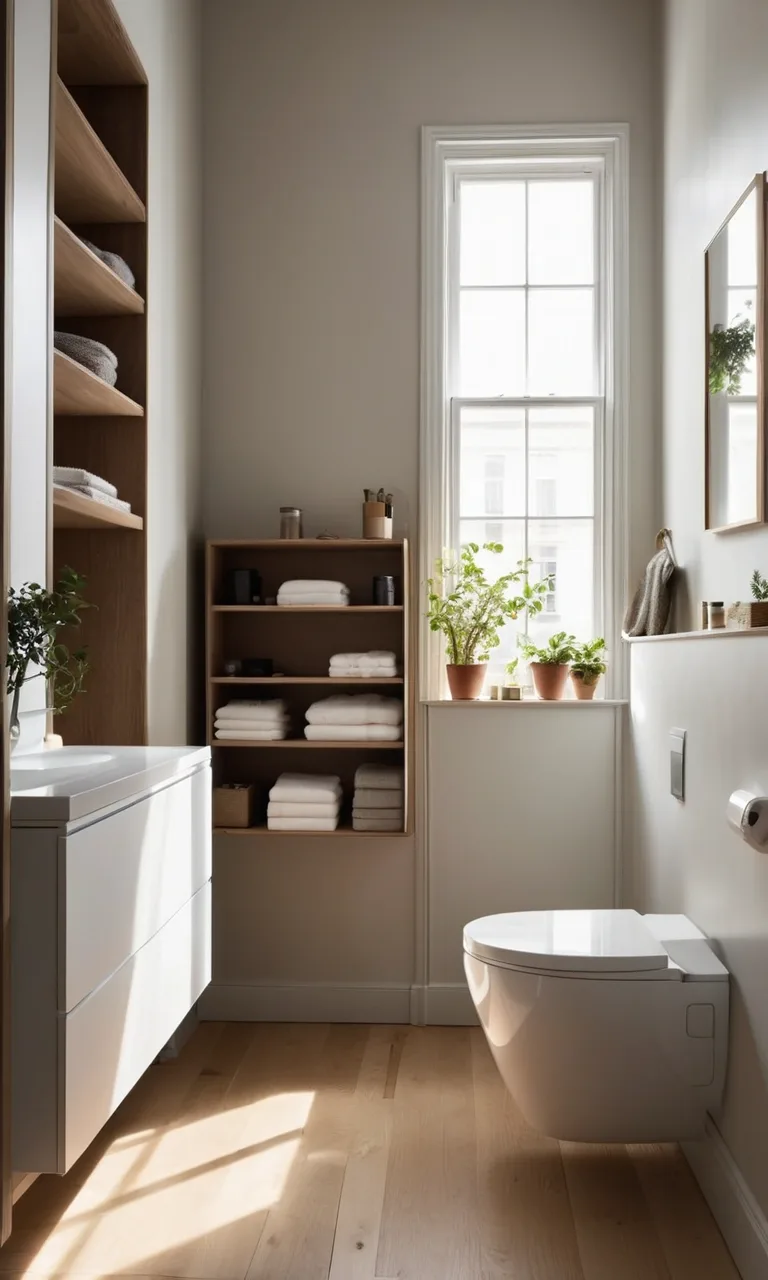
4. Linen-First Storage
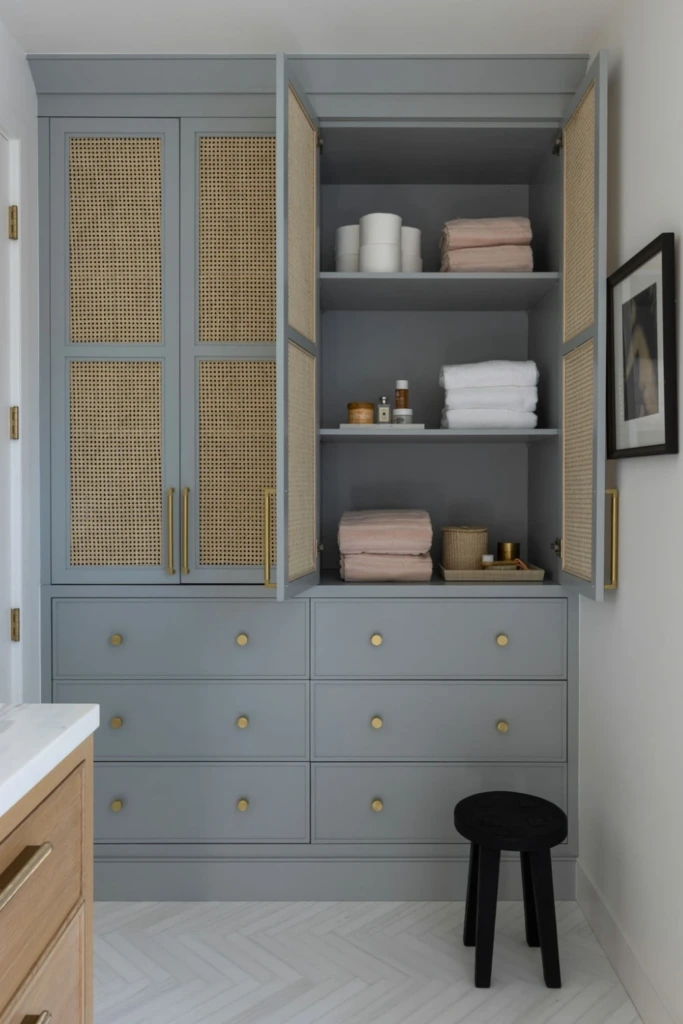
If you have a tall bathroom cabinet, dedicate part of it to towels and other linens. This frees smaller cabinets for toiletries and grooming products while keeping clean fabrics easy to find.
Fold towels into consistent sizes so they stack securely without leaning or sliding. Separate bath towels, hand towels, and washcloths into individual shelf sections or baskets.
Small trays can hold spare soap, bath accessories, or other lightweight items alongside the linens. Make sure towels are completely dry before storing them, and avoid packing shelves too tightly so fabrics remain easy to remove and the cabinet stays manageable.
5. Category Shelf Stacking
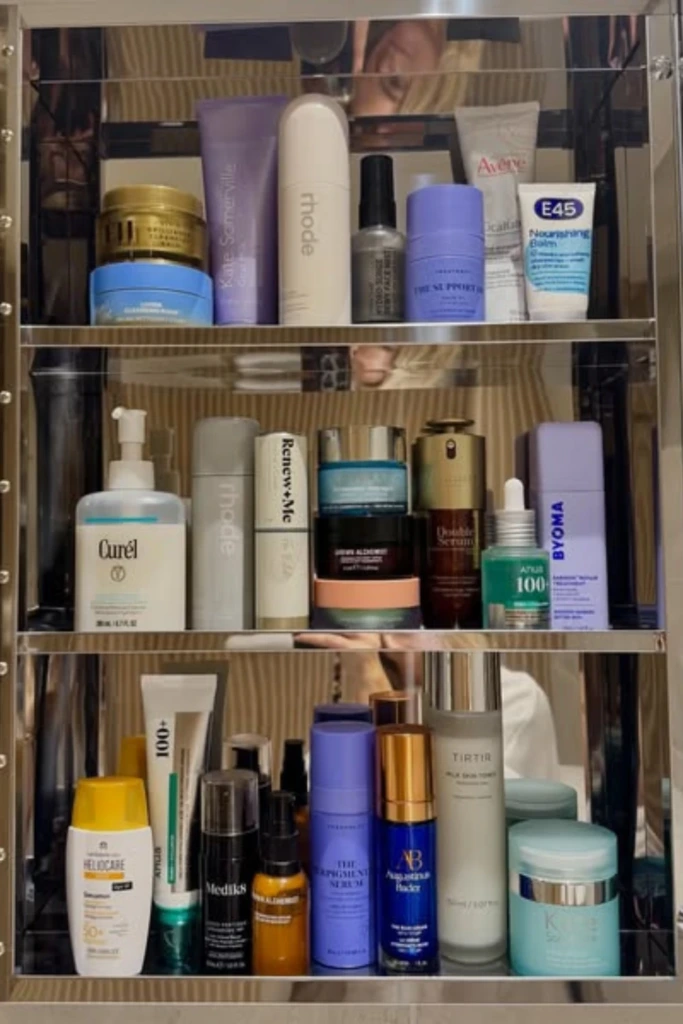
Organizing shelves by category helps eliminate the frustration of searching through unrelated products. Instead of placing items wherever they fit, give each shelf or section a specific purpose.
For instance, one shelf might hold facial cleansers and moisturizers, another could contain hair products, and a third might store body lotions and deodorants. Within each category, arrange products in the order you typically use them.
Keep labels facing forward and group smaller bottles in trays to prevent them from getting lost behind larger containers. If your collection is extensive, use small labels to identify each section. This makes it easier to maintain the arrangement even when several people use the same cabinet.
6. Pull-Out Access
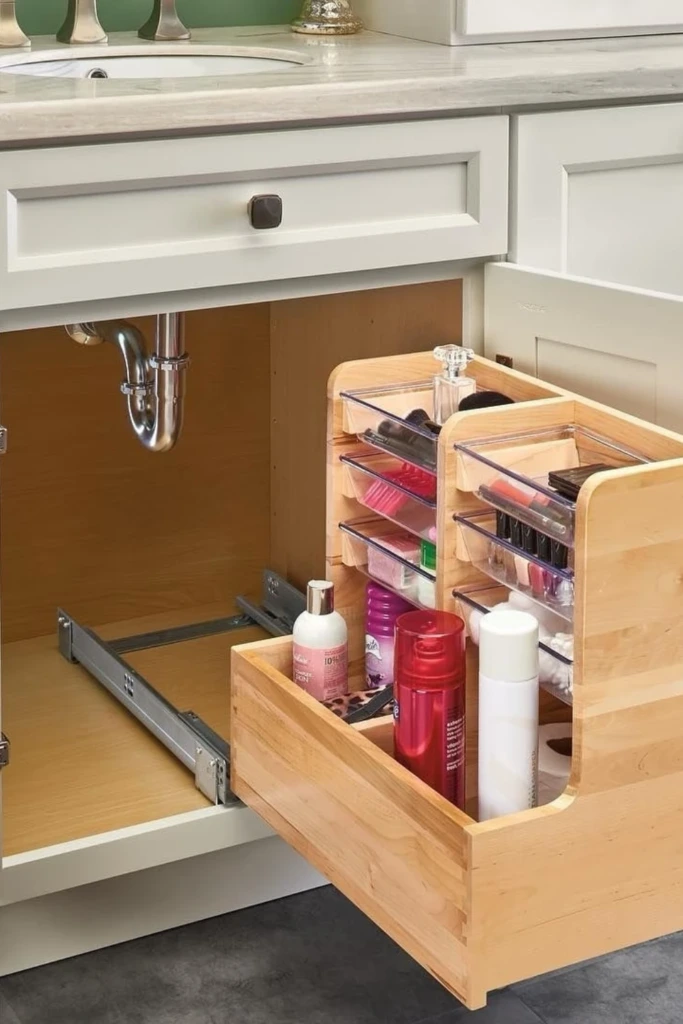
Deep under-sink cabinets often waste space because items at the back are difficult to reach. Pull-out organizers solve this problem by bringing stored products forward instead of requiring you to move everything in front.
Before choosing a sliding organizer, measure the cabinet's width, depth, and height. Account for pipes, valves, and the cabinet door so the unit can move freely without hitting anything.
Use separate pull-out sections for hair care, body care, and cleaning products, depending on the available room. Choose a sturdy design with smooth movement and enough clearance for taller bottles. This arrangement makes hidden storage more accessible and reduces the likelihood of buying duplicate supplies.
7. Clear Label Control
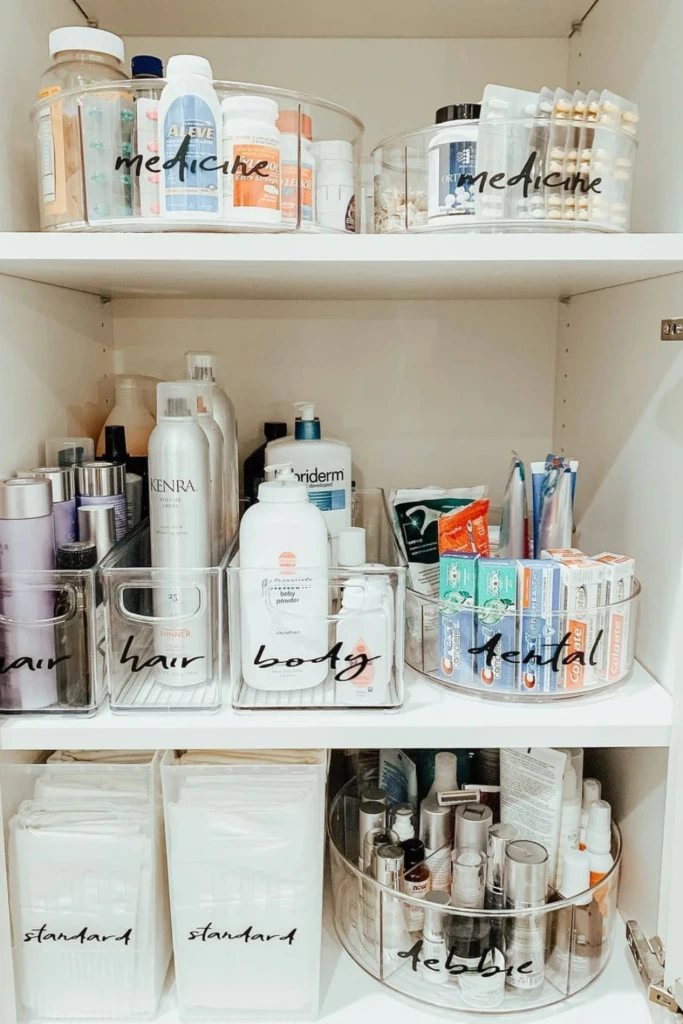
Transparent bins make it easy to identify products without opening several containers. They are especially useful for organizing small toiletries, dental supplies, first-aid items, and personal care accessories.
Choose bins in sizes that fit your shelves and group related items together. Add straightforward labels such as “Hair Care,” “Dental,” “Skincare,” or “First Aid” to make each category easy to recognize.
Clear containers also help you see when supplies are running low. Use washable labels or removable tags so you can change the categories when your storage needs evolve. For medicines and products that require special storage conditions, follow the packaging instructions rather than relying on the container alone.
8. Tall Cabinet Split
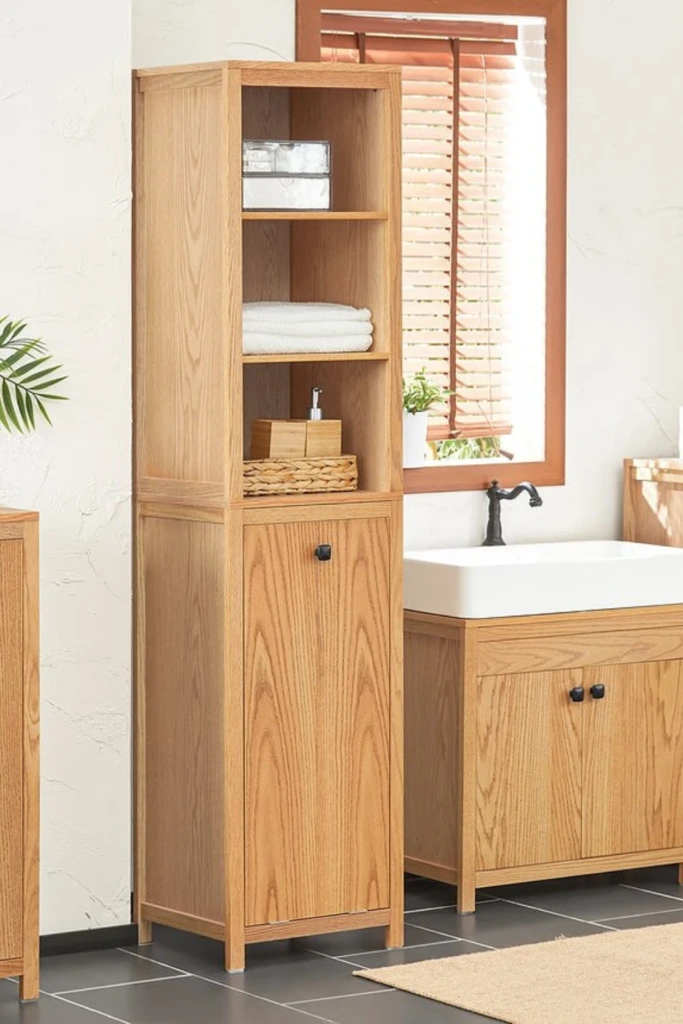
A tall cabinet can accommodate several bathroom essentials without crowding the vanity. Divide it into practical zones so towels, daily toiletries, laundry, and extra supplies each have a defined location.
Use upper shelves for lightweight linens or occasional-use items, and keep frequently needed products at an accessible height. If the cabinet includes a lower compartment, it may be suitable for a laundry hamper or larger household supplies.
Avoid placing heavy items on high shelves, particularly if you need a step stool to reach them. Keeping the cabinet divided by function makes it easier to maintain order and prevents laundry or bulky products from taking over the entire storage area.
9. Minimal Shelf Zones
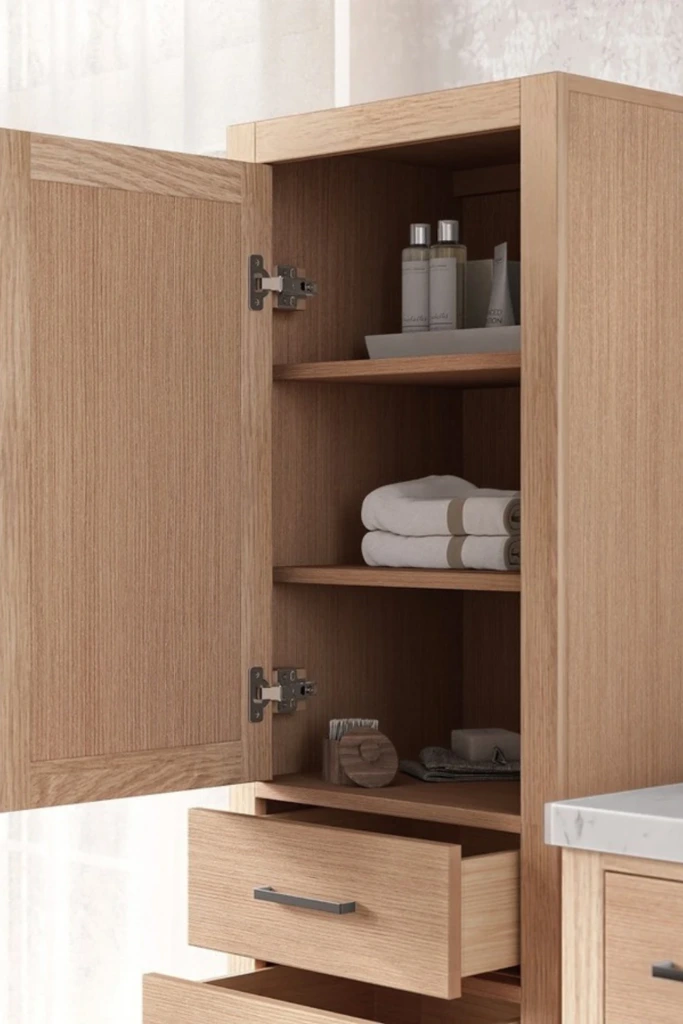
A minimalist arrangement focuses on storing what you actually need rather than filling every shelf. Fewer items make the cabinet easier to clean and help you find products without unnecessary searching.
Start by choosing a reasonable amount of space for each category. Keep daily essentials together, fold towels neatly, and move occasional-use items to a separate section.
Resist the urge to keep every sample, nearly empty bottle, or duplicate product. Use small trays for loose accessories and leave some open shelf space for items you may need to add later. A simple layout is often easier to maintain than an elaborate system with too many containers.
10. Medical Zone System
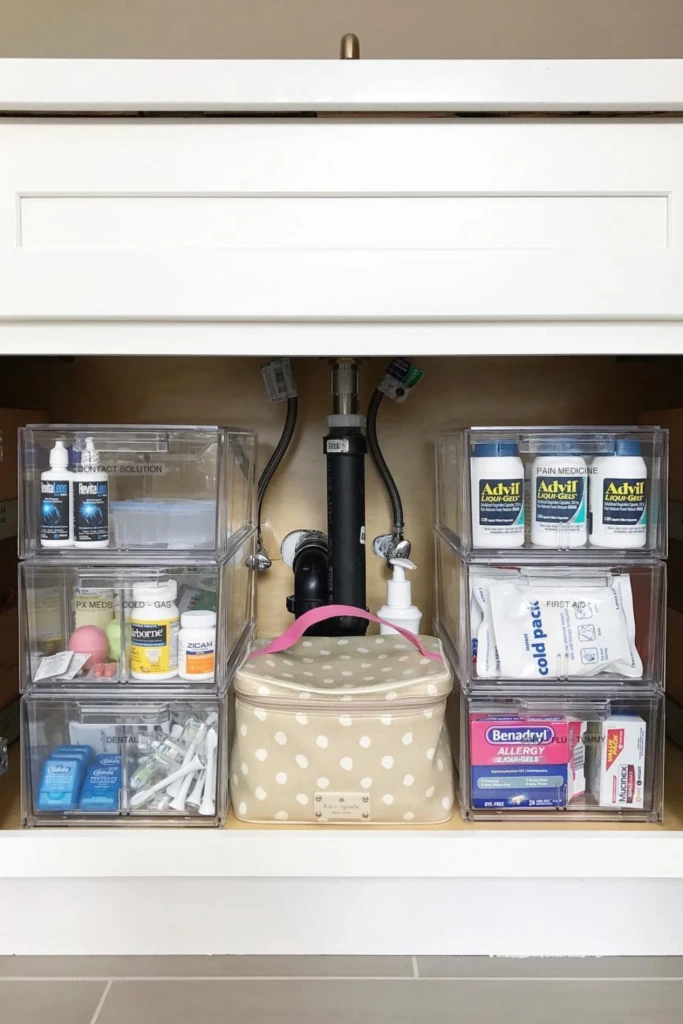
First-aid supplies and health-related products should be easy to locate without being mixed in with everyday toiletries. A dedicated storage section can hold bandages, gauze, a thermometer, and other appropriate first-aid essentials.
Use separate, clearly labeled containers to distinguish first-aid supplies from dental care products and other health items. Keep original packaging and instructions wherever possible, especially for medicines.
A bathroom may not be suitable for storing every medication because heat and humidity can affect product quality. Follow the storage directions on the packaging, and keep medicines out of reach of children. If a cool, dry location is required, choose another part of the home rather than placing the product in a humid bathroom cabinet.
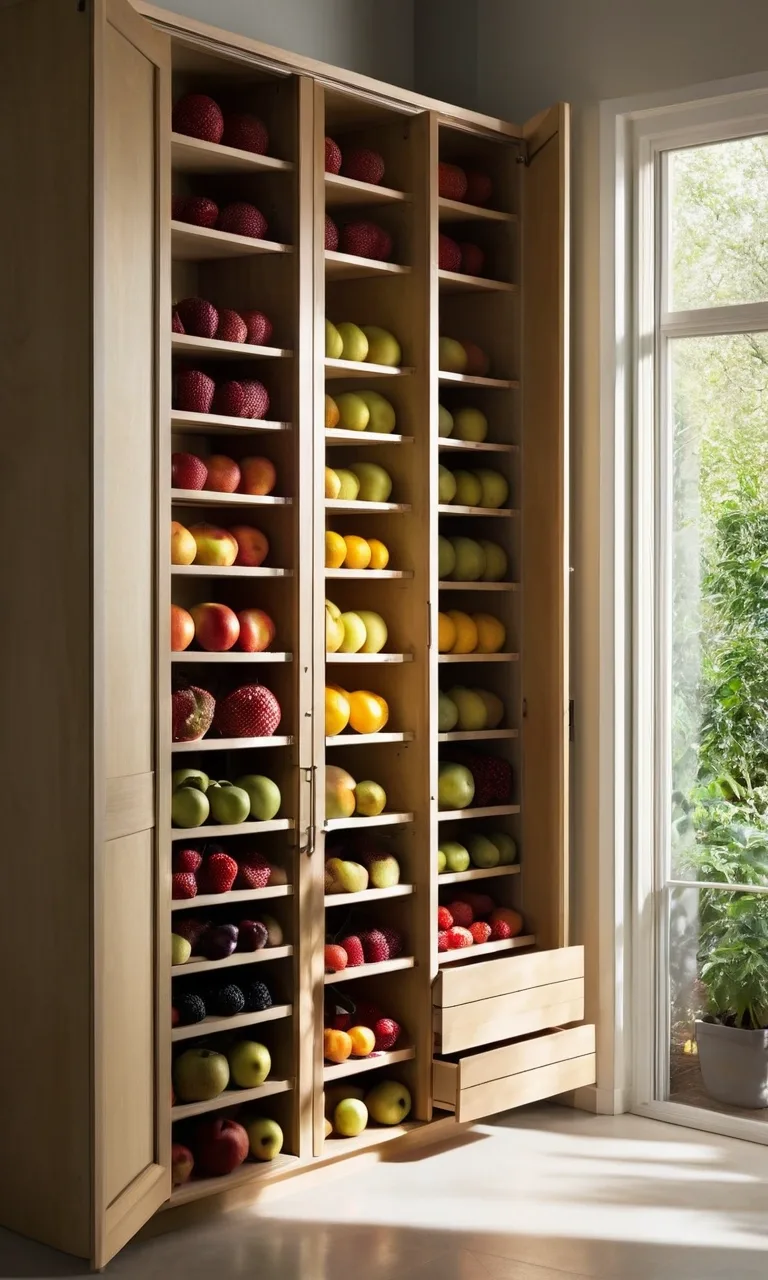
11. Full-Height Sorting
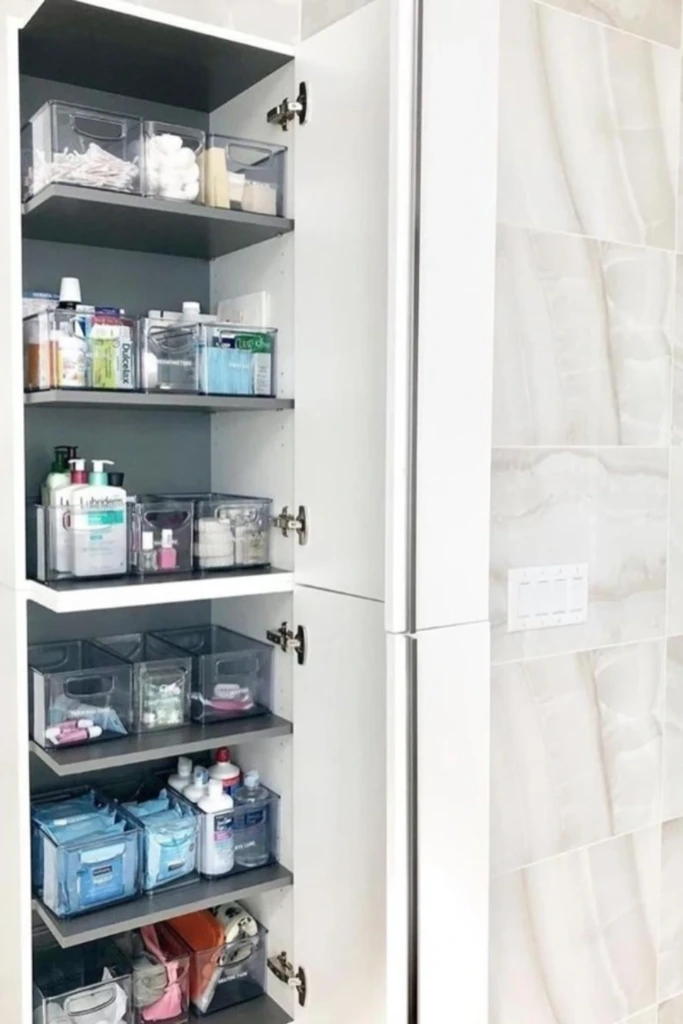
Use the full height of your cabinet to create separate storage levels instead of crowding everything onto one or two shelves. A clear arrangement allows you to make use of otherwise wasted vertical space.
Place everyday essentials where you can reach them comfortably. Store occasional-use products higher up and keep heavier supplies on lower shelves. Use baskets for small items that might otherwise spread across a shelf.
Adjustable shelving can be particularly helpful when your collection includes products of different heights. Leave enough clearance to remove bottles without tipping them over, and avoid stacking items so deeply that products at the back become difficult to see.
12. Under-Sink Zones
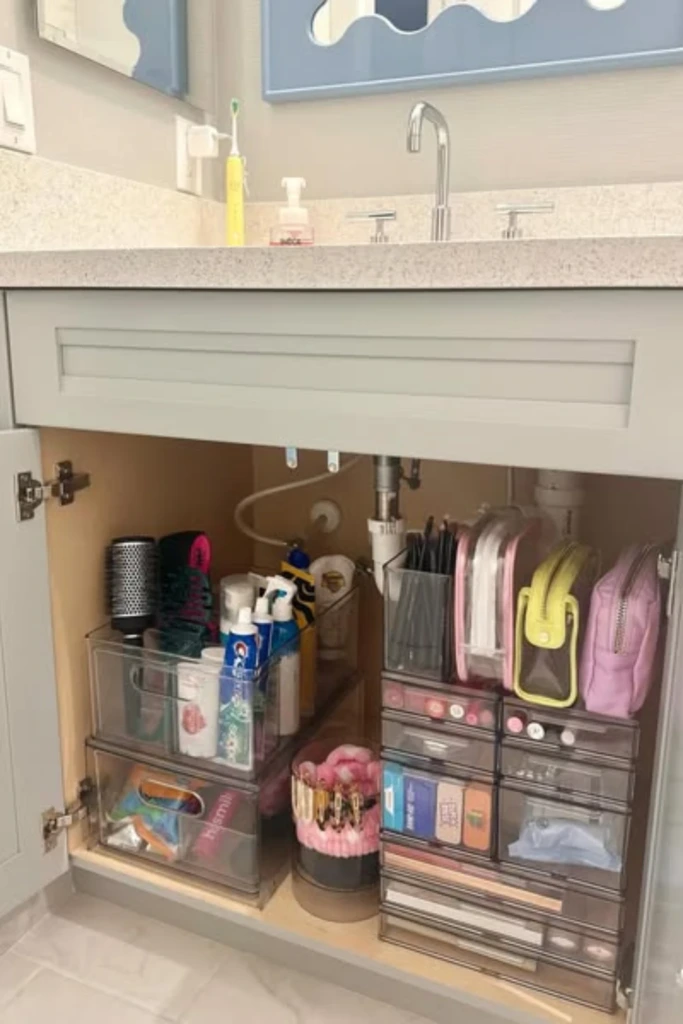
The area beneath the bathroom sink can hold a surprising amount when its layout accounts for the plumbing. Rather than treating it as one large storage space, divide it into smaller zones for different household needs.
Keep tall bottles toward the sides or back where they fit comfortably. Place smaller toiletries in bins, and use drawer organizers for accessories that tend to become tangled. If there is room, reserve a separate container for cleaning supplies.
Measure around the pipes before buying organizers, paying attention to the space required to open doors and remove containers. Waterproof or washable materials are practical choices because leaks and spills can occur beneath a sink. Check the cabinet periodically for moisture so problems do not go unnoticed behind stored items.
13. Tool Drawer Control
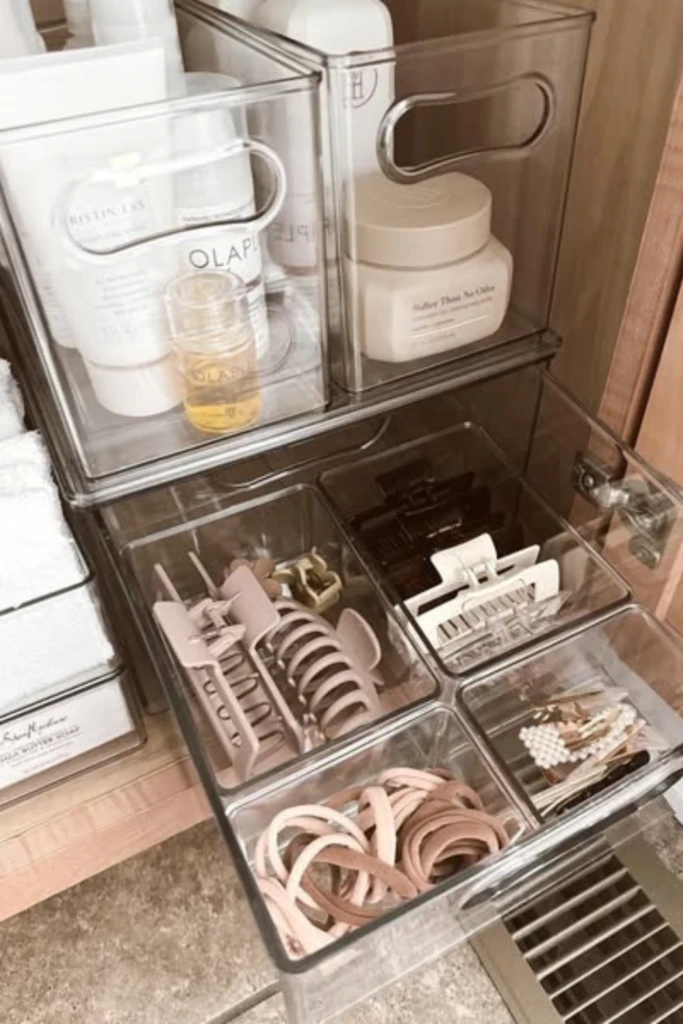
Small grooming accessories can quickly become a tangled collection of clips, hair ties, combs, and other tools. Drawer dividers provide separate spaces for these items and make them easier to find.
Choose shallow compartments that fit the drawer without wasting valuable room. Keep similar accessories together, separating hair ties from clips, brushes, and styling tools.
If your cabinet does not have built-in drawers, stackable trays or small open containers can create a similar arrangement on a shelf. Clean the organizers periodically and remove broken or unused accessories. Keep electrical grooming tools unplugged and completely cool before putting them away.
14. Modular Bin Grid
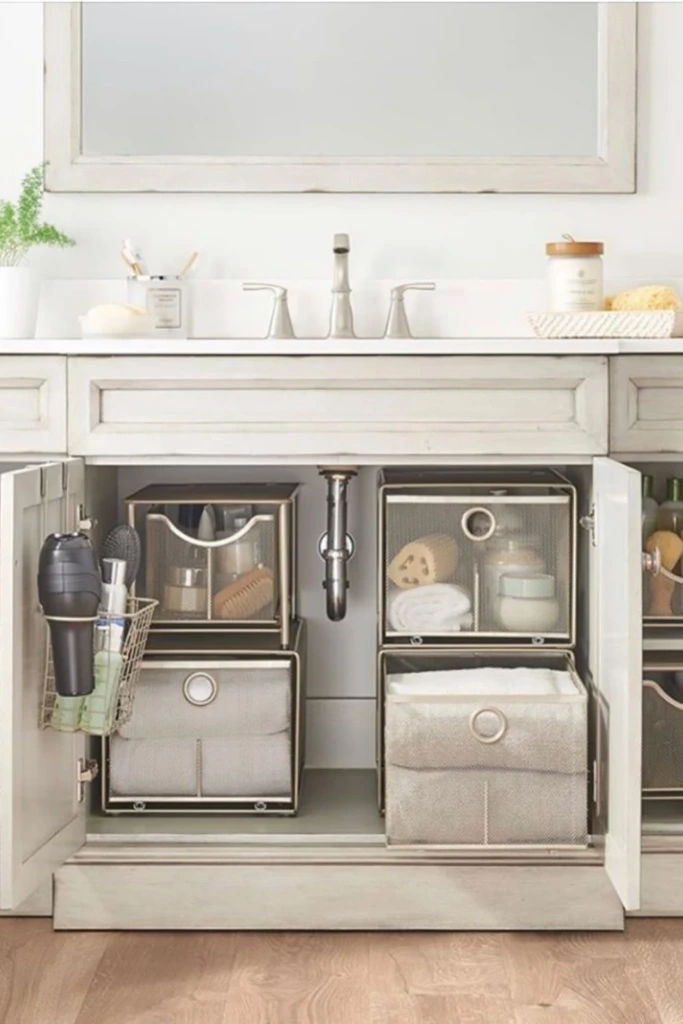
Modular bins help divide a large cabinet into manageable sections. Because the containers come in different sizes, you can combine them to suit your available space instead of forcing every item into one oversized basket.
Use one bin for dental care, another for first-aid essentials, and a separate one for extra toiletries. Smaller containers can hold loose accessories, while larger bins accommodate taller bottles or bulk supplies.
Measure the cabinet before selecting your containers, especially if you plan to arrange them side by side. Matching or stackable bins can create a consistent appearance, but practical dimensions matter more than appearance. Keep frequently used containers toward the front so you can remove them without disturbing the rest of the cabinet.
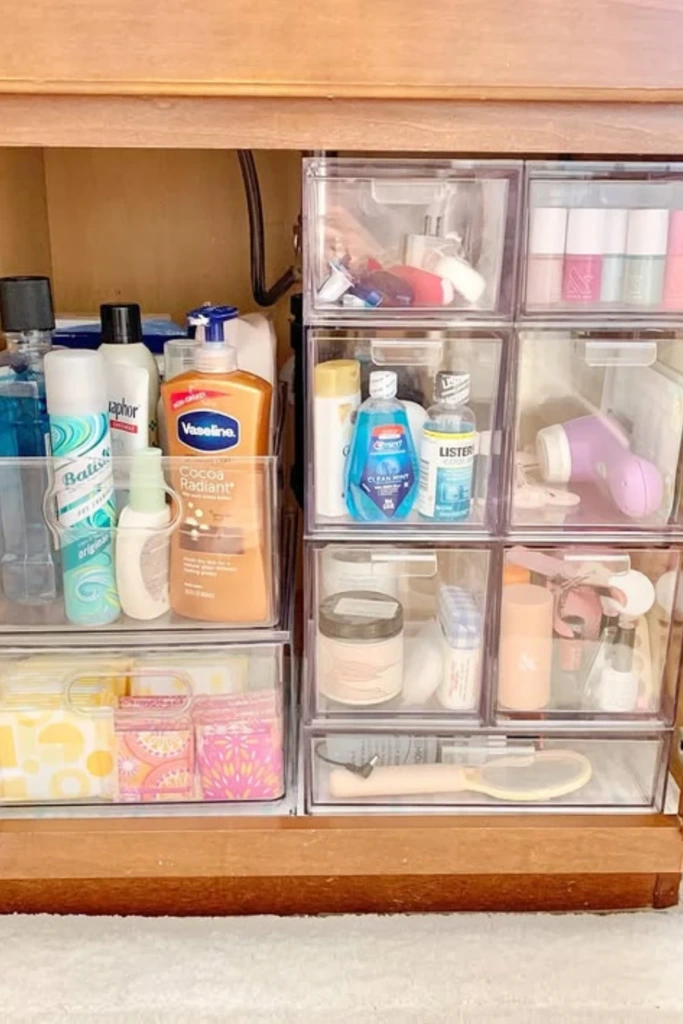
15. Balanced Sink Storage
A balanced layout prevents one side of the cabinet from becoming overloaded while the other remains underused. Dividing the space into distinct sections makes it easier to locate supplies and return them to their proper places.
For example, one side can hold hair care products and grooming tools, while the other stores skincare, dental supplies, or household cleaning items. Position taller containers where they fit without obstructing pipes or cabinet doors.
You do not need identical containers on both sides, but choosing organizers with compatible heights and depths can make the arrangement more efficient. Keep heavier items low and leave enough space around frequently used bins to remove them easily.
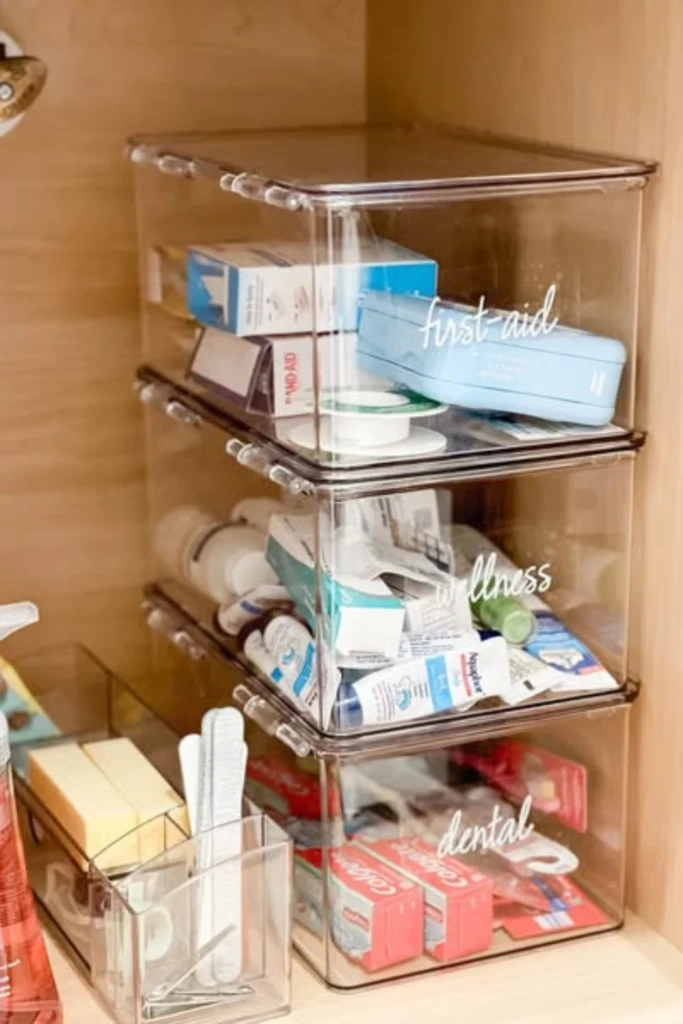
16. Stacked Health Drawers
Stackable drawers are useful when you need to separate several types of health and personal care supplies. Unlike a single deep container, individual drawers allow you to reach smaller items without emptying the entire storage area.
Assign each drawer a clear category, such as first aid, dental care, or personal health accessories. Label the fronts so the contents are easy to identify, and avoid mixing medicines with unrelated toiletries.
Before stacking the units, check their stability and make sure the cabinet has enough clearance. Store any temperature-sensitive or humidity-sensitive products according to their instructions, and keep potentially hazardous items securely away from children.
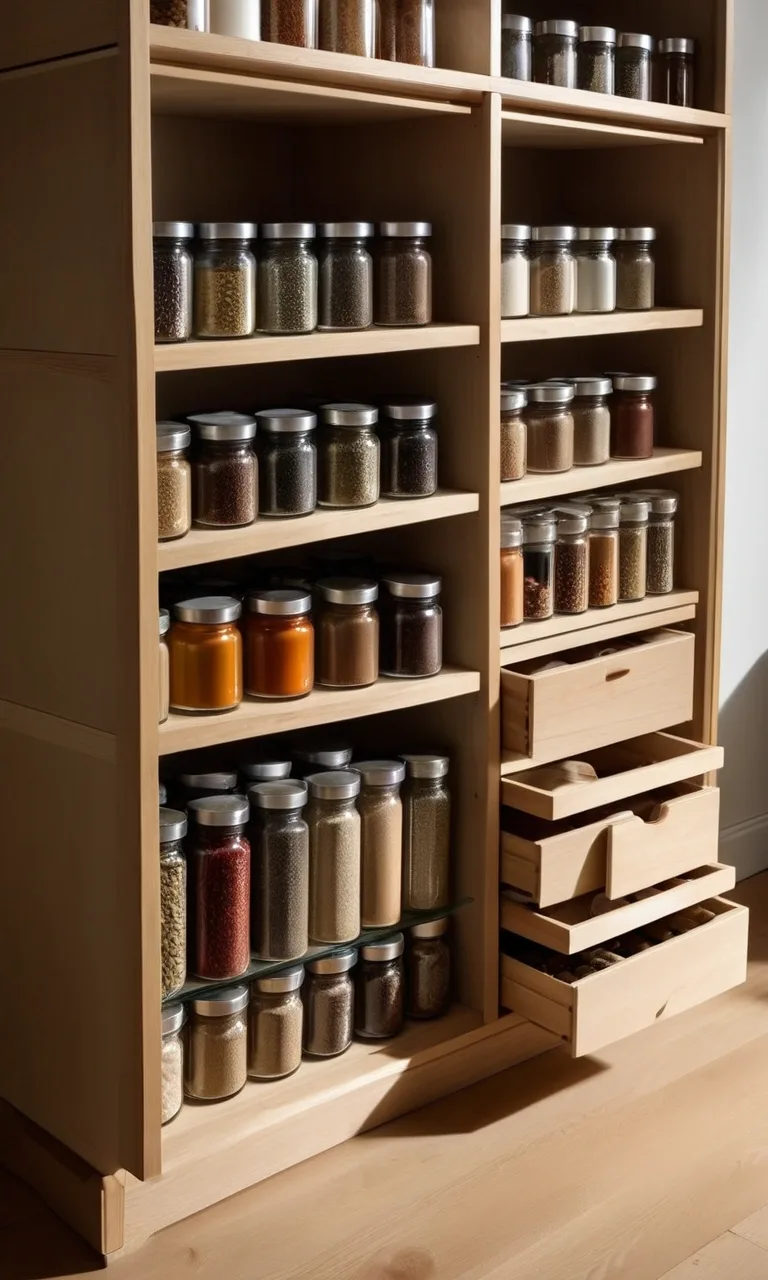
17. Drawer-Style Stacking
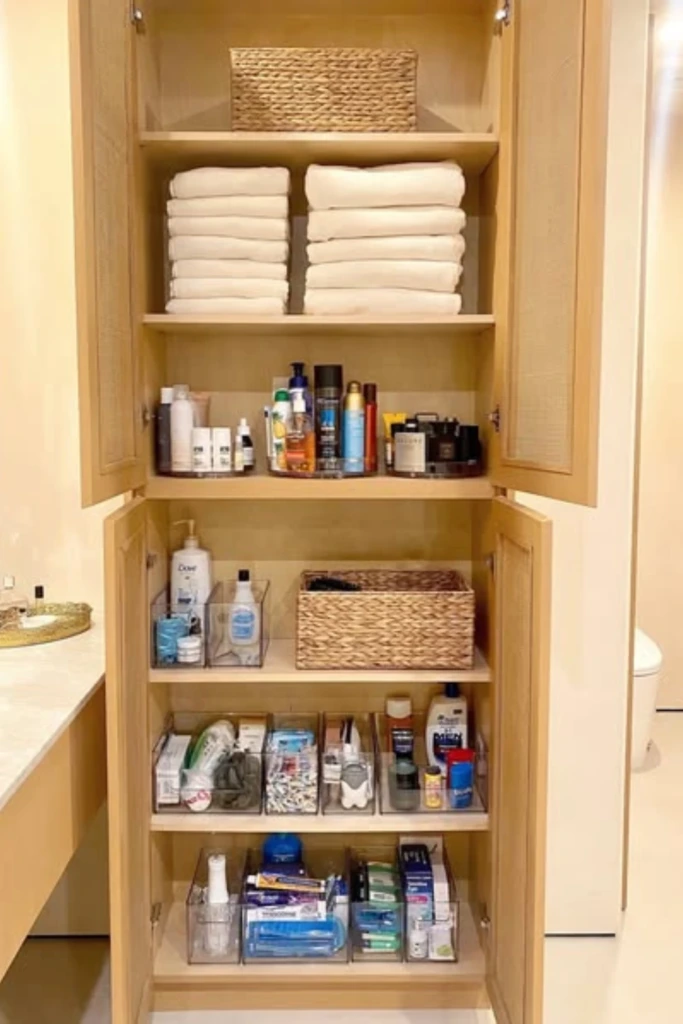
Vertical drawer units can turn an awkward cabinet shelf into several smaller storage compartments. They are particularly helpful for organizing skincare products, cotton pads, grooming accessories, and other items that are easily scattered.
Choose drawers that slide smoothly and are sized for the cabinet's dimensions. Keep small, lightweight products in the drawers and place taller bottles in a separate bin if they do not fit comfortably.
Transparent fronts make it easier to see what is inside, while labels provide an additional layer of organization. Avoid stacking too many units if doing so makes the upper drawers difficult to access. The best arrangement uses vertical space without creating another obstacle during your daily routine.
18. Door Space Hacks
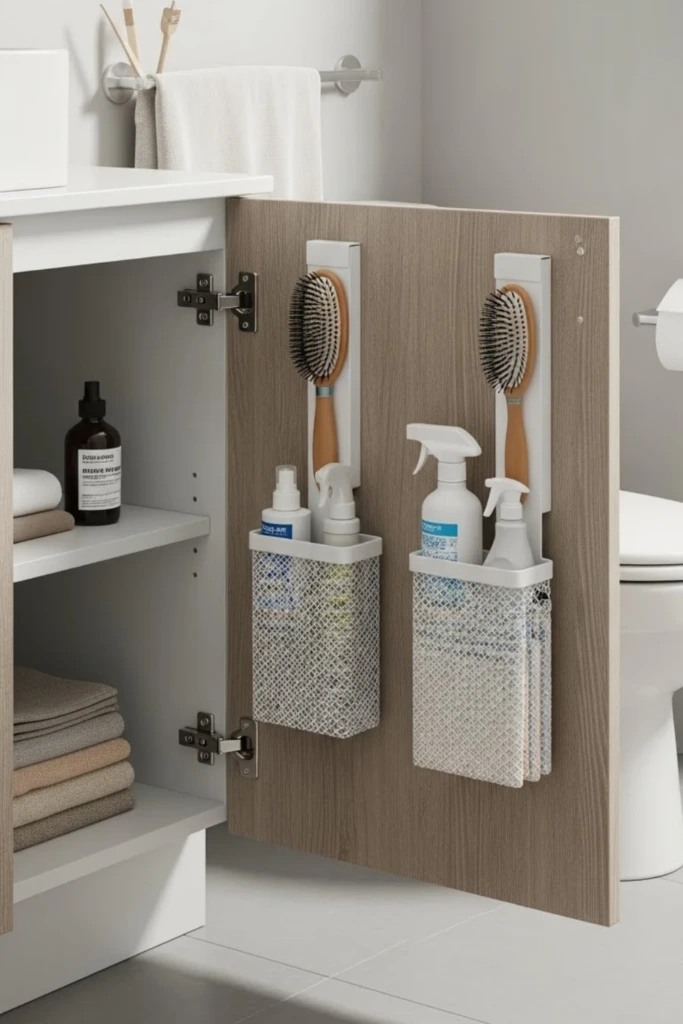
The inside of a cabinet door can provide extra storage for lightweight items that would otherwise occupy valuable shelf space. Slim racks, hanging pockets, and suitable adhesive organizers can hold brushes, small accessories, or cleaning cloths.
Before installing anything, check the door's dimensions and make sure the organizer will not collide with shelves when the door closes. Follow the manufacturer's weight limits and installation instructions, particularly when using adhesive products.
Avoid placing heavy glass bottles or anything that could fall and break. Also, keep door-mounted storage clear of hinges and latches. Used thoughtfully, this overlooked area can free up shelf space without requiring additional furniture.
19. Backstock Separation
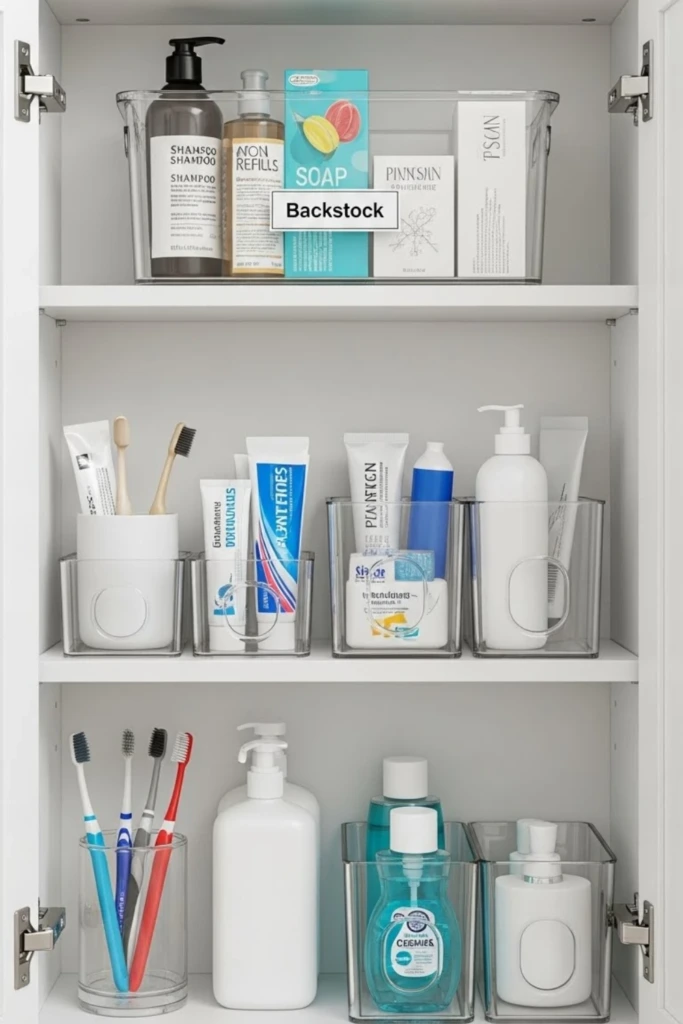
Extra toiletries can quickly overwhelm a cabinet when they are mixed with products used every day. Create a dedicated backstock area for unopened shampoo, spare toothpaste, soap refills, and other replacement supplies.
Keep these items together in a labeled bin or on a separate shelf. When an everyday product runs out, take a replacement from the designated area rather than searching through several cabinets.
Check your stock periodically before buying more. This helps you use products you already own and reduces unnecessary spending. Keep bulky refills in a location where they fit securely, and avoid placing heavy containers on high shelves.
20. Shelf Risers Use
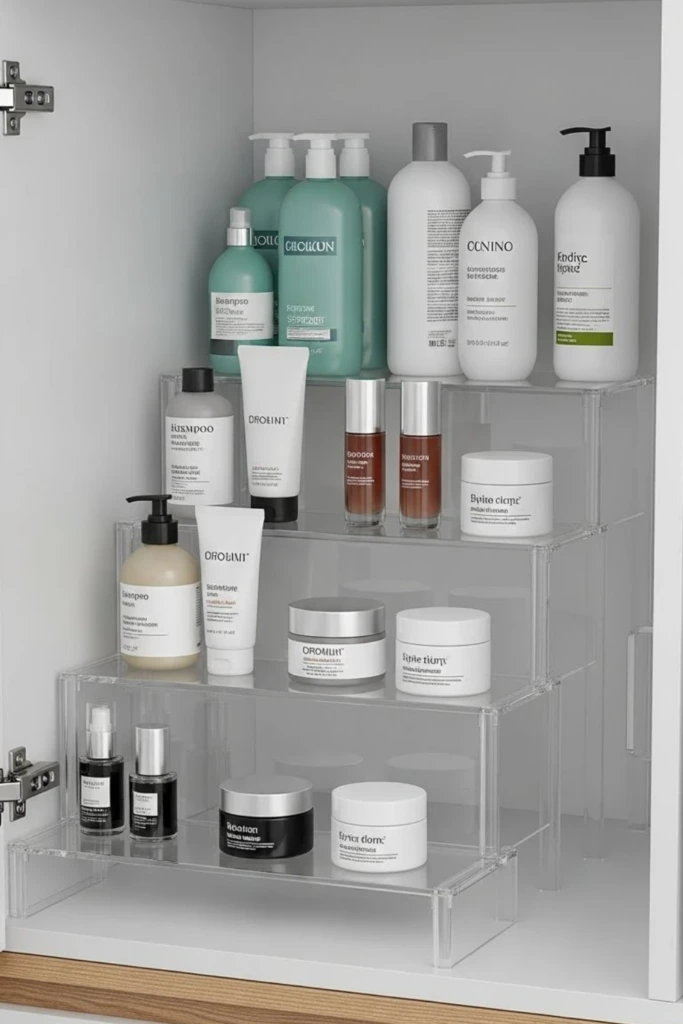
Shelf risers create additional levels within a cabinet, allowing smaller products to remain visible behind taller bottles. They are particularly useful when a shelf has enough height but limited surface area.
Measure the shelf's width and depth before choosing a riser. Acrylic options make products easy to see, while sturdy metal or plastic designs can work well for heavier containers when rated for the load.
Place short bottles and small jars on the raised level, keeping taller items below or behind them as appropriate. Make sure the riser sits securely and does not interfere with the cabinet door. This simple addition can improve visibility without requiring a complete storage makeover.
21. Texture-Based Grouping
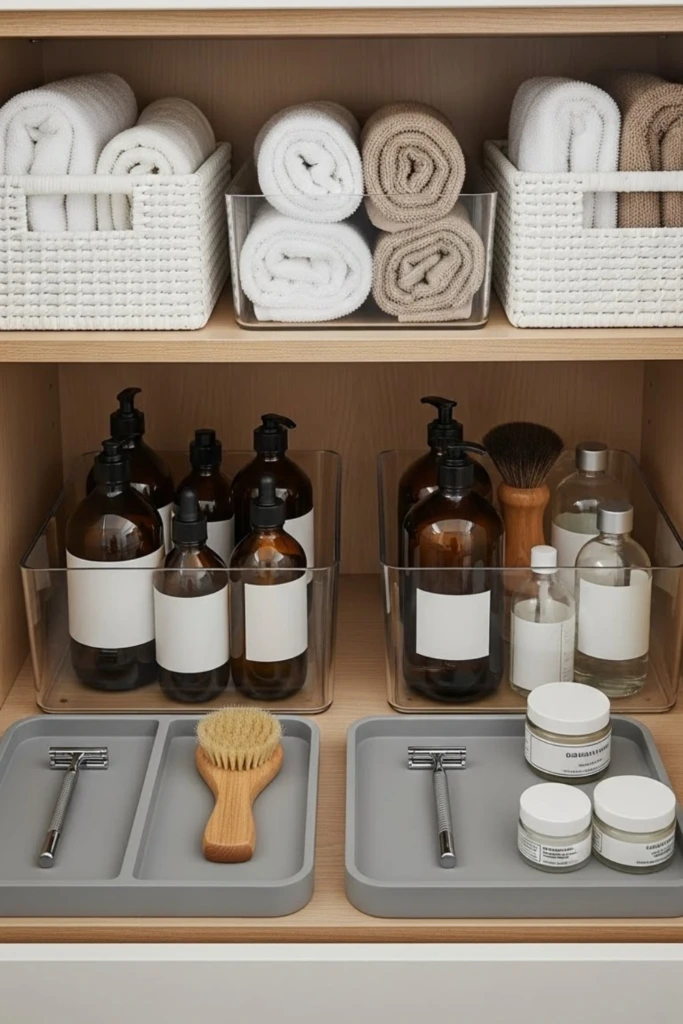
Using different container materials can make separate storage zones easier to recognize. Woven baskets work well for dry linens, clear bins are practical for toiletries, and shallow trays can hold small grooming accessories.
The key is to choose materials according to their purpose. Towels need a clean, dry place, while containers holding bottles should be easy to wipe down if a product leaks. Avoid materials that absorb moisture or develop mildew when exposed to a damp environment.
Keep the overall arrangement simple by limiting the number of finishes and colors. A consistent palette creates a tidy appearance, while functional differences between containers help everyone understand where items belong.
22. Travel Kit Zone
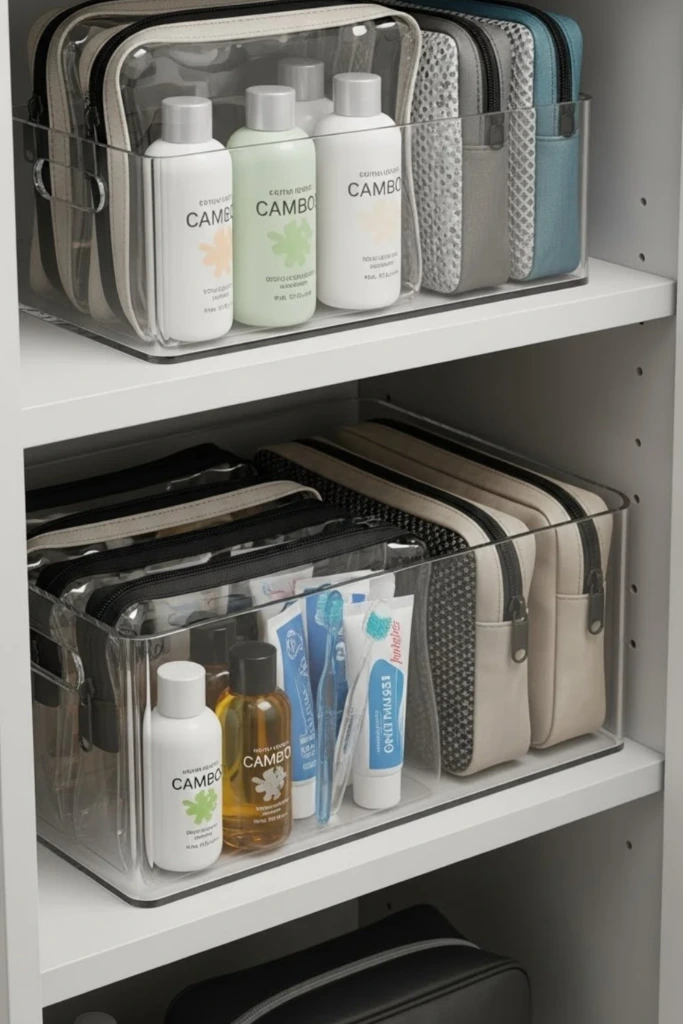
Travel-size toiletries, spare toothbrushes, cosmetic pouches, and small toiletry bottles are easier to manage when stored together. Instead of scattering them among everyday products, create one dedicated travel section.
Use a small bin to hold reusable travel bottles, sealed sample products, and toiletry bags. Keep the most frequently used travel items near the front if you travel regularly, or move the container to a higher shelf if it is only needed occasionally.
Check product labels before transferring liquids into travel bottles, and make sure every container is clean, suitable for the product, and securely closed. Review the kit after each trip so empty bottles and unnecessary items do not accumulate.
23. One-Touch Rule
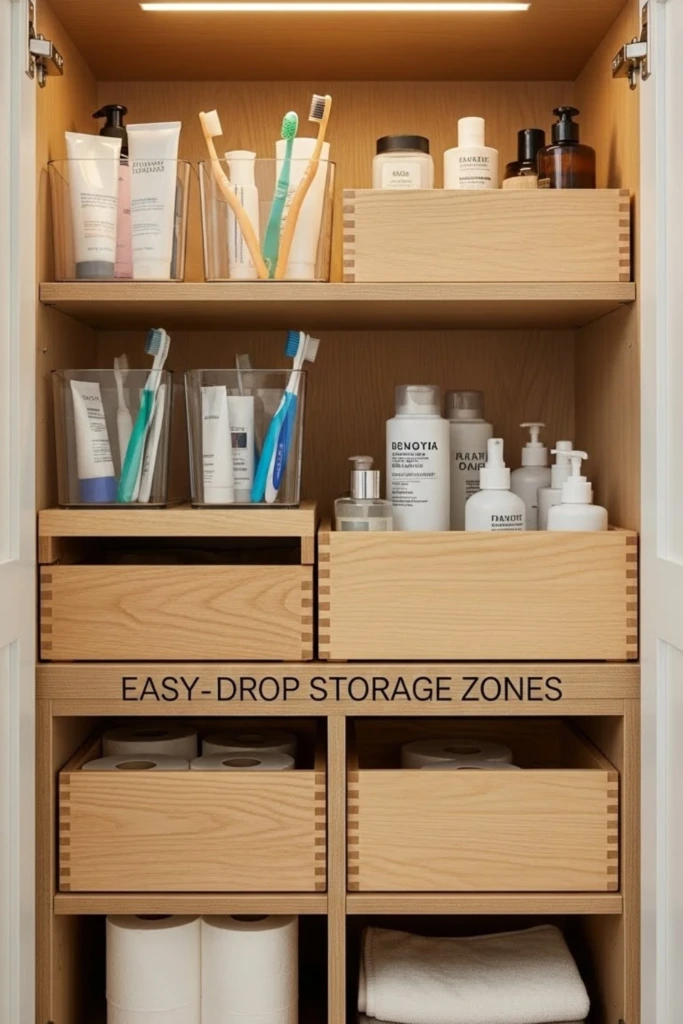
A practical storage system should make putting things away almost effortless. If returning an item requires moving several containers, opening multiple lids, or rearranging a stack, the organization method may be too complicated.
Choose open bins for frequently used products and place them where you can reach them comfortably. Avoid overfilling drawers, stacking loose items, or hiding everyday essentials behind occasional-use supplies.
Keep each category small enough that products can be removed and returned without disturbing neighboring items. At the end of your routine, take a moment to return everything to its assigned location. Simple habits and easy access are more effective for maintaining an organized cabinet than elaborate storage systems that require constant adjustment.
What are common bathroom cabinet problems?
Common problems include overcrowded shelves, poorly arranged products, wasted vertical space, and items that disappear behind taller bottles. Under-sink cabinets can be especially difficult to manage because pipes limit the usable area and make the back of the cabinet harder to reach.
Another frequent issue is mixing everyday toiletries with unopened replacements. This makes it harder to see what you own and can lead to unnecessary purchases. Expired products, unused samples, and loose accessories also contribute to clutter.
The best way to address these problems is to remove unnecessary items, group the rest by category, and choose storage solutions that fit the cabinet. Clear containers, drawer dividers, pull-out organizers, and shelf risers can all help, depending on your available space. Regularly returning products to their designated locations keeps the system functional over time.
What should be in a bathroom cabinet?
A bathroom cabinet should primarily hold the products you regularly use in that bathroom. These may include skincare, hair care, dental hygiene supplies, deodorant, grooming tools, and a reasonable supply of replacement toiletries.
Depending on the cabinet's size, you may also store clean washcloths, folded towels, or selected first-aid supplies. Keep cleaning products separate from personal care items, and store them according to their labels.
Medicines should only be kept in the bathroom if the storage conditions meet the manufacturer's instructions. Bathrooms often experience temperature changes and high humidity, which may make them unsuitable for certain products. Keep medicines and potentially hazardous supplies secured away from children.
Most importantly, avoid using the cabinet as a general dumping ground. Store items you genuinely need, assign each category a specific place, and move occasional-use products elsewhere when space is limited. This keeps essential items accessible and makes everyday bathroom routines more efficient.