20 Mail Organization Ideas for 2026
Paper mail can quickly take over kitchen counters, entryway tables, and home office desks. Bills get mixed with personal letters, important notices disappear beneath advertisements, and paperwork becomes harder to manage with every passing day. A practical mail organization system helps you stay on top of deadlines, locate important documents, and keep unnecessary paper from accumulating.
The key is to give every piece of mail a clear destination. Whether you prefer a simple basket, a wall-mounted organizer, or a digital filing system, the right approach should fit your available space and daily habits.
These 20 mail organization ideas offer practical ways to manage incoming letters, handle paperwork efficiently, and maintain a tidier home.
How Do You Organize Your Mail?
Start by gathering all the mail scattered around your home and separating it into a few basic groups: items that need action, documents worth keeping, and paper that can be discarded. This first step makes it easier to see what requires attention.
Next, establish a designated place for incoming mail. A tray near the entrance or a small organizer beside your desk can prevent letters from spreading throughout the house. Create separate categories for bills, personal correspondence, work documents, and important records as needed.
Make a habit of processing new mail regularly. Open envelopes, note payment deadlines, respond to important requests, and recycle unwanted paper. Documents containing sensitive information should be shredded before disposal.
Keep the system simple enough to maintain even on busy days. A few clearly labeled sections and a consistent routine are usually more effective than an elaborate filing arrangement that takes too much effort to use.
1. Central Drop Zone
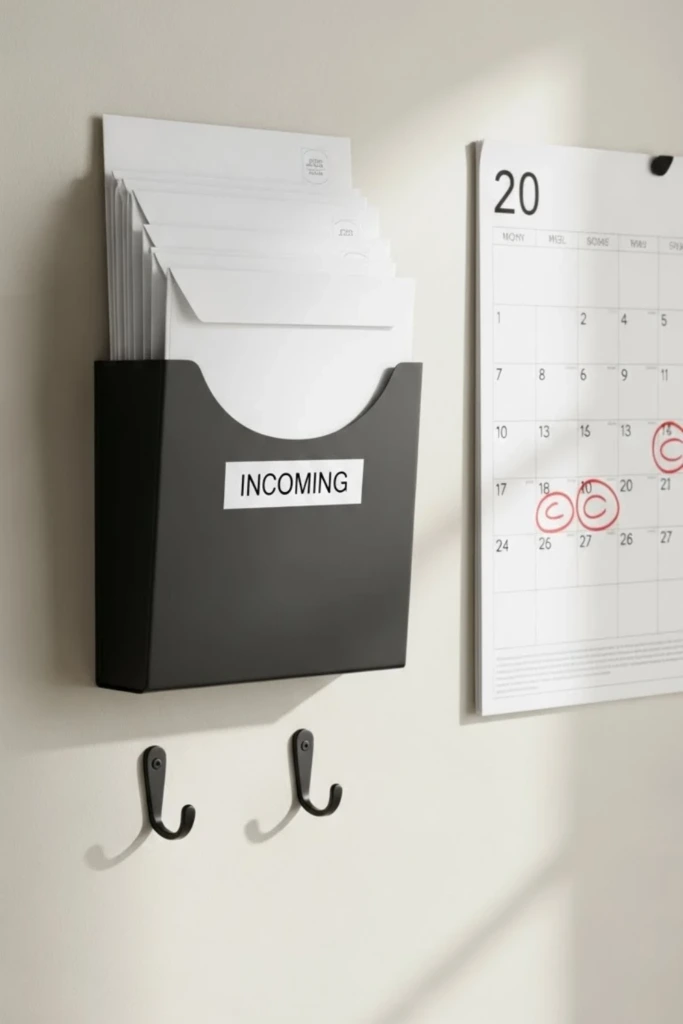
A dedicated mail drop zone gives every incoming envelope a temporary home as soon as you walk through the door. Without one, paperwork tends to collect wherever there happens to be an empty surface.
Choose a convenient spot near your main entrance and add a small basket, wall pocket, or tabletop letter holder. Keep this area reserved for mail rather than combining it with keys, shopping bags, and miscellaneous household items.
A small calendar or reminder board nearby can help you remember important appointments and payment dates. Position the organizer where household members naturally pass so incoming letters are less likely to be forgotten.
2. Wall Mail Station
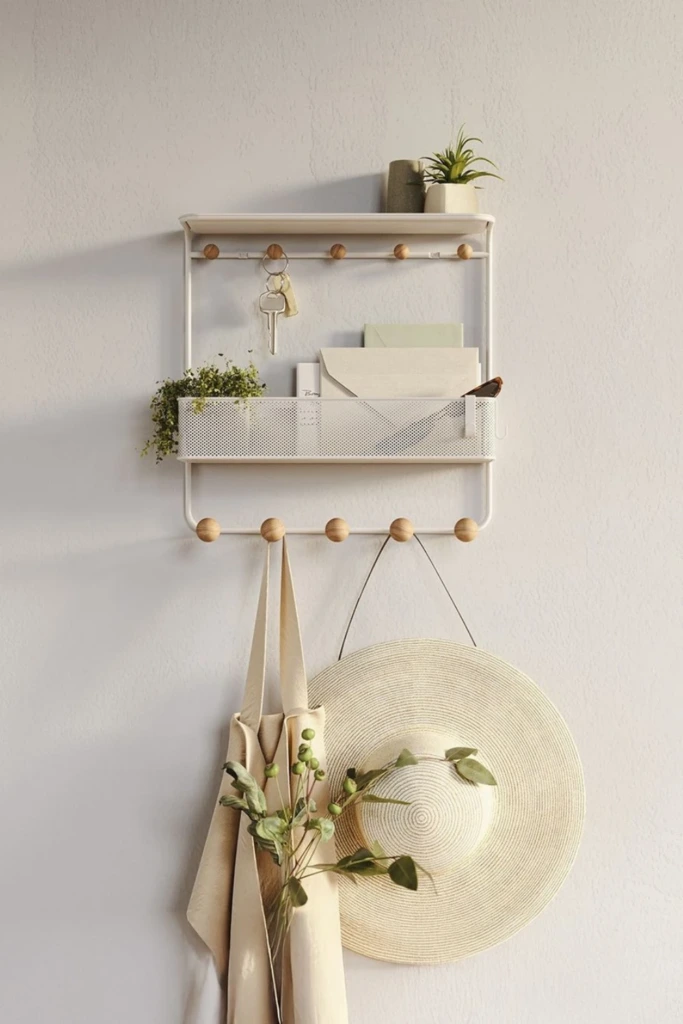
When counter space is limited, a wall-mounted mail station makes use of an otherwise empty vertical surface. It is particularly useful in apartments, narrow hallways, and compact homes.
Install a slim shelf or hanging organizer near the entrance. Use individual pockets for bills, personal correspondence, documents requiring attention, and outgoing letters. Hooks beneath the shelf can hold keys or reusable shopping bags if space permits.
Choose a design that complements your interior while keeping labels easy to read. Placing the organizer at a comfortable height makes it convenient to sort paperwork without bending down or searching through drawers.
3. Action Board System
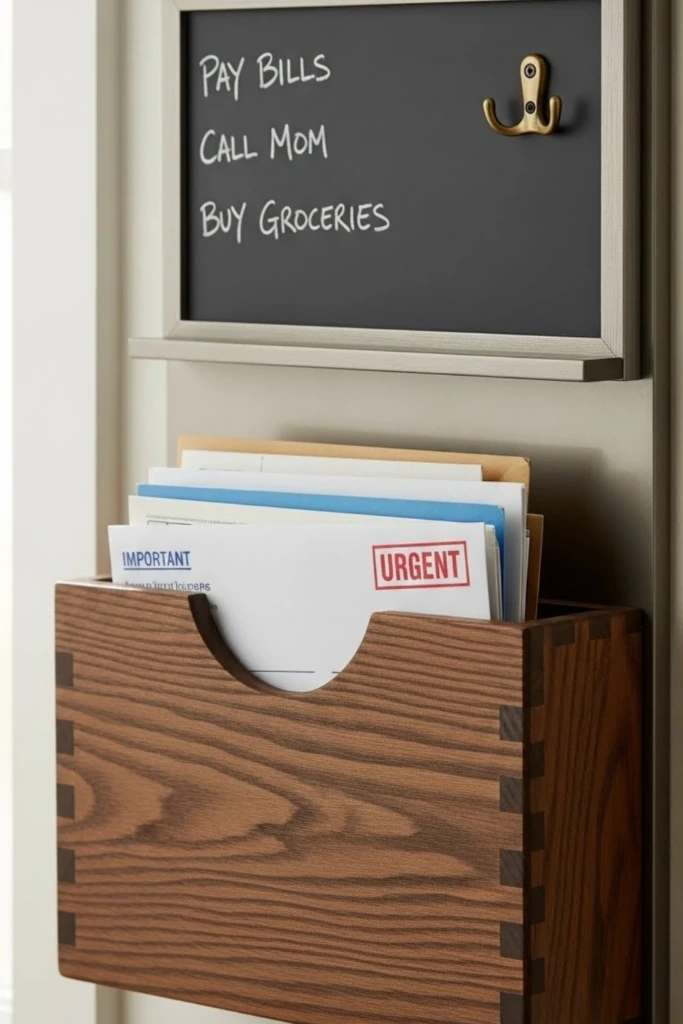
Some letters require more than storage. They may contain an appointment date, a form that needs completing, or a bill that must be paid. An action board keeps these responsibilities visible until they are handled.
Combine a small mail pocket with a corkboard, magnetic board, or chalkboard. Place documents requiring attention in the pocket and write important dates or next steps on the board.
For example, a school permission slip might need to be signed by Friday, while an insurance notice may require a phone call. Recording these tasks beside the mail helps turn vague reminders into specific actions.
Once a task is complete, remove the document from the action area and file or discard it appropriately. This prevents the board from becoming another place where unfinished paperwork accumulates.
4. Three-Stage Sorting
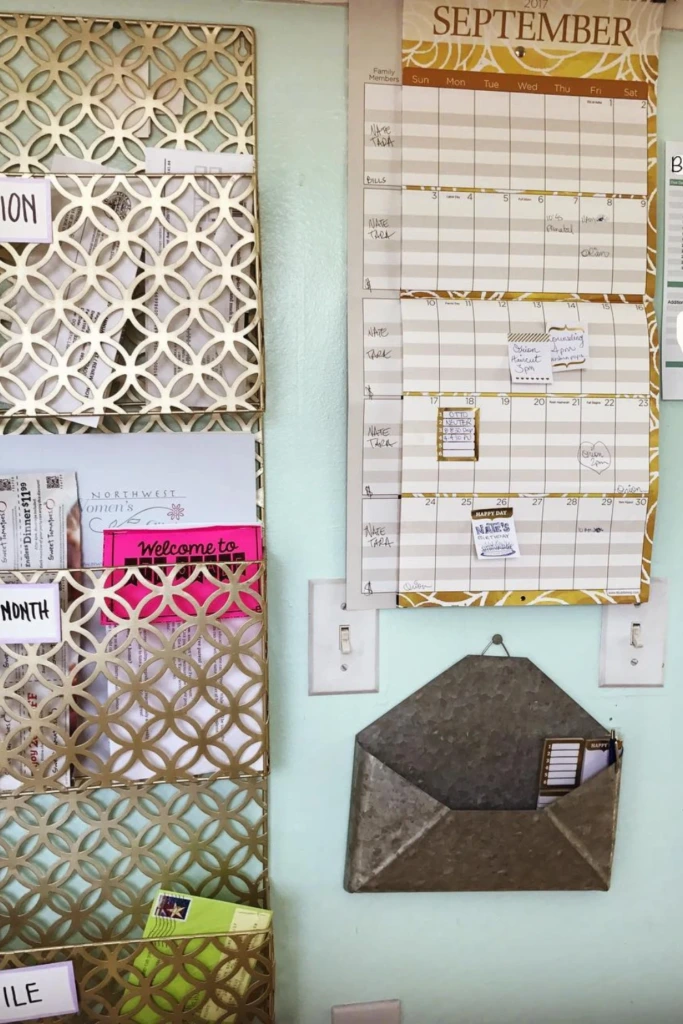
A three-stage system makes mail easier to process because each item has a clear next destination. Instead of creating dozens of categories, divide your organizer into three sections.
Action needed: Bills, applications, invitations, and documents requiring a response.
Current paperwork: Recent statements, temporary records, and documents you may need during the month.
Long-term storage: Important contracts, official records, and other documents that deserve permanent or extended safekeeping.
Use labeled vertical folders, hanging pockets, or divided trays to keep each group separate. Review the action section frequently, move completed items into the appropriate storage category, and remove anything that no longer needs to be kept.
This arrangement works especially well for busy households that handle a mixture of financial paperwork, school notices, and personal correspondence.
5. Alphabet Sort Slots
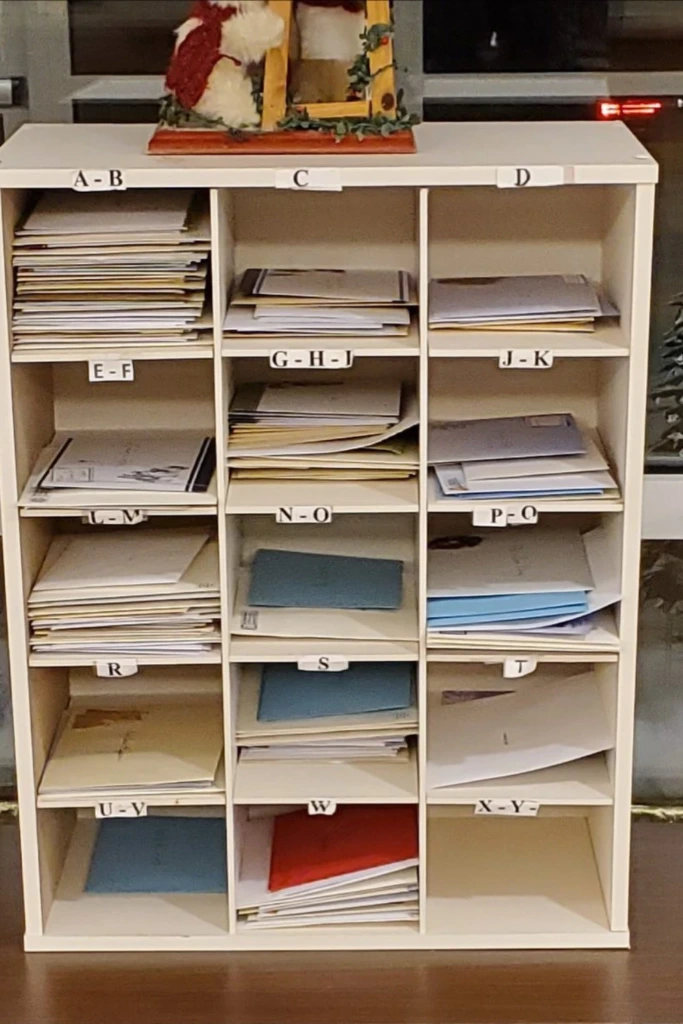
Alphabetical sorting can be helpful when you regularly receive documents from multiple organizations, clients, or contacts. Rather than searching through a mixed pile, you can look in the section assigned to the relevant name.
Use a file box or cabinet with labeled dividers. Depending on how much paperwork you handle, you might create a separate folder for each letter or combine letters into groups such as A–D, E–H, and I–L.
This approach is most useful for frequently accessed reference documents rather than every piece of incoming mail. For financial records, legal paperwork, or household bills, subject-based folders may be easier to navigate than alphabetical categories.
Whichever method you choose, apply the same filing rule consistently. A predictable system saves time and makes retrieving documents much less frustrating.
6. Drawer Mail System
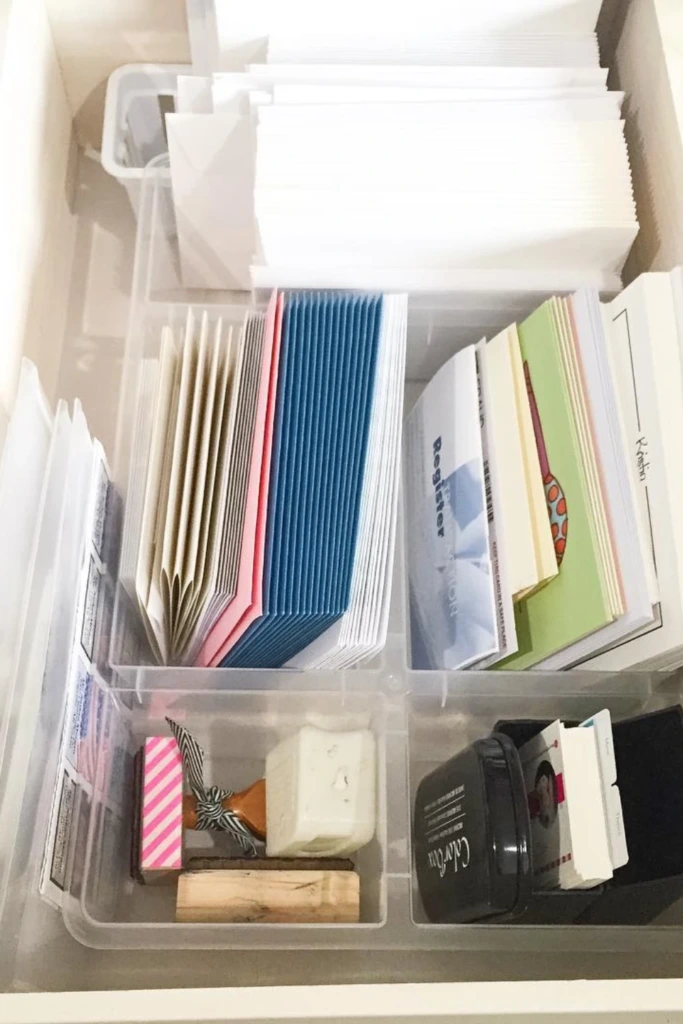
A drawer organizer provides a tidy solution for people who prefer to keep paperwork out of sight. It also protects letters from being scattered across desks and countertops.
Choose a drawer near your home office or the place where you usually open mail. Add dividers or shallow trays for bills, personal letters, pending paperwork, and documents ready to file.
Arrange envelopes so their labels remain visible, and avoid filling the drawer beyond its capacity. If papers become compressed into an overcrowded stack, locating a specific notice will be difficult.
Reserve one section for urgent items and check it regularly. The goal is to make the drawer a structured filing space rather than a hidden dumping ground.
7. Basket Mail Catcher
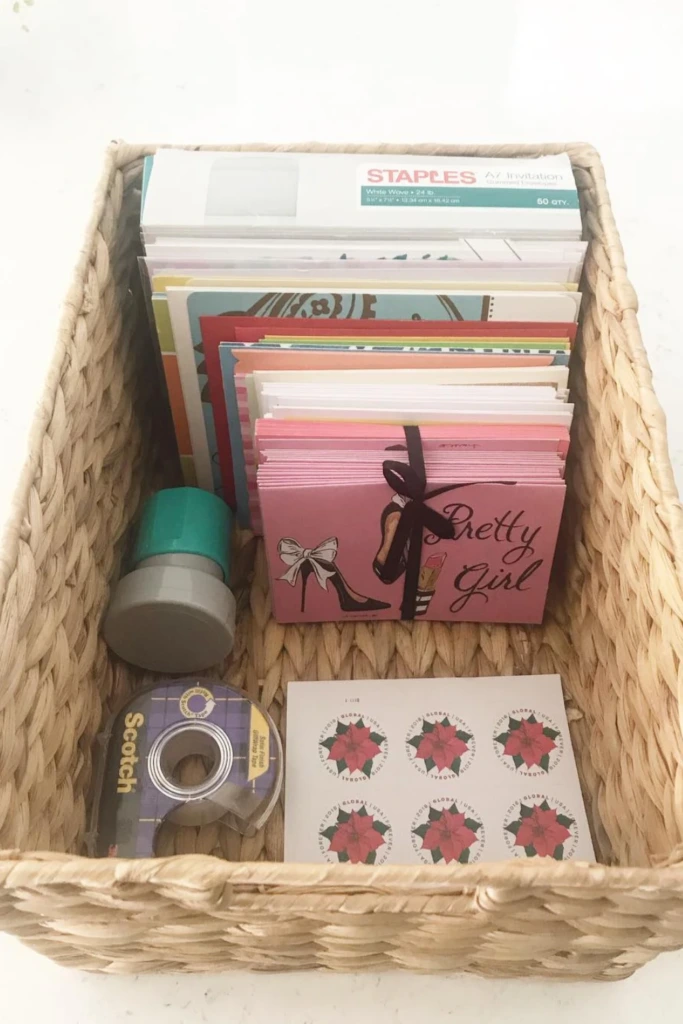
A simple basket can be an effective mail organizer if you want something inexpensive and easy to move. It works well on a desk, console table, bookshelf, or kitchen counter.
Select a basket that is large enough for your usual mail volume but small enough to discourage excessive accumulation. Stand envelopes upright whenever possible, using a divider to separate bills from personal correspondence.
A basket with a handle is convenient if you prefer to carry all incoming mail to your desk for processing. For a more organized appearance, choose a container that matches your existing furniture and décor.
Remember that the basket should hold unprocessed mail only temporarily. Establish a regular time to empty it so the contents do not become difficult to manage.
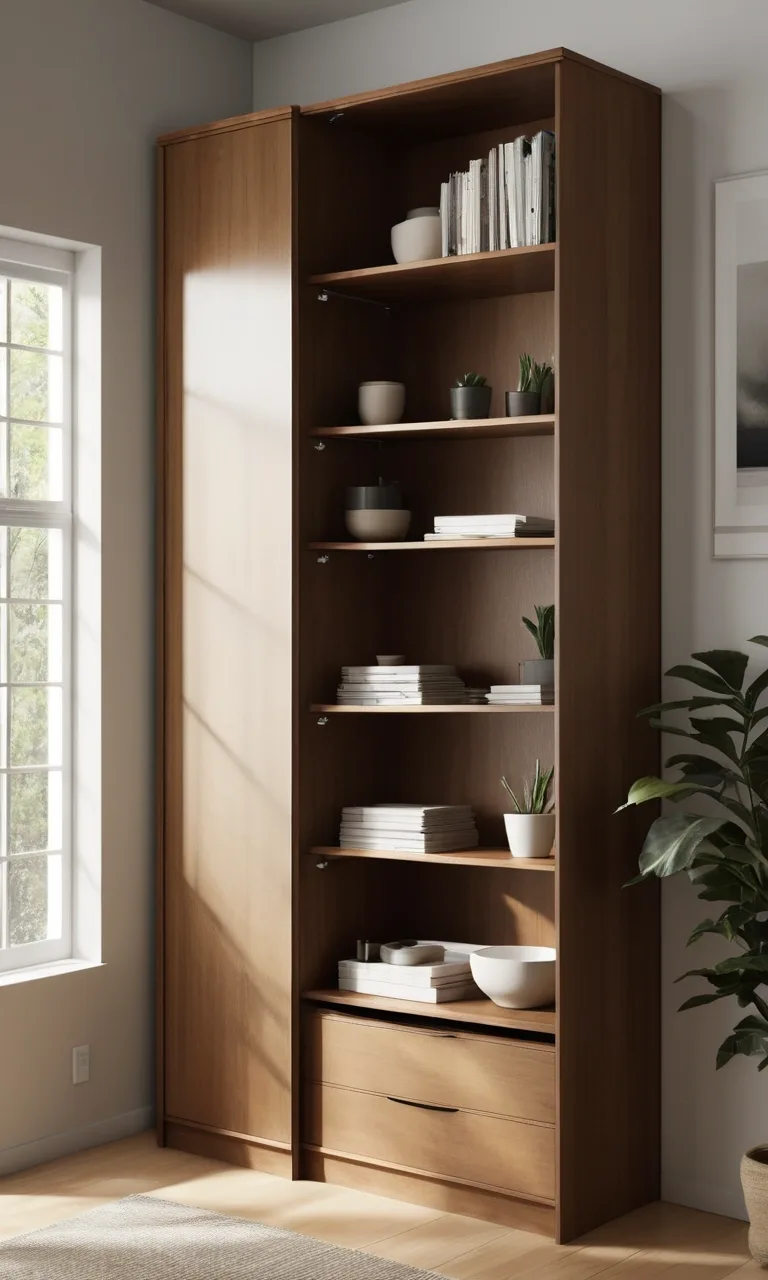
8. Vertical Mail Cabinet
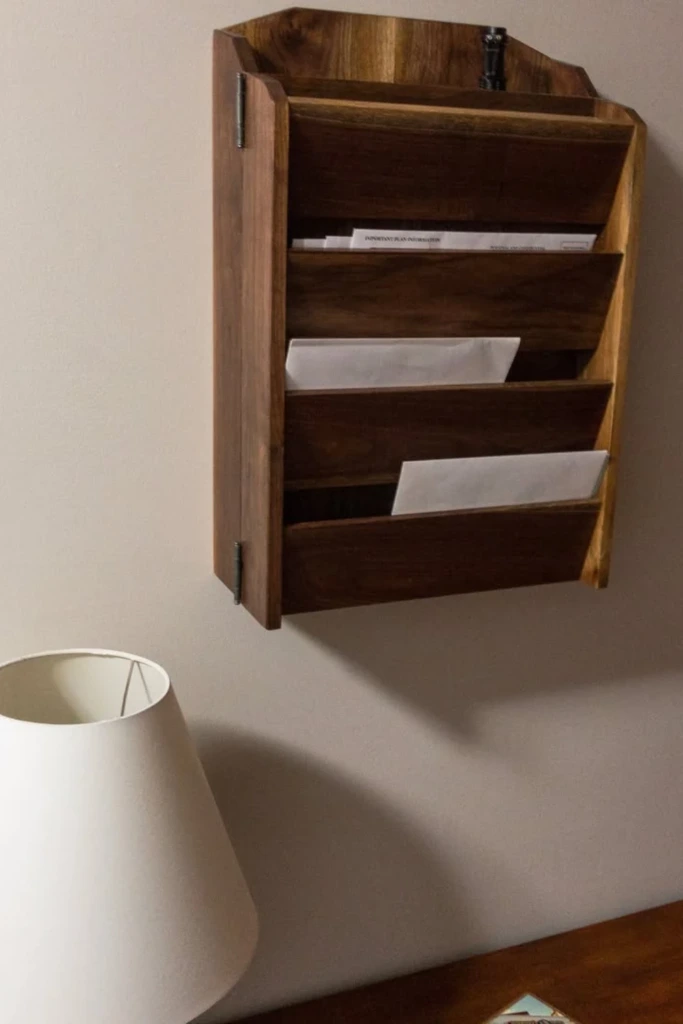
A vertical mail cabinet provides dedicated storage while making efficient use of wall space. It is a good choice for households that receive frequent correspondence or need separate compartments for different types of documents.
Look for a cabinet with several slots, shelves, or angled compartments. Assign each section a specific purpose, such as bills, personal letters, school paperwork, and documents waiting to be filed.
Wall-mounted designs keep paperwork away from busy surfaces, while freestanding cabinets can be placed beside a desk or in a hallway. Choose a model that accommodates standard envelopes and larger documents without bending them.
Check the cabinet's contents periodically and remove completed paperwork. Keeping each compartment limited to one category makes it easier to find what you need.
9. Digital Scan First
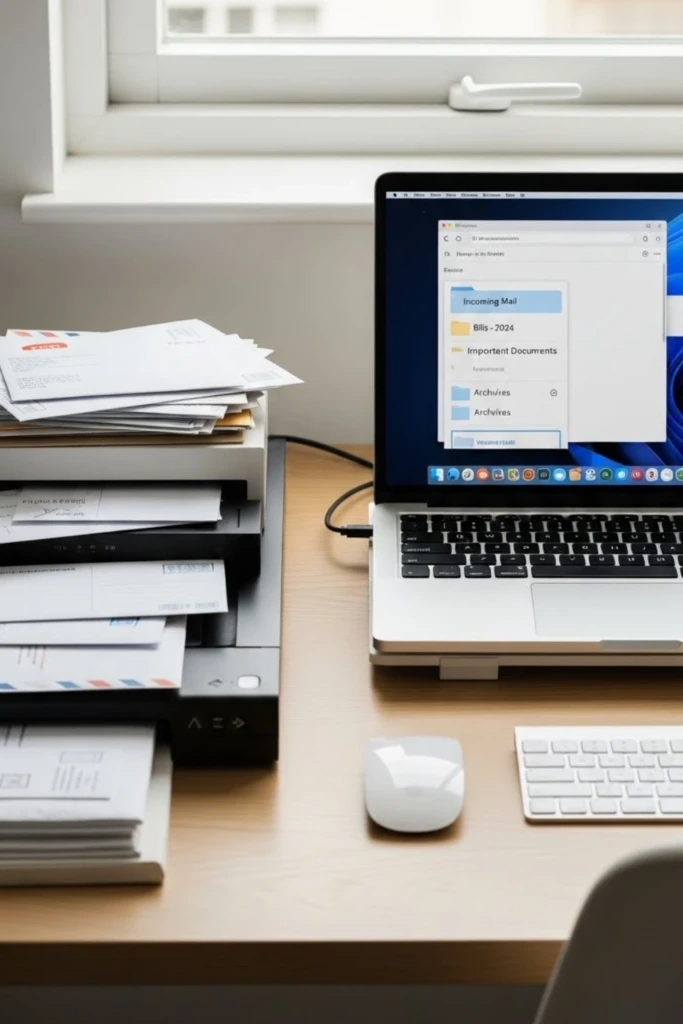
Digitizing suitable paperwork can significantly reduce the amount of paper you need to store at home. Bills, receipts, instruction sheets, and certain notices may be easier to retrieve electronically than from a crowded filing cabinet.
Use a scanner or a reputable scanning app to create readable digital copies. Name each file with useful details, such as the document type, organization, and date. Store files in clearly labeled folders so you can locate them later.
For example, a folder structure might include Finance, Home, Insurance, and Personal Records. Back up important files securely and use strong account protection when storing sensitive information online.
Not every document should be discarded after scanning. Some original contracts, certificates, legal documents, and official records may need to be retained. Confirm any applicable recordkeeping requirements before shredding originals.
10. Weekly Mail Reset
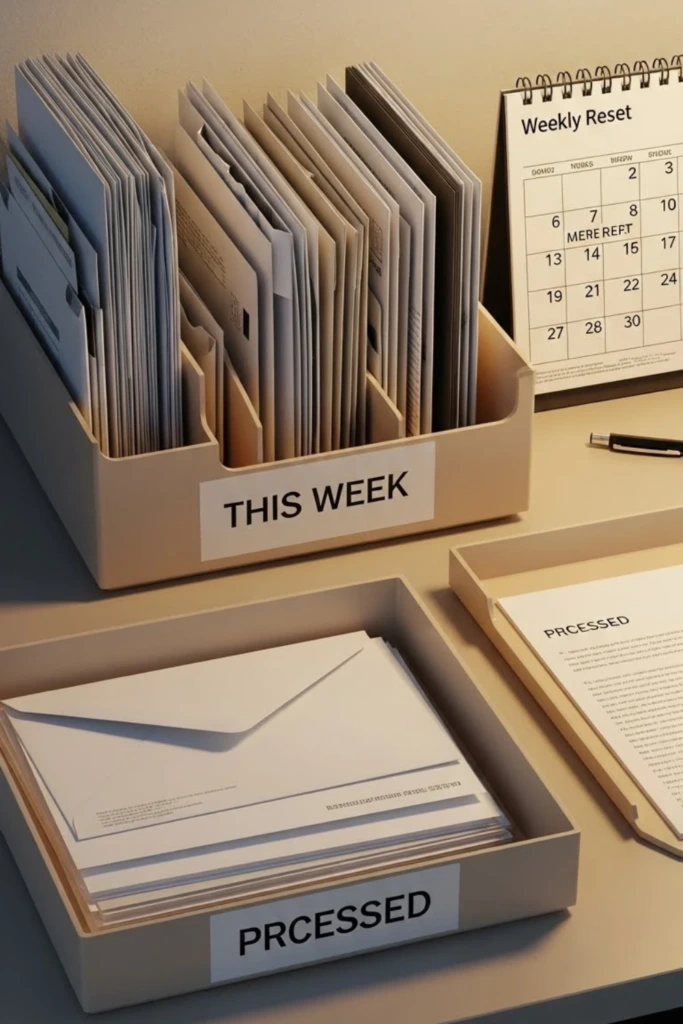
A weekly mail reset is ideal for people who prefer handling paperwork in one scheduled session rather than sorting it every day.
Choose a consistent day and set aside enough time to review the accumulated mail. Open remaining envelopes, pay or schedule bills, complete outstanding forms, file important documents, and recycle unwanted paper.
Start with urgent items so that approaching deadlines receive attention first. Then work through less time-sensitive correspondence and clear the temporary holding area.
A short checklist can make the process easier to repeat. If a particular document requires more work, record the next action and its deadline rather than allowing it to sit unnoticed in the pile.
Regular weekly maintenance helps prevent minor paperwork tasks from becoming a major household chore.
11. Bills Only Folder
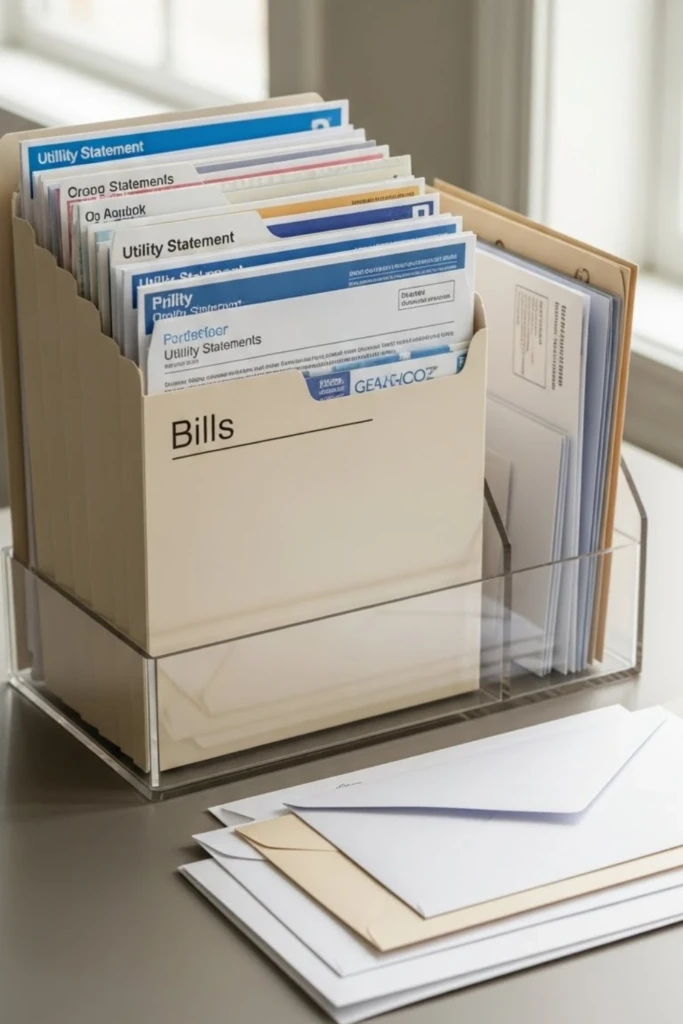
Financial paperwork deserves its own dedicated location because payment notices, statements, and overdue reminders can have important consequences.
Create a clearly labeled folder or tray for bills and payment-related correspondence. Keep it near your computer, financial planning area, or another place where you regularly manage household expenses.
Separate unpaid bills from paid statements if you retain paper copies. Mark due dates on a calendar or use payment reminders to avoid relying solely on the physical folder.
Whenever possible, consider electronic billing and automatic payments for predictable expenses. However, continue reviewing statements and account activity so unexpected charges or changes do not go unnoticed.
Store financial documents securely, particularly when they contain account details or other sensitive information. Shred unnecessary paperwork rather than placing it intact in ordinary recycling.
12. Color Code System
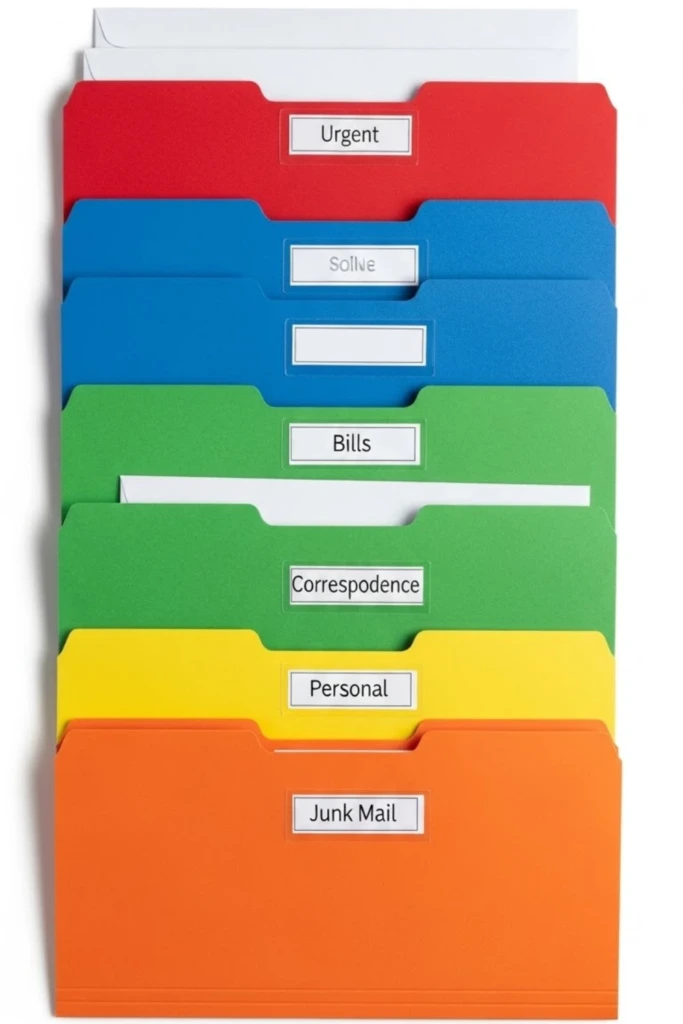
Color coding creates an easy visual distinction between different types of mail. Instead of reading every label, you can quickly recognize which section an envelope belongs in.
Assign a specific color to each major category. For example, blue could represent household bills, green could identify financial records, yellow could mark school paperwork, and red could indicate documents requiring urgent attention.
Use colored folders, sticky tabs, clips, or labels to establish the system. If several people share the organizer, make sure everyone understands what the colors mean.
Avoid assigning too many colors, since an overly complicated arrangement can become difficult to remember. Three to five well-defined categories are often enough for a typical household.
The colors themselves are less important than applying them consistently. A simple visual system can make routine sorting faster and help important papers stand out.
13. Open Immediately Rule
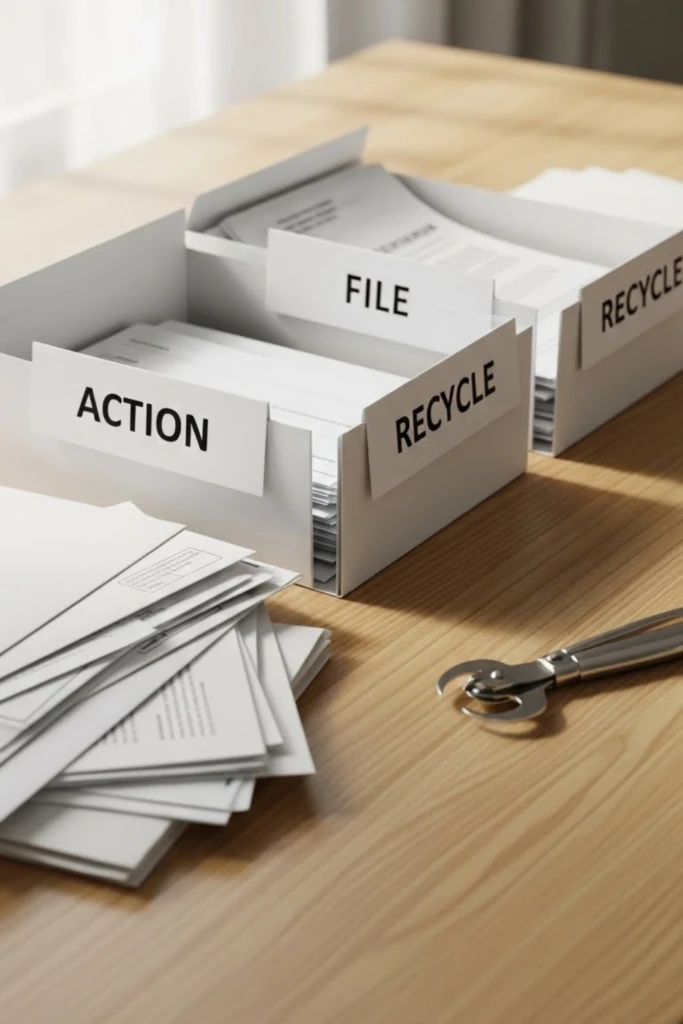
Leaving envelopes unopened makes it difficult to judge their importance. A quick opening routine helps you identify deadlines, discard unnecessary inserts, and decide what needs to happen next.
When you collect the day's mail, open it near your designated sorting station. Separate the contents and place each item into the appropriate category.
If a letter requires action, write down the next step and any relevant deadline. If it contains information you need to keep, file it or scan it. Advertising and other unwanted paper can be recycled when appropriate.
You do not need to complete every task immediately. The purpose of this rule is to understand what each item requires rather than allowing unopened envelopes to accumulate.
Set aside a few minutes each day to process new mail, especially if you regularly receive financial or time-sensitive correspondence.
14. Temporary Holding Tray
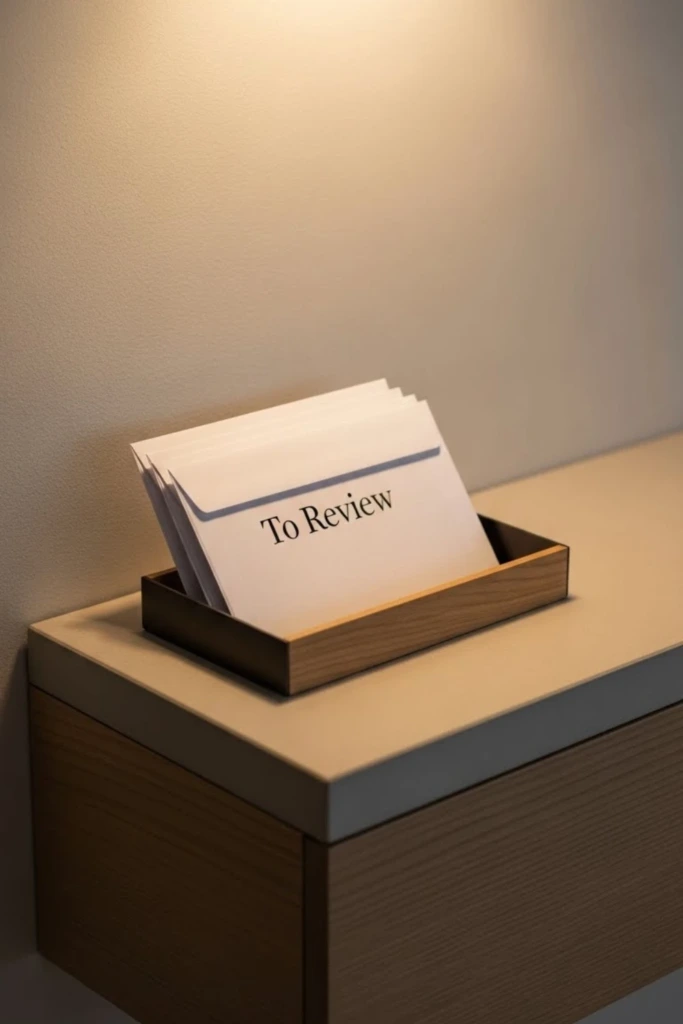
Some documents cannot be filed immediately because they need to be reviewed, discussed with another household member, or used for an upcoming task. A temporary holding tray gives these items a designated place without mixing them with permanent records.
Choose a small tray and label it clearly, such as “Review This Week” or “Pending.” Use it only for documents that have a specific reason to remain accessible for a short period.
Set a time limit for clearing the tray. During your weekly review, complete outstanding actions, transfer records to long-term storage, and discard anything that is no longer necessary.
Keeping the tray small provides a natural reminder to process its contents. If it begins overflowing, reassess the system instead of adding another container.
15. Shred Station Nearby
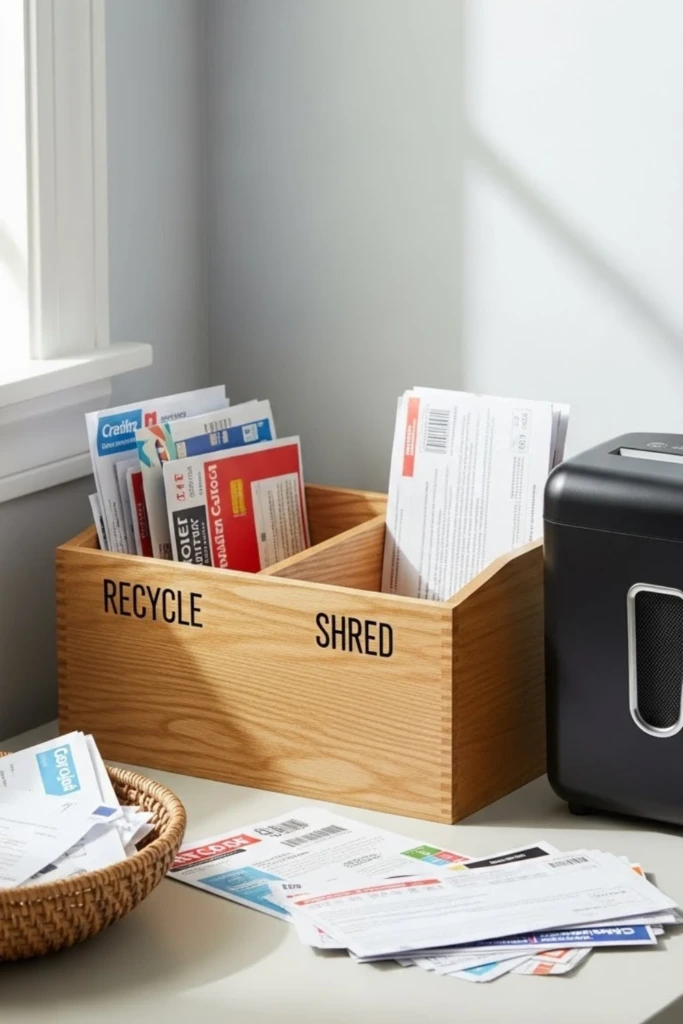
Unwanted mail often lingers because disposing of it securely requires an extra trip or additional effort. Placing a paper shredder near your sorting area makes it easier to deal with sensitive documents immediately.
Position the shredder beside your desk or in a nearby home office, provided the location is safe and suitable for the equipment. Keep a recycling container close by for ordinary paper that does not contain sensitive information.
Shred documents containing personal identifiers, account information, or other private details when you no longer need them. For particularly sensitive paperwork, follow the relevant organization's disposal guidance.
Avoid shredding documents simply because they are old. Check whether they need to be retained for tax, legal, financial, or other recordkeeping purposes first.
A convenient shredding station helps keep unnecessary paper from returning to your desk or filing cabinet.
16. Household Member Slots
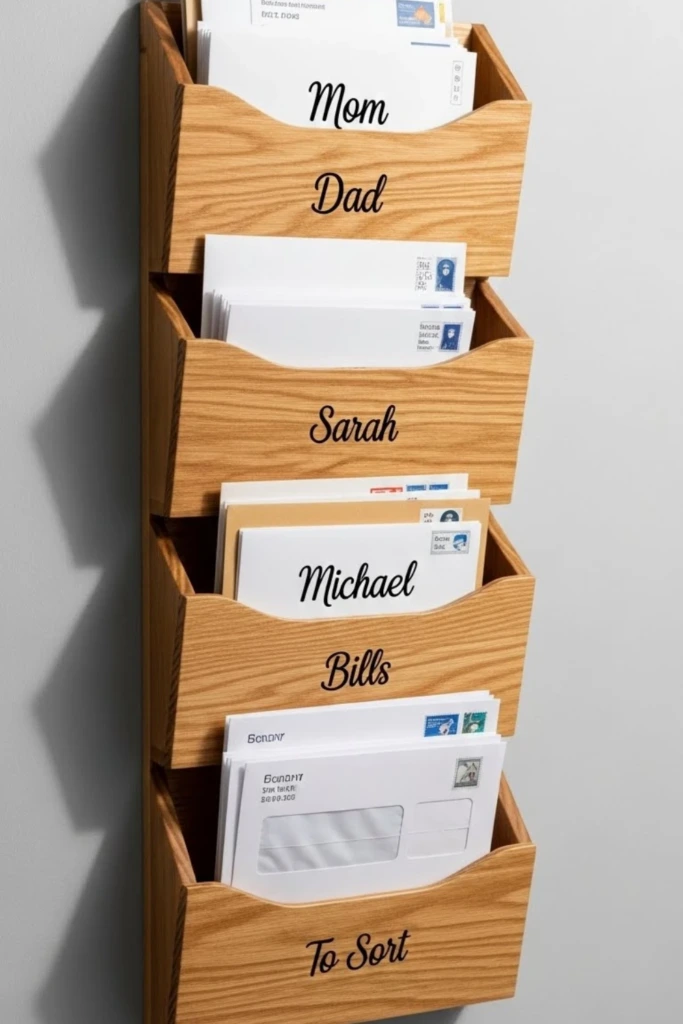
When several people share one household, mail can easily end up in the wrong place. Individual slots create a simple way to distribute letters and notices without mixing everyone's paperwork together.
Install a multi-pocket organizer or use labeled folders in a shared cabinet. Give each person a separate compartment and, if needed, reserve an additional section for common household bills and property documents.
Encourage everyone to check their slot regularly and take responsibility for their own correspondence. Shared financial or household mail should have a clear process for notifying the person responsible for handling it.
For families with children, separate school notices, permission slips, and activity schedules from general correspondence. This makes upcoming responsibilities easier to spot.
Keep private documents secure and avoid placing sensitive information where visitors or unrelated household members can easily see it.
17. Action Date Notes
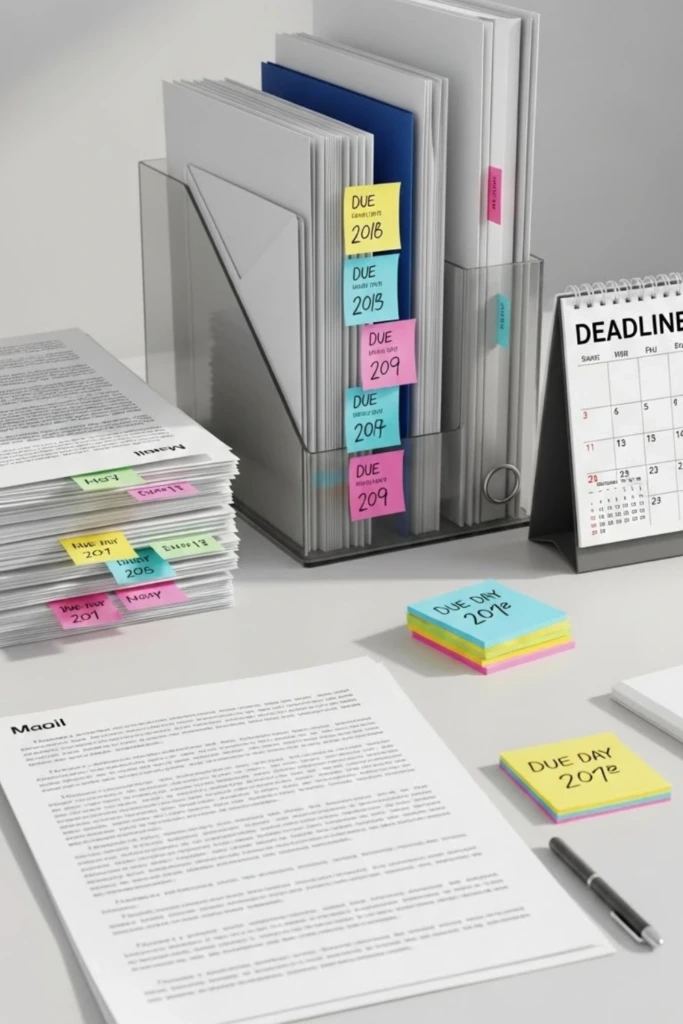
Important mail often gets forgotten because its deadlines are buried in the text. Adding a visible date makes it easier to identify what needs attention first.
When opening a letter, note any payment deadline, appointment, renewal date, or response requirement. Write the date on a removable note or in your digital calendar, and attach the note to the document when appropriate.
Place time-sensitive items in a dedicated action folder or display them in a safe, visible location. Review the dates regularly and move completed tasks out of the active section.
For recurring payments or annual renewals, set reminders in advance rather than waiting until the due date arrives.
A date-based approach is particularly useful for people who need to manage several bills, official notices, school forms, or appointments at once.
18. Outgoing Mail Bin
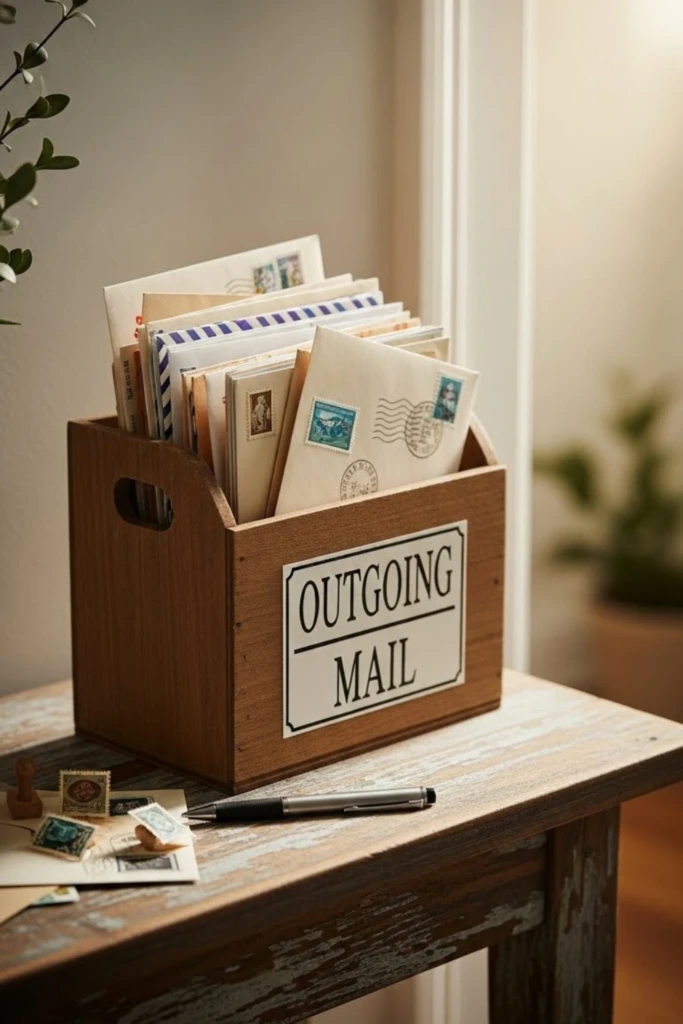
Letters that are ready to send need their own designated spot. Otherwise, stamped envelopes, completed forms, and important replies can sit on a desk long after they are prepared.
Place a small bin near the front door, your everyday bag, or another location you pass before leaving home. Use it exclusively for outgoing mail that is fully prepared.
Before placing an item inside, confirm that the address is correct, required documents are included, and sufficient postage has been added when applicable.
Check the bin whenever you leave the house or establish a regular mailing routine. For items with important deadlines, arrange dispatch early enough to account for postal delivery times.
Keeping outgoing mail separate from incoming paperwork prevents completed tasks from getting mixed back into the pile.
19. Minimal Folder Rule
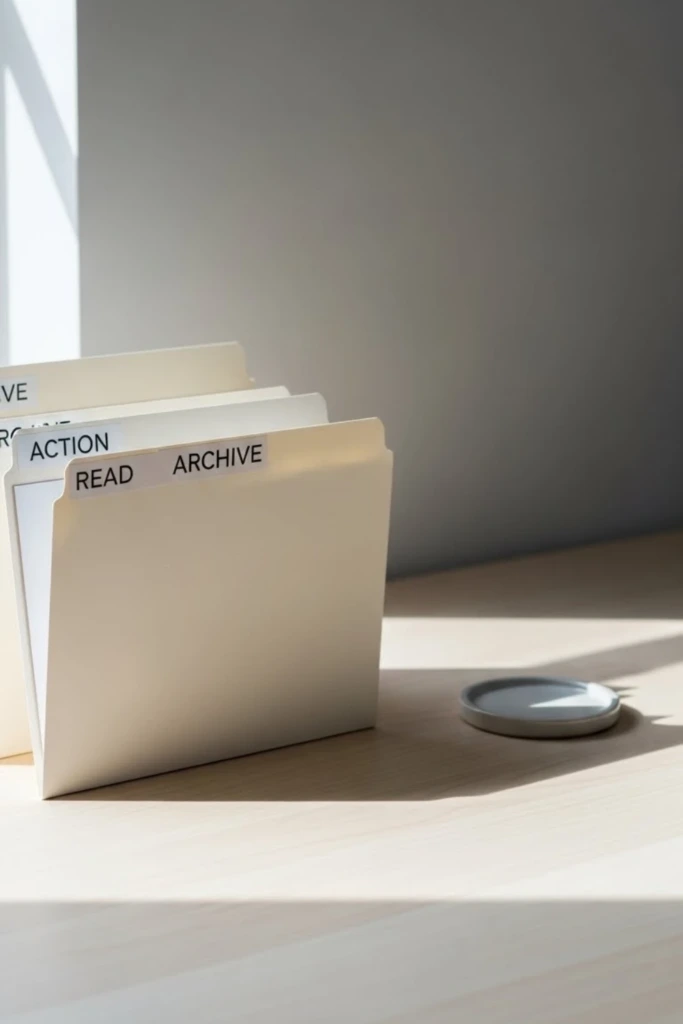
A filing system becomes harder to maintain when every small variation has its own folder. Too many categories force you to make unnecessary decisions whenever a new document arrives.
Start with a handful of broad labels, such as Bills, Home, Personal, Work, and Important Records. Add a more specific folder only when you have enough paperwork to justify it or need to retrieve those documents frequently.
Use clear labels and place folders in a consistent order. If a category rarely contains anything, consider combining it with a related section.
The objective is to make filing quick and retrieval straightforward. You should be able to decide where a document belongs without spending several minutes comparing similar folders.
Review your categories occasionally as your household needs change. A flexible system is easier to maintain than one built around too many rules.
20. End-of-Month Purge
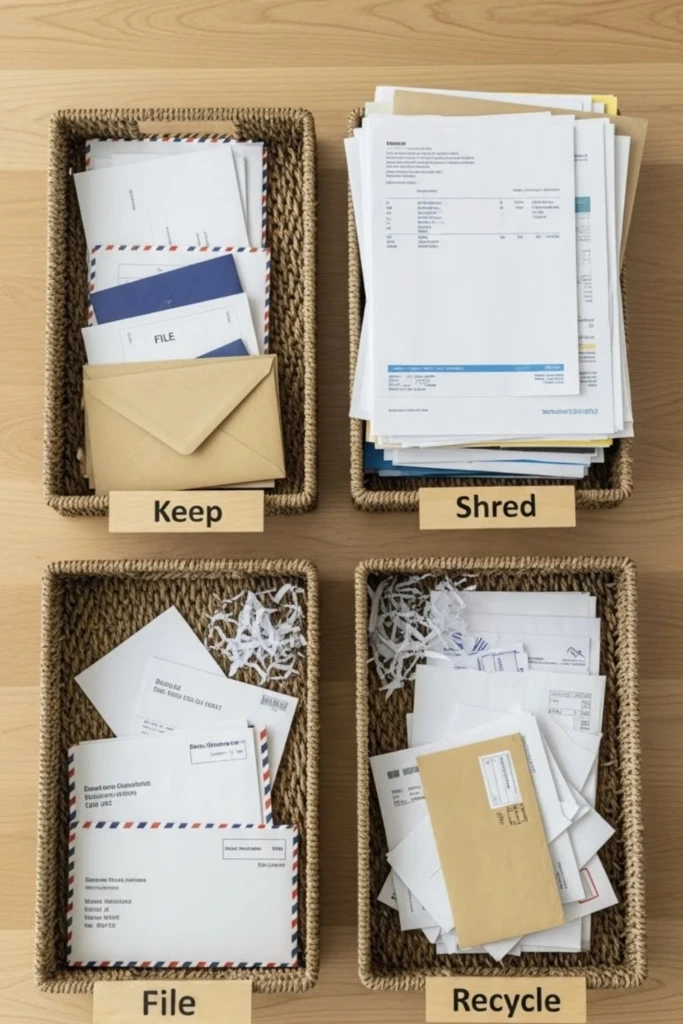
Even a well-organized mail system needs occasional maintenance. Over time, temporary notes, duplicate printouts, outdated advertisements, and unnecessary statements can accumulate in folders and drawers.
Schedule a short review at the end of each month. Examine your active mail tray, filing cabinet, and household paperwork areas for documents that can be removed.
Recycle ordinary paper where appropriate, shred sensitive information, and transfer important records to their proper long-term locations. Before discarding anything financial, legal, medical, or official, check whether it must be retained and for how long.
Use the review to identify recurring problems, too. If bills repeatedly collect in the wrong place, move the bills folder closer to where you handle payments.
A monthly cleanup keeps the system manageable and provides an opportunity to adjust it before clutter becomes overwhelming.
How do I choose a mail organizer?
Choose an organizer based on the amount of mail you receive, where you usually open it, and how much storage space you have available.
A small basket or tabletop tray may be sufficient for a household with limited correspondence. A wall-mounted pocket system works well in narrow entryways, while a divided file box or cabinet may be more suitable for a home office with substantial paperwork.
Look for clearly labeled sections, easy access, and enough capacity for your normal mail volume. If you share a home with other people, consider individual compartments to prevent confusion.
Most importantly, select a system that supports your existing habits. An organizer that is easy to use every day is more valuable than an elaborate design that requires constant rearranging.
What is the best email management system?
The best email management system is one that helps you process new messages, locate important information, and keep your inbox from becoming an endless backlog.
Start with a small number of folders or labels, such as Work, Personal, Finance, and Action Required. Use your inbox primarily for incoming messages and unresolved items rather than treating it as permanent storage.
Set up filters for predictable messages, unsubscribe from newsletters you no longer read, and archive emails that you want to retain but do not need to see every day. Flag or star messages that require a response, and schedule regular sessions to review outstanding tasks.
For messages containing important deadlines, add the task to your calendar or reminder app instead of relying on the email to stay visible. Enable multifactor authentication and be careful when handling sensitive information.
The same principle applies to physical mail and email: create a clear destination for every item, deal with important tasks promptly, and maintain the system through regular reviews.