16 Coffee Station Organization Ideas for 2026
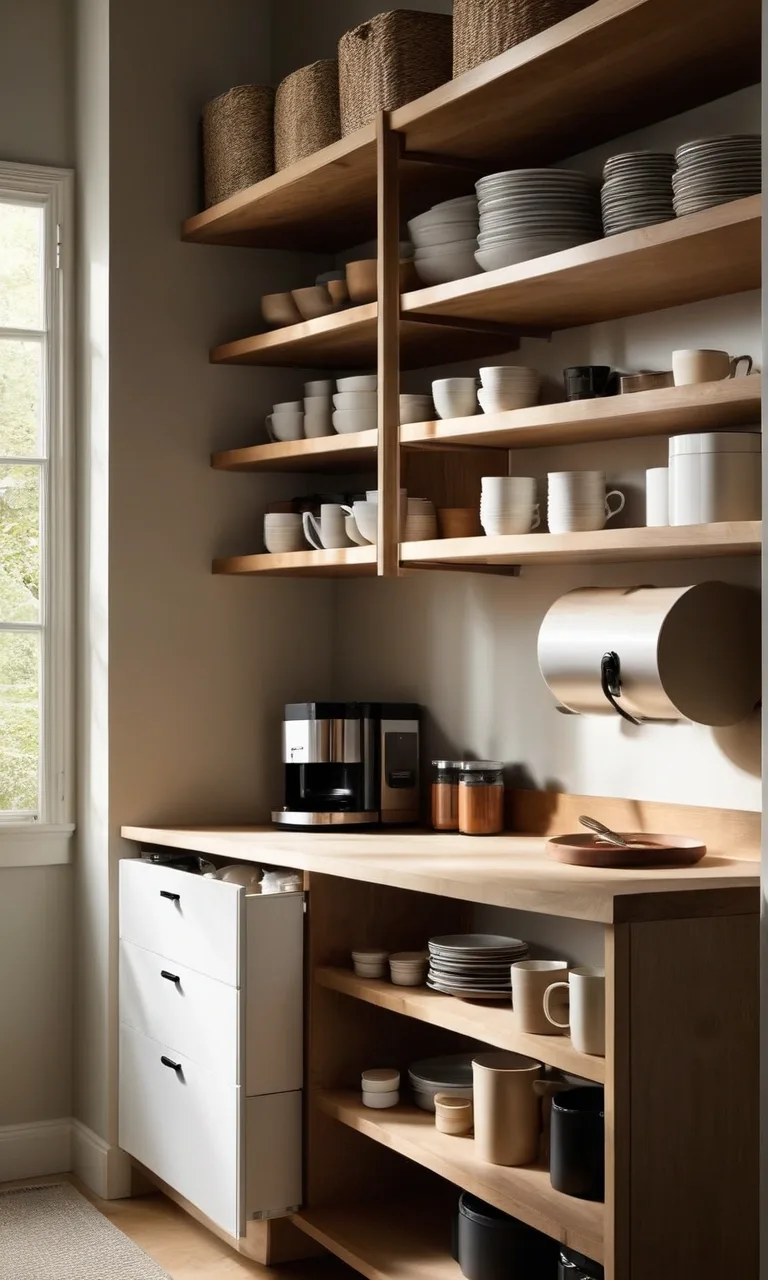
A well-organized coffee station can make your mornings easier while adding a welcoming touch to your kitchen. Whether you enjoy a quick cup before work or love preparing homemade lattes, having everything arranged in one convenient place makes a noticeable difference.
The challenge is finding enough room for coffee makers, mugs, beans, syrups, and accessories without overwhelming your countertops. Fortunately, you don't need a large kitchen or expensive renovations to create a beautiful and practical setup.
From space-saving shelves and clever drawer organizers to stylish beverage bars, these 20 coffee station organization ideas will help you create a dedicated coffee corner that suits your space, budget, and daily routine.
What Essentials Do I Need for a Functional Home Coffee Station?
Creating a functional home coffee station starts with understanding what you actually use. Rather than filling your space with decorative accessories, prioritize the equipment and supplies that make preparing your favorite drinks convenient.
Your coffee maker or espresso machine should be the centerpiece. Position it near an electrical outlet, with enough clearance for ventilation, opening lids, filling water reservoirs, and cleaning.
Keep frequently used items such as mugs, coffee beans, filters, teaspoons, and sweeteners within easy reach. Airtight containers help protect coffee from moisture and air, while small trays prevent loose accessories from spreading across the counter.
Storage is equally important. Wall shelves, drawer dividers, baskets, and compact organizers can help you maximize limited space.
Finally, consider lighting and maintenance. A well-lit preparation area makes measuring ingredients easier, while washable surfaces and accessible storage simplify daily cleaning.
The goal is to build a coffee station that feels effortless to use and stays organized without constant rearranging.
1. Tiered Mug Display
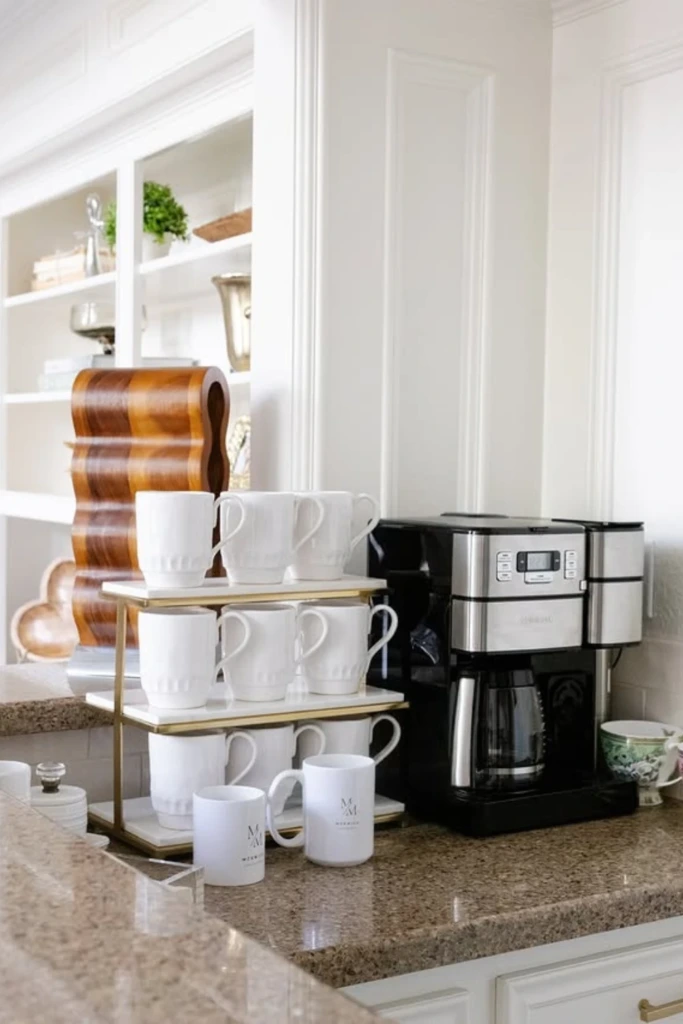
A tiered mug display is a practical solution for organizing your favorite coffee cups without sacrificing valuable cabinet space.
Choose a sturdy two-level organizer that accommodates your everyday mugs. Arrange larger cups on the lower tier and smaller espresso cups above to make each one easy to access.
Wooden displays bring warmth to traditional kitchens, while black metal organizers complement industrial and contemporary interiors.
Position the display near your coffee maker so you can grab a cup without moving between cabinets. Avoid overcrowding the tiers, as leaving a little space makes handling mugs safer and easier.
For a coordinated appearance, group cups with similar colors or finishes. A small decorative plant nearby can add personality without interfering with your preparation area.
2. Floating Shelf Setup
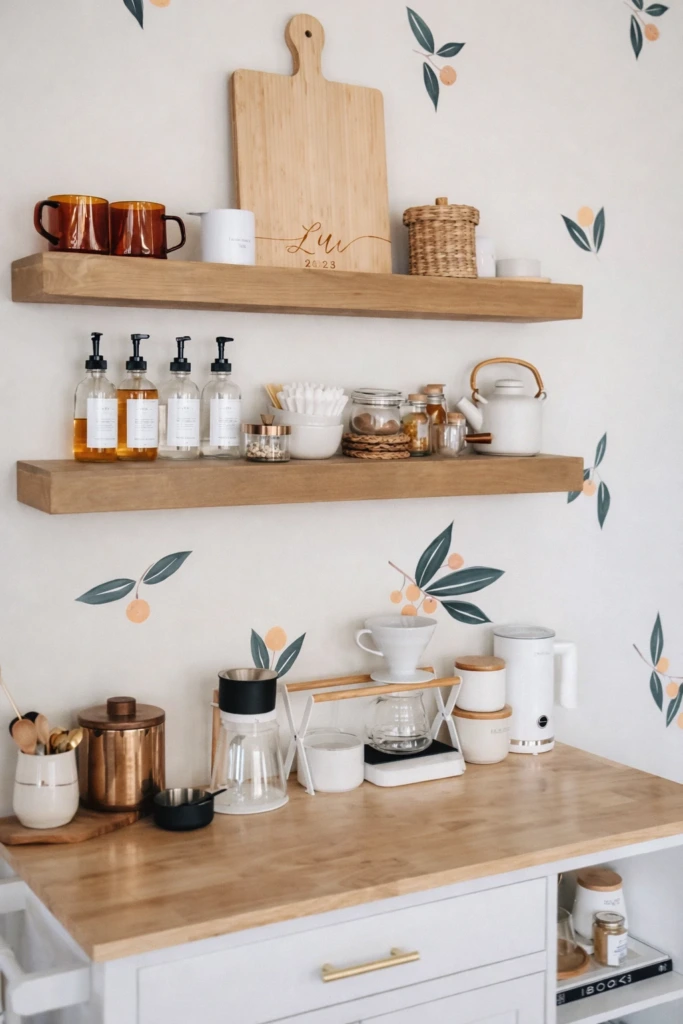
Floating shelves offer an attractive way to expand storage when countertop space is limited.
Install shelves above your coffee station to hold mugs, coffee containers, and lightweight accessories. Keeping frequently used supplies on the lower shelf makes them easier to reach, while the upper shelf can accommodate less-used items.
Choose shelving materials that complement your kitchen cabinets or countertops. Natural oak creates a relaxed atmosphere, while white shelves blend beautifully with bright, minimalist interiors.
Small baskets can keep coffee filters and tea packets together, and labeled jars make dry ingredients easier to identify.
Always secure shelves with appropriate wall fixings and check their weight limits before loading them with heavy mugs or glass containers.
Leave sufficient clearance above appliances, particularly those that release steam or require top access.
3. Cabinet Coffee Nook
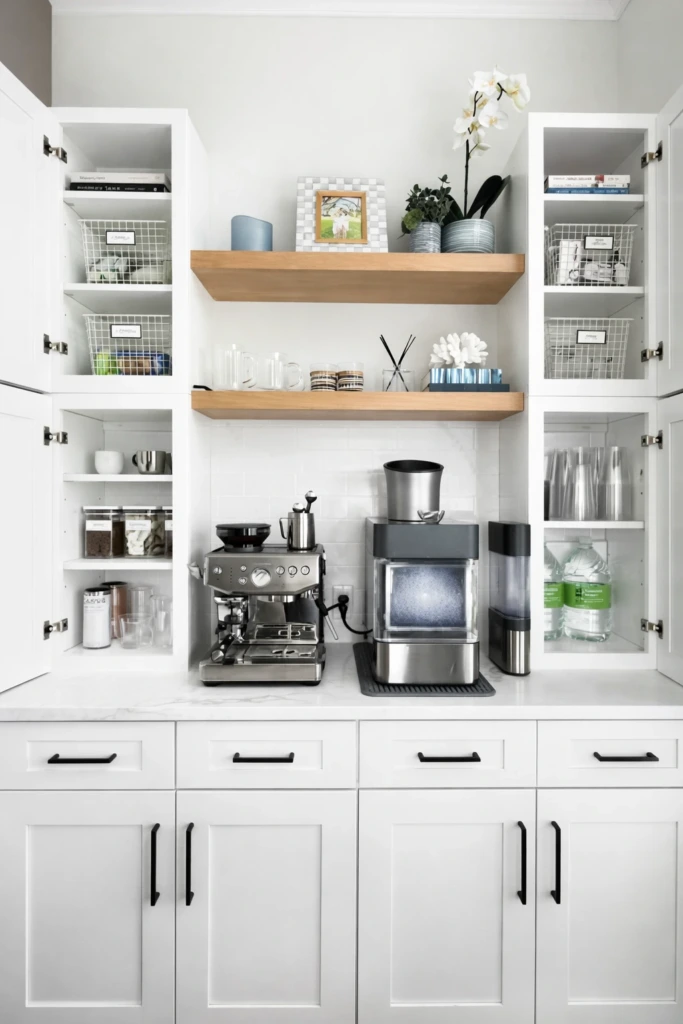
Transforming an existing cabinet into a dedicated coffee nook is an excellent way to keep kitchen surfaces uncluttered.
Select a cabinet with convenient access to power and enough space for your brewing equipment. Adjustable shelving allows you to create separate areas for cups, coffee supplies, and accessories.
Use compact storage bins to organize smaller essentials, such as filters, stirrers, and sweeteners. Position heavier equipment at a comfortable working height rather than on high shelves.
Cabinet doors help conceal the station when it isn't being used, creating a streamlined appearance.
However, avoid operating heat-producing appliances inside enclosed cabinets unless the setup meets the manufacturer's clearance and ventilation requirements. Pulling equipment onto a suitable open work surface may be necessary.
A battery-powered cabinet light can improve visibility without requiring complicated electrical work.
4. Labeled Basket System
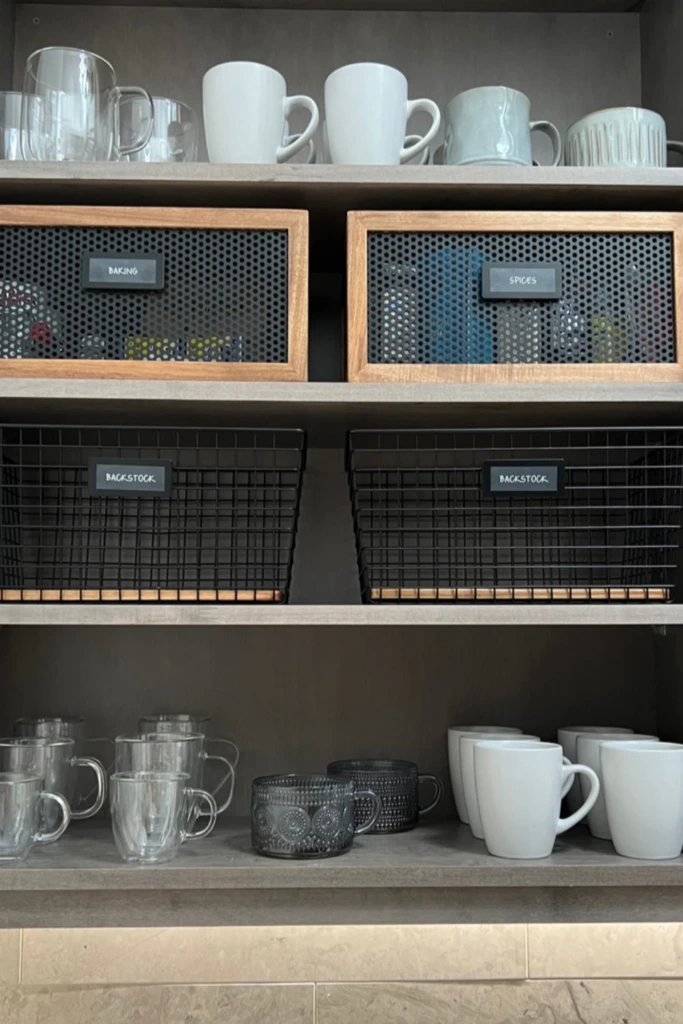
Labeled baskets make coffee supplies easier to locate while preventing different items from becoming mixed together.
Start by sorting everything into categories, such as coffee pods, tea bags, sweeteners, filters, and spare accessories.
Choose baskets that fit your available shelves and attach simple labels to the front. Matching containers create a consistent appearance, but their dimensions and accessibility matter more than their color.
Clear plastic bins are useful when you want to monitor quantities, while woven baskets can conceal visually busy packaging.
Keep products used every morning at eye level and place occasional supplies higher up.
For coffee capsules, separate varieties into individual containers so everyone can quickly find their preferred option.
Review the baskets periodically and remove empty packaging or expired products. This simple habit prevents your storage system from becoming overcrowded.
5. Pull-Out Coffee Pantry
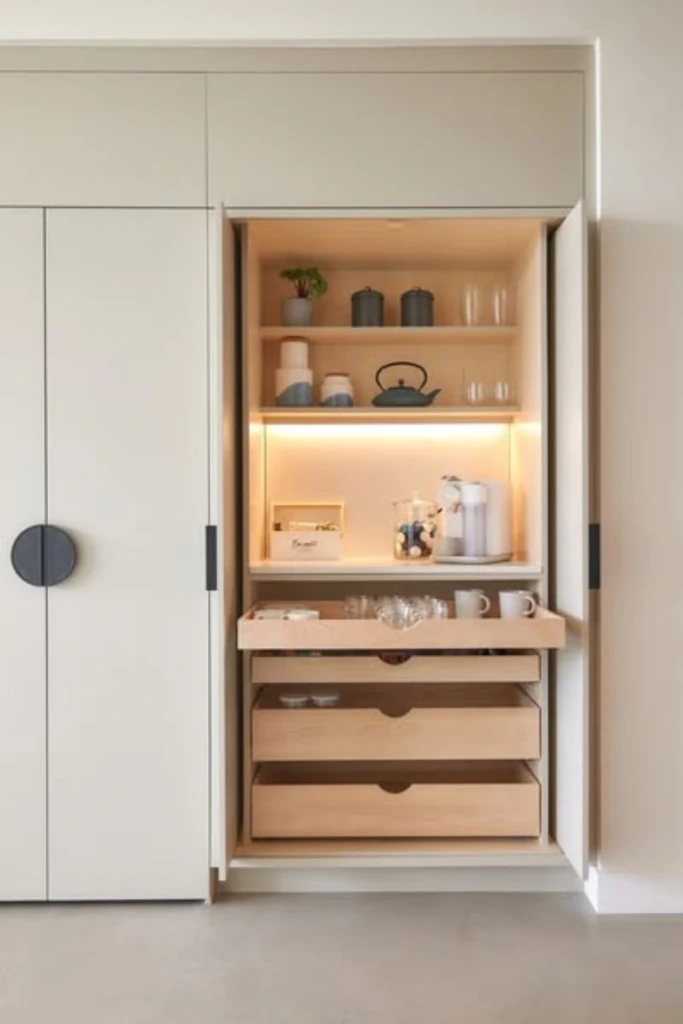
A pull-out coffee pantry makes excellent use of deep cabinets that would otherwise be difficult to organize.
Sliding shelves and drawers bring stored items forward, allowing you to reach supplies without searching behind other containers.
Dedicate individual drawers to coffee capsules, brewing accessories, mugs, and unopened supplies. Adjustable dividers help prevent smaller products from shifting whenever a drawer opens.
If you're planning a kitchen renovation, consider incorporating a tall pantry cabinet with heavy-duty sliding hardware.
For an existing kitchen, retrofit pull-out organizers can provide similar convenience without replacing the entire cabinet.
Check drawer weight capacities before storing appliances or heavy ceramic collections.
A thoughtfully arranged pull-out pantry keeps your coffee essentials accessible while preserving a tidy kitchen appearance.
6. Dark Cabinet Contrast
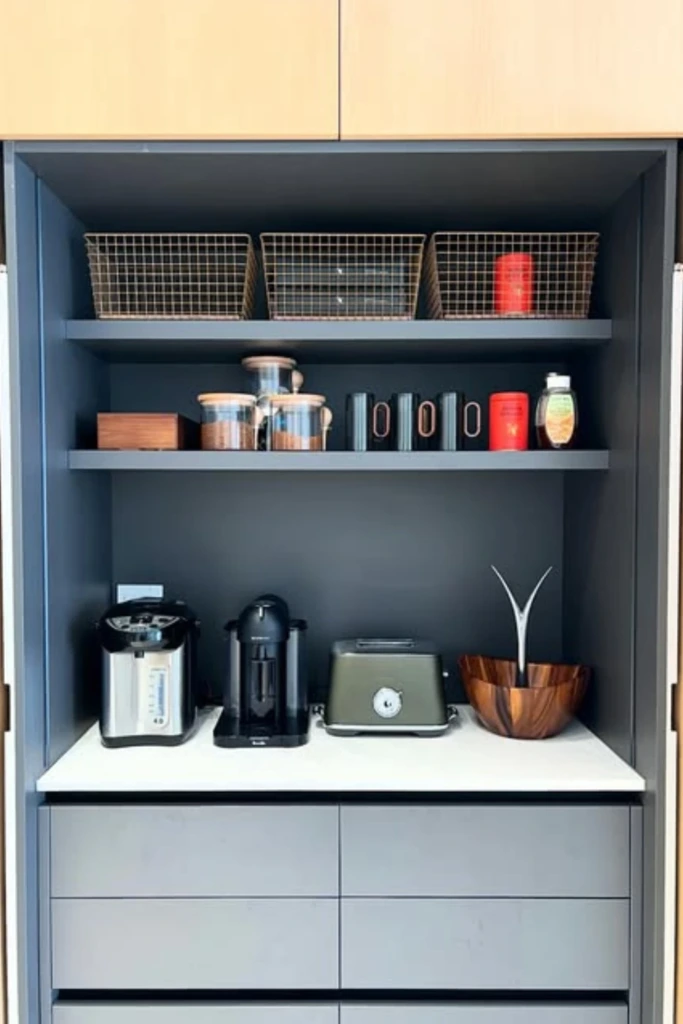
A coffee station with a dark cabinet interior can create a sophisticated focal point in an otherwise light-colored kitchen.
Consider charcoal, deep navy, forest green, or matte black finishes for the interior of a dedicated coffee cupboard.
These colors provide a striking background for white mugs, stainless steel appliances, and light wooden accessories.
Keep the arrangement simple by using coordinated containers for coffee beans, sugar, and other dry ingredients. Small wire baskets can hold accessories that would otherwise disappear into dark corners.
Because darker surfaces absorb more light, install suitable LED lighting to illuminate shelves and the preparation area.
Choose wipeable cabinet finishes that can handle occasional coffee splashes and moisture.
The contrast between dark cabinetry and neatly arranged supplies creates a polished look without requiring excessive decoration.
7. Styled Open Shelving
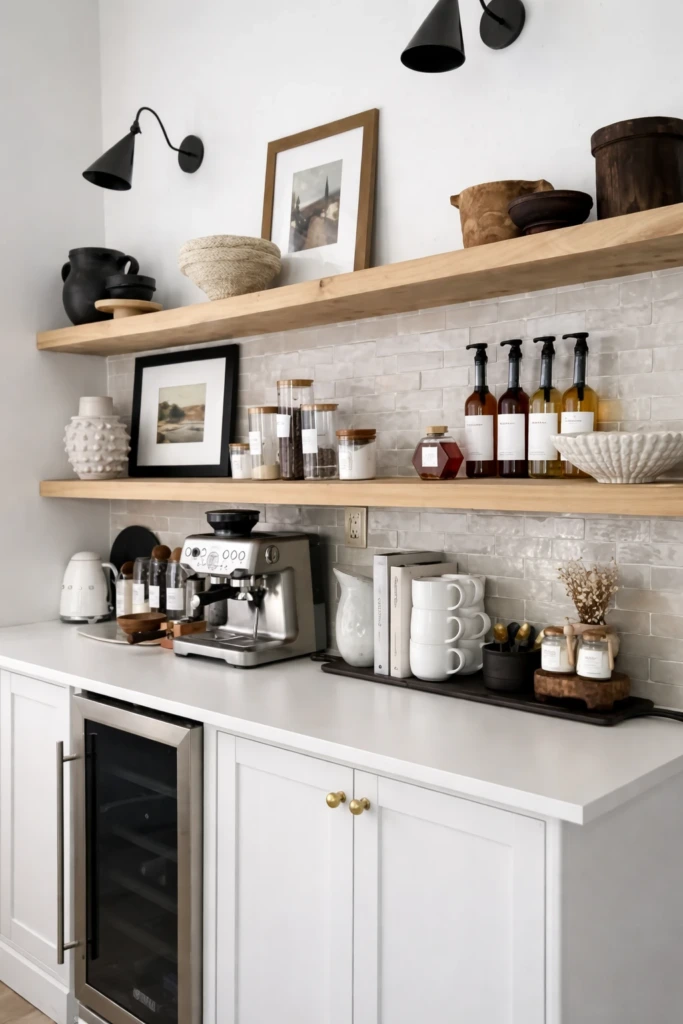
Open shelving allows your coffee collection to become part of your kitchen's overall design.
Instead of hiding every accessory, display a carefully selected combination of attractive mugs, storage jars, and useful brewing equipment.
Arrange items according to how frequently you need them. Everyday cups should remain easily accessible, while decorative pieces can occupy higher shelves.
A small tray can group syrup bottles, and matching canisters can hold coffee beans or sugar.
Introduce visual variety by mixing different heights and textures. For example, ceramic mugs pair beautifully with wooden shelves and clear glass containers.
Avoid filling every available inch. Open space between objects makes the arrangement easier to clean and less visually crowded.
Since exposed shelves collect dust and kitchen grease, choose items you can wipe down regularly.
8. Cozy Cottage Corner

A cottage-inspired coffee corner combines practical storage with warm, traditional details.
Start with a small wooden cabinet, vintage-style shelf, or compact sideboard. Add ceramic mugs, simple glass jars, and woven baskets to create a comfortable, lived-in appearance.
Soft cream, muted sage, warm white, and natural wood tones work especially well for this style.
Store coffee beans and sugar in properly sealed containers, and use small drawers for teaspoons, tea bags, and filters.
A patterned tea towel or a framed print can provide decoration without taking over the workspace.
If you enjoy collecting vintage cups, display a few favorites while keeping your everyday mugs within easy reach.
The result is a charming coffee station that feels personal while remaining practical for daily use.
9. Open Rack Station
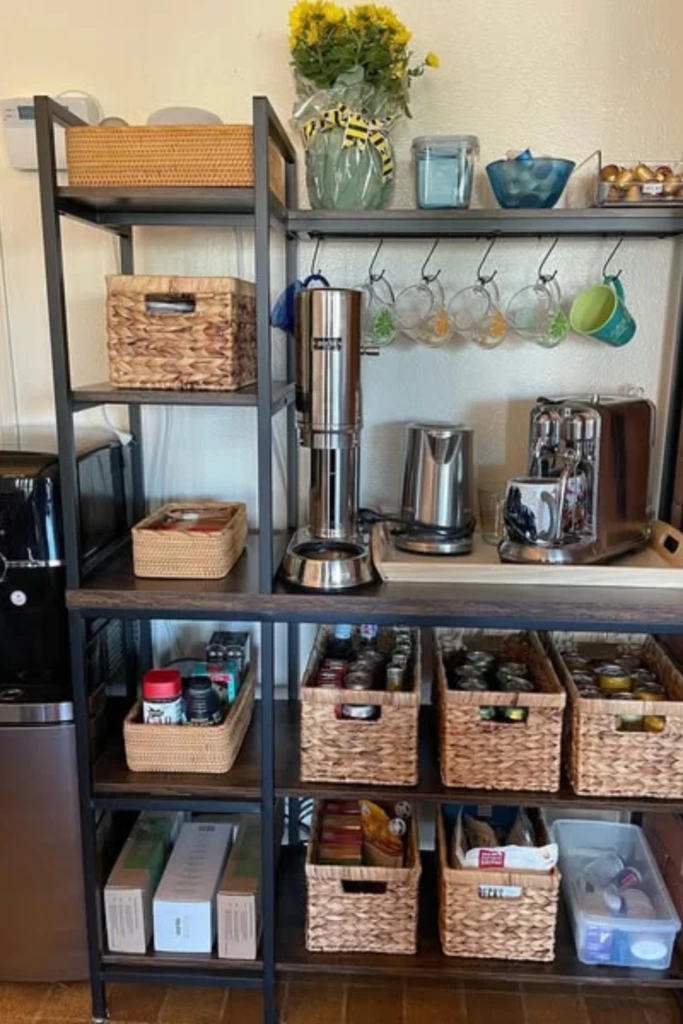
An open rack is a flexible choice for kitchens that lack sufficient built-in storage.
A freestanding shelving unit can accommodate coffee equipment, mugs, baskets, and additional supplies in one dedicated location.
Choose a rack with stable construction and shelves rated for the weight of your appliances.
Position the coffee maker on a sturdy surface at a comfortable height, leaving the necessary clearance around it.
Use upper shelves for lightweight accessories and lower shelves for heavier storage containers. Mug hooks can provide extra hanging space when securely attached.
Matching baskets help organize smaller products while keeping the overall arrangement visually consistent.
For safety, anchor tall racks to the wall when appropriate, particularly in homes with children or pets.
This arrangement also works well in dining rooms, studio apartments, and shared living spaces.
10. Clean Corner Layout
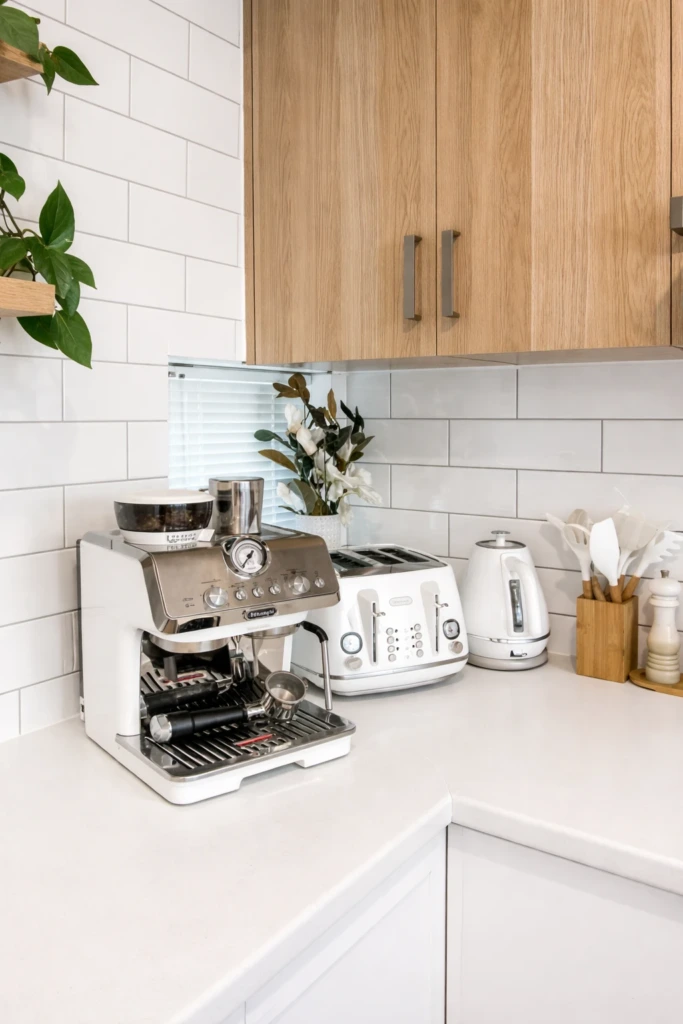
An unused kitchen corner can become an efficient coffee preparation area with a few thoughtful adjustments.
Begin by measuring the available countertop and selecting appliances that fit comfortably without blocking nearby cabinets.
Place your main coffee machine where its controls and water reservoir remain accessible. Keep mugs, filters, and other essentials in a nearby drawer or small organizer.
A corner-shaped tray can help contain accessories while making use of awkward countertop angles.
Choose a limited number of containers to prevent the area from looking crowded.
If your kitchen has a tiled backsplash, simple under-cabinet lighting can brighten the preparation area.
Most importantly, preserve enough clear surface for filling cups, measuring coffee, and handling hot drinks safely.
A compact layout works best when every item has a specific purpose.
11. Contained Coffee Caddy
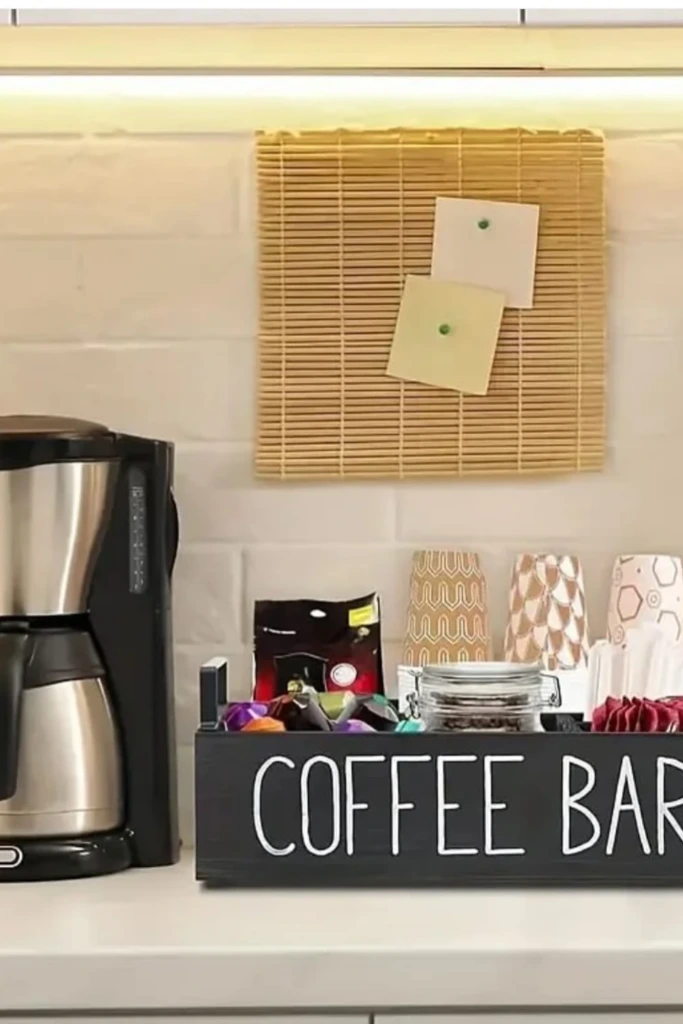
A portable coffee caddy offers convenient organization without requiring permanent shelves or cabinet modifications.
Choose a handled organizer with compartments for coffee pods, sugar packets, stirrers, and other small essentials.
Keep the contents limited to products you regularly use. Overfilling the caddy makes it harder to carry and defeats its organizational purpose.
A washable plastic or metal organizer is particularly useful for shared kitchens, offices, and rental homes.
Place it beside your coffee machine during use, then move it into a cabinet when you want a clear countertop.
You can also prepare separate caddies for different needs, such as one for coffee accessories and another for tea supplies.
This simple system makes cleaning easier because you can move several items at once instead of picking them up individually.
12. Minimal Glass Storage
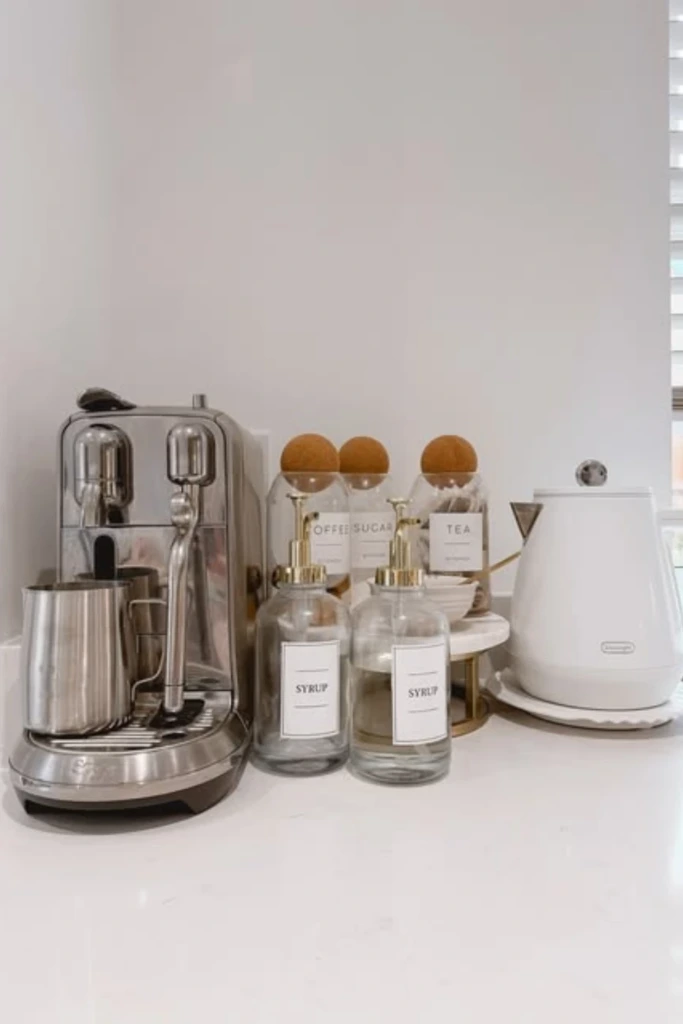
Glass storage containers can give your coffee station a clean, coordinated appearance while keeping ingredients easy to identify.
Select airtight jars for coffee beans and suitable containers for sugar, tea, and other dry supplies.
Matching shapes help create a consistent look, but choose sizes based on how much of each ingredient you normally keep.
Add discreet labels to prevent confusion, especially when storing different coffee varieties.
Keep coffee beans away from direct sunlight, heat, and moisture. An opaque airtight container in a cool cupboard is generally better for long-term freshness than a clear jar exposed on the counter.
For syrups, use clean, food-safe bottles and follow the manufacturer's storage instructions.
Arrange the containers on a compact tray so they stay grouped together and can be moved easily when cleaning.
13. Compact Counter Zone
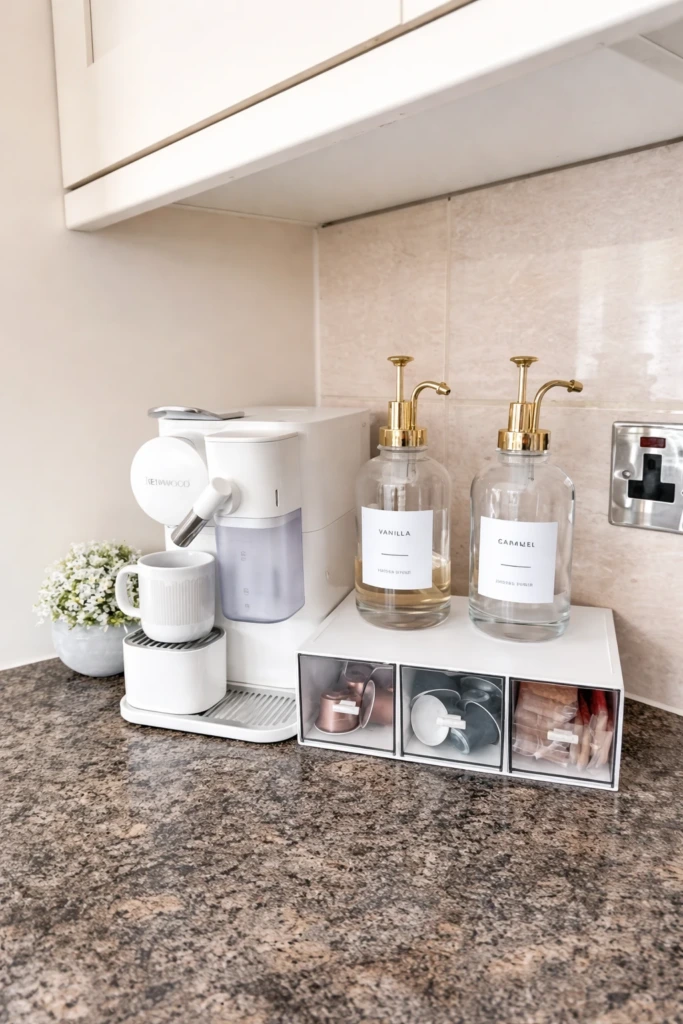
You can create a practical coffee station on a narrow countertop by carefully controlling how much space each item occupies.
Start with a compact coffee maker that suits your brewing habits. Then add a small drawer organizer or low-profile storage unit for capsules and accessories.
A coffee pod drawer that supports the weight of your machine can provide extra storage without expanding the station's footprint.
Place everyday essentials close to the brewer and move spare supplies into nearby cabinets.
Avoid keeping unnecessary packaging or oversized decorative pieces on the counter.
If several people share the kitchen, establish a clear boundary for the coffee area so it doesn't spread into food preparation space.
With careful planning, even a small section of countertop can accommodate a convenient daily coffee routine.
14. Raised Tray Display
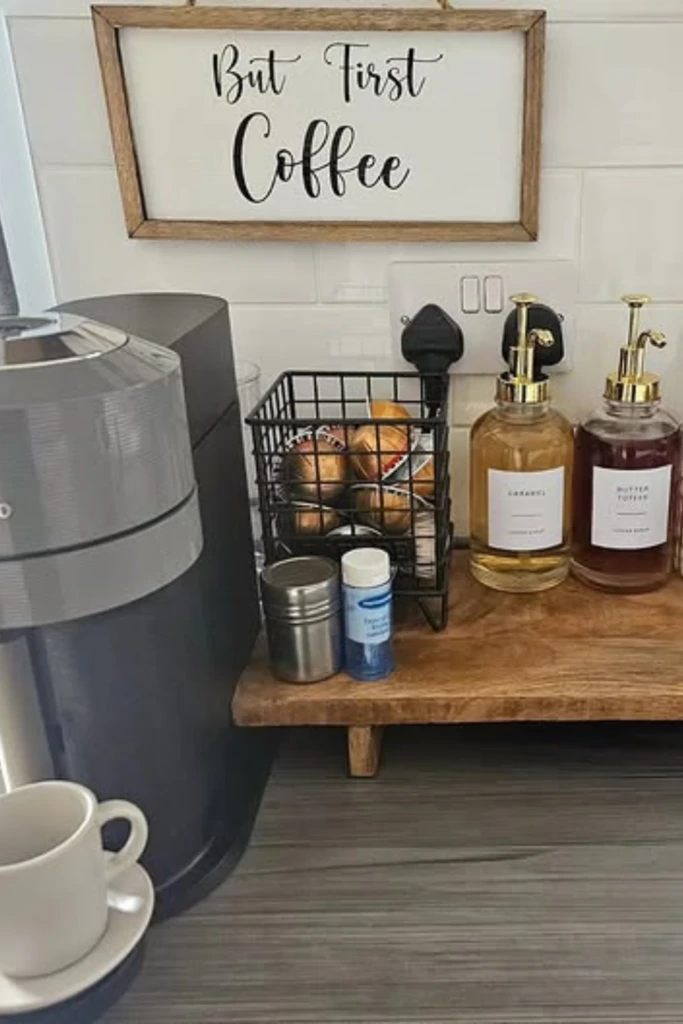
A raised tray adds structure to a coffee station by creating a dedicated place for smaller accessories.
Choose a stable wooden, metal, or washable composite riser that fits comfortably beside your brewing equipment.
Use it to organize syrup bottles, sugar containers, and lightweight accessories. Position taller items toward the back so smaller products remain visible.
A shallow basket or divided container can keep individual packets from sliding around.
Raised displays can make it easier to wipe the countertop beneath them, particularly when they are lightweight enough to move.
Select a moisture-resistant finish if the tray will sit near a sink or coffee machine.
For a balanced appearance, coordinate the tray with existing cabinet hardware or kitchen accessories.
Keep hot appliances off decorative risers unless the product is specifically designed to support their weight and heat.
15. Built-In Beverage Bar
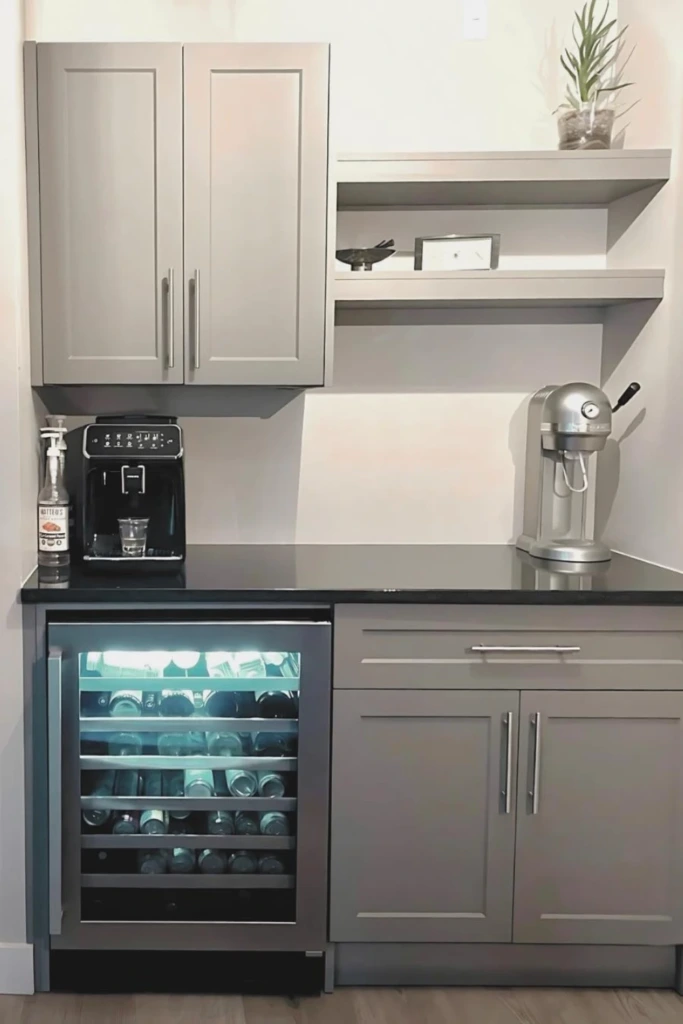
A built-in beverage bar provides a dedicated area for preparing coffee, tea, and other drinks without interrupting the main kitchen workspace.
This setup can include a countertop, upper cabinets, open shelving, and a compact refrigerator.
Use the counter for brewing equipment and keep frequently used cups on nearby shelves.
Closed cabinets are ideal for extra coffee supplies, cleaning products, and less frequently used serving accessories.
A small refrigerator can hold milk and other ingredients that require refrigeration. Ensure it maintains safe food-storage temperatures and has adequate ventilation.
Consider adding drawers for utensils and separate compartments for tea and coffee products.
Durable countertops, accessible outlets, and suitable lighting will make the station easier to maintain.
For renovations involving electrical or plumbing changes, use qualified professionals and follow applicable building requirements.
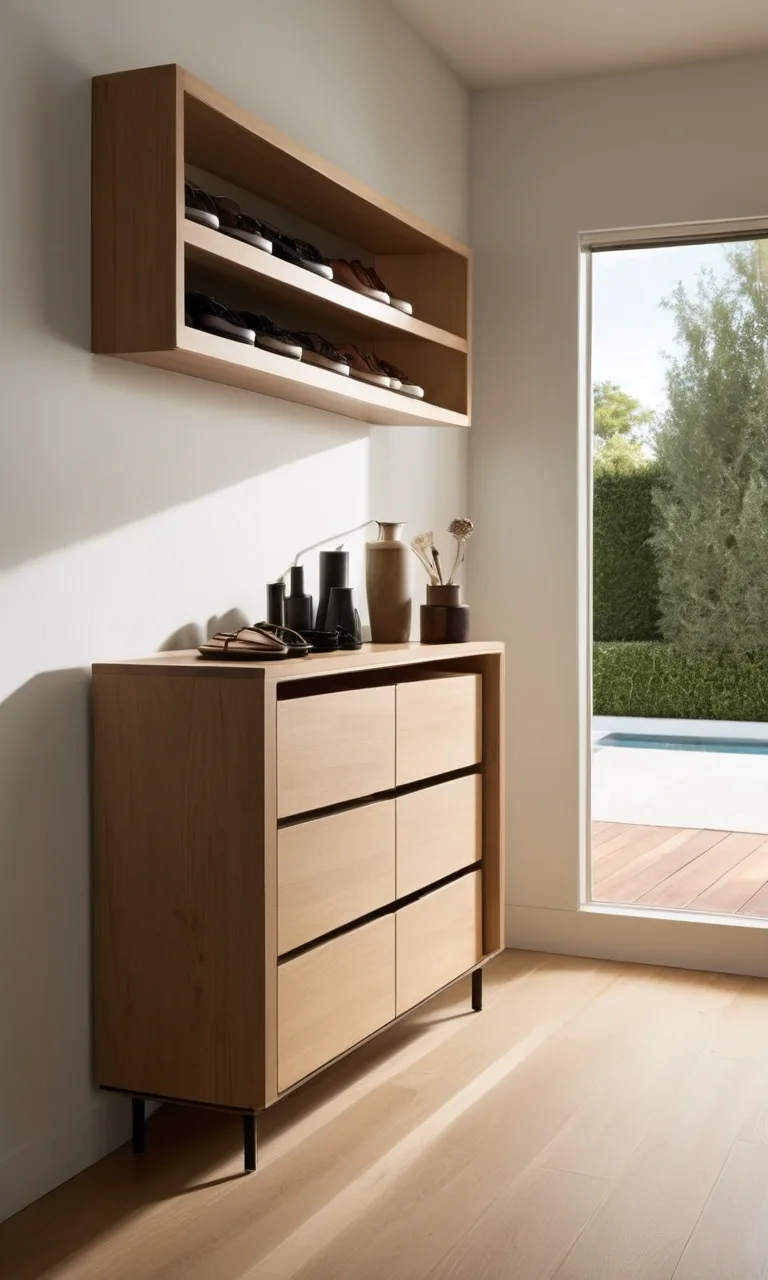
16. Warm Wood Layers
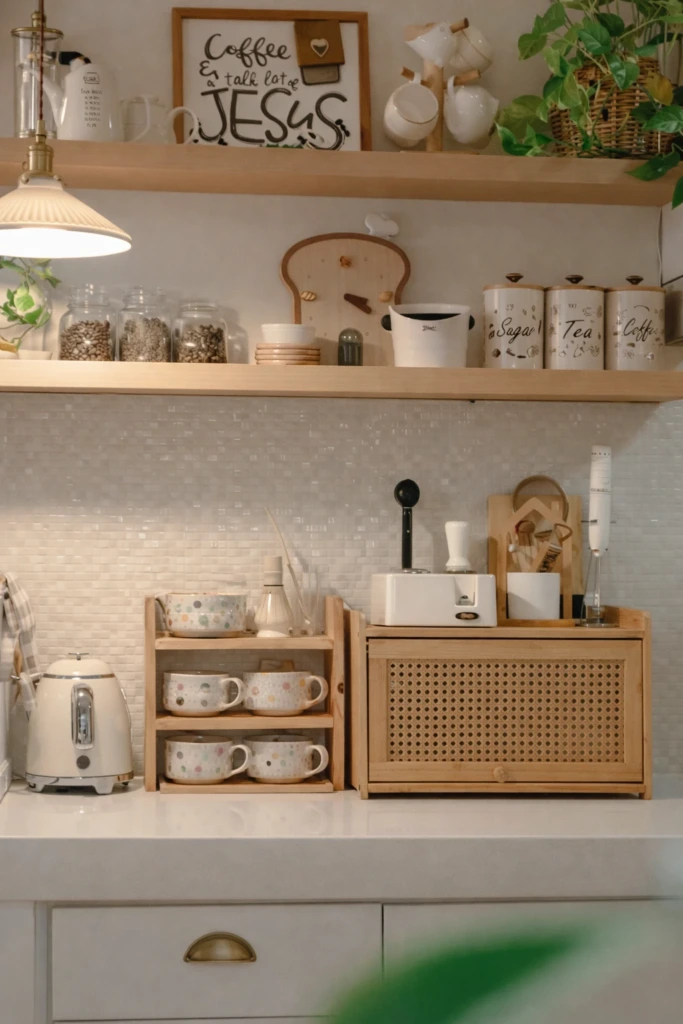
Natural wood can make a coffee station feel comfortable and inviting while providing useful storage.
Combine wooden shelving, a small countertop organizer, and a cabinet with a warm finish to create visual depth.
Different wood tones can work together when they share a similar undertone. For example, light oak shelves can complement a medium-toned wooden cabinet.
Use open shelves for frequently used mugs and sealed containers, while closed compartments conceal spare supplies.
A woven basket adds texture and offers convenient storage for lightweight accessories.
Keep the arrangement functional by leaving an uncluttered preparation area around the coffee machine.
Warm-toned lighting can enhance the appearance of wood, especially in kitchens with limited natural light.
Avoid placing untreated wooden accessories where