26 Small House Organization Ideas for 2026
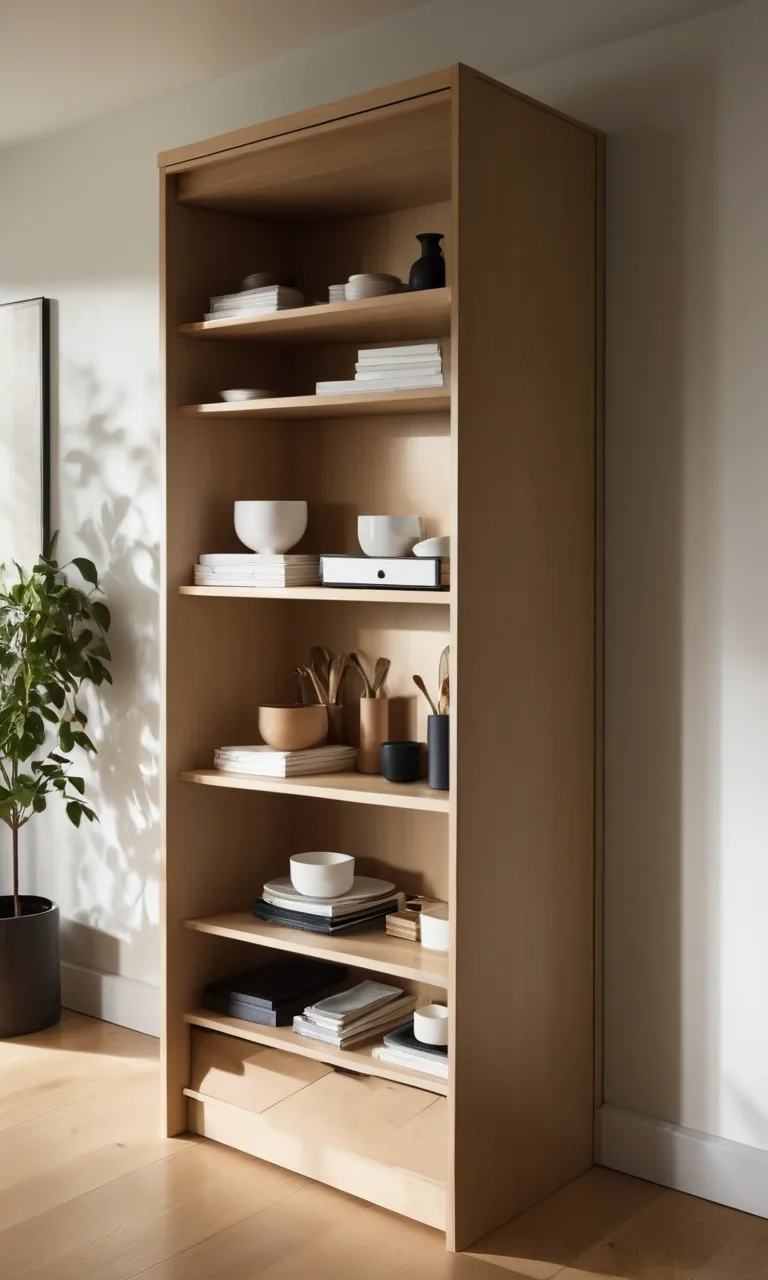
I’ll structure the article around practical small-house organization ideas, with an emphasis on making the most of limited space, reducing clutter, and creating storage solutions that work for everyday life.
Living in a small house can be comfortable and enjoyable, but keeping everything organized takes a little planning. When storage is limited, everyday belongings can quickly spread across countertops, closets, and floors. Before long, even a clean room may start to feel crowded.
The good news is that you don't need a major renovation or a larger home to make things work better. A few thoughtful changes can help you reclaim unused corners, improve storage, and make daily routines easier.
From using wall space creatively to choosing furniture with hidden compartments, these small house organization ideas offer practical ways to make your home feel more spacious. Whether you live in a compact house, a studio, or a small apartment, you can adapt these solutions to suit your available space and budget.
What Are the Best Space-Saving Storage Ideas for Small Homes?
The most effective storage solutions help you use overlooked areas without making rooms feel overcrowded. Start by looking beyond traditional cupboards and closets. Walls, cabinet doors, the space beneath furniture, and awkward corners can all provide useful storage.
Wall-mounted shelves are ideal for books, decorative pieces, and frequently used items. Under-bed containers can accommodate extra bedding and seasonal clothing, while storage benches provide a convenient place to sit and put away everyday belongings.
Multifunctional furniture is another smart choice. A bed with built-in drawers, a folding desk, or an ottoman with a removable lid can serve more than one purpose without requiring additional floor space.
Before purchasing organizers, sort through your belongings and measure the areas you want to improve. Keeping only what you need and assigning each item a designated place will make your storage system easier to maintain.
1. Door Storage
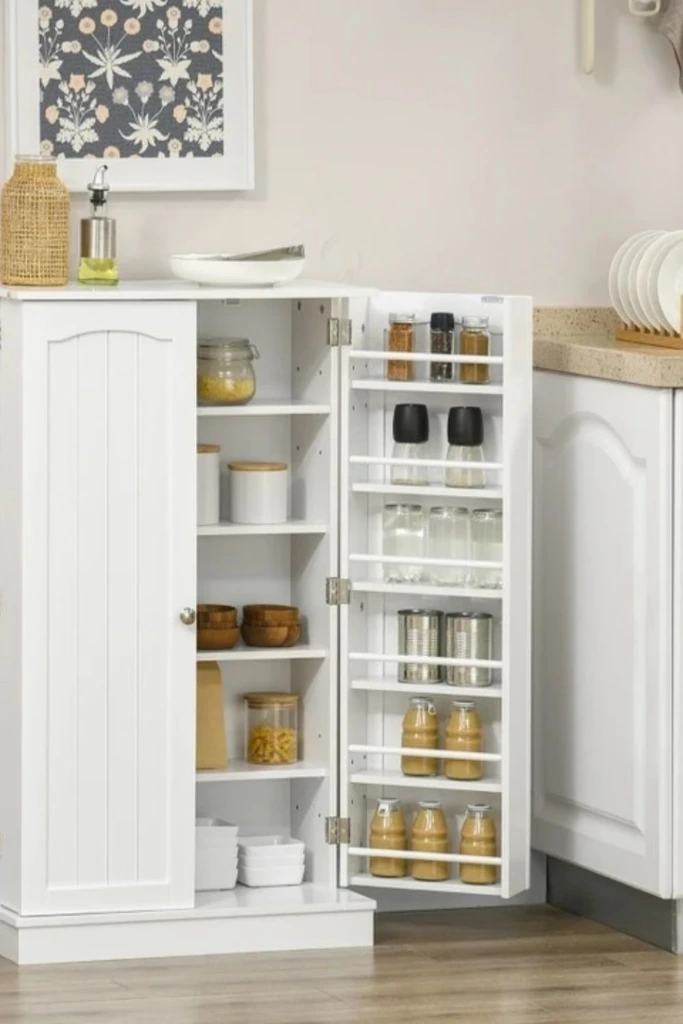
Cabinet doors provide useful storage space that often goes unnoticed. Adding slim racks or hanging organizers to the inside of kitchen cabinets can create room for spice jars, seasoning packets, small bottles, and cooking essentials.
This arrangement keeps frequently used items within reach while leaving the main shelves available for larger dishes, food containers, and pantry supplies. You can also use similar organizers inside bathroom cabinets to hold toiletries and personal care products.
Choose racks that fit the door properly and allow it to close without hitting the items inside. Keeping similar products together will make it easier to locate what you need during busy mornings or meal preparation.
2. Vertical Laundry
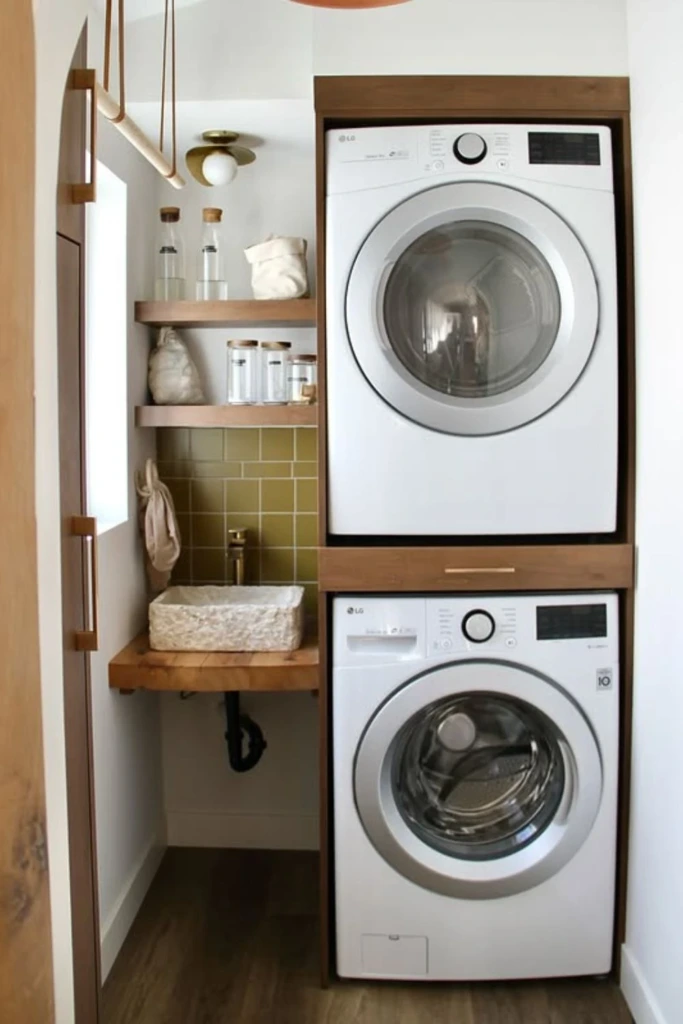
A compact laundry area becomes much more functional when you build upward instead of spreading appliances and supplies across the floor. In homes with suitable space and plumbing, a properly installed stacked washer and dryer can free up room for shelves, hampers, or a narrow storage cabinet.
Use the newly available wall space to organize detergent, fabric softener, stain removers, and laundry accessories. Small baskets can keep clothespins and other supplies together, while a wall-mounted drying rail provides a convenient place for delicate garments.
If your laundry area includes a sink, keep cleaning products in a nearby cabinet or on a shelf safely away from splashes. Make sure stacked appliances are compatible and installed according to the manufacturer's instructions.
3. Door Organizer
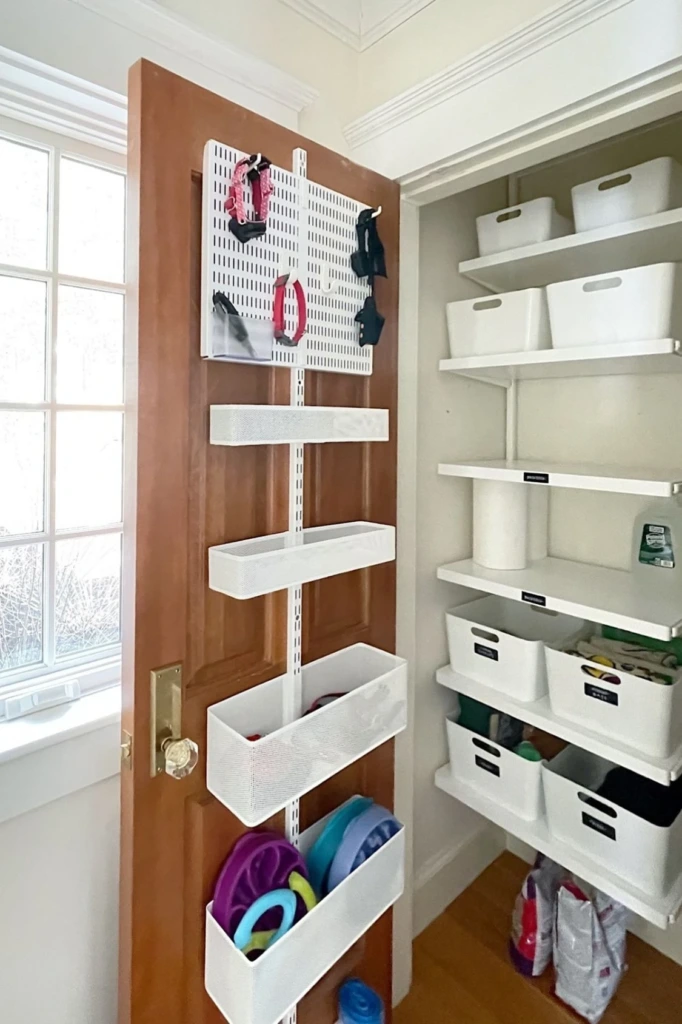
Closet doors can hold a surprising number of small household items when fitted with the right organizer. Hanging pockets, adjustable baskets, hooks, or a compact pegboard can provide convenient storage without taking up shelf space.
Use this area for accessories, pet supplies, cleaning cloths, craft materials, or other lightweight belongings that you reach for regularly. Transparent pockets are especially helpful because you can see their contents without opening several containers.
Reserve the main closet shelves for larger objects, and group smaller items by category. Before installing anything, check the door's clearance to ensure that the organizer won't interfere with shelves, hinges, or the door frame.
4. Towel Rack
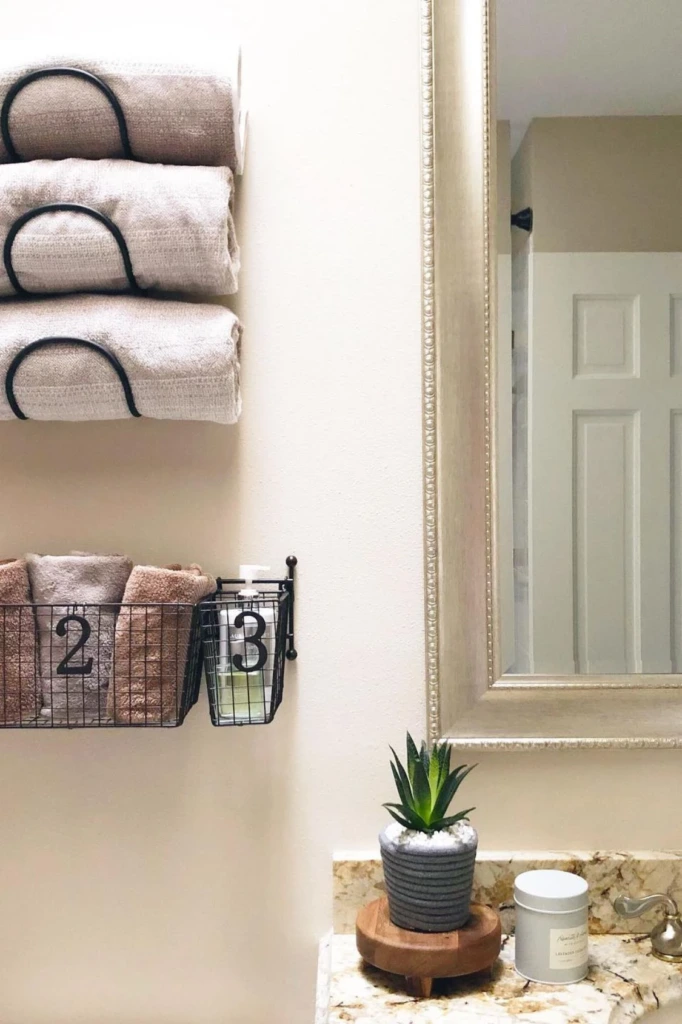
Bulky towels can take over a small bathroom when there isn't enough cabinet space. A wall-mounted towel rack creates a designated place for clean linens while keeping the vanity and sink area clear.
Depending on the available wall space, you might install a rack with multiple bars or a holder designed for neatly rolled towels. A small basket nearby can accommodate washcloths, hand towels, or extra bathroom essentials.
Position the rack where towels can dry properly and remain easy to reach. In particularly compact bathrooms, placing it above the toilet or beside the vanity may be more practical than adding another freestanding storage unit.
5. Wall Shelves
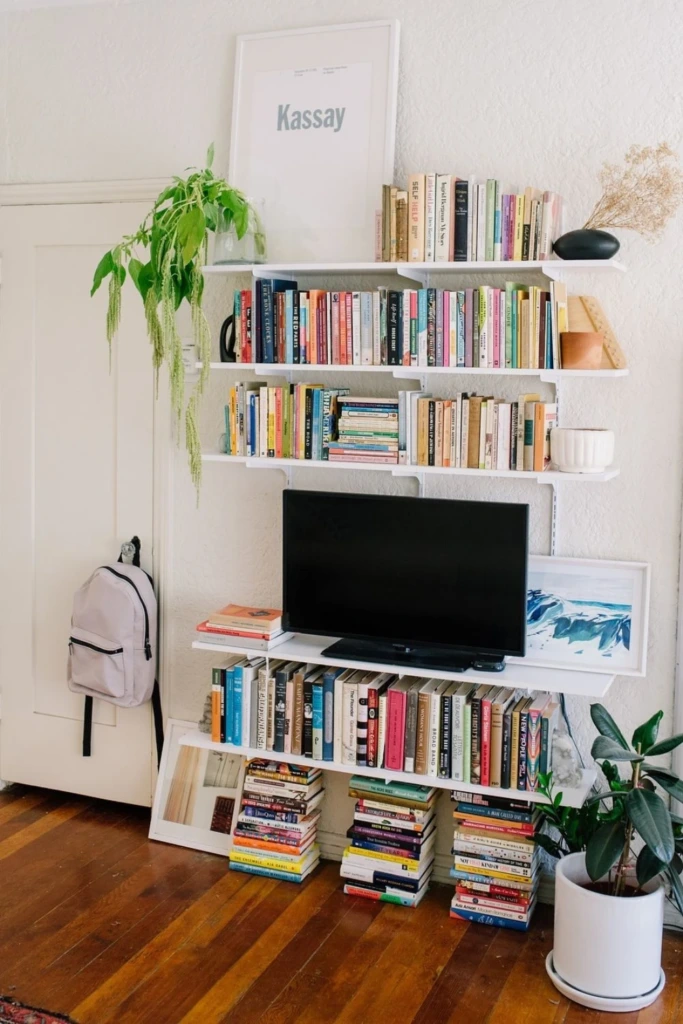
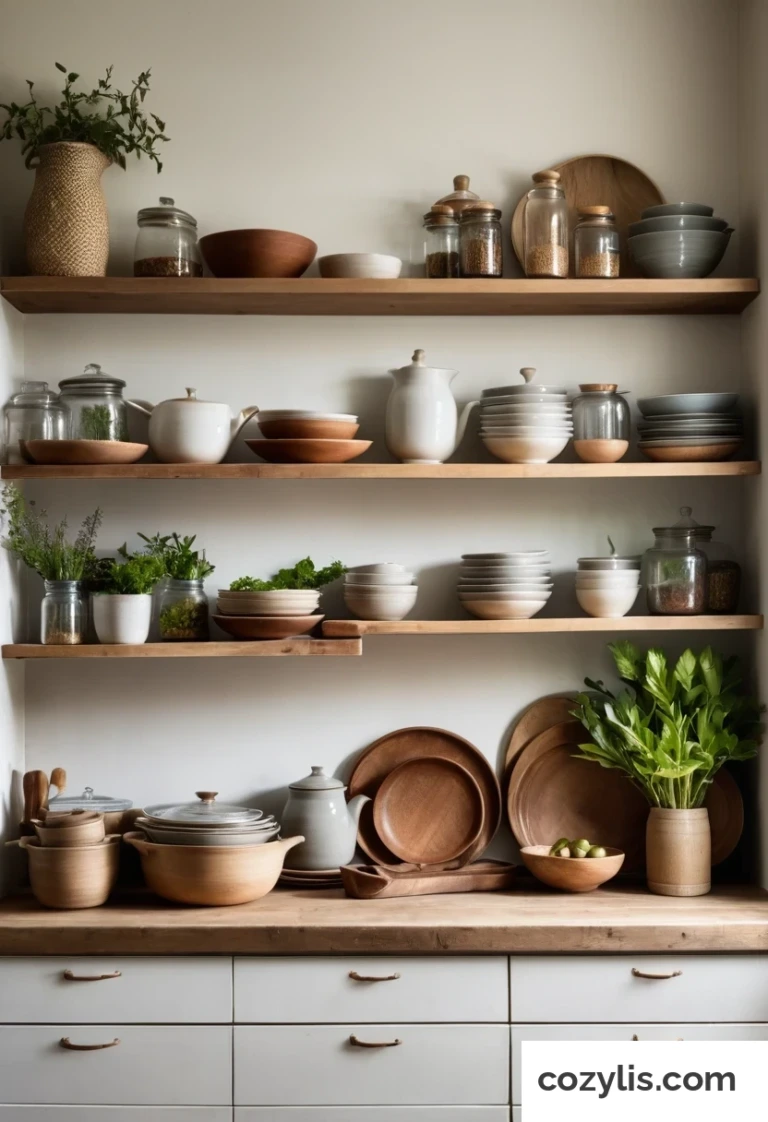
Empty walls offer an opportunity to increase storage without introducing bulky furniture. Floating shelves or narrow book ledges can accommodate books, framed photographs, small plants, and decorative objects while leaving the floor open.
In a living room, arrange several shelves vertically to create a compact display area. A deeper, securely installed shelf may also hold selected media equipment if it is designed for the required weight.
Avoid filling every shelf with ornaments. Leaving some open space creates a lighter appearance and makes cleaning easier. In bedrooms and work areas, use wall shelves for items you want to keep accessible without crowding desks, nightstands, or dressers.
6. Wall Cabinet
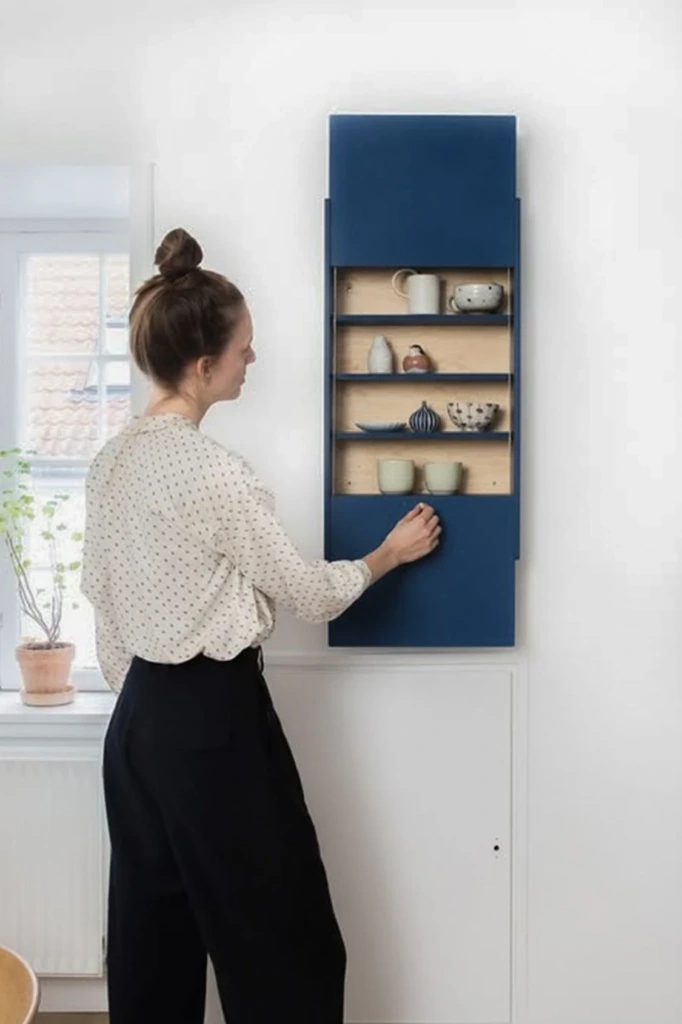
A wall-mounted cabinet offers concealed storage in rooms where floor space is limited. A shallow cabinet in the kitchen can hold cups, plates, tea supplies, or everyday essentials without occupying valuable countertop space.
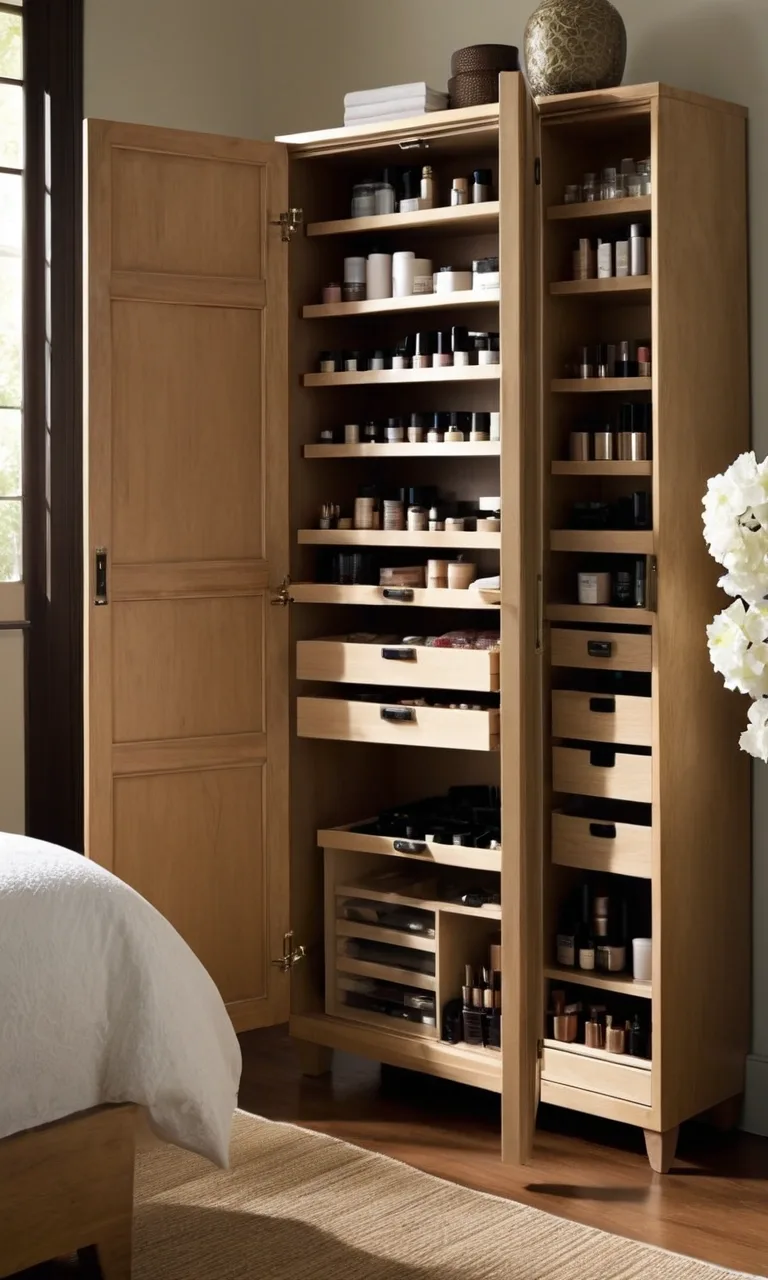
Similar cabinets work well in dining areas, bathrooms, and compact workspaces. Closed doors help keep visual clutter under control, while internal shelves separate items into convenient categories.
Measure the wall carefully before installation and choose a cabinet depth that suits the room. Make sure the mounting hardware is appropriate for the wall construction and the cabinet's expected load.
7. Pantry Nook
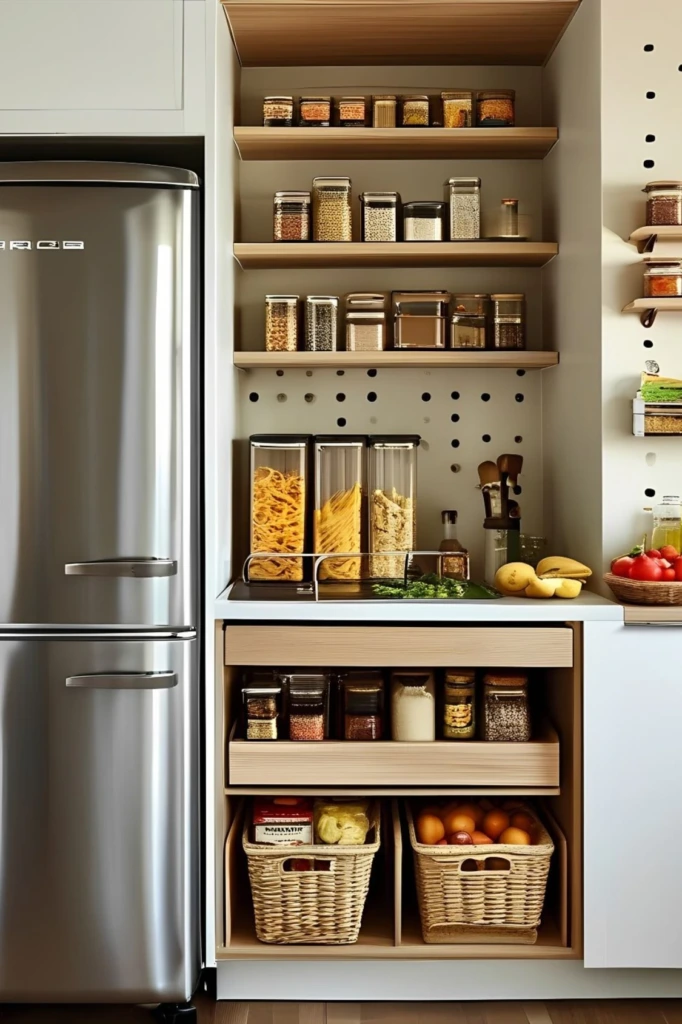
A narrow gap beside the refrigerator or between kitchen cabinets can become a useful pantry area. A slim shelving unit, pull-out rack, or purpose-built narrow cabinet can hold dry ingredients and other frequently used kitchen supplies.
Clear, airtight containers make it easier to identify pasta, rice, cereal, and similar staples. Labels can include the product name and, when useful, the purchase or opening date.
Use shallow baskets for packets and baking ingredients so small items don't disappear behind larger containers. Store potatoes, onions, and other produce according to their individual ventilation and temperature needs rather than sealing everything in airtight containers.
Keep heavier supplies on lower shelves and frequently used ingredients at a comfortable height. This arrangement turns a small, overlooked gap into a practical extension of your kitchen storage.
8. Entry Storage
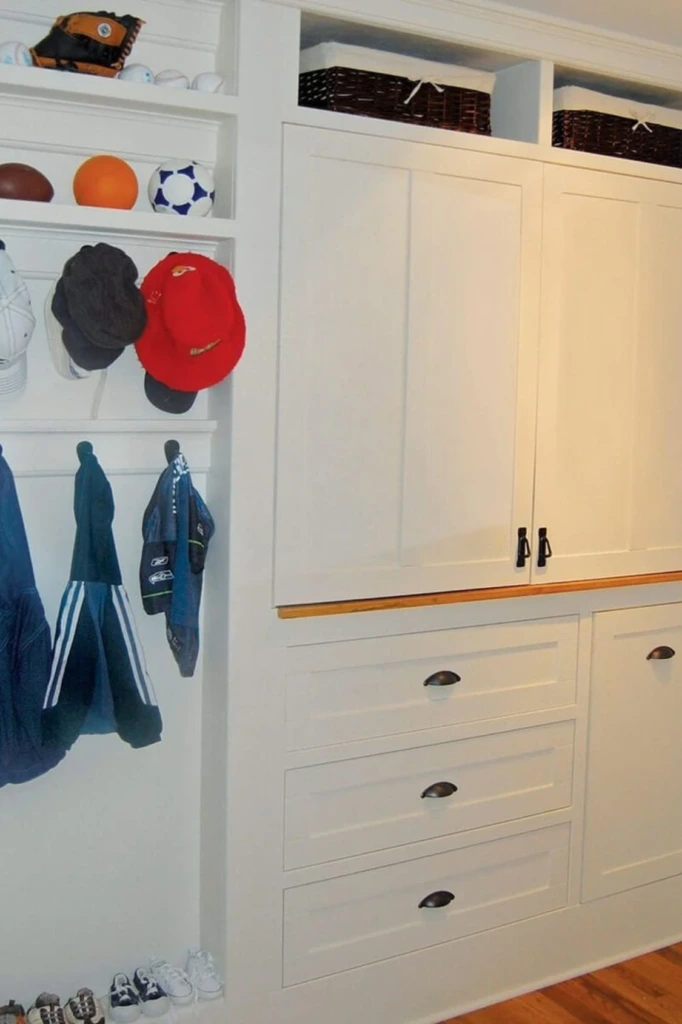
The entrance often becomes a collection point for shoes, bags, jackets, keys, and mail. Creating a dedicated drop zone helps prevent these everyday belongings from spreading into the rest of the house.
A built-in storage unit can combine coat hooks, shoe compartments, drawers, and upper cubbies for baskets. If a permanent installation isn't possible, a narrow bench with shoe storage and a wall-mounted hook rail can achieve a similar result.
Place frequently used items where you naturally reach for them when entering or leaving. A small tray for keys and a labeled basket for incoming mail can also prevent loose belongings from accumulating on nearby furniture.
In narrow entryways, choose shallow furniture and keep the walking path unobstructed.
9. Stair Storage
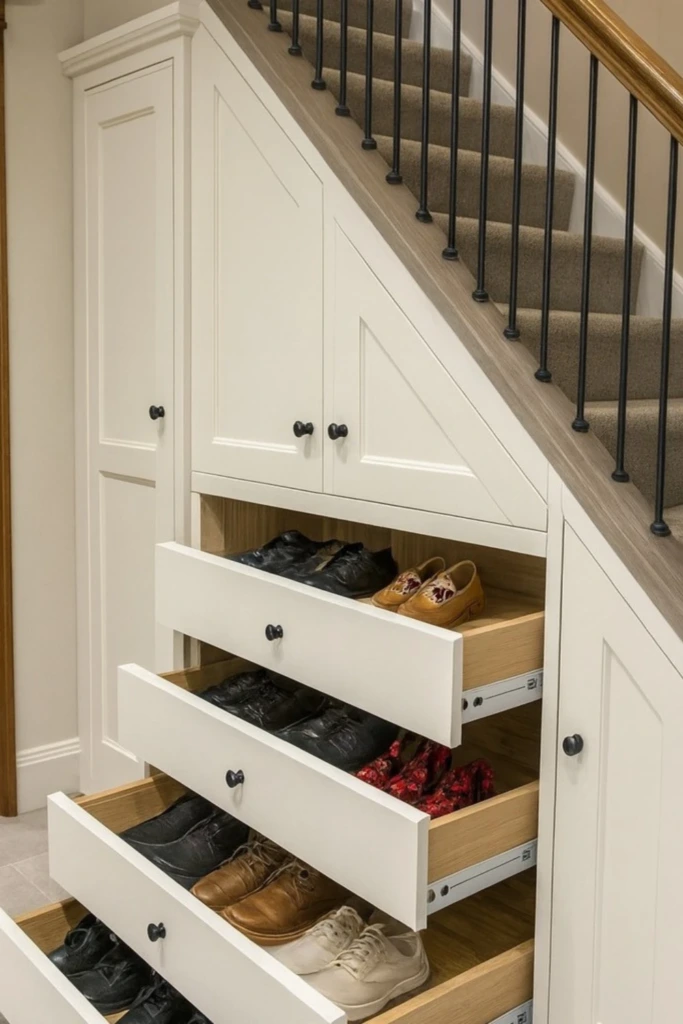
The area beneath a staircase can provide valuable storage in a multilevel home. Rather than leaving the space empty, consider fitted drawers, cupboards, or shelving designed to follow the staircase's shape.
Deep pull-out drawers are useful for shoes, bags, seasonal accessories, and household supplies. Closed cabinets can hide larger belongings, while open shelves offer convenient access to frequently used items.
If the staircase is close to the front entrance, this area can serve as a practical place for outdoor accessories. In other homes, it might work better as a small pantry or utility storage zone.
Measure the sloping area carefully before choosing furniture or commissioning built-ins. Keep access to essential utilities clear and ensure that any structural alterations are handled appropriately.
10. Coat Rail
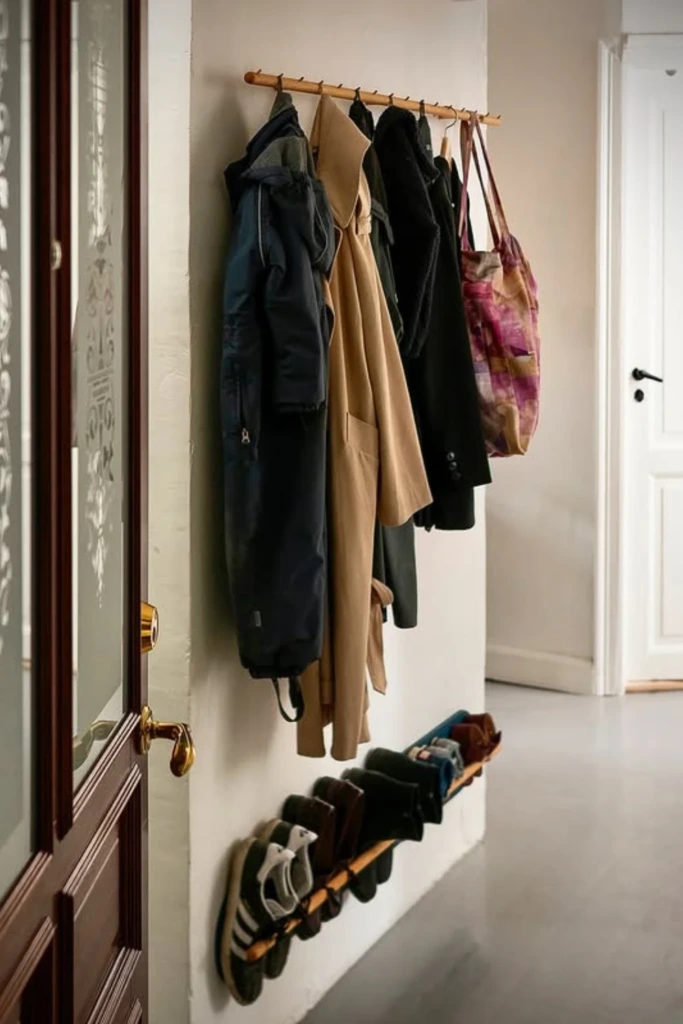
A wall-mounted coat rail is a simple alternative to a bulky hallway wardrobe. Several sturdy hooks can accommodate jackets, backpacks, handbags, and other items that would otherwise end up on chairs or the floor.
Choose a rail with enough spacing to prevent coats from overlapping excessively. If children use the entrance, install additional hooks at a height they can reach independently.
Pair the rail with a narrow shoe rack or a small basket for gloves and hats. This combination works especially well in apartments and homes with tight corridors because it keeps belongings close to the wall.
For a cleaner appearance, limit the hooks to regularly used items and store out-of-season clothing elsewhere.
11. Corner Shelves
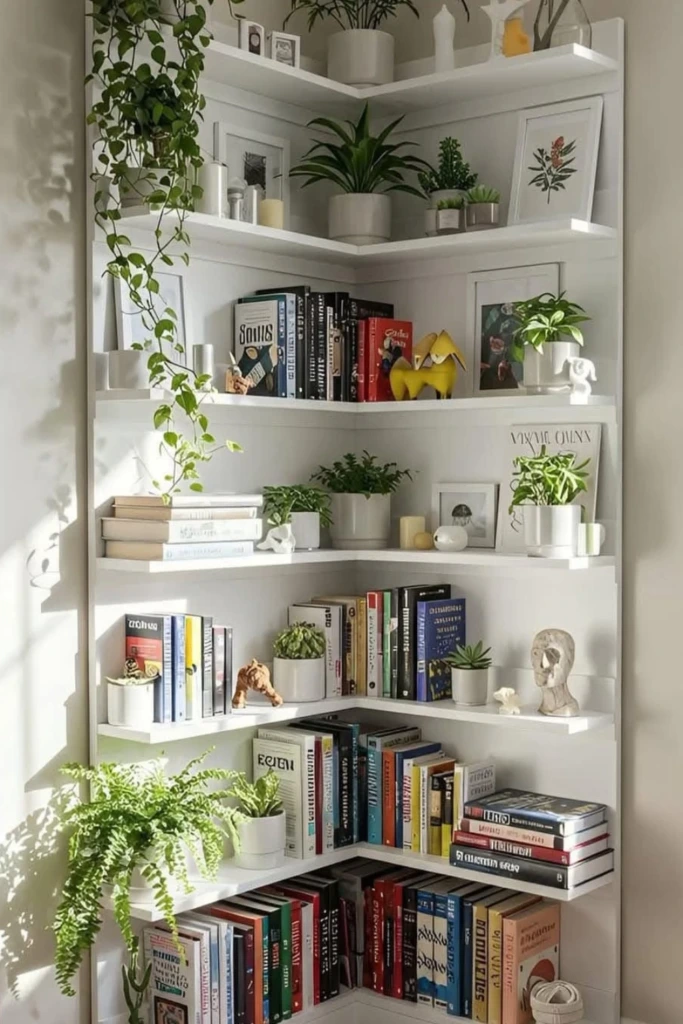
Room corners can be difficult to furnish, but corner shelves turn these overlooked spaces into useful storage areas. Triangular or curved shelves fit neatly between two walls and provide a place for books, small plants, photographs, and decorative accessories.
In a bedroom, corner shelving can replace a small bedside table. In a living room, it can display favorite objects without occupying the center of the room.
Arrange heavier items on securely mounted lower shelves and lighter decorations higher up. Avoid overcrowding the shelves, particularly in tight spaces where too many objects can make the room feel busy.
Choose a finish that complements the surrounding walls and furniture if you want the shelving to blend into the room.
12. Shoe Closet
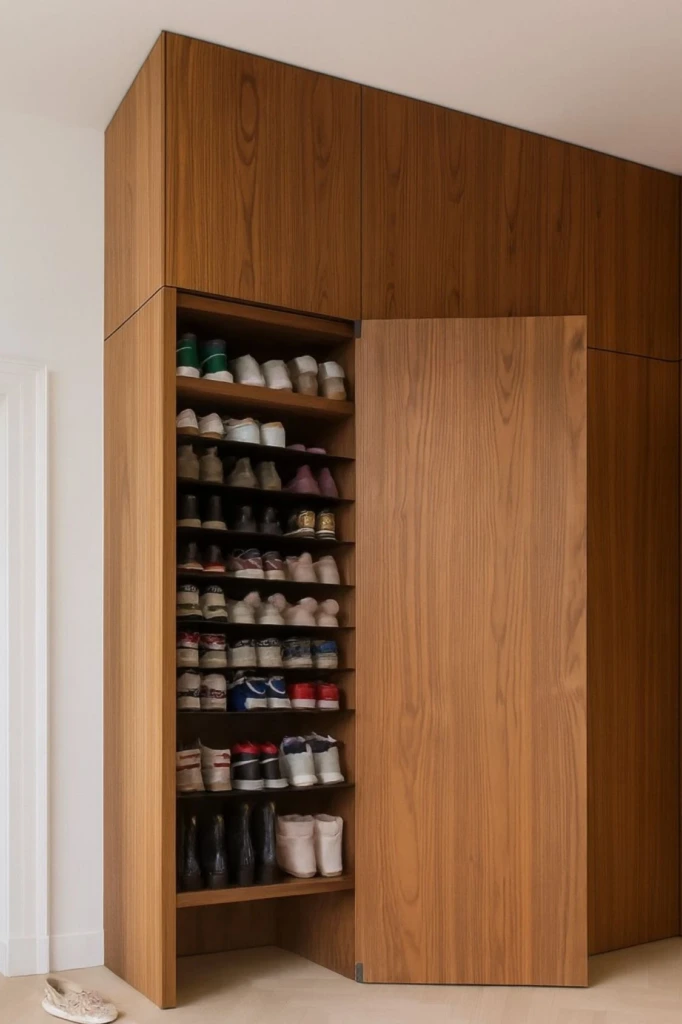
Shoes can quickly overwhelm a small entrance when every pair is left on the floor. A tall, narrow shoe cabinet helps keep footwear organized while using less horizontal space than a wide rack.
Look for adjustable shelves that accommodate different shoe heights, from flats and sandals to boots. Closed-front cabinets are useful when you want the hallway to look tidy, while ventilated designs can help reduce trapped odors.
Place everyday footwear on the most accessible shelves and move occasional or seasonal pairs to higher compartments. A small tray near the bottom can catch dirt and moisture from recently worn shoes.
Before buying a cabinet, check its depth and the clearance available around nearby doors. A slim model is most useful when it doesn't obstruct movement through the entrance.
13. Storage Cubes
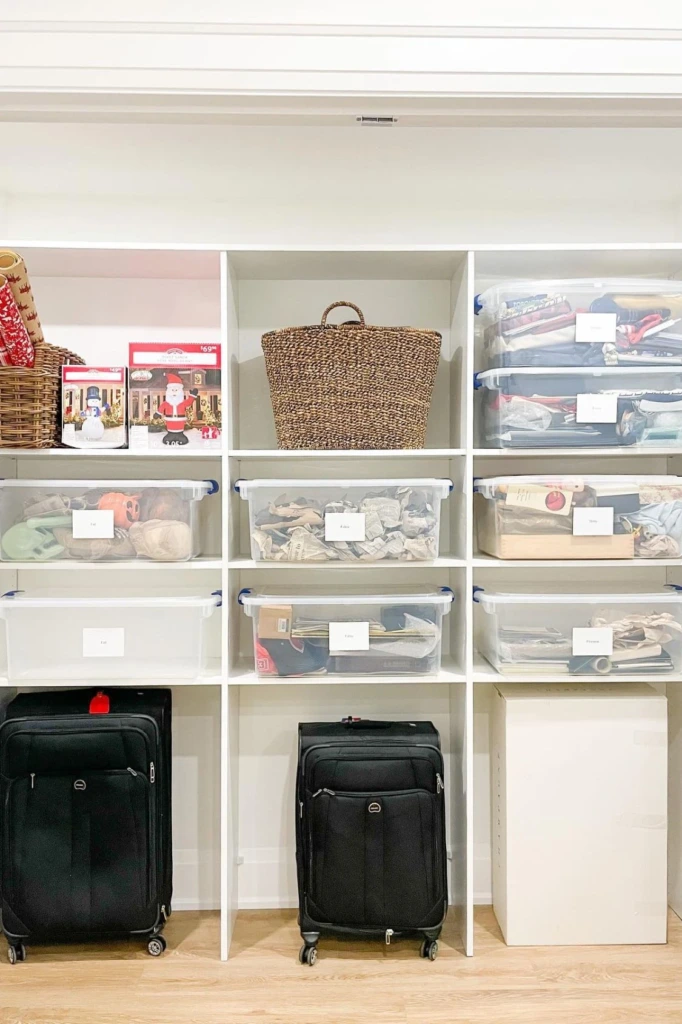
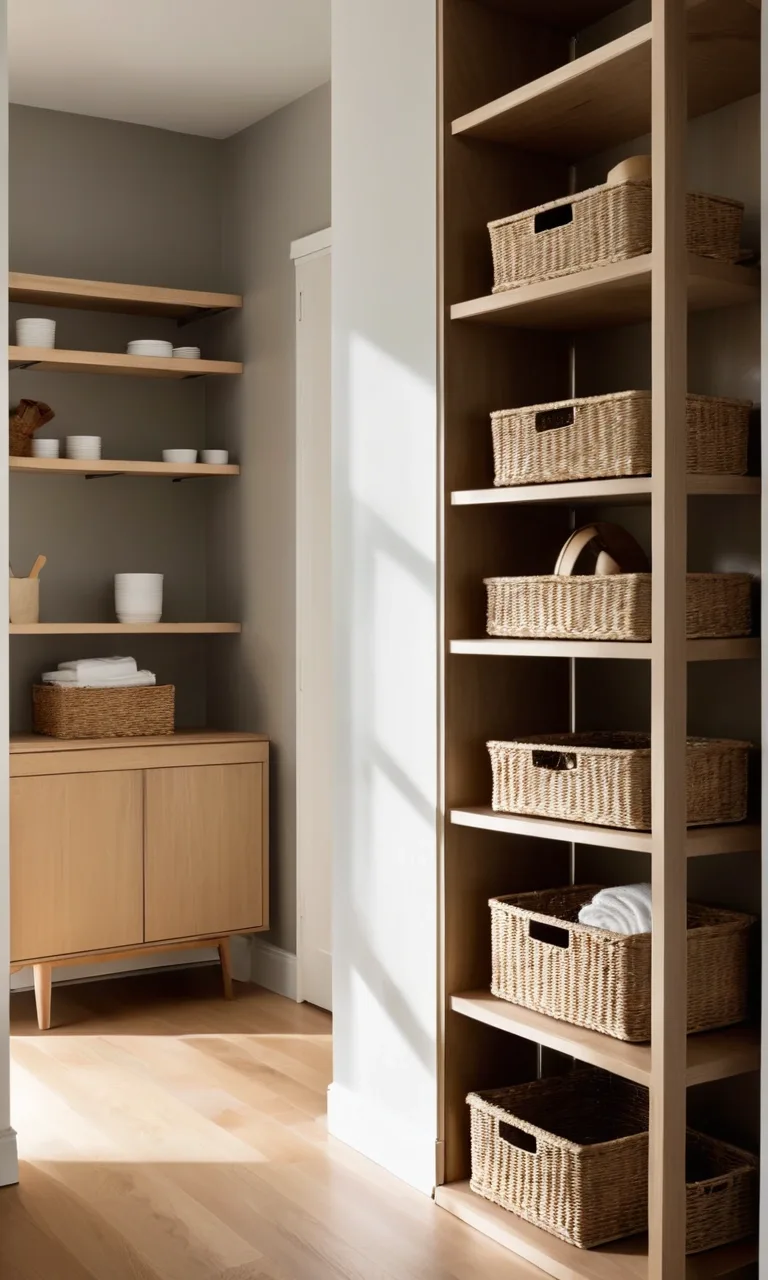
Cube shelving creates a flexible organization system for closets, bedrooms, and multipurpose rooms. Each compartment can hold a different category of belongings, making it easier to keep supplies separate and return them to the correct place.
Use matching baskets for a coordinated appearance or transparent containers when visibility matters more than appearance. Labels help everyone in the household identify where items belong.
Lower compartments are convenient for heavier objects, such as bags and storage boxes. Upper cubes can hold lightweight seasonal decorations, craft supplies, or spare linens.
To avoid turning the shelves into another cluttered area, assign a specific purpose to each cube and review its contents occasionally. If you need to accommodate changing storage needs, choose a modular system that can be rearranged.
14. Underbed Storage
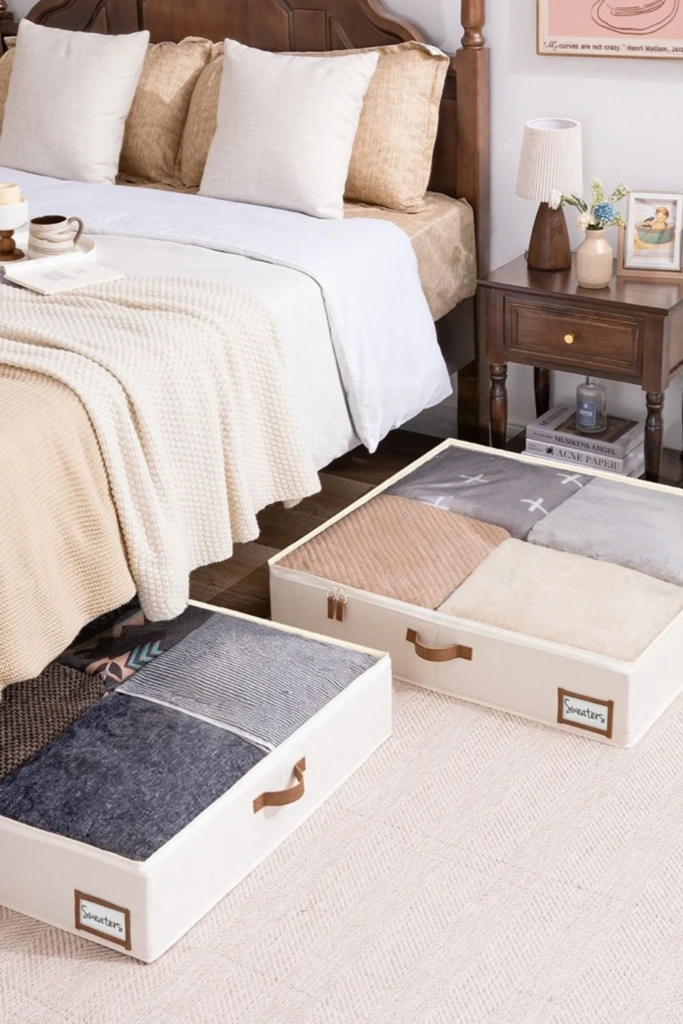
The space beneath a bed can provide extra storage without requiring another cabinet. Low-profile boxes, rolling drawers, and purpose-built under-bed containers are useful for folded clothing, spare sheets, blankets, and seasonal accessories.
Choose containers that fit beneath the bed frame and can be pulled out without moving other furniture. Dividers or smaller pouches help separate different types of belongings inside larger boxes.
Label the containers so you can identify their contents without opening each one. Items used every week should be easy to reach, while seasonal belongings can go toward the less accessible end.
For clothing and bedding, use clean, dry containers and check occasionally for dust or moisture. Under-bed storage works best when the space remains easy to clean and isn't packed so tightly that nothing can be retrieved conveniently.
15. Doorway Shelves
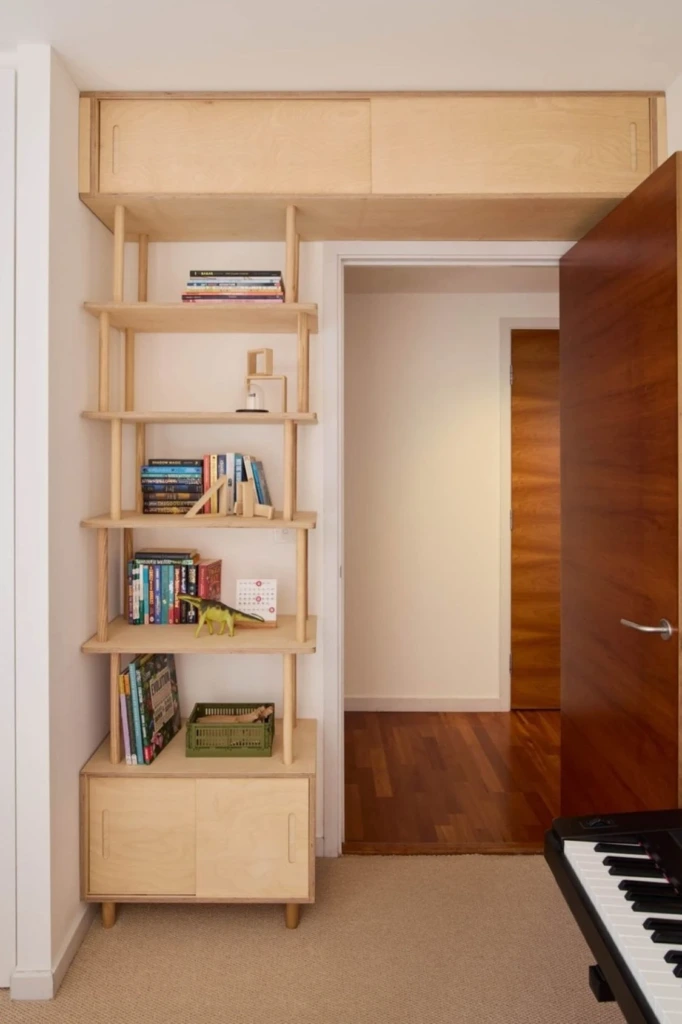
The wall area around a doorway can provide extra storage when the layout allows it. Narrow shelves beside the frame and a securely installed shelf above the door can accommodate books, lightweight decorations, or items used less frequently.
This approach is particularly helpful in small rooms where conventional bookcases would take up too much floor space. You can also use baskets on the shelves to keep small objects together.
Keep shelves shallow enough to avoid narrowing the entrance or making the room feel crowded. Anything positioned above a doorway must be securely supported, and heavier objects should be avoided in overhead locations.
Reserve the highest shelves for belongings you rarely need, since reaching them may require a suitable step stool. Everyday essentials are better stored at a comfortable height.
16. Bed Drawers
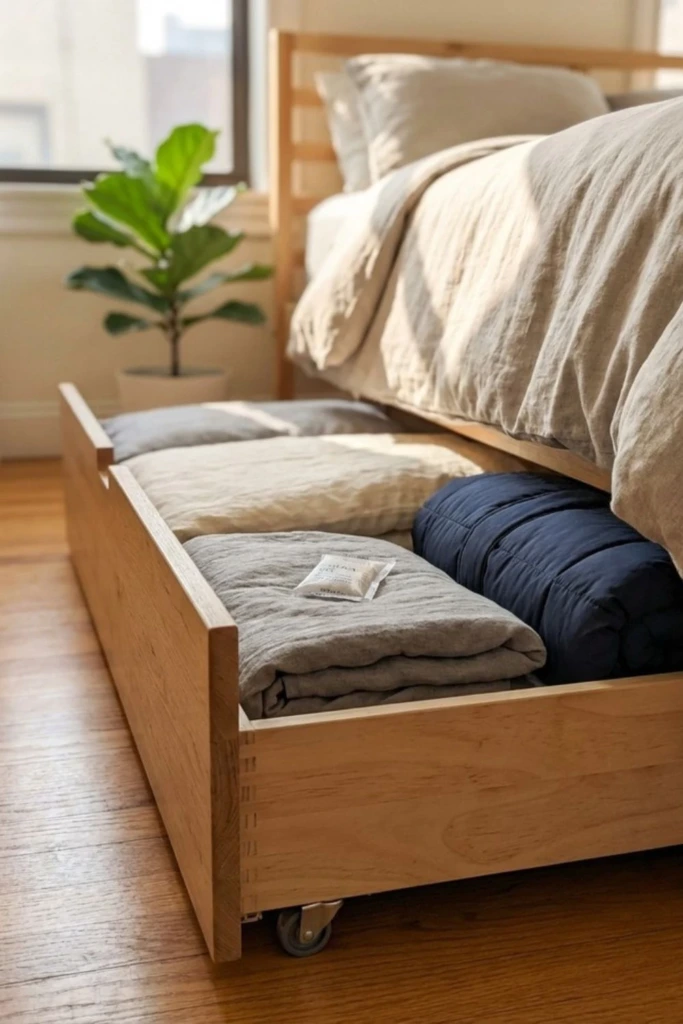
A bed with built-in drawers combines sleeping space and storage in one piece of furniture. The drawers can accommodate spare bedding, sweaters, pajamas, accessories, or clothing that doesn't fit comfortably in the main wardrobe.
This arrangement is especially useful in bedrooms where a separate chest of drawers would make movement difficult. Wide drawers can hold bulky items, while smaller compartments help prevent accessories from becoming mixed together.
Before choosing a bed frame, consider the available clearance on each side. Drawers need enough room to open fully, so the layout may not work well when the bed sits tightly against a wall or another large piece of furniture.
Store frequently used belongings in the easiest-to-reach drawers and label sections if several people share the room. Keeping the contents organized makes this hidden storage more practical over time.
17. Labeled Bins
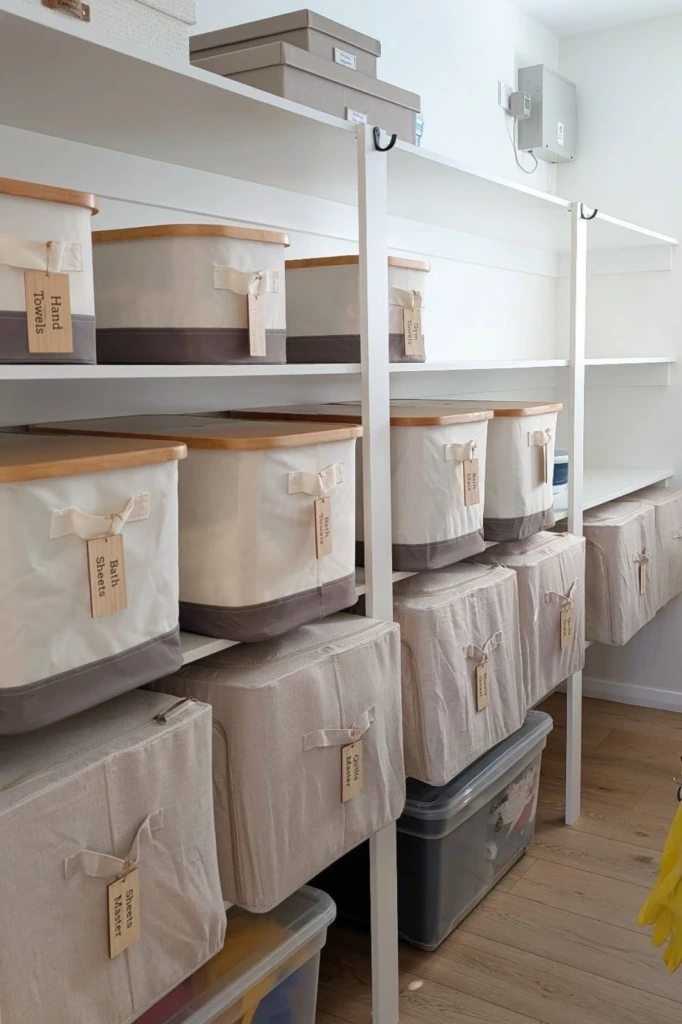
Labeled storage bins make closets and utility rooms easier to manage by giving similar belongings a shared home. Instead of placing everything into miscellaneous boxes, create categories for towels, cleaning supplies, seasonal clothing, craft materials, or household paperwork.
Choose containers that fit your shelves and are easy to remove. Clear bins make their contents visible, while opaque or fabric bins can create a more uniform appearance.
Labels should be specific enough to help someone find an item quickly. For example, separate labels for spare sheets and bath towels are more useful than a single label reading “Linens.”
Store heavy bins on lower shelves and lighter belongings above them. Avoid stacking containers so high that accessing the bottom one requires moving an unstable pile.
A consistent labeling system can also help children and other household members return items to their proper places.
18. Loft Storage
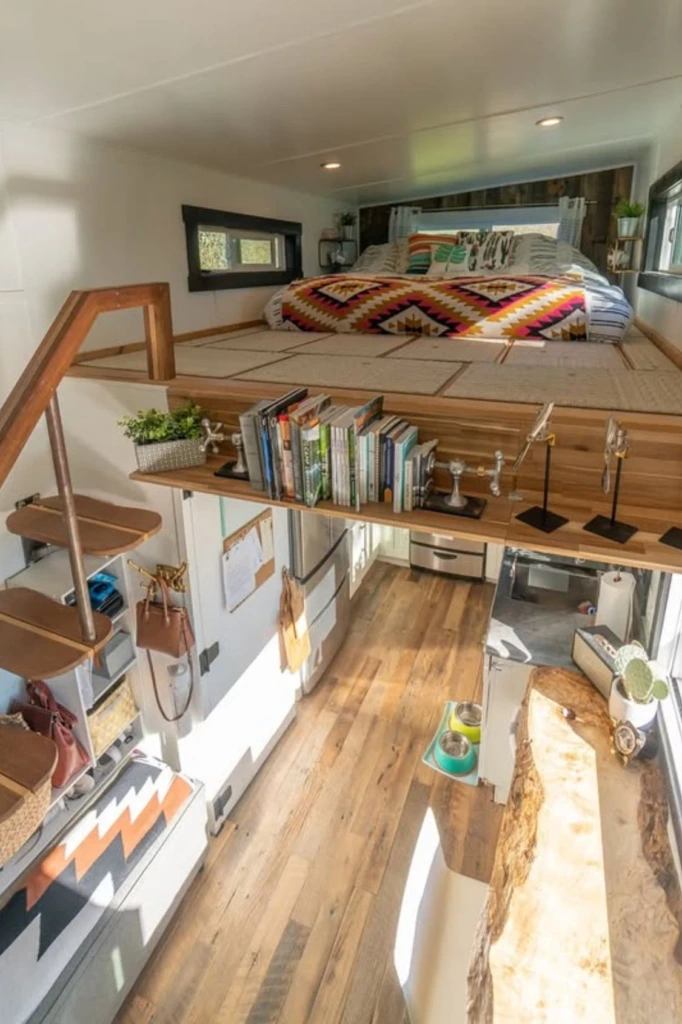
A loft bed can create a second functional zone in a compact room by raising the sleeping area above the floor. The space beneath it may accommodate a desk, drawers, shelves, or a small seating area, depending on the ceiling height and bed design.
In tiny homes and studio apartments, this arrangement can make one room serve several purposes without filling the entire floor with furniture.
Built-in compartments around the loft can hold clothing, books, and everyday supplies. Small stairs with integrated drawers may provide another storage opportunity if the design is safe and appropriate for the user.
Check the ceiling clearance, ladder access, weight limits, and safety requirements before installing a loft bed. The elevated area should be comfortable to use, and the space beneath it should remain accessible rather than becoming a collection point for miscellaneous items.
19. Utility Hooks
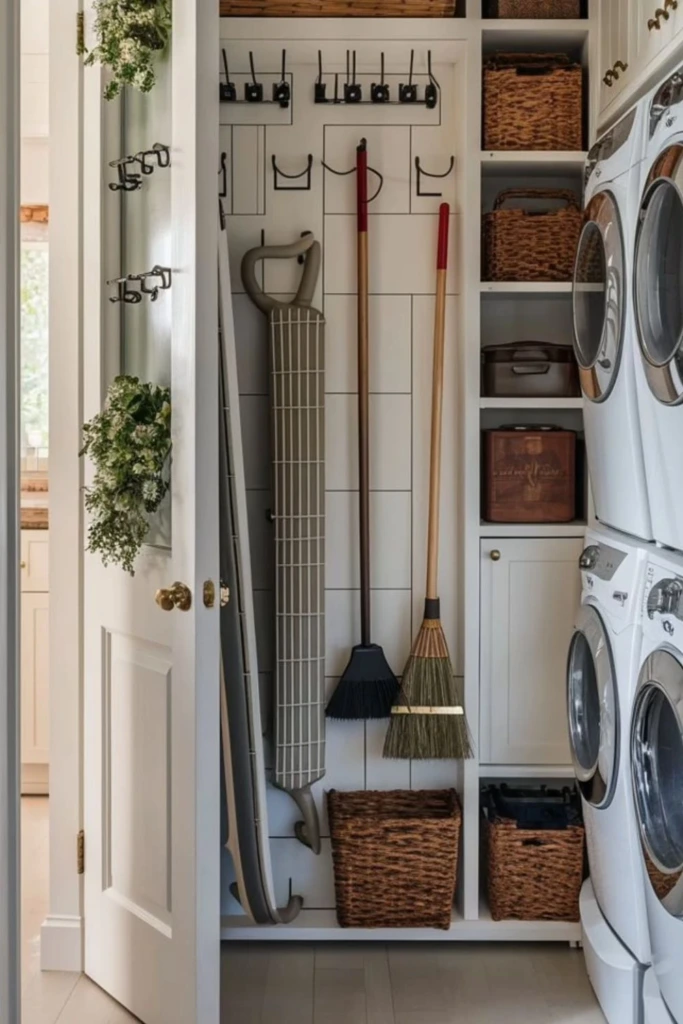
Brooms, mops, dusters, and ironing boards can take up considerable space when left leaning against walls. A wall-mounted utility rail keeps these tools upright and prevents them from falling over whenever someone reaches for another item.
Install the hooks inside a utility closet, laundry area, or another suitable location near where the equipment is used. Select holders that fit the handle sizes and weight of your tools.
Smaller hooks can accommodate dustpans, reusable cleaning cloths, or lightweight accessories. A nearby shelf or basket can hold cleaning products, spare sponges, and other supplies.
Keep wet cleaning tools in a location where they can dry properly, and store cleaning chemicals securely away from children and pets. By giving each tool a designated position, even a small utility closet can become much easier to maintain.
20. Closet Zones
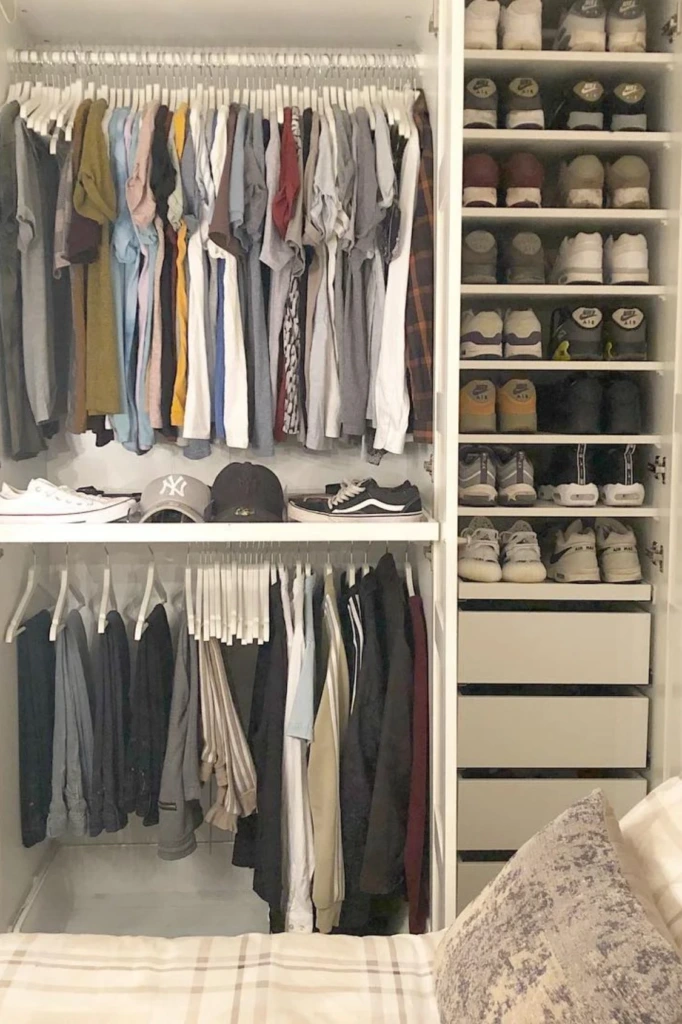
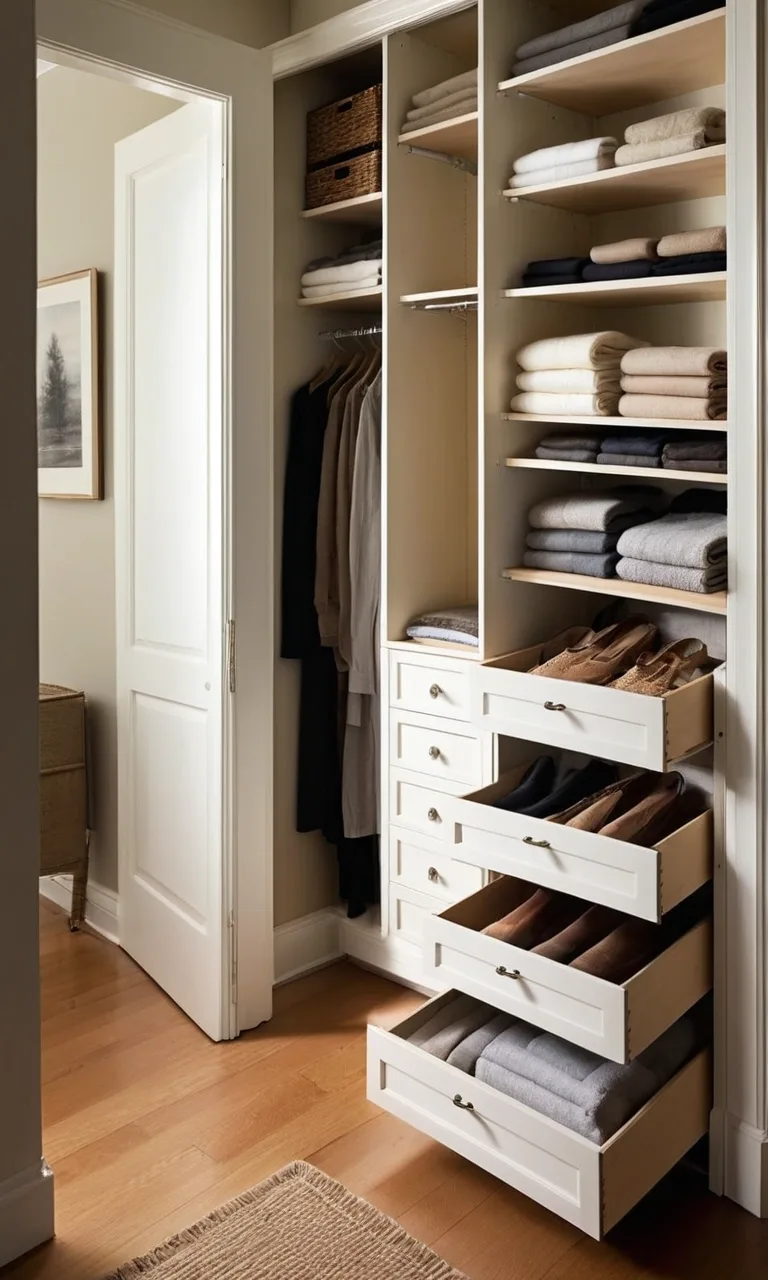
A small closet becomes more useful when it is divided into clear sections. Instead of arranging everything wherever space happens to be available, create separate areas for hanging garments, folded clothing, shoes, and accessories.
A second hanging rail can increase capacity when the closet's height allows it. Use shelves or dividers for sweaters, jeans, and other folded items, and place smaller accessories in drawers or labeled containers.
Arrange everyday clothing at eye level or within easy reach. Less frequently worn items can go on higher shelves, provided they can be retrieved safely.
Keep shoes together on a dedicated rack rather than allowing them to spread across the closet floor. Regularly remove items that no longer fit your needs, and avoid compressing clothes so tightly that you cannot see or reach them.
A well-planned closet makes getting dressed quicker and helps you make better use of the storage you already have.
21. Sink Baskets
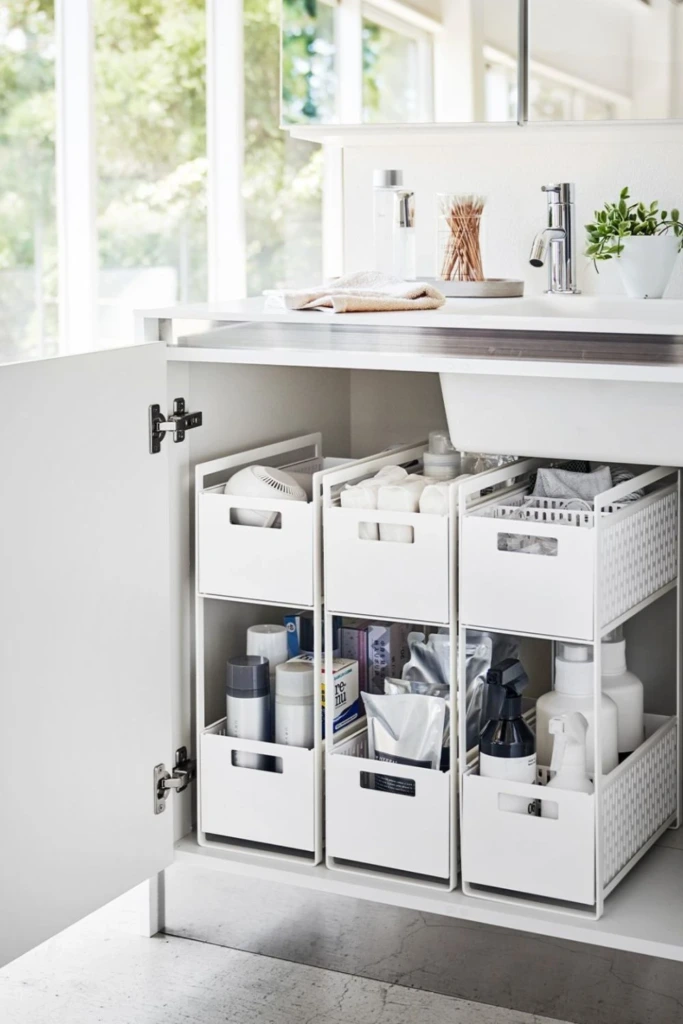
The cabinet beneath a kitchen or bathroom sink often contains awkward pipes that make conventional shelving difficult to use. Sliding baskets and tiered organizers can help turn this irregular space into a more manageable storage area.
Use separate containers for cleaning products, spare sponges, toiletries, and other small supplies. Pull-out baskets make it easier to reach items at the back without removing everything in front.
Measure around the plumbing before buying an organizer, and choose a design that fits the cabinet's width and height. Keep frequently used products in the most accessible section.
Check the cabinet occasionally for leaks or moisture, especially when storing paper products or spare towels. Cleaning chemicals should remain securely closed and separated from personal care items, and any products that require child-resistant storage should be kept safely out of reach.
22. Pullout Pantry
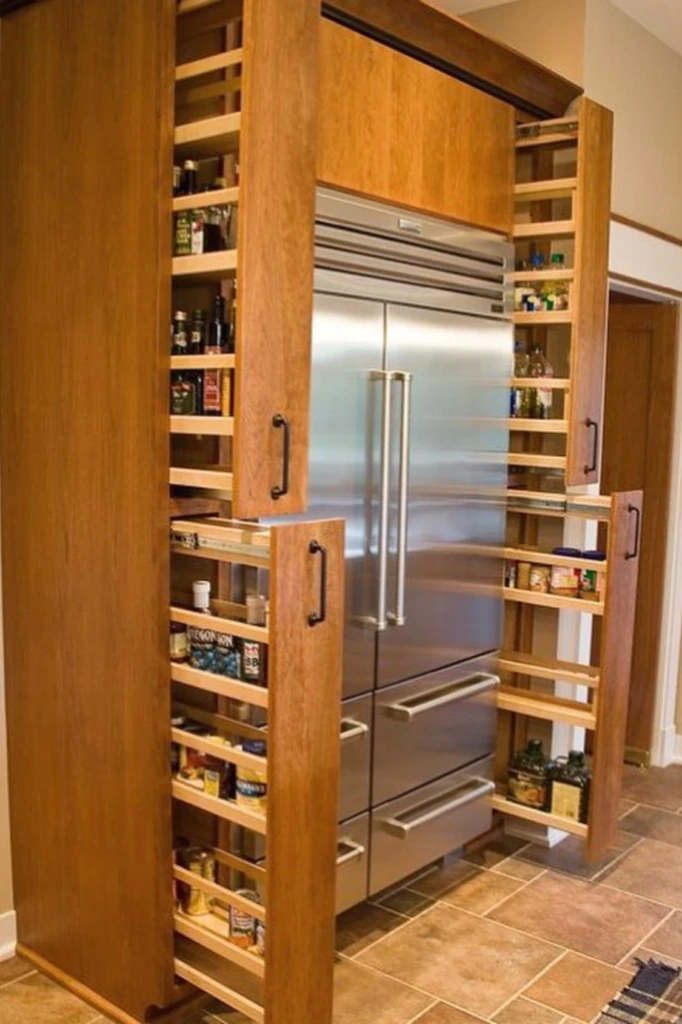
A pull-out pantry makes excellent use of narrow spaces beside refrigerators or kitchen cabinets. Its slim shelves slide outward, allowing you to view and reach ingredients that might otherwise become lost at the back of a deep cupboard.
Use the shelves for jars, condiments, spices, packets, and other small pantry essentials. Group similar items together so you can see what is available before shopping or preparing a meal.
Adjustable shelves can accommodate different container heights, while small bins prevent loose packets from tipping over. Place heavier products on lower levels and avoid overloading the mechanism.
If you're remodeling a kitchen, a built-in pull-out pantry may be worth considering. For a more affordable alternative, a freestanding narrow cart or slim rolling organizer can offer similar benefits without permanent installation.
Measure the available gap carefully and ensure the unit can extend fully without hitting nearby handles, appliances, or doors.
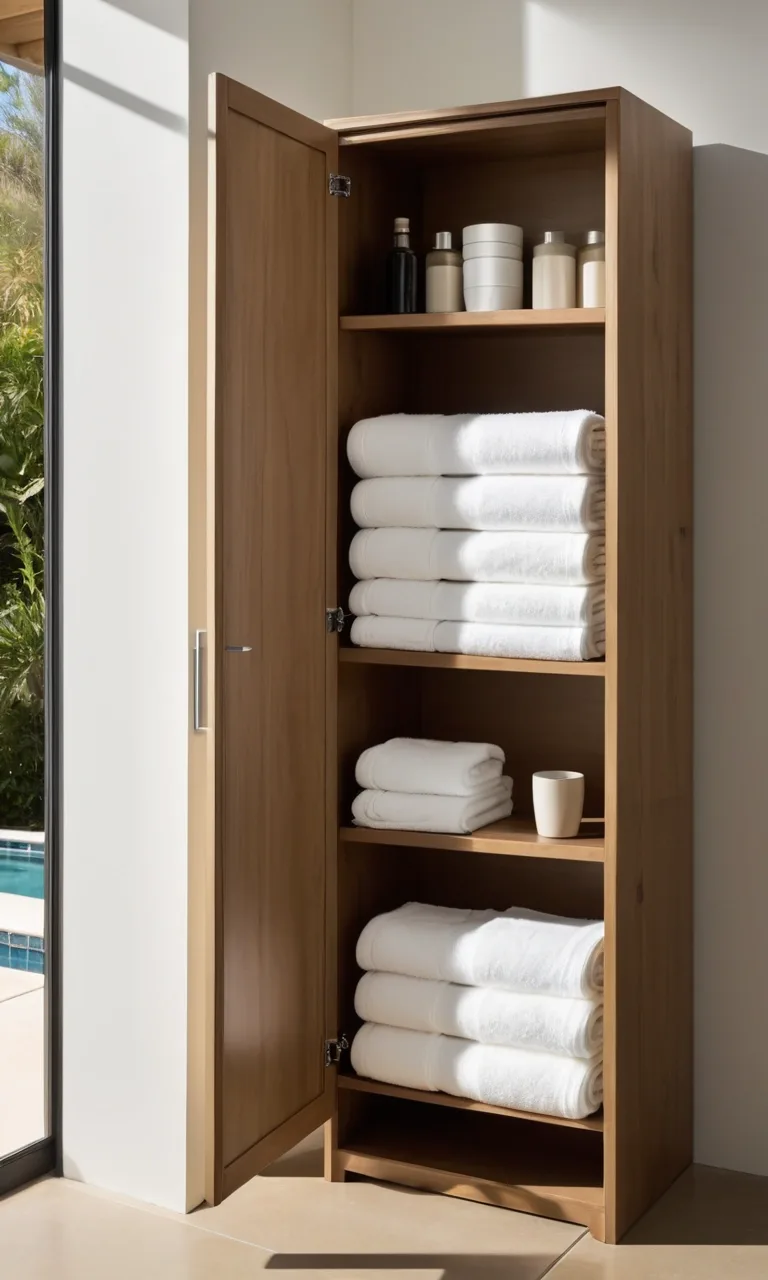
23. Linen Cabinet
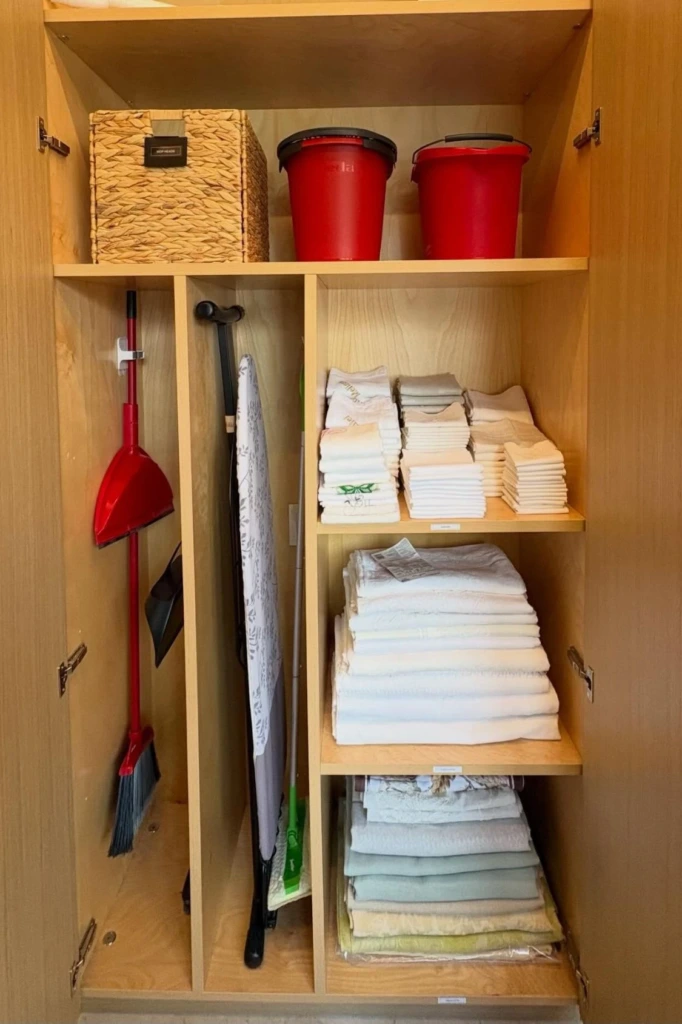
A well-organized linen cabinet can store towels, sheets, blankets, and household cleaning equipment without becoming difficult to navigate. The key is to give different categories their own sections instead of stacking everything together.
Place frequently used towels on shelves that are easy to reach and keep complete bedding sets grouped together. Small baskets can hold washcloths, pillowcases, or other items that tend to become scattered.
If the cabinet also serves as a utility closet, reserve a separate vertical section for a broom, mop, or ironing board. Shelf dividers can help keep folded linens upright, while labeled containers are useful for less frequently used supplies.
Store clean textiles in a dry, well-ventilated area. Avoid overfilling shelves because tightly packed stacks are harder to remove neatly and may quickly become disorganized again.
24. Mudroom Cubbies
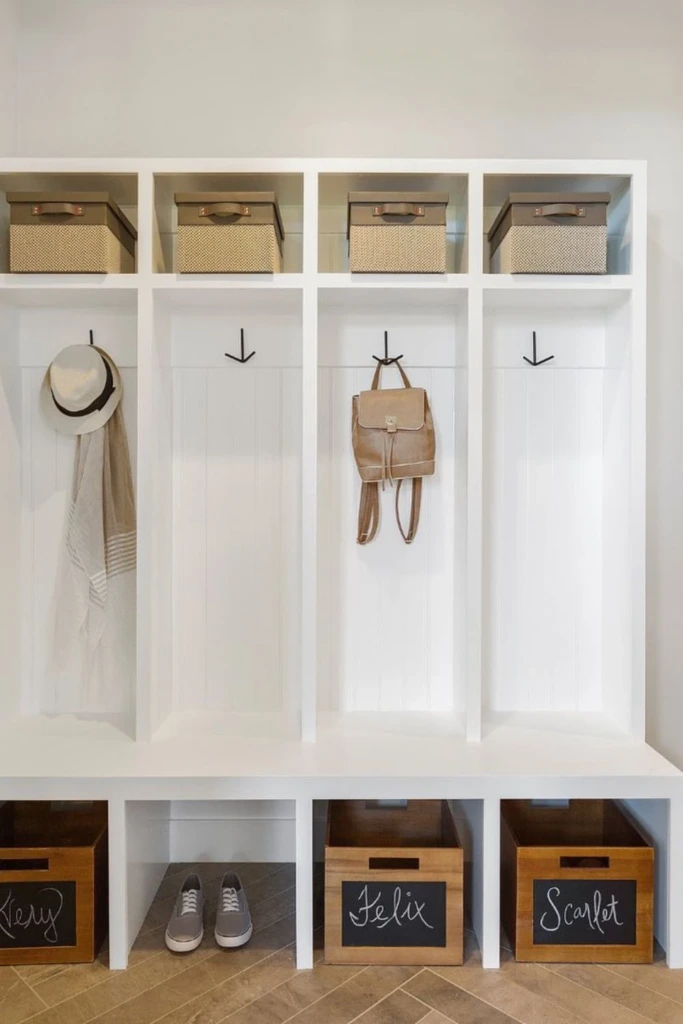
A dedicated mudroom isn't necessary to create a practical entry station. A row of cubbies, hooks, and a small bench can provide similar benefits along one wall near the entrance.
Assign each family member a specific compartment for shoes, bags, jackets, and everyday accessories. Individual baskets can hold gloves, hats, scarves, and other small belongings that are easily misplaced.
A bench makes it more comfortable to change shoes, while hooks keep coats and backpacks off the floor. Upper shelves can accommodate seasonal accessories or lightweight storage boxes.
If you don't have a separate mudroom, adapt the idea to a hallway, porch entrance, or corner near the main door. Choose furniture that fits the available width and leaves enough room for people to pass comfortably.
A consistent routine helps the system work: everyone puts their belongings away when they arrive rather than leaving them wherever there is space.
25. Stair Shelving
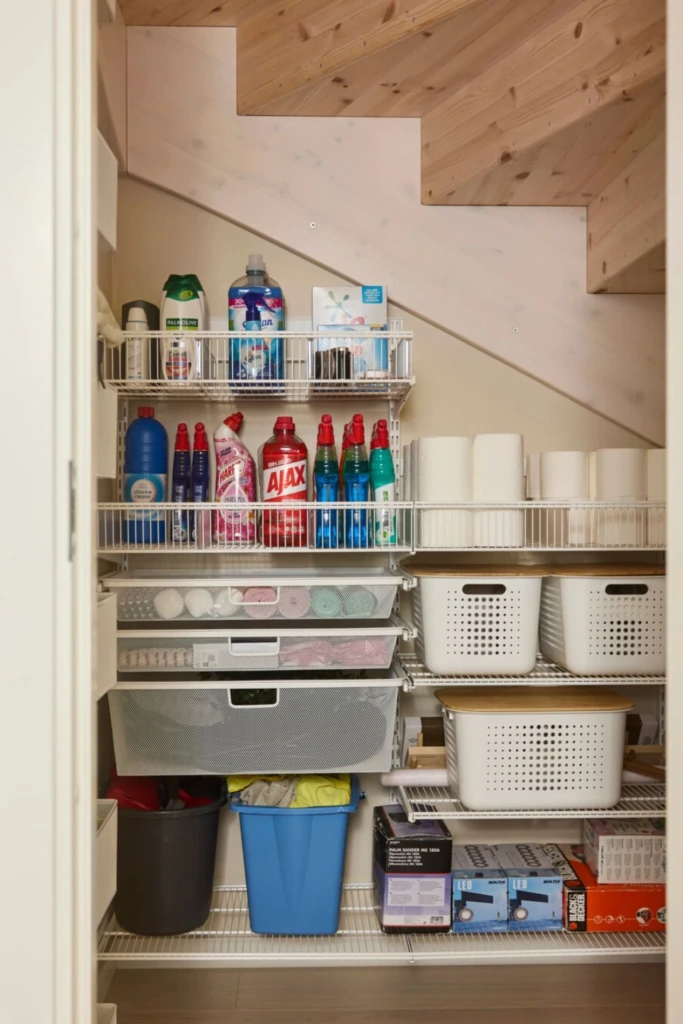
The angled space beneath stairs can be difficult to organize with standard furniture, but adjustable shelving offers a flexible solution. By positioning shelves at different heights, you can use more of the available area without needing a custom cabinet.
Open shelves are useful for neatly arranged household supplies, books, baskets, or pantry goods. Lower sections can hold larger containers, while smaller items fit into baskets or drawers that prevent them from getting lost.
For a utility area, group related supplies together and keep frequently used products near the front. If the space is used for food storage, choose clean, dry shelving and organize items according to their storage requirements.
Measure the slope of the staircase before purchasing shelves so that each section fits properly. Keep access panels, electrical equipment, and other essential building features unobstructed.
With a little planning, an awkward corner can become one of the most useful storage areas in the house.
26. Hallway Storage Nook
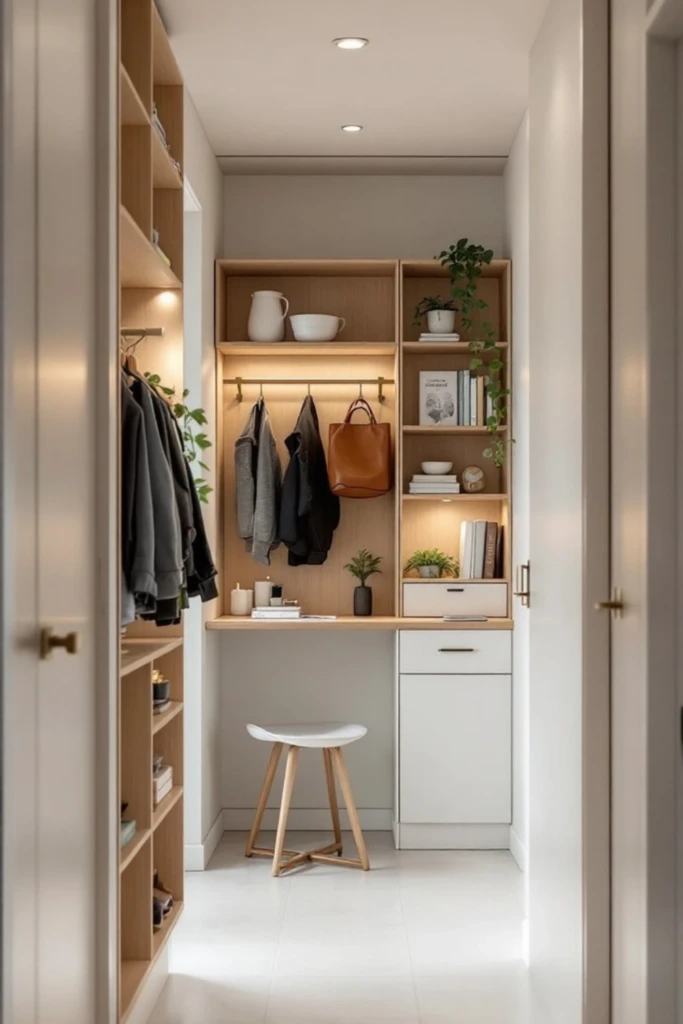
A hallway can do more than connect rooms when its layout includes a small, purposeful storage nook. A shallow built-in unit may combine shelves, hooks, a compact counter, and drawers in one narrow area.
Use the hooks for coats and bags, while shelves can hold books, small plants, or a few decorative objects. A counter provides a convenient place for keys, mail, or a phone that needs charging.
If you occasionally work from home, a narrow desk surface may also serve as a small laptop station, provided the hallway remains wide enough for safe movement. Add a lamp or suitable built-in lighting so the area remains comfortable to use.
Keep the design proportional to the available space. Too many shelves or oversized cabinets can make a narrow passage feel cramped, so prioritize storage that solves a specific problem.
A thoughtfully arranged nook gives everyday belongings a reliable home while allowing the rest of the hallway to remain open and inviting.
How can I make a narrow hallway feel less cluttered when adding storage?
Choose shallow furniture, wall-mounted hooks, and slim shelving rather than bulky cabinets that extend far into the walkway. Built-in units can be particularly useful because they can be designed around the dimensions of the hallway.
Use vertical space for belongings that would otherwise occupy the floor, and limit open shelves to a manageable number of items. Baskets or closed compartments can conceal smaller objects and help maintain a tidy appearance.
Good lighting also makes a difference. Bright, evenly distributed light helps a narrow passage feel more welcoming, while light-colored finishes can create a sense of openness. Most importantly, preserve a clear walking path and avoid placing storage where doors need to open.
What items are best stored in a hallway storage nook?
A hallway nook works best for belongings you regularly need when leaving or entering the house. Common choices include jackets, handbags, backpacks, shoes, umbrellas, keys, and mail.
Small drawers or baskets can hold gloves, chargers, reusable shopping bags, and other everyday accessories. If the nook includes a desk surface, it may also provide space for a notebook or a few work essentials.
Keep frequently used belongings within easy reach and move seasonal items elsewhere when they aren't needed. Avoid filling the nook with long-term storage or objects that belong in other rooms.
The goal is to create a convenient transition area where everyday essentials are easy to find and easy to put away.