23 School Organization Ideas for 2026
Keeping school materials organized can be challenging when assignments, notebooks, art supplies, and classroom resources keep accumulating. A tidy setup makes it easier for students to find what they need, complete their work on time, and develop better study habits.
The good news is that you don't need expensive furniture or complicated storage systems to create an organized learning environment. A few practical changes can make a desk, classroom, homeschool area, or family study corner much more functional.
These 22 school organization ideas offer flexible ways to manage supplies, sort paperwork, prepare activities, and keep everyday school routines running smoothly.
What Simple Organization Habits Help Students Stay on Track?
Good organization starts with consistent habits rather than perfectly arranged shelves. Students can make schoolwork more manageable by recording assignments immediately, keeping materials for each subject together, and reviewing upcoming deadlines regularly.
A dedicated place for textbooks, stationery, completed assignments, and unfinished work reduces unnecessary searching. Spending a few minutes at the end of each school day to organize a backpack and prepare materials for tomorrow can also prevent last-minute stress.
The most effective system is one that students can understand and maintain independently. Start with a few simple routines, then introduce additional storage solutions as needed.
1. Monthly Bins
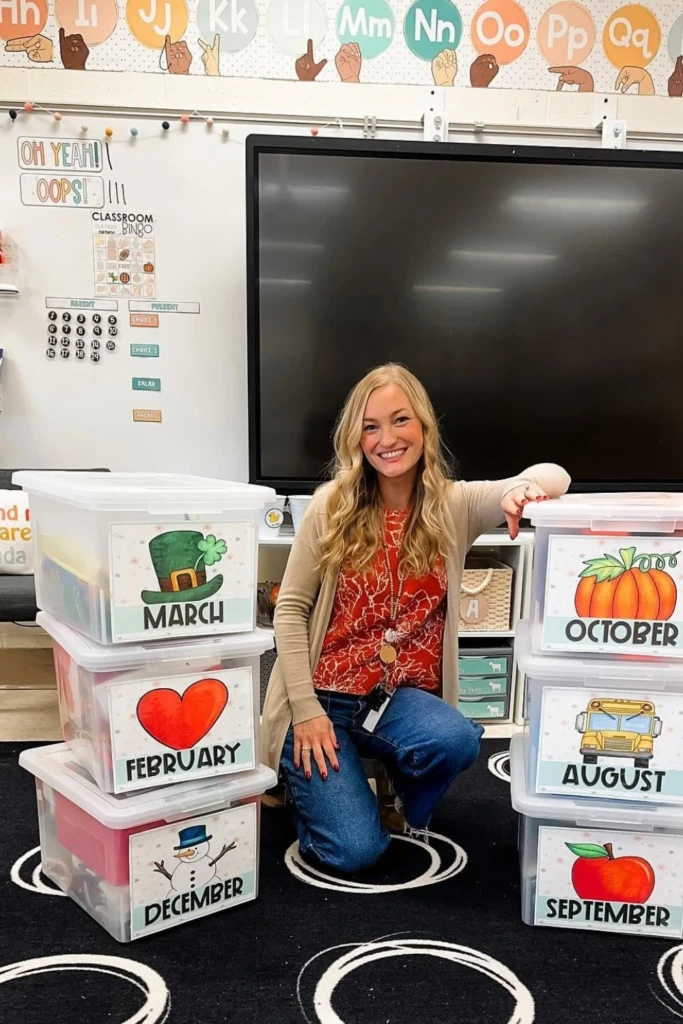
Monthly storage bins provide an easy way to preserve school paperwork without allowing it to spread throughout the house or classroom. Assign a separate container to each month and use it for completed worksheets, artwork, project materials, and other documents worth keeping.
This method works particularly well for teachers, homeschool families, and parents who want to track a child's progress throughout the academic year. Transparent containers make the contents visible, while clearly printed labels prevent confusion.
Before adding papers, remove duplicates and discard items that are no longer useful. At the end of the year, review each bin and keep only the materials you genuinely need for future reference or sentimental reasons.
2. Shelf System
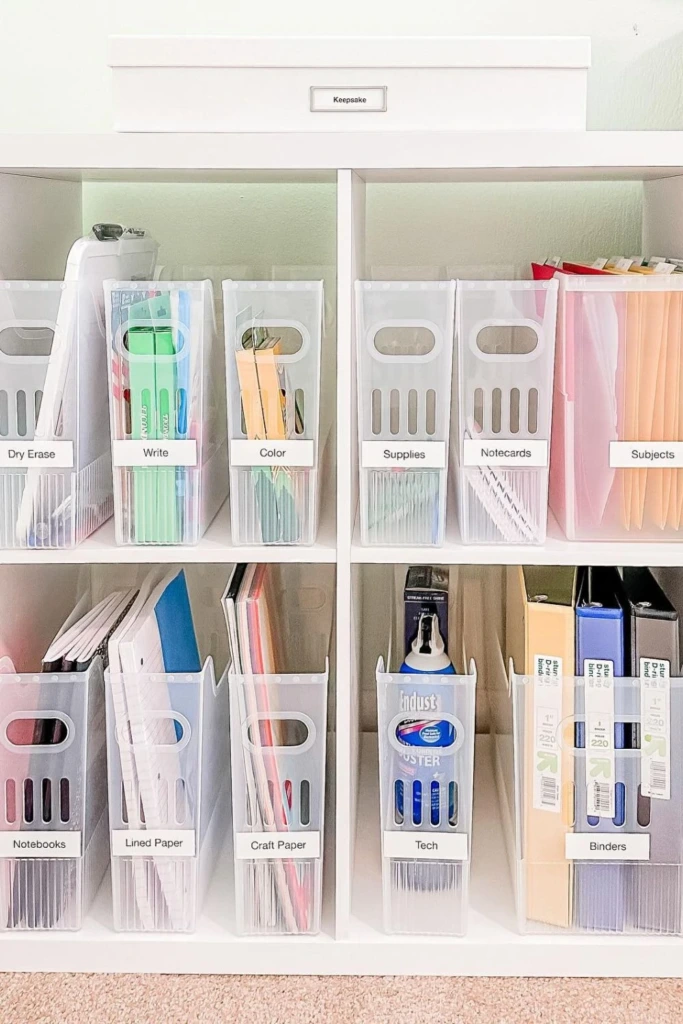
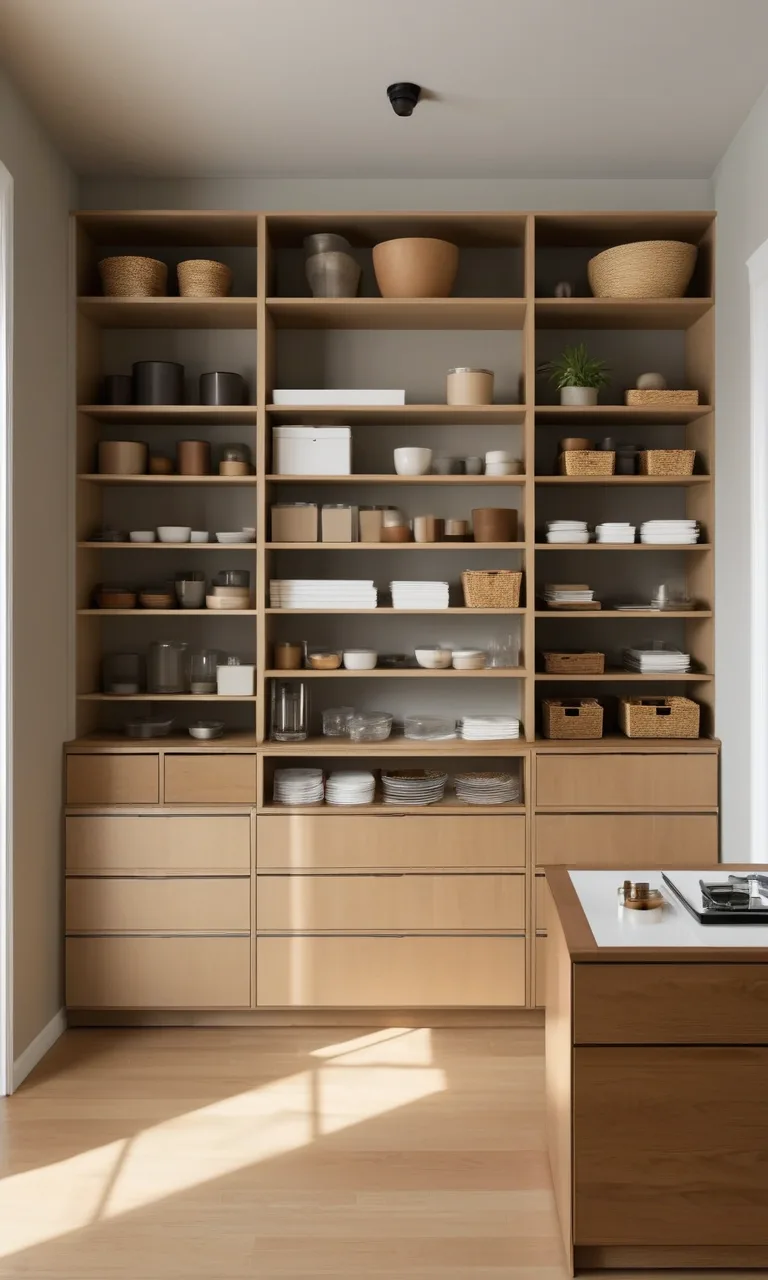
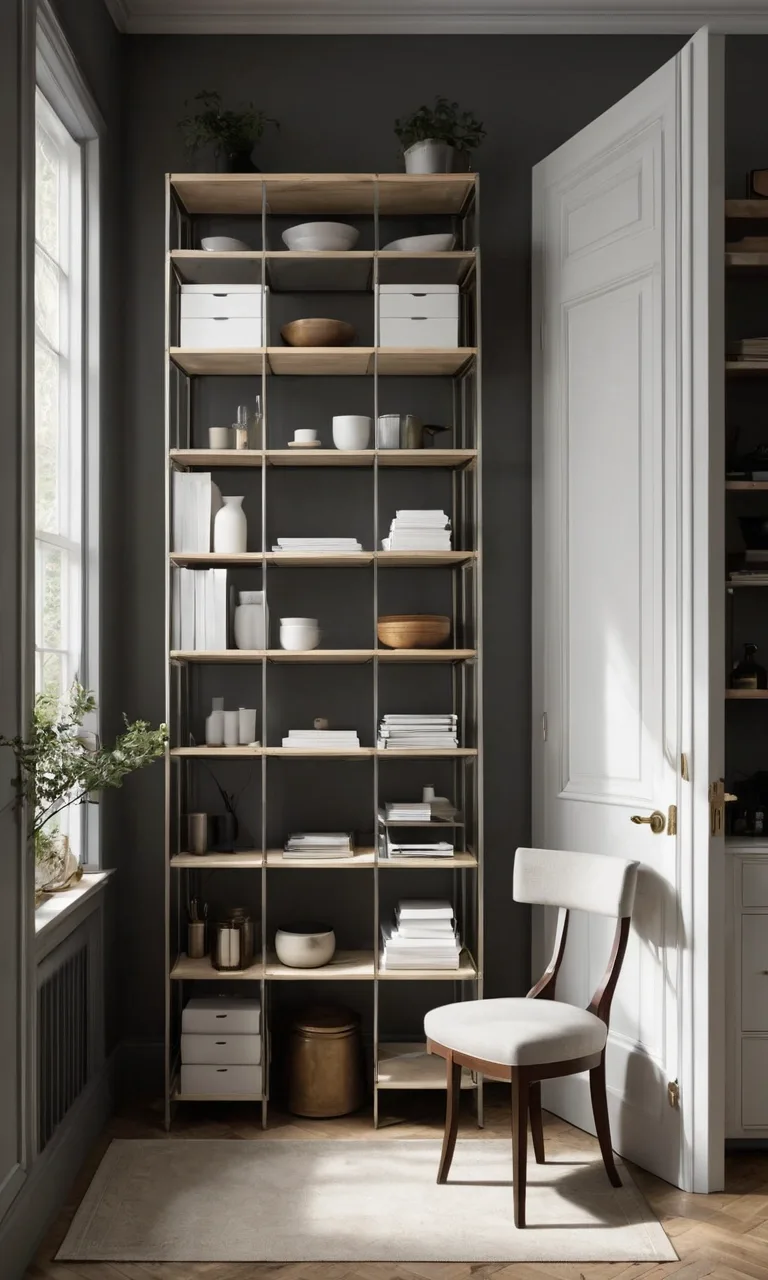
A dedicated shelving unit can turn a crowded study area into a practical storage station. Use baskets, small containers, and folders to separate notebooks, textbooks, writing materials, and classroom resources.
Cube shelving is especially useful because individual compartments can accommodate different categories without requiring a large room. Label each container so students know where supplies belong and can return them after use.
Arrange frequently needed materials on accessible shelves and reserve higher compartments for occasional-use items. A consistent layout helps reduce desk clutter and makes study sessions easier to begin.
3. Theme Boxes
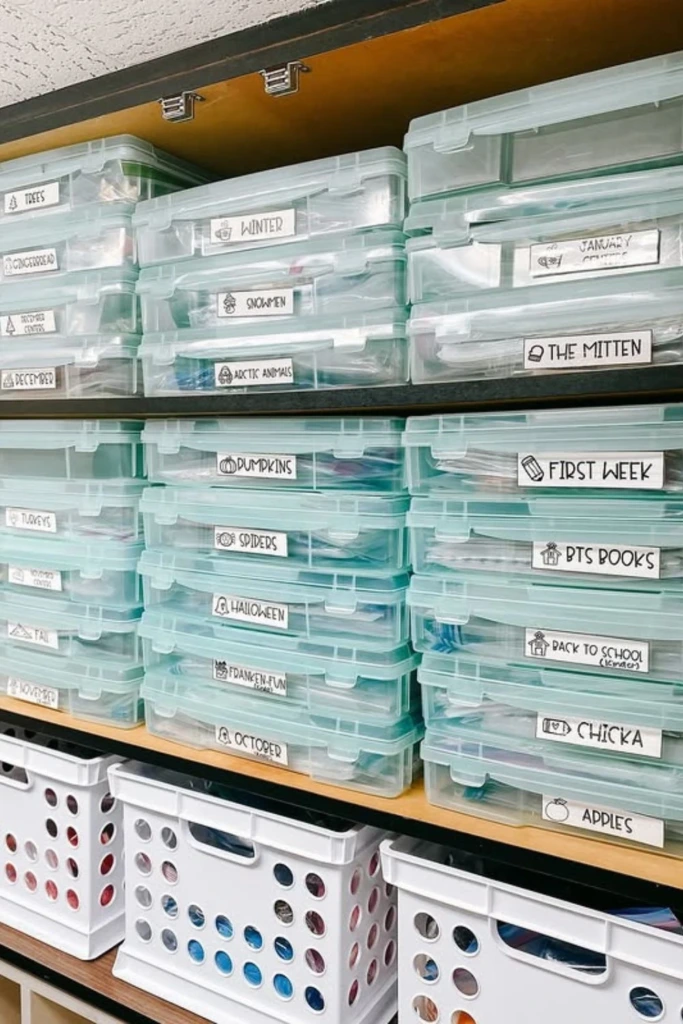
Theme-based boxes are useful for keeping classroom activities and seasonal teaching materials together. Instead of searching through multiple drawers for decorations, worksheets, and craft supplies, group everything needed for a particular topic in one container.
For example, teachers can create boxes for autumn activities, winter lessons, science experiments, holiday crafts, or reading themes. Add a clear label and, when useful, a short inventory of the contents.
This system is particularly valuable when lessons repeat each year. Store seasonal boxes on higher shelves when they aren't needed, and move the relevant container to an accessible location before planning the next activity.
4. Wall Planner
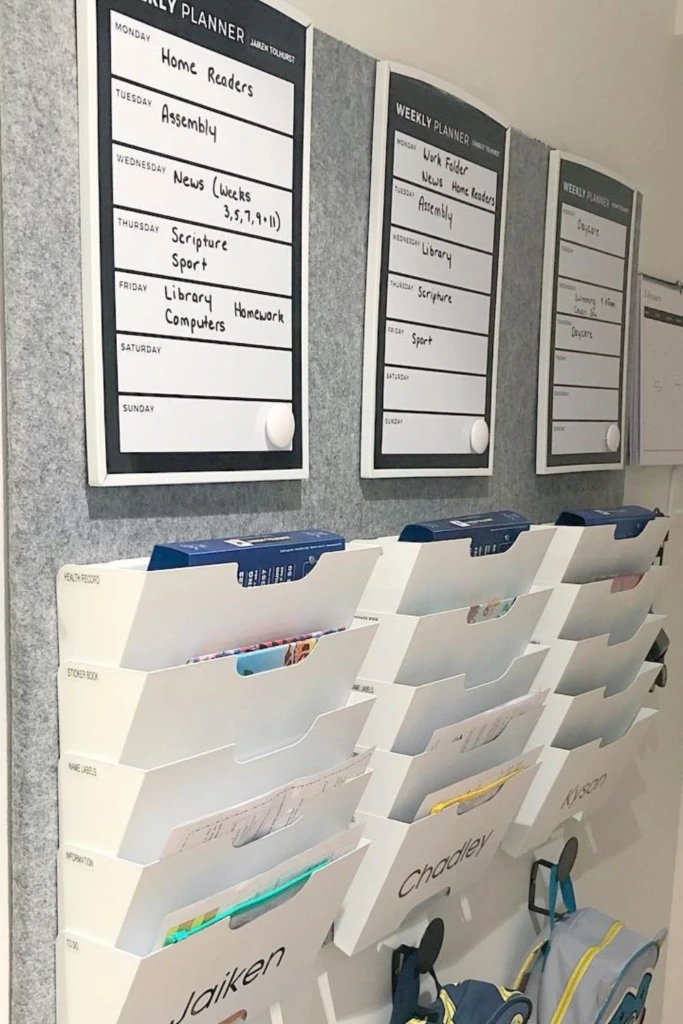
A wall planner gives students and families a shared view of upcoming responsibilities. It can display homework deadlines, examination dates, extracurricular activities, reading goals, and important school events.
Choose a dry-erase board, paper calendar, or reusable weekly planner that suits the household's routine. Use different colors for individual family members or categories of tasks, provided the system remains easy to understand.
Placing labeled document pockets beneath the planner adds another layer of organization. Permission slips, reading logs, and forms awaiting signatures can be kept together instead of disappearing into backpacks.
Review the schedule at the beginning or end of each day. This simple habit helps students anticipate busy periods and prepare for upcoming assignments.
5. Drawer Dividers
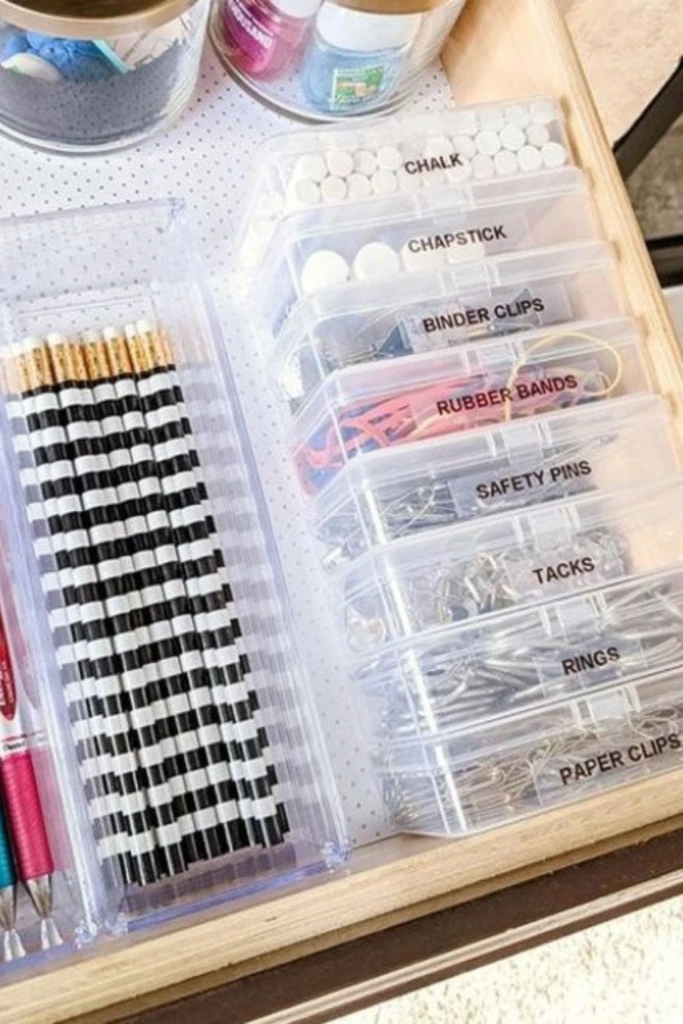
Desk drawers often become difficult to use when pencils, erasers, paper clips, scissors, and other small items are mixed together. Drawer dividers create separate compartments so each supply has a designated location.
Plastic trays, adjustable dividers, and small reusable containers can all serve this purpose. Measure the drawer before purchasing organizers to ensure that the inserts fit without wasting valuable space.
Group similar items together and keep everyday essentials near the front. Labels can help younger students maintain the arrangement, while a quick weekly check prevents unnecessary clutter from returning.
6. Color Drawers
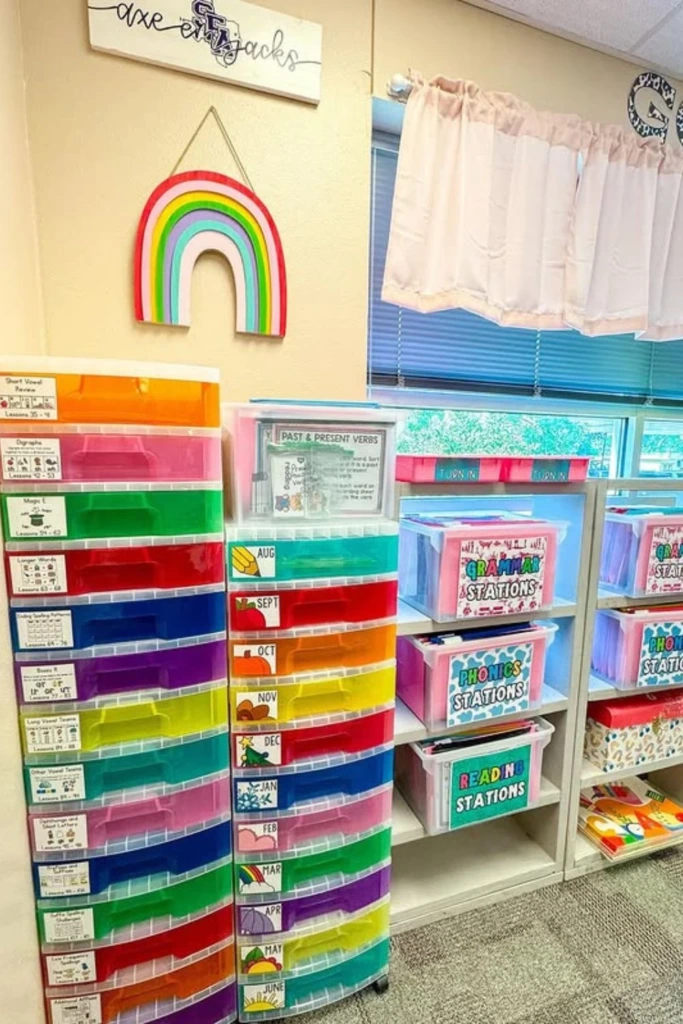
Color-coded drawers make it easier to separate school paperwork by subject, activity, or stage of completion. A multilevel plastic drawer unit can hold mathematics worksheets, reading exercises, science notes, art projects, and other learning materials.
Assign each drawer a specific purpose and add a written label so the color isn't the only clue. Teachers might use one drawer for each class or lesson, while students can organize their materials by subject.
This approach is especially helpful when several assignments need to be prepared in advance. Keep active work within easy reach and place archived materials in a separate location to prevent the drawers from becoming overcrowded.
7. Color Sorting
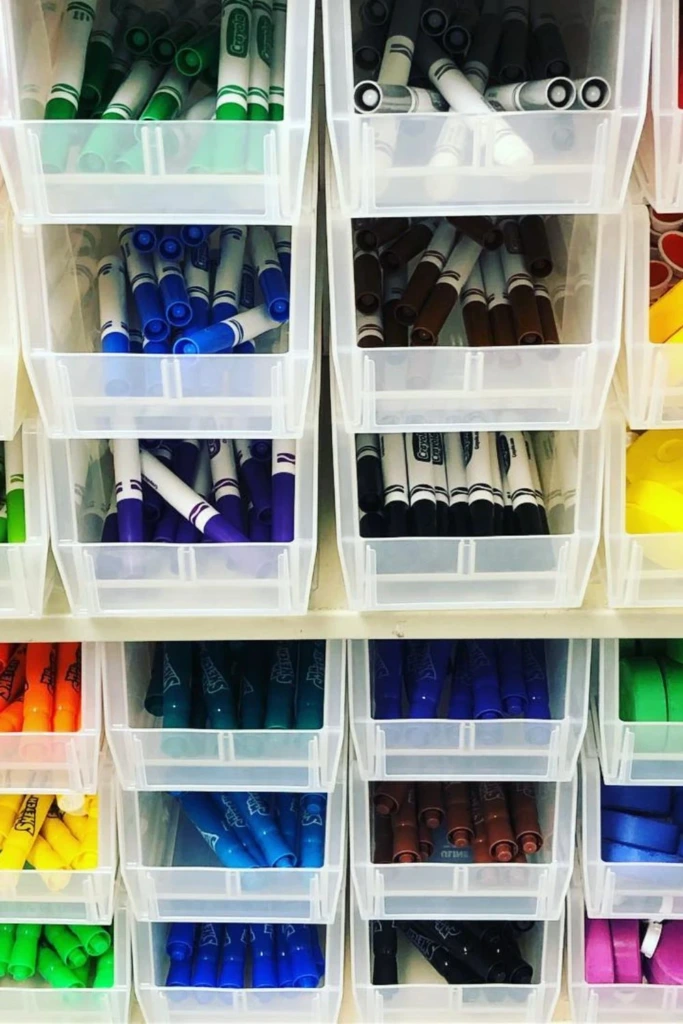
Sorting stationery and art materials by color can make creative workstations more convenient. Separate crayons, markers, colored pencils, paper, and other multicolored supplies into matching groups or individual compartments.
Small trays and stackable containers work well for this arrangement. Students can quickly identify the color they need without emptying an entire box onto the desk.
For classroom art areas, place frequently used colors at the front and less commonly used materials farther back. Make sure containers are appropriately sized and easy for children to handle.
Color sorting is most useful when students regularly complete drawing, painting, and craft activities. For general stationery, grouping by item type may be more practical than organizing every supply by color.
8. Number Cubbies
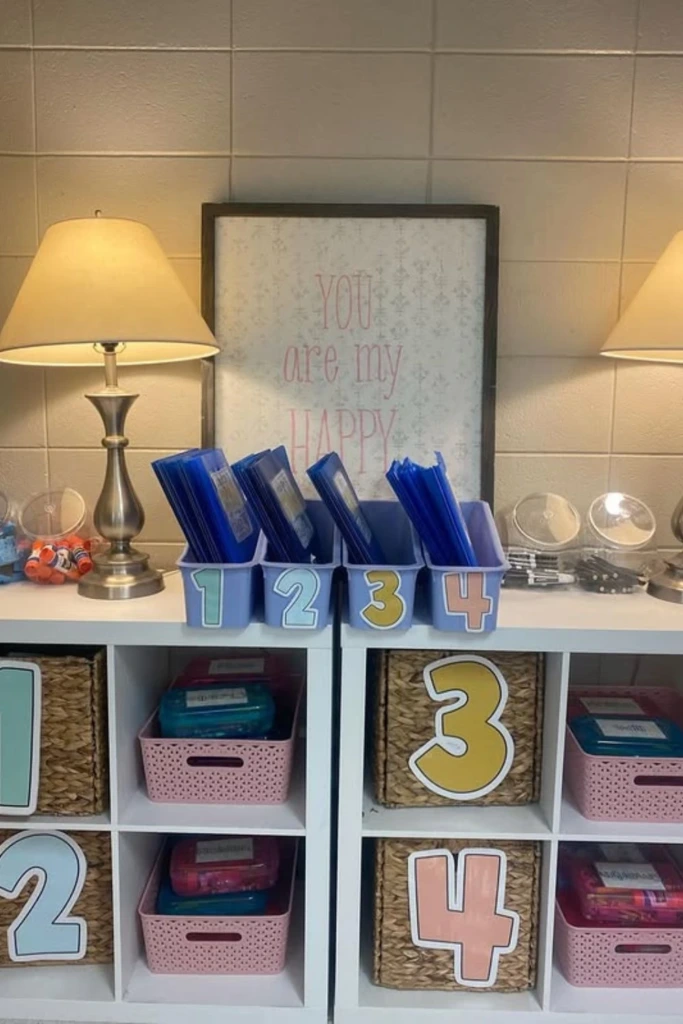
Numbered cubbies help classrooms manage individual student belongings without mixing up folders, notebooks, or completed assignments. Give each student a number and mark the corresponding storage compartment with a visible label.
A cube shelf can provide separate spaces for take-home papers, personal materials, and classroom activities. Additional baskets underneath can hold shared resources or items that need to be collected at the end of the day.
The numbering system should remain consistent across related storage areas whenever possible. Students can learn their assigned location quickly, making morning arrivals, homework collection, and afternoon packing more orderly.
For shared classrooms, avoid storing sensitive personal information in openly accessible compartments.
9. Headphone Pockets
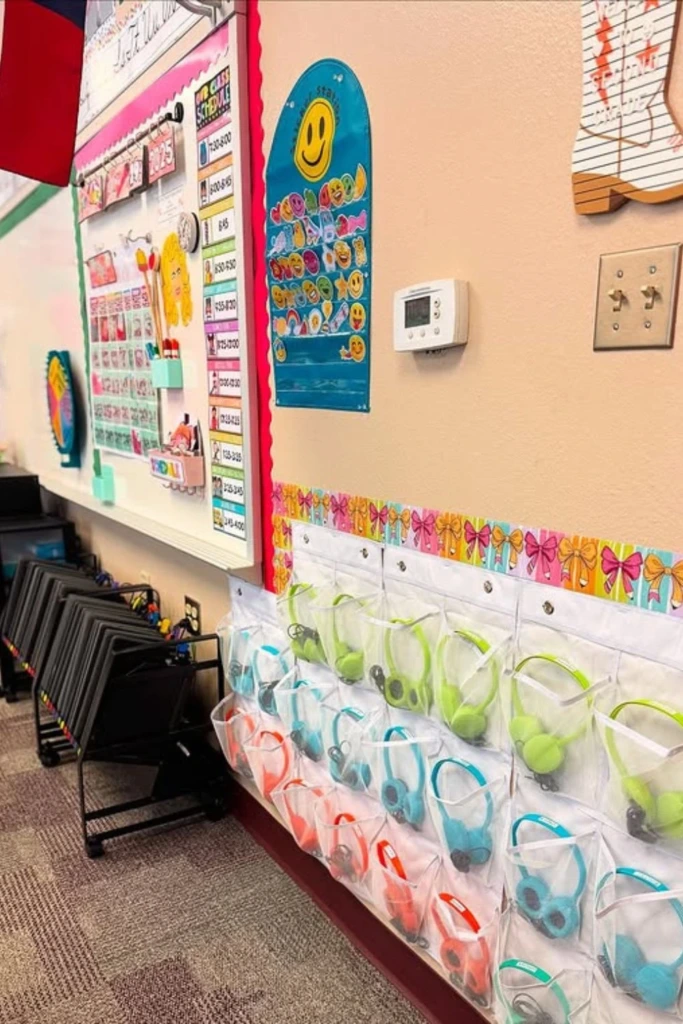
Headphones are easier to manage when every pair has its own storage space. Individual pockets prevent cables from becoming tangled and help students return equipment to the correct location after computer work or listening activities.
A hanging shoe organizer or wall-mounted pocket chart can provide an inexpensive solution. Label each pocket with a student number, workstation number, or device identifier.
Position the organizer near the computers or technology station so students can put equipment away immediately after use. If headphones belong to individual students, avoid sharing them without appropriate cleaning procedures.
Teachers can also check the pockets at the end of the day to identify missing equipment before the next class begins.
10. Entry Cubbies
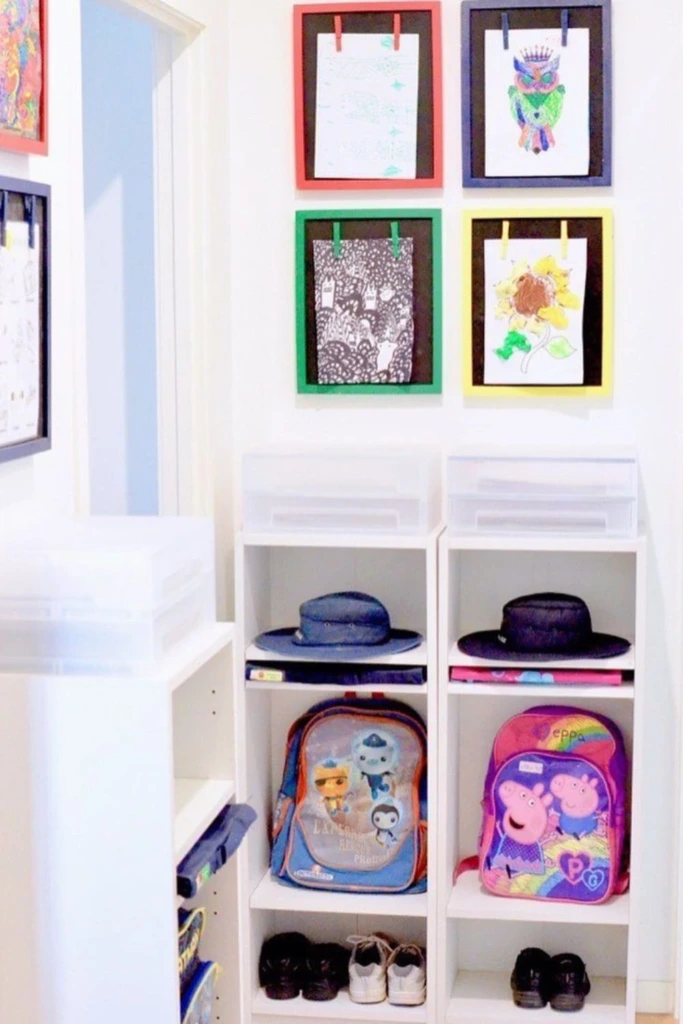
An entry cubby system creates a reliable place for school bags, shoes, lunch containers, hats, and other everyday belongings. Rather than leaving everything near the door, assign each child a designated compartment.
Use the upper section for lightweight accessories, the main space for backpacks, and the bottom shelf for shoes when the unit is designed to accommodate them. Small baskets can hold items such as library books, reusable water bottles, or school badges.
This arrangement works well in family entryways, mudrooms, and homeschool spaces. Children can practice returning their belongings after school and gathering everything they need before leaving the next morning.
Choose sturdy furniture that fits the available space, and make sure heavier items are stored safely.
11. Supply Cart
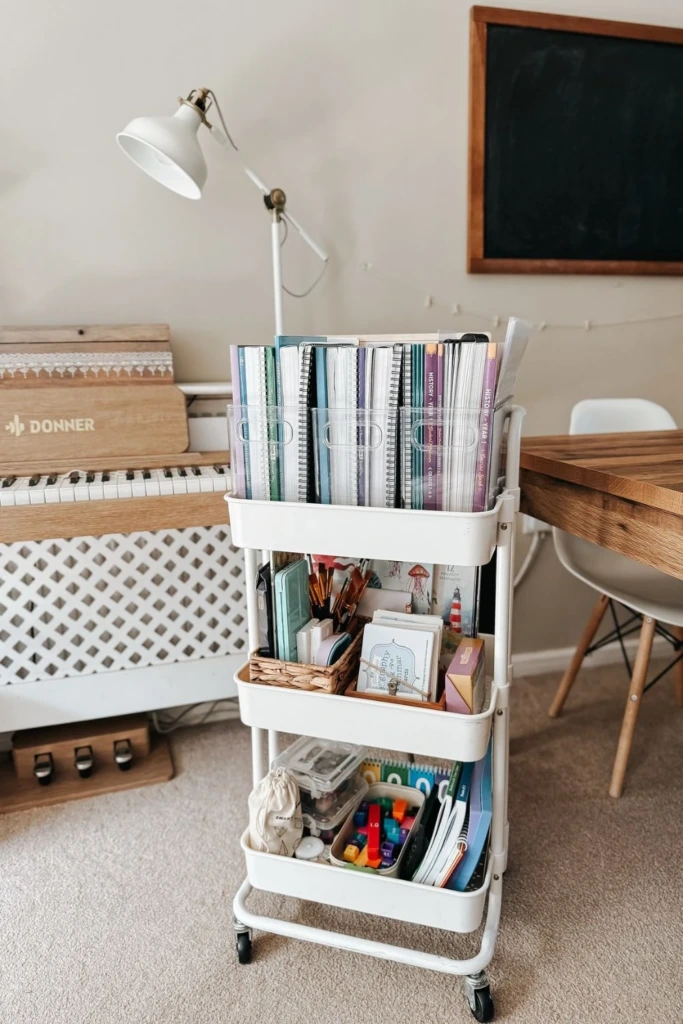
A rolling supply cart is a flexible option for households or classrooms where studying happens in different locations. Its multiple levels can hold notebooks, workbooks, markers, calculators, paper, and craft supplies.
Use upright holders for books and folders, then place smaller items in baskets or divided containers. Label each section according to its contents so the cart stays organized even when several people use it.
A mobile cart can move between a homework desk, dining table, and craft area as needed. When work is finished, roll it back to a designated parking spot to keep shared surfaces clear.
For safety, choose a stable cart with suitable wheels and avoid overloading its shelves. Frequently used supplies should be accessible without having to move heavy containers.
12. Paper Stations
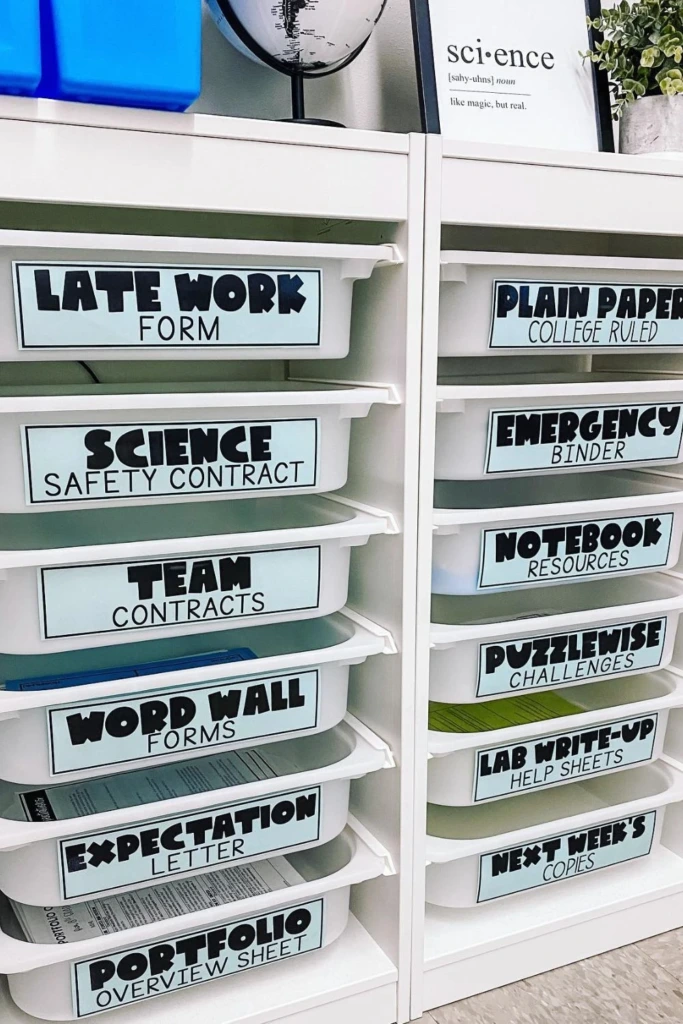
A paper station gives school documents a predictable home. Use separate trays or labeled compartments for blank paper, worksheets, forms awaiting completion, finished assignments, and documents that need to be returned to school.
In a classroom, these stations can be placed near the teacher's desk or along a wall where students can reach them independently. At home, a small desktop organizer can perform the same function.
Keep labels short and specific. For example, use categories such as "To Complete," "Ready to Submit," and "Blank Paper" rather than a single container for every document.
Review the station regularly and move completed paperwork to its proper destination. A paper station is most effective when it supports a clear workflow instead of becoming another place to accumulate clutter.
13. Memory Files
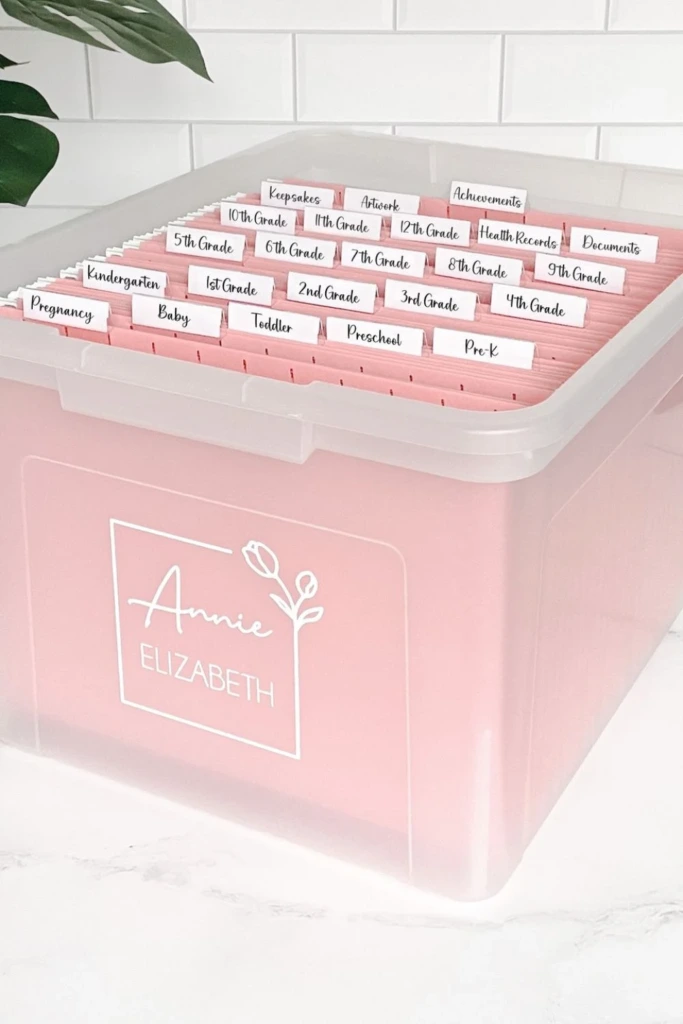
Memory files offer a practical way to preserve meaningful school documents without keeping every paper produced during childhood. Use a file box with folders for individual grades or important milestones.
Possible keepsakes include selected artwork, certificates, report cards, photographs of major projects, and notes that have personal significance. Label the folders clearly so materials can be retrieved years later.
Parents can add a few items throughout the school year rather than sorting an enormous pile at the end. A short description or date on special pieces can also help preserve the story behind them.
Store the box somewhere dry and secure. Keep essential administrative records separate from sentimental keepsakes so important documents remain easy to locate.
14. Paint Organizer
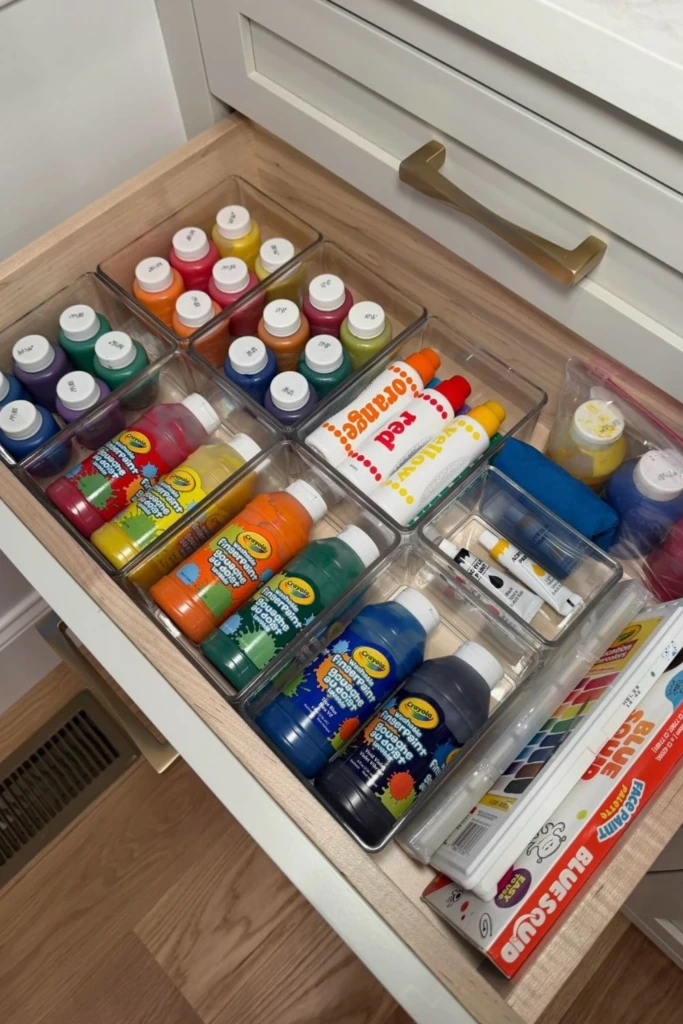
Paint, glue, brushes, and other art materials need storage that keeps them accessible while reducing spills and damage. Shallow trays, divided drawers, and small containers can separate supplies according to type.
Place paint bottles upright in a stable organizer and store brushes in a separate compartment where they can dry properly after cleaning. Keep lids securely closed and check products occasionally for leaks, drying, or expiration instructions.
An art drawer can be arranged by activity, such as painting, drawing, or general crafts. This makes it easier to gather everything needed before starting a project and return supplies afterward.
Store paints and craft products according to their labels, particularly when young children use the area. Potentially hazardous materials should remain out of children's unsupervised reach.
15. Book Bins
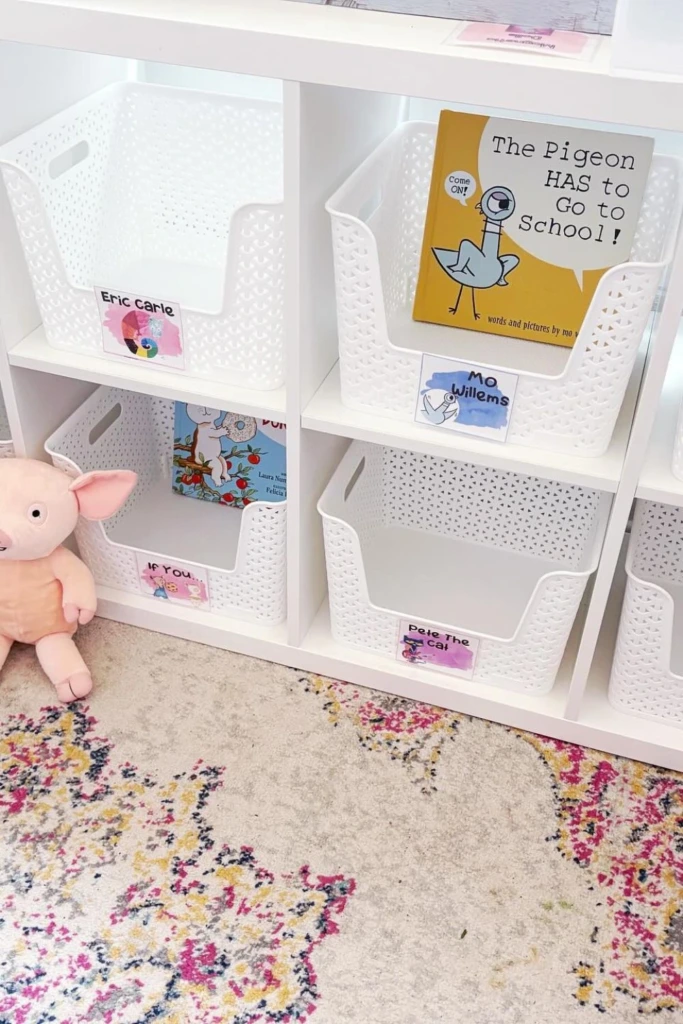
Book bins help classroom libraries and home reading corners remain orderly. Separate books by subject, reading level, author, series, or genre, depending on the needs of the readers.
Open baskets or cube-shelf containers allow children to browse without pulling apart an entire shelf. Add simple labels or picture symbols so younger readers can recognize the correct category.
For frequently borrowed books, a separate return bin can prevent them from being misplaced. Students can place finished books there before an adult or classroom helper returns them to their proper sections.
If children are still learning to read, display a selection with front covers facing outward. This makes choosing a book easier and can encourage independent reading.
16. Station Cubes
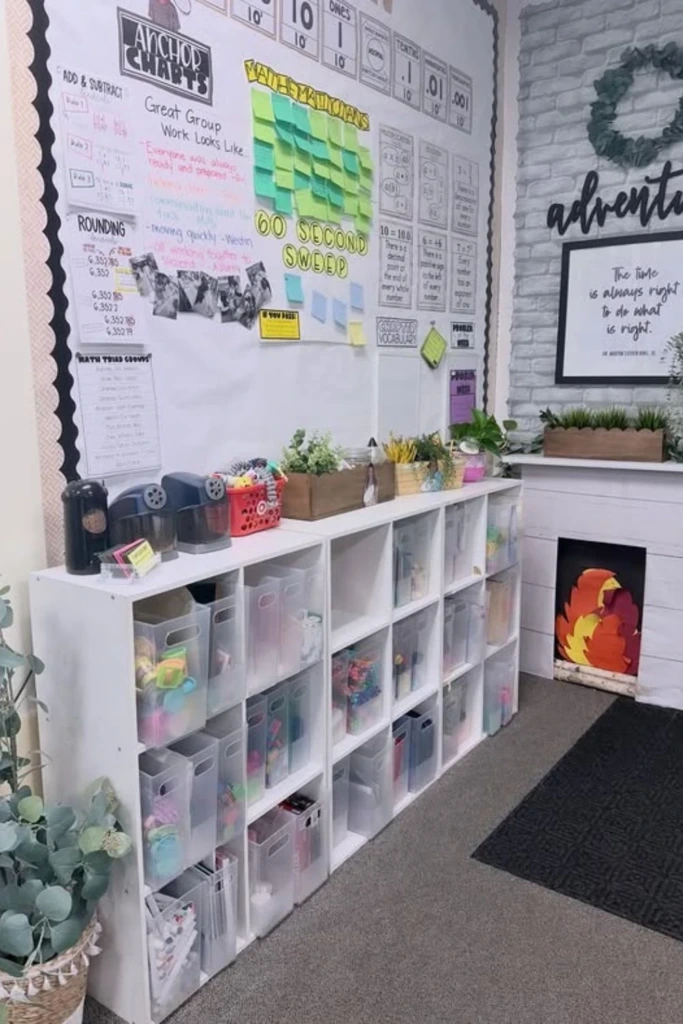
Station cubes are useful for classrooms that rotate between different learning activities. Each compartment can hold the materials required for one center, such as mathematics games, reading exercises, writing practice, puzzles, or hands-on science tasks.
Use labeled bins that fit securely within the shelving unit. Prepare each activity in advance so students can collect the correct materials without interrupting the lesson.
A well-planned station should contain only the items needed for that activity. This reduces the chance of mixing supplies from different centers and makes cleanup faster when groups rotate.
The same arrangement can work in a homeschool room or shared study area. Adjust the labels and contents to match the age of the learners and the activities they complete most often.
17. Activity Kits
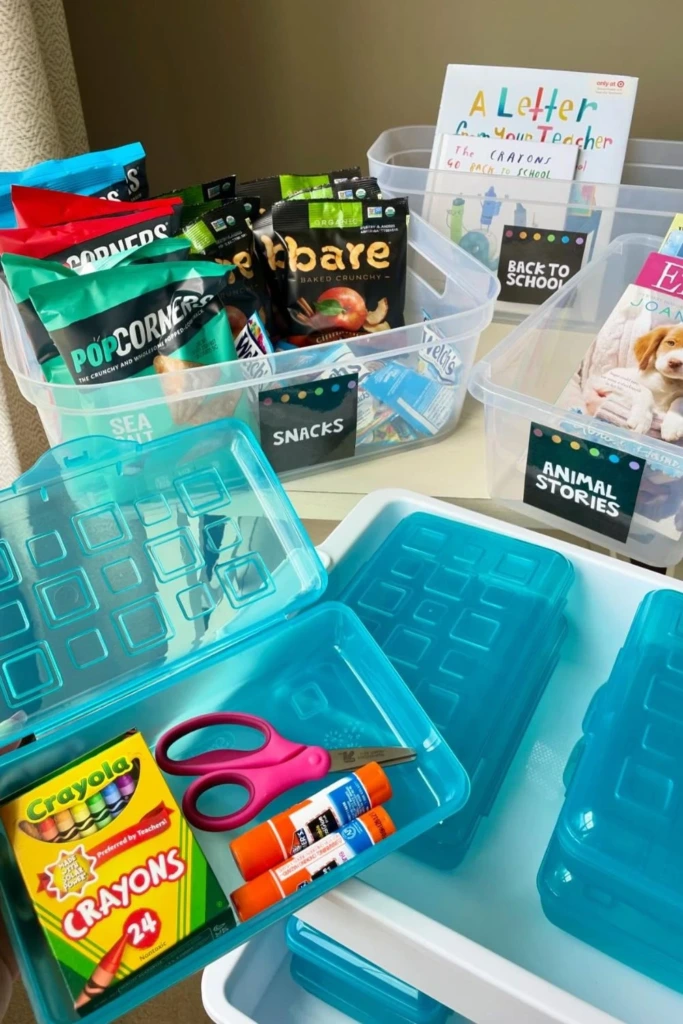
Activity kits keep frequently used supplies together in ready-to-use packages. Instead of collecting individual items every time a task begins, prepare small containers for specific lessons or projects.
A basic kit might contain pencils, crayons, an eraser, a glue stick, and child-safe scissors. Other kits could be designed for handwriting practice, geometry, painting, or simple science experiments.
Use containers that are easy to open and large enough to hold the materials without forcing them inside. Label each kit by subject or activity, and check its contents after use.
Teachers can prepare several identical kits for group tables, while families can keep a few near the homework station. This method saves preparation time and helps students become more independent.
18. Weekly Files
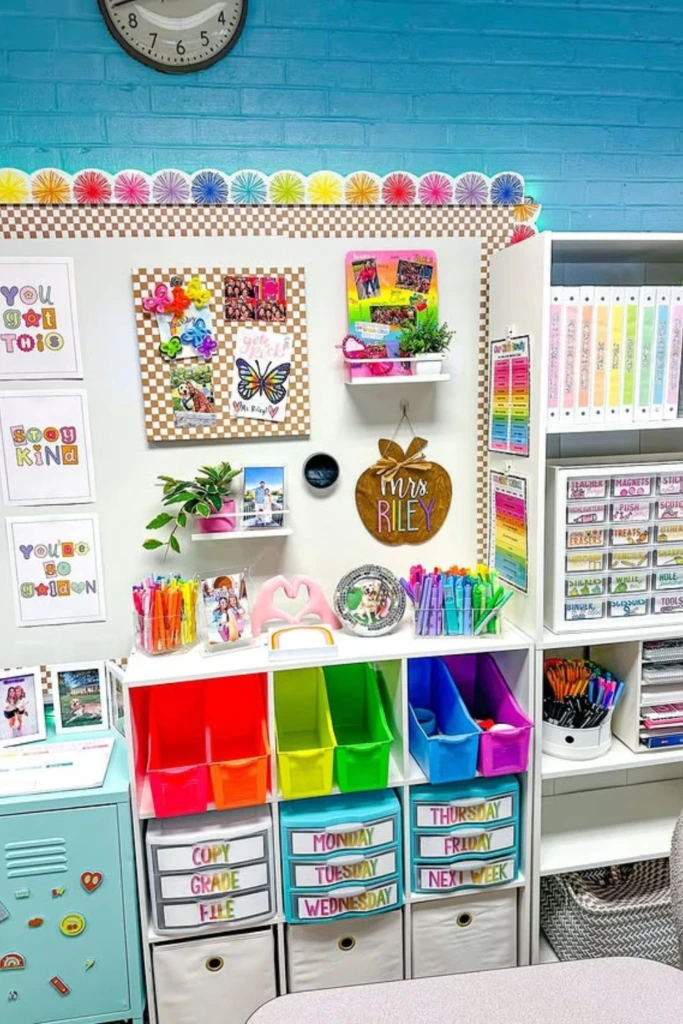
Weekly files provide a straightforward way to prepare school materials ahead of time. Use five folders or compartments labeled for the weekdays, then place the appropriate worksheets, lesson plans, reading materials, or classroom handouts in each section.
Teachers can prepare the folders during planning time, while students can use the same system to organize assignments that need attention on specific days.
For personal study, a separate folder for each subject may be more useful than a weekday arrangement. The important point is to choose categories that match the way the student actually works.
Review the files at the start of the week and remove completed papers regularly. Pairing the system with a planner makes it easier to see both upcoming deadlines and the materials required for each task.
19. Clear Containers
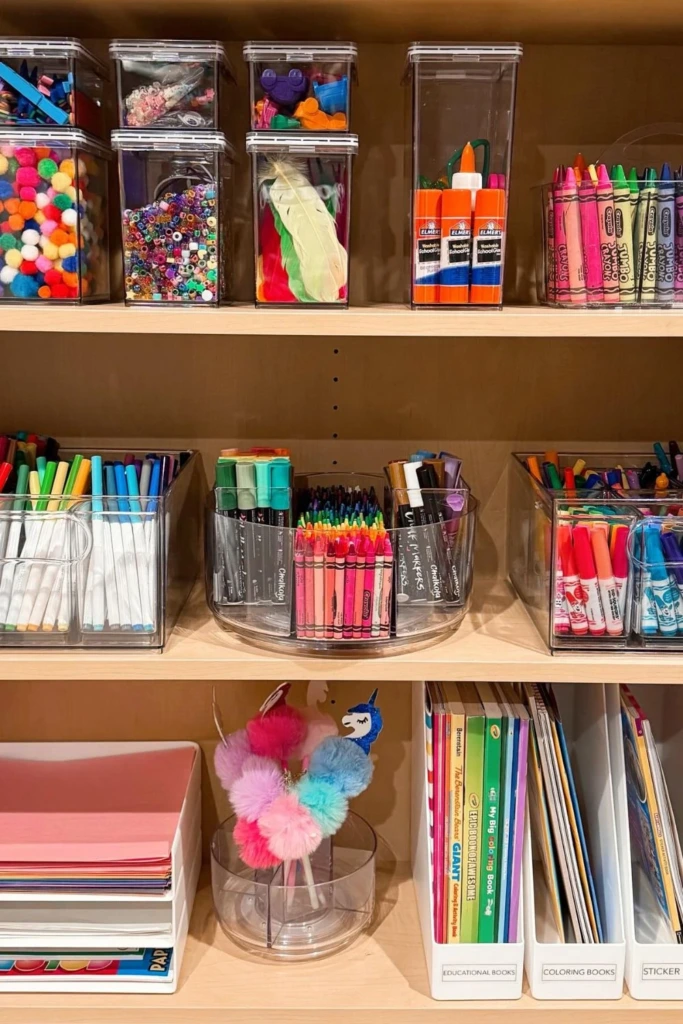
Transparent storage containers make it easier to identify supplies without opening every box. They work well for markers, glue sticks, beads, flashcards, building pieces, and other small classroom materials.
Choose different container sizes for different categories, and use lids when items need protection from dust or accidental spills. A short label on the front can still be helpful when several containers look similar.
Arrange the containers on accessible shelves or inside a cabinet. Put frequently used materials where students can reach them safely and keep rarely used items higher up.
Clear bins are particularly convenient for art rooms and homeschool areas because they make both finding supplies and returning them easier. Avoid filling containers beyond their capacity, as overcrowding can make cleanup more difficult.
20. Supply Categories
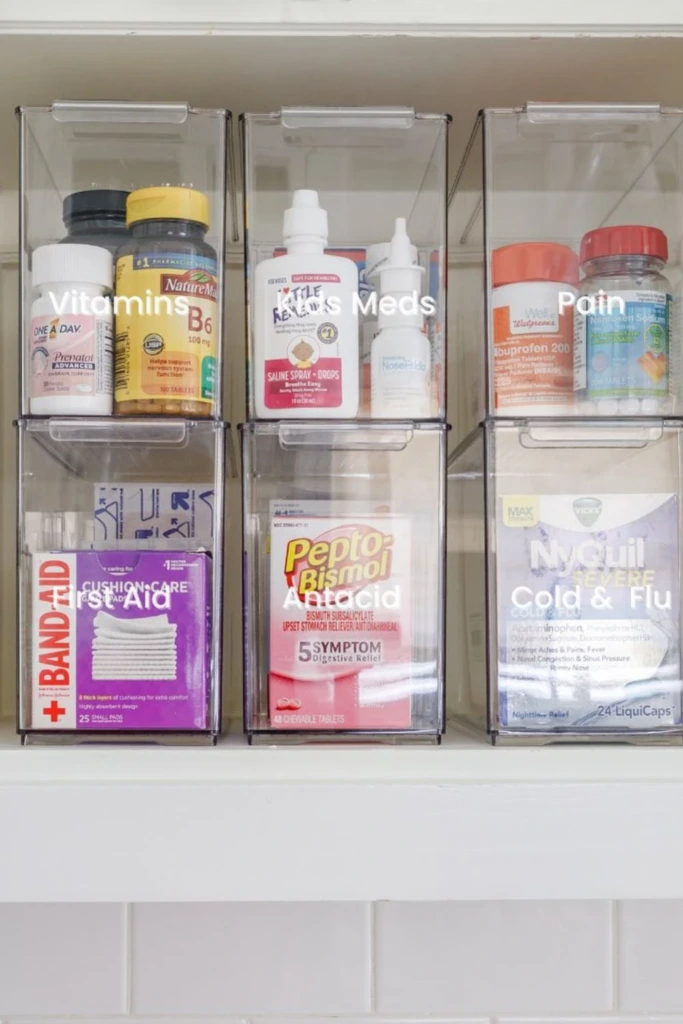
Grouping supplies into clear categories helps students and teachers locate everyday essentials quickly. Instead of mixing unrelated items together, create separate sections for writing tools, paper products, craft materials, cleaning supplies, and other resources appropriate to the space.
In a classroom, labeled baskets can hold pencils, erasers, markers, glue, and rulers. Larger containers can be reserved for subject-specific resources or materials used during group activities.
Use labels that are easy for the intended age group to recognize. Picture labels may help younger children, while older students may prefer written categories.
This idea also works for school-related items stored at home, including lunch accessories, stationery refills, and project supplies. If medicines or first-aid products are stored nearby, keep them in a separate, appropriately secured area rather than mixing them with classroom materials.
21. Group Files
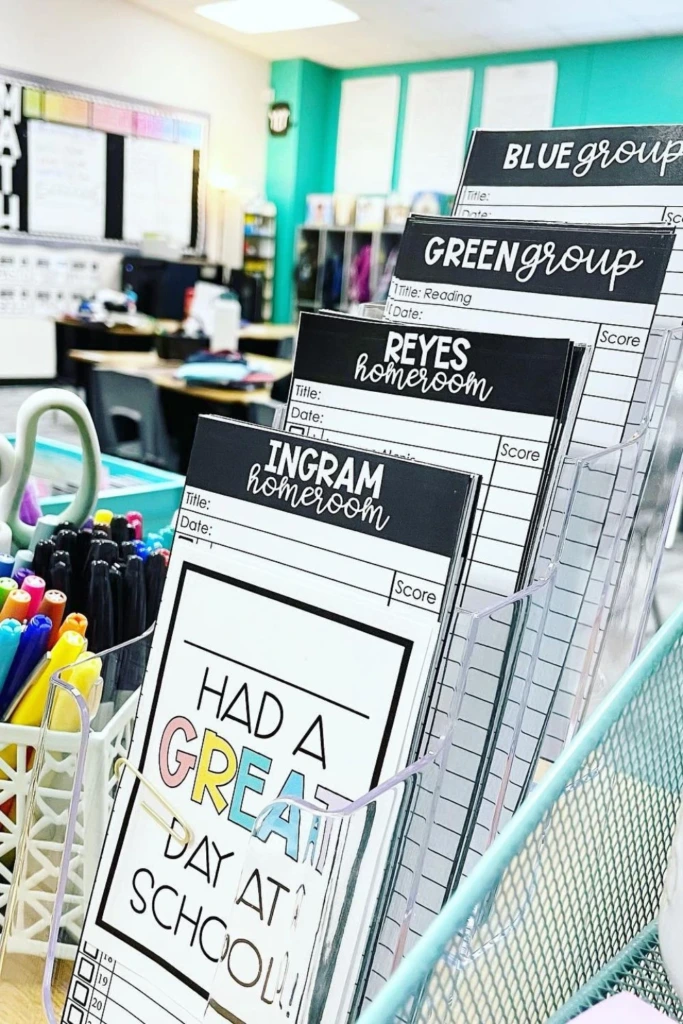
Teachers handling several classes or learning groups can use group files to keep paperwork separated. Assign a dedicated file holder to each class, reading group, or student team.
These files can contain attendance sheets, progress records, reading logs, activity instructions, and documents awaiting review. Vertical organizers help papers remain upright and make the appropriate section easy to identify.
Label each file clearly and establish a routine for adding new documents and removing completed ones. If paperwork contains confidential student information, store it securely and restrict access to authorized individuals.
This method is particularly helpful during small-group instruction, when teachers need to retrieve the right set of materials without searching through mixed piles on a desk.
22. Supply Zones
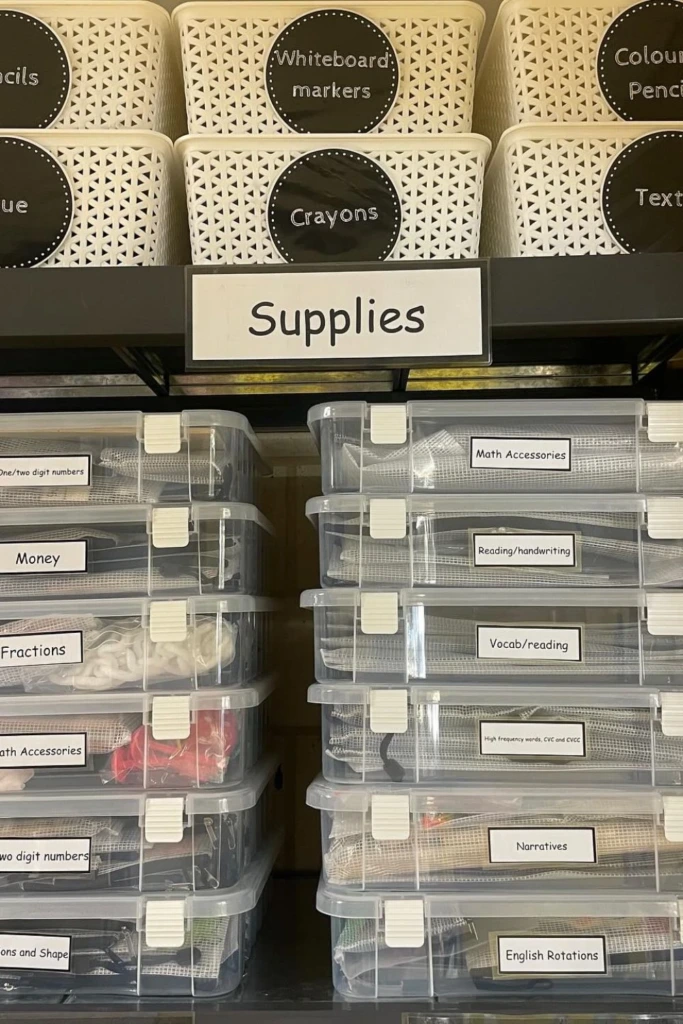
Supply zones divide a classroom or study room into practical areas based on how materials are used. One section might contain writing supplies, another could hold art materials, and a third could store resources for mathematics or reading.
Use baskets, shelf dividers, and labeled containers to establish these zones. Keep everyday essentials close to the work area and place occasional-use materials in less accessible storage.
A classroom might also have separate locations for completed assignments, items waiting to be graded, and materials ready for the next lesson. This creates a more predictable flow of work throughout the day.
Keep each zone focused on a small number of related categories. Too many overlapping sections can make the arrangement confusing, so adjust the layout whenever students struggle to identify where something belongs.
23. Rolling Drawers
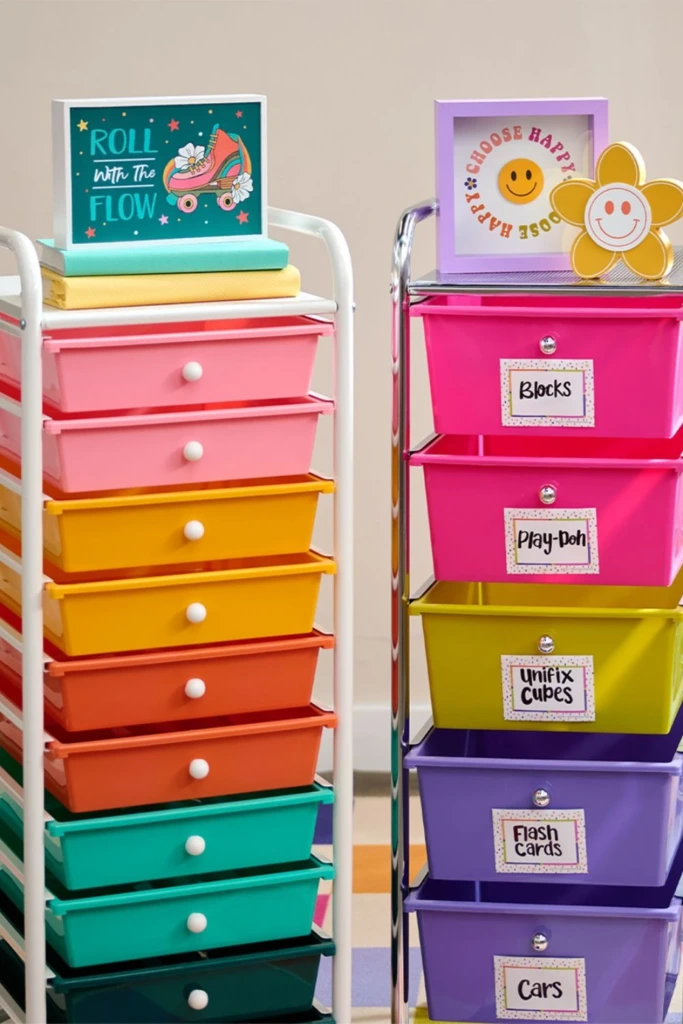
Rolling drawer units make it possible to transport learning materials around a classroom without carrying several separate boxes. Each drawer can hold a different activity or supply category, including flashcards, building blocks, puzzles, modeling materials, or worksheets.
Label the front of each drawer and return its contents to the same place after every session. Teachers can move the unit between learning centers, group tables, and activity corners as needed.
Choose a cart with smooth-rolling wheels and drawers that open easily. Heavier materials should be stored low to improve stability, and the wheels should be locked when the cart is stationary if locking mechanisms are available.
Rolling drawers are especially useful for flexible learning spaces where one room serves several purposes throughout the day.
What is the easiest way to keep school supplies organized throughout the year?
Start by separating supplies into a few broad categories, such as stationery, notebooks, worksheets, art materials, and textbooks. Give each category a designated container, drawer, shelf, or folder.
Labels make the arrangement easier to maintain, especially when multiple students share the same space. Keep frequently used materials within reach and store seasonal or occasional-use items elsewhere.
The next step is establishing a simple reset routine. Spend a few minutes each day returning supplies to their designated locations and reviewing loose paperwork. Periodically remove broken, duplicated, or unnecessary items so storage doesn't become overcrowded.
How can students stay organized without buying expensive storage tools?
Students can create effective organization systems using supplies they already have at home. Reused boxes, clean food containers, paper folders, envelopes, and sturdy baskets can separate materials without requiring specialized organizers.
Write subject names on folders, reuse small boxes to group stationery, and designate one place for assignments that need to be completed or submitted. A notebook or free digital calendar can track deadlines and upcoming tests.
The most important step is making the system easy to follow. Students should be able to find their materials quickly and return them without extra effort. Begin with one area, such as a backpack or desk, and gradually apply the same habits to the rest of the study space.