12 DIY Acrylic Paint Storage Ideas for 2026
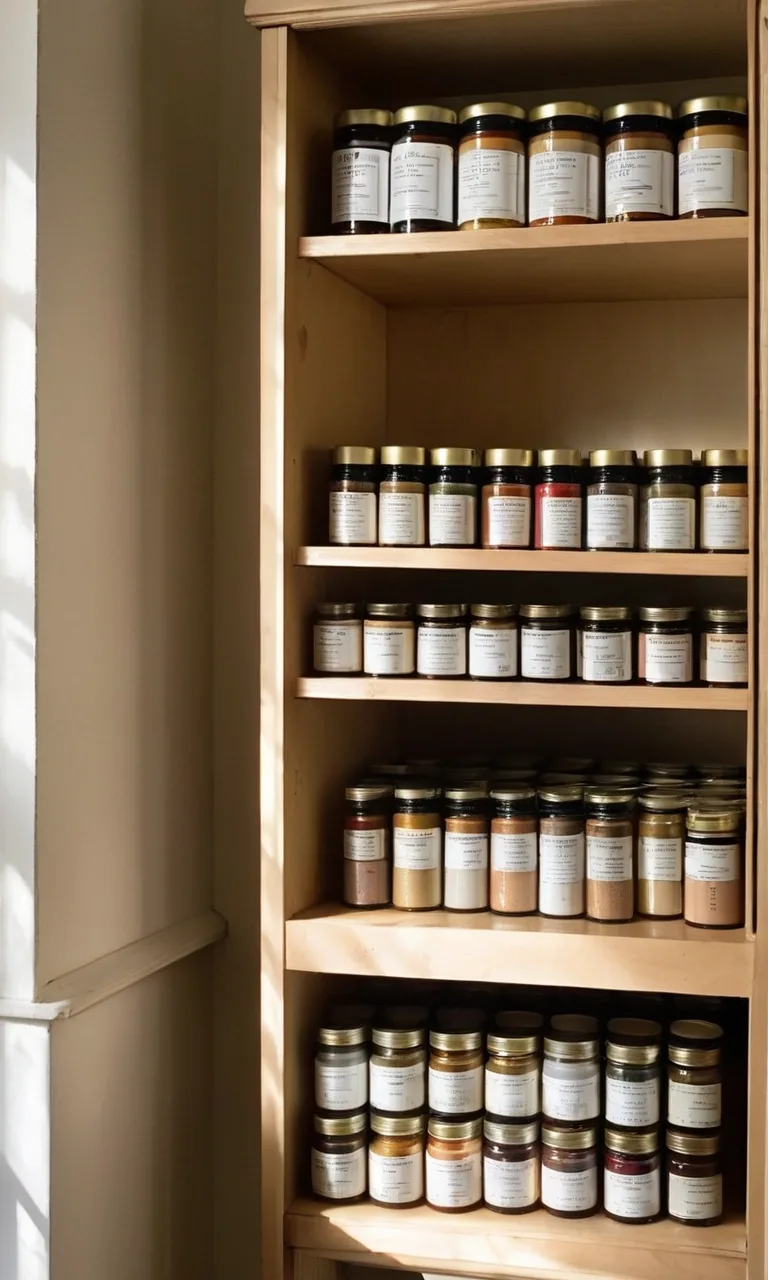
Keeping acrylic paints organized makes every creative session easier. When your colors are easy to find, you spend less time searching through bottles and more time painting. Fortunately, you don't need expensive storage furniture to create a functional art station.
With a few affordable supplies, such as plywood, PVC pipes, wire grids, or repurposed household organizers, you can build a storage system that fits your collection and available space. Whether you work at a dedicated art desk or in a small corner of your home, the right arrangement can keep your paints accessible and your workspace tidy.
Below are 12 practical DIY acrylic paint storage ideas to help you organize your supplies in 2026.
How Long Do Acrylic Paints Last Once Opened?
Opened acrylic paints can remain usable for several years when stored correctly, although their lifespan depends on the formula, container, and storage conditions. Because acrylic paint contains water, exposure to air can gradually cause moisture loss, leaving the paint thick, difficult to squeeze out, or completely hardened.
To preserve your collection, close every cap securely after use and remove dried paint from the bottle opening before replacing the lid. Store your paints in a dry location with a reasonably stable temperature, away from direct sunlight, radiators, and other heat sources. Avoid places that experience extreme temperature changes, such as an uninsulated attic or shed.
Check older bottles before using them. A strong, unpleasant odor, persistent clumps, or a texture that cannot be restored by mixing may indicate that the paint has deteriorated. Some separation can be normal, so follow the manufacturer's guidance when assessing a particular product.
Good storage habits help maintain paint consistency, reduce waste, and keep your favorite colors ready whenever inspiration strikes.
1. PVC Paint Hive
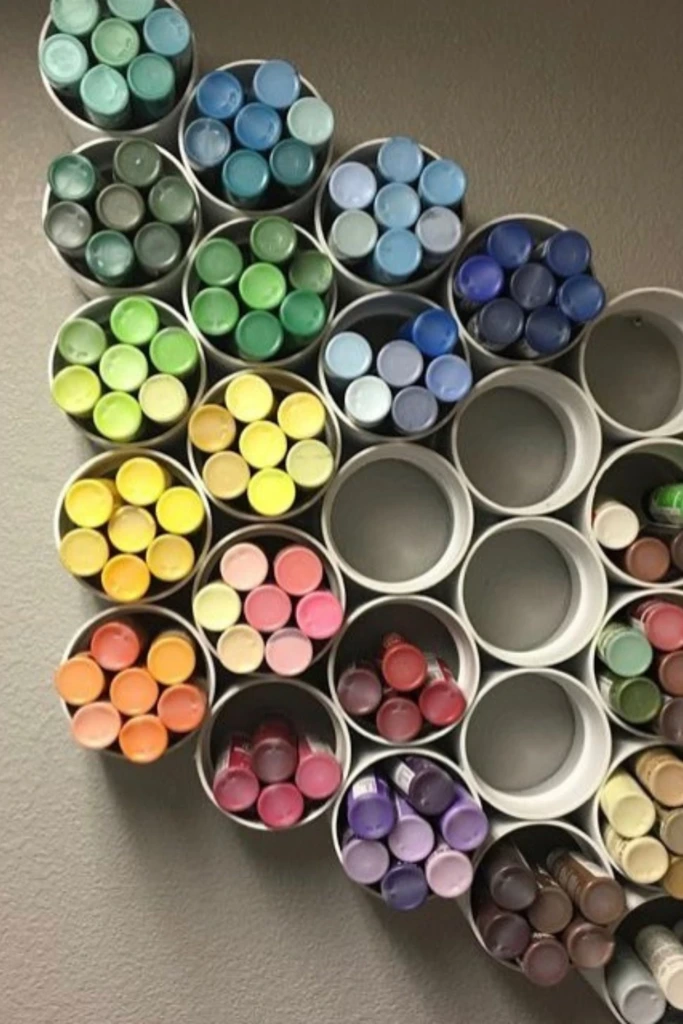
A PVC paint hive is an excellent option for artists who want to use vertical wall space instead of filling their desks with bottles. The individual compartments keep colors separated while creating an attractive geometric display.
To make one, cut wide PVC pipe into short sections that fit your paint containers. Arrange the pieces into a honeycomb pattern and secure them together with an appropriate adhesive. Once the structure is stable, attach it to a wall using suitable mounting hardware.
Measure your bottles before cutting the pipes to ensure they fit comfortably. This organizer works particularly well for small craft rooms because you can see several colors at once without occupying valuable tabletop space.
2. Floating Paint Shelves
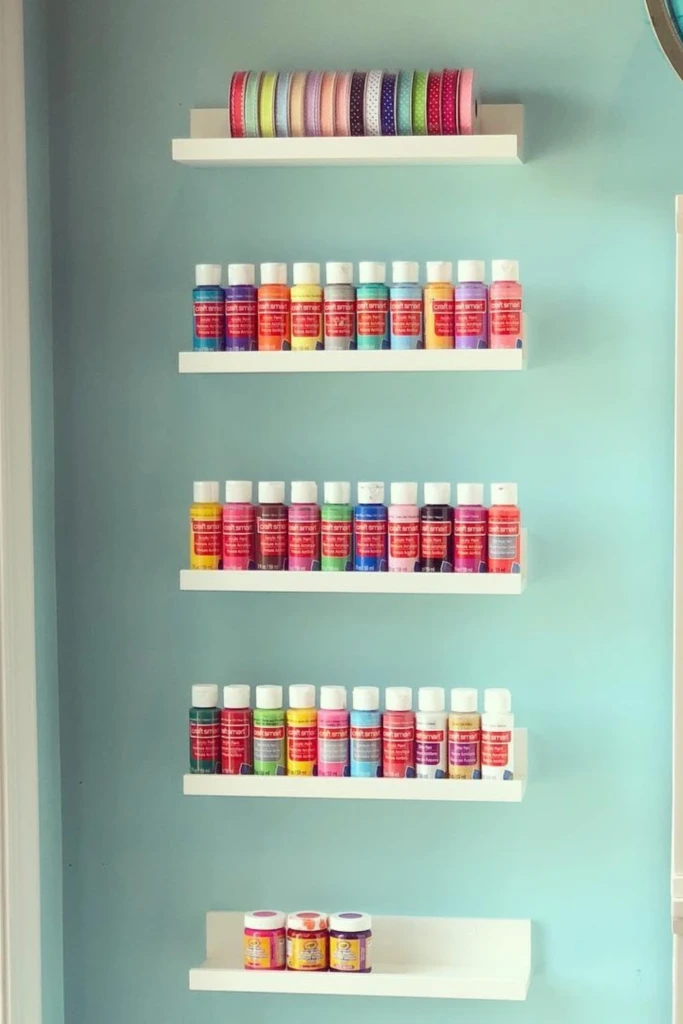
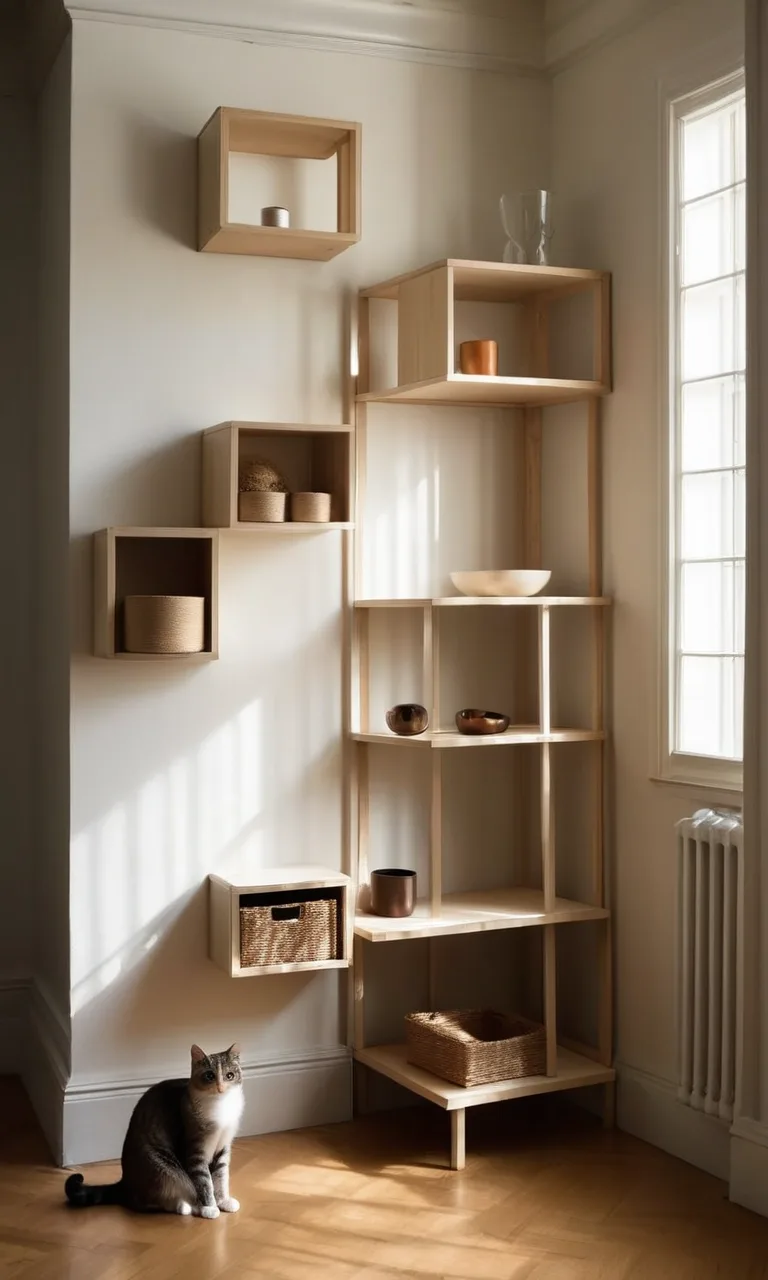
Floating shelves provide a simple way to display acrylic paints while keeping them within easy reach. They are especially useful in compact studios where floor space is limited and a large storage cabinet would feel overwhelming.
Install narrow picture ledges or shallow shelves above your worktable. Arrange bottles by color family, brand, or frequency of use to make selection quicker. If your collection includes small dropper bottles, choose shelves with a raised front edge to help prevent them from slipping.
You can build the shelves from inexpensive timber, sand the surfaces, and finish them to complement your existing furniture. Keep the installation level and use wall anchors appropriate for the wall material and expected load.
3. Grid Bottle Rack
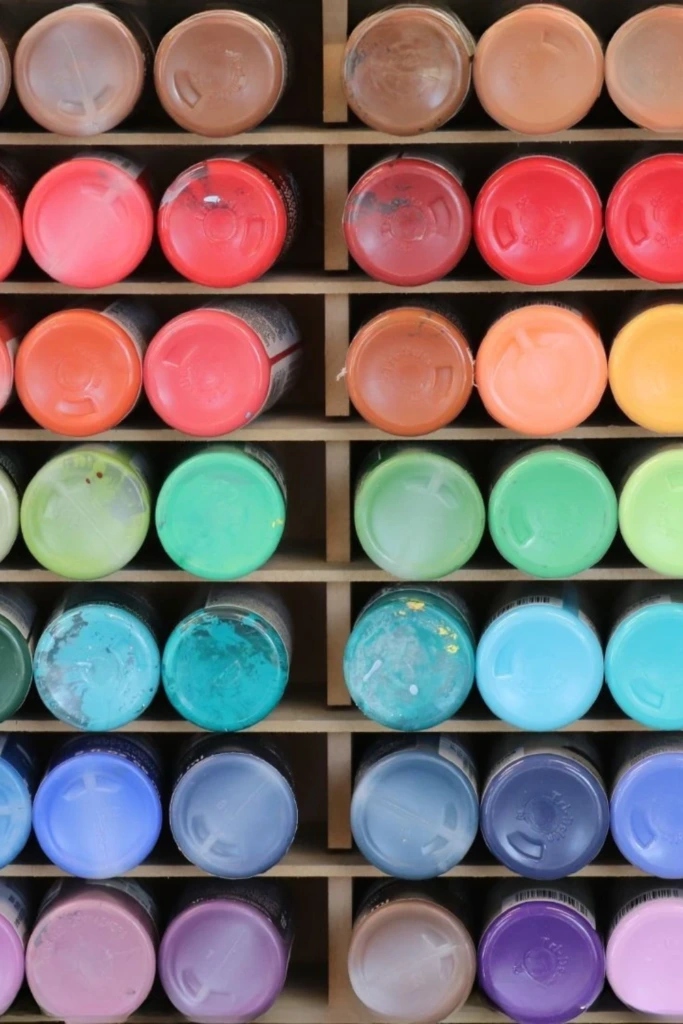
A grid bottle rack gives every container its own designated space, making a large collection easier to manage. Instead of stacking paints in boxes, you can arrange them in rows and immediately identify the shades you need.
Build a wooden frame and divide the interior into individual compartments using thin plywood strips or precut craft-board dividers. Adjust the width and height of each section to accommodate your preferred paint bottles.
Sort the rack by color families, such as yellows, reds, blues, greens, and neutrals. You can also reserve a separate section for metallic paints or frequently used colors.
This design is suitable for a desktop, workbench, or sturdy shelf. Sand exposed edges carefully, and make sure the frame is strong enough to support the combined weight of your paint collection.
4. Tilted Wire Racks
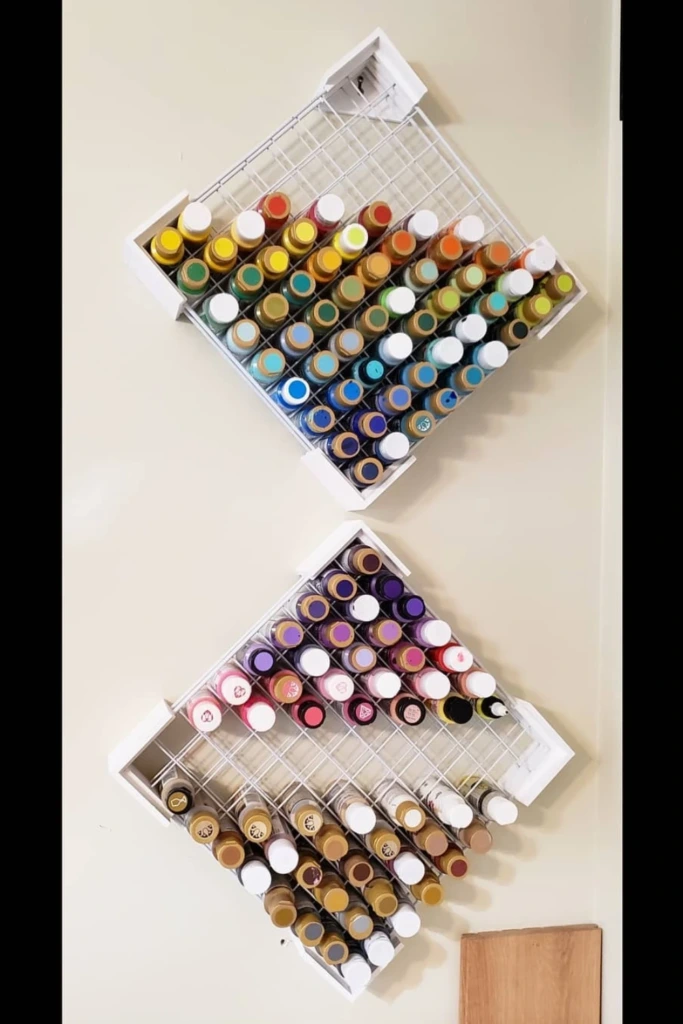
Tilted wire racks make it easier to identify paint colors at a glance. By positioning the bottles at an angle, you can bring their caps or labels into view without repeatedly lifting containers from the shelf.
Create this setup using wire storage racks, suitable brackets, and secure wall fasteners. Position the shelves so the bottles remain stable and cannot slide forward. If necessary, add a retaining lip or another appropriate barrier along the front edge.
This arrangement is particularly useful above a narrow desk or in a small studio where conventional shelves would consume too much room.
Before loading the rack, test its stability and weight capacity. Keep heavier containers on lower shelves and arrange smaller bottles where they can be reached comfortably.
5. Rustic Cubby Shelf
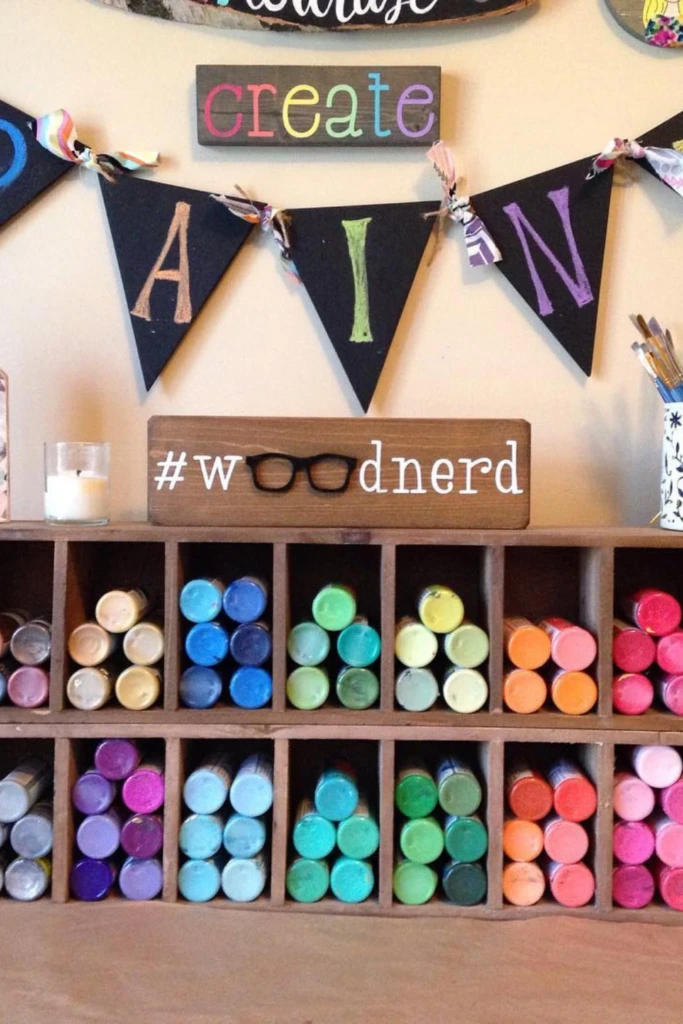
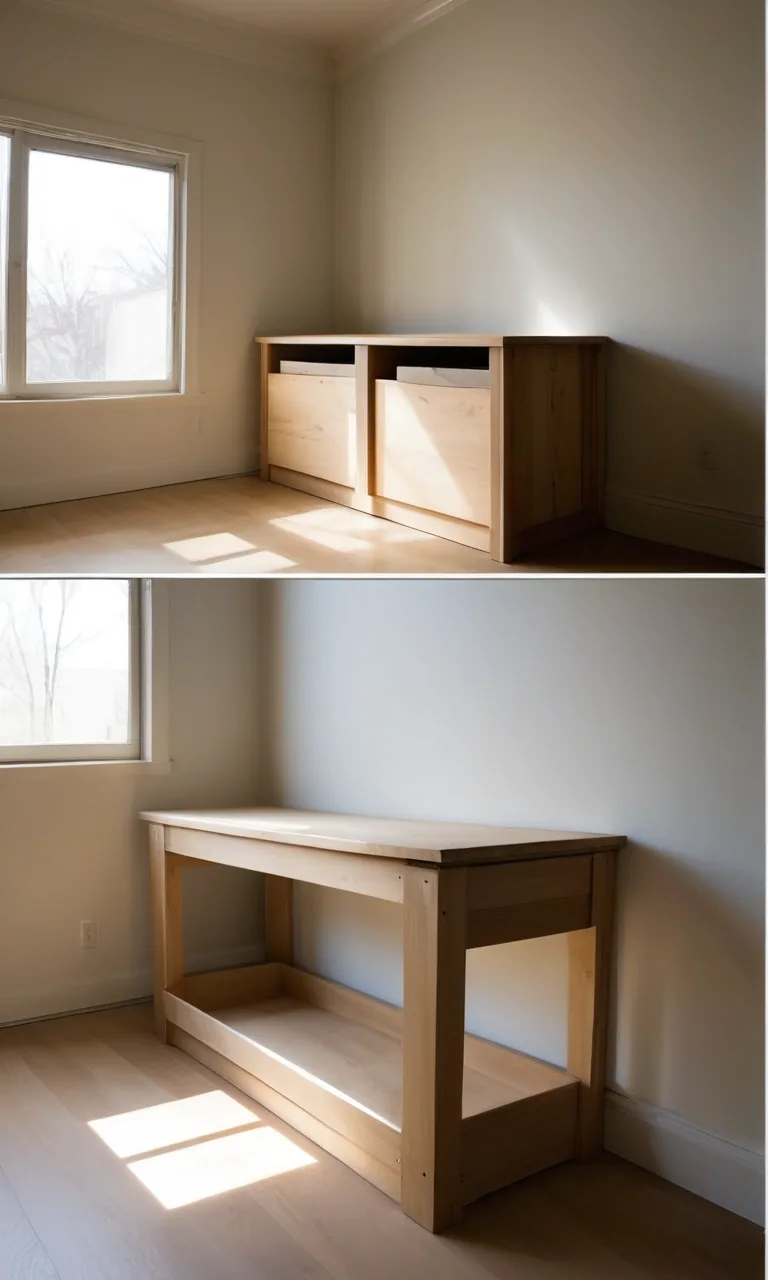
A rustic cubby shelf combines practical paint storage with a handmade appearance. Its individual compartments keep bottles organized while adding a warm, workshop-inspired touch to your art space.
You can construct the organizer from plywood or reclaimed timber. Cut the material into a rectangular frame, then add horizontal and vertical dividers to create compartments sized for your bottles. Sand the edges and apply a suitable finish if you want to protect the wood and improve its appearance.
Place the completed unit on a stable workbench, sideboard, or shelving unit. Group similar shades together so you can locate specific colors quickly.
This design is easy to customize as your collection grows. You can make a compact version for a beginner's supplies or build a wider unit for an extensive collection of acrylic paints.
6. Tiered Wall Rack
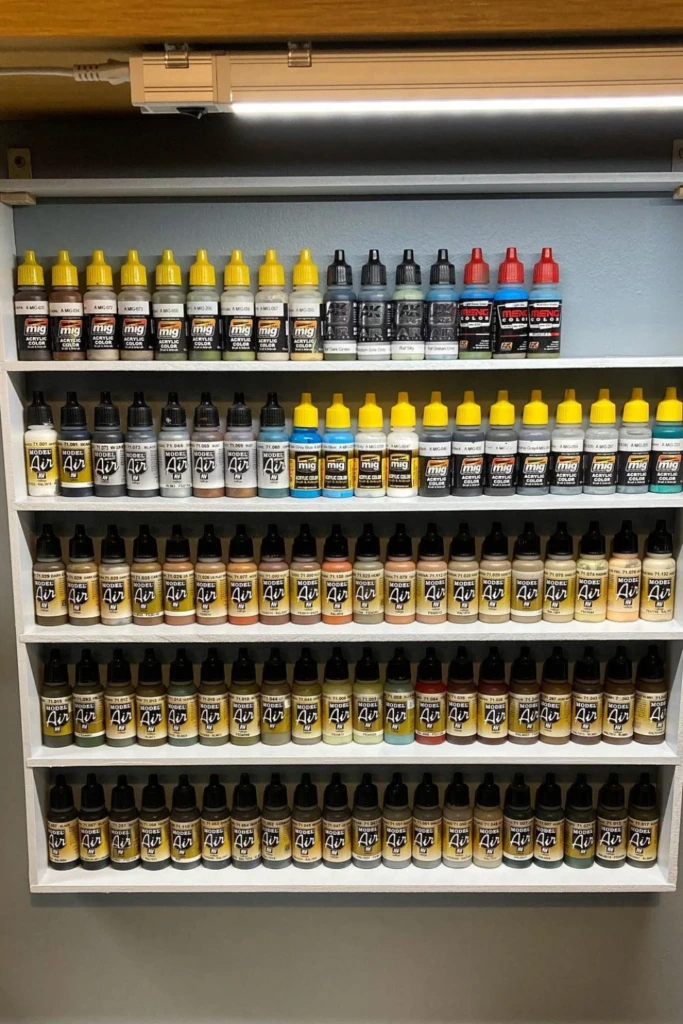
A tiered wall rack is ideal for artists who have many small paint bottles but limited desk space. Multiple shallow shelves allow you to organize different color groups while keeping most containers visible.
Build the rack using timber boards attached to a sturdy frame, or repurpose suitable ready-made shelving. Space the tiers far enough apart to accommodate your tallest bottles and leave enough room to remove them without difficulty.
For a convenient arrangement, place frequently used colors at eye level and less commonly used shades on the upper or lower shelves. You can also label each section to make the system easier to maintain.
Secure the structure to wall studs or use suitable anchors based on the wall construction and rack weight. A properly installed tiered organizer can hold a substantial collection without crowding your main painting surface.
7. Cabinet Door Shelves
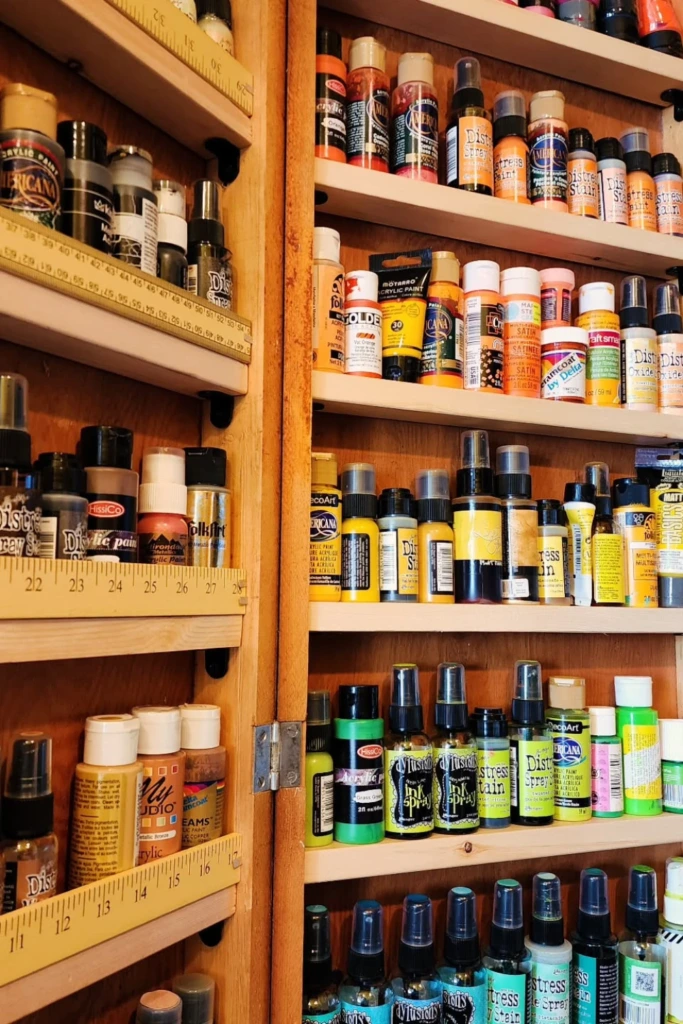
Cabinet door shelves are a clever solution when your room has little free wall space. By using the inside of a cupboard door, you can create extra storage without adding another piece of furniture.
Attach narrow wooden rails or appropriately sized storage ledges to the interior of the door. Arrange the paint bottles in a single layer, making sure the shelves do not interfere with the cabinet's hinges, closing mechanism, or contents.
Measure the available depth before installing anything. The organizer should allow the door to close fully without pressing against the bottles.
This idea works well in craft closets, multipurpose rooms, and shared workspaces where you prefer to keep supplies out of sight. It also helps protect paint containers from unnecessary exposure to dust and direct sunlight.
8. Grid Wall Holder
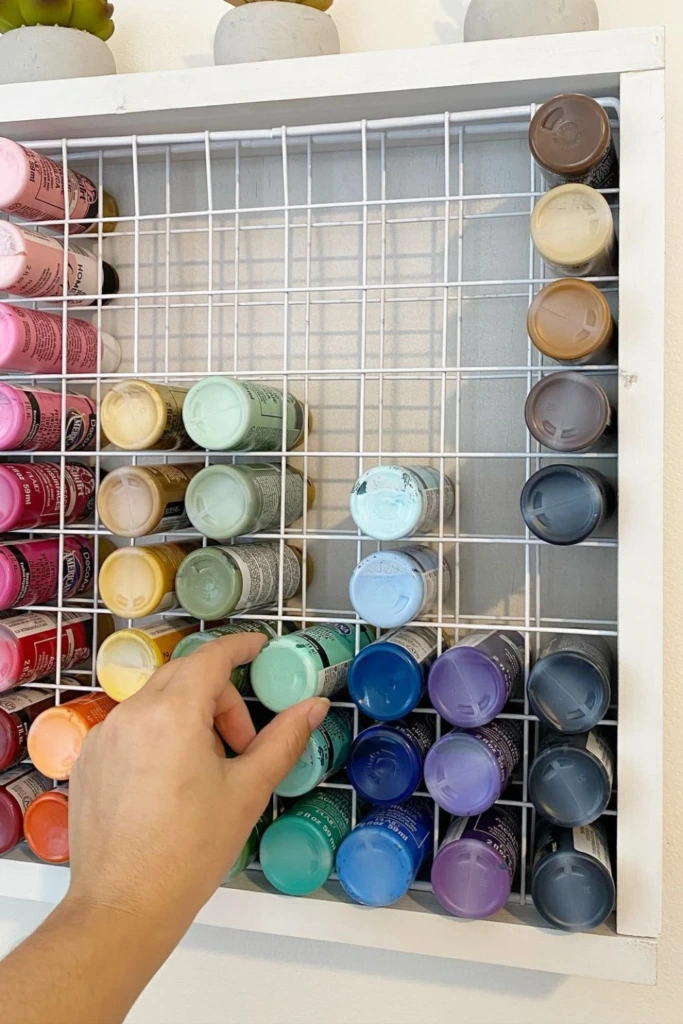
A grid wall holder offers flexible storage for artists who want their paint collection displayed in a compact area. Its open structure makes individual bottles easy to see and retrieve.
To create the organizer, fit a sturdy wire grid inside a wooden frame or mount a suitable grid directly to the wall. Use compatible holders, small shelves, or secure bottle supports to keep the containers in place rather than relying on grid openings that may be too large.
Arrange your paints in rows, grouping similar colors together. The open design also leaves room to attach small accessories, provided the added weight remains within the system's capacity.
This solution is particularly useful in narrow corners or above a dedicated painting desk. Check all mounting points regularly, especially when the organizer carries numerous bottles.
9. Rotating Tray Stand
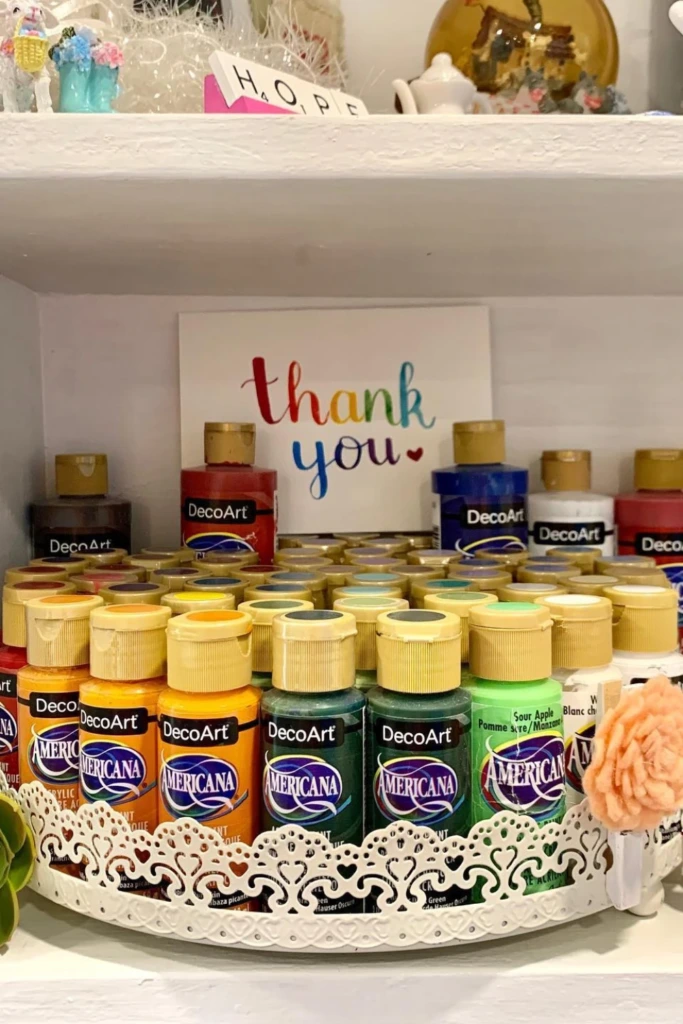
A rotating tray stand makes it easy to reach paints without moving several bottles around. By turning the base, you can bring the color you need directly in front of you.
Start with a circular tray that has raised edges and enough room for your containers. Place it on a stable, appropriately rated lazy Susan turntable, ensuring the base rotates smoothly and remains level.
Arrange the bottles around the tray according to color, size, or how often you use them. Keep heavier containers toward the center if doing so improves stability, and avoid overloading the rotating mechanism.
This organizer is ideal for desks, compact workstations, and shelves with limited depth. You can make one from a repurposed serving tray or construct a custom version that matches your studio decor.
10. Wall Grid System
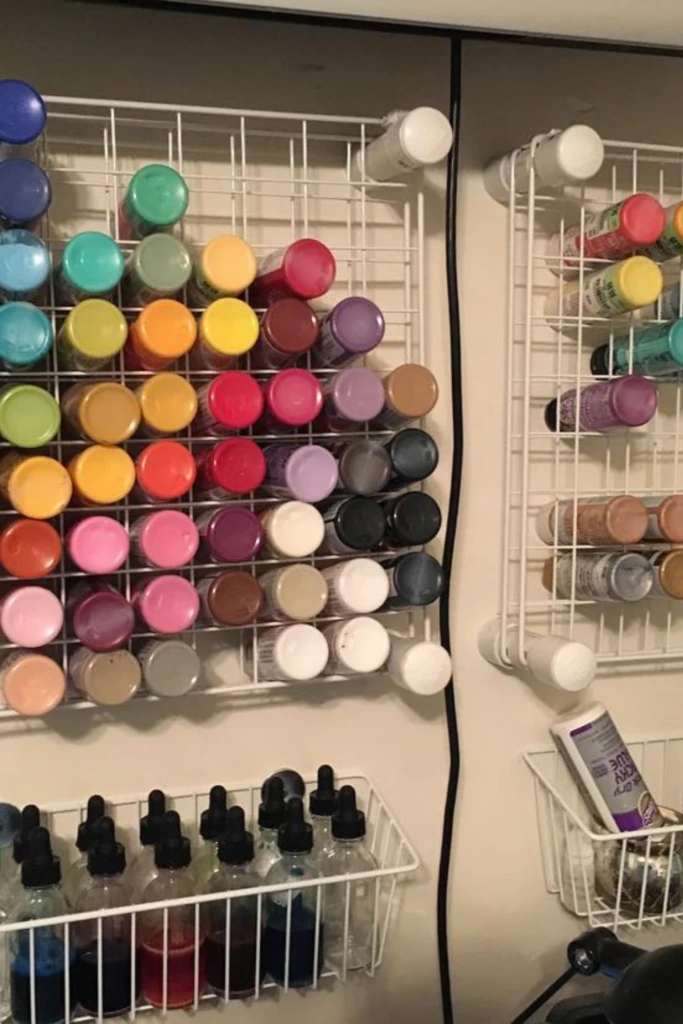
A wall grid system is a versatile choice for artists who want storage that can evolve alongside their collection. Unlike fixed compartments, a grid allows you to reposition compatible shelves, hooks, and baskets whenever your needs change.
Mount a suitable wire grid securely above your workstation. Add small shelves or purpose-built holders for acrylic paint bottles, then use baskets for brushes, adhesives, mixing tools, and other lightweight supplies.
Arrange the paints by shade so the entire collection is easy to scan. You can dedicate separate sections to different brands or keep your most frequently used colors within immediate reach.
One major advantage of this design is its adaptability. As you acquire new supplies, you can adjust the arrangement instead of rebuilding the entire organizer. Just make sure every accessory is securely attached and that the wall mounting can support the total load.
11. Pegboard Paint Wall
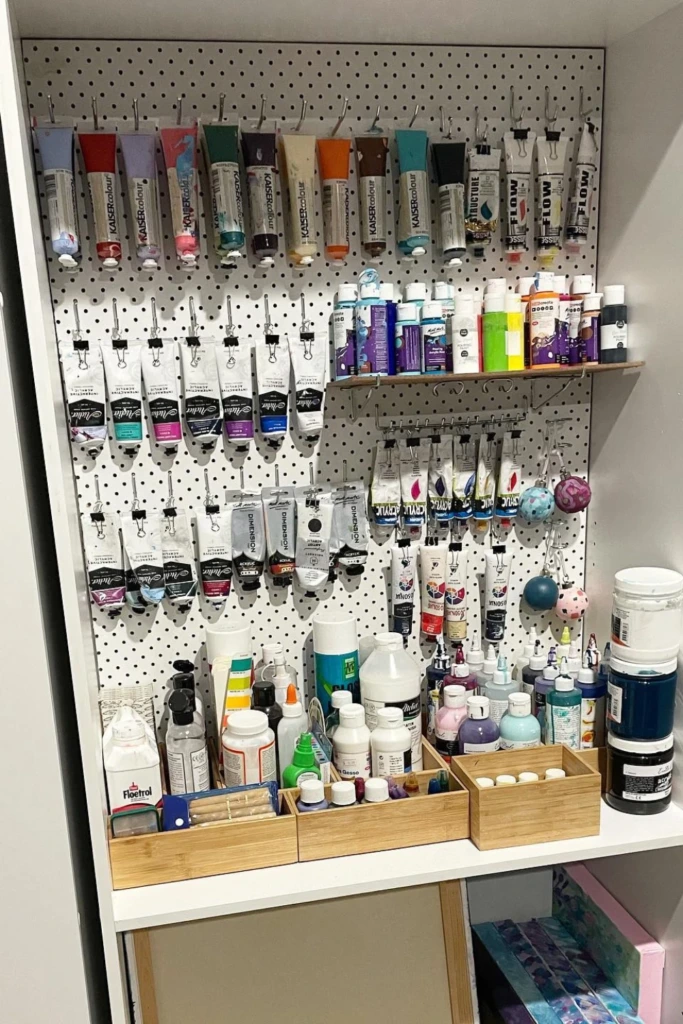
A pegboard paint wall creates a centralized storage area for paints and other art materials. Its combination of hooks, shelves, and containers makes it possible to organize different types of supplies without dedicating a separate cabinet to each one.
Install a sturdy pegboard using the appropriate mounting system, leaving enough clearance behind it for the hooks or fittings. Add a small shelf for paint bottles, hooks for suitable tools, and bins for brushes, palette knives, or other accessories.
Arrange items according to how you work. For example, keep frequently used paints near your mixing area and place less essential supplies toward the edges.
Pegboards are particularly useful in workshops, closets, and compact studios because you can rearrange the accessories as your collection changes. Choose hooks and shelves designed for your particular pegboard and avoid exceeding its weight capacity.
12. Hanging Pocket Organizer
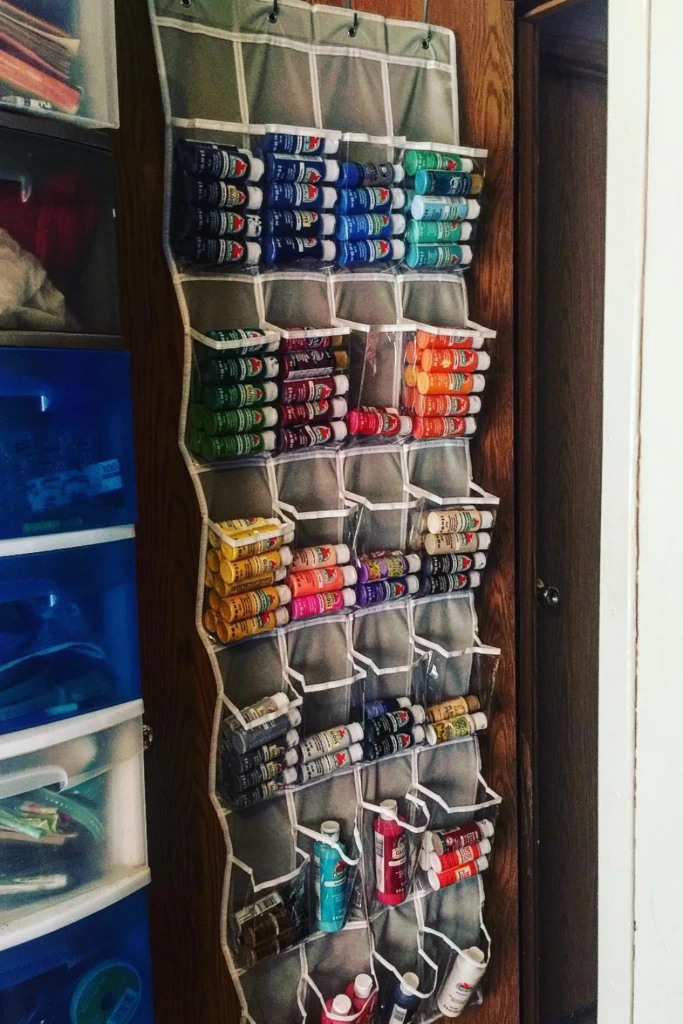
A hanging pocket organizer is a budget-friendly way to store acrylic paints when you have no spare desk or shelf space. Its vertical layout makes use of the back of a door, a closet, or another suitable hanging location.
Choose an organizer with transparent pockets that are large and strong enough for your paint containers. Sort the bottles by color and place them in separate pockets so you can identify the shades without removing everything.
Before filling the organizer, check its overall weight capacity and ensure the hanging hardware is secure. Keep bottles upright whenever possible, particularly if their caps are not completely leakproof. Avoid using pockets that stretch excessively or allow containers to tip over.
This option is especially useful for small apartments, shared craft rooms, and beginner art stations. When the organizer is not in direct sunlight and the bottles remain securely positioned, it can provide convenient storage without taking up valuable working space.
How do people store their acrylic paint?
Most artists store acrylic paints in a way that keeps the containers sealed, organized, and easy to access. A stable indoor location away from direct sunlight and extreme temperatures helps protect the paint from drying out prematurely.
Popular storage options include wall-mounted shelves, drawer organizers, pegboards, cubby racks, and tiered bottle holders. Artists with limited space may prefer hanging pocket organizers or rotating trays, while those with larger collections often use modular grids or dedicated shelving.
Grouping bottles by color makes it easier to find the right shade during a project. Labeling the caps can also help, particularly when the original labels are difficult to read.
For best results, keep lids tightly closed, clean dried paint from the openings, and follow the manufacturer's storage instructions. Choose an organizer that keeps the containers stable rather than one that simply looks attractive.
Is it better to store paint in metal or plastic?
For most acrylic paint collections, the original container is the best place to keep the paint. Many manufacturers package acrylic paints in plastic bottles or tubes designed to protect the contents when closed properly.
Plastic containers are lightweight, generally resistant to corrosion, and convenient for everyday craft use. However, not all plastics provide the same protection, and poor-quality containers may leak or allow moisture to escape.
Metal containers can also work when they are specifically designed for storing the product and have an appropriate protective lining. Uncoated or incompatible metal may corrode under certain conditions, so an ordinary metal container should not automatically be considered a suitable replacement.
If you need to transfer paint, choose a clean, compatible, airtight container and label it with the paint color and relevant product information. Avoid unnecessary transfers, as introducing air or contaminants can affect the paint's quality.
For most home artists, keeping acrylic paint in its original sealed packaging and storing it in a cool, dry place is the simplest and most reliable approach.