28 Open Shelving Kitchen Ideas for 2026
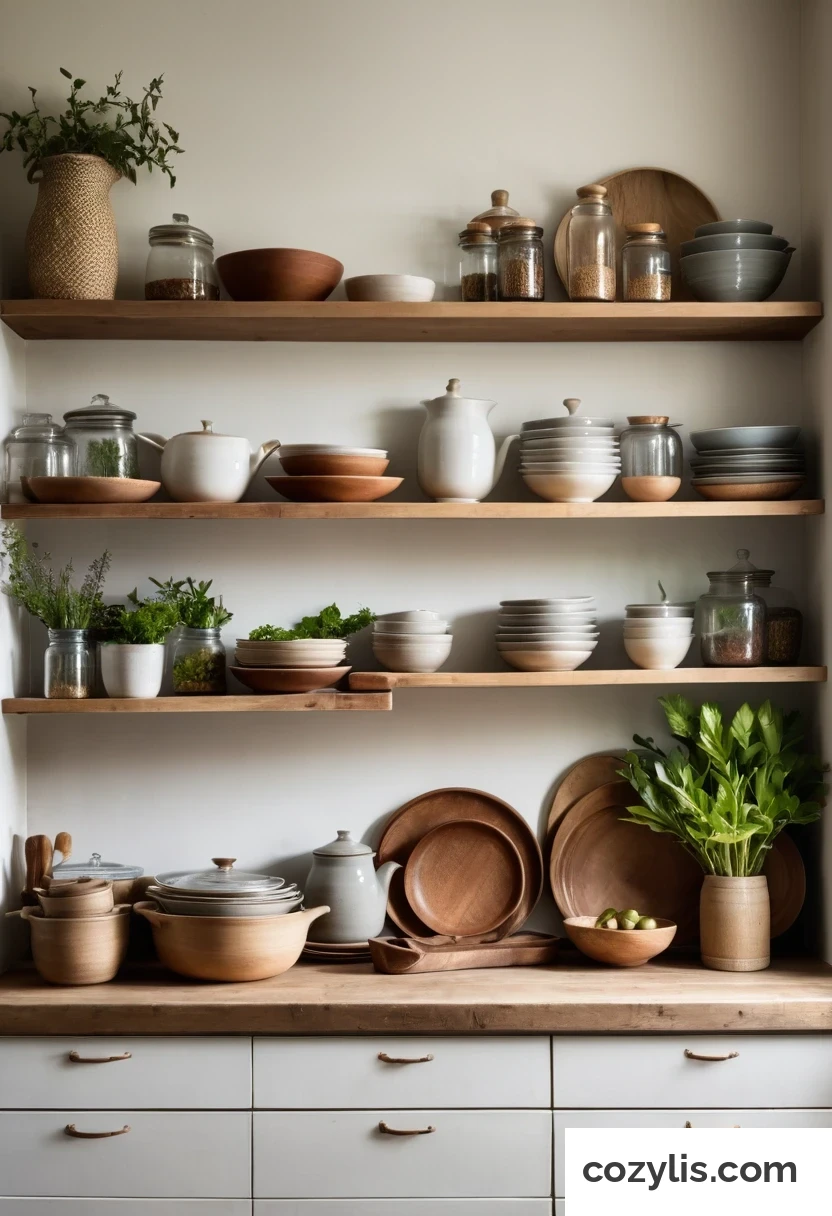
This roundup of open shelving kitchen ideas is designed to save you time, spark fresh inspiration, and suit your space and budget. Open shelving is one of the easiest ways to make a kitchen feel more spacious, welcoming, and thoughtfully designed. Instead of hiding everything behind cabinet doors, open shelves allow everyday dishes, beautiful glassware, natural textures, and personal decorations to become part of the room's character.
Whether your kitchen features modern finishes, rustic wooden details, traditional cabinetry, or cozy cottage accents, the right shelving arrangement can improve both its appearance and functionality. The key is choosing materials that complement your space while keeping frequently used items accessible and decorative displays balanced.
These 28 open shelving kitchen ideas for 2026 explore practical layouts, inviting color combinations, and creative styling approaches that can transform ordinary kitchen walls into attractive, useful storage areas.
28 Open Shelving Kitchen Ideas That Feel Airy, Organized, and Effortlessly Stylish in 2026
Open kitchen shelving works best when storage and decoration support each other. Wooden shelves introduce warmth, metal brackets add structure, and carefully arranged ceramics create visual interest without overwhelming the room.
For a successful design, consider shelf depth, available wall space, lighting, and the weight of items you plan to display. Everyday plates and bowls should remain within comfortable reach, while decorative pieces can occupy higher positions.
The following ideas demonstrate how different materials, colors, and arrangements can create kitchens that feel organized, personal, and visually appealing.
1. Neutral Rustic Shelves with Potted Greens
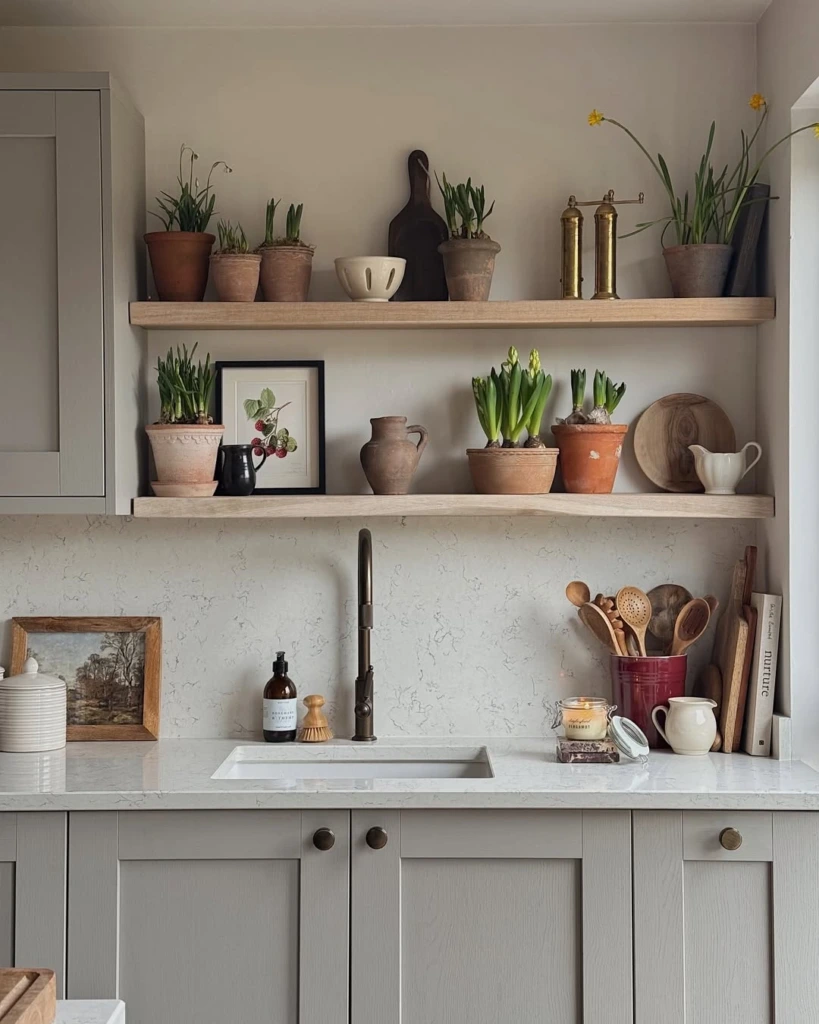
Rustic wooden shelves bring natural warmth to a kitchen, particularly when paired with creamy walls, beige ceramics, and soft neutral accessories. Choose wood with visible grain and subtle imperfections to introduce character without making the space feel overly traditional.
Arrange white dishes, stoneware bowls, and clear drinking glasses in small groups. Add a few compact potted herbs or trailing plants to soften the straight lines of the shelving.
Terracotta pots and woven baskets provide additional texture while maintaining an earthy color palette. Keep greenery away from excessive stove heat and select plants suited to the available natural light.
This arrangement works especially well in kitchens with white cabinetry, wooden countertops, and simple brass or black hardware.
2. Warm Wood Open Shelving with Classic Dish Display
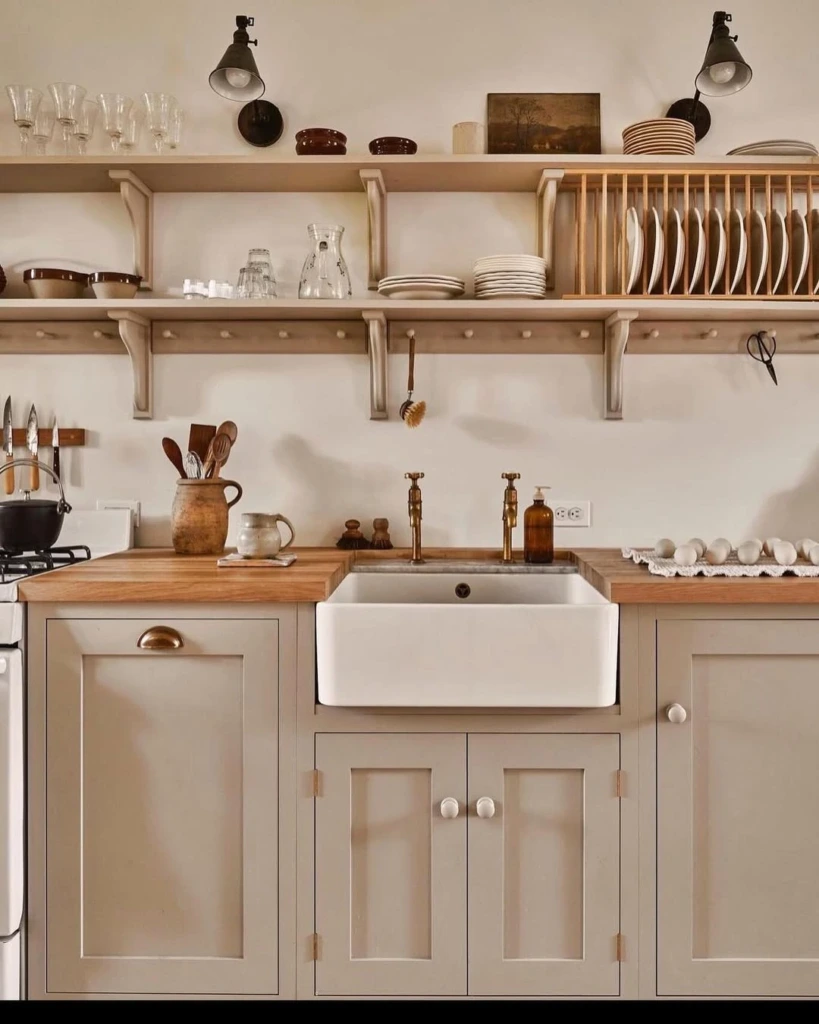
Warm-toned wooden shelves create an inviting backdrop for everyday dinnerware. Oak, walnut, and stained pine can all provide an attractive contrast against light-colored kitchen walls.
Use matching ceramic plates and bowls as the main display, arranging them in neat stacks with enough space between groups to avoid a crowded appearance. Glass jars filled with frequently used dry ingredients can make the shelves more practical.
A few wooden cutting boards placed vertically against the backsplash introduce height and connect the shelving to the rest of the kitchen.
For a cohesive appearance, repeat the shelf's wood tone through smaller details such as utensil holders, stools, or serving trays.
3. Industrial Brick Kitchen with Statement Shelf Styling
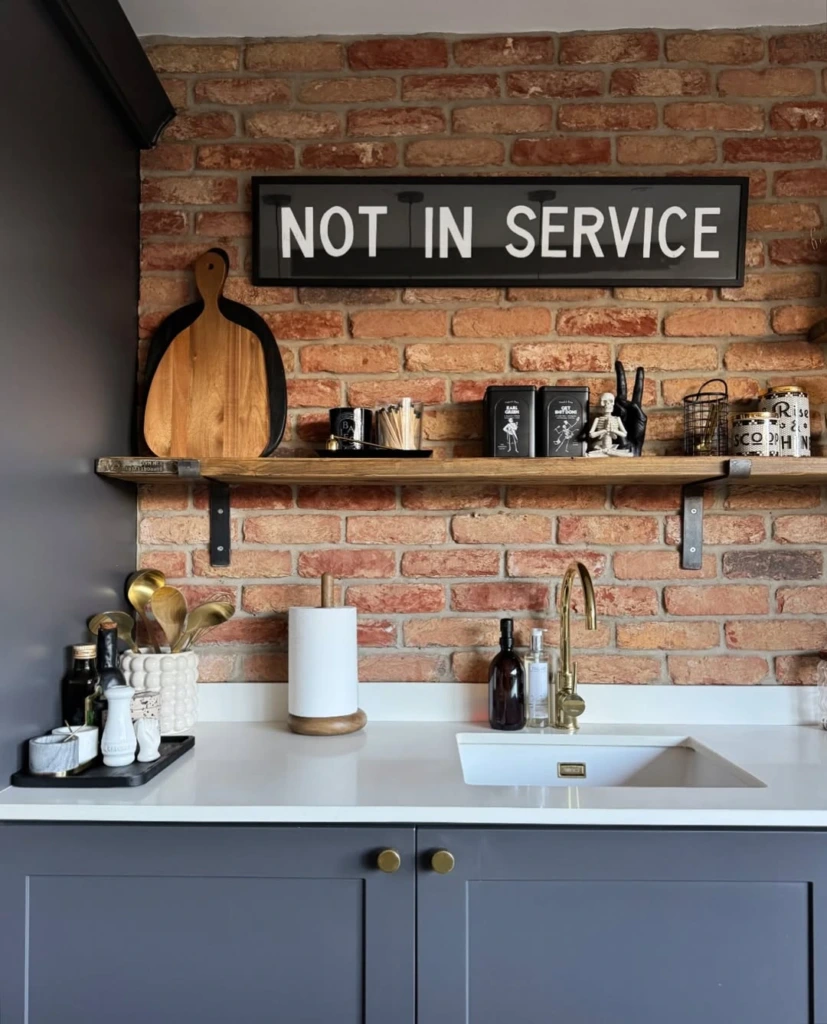
Exposed brick provides a textured background that makes open shelving especially striking. Thick wooden planks supported by dark steel brackets complement the rugged surface and establish an industrial atmosphere.
Combine matte black cookware, simple white dishes, and clear glass containers for a balanced display. Vintage metal canisters or an old-fashioned kitchen scale can add personality without distracting from the brickwork.
Install warm under-shelf lighting to highlight the brick texture and improve visibility during food preparation.
Because brick surfaces can be uneven, shelving hardware should be anchored securely into appropriate structural material. Use fixings designed for the wall construction and anticipated load.
4. Eclectic Cottage Kitchen with Layered Open Shelves
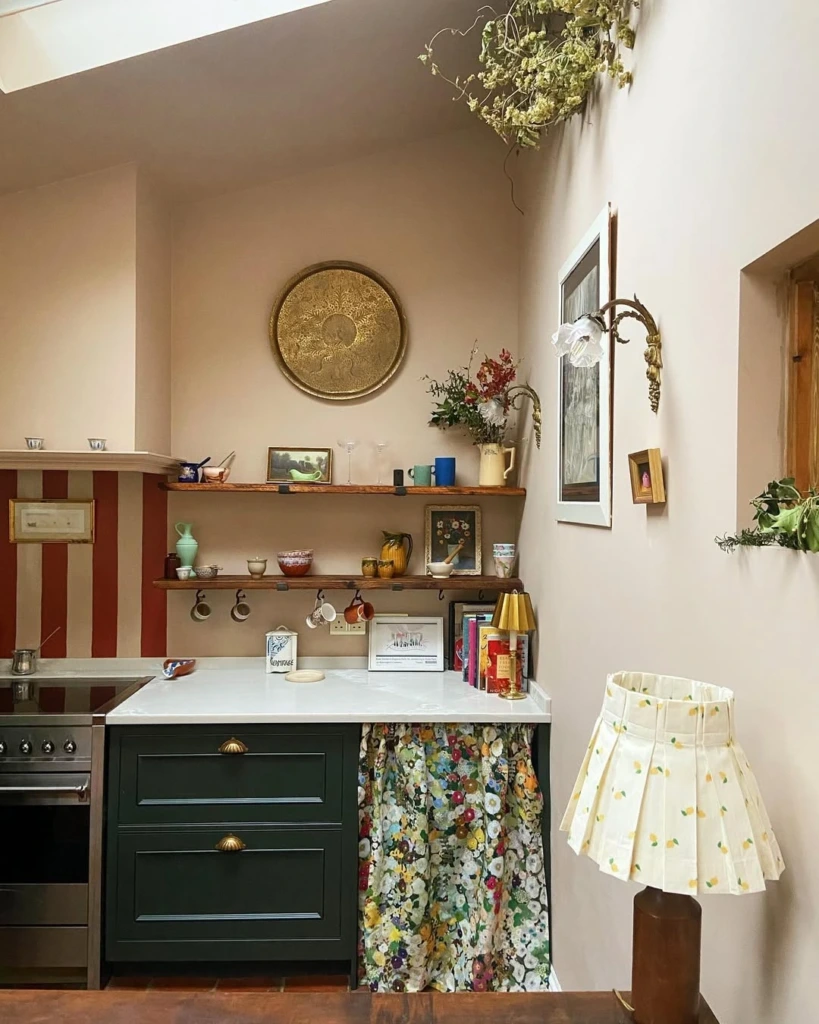
A cottage-inspired kitchen benefits from shelving that looks collected and personal rather than perfectly coordinated. Painted wooden shelves can showcase floral dishes, vintage teacups, patterned bowls, and small decorative objects.
Choose a gentle color palette featuring cream, dusty blue, pale yellow, or muted pink. Mixing several patterns works best when they share similar colors.
Use different display heights by combining stacked dishes, upright plates, and small containers. A ceramic pitcher filled with fresh flowers can provide a cheerful focal point.
Leave some open space between collections so the shelves remain visually comfortable. The finished arrangement should feel charming and lived-in while keeping frequently used kitchenware easy to access.
5. Fresh Green Backsplash with Functional Open Shelf Styling
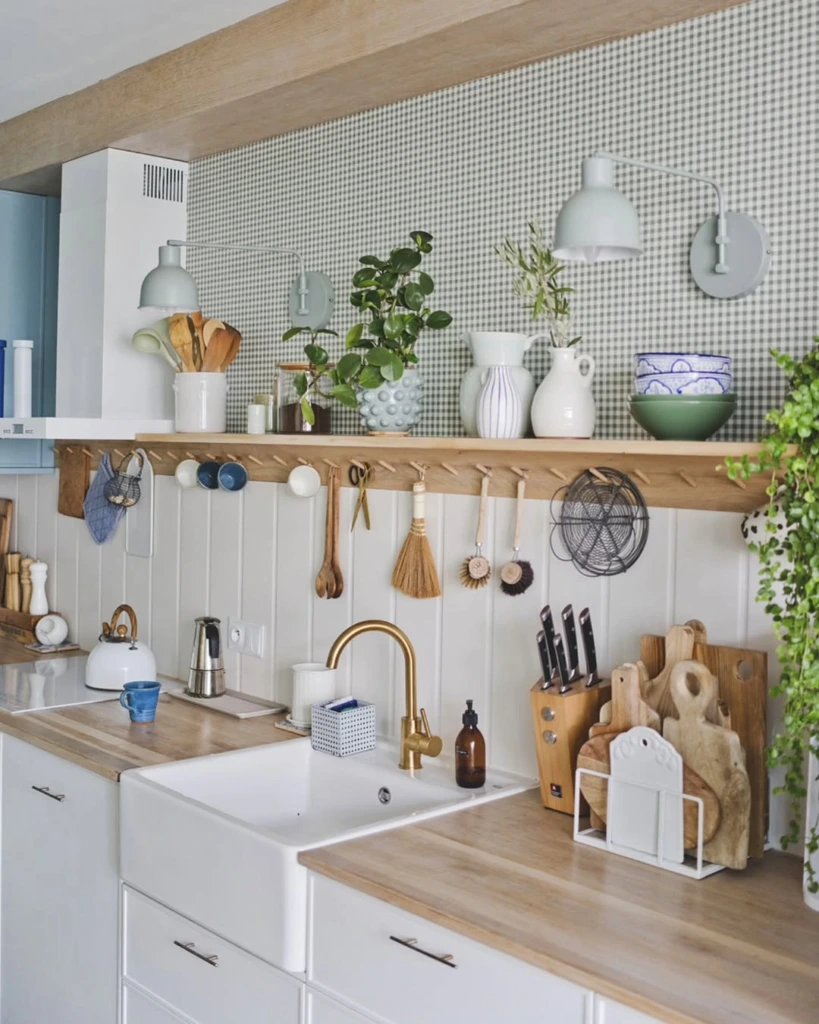
A green backsplash creates an energetic yet calming foundation for kitchen shelving. Glossy sage, olive, or soft emerald tiles can make natural wooden shelves stand out beautifully.
Keep the display functional with everyday mugs, cereal bowls, cooking oils, and neatly labeled storage jars. White ceramics offer a refreshing contrast, while wooden accessories reinforce the organic appearance.
For a streamlined arrangement, position larger objects near the ends of each shelf and group smaller items together.
A single leafy plant or small herb pot can connect the shelf display to the green backsplash without making the area look overly decorated.
6. Classic Farmhouse Kitchen with Hanging Utensils and Open Shelves
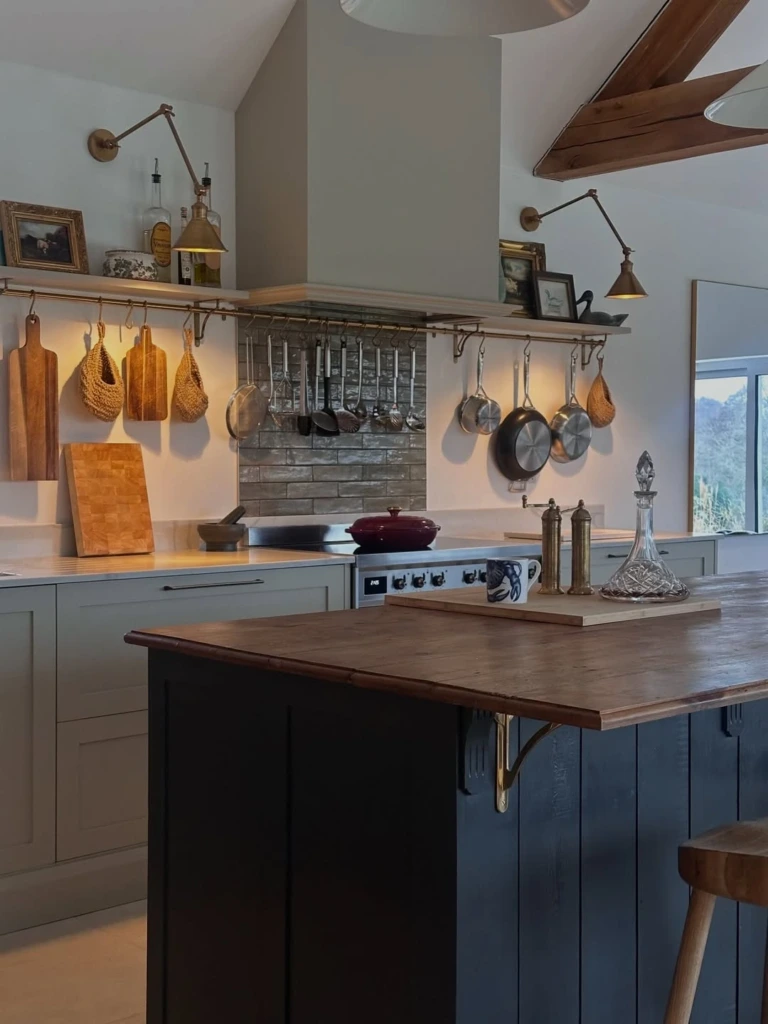
Farmhouse kitchens often combine practical storage with welcoming traditional details. Open wooden shelves paired with hanging hooks provide space for both displayed dishes and frequently used utensils.
Install a sturdy rail or hooks beneath the lowest shelf for lightweight mugs, measuring spoons, or cooking tools. Keep enough clearance below hanging items so the countertop remains comfortable to use.
White pitchers, ceramic bowls, glass jars, and galvanized metal accents complement the farmhouse aesthetic. Natural wood and antique-style hardware add warmth.
A white subway tile backsplash creates a clean background, allowing the hanging utensils and shelf displays to contribute character without making the kitchen feel busy.
7. Soft Sage Kitchen with Minimal Open Shelf Display
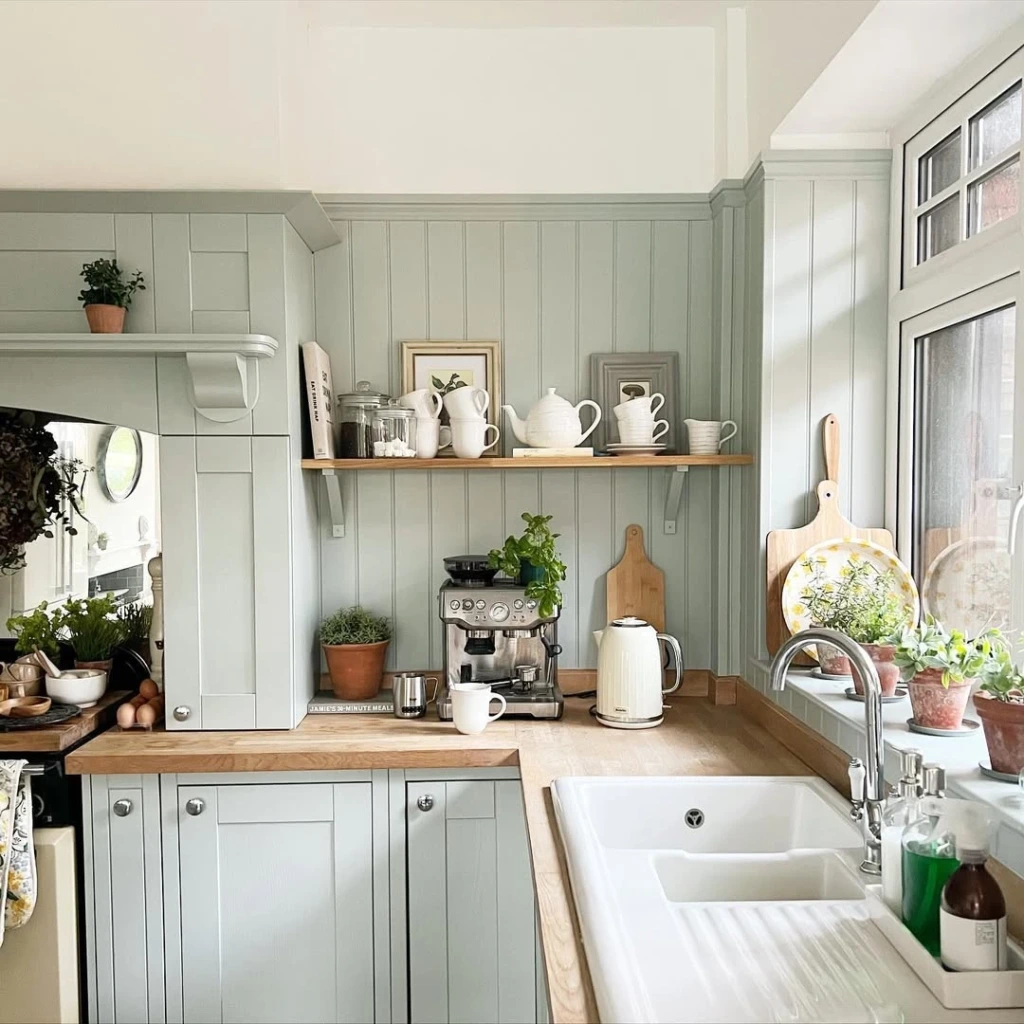
Sage green cabinetry creates a peaceful kitchen atmosphere, especially when combined with pale wooden shelves and understated decorations.
Rather than filling every available inch, display a carefully selected collection of everyday essentials. A few stacked white plates, matching mugs, and one decorative vase can be enough to make the shelves attractive.
Use natural textures such as linen, wood, and handmade ceramics to prevent the space from feeling too plain.
Brushed brass handles or warm metallic fixtures complement sage green beautifully. Maintaining generous space around displayed objects helps preserve the relaxed, minimalist appearance.
8. Vintage Cottage Shelving with Pastel Glassware
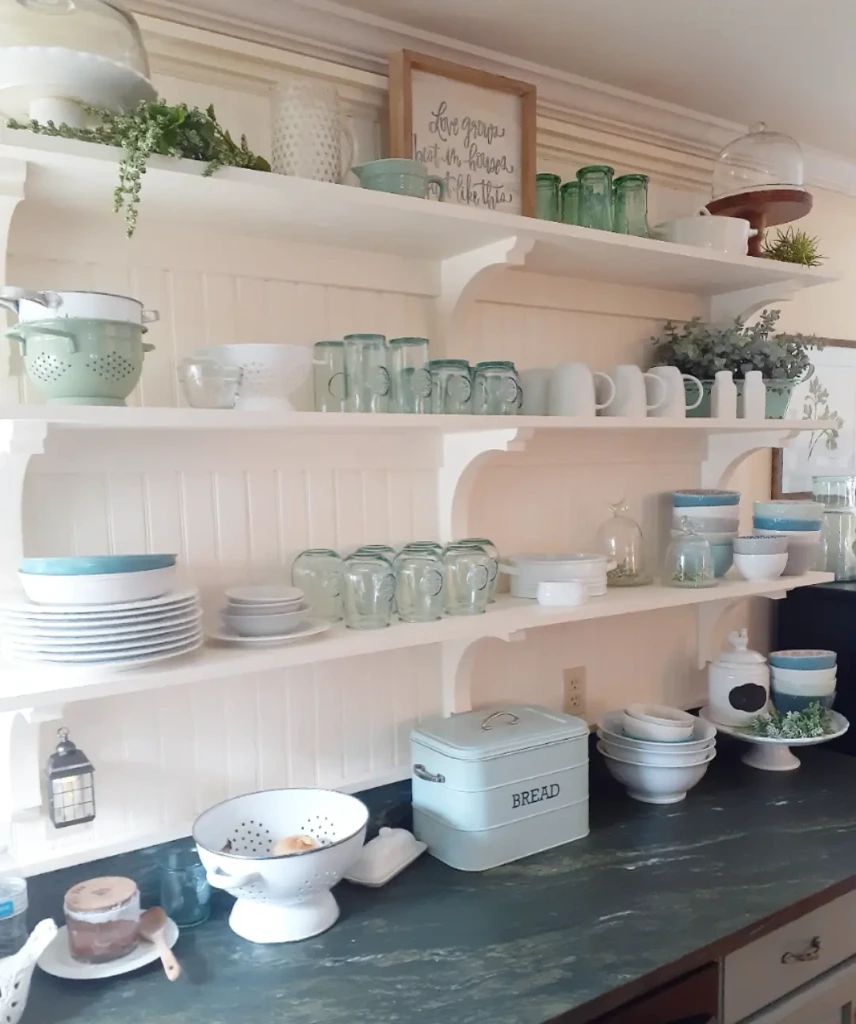
Pastel glassware introduces a delicate vintage quality to open kitchen shelving. Pale pink tumblers, mint green cups, lavender glass bowls, and soft blue pitchers can create an appealing display.
Painted shelves in warm white or ivory provide a neutral foundation that allows the colors to stand out.
Arrange glass pieces where natural light can pass through them, highlighting their subtle tones and shapes. Mix them with a few white ceramic dishes to prevent the display from becoming too colorful.
Small vintage containers or a floral-patterned plate can complete the arrangement. This style is particularly suitable for cottage kitchens with traditional cabinets and decorative hardware.
9. Clean Modern Shelves with Wood Accents and Texture
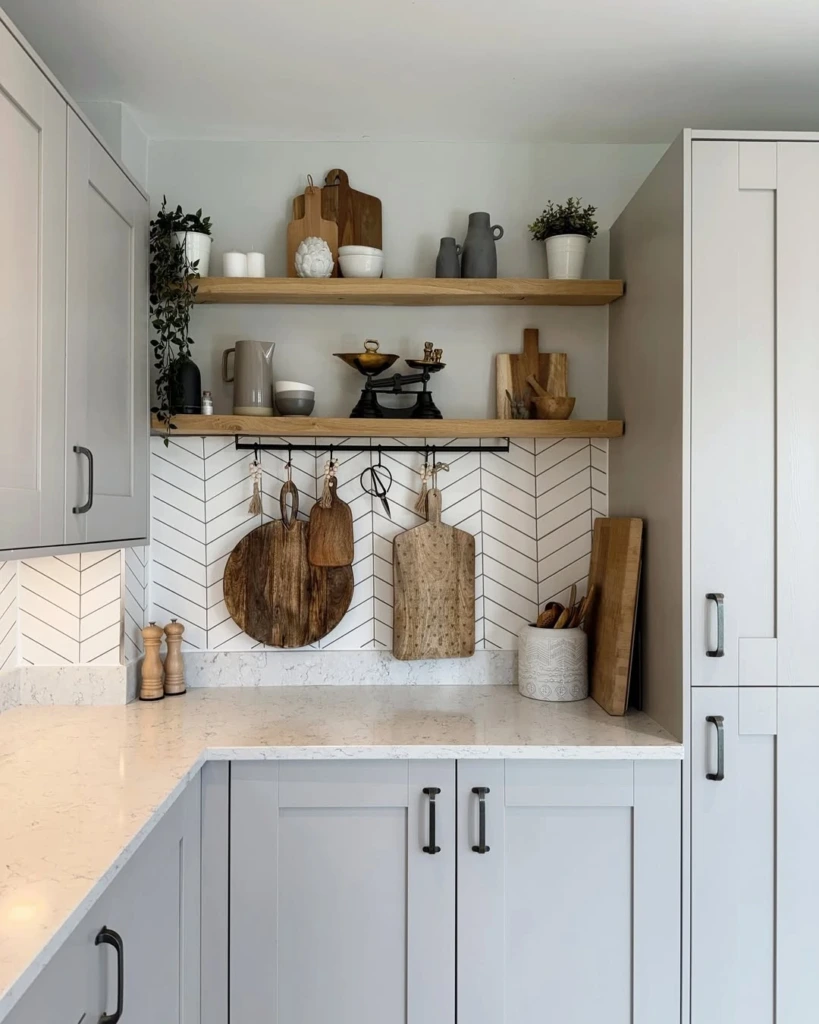
Modern kitchens benefit from open shelves that introduce warmth without compromising clean architectural lines. Slim floating wooden shelves against a white or light gray wall create a simple, polished appearance.
Choose a restrained selection of accessories, such as matte ceramic bowls, transparent jars, and minimal wooden serving boards.
Texture becomes especially important when the color palette is limited. Combine smooth ceramics with woven containers and naturally grained wood for subtle contrast.
Concealed brackets can create a floating effect, but they must be rated for the shelf dimensions and intended weight. Avoid placing heavy cookware on shelves that lack suitable structural support.
10. Moody Brick Kitchen with Floating Wooden Shelves
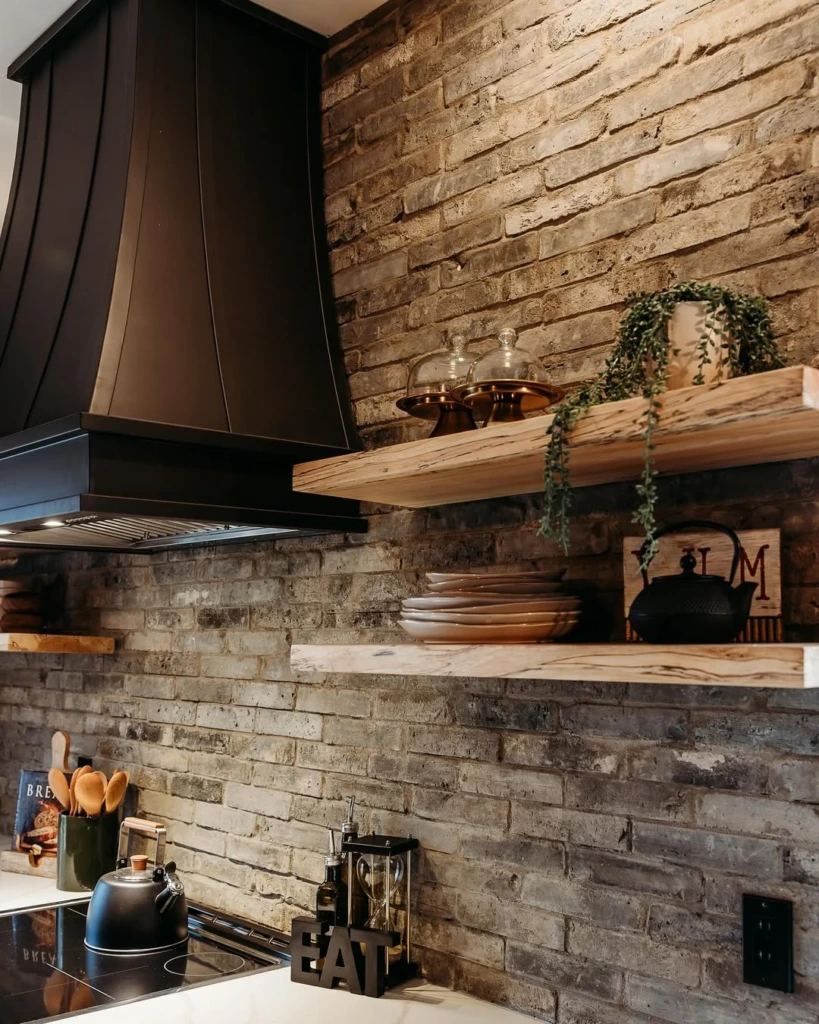
Dark brick walls paired with substantial floating wooden shelves create a dramatic kitchen design. Deep brown, charcoal, or blackened brick can provide a striking contrast to honey-colored wood.
Use lighter accessories to keep the shelves visible against the darker background. Cream-colored bowls, transparent glassware, and pale stoneware work particularly well.
A few copper or brass details can introduce warmth and reflect available light.
Position lighting carefully to illuminate both the shelves and work surfaces. In kitchens with limited daylight, warm-white LED strips can help the space feel welcoming rather than enclosed.
11. Arched Niche Shelving with Deep Blue Hood
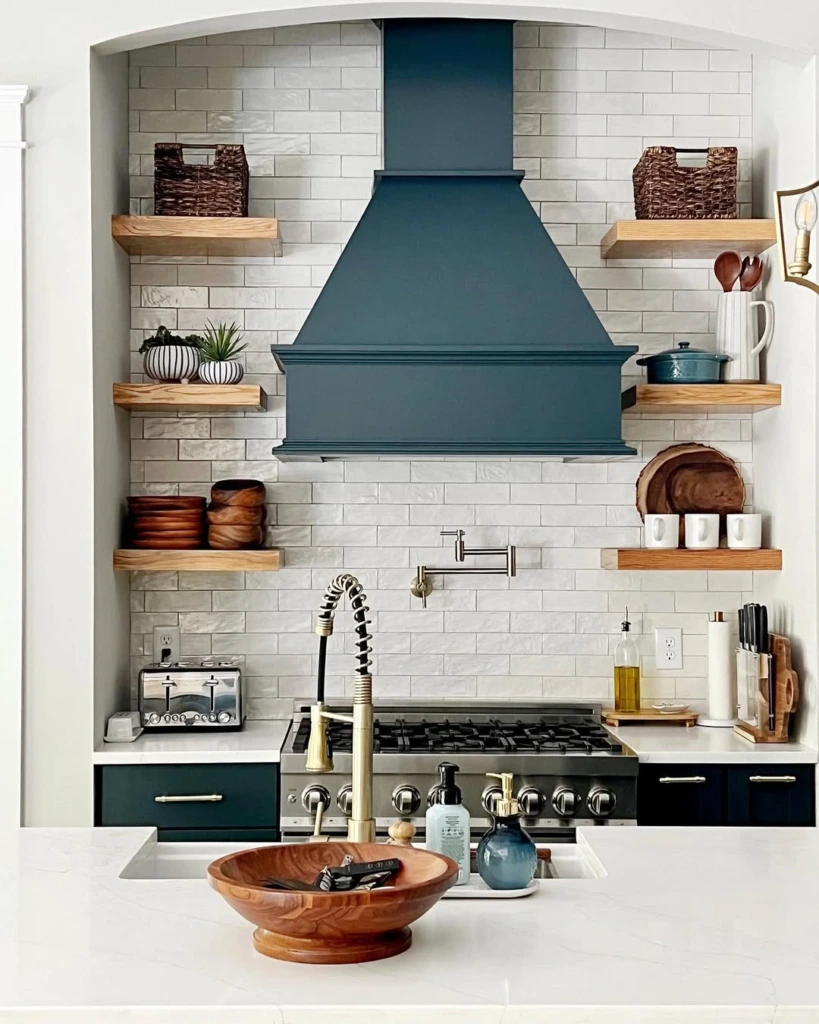
An arched wall niche creates an architectural feature that makes open shelving feel intentionally integrated into the kitchen.
Install shelves within the recess and use them to display simple dishes, decorative pottery, or neatly arranged glassware. A nearby deep blue range hood can become the room's central visual feature.
Choose light wood or cream-painted shelves to contrast with the stronger blue color. Brass accents and warm stone countertops can further soften the overall design.
For a cohesive result, keep the niche display relatively simple. Repeating a few colors from the surrounding kitchen creates continuity while allowing the arch and range hood to remain prominent.
12. Simple Wooden Shelves with Everyday Essentials
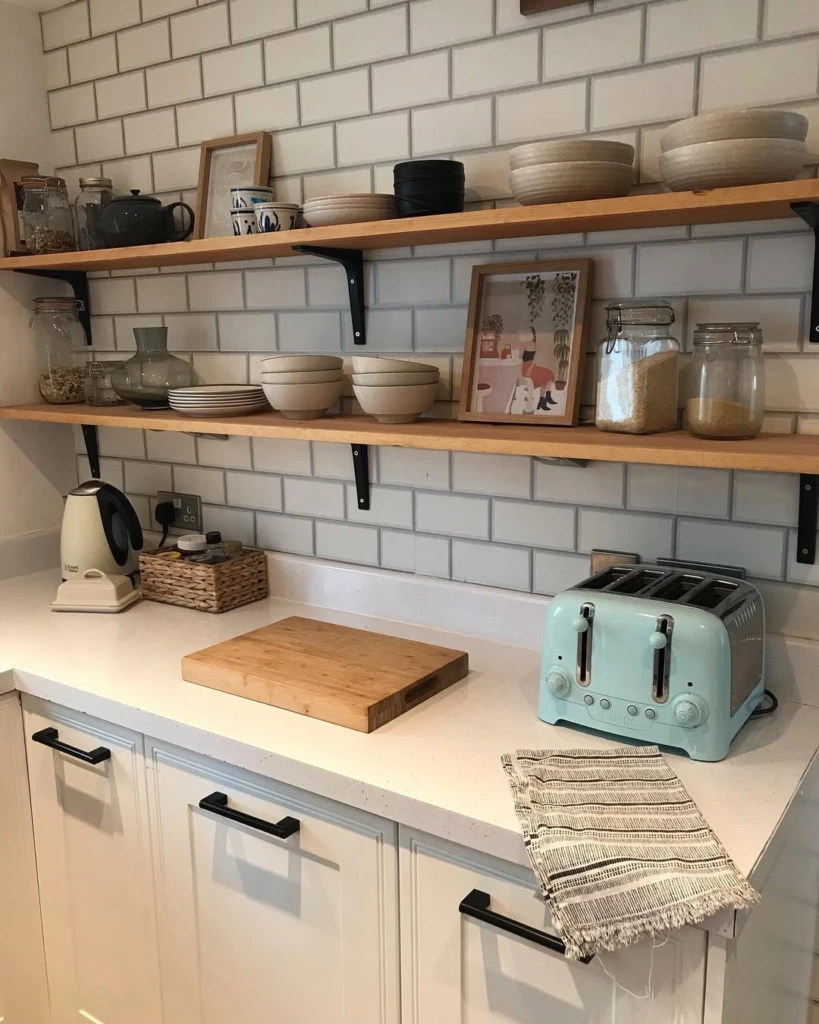
Open shelving does not need elaborate decoration to look attractive. A straightforward pair of wooden shelves can provide practical storage for the dishes and ingredients used most often.
Place frequently reached-for bowls, mugs, and plates on the lower shelf. Store lighter or less frequently used objects above.
Matching storage jars can hold dry ingredients such as rice, pasta, and flour, provided the containers seal properly and are kept away from excessive moisture.
Choose a shelf finish that complements the countertops or cabinetry. This approach is particularly effective in busy family kitchens where accessibility matters as much as appearance.
13. Minimal Open Shelf with Soft Green Accents
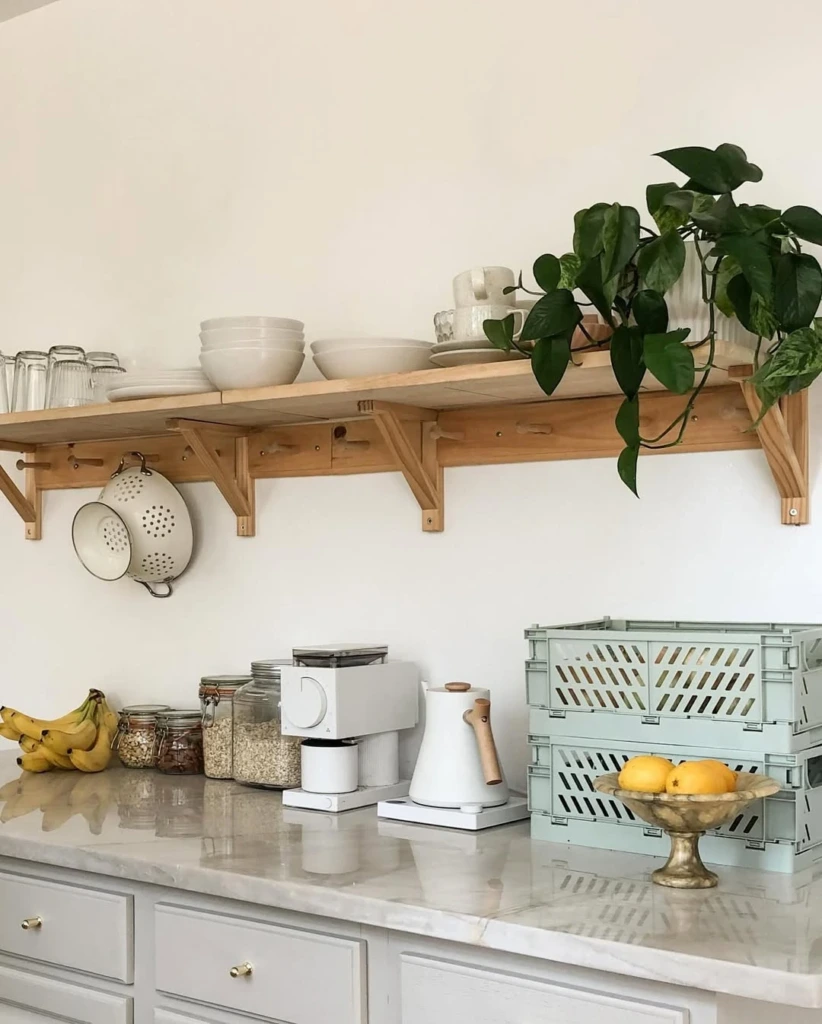
A single open shelf can introduce personality without requiring a complete kitchen redesign. Position one wooden shelf above a suitable section of countertop or beside existing cabinets.
Display a few neutral ceramics alongside small green accessories, such as an olive-colored bowl, a pale green vase, or a compact plant.
Keeping the color palette limited allows each object to contribute to the overall arrangement.
This idea works well in small kitchens where extensive shelving might make the walls appear crowded. A single thoughtfully styled shelf can provide additional storage while preserving a clean, open feeling.
14. Layered Neutral Shelves with Organic Decor
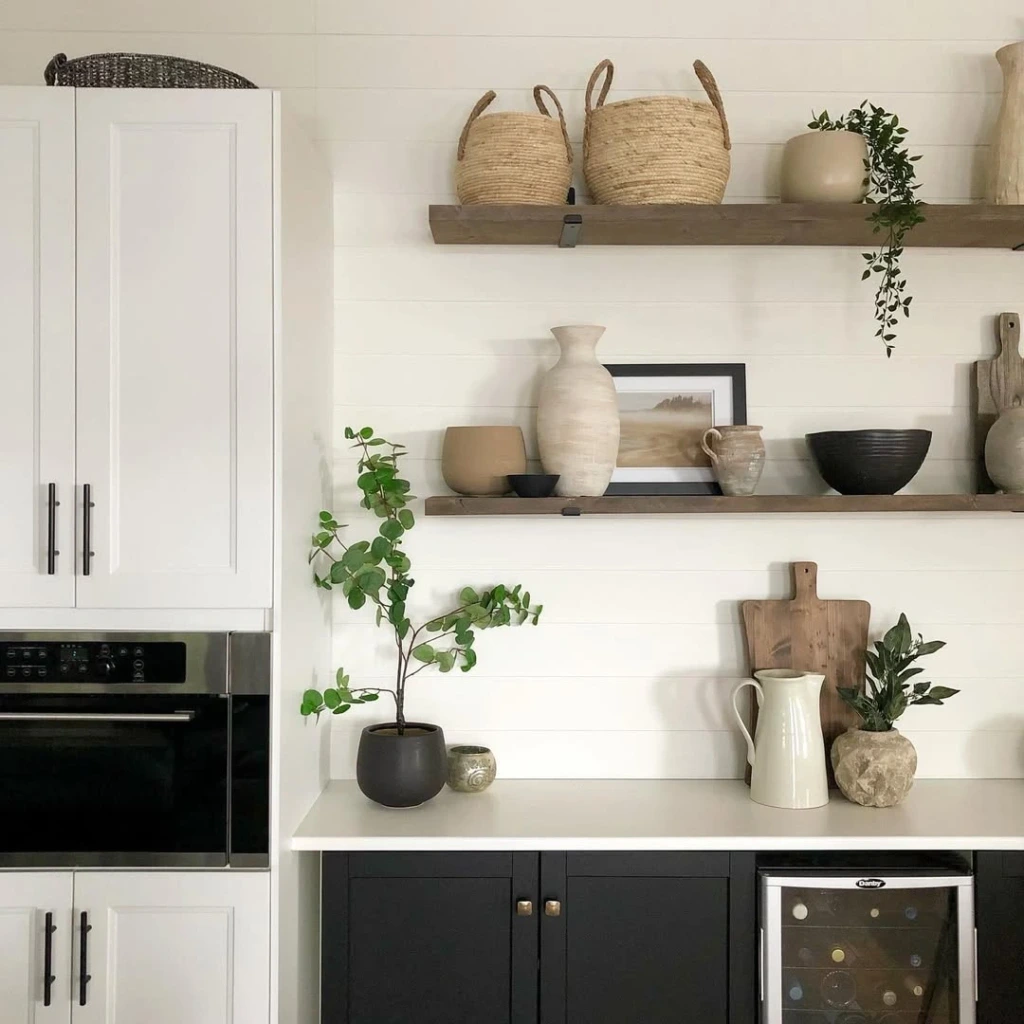
Layered shelving arrangements combine useful storage with decorative objects in a natural, relaxed composition. Use two or three shelves in warm wood or a soft neutral finish.
Mix ceramic dishes with woven baskets, wooden trays, and simple pottery. Vary the height of objects to create movement across the display.
Beige, cream, taupe, and soft brown provide a cohesive foundation, while small black accents can add definition.
Avoid placing every item in a perfectly straight row. Gentle overlaps, such as a cutting board positioned behind a ceramic bowl, create depth while keeping the arrangement organized.
15. Bright Farmhouse Shelf with Hanging Hooks
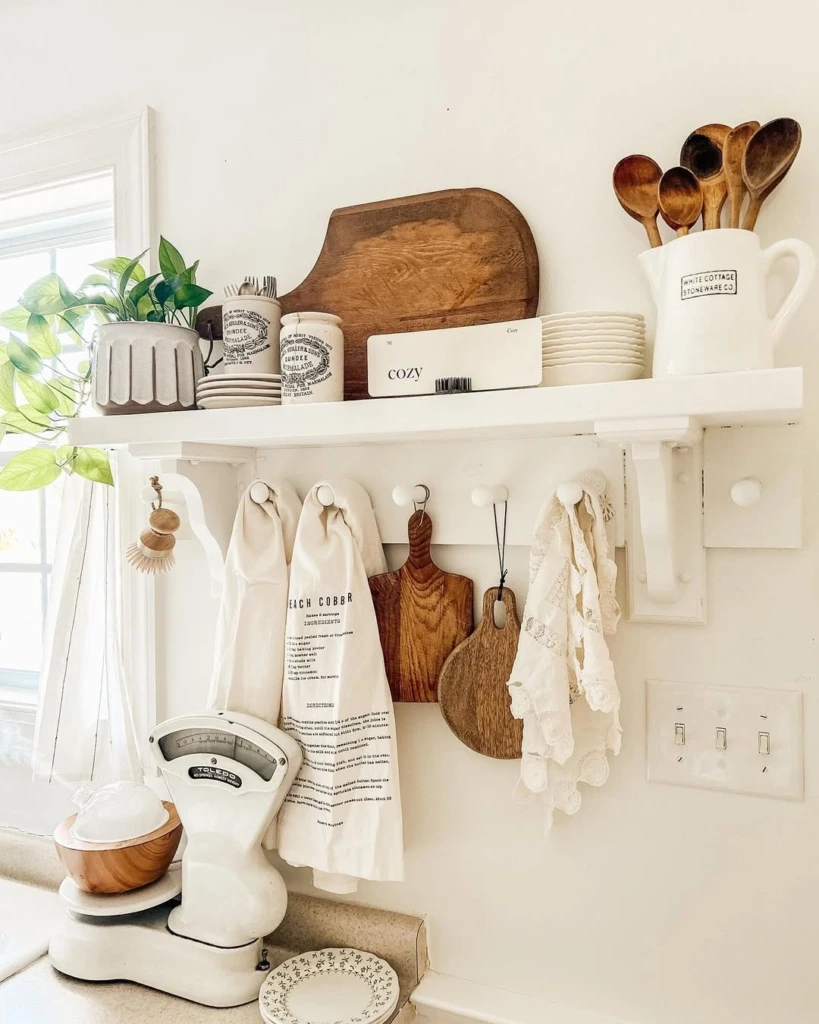
A bright farmhouse kitchen can benefit from a simple shelf fitted with hooks underneath. This arrangement combines attractive dish storage with convenient access to everyday kitchen accessories.
Use white-painted or lightly stained wood to complement pale cabinetry and bright walls.
Arrange a few ceramic pitchers, stacked plates, and glass jars across the upper surface. Beneath the shelf, hang matching mugs or lightweight utensils at consistent intervals.
Black iron or aged brass hooks provide a traditional finishing touch.
Position the shelf where hanging objects will not interfere with food preparation, cabinet doors, or nearby appliances.
16. Clean Window-Centered Shelving Layout
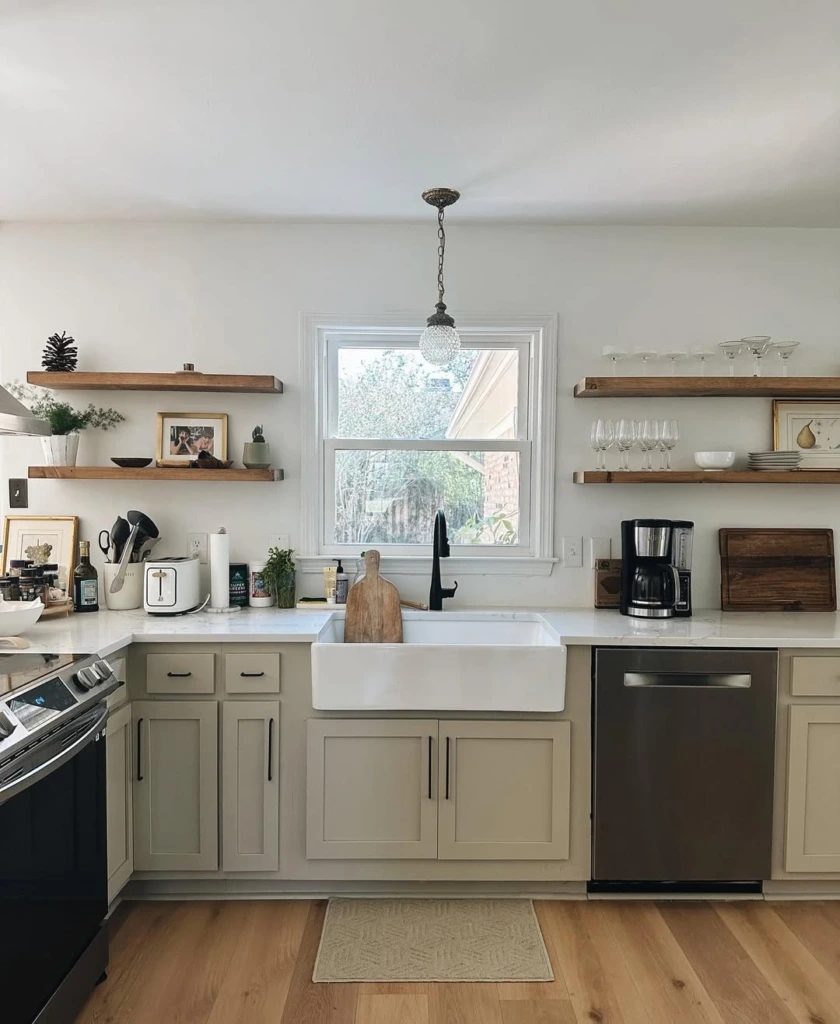
A kitchen window provides a natural focal point for open shelving. Installing shelves on either side can create a symmetrical arrangement that frames the view without blocking daylight.
Use matching shelf lengths and finishes for a balanced appearance. Display everyday dishes on one side and storage jars or decorative ceramics on the other.
Light-colored accessories help reflect daylight and maintain an airy atmosphere.
For smaller windows, narrow shelves can offer useful storage without visually overwhelming the surrounding wall.
Keep shelves clear of window-opening mechanisms and ensure that the layout does not obstruct ventilation or access for cleaning.
17. Warm Wood Accent Shelves with Styled Vignettes
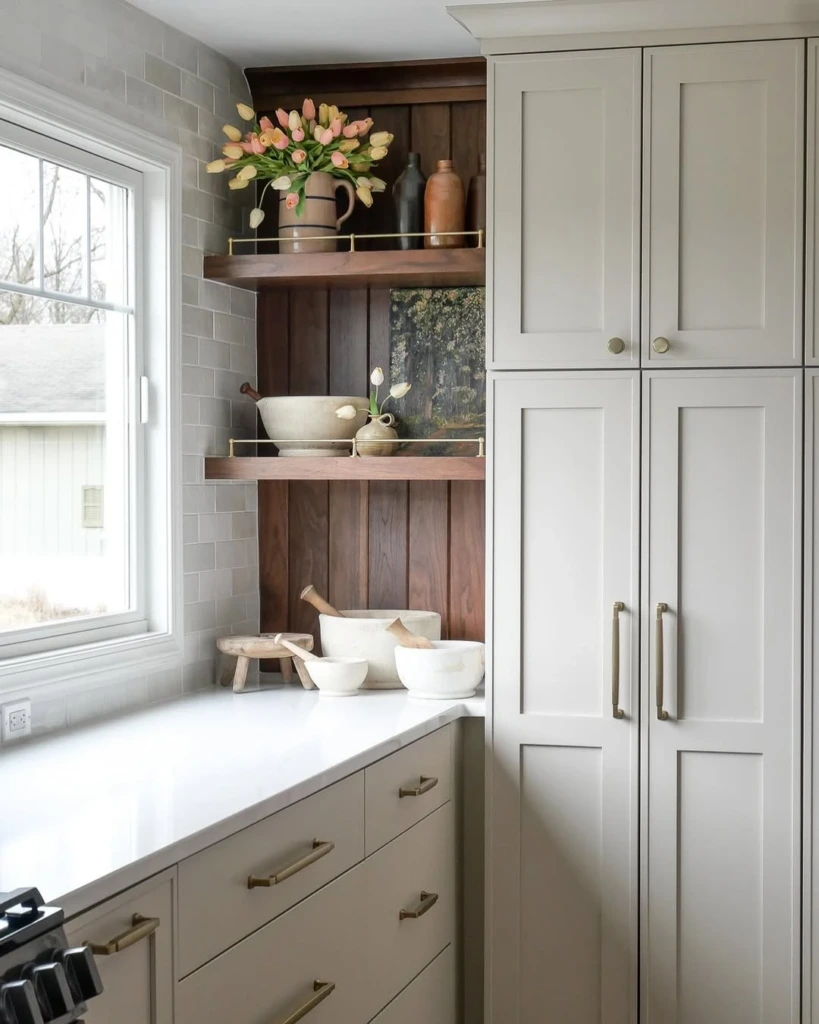
Wooden accent shelves offer an opportunity to create small decorative groupings that make a kitchen feel more personal.
Instead of spreading individual objects evenly across each shelf, arrange them into compact collections. A ceramic vase, a small bowl, and a wooden board can form one attractive vignette.
Combine objects of different heights while repeating similar materials or colors.
Warm oak shelves work especially well with white walls, cream cabinetry, and brass fixtures. A few dark accessories can provide contrast.
Maintain enough unused shelf space to keep the display from looking cluttered and allow room for practical kitchen storage.
18. Compact Kitchen Shelving with Balanced Display
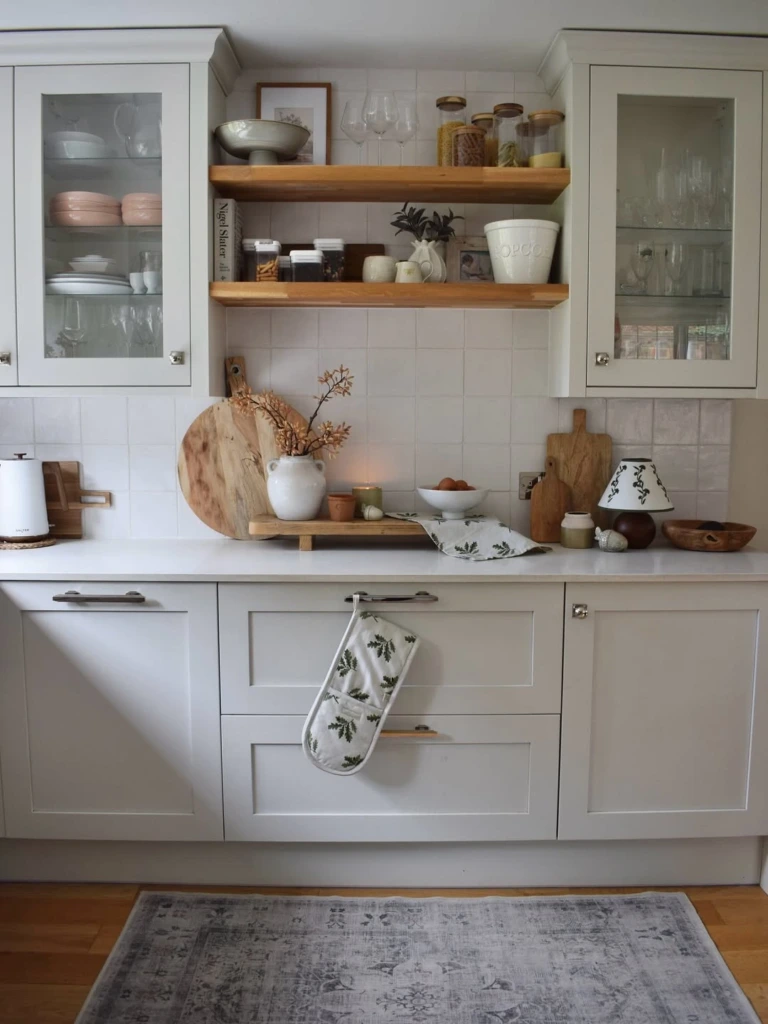
Small kitchens require shelving that adds useful storage without dominating the walls. Narrow floating shelves or compact corner installations can make otherwise unused areas more functional.
Choose shallow shelves for mugs, small bowls, and spice containers. Deeper shelves may be necessary for dinner plates, depending on their diameter.
Keep the arrangement balanced by distributing larger objects across different sections instead of concentrating them in one place.
Light finishes and transparent containers help maintain a spacious appearance. Wall-mounted shelves can also free up valuable countertop space, making compact kitchens easier to organize.
19. Classic White Kitchen with Central Open Shelf
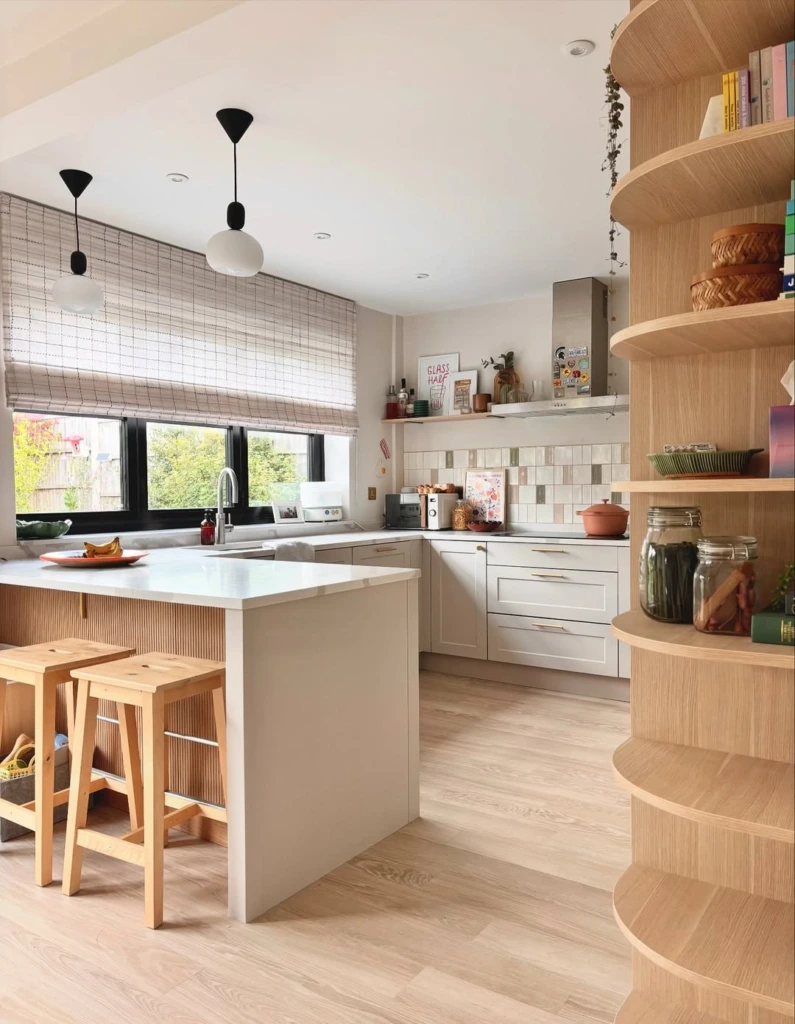
A central open shelf can break up a continuous wall of white cabinetry and introduce visual interest.
Install a wooden shelf between upper cabinets or across an appropriate open section of wall. The natural wood tone creates warmth against white doors and pale countertops.
Use the shelf for matching dinnerware, glass jars, and a few decorative accessories. A small framed print or simple ceramic vase can add personality.
Keep the surrounding design consistent by repeating the wood finish through cutting boards, stools, or other small kitchen details.
The result is a timeless arrangement that combines traditional cabinetry with the openness of contemporary shelving.
20. Traditional Cottage Shelving with Decorative Plate Display
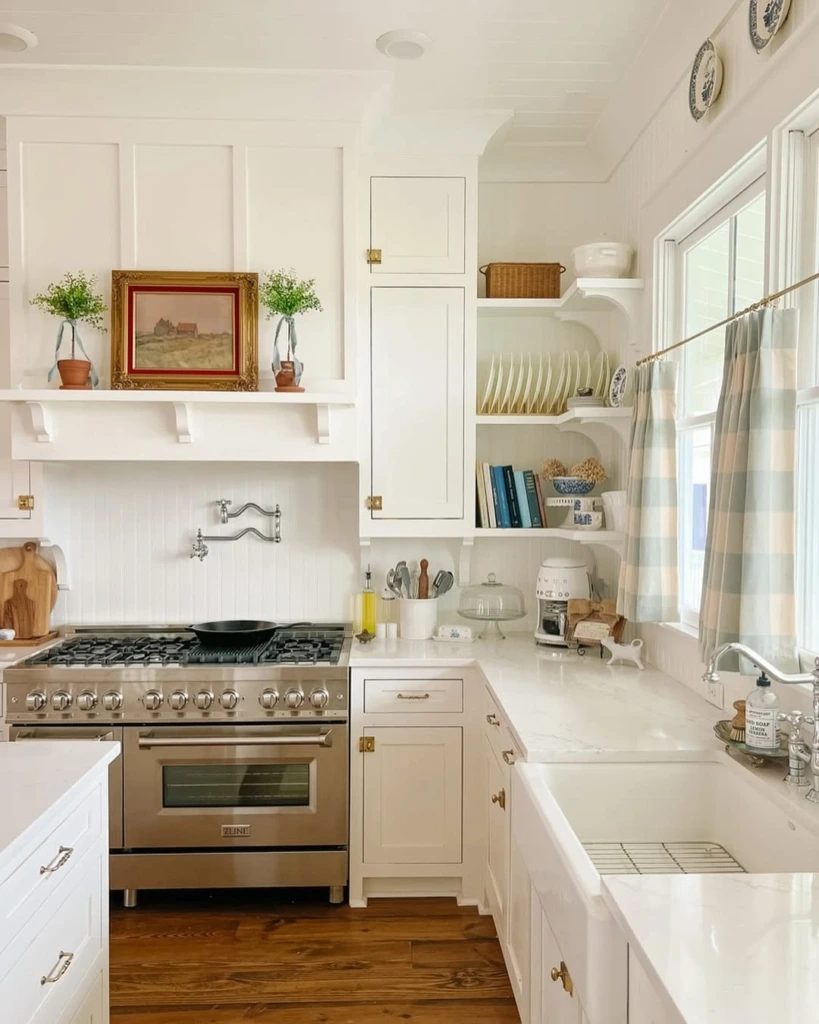
Decorative plates are an effective way to add pattern and history to cottage-style kitchen shelving.
Use wooden shelves with a raised rear ledge or appropriate plate stands to display selected pieces securely. Floral designs, blue-and-white ceramics, and vintage-inspired patterns work particularly well.
Combine upright plates with stacks of simpler dishes to create variety.
A painted shelf in cream, pale blue, or muted green can reinforce the traditional aesthetic.
Avoid displaying fragile heirlooms where they could be knocked over during everyday kitchen activities. Reserve accessible sections for durable pieces and place delicate items in safer positions.
21. Layered Corner Shelves with Collected Charm
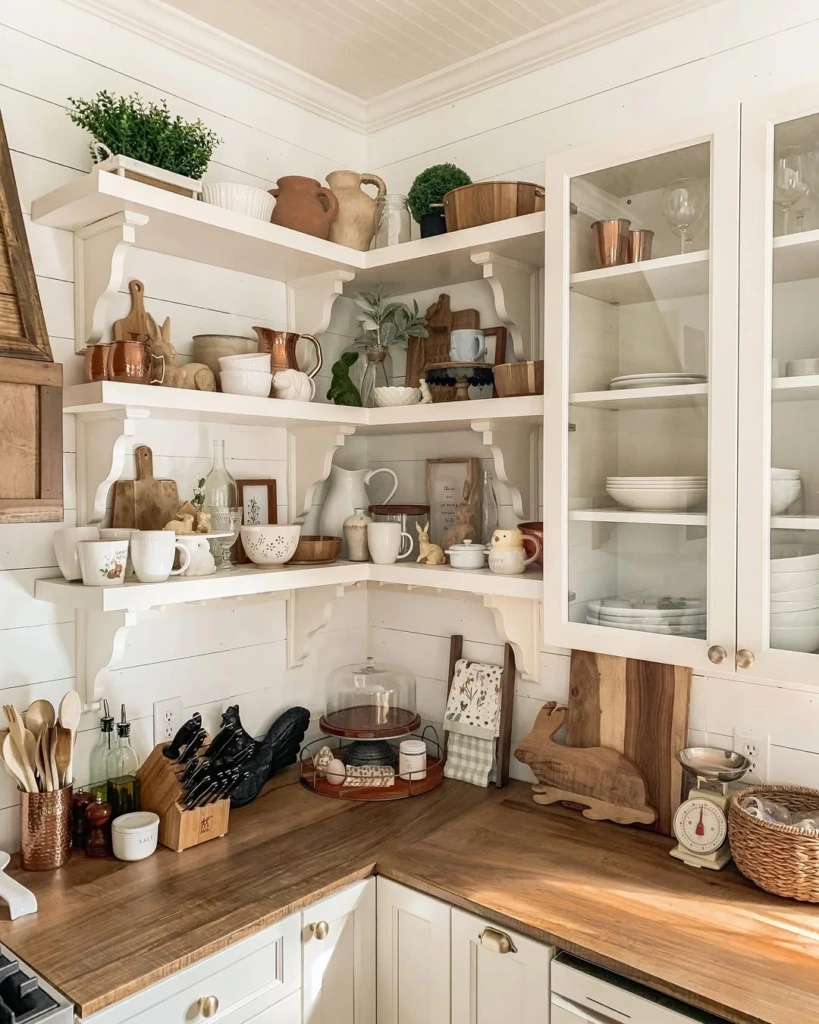
Kitchen corners often contain unused wall space that can be transformed with carefully designed open shelves.
L-shaped shelves can provide additional storage while connecting two adjoining walls. Alternatively, staggered corner shelves can create a more decorative arrangement.
Use the lower levels for practical items such as mugs and small bowls, while upper shelves can hold pottery, baskets, or framed artwork.
Mixing vintage and modern accessories gives the arrangement a collected appearance.
Measure carefully before installation to ensure shelves do not interfere with cabinet doors or create awkward reaching angles. Secure support is especially important where shelving extends around a corner.
22. Industrial Bracket Shelving with Window Light
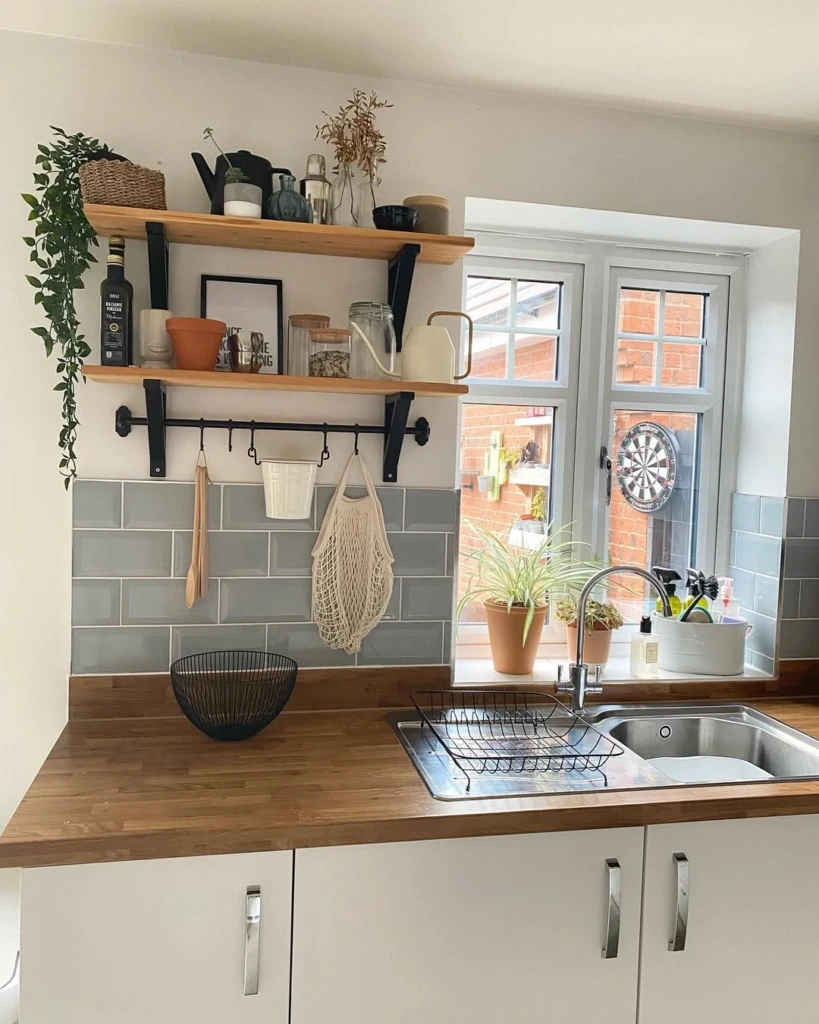
Industrial shelving combines exposed metal supports with natural wood, creating a practical design with strong visual character.
Position bracket-supported shelves near a window to take advantage of daylight. The combination of metal, wood, and natural illumination can make the display feel both structured and welcoming.
Black steel brackets pair well with medium-toned wood and neutral kitchenware.
Use glass jars, ceramic dishes, and a few metal accessories to reinforce the industrial style. Avoid overcrowding the shelves so the brackets remain visible as part of the design.
Choose corrosion-resistant hardware where humidity is common, and ensure that the brackets are securely fixed to suitable wall supports.
23. Warm Minimal Shelves with Seasonal Touches
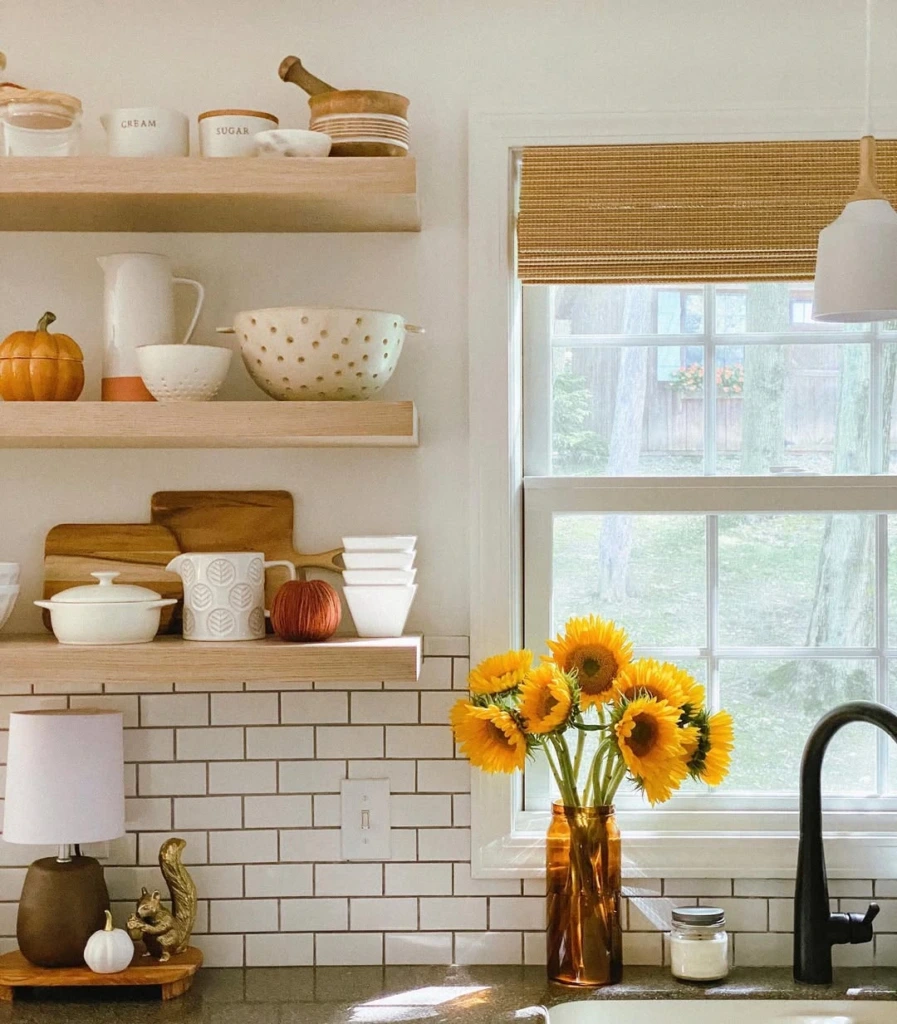
Minimal kitchen shelving can change throughout the year without requiring major redecorating.
Begin with a simple arrangement of neutral dinnerware, wooden boards, and clear glass containers. These everyday objects create a consistent foundation.
Introduce small seasonal details as desired. Fresh flowers and pale ceramics suit spring, while dried stems and earthy pottery can bring warmth during autumn.
During festive periods, a small decorative accent may be enough to refresh the display.
Keep seasonal accessories limited so the shelves remain functional. Storing unused decorations elsewhere allows the kitchen to maintain its clean, uncluttered appearance.
24. Soft Neutral Kitchen with Cozy Shelf Styling
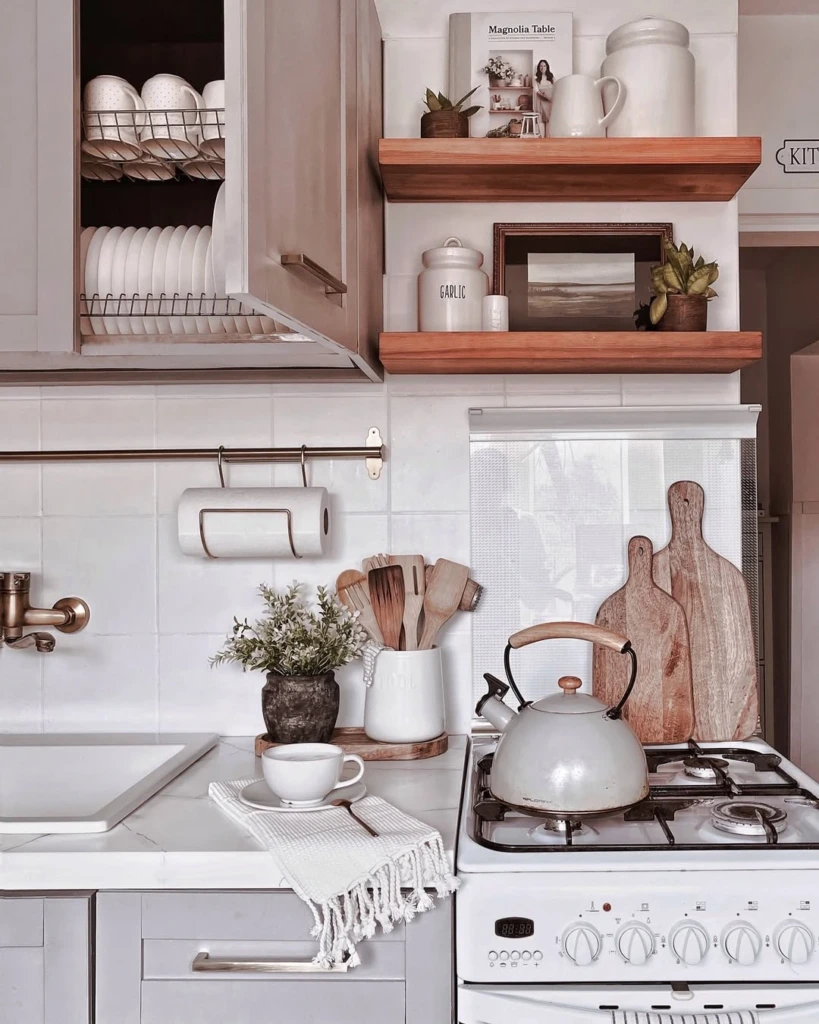
Soft neutral colors create a kitchen atmosphere that feels calm, comfortable, and inviting. Open shelves in light oak or natural pine complement cream cabinets, warm white walls, and beige countertops.
Style the shelves with handmade ceramics, textured bowls, and a few woven accessories.
Choose objects with subtle variations in finish rather than relying on bold colors. Matte pottery, clear glass, and lightly grained wood provide visual interest through texture.
A small vase of greenery can introduce a refreshing natural element.
Warm lighting beneath the shelves helps create a welcoming atmosphere during evening hours while improving visibility over the countertop.
25. Rustic Shelf Layers with Vintage Character
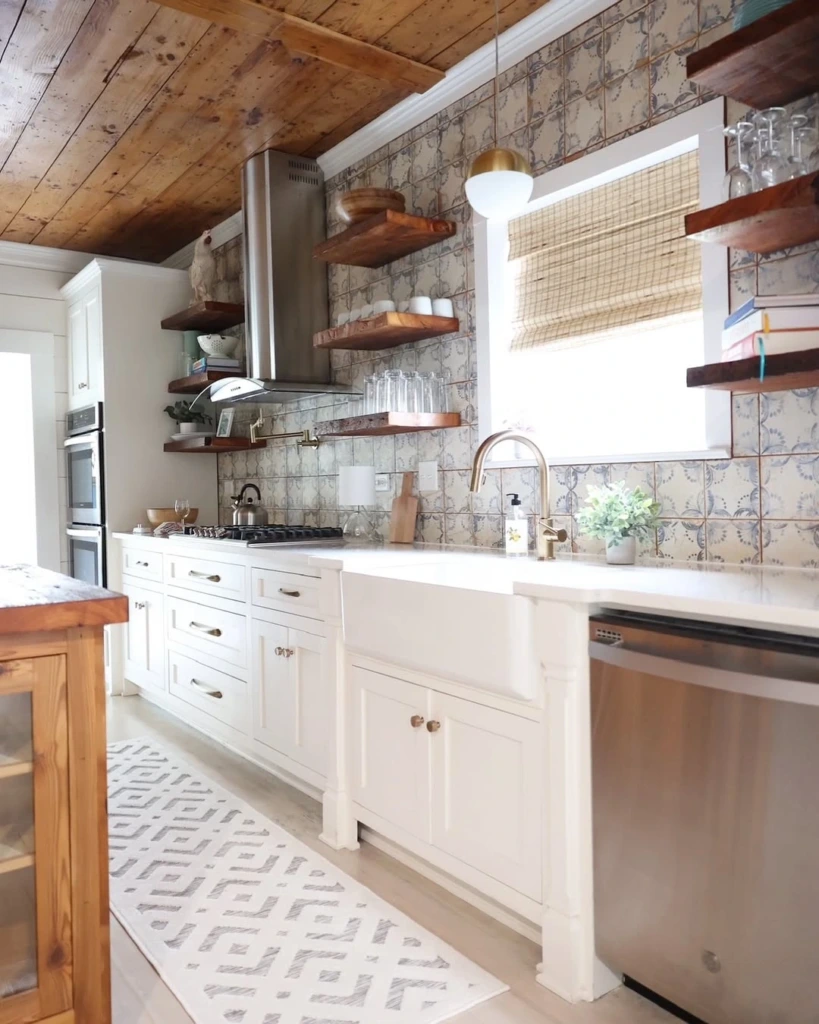
Rustic shelving becomes especially distinctive when it incorporates aged finishes and carefully selected vintage accessories.
Choose reclaimed-looking wooden shelves with visible grain, knots, or weathered textures. Pair them with antique-style brackets or simple black metal supports.
Display stoneware crocks, traditional mixing bowls, wooden utensils, and vintage-inspired containers.
Varying shelf heights can accommodate taller objects and make the arrangement more visually interesting.
If using genuinely reclaimed wood, inspect it for damage, pests, and unsuitable old finishes before bringing it into the kitchen. A cleanable, kitchen-appropriate protective finish can improve durability.
26. Charming Display Shelves with Cottage Personality
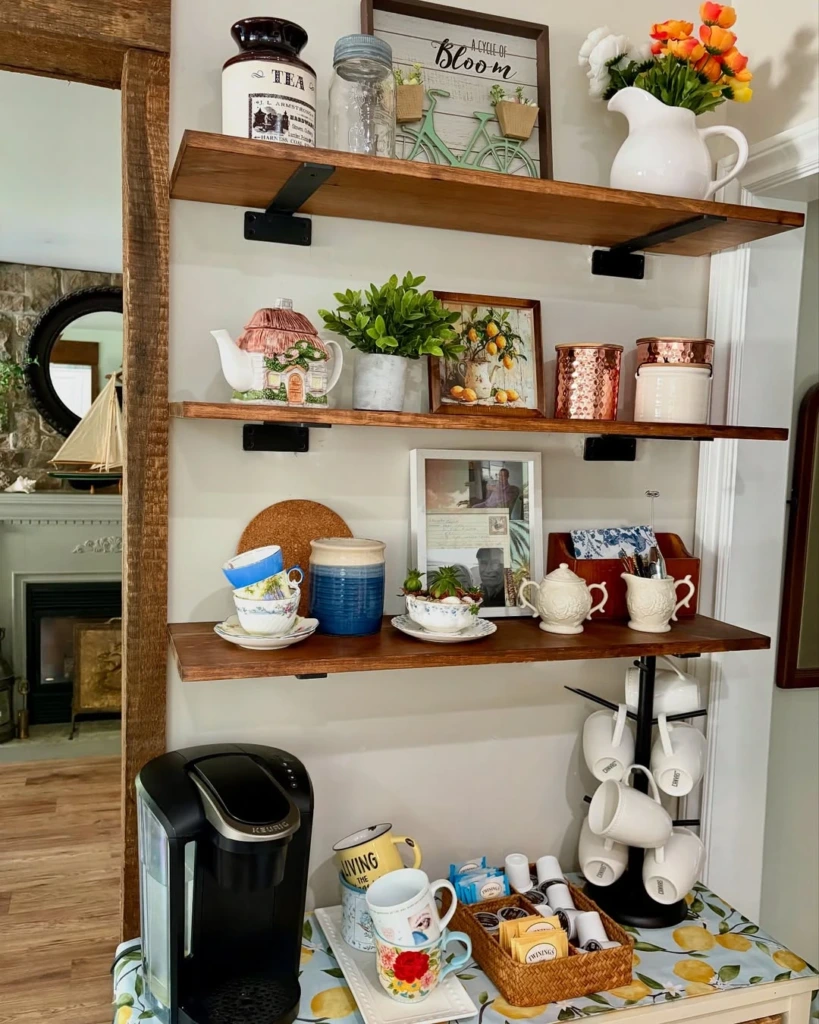
Cottage-style display shelves celebrate individuality through color, pattern, and meaningful household objects.
Combine floral teacups, decorative pitchers, small framed artwork, and colorful ceramics on painted wooden shelves.
Rather than purchasing an entirely matching collection, incorporate pieces with complementary colors and different shapes. This gives the display a relaxed, personal quality.
Soft pastel cabinetry and traditional hardware can strengthen the cottage atmosphere.
Keep the most frequently used dishes within easy reach, and reserve higher shelves for lightweight decorative pieces. This balance ensures the display remains useful as well as charming.
27. Soft Green Kitchen with Minimal Shelf Accent
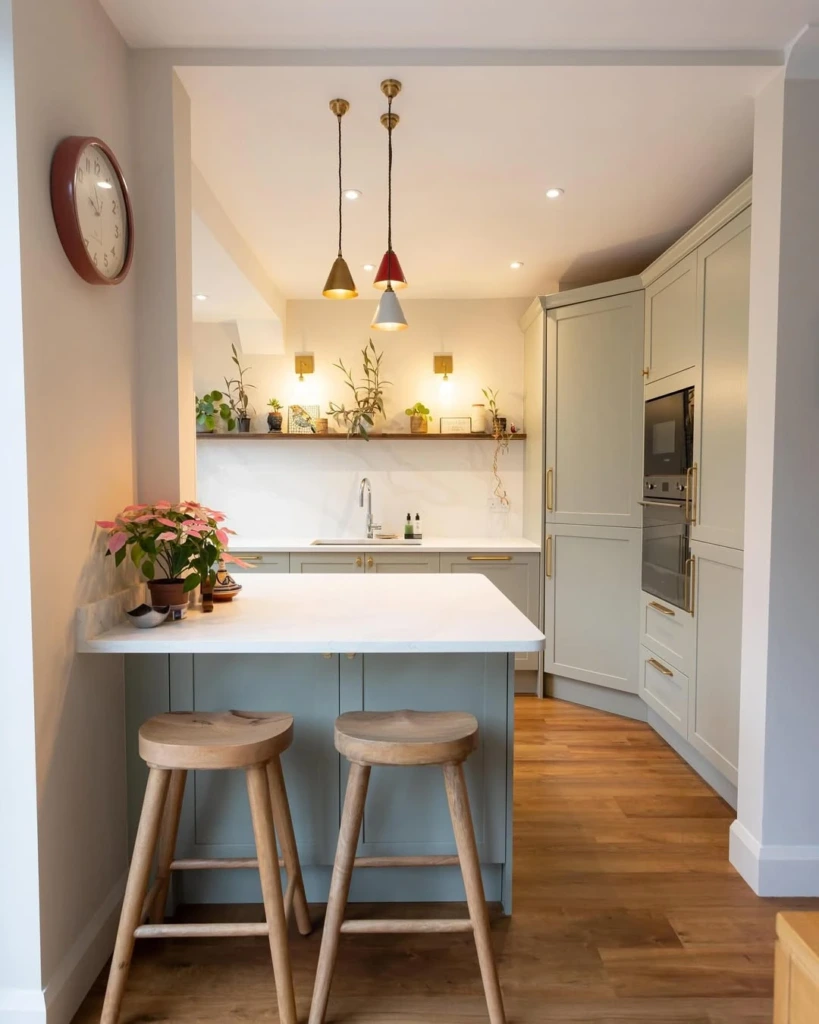
Soft green cabinetry creates an attractive background for a restrained open shelving feature. A single floating wooden shelf can provide warmth while preserving the kitchen's simple appearance.
Choose a light oak or natural finish that contrasts gently with the green cabinets.
Display a small group of white bowls, clear glasses, and one or two decorative pieces. A ceramic vase or compact herb planter can add a subtle focal point.
Avoid introducing too many additional colors. Natural wood, warm white, and muted green form a cohesive combination.
This approach suits contemporary kitchens where homeowners want a hint of decoration without sacrificing a streamlined design.
28. Lush Green Shelf Styling with Natural Layers
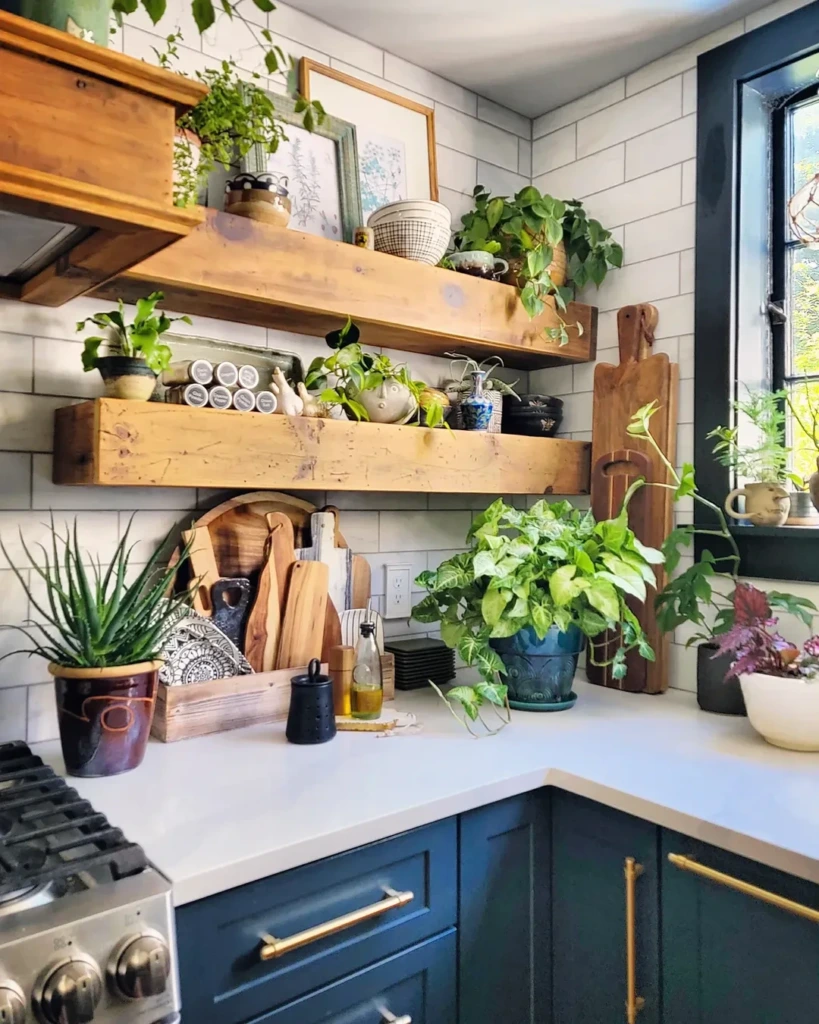
Greenery can transform ordinary open shelves into a lively kitchen feature. Combine wooden shelving with leafy plants, natural ceramics, and woven textures to create an organic arrangement.
Use plants of varying shapes to introduce depth. Upright herbs, compact foliage plants, and carefully positioned trailing varieties can make the display feel dynamic.
Place plants in containers with suitable drainage protection to prevent water from damaging the shelves.
Pair greenery with white bowls, wooden cutting boards, and earthy pottery to maintain a balanced appearance.
Choose plants according to the kitchen's lighting and temperature conditions. Avoid positioning leaves near open flames or hot appliances.
The finished display creates a fresh, welcoming atmosphere while connecting everyday kitchen storage with natural decorative elements.
Related Ideas You Might Love
Conclusion
Open shelving kitchen ideas for 2026 demonstrate how practical storage can become an attractive part of everyday kitchen design. From rustic wooden planks and farmhouse hooks to minimalist floating shelves and colorful cottage displays, there are options for nearly every kitchen size and decorating style. The most successful arrangements combine durable materials, secure installation, accessible essentials, and a thoughtful selection of decorative objects.
Whether you introduce one small accent shelf or redesign an entire kitchen wall, focus on maintaining a balance between beauty and functionality. Coordinated colors, natural textures, comfortable spacing, and simple organization can help your open shelves remain appealing and useful long after the initial styling is complete.