
26 Kitchen Corner Storage Ideas for 2026
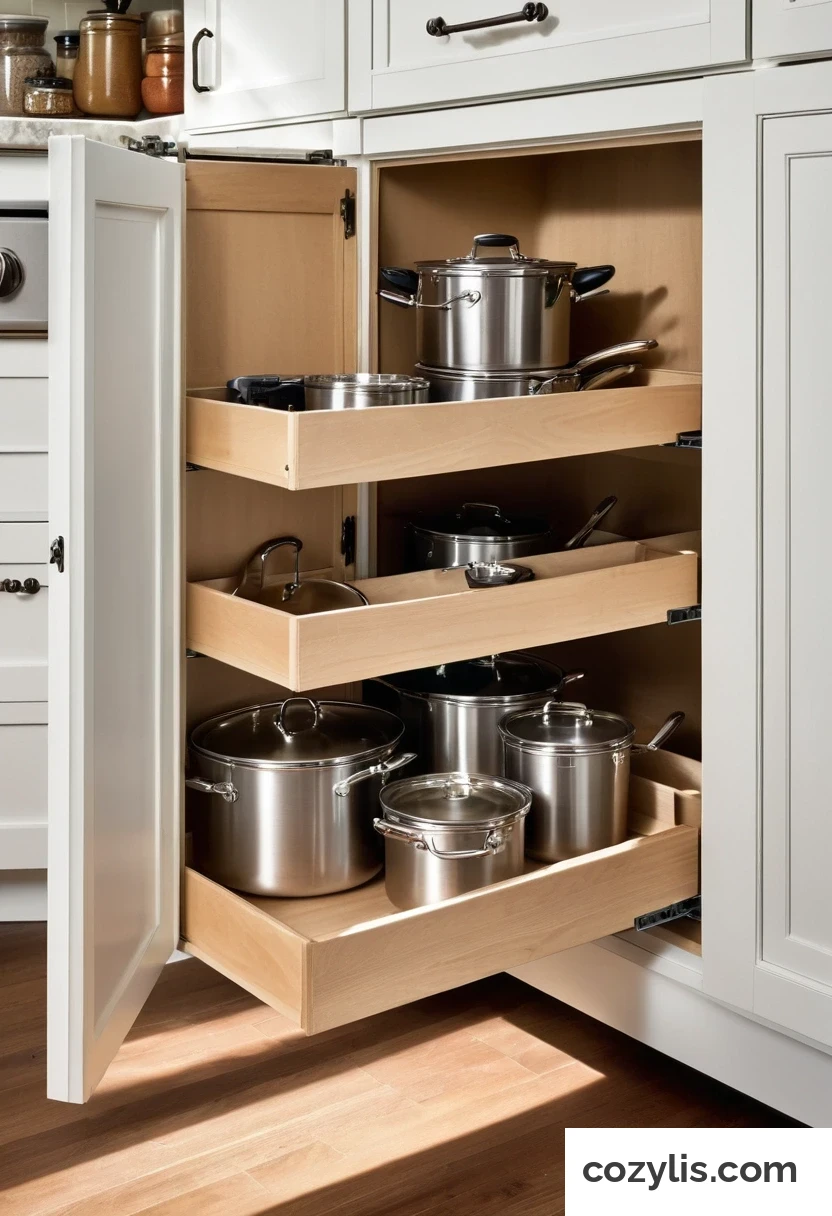
This roundup of kitchen corner storage ideas is designed to save you time, spark fresh inspiration, and suit your space and budget. Kitchen corners often become the most overlooked spaces in a home. Awkward cabinet angles, deep shelves, and narrow gaps can make everyday storage frustrating, especially in kitchens where every inch matters. With thoughtful planning, however, these unused areas can become practical storage zones that improve organization without sacrificing style.
These kitchen corner storage ideas for 2026 explore creative ways to organize cookware, pantry essentials, small appliances, and everyday supplies. From traditional corner cabinets to concealed pull-out systems and elegant pantry designs, each solution offers a different approach to making your kitchen more functional, attractive, and comfortable to use.
26 Kitchen Corner Storage Ideas That Maximize Every Inch with Smart, Stylish Solutions in 2026
A well-organized kitchen should make daily tasks easier while keeping frequently used items accessible. Corner storage can accomplish both goals when cabinetry, shelving, and accessories are selected according to the available space.
Whether you are renovating an entire kitchen or improving an existing layout, these 26 ideas offer practical inspiration for transforming difficult corners into valuable storage areas.
1. Classic Corner Revival
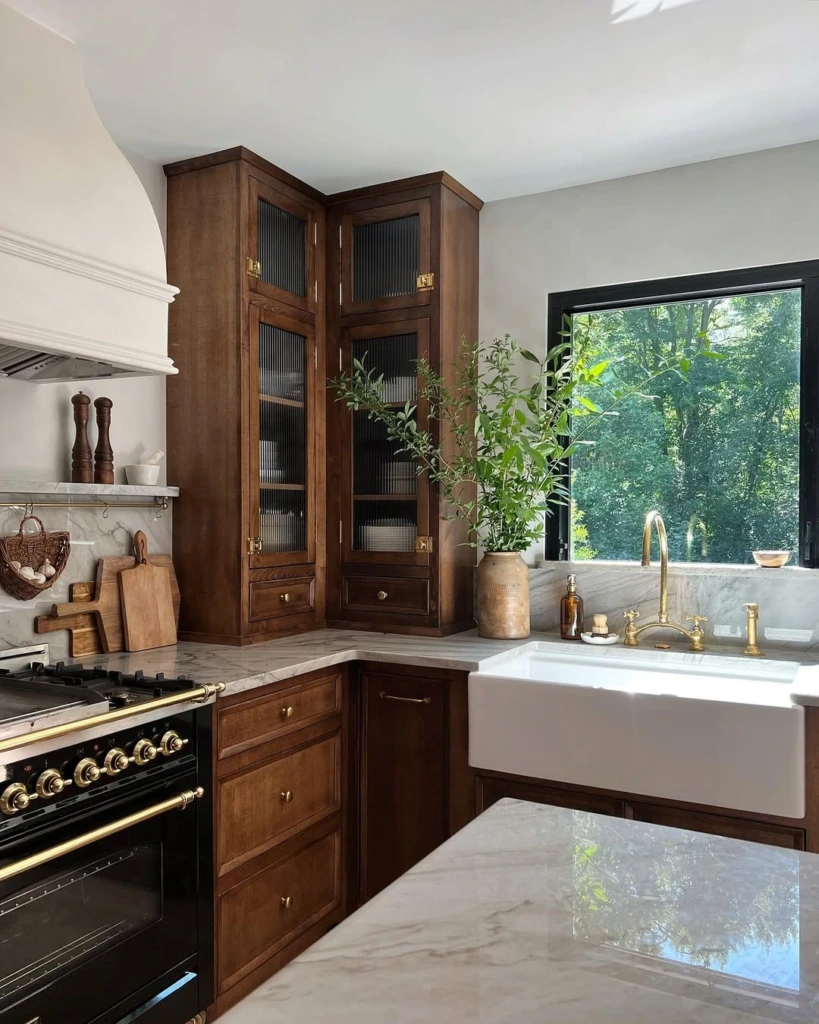
Traditional kitchen corners can become attractive storage features with updated cabinetry and carefully planned shelving. A classic corner cabinet with warm wood finishes, decorative hardware, and adjustable shelves creates an inviting appearance while providing space for everyday kitchen essentials.
Consider installing a rotating shelf mechanism inside a lower corner cabinet to make pots, bowls, and cookware easier to reach. For upper corners, glass-front doors can display neatly arranged dishes without making the room feel crowded.
Cream, soft white, and natural oak finishes work particularly well for this approach. Pairing traditional cabinetry with modern interior organizers creates a balanced design that feels timeless while supporting everyday convenience.
2. Built-In Butler Nook
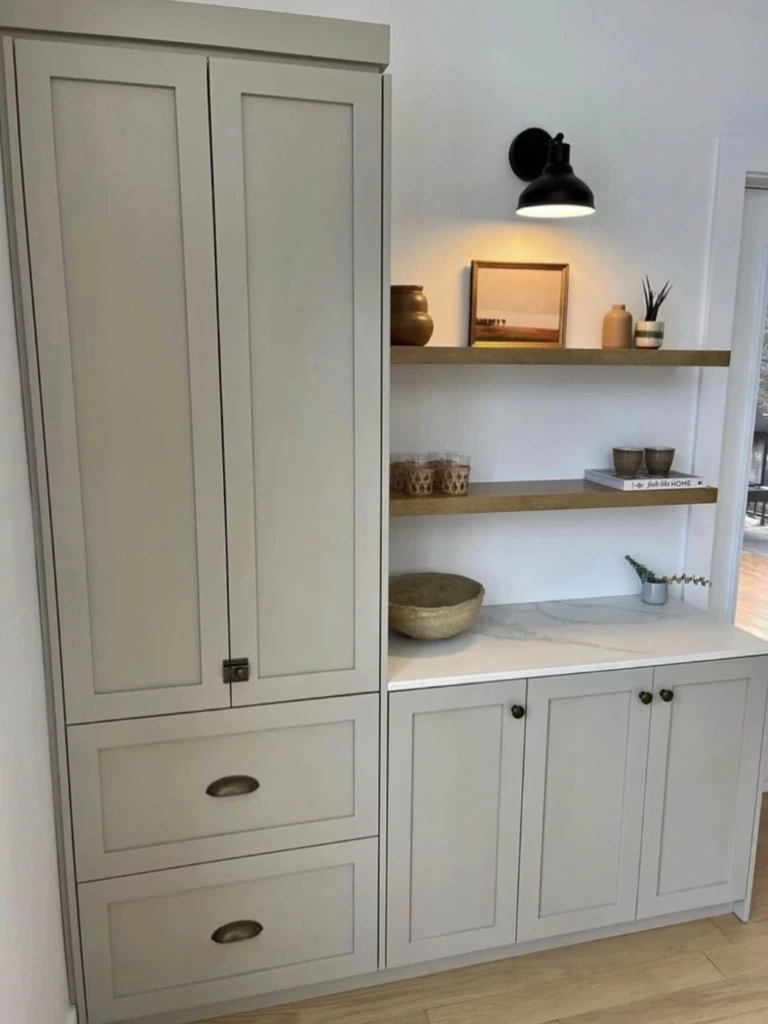
A built-in butler nook transforms an underused kitchen corner into a dedicated preparation and storage station. This design works particularly well in kitchens that need additional countertop space for serving drinks, preparing breakfast, or organizing entertaining essentials.
Install custom cabinets around a compact countertop, leaving enough room for a coffee maker, electric kettle, or frequently used serving pieces. Upper shelving can accommodate mugs, glassware, and decorative containers, while lower cabinets conceal bulkier items.
Integrated lighting beneath the upper cabinets improves visibility and gives the nook a polished appearance. Choose finishes that complement the surrounding kitchen to make the new storage area feel like a natural extension of the existing layout.
3. Hidden Depth Pantry
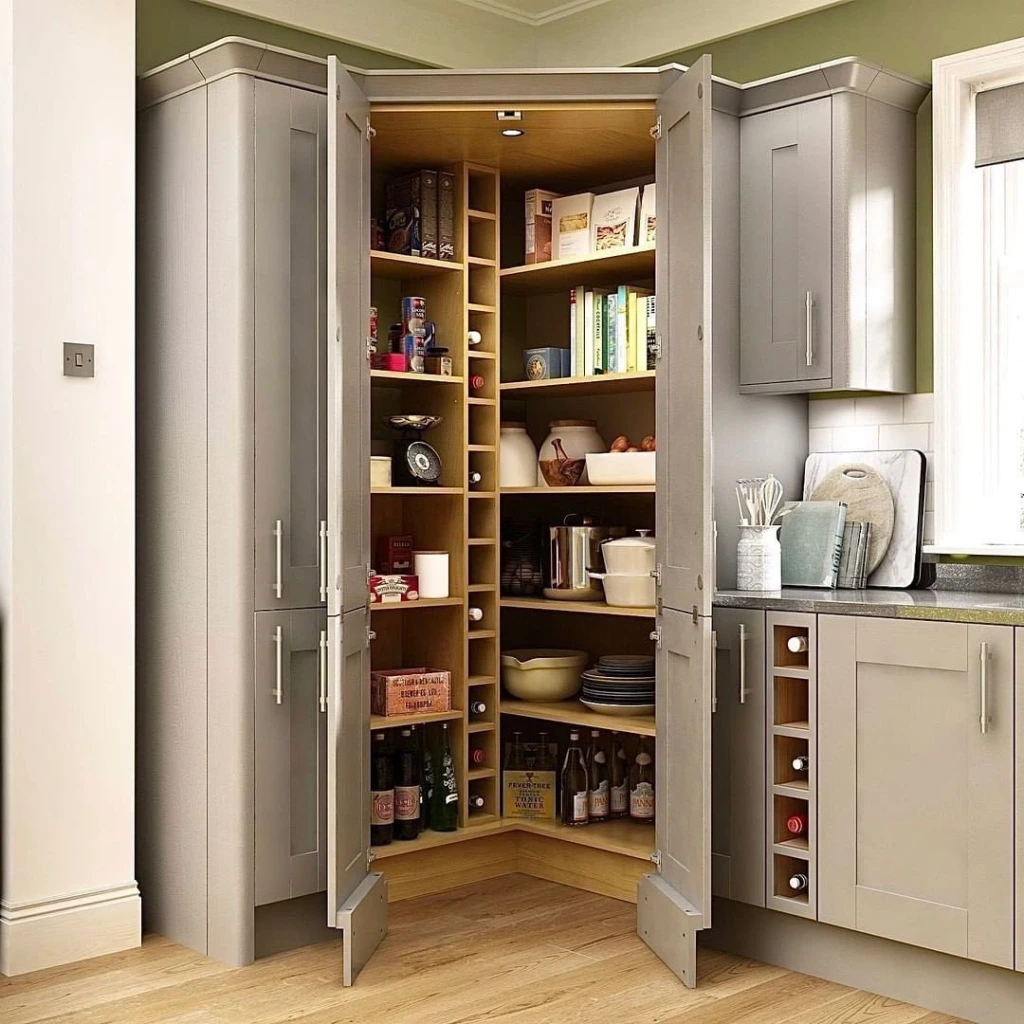
Deep kitchen corners often contain valuable storage space that becomes difficult to access with conventional shelving. A hidden-depth pantry solves this problem by combining spacious cabinetry with organizers that bring stored items into view.
Pull-out trays, rotating shelves, and corner-specific sliding mechanisms help prevent food containers from disappearing behind other supplies. Adjustable shelves also make it easier to accommodate cereal boxes, canned goods, baking ingredients, and small appliances.
For a streamlined appearance, use full-height cabinet doors that match the surrounding kitchen. Labeling containers and grouping products by category will make the pantry easier to maintain over time.
4. Tailored Corner Cabinet
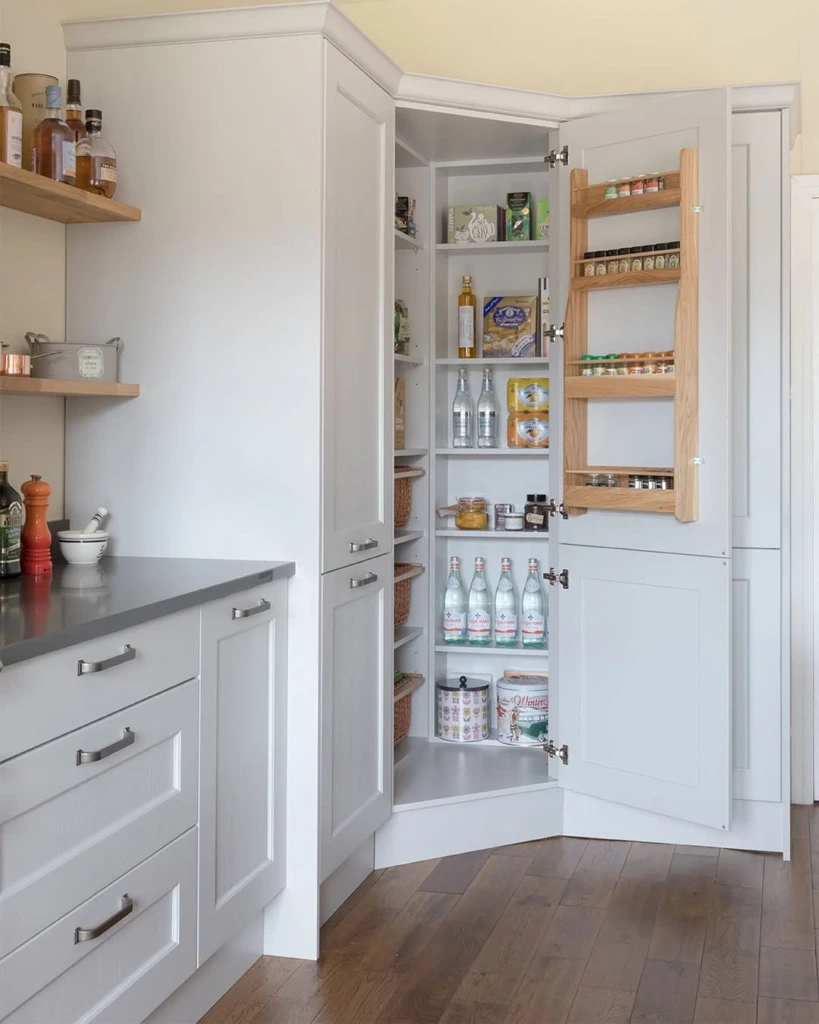
A customized corner cabinet provides storage that fits the exact dimensions and daily needs of your kitchen. Instead of accepting the limitations of standard cabinetry, a tailored design can incorporate specialized compartments for cookware, utensils, and pantry supplies.
Start by measuring the corner carefully, including door clearance and nearby appliances. Choose internal features such as swing-out shelves, removable trays, or adjustable dividers according to the items you plan to store.
For a cohesive appearance, match the cabinet's door profile and finish to the rest of the kitchen. Custom solutions can require a larger initial investment, but they can make irregular spaces considerably easier to use.
5. Slim Pull-Out Pantry
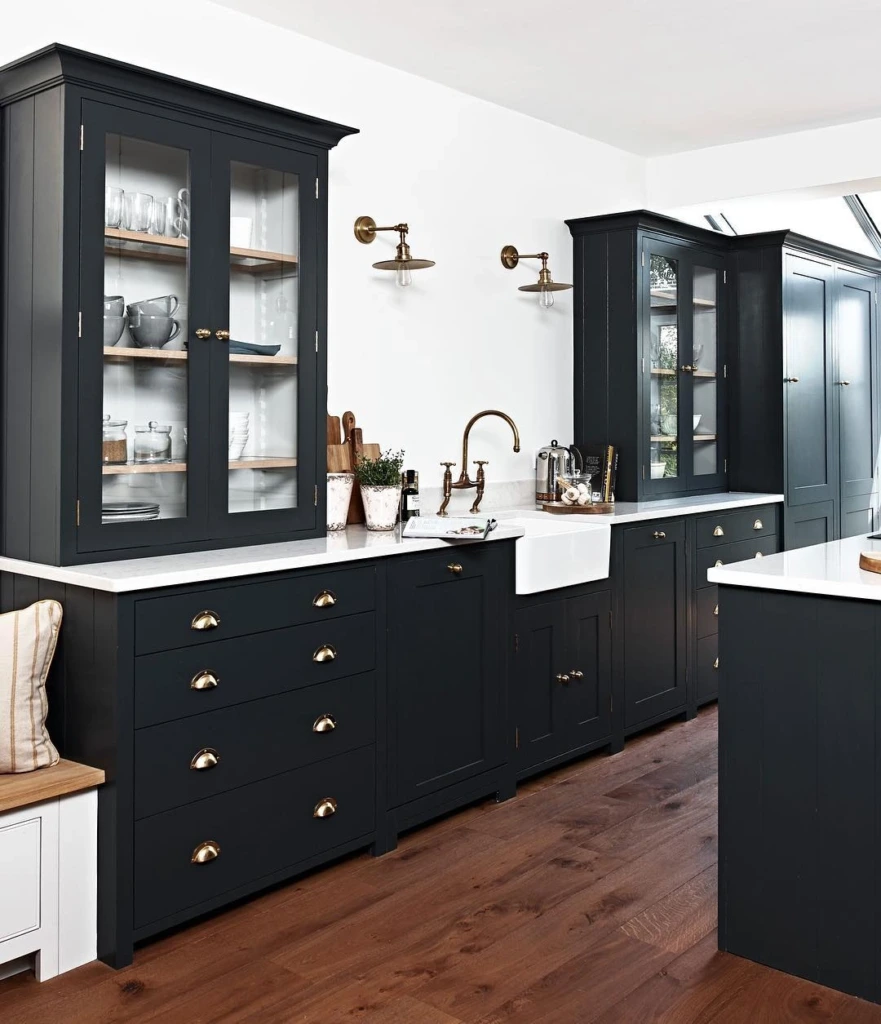
Narrow spaces beside refrigerators, ovens, or kitchen cabinets can become surprisingly useful storage areas with a slim pull-out pantry. This vertical solution takes advantage of gaps that would otherwise remain empty.
A tall sliding unit with multiple shallow shelves provides convenient storage for spice jars, canned foods, condiments, and packaged ingredients. Full-extension runners make items at the back easier to access, while raised shelf edges help prevent containers from tipping.
Choose a pull-out mechanism rated for the weight of the stored products, and ensure the unit is securely installed. A cabinet front that matches the surrounding cabinetry keeps the pantry discreet when closed.
6. Modern Glass Display
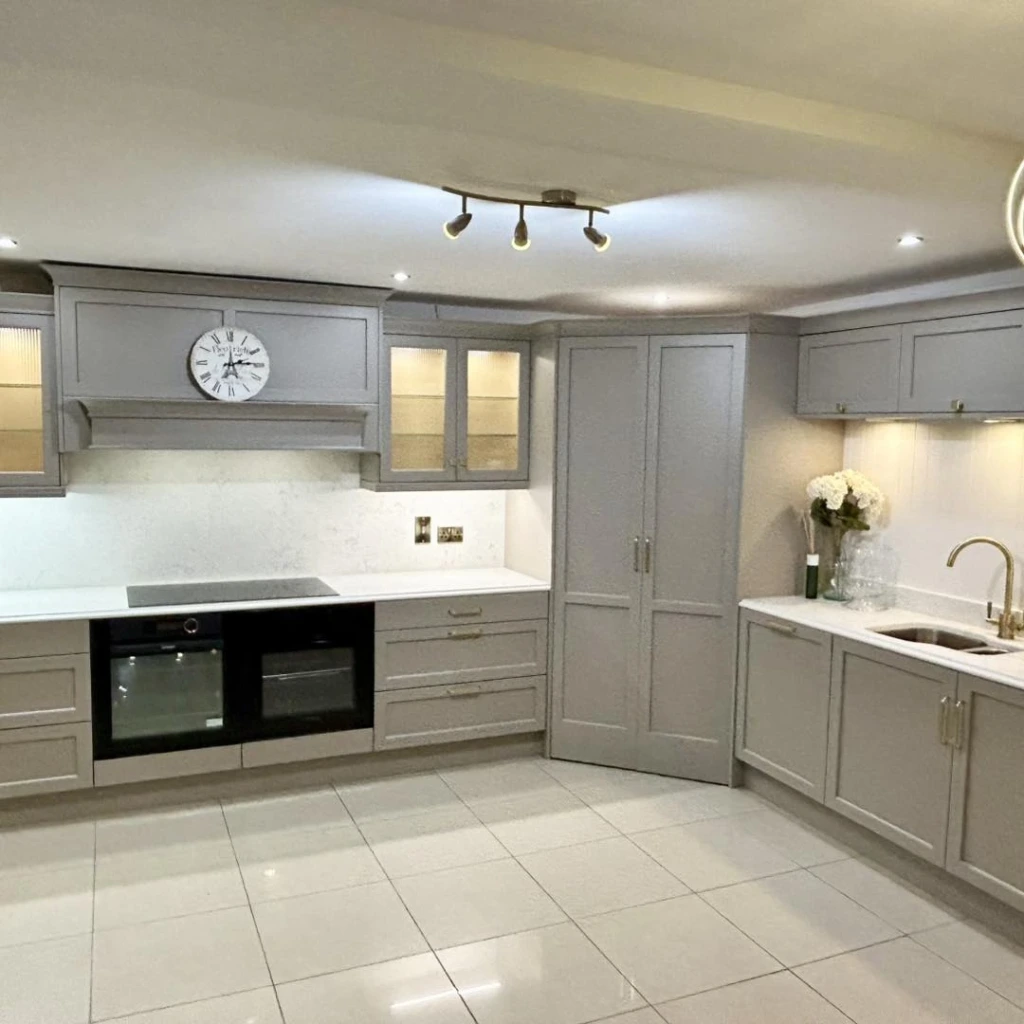
A glass-front corner cabinet combines practical organization with an elegant display area. It is particularly suitable for kitchens with attractive dinnerware, glass collections, or decorative serving pieces.
Clear glass doors create an open appearance, while fluted or lightly frosted glass provides a softer view of the contents. Interior shelves can be made from wood or tempered glass, depending on the desired aesthetic and load requirements.
Add warm LED lighting to highlight the displayed objects and improve visibility. Keep the arrangement simple by grouping similar pieces together and leaving some open space between items.
This approach works beautifully in contemporary kitchens where storage is expected to contribute to the overall design.
7. Rustic Corner Flow
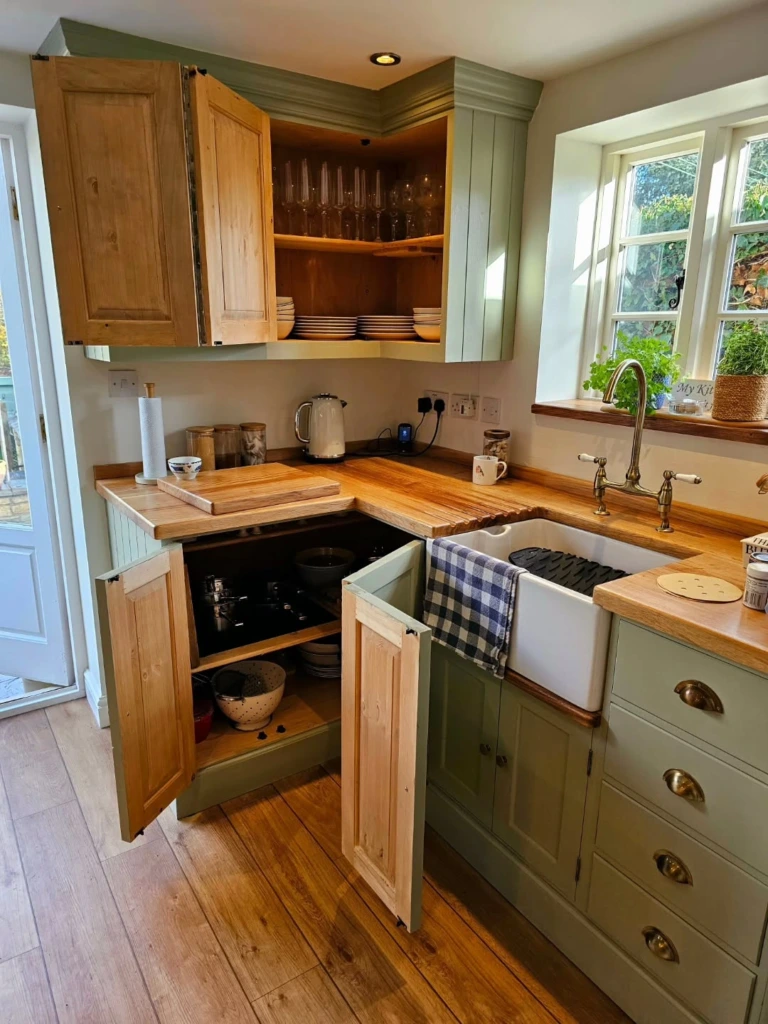
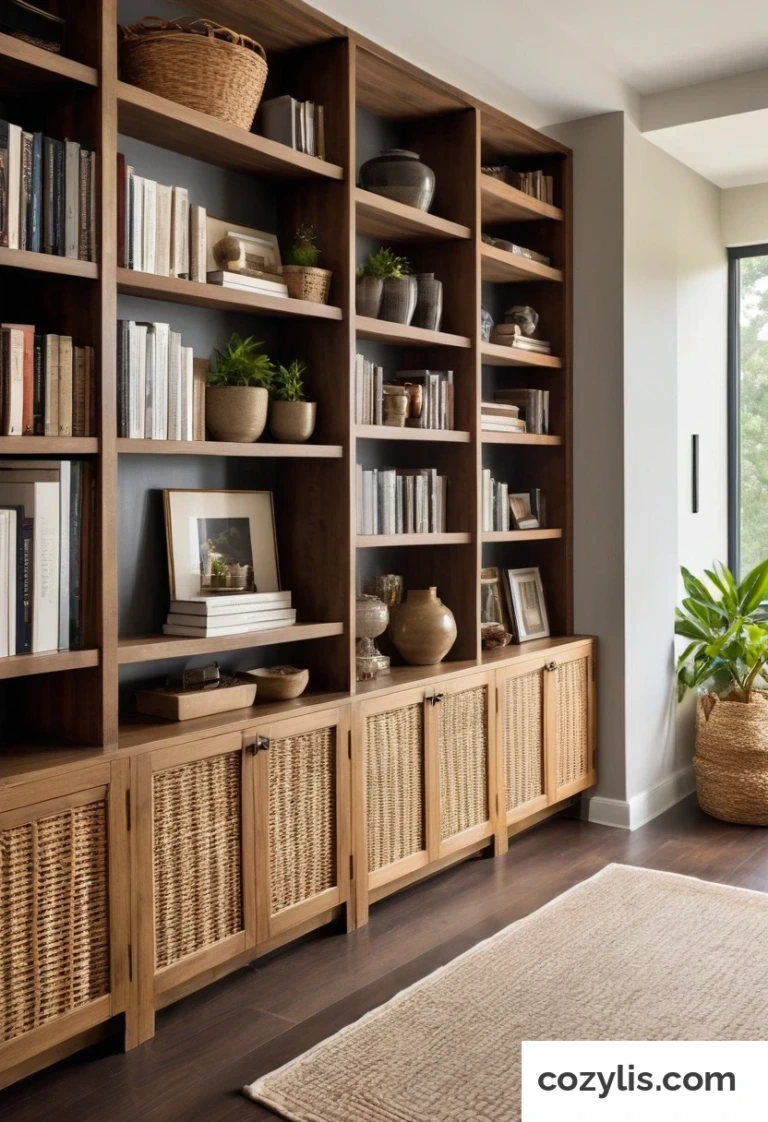
Rustic kitchen storage emphasizes natural materials, comfortable textures, and practical everyday organization. A corner featuring wooden shelves, woven baskets, and warm cabinetry can create a welcoming atmosphere without appearing overly decorative.
Install sturdy open shelves along the adjoining walls to hold frequently used dishes, jars, or cooking accessories. Reclaimed-style wood finishes and matte metal brackets add character while keeping the design functional.
Use baskets to conceal smaller items and prevent visual clutter. Earthy colors, ceramic containers, and simple hardware can help connect the storage area with the surrounding kitchen.
The key is to maintain enough open space so the corner feels relaxed rather than overcrowded.
8. Compact Corner Comfort
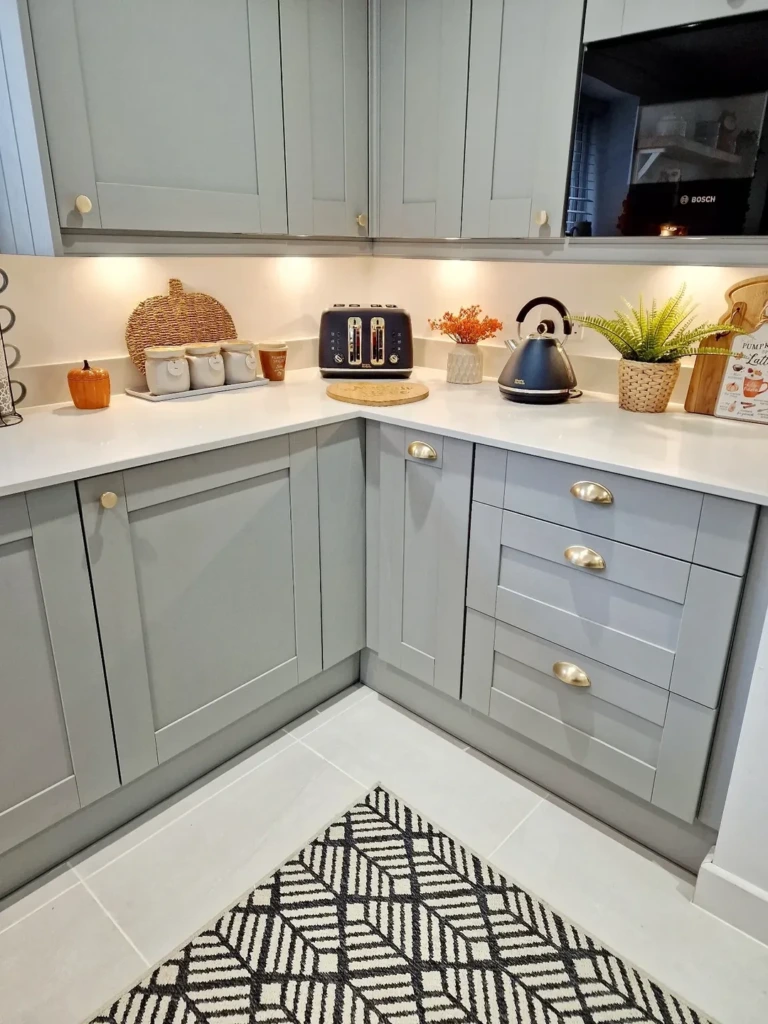
Small kitchens benefit from storage solutions that preserve movement while making essential items easy to reach. A compact corner cabinet or floating shelf arrangement can improve organization without dominating the room.
Consider a shallow countertop cabinet for mugs, tea supplies, or breakfast essentials. Alternatively, install two or three floating shelves above an unused counter corner for lightweight dishes and decorative containers.
Light-colored finishes help the space feel brighter, while rounded shelf edges can reduce the likelihood of uncomfortable bumps in tight layouts.
Prioritize the items you use most frequently and avoid filling every available surface. Thoughtful organization often makes a compact kitchen feel more comfortable than adding excessive cabinetry.
9. Layered Neutral Pantry
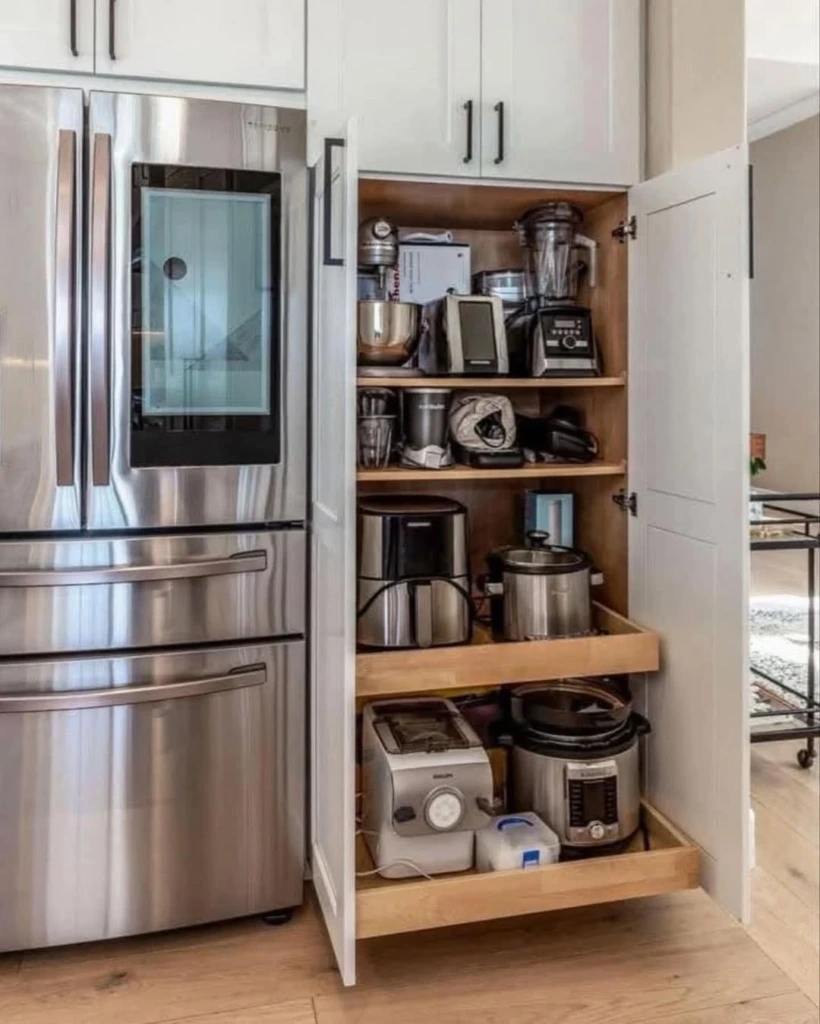
A neutral pantry design uses coordinated colors and textures to create an organized appearance that feels calm and sophisticated. Shades of beige, ivory, taupe, and natural wood are especially effective for corner pantry storage.
Combine adjustable shelves with matching baskets, clear food containers, and simple labels. Place heavier supplies on lower shelves and frequently used ingredients at comfortable reaching heights.
Different container sizes can create visual interest while accommodating a variety of products. However, practical storage requirements should determine container selection rather than appearance alone.
Soft interior lighting can make a deep corner pantry easier to navigate. The finished result is a storage area that feels orderly without relying on bold colors or complicated decorative elements.
10. Pull-Out Appliance Hub
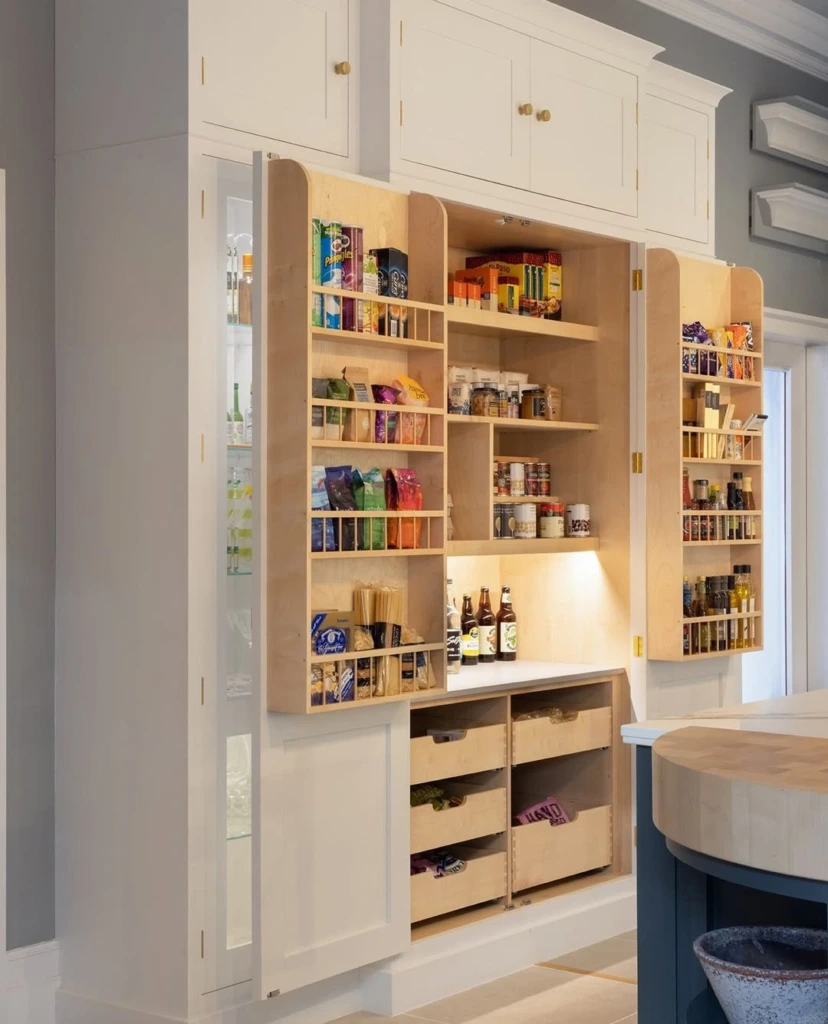
Small kitchen appliances can quickly occupy valuable countertop space. A pull-out appliance hub provides a designated location for mixers, blenders, food processors, and other equipment that may not need to remain visible throughout the day.
A heavy-duty sliding shelf inside a lower corner cabinet allows appliances to be moved forward for easier lifting or use. Some designs also incorporate lift mechanisms that raise heavy equipment closer to countertop height.
Check the manufacturer's weight capacity before selecting hardware. Appliances that generate heat or steam should only be operated inside cabinetry when the installation provides the required clearance and ventilation.
This storage concept is especially useful for homeowners who prefer uncluttered countertops but still want convenient access to their kitchen equipment.
11. Classic Corner Pantry
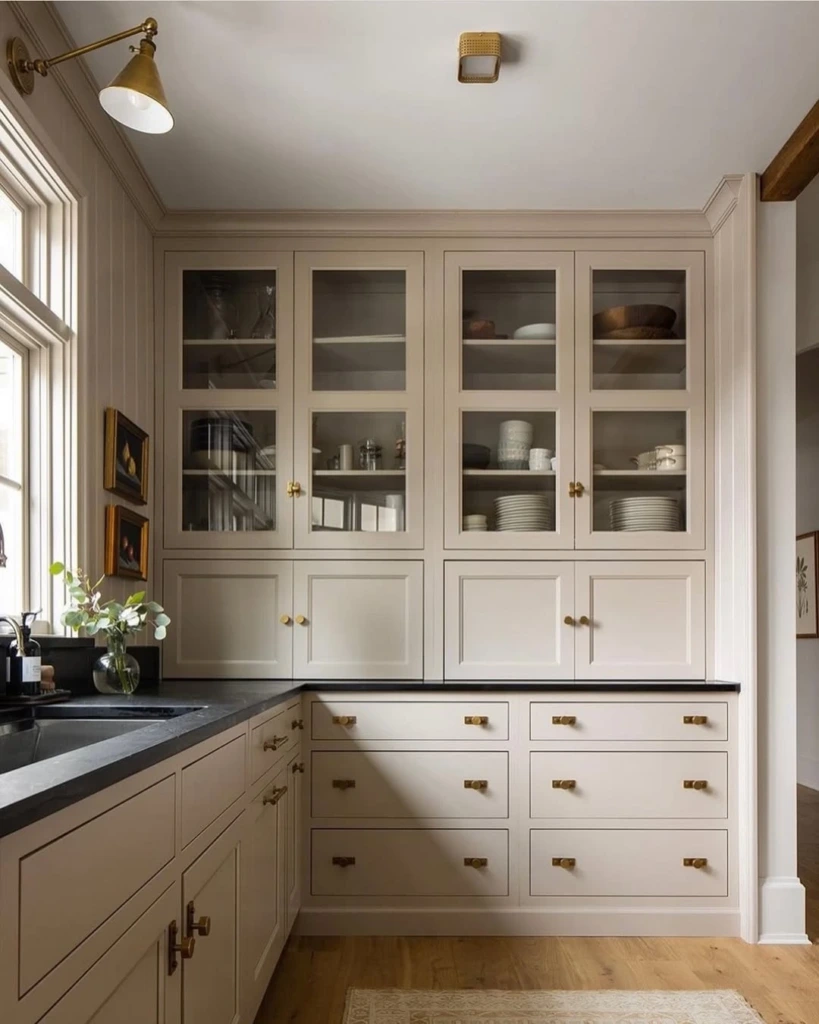
A classic corner pantry offers generous storage with a familiar, timeless appearance. It can feature a full-height cabinet, traditional paneled doors, and adjustable interior shelves for organizing everyday food supplies.
A diagonal corner entrance can provide convenient access where the kitchen layout allows sufficient clearance. In smaller spaces, a carefully designed hinged or folding door may offer a more practical alternative.
Arrange pantry items according to frequency of use, keeping everyday ingredients near the center and occasional supplies on higher shelves. Baskets and shallow organizers help prevent smaller packages from becoming lost.
White cabinetry, warm wood shelving, and simple metal hardware create a design that complements traditional and transitional kitchens.
12. Glass and Aluminum Edge
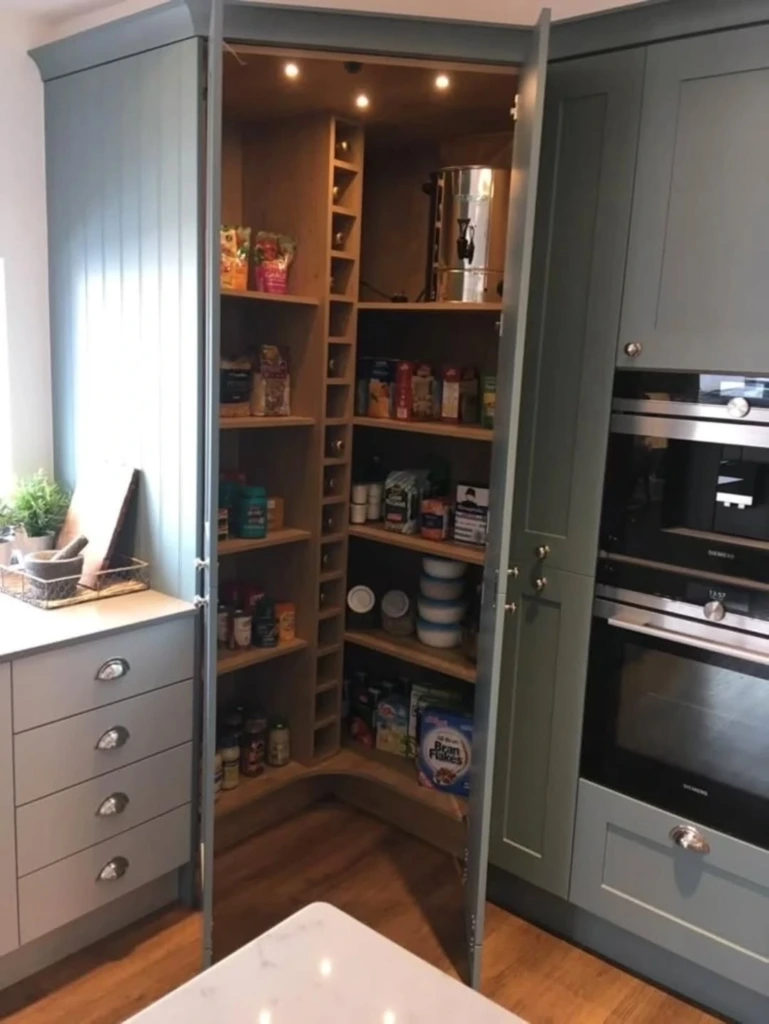
For a contemporary kitchen, glass panels framed with aluminum offer a clean architectural appearance. This combination works particularly well for corner cabinets that need to feel visually light while maintaining a structured design.
Slim aluminum frames support glass doors without the heavy appearance of traditional wooden cabinetry. Choose clear glass for decorative displays or textured glass when you prefer to soften the visibility of stored items.
Inside the cabinet, adjustable shelving provides flexibility for dinnerware, glasses, and serving accessories. Integrated LED strips can emphasize the sleek materials while illuminating the cabinet interior.
Brushed aluminum, charcoal finishes, and subtle metallic details complement minimalist kitchens. Use hardware and glass designed specifically for cabinetry to ensure reliable daily operation.
13. Heritage Corner Cabinet
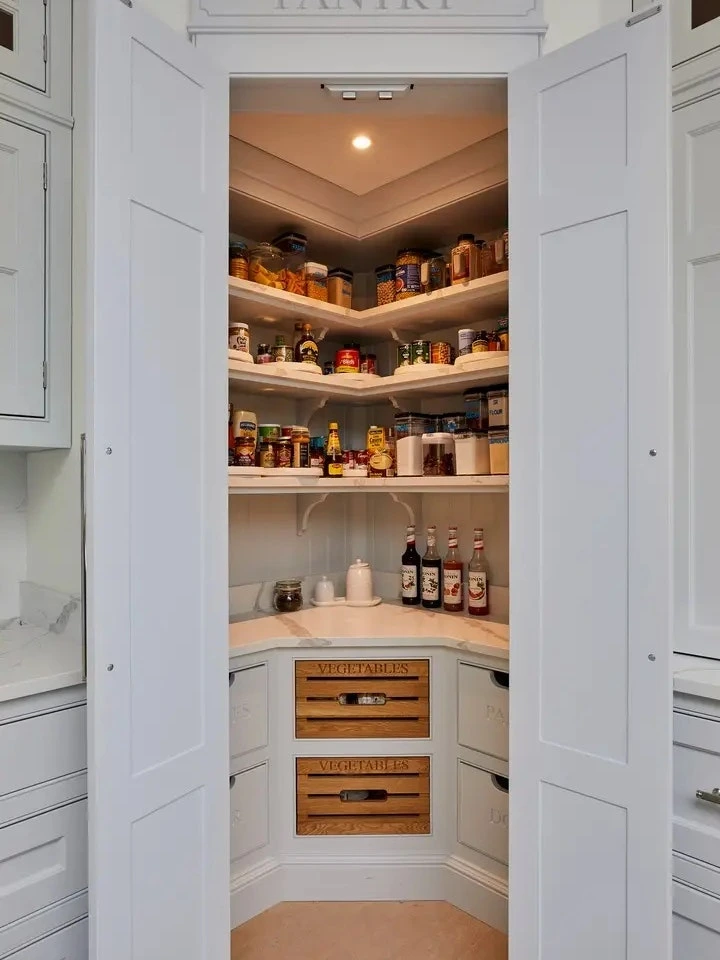
A heritage-inspired corner cabinet introduces traditional craftsmanship into a modern kitchen. Raised-panel doors, decorative molding, and warm painted finishes can make an otherwise ordinary corner feel like a carefully designed furniture piece.
Consider a tall cabinet with glass-front upper doors and concealed lower storage. The upper section can display favorite dishes or vintage kitchenware, while the lower compartments accommodate less decorative essentials.
Antique-style brass handles and natural wood interiors enhance the traditional character. For additional functionality, install adjustable shelves or removable organizers that accommodate changing storage needs.
This approach works especially well in farmhouse, cottage, and classic kitchens where cabinetry contributes to the room's overall personality.
14. Deep Corner Retreat
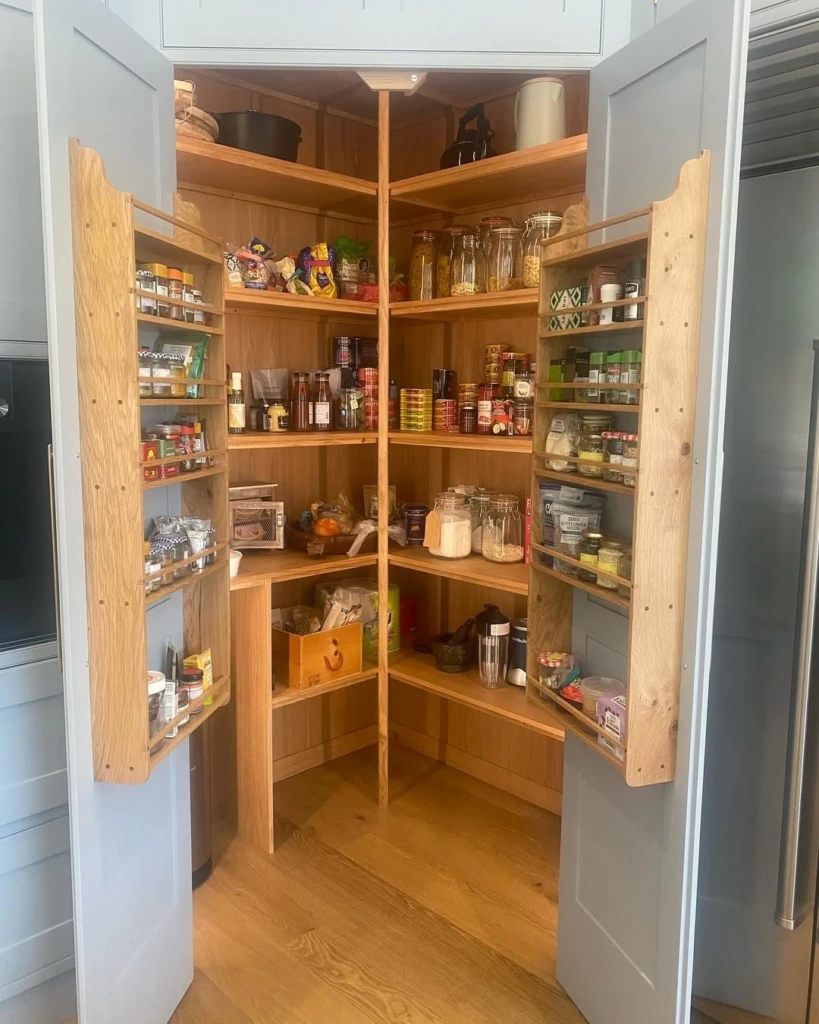
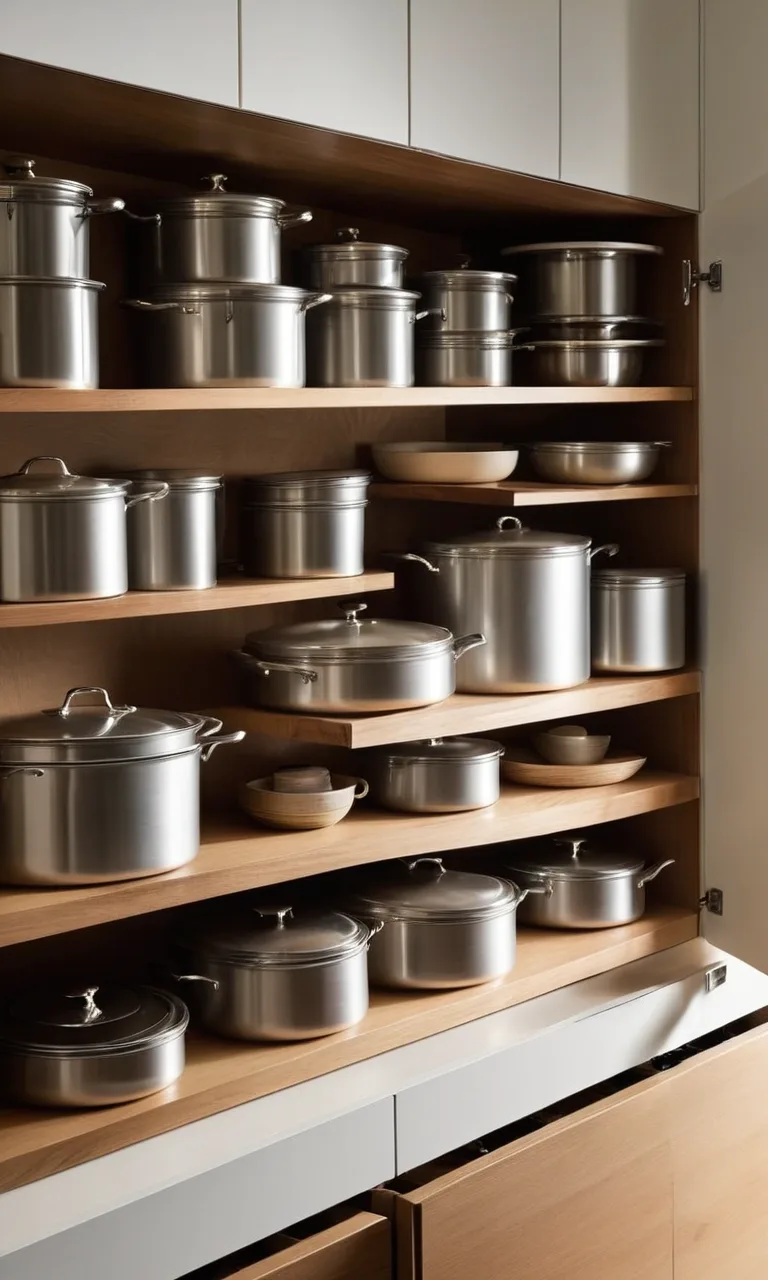
A deep corner cabinet can store large cookware and infrequently used kitchen equipment when its interior is organized correctly. Without a suitable storage system, however, items placed toward the back may become difficult to retrieve.
Install kidney-shaped rotating shelves, swing-out trays, or other corner-specific organizers to improve accessibility. These mechanisms allow stored objects to move toward the cabinet opening rather than requiring you to reach into the deepest sections.
Use lower compartments for heavier cookware and upper areas for lighter accessories, following the organizer's load limits.
A clean cabinet exterior helps maintain a streamlined appearance, while the specialized interior makes the space substantially more practical.
15. Dual Access Pantry
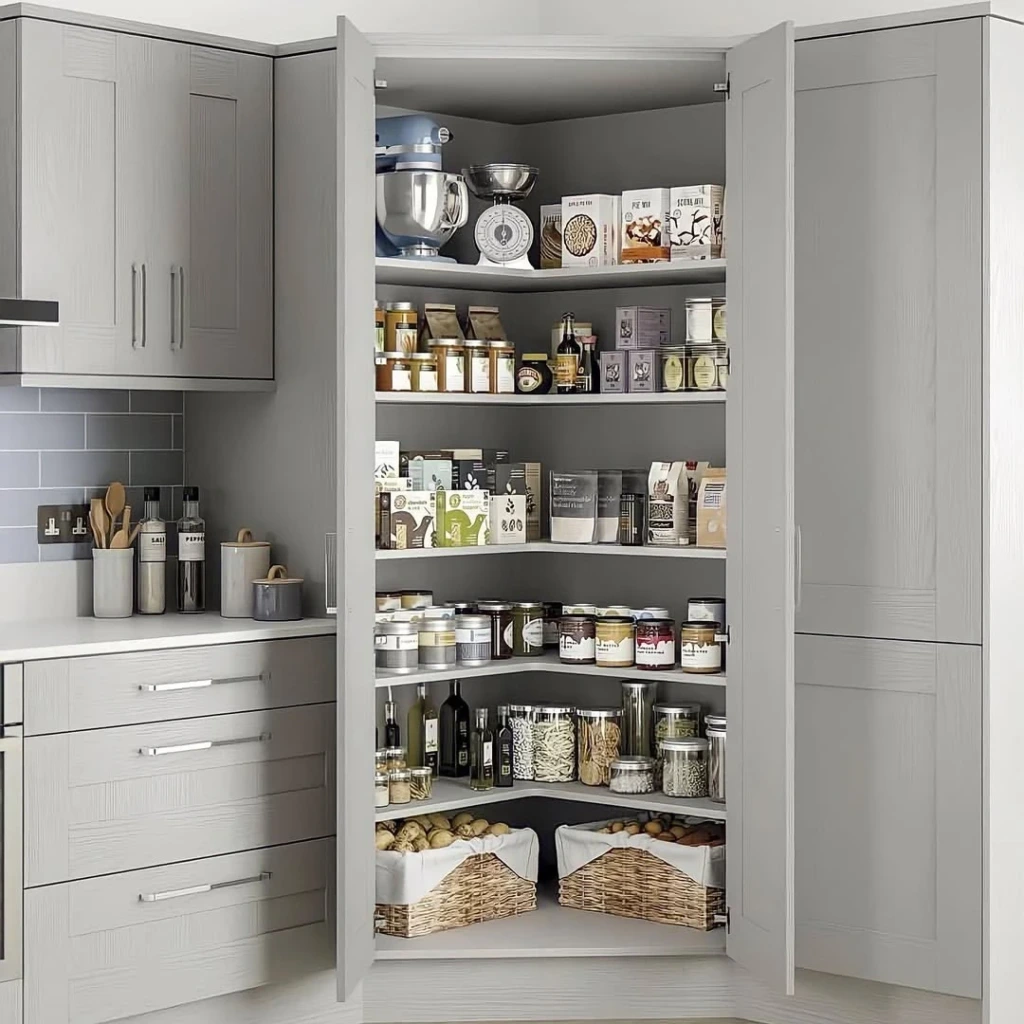
A dual-access pantry allows stored items to be reached from two convenient directions. This arrangement can be particularly useful in kitchens where a corner connects separate preparation and cooking zones.
The design may feature adjoining cabinet openings, carefully planned shelves, or a walk-through pantry with more than one entrance. Each access point should provide enough clearance for doors, drawers, and nearby appliances.
Organize ingredients according to where they are used. For example, baking supplies can be positioned closer to the preparation counter, while cooking oils and seasonings remain near the cooking area.
Clear sightlines and thoughtful shelf placement help reduce unnecessary movement during meal preparation.
16. Vertical Storage Wall
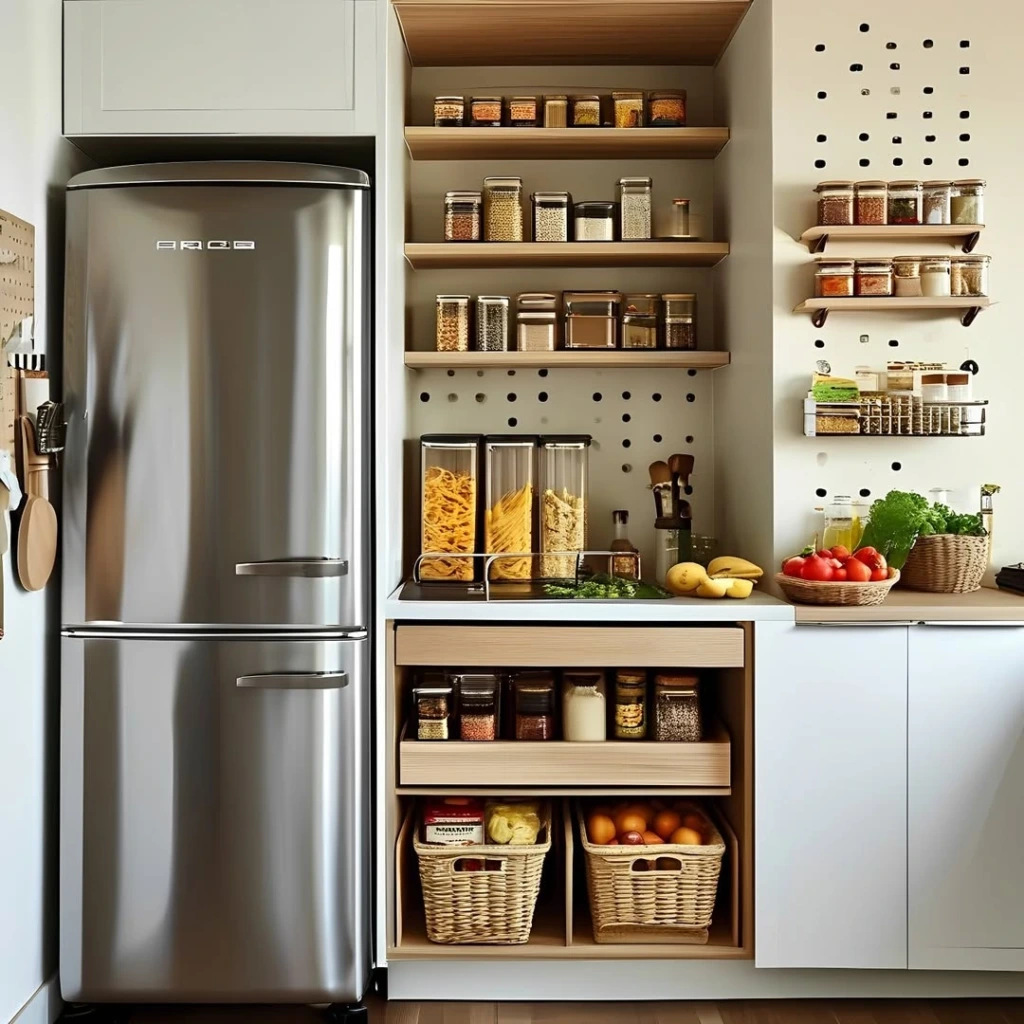
When floor space is limited, extending kitchen storage upward can provide additional capacity without expanding the kitchen footprint. A vertical corner storage wall uses tall cabinetry, stacked shelves, and specialized organizers to maximize available height.
Install full-height cabinets for pantry supplies, cookware, and occasional-use serving pieces. Adjustable shelves make the interior more versatile, while pull-out sections can improve access to frequently used products.
Keep heavy items at lower levels and reserve upper compartments for lightweight supplies that are used less often.
A continuous cabinet finish creates a cohesive appearance, making the storage wall feel integrated rather than visually overwhelming. Secure tall units properly to the wall for stability.
17. Shaker Corner Elegance
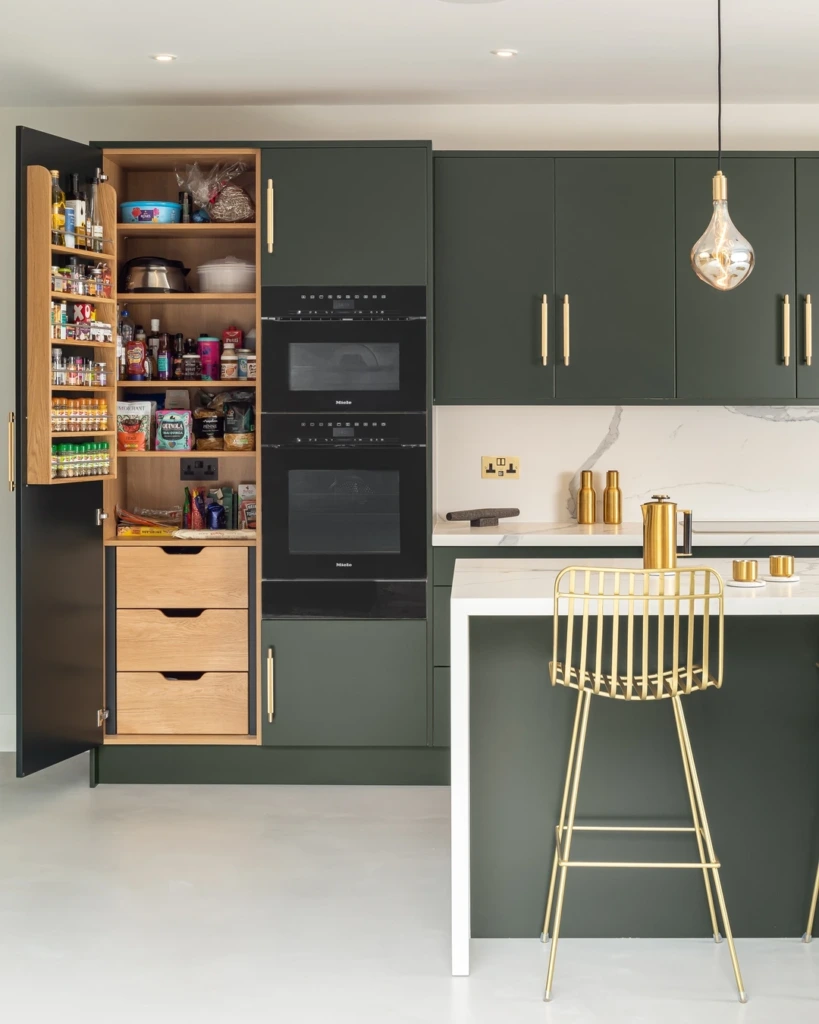
Shaker-style cabinetry offers a simple, versatile solution for kitchen corner storage. Its clean recessed-panel doors suit traditional, contemporary, and transitional interiors.
A Shaker corner cabinet can incorporate a rotating organizer, adjustable shelving, or a swing-out system while maintaining a classic exterior. Soft-close hinges and understated hardware contribute to comfortable daily use.
White, sage green, muted blue, and warm gray are attractive choices for this style. Natural wood countertops or brass accents can introduce warmth without distracting from the cabinetry's straightforward design.
For a balanced result, maintain consistent door proportions and hardware finishes across the kitchen.
18. Minimalist Corner Pantry
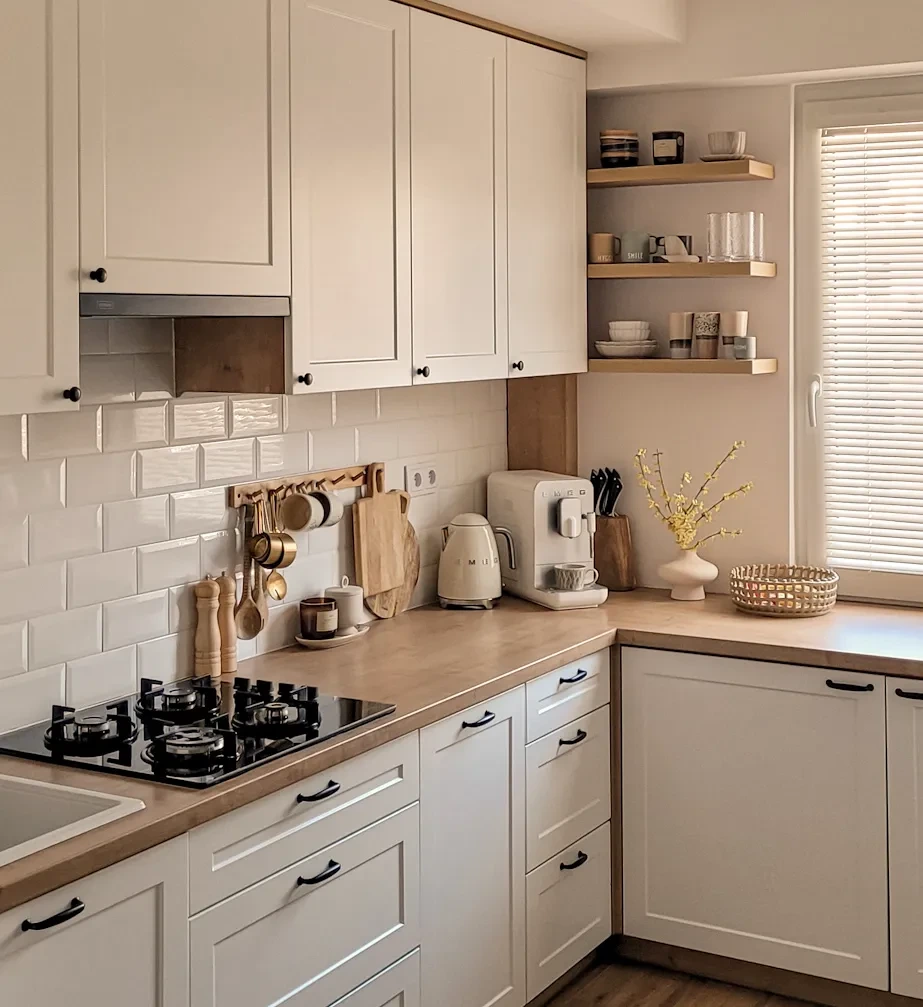
A minimalist corner pantry focuses on accessibility, simplicity, and carefully controlled visual clutter. Flat-front cabinet doors, concealed handles, and a limited color palette create a clean appearance that blends with the surrounding kitchen.
Inside, use adjustable shelving and practical containers to organize dry ingredients, snacks, and cooking supplies. Matching storage bins can improve visual consistency, but clear labels are essential for identifying their contents.
Avoid purchasing more organizers than the pantry actually needs. Leaving space around stored items makes them easier to remove and return.
A concealed pantry with efficient interior storage is ideal for kitchens where a calm, uninterrupted appearance is a major design priority.
19. Luxe Pull-Out System
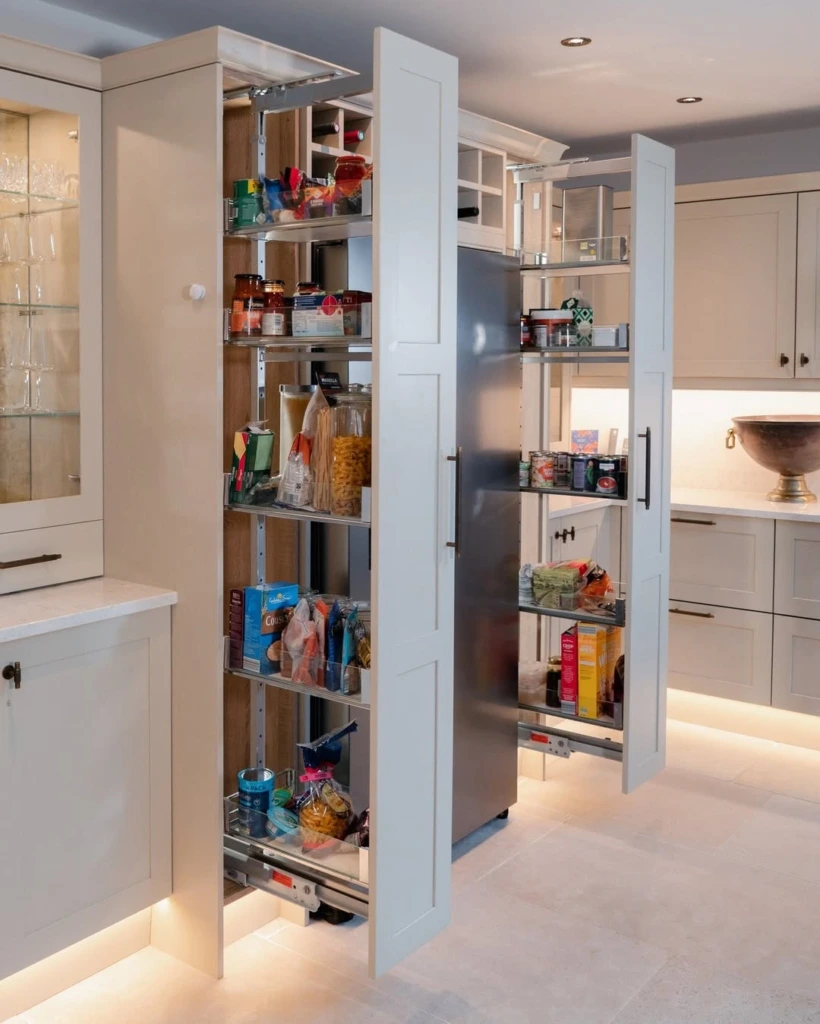
A premium pull-out storage system can transform a difficult kitchen corner into a highly accessible organization area. These systems often feature smooth-running mechanisms, durable metal frames, and carefully engineered trays.
Corner swing-out organizers are particularly useful because they move stored items toward the cabinet opening. Full-extension drawers may also work well in suitable layouts, allowing cookware and supplies to remain visible.
Choose quality hardware with appropriate load ratings and corrosion-resistant finishes. Soft-close mechanisms add convenience and help reduce noise during everyday use.
Although premium systems generally cost more than basic shelving, they can be a worthwhile upgrade for kitchens where corner cabinets are used frequently.
20. Contemporary Corner Integration
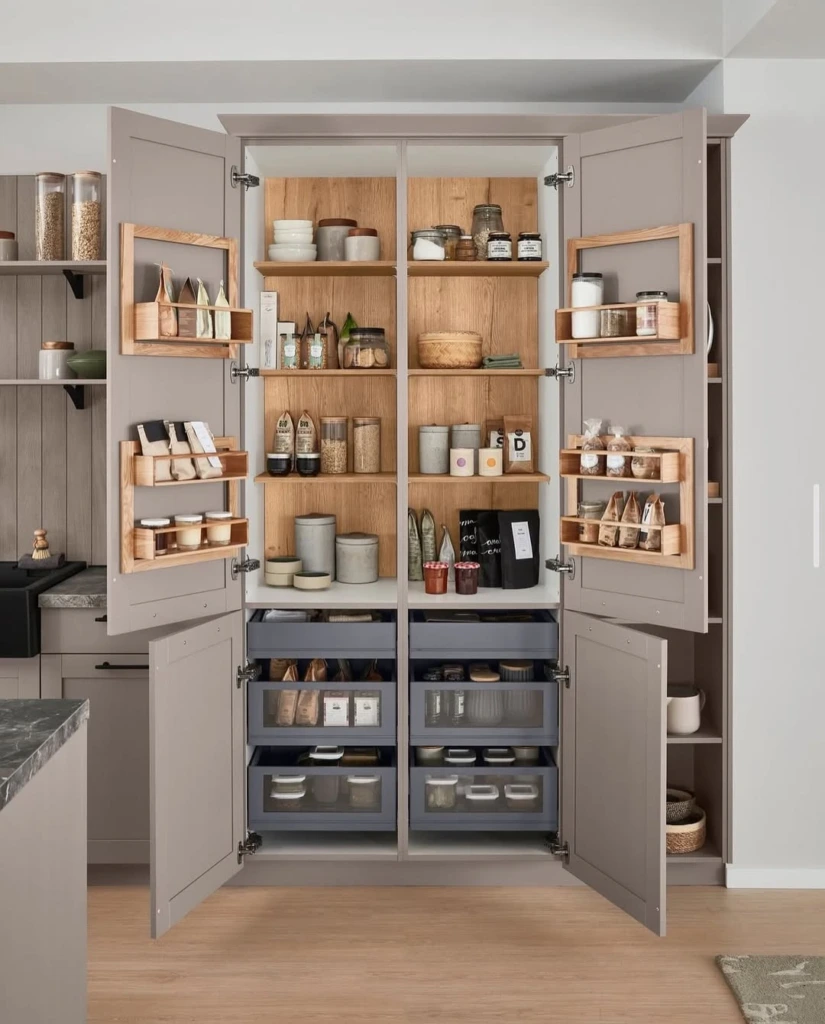
Contemporary corner storage works best when it feels like a seamless part of the kitchen rather than an additional feature. Integrated cabinetry can conceal pantry shelves, appliances, and organizational accessories behind coordinated doors.
Use flat-panel cabinets, consistent finishes, and carefully aligned hardware to create a unified appearance. Interior pull-outs or rotating shelves can provide functionality without changing the exterior design.
For open-plan kitchens, this approach helps maintain visual continuity between cooking, dining, and living spaces.
Consider integrating lighting and electrical outlets where appropriate, particularly if the corner will accommodate appliances. Electrical installations should follow applicable safety requirements and allow suitable ventilation.
21. Soft Classic Corner Cabinet
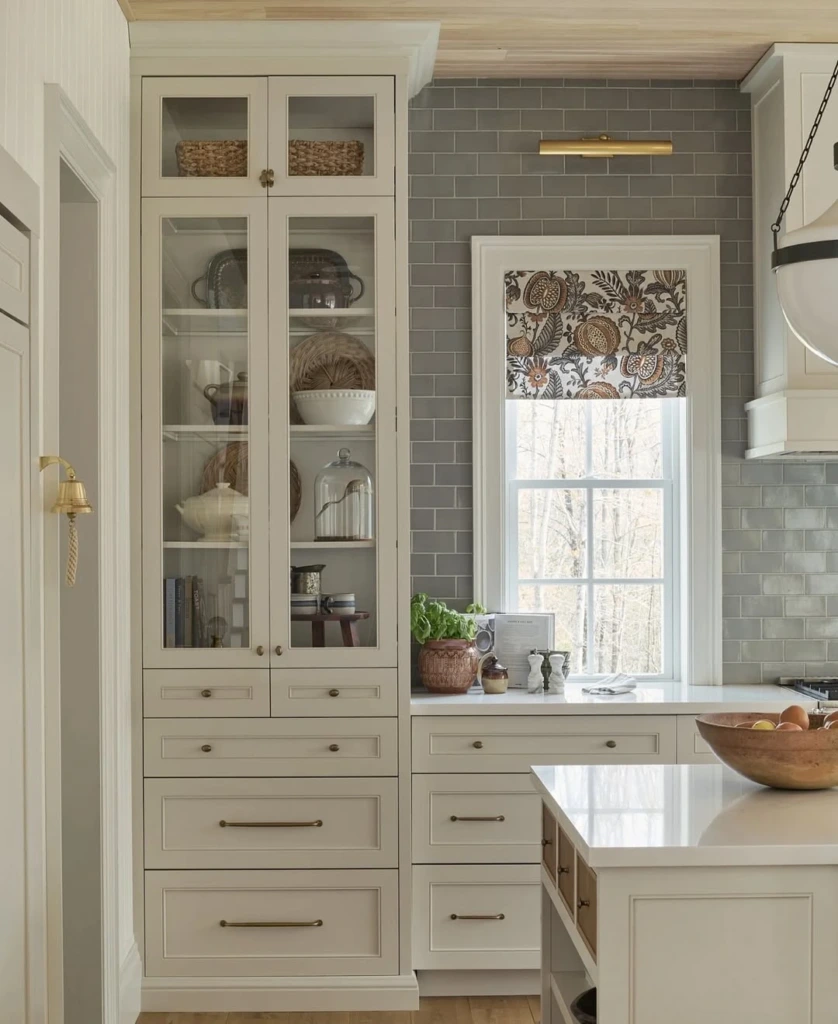
A soft classic corner cabinet combines traditional detailing with gentle colors and understated materials. It is an appealing choice for kitchens that need practical storage without the strong visual presence of dark or heavily decorated cabinetry.
Choose pale cream, warm gray, or muted beige cabinet fronts with subtle panel detailing. Inside, adjustable shelves can accommodate dishes, pantry containers, and everyday cookware.
Simple knobs, soft-close hinges, and discreet lighting add modern convenience while preserving the traditional atmosphere.
Pair the cabinet with natural stone-look countertops, warm wood accents, or a lightly textured backsplash for a cohesive finish. The result is a comfortable design that can remain attractive as decorating trends change.
22. Walk-In Corner Pantry
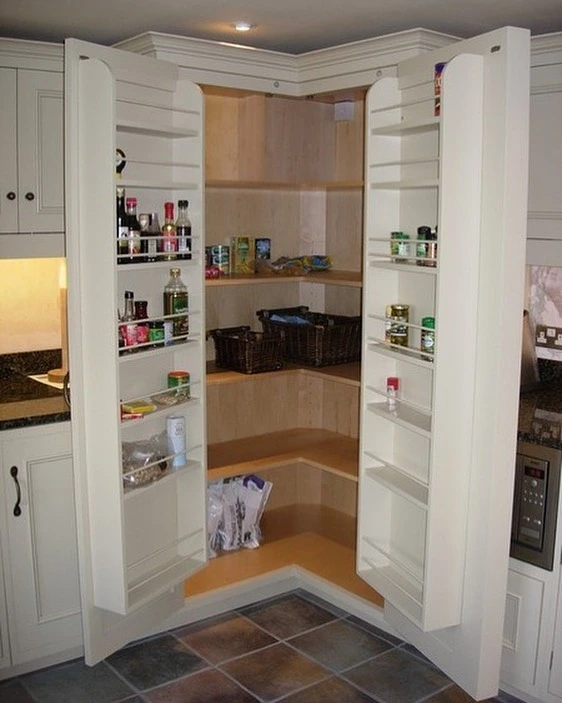
A walk-in corner pantry creates a dedicated storage area for food, small appliances, and household kitchen supplies. It is particularly useful in larger kitchens where an unused corner can accommodate an enclosed pantry without restricting circulation.
Arrange shelving along the walls while leaving sufficient room to enter, turn, and retrieve items comfortably. Shallow shelves often work better for canned goods and spices, while deeper shelves can hold appliances and larger containers.
Include adequate lighting and ventilation to maintain a practical storage environment. Keep food away from excessive heat and moisture, and use sealed containers where appropriate.
A pocket door or outward-opening door may help preserve usable interior space, depending on the surrounding layout.
23. Hidden Pantry Wall
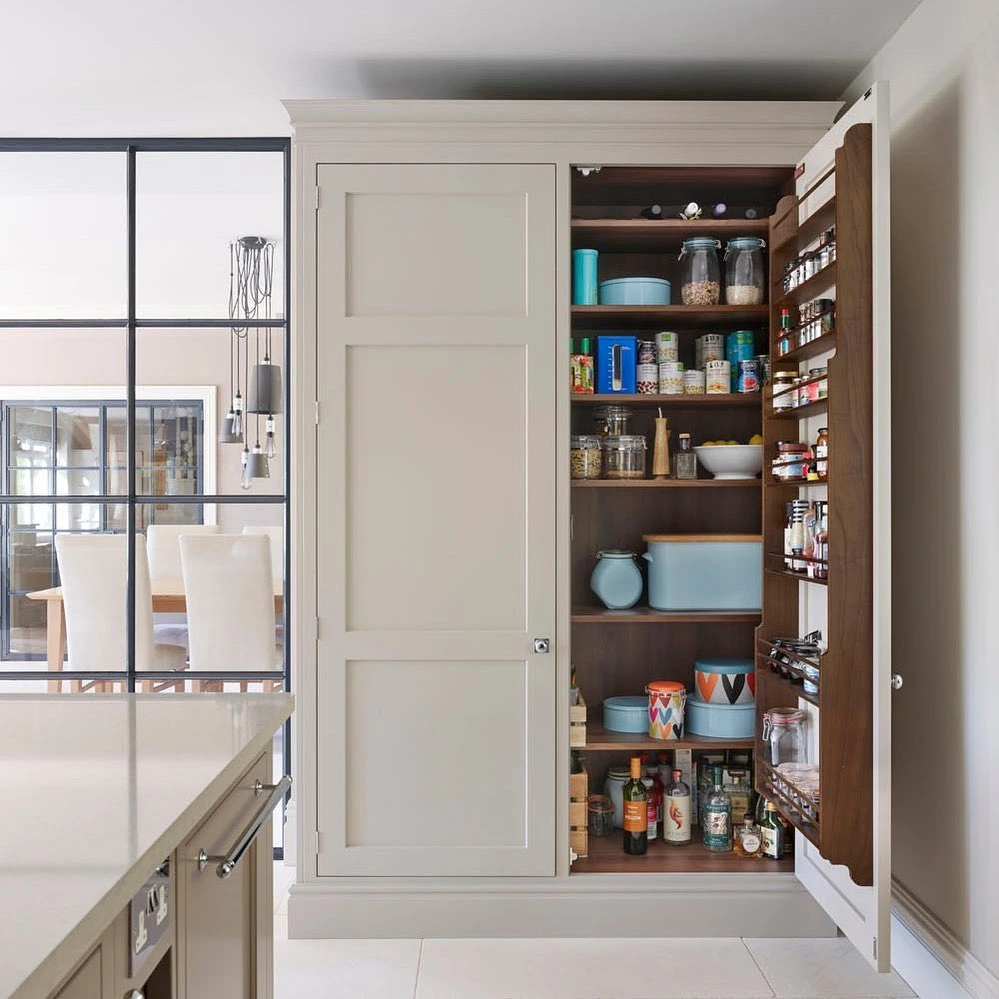
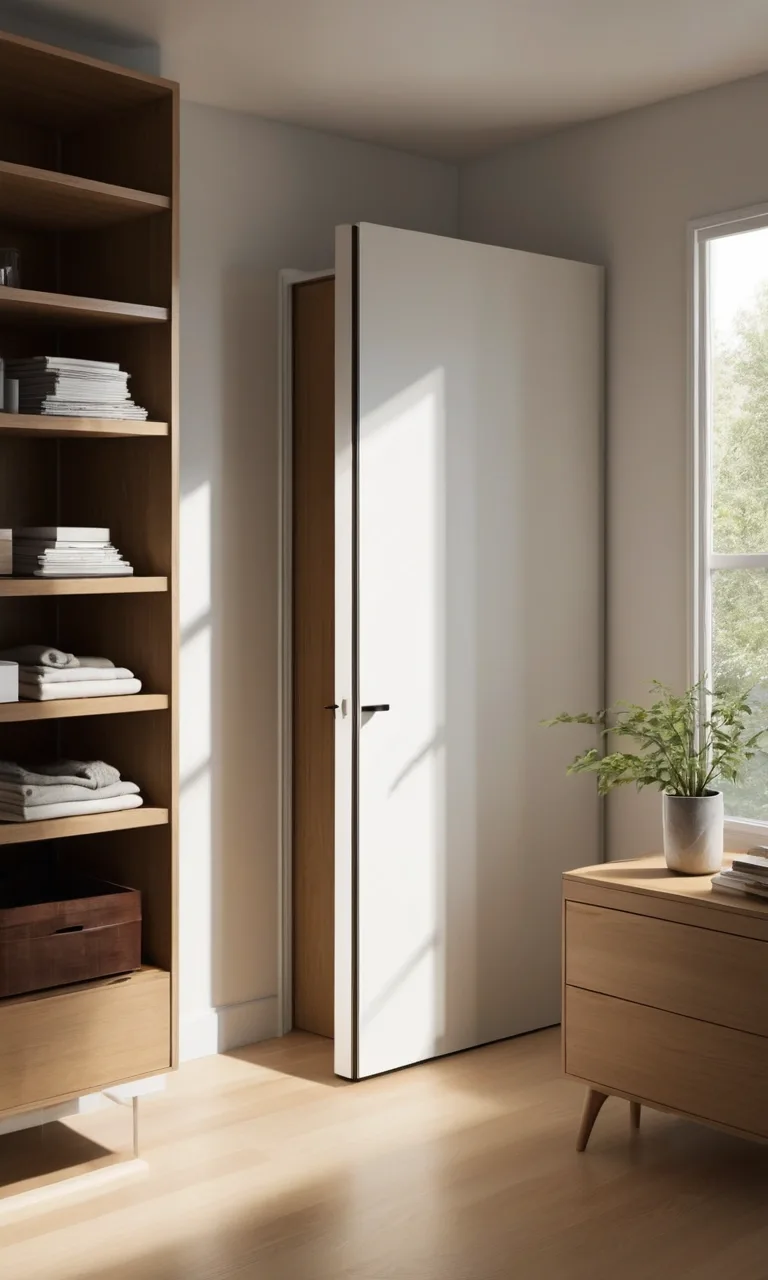
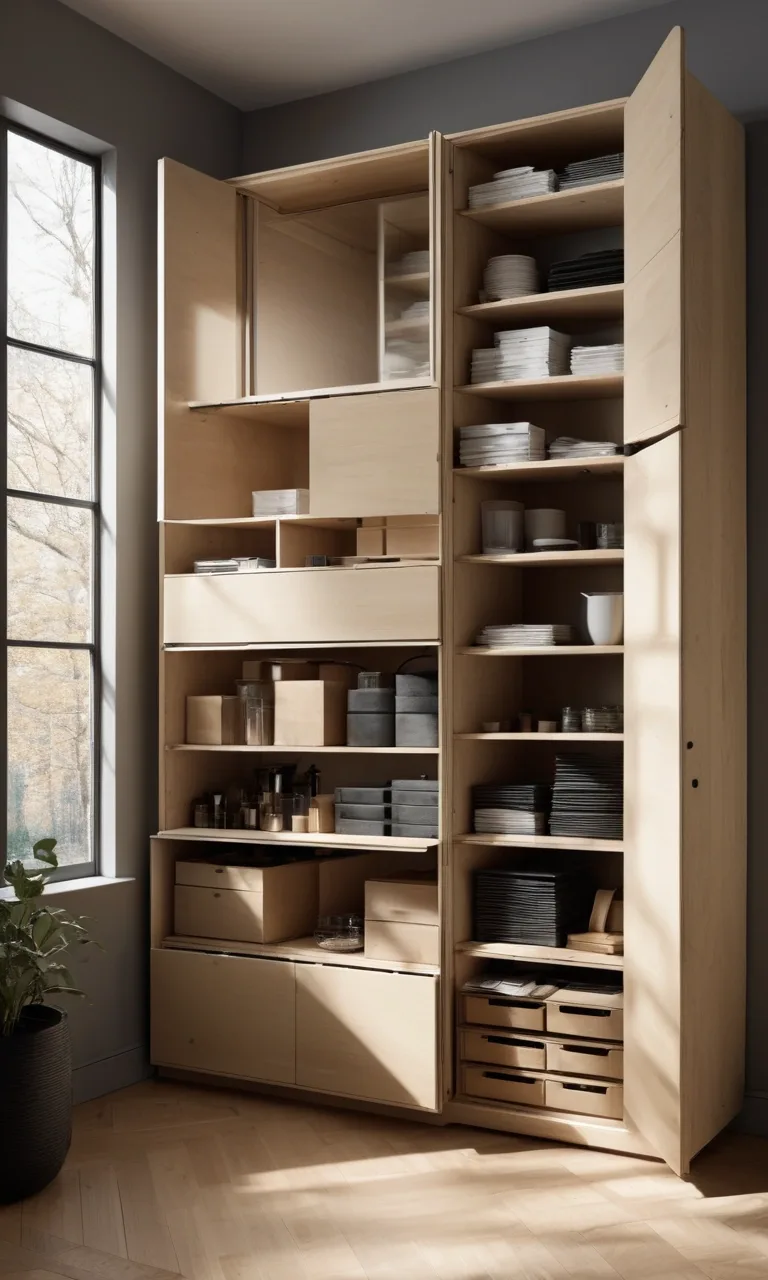
A hidden pantry wall offers substantial storage while maintaining a clean, uninterrupted kitchen design. Instead of using an obvious pantry entrance, the storage area is concealed behind cabinet-style doors or integrated wall panels.
Full-height doors can open to reveal shelves, pull-out drawers, and organized compartments for food and kitchen equipment. Matching the surrounding cabinetry helps disguise the entrance and creates a seamless architectural appearance.
For a more sophisticated design, use concealed hinges and minimal hardware. Ensure the doors open sufficiently for safe access and that ventilation and lighting meet the pantry's needs.
This concept is especially appealing in modern kitchens where visual simplicity is just as important as storage capacity.
24. Slim Utility Pull-Out
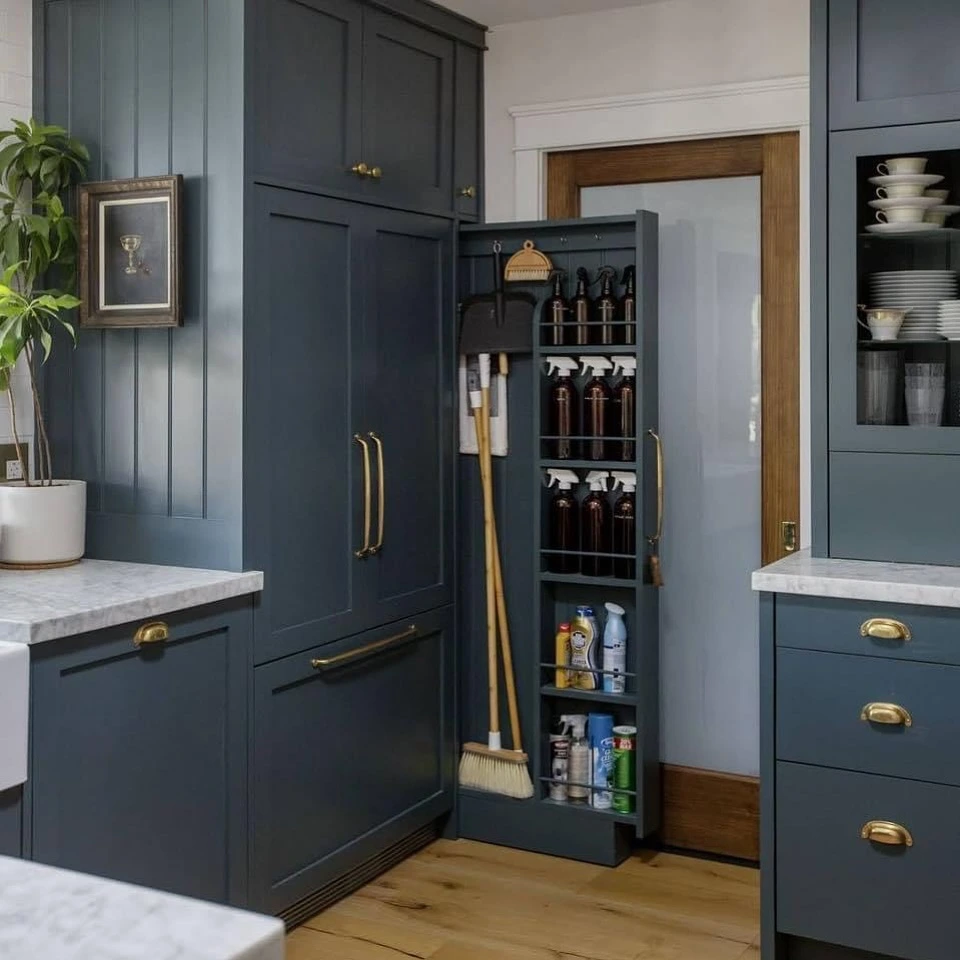
A slim utility pull-out provides a convenient home for cleaning products, kitchen towels, and other household essentials. Narrow spaces near the sink or between cabinets can often accommodate this type of storage.
Install a pull-out frame with adjustable baskets, hooks, or divided compartments. Tall sections can accommodate cleaning bottles, while smaller trays hold sponges, cloths, and replacement supplies.
Choose moisture-resistant materials for areas exposed to humidity. Cleaning chemicals should remain in their original labeled containers and be stored securely away from food, children, and pets.
A matching cabinet front keeps utility items concealed while ensuring they remain accessible when needed.
25. Cottage Pantry Corner
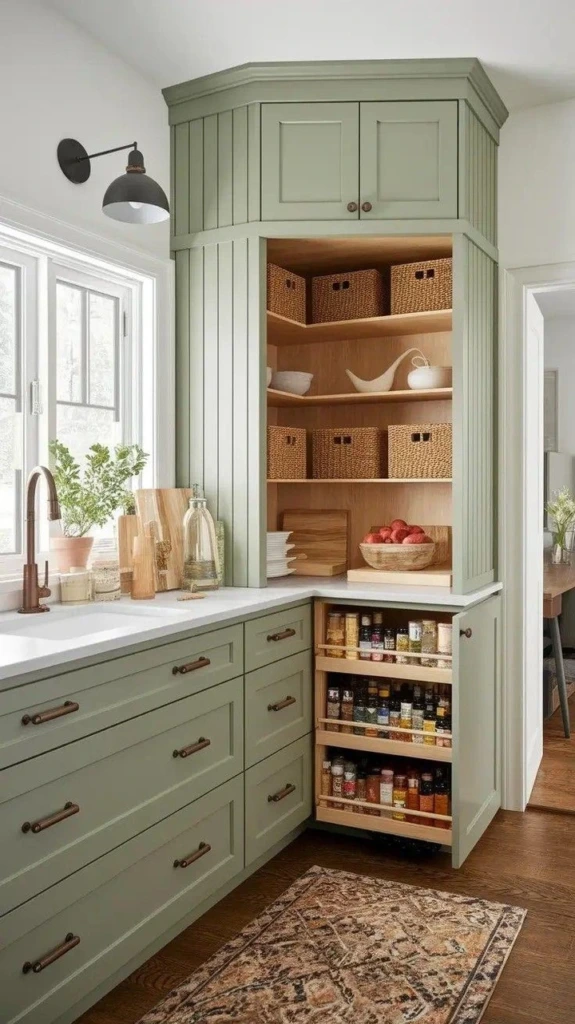
A cottage-style pantry corner creates a welcoming atmosphere through soft colors, natural materials, and practical open storage. It is well suited to kitchens that favor comfort and character over highly polished minimalism.
Painted wooden shelves, beadboard paneling, and woven baskets can establish a relaxed cottage appearance. Use ceramic jars or clear containers for frequently used dry ingredients, and reserve lower cabinets for bulkier supplies.
Soft white, pale green, dusty blue, and warm cream finishes work beautifully with natural wood accents.
Avoid overcrowding open shelves with decorative objects. A combination of attractive everyday essentials and concealed storage keeps the corner functional while preserving its charming character.
26. Fully Loaded Corner Pantry
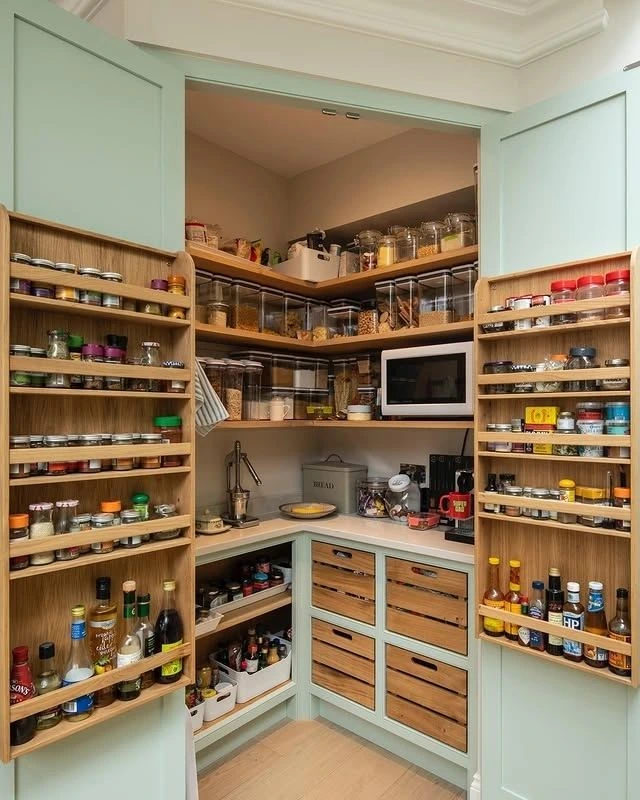
A fully loaded corner pantry brings multiple storage features together in one carefully planned space. This approach is ideal for busy households that need convenient access to a wide variety of kitchen supplies.
Combine adjustable shelves, pull-out baskets, drawer organizers, and dedicated compartments for small appliances. Deep lower sections can accommodate bulk purchases, while shallow upper shelves keep smaller products visible.
Add interior lighting, clear labels, and categorized containers to simplify daily organization. If space permits, a small countertop can provide a convenient location for unpacking groceries or organizing ingredients.
Plan the layout around your actual storage habits rather than filling the pantry with unnecessary accessories. The most successful design is one that remains easy to use, clean, and maintain.
A fully equipped corner pantry can reduce countertop clutter, improve food visibility, and create a more efficient kitchen workflow.
Kitchen corners no longer need to be awkward, wasted spaces. With the right combination of cabinetry, shelving, pull-out organizers, and thoughtful design, they can become some of the most valuable storage areas in your home.
Whether you prefer a classic corner cabinet, a minimalist hidden pantry, or a complete walk-in storage solution, the best choice depends on your kitchen layout, available budget, and everyday needs. These 26 kitchen corner storage ideas for 2026 demonstrate how practical organization and attractive design can work together to create a kitchen that feels spacious, efficient, and welcoming.

One Comment