24 DIY Fireplace TV Wall Ideas to Transform Your Living Room in 2026
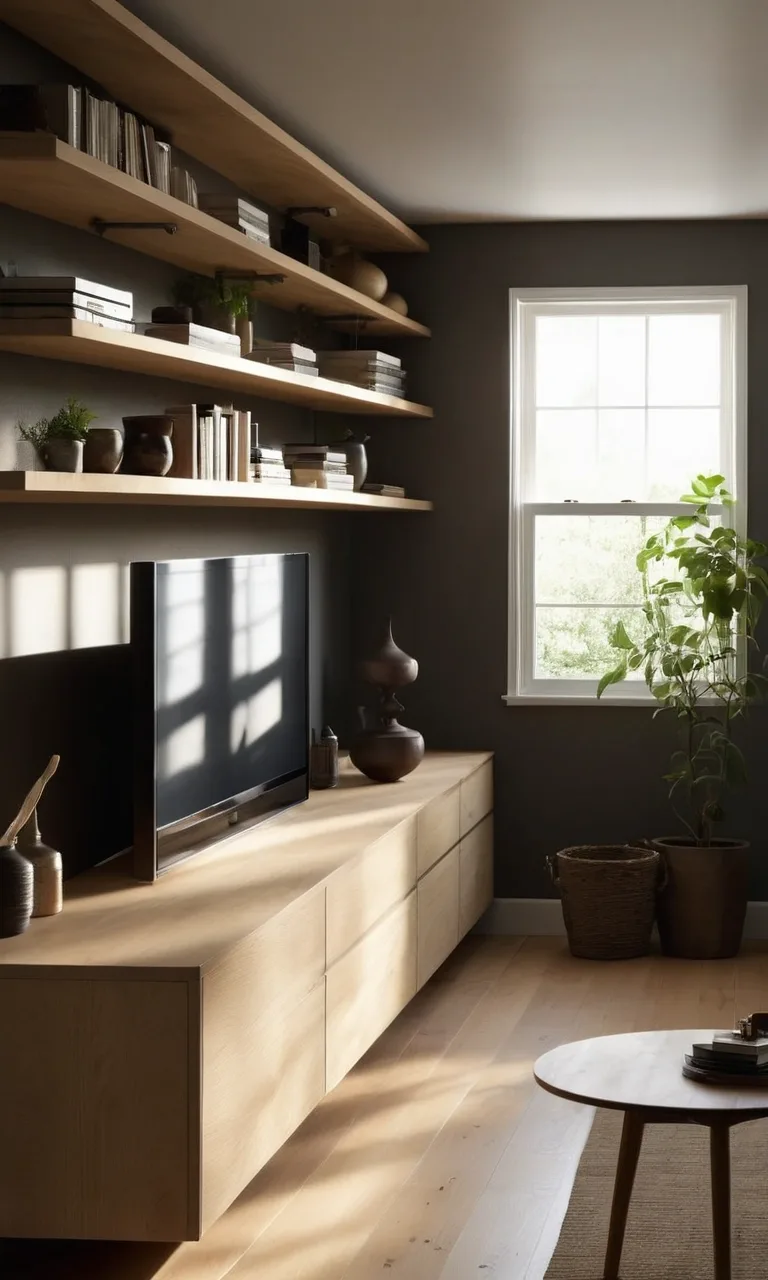
A DIY fireplace TV wall can completely change how your living room looks and feels. By combining a television, fireplace, shelving, and decorative finishes into one feature wall, you can create a comfortable entertainment space without sacrificing style.
Whether you prefer modern minimalism, rustic textures, or traditional built-ins, there are plenty of ways to customize a fireplace media wall to suit your home. From affordable shiplap projects to dramatic stone installations, these 24 DIY fireplace TV wall ideas offer inspiration for different budgets, room sizes, and design preferences.
Is it hard to build a DIY media wall?
Building a DIY media wall is manageable for homeowners with basic carpentry skills, but the difficulty depends on the design. A simple wall with decorative panels and a surface-mounted electric fireplace is considerably easier than a custom installation with recessed appliances, electrical modifications, and built-in cabinetry.
Start by measuring your wall, television, and fireplace. Sketch a layout that accounts for viewing height, ventilation, electrical access, and storage. Wood framing, drywall, MDF panels, and paint are commonly used for straightforward projects.
Before construction, check the fireplace manufacturer's installation instructions. Required clearances, framing dimensions, and television placement vary between models. Electrical work should follow local building codes, and structural changes may require professional assistance.
1. Floating Mantel Focus
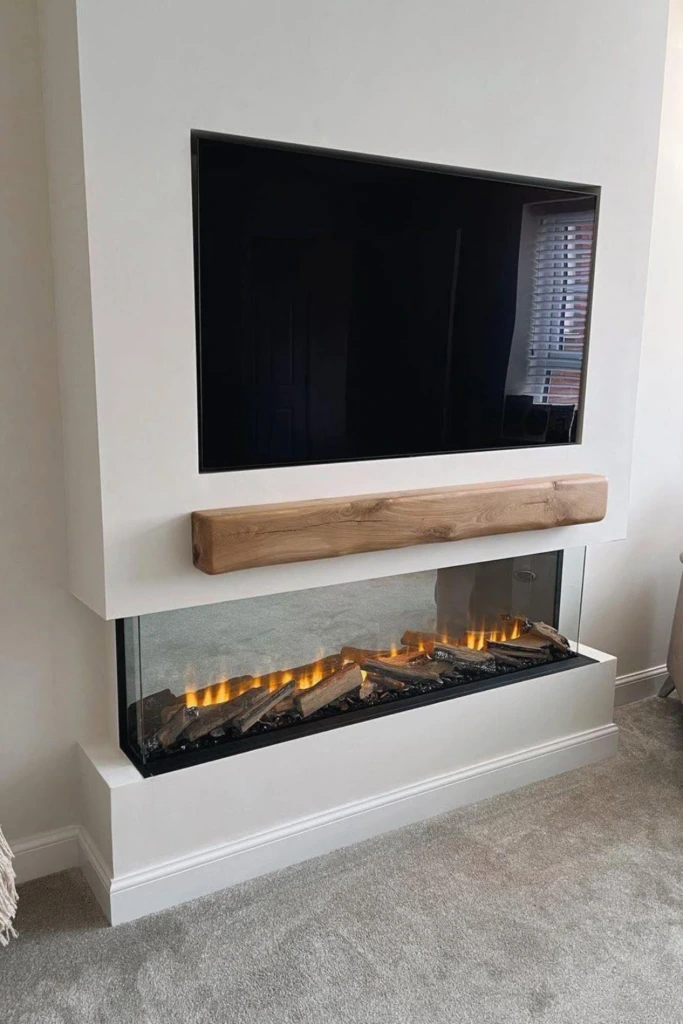
A floating mantel creates a simple visual separation between the television and fireplace while adding character to the wall.
Choose a solid wood beam for a rustic appearance or a smooth painted mantel for a contemporary finish. Oak, walnut, and reclaimed wood work especially well with neutral walls and black fireplace surrounds.
Install the mantel using suitable concealed brackets anchored into structural framing. Keep decorations minimal, perhaps a small vase or a few framed photographs.
For safety, confirm that the mantel's material, depth, and mounting height comply with the fireplace manufacturer's clearance requirements.
2. Built-In Balance
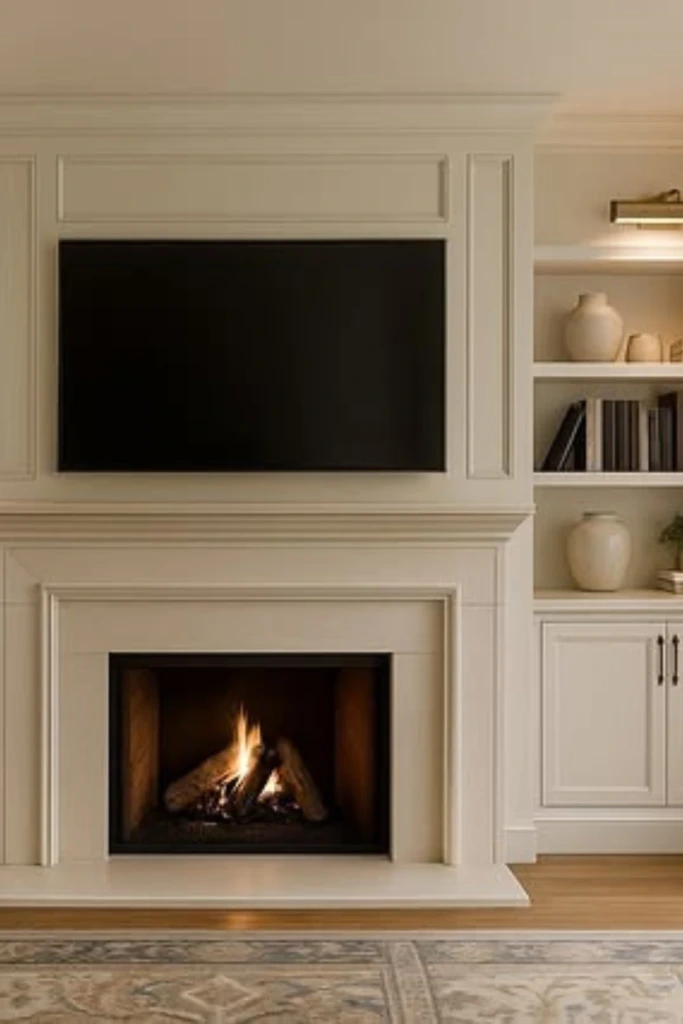
Built-in cabinets and shelving give a fireplace TV wall a coordinated, finished appearance while providing practical storage.
Position the fireplace and television in the center, then add matching shelving units on both sides. Lower cabinets can conceal electronics, board games, and everyday household items.
Painting the entire installation in one color creates a seamless design. Warm white, muted gray, and soft beige are versatile choices.
For a more customized appearance, combine closed cabinets with open shelves. This arrangement provides room for decorative objects without making the wall feel cluttered.
3. Stone Panel Center
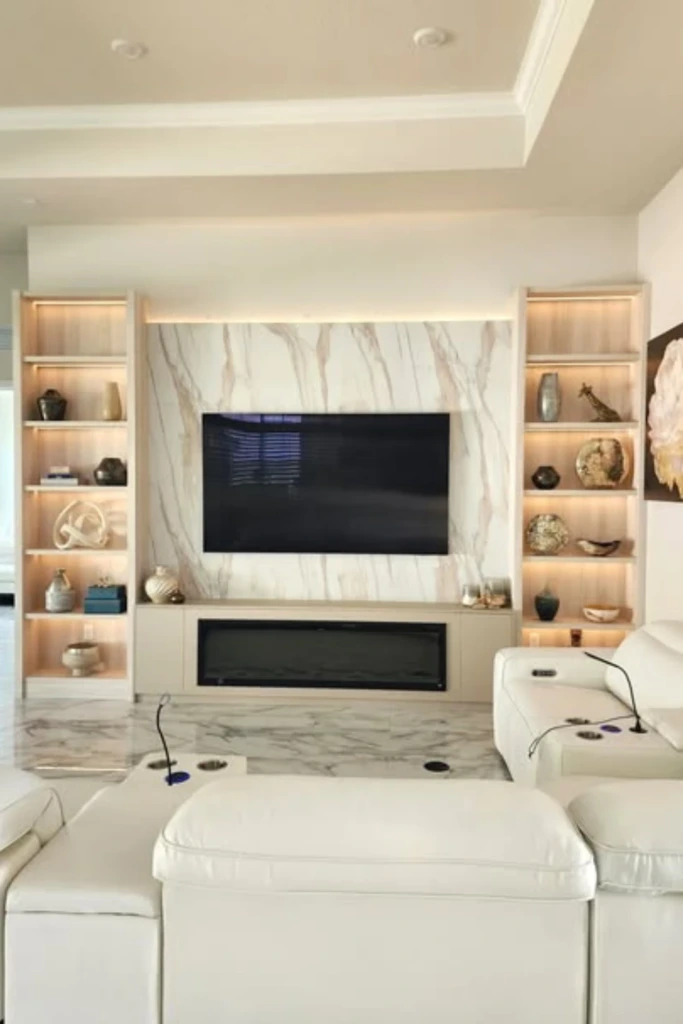
Stone panels add texture and architectural interest to a fireplace feature wall.
Create a vertical section of stone around the fireplace and television, leaving the surrounding walls painted in a complementary neutral color. This approach draws attention toward the entertainment area without overwhelming the room.
Manufactured stone veneer and suitable lightweight decorative panels can be easier to install than natural stone, depending on the substrate and product.
Choose large-format panels for a modern appearance or irregular stone textures for a more rustic atmosphere. Always verify that the selected material is approved for use near the fireplace.
4. Stone Column Wrap
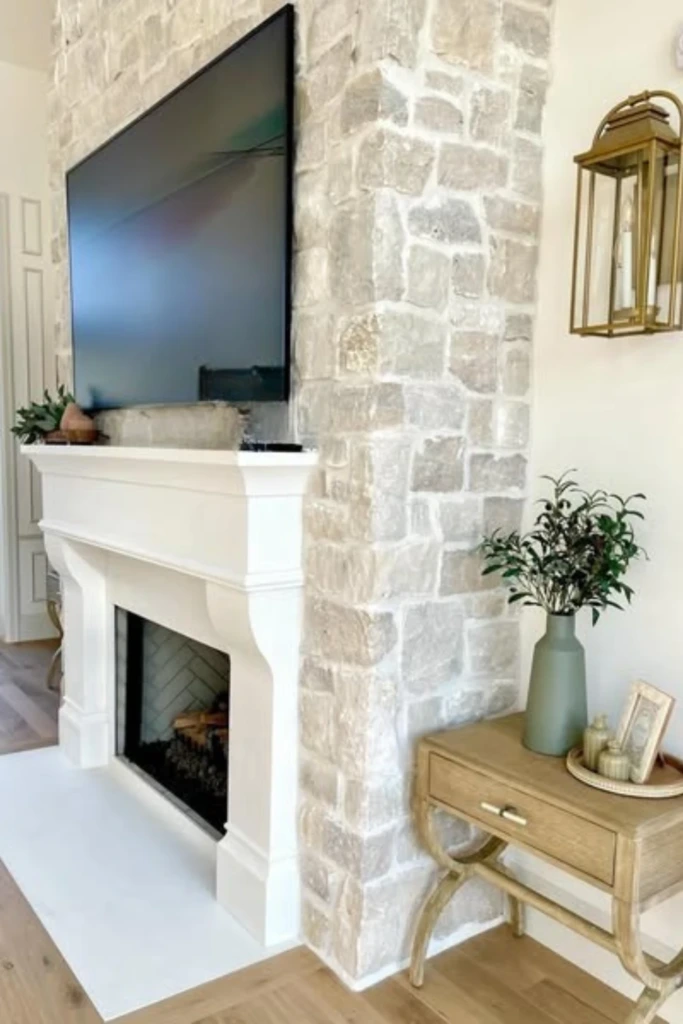
A floor-to-ceiling stone column creates a dramatic centerpiece that works particularly well in rooms with high ceilings.
Frame the fireplace and television within a vertical structure, then cover the visible surfaces with stone veneer or an approved stone-look finish.
Extending the feature to the ceiling emphasizes the room's height and makes the fireplace feel like a permanent architectural element.
Keep nearby furniture and accessories relatively understated. Natural wood, soft upholstery, and warm lighting complement the texture of stone without competing for attention.
5. Brick Stove Feature
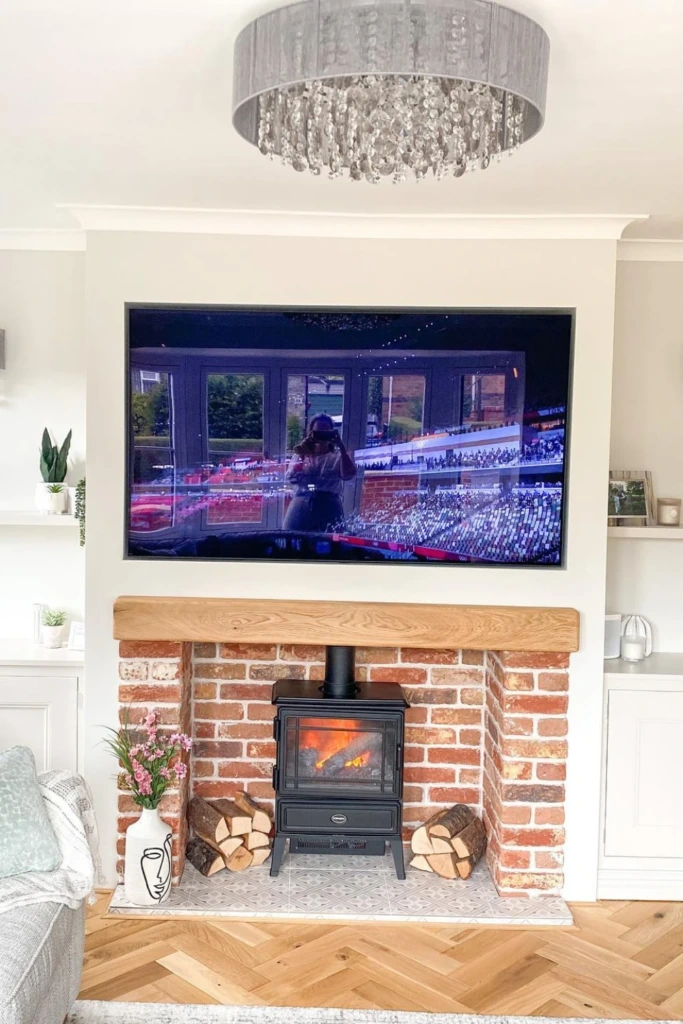
A brick fireplace wall introduces traditional charm and works beautifully in farmhouse, industrial, and cottage-inspired interiors.
Use genuine brick or suitable brick veneer to create a textured backdrop for a fireplace or stove. Exposed red brick adds warmth, while whitewashed brick produces a softer appearance.
A dark metal fireplace surround can provide an attractive contrast against the masonry.
If incorporating a wood-burning stove, follow the stove manufacturer's requirements for noncombustible hearth protection, wall clearances, and flue installation. A qualified professional should handle combustion appliance installation and inspection.
6. Full Wall Built-In
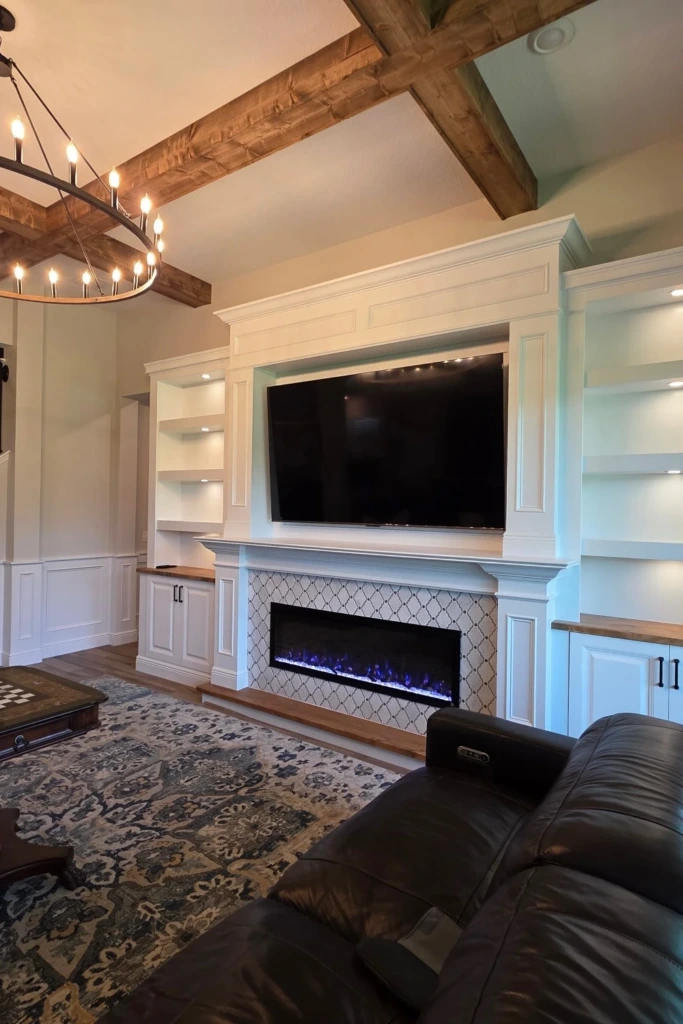
A full-wall built-in combines entertainment equipment, decorative shelving, and storage into one organized structure.
Extend cabinetry from one end of the wall to the other, positioning the television and fireplace in a central section. Surround them with shelves, cupboards, or display niches.
This arrangement works particularly well in larger living rooms where an ordinary television stand might look undersized.
Use matching cabinet fronts and consistent shelf spacing to maintain visual balance. Adjustable shelves make the installation more flexible as your storage needs change.
7. Shelf Lighting Layers
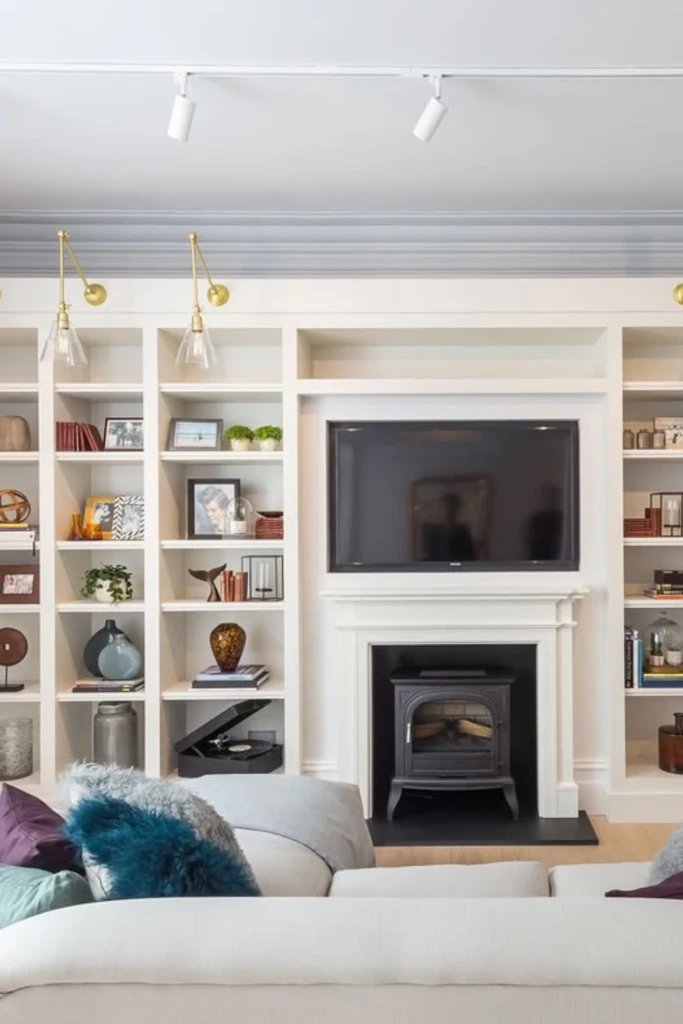
Thoughtfully placed lighting can make a fireplace TV wall feel more inviting, particularly during the evening.
Install LED strips beneath shelves, inside display niches, or along selected cabinet edges. Warm-white lighting complements wood finishes and creates a relaxing atmosphere.
Consider using dimmable lighting so you can adjust the brightness for television viewing or entertaining guests.
Plan cable routes and power supplies before closing the wall. Choose lighting components rated for their installation locations and keep them outside prohibited fireplace clearance zones.
8. Vaulted Stone Feature
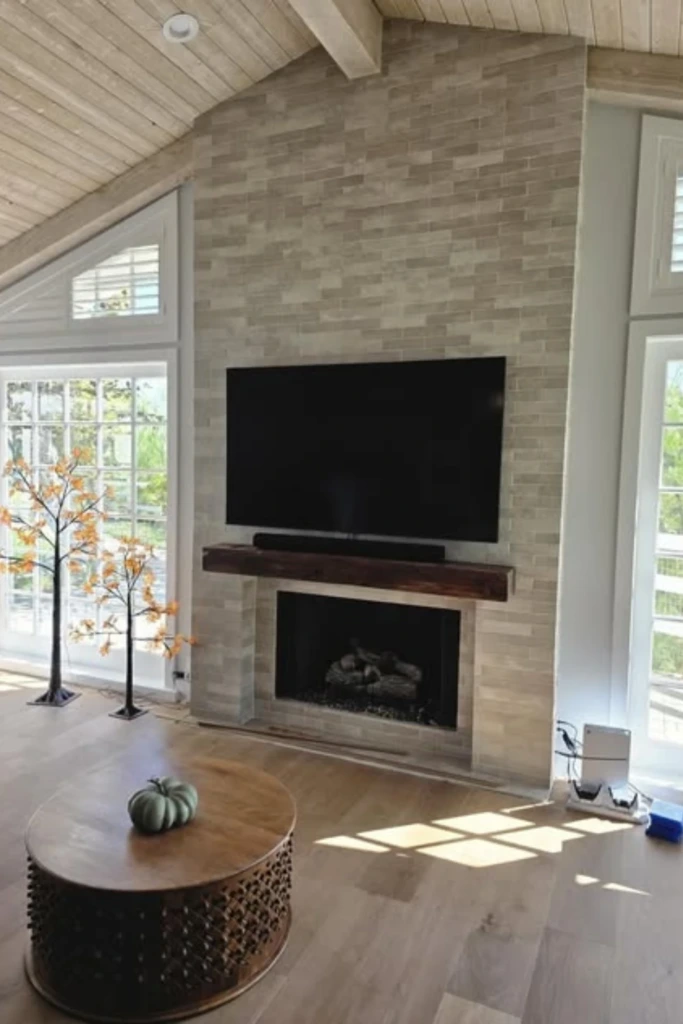
A vaulted ceiling provides an opportunity to create a fireplace wall with impressive vertical proportions.
Extend a stone feature from the floor toward the ceiling peak, allowing the natural roofline to frame the installation.
A large television and wide fireplace can look balanced within this taller design, especially when surrounded by generous areas of textured material.
Choose a stone finish that complements the room's existing architecture. Pale limestone-inspired surfaces suit airy interiors, while darker stacked stone creates a stronger focal point.
Because tall stone installations can be heavy, assess structural support and material requirements before beginning construction.
9. LED Shelf Glow
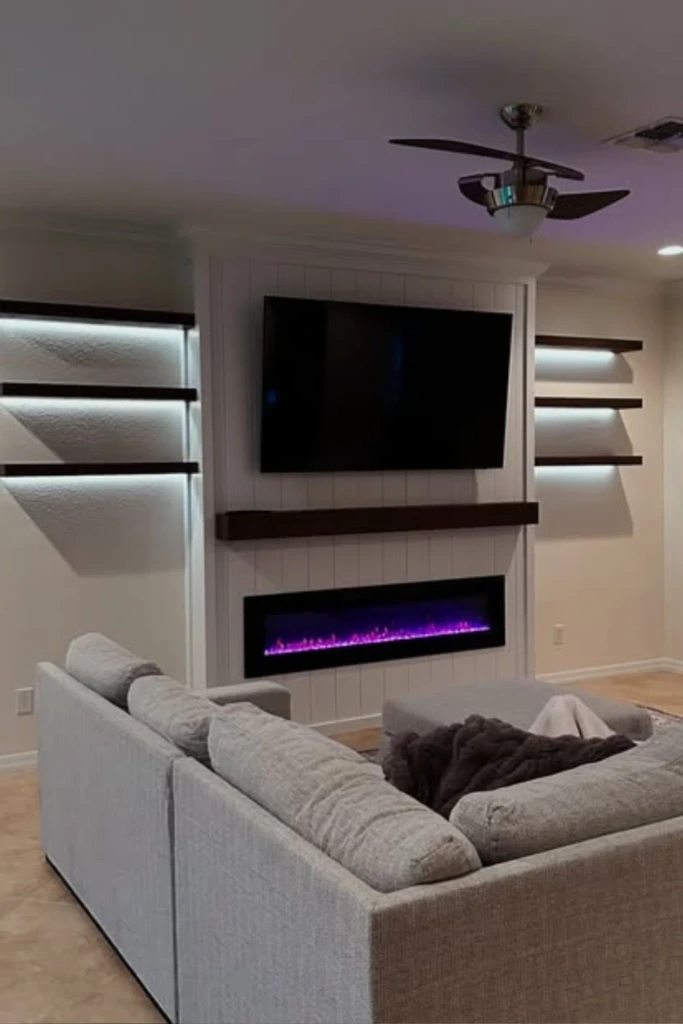
LED shelf lighting adds a contemporary touch to a fireplace entertainment wall without requiring elaborate decoration.
Place concealed LED strips along the underside or rear edge of floating shelves to create a gentle wash of light.
For a clean result, install the strips inside aluminum channels with diffusers. These help soften visible light points and provide a more polished appearance.
Warm lighting works well in cozy living rooms, while adjustable white lighting offers flexibility for different activities.
Avoid excessively bright or rapidly changing lighting near the television, as it can become distracting during viewing.
10. Recessed Shelf Niches
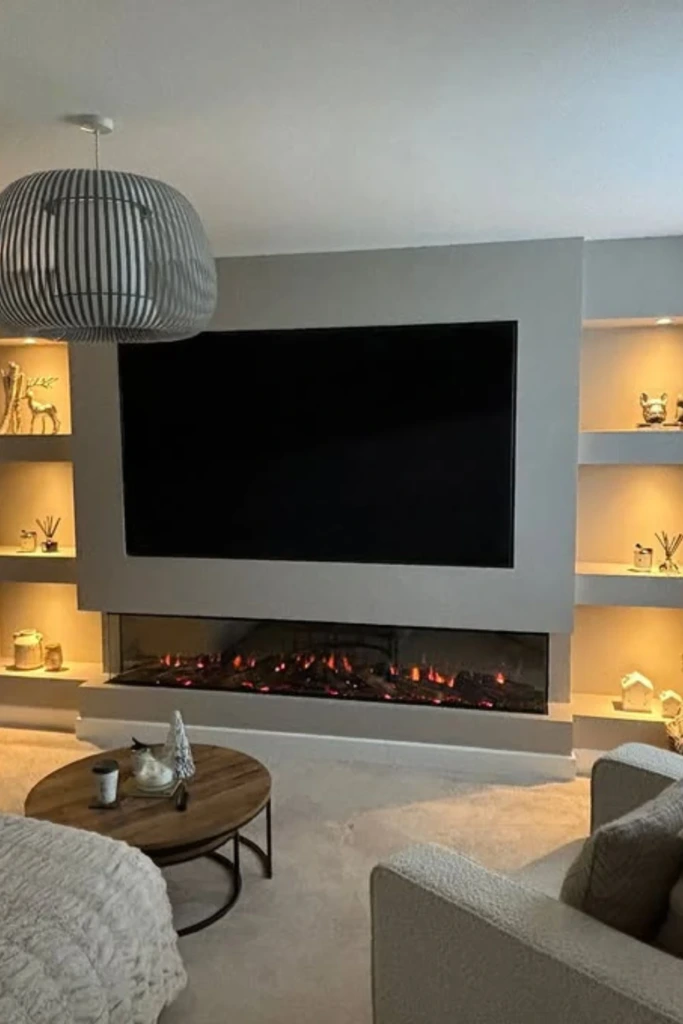
Recessed shelves provide display space without projecting far into the room.
Create symmetrical niches beside the central fireplace and television section. Finish their interiors with paint, wood veneer, or subtle textured panels.
Use the shelves to display books, ceramics, plants, and meaningful decorative pieces.
For a sophisticated look, limit each niche to a few carefully selected objects and leave some open space.
Before cutting into an existing wall, identify structural framing, wiring, plumbing, and other concealed services. Load-bearing walls may require a different construction approach.
11. Compact Corner Build
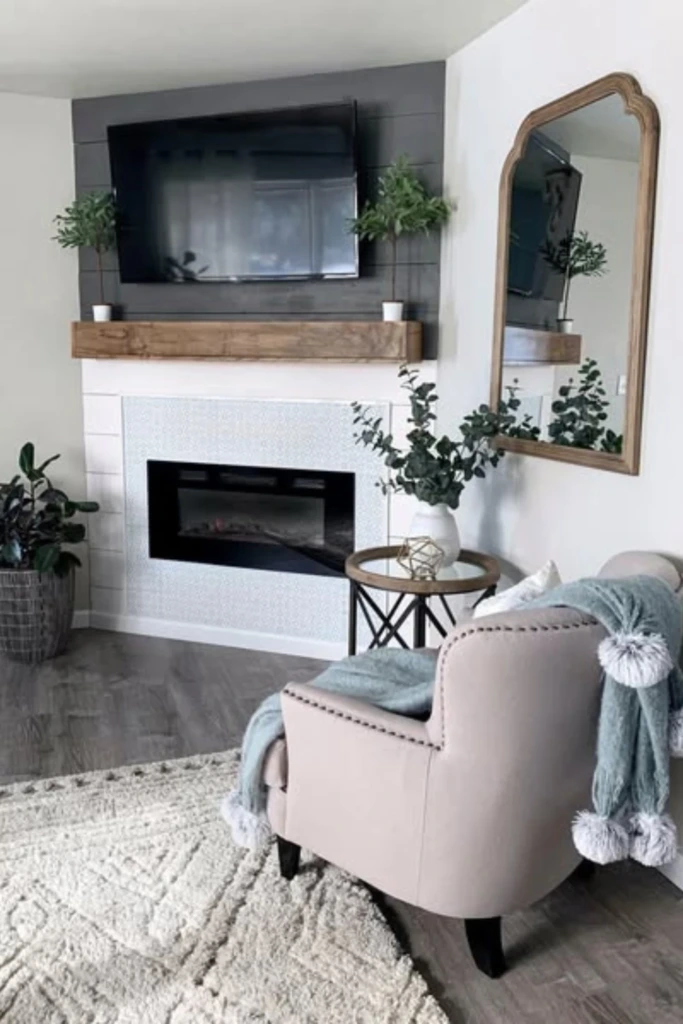
A corner fireplace TV wall can make efficient use of a smaller living room or an awkward layout.
Design a compact structure that fits into the corner while keeping the television visible from the main seating area.
A slim electric fireplace beneath the screen can provide a cozy focal point without requiring extensive floor space.
Choose light finishes and simple shelving to prevent the corner from appearing crowded.
Measure the television's viewing angles and check that the fireplace has adequate ventilation. Corner installations require particular attention to appliance clearances and access for maintenance.
12. Shiplap Center Strip
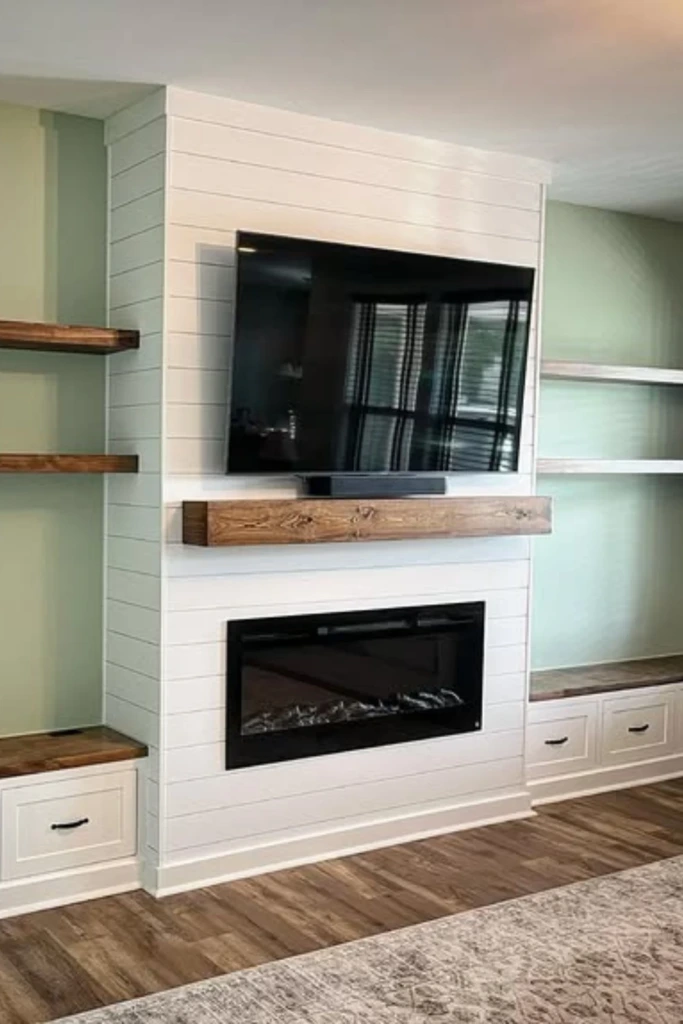
Shiplap offers an affordable way to add texture to a fireplace feature wall.
Install vertical or horizontal boards across a central section behind the television and fireplace. Vertical boards can make a low ceiling appear taller, while horizontal boards emphasize width.
Paint the shiplap white for a farmhouse-inspired design or use a muted charcoal finish for a more contemporary appearance.
MDF or primed wood boards can provide a neat result in suitable locations.
Remember that decorative shiplap is generally combustible. Maintain the clearances specified for the fireplace and use approved noncombustible finishes wherever required.
13. Layered Shelf Warmth
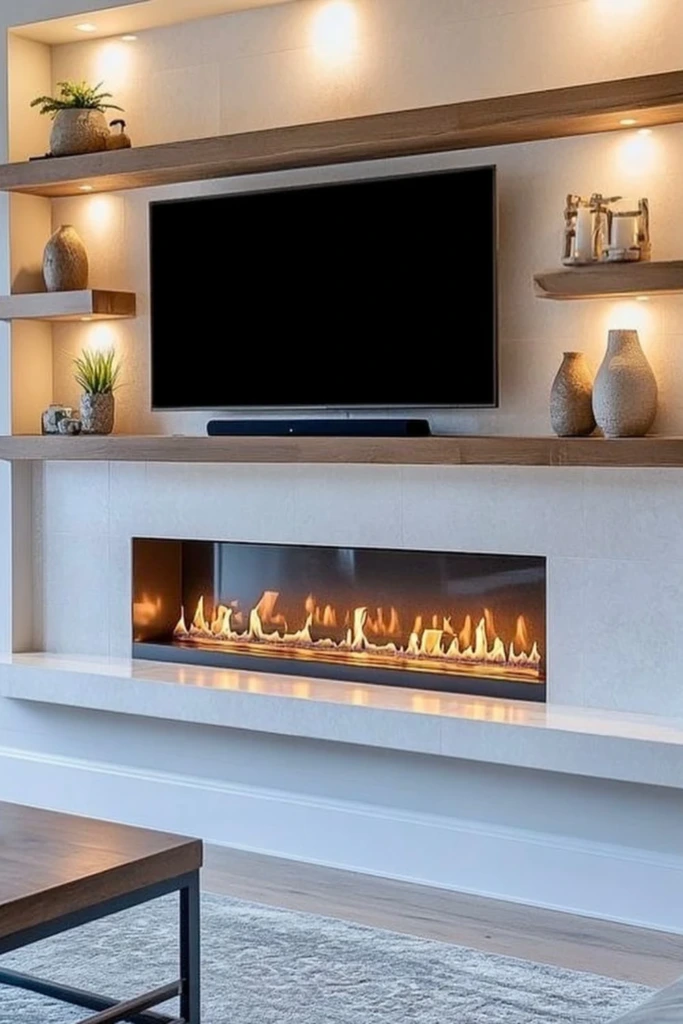
Layered shelving combines practical storage with a relaxed, lived-in appearance.
Arrange floating wooden shelves on either side of the fireplace, using a mixture of books, framed photographs, pottery, and small decorative objects.
Vary the height and size of accessories to create visual interest. Natural materials such as wood, linen, and ceramic help soften the appearance of televisions and electric fireplaces.
Keep the arrangement balanced rather than perfectly identical. Leaving some shelf space empty makes the overall design feel more intentional.
14. Framed Fireplace Core
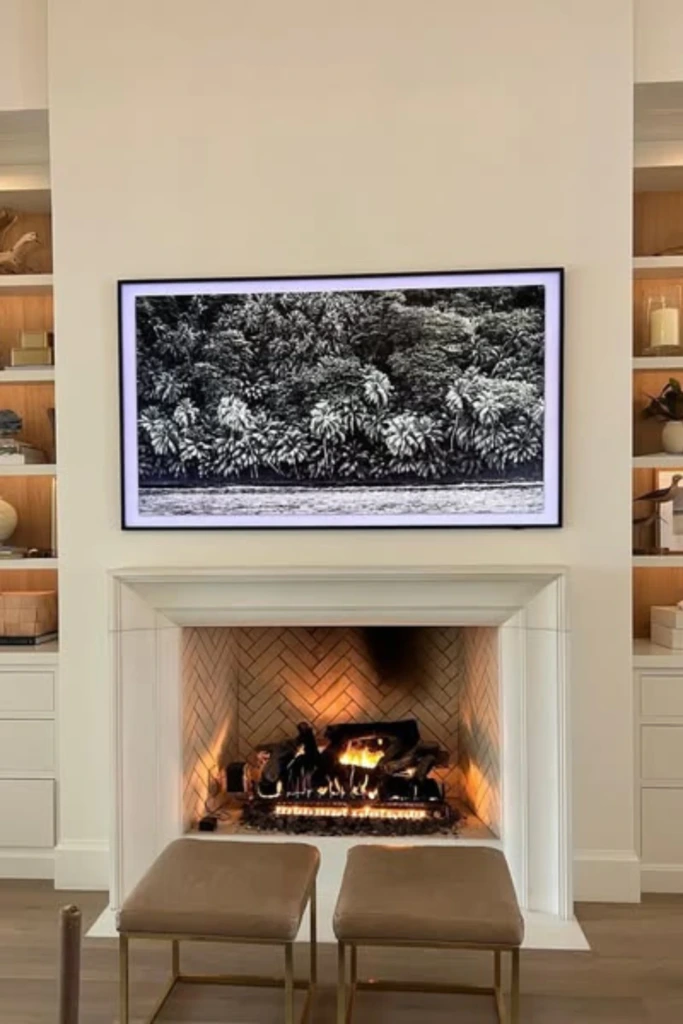
A framed fireplace design uses molding, trim, or decorative panels to define the central entertainment area.
Create a rectangular feature around the television and fireplace, then finish it with painted trim or contrasting wall materials.
This approach can make a basic wall look custom-built without requiring extensive cabinetry.
For traditional interiors, consider simple panel molding in a warm neutral color. Modern rooms benefit from narrow trim and clean geometric lines.
Make sure decorative trim does not overlap ventilation openings or extend into areas where combustible materials are prohibited.
15. Stone Symmetry Wall
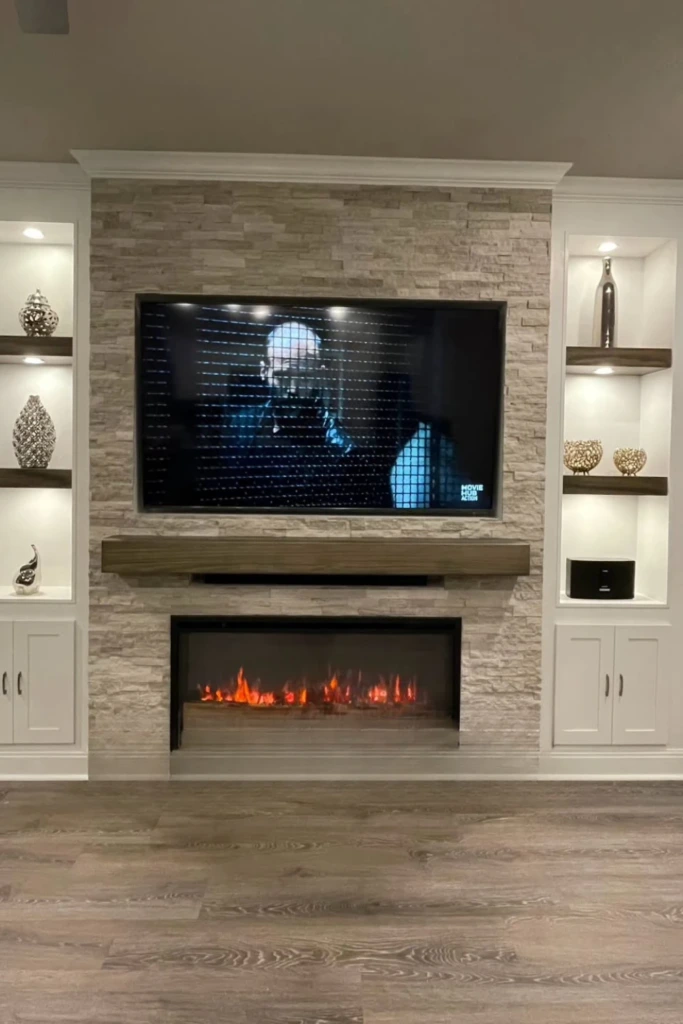
A symmetrical stone fireplace wall brings structure and balance to a living room.
Position the television and fireplace along the central axis, then arrange matching cabinets, shelves, or decorative panels on both sides.
Using the same stone texture across the main feature creates a unified appearance.
Soft gray stone pairs well with white cabinetry, while warm beige stone complements oak furniture and cream upholstery.
Symmetry is especially effective in formal living rooms because it creates a calm, organized focal point.
16. Soft Panel Contrast
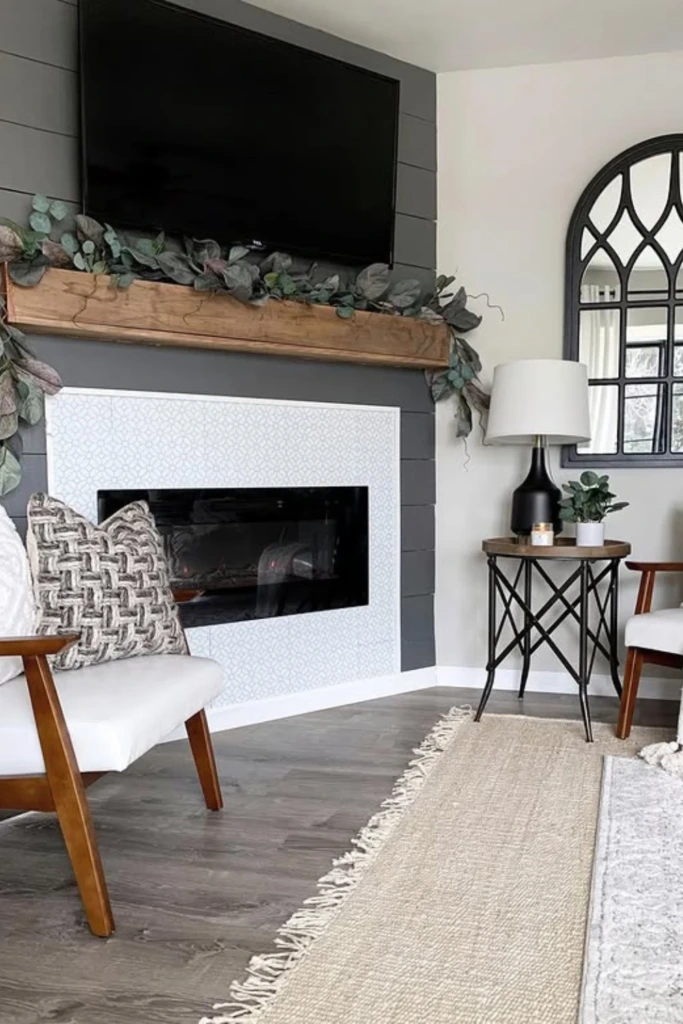
Combining smooth wall panels with a contrasting fireplace surround adds visual interest without making the room feel busy.
Use painted MDF panels, wood veneer, or decorative wall molding around the central fireplace section. Pair these finishes with stone-look tile, plaster, or another suitable fireplace-facing material.
Neutral combinations such as cream and walnut, beige and charcoal, or white and natural oak create a timeless appearance.
A subtle difference in texture often looks more sophisticated than using several competing colors.
Select panel materials based on their location and the fireplace's installation requirements.
17. Artwork Over TV
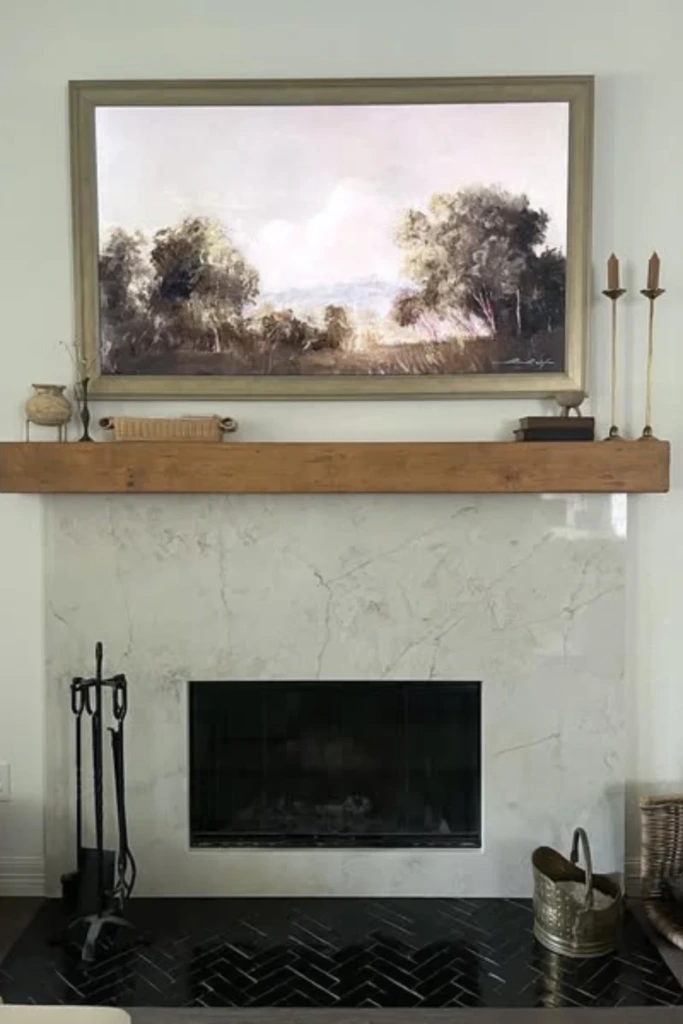
Artwork can help a fireplace TV wall feel like part of the room's overall design rather than a purely functional entertainment area.
One approach is to use a television that displays digital artwork when not in use. This allows the screen to blend into a gallery-style arrangement.
Alternatively, place framed prints or decorative pieces on adjacent shelves to soften the television's appearance.
Choose artwork that complements the room's color palette and avoid overcrowding the central wall.
If hanging artwork above or close to a fireplace, consider heat exposure and use appropriate mounting hardware. Keep objects away from hot surfaces and ventilation outlets.
18. Dark Panel Statement
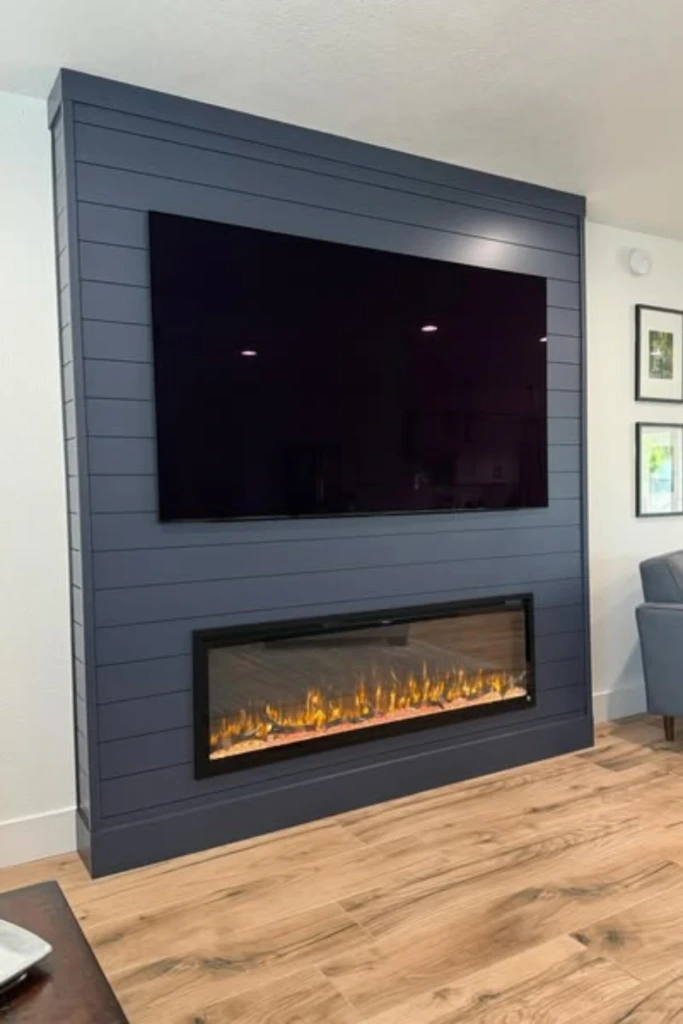
A dark fireplace TV wall creates a bold, contemporary focal point.
Charcoal, deep navy, forest green, and matte black are effective choices for decorative panels or painted cabinetry.
Dark finishes can help a television blend into the background when switched off, producing a cleaner overall appearance.
Add natural wood shelves, brass accents, or warm lighting to prevent the design from feeling too stark.
In smaller rooms, balance the dark feature wall with lighter flooring, curtains, and surrounding furniture.
19. Vertical Slat Frame
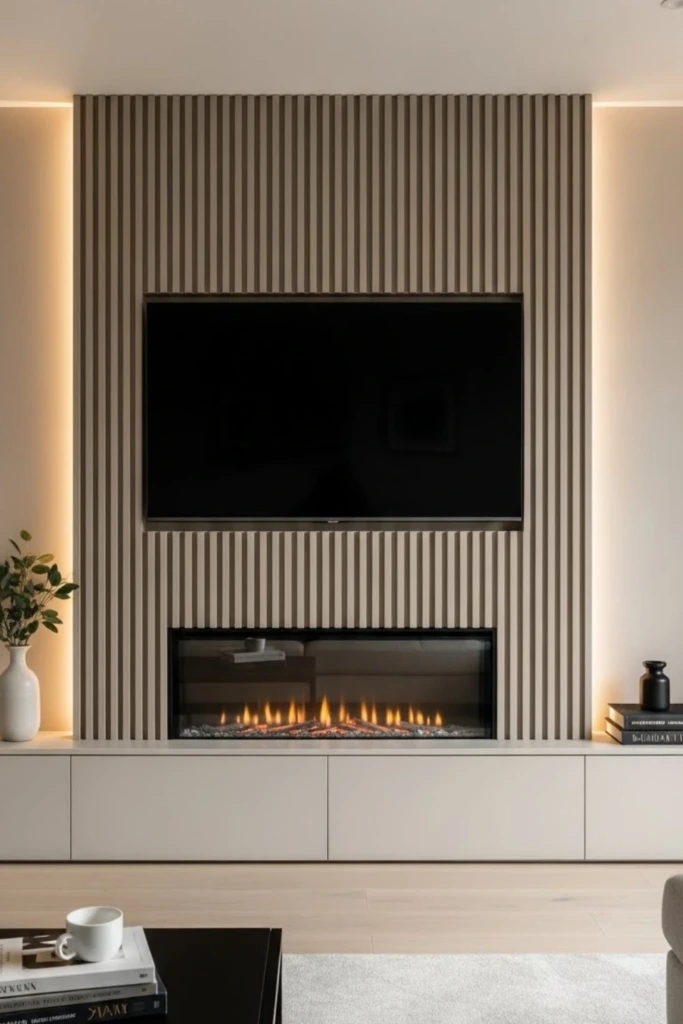
Vertical wood slats introduce rhythm and texture to a modern fireplace wall.
Install evenly spaced slats around the television and fireplace section, creating a decorative frame that emphasizes the room's height.
Natural oak and walnut finishes provide warmth, while black or painted slats produce a more dramatic appearance.
For a professional-looking result, maintain consistent spacing and carefully finish exposed edges.
Wood slats should remain outside the fireplace's required combustible-material clearances. Where necessary, use an approved noncombustible alternative near the appliance.
20. Minimal Plaster Wall
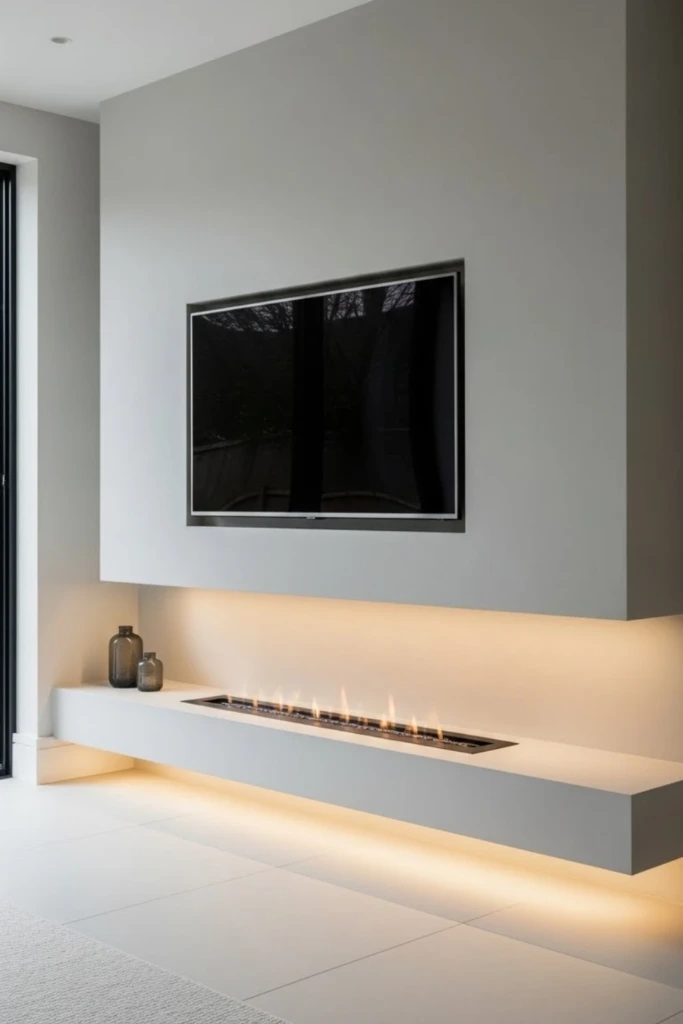
A plaster-style fireplace wall is ideal for homeowners who prefer a quiet, uncluttered interior.
Create a smooth or lightly textured surface around a recessed electric fireplace and wall-mounted television.
Soft white, sand, taupe, and warm gray finishes produce a calm appearance that suits minimalist and contemporary homes.
Use concealed wiring and avoid unnecessary shelves or decorative trim.
For the best result, prepare the wall carefully before applying the finish. Select plaster systems and substrates compatible with the fireplace's heat and installation requirements.
21. Offset Fireplace Design
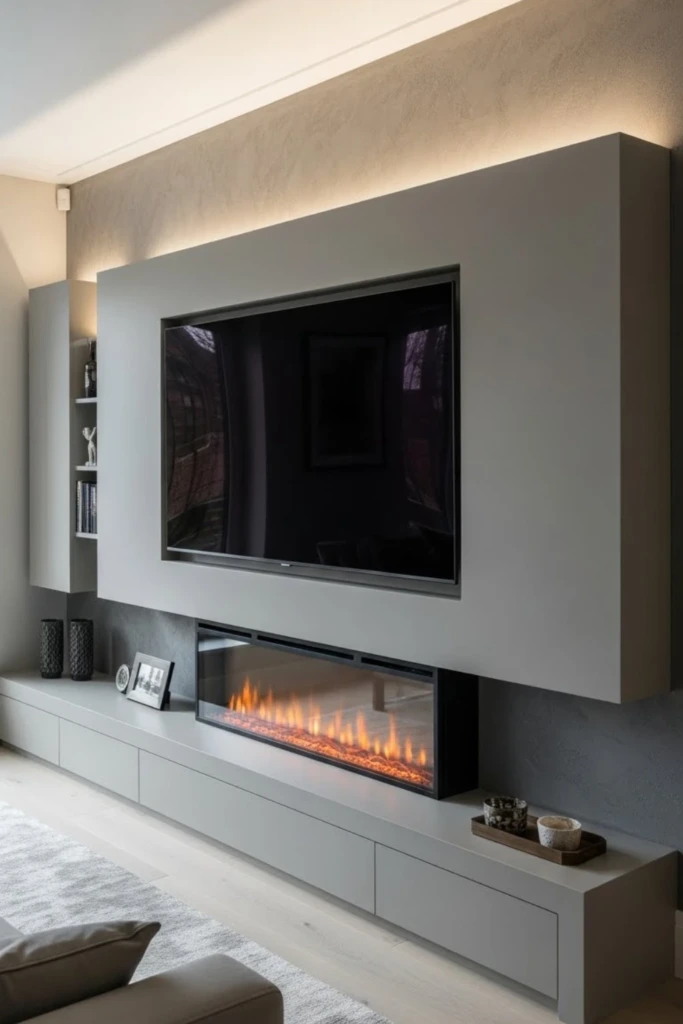
An offset fireplace layout offers an alternative to the traditional stacked television-and-fireplace arrangement.
Position the television on one side of the feature wall and the fireplace on the other. Connect the two areas through consistent materials, cabinetry, or shelving.
This layout can be especially useful when mounting the television directly above the fireplace would place it too high for comfortable viewing.
A long, low cabinet can visually connect both features while providing additional storage.
Plan the arrangement around your main seating position so the television remains easy to watch.
22. Textured Microcement Look
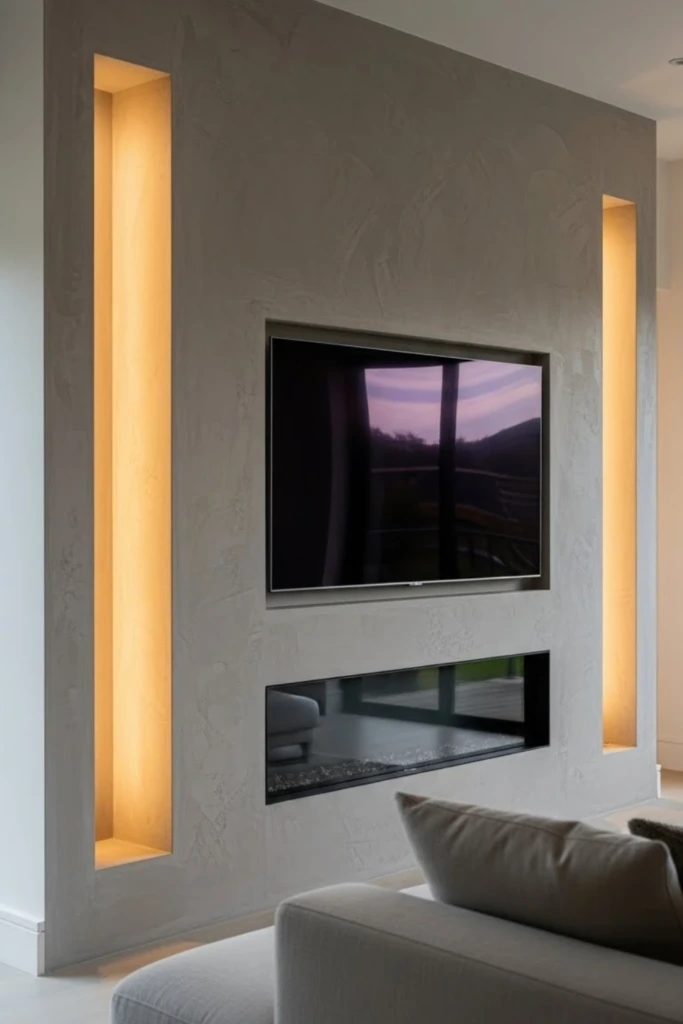
Microcement-inspired finishes create a smooth, contemporary fireplace wall with subtle texture.
The appearance works particularly well in minimalist, industrial, and modern organic interiors.
Choose warm gray, limestone, or soft concrete tones for a natural look. Pair the textured surface with a slim black fireplace and simple television mounting.
Actual microcement requires appropriate surface preparation and a compatible application system. Decorative plaster or textured coatings can offer a similar appearance where suitable.
Not every microcement product is approved for heated fireplace surrounds, so check its technical specifications before installation.
23. Hidden Storage Wall
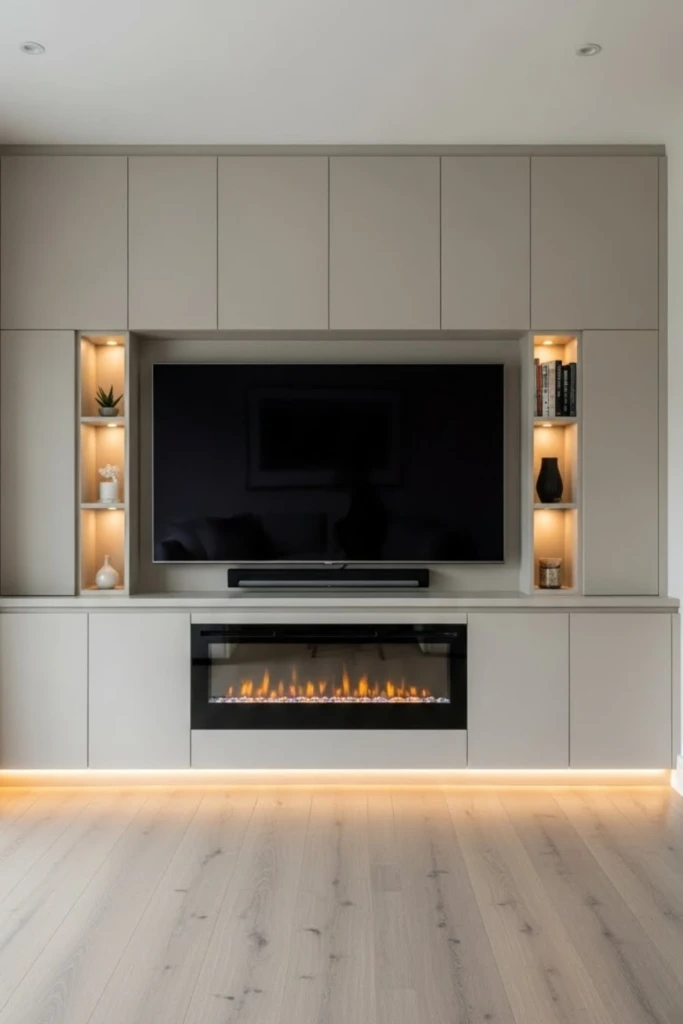
Hidden storage is one of the most practical features you can incorporate into a DIY fireplace TV wall.
Install handleless cabinets, push-to-open doors, or flush panels that blend into the surrounding design.
Use the concealed compartments for media equipment, cables, remote controls, gaming accessories, and other living room essentials.
Include ventilation for electronic devices and provide accessible cable management.
A well-planned hidden storage wall keeps the entertainment area tidy while maintaining the clean appearance of a custom architectural feature.
24. Slim Linear Focus
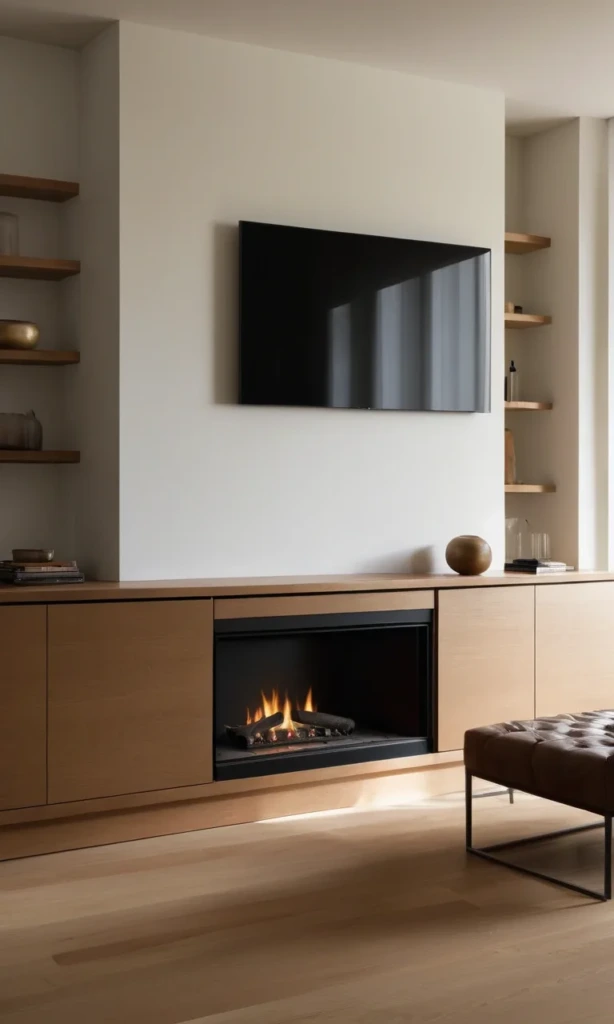
A slim linear fireplace creates a sleek, modern focal point without requiring an oversized feature wall.
Position a narrow electric fireplace beneath the television and surround both elements with a simple painted or textured finish.
This design works especially well in apartments, compact living rooms, and contemporary open-plan spaces.
Choose a fireplace width that complements the television and available wall space. A wider fireplace can create an attractive horizontal emphasis, but proportions should suit the room.
Before installation, check the appliance's required recess depth, ventilation openings, and clearance above the unit.
FAQs
A DIY fireplace TV wall involves several design and construction decisions. Understanding the materials, layout options, and installation requirements can help you create a feature that looks attractive and functions safely.
The following questions cover two important considerations when planning your project.
What materials work best for a fireplace wall?
The best materials depend on the fireplace type, surrounding temperatures, desired appearance, and available budget.
For decorative sections outside required clearance zones, MDF, plywood, wood slats, and painted drywall are common options.
Near fireplace openings or other areas requiring noncombustible finishes, suitable materials may include cement board, stone, brick, porcelain tile, or approved plaster systems.
Electric fireplaces vary significantly in their installation requirements. Some are designed for recessed mounting within specified framing arrangements, while others require different clearances.
Always consult the manufacturer's instructions before choosing materials or constructing the enclosure. This is particularly important for gas and wood-burning fireplaces.
What to put on a fireplace wall?
A fireplace wall should balance visual appeal with everyday functionality.
A television is a popular centerpiece, but you can also incorporate floating shelves, built-in cabinets, artwork, accent lighting, or a decorative mantel.
For a minimalist room, a television and slim fireplace surrounded by a textured finish may be enough.
Traditional interiors can benefit from framed artwork, wooden shelves, and decorative molding. Modern spaces often look best with concealed storage, simple accessories, and integrated lighting.
Avoid placing heat-sensitive decorations or electronics too close to the fireplace. Keep ventilation openings clear and ensure that any wall-mounted items are securely installed.
Final Thoughts
A DIY fireplace TV wall is an effective way to improve your living room's appearance while making better use of available space. Whether you choose rustic stone, warm wooden shelving, modern slat panels, or a minimalist linear fireplace, the best design is one that complements your home and supports your daily routine.
Start with accurate measurements, choose materials suited to your fireplace, and plan electrical access and ventilation before construction. With thoughtful preparation and attention to safety, you can create a stylish, functional feature wall that feels like a natural part of your home.