28 Garden Tool Storage Ideas for 2026
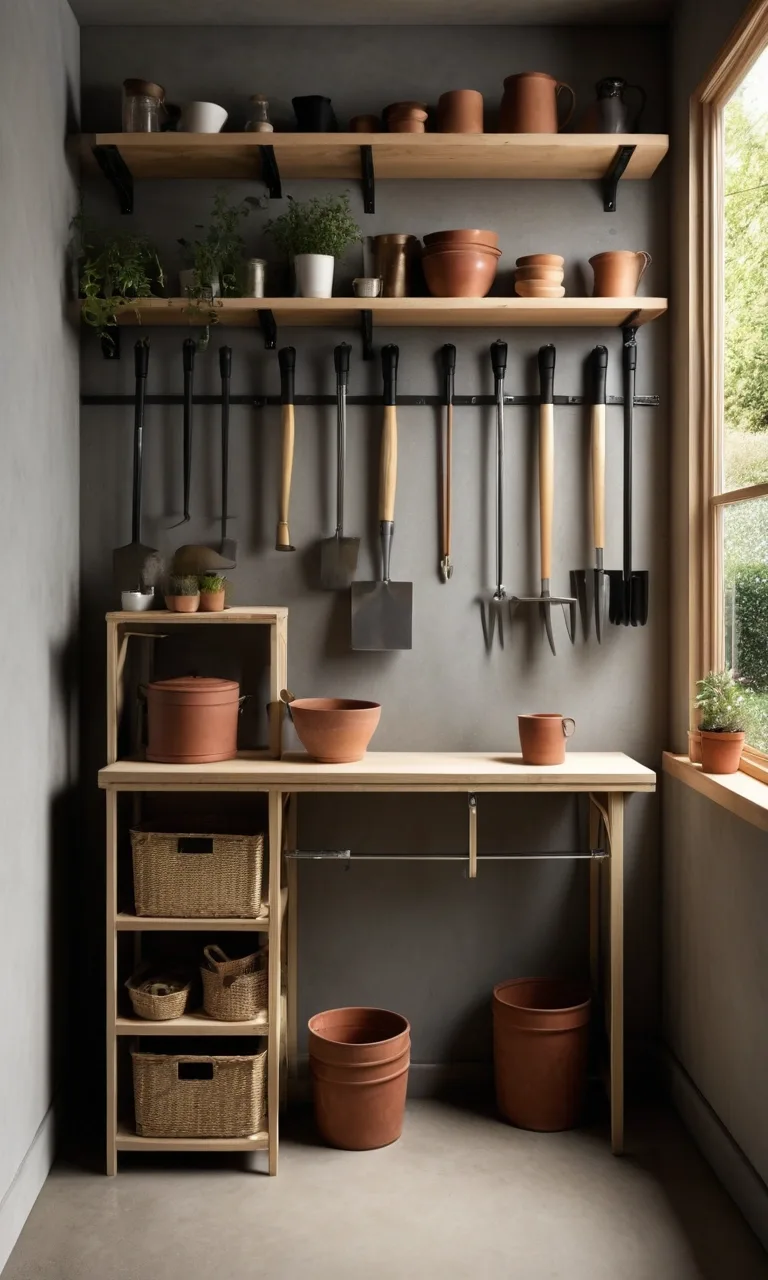
A well-organized garden makes everyday outdoor tasks easier, whether you're pruning shrubs, planting flowers, or maintaining a vegetable patch. The right storage system keeps your tools accessible, protects equipment from unnecessary wear, and frees up valuable space in sheds, garages, and patios. From simple wall-mounted hooks to spacious metal sheds, these garden tool storage ideas offer practical solutions for gardens of every size.
1. Garden Bench with Storage
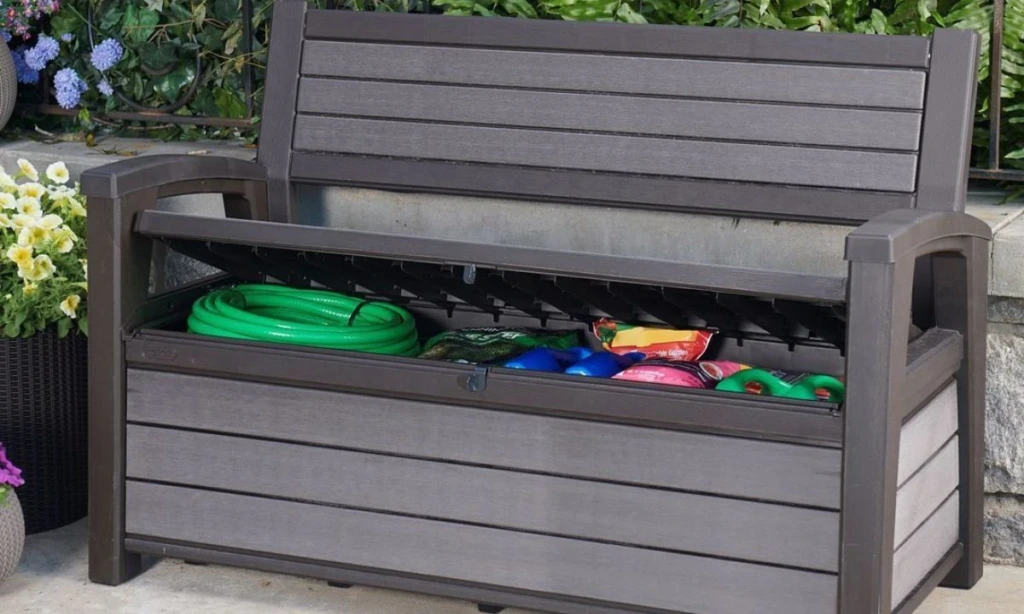
A garden bench with built-in storage combines comfortable seating with a convenient place to keep frequently used supplies. Choose a model with a lift-up seat or a concealed compartment underneath for gloves, hand trowels, pruning shears, seed packets, and small watering accessories. Weather-resistant resin, treated timber, or powder-coated metal can work well outdoors, depending on your climate and preferred style.
Position the bench near your planting beds or patio so essential items are always within reach. Add waterproof containers inside to keep smaller tools organized, and make sure the compartment has adequate ventilation if you plan to store anything that might retain moisture.
2. Garden Tool Storage Ideas
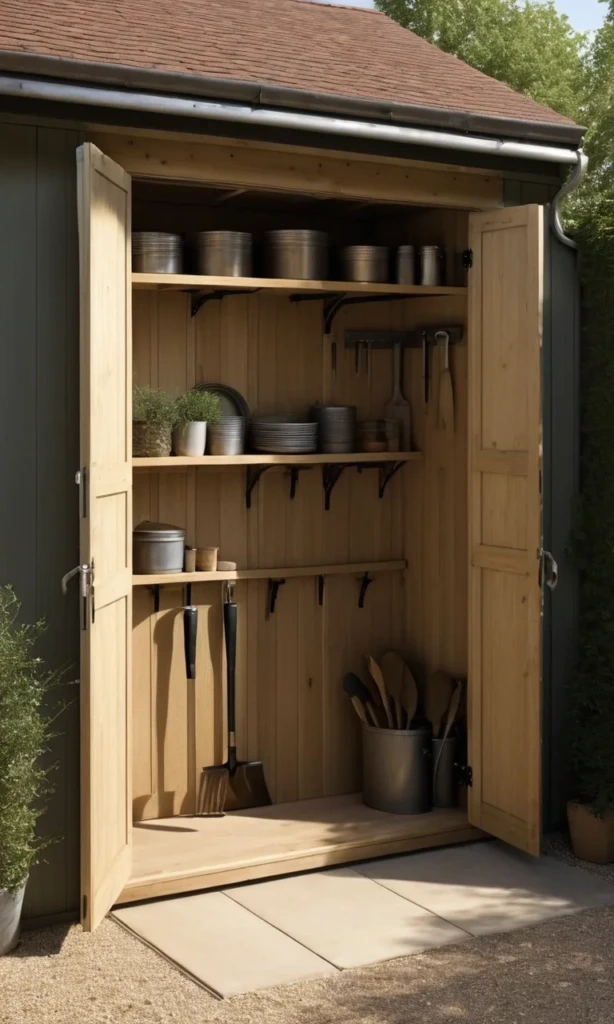
The best garden tool storage system depends on the equipment you own, the space available, and how often you use each item. Long-handled shovels and rakes benefit from upright racks, while lightweight hand tools fit neatly into drawers, baskets, or wall-mounted organizers. Bulky equipment may need a dedicated shed or a sturdy outdoor cabinet.
Before buying anything, group your tools by purpose and remove damaged or duplicate items you no longer need. Measure your available wall and floor space, then choose storage that leaves walkways clear and keeps sharp edges protected. Frequently used equipment should be easy to reach, while seasonal supplies can occupy higher shelves or less accessible corners.
3. Door Shed Nook
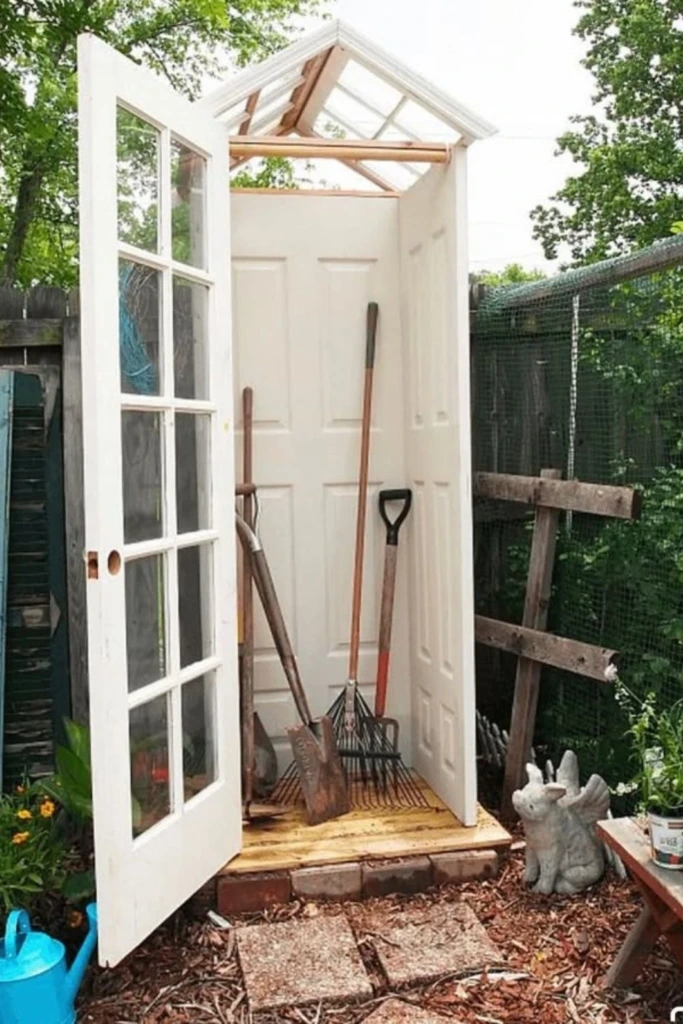
The inside of a shed door offers useful storage space that often goes unnoticed. Install a narrow rack, a few sturdy hooks, or a compact hanging organizer to hold gloves, hand forks, pruning tools, twine, and other lightweight essentials. This arrangement makes use of an otherwise empty surface without taking up additional floor space.
Check the door's construction before attaching hardware, and ensure the added weight will not interfere with its hinges or closing mechanism. Keep hanging items away from the latch and frame. For a tidy appearance, group similar tools together and leave enough clearance for the door to open fully.
4. Pallet Holder
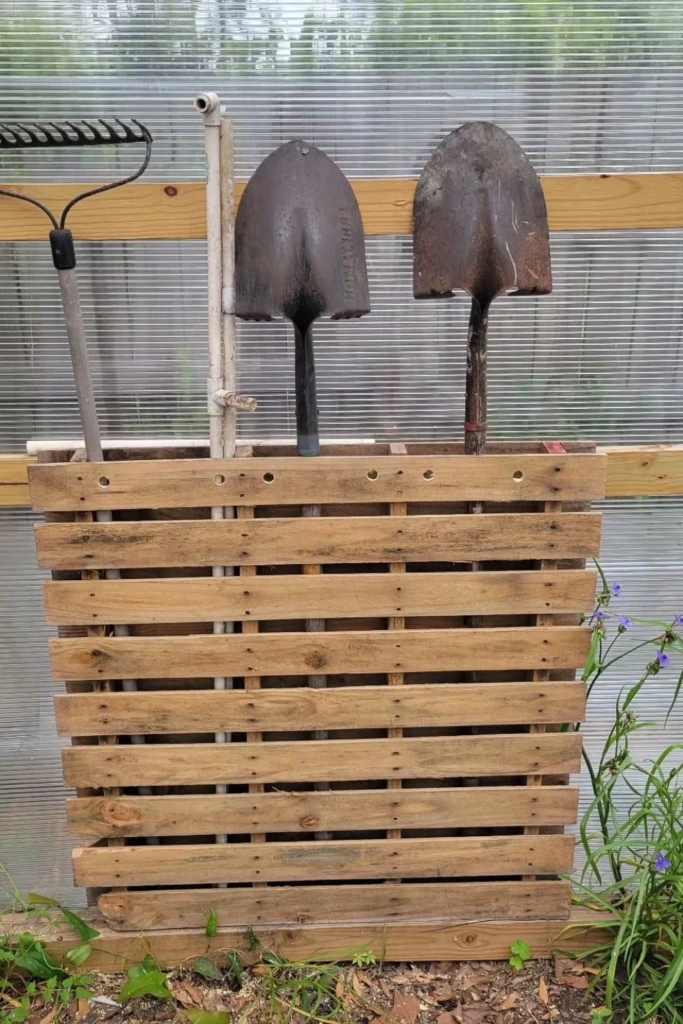
A wooden pallet can become a simple upright holder for long-handled garden tools. Stand it securely against a shed wall or fence, then slide rakes, brooms, spades, and hoes into the spaces between its boards. The existing gaps help separate individual tools, making it easier to grab the one you need.
Choose a clean pallet with sound, undamaged wood, and sand any rough edges that could catch clothing or cause splinters. Secure the pallet to a stable structure rather than relying on its weight alone. If it will remain outdoors, apply a suitable exterior wood finish and keep the base raised above standing water.
5. Corner Wall Grid
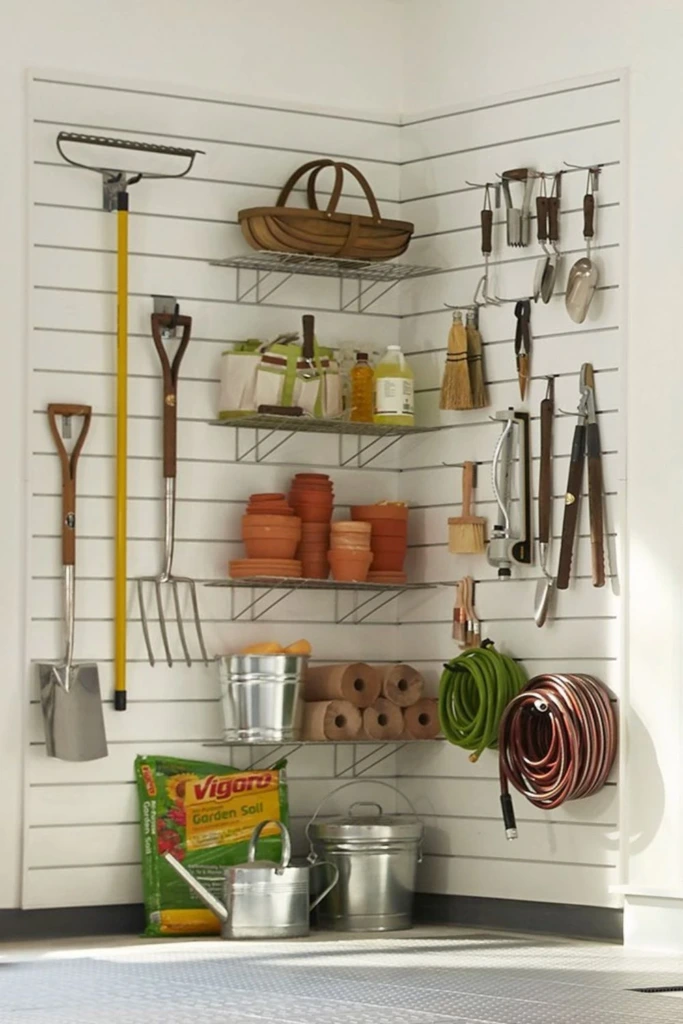
A wall grid is an effective way to organize gardening equipment in a cramped shed or garage corner. Mount a suitable metal grid or heavy-duty wire panel to the wall, then add compatible hooks, clips, and small baskets for different tools. Hand trowels, secateurs, cultivators, and lightweight accessories can each have their own place.
One advantage of a grid is that its layout can change as your collection grows. Move hooks around whenever you purchase new equipment or rearrange your workspace. For heavier tools, choose a panel and mounting system rated for the load, and attach it to appropriate structural supports rather than relying on weak wall coverings.
6. Pegboard Display
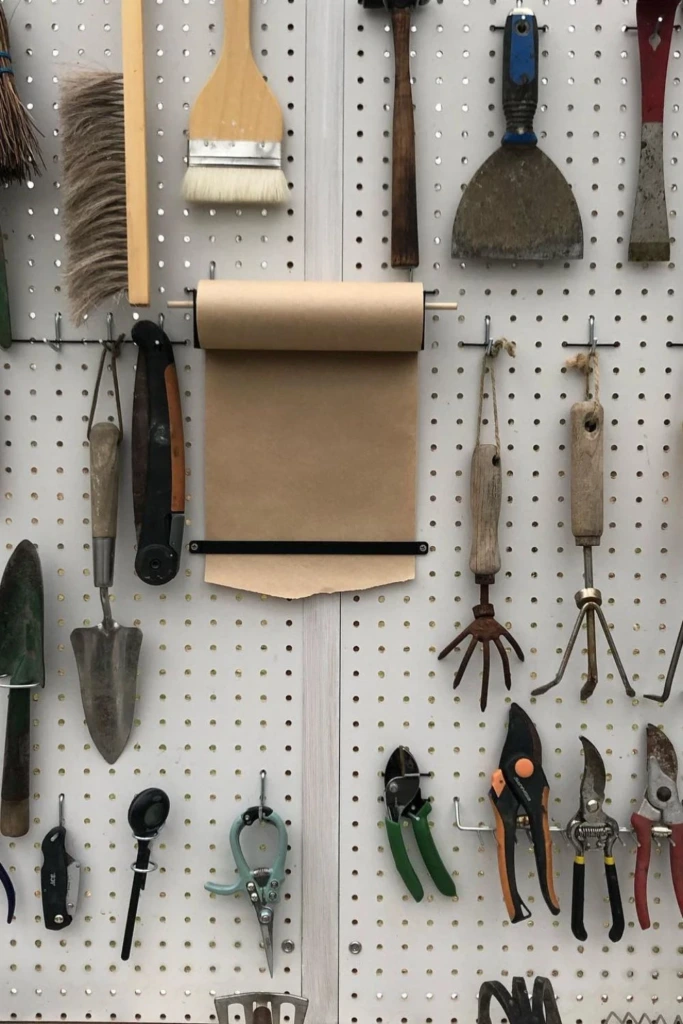
Pegboard provides a flexible storage surface that keeps tools visible and easy to access. Install it above a potting bench or along a shed wall, then arrange hooks for hand tools, holders for scissors, and small bins for labels, plant ties, and spare fasteners. An organized pegboard can also make a gardening workspace feel more inviting.
Select a board designed for your environment, especially if the storage area is damp or exposed to outdoor air. Use hooks that fit securely and follow the manufacturer's load recommendations. You can outline frequently used tools on the board to make returning them to the correct position easier after each gardening session.
7. Multi-Tier Rack
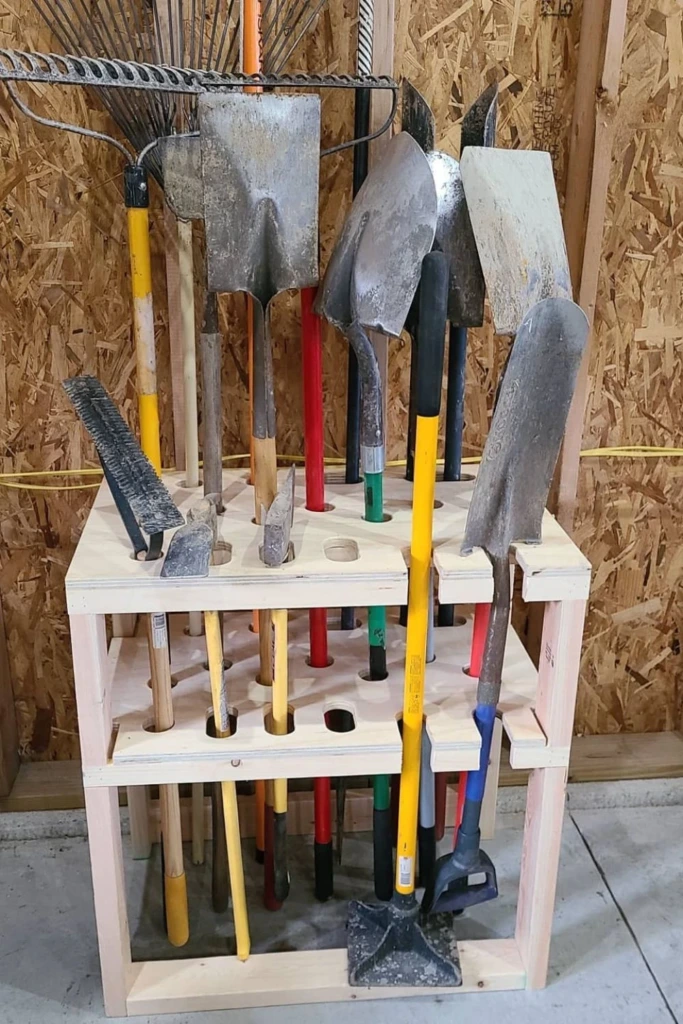
A multi-tier rack helps separate garden tools and supplies by size while using vertical space efficiently. The lower section can accommodate larger items, while upper levels hold watering accessories, small pots, gloves, and containers of plant labels. Some designs include dedicated slots for long-handled equipment, reducing the likelihood of tools tipping over.
Choose a rack with a stable base and shelves strong enough for the items you intend to store. Heavy objects should sit on the lowest level to improve stability. If the rack is placed outside, select weather-resistant materials and position it on a level surface where rainwater will not collect around the feet.
8. Bucket Caddy
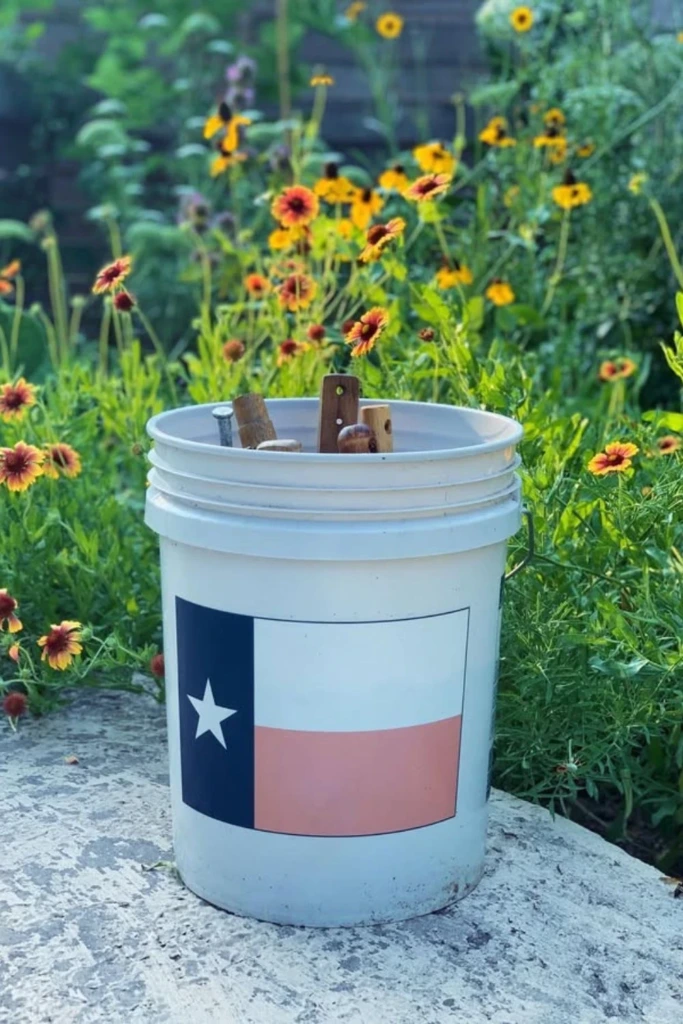
A bucket caddy turns an ordinary bucket into a portable organizer for small gardening tools. Fabric or fitted tool organizers typically include exterior pockets for gloves, hand pruners, a trowel, plant markers, and twine, while the bucket's interior can hold larger accessories or collected weeds.
This setup works particularly well when moving between raised beds, flower borders, and containers around the patio. Choose a sturdy bucket with a comfortable handle and a caddy that fits securely. Avoid carrying sharp tools loosely inside, and keep wet equipment separate from clean supplies to prevent rust and unnecessary mess.
9. Bench Storage Seat
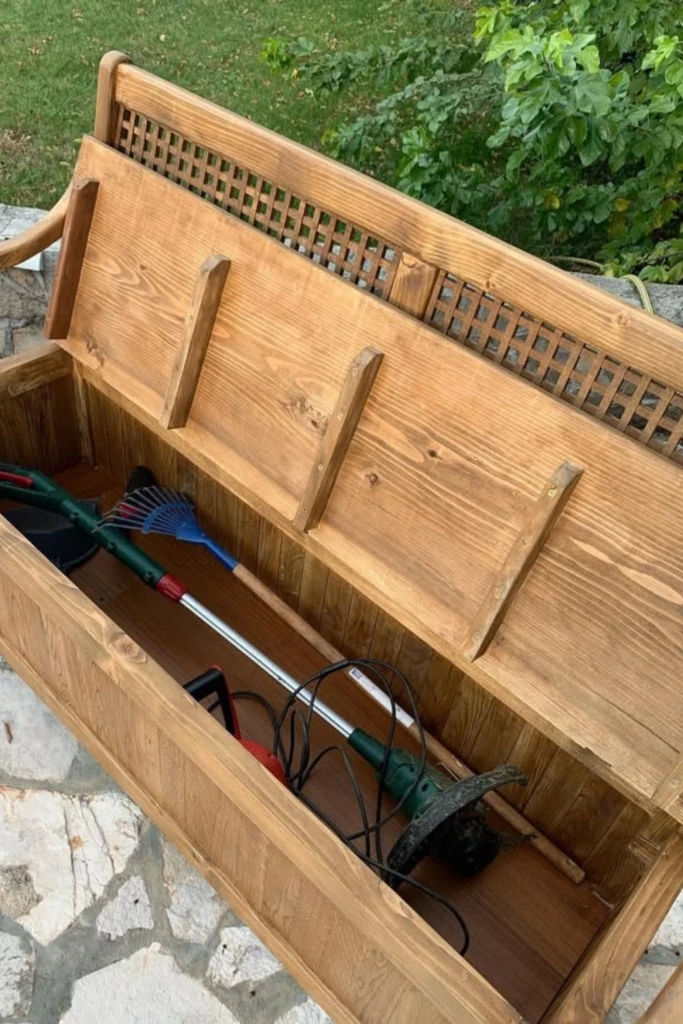
A storage seat provides another way to combine a useful garden feature with concealed organization. Unlike an ordinary bench, this design includes a compartment beneath the seating area for keeping smaller equipment out of sight. It can be placed beside a greenhouse, along a garden path, or near a frequently used planting area.
Use removable trays or small boxes to separate items such as gloves, pruning accessories, and seed packets. If the seat remains outdoors, check that its lid sheds rain and that the compartment does not trap moisture. Never store fuel, chemicals, or other hazardous products where children could access them through an unsecured lid.
10. Fence Hanging Bar
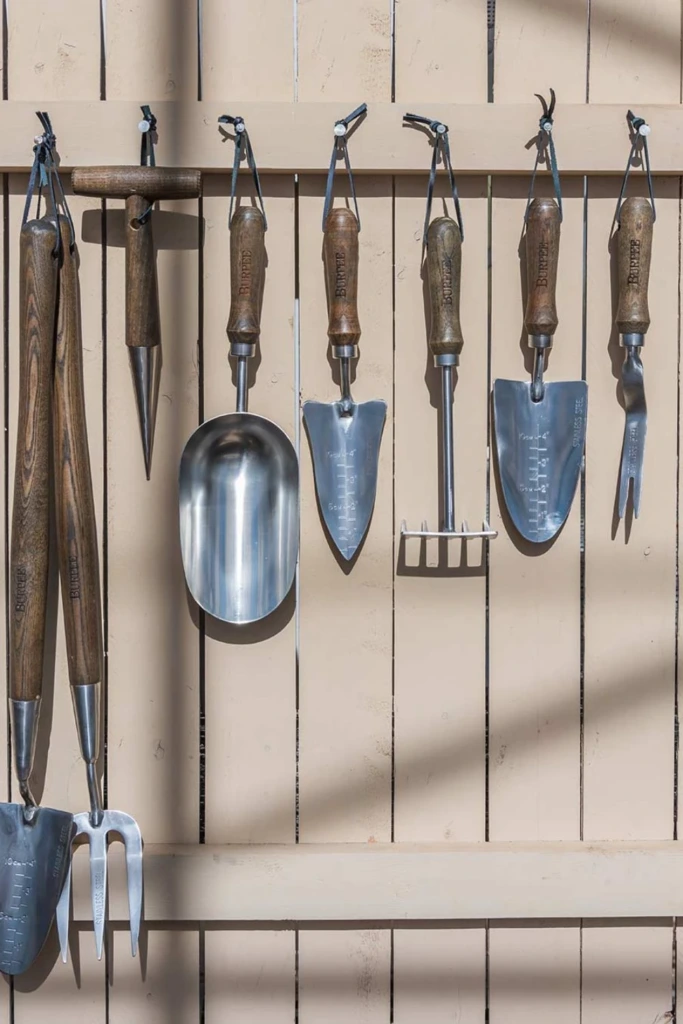
A hanging bar attached to a sturdy fence creates a straightforward storage station for lightweight garden equipment. Fit a weather-resistant rail with compatible hooks and use it for hand tools, small watering cans, brushes, and other frequently used accessories. This approach can free up valuable space inside a compact shed.
Make sure the fence is strong enough to support the combined weight of the rail and everything hanging from it. Use outdoor-rated fixings and leave sufficient space between tools so they can be removed without tangling. Place the bar in a sheltered area when possible, and protect metal tools from prolonged exposure to rain.
11. Power Tool Hanger
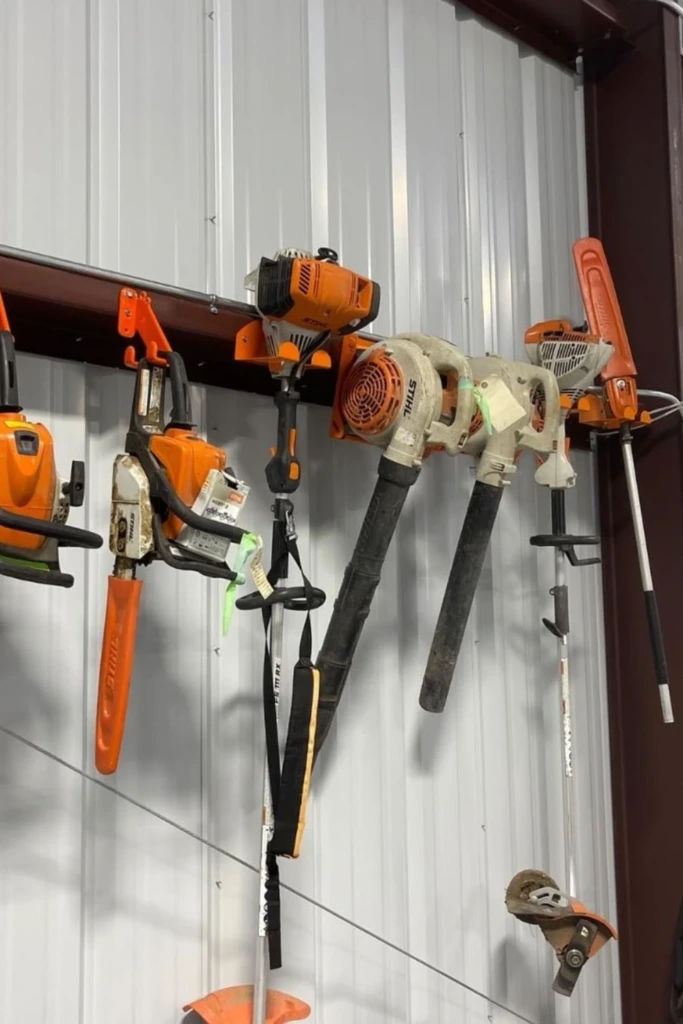
Electric garden equipment such as hedge trimmers, grass trimmers, and leaf blowers can be easier to manage with purpose-built wall hangers. A suitable bracket keeps each tool off the floor, reduces clutter, and makes it simpler to identify equipment before starting a job.
Check the manufacturer's storage recommendations before choosing a hanger. The bracket should support the tool securely at an appropriate point without putting pressure on delicate components. Remove batteries when recommended, and store them according to the manufacturer's instructions. Keep power tools dry, protect cutting edges, and arrange cords so they cannot become tangled or damaged.
12. Compact Rail Rack
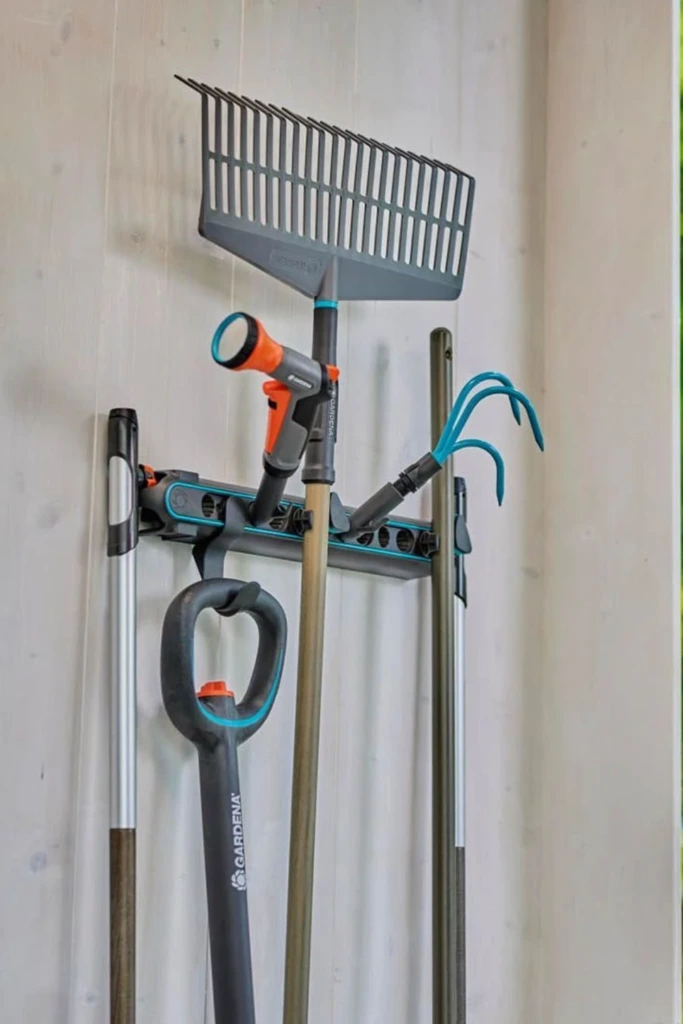
A compact rail rack is ideal when a shed wall has limited room for a full-sized organizer. A short mounting rail with several adjustable hooks can hold a small selection of hand tools, pruning equipment, or lightweight long-handled items. Because the hooks can often be repositioned, the system is easy to adapt to different tool shapes.
Install the rail at a comfortable height and make sure the fixings are suitable for the wall material. If you intend to hang heavier tools, check the rail's rated capacity rather than judging its strength by appearance. Keeping frequently used items together on one short rail can also reduce the time spent searching through drawers and boxes.
13. Multi-Use Organizer
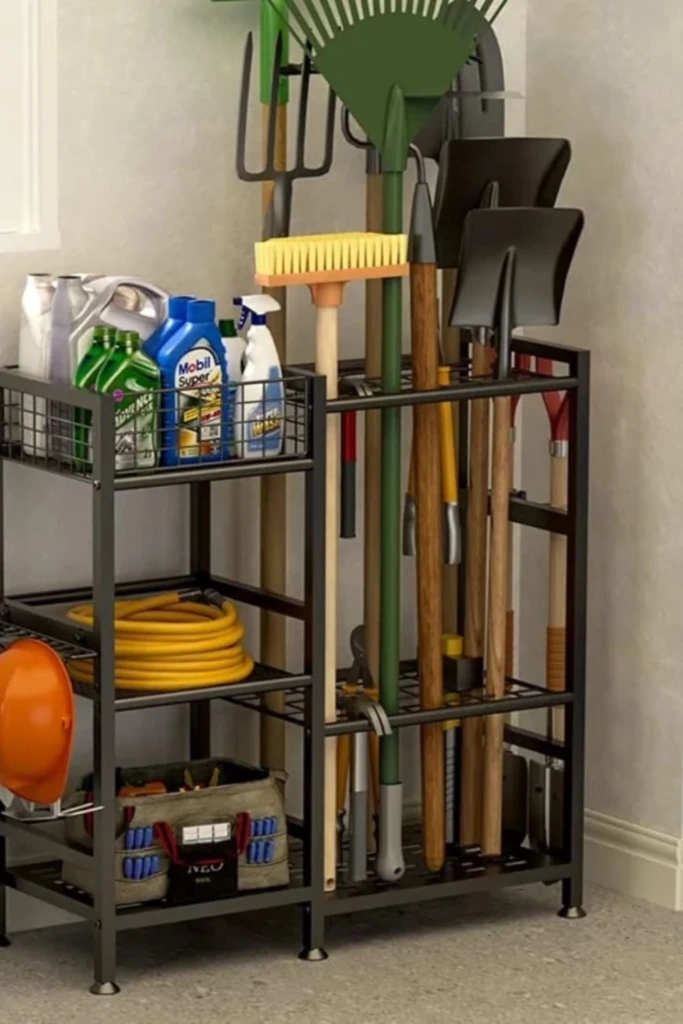
A multi-use garden organizer combines different storage features in one place. Depending on the design, it may include upright tool slots, shelves, hanging hooks, baskets, and a small compartment for accessories. This makes it useful for gardeners who own a mixture of long-handled tools, hand equipment, and everyday supplies.
Look for a configuration that matches your actual collection instead of choosing one with unnecessary compartments. Keep heavier tools in lower sections and smaller accessories in containers that prevent them from spilling. If you plan to place the organizer outdoors, prioritize weather-resistant construction and a design that allows water to drain away.
14. Slim Tool Caddy
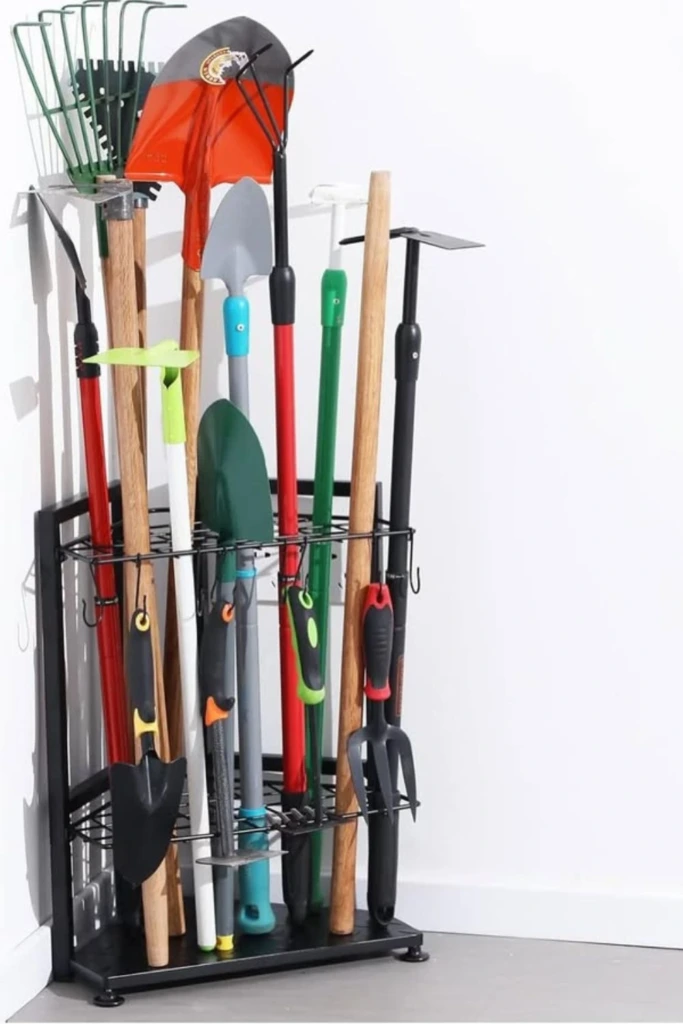
A slim tool caddy fits into narrow gaps between a shed wall and shelving, beside a greenhouse, or along a garage wall. Tall, narrow organizers often feature vertical slots that keep spades, hoes, rakes, and other long-handled tools separated without occupying a large footprint.
Measure the available space carefully, including the room needed to pull tools out of their slots. A caddy with a broad, stable base is preferable to a tall design that can easily tip. For extra security, fasten it to a suitable wall or support and store the heaviest tools near the bottom.
15. Metal Garden Shed
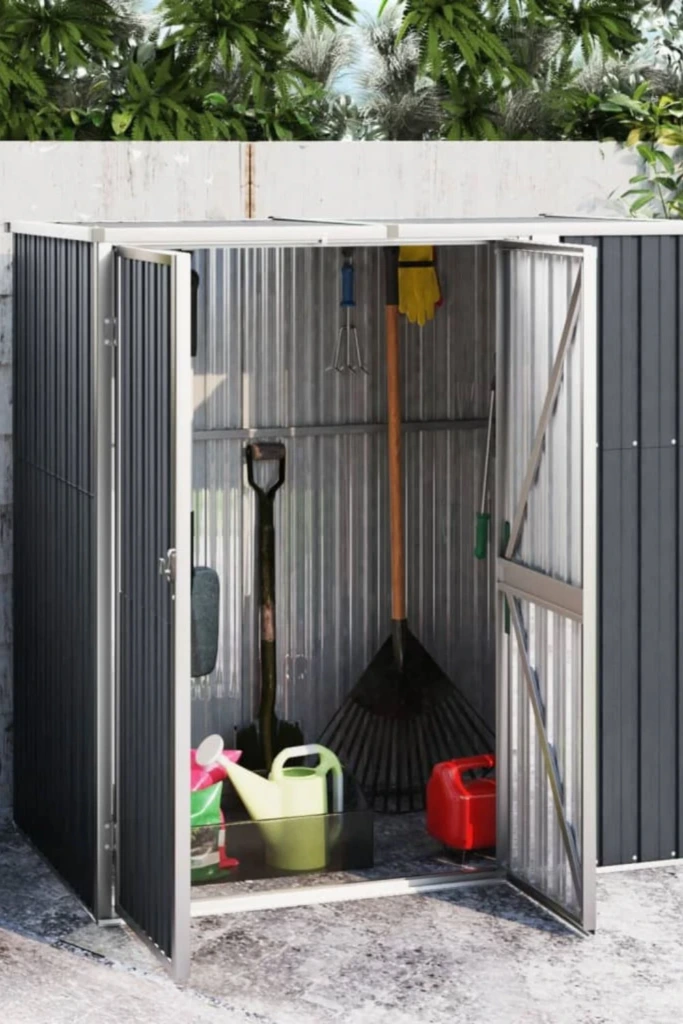
A metal garden shed offers enclosed storage for equipment that would otherwise occupy a garage or clutter a patio. Depending on its dimensions, it can accommodate lawn tools, spades, rakes, hoses, and selected pieces of garden machinery. Its solid exterior also keeps equipment out of sight and provides a barrier against many forms of everyday outdoor exposure.
Choose a shed large enough to leave clear access around the tools you use most often. Add wall hooks, shelves, and a dedicated long-tool rack to make the interior more functional. Install it on a level, well-drained base, anchor it according to the manufacturer's instructions, and provide suitable ventilation to help manage condensation.
16. Potting Bench Wall
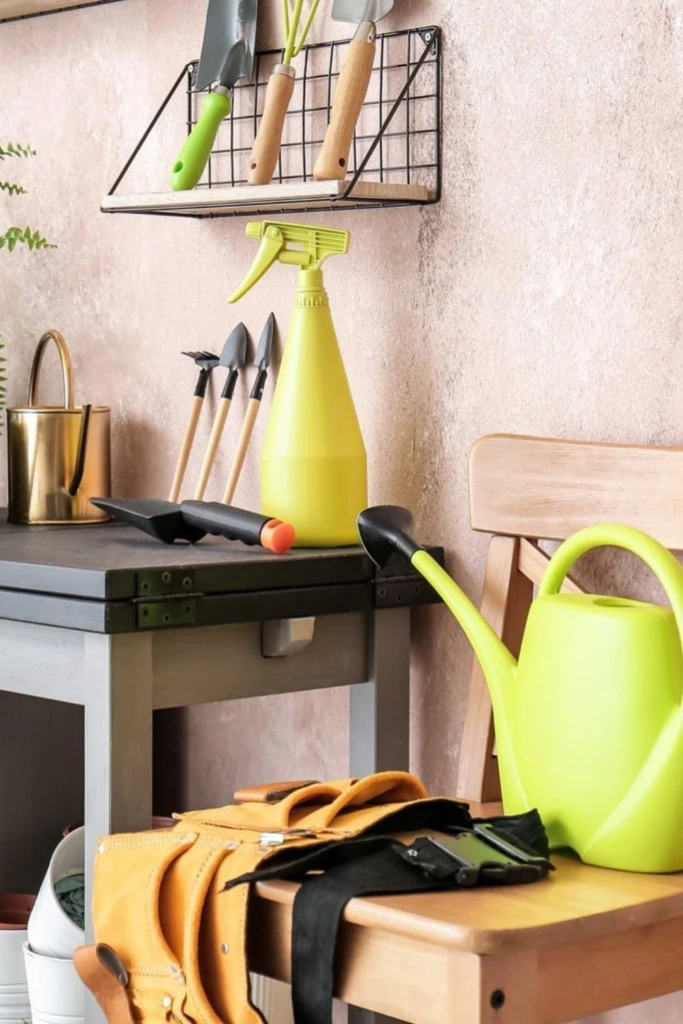
The wall behind a potting bench can serve as a dedicated station for the small supplies needed during planting. Mount shallow shelves, hooks, or a compact pegboard to keep trowels, plant labels, scissors, twine, and seed packets close to your work surface.
Organize supplies by task so everything needed for potting or transplanting is easy to find. Place frequently used items at eye level and keep heavier containers on secure lower shelves. A washable backing can make cleanup easier, particularly if the bench is used for handling damp soil, compost, or potting mixtures.
17. Hanger Hook Rack
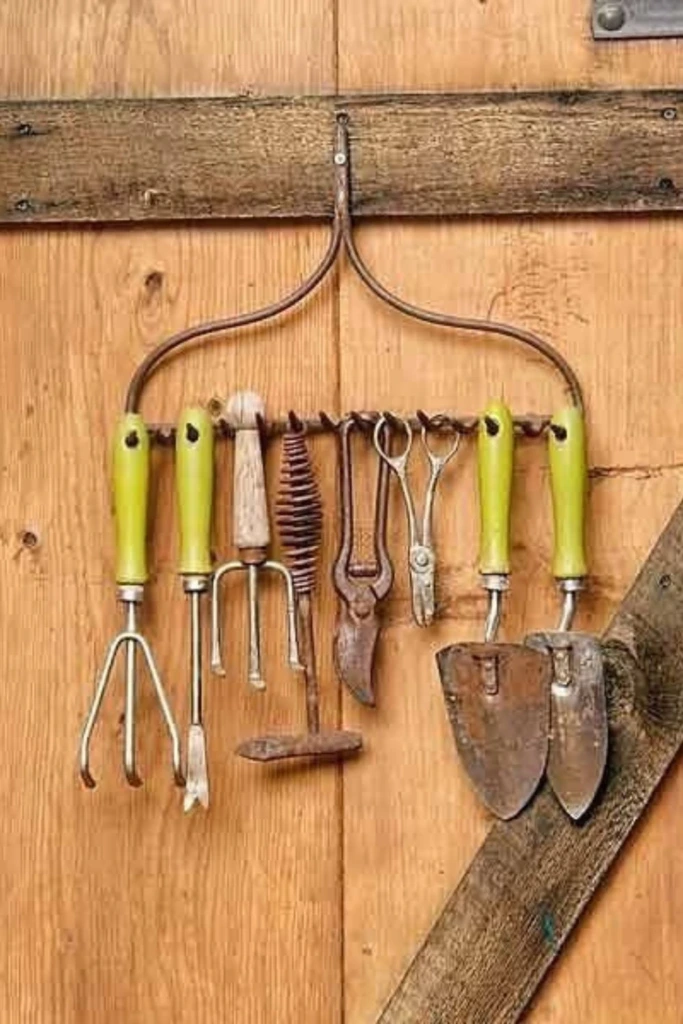
A hook rack provides an uncomplicated solution for keeping garden equipment off the ground. A row of strong hooks can hold hand tools, lightweight watering accessories, brushes, kneeling pads, and other items with suitable hanging points. Longer hooks may also accommodate selected long-handled tools when the rack is designed for that purpose.
Choose hooks that match the weight and shape of each item, and install them with suitable fixings. Space them far enough apart to prevent handles from overlapping. Position sharp tools so their blades face away from people passing by, and avoid hanging heavy equipment above seating or frequently used walkways.
18. Painted Pallet Wall
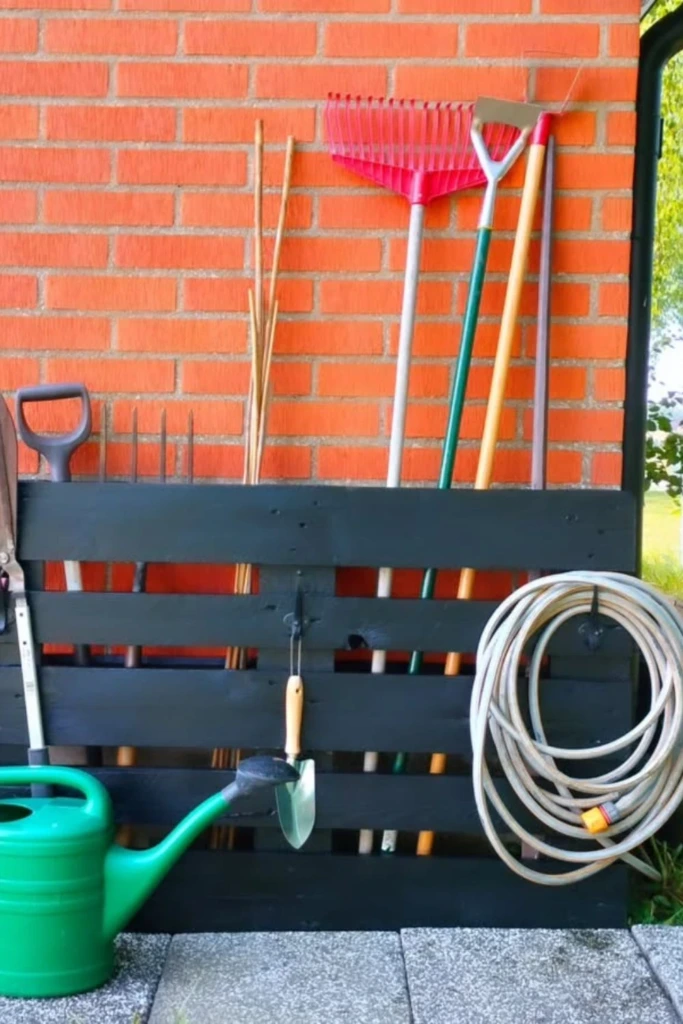
A painted pallet wall combines practical storage with a decorative touch. Secure a suitable wooden pallet to a shed wall or sheltered fence, then use its openings to arrange small garden tools and accessories. A fresh coat of exterior paint can help the pallet complement your outdoor furniture, flower beds, or garden color scheme.
Prepare the wood by removing loose splinters and checking for damaged boards before painting. Use a finish suitable for exterior timber and allow it to dry completely before placing tools against it. Secure the structure properly and avoid using weak pallet boards to support heavy equipment without additional reinforcement.
19. Wall Slat Rack
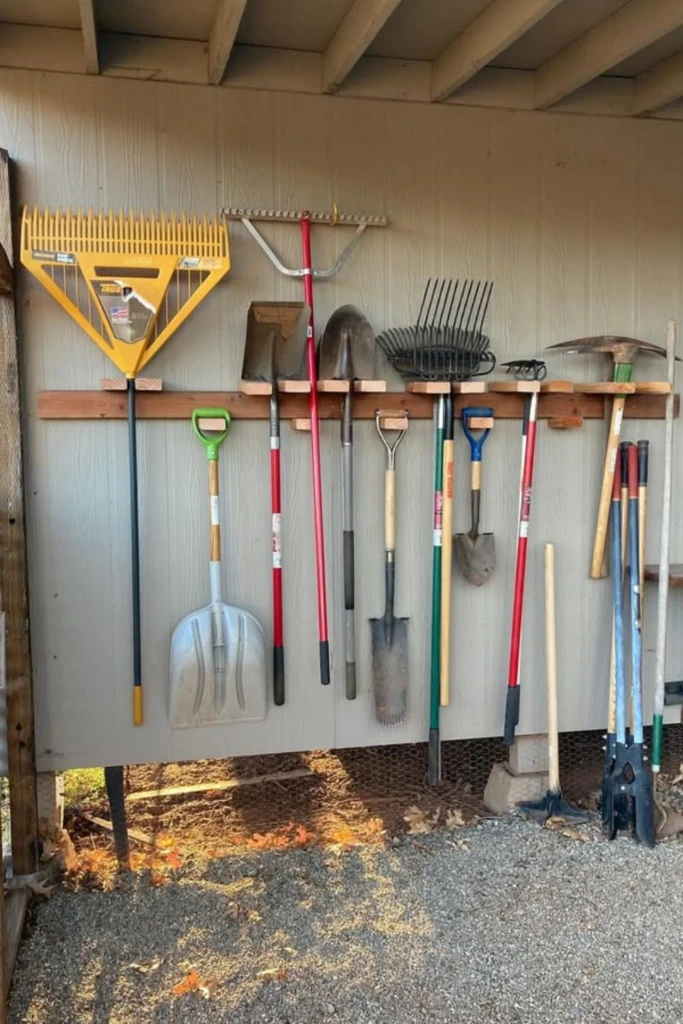
A wall slat rack uses horizontal or vertical slats fitted with compatible brackets and hooks to create adjustable storage. It is particularly useful for gardeners whose equipment changes with the seasons because individual holders can be moved without rebuilding the entire system.
Install the slats on a strong, suitable backing and follow the manufacturer's recommendations for load limits and spacing. Arrange tools according to their length, keeping bulky items away from doors and windows. For an outdoor installation, select weather-resistant materials and check the fittings periodically for corrosion or loosening.
20. Pegboard Station
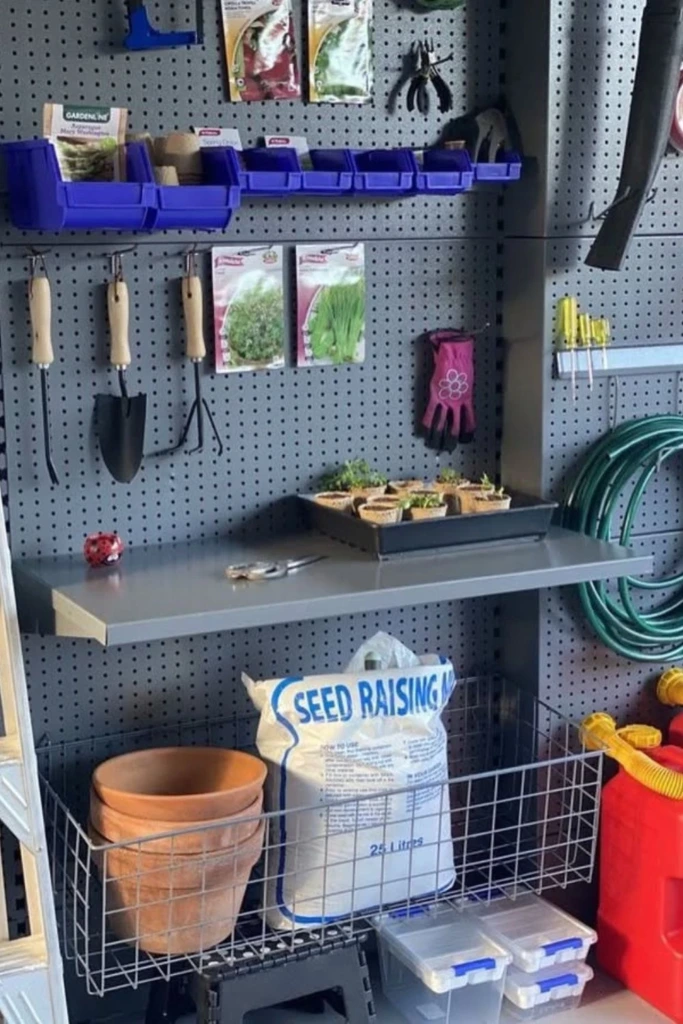
A complete pegboard station gives your gardening tools a dedicated home around a small work area. Start with a sturdy board mounted above a bench, then add hooks, shelves, labeled containers, and holders for the tools you use most frequently. The result can function as both a storage wall and a convenient workspace for routine garden maintenance.
Divide the board into practical sections, such as pruning tools, planting accessories, and protective equipment. Keep small items in containers so they do not fall through the openings, and leave enough room to return tools without rearranging everything. Regularly remove soil and moisture from equipment before hanging it back up.
21. Fence Pallet Board

A pallet board attached to a garden fence can provide extra storage without requiring a separate shed. Its openings and crosspieces offer convenient places to arrange selected tools, while additional hooks can hold lightweight accessories. This can be particularly useful in smaller gardens where indoor storage is limited.
Use sound timber and secure the pallet to fence posts or another support capable of bearing the load. Check that the installation does not weaken the fence or obstruct access along a path. Because outdoor wood is exposed to changing weather, inspect it regularly for rot, loose fixings, and splintering, and avoid leaving rust-prone tools exposed to rain.
22. Rolling Garden Cart
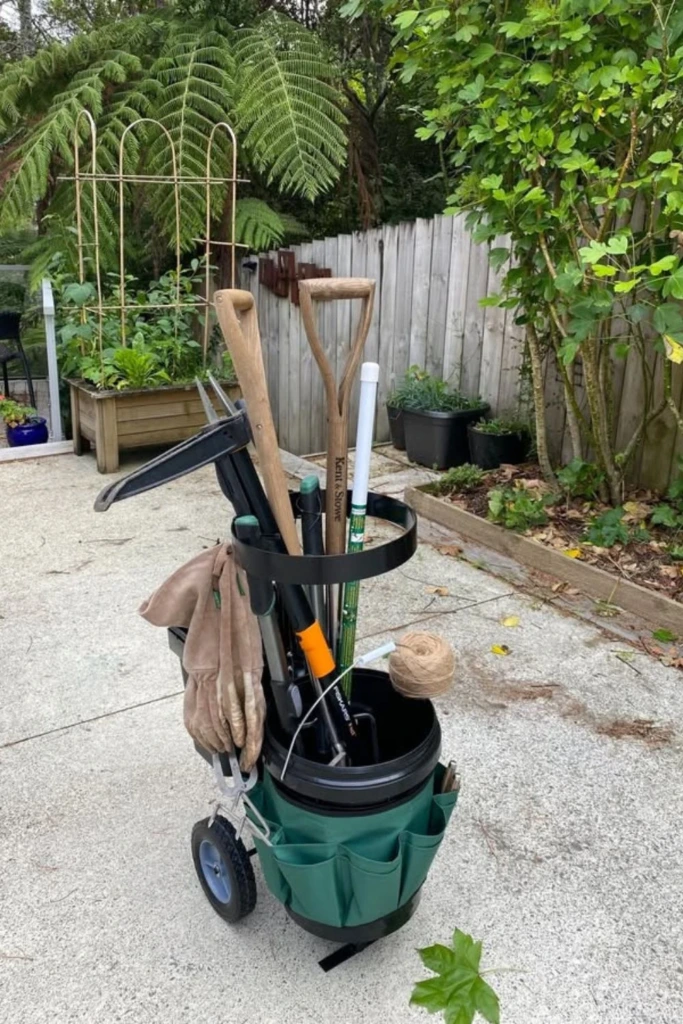
A rolling garden cart makes it easy to move tools and supplies around the yard instead of repeatedly walking back to a shed. Choose a model with shelves, divided compartments, or removable trays for hand tools, gloves, plant labels, small pots, and watering accessories. Larger carts may also carry bags of compost or other supplies within their rated capacity.
Lockable wheels can help keep the cart stationary while you work. Select wheels suited to the surfaces in your garden, especially if you need to cross gravel or uneven paving. When the job is finished, roll the cart into a sheltered storage area and remove damp soil or water to help prevent deterioration.
23. Wide Metal Shed
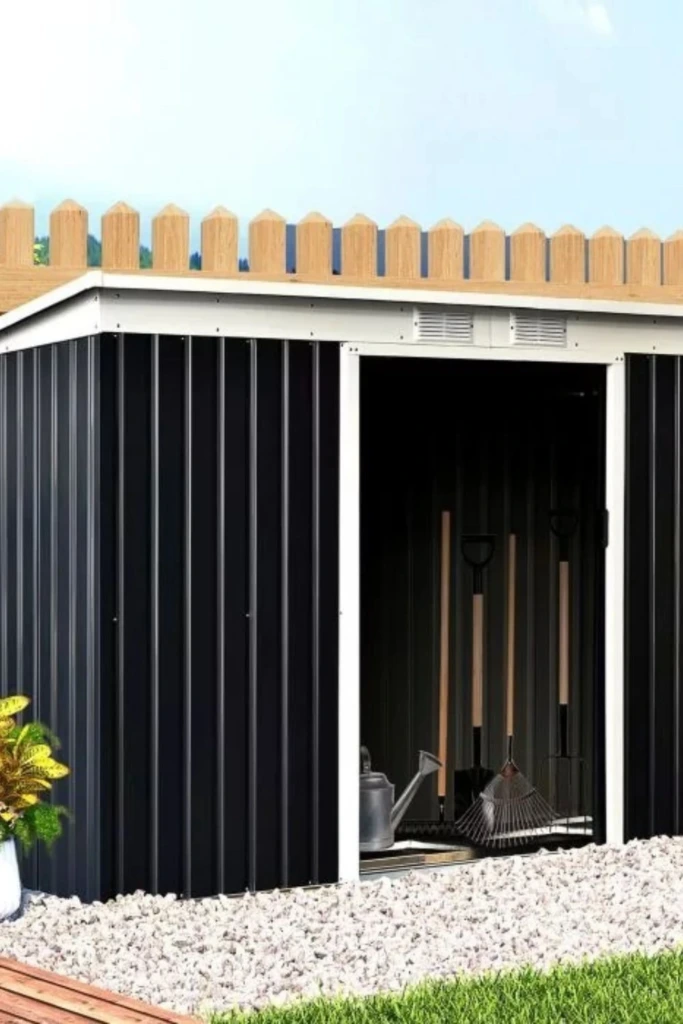
A wide metal shed is a practical choice for households with a larger collection of garden equipment. The extra interior space can accommodate long-handled tools, wheelbarrows, lawn-care machinery, folding chairs, and other bulky items, depending on the shed's dimensions and door opening.
Plan the interior before filling it. Reserve one side for upright tools, another for shelving, and a clear central route for moving equipment in and out. Keep heavy machinery on a stable floor and secure tall items against falling. Proper anchoring, drainage, and ventilation are important for protecting both the structure and the contents over time.
24. Repurposed Shutter Rack
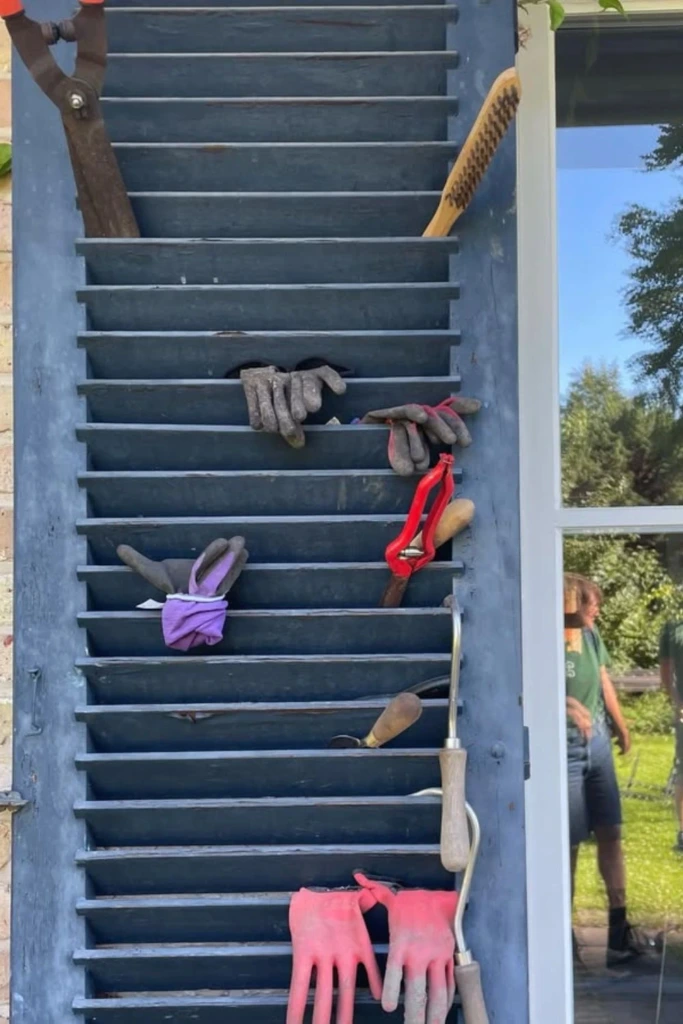
An old wooden shutter can be repurposed as a distinctive garden tool rack. Once cleaned and secured to a wall, its slats can provide attachment points for suitable hooks, small baskets, and lightweight accessories. It works especially well in a potting area or sheltered corner where a decorative storage feature fits the garden's style.
Inspect the shutter carefully for loose slats, damaged wood, or old paint that may contain hazardous substances. Repair weak areas before adding any weight, and choose an appropriate finish if the rack will be exposed to humidity. Use secure wall fixings and reserve this design for equipment that the shutter can safely support.
25. Side Slot Rack
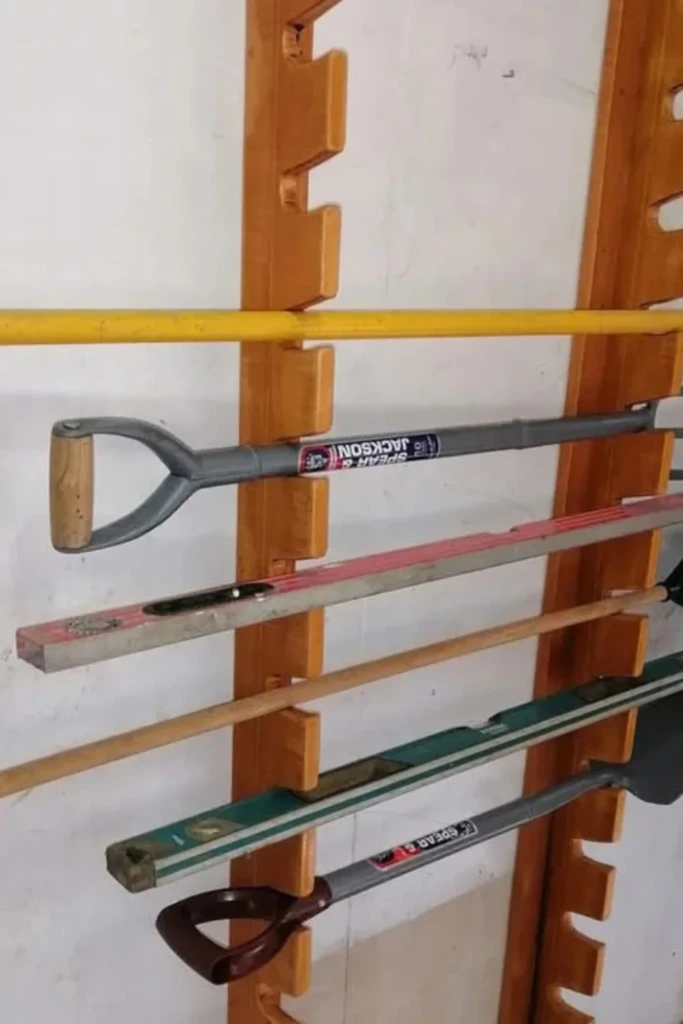
A side slot rack keeps long-handled tools upright in individual openings. It may be made from a purpose-built plastic organizer, a wooden frame, or a sturdy rack with separated compartments. By giving each handle its own position, the system helps prevent tools from becoming tangled or falling into a pile.
Place the rack along a shed wall or in a garage corner where the handles can be lifted out without hitting shelves or lights. Measure your largest tools before selecting the slot size. Keep pointed ends and cutting blades safely oriented, and anchor a tall rack if there is any risk of tipping when a tool is removed.
26. Decorative Tool Box
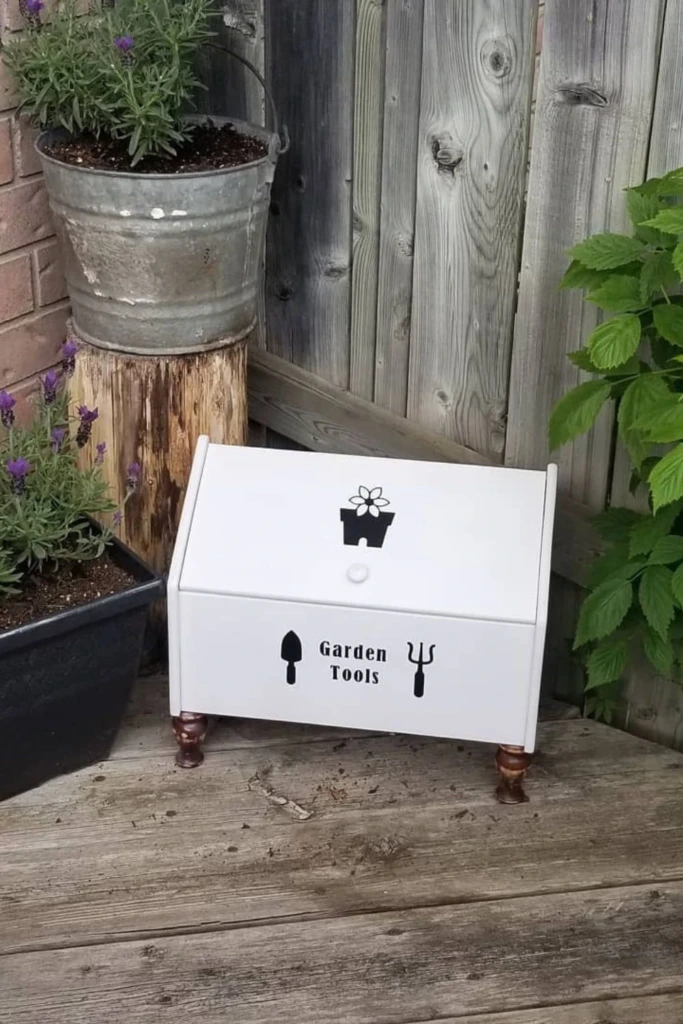
A decorative toolbox offers an attractive way to store small gardening essentials while keeping them close at hand. Wooden boxes, metal chests, and weather-resistant containers can hold hand trowels, gloves, plant labels, twine, and seed packets. A design that complements your outdoor furniture can look equally suitable on a potting bench or sheltered patio shelf.
Use removable dividers to separate sharp tools from delicate supplies and prevent small items from becoming mixed together. If the box will stay outdoors, choose one with weather-resistant construction and a well-fitting lid. Make sure moisture can escape rather than collecting inside, and avoid storing wet tools with paper packets or other materials that can be damaged by dampness.
27. Rustic Wall Hooks
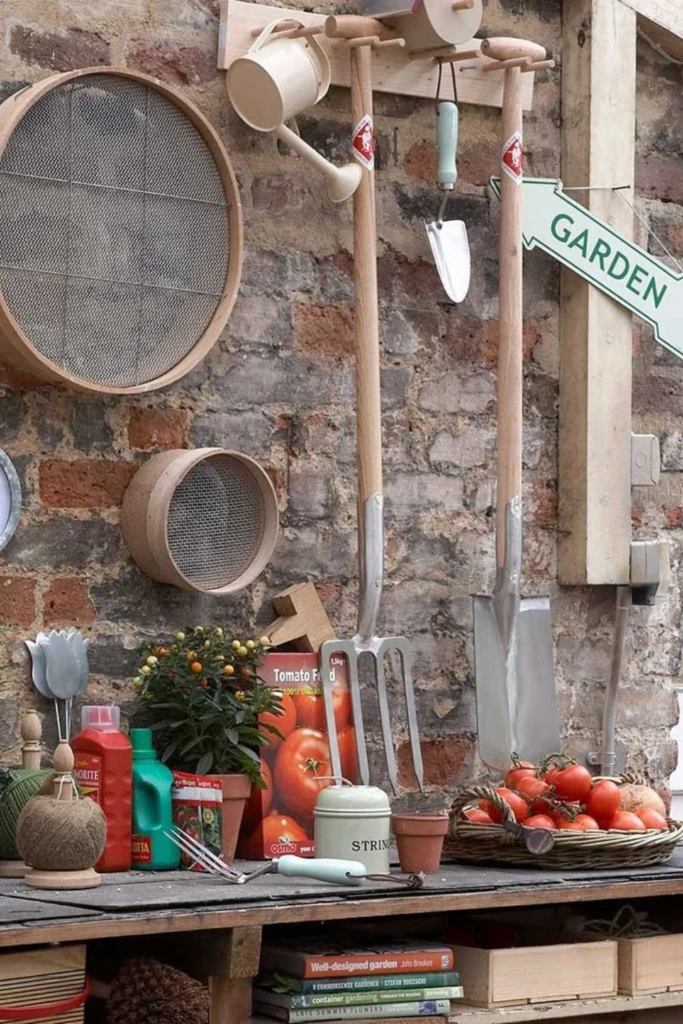
Rustic wall hooks bring a traditional look to a shed, covered porch, or potting area while offering useful storage. Iron-style hooks, reclaimed wooden pegs, and dark metal brackets can hold selected garden tools, baskets, and lightweight accessories. Arranged in a consistent row, they can make an ordinary wall feel like an intentional part of the garden design.
Appearance should not take priority over strength. Choose hooks designed for the weight and type of equipment you intend to hang, and use appropriate fixings for the wall. If the hooks are made from untreated metal, check for corrosion and protect the surrounding surface from rust marks. Keep sharp tools spaced apart and away from children's reach.
28. Rafter Hook Line
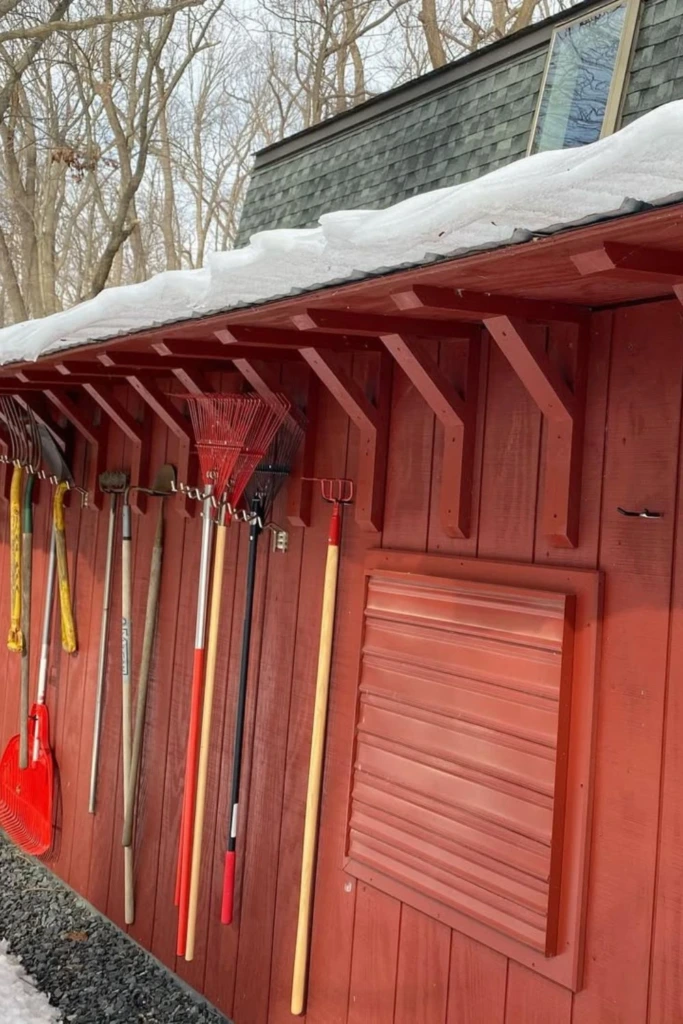
A line of hooks attached to suitable roof rafters can create overhead storage for selected garden equipment. In a shed or garage with enough headroom, this arrangement can free up floor and wall space for larger items. Depending on the support system, it may accommodate lightweight hoses, extension cords, or other equipment specifically suited to overhead hanging.
Before installing anything overhead, confirm that the rafters and hardware can support the combined load. Use hooks designed for the intended items, and never hang heavy machinery or unstable objects above areas where people regularly stand or walk. Keep the equipment high enough to preserve headroom but low enough for safe access, and avoid storing anything that could fall when a door slams or the structure moves.
Final Thoughts
An effective garden tool storage system does not have to be expensive or complicated. Wall-mounted hooks, pallet racks, compact caddies, storage benches, and metal sheds can all help create a tidier outdoor workspace when chosen for the right purpose. Start with the tools you use most often, make the best use of available space, and select durable materials suited to your local weather. With a little planning and regular maintenance, your equipment will stay easier to find, safer to handle, and ready whenever it's time to work in the garden.