20 Sock Storage Ideas for 2026 to Keep Your Drawer Neat and Organized
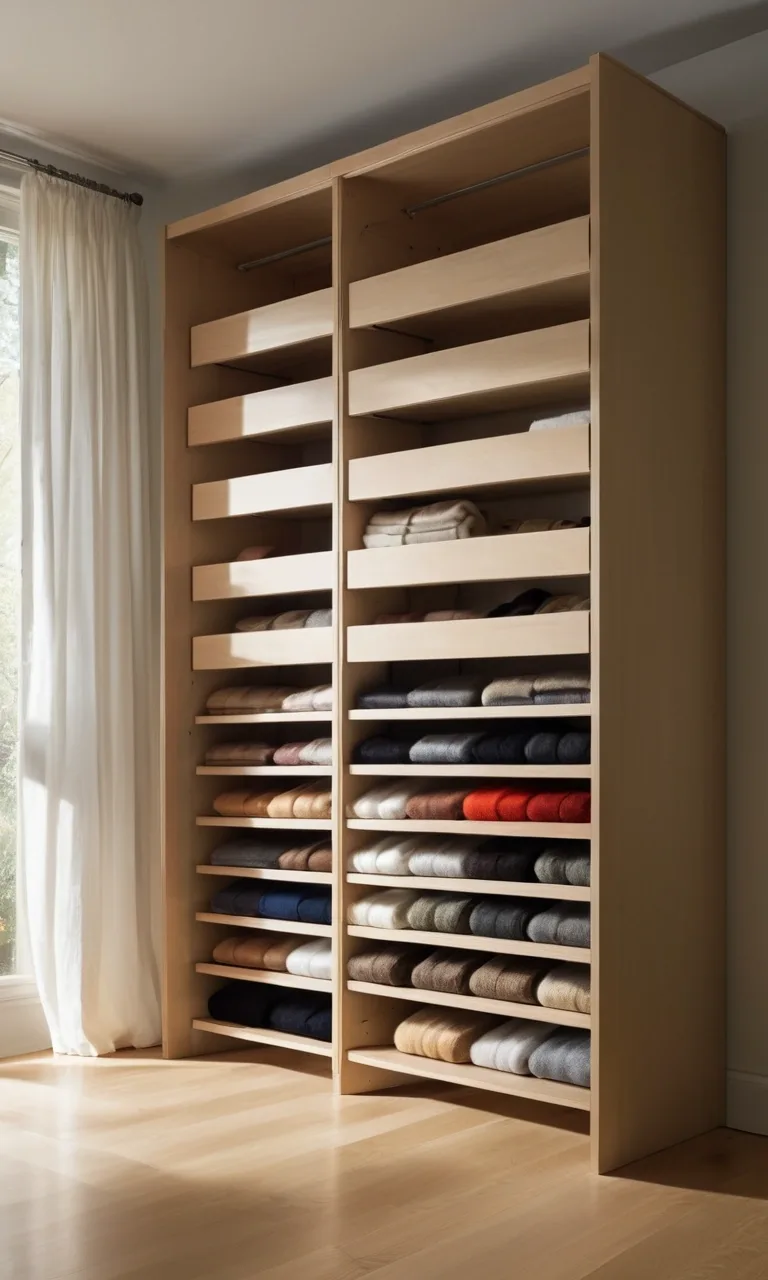
Socks are easy to misplace, difficult to keep paired, and surprisingly quick to turn a tidy drawer into a mess. Whether you have a small dresser, a shared closet, or a large wardrobe, the right storage system can make finding your favorite pair much easier. From simple drawer dividers to creative wall-mounted solutions, these sock storage ideas help you maximize available space, separate different styles, and maintain an organized collection without spending a fortune.
How Can You Keep Socks From Getting Lost or Mixed Up?
The easiest way to keep socks organized is to give every pair a designated place. Instead of tossing clean socks into one large drawer, separate them by purpose, length, color, or family member. Everyday ankle socks can occupy one section, while athletic, dress, and winter socks stay in their own compartments.
Pair socks before putting them away, and avoid stretching one sock tightly around the other because this can weaken the elastic over time. Rolling pairs loosely or folding them together keeps them easy to identify. Drawer organizers, labeled containers, and small fabric bins are especially helpful when you have several types of socks.
Make a habit of returning socks to their assigned sections after laundry day. This small routine prevents clutter from building up and makes it easier to notice missing pairs.
1. Grid Organizer
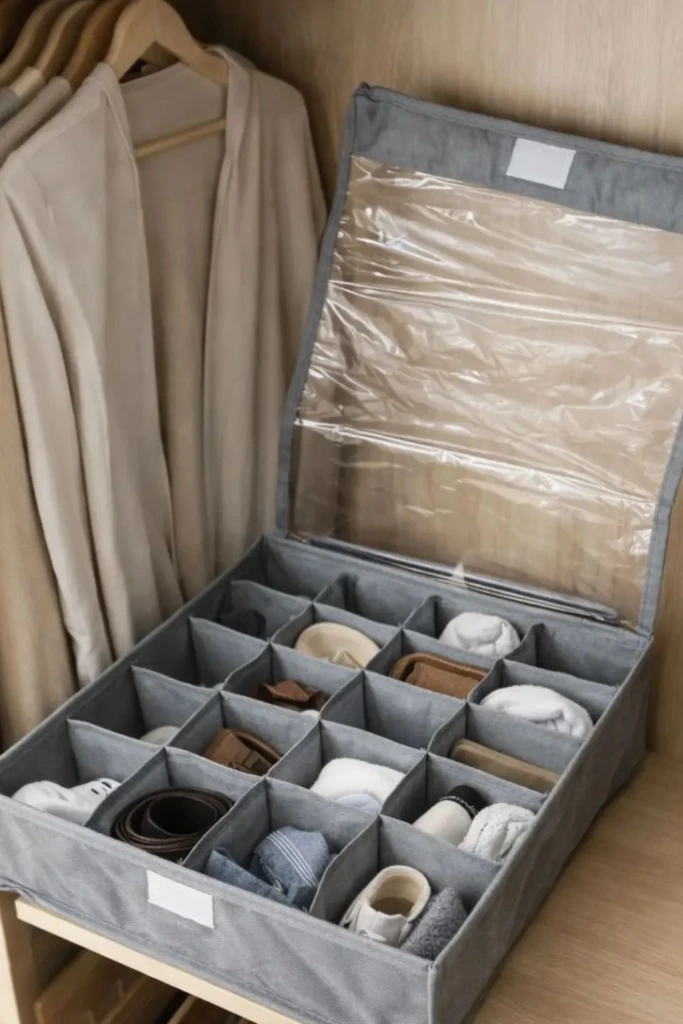
A grid organizer divides a drawer into individual compartments, giving each pair or category of socks its own space. These organizers are useful for people who own a variety of sock styles but want everything visible at a glance.
Choose a grid with compartments suited to your collection. Smaller sections work well for ankle socks and low-cut liners, while wider compartments accommodate crew socks and thicker winter pairs. Adjustable or expandable models can fit different drawer sizes.
Arrange similar socks together so you can locate what you need without moving everything around. A grid organizer is particularly practical for deep drawers where loose socks might otherwise become buried underneath other clothing.
2. Clip Hanger
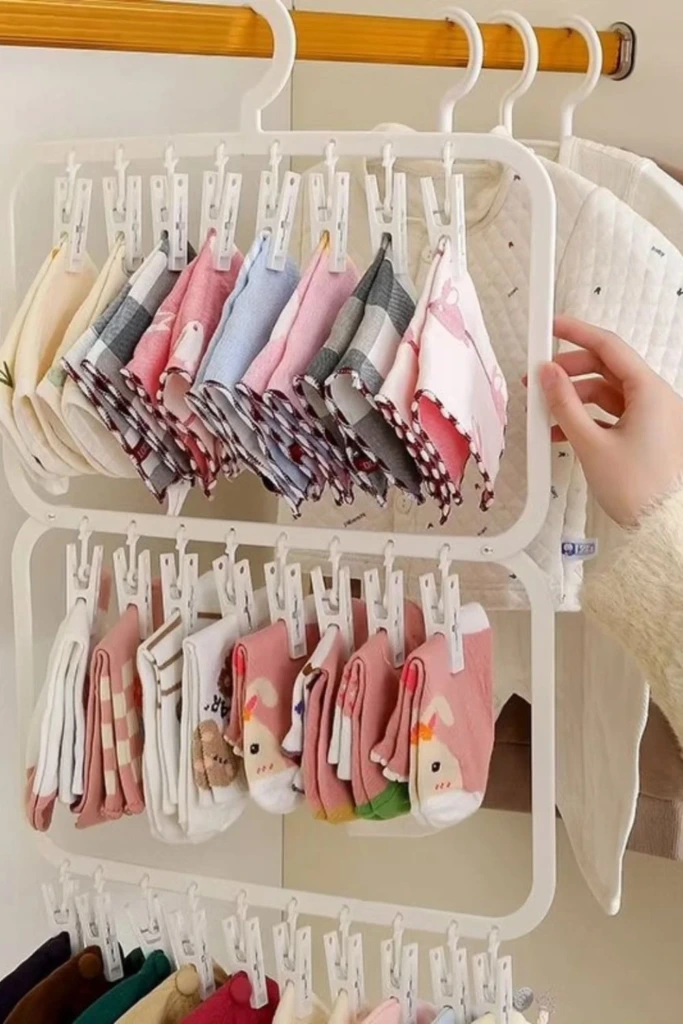
A clip hanger provides a convenient way to store socks vertically instead of using valuable drawer space. It usually features several clips attached to a hanging rail or hanger, allowing you to secure individual socks or pairs.
Hang the organizer inside a wardrobe, on a closet rod, or in a laundry area. It works well for frequently used socks, special-occasion pairs, or socks that need to be kept separate from everyday clothing.
Select clips with smooth edges and enough grip to hold fabric without leaving marks. For delicate materials, avoid placing excessive pressure on thin areas of the sock. Keeping pairs clipped together also reduces the chance of one disappearing during laundry sorting.
3. Sock Dispenser
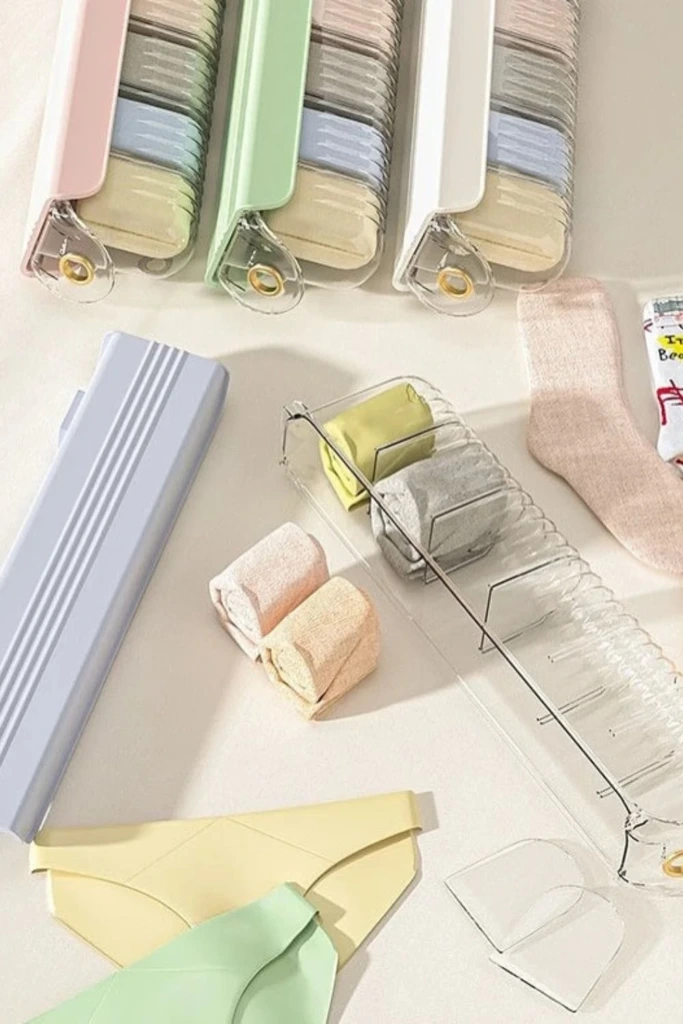
A sock dispenser makes it easy to grab a pair without rummaging through a container. Depending on the design, it may be a countertop holder, a compartmented box, or a wall-mounted unit that releases socks from an opening.
This solution is especially useful for busy households, children's rooms, and shared dressing areas. Fill the dispenser with clean socks of similar sizes or types so the contents remain easy to manage.
For a practical setup, keep everyday socks in the most accessible dispenser and reserve separate storage for formal or seasonal pairs. Choose a design that allows you to refill it easily and remove socks without stretching or damaging the fabric.
4. Drawer Trays
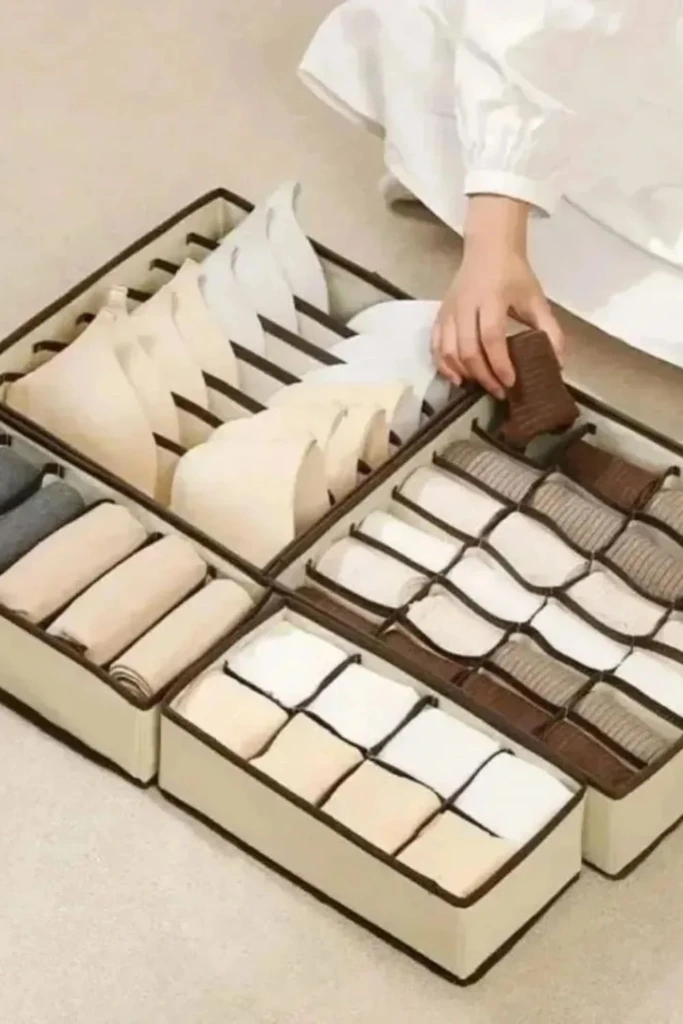
Drawer trays are simple inserts that create organized sections inside an existing dresser. They come in plastic, fabric, bamboo, and other materials, making it easy to find an option that matches your furniture and budget.
Use one tray for ankle socks, another for crew socks, and a separate section for athletic or dress socks. If your drawer is shallow, look for low-profile trays that leave enough room to open and close it comfortably.
Before purchasing, measure the drawer's interior width, depth, and height. Removable trays are especially convenient because you can lift them out when sorting laundry or cleaning the drawer. They also make it easier to maintain a consistent arrangement over time.
5. Rotating Rack
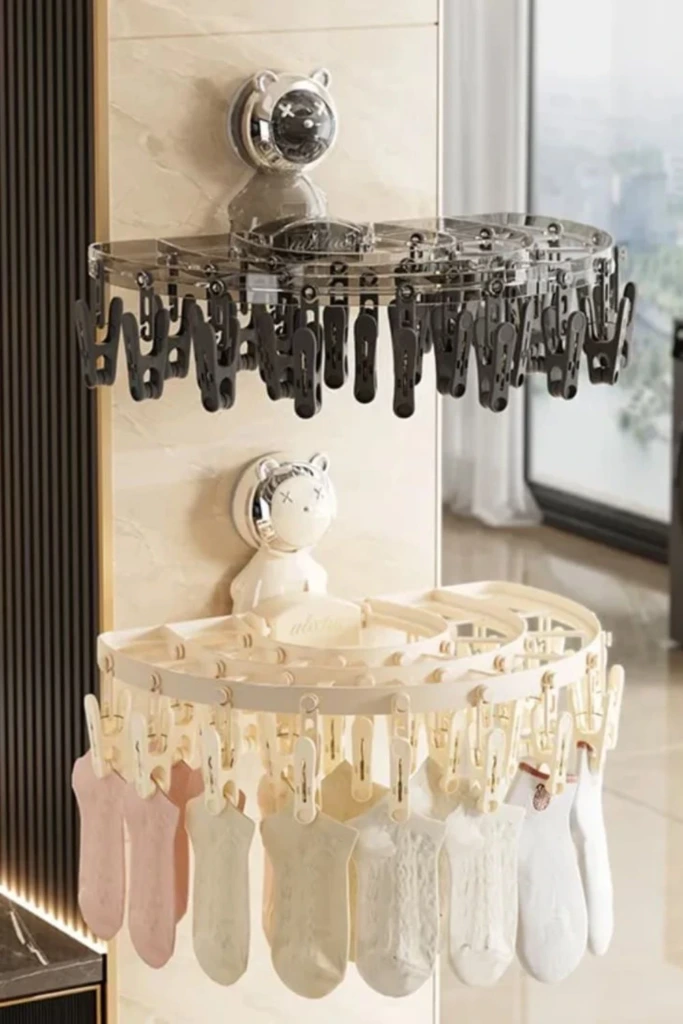
A rotating rack provides accessible storage for socks in a compact footprint. Its turning mechanism lets you reach different compartments without moving the entire organizer, making it a useful option for a closet shelf, dressing table, or laundry station.
Choose a rack with compartments large enough for your sock styles and a stable base that will not tip when rotated. Keep frequently worn pairs in the easiest-to-reach sections and place less-used socks farther around the rack.
This approach can work well in shared spaces where several people need access to different sock categories. However, measure the available surface first and make sure the rack has enough clearance to turn freely.
6. Labeled Bins
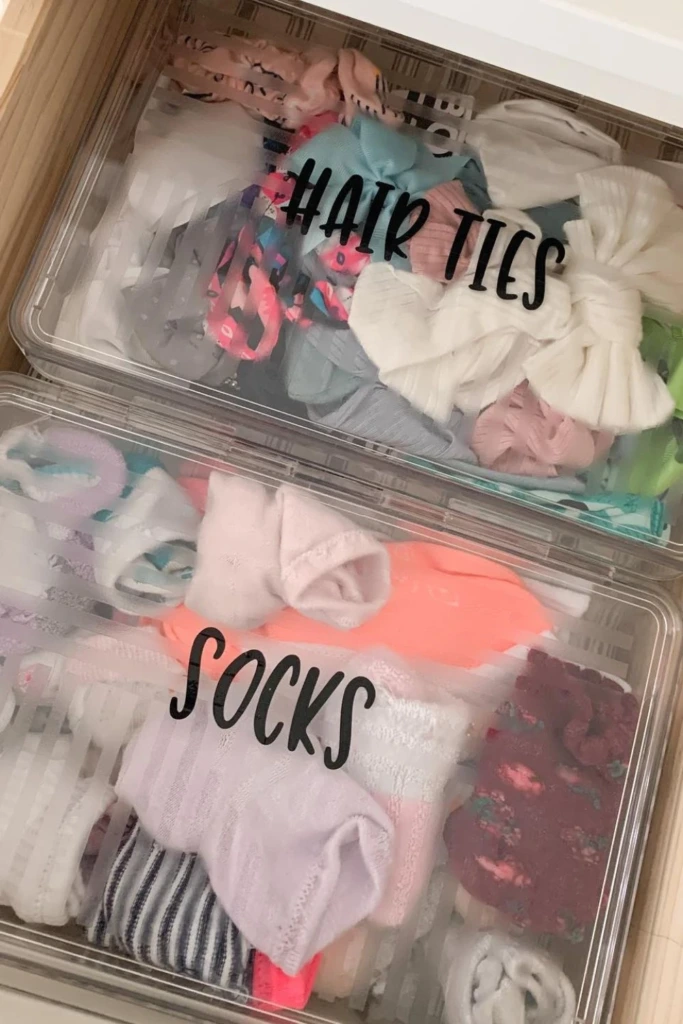
Labeled bins make sock storage straightforward, especially when a family has many pairs in different sizes. Use separate containers for children's socks, adult socks, athletic pairs, dress socks, and thicker cold-weather options.
Place labels on the front or top of each bin so the contents are easy to identify. Clear containers offer instant visibility, while opaque bins create a cleaner appearance when displayed on open shelves.
For the best results, avoid filling bins to the point where socks become difficult to remove. Store frequently used categories at waist or eye level and keep occasional-use socks in higher or lower storage areas. Consistent labeling helps everyone return socks to the correct place.
7. Fabric Boxes
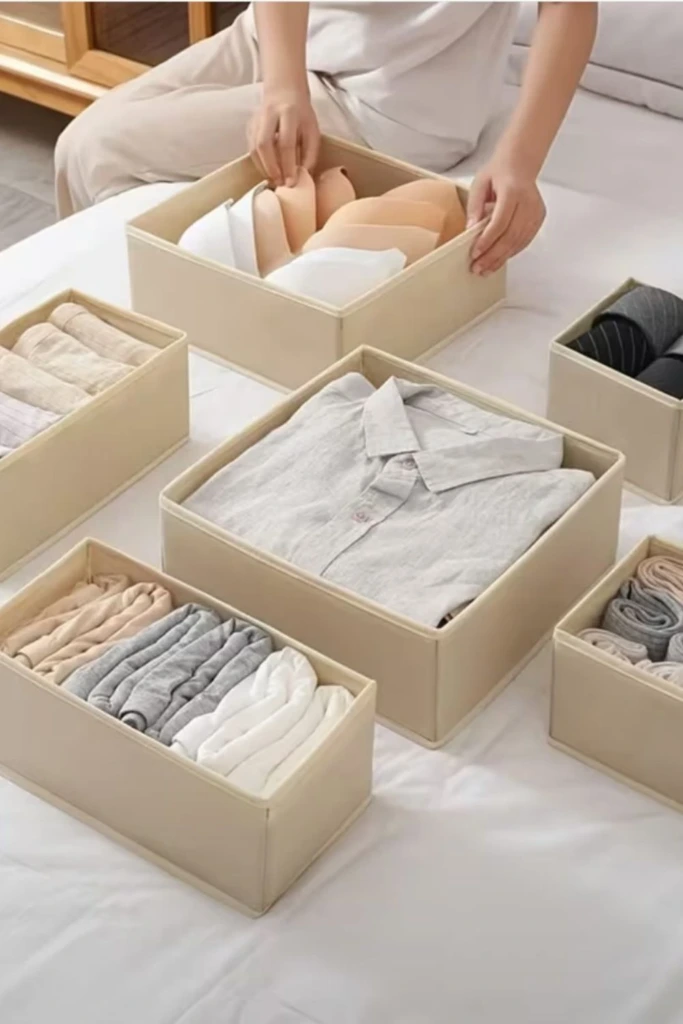
Fabric storage boxes offer a soft, lightweight alternative to rigid plastic containers. They fit neatly inside wardrobes, on closet shelves, or in dresser drawers and are available in a wide range of sizes and colors.
Use smaller boxes to separate different sock categories or place several boxes side by side to create a customized storage system. Foldable versions are particularly useful when you need to store the containers flat after the socks have been moved elsewhere.
Look for boxes with reinforced sides if they will hold heavier winter socks. Removable inserts and washable linings can also make maintenance easier. Before putting socks away, ensure they are completely dry to prevent unwanted odors and moisture buildup.
8. Honeycomb Divider
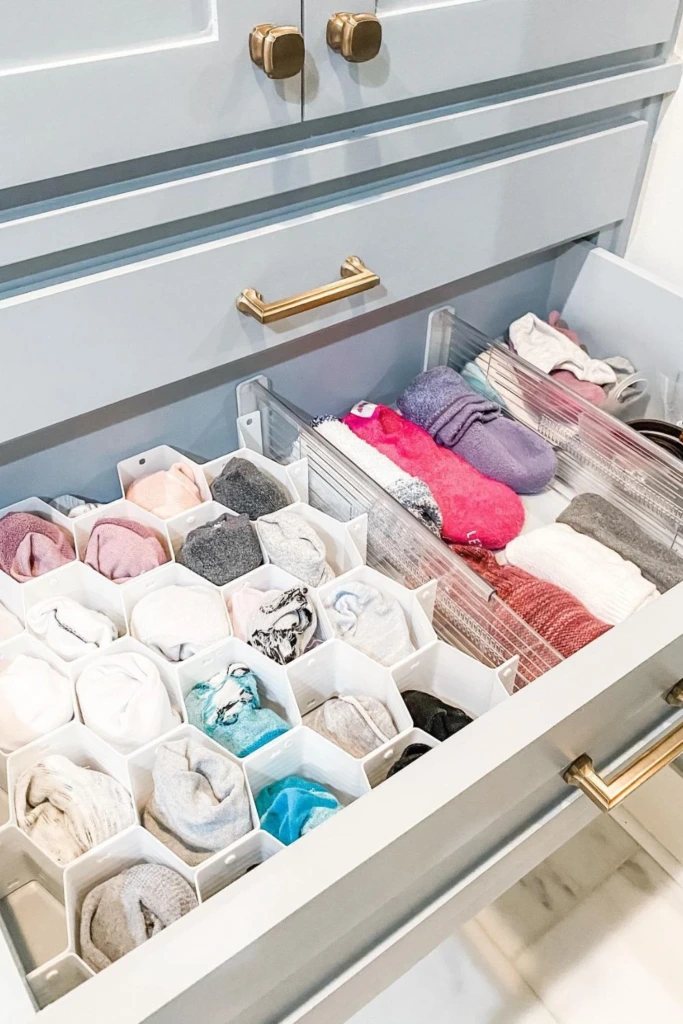
A honeycomb divider creates a series of small, individual spaces that resemble a honeycomb pattern. Each opening can hold a rolled or loosely folded pair of socks, keeping the collection separated without requiring several different containers.
This design is useful for shallow drawers and smaller sock collections because it provides a designated space for each pair. It can also help prevent socks from sliding into one another when the drawer opens and closes.
Choose a divider with openings suited to the thickness of your socks. Thin liners need less room than bulky wool pairs. If you own many different sock styles, use separate honeycomb organizers for everyday wear and seasonal accessories.
9. Shelf Bins
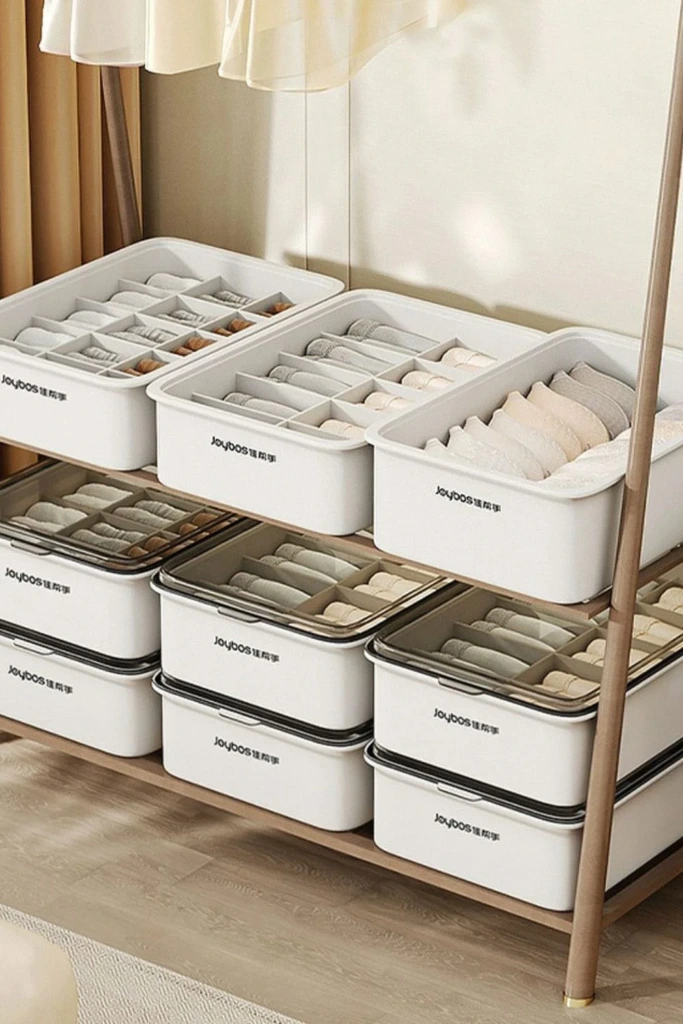
Shelf bins turn unused wardrobe shelving into practical sock storage. Instead of stacking socks directly on the shelf, place them in open-top bins that keep the collection contained and easier to access.
Assign one bin to each category, such as everyday socks, sports socks, dress socks, or children's pairs. If you have limited closet space, rectangular bins often fit more efficiently than rounded containers.
For shelves above eye level, choose lightweight bins with sturdy handles so you can pull them down safely. Open-front designs are convenient when socks are used frequently, while covered containers help keep dust away from items stored for longer periods.
10. Drawer Channels
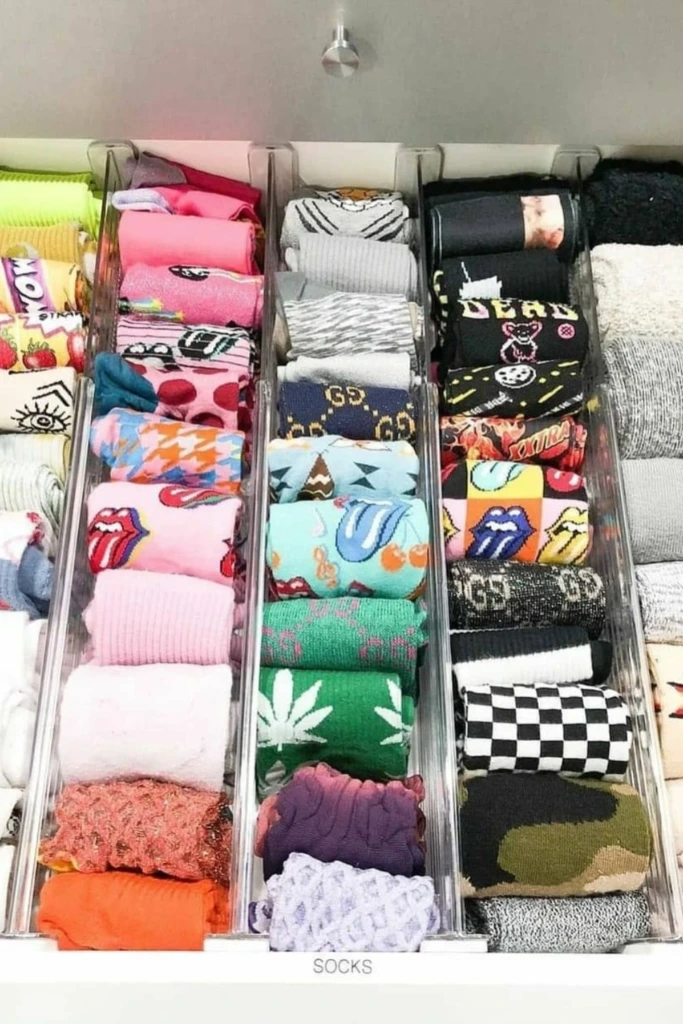
Drawer channels provide a structured way to organize socks into narrow, accessible sections. Depending on the organizer, these channels may consist of adjustable rails, slim compartments, or dividers that run along the length of the drawer.
They are especially useful for people who prefer arranging socks in rows rather than placing each pair inside a small individual compartment. You can dedicate one channel to everyday socks, another to athletic styles, and another to thicker pairs.
Adjust the dividers to match the drawer's dimensions and leave enough room to remove socks without snagging the fabric. A well-planned layout reduces unnecessary searching and makes it easier to keep the drawer organized after laundry day.
11. Color Rows
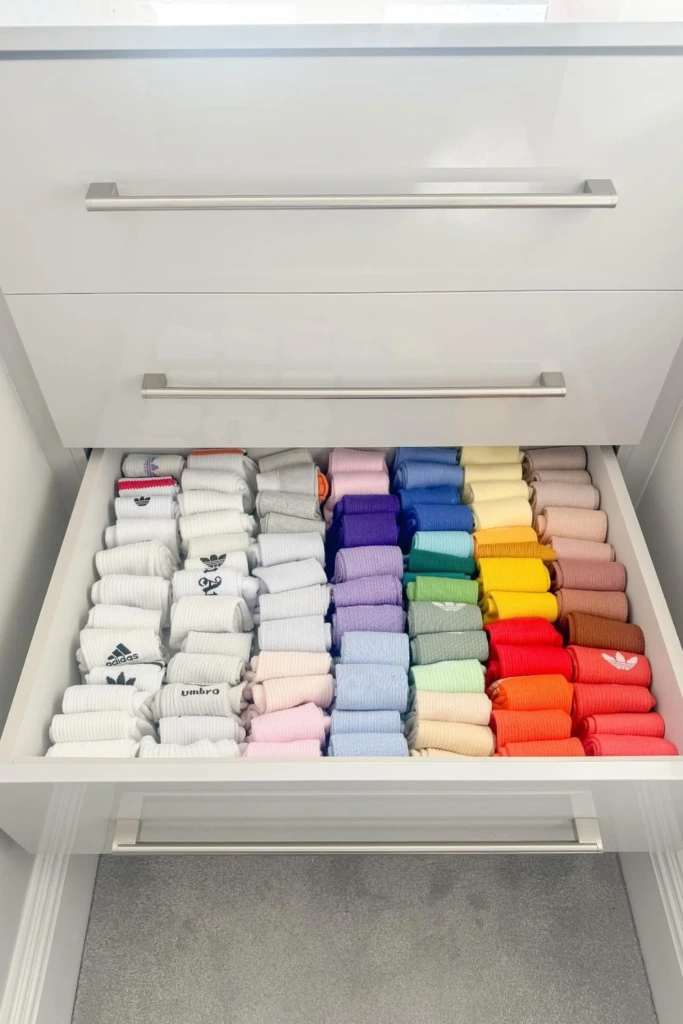
Organizing socks by color creates a visually tidy drawer and makes matching outfits quicker. Arrange neutral shades such as black, white, gray, and beige in separate rows, then group brighter colors and patterned pairs together.
Within each row, you can organize socks by length or purpose. For example, place black dress socks together and keep white athletic socks in another section. This prevents socks that look similar from becoming mixed up despite having different uses.
Color rows work particularly well in wide drawers or open storage boxes. If your collection is large, combine color sorting with dividers so the rows remain in place. Keep the arrangement simple enough that you can maintain it easily.
12. Vertical Slots
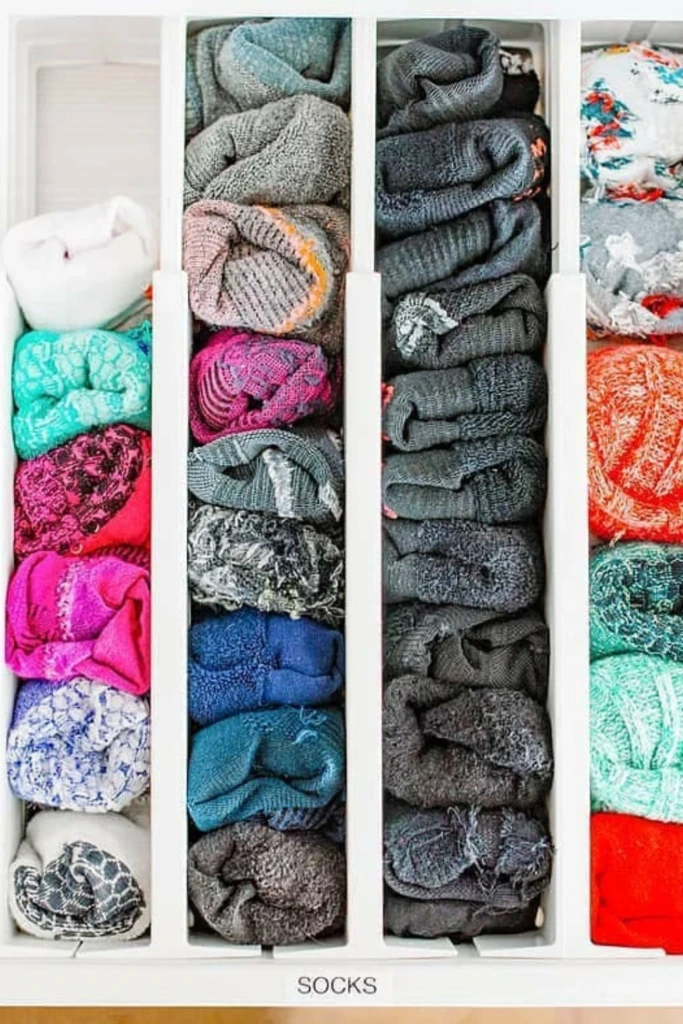
Vertical slots allow socks to stand or sit in narrow compartments instead of being stacked in piles. This arrangement makes better use of drawer depth and lets you see more of your collection when you open the drawer.
Use a compartment organizer with upright sections or adjustable dividers to create slots that suit your socks. Loosely folded pairs fit well in most spaces, while thicker socks may need wider compartments.
Vertical storage is particularly helpful for deep drawers because it reduces the need to dig through layers. Place the socks you wear most often toward the front and reserve the rear sections for occasional-use pairs. Make sure the slots are not so tight that removing a pair disturbs everything beside it.
13. Minimal Drawer
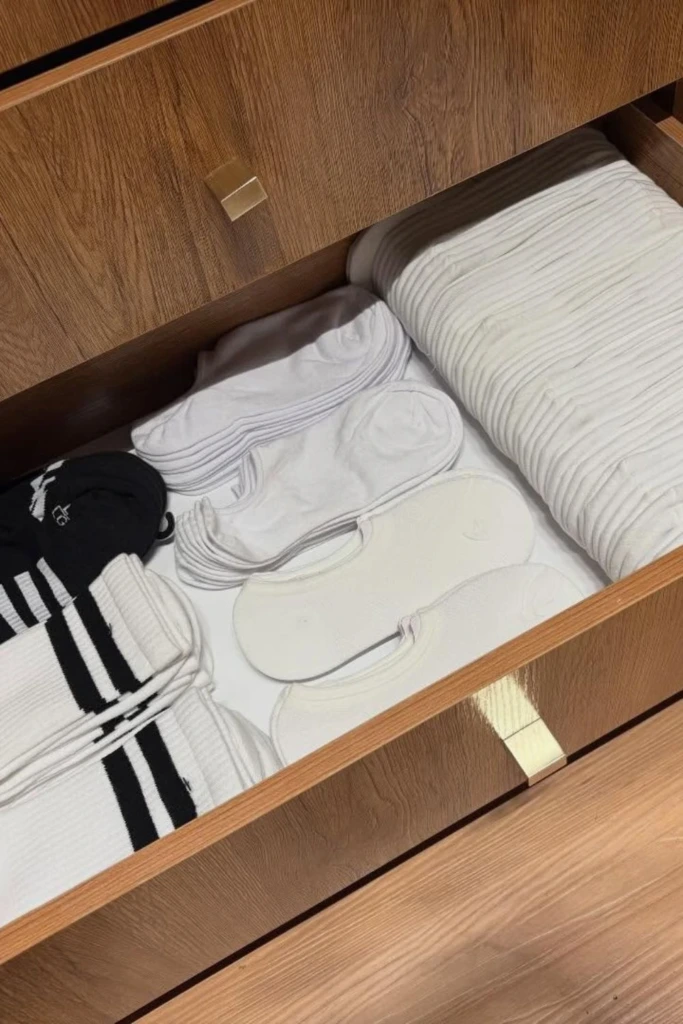
A minimal sock drawer focuses on keeping only the pairs you regularly wear and storing them in a simple, easy-to-maintain arrangement. Start by removing socks that are worn out, uncomfortable, damaged, or missing their partners after a reasonable search.
Group the remaining pairs by purpose and choose a straightforward folding method. You might use a few small dividers or simply arrange socks in clearly defined rows. The goal is to make every pair easy to see without filling the drawer with unnecessary accessories.
Avoid keeping excessive backup pairs if storage space is limited. A smaller, useful collection is easier to manage and makes laundry sorting faster. Review the drawer occasionally to remove worn-out socks and keep the arrangement practical.
14. Door Pockets
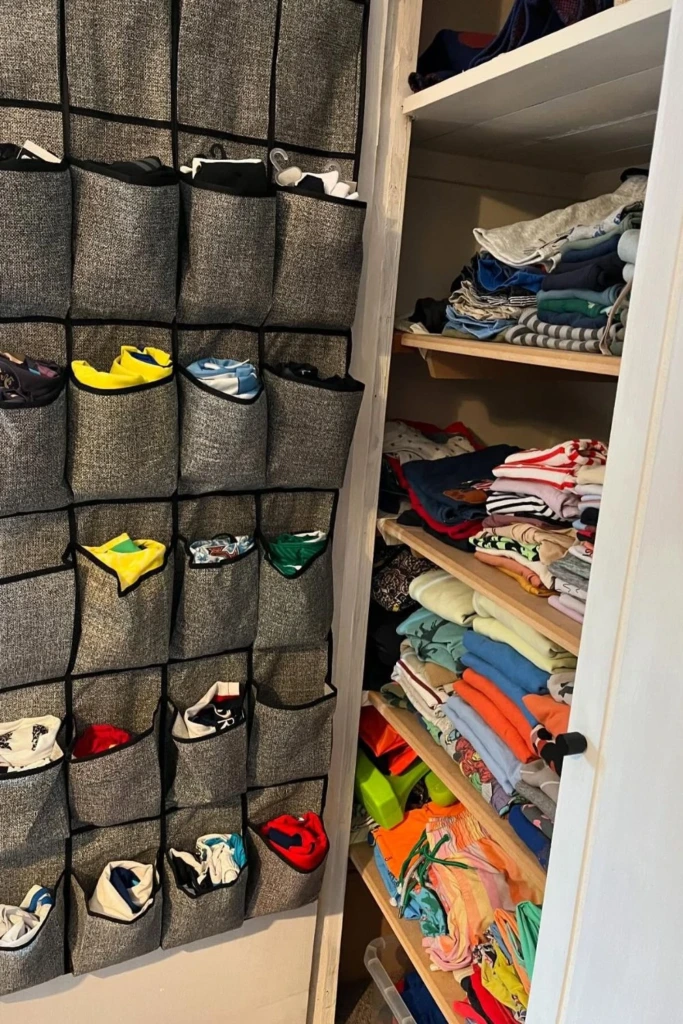
Over-the-door pocket organizers offer storage space without taking up room inside a dresser. Although often used for shoes and accessories, smaller pockets can hold rolled socks or neatly folded pairs.
Hang the organizer on a suitable closet or bedroom door, making sure the hooks fit securely and do not interfere with the door closing. Assign different pockets to separate categories so you can quickly find ankle socks, athletic socks, or children's pairs.
Choose pockets that are wide enough for your socks and easy to reach. Transparent pockets make it simple to see the contents, while fabric versions provide a more understated appearance. Avoid overloading the organizer, especially if the door or hooks are not designed to support heavy weight.
15. Wall Dispenser
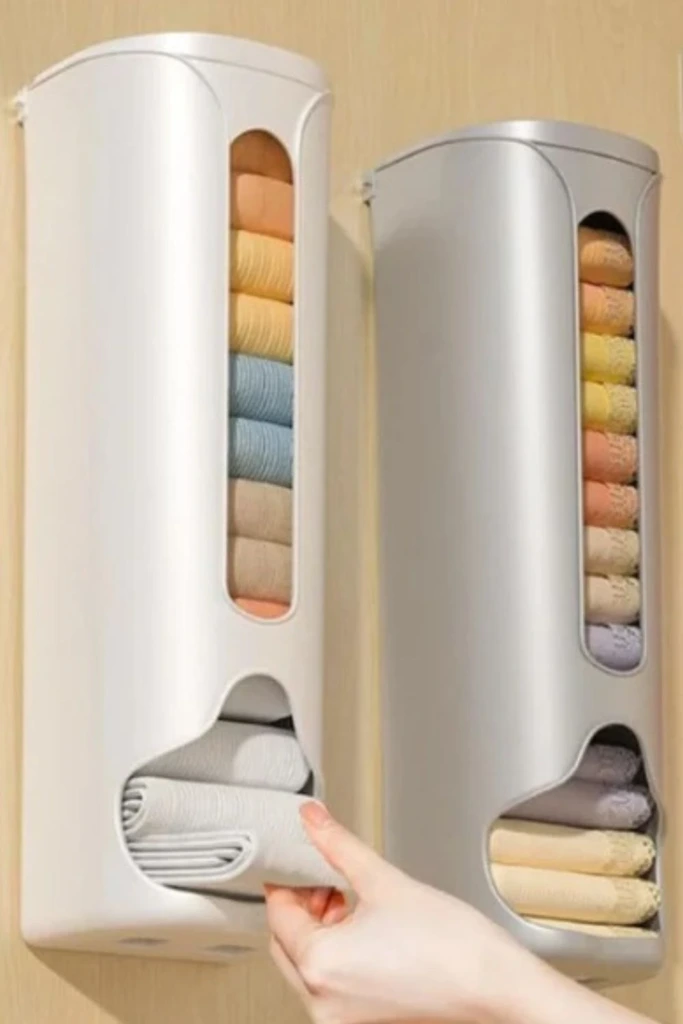
A wall-mounted sock dispenser can turn an unused section of wall into accessible storage. Depending on the design, it may feature open compartments, a refillable container, or individual slots for neatly arranged pairs.
Install it near a dressing area, inside a closet, or in a laundry room where it will be convenient to use. Keep everyday socks in the most accessible compartments and reserve other sections for specialized pairs.
Before mounting the dispenser, check the wall material and use suitable hardware for the load. If you rent your home or prefer not to drill holes, consider a freestanding unit or removable mounting solution rated for the organizer's weight.
16. Peg Board
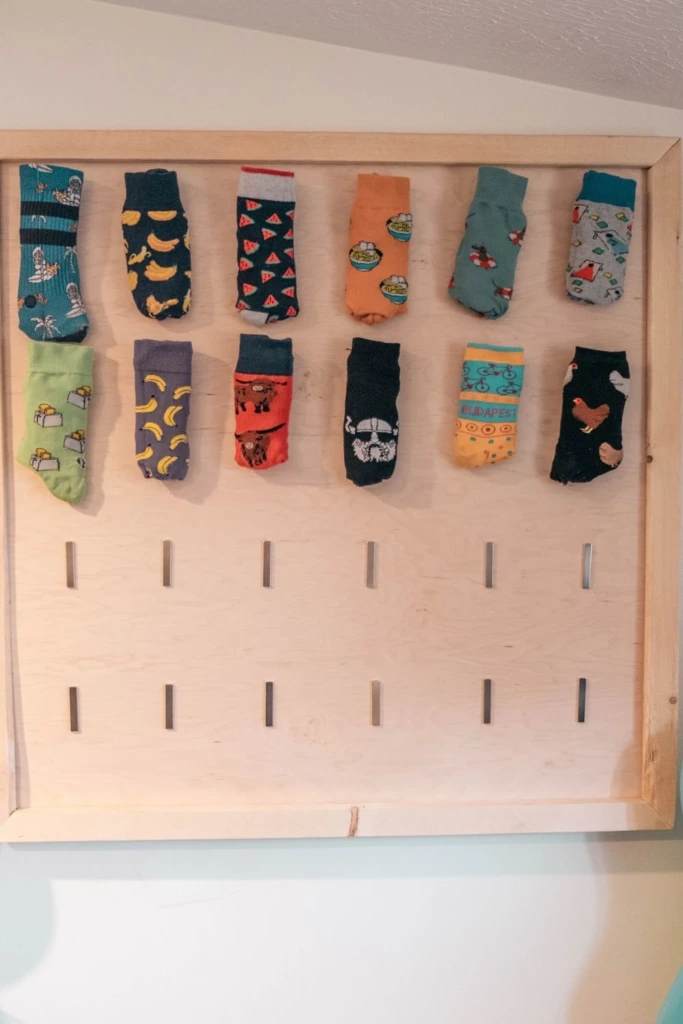
A pegboard creates a customizable storage display using hooks, small baskets, and hanging accessories. While it is more commonly associated with tools and craft supplies, it can also work for sock storage when fitted with suitable containers.
Attach small baskets or lightweight fabric pouches to the board and label them according to sock type. This gives each category a visible place and keeps the storage system flexible as your needs change.
A pegboard is best suited to a closet, dressing room, or laundry area where wall space is available. Use hooks and mounting hardware designed for the board and the weight it will carry. Keep socks in baskets or pouches rather than hanging delicate pairs directly on rough hooks.
17. Mesh Dividers
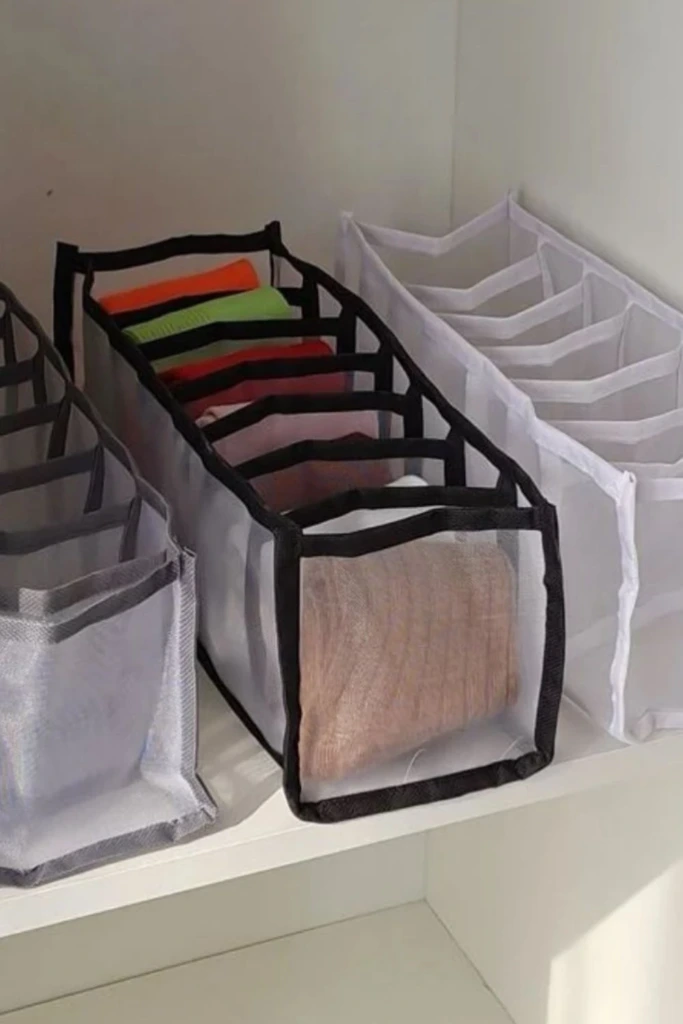
Mesh dividers separate socks while allowing air to circulate around the storage compartments. They are lightweight, easy to reposition, and useful for organizing drawers without adding much bulk.
Choose a mesh organizer with enough structure to hold its shape during daily use. Small sections work well for thin socks, while wider compartments can accommodate thick or folded pairs. Some designs can also be removed easily for cleaning.
Mesh dividers are especially useful if you want a less bulky alternative to solid plastic inserts. Arrange pairs by style or frequency of use, and avoid cramming compartments too tightly. A little extra room makes socks easier to retrieve and return to their assigned sections.
18. Grid Boxes
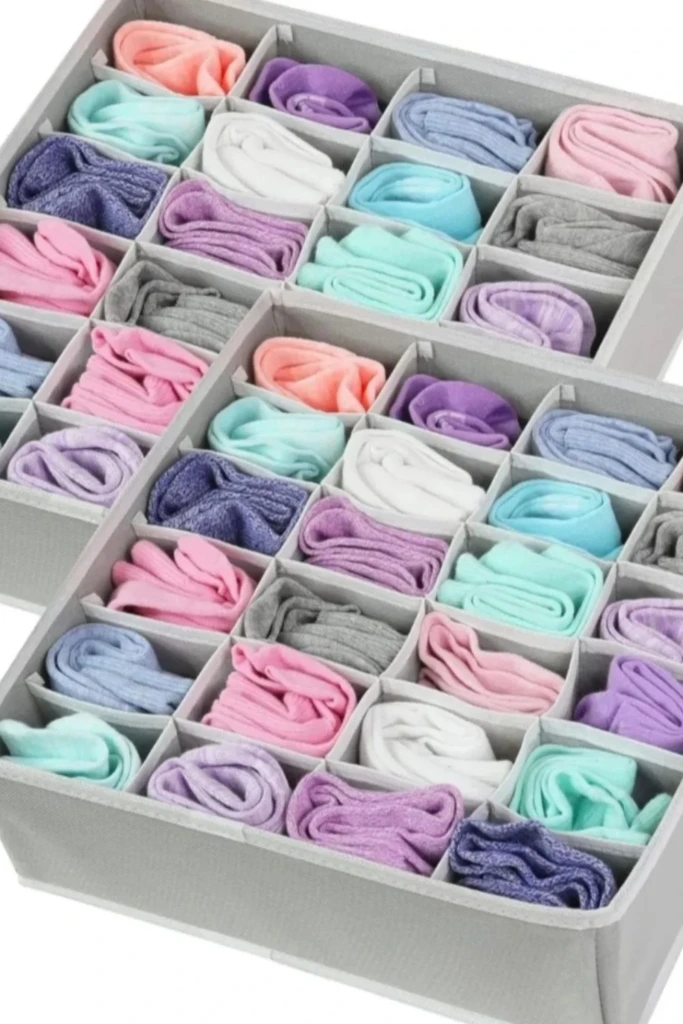
Grid boxes combine the structure of a compartment organizer with the flexibility of a storage box. They are available in fabric, plastic, and other materials, making them suitable for drawers, closet shelves, and wardrobe cubbies.
Each section can hold a pair or a small category of socks, depending on the size of the compartments. This makes grid boxes a good choice for households that need clear separation without installing permanent storage features.
Measure your available space before selecting a box, especially if it will sit inside a dresser. Removable or foldable versions are convenient for seasonal reorganizing. Keep similar socks together and avoid mixing clean pairs with worn socks waiting for laundry.
19. Box Sections
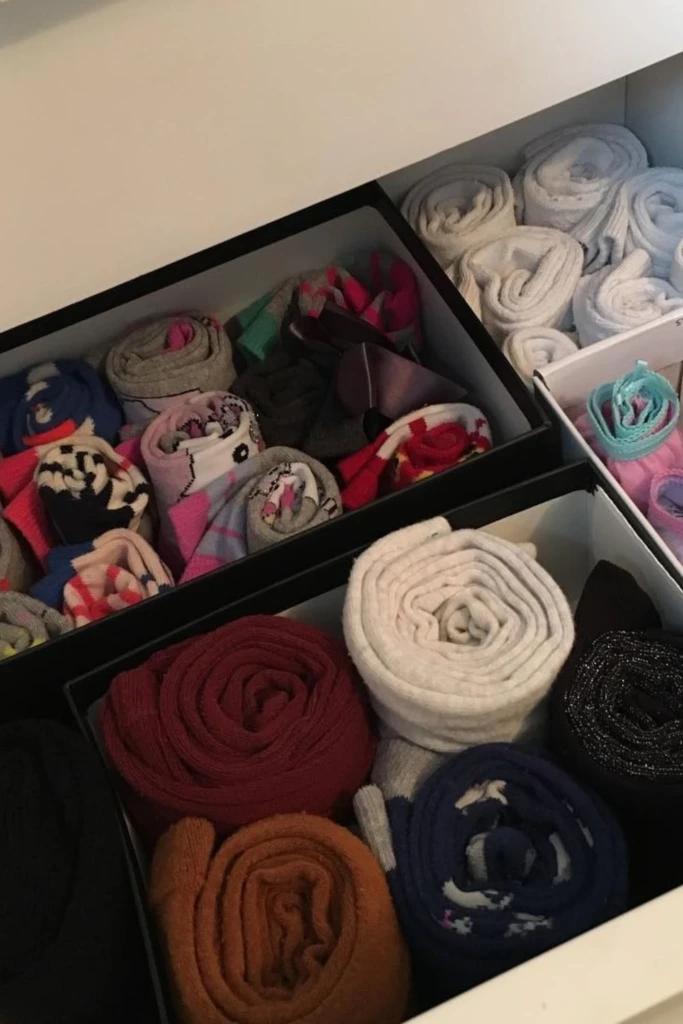
Dividing a large storage box into smaller sections is an affordable way to create a customized sock organizer. You can use cardboard inserts, reusable plastic dividers, or small containers placed inside a larger box.
Create sections based on your daily routine. For instance, one area might hold work socks, another athletic pairs, and another casual socks for weekends. If several people share the storage box, give each person a dedicated section.
This method is especially useful when you want to reuse containers you already own instead of buying a specialized organizer. Make sure the dividers are stable and have smooth edges that will not catch on the fabric. Keep the box accessible so putting socks away remains convenient.
20. Sock Basket
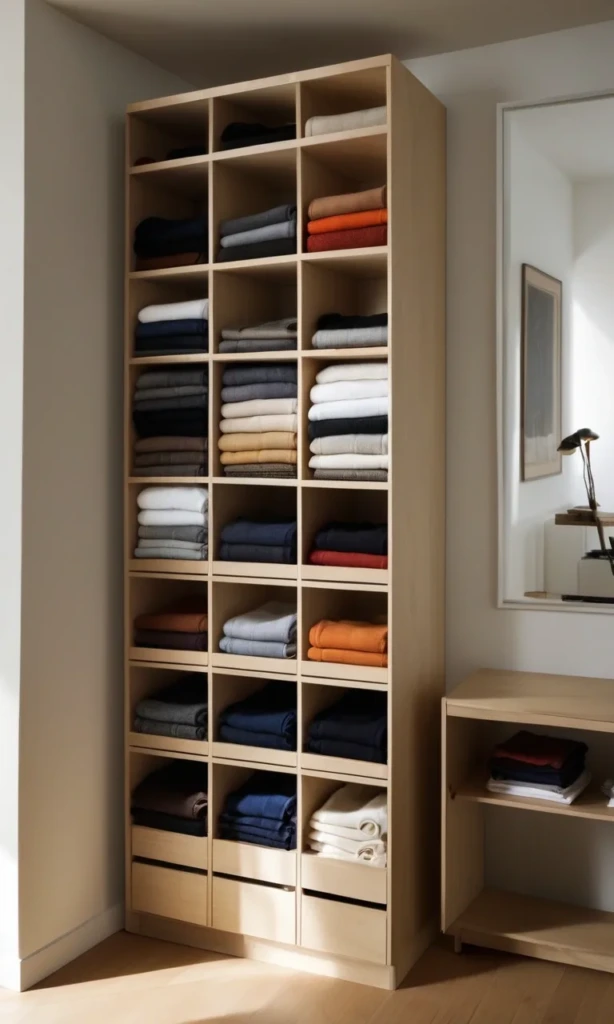
A sock basket is a simple solution for households that prefer flexible storage over individual compartments. Place a basket in a wardrobe, on a shelf, or near the laundry area and use it for clean, paired socks.
For better organization, choose a basket with enough room to separate socks into smaller fabric pouches or use internal dividers. Without these sections, a large basket can quickly become a mixed pile, particularly when several people contribute to it.
Select a size that fits your available space and collection. A basket with handles is easier to move between rooms, while a washable fabric liner helps keep the container clean. Make sure socks are fully dry before storing them, and sort the basket regularly rather than letting it become a permanent laundry overflow area.
FAQs
Organizing socks does not require an elaborate closet system or expensive accessories. The most effective setup is one that fits your available space, makes matching pairs easy, and is simple enough to maintain after every laundry cycle.
Here are answers to common questions about keeping socks organized throughout the year.
How often should you reorganize your sock drawer?
A quick check once a month is usually enough to keep a sock drawer in good condition. During this review, return misplaced pairs to their sections, remove socks that have developed holes, and look for single socks that may have lost their partners.
Laundry day is also a good time to maintain your arrangement. Pair socks before storing them and put each set back in its designated compartment instead of dropping everything into one pile.
You may need to reorganize more frequently if several people use the same drawer or if your collection changes often. A full review every three to six months can help you identify socks you no longer wear, separate seasonal styles, and adjust your storage system as needed.
What is the best way to store seasonal socks?
The best method is to keep current-season socks within easy reach and store less frequently used pairs in clean, dry containers. During warmer months, lightweight ankle socks and breathable athletic socks may deserve the most accessible spaces. When temperatures drop, move wool socks, thermal pairs, and other heavier options to the front.
Before storing seasonal socks, wash them according to their care labels and allow them to dry completely. Pair them loosely, then place them in fabric storage boxes, labeled bins, or breathable drawer organizers. Clear labels make it easier to identify the contents when the season changes.
Store the containers in a dry closet, wardrobe shelf, or under-bed storage area away from excessive moisture and direct sunlight. Avoid compressing delicate or elastic socks for long periods. When you bring them back into regular use, check for damage and make sure they remain comfortable and fit properly.
A little planning makes seasonal changes easier while keeping your everyday sock drawer free from unnecessary clutter.
Final Thoughts
A well-organized sock collection saves time, reduces misplaced pairs, and makes daily dressing less stressful. Whether you choose drawer trays, honeycomb dividers, labeled bins, hanging organizers, or a simple basket, focus on a setup that matches your space and habits. Separate socks into useful categories, keep frequently worn pairs accessible, and return everything to its assigned place after laundry day. With a few practical adjustments and occasional maintenance, you can keep your sock storage tidy and functional throughout the year.