20 Book Craft DIY Ideas for 2026
Old books can become beautiful decorations, thoughtful gifts, and creative handmade accessories with a little imagination. Instead of leaving unwanted books on shelves or throwing them away, you can transform their pages and covers into something completely different.
Book craft DIY projects are especially appealing because they require affordable materials and offer plenty of opportunities to experiment. From delicate paper flowers to impressive folded sculptures, there are creative possibilities for beginners and experienced crafters alike.
Whether you're decorating your home, preparing seasonal displays, or looking for a relaxing weekend activity, these 25 book craft DIY ideas will help you turn ordinary paper into something special.
How can craft books improve skills?
Craft books help develop practical skills by introducing techniques through organized instructions and visual examples. They make unfamiliar projects easier to understand and encourage beginners to build their abilities gradually.
Working with paper also improves hand coordination, precision, and attention to detail. Activities such as measuring, cutting, folding, and assembling require concentration and become easier with regular practice.
Following craft tutorials encourages creative problem-solving. When a design doesn't turn out as expected, you learn to adjust your technique, choose different materials, or explore alternative solutions.
As your confidence increases, you can begin combining techniques and creating original designs. This makes book crafting an enjoyable way to strengthen artistic skills while producing useful handmade items.
1. Book Flower Bouquet
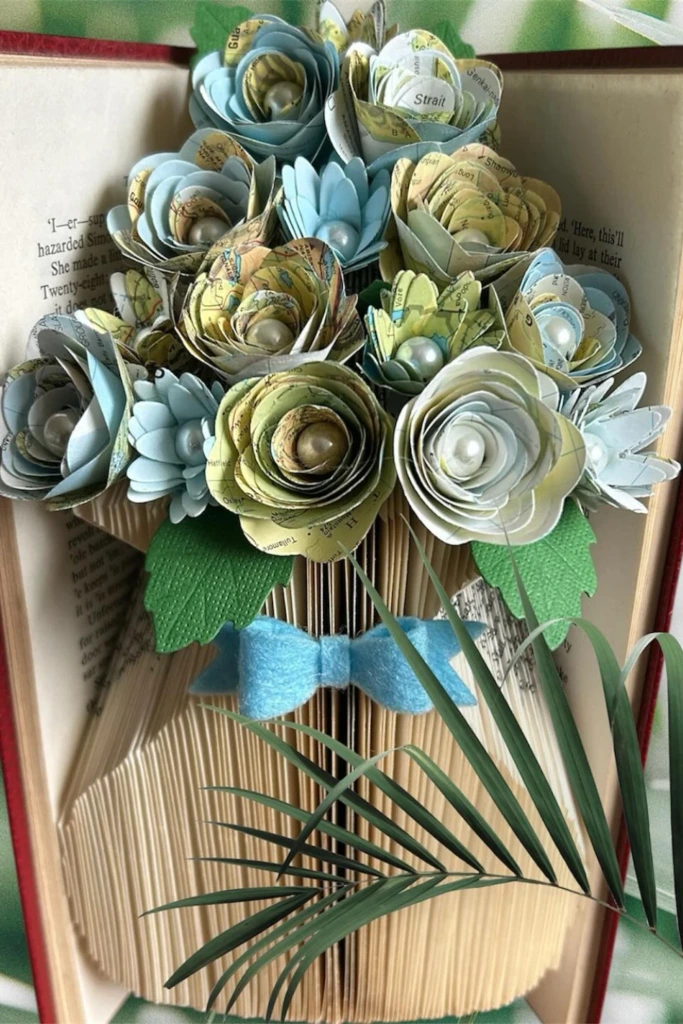
A handmade book flower bouquet brings a charming literary touch to home decoration. It's an excellent project for anyone who enjoys flowers but wants an arrangement that lasts without watering or maintenance.
Start by removing several pages from an unwanted paperback. Cut the paper into petal shapes, gently curl the edges with a pencil, and arrange the petals around a small paper center. Secure each layer using craft glue.
Attach the finished flowers to floral wire or wooden skewers wrapped in green floral tape. Arrange them inside a decorative container or combine them with artificial greenery.
For extra character, use pages from different books to create subtle variations in color and typography. These bouquets make lovely gifts for teachers, readers, and book lovers.
2. Folded Name Art
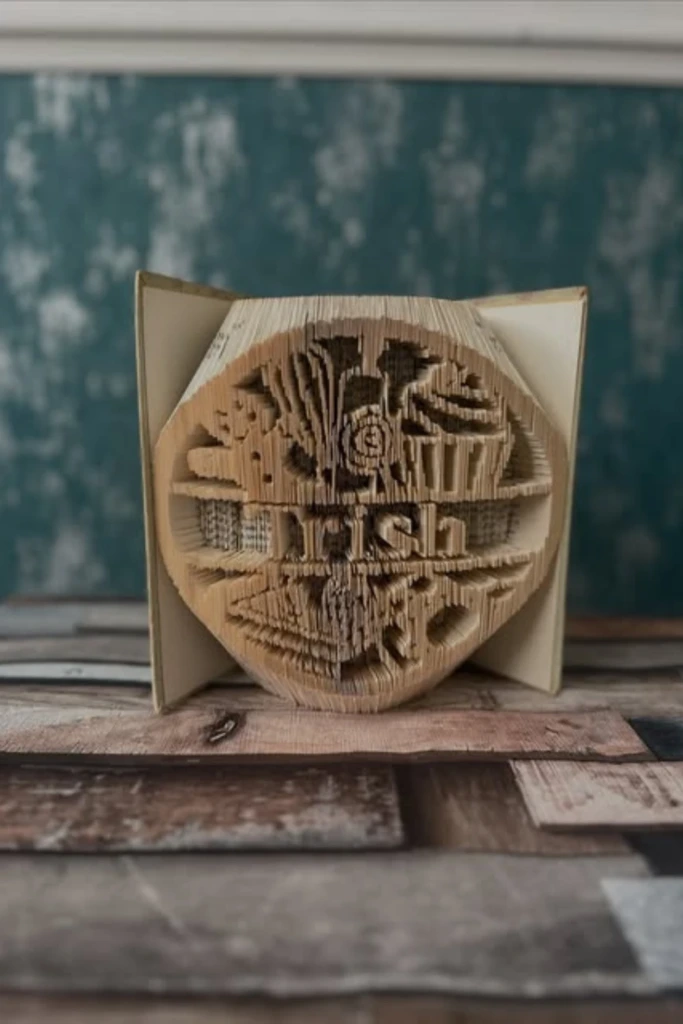
Folded name art transforms an ordinary book into a personalized decorative piece. The finished design reveals letters or words through carefully positioned page folds.
Choose a book with enough pages to accommodate your desired name. Create or print a folding template that indicates where each page should be marked.
Work through the book systematically, measuring and folding each page according to the pattern. Consistent measurements are essential for producing recognizable letters.
Short names and simple words are generally easier for beginners. Once finished, display the book upright on a shelf or give it as a customized birthday, anniversary, or housewarming present.
3. Color-Edge Binding
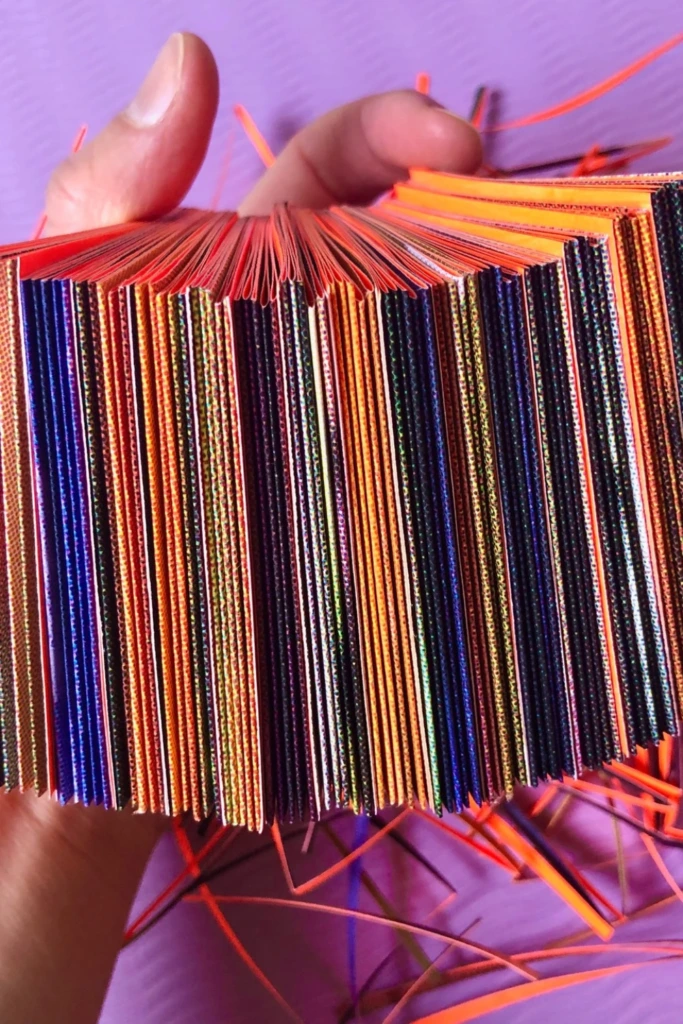
Color-edge binding adds a contemporary appearance to handmade journals, notebooks, and decorative books. The technique introduces colorful details along the outer edges of the pages.
Begin with a neatly aligned stack of paper. Clamp the pages firmly between protective boards, leaving only the edges exposed.
Apply a small amount of suitable paper paint or ink using a sponge or soft brush. Thin applications help prevent excess moisture from spreading between the sheets.
Allow the edges to dry completely before separating the pages carefully. You can experiment with single colors, gradients, or metallic finishes.
Pair the finished pages with a handmade cover for a customized notebook that looks polished and distinctive.
4. Folded Book Scene
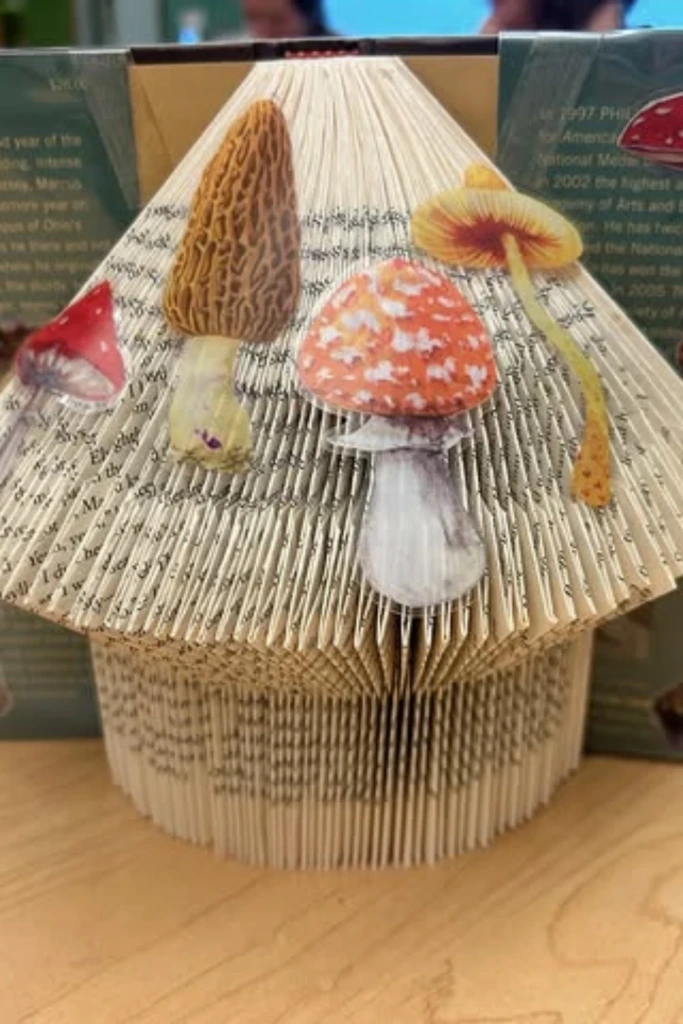
A folded book scene creates a miniature world inside an open book. It combines paper folding, illustration, and layered construction to produce an imaginative display.
Select an old hardcover that can remain open without falling closed. Fold or arrange selected pages to create a stable foundation.
Draw or print small illustrations such as trees, buildings, mountains, or storybook characters. Cut out the shapes and attach them to folded paper supports at different depths.
Arrange taller elements toward the back and smaller details toward the front to create perspective.
This project works particularly well for fairy-tale displays, children's reading corners, and literary-themed celebrations.
5. Open Book Florals
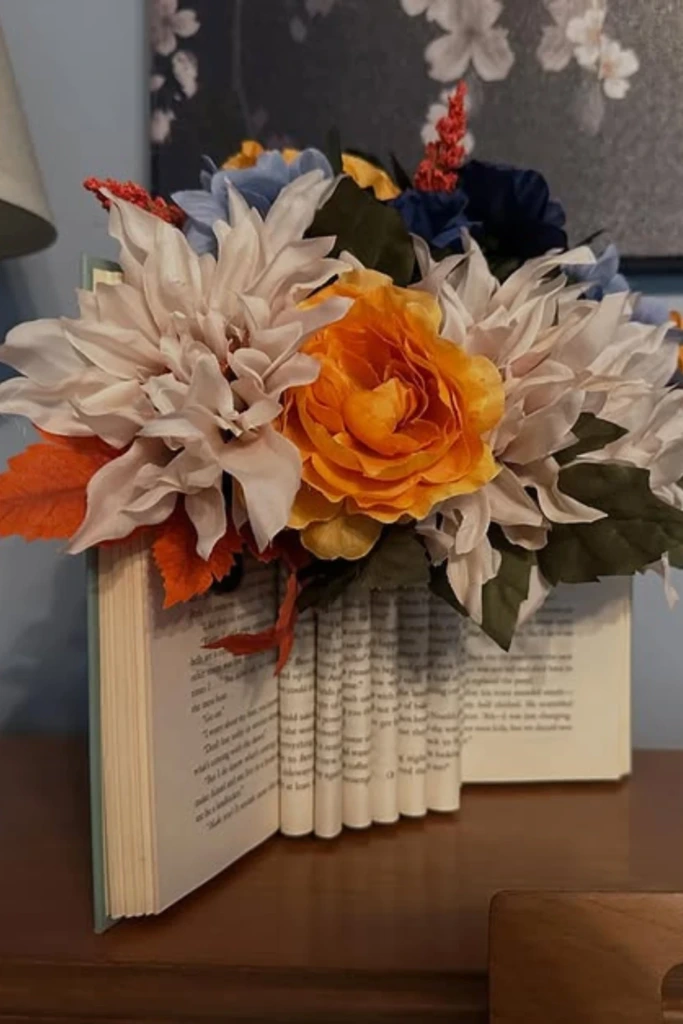
Open book florals combine the delicate appearance of paper pages with the beauty of botanical arrangements. The result is a romantic centerpiece suitable for shelves, tables, and special occasions.
Choose a hardcover book with an attractive cover and gently spread its pages into a wide fan.
Place artificial flowers or lightweight dried botanicals between selected pages. Small removable paper supports can help keep the arrangement upright without permanently attaching the decorations.
Try combining cream-colored pages with muted pink, lavender, or white flowers for a soft vintage appearance.
Keep dried arrangements away from moisture and direct sunlight to preserve both the flowers and the paper.
6. Sculpted Page Forms
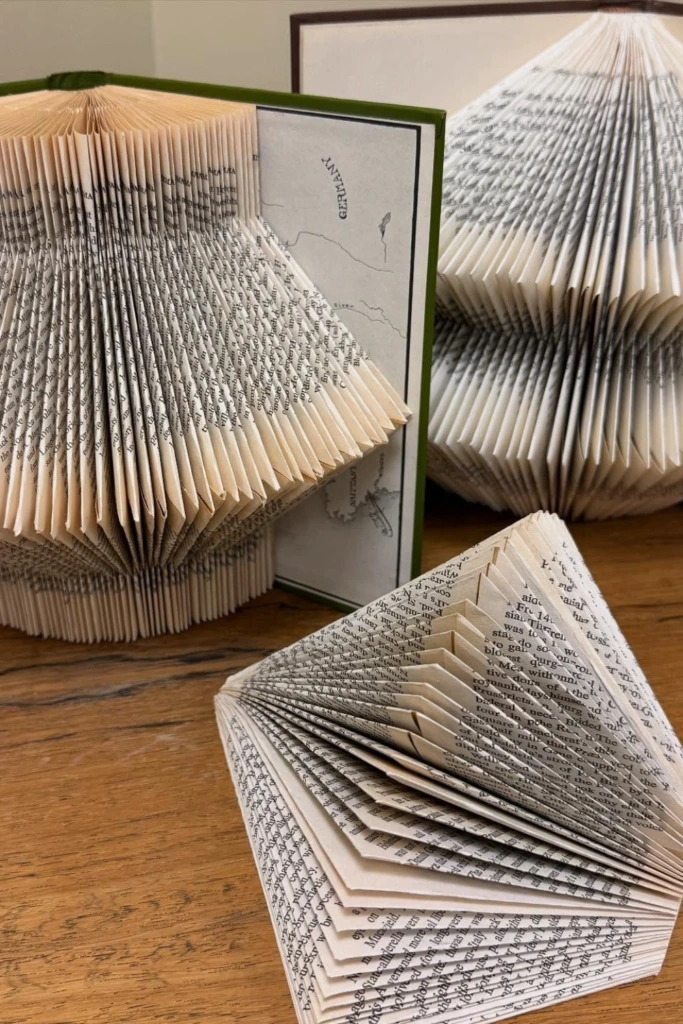
Sculpted page forms turn books into three-dimensional artwork using repeated folds and carefully planned shapes.
Begin with a thick paperback that has flexible pages. Decide whether you want to create a circular sculpture, triangular structure, or symmetrical abstract design.
Fold each page toward the spine using the same measurements. As the folds accumulate, the book gradually develops a sculptural appearance.
You can also alternate different folding angles to introduce curves and geometric patterns.
Display the finished piece on a simple wooden stand or among decorative objects. The printed text naturally creates interesting patterns across the folded surfaces.
7. Shelf Bloom Accent
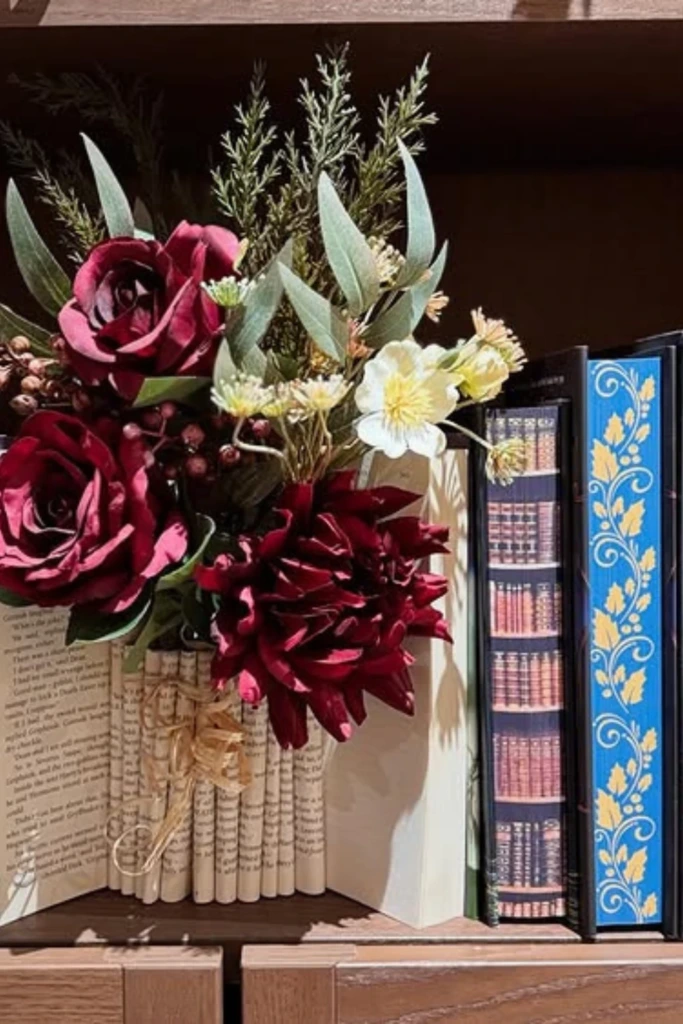
A shelf bloom accent adds an unexpected floral detail to a bookcase without requiring an elaborate arrangement.
Use a small hardcover book that complements your existing shelf decorations. Open it slightly and position it upright between other books or decorative objects.
Insert a few artificial flower stems into the central opening. Choose lightweight blooms with narrow stems to avoid damaging the binding.
Small roses, lavender sprigs, and miniature wildflowers work particularly well.
For a coordinated appearance, select flowers that match nearby accessories, picture frames, or storage baskets. The finished arrangement adds texture and a gentle pop of color to an ordinary bookshelf.
8. Cozy Book Vignette
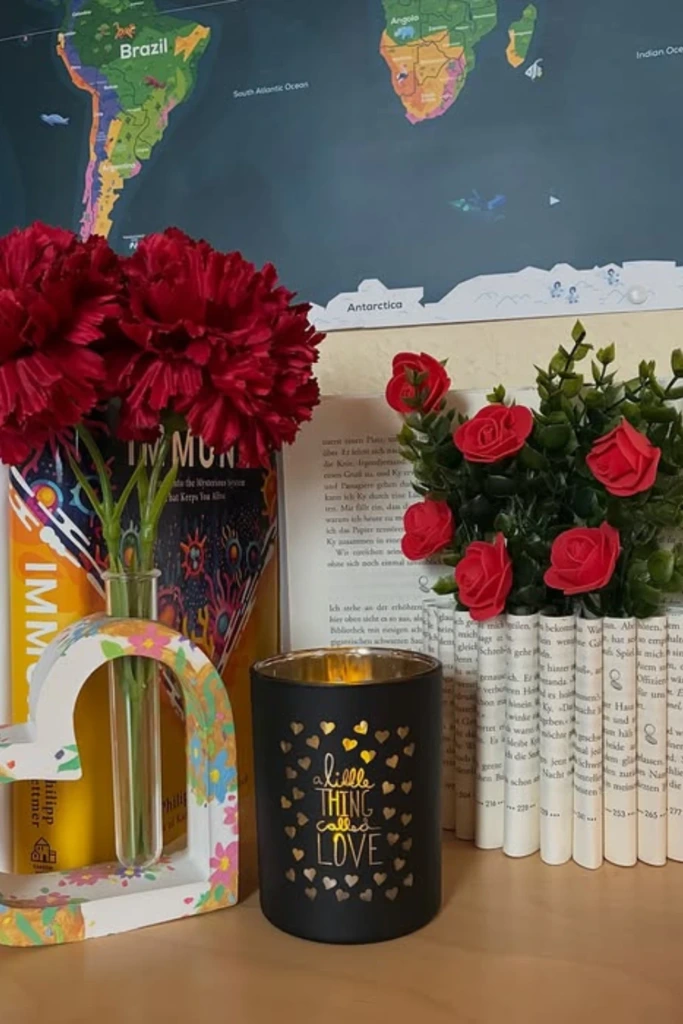
A cozy book vignette creates a small decorative scene using books and carefully chosen accessories. It's an easy way to style a bedside table, reading nook, or coffee table.
Start with an open book placed on a decorative tray. Add a small vase of artificial flowers, a vintage-style bookmark, or a miniature framed illustration.
Introduce contrasting textures through lace, ribbon, wooden objects, or a soft fabric runner.
Keep the arrangement compact so the individual elements remain visible.
A battery-operated candle or warm LED light can complete the display without exposing the paper to an open flame.
9. Textured Page Fold

Textured page folding focuses on creating attractive patterns through repeated paper manipulation. Even simple folds can produce impressive results when arranged consistently.
Choose a paperback with relatively thin pages. Experiment with diagonal folds, small pleats, and folded corners.
Instead of repeating one technique throughout the entire book, divide the pages into sections featuring different patterns.
For example, alternate narrow accordion folds with broader triangular shapes.
The changing angles produce interesting shadows and visual depth. This craft is especially suitable for minimalist decorations because the paper itself provides the main design feature.
10. Book Page Wreath
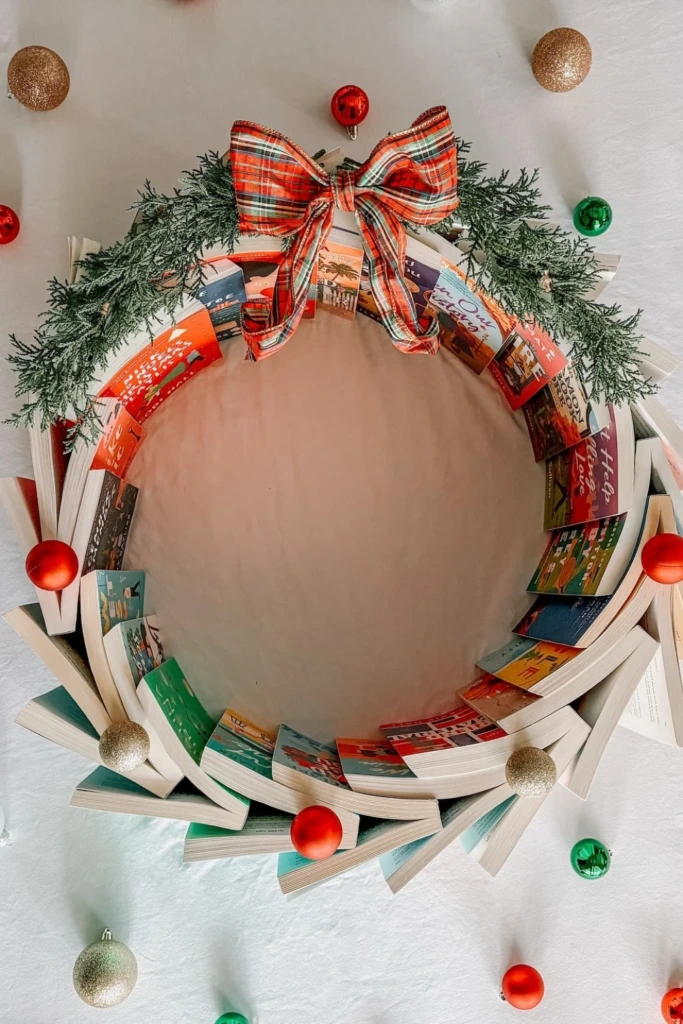
A book page wreath offers a creative alternative to traditional floral wreaths. It can decorate interior doors, reading rooms, or seasonal party spaces.
Start with a sturdy cardboard wreath base. Remove pages from an unwanted book and roll them into loose cones.
Secure each cone with a small amount of glue, then attach them around the base with their wider openings facing outward.
Continue adding layers until the cardboard is completely covered.
Finish the wreath with a fabric bow, artificial greenery, or small decorative flowers. For seasonal variations, incorporate autumn leaves, winter ornaments, or spring-colored ribbons.
11. Book Page Pumpkins
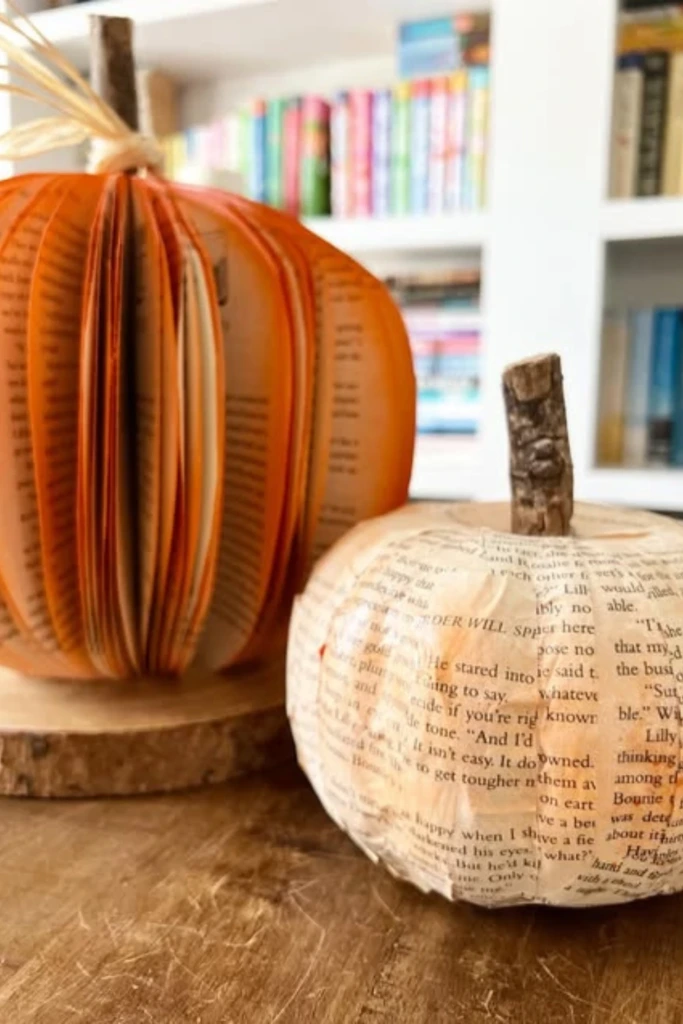
Book page pumpkins are an attractive addition to autumn decorating. Their neutral paper tones work beautifully with rustic and farmhouse-inspired interiors.
Select an old paperback and remove its covers. Draw half of a pumpkin outline along the outer edge of the closed pages.
Carefully cut through the pages in manageable sections, following the outline. Fan the book around until the first and last pages meet, then secure them together.
Attach a short twig to the top as a stem and add a paper or fabric leaf.
You can create several pumpkins in different sizes and arrange them with pinecones, dried leaves, or wooden accents for a seasonal centerpiece.
12. Book Wall Grid
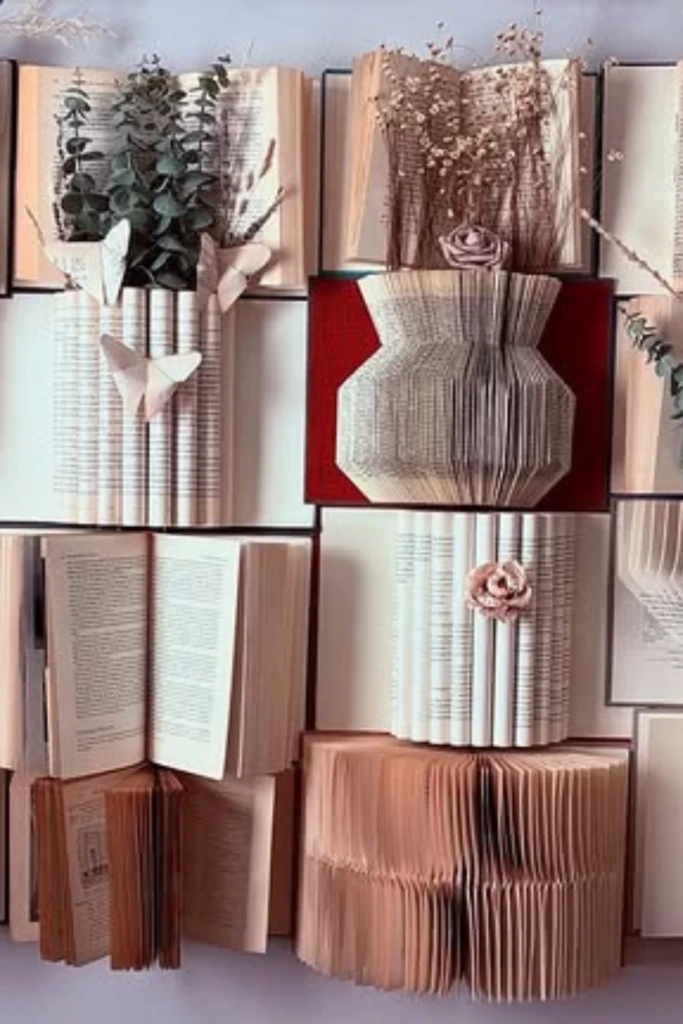
A book wall grid turns unused wall space into an artistic display inspired by literature.
Collect several lightweight books with similar dimensions or complementary cover colors. Plan their arrangement on the floor before mounting anything.
Some books can remain closed to display their covers, while others can be opened to reveal folded pages or illustrations.
Use small display ledges or appropriately rated mounting hardware to support the books securely. Avoid relying on ordinary adhesive strips for heavy hardcovers.
Arrange the pieces in evenly spaced rows or a slightly irregular composition.
This approach works especially well in home libraries, creative studios, and reading corners.
13. Holiday Book Accent
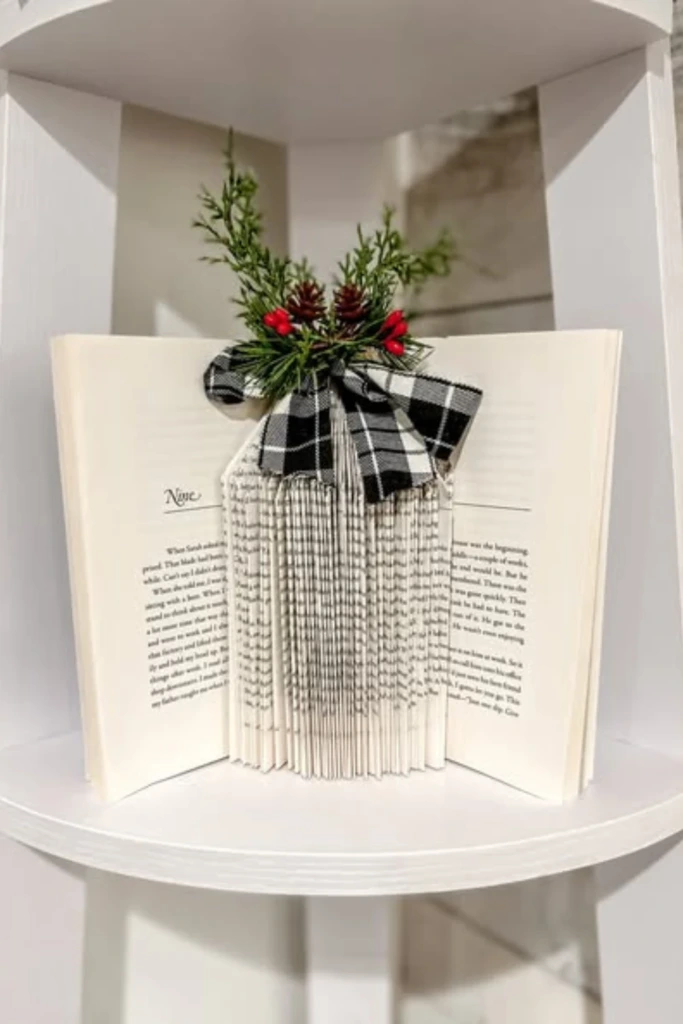
A holiday book accent is a simple way to introduce festive decoration without purchasing additional ornaments.
Choose an old book and fold its pages into a standing triangular or fan-shaped design.
Add a small ribbon, artificial greenery, or lightweight decorative charm to reflect the holiday you're celebrating.
For winter, consider red ribbon and evergreen accents. For spring, use pastel decorations and miniature paper flowers.
Keep embellishments minimal so the folded structure remains the main attraction.
These decorations fit comfortably on mantels, side tables, and bookshelves, making them useful for small spaces.
14. Storybook Light Box
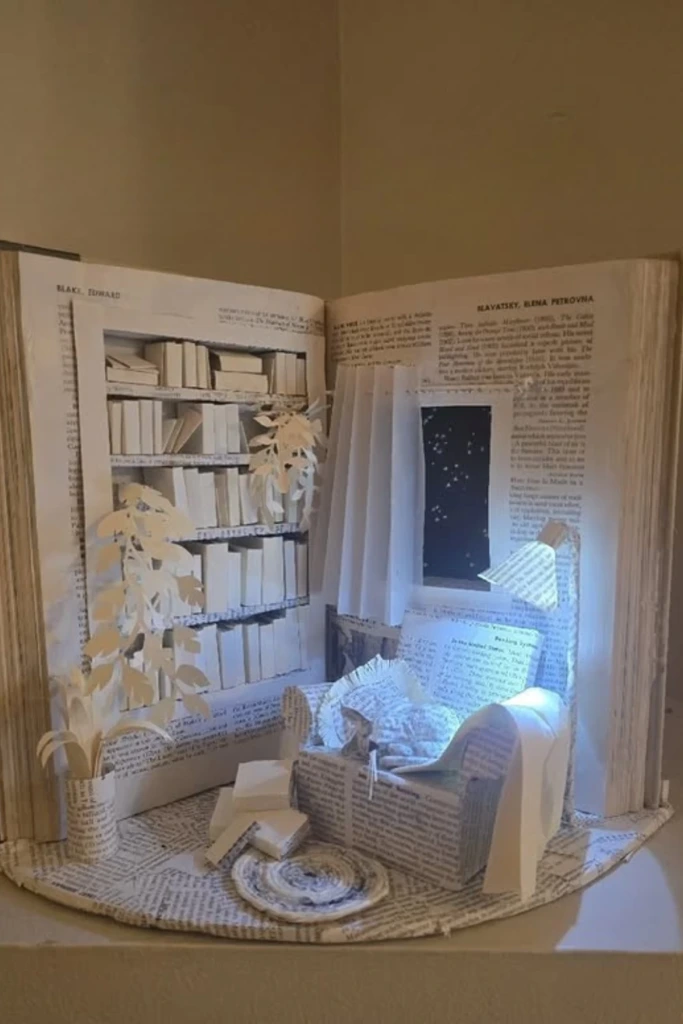
A storybook light box combines layered paper artwork with gentle illumination to create a miniature storytelling display.
Begin with a deep picture frame or shadow box. Cut several sheets of sturdy paper into landscape or character silhouettes.
Arrange the layers inside the box, using foam spacers to create separation between them.
Place a battery-operated LED light behind the paper layers to illuminate the scene.
Forest landscapes, castles, city skylines, and fairy-tale illustrations are excellent design choices.
Use cool-running LED lighting rather than candles or hot bulbs, and keep electrical components from pressing directly against delicate paper.
15. Floating Fold Form
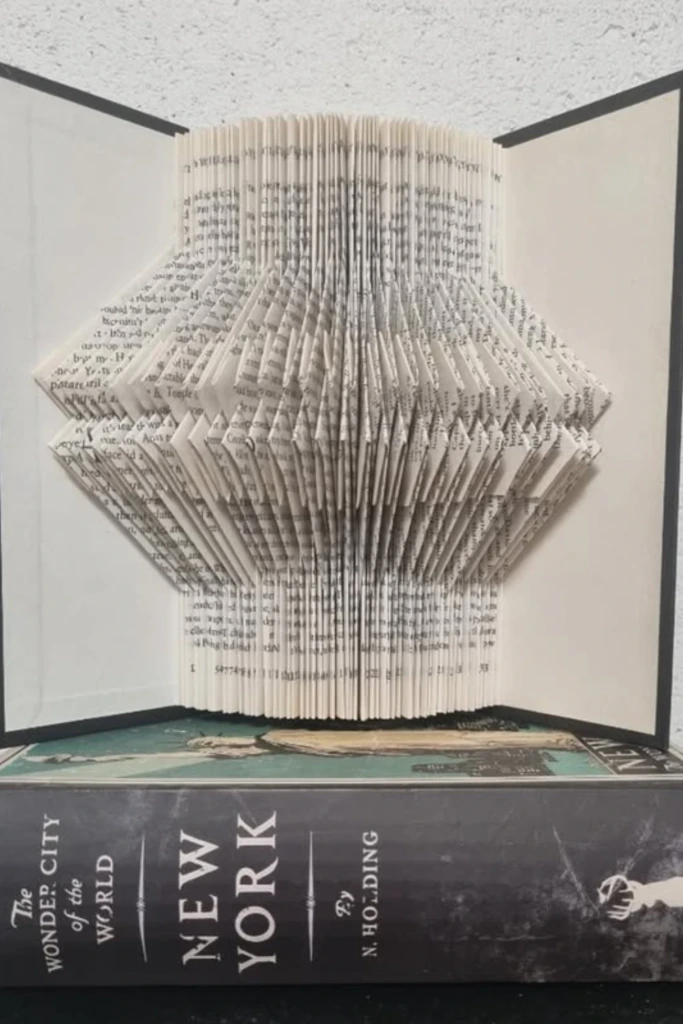
A floating fold form creates an unusual optical effect through carefully balanced paper shapes.
Choose a book with a flexible spine and a consistent number of pages on either side of the center.
Fold selected pages inward at matching angles, working outward symmetrically. This creates a balanced structure that appears to extend beyond the book's original shape.
Experiment with repeated curves or angular patterns to develop different effects.
Position the finished sculpture on a discreet display support to emphasize its dimensional appearance.
The technique requires patience, but the finished artwork can become a striking decorative centerpiece.
16. Heart Fold Gift
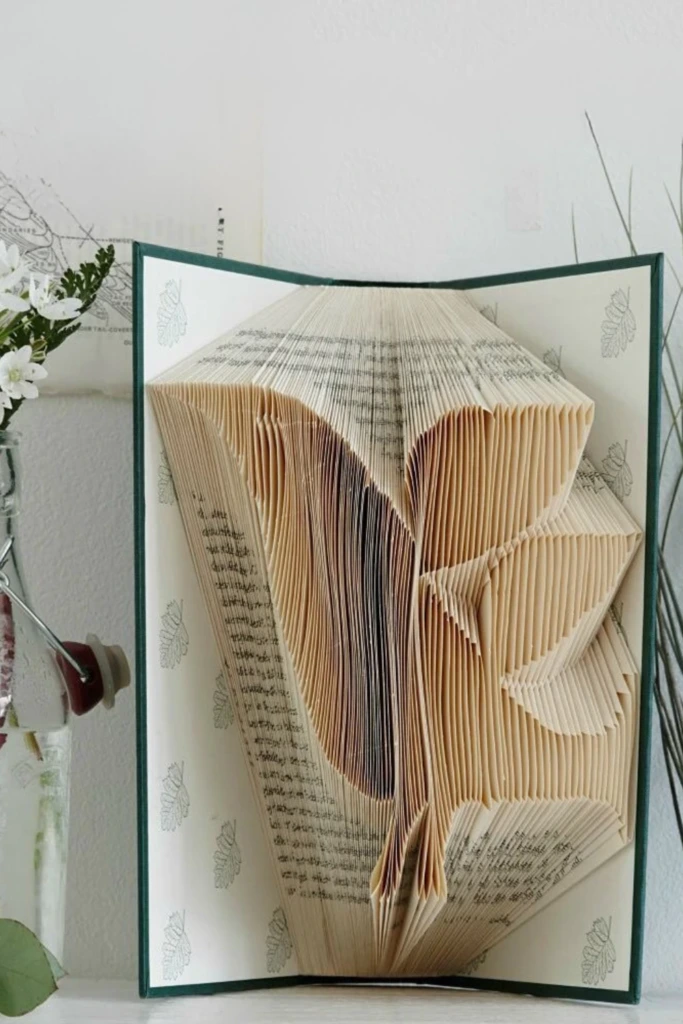
A heart fold gift is a thoughtful handmade present for anniversaries, birthdays, Valentine's Day, or other meaningful occasions.
Select a paperback with enough pages for a heart-shaped folding pattern. Mark the required measurements lightly before beginning.
Fold the pages one at a time, following the pattern carefully so the heart develops evenly.
Once completed, add a personalized message on the inside cover or attach a small gift tag.
You can also decorate the outer cover with a ribbon or meaningful date.
The finished piece offers a sentimental alternative to ordinary greeting cards and makes a lasting keepsake.
17. Stacked Book Snowmen
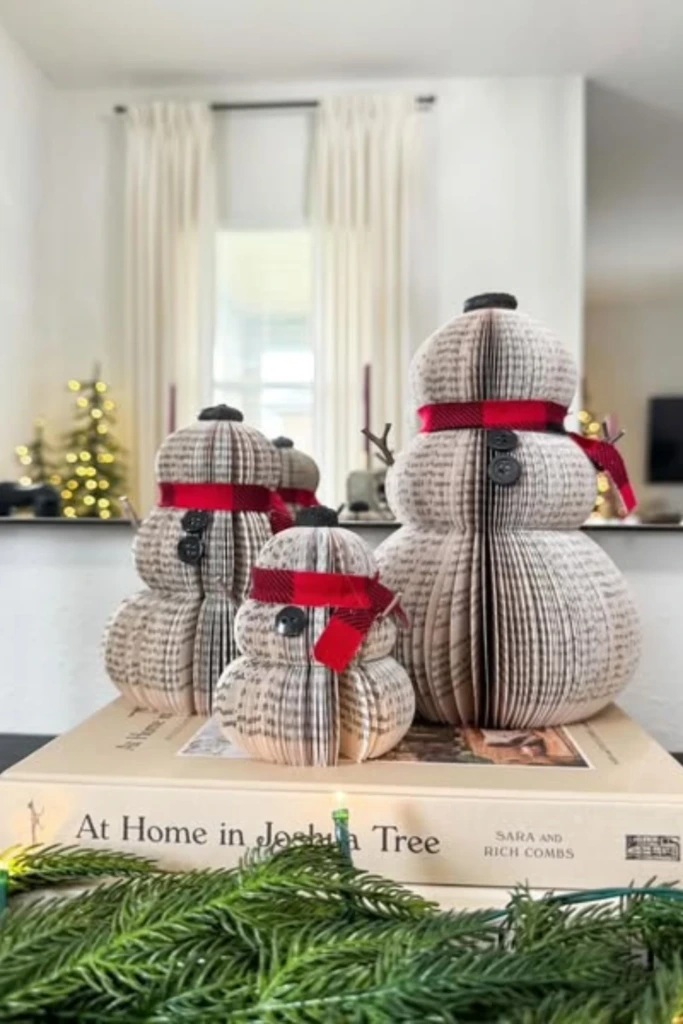
Stacked book snowmen bring playful handmade character to winter decorations.
Create three rounded paper forms using folded book pages, with each form slightly smaller than the one below it.
Arrange the largest section at the bottom and the smallest at the top. Secure the pieces to a central support so the snowman remains stable.
Decorate the figure with a felt scarf, paper hat, small buttons, and a cheerful face.
Use lightweight accessories to prevent the structure from tipping.
Display your snowman alongside artificial snow, miniature trees, or battery-operated fairy lights for a festive winter arrangement.
18. Decorated Book Cover
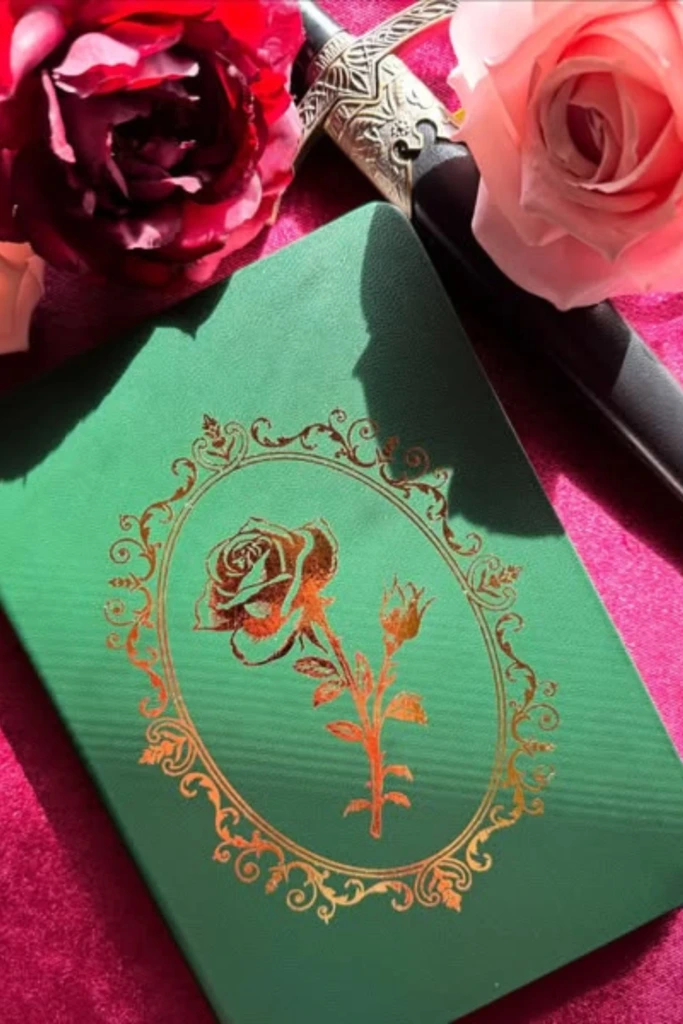
Decorating a book cover is an accessible project that allows you to personalize journals, notebooks, and old books.
Start by cleaning the cover and checking that its surface is suitable for painting or adhesive materials.
Cover it with decorative paper, fabric, or acrylic paint. Once the base is dry, introduce details such as stenciled lettering, pressed flowers, or small illustrations.
You can also create a vintage appearance using muted colors and decorative borders.
Avoid placing thick embellishments near the spine because they may interfere with opening and closing the book.
This project is ideal for creating personalized diaries, recipe collections, and handmade gifts.
19. Book Page Tree
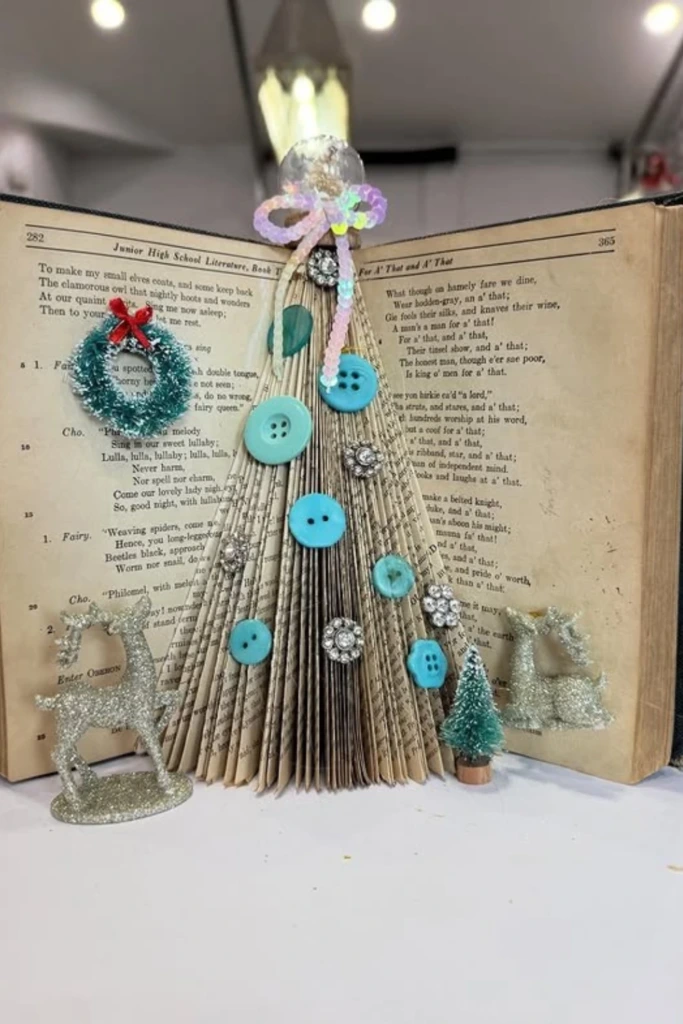
A book page tree is a simple decorative project that works especially well during the winter holidays.
Remove the covers from an unwanted paperback and fold each page diagonally toward the spine.
Repeat the process until the pages form a three-dimensional cone resembling a small tree.
Tuck in any excess paper along the bottom to create a stable base.
Decorate the tree with tiny paper stars, ribbon, or lightweight beads. You can also leave it undecorated for a natural, understated appearance.
Make several trees using books of different sizes to create an attractive tabletop forest.
20. Book Page Mobile
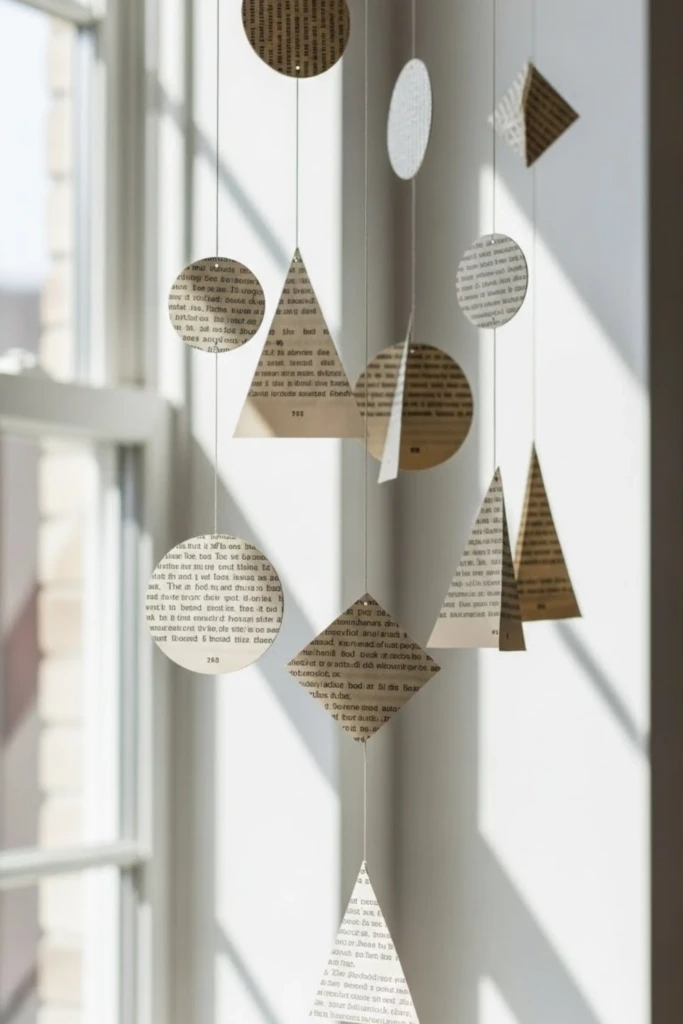
A book page mobile adds movement and artistic interest to a room using suspended paper decorations.
Cut lightweight book pages into shapes such as birds