The Ultimate Spring Cleaning Checklist: Room-by-Room Guide

Spring cleaning works best when you stop treating the whole house as one giant job. Pick the room that bothers you most, give it a short block of time, and work through it from the ceiling down to the floor. This guide walks you through each room in that order, flags the spots almost everyone skips, and ends with a simple check so you know when a room is truly done.
Before you start, gather your kit: microfiber cloths, an all-purpose cleaner, glass cleaner, a scrub brush, a vacuum with attachments, a bucket, and a few trash bags. Decide where to begin based on your home. If you cook every day, the kitchen will give you the biggest payoff. If you have pets, start with the living room, where hair and dander collect fastest. If allergies are your main concern, clean the bedroom first so you have one clean-air space to sleep in.
Jump to section (10)
- Kitchen: Grease, Crumbs, and Hidden Grime
- Bathroom: Mold, Soap Scum, and Mineral Deposits
- Living Room: Dust, Upholstery, and Window Tracks
- Bedroom: Mattress, Closet, and Baseboards
- Home Office: Electronics, Cords, and Dust Bunnies
- Entryway: First Impressions and Hidden Dirt
- Spring Cleaning Priority Matrix
- Is the Room Truly Done? A 5-Point Check
- When to Stop DIY and Call a Pro
- Frequently Asked Questions
Kitchen: Grease, Crumbs, and Hidden Grime
The kitchen rewards a top-to-bottom approach because grease and crumbs travel downward as you work. Start high, finish with the floor, and do the refrigerator and oven as separate jobs since they take the longest.
Clear and wipe the cabinets. Take everything off the shelves, vacuum crumbs out of the corners, then wipe the inside and outside with warm water and a squirt of dish soap. Cabinet fronts near the stove collect a thin film of grease, so give those an extra pass. Let the doors air dry before you put anything back.
Clean the oven. Pull out the racks and soak them in hot water with baking soda. Mix three parts baking soda with one part water into a paste, spread it inside the oven, wait about 15 minutes, then scrub and wipe clean. If your oven has a self-cleaning cycle, run it first and wipe out the ash once it cools.
Tackle the refrigerator. Pull it away from the wall and vacuum the condenser coils at the back or underneath. Dust on the coils makes the fridge work harder and use more electricity. Inside, wipe the shelves with a mild cleaner and throw out anything past its date. Check the drip pan underneath for mold while you are there.
Scrub the sink and disposal. Pour half a cup of baking soda down the drain, follow with one cup of white vinegar, let it fizz for about five minutes, then flush with hot water. Run a few ice cubes and lemon peels through the disposal to freshen it and clear buildup.
Wash the windows and backsplash. A squeegee gives streak-free glass, and a toothbrush dipped in baking soda paste works well on grout lines. Mop the floor last, shifting appliances if you can. Hot water with a splash of vinegar cuts grease without leaving a sticky film.
Two spots most people miss: the rubber seal on the dishwasher door, which grows mildew if never wiped, and the range hood filter, which should be washed or replaced so the fan can actually pull air. Wipe the seal with vinegar, and check the filter while the oven racks soak.
Bathroom: Mold, Soap Scum, and Mineral Deposits
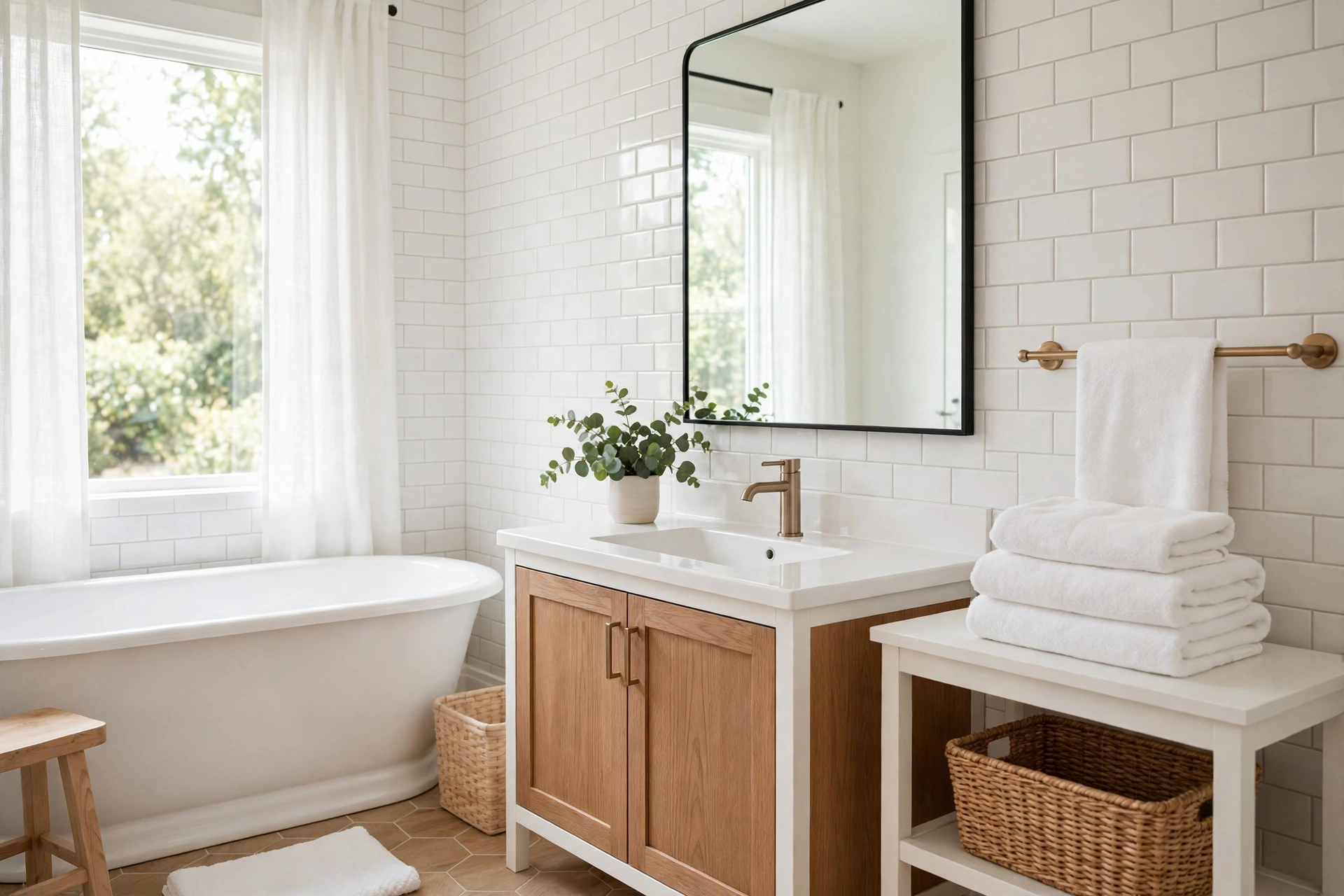
Bathrooms are about moisture control as much as cleaning. Start with the hardest jobs so the cleaner has time to sit while you move on to easier tasks. Run the exhaust fan or open a window for the whole session.
Spray the shower walls and tub with a bathroom cleaner or a mix of equal parts vinegar and water. Let it sit for ten minutes while you scrub the toilet. Pour cleaner into the bowl, scrub under the rim with a dedicated brush, then wipe the outside, including the base and the area behind the seat hinge, where grime hides.
Scrub the grout and tile with baking soda paste and a stiff brush, then rinse. For heavy mold on grout, a bleach-based grout pen works well. Wash the shower curtain or liner on a gentle cycle with a splash of vinegar, and replace the liner if it is permanently stained or smells musty even after washing.
Deep clean the vanity. Empty the drawers, wipe the inside with disinfectant, and toss expired makeup and old toothbrushes. Polish the faucets with a dry microfiber cloth. Finish with the mirrors and the floor: glass cleaner on the mirrors, then vacuum and mop, paying attention to the corners behind the toilet.
The most neglected item in the bathroom is the exhaust fan cover. Dust on it slows the fan down, which means more condensation on the mirrors and more chance of mold. Pop the cover off, vacuum the dust, and wash it with soapy water.
Living Room: Dust, Upholstery, and Window Tracks

Fabric and blinds hold more allergens than any other surface in this room, so deal with those before you vacuum the carpet. The two biggest hidden dirt traps are under the couch cushions and inside the window tracks.
Dust from high to low. Start with the ceiling fan, using a pillowcase over each blade to catch the dust instead of spreading it. Wipe blinds with a microfiber cloth or a rubber glove. For mini blinds, dip gloved fingers in vinegar water and run them along each slat. Wipe light fixtures and picture frames while you are up there.
Clean the windows and screens. Take the screens out and hose them down, then let them dry fully. Wash the windows inside and out with a squeegee. Vacuum the tracks first, then scrub out the grit with a toothbrush.
Vacuum the upholstery with the brush attachment, including the sides and back of sofas and chairs. Spot-clean stains with a fabric cleaner. Sprinkle baking soda over the cushions, let it sit for 15 minutes, then vacuum again to remove odors. Flip the cushions and vacuum underneath them too. Coins, crumbs, and pet hair collect there all year.
Shampoo the carpets if the traffic areas look dull or feel sticky. You can rent a machine for a day, or hire a pro for the busiest rooms. For routine care, a thorough vacuum with a HEPA filter is enough.
Wipe electronics with a dry microfiber cloth, and use compressed air or a soft brush for keyboard and remote crevices where crumbs settle. Finally, pull furniture away from the walls and vacuum the baseboards and the floor behind each piece. Put back only the items you actually use.
Bedroom: Mattress, Closet, and Baseboards
A clean bedroom helps you sleep better, so focus on the surfaces you touch every day. The floor under the bed and the closet floor collect more dust than anywhere else in the room.
Strip the bed and wash the sheets, pillowcases, and duvet cover in hot water, following the care labels. Adding a cup of baking soda to the wash helps strip detergent residue from the fabric.
Vacuum the mattress. Sprinkle baking soda over the surface, let it sit for 30 minutes, then vacuum with the upholstery attachment. Flip or rotate the mattress if the manufacturer recommends it.
Clean the closet. Take everything out, vacuum the floor and shelves, and wipe down the rods and bins. Donate or toss clothes you have not worn in a year. Put the pieces you wear most at eye level and move off-season clothes to the top shelf or a bin.
Dust the baseboards and trim with a microfiber mop or cloth, using warm soapy water for stubborn grime. Wipe the light switches and door handles with disinfectant. They get touched dozens of times a day and pass germs around the house.
Wash or swap the curtains. Most are machine washable, so check the label. If they cannot go in the wash, steam them to freshen them without taking them down.
Pull out the storage bins under the bed and vacuum thoroughly. That space fills with dust fast, and allergy sufferers should do it at least twice a year.
Home Office: Electronics, Cords, and Dust Bunnies
Office cleaning is mostly about airflow. Dust in computer vents is one of the most common causes of fans failing early, and it is easy to prevent.
Unplug everything, then blow dust out of the computer tower, keyboard, and printer vents with a can of compressed air. Aim the air toward an open window or a vacuum nozzle so the dust does not just resettle on the desk.
Wipe the monitor with an electronics-safe cleaner and the desk with all-purpose cleaner. Bundle cords with zip ties or clips. Loose cord nests collect dust and make the space under the desk hard to clean.
Clean the mouse with a damp cloth and wash a fabric mousepad in the sink with mild soap. Vacuum under the desk with the crevice tool, especially along the baseboards and behind the monitor stand.
File the paper clutter. Set a timer for ten minutes: shred old bills, recycle junk mail, and file the papers you need to keep. Wipe your phone and charging cables with a disinfectant wipe. They pick up hand oils and dust and can turn sticky over time.
Entryway: First Impressions and Hidden Dirt
The entryway catches everything that comes in from outside, so cleaning it early keeps that dirt from spreading through the house. The door threshold and weatherstripping are almost always neglected.
Take the doormats outside, shake them out, then hose them down or machine wash them if the label allows. Let them dry completely before putting them back.
Wipe down the front door, including glass panels, handles, and the frame. Check for cobwebs above the door. Sweep or vacuum the entry floor, then damp mop it with a gentle cleaner.
Declutter the shoe storage. Sort shoes by season, donate the pairs you do not wear, and wipe out the bottom of the shoe rack. Take coats and bags off the hooks, wipe the hooks and shelf, and vacuum dust from the corners.
Wipe the door threshold and check the weatherstripping. Replace worn strips to keep out drafts, bugs, and pollen.
Spring Cleaning Priority Matrix
When time is tight, clean the rooms with the most dirt first, not the rooms you like best. Use this quick guide to decide where your next hour goes.
| Room | Dirt level (out of 10) | Time needed |
|---|---|---|
| Kitchen | 8 | About 45 minutes |
| Bathroom | 7 | About 30 minutes |
| Living room | 6 | About 40 minutes |
| Bedroom | 5 | About 35 minutes |
| Home office | 4 | About 20 minutes |
| Entryway | 3 | About 15 minutes |
If you have only one hour, pick the two rooms that fit and have the highest dirt level. With 45 minutes and a kitchen you cook in daily, the kitchen wins. With a pet dander problem and 40 minutes, the living room comes first. The point is to finish rooms completely, not to start all of them.
Is the Room Truly Done? A 5-Point Check
Run through this check after you finish each room. If you can answer yes to all five, move on. If any answer is no, go back and fix that spot before starting the next room.
- Top to bottom: did you start at the highest point, like ceiling fans and blinds, and end at the floor?
- No surface film: wipe a finger across a shelf or counter. Does it come away clean?
- Smell test: does the room smell fresh, not just like cleaning product?
- Baseboard dust: run a fingertip along a baseboard. Is it dust-free?
- Clutter clear: can you see at least half of the flat surfaces?
When to Stop DIY and Call a Pro
Most spring cleaning is easy to do yourself, but three situations are worth stopping for.
Deep carpet stains that resist spot treatment. If a baking soda paste or a store-bought carpet cleaner leaves a visible ring, or the stain comes back after drying, a hot-water extraction service works better. You can rent a machine for large areas, but for pet urine or set-in red wine, a pro avoids the risk of soaking the carpet pad and growing mold underneath.
Mold covering more than 10 square feet. Small patches in grout can be scrubbed with a bleach solution of one part bleach to ten parts water. A larger area, or mold on drywall, usually points to a moisture problem that needs fixing before cleaning helps. Stop and call a mold specialist.
Heavy grease buildup in the oven vent or range hood. If degreaser and scrubbing do not cut through the grease in the filter or ductwork, a professional duct cleaning service can remove it safely without damaging the system.
Frequently Asked Questions
How often should I deep-clean my kitchen?
A full kitchen deep clean is worth doing at least once a year. The high-use spots deserve more attention: check the refrigerator coils and the oven every six months, since dirty coils raise your electricity use and a greasy oven smokes and smells.
What is the best order to clean a room?
Always work from top to bottom. Clean ceiling fans and light fixtures first, then furniture and surfaces, then the floor last. That way dust and drips fall onto surfaces you have not cleaned yet, instead of dirtying the ones you already finished.
Should I clean my own ductwork or hire a pro?
Cleaning vent covers yourself is fine. Take them off, wash them with soapy water, and put them back. Full duct cleaning is a different job. Done wrong, it can push debris deeper into the system or damage the duct lining, which hurts airflow and raises energy bills. For that, hire a professional.