21 Leaf Crafts for Kids in 2026

Leaf crafts are a wonderful way to turn ordinary outdoor discoveries into colorful artwork. Whether your children collect fallen leaves during an autumn walk or use fresh greenery from the garden, these simple projects offer plenty of opportunities for creativity.
You don’t need expensive supplies or complicated instructions to make something beautiful. With a few leaves, paper, glue, and imagination, kids can create animals, nature scenes, seasonal decorations, and personalized artwork.
These 21 leaf crafts for kids are suitable for home activities, preschool projects, and classroom art sessions. Each idea encourages hands-on exploration while making creative time enjoyable and affordable.
Jump to section (4)
What is Leaf Art Activity?
Leaf art is a creative activity that uses natural or artificial leaves to make pictures, patterns, decorations, and other artistic designs. Children can experiment with different shapes, textures, and colors while transforming simple materials into imaginative creations.
These activities can help children practice hand-eye coordination, develop fine motor skills, and explore basic artistic concepts. Selecting leaves, arranging patterns, and attaching materials also encourages patience and creative decision-making.
Leaf art works particularly well during autumn, when fallen leaves provide a variety of warm colors. However, green leaves, pressed flowers, and handmade paper leaves make it possible to enjoy these projects throughout the year.
For a successful activity, choose clean, flexible leaves that are free from mold or insects. Keep washable glue, child-safe scissors, markers, and construction paper nearby. Younger children should have adult supervision, especially when working with small decorative pieces.
21 Leaf Crafts for Kids
Butterfly Leaf Collage

A butterfly collage is an easy introduction to nature-inspired artwork. Children can create colorful butterfly wings using leaves with matching or contrasting shapes.
Start with a sheet of cardstock and arrange four leaves around a central body. Larger leaves work nicely for the upper wings, while smaller ones create the lower sections. Glue everything into place and add a narrow paper strip for the butterfly’s body.
Finish with curved antennae made from paper or pipe cleaners. Children can draw flowers, clouds, or grass around their butterflies to create a complete garden picture.
This project is especially useful for exploring symmetry because kids can compare the shapes and arrangements on both sides of their butterflies.
Leaf Face Collage

Turn a collection of leaves into expressive faces with different hairstyles, eyebrows, and facial features.
Begin by drawing a large face outline on sturdy paper. Let children select leaves that resemble curly hair, long bangs, beards, or bushy eyebrows. Arrange the pieces around the drawing before attaching them with glue.
Markers can be used to create smiling mouths, freckles, glasses, and other personal details.
Encourage children to experiment with different expressions and leaf combinations. The finished portraits make cheerful classroom displays and provide an opportunity to discuss emotions through art.
Leaf Animal Collage

Animal collages allow children to discover how natural shapes can resemble familiar creatures.
Collect leaves in different sizes and invite kids to imagine which animals they could create. A long pointed leaf might become a fish, while several rounded leaves could form a turtle or bear.
Arrange the leaves on construction paper to establish the animal’s body. Add smaller pieces for ears, tails, fins, or feet. Once the design looks right, secure everything with glue.
Use colored pencils to draw eyes, whiskers, and background details.
Children can create an entire collection of woodland animals, ocean creatures, or farm animals using the same basic technique.
Fox Leaf Faces

Bright orange and reddish-brown leaves are excellent materials for creating adorable fox faces.
Choose broad leaves with pointed ends to resemble a fox’s ears and facial shape. Attach each leaf to a piece of cardstock, positioning the pointed section toward the top.
Cut small triangles from white paper to create the fox’s cheeks. Add a black paper nose and draw two eyes with a marker.
For additional personality, children can experiment with different expressions or create an entire fox family using leaves of varying sizes.
These small creations can be displayed individually or combined into a woodland-themed wall collage.
Leaf Hair Portraits
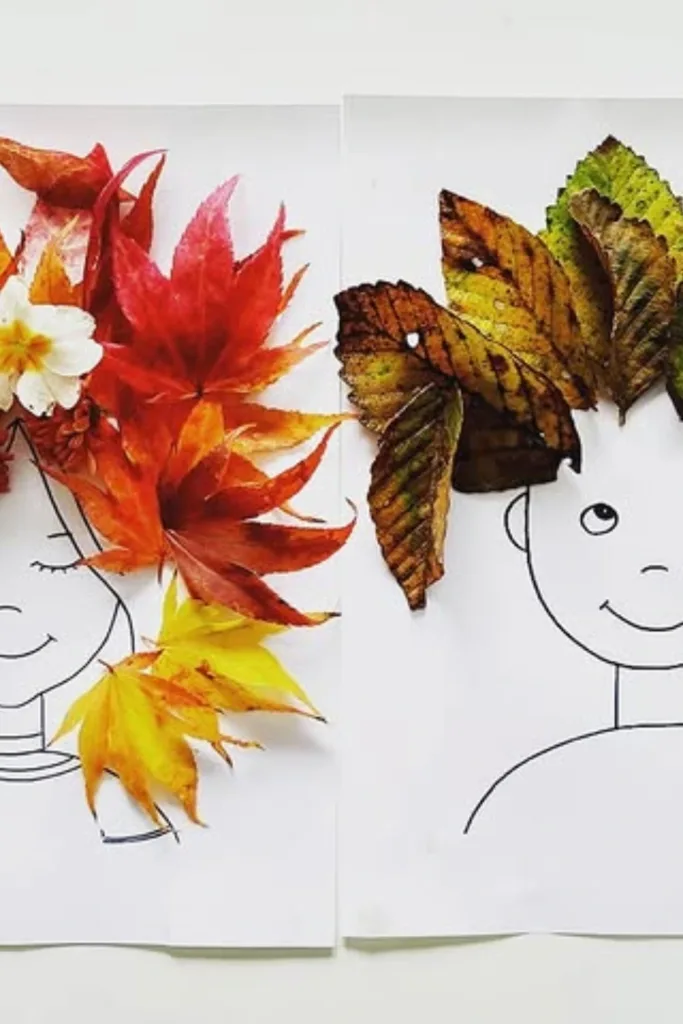
Leaf hair portraits encourage children to create imaginative hairstyles using natural materials.
Draw simple head-and-shoulder outlines on sheets of paper. Provide a collection of colorful leaves, including narrow, rounded, and pointed varieties.
Children can arrange long leaves into flowing hairstyles or overlap smaller leaves to create textured curls. Yellow, orange, and red leaves work especially well for autumn-inspired designs.
After gluing the leaves around the head, add facial features and clothing details with markers.
For a more personalized activity, let children create portraits of themselves, friends, or family members. They can also incorporate small flower petals or paper accessories.
Leaf Bird Art

Leaf bird art transforms ordinary foliage into charming feathered creatures.
Start by drawing a branch across a piece of cardstock. Select an oval leaf for the bird’s body and a smaller leaf for its wing.
Position the leaves above the branch and secure them with glue. Use narrow leaves to create a tail and add a small paper triangle for the beak.
Draw eyes and delicate feet with a fine-tip marker.
Children can create several birds sitting together or add a nest made from thin paper strips. Mixing green, yellow, and brown leaves gives each bird a distinctive appearance.
This activity pairs naturally with discussions about birds, their habitats, and the different shapes of feathers.
Leaf Tree Scene

A leaf tree scene combines drawing, painting, and natural materials into one colorful landscape.
Begin by painting a tree trunk and several branches on a large sheet of paper. Once the paint dries, attach small leaves around the branches to form a full canopy.
Children can use different colors to represent seasonal changes. Green leaves create a summer landscape, while orange and yellow leaves suggest autumn.
Add a grassy area, a winding pathway, or a small person standing beneath the tree.
For an interesting storytelling activity, ask children to imagine what might happen in their picture. They could include woodland animals, a picnic, or a windy afternoon with leaves falling from the branches.
Framed Leaf Bird Art

Framed bird artwork turns a simple nature project into a decorative piece that children can proudly display.
Use thick cardstock as the background and arrange several leaves into the shape of a bird. A broad leaf can form the body, while overlapping smaller leaves create wings and tail feathers.
Attach a small twig beneath the bird to resemble a perch. Add a paper beak and a carefully drawn eye.
Once the artwork is dry, place it inside a lightweight frame or create a handmade border using cardboard strips.
Pressed leaves are particularly suitable for this project because they lie flatter against the background.
Display the finished artwork away from direct sunlight to help preserve its colors for longer.
Leaf Tree Craft

This classic tree craft gives children a simple way to explore the appearance of trees during different seasons.
Draw a thick trunk with several branches on construction paper. Provide small leaves in assorted colors and let children arrange them around the branches.
Encourage overlapping to create a dense treetop. A few leaves can be placed near the bottom of the picture to represent foliage that has fallen to the ground.
Children can also tear larger leaves into smaller pieces to fill gaps.
For a classroom project, create four separate trees representing spring, summer, autumn, and winter. This offers a visual introduction to seasonal changes while encouraging creative expression.
Leaf Painting Art
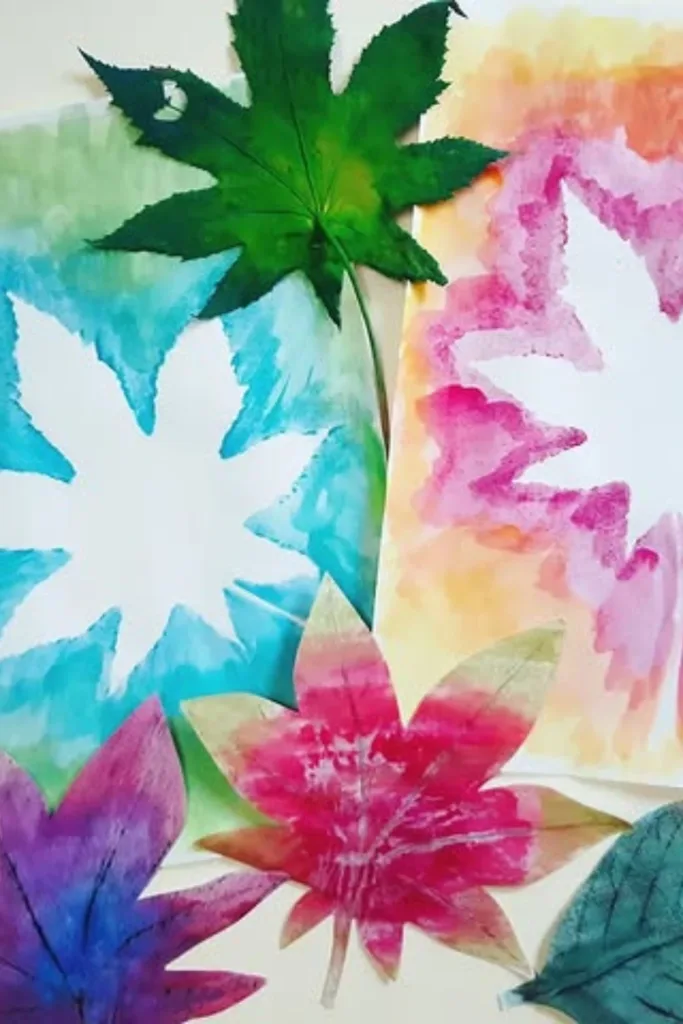
Leaf painting is an engaging technique that produces beautiful patterns without requiring advanced drawing skills.
Place several flat leaves on watercolor paper. Arrange them with enough space between each leaf so their shapes remain recognizable.
Using a soft brush, apply diluted watercolor paint around the leaves. Experiment with blending colors or creating a light wash across the background.
Allow the paint to settle briefly, then carefully remove the leaves to reveal their silhouettes.
For a different effect, brush washable paint onto the underside of a leaf and press it onto paper to make a detailed print of its veins.
Both methods help children observe leaf structures while exploring color, texture, and artistic composition.
Leaf Lion Mane

Create a cheerful lion with a dramatic mane made entirely from colorful leaves.
Draw or cut out a large circular lion face and place it in the center of a sheet of cardstock. Collect narrow leaves in yellow, orange, brown, and red shades.
Arrange the leaves around the circle with their tips pointing outward. Overlap them slightly to give the mane a thick appearance.
Glue the leaves in place, then attach the lion’s face over their inner ends.
Add rounded ears, expressive eyes, a triangular nose, and a smiling mouth.
Children can experiment with arranging the leaves by color or creating an intentionally mixed pattern. This project is a playful way to practice recognizing shapes and color variations.
Leaf Stick Figures

Leaf stick figures combine small natural objects to create miniature characters with plenty of personality.
Collect sturdy leaves and a few thin twigs from a safe outdoor area. Place a leaf on cardstock to represent the character’s head or body.
Arrange short twigs beneath and beside it to create arms and legs. Use small paper circles or marker dots for the eyes.
Children can add paper hats, scarves, shoes, or other accessories to make their characters unique.
Create several figures in different poses, such as walking, dancing, or waving.
Once complete, invite children to name their characters and invent short stories about their adventures.
Leaf Tree Collage

A leaf tree collage offers a textured alternative to traditional painting and drawing.
Cut a tree trunk from brown construction paper and attach it to a larger background sheet. Provide an assortment of pressed leaves, artificial leaves, or leaf-shaped paper cutouts.
Children can build the treetop by layering the pieces around the branches. Encourage them to combine colors and sizes to create depth.
Small pieces of green paper can represent grass, while additional leaves scattered across the bottom suggest an autumn landscape.
This activity is suitable for group projects because each child can contribute leaves to a shared tree.
The completed collage makes an attractive seasonal classroom decoration.
Pumpkin Leaf Suncatcher

A pumpkin leaf suncatcher combines autumn colors with a simple window decoration.
Cut a pumpkin-shaped outline from orange cardstock, leaving a large opening in the center. Attach a sheet of clear contact paper to the back with its sticky surface facing forward.
Let children arrange thin, colorful leaves inside the opening. Leave small spaces between the leaves so sunlight can pass through.
Cover the arrangement with another piece of clear contact paper and trim away the excess.
Add a green paper stem and hang the finished pumpkin on a sunny window.
Thin, pressed leaves usually produce the clearest results. This craft works well for fall celebrations, seasonal classroom displays, and Halloween decorations.
Leaf Lion Faces

Leaf lion faces are simple enough for younger children while still offering opportunities for creative customization.
Cut several circles from cardboard or thick paper to serve as the lions’ faces. Provide a selection of small leaves and let children glue them around the outer edges.
Pointed leaves create a dramatic mane, while rounded leaves give the lion a softer appearance.
After the glue dries, draw the eyes, nose, mouth, and whiskers on each face.
Children can use different leaf colors to create lions with distinctive looks.
For a group activity, display the completed faces together on a bulletin board decorated with paper grass and trees.
Leaf Hedgehog Craft

A hedgehog craft is an excellent way to turn pointed leaves into textured animal artwork.
Draw a simple hedgehog outline on cardstock, leaving the face area clear. Collect several narrow or pointed leaves to represent the animal’s spines.
Starting near the back of the outline, glue the leaves in overlapping rows. Position their tips outward to create the hedgehog’s recognizable shape.
Add a small black paper nose, an eye, and short feet.
Children can decorate the background with mushrooms, grass, or fallen leaves.
This project also creates an opportunity to introduce children to hedgehogs and explain how their spines help protect them.
Leaf Bug Art

Leaf bug art encourages children to observe the shapes and patterns found in insects.
Choose small oval leaves to form the bodies of beetles, ladybugs, or imaginary garden creatures.
Glue each leaf onto a sheet of paper and use markers to add legs, antennae, and decorative markings.
For ladybugs, children can paint leaves red and add black dots after the paint dries. Green leaves can become beetles with striped wings or unusual patterns.
Create a garden background using drawn flowers, grass, and stones.
Invite children to design their own imaginary insects and give them creative names. This adds a storytelling element while encouraging observation and experimentation.
Autumn Hedgehog Craft
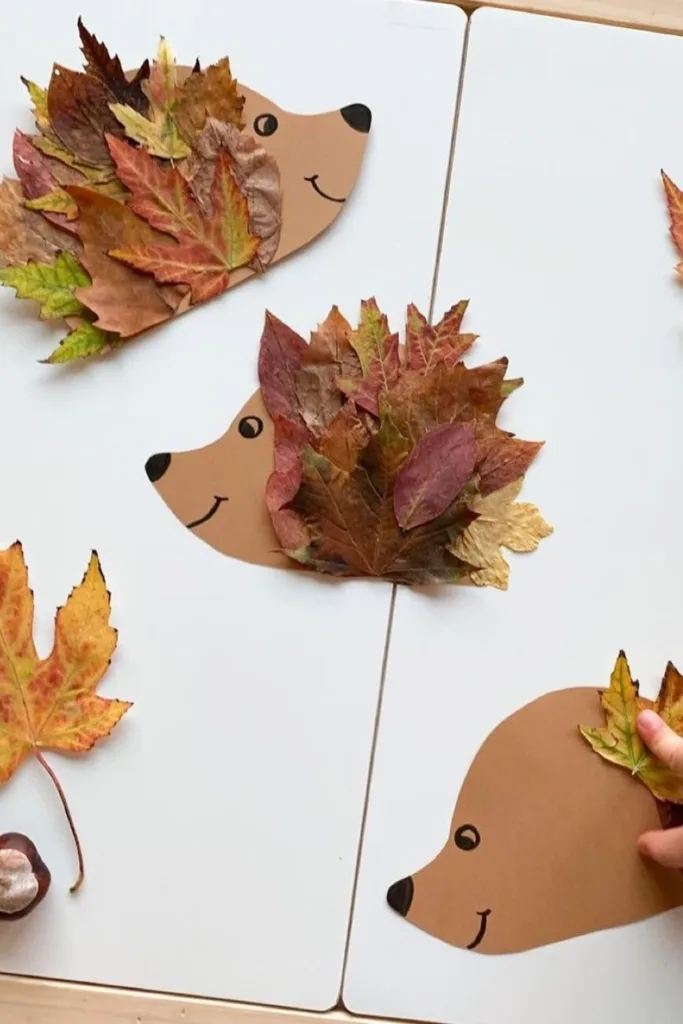
An autumn hedgehog project makes use of the warm colors and interesting textures of fallen leaves.
Begin by cutting a simple hedgehog face and body shape from light brown cardstock. Gather dry but flexible leaves in orange, yellow, and reddish-brown shades.
Attach the leaves along the upper back of the hedgehog, overlapping them to create a thick layer of spines.
Keep the face uncovered and add a dark nose, a small eye, and a curved smile.
Children can place the finished hedgehog onto a larger sheet decorated with autumn trees and scattered leaves.
For extra texture, use small pieces of crumpled brown paper around the background to represent the forest floor.
Leaf and Flower Craft Collection
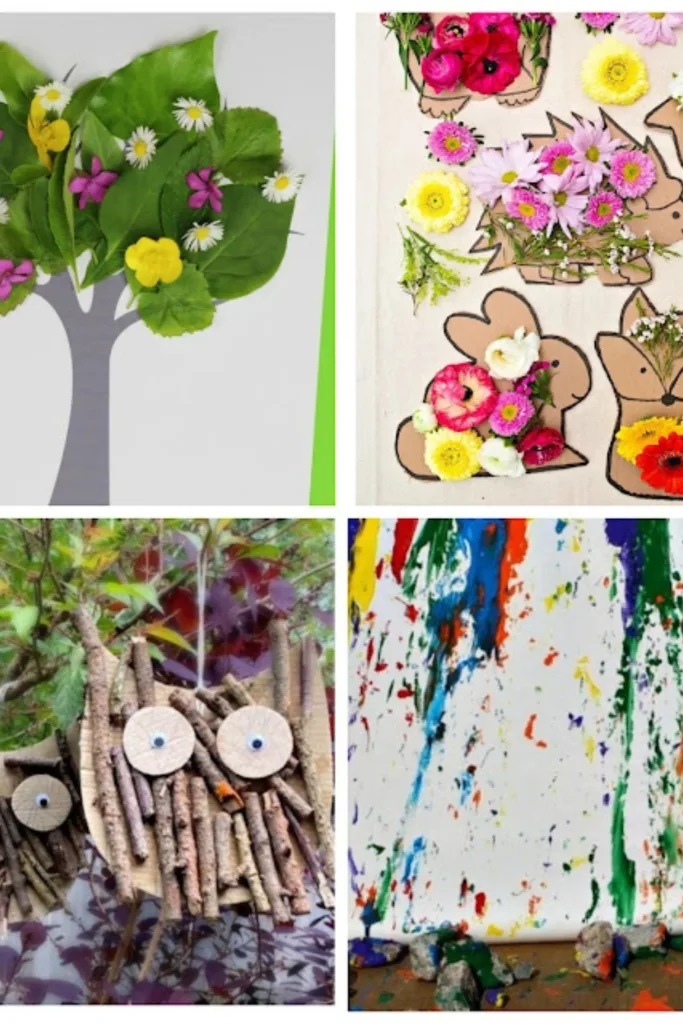
Combining leaves and flowers allows children to create more detailed nature-inspired artwork.
Collect a small selection of clean leaves and safe, non-toxic flowers. Arrange the materials on paper to explore possible designs before applying glue.
Children can make flower-covered trees, colorful butterflies, garden scenes, or animals decorated with petals.
For example, use broad leaves to create a rabbit’s ears and flower petals to decorate its body. Alternatively, arrange small blossoms around a paper tree to create a spring landscape.
Pressed flowers are useful when creating artwork intended for framing or storage.
Encourage children to compare the shapes, colors, and textures of their materials. Avoid unfamiliar plants, as some can irritate the skin or be poisonous.
Leaf Lantern Craft

Leaf lanterns create beautiful seasonal decorations using translucent materials and natural foliage.
Start with a rectangular sheet of translucent craft paper or vellum. Arrange thin, pressed leaves across the surface and attach them with small amounts of glue.
Once dry, roll the decorated paper into a cylinder and secure the overlapping edges with tape.
Attach a circular cardboard base to help the lantern stand upright.
Place a battery-operated LED tealight inside to illuminate the leaves and reveal their delicate patterns.
Children can experiment with different leaf arrangements to create unique lantern designs.
Always use LED lights rather than real candles, as paper and dried leaves are flammable. Adult assistance is recommended when assembling the lantern.
Leaf Pumpkin Craft
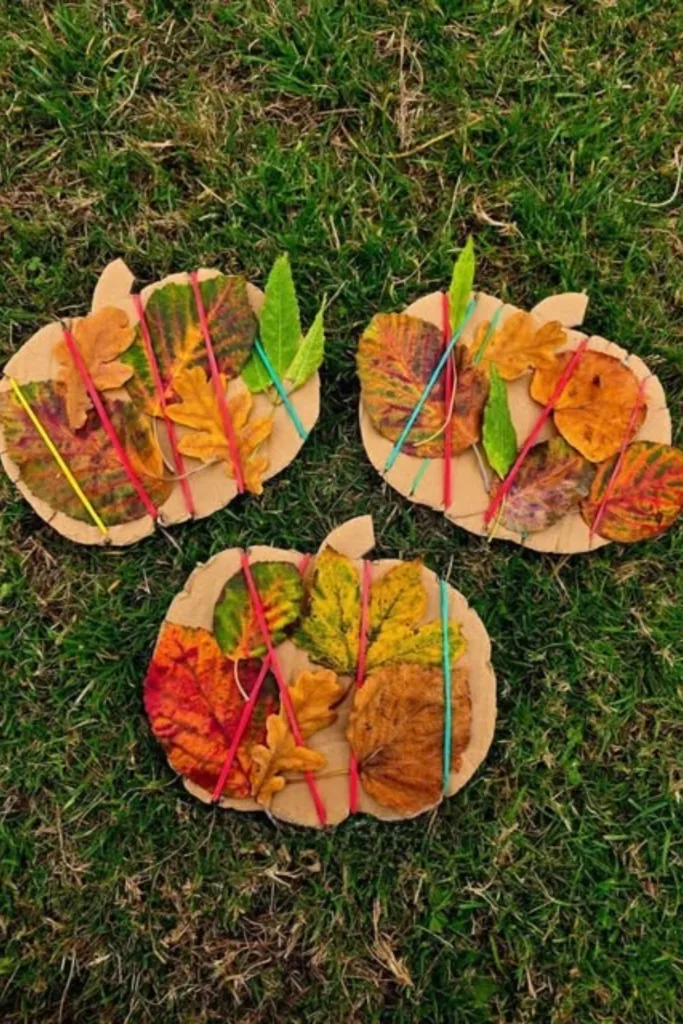
Leaf pumpkins are playful autumn decorations that can be created with only a few basic materials.
Cut pumpkin shapes from sturdy orange cardboard. Gather small leaves in different colors and sizes.
Let children arrange the leaves across the pumpkin surface, creating stripes, overlapping patterns, or decorative clusters.
Attach the leaves with craft glue. For a removable arrangement, an adult can help secure larger leaves with rubber bands around a thick cardboard shape, ensuring the bands are not overstretched.
Add a green paper stem and draw curved lines to emphasize the pumpkin’s shape.
These decorated pumpkins can be displayed on shelves, classroom boards, or seasonal activity tables.
FAQs
How to make leaf craft easy?
The easiest way to make leaf crafts is to choose a simple design and prepare the materials before starting.
Begin with clean leaves that are not excessively brittle. Gather paper, washable glue, markers, and child-safe scissors. For younger children, prepare basic outlines of animals, trees, or faces in advance.
Allow children to arrange the leaves before gluing them down. This gives them freedom to experiment without worrying about mistakes.
Start with uncomplicated projects such as leaf butterflies, animal faces, or tree collages. Keep the activity short and focus on creativity rather than achieving a perfect result.
If freshly collected leaves are too wet, gently dry them with paper towels. For flatter artwork, press them between sheets of absorbent paper beneath a heavy book for several days.
What is the traditional art of leaf?
Traditional leaf art refers to artistic practices that use natural leaves as materials for decoration, design, and creative expression.
Different cultures have developed techniques involving leaf weaving, pressing, painting, carving, and arranging. These practices often reflect local plants, seasonal traditions, and the relationship between people and nature.
One well-known example is leaf painting, where artists use leaves as surfaces for detailed designs. Leaf weaving is another traditional technique used to create decorative objects and practical items from flexible plant materials.
For children, these traditions can be introduced through simple activities such as leaf printing, collage making, and creating patterns with pressed foliage.
Exploring leaf art offers an accessible way to connect creativity with nature, cultural traditions, and environmental awareness.
Conclusion
Leaf crafts for kids provide an affordable and enjoyable way to combine creativity, outdoor exploration, and hands-on learning. From colorful butterflies and animal collages to glowing lanterns and seasonal decorations, there are plenty of projects for different ages and skill levels.
The best part is that most of these activities require only a handful of everyday supplies. By encouraging children to collect, observe, arrange, and decorate leaves, parents and teachers can turn simple natural materials into memorable creative experiences throughout the year.