
30 Fun Large Group Games for Parties and Events

Getting a big crowd together is exciting, but keeping everyone entertained can be challenging. Whether you're hosting a birthday celebration, family reunion, office gathering, school event, or holiday party, the right activities can turn an ordinary get-together into an unforgettable experience.
The best large group games encourage people to interact, laugh, compete, and create memories without making anyone feel left out. Some require teamwork and quick thinking, while others involve movement, creativity, or a little friendly competition.
These 30 fun large group games offer something for every crowd, including energetic outdoor challenges, entertaining indoor activities, and simple icebreakers that require almost no preparation.
Quick Picks for Your Group
Choosing the right activity depends on your guests, available space, and the atmosphere you want to create.
| Group or occasion | Games to try |
|---|---|
| — | — |
| Large parties | Rock, Paper, Scissors Tournament, Charades, Trivia Night |
| Office gatherings | Great Minds Think Alike, Human Bingo, Team Scavenger Hunt |
| Family celebrations | Pictionary, Guess the Tune, Telephone Pictionary |
| Outdoor events | Capture the Flag, Stop-and-Go Race, Follow the Leader |
| Icebreaker activities | Two Truths and a Lie, Guess Who, Table Topics |
| Low-preparation gatherings | Categories, Hot Seat, Make a Rule |
| Mixed-age groups | Human Machine, Memory Tray, Giant Jenga Tournament |
For groups with more than 20 participants, team-based games usually work particularly well. They allow everyone to contribute while keeping the activity organized and enjoyable.
30 Large Group Games
1. Rock, Paper, Scissors Tournament
Turn the familiar hand game into an exciting competition that gets an entire room cheering. This activity requires no equipment and works particularly well when guests don't know one another.
Ask everyone to find a partner and play a best-of-three round of rock, paper, scissors. The winner advances, while the losing player becomes their personal cheerleader.
As winners face new opponents, their supporters join together to form increasingly enthusiastic cheering sections. Eventually, two finalists compete while the entire crowd supports one side or the other.
The growing excitement makes this simple activity surprisingly entertaining.
Best for: Icebreakers, school gatherings, and corporate events.
2. Guess Who

Guess Who challenges participants to identify a mystery person using clues and carefully chosen questions.
Before the game begins, ask everyone to write an interesting fact about themselves on a small piece of paper. Collect the papers and mix them in a container.
Read one fact aloud while the group attempts to identify its owner. Participants can ask yes-or-no questions or submit guesses, depending on how challenging you want the activity to be.
Facts such as unusual hobbies, memorable travel experiences, or hidden talents make the game more interesting.
For a large gathering, divide participants into teams and award points for correct answers.
Best for: Getting acquainted, workplace socials, and family reunions.
3. Cool Beans
Cool Beans is a playful guessing activity that combines secret choices with group discussion.
For an easy party version, place a jar of dried beans on a table and let everyone estimate how many it contains. Participants write their names and guesses on slips of paper without revealing their answers.
After collecting the guesses, announce several estimates and encourage the crowd to discuss which sounds most reasonable.
The person whose estimate comes closest to the actual number wins.
You can make the challenge more entertaining by using different containers or adding bonus rounds in which teams estimate quantities of everyday objects.
Best for: Casual parties, community events, and mixed-age gatherings.
4. Two Truths and a Lie

This classic conversation game reveals surprising details about people while encouraging everyone to participate.
Each player prepares three statements about themselves. Two must be true, while one must be invented.
Players take turns sharing their statements, and everyone else tries to identify the false one.
For example, someone might say they have visited five countries, once appeared on television, and can speak four languages.
The challenge becomes more entertaining when the true statements sound unbelievable and the fictional statement seems completely ordinary.
With a particularly large crowd, organize participants into circles of six to ten people so everyone gets a chance to speak.
Best for: Introductions, team bonding, and social gatherings.
5. Great Minds Think Alike
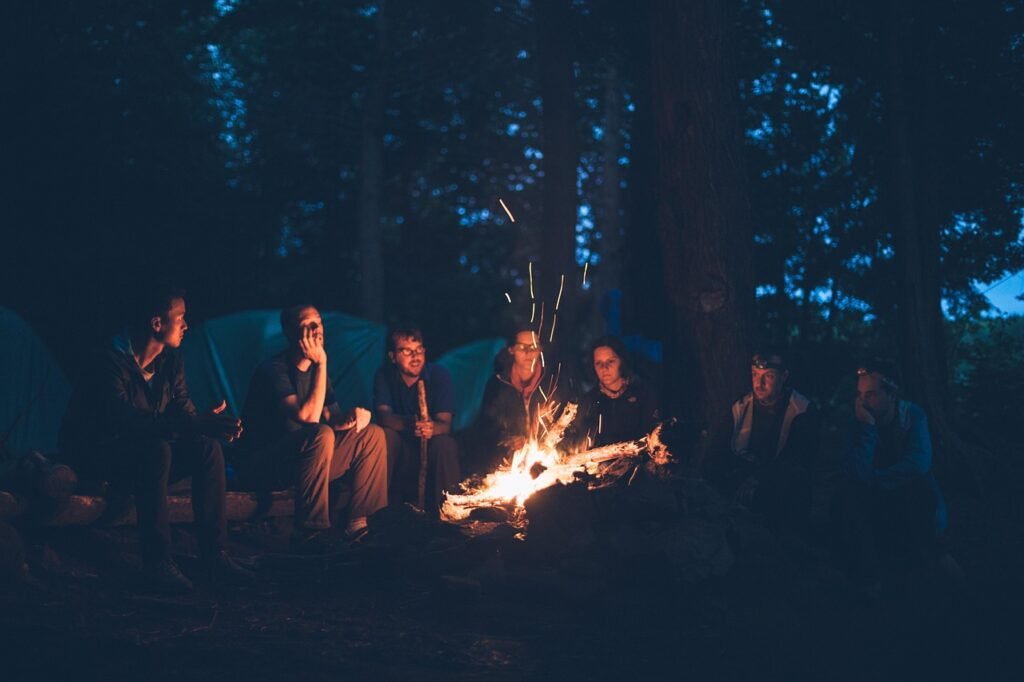
Great Minds Think Alike rewards players who can predict what others are thinking.
Divide participants into teams and provide each person with paper and a pen. The host announces a category or question, such as naming something people take to the beach.
Everyone secretly writes an answer before revealing it simultaneously.
Players earn points when their answers match those of teammates. Common responses score well, while unusual choices can lead to hilarious discussions.
Try prompts involving favorite snacks, vacation destinations, household objects, or popular movie characters.
This activity encourages participants to consider shared experiences and discover how similarly their minds work.
Best for: Dinner parties, workplace events, and family game nights.
6. Trivia Night
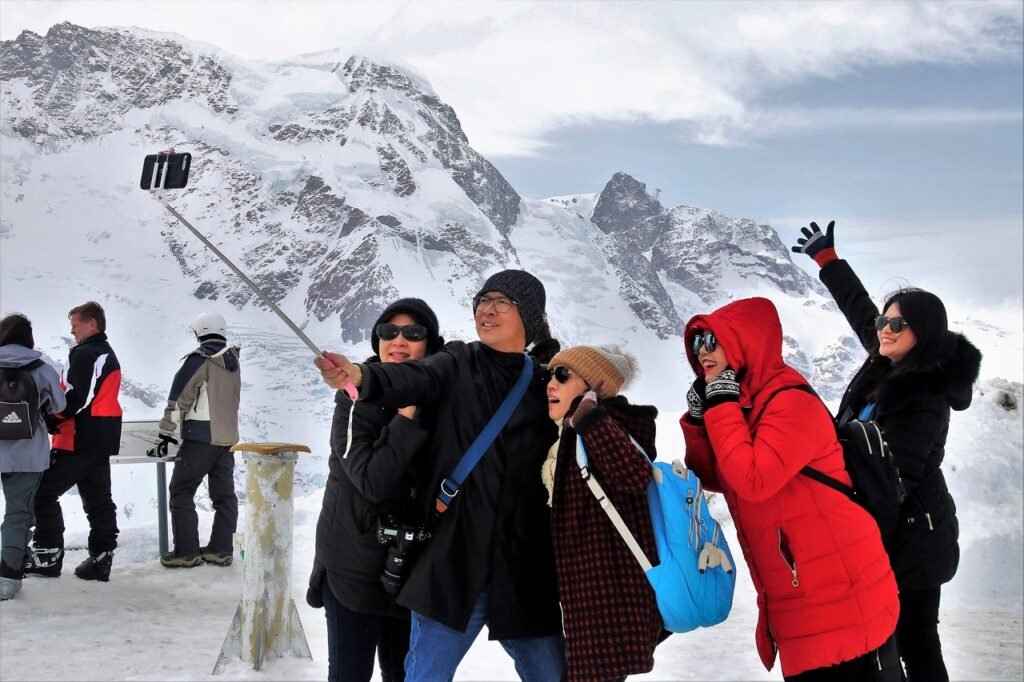
Trivia Night transforms a gathering into a lively knowledge competition.
Divide guests into teams of four to eight players. Prepare several rounds featuring topics such as entertainment, geography, sports, science, history, and general knowledge.
Read questions aloud and allow teams a short period to discuss their answers before writing them down.
Award points for correct responses and announce the standings between rounds to maintain excitement.
Include questions with different difficulty levels so participants with varied interests can contribute.
A final bonus question can give trailing teams an opportunity to catch up.
Best for: Corporate parties, fundraisers, and community gatherings.
7. Salad Bowl
Salad Bowl combines word guessing, acting, and memory into one fast-paced team competition.
Ask participants to write several recognizable words or phrases on separate pieces of paper. Fold the papers and place them inside a bowl.
Divide everyone into two teams and play three rounds using the same collection of clues.
In the first round, players describe the words without saying them directly. In the second, they can give only a single-word clue. In the third, they must communicate through gestures without speaking.
Because the same answers appear repeatedly, players gradually develop creative ways to help their teammates remember them.
The team identifying the most words across all three rounds wins.
Best for: House parties, youth groups, and family celebrations.
8. Pictionary

Pictionary encourages creativity and quick thinking, even among people who claim they cannot draw.
Separate participants into teams and prepare a collection of words or phrases.
One player from each team draws a randomly selected prompt while teammates attempt to guess the answer within a time limit.
The artist cannot speak, write letters, or use numbers to reveal the answer.
Use a whiteboard, flip chart, or large paper pad so everyone can see the drawings.
For bigger gatherings, have multiple teams compete simultaneously or rotate artists between rounds.
Simple prompts are ideal for beginners, while abstract concepts create additional challenges for experienced players.
Best for: Indoor parties, family gatherings, and classroom activities.
9. Challenge Jenga
Challenge Jenga adds entertaining tasks to the traditional wooden-block stacking game.
Before guests arrive, write a challenge on selected Jenga blocks or attach removable labels.
Challenges might include singing a short song, doing a funny impression, naming five animals in ten seconds, or telling an amusing story.
Players take turns removing blocks from the tower. Whenever someone selects a challenge block, they must complete the task before placing it on top.
The game continues until the tower collapses.
For large gatherings, set up multiple towers and rotate participants between stations.
Keep the challenges lighthearted and allow players to skip anything that makes them uncomfortable.
Best for: Birthday parties, informal gatherings, and small-team competitions.
10. Make a Rule
Make a Rule is a simple activity in which participants gradually build a collection of increasingly ridiculous instructions.
Begin with everyone standing or sitting in a circle. The first player introduces a rule, such as clapping before speaking.
The next player adds another rule while everyone continues following the previous one.
Rules might require participants to use a particular word, perform a gesture, or respond with a specific phrase.
As additional instructions accumulate, remembering them becomes increasingly difficult.
Players who forget a rule can receive a playful penalty, such as losing a point, rather than being eliminated.
The unpredictable combinations often produce plenty of laughter.
Best for: Icebreakers, youth events, and casual group entertainment.
11. Mafia
Mafia is a social deduction game involving secret identities, persuasion, and strategic discussion.
Choose a moderator and secretly assign roles to participants. Most players become townspeople, while a smaller number become Mafia members. Optional special roles include a detective and a doctor.
During the night phase, everyone closes their eyes while the moderator guides the secret actions of the assigned roles.
During the day phase, participants discuss suspicious behavior and vote to eliminate someone they believe belongs to the Mafia.
The game continues until either the Mafia has been eliminated or its members gain control of the remaining group.
For very large gatherings, create several separate games with their own moderators.
Best for: Teenagers, adults, and groups that enjoy strategy.
12. Telephone Pictionary
Telephone Pictionary combines drawing and written descriptions to create wonderfully unpredictable results.
Give each participant a notebook or several sheets of paper.
Everyone begins by writing a simple phrase at the top of their page. They then pass the paper to the next person, who draws an illustration representing the phrase.
The drawing is passed again, but the next player sees only the picture and writes a description of what they think it represents.
Continue alternating between pictures and written descriptions until the papers return to their original owners.
Reveal each sequence from beginning to end to discover how dramatically the original ideas have changed.
Best for: Creative groups, family parties, and indoor gatherings.
13. Spoons
Spoons is a fast-paced card game that combines concentration with quick reactions.
Arrange participants around a table and place spoons in the center, using one fewer spoon than the number of players.
Give each player four cards. Players repeatedly pass unwanted cards around the table while attempting to collect four cards of the same rank.
When someone completes a matching set, they grab a spoon.
Everyone else immediately tries to take one too. The player left without a spoon loses the round.
For larger events, arrange several tables with separate decks and spoons, then hold a final round between the winners.
Use plastic spoons and remind players to avoid grabbing aggressively.
Best for: Indoor celebrations and competitive family game nights.
14. Who Said That?
Who Said That? tests how well participants recognize the personalities and opinions of people around them.
Before the activity, collect anonymous answers to entertaining questions.
You might ask guests about their dream vacation, most embarrassing childhood memory, favorite fictional character, or strangest food combination.
During the game, read an answer aloud and invite participants to guess who submitted it.
Award points for correct guesses or simply enjoy the discussions that follow.
The activity becomes especially entertaining when someone provides an answer that completely surprises their friends or colleagues.
Best for: Workplace gatherings, reunions, and friendship groups.
15. Human Machine
Human Machine is a collaborative creativity challenge that transforms participants into the moving parts of an imaginary invention.
Divide the crowd into teams of five to ten people.
Give each team a few minutes to design a machine using only their bodies, movements, and sound effects.
One participant might act as a spinning wheel, another as a conveyor belt, and another as a mechanical lever.
Once their invention is ready, teams perform it while everyone else guesses what the machine is supposed to do.
You can assign specific inventions, such as a washing machine or popcorn maker, or let participants invent completely new devices.
Best for: Team-building workshops, drama groups, and school events.
16. Red Ball
Red Ball is an energetic coordination exercise that challenges participants to remember and repeat passing patterns.
Arrange everyone in a circle and introduce a soft red ball.
The first player tosses it to someone across the circle while saying that person's name. The receiver passes it to another participant who has not yet received it.
Continue until everyone has received the ball once and it returns to the starting player.
Ask the group to repeat the same passing sequence, gradually increasing the speed.
Once the pattern becomes familiar, introduce additional soft balls into the sequence to increase the challenge.
Participants must communicate clearly and remain attentive to prevent confusion.
Best for: Leadership training, workshops, and youth activities.
17. The Viking
The Viking is a quick reaction game involving coordinated gestures and plenty of laughter.
Arrange participants in a circle and select someone to begin as the Viking.
The Viking places both hands beside their head to imitate horns. The players immediately to their left and right perform rowing motions with their arms.
The Viking then points toward another participant, who becomes the new Viking.
The new Viking and their neighbors must quickly perform the correct gestures.
Anyone who reacts incorrectly or hesitates can receive a point against them or complete a harmless challenge.
Increase the speed as everyone becomes familiar with the movements.
Best for: Camp activities, icebreakers, and energetic indoor gatherings.
18. Guess the Tune

Guess the Tune is a music-based competition that brings different generations together.
Prepare a playlist featuring recognizable songs from several decades and musical styles.
Play a short instrumental introduction or a few seconds of each track. Teams attempt to identify the song title, artist, or both.
Award points for correct answers and consider offering bonus points for identifying the song particularly quickly.
Include familiar movie soundtracks, television themes, and popular hits to accommodate different musical tastes.
For additional entertainment, introduce a round where participants hum melodies instead of playing recordings.
Best for: Family reunions, birthday celebrations, and office parties.
19. Human Bingo
Human Bingo encourages participants to move around, introduce themselves, and discover shared interests.
Create bingo cards containing descriptions rather than numbers.
Squares might say "has traveled abroad," "plays a musical instrument," "owns a pet," or "enjoys cooking."
Players mingle and search for people who match each description. When they find someone suitable, that person signs the corresponding square.
The first participant to complete a row, column, or full card announces their success.
To encourage wider interaction, allow each person to sign only one or two squares on another player's card.
Best for: Networking events, conferences, and school orientations.
20. Charades
Charades remains one of the most reliable large group games because it requires very little equipment.
Divide participants into teams and prepare prompts involving movies, animals, occupations, books, or everyday activities.
One player selects a prompt and acts it out without speaking.
Their teammates attempt to guess the correct answer before the timer expires.
Encourage expressive gestures and imaginative performances, especially when the clues become difficult.
For a larger event, organize several teams and use a scoreboard to track progress.
Choose familiar topics when children and adults are participating together.
Best for: Holiday parties, family events, and classroom entertainment.
21. Stop-and-Go Race
Stop-and-Go Race challenges participants to combine speed with self-control.
Choose a leader and mark a starting line and finishing line.
Participants begin at the starting line while the leader stands at the opposite end.
When the leader calls "Go," everyone moves toward the finish. When the leader calls "Stop," participants must freeze immediately.
Anyone caught moving after the stop command returns to the starting line or takes several steps backward.
The first person to reach the finish wins.
For additional variety, introduce movement instructions such as hopping, walking sideways, or taking giant steps.
Best for: Outdoor parties, school events, and children's celebrations.
22. Capture the Flag
Capture the Flag is an outdoor team competition built around strategy, speed, and cooperation.
Divide participants into two teams and mark separate territories.
Place a flag or brightly colored object in each team's designated area.
The objective is to enter the opposing territory, retrieve its flag, and return it safely to your own side.
Players tagged in enemy territory must follow an agreed rule, such as returning to a designated holding area until a teammate frees them.
Before beginning, establish clear boundaries and explain the tagging rules.
Choose an open playing area without dangerous obstacles or uneven surfaces.
Best for: Summer camps, outdoor gatherings, and large youth groups.
23. Giant Jenga Tournament
Giant Jenga takes the suspense of the tabletop game and makes it visible to an entire crowd.
Set up an oversized block tower on a stable, level surface.
Players take turns carefully removing one block and placing it on top without causing the structure to collapse.
Organize participants into teams or run several qualifying rounds before holding a final competition.
Spectators can cheer as the tower becomes increasingly unstable.
For safety, use lightweight blocks, keep spectators away from the falling area, and supervise younger players.
Best for: Backyard parties, festivals, and company picnics.
24. Team Scavenger Hunt
A Team Scavenger Hunt combines exploration, problem-solving, and collaboration.
Divide participants into teams and provide each team with a list of objects to find or challenges to complete.
Tasks might involve locating specific items, solving riddles, identifying landmarks, or taking creative group photographs.
Assign points based on difficulty and establish a time limit.
Teams must decide how to divide responsibilities and complete as many challenges as possible before returning to the meeting point.
For indoor events, use clues involving decorations, objects, or designated stations.
Avoid sending participants into restricted areas or asking them to disturb people who are not part of the event.
Best for: Corporate outings, school activities, and family reunions.
25. Switch
Switch is a lively movement game that encourages quick decisions and spontaneous interaction.
Arrange chairs in a circle, providing one fewer chair than the number of players.
One person stands in the middle and announces a statement beginning with "Switch if…"
For example, they might say, "Switch if you have a pet," or "Switch if you enjoy spicy food."
Everyone who matches the statement must stand and find a different chair.
The person left without a seat becomes the next caller.
For larger groups, divide participants into smaller circles so the game remains manageable.
Best for: Icebreakers, youth groups, and social events.
26. Follow the Leader
Follow the Leader is a flexible activity that can be adapted for almost any age group.
Choose one participant to lead while everyone else follows their actions.
The leader might clap a rhythm, perform a dance movement, march in place, or create a sequence of gestures.
Participants must copy each movement as accurately as possible.
After a short period, select a new leader to introduce different actions.
To add a guessing element, ask one participant to leave the room while the group secretly chooses a leader. When the participant returns, they must identify who is directing the movements.
Best for: Children's parties, school gatherings, and mixed-age celebrations.
27. Table Topics
Table Topics encourages meaningful conversations through interesting questions.
Prepare a collection of prompts that invite participants to share opinions, memories, or imaginative ideas.
Questions might include what skill someone would instantly master, which historical period they would visit, or what advice they would give their younger self.
Divide a large gathering into smaller discussion circles and let each group select a question.
Give participants time to share their answers before introducing another prompt.
Avoid overly personal or controversial questions unless the group is comfortable discussing them.
Best for: Dinner parties, networking events, and relaxed social gatherings.
28. Memory Tray
Memory Tray is an observation challenge that tests how accurately participants can remember small details.
Arrange 15 to 25 everyday objects on a tray.
Possible items include a key, spoon, coin, button, pencil, toy, or paper clip.
Allow participants to examine the objects for approximately 30 to 60 seconds.
Cover the tray and ask everyone to write down as many objects as they can remember.
The participant or team identifying the most correct items wins.
For a more difficult variation, remove one object while the tray is hidden and challenge players to identify what is missing.
Best for: Indoor events, classrooms, and family gatherings.
29. Categories
Categories is a quick-thinking word game that can be played almost anywhere.
Choose a category such as fruits, countries, animals, or things found in a kitchen.
Participants take turns naming something that belongs to the selected category.
Answers cannot be repeated, and each player must respond within a short time limit.
Anyone who repeats an answer or cannot think of a suitable word loses a point.
For additional difficulty, require answers to begin with a particular letter.
In large gatherings, divide players into teams and alternate between representatives to keep the pace moving.
Best for: Travel groups, classroom activities, and spontaneous party entertainment.
30. Hot Seat
Hot Seat is a fast-paced guessing game that rewards communication and creative descriptions.
Divide the group into teams and position one player from each team in the hot seat.
Show a secret word to the other members of that player's team, making sure the person in the hot seat cannot see it.
Teammates provide clues without saying the word itself or using prohibited variations of it.
The player in the hot seat tries to identify as many words as possible within the time limit.
Rotate participants so everyone gets an opportunity to guess.
For an additional challenge, introduce themed rounds involving famous people, food, movies, or places.
Best for: Team competitions, office parties, and family game nights.
Tips for Choosing a Large Group Game
Selecting the right activities can make a significant difference in how smoothly an event runs. A game that works wonderfully for a group of ten might require adjustments when 50 or more people participate.
Start by considering the ages, interests, and comfort levels of your guests. Some people enjoy energetic competition, while others prefer quieter activities that involve conversation or creativity.
Think about the available space as well. Outdoor games generally need clearly marked boundaries, while indoor activities benefit from enough seating and room for teams to gather.
Preparation time is another important consideration. Games involving cards, props, or written clues should be organized before guests arrive. Simple activities such as Charades or Categories are useful when you need spontaneous entertainment.
Try to balance different styles of games throughout the event. Starting with an icebreaker, moving into a team challenge, and finishing with a relaxed activity can help maintain enthusiasm.
Most importantly, explain the rules clearly, keep individual rounds reasonably short, and provide alternatives for anyone who prefers not to participate in a particular activity.
A Few Questions You Might Have
What if my group is really large?
For gatherings with 40, 60, or even 100 participants, choose activities that support simultaneous participation or divide guests into smaller teams.
Trivia Night, Human Bingo, Team Scavenger Hunt, and Rock, Paper, Scissors Tournament can all accommodate substantial crowds with a little organization.
Use a microphone when necessary, appoint team captains, and display instructions where everyone can see them.
For games involving movement, make sure the venue provides enough space to avoid collisions or overcrowding.
What can we play without preparing anything?
Several entertaining activities require little more than enthusiastic participants.
Two Truths and a Lie, Charades, Categories, Follow the Leader, and Rock, Paper, Scissors Tournament can begin almost immediately.
Make a Rule is another convenient choice because participants create the instructions as they play.
These activities are particularly helpful when plans change unexpectedly or you need to fill a short break during an event.
What if children and adults are playing together?
Choose games with straightforward rules and flexible difficulty levels.
Pictionary, Guess the Tune, Follow the Leader, Human Machine, and Memory Tray can be adapted for different ages.
Creating mixed-age teams allows younger participants to contribute while benefiting from the experience of older players.
Avoid overly complicated scoring systems and provide prompts that are familiar to everyone.
Activities should emphasize cooperation and enjoyment rather than giving experienced players an overwhelming advantage.
How many games do I actually need?
The ideal number depends on the event's duration and the attention span of your guests.
For a one-hour activity session, two or three well-organized games are usually sufficient.
A longer party lasting several hours might benefit from four to six activities, with breaks for food, conversation, and relaxation.
Plan a few backup options in case a game finishes earlier than expected or doesn't appeal to the crowd.
It's generally better to have everyone fully engaged in a handful of enjoyable activities than to rush through a long schedule.
Which One Will You Try?
Related Ideas You Might Love
Large group games are an excellent way to bring people together, encourage new friendships, and add excitement to almost any occasion. Whether your guests enjoy energetic competitions, creative challenges, or thoughtful conversations, there are plenty of activities to match their personalities.
Start with a game that suits your space and group size, keep the rules simple, and allow room for spontaneous fun. With the right combination of teamwork, laughter, and friendly competition, your next gathering can become an experience everyone remembers long after the event ends.



2 Comments