20 Dollar Tree Kitchen Organization Ideas on a Budget
An organized kitchen doesn't have to come with an expensive price tag. With affordable baskets, plastic containers, hooks, jars, and drawer organizers from Dollar Tree, you can make better use of your cabinets, pantry, refrigerator, and countertops. The secret is choosing simple storage solutions that fit your space and make everyday cooking easier. These 18 Dollar Tree kitchen organization ideas offer practical ways to reduce clutter, improve accessibility, and create a kitchen that works for your household.
1. 18 Dollar Tree Kitchen Organization Ideas
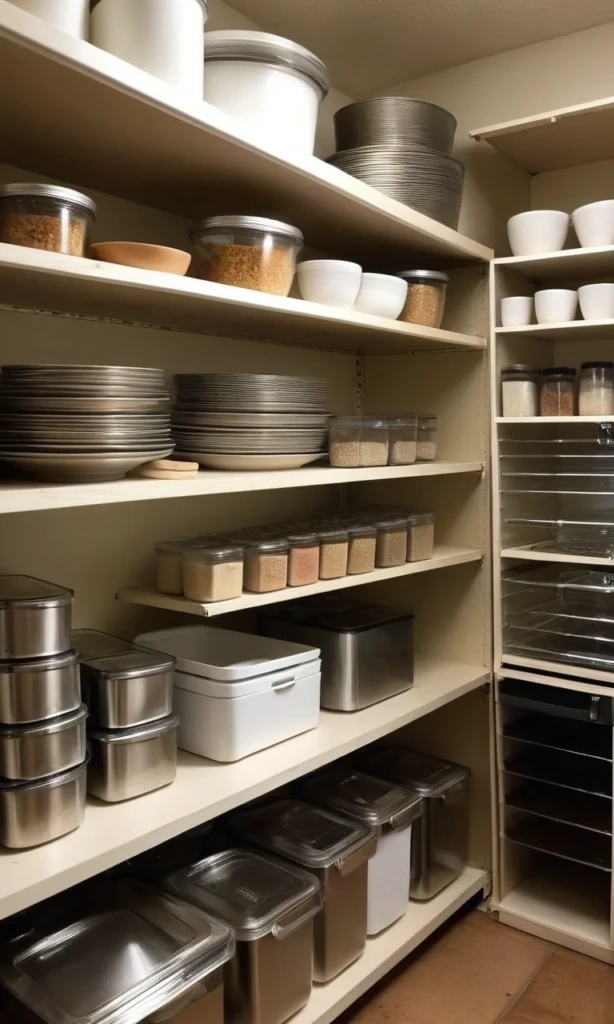
Budget-friendly organization starts with identifying the areas that cause the most frustration. Maybe your utensils are scattered across a drawer, your spices are difficult to find, or your pantry shelves are crowded with half-open packages. Inexpensive storage accessories can help solve these problems without requiring a complete kitchen makeover.
Look for products that serve a clear purpose, fit your available space, and are easy to clean. Dollar Tree inventory varies by location, so you may need to substitute similar items or combine several affordable products to achieve the same result.
2. Gold-Trimmed Drawer Organizers
Give your kitchen drawers a polished appearance by combining basic utensil trays with a touch of gold. Look for organizers with gold accents or decorate suitable exterior surfaces with metallic adhesive trim to create a coordinated look.
Use separate sections for forks, spoons, cooking utensils, measuring tools, and other frequently used items. Before purchasing anything, measure the drawer's interior and check its depth so the organizers sit flat without preventing the drawer from closing.
The decorative finish adds personality, but functionality should come first. Keep the compartments simple and avoid placing decorative materials where they could contact food or interfere with washing utensils.
3. Cabinet Shelf Dividers
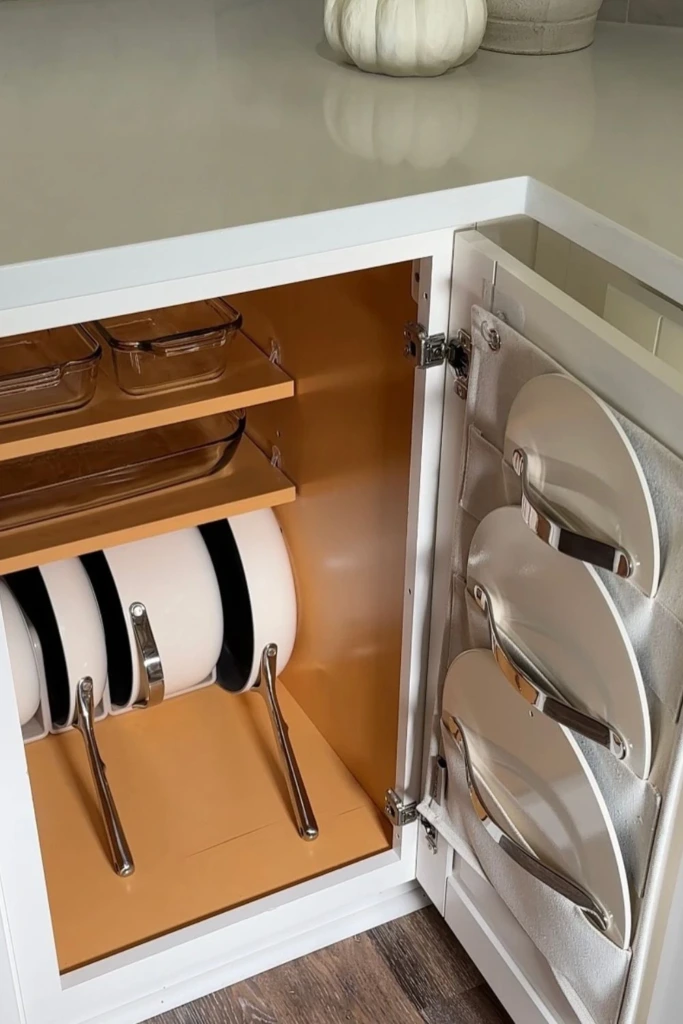
Cabinet shelf dividers make it easier to separate items that would otherwise become an unstable pile. Use suitable dividers to organize baking sheets, cutting boards, serving platters, or lightweight trays vertically rather than stacking everything on top of one another.
This arrangement allows you to remove one item without moving several others. It also makes use of the cabinet's height, which is especially helpful when shelf space is limited.
Choose dividers that fit securely and support the weight of the items being stored. If you're using inexpensive plastic organizers, reserve them for lighter kitchenware rather than heavy cast-iron pans or large ceramic dishes.
4. Countertop Caddy
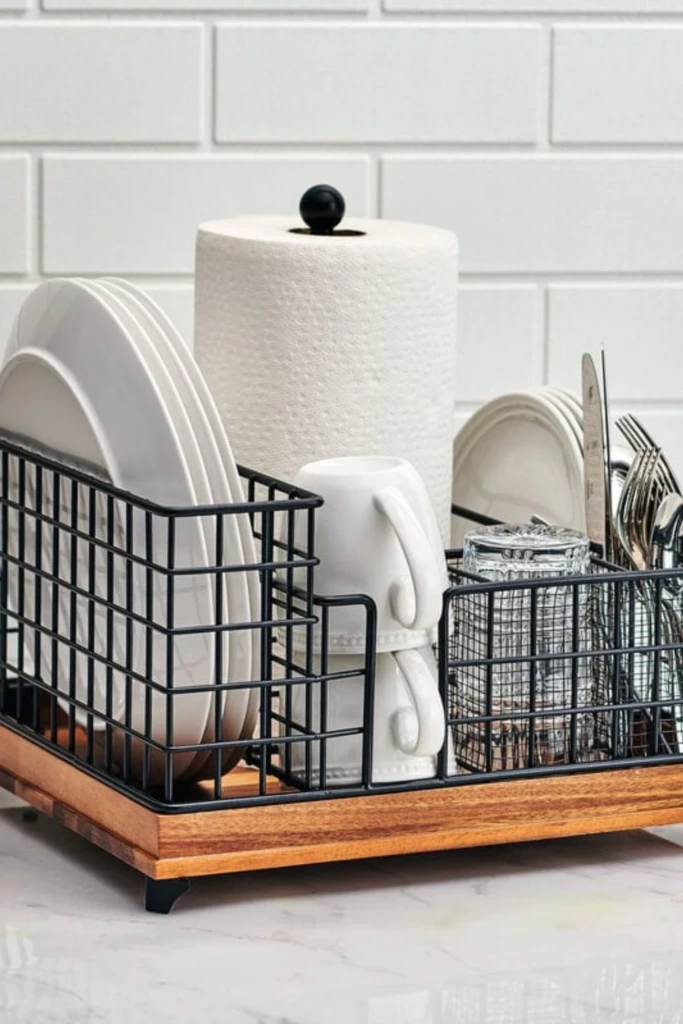
A countertop caddy creates a designated home for the small essentials you reach for throughout the day. Depending on your routine, it might hold cooking utensils, napkins, salt and pepper, dish brushes, or frequently used seasoning packets.
Choose a caddy with several compartments so different items remain separated. Place it near the area where you actually use its contents, such as beside the stove for cooking tools or near the sink for cleaning supplies.
To keep your counter from looking crowded, limit the caddy to everyday necessities. Store occasional-use items elsewhere, and wipe the container regularly to prevent grease, crumbs, and moisture from accumulating.
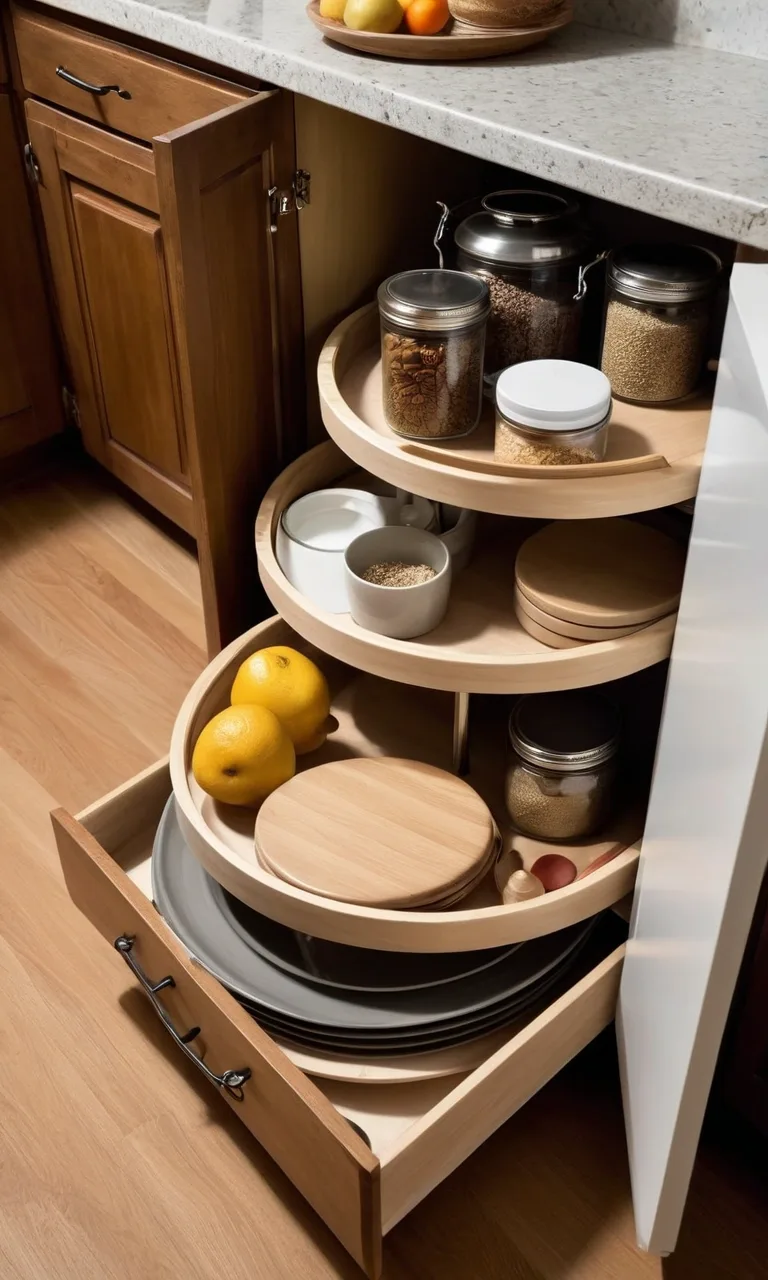
5. Corner Pullout Baskets
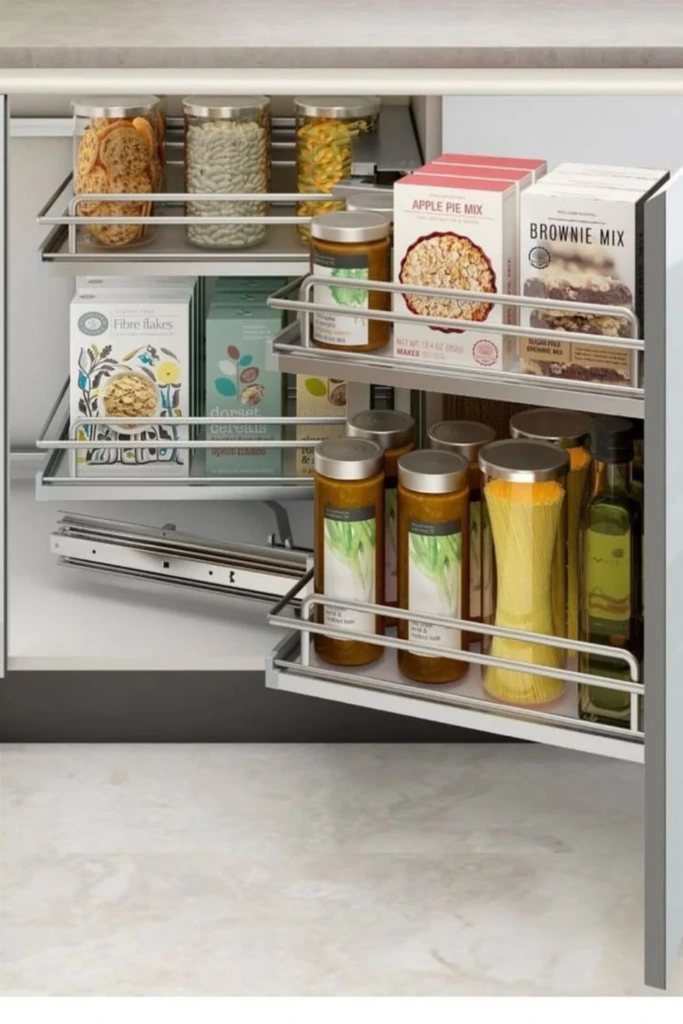
Deep corner cabinets often become difficult to manage because items at the back are easy to forget. Small baskets can help group similar products and make them easier to retrieve.
Use one basket for baking supplies, another for packaged snacks, or a third for lightweight kitchen accessories. If the cabinet layout allows it, a compatible sliding basket system can improve access even further.
For a low-cost alternative, place lightweight baskets near the front of the cabinet and pull them out by hand when needed. Measure the opening and check for hinges, plumbing, or other obstructions before choosing a basket.
Avoid overloading makeshift pullout arrangements. Heavy containers can tip, snag, or damage cabinet surfaces if the storage solution isn't designed to slide under weight.
6. Adhesive Utensil Hooks
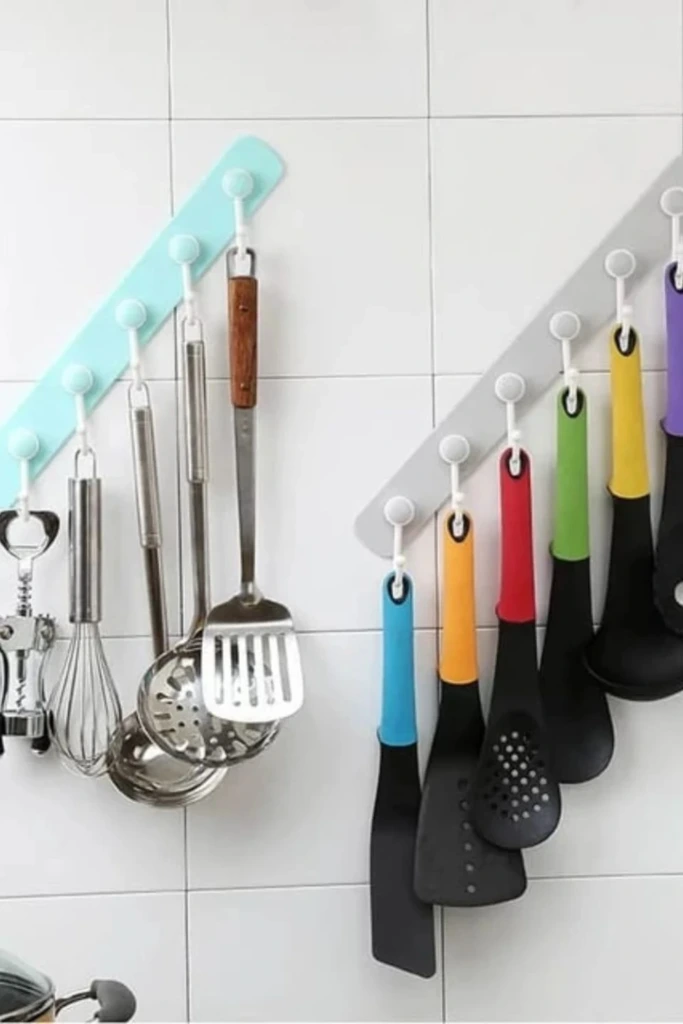
Adhesive hooks offer an inexpensive way to use vertical space on suitable cabinet interiors, pantry walls, or other convenient surfaces. They can hold lightweight measuring spoons, oven mitts, small strainers, and selected kitchen tools.
Arrange the hooks according to how you use each item. For instance, measuring tools belong near your baking ingredients, while oven mitts are more useful close to the oven.
Clean and dry the mounting surface before installation, and follow the manufacturer's instructions for weight limits and curing time. Some adhesives perform poorly on textured, greasy, or damp surfaces, so test compatibility before hanging anything valuable.
Keep hooks away from hot surfaces and avoid hanging heavy or sharp objects where they could fall onto someone.
7. Basket Shelves
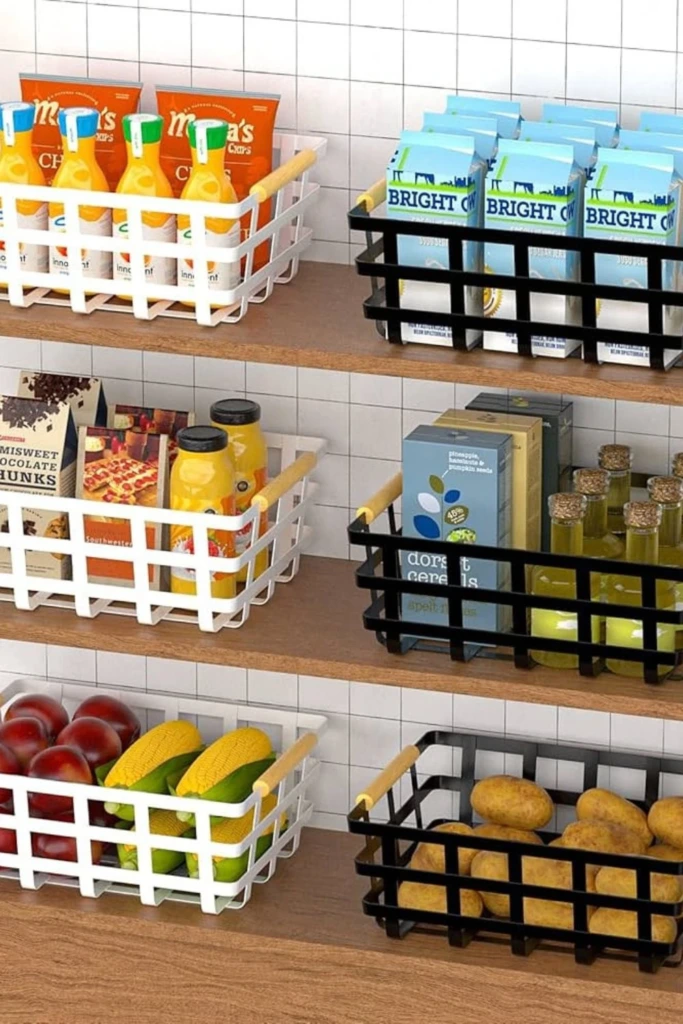
Baskets turn open shelves into more organized storage zones. Instead of leaving packets, towels, or small kitchen accessories scattered across a shelf, group them inside containers that can be removed whenever you need something.
Use different baskets for categories such as tea and coffee supplies, baking decorations, reusable shopping bags, or spare dish towels. Consistent basket styles can make the kitchen look tidier, while labels help everyone find items quickly.
For frequently used supplies, choose open-top baskets that provide easy access. Reserve lidded containers for less frequently needed items or anything that benefits from additional protection from dust.
Make sure the shelf can support the combined weight of the baskets and their contents. Keep heavy items on lower shelves to improve stability and reduce the risk of accidents.
8. Clear Containers for Nuts and Snacks

Clear containers make packaged snacks easier to see and help prevent forgotten food from accumulating in the pantry. Transfer suitable dry foods, such as nuts, crackers, pretzels, or individually wrapped snacks, into containers that match the quantities your household uses.
Transparent sides make it simple to check supplies before shopping. Smaller containers can also help divide snacks into convenient portions for lunchboxes or busy afternoons.
Choose food-safe containers with secure lids, and make sure they are completely dry before filling them. Keep the original product information, including expiration dates and allergen details, accessible when transferring packaged foods.
Not every clear plastic container is suitable for food storage. Check its intended use, and avoid placing food directly inside decorative organizers that aren't designed for contact with food.
9. Labeled Pantry Jars
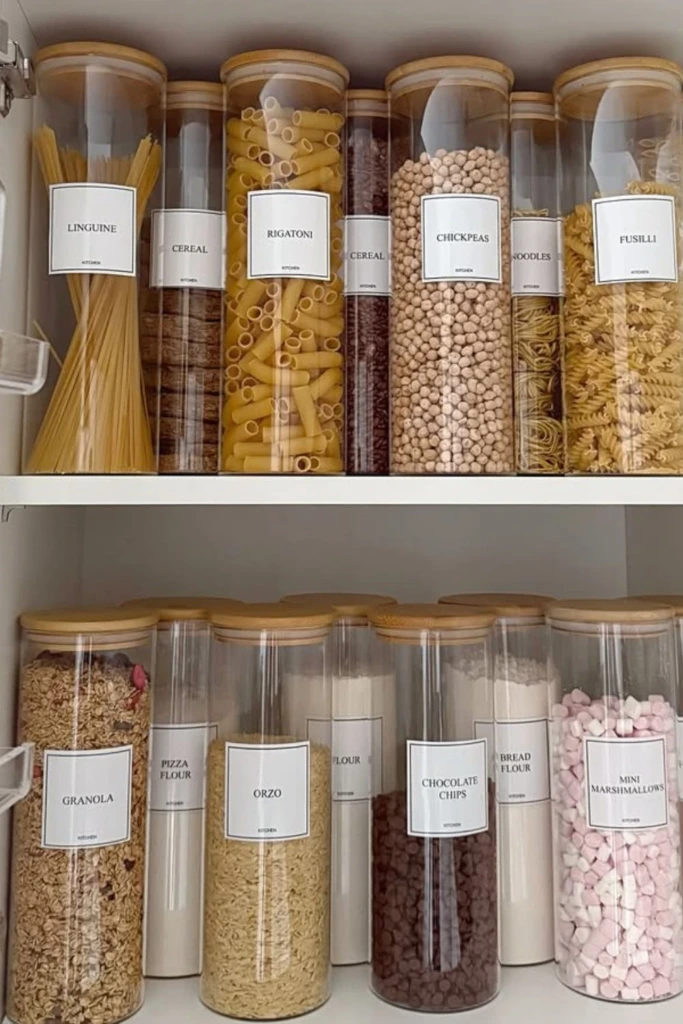
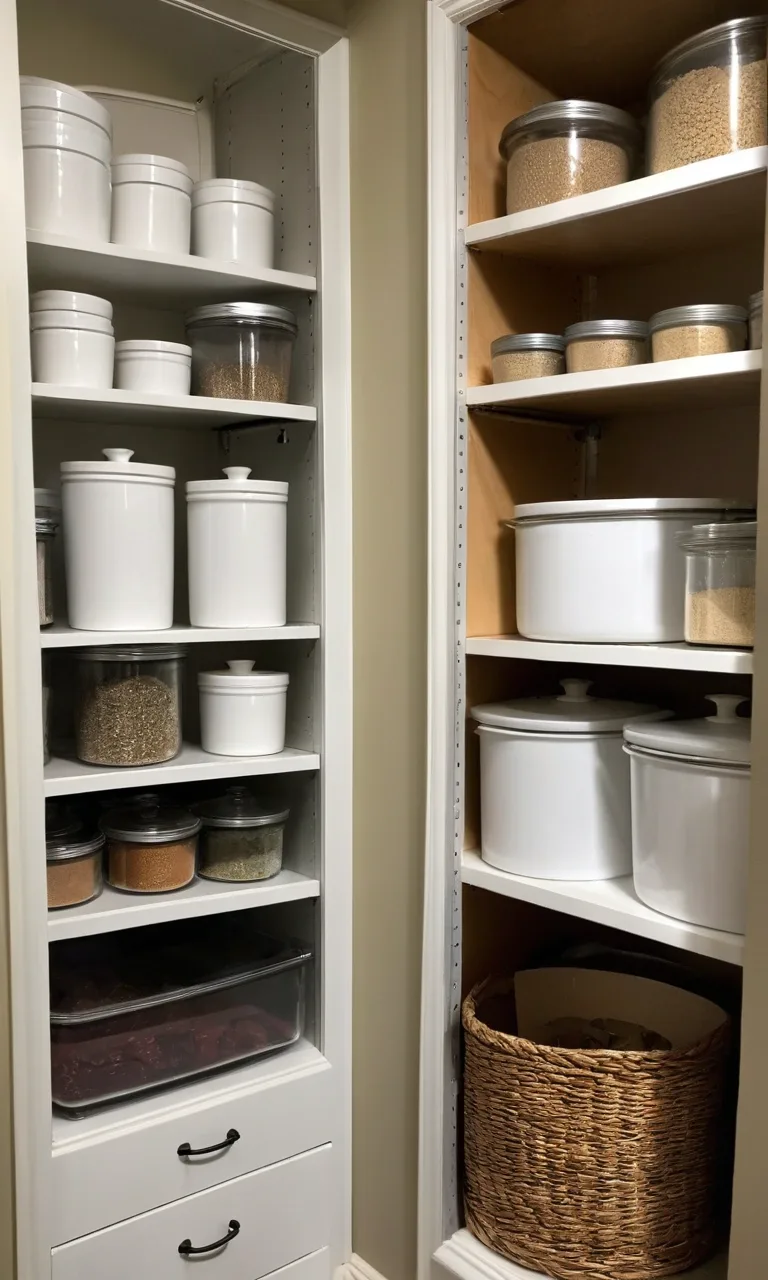
A collection of pantry jars can make everyday ingredients easier to identify and give shelves a more uniform appearance. Use appropriately sized jars for rice, lentils, flour, sugar, pasta, oats, and other dry staples.
Add clear labels to the front of each container. If you frequently buy the same ingredients, include the product name and consider adding the date the package was opened or transferred.
Choose containers with tight-fitting lids to protect dry foods from moisture and pests. Before refilling a jar, empty any remaining contents, clean it when necessary, and allow it to dry completely.
Affordable glass jars can work well for heavier ingredients, while lightweight food-safe plastic containers may be more practical for upper shelves. Keep breakable jars away from shelf edges and place heavier containers where they are easy to lift safely.
10. Vertical Pot and Pan Storage
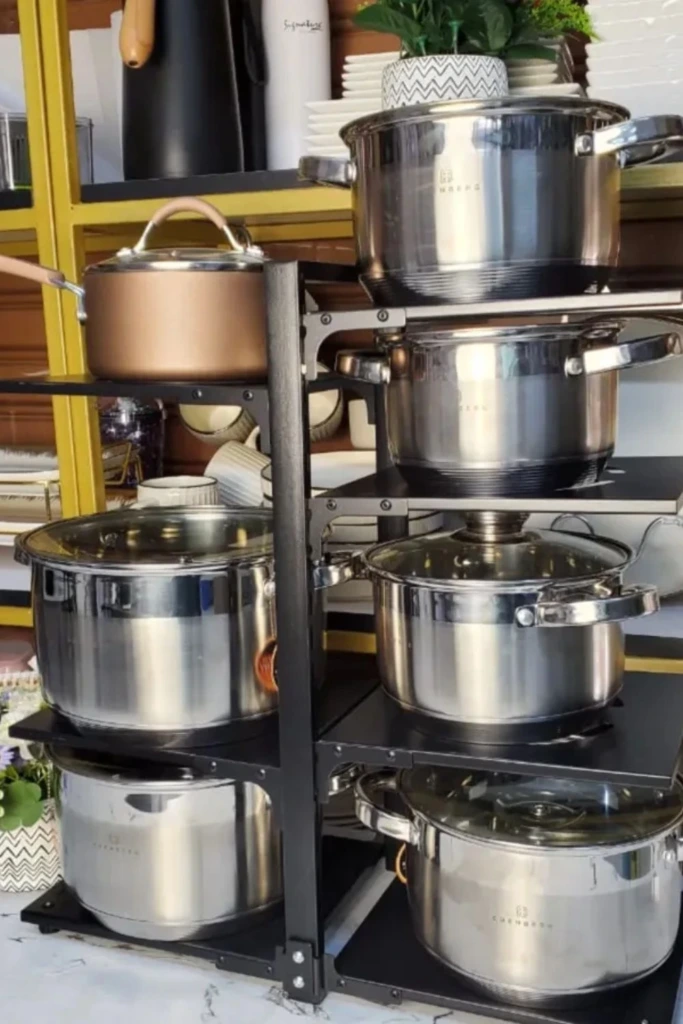
Pots and pans take up considerable cabinet space when stacked in a single pile. A vertical arrangement can make them easier to access and reduce the need to move several pieces whenever you cook.
Use a sturdy, appropriately sized rack or a secure divider system to separate frying pans, baking trays, and pot lids. If you prefer a simple budget option, arrange lighter pans vertically in a cabinet organizer designed to support their weight.
Keep lids close to their matching cookware so you can find a complete set quickly. Place heavier pots on a low shelf and make sure the organizer cannot tip when you remove an item.
Check the dimensions of the cabinet before buying a rack. A well-fitted organizer should improve access without blocking doors or crowding nearby shelves.
11. Stackable Produce Baskets
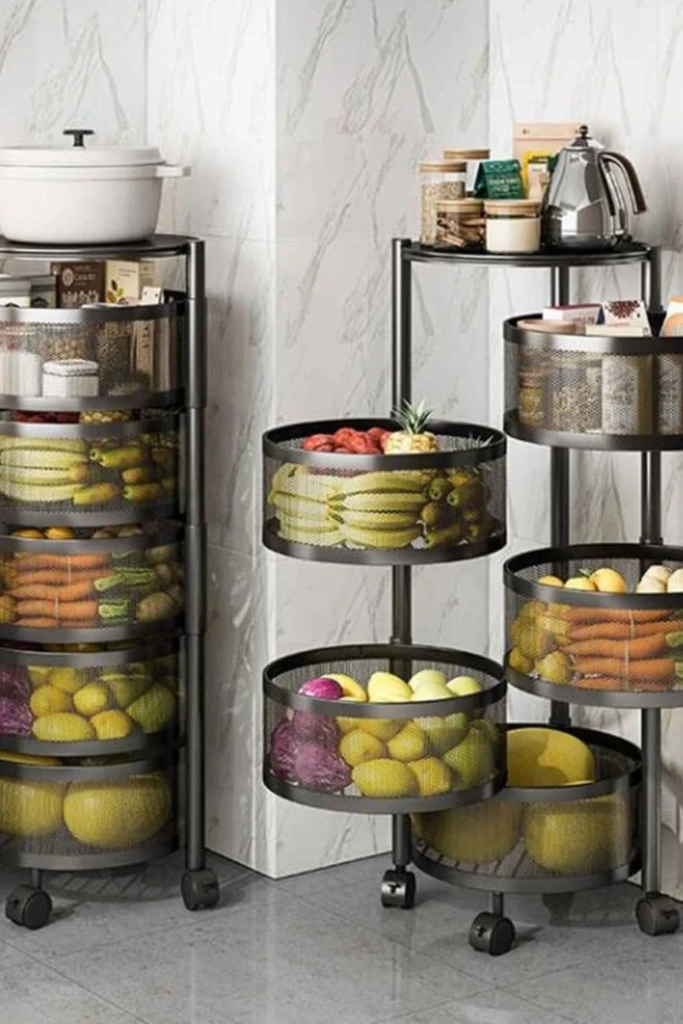
Stackable baskets help organize onions, potatoes, citrus fruits, and other produce that benefits from airflow. They can also make use of vertical space on a pantry shelf or in a suitable kitchen corner.
Assign a separate basket to each type of produce to prevent everything from mixing together. Open-sided baskets allow air to circulate, while removable containers make it easier to inspect food and clean the storage area.
Not all fruits and vegetables should be stored together or in the same conditions. Potatoes generally do best in a cool, dark, ventilated place, while many fruits require different storage conditions. Follow appropriate storage guidance for each item rather than treating all produce alike.
Check your baskets regularly and remove spoiled produce promptly. Avoid stacking them so high that the bottom basket becomes difficult to inspect or the entire arrangement becomes unstable.
12. Pullout Cabinet Bins
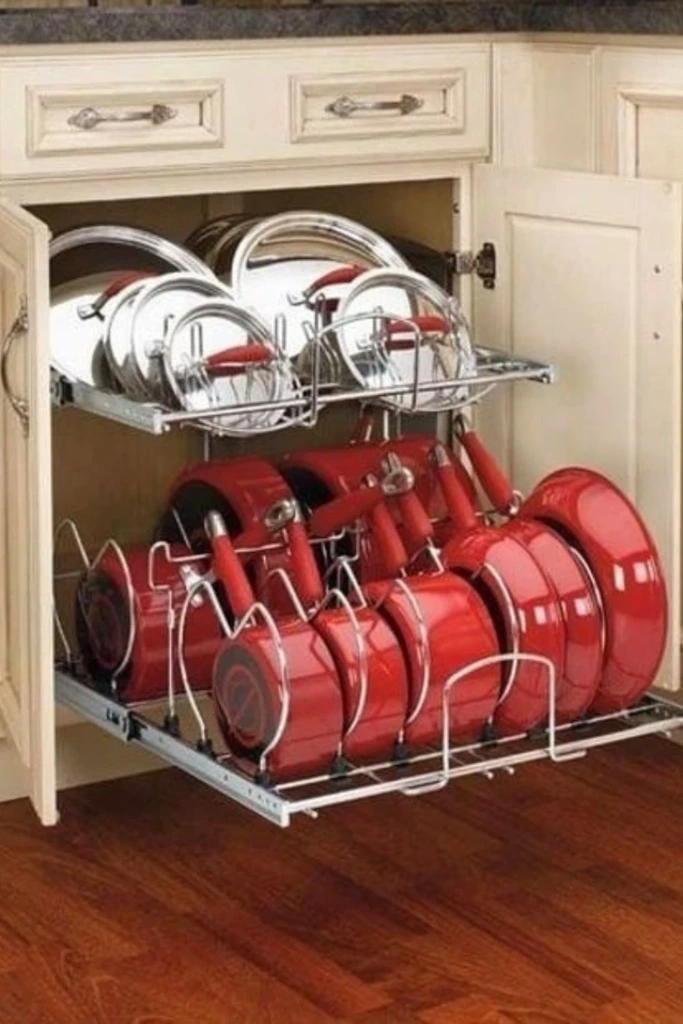
Pullout bins can transform the space beneath a sink or inside a deep cabinet into useful storage. Use them to group dishwashing supplies, spare sponges, cleaning cloths, or other household products.
If you don't want to invest in a built-in sliding system, lightweight handled bins can provide a simple alternative. Pulling out one container is often easier than reaching behind a crowded collection of bottles.
Measure the cabinet carefully, paying attention to plumbing pipes, hinges, and door clearance. Choose containers that can be removed easily for cleaning, and avoid overfilling them.
Keep household cleaning products separate from food, dishes, and food-preparation tools. Store chemicals in their original labeled containers, follow their safety instructions, and place them beyond the reach of children and pets.
13. Cutting Board Rack
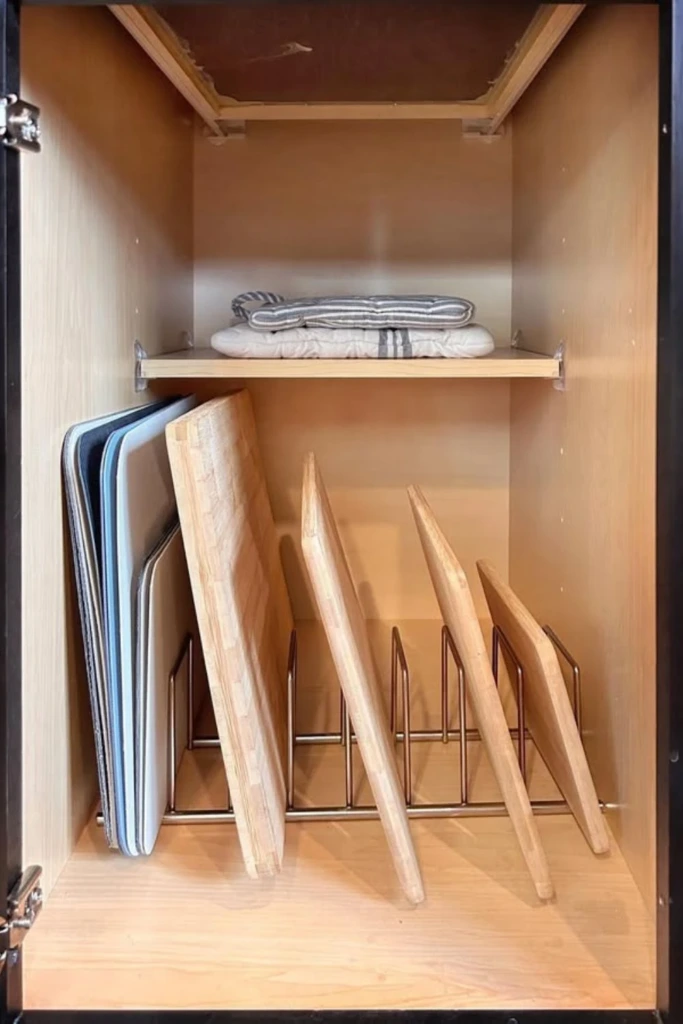
Cutting boards are awkward to store flat when cabinets are already full. A compact rack provides separate spaces for cutting boards, baking sheets, and suitable serving trays, making each item easier to retrieve.
Place the rack inside a cabinet or on a shelf where it won't interfere with other cookware. Separate clean, dry boards from items that still need washing, and make sure boards are thoroughly dried before putting them away.
Look for a holder with enough room for the thickness of your boards. A narrow organizer may work for thin plastic boards but could be unsuitable for heavy wooden boards.
For food safety, use appropriate cutting boards for raw meat and ready-to-eat foods, and clean them properly after use. Organized storage is most effective when it also supports good kitchen hygiene.
14. Tiered Spice Steps
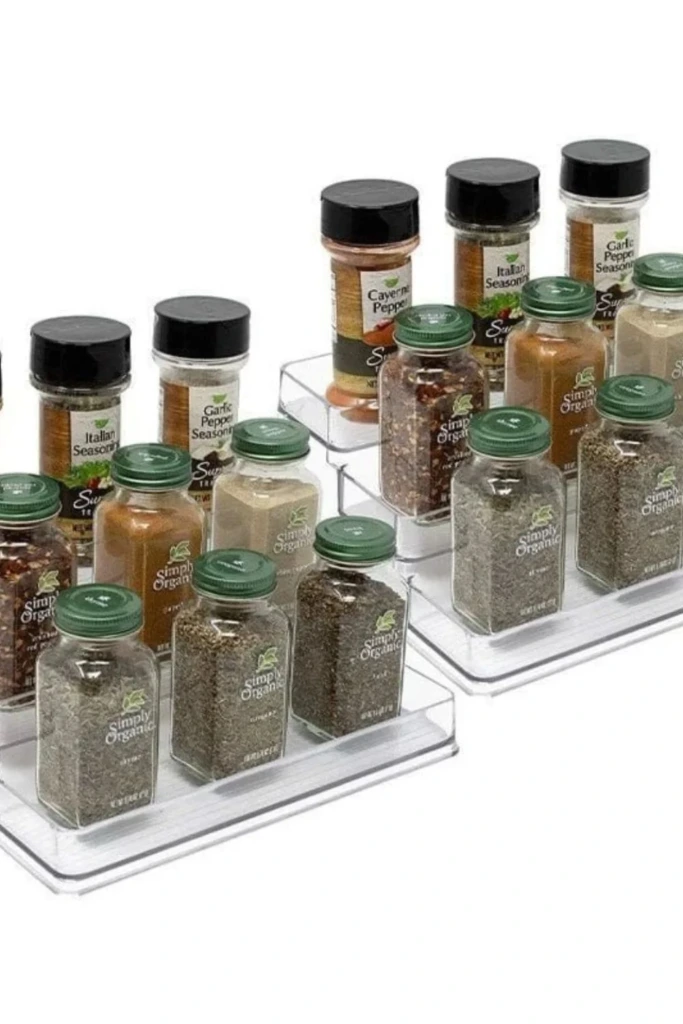
Spice containers are much easier to manage when every label remains visible. A tiered shelf or stepped organizer raises the jars at the back, reducing the chance that frequently used seasonings disappear behind taller bottles.
Arrange spices by cooking style, frequency of use, or alphabetically. You could keep everyday seasonings on the front row and specialty spices toward the back.
Measure the shelf's width and depth before selecting an organizer. Make sure the steps are stable and wide enough to support your spice containers without allowing them to roll or tip.
Label containers clearly, particularly if you transfer spices from their original packaging. Keep track of freshness, store spices in a cool, dry location, and avoid placing them directly beside a stove where heat and moisture can affect quality.
15. Clear Fridge Bins
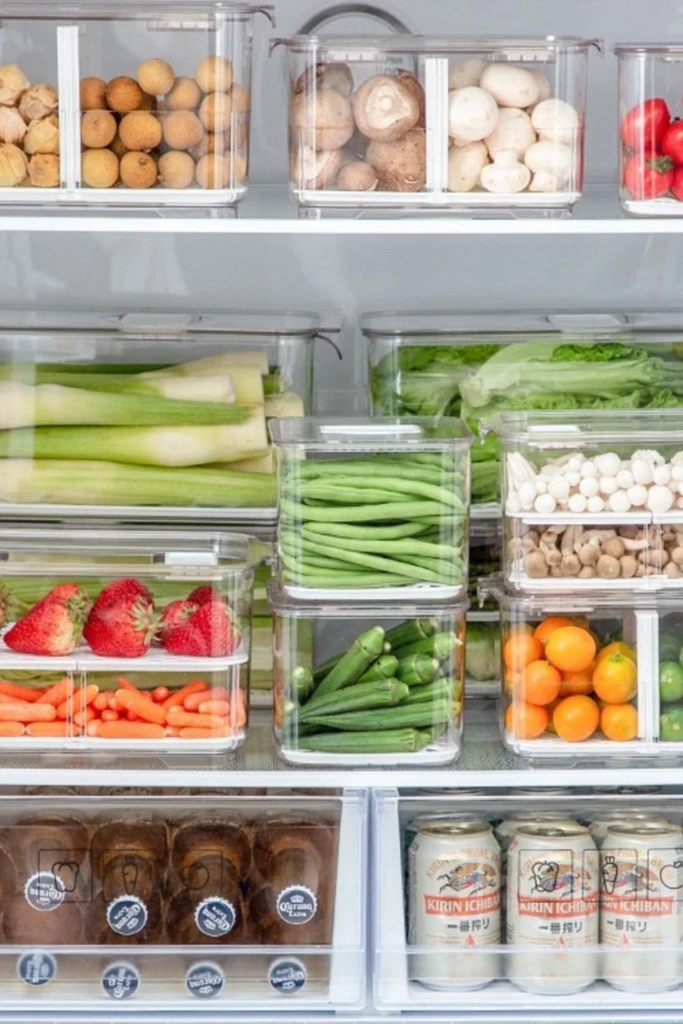
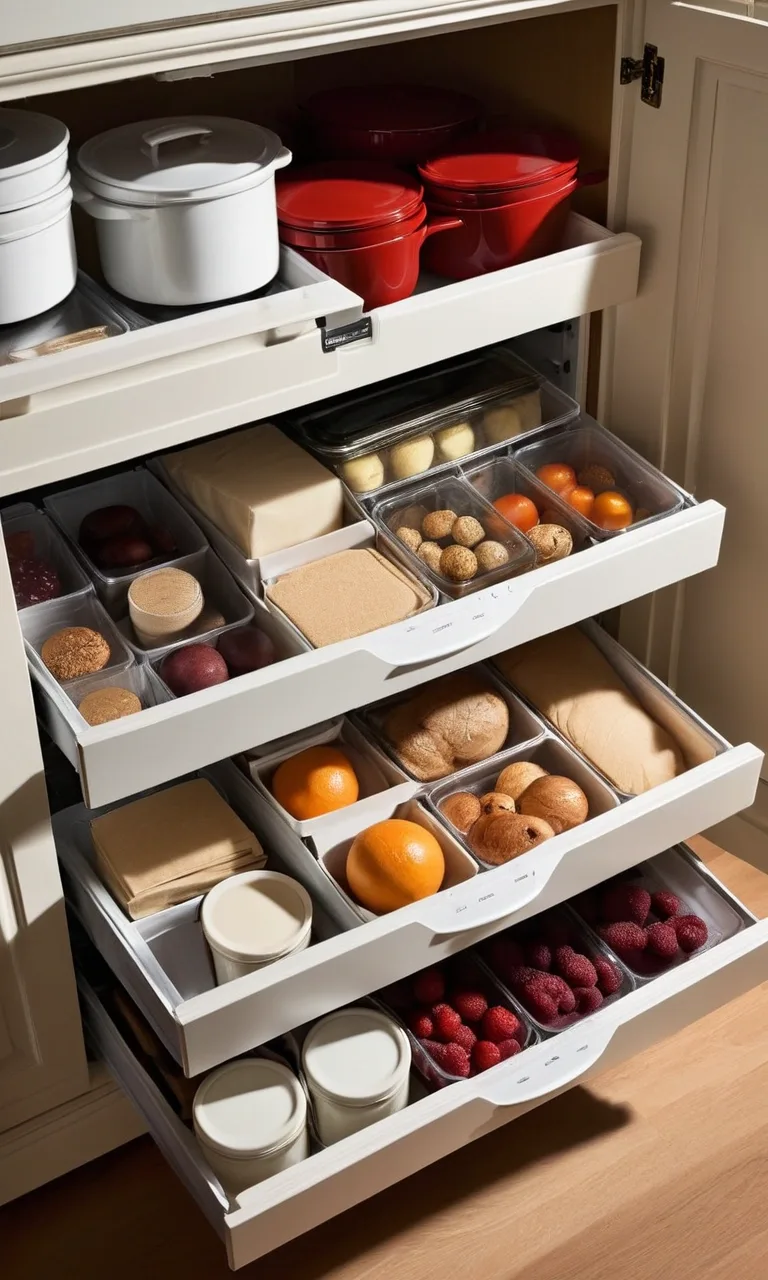
Clear refrigerator bins help separate food into practical categories and prevent small packages from getting lost behind larger items. You might use one bin for breakfast ingredients, another for yogurt and cheese, and another for ready-to-eat snacks.
Grouping similar products makes it easier to see what you have and encourages you to use food before it goes bad. Removable bins also simplify cleaning when a package leaks or crumbs collect on the shelf.
Choose refrigerator-safe containers that fit the available space without blocking vents or preventing the door from closing. Leave enough room for cold air to circulate, and avoid overcrowding the shelves.
Don't rely on clear bins to make food safe indefinitely. Keep perishable items refrigerated promptly, monitor storage times, and clean spills as soon as possible.
16. Freezer Bag Bins
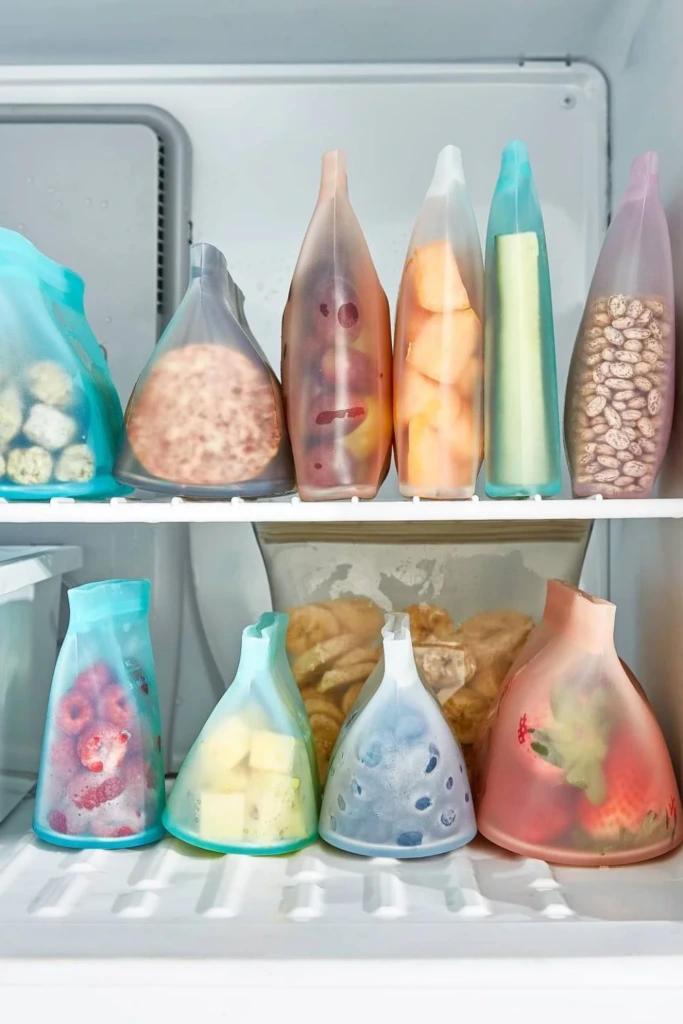
Freezer bags can quickly become a messy collection of flat packages, making it difficult to locate vegetables, meat, frozen fruit, or prepared meals. Small bins offer a straightforward way to keep these items grouped by category.
Use separate containers for vegetables, fruit, proteins, and homemade leftovers. Label bags with the contents and freezing date before placing them upright in a suitable bin.
Choose bins that tolerate freezer temperatures without becoming brittle. Leave enough space around them for the freezer drawer or door to operate normally, and avoid packing food so tightly that air circulation is restricted.
For better results, freeze suitable foods in flat bags first, then stand the frozen packages vertically like files. This makes it easier to browse your supplies and remove one package without disturbing the entire collection.
17. Glass Jar for Cupcake Liners
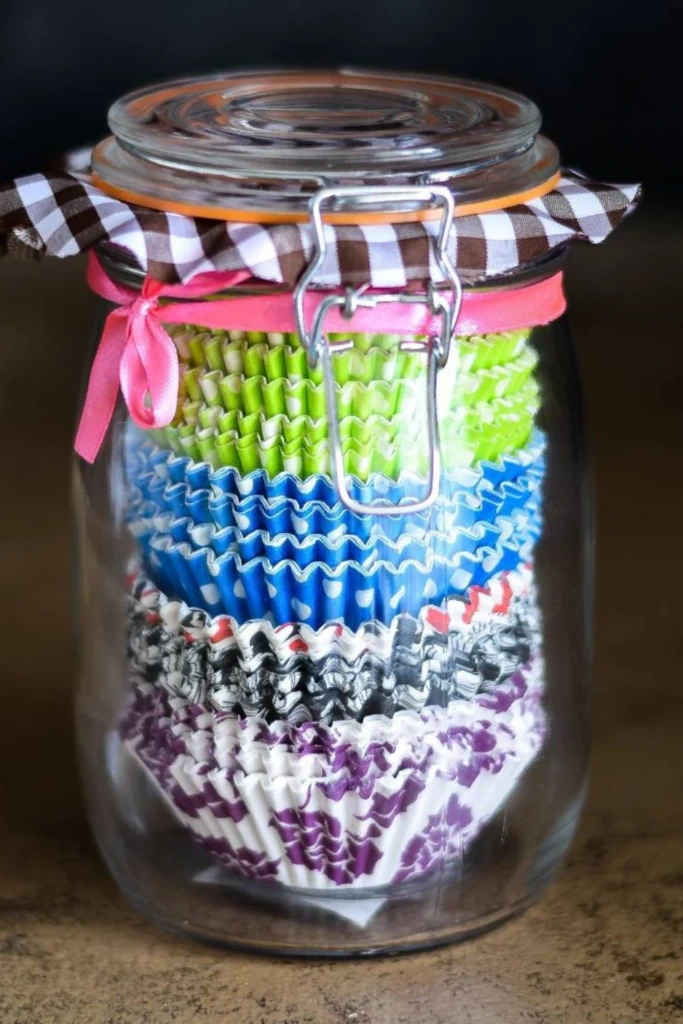
Cupcake liners often arrive in bulky packages that take up more room than their contents. A clean glass jar can keep them together while displaying their colors and patterns.
Choose a jar wide enough for the liners to slide in and out without becoming crushed. A lid can help protect them from dust, particularly if you store baking supplies on an open shelf.
Place the jar with your baking ingredients so it's easy to reach when preparing muffins or cupcakes. If you have several liner sizes, use separate containers or dividers to prevent them from becoming mixed together.
Make sure the jar is stable and positioned away from the edge of the shelf. If children frequently help with baking, a lightweight, shatter-resistant container may be a safer choice than glass.
18. Everyday Countertop Station
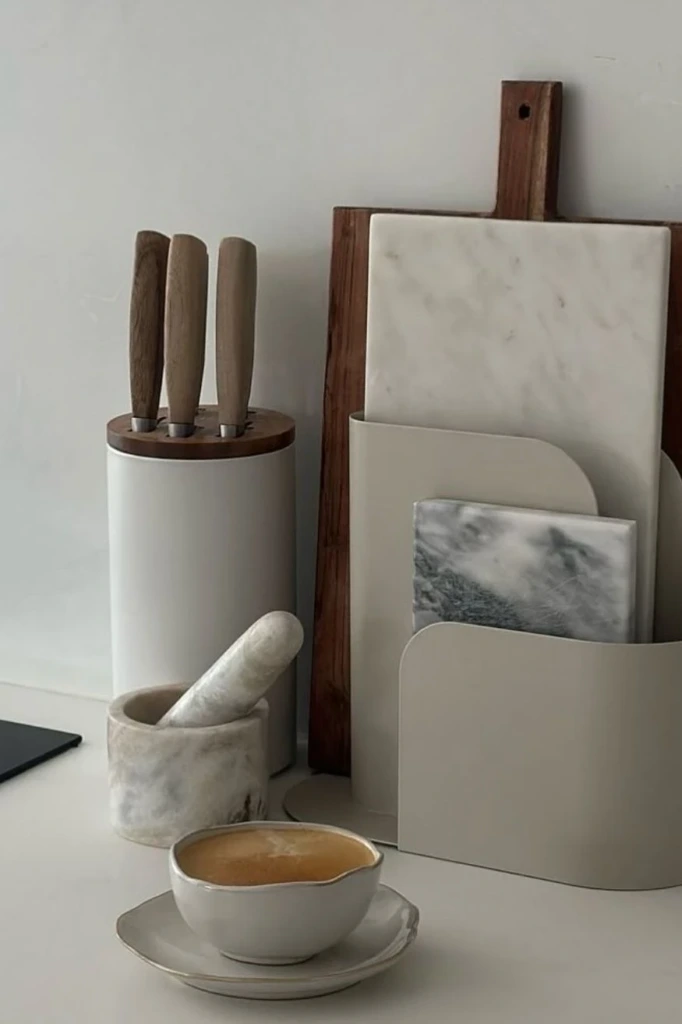
Create a small station for the items you use repeatedly, such as cooking oil, salt, pepper, a utensil holder, or a frequently used seasoning blend. Keeping these essentials together can save time during meal preparation.
Start by choosing a location near your main food-preparation area without interfering with the stove, sink, or primary workspace. Use a tray or shallow organizer to keep the items contained and make wiping the counter easier.
Be selective about what stays out. Too many bottles and accessories can quickly turn a useful station into another cluttered surface.
Store oils and spices according to their recommended conditions, especially when heat, direct sunlight, or moisture could affect their quality. Keep the station away from burners and leave enough clear counter space for chopping, mixing, and other cooking tasks.
19. Labeled Snack Bins
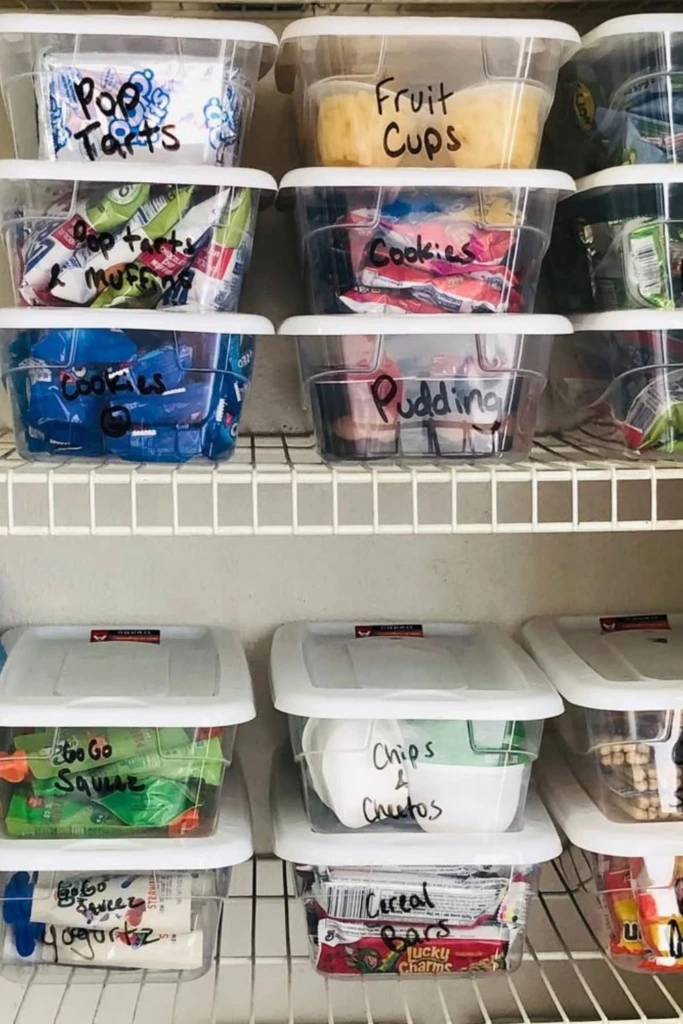
A designated snack area makes it easier for family members to find food without searching through every pantry shelf. Use separate bins for granola bars, crackers, packaged treats, lunchbox supplies, or other snacks your household regularly buys.
Add simple labels to the front of each bin so everyone knows where items belong. If children prepare their own snacks, place suitable options on a reachable shelf while keeping choking hazards and foods that require supervision appropriately managed.
Clear bins are useful when you want to see quantities at a glance, while opaque baskets can conceal visual clutter. Choose whichever style best suits your pantry and the products you're storing.
Check the bins during your regular grocery routine. Remove empty wrappers, move older products forward, and replenish only what you need. This small habit helps prevent duplicate purchases and reduces the likelihood of forgotten food expiring at the back of the cupboard.
20. Begin with One Small Problem
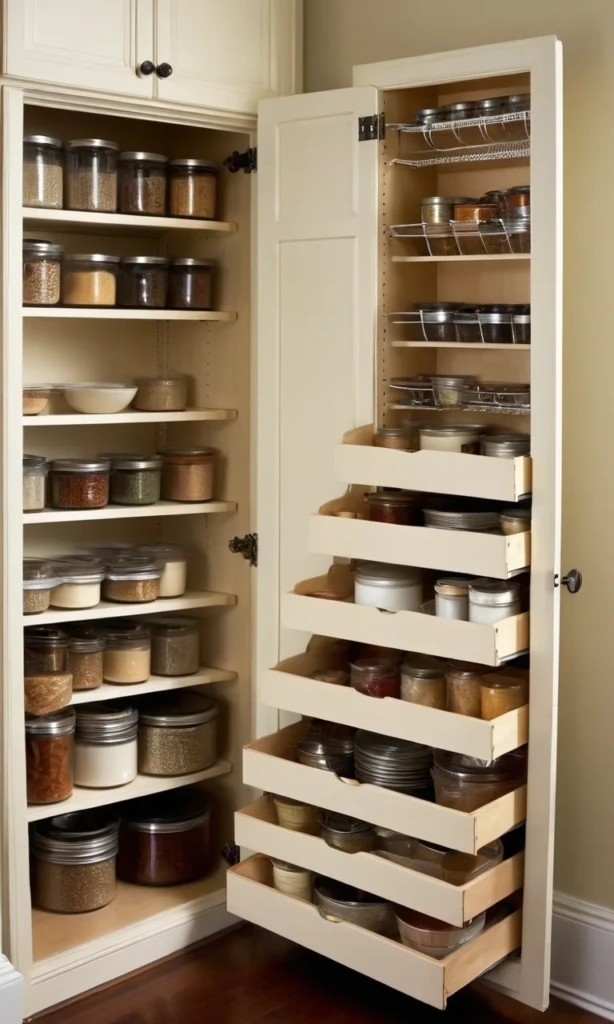
You don't need to reorganize your entire kitchen in a single afternoon. Start with one area that causes daily frustration, such as an overcrowded utensil drawer, a difficult-to-reach pantry shelf, or a refrigerator full of loose packages.
Take everything out of that space, discard rubbish, and group the items you want to keep. Measure the available area before shopping at Dollar Tree so you can choose storage products that fit rather than buying containers that create another problem.
Try your new arrangement for a week before purchasing more organizers. You may discover that a single basket, a few labels, or a simple divider is all you need.
The best Dollar Tree kitchen organization ideas are the ones that make everyday tasks easier and remain manageable over time. With thoughtful choices and a little consistency, affordable storage solutions can help you create a kitchen that feels cleaner, more functional, and easier to maintain.