18 Teacher Organization Ideas for 2026
A classroom can become cluttered surprisingly quickly. Between lesson materials, student assignments, art supplies, and everyday teaching essentials, keeping everything organized can feel like another full-time job.
Fortunately, creating an organized classroom doesn't require expensive furniture or a complete makeover. A few thoughtful storage solutions and consistent routines can make your teaching space easier to manage.
The best teacher organization ideas focus on making materials accessible, reducing unnecessary paperwork, and helping students take responsibility for shared supplies.
Whether you're preparing for a new school year or refreshing your classroom halfway through the term, these 22 practical ideas can help you create a functional, welcoming learning environment.
1. Desk Area Organization
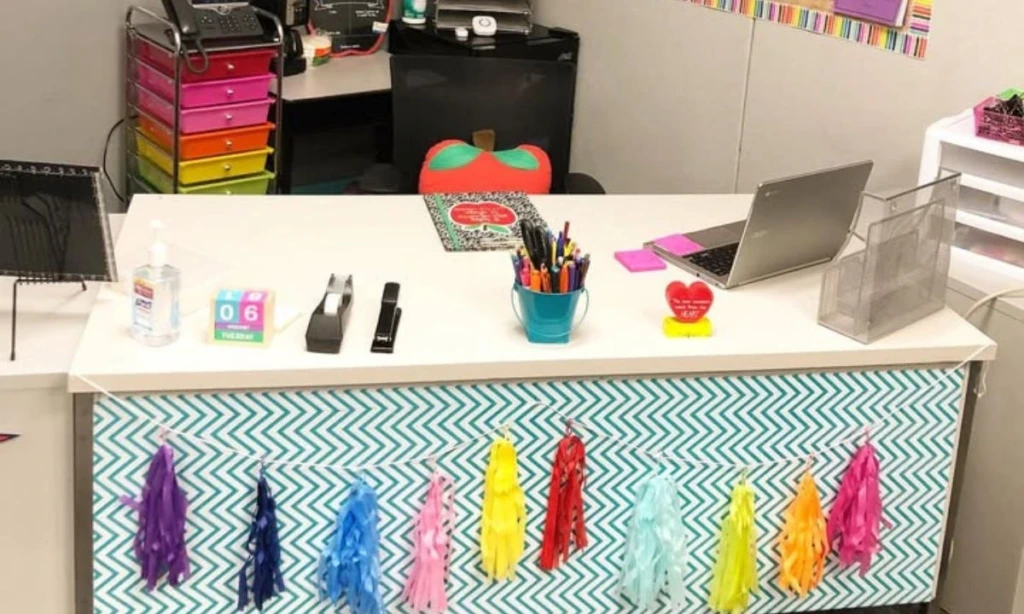
Your desk should be a practical workspace where you can plan lessons, review assignments, and find important materials without searching through piles of paper.
Begin by removing items you rarely use. Keep daily essentials such as pens, sticky notes, lesson planners, and frequently referenced documents within easy reach.
Use small desktop containers to separate writing tools, paper clips, and other supplies. A vertical file holder can keep important paperwork accessible without occupying too much desk space.
Consider creating separate locations for incoming assignments, documents requiring attention, and completed paperwork.
At the end of each school day, spend a few minutes returning materials to their designated places. This simple routine helps prevent clutter from accumulating throughout the week.
2. Unit Task Boxes
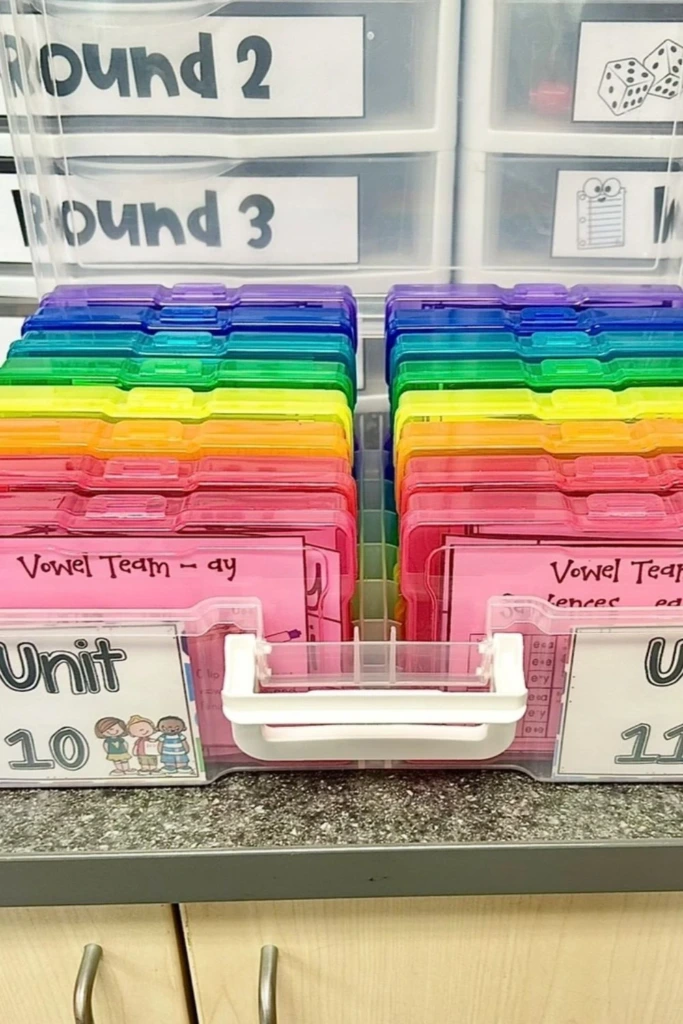
Unit task boxes provide a convenient way to store learning materials according to specific subjects, lessons, or classroom activities.
Choose stackable containers that accommodate worksheets, flashcards, manipulatives, and other teaching resources. Assign each container a clear label identifying its contents.
For example, mathematics materials might be divided into fractions, measurement, geometry, and number operations.
Smaller containers placed inside larger boxes can prevent loose pieces from becoming mixed together.
This arrangement is particularly useful when preparing learning stations because everything needed for an activity can be collected in one location.
Once a unit is complete, return its materials to storage so they remain ready for future use.
3. Supplies Drawer Tower
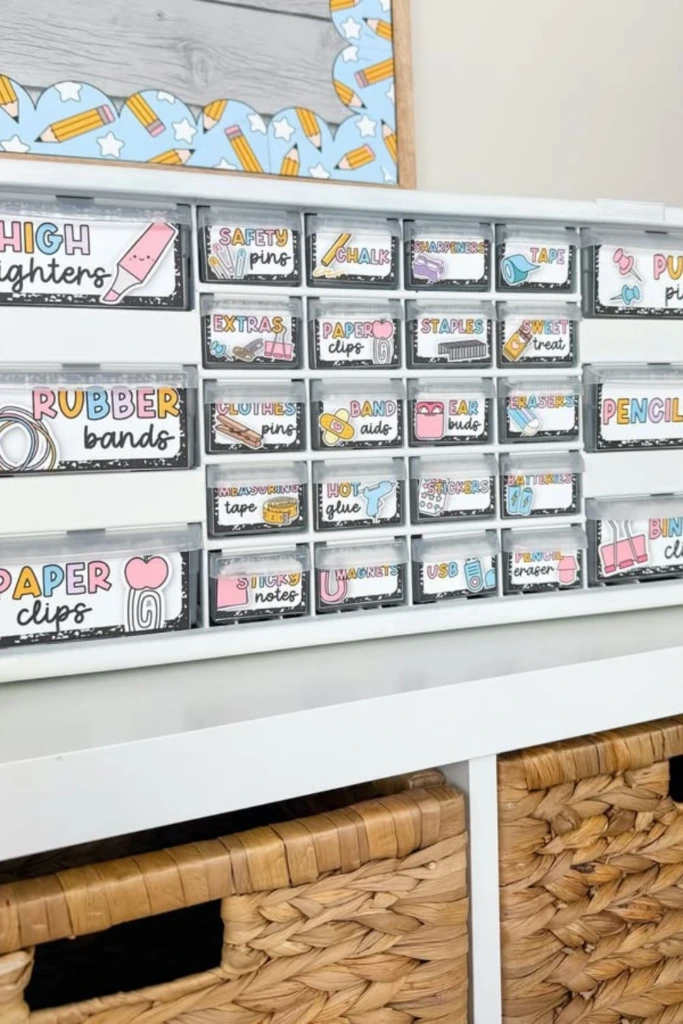
A drawer tower is an excellent solution for organizing classroom supplies without using valuable desk or table space.
Select a drawer unit with compartments suitable for different types of materials. Store items such as markers, tape, scissors, glue, and classroom accessories in separate drawers.
Add labels with both words and pictures if younger students will be using the supplies.
Place frequently used materials in lower drawers where students can reach them comfortably. Reserve upper compartments for teacher supplies or items requiring supervision.
A consistent labeling system also makes cleanup easier because students can quickly identify where each item belongs.
4. Digital Morning Display
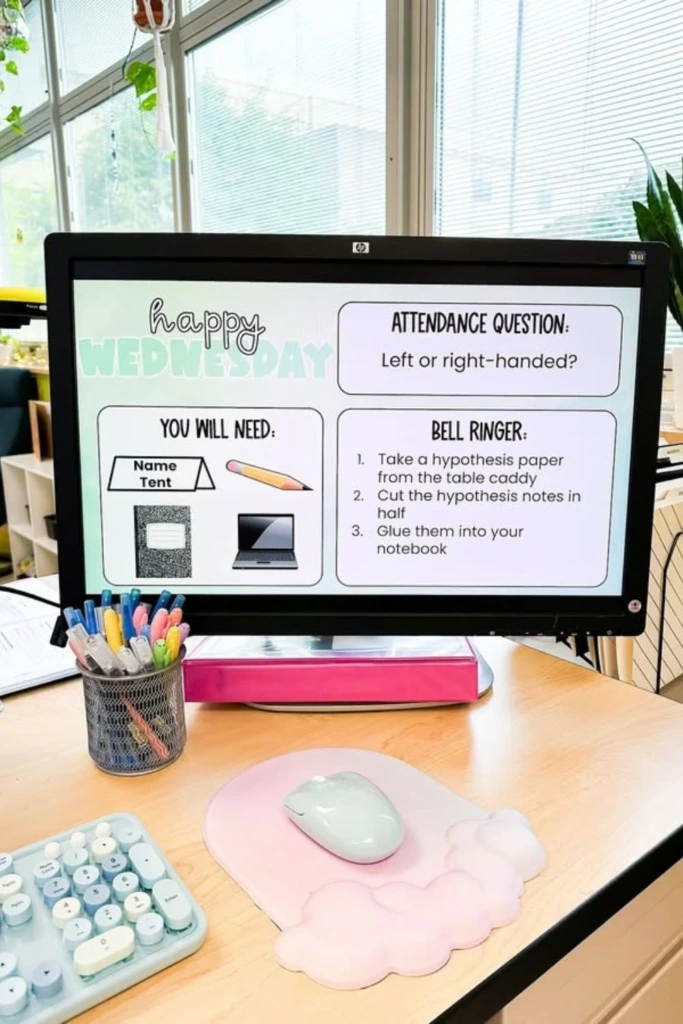
A digital morning display can help establish a predictable beginning to the school day.
Use your classroom projector or interactive screen to present important information before students arrive.
Include the date, daily schedule, opening assignment, and any supplies students need for their first activity.
You can also display a short question, vocabulary challenge, or writing prompt to encourage students to begin working independently.
Keep the layout simple and readable from different areas of the classroom. Avoid excessive animations or distracting graphics.
Preparing the display before leaving each afternoon can make the following morning feel considerably more manageable.
5. Chromebook Charging Station
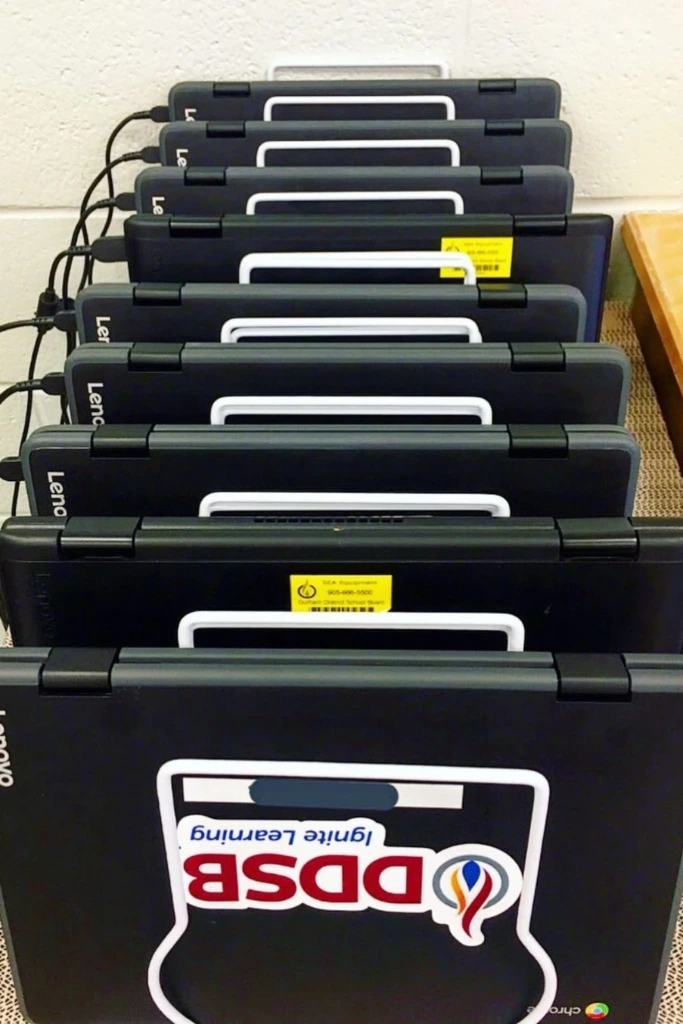
When students regularly use laptops or Chromebooks, a designated charging area helps keep devices organized and ready for lessons.
Choose a sturdy shelf, charging cabinet, or approved storage cart with enough space for the classroom's devices.
Number individual storage spaces and assign corresponding numbers to student devices. This makes it easier to identify missing equipment.
Use appropriate cable organizers to prevent cords from becoming tangled, and follow school electrical and device-charging safety requirements.
Make sure charging equipment has adequate ventilation and that cables do not create tripping hazards.
Establish a routine for returning devices, connecting chargers, and checking that each Chromebook is stored correctly.
6. Sticker Display
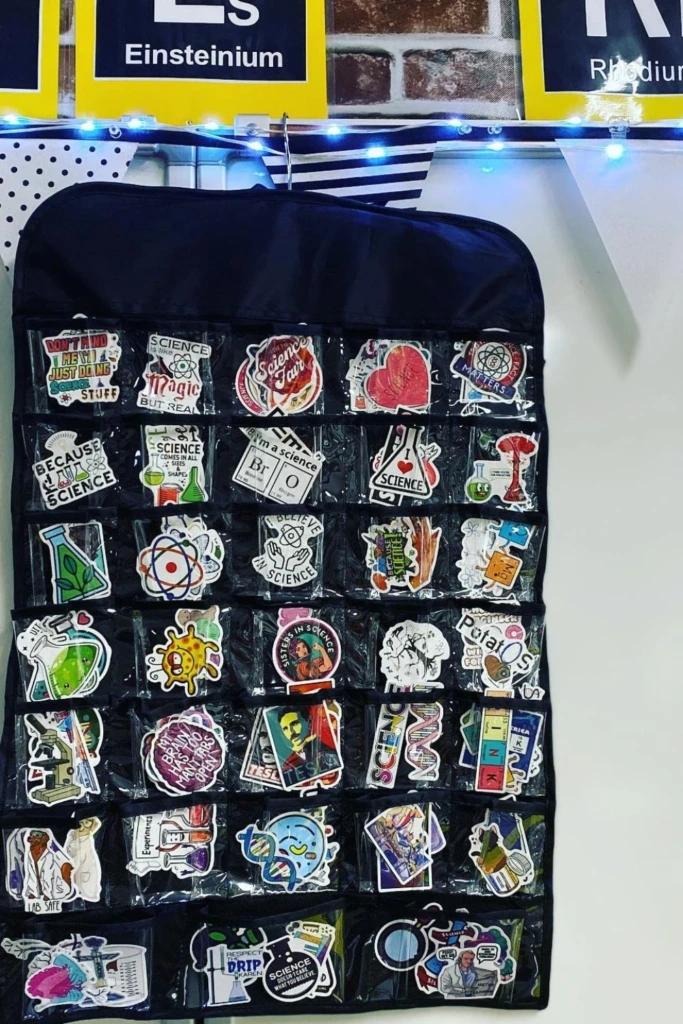
Stickers are popular classroom rewards, but keeping multiple sheets and designs organized can be challenging.
A wall-mounted pocket organizer offers a simple way to display sticker collections while keeping them protected.
Arrange stickers according to themes, subjects, occasions, or reward categories.
For example, one pocket might contain encouraging messages, while another holds seasonal designs or reading achievement stickers.
Position the organizer where you can easily reach it during lessons.
If students are allowed to choose their own stickers, establish clear expectations about when and how they can access the display.
This storage idea keeps small rewards visible without leaving loose sticker sheets scattered across your desk.
7. Weekly File Rack
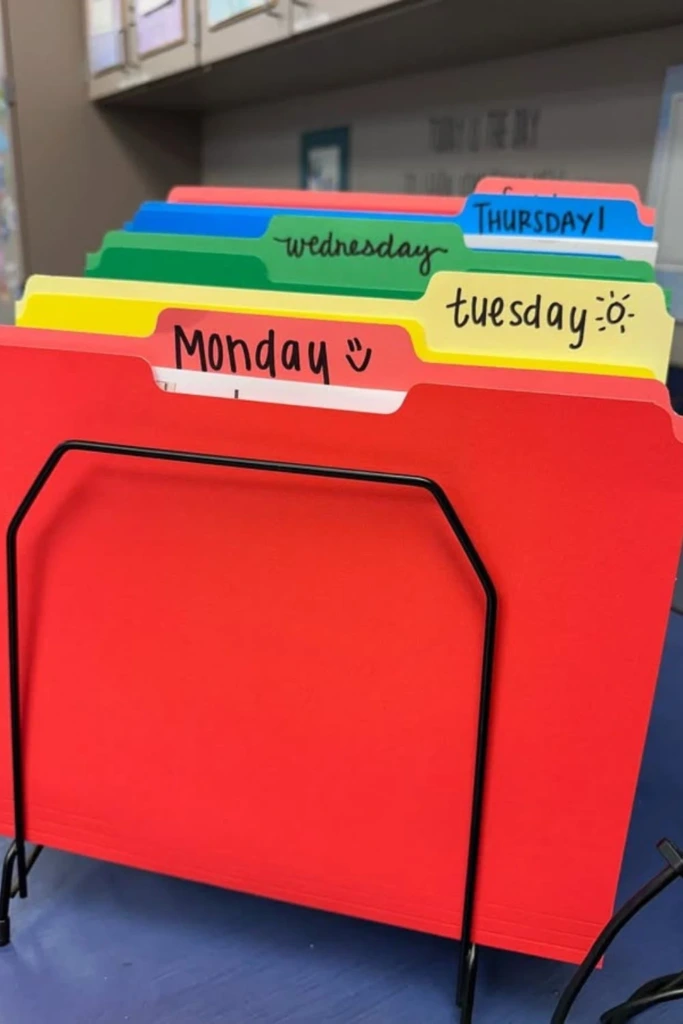
A weekly file rack makes it easier to prepare classroom activities in advance.
Set up five folders or file slots, assigning one to each school day.
Place worksheets, lesson notes, activity instructions, and other printed resources into the appropriate folders.
You can use different colors to distinguish weekdays or add simple labels for easy identification.
When preparing for the following week, check each folder and replenish any missing materials.
Teachers who handle several subjects can also use dividers within each folder to separate different lessons.
This system reduces the need to search through cabinets for materials during busy classroom transitions.
8. Lost and Found
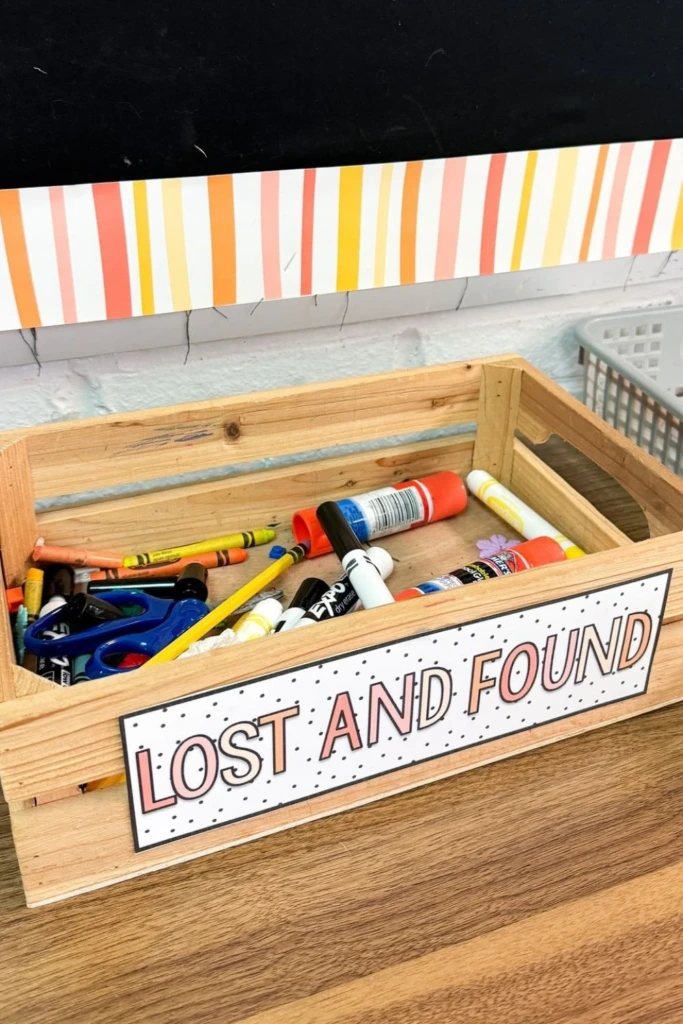
Small classroom items frequently disappear beneath desks, inside supply baskets, or around shared learning areas.
Creating a dedicated lost-and-found container gives misplaced belongings a temporary home.
Use a basket, shallow crate, or clearly labeled storage box in an accessible location.
Encourage students to place found objects inside rather than leaving them on your desk.
Set aside a regular time for students to check the container and reclaim their belongings.
Keep valuable items, personal information, and sensitive belongings in a secure location instead of an open classroom bin.
Empty the container periodically according to school procedures to prevent unnecessary accumulation.
9. Bright Paper Trays
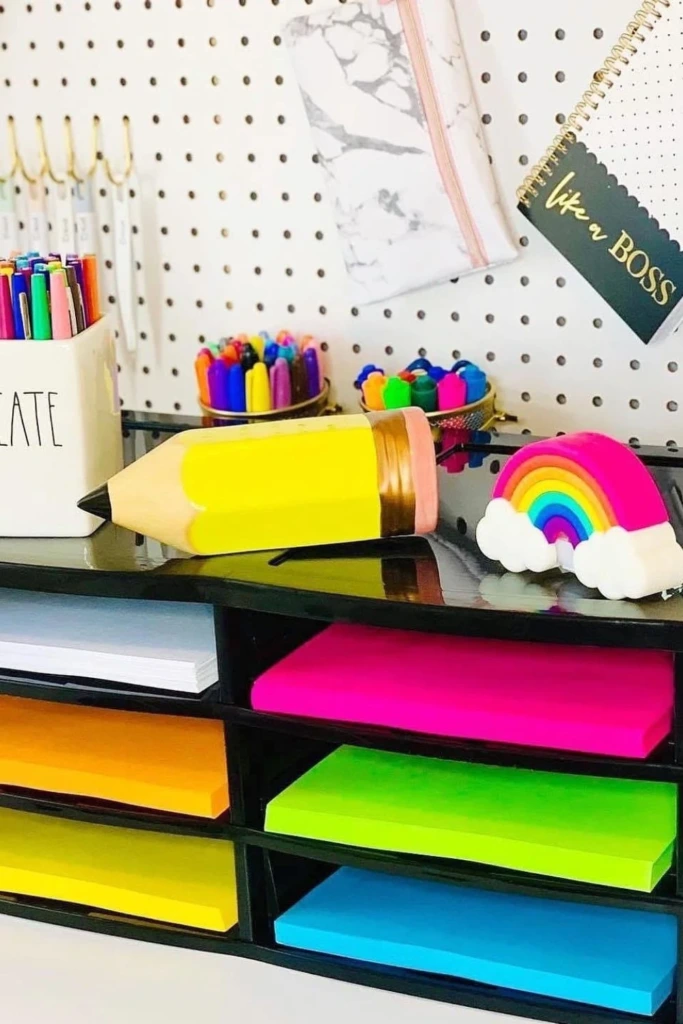
Paper trays are useful for keeping different types of classroom paperwork separated and easy to access.
Choose several stackable trays in distinct colors and assign each one a specific purpose.
You might use one for blank worksheets, another for construction paper, and a third for completed classroom activities.
Clearly label the trays so students and classroom helpers understand their purpose.
Keep the most frequently accessed trays at a comfortable height.
For larger paper collections, combine these trays with a nearby cabinet or shelf to avoid overloading your workspace.
Colorful trays can add visual interest to a classroom while supporting a straightforward paper management system.
10. Mini Drawer Station
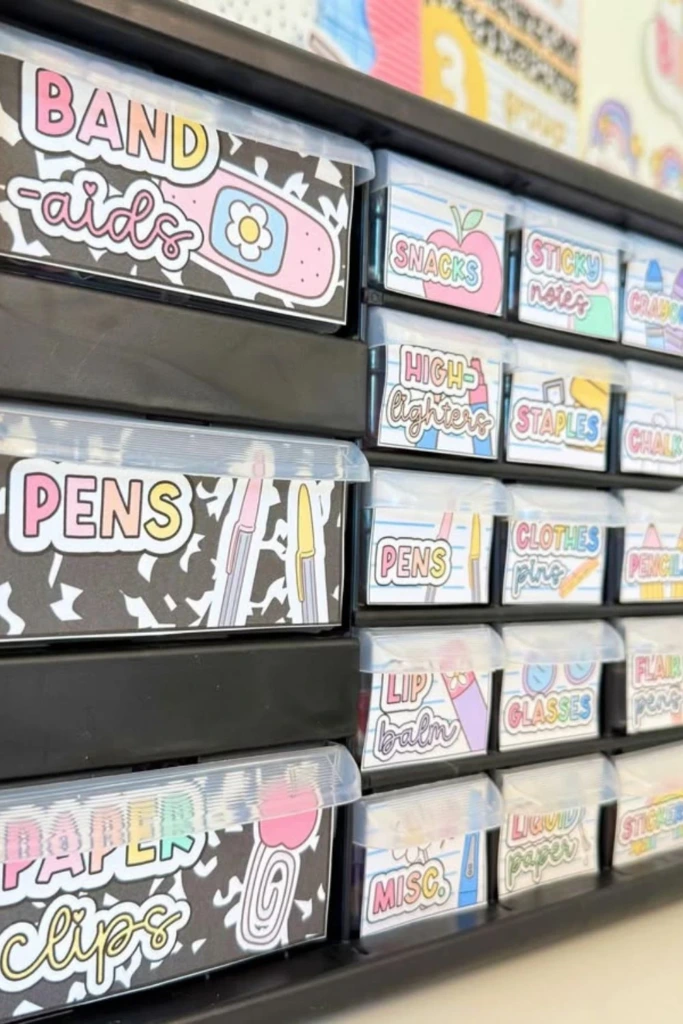
A compact drawer station is ideal for organizing small items that tend to disappear inside larger storage containers.
Use miniature drawers to separate paper clips, erasers, adhesive tabs, pushpins, and other classroom accessories.
Choose labels that identify each compartment clearly.
A small drawer organizer can fit on a teacher's desk, inside a cabinet, or on a supply shelf.
If students will access the station, keep sharp objects and other potentially hazardous materials in teacher-controlled storage.
Review the contents occasionally and remove unnecessary duplicates or damaged supplies.
This arrangement is especially helpful when you need a particular item quickly during lesson preparation.
11. Weekly Copies Bin
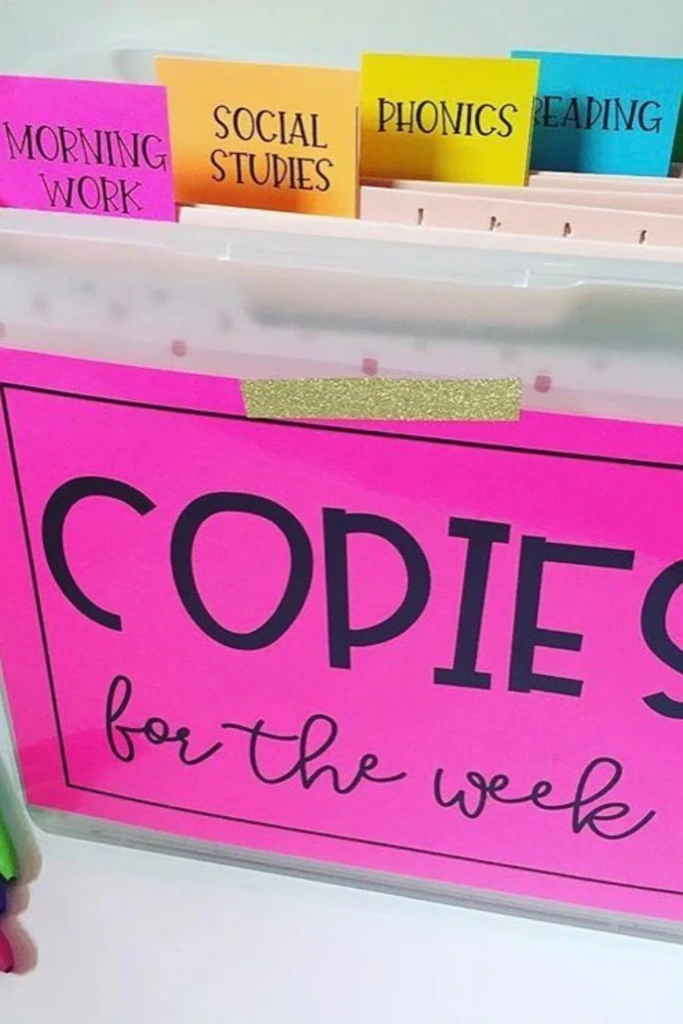
Printed worksheets can become difficult to manage when several days of lessons are prepared at once.
A weekly copies bin provides one central location for upcoming classroom handouts.
Use a sturdy container with folders or dividers to separate different subjects, activities, or teaching days.
For example, you could create sections for reading practice, mathematics assignments, homework, and group activities.
Place newly printed materials into the correct section immediately instead of leaving them beside the printer.
Keep a separate folder for documents that still need copying.
This distinction helps prevent confusion between completed preparation and unfinished tasks.
12. Rainbow Cart Drawers
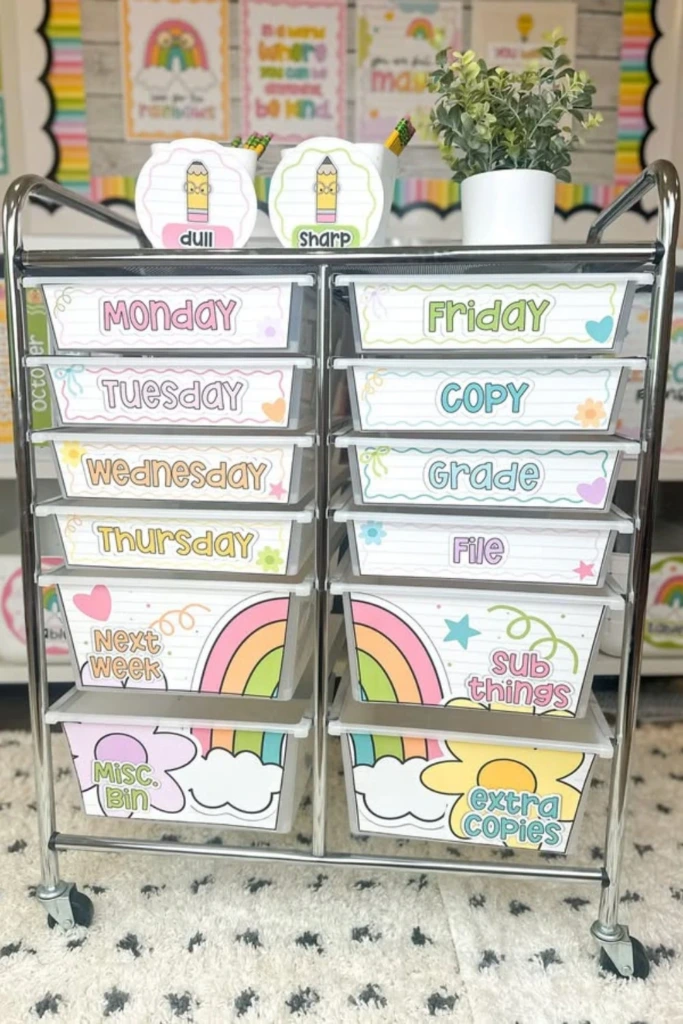
A rolling drawer cart offers flexible storage for classrooms where supplies need to move between different work areas.
Choose a cart with several compartments and organize the drawers according to your teaching routine.
You might dedicate individual drawers to lesson preparation, classroom activities, substitute teacher materials, and administrative paperwork.
Different drawer colors can help distinguish categories, but written labels are still important for clarity.
Position heavier items in lower compartments to improve stability.
If the cart has wheels, lock them when it is stationary.
This type of organizer is especially useful for teachers who share classrooms or frequently rearrange learning stations.
13. Pegboard Supply Wall
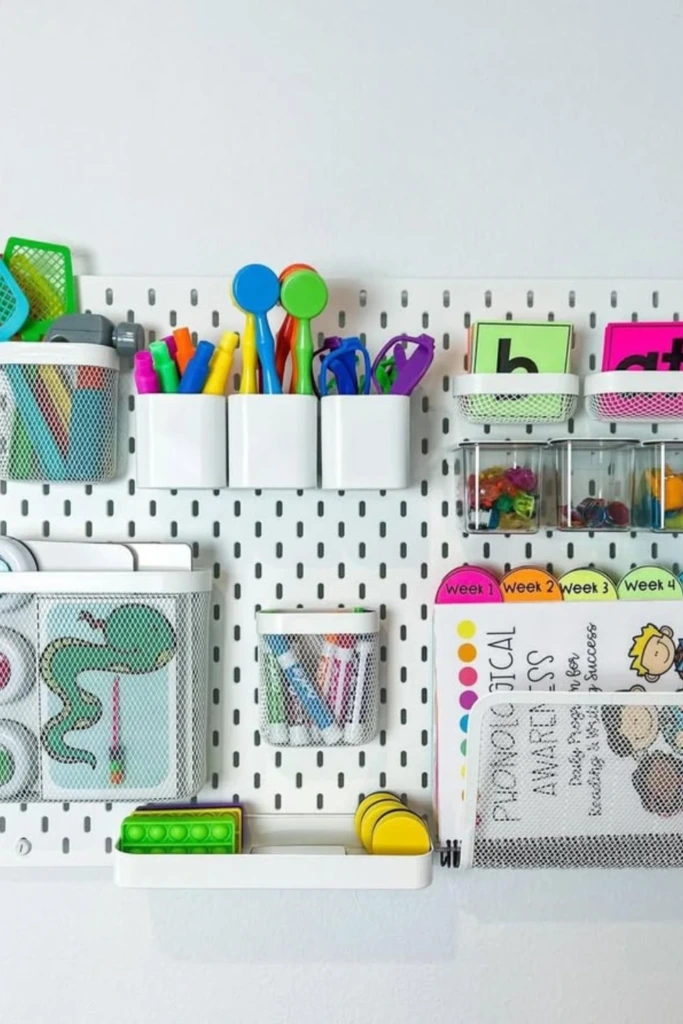
A pegboard can turn unused wall space into a practical storage area.
Install a suitable pegboard securely and attach hooks, baskets, or small containers for lightweight classroom supplies.
Use it to organize materials such as rulers, flashcards, dry-erase markers, and other frequently used teaching tools.
Group similar items together and label containers where necessary.
Avoid overcrowding the board, as an overly busy display can make supplies harder to locate.
Keep heavier objects and sharp tools in appropriate secure storage.
A well-planned pegboard helps preserve table space while keeping essential materials visible and accessible.
14. Monthly Storage Bins
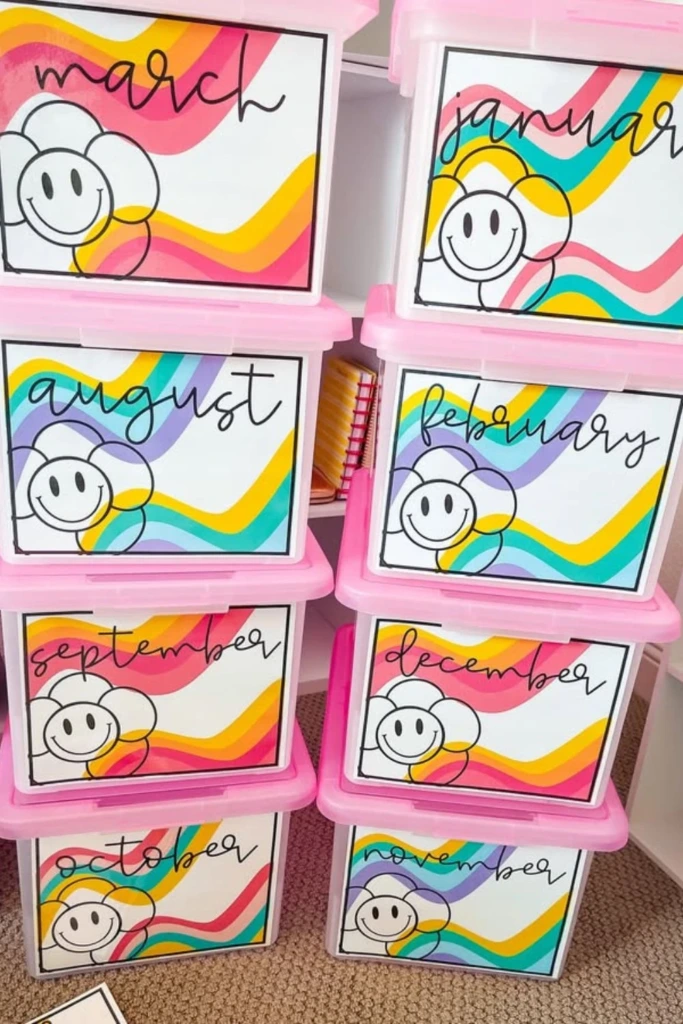
Monthly storage bins are useful for teachers who regularly reuse seasonal activities, classroom decorations, and themed teaching resources.
Prepare a collection of labeled containers representing the months of the school year.
Store relevant materials in each bin, including bulletin board pieces, reusable worksheets, craft templates, and classroom displays.
For example, a September container might hold beginning-of-year activities, while a December bin could contain winter-themed resources.
Choose clear containers when possible so you can identify contents without opening every box.
At the end of each month, inspect the materials before returning them to storage.
Discard damaged items and make a short note of supplies that need replacing.
15. Catch-Up Crates
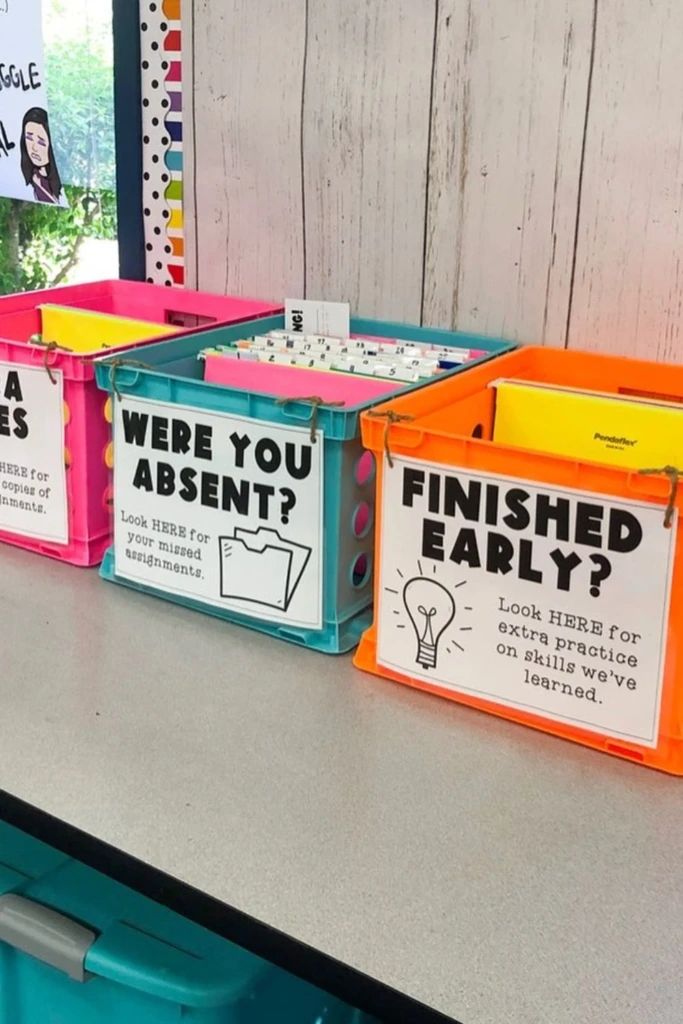
Catch-up crates help students manage unfinished assignments, missed lessons, and additional practice activities.
Set up separate containers for different purposes, such as missed work, extra worksheets, and optional enrichment activities.
Clearly explain how students should use each container.
For absent students, organize missed assignments by date or subject so the required work is easy to identify.
You can also provide a folder where students place completed catch-up assignments.
Keep student-specific documents private rather than displaying individual academic information publicly.
A simple, consistent system can reduce repeated questions and help students develop independent work habits.
16. Assessment File Box
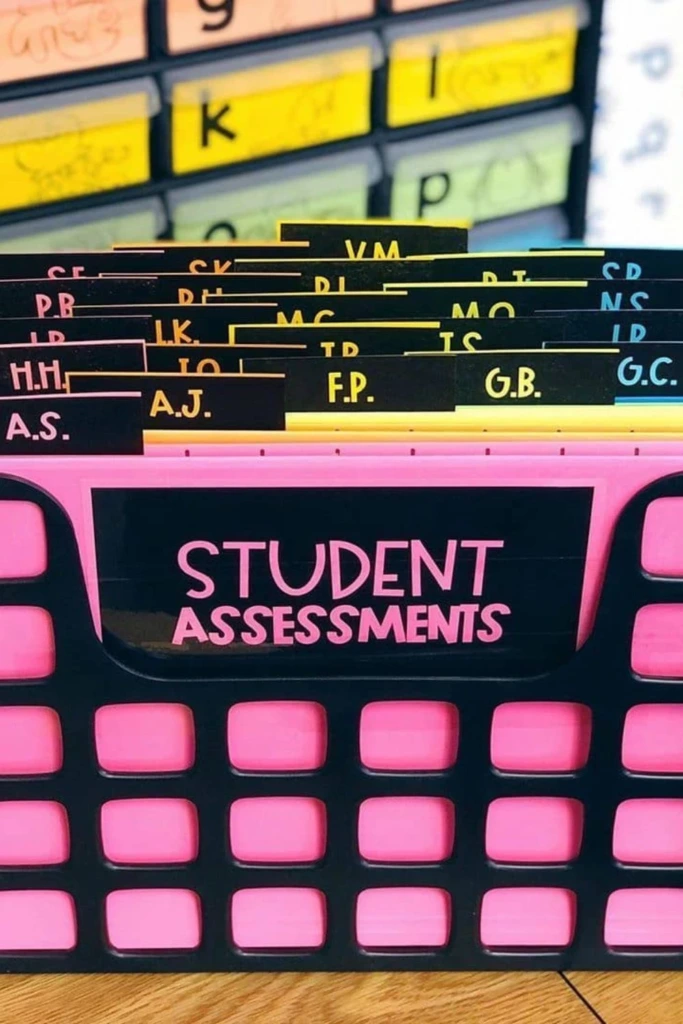
An assessment file box provides an organized location for student progress records and evaluation materials.
Use a durable file box with individual folders arranged according to your school's recordkeeping procedures.
Possible contents include assessment rubrics, progress-monitoring sheets, and relevant instructional notes.
Organize documents consistently so information can be located efficiently during planning or parent-teacher meetings.
Because assessment records may contain confidential student information, store the box in a locked cabinet or another school-approved secure location.
Avoid leaving identifiable records where students or visitors can access them.
Review files periodically and follow your school's retention and disposal requirements.
17. Grading Drawer System
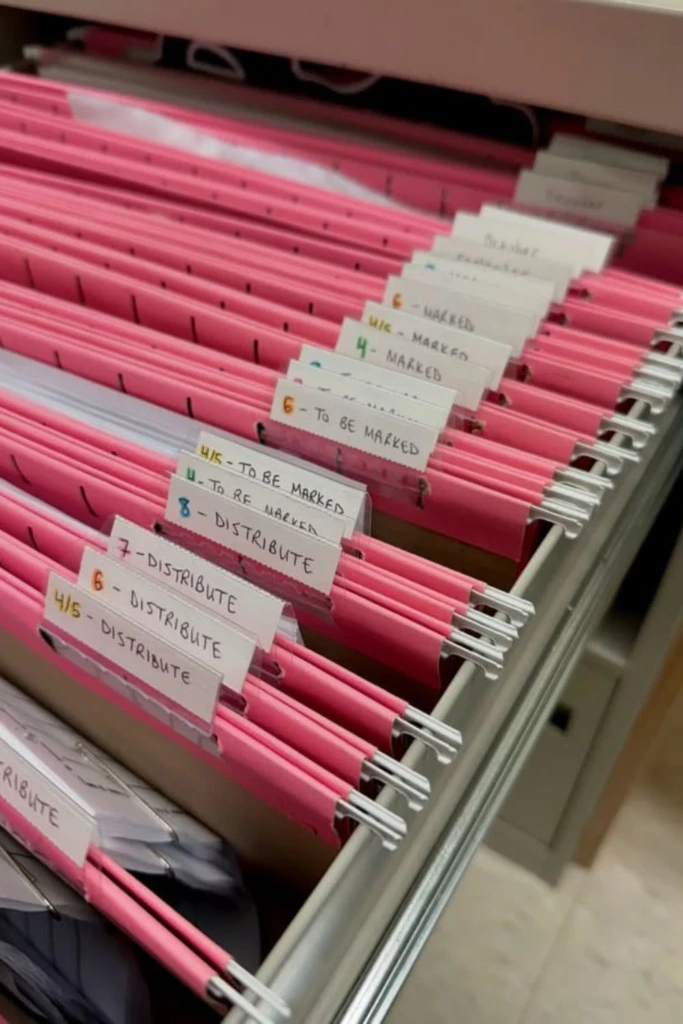
A grading drawer system separates student assignments according to their current stage of completion.
Create compartments for work awaiting grading, assignments currently being reviewed, and papers ready to return.
Use clearly labeled folders or drawers to keep these categories distinct.
As assignments move through the grading process, transfer them to the appropriate compartment.
This approach makes it easier to identify outstanding work without repeatedly sorting through the same stack.
For classrooms with multiple subjects, consider adding subject-specific folders inside each drawer.
Store graded papers containing personal information securely until they can be returned directly to students.
18. Essentials Drawer Stack
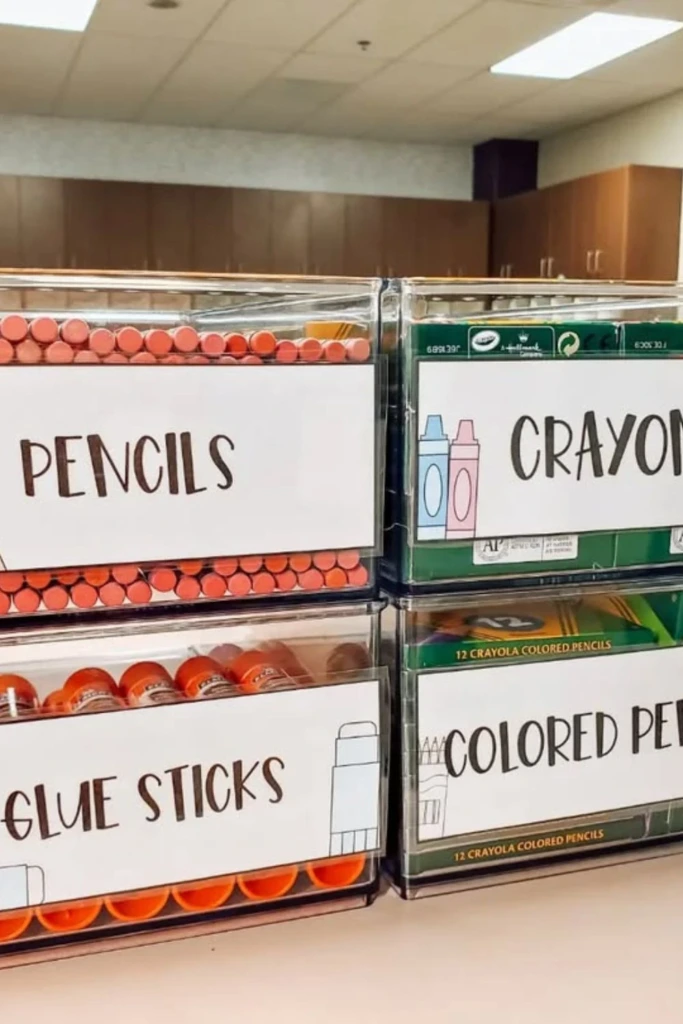
An essentials drawer stack keeps everyday classroom materials in a convenient central location.
Choose transparent drawers that allow students to recognize the contents without opening several compartments.
Separate common supplies such as pencils, crayons, glue sticks, and colored pencils.
Use picture labels alongside written descriptions to support younger students.
Position the organizer near the activity tables