18 Bookshelf Organization Ideas for 2026
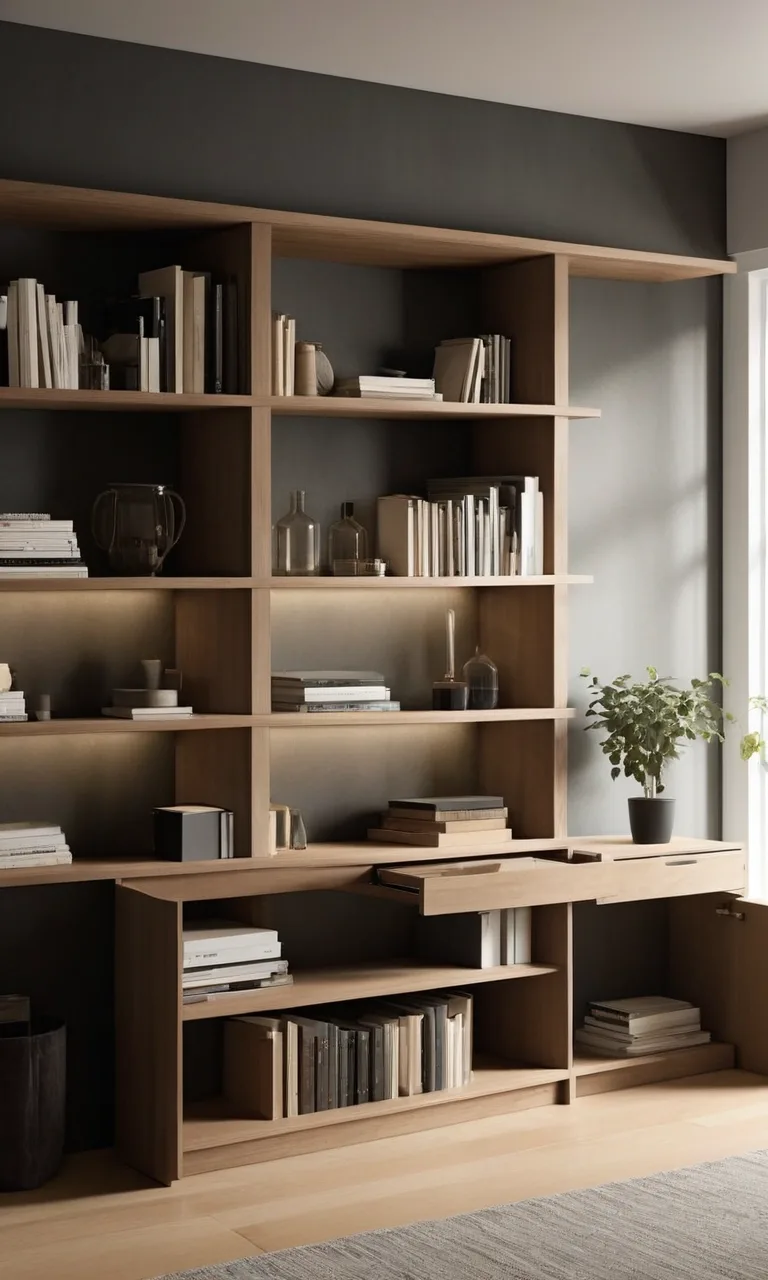
A bookshelf can easily become a crowded collection of books, forgotten decorations, and miscellaneous items. But with a little planning, even the simplest shelving unit can become an attractive and practical feature in your home.
The secret to successful bookshelf organization is finding a balance between storage, accessibility, and personal style. Whether you prefer colorful arrangements, minimalist displays, or creative shelving for small spaces, there are plenty of ways to make your collection look intentional.
You don't need expensive furniture or a complete room makeover. Small changes, such as grouping similar books, adjusting shelf layouts, and introducing decorative accents, can make a noticeable difference.
Explore these 25 bookshelf organization ideas to create a space that feels organized, welcoming, and uniquely yours.
1. Small Space Solutions
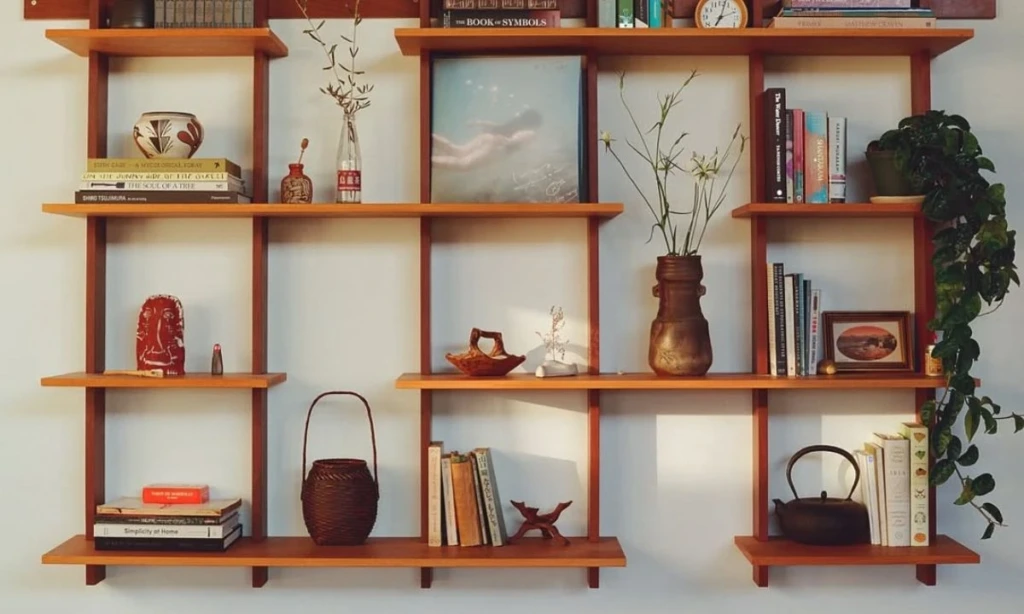
Limited floor space doesn't mean you have to sacrifice your book collection. The right shelving arrangement can provide generous storage without making a small room feel crowded.
Consider installing floating shelves above a desk, beside a doorway, or along an unused wall. These options keep books accessible while freeing up valuable floor space.
Vertical arrangements are particularly useful in apartments and compact bedrooms. Instead of spreading books across multiple pieces of furniture, concentrate them in one thoughtfully arranged area.
Choose shelves that complement your existing furniture, and avoid filling every available inch. A little open space helps smaller rooms maintain an airy, comfortable appearance.
2. Color Blocked
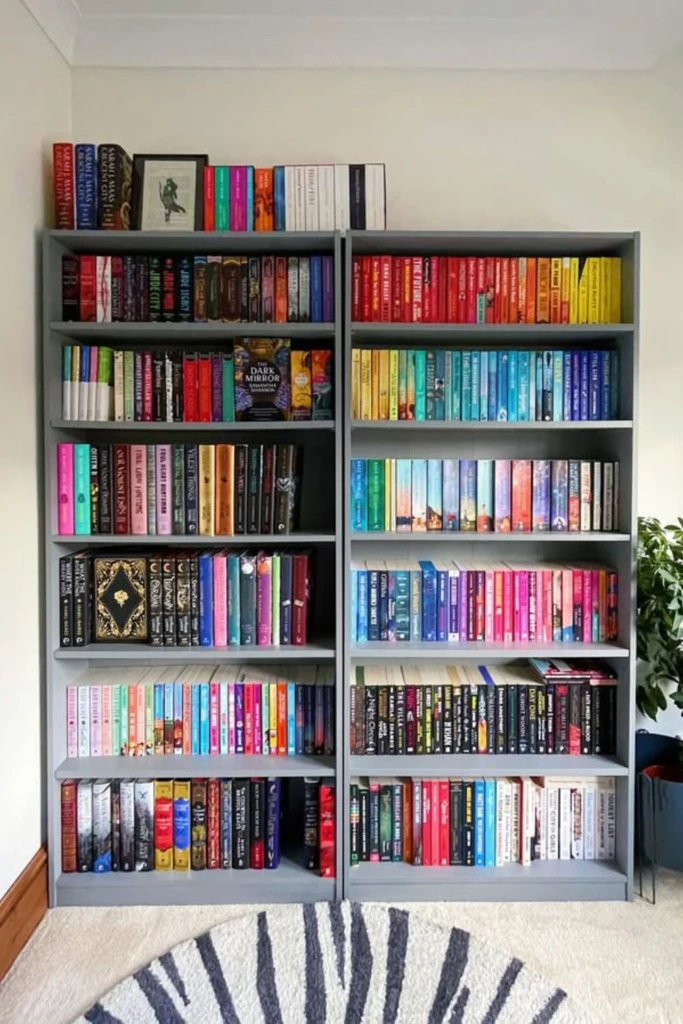
Color blocking is an excellent way to create an organized bookshelf that doubles as decorative artwork.
Start by separating books according to their spine colors. Arrange each color into a distinct section, keeping similar tones together for a deliberate, coordinated appearance.
For a more structured display, dedicate individual shelves to specific color families. Darker shades can anchor the lower sections, while lighter colors brighten the upper shelves.
This technique works especially well in living rooms where the bookshelf is a prominent design feature.
If finding books quickly is important, organize them by subject first and apply color blocking within each category.
3. Mixed Display
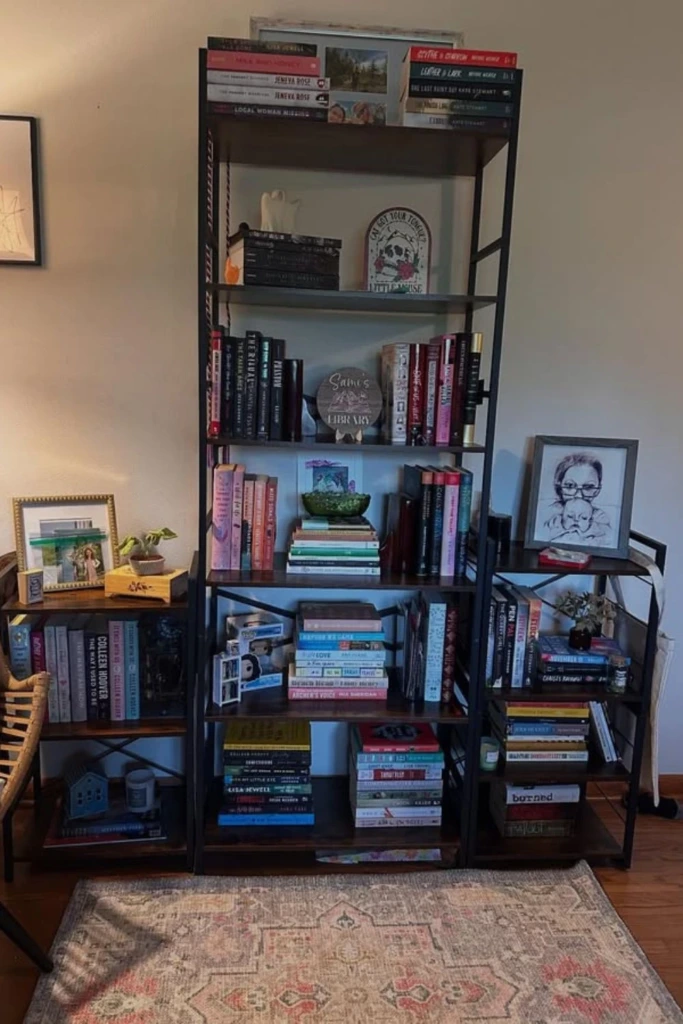
A bookshelf doesn't have to contain books alone. Combining reading materials with meaningful accessories creates a display that feels more personal.
Introduce a few framed photographs, ceramic ornaments, or small decorative bowls between groups of books.
Alternate upright rows with short horizontal piles to prevent the arrangement from looking repetitive. A horizontal stack can also provide a stable platform for a lightweight decorative object.
Keep larger books toward the bottom and distribute accessories throughout the shelving unit.
The goal is to create visual interest without allowing decorations to interfere with the books you regularly use.
4. Rolling Cart
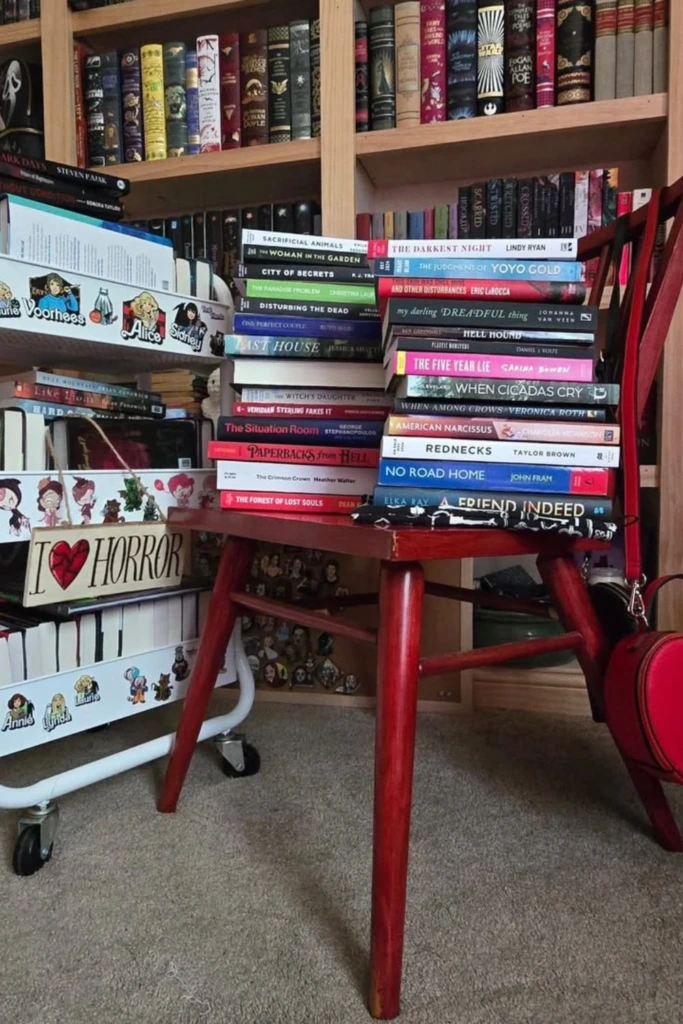
A rolling cart provides flexible book storage for rooms where permanent shelving isn't practical.
Choose a sturdy cart with raised edges or bookends to prevent books from shifting when it moves.
Use the upper tier for books you're currently reading, the middle tier for upcoming selections, and the lower tier for notebooks or reading accessories.
This arrangement works particularly well beside a sofa, reading chair, or study desk.
You can also dedicate the cart to a specific collection, such as cookbooks, children's stories, or library books that need to be returned.
5. Compact Rainbow
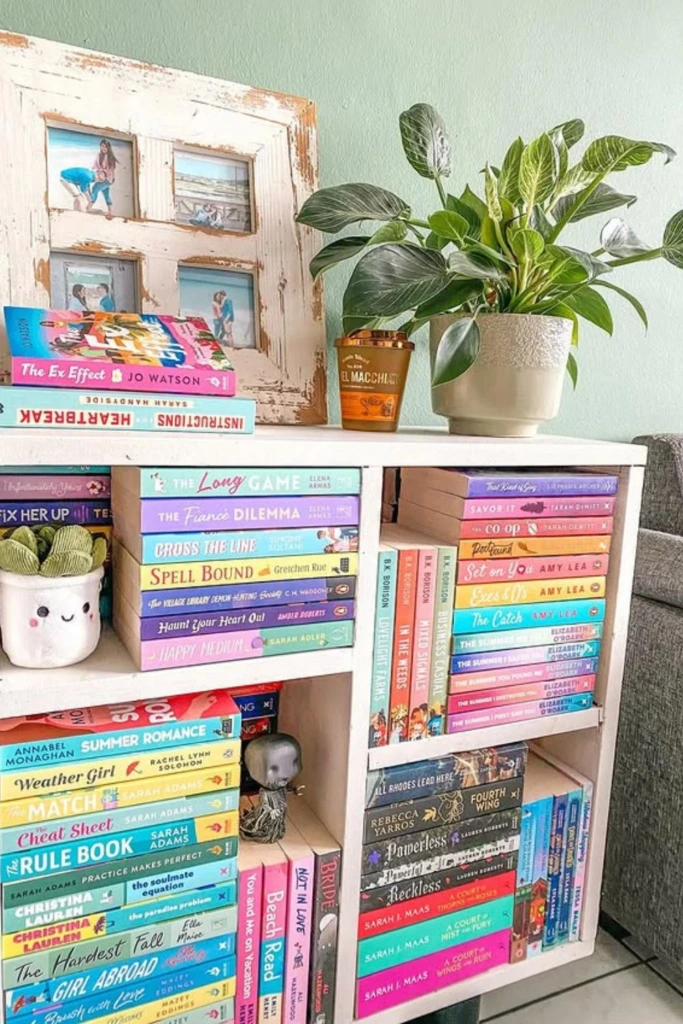
A compact rainbow arrangement brings personality to smaller book collections without requiring a large shelving unit.
Sort your books into broad color groups, then position them so the colors transition naturally across the shelf.
Instead of trying to achieve perfect color matching, focus on creating recognizable sections that look balanced.
Keep books of similar heights together where possible, and use simple bookends to support shorter groups.
This approach is ideal for desktop shelves, narrow bookcases, and small bedroom storage areas where every decorative detail matters.
6. Minimal Kids Shelf
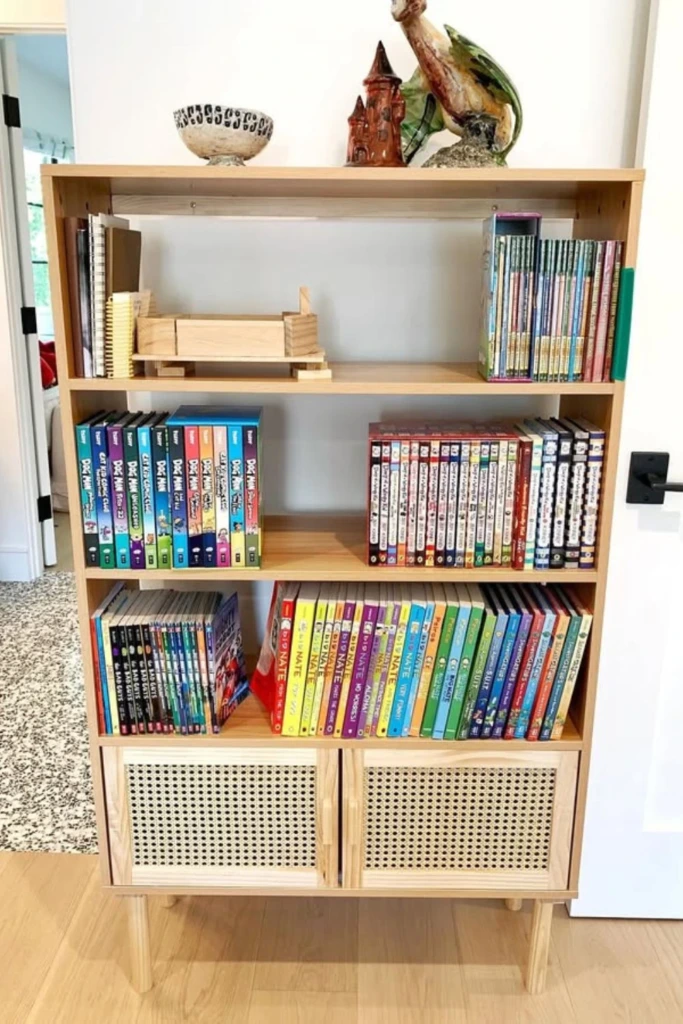
Children's bookshelves work best when they are simple, accessible, and easy to maintain.
Choose a low shelving unit that allows children to reach their favorite stories without assistance.
Separate books into manageable groups, such as bedtime stories, picture books, and educational books. Avoid complicated sorting systems that younger children may struggle to follow.
Leave enough room for books to slide in and out comfortably.
A few colorful storage baskets can hold smaller reading materials, while securely anchored furniture helps create a safer environment.
7. Closet Library
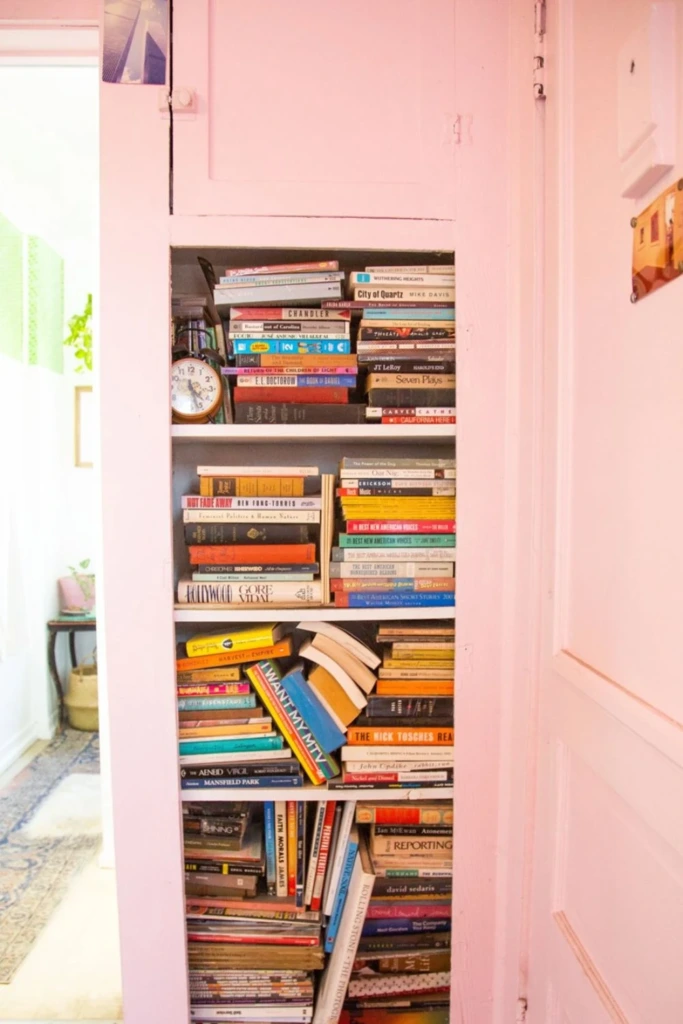
An unused closet can become a surprisingly practical home library.
Remove unnecessary hanging hardware and install appropriately supported shelves that accommodate your book collection.
Adjust shelf heights to fit different formats, including paperbacks, hardcovers, and oversized reference books.
If the closet has sufficient room, add a small reading light and a comfortable cushion nearby.
For deeper closets, consider arranging books in a single visible row rather than hiding additional books behind them.
Make sure the shelving is properly secured and the space remains dry and ventilated to protect your collection.
8. Front-Facing Display
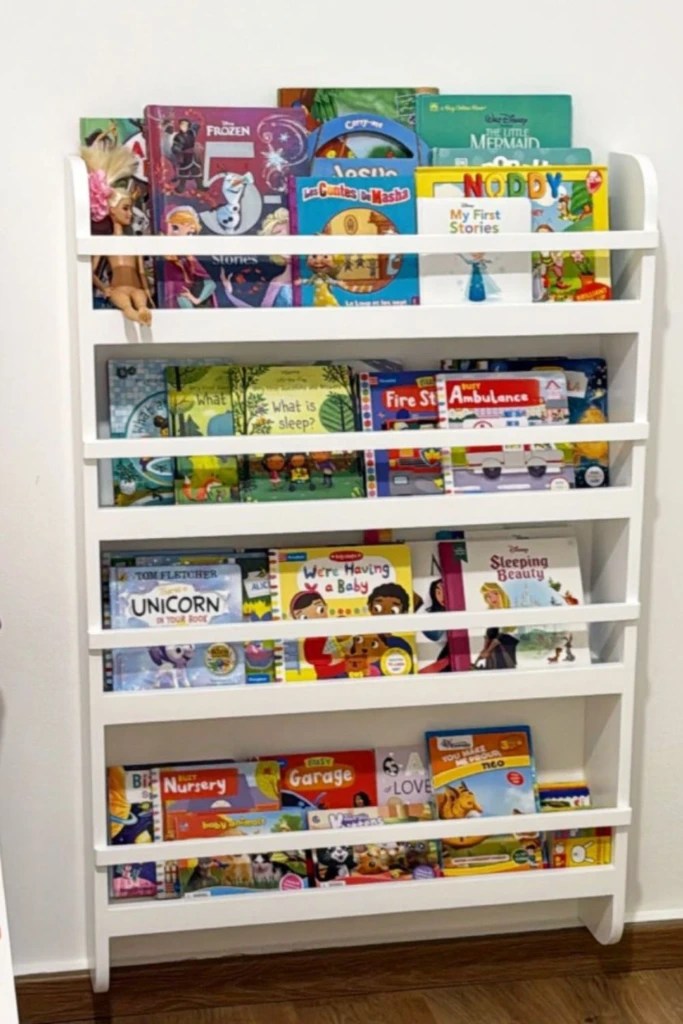
Displaying books with their covers facing outward makes them easier to recognize, especially for younger readers.
Use shallow picture ledges or dedicated children's book racks to create a library-inspired arrangement.
Place frequently requested titles at a comfortable height and rotate the selection periodically to maintain interest.
Group books around familiar themes, such as animals, adventures, or seasonal stories.
This arrangement is particularly effective in playrooms and children's bedrooms because it encourages independent browsing while keeping the collection manageable.
9. Curated White Shelves
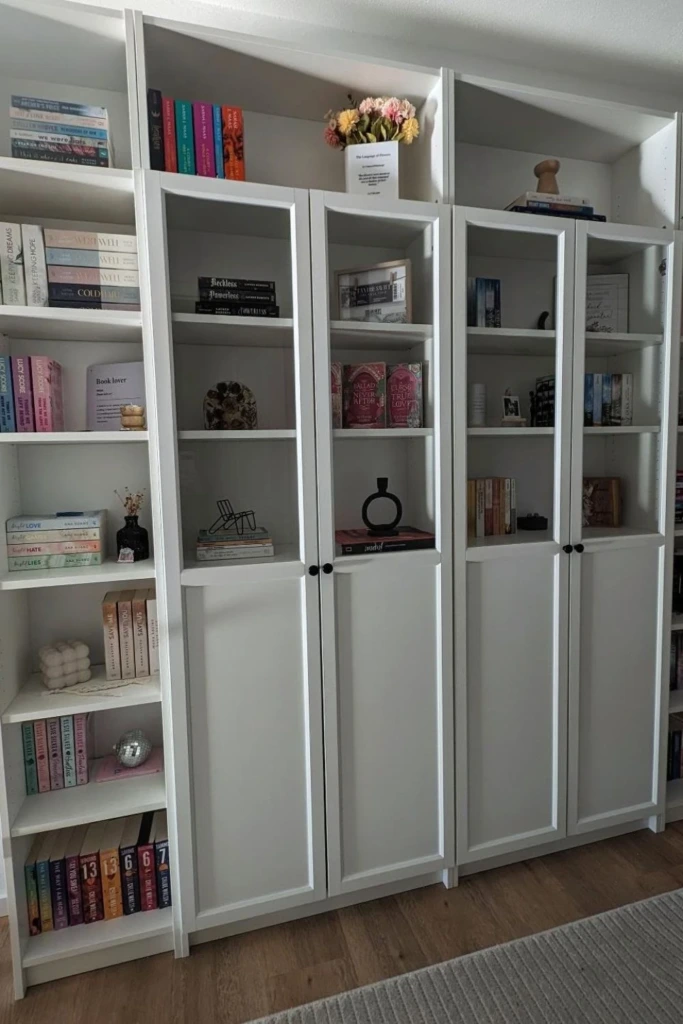
White shelving creates a clean background that allows books and decorative objects to stand out.
For a refined arrangement, group books into small collections and leave deliberate gaps between them.
Introduce accessories with contrasting materials, such as dark metal frames, glass ornaments, or natural wood accents.
If your shelves have glass doors, arrange the most attractive books and objects toward the front while keeping less decorative essentials neatly stored behind them.
Maintain consistent spacing and avoid overcrowding to preserve the polished appearance.
10. Asymmetrical Shelves
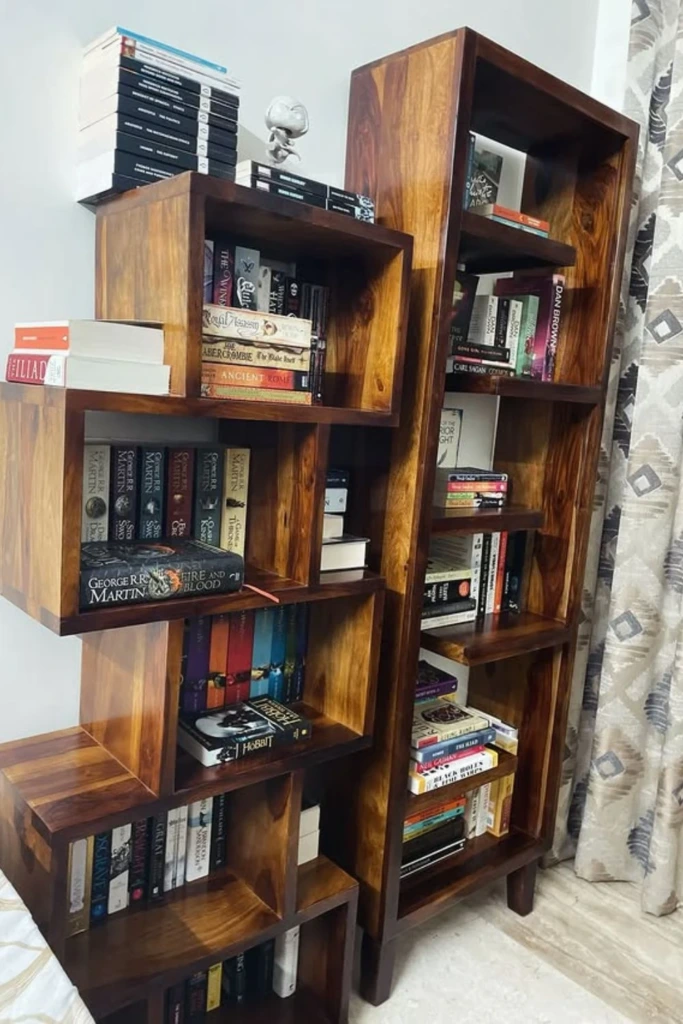
Asymmetrical shelving adds architectural character while offering different storage compartments for various book sizes.
Use taller sections for oversized volumes and shorter compartments for paperbacks or decorative objects.
Balance the arrangement by distributing heavier-looking book groups across the unit rather than concentrating everything on one side.
A mixture of upright books, horizontal stacks, and carefully chosen accessories helps emphasize the unusual shelf structure.
This style suits contemporary living rooms, creative workspaces, and interiors that benefit from an unconventional focal point.
11. Cubby Rainbow
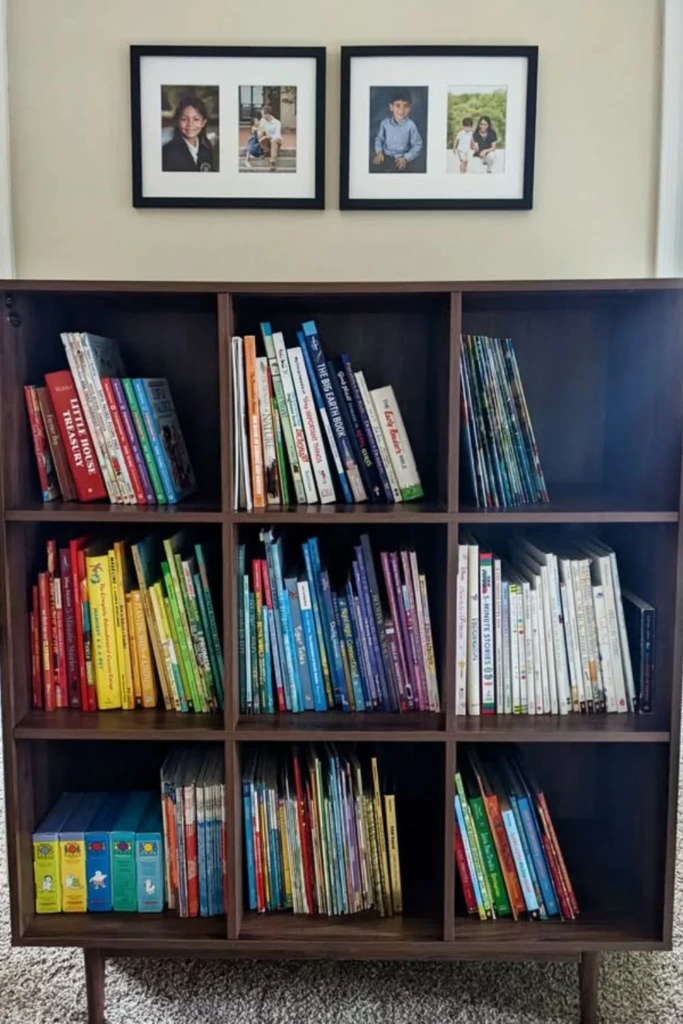
Cube shelving makes it easy to create clearly defined color arrangements.
Assign each compartment a color family, such as blue, green, yellow, or pink, and place matching books together.
For larger collections, use several shades within one cubby to create subtle variations.
Keep decorative additions minimal so the individual color groups remain noticeable.
This method is particularly attractive in playrooms, where bright colors can complement toys and other cheerful furnishings.
If the shelving unit is used by children, secure it according to the manufacturer's instructions.
12. Closet Combo
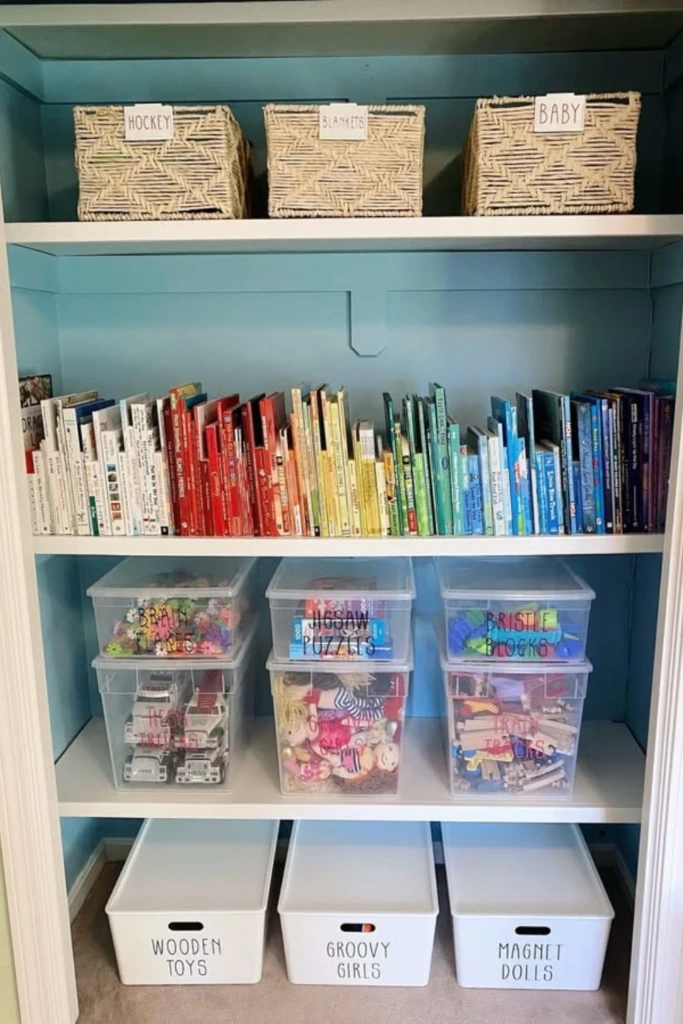
Combining bookshelves with closet storage is a practical solution for bedrooms and multipurpose spaces.
Dedicate the upper shelves to books and use the lower sections for baskets, toys, or folded accessories.
Clear containers are useful when visibility matters, while woven baskets create a softer, more decorative appearance.
Arrange frequently used items at an accessible height and reserve the highest compartments for lightweight belongings needed less often.
Adding labels to storage bins helps prevent different categories from becoming mixed together.
This layout is especially helpful when one piece of furniture needs to accommodate several storage purposes.
13. Monochrome Styling
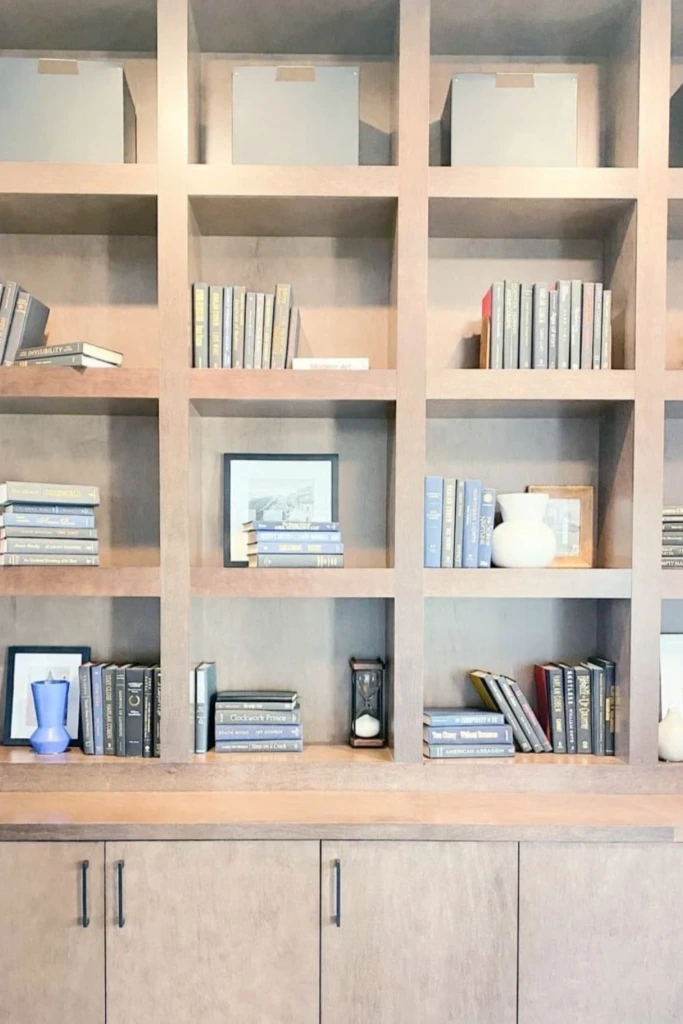
A monochrome bookshelf creates a calm, sophisticated appearance by limiting the visible color palette.
Choose books with covers or spines in complementary neutral shades, including white, charcoal, cream, and gray.
You can also use matching book covers for selected volumes, provided the titles remain identifiable.
Add a small number of accessories in similar tones, such as stoneware vases or simple picture frames.
Varying textures helps prevent the display from appearing flat.
For practical organization, keep frequently used books grouped by category within the overall neutral arrangement.
14. Dual Shelf Rainbow
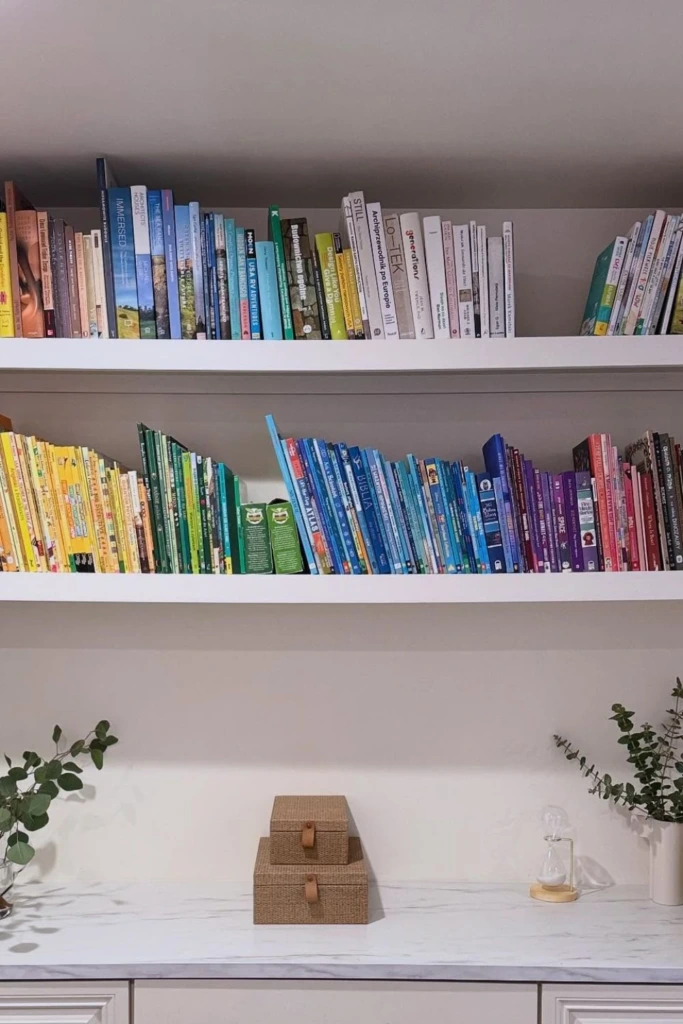
Two long shelves provide an opportunity to create a continuous arrangement of colorful books.
Begin with warmer shades on one end of the upper shelf and continue the progression across the lower shelf.
This produces a connected visual effect without requiring a large freestanding bookcase.
Use consistent spacing between book groups and keep the surrounding decorations understated.
White or light-colored shelves can make bright book spines particularly noticeable.
Before installing wall-mounted shelving, confirm that the brackets, anchors, and wall structure can safely support the combined weight of the books.
15. Bedside Bookshelf
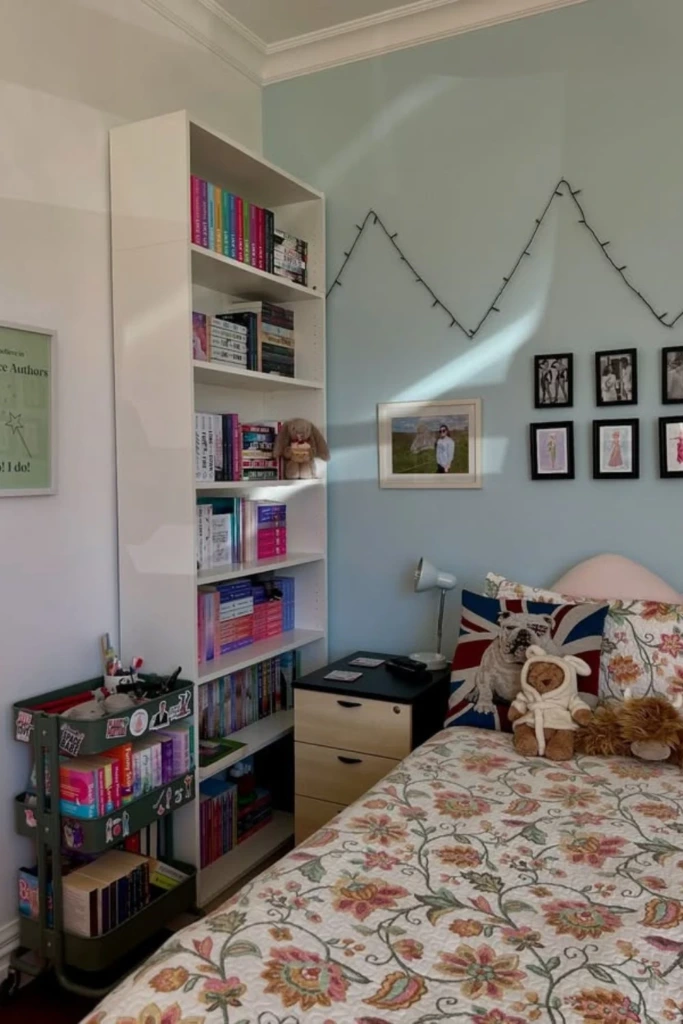
A bedside bookshelf keeps your favorite reading materials within easy reach.
Choose a narrow bookcase that fits comfortably beside the bed without obstructing movement around the room.
Place current reads at mattress height so they're easy to reach, and organize additional books by genre or reading priority.
A small tray can hold bookmarks, glasses, and other nighttime essentials.
If space allows, position a reading lamp nearby to create a comfortable evening routine.
Avoid overloading the top shelf with decorative objects that could easily be knocked over.
16. Clear Bin Storage
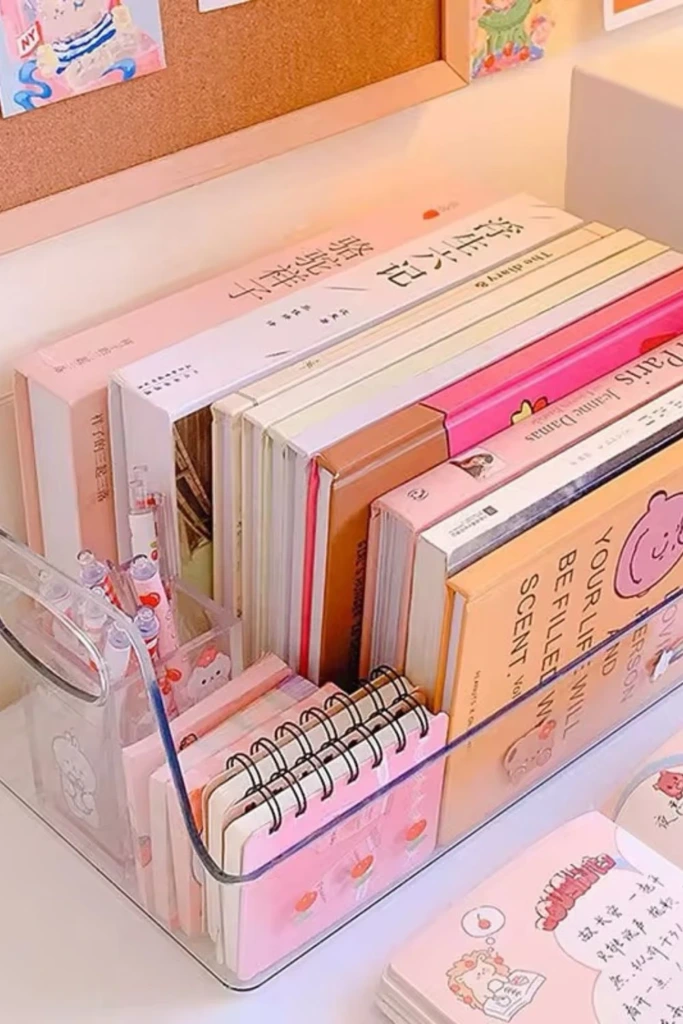
Transparent storage bins are useful for organizing small books, journals, notebooks, and reading accessories.
Choose containers that fit the depth of your shelves and allow their contents to stand upright.
Separate items into practical categories, such as planners, sketchbooks, magazines, or study materials.
Add labels to the front of each bin, even when the contents are visible, to make returning items easier.
This system works particularly well on desks, in home offices, and in shared study spaces.
For heavier books, select reinforced containers with sturdy handles rather than lightweight organizers designed for stationery.
17. Industrial Shelves
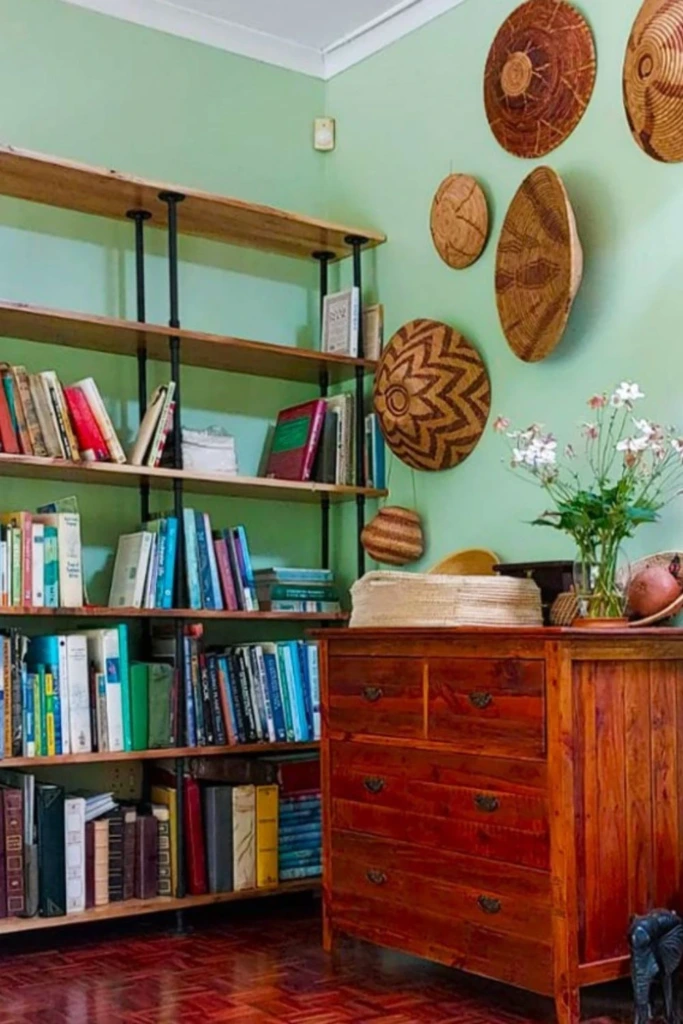
Industrial-style bookshelves combine functional storage with materials such as metal and unfinished or stained wood.
Their strong visual lines make them suitable for displaying books alongside vintage accessories and textured decorations.
Arrange larger volumes along the lower shelves and use smaller books to fill narrower sections.
Metal bookends can complement the overall design while keeping upright rows stable.
To soften the appearance, introduce a woven basket, framed print, or small plant.
Always check the load rating of the shelves, particularly when using wall-mounted pipe brackets or homemade shelving systems.
18. Ladder Style
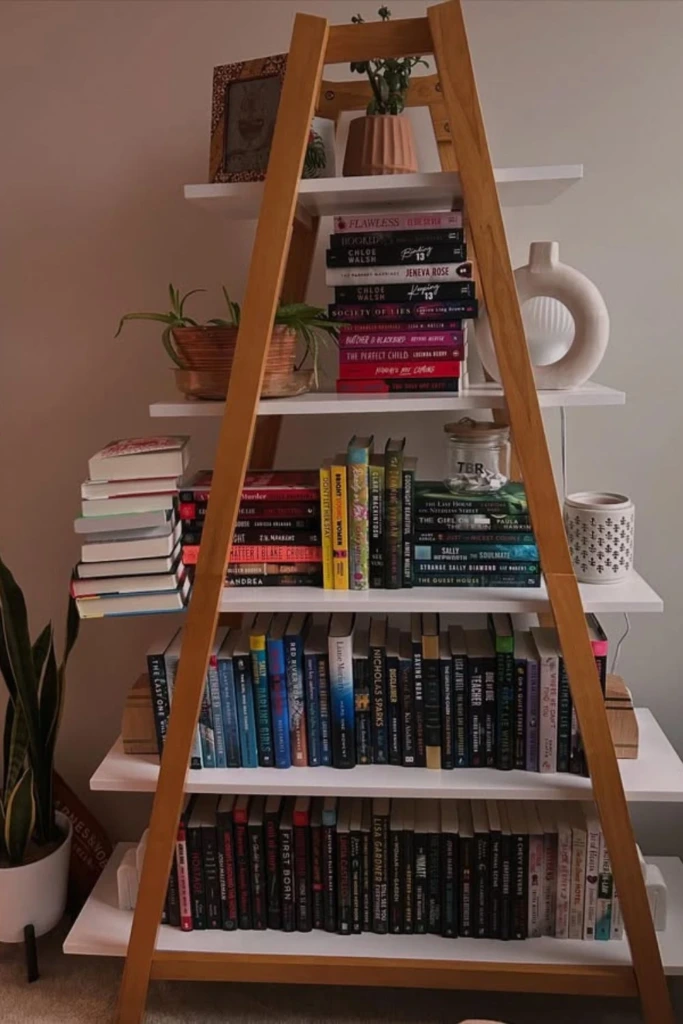
Ladder bookshelves provide an attractive way to organize books while maintaining a relatively open appearance.
Their shelves often become narrower toward the top, making the lower levels better suited to larger and heavier books.
Place regularly used titles on the middle shelves and reserve the upper levels for lightweight accessories.
Arrange books into small