15 Office Organization Ideas for 2026
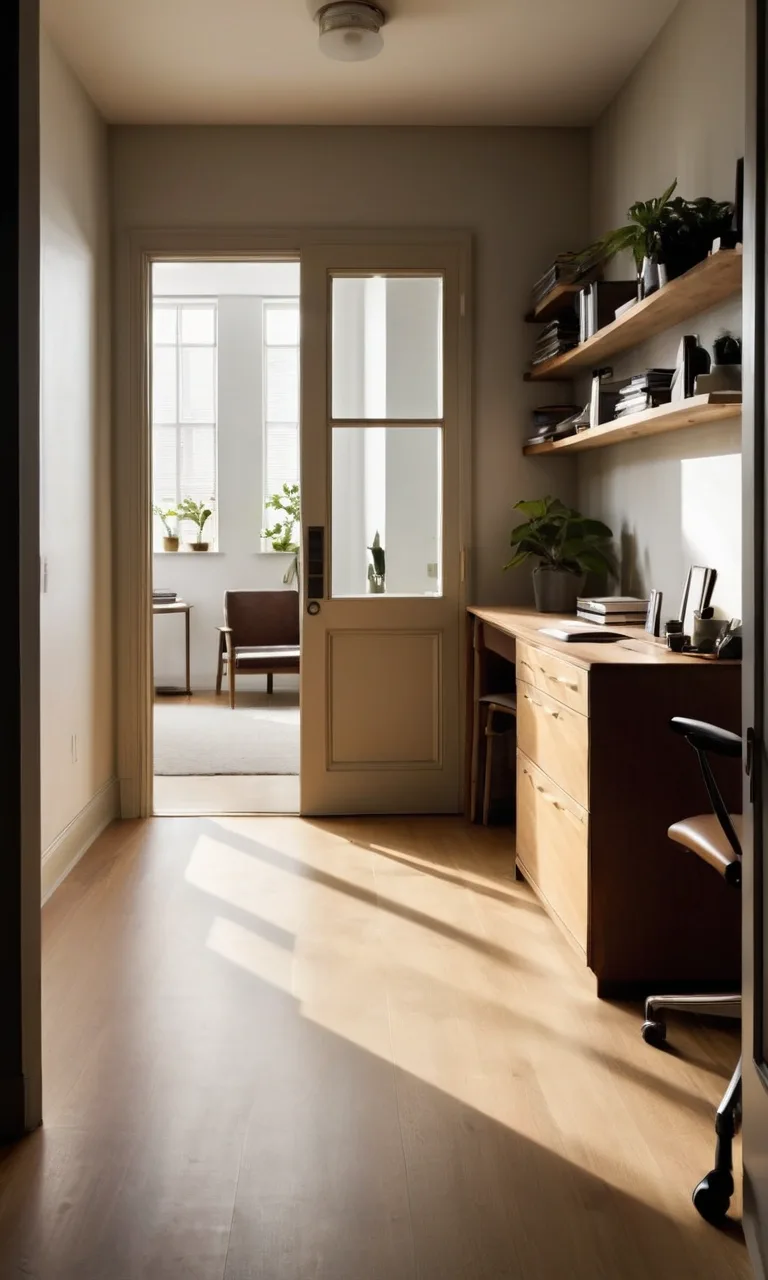
A well-organized office makes it easier to concentrate, find important documents, and finish everyday tasks without unnecessary frustration. Whether you work from a dedicated home office, a shared room, or a compact desk in the corner of your bedroom, the right storage solutions can make a noticeable difference.
The secret isn't buying dozens of organizers or spending an entire weekend cleaning. It's creating a practical place for everything you use and choosing a setup that fits your working habits. From sorting paperwork to managing electronics, small improvements can help you maintain a workspace that feels comfortable and functions efficiently.
These office organization ideas offer simple ways to make better use of your available space, reduce visual distractions, and create a system that's easy to maintain.
Why a Messy Office Kills Your Focus?
A cluttered workspace can make even straightforward tasks feel more demanding. When your desk is covered with documents, stationery, cables, and miscellaneous belongings, you may spend valuable time searching for things instead of concentrating on your work.
Although tidying up won't solve every productivity problem, reducing unnecessary distractions can make your environment feel more manageable. Start by clearing your desk completely and returning only the items you regularly need, such as your computer, notebook, calendar, and a few writing tools.
Next, decide where less frequently used supplies should live. Store paperwork in labeled folders, move spare equipment into a cabinet, and keep charging cables neatly contained. Avoid filling every available surface simply because space is available.
A simple end-of-day reset can help you maintain these improvements. When your workspace has a clear purpose and every item has a designated home, it's much easier to begin the next workday feeling prepared.
1. Label Every Basket
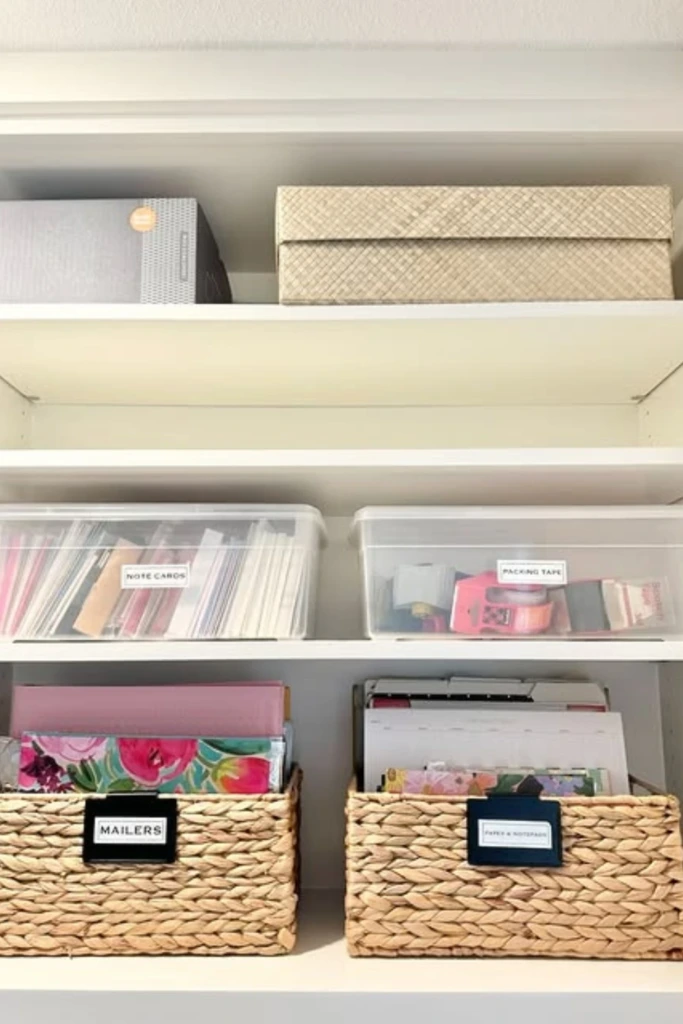
Storage baskets can transform open shelving into a practical office supply area, but only when you know what's inside each container. Without a clear system, baskets often become convenient places to hide miscellaneous items rather than useful storage solutions.
Choose a combination of woven baskets, fabric bins, or transparent containers based on what you're storing. Use larger baskets for bulky supplies, spare notebooks, and equipment, while smaller bins can hold stationery, clips, and other accessories.
Attach easy-to-read labels to the front of every container. You might designate separate baskets for printer supplies, mailing materials, craft tools, and miscellaneous office essentials. Clear categories make it easier to return things to their proper locations.
Reserve a few minutes each week to check the contents and remove anything that no longer belongs there. This quick habit prevents your organized shelves from gradually becoming cluttered again.
2. Divide the Desk for Two
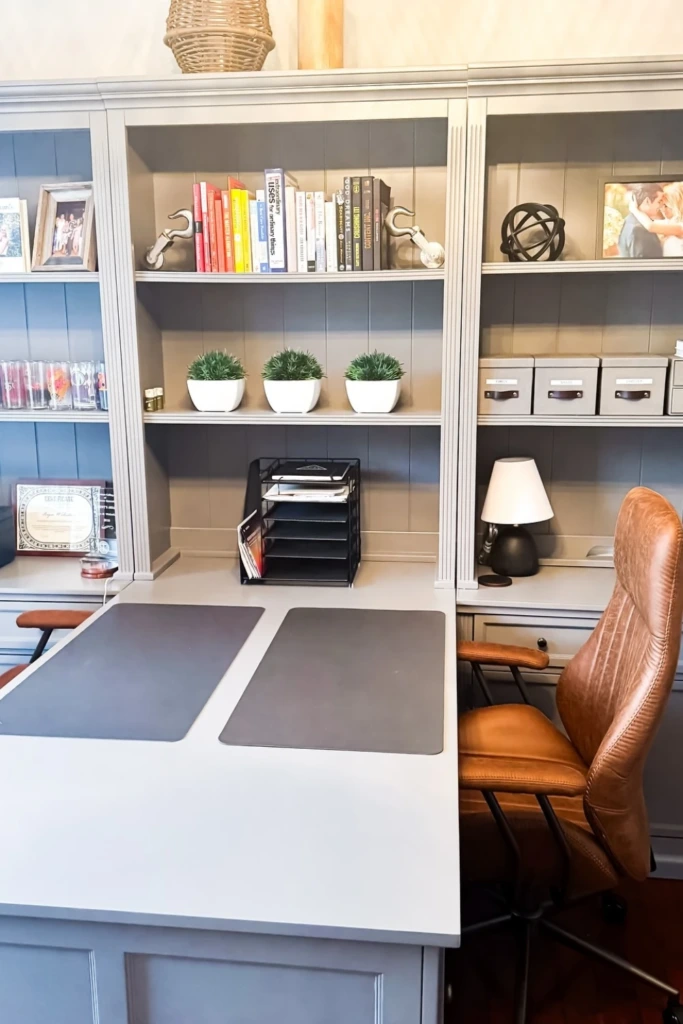
When two people share a home office, a little planning can help each person work comfortably without mixing documents, supplies, or equipment.
Begin by deciding how much desk space each person needs. Two separate desks placed alongside one another can work well in a larger room, while a shared desk may be more practical in a compact space. Use desk mats, small trays, or desktop organizers to establish individual work zones.
Give each person dedicated drawers, storage boxes, or shelving. Labeling personal supplies can be particularly useful when both people use similar equipment or stationery.
If you work at the same time, consider placing desks so that screens and video calls don't interfere with one another. Headphones, task lighting, and a small divider can provide additional separation without making the room feel crowded.
Matching accessories and a consistent color scheme can help the shared workspace look cohesive. The goal is to create two functional work areas while keeping the room comfortable and organized for everyone.
3. Sort Papers in Clear Files
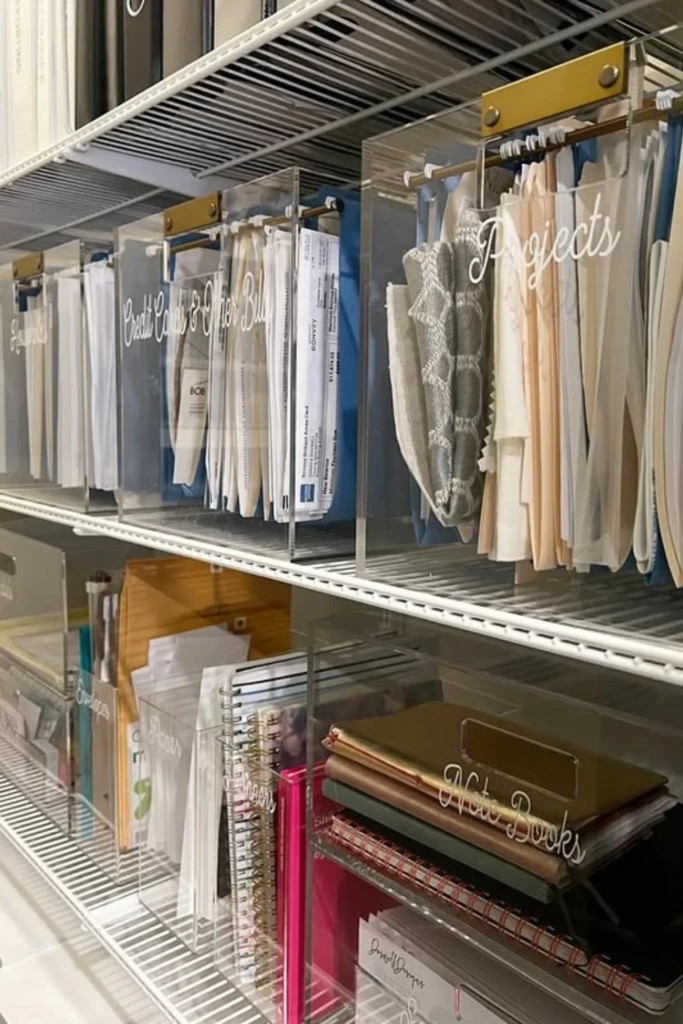
Paperwork can accumulate quickly when bills, receipts, project notes, contracts, and personal documents all end up in the same pile. A straightforward filing system helps you locate important information without repeatedly searching through loose sheets.
Start with clear file boxes or document containers fitted with labeled dividers. Organize papers according to how you use them, such as current projects, household finances, business records, and reference documents.
For paperwork that requires action, create a separate section for items that need to be reviewed, signed, paid, or filed. This prevents urgent documents from disappearing among materials you only need occasionally.
Keep frequently accessed files on a nearby shelf or inside a convenient drawer. Less important records can be stored elsewhere, provided they're protected and easy to retrieve when necessary.
Review your files regularly and remove duplicate copies, unnecessary drafts, and documents that are no longer needed. Follow applicable retention requirements for financial, legal, and business records before discarding anything important.
4. Use Vertical File Holders
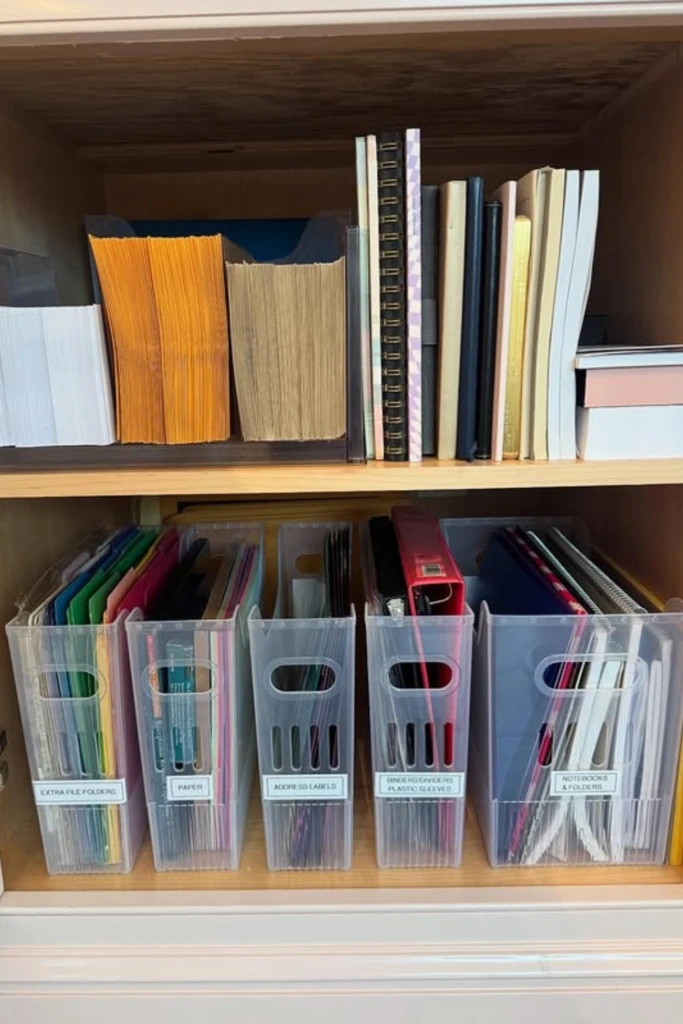
Vertical file holders are useful when you need to organize documents but don't have much shelf or desk space. Unlike horizontal piles, upright storage allows you to see folder labels and retrieve individual items without disturbing everything around them.
Choose sturdy holders that accommodate the size and weight of your paperwork. Depending on your needs, you can use separate sections for active projects, notebooks, incoming correspondence, and reference materials.
Label each holder clearly so that its purpose is immediately recognizable. Position frequently used categories at an accessible height, and keep heavier folders on stable shelves.
This method also works for magazines, planners, envelopes, and slim binders. If you have several types of materials, use different holders rather than forcing everything into one crowded container.
Check the contents periodically to remove outdated documents and relocate completed projects. Keeping vertical files from becoming overfilled ensures that you can continue using the system without creating new piles elsewhere.
5. Give Each Paper a Home
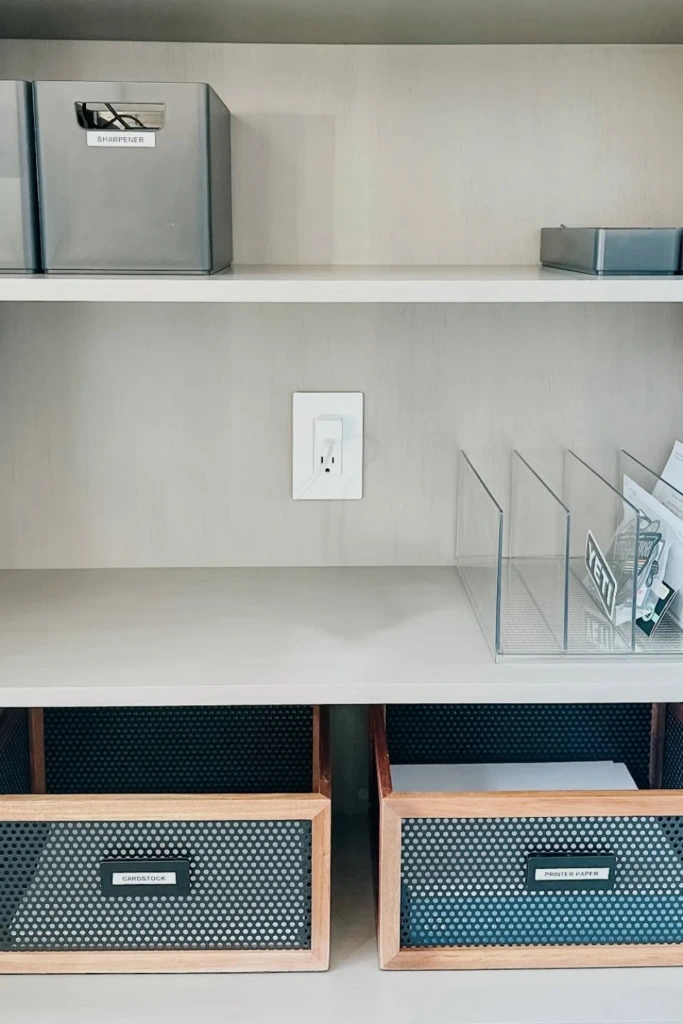
Loose printer paper, incoming mail, envelopes, and notepads can take over a workspace when there's no designated place to store them. Assigning each category a specific location helps keep surfaces clear and supplies easy to access.
Use divided trays for incoming correspondence and documents that need attention. Small desktop containers or drawer organizers can hold sticky notes, pencils, labels, and other frequently used items. Larger baskets or flat storage boxes are better suited to printer paper and cardstock because they help prevent bending and damage.
Consider separating paperwork into three basic groups: items requiring action, documents to keep, and materials ready for recycling or disposal. This makes it easier to process incoming papers instead of allowing them to accumulate indefinitely.
A cabinet, sideboard, or nearby shelving unit can provide additional storage when your desk is limited. Keep everyday supplies within reach and reserve less accessible spaces for backup materials.
Establish a regular routine for sorting mail and filing finished documents. Processing a small amount of paper each day is generally easier than dealing with a large backlog later.
6. Turn a Closet Into a Supply Station
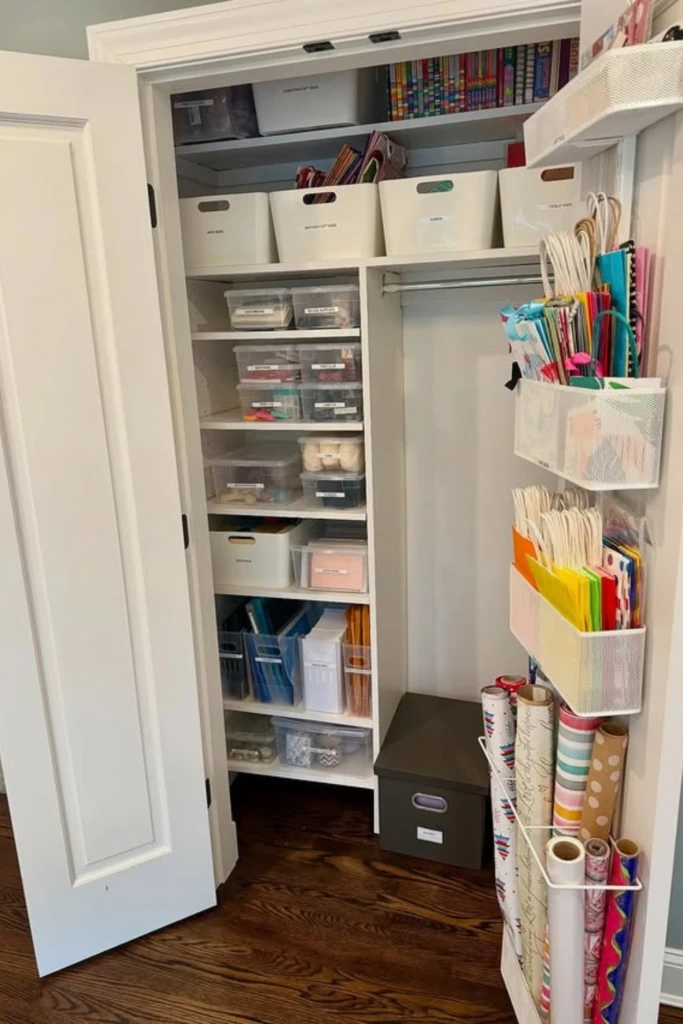
If your desk and shelves are already full, an underused closet can provide valuable storage without taking up additional room in your office.
First, measure the closet and identify which supplies need to be stored. You might use the space for extra stationery, printer paper, files, craft materials, shipping supplies, or equipment that you don't need every day.
Install shelves or use existing ones to arrange labeled bins by category. Keep heavier containers on lower shelves and place frequently accessed materials at a comfortable height. Clear containers are particularly useful for small items because their contents remain visible.
The inside of the closet door can accommodate hanging organizers for lightweight accessories, envelopes, or small tools. Make sure the organizer doesn't interfere with the door closing or access to stored items.
If the closet is deep, position everyday supplies near the front and less frequently used belongings farther back. Avoid packing shelves so tightly that retrieving one item requires moving several others.
With a little planning, a closet can function as a compact supply room, leaving your main work area free for the tasks that require your attention.
7. Categorize Files by Topic
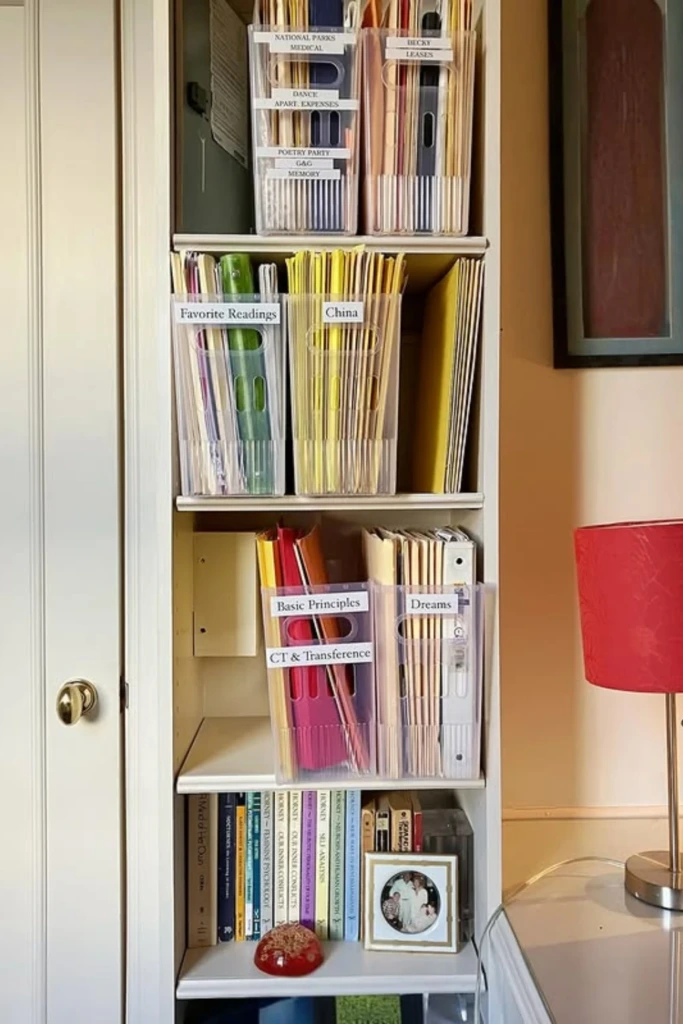
A topic-based filing system is especially useful when your office handles several kinds of paperwork. Rather than arranging everything in the order it arrives, group documents according to the subject or activity they relate to.
For example, you could create categories for expenses, ongoing projects, client information, household records, and reference materials. Use labeled folders, magazine files, or vertical organizers to separate these groups.
Choose categories that reflect your actual needs. If you manage several projects simultaneously, individual project folders may be more useful than one broad folder labeled “Work.” Similarly, separating current financial documents from older records can make important information easier to locate.
Arrange the folders in a consistent order, such as alphabetically or by frequency of use. Keep active files close to your desk and place archived materials in a separate cabinet or storage box.
For confidential paperwork, use secure storage and restrict access where appropriate. A well-organized filing system should improve accessibility without compromising privacy.
Review your categories every few months. If a folder becomes difficult to manage because it contains too many unrelated documents, divide it into smaller, more meaningful sections.
8. Use Drawer Bins for Every Item
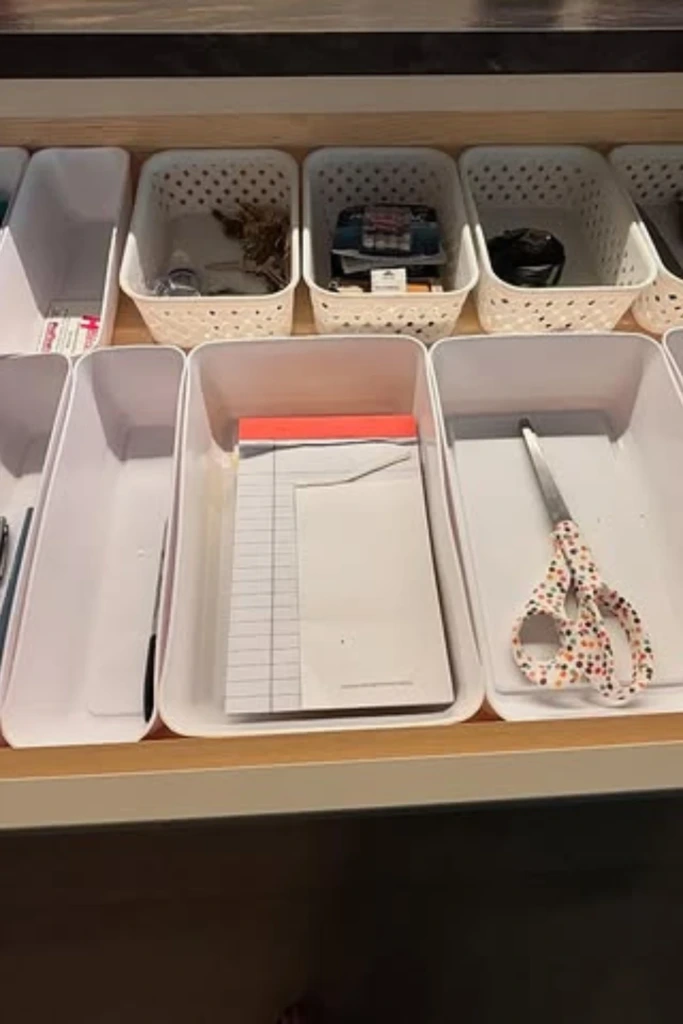
Office drawers often become catch-all spaces for pens, charging cables, scissors, paper clips, and supplies that don't have a permanent home. Small drawer bins make it easier to keep these items separated and accessible.
Empty the drawer before organizing it. Remove rubbish, return misplaced belongings to their proper locations, and group the remaining items by type. This helps you determine how many containers you actually need.
Choose bins that fit the drawer's dimensions without leaving excessive unused space. Use longer compartments for pens and rulers, medium-sized sections for sticky notes and scissors, and smaller containers for clips, pins, and other accessories.
Assign one category to each compartment instead of mixing unrelated supplies. If you frequently use a particular item, position it near the front of the drawer.
Avoid filling every compartment simply because it exists. Keeping a little spare capacity makes it easier to put items away after busy work sessions.
Finish with a brief weekly check. Return misplaced supplies, remove items that belong elsewhere, and restock anything you're running low on. A few minutes of maintenance can prevent the drawer from turning into a cluttered collection of miscellaneous objects.
9. Store Tech Upright
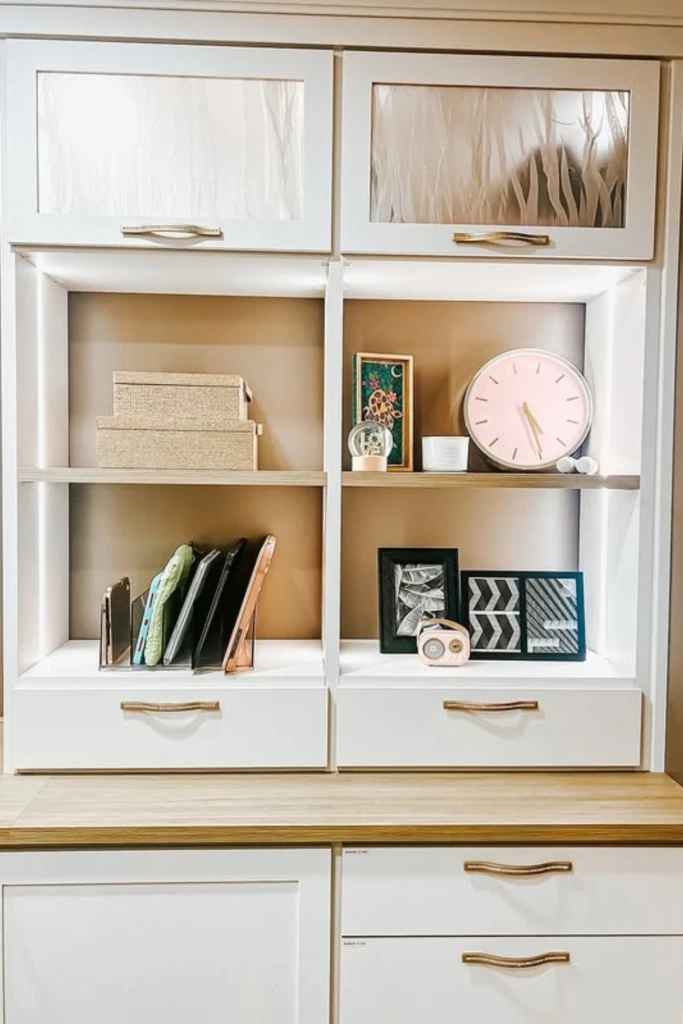
Laptops, tablets, portable keyboards, and other electronic accessories can consume a surprising amount of workspace when stored flat. Upright storage makes better use of shelf space while keeping devices easier to retrieve.
Start by selecting a stable shelf or drawer area that can accommodate your electronics safely. Vertical laptop stands, padded dividers, and suitable bookend-style supports can help keep devices separated instead of allowing them to lean against one another.
Protect screens and delicate surfaces with appropriate sleeves or soft separators. Make sure each device is supported securely and cannot easily slide or tip over.
Keep chargers and cables in a nearby labeled container. If you own multiple devices, mark compatible chargers or assign separate compartments to prevent confusion. Avoid tightly wrapping cables around plugs or bending them sharply.
For shared household electronics, consider labeling storage positions by device or user. This makes it easier to return equipment after use and identify where accessories belong.
You can also establish a charging routine that suits your work schedule. Check battery levels before important meetings or travel rather than relying on a single weekly charging session. Keep charging equipment away from liquids and avoid covering devices while they're charging.
10. Keep Drawers Clear With Grids
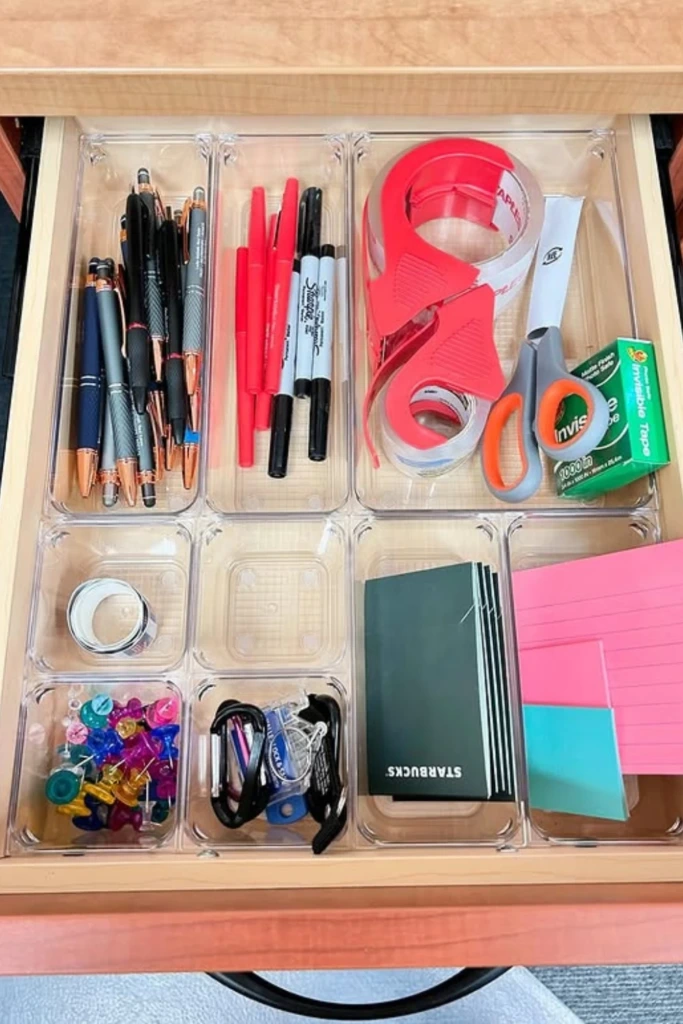
Grid-style drawer organizers provide individual compartments for supplies that are otherwise easy to mix together. They're particularly helpful for small items that tend to shift whenever you open or close a drawer.
Measure the drawer first, then choose a grid organizer that fits comfortably. Adjustable dividers are useful if your collection includes items of different sizes, while fixed compartments can work well for standard stationery.
Group similar supplies together. Pens can occupy one section, sticky notes another, and tape, clips, push pins, and small accessories can be arranged in smaller compartments.
Keep frequently used items near the front so that you can reach them without moving other supplies. If you have duplicate items, store the extras elsewhere and keep only the quantities you regularly need in the main drawer.
Transparent organizers can make it easier to see what's available, but the most important feature is a layout that suits your belongings. You don't need to fill every section or purchase an elaborate organizer to achieve good results.
Periodically remove broken pens, dried-out markers, and unnecessary duplicates. Returning supplies to their designated compartments after use will help maintain the arrangement over time.
11. Label Every Drawer Section
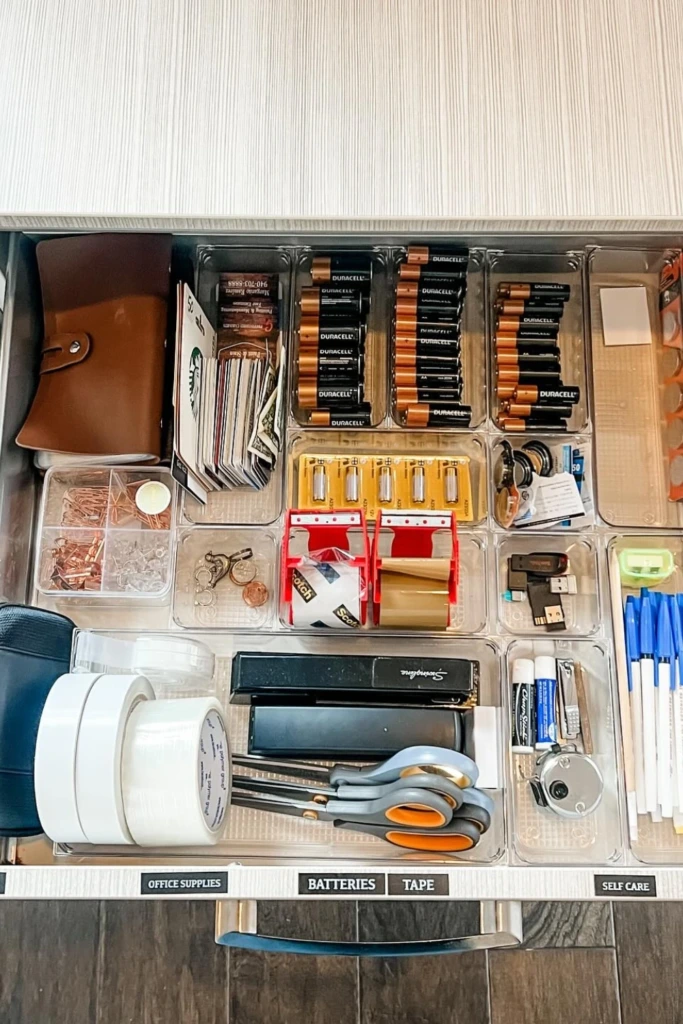
When a drawer contains several types of office supplies, labels can make the storage system much easier to understand. They are particularly useful in shared workspaces where multiple people may use the same drawers.
Begin by dividing the drawer into practical sections with small containers or adjustable inserts. Group similar items together, such as writing tools, batteries, adhesive products, charging accessories, and stationery.
Add clear labels to the compartments or to the inside edge of the drawer. Choose short descriptions that identify the contents without taking up too much space. For example, labels such as “Markers,” “Batteries,” “Tape,” and “Cables” are easy to recognize at a glance.
If you prefer a cleaner appearance, use discreet labels that coordinate with your office furniture. In a busy workplace, larger labels with high contrast may be more useful than decorative ones.
Review the drawer occasionally to remove damaged items and identify supplies that need replacing. Store batteries according to their manufacturer's instructions, and keep loose batteries protected from contact with metal objects.
A labeled drawer works best when everyone follows the same arrangement. Return supplies to their designated sections rather than placing them wherever space happens to be available.
12. Build a Grid Organizer Wall
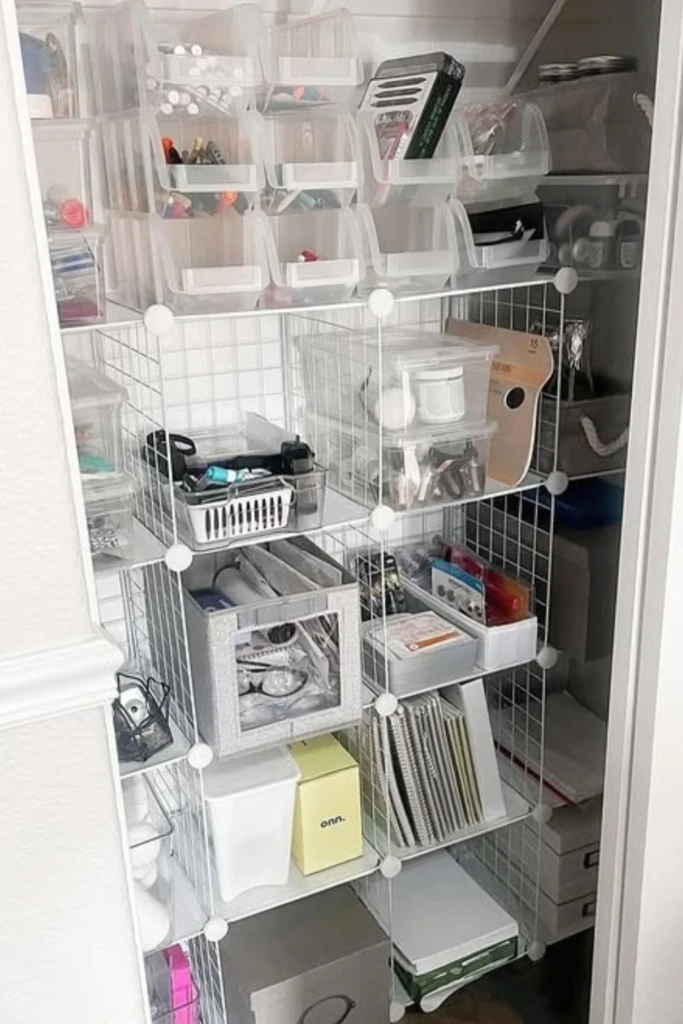
A modular grid wall can turn an unused section of wall or closet into flexible storage for office and craft supplies. It's a useful option when drawers and traditional shelving aren't enough to accommodate smaller items.
Choose a compatible wire-grid or modular cube system that suits your available space. Follow the manufacturer's instructions for assembly and secure the structure appropriately, especially if you plan to store heavier materials.
Add containers that fit the grid openings. Small bins can hold stationery, craft tools, labels, and accessories, while larger compartments may accommodate notebooks and boxed supplies.
Arrange frequently used items where they're easy to reach. Place heavier containers lower down and keep lightweight belongings on higher sections. Avoid overloading the structure or storing objects in a way that could make it unstable.
Clear bins help you see what each compartment contains, while labeled baskets create a more uniform appearance. You can also reserve a section for items that need replenishing so that you can identify shortages quickly.
Before installing a wall-mounted system, check the wall type and use suitable mounting hardware. If you're renting or cannot drill into the wall, consider a freestanding grid unit instead.
Review the contents regularly and remove supplies that are no longer needed. A flexible storage wall should make your work easier, not create another place where unused belongings accumulate.
13. Keep Shelves Minimal

Open shelves can make an office feel spacious and inviting, but overcrowding them with books, decorative objects, and miscellaneous supplies can create visual distraction.
Start by removing everything from the shelves and deciding which items genuinely deserve a place there. Return frequently used books, a few meaningful decorative pieces, and selected supplies while leaving some sections intentionally open.
Use closed cabinets, drawers, or storage boxes for belongings that don't need to remain visible. This is especially helpful for loose paperwork, spare cables, packaging materials, and less attractive office essentials.
Arrange books and accessories in small groups rather than filling every inch of available space. Consistent spacing and a limited color palette can create a more cohesive appearance without requiring expensive furniture.
If you want additional lighting, consider appropriately installed LED shelf lights. Choose a brightness and color temperature that complements your workspace, and position the lights so they don't create glare on computer screens.
Minimal shelving doesn't mean removing everything personal. A favorite book, a small plant, or a framed photograph can make the office feel welcoming. The goal is to create enough breathing room that useful objects remain easy to see and access.
14. Balance Decor With Storage
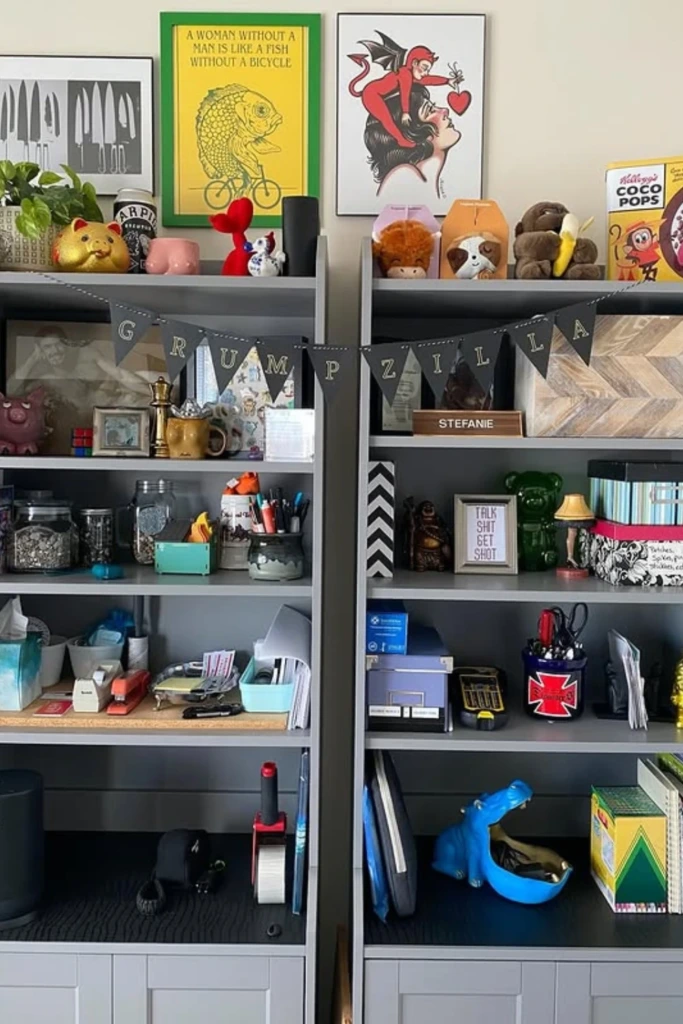
A productive office doesn't need to look sterile. Personal touches can make a workspace feel comfortable and inspiring, provided they don't interfere with the storage system or leave essential supplies scattered around.
Begin by deciding which decorative objects you want to display. Artwork, framed photographs, small plants, and a few meaningful keepsakes can add character without occupying every shelf.
Combine visible decor with practical storage. Decorative boxes can conceal cables, spare stationery, and miscellaneous accessories, while labeled containers keep frequently used supplies organized. Choose boxes that fit your shelving dimensions so that they don't waste valuable space.
Place everyday items on lower or easily accessible shelves. Reserve higher shelves for decorative objects and belongings you rarely need. This arrangement keeps practical items convenient while giving the room a balanced appearance.
Try to maintain a distinction between display areas and working storage. When decorative objects compete with documents and equipment for the same space, shelves can quickly become crowded.
You can coordinate baskets, containers, and accessories through similar colors or materials without making everything identical. The best arrangement reflects your personal style while remaining easy to clean and maintain.
15. Stick to a Matching Set
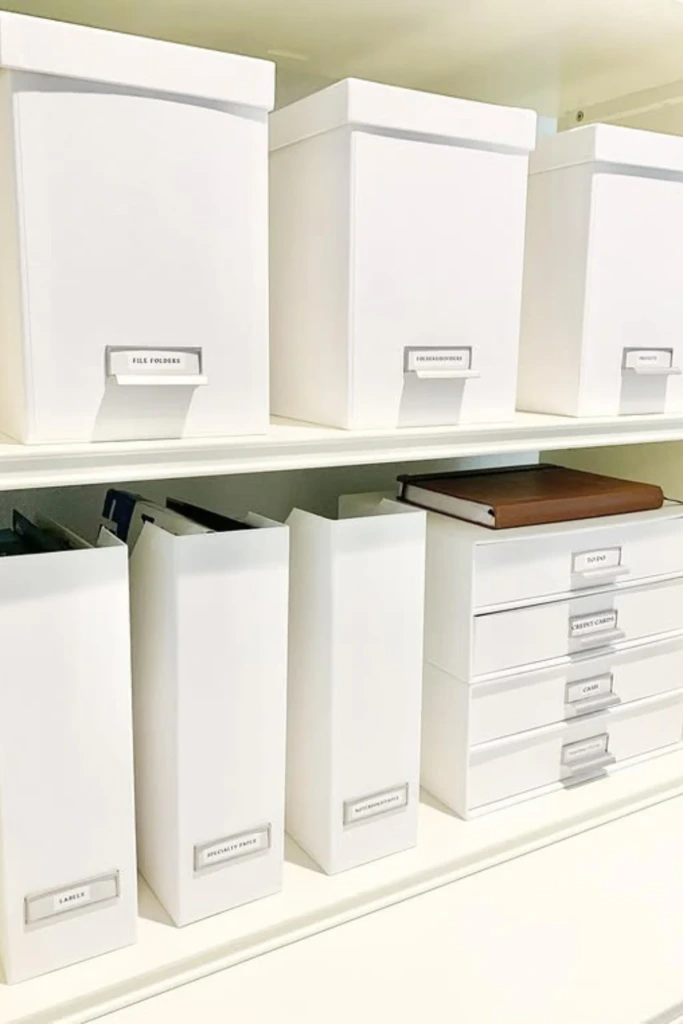
Using coordinated storage containers can make an office feel more orderly, especially when you have several shelves filled with documents and supplies.
Start by identifying the types of storage you need, such as file holders, document boxes, drawer organizers, and containers for smaller accessories. Choose a consistent color or material that complements your furniture and existing decor.
Matching white boxes, for example, can create a clean appearance, while neutral fabric bins or wooden organizers may suit a warmer interior. The specific color matters less than choosing products that fit your space and serve a practical purpose.
Add labels to distinguish the contents of each container. One box might hold invoices, another could store project notes, and a third might contain reference documents. Similar-looking containers are easier to use when their purposes are clearly identified.
Before purchasing a complete set, measure your shelves and drawers. Check the dimensions of each container and leave enough room to remove boxes comfortably. A matching collection that doesn't fit your storage space will create more frustration than it solves.
You also don't need to replace every existing organizer. Start with the most visible or disorganized areas, then add compatible pieces when necessary. A coordinated system can develop gradually without creating unnecessary expense or waste.
How do I keep my office organized long-term?
Maintaining an organized office depends more on consistent habits than on completing one major cleanup. Even an excellent storage system will become cluttered if items don't return to their designated places.
Begin by spending a few minutes at the end of each workday clearing your desk. Put away stationery, file completed paperwork, return equipment to its storage area, and remove anything that belongs elsewhere.
Once a week, review incoming documents, empty waste and recycling containers, check frequently used supplies, and address small areas of clutter before they become overwhelming.
It's also helpful to create a designated place for incoming paperwork. Process documents regularly instead of allowing mail, receipts, and notes to accumulate in random piles.
Every few months, reassess your setup. If a drawer repeatedly becomes messy, its compartments may be impractical. If you continually leave items on your desk, their storage locations might be inconvenient.
An effective organization system should support your daily routine. Adjust it when your work changes, and focus on making tidying up simple enough that you can maintain it consistently.
What’s the cheapest way to organize an office?
You can organize an office effectively without purchasing expensive furniture or specialized storage products. The most affordable approach is to use what you already own and buy only the items that solve a genuine storage problem.
Shoeboxes can hold cables and accessories, clean jars can organize pens, and sturdy household containers can separate small supplies. Reusable cardboard boxes may also work for lightweight paperwork when they're labeled and kept dry.
Before buying organizers, empty your drawers and shelves so you can see how much storage you actually need. Decluttering may free up enough space to eliminate the need for additional products altogether.
If you need extra containers, compare inexpensive bins, file holders, and adjustable drawer dividers. Choose products based on their dimensions and durability rather than appearance alone.
You can save money by creating labels from paper and adhesive tape or reusing containers from products you already have. Keep labels clear and consistent so that everyone using the office understands where things belong.
Finally, avoid buying organizers simply because they look attractive. A few well-chosen containers, a sensible filing system, and a short daily cleanup routine can make a substantial difference without stretching your budget.