15 Linen Closet Organization Ideas for 2026
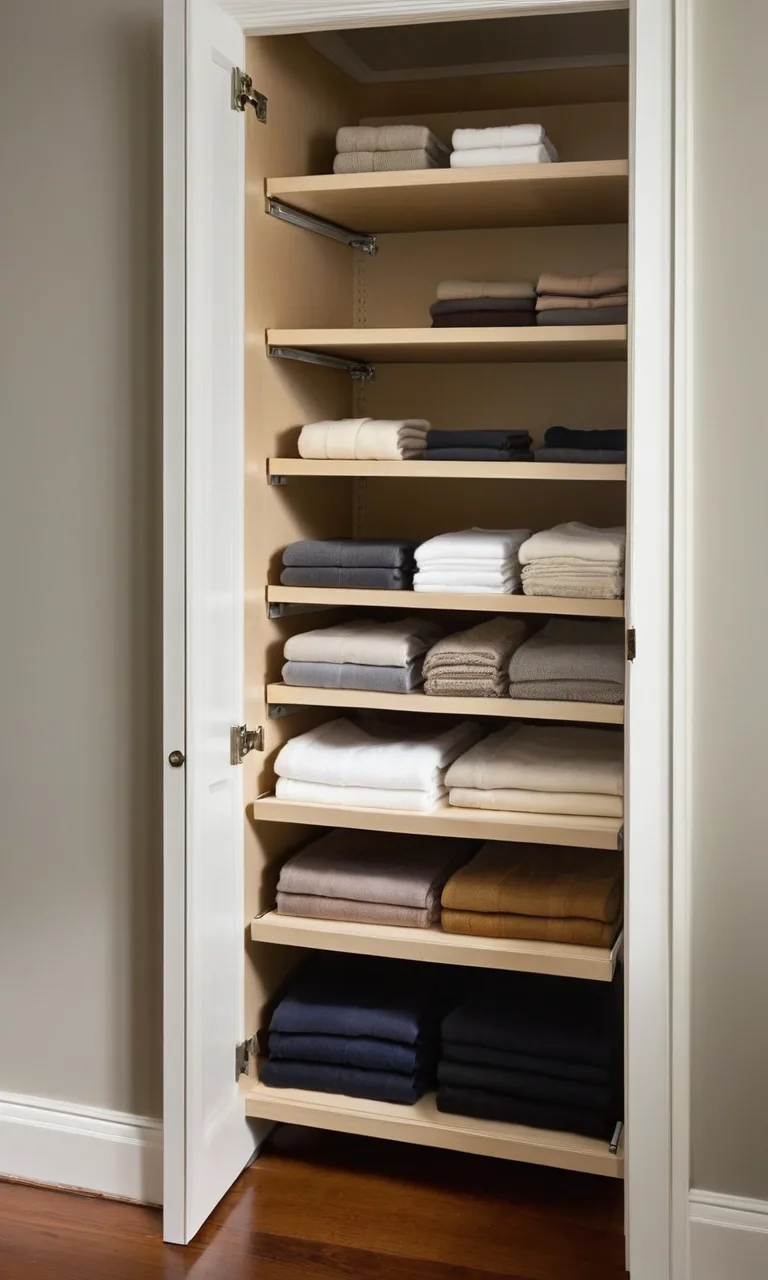
A linen closet should make everyday routines easier, not turn finding a clean towel into a frustrating search. Yet spare sheets, bulky blankets, toiletries, and mismatched towels can quickly take over even a generously sized cupboard.
The secret to an organized linen closet is creating a practical home for every item. With the right combination of baskets, storage containers, folding techniques, and shelf arrangements, you can make better use of the space you already have.
Whether you have a narrow hallway cupboard or a spacious storage closet, these ideas will help you keep linens accessible, reduce clutter, and maintain a tidy appearance without spending a fortune on organizers.
Why Your Linen Closet Feels Out of Control?
A disorganized linen closet often develops when too many items share the same shelves without a clear storage system. Towels get stacked unevenly, bedding becomes mixed between bed sizes, and small bathroom essentials disappear behind larger packages.
Another common problem is keeping more linens than your household actually needs. Extra blankets and unused sheet sets consume valuable shelf space, making it harder to reach frequently used items.
Start by removing everything from the closet and sorting it into categories, such as bath towels, hand towels, bedding, blankets, and toiletries. Discard damaged items, donate suitable linens you no longer use, and measure your shelves before purchasing storage accessories.
Once you know what needs to stay, choose an arrangement that matches your available space and daily habits. The following ideas offer different ways to achieve a functional, attractive linen closet.
1. Group Linens in Baskets
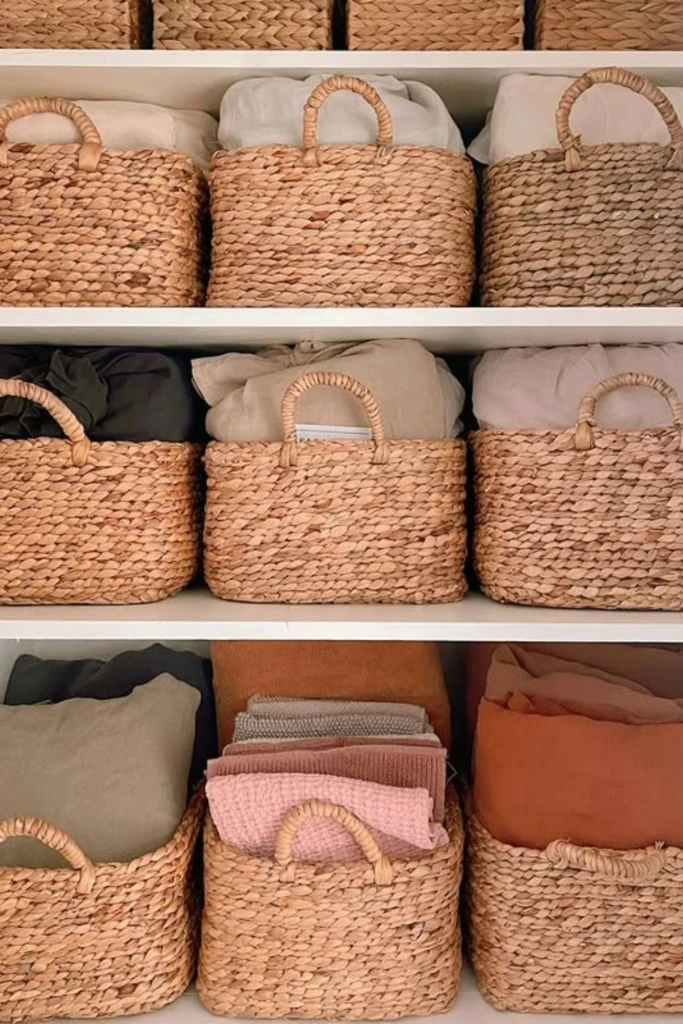
Baskets are an effective way to prevent folded linens from spreading across shelves. Instead of creating tall stacks that collapse whenever someone removes a towel, assign each basket a specific purpose.
Use one container for bath towels, another for hand towels, and separate baskets for individual bedding sets. Handles make it easier to pull containers forward, especially when supplies are stored toward the back of a deep shelf.
Woven baskets can add warmth to the closet, while plastic or washable fabric options are convenient for households that prefer easy cleaning. Before buying, measure the shelf depth and leave enough clearance to remove each basket comfortably.
2. Use Lidded Fabric Boxes
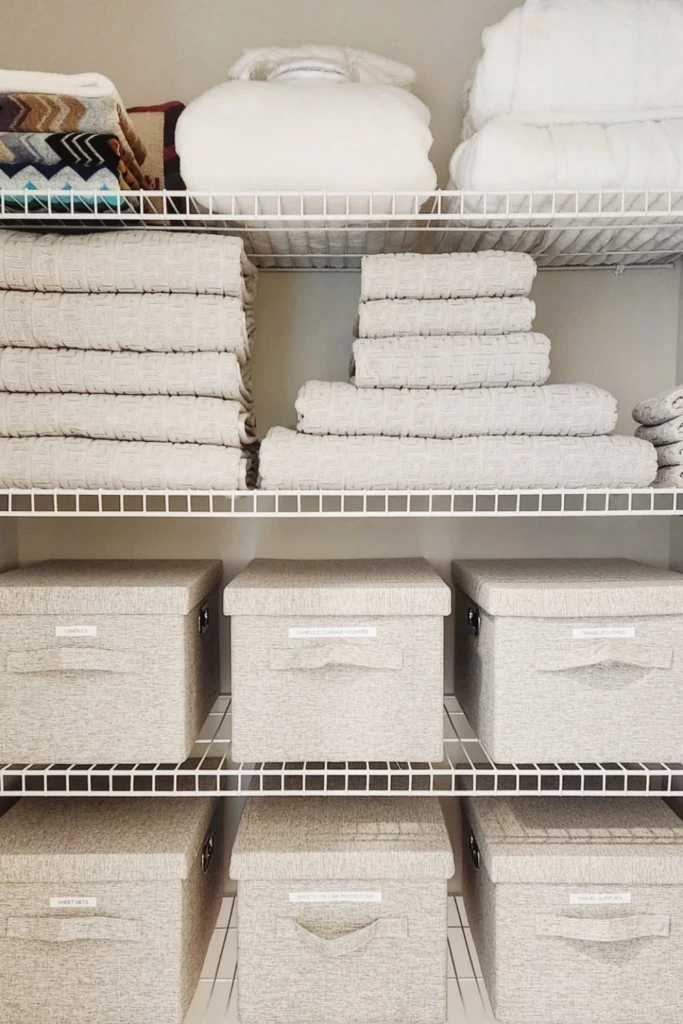
Fabric storage boxes with lids are useful for keeping spare pillowcases, seasonal bedding, and lightweight blankets contained. They create defined sections on crowded shelves and help protect stored fabrics from everyday dust.
These organizers are particularly helpful on wire shelving, where thin sheets and pillowcases may slip through gaps or sag between supports. Choose sturdy boxes that retain their shape when filled, and avoid packing them so tightly that linens become difficult to remove.
Label the front of each container so you can identify its contents without opening every lid. For items used regularly, reserve the easiest-to-reach boxes for frequently changed bedding and keep seasonal supplies higher up.
3. Stick to Uniform Folding
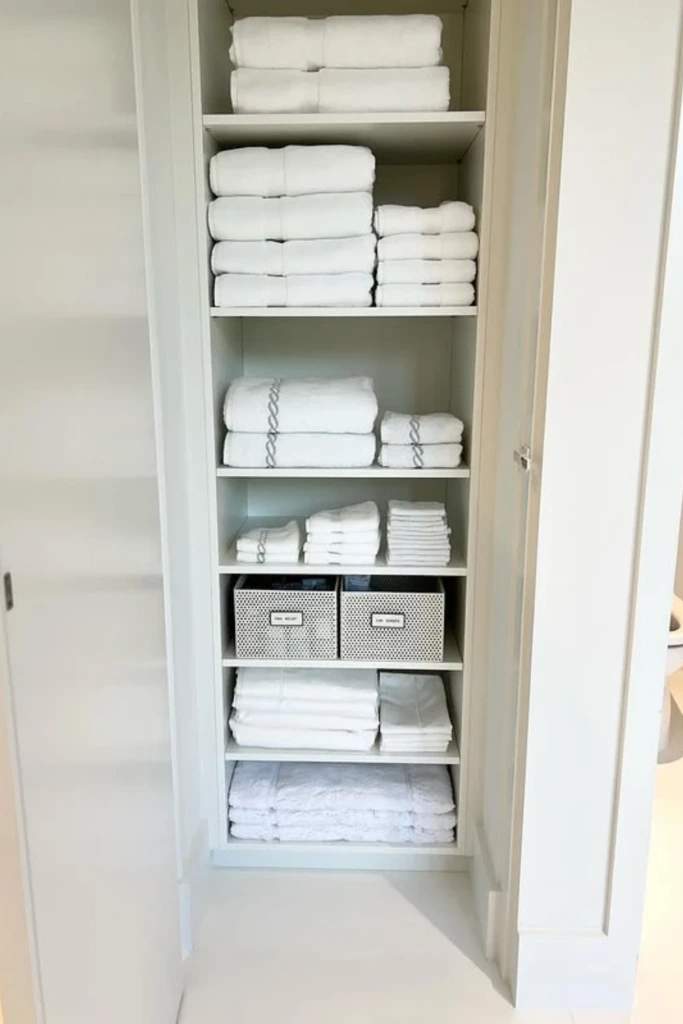
Consistent folding can transform a cluttered closet without requiring any new storage products. When towels and sheets have similar dimensions, they stack more evenly and leave fewer awkward gaps between piles.
Choose a folding method that suits your shelf width. Bath towels can be folded into thirds lengthwise and then into a compact rectangle, while smaller hand towels can be folded in half or thirds depending on their size.
Repeat the same technique for similar items instead of changing methods each time you do laundry. If stacks are especially tall, make them shorter to prevent toppling and improve access to the towels underneath.
The goal is not to create perfectly identical folds. It is to establish a simple routine that makes the closet easier to maintain.
4. Label by Category
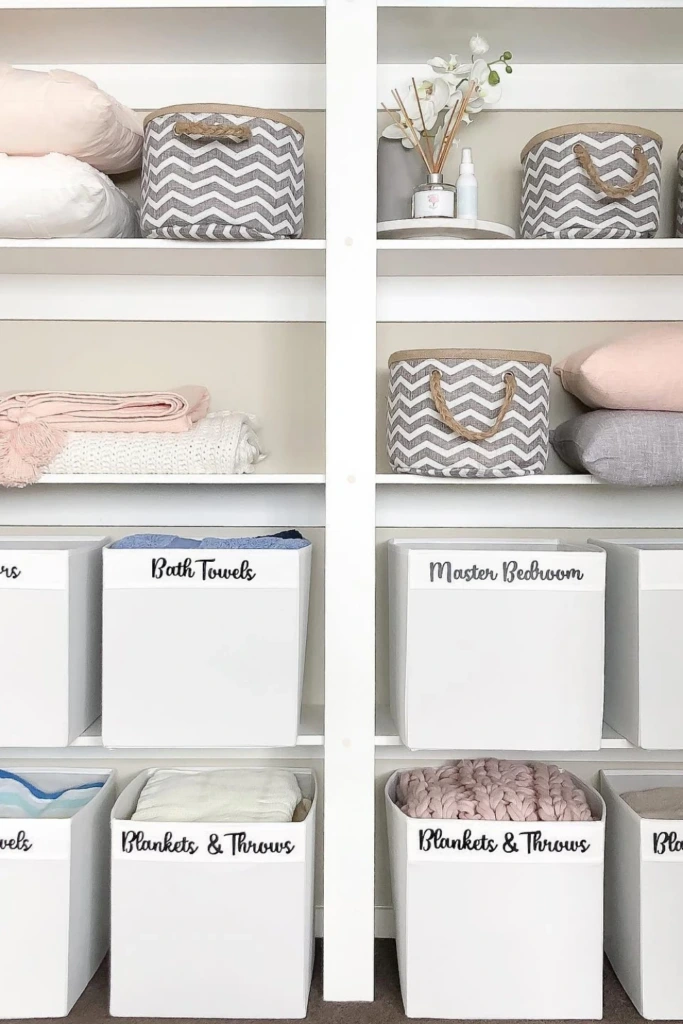
Labels help everyone in the household understand where linens belong. Without them, family members may return towels to the wrong shelf or mix clean sheets with unrelated bathroom supplies.
Use clear labels such as “Bath Towels,” “Guest Bedding,” “Pillowcases,” and “Washcloths” on baskets, bins, or fabric boxes. If several bedrooms share the closet, you can also organize bedding according to the room where it is used.
Large, readable lettering is usually more useful than decorative labels that are difficult to distinguish from a distance. Waterproof labels are a sensible option when containers hold bathroom products.
This approach also makes putting away laundry easier. Children and other family members can return items to the appropriate location without needing to ask where everything belongs.
5. Mix Linens With Essentials
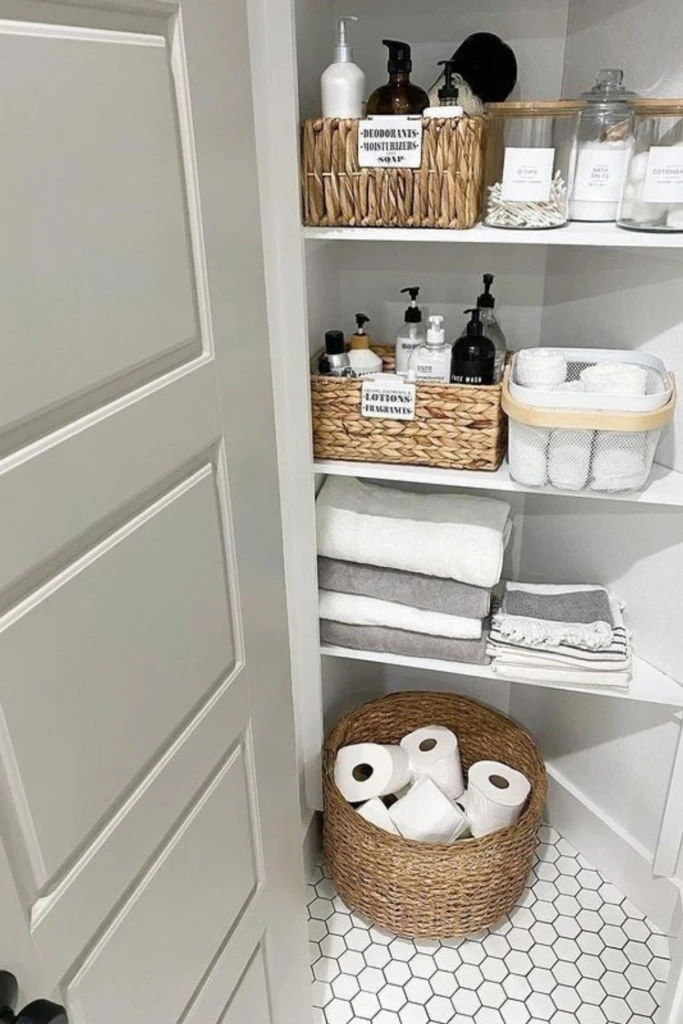
If your linen closet also stores bathroom necessities, combine both categories carefully rather than allowing them to compete for shelf space.
Place frequently used towels on middle shelves, where they are easy to reach. Store toiletries, unopened soap, and spare personal-care products in labeled containers, while bulky packages of toilet paper can occupy a lower shelf or a large basket.
Keep small bottles grouped together to prevent them from falling over or becoming scattered among the towels. You can also separate backup supplies from products currently in use so that you can quickly see what needs replacing.
Avoid storing toiletries that could leak directly beside clean fabrics. Keeping products upright in suitable containers protects towels and bedding while making the closet more practical.
6. Choose Clear Storage Bins
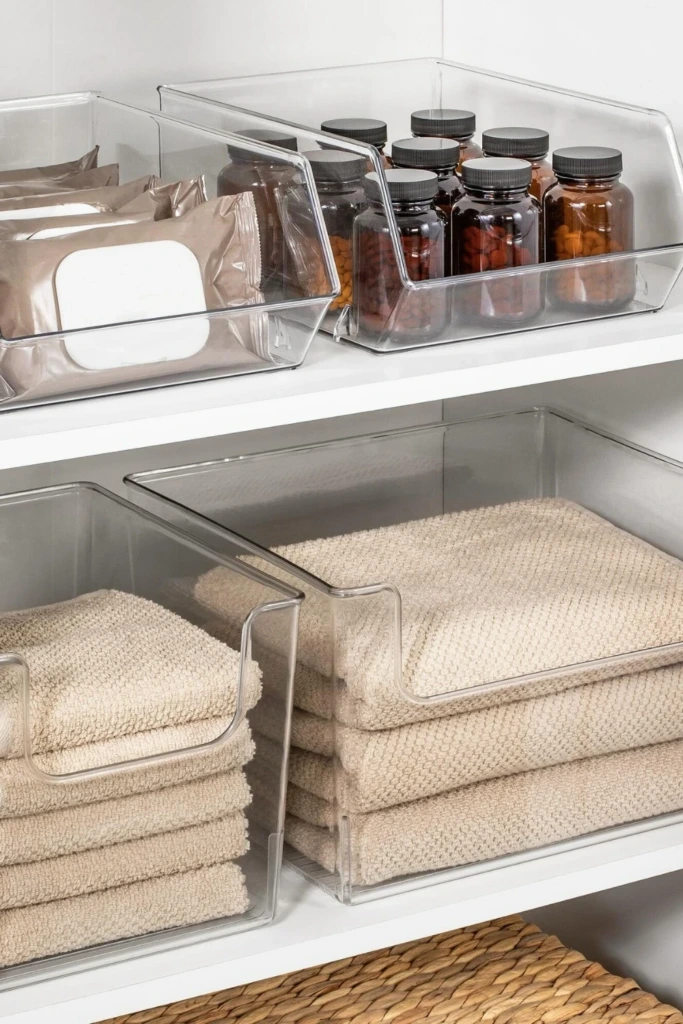
Transparent storage bins make it easier to identify supplies without opening multiple containers. They work especially well for smaller items that tend to disappear behind folded towels or larger packages.
Use clear bins for washcloths, cleaning wipes, spare toiletries, cotton products, or other compact essentials. Open-front designs can be convenient because you can retrieve items without removing a lid, provided the contents remain protected from dust and moisture.
Measure the available shelf height before choosing your containers. A bin that fits the width but is too tall may prevent you from using the shelf above it.
Group similar products together and place the items you use most often toward the front. This simple arrangement helps prevent forgotten supplies from accumulating at the back of the closet.
7. Color-Code Your Closet
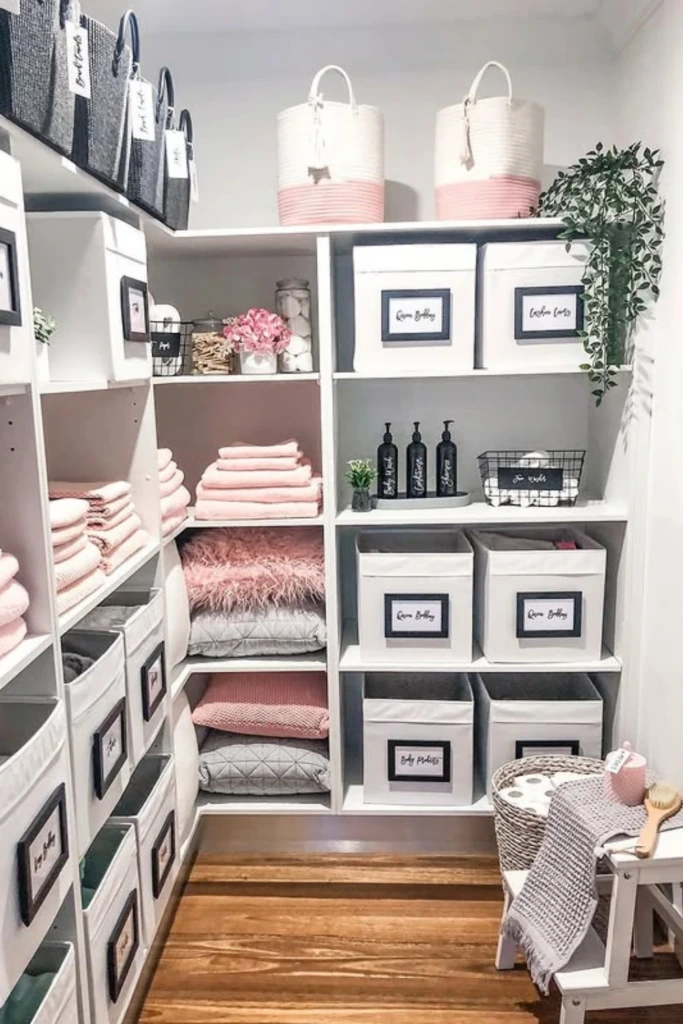
Color coordination can give a linen closet a polished appearance while making certain items easier to locate. You can organize towels by shade, choose matching storage baskets, or combine both methods.
For example, keep white towels together, arrange gray linens in another section, and group colored guest towels separately. If several people share the closet, colors can also help distinguish bedding assigned to different rooms.
You do not need to replace your existing linens to achieve this look. Start by arranging what you already own and use matching bins or simple labels to create a consistent visual pattern.
For the best results, prioritize accessibility over appearance. A coordinated closet is useful only when towels and sheets remain easy to reach and return to their proper places.
8. Sort by Size and Use
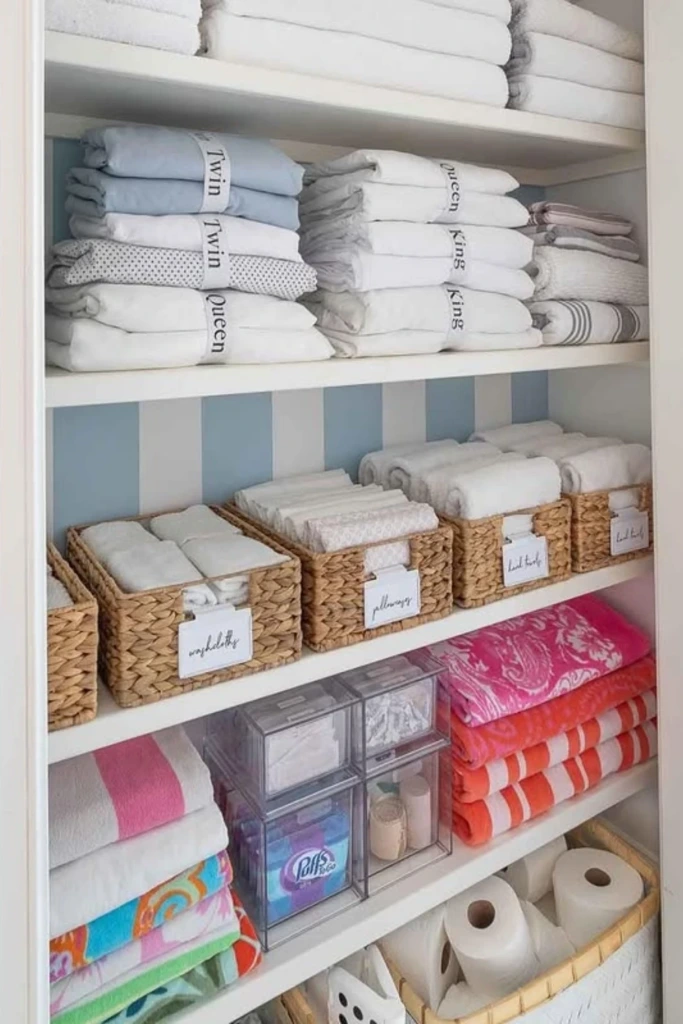
Mixing bedding sizes is a common reason people pull apart several stacks before finding the right sheets. Separating linens according to the beds they fit eliminates much of this confusion.
Create distinct sections for twin, full, queen, and king bedding, using only the sizes relevant to your household. Keep each fitted sheet, flat sheet, and matching pillowcase together whenever possible.
You can place a complete sheet set inside one of its matching pillowcases to keep the pieces together without purchasing additional organizers. Alternatively, use labeled fabric bags or shallow baskets for each bed size.
Consider how frequently each set is used when choosing its location. Everyday bedding should be easy to reach, while spare guest sheets can occupy a less accessible shelf.
9. Dedicate Shelves by Type
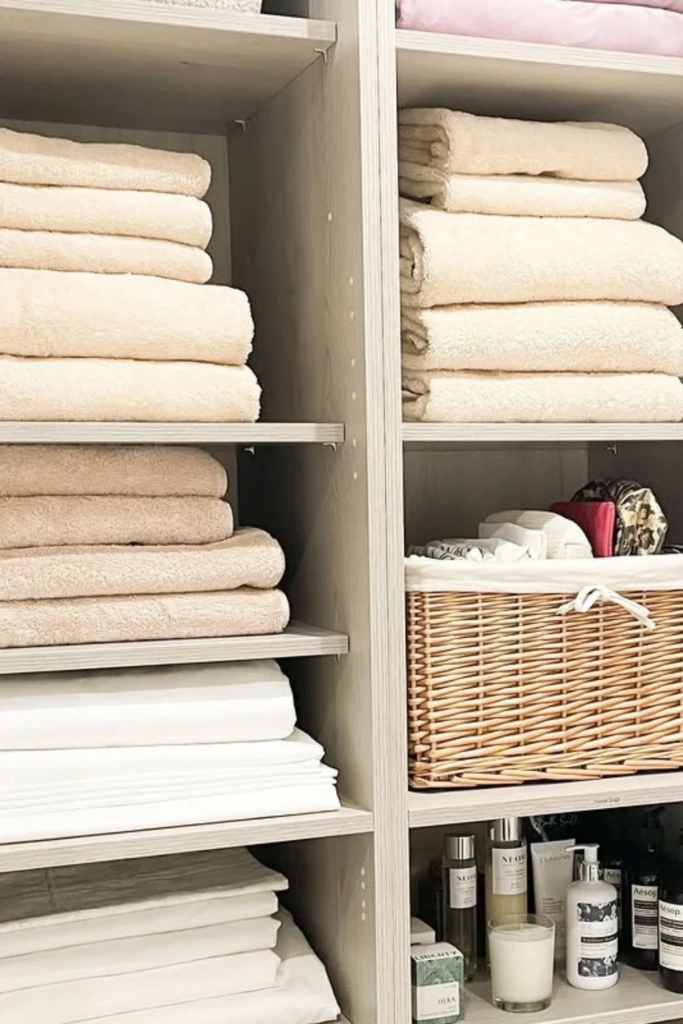
Giving every shelf a defined purpose makes an organized linen closet easier to maintain. Rather than placing items wherever space happens to be available, establish consistent zones for different categories.
For instance, use one shelf for bath towels, another for bed sheets, and a smaller basket for pillowcases and washcloths. Reserve a separate area for guest linens if you regularly prepare beds for visitors.
Position frequently used supplies around waist to eye level so they are convenient to retrieve. Store lighter, less frequently needed blankets higher up, provided they can be reached safely.
Adjust the arrangement to match your closet's dimensions instead of forcing it into a rigid layout. The best system is one that allows everyone in the household to find and return items without disturbing neighboring stacks.
10. Roll for Spa-Like Shelves
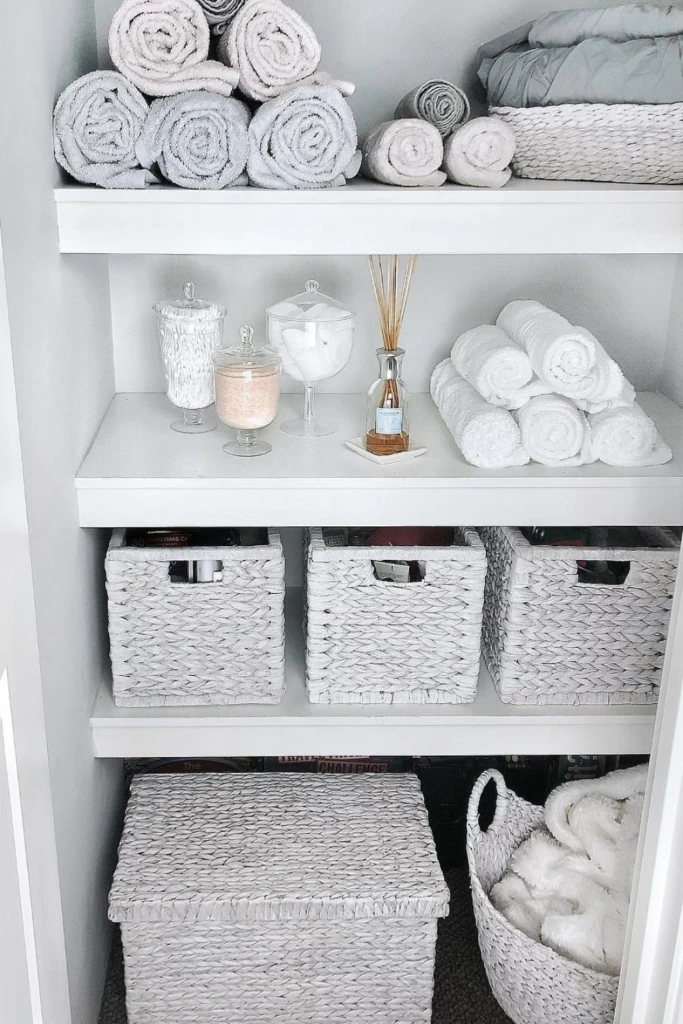
Rolling towels can create a relaxed, spa-inspired appearance while offering an alternative to conventional stacks. This method is particularly useful for smaller towels and shelves where a folded pile would otherwise become unstable.
Lay each towel flat, fold it lengthwise, and roll it firmly without compressing the fabric excessively. Arrange the rolls side by side in a basket or directly on a shelf so that each towel can be removed independently.
You can use the same technique for washcloths and guest towels, keeping them in a smaller container for easy access. If your closet also holds bathroom accessories, place small items such as cotton rounds or cotton swabs in clean, suitable containers.
Reserve larger baskets on lower shelves for spare blankets or bulky linens. Combining rolled towels with concealed storage creates a balance between an attractive display and everyday functionality.
11. Keep Towels in Color Blocks
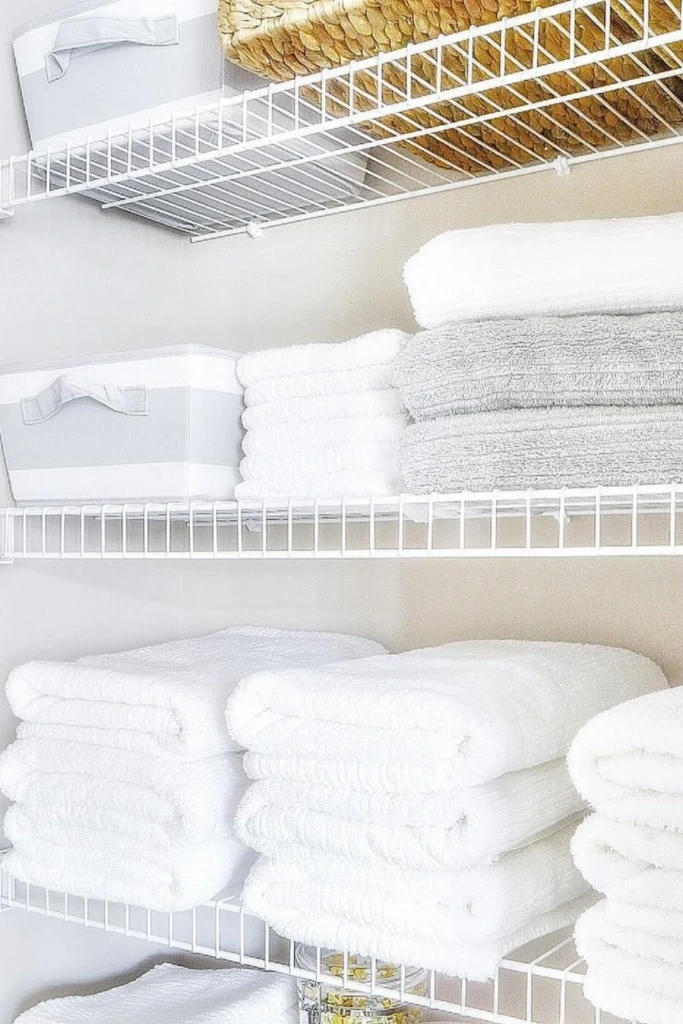
Arranging towels in color groups creates a clean, coordinated look without requiring expensive storage accessories. This technique works especially well when shelves are open and the folded linens remain visible.
Fold towels to a consistent width, then arrange similar shades together. White towels can occupy one section, neutral-colored towels another, and brighter guest towels a separate area.
If you have wire shelves, use a small basket or fabric organizer for washcloths and other items that might slip through the gaps. Keep towel piles low enough that removing one does not cause the entire stack to fall.
For a more uniform appearance, align the folded edges toward the front of the shelf. Small adjustments like these can make the closet look tidier while preserving convenient access to everyday essentials.
12. Store Toiletries in Clear Bins
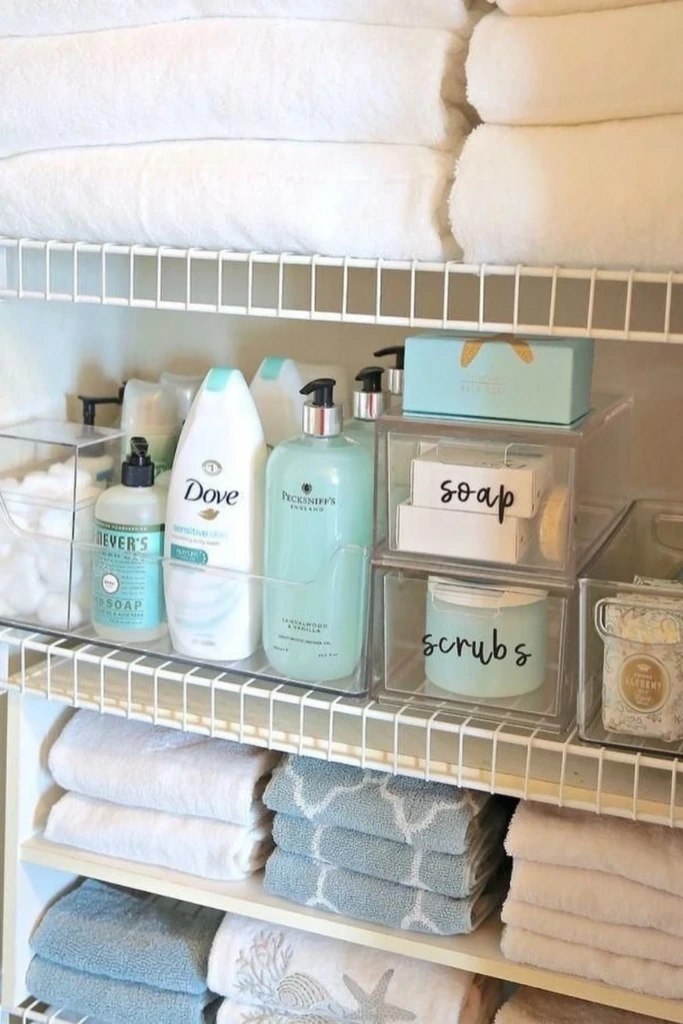
Bathroom products often create clutter because bottles, tubes, and small packages come in different shapes and sizes. Clear bins provide boundaries for these supplies and make it easier to see when something is running low.
Sort toiletries by purpose, such as dental care, hair products, skincare, or bathing essentials. Use separate containers for each group, and place taller bottles upright to reduce the chance of leaks.
Choose bins that fit the shelf securely and have enough room for you to remove individual products without lifting the entire container. Labels are helpful when several categories look similar.
If the closet has wire shelves, solid-bottom bins can prevent small products from tipping or slipping through openings. Keep liquids away from clean linens and check stored products periodically for damaged packaging or expired items.
13. Combine Baskets and Open Stacks
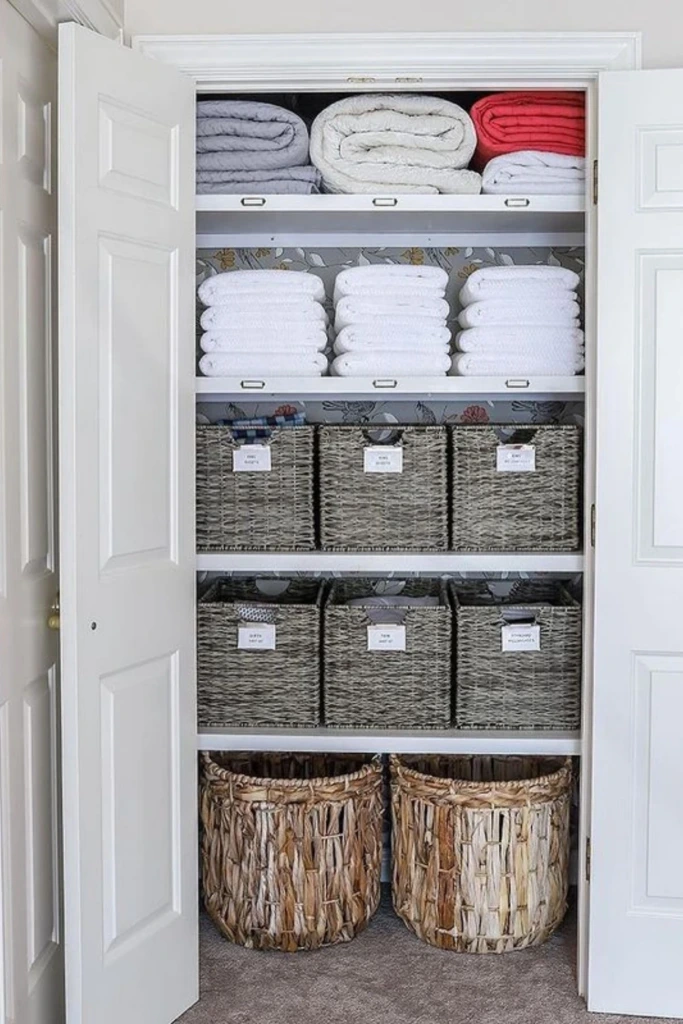
A combination of open shelves and baskets offers flexibility for households with different storage needs. Towels you use daily can remain visible, while smaller accessories and less frequently used supplies stay contained.
Stack neatly folded bath towels in an accessible central section, then use labeled baskets for washcloths, pillowcases, guest linens, or miscellaneous bathroom essentials.
This arrangement also works well for bulky items. A large basket can hold extra blankets or spare towels that do not stack neatly, while smaller containers keep lightweight items from becoming scattered.
Avoid filling every shelf and basket to capacity. Leaving some breathing room makes it easier to remove supplies, put away fresh laundry, and adjust the arrangement when your household's needs change.
14. Mix Folding and Rolling
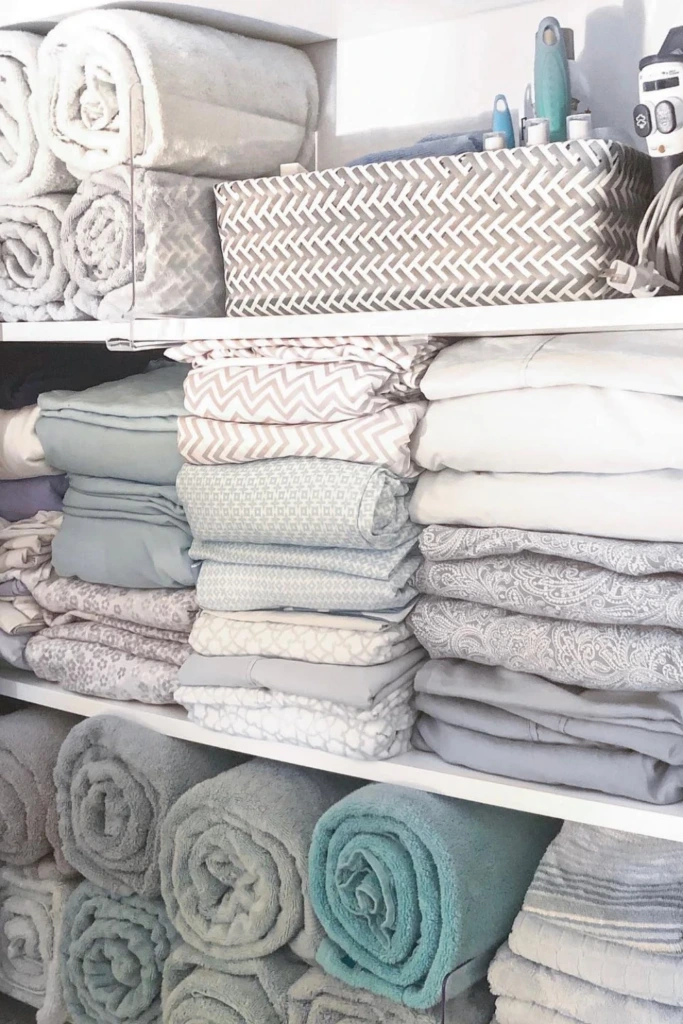
You do not have to choose between folding and rolling all your linens. Combining both methods lets you use the available shelf space more efficiently, especially when your closet holds bedding, towels, and smaller fabric items.
Fold sheets and pillowcases into compact sets, keeping the pieces for each bed together. Arrange the sets in labeled piles or separate containers so that you can find the right size quickly.
Roll smaller towels and washcloths, placing them side by side in baskets or along a lower shelf. Larger bath towels can remain folded if that arrangement fits your shelves better.
Experiment with the layout before committing to it. If a shelf is too shallow for deep stacks, use shorter piles or rolled towels. If containers waste too much vertical space, replace them with a simpler arrangement.
The most effective system is the one that accommodates your actual linens rather than requiring you to fold everything in a particular way.
15. Layer Storage from Top to Bottom
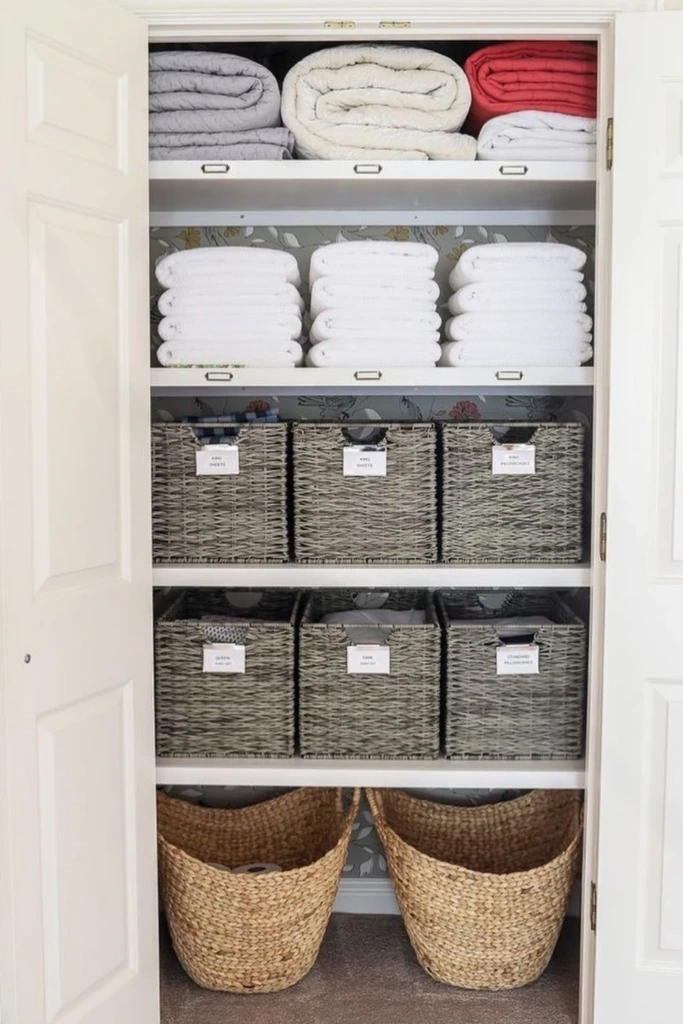
Organizing a linen closet vertically helps you make use of every shelf while keeping frequently needed items within easy reach. Assigning each level a purpose also reduces the temptation to place things wherever a gap appears.
Use the highest shelf for lightweight comforters, spare blankets, or seasonal bedding that you rarely need. Middle shelves are ideal for bath towels and other linens used throughout the week.
Lower shelves can hold sheet sets, pillowcases, and labeled baskets containing smaller supplies. If the closet has a wide bottom section, use it for bulky spare linens or a suitable hamper for clean items awaiting storage.
Keep heavy containers low and avoid placing frequently used products where they require stretching or climbing to retrieve. If you need a step stool for the upper shelves, make sure it is stable and that stored items can be handled safely.
Finally, leave enough space for linens to fit comfortably without squeezing them into every available corner. A little open space makes the entire closet easier to use and maintain.
How many sets of sheets should I keep per bed?
For most households, two or three sheet sets per bed provide a practical balance between convenience and storage space.
One set can remain on the bed, another can be clean and ready for the next change, and a third offers a backup for spills, illness, or unexpected laundry delays.
Your ideal number depends on how often you wash bedding, whether you have young children or pets, and how quickly your sheets dry. Households that do laundry frequently may manage comfortably with two sets, while others benefit from keeping three.
Store each set together so you can change the bedding without searching for matching pillowcases. If you own several sets that rarely get used, consider donating those in good condition and keeping only the ones that serve a purpose.
Review your collection occasionally, especially when replacing a mattress or changing bed sizes. Keeping an appropriate number of sets prevents the closet from becoming crowded with bedding you seldom use.
What’s the best way to keep towels fresh in the closet?
The most important step is to make sure towels are completely dry before folding and storing them. Even slightly damp fabric can develop an unpleasant musty smell when left in a closed cupboard.
After washing, dry towels thoroughly and allow them to cool before putting them away. Avoid packing shelves too tightly, since some space between stacks can help air circulate.
If your closet is in a humid bathroom, consider improving ventilation or using a moisture absorber suitable for enclosed storage spaces. Follow the product instructions, keep it away from children and pets, and replace it as directed.
Wash towels regularly with an appropriate amount of detergent, following the care label. If they develop a persistent odor, check the washing machine for detergent buildup, avoid overloading it, and wash the towels again according to the fabric's instructions. White vinegar may help with certain laundry buildup when used appropriately, but never mix vinegar with chlorine bleach.
You can also roll smaller towels instead of stacking them if this makes them easier to retrieve without disturbing the rest of the shelf. Above all, keep the closet dry, clean, and free from unnecessary clutter so freshly laundered linens stay pleasant to use.